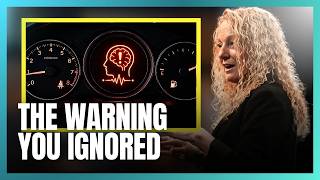
In this podcast episode, Nick Stumbo, Heather, and a third participant discuss how emotions function as signals that point to deeper, often unconscious, stories and patterns in our lives. Heather likens emotions to dashboard warning lights, explaining that recurring feelings such as fear can reveal hidden beliefs, values, and past experiences. The conversation includes a concrete example from the Pure Desire group where a participant’s long‑standing fear of an optometrist kept them from updating a prescription; naming the fear and confronting it led to relief and a new prescription. Nick shares a personal marital scenario where an offhand comment triggered disproportionate anger, prompting him to trace the reaction back to earlier family narratives and recognize a trigger. The group emphasizes the importance of in‑the‑moment curiosity, self‑investigation, and avoiding the habit of placing the burden of emotional resolution on others. Overall, the episode illustrates that by paying attention to emotional "warning lights," individuals can uncover hidden stories, heal past wounds, and improve relational presence.
Chapters
One, and we've talked about this on this show, we talk about it on Pure Desire, that, that emotions are indicators of deeper realities. We've talked about them like the, the warning lights or the lights on a dashboard, that the light in and of itself was not the problem. The light's telling us about something else going on. So tell us a little bit more, Heather, about what that means and how are emotions a pathway for us into understanding our own stories.
Mm-hmm, yeah, and so if you think of it, and I like that analogy that the— our emotions are like the indicator, like the warning light that something else is wrong, that something else we need to pay attention to, because I think that if you even think so much about the way that our brain packages our experiences and our emotions together, that that in and of itself is gonna help us to understand our pathway and our story. So much that if we have something that happens and our emotion that comes to the surface is fear, even though there's really nothing to be afraid of, but we start to recognize that there's a pattern there that I'm afraid or I'm feeling fear of something, that could be very telling about our own story. Even if it is something that maybe comes from more, like you were saying, John, a buried emotion, but something that would stem from fear and, and something that keeps popping up over and over again is definitely something we need to pay attention to. And especially when you look at our emotions and think that they have a tendency to kind of shed light on what we value, the way we see ourselves, our self-perception, our, our negative thought patterns, that All of those things are wrapped in our emotions, and it really is telling about who we think we are.
I think I have such a recent example of this, and it was literally my commitment to change in group. For anybody who doesn't know, in Pure Desire groups, you make a commitment to change every week. And my commitment to change was to schedule an appointment with an optometrist. I have contacts and I wear glasses, but I have not updated my prescription in literally 8 years. And you'd be like, are you kidding me? Why? Well, 6 years ago I went to an optometrist in South Dakota before I kind of left South Dakota, and it was here that I got a, you know, prescription. And when I tried on the contacts, it wasn't helpful. Like, the contact was kind of painful and I didn't feel like I could see very well. And, and so now, 6 years later, I have been living from this past moment, and I have a level of fear, like the optometrist isn't going to help me. And I've been reverting back to the prescription from 8 years ago because I like the feel the contacts. I feel like I can see. But recently my eyes have been bothering me, and I'm like, this is painful. And it wasn't until the pain got loud enough that I had to name to my group the fear and the emotion that was holding me hostage from going to see the optometrist. Just yesterday I went and saw the optometrist, and guess what? He's like, your left eye has changed considerably, and it makes sense why your eye is hurting. Your eye is trying to compensate and it's not liking the contact that you have and it's straining. And he's like, "Hey, check out this new prescription." He's like, "Here's what you're currently seeing through." And I'm like, "I can't see the letters." And then he's like, "How about now with the new prescription?" I'm like, "Are you kidding me?" I literally said to him, "Thank you for rescuing me." I was in the chair.
I said, "Thank you for rescuing me." Well, and what a great illustration that when we face and understand our emotions, there's good on the other side. Like it can lead us into something healthy. I think that's what you said, Heather, that really stands out to me is when our emotional response is not in line with what's happening, that's an indicator to go, okay, there's something deeper here. And it's like in my marriage, when you're married to someone, you're making comments to one another all the time and somebody's like, okay, they're kind of in a bad mood. It's just like water off a duck's back. And other times something will land and I can just, I can feel like the anger or like, and I'll admit I'm not good at doing this in the moment. This is more of like a self-reflective, maybe later that day or the next morning, like, Why did that comment create such an internal response? And I can maybe recognize that, oh, there was a message. Here's what my wife said, but the message I heard was, you know, a criticism of why aren't you good enough? Or, and I can start to tie that back and go, how is that one of my triggers in life? Where does this show up in my family of origin or in a relationship with one of my parents? And when you can put the story together, kind of our good friend Adrian Hickman's quote of what makes this make sense, You go, oh, I was not just reacting to what she said. I was reacting to the message that was tucked into it because of my story. And it both helps me maybe analyze my story and invite some healing there, but also stay more present in relationships and not get flooded or triggered when someone didn't even intend for that kind of response in me.
Mm-hmm, yeah. And that is really good awareness. It's one of the things too that if you can get better at in the moment, taking a look at that. And because sometimes even the weight of waiting and having to sit in that discomfort is not as helpful as going more toward the curious and, you know, investigating kind of ourself a little bit. I think that that's more helpful.
Yeah. Well, I know when I don't do that, what happens is I put the burden on the other person, more often than not my wife, to fix what happened. And it's unfair because I'm kind of asking her to fix a problem she didn't even create. So I'm feeling disrespected and I'm trying now to like, in a fight or conversation, get her to, you know, see that I was disrespected when maybe that's not even really what happened. It's more about my reaction. So when we don't do that work, when we don't analyze what we're feeling, we will put a burden on others to fix problems they didn't create.