A single-speaker transcript of a faith-based talk arguing that God is deeply interested and involved in human sexuality. The speaker reframes common taboos—shame, secrecy, and seeing God as judge—toward a compassionate view: sexual desire and sexuality are God-given, people struggling with sexual issues are not alone, and churches should be safe, helpful places for such conversations.
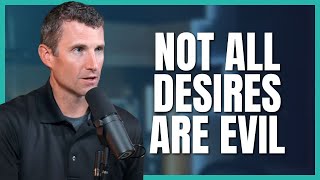
I was thinking that if one of the big challenges is that sex is taboo, sex is dirty, God's not interested in sex. The flip side of it is the healthy message to say that God is deeply interested and involved in your sexuality. You know, one of the ways I've said it at our events is there is nothing you have ever thought, done, or said about sexuality that comes as a surprise to God. Because as the author of it, he's, I think, deeply aware of all the ways it could be mismanaged. And rather than looking to zing us with, you know, his lightning, if we step aside, I think for him, it's more the grief of, oh, I've created you for good and for a good thing. And when it's being misused, I know where it leads and the pain it can cause, and I want to help and be involved. And so if we saw God as a helper, you know, how often has Jesus described the Holy Spirit in our life as a helper. Yes. And applied that to our sexuality. What a difference that would make versus, I think most of us have carried a framework of God as judge, God as critic, God as, you know, whatever the metaphor is, instead to say, man, God cares deeply about my sexuality. He created it, he's aware of it. He knows, and he wants to help, not shame. And then with that message, I think, is to say to people in all different seasons of life, you are not alone. If you're struggling with pornography, if you. You're not alone. If you're struggling with healthy sexuality within your marriage, you're not alone. If you're working through issues of health and erectile dysfunction in middle age and later in life, you're not alone. Because anything to do with sexuality, I think the enemy's message is just, boy, you're probably the only person dealing with this, and it's probably something you did wrong. And if other people knew, they'd be horrified or repulsed or angry. Just figure it out yourself. And it shows up in research that would suggest people feel more comfortable talking to their doctor about sexual issues than to their pastor. And by far. Now, I get that the doctor on the medical physical side may have more training and awareness, but it says something to me that the safe place people find is a doctor. You know, you think about the sterile environment. A doctor's office is where you're often sitting there and, you know, you've been asked to undress to a level of appropriateness so the doctor can check you out. And that's the place we feel more comfortable bringing up hard questions. That says something to me about what's going on in our churches because I just think that should be the safest place now. There is an appropriate time and place to ask hard questions. But I think that's the positive message a church can bring out is to say you're not alone. These questions are not unique. The things you're facing are not unordinary and God is deeply involved and cares about what you're going through. And then the last one I'll bring up in terms of a positive message. And I've heard you talk about it, Rodney, so maybe you want to riff on it a little bit. But that idea that not every sexual thought or desire is evil. And I think I really felt that way especially as a teenager like man, any desire is of my flesh. And it actually quite honestly taught me to fear desire as something being very fleshly and sinful. When the truth is God's the author of desire. God is the author of sex and sexual desire. And yes, absolutely there's ways that it can quickly be used in ways to take us away from God. But at its heart, at its core, I think we need people to hear, and they need to hear it a lot that that sexual desire is God given and your capacity for desire is from God and even your desire. And I know people don't like to think of it this way because we typically refer to lust in a sinful manner. But I've tried to explain to people, I think we need to embrace that my capacity for lust is actually God given. Because if lust, if we break it down to a definition and think that lust is my ability to have a strong sexual desire for another person, well, I hope to God that when any one of us meets and is dating and engaged to our future spouse, that at some point in there there is strong sexual desire for that person. Even though we're not yet married. And would we look at that and say, well, all that is evil and wrong. I mean, I know I felt that way, but there I think is a right element of that that says, well actually that's what God made me for. So that one day when I started to be of the right age, I would be interested in marriage and connection. Because the flip side is, and God did this. In the animal kingdom, sexual reproduction is not about desire. It's just about its chemistry, its physicality. It's the animal kingdom of like we just reproduce so that life goes on. And God could have made sex to be just a very kind of non emotional, non desire, kind of thing, but he didn't. He really rooted it in, in this kind of inner part of us that desires to be known and to be with another person. And so is all of that lust in the sense of sin? Or is some of that the capacity for which God made me? And I I can even hear for some listeners like, I'm going into that. They're getting nervous like, oh, man, that, that doesn't seem right. And again, I get that very quickly. It can unhealthy things. But if at the core we say sex is good and it's from God, my desires are good and at the core they're from God, how do I going back to your words, how do I learn to understand, manage and manage desire from a sense that is respectful, that is good, is honoring that would, I just think change the conversation for a lot of people.