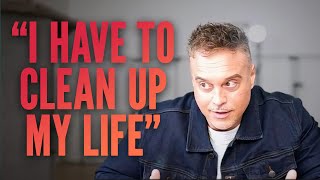
Nick Stumbo and a guest discuss "Lie #3: Counterfeit Cleanup," the mistaken belief that people can "clean up" habitual sin through their own efforts. The guest cites that over 2,000 people per month reach out reporting church-attending Christians struggling with entrenched sin, and argues that overcoming requires receiving help, community, long-term commitment ("long obedience in the same direction"), and addressing root causes rather than quick fixes. The conversation references Romans 7, neuroscience of habit, and resources like Pure Desire and Eugene Peterson's book.
So the third lie, and I think it's one, you know, I want to be careful even when I say it this way, that, like, this is not, you know, shots fired at the church. But I think that this culture permeates through the church in so many ways. Your third lie is the counterfeit cleanup. And so just talk to me about that. What does that look like?
Yeah, I mean, I would just say that the reason that I talk about this so boldly is because know what's true is true. And I've, I've got the facts. And the facts are 2000 plus people per month reach out to me via, you know, direct message on social media, or they email me. And I get over and over and over again. I love Jesus, I am part of a church, I attend church, but I am struggling with habitual sin. And the counterfeit cleanup is the lie that if I do something, I can overcome something. And again, you have to receive something that you cannot obtain on your own. You cannot overcome sin on your own. You cannot clean up your own life because you don't even have the desire. Like read Romans 7. You don't even want to do the things you ought to do. Exactly. Why do you, like, why do you arrogantly believe that you can, you can clean up your life by doing X, Y and Z? And you're struggling with, why am I not seeing fruit? Why can't I overcome this? Why am I struggling in this relationship? Why do I keep, you know, losing my jobs? Why can't I be more successful in my career? And it's like you're trying to do a list of dues instead of receiving.
Yeah, that's good. And that's something too, that we see, you know, in our ministry and in our groups is that's why community is so important. Because that idea of that counterfeit cleanup is this is something I can do by myself. Which honestly, man, the more I think about it, like, also comes back to control. Like, I can control how I respond to myself and my sin and what this cleanup process looks like, but I can't control how someone else is going to respond if I tell them, you know, I've had a habitual pornography addiction since I was 12 years old.
And I was going to say, I mean that that's what I love about pure desire. It's like, man, it's a long term commitment, man. Like you, you, like, I'm going to struggle with pornography for 20 years and feel like I can download an app and listen to a sermon and I'm going to eradicate, you know, 20 plus years of sin for my life. No way, man. So, I mean, so many people ask me, like, how do I go from A to B? It's like, well, the answer, one of my favorite books, Eugene Peterson, is Long Obedience in the same direction. The answer is Doing the deep work. It's, you know, identifying why do I say yes to the thing that I know is destructive to my life. You know, what, what, what's, you know, I would, I love to say, you know, the fruit is found in the root. If I can get to the root of why do I say yes to the thing? It's like, yes, the. There is plenty of neuroscience around this habitual thing in my life, but it's deeper than that at a heart level, because there's something that I have not dealt with that is causing me to believe if I do this thing, yes, I'm going to overcome or I'm going to be numb to this thing that I actually don't want to deal with.
Yeah, that's good, man. Again, I'm so pumped for people to have this book because I feel like this is going to be a great thing to have conversations with so many people about and even explore in our own lives.