Why Your View of Sex is Damaged w/ Sean McDowell | Ep. 470
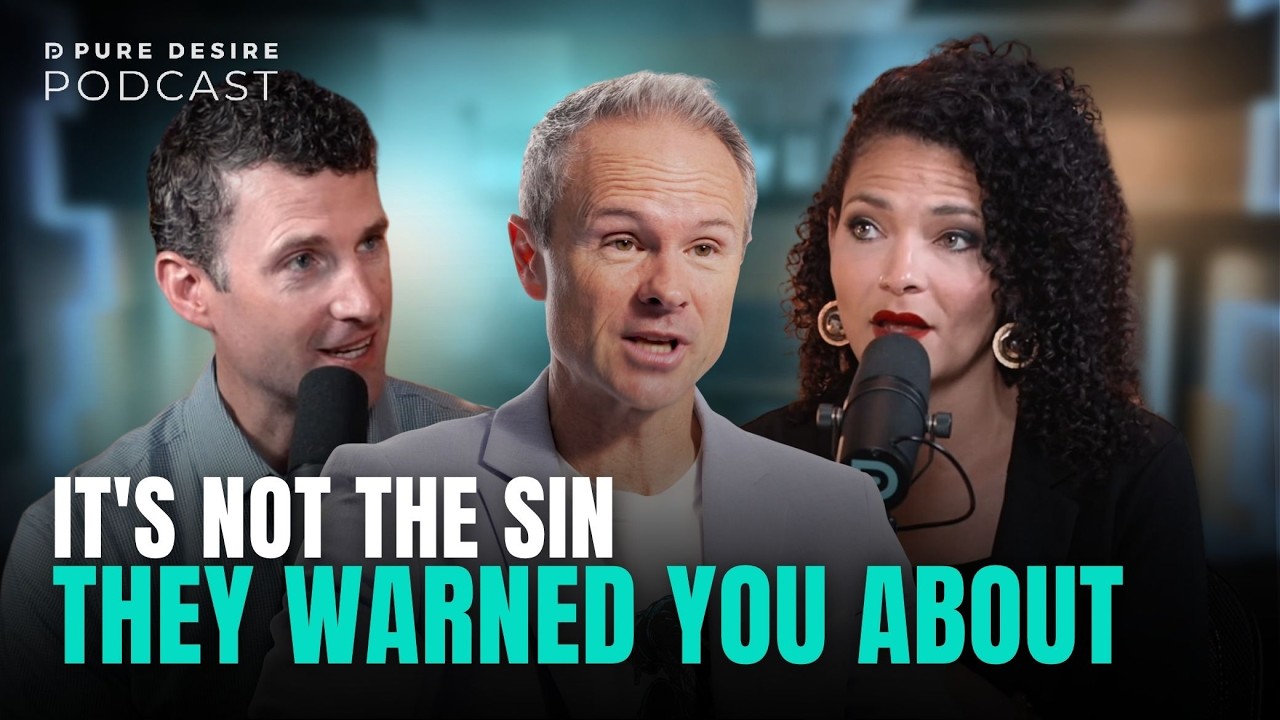
In this episode of the Pure Desire Podcast, host Nick Stumbo welcomes Dr. Sean McDowell, a Christian apologist and author, to discuss how contemporary culture has distorted Christians’ understanding of sexuality. The conversation begins by noting that many believers’ views on sex are shaped more by secular media—Netflix, TikTok, the educational system—than by Scripture, a problem amplified by the church’s relative silence on topics like pornography, masturbation, and sexual ethics. They cite a Barna research report showing a surprising proportion of self‑identified Christians who consider occasional pornography acceptable and who believe they can enjoy pornography while maintaining a healthy marriage. The hosts identify three common deceptions that fuel harmful sexual behavior: (1) the belief that pornography does not affect the individual, (2) the promise to quit “later,” and (3) the claim that no one else is harmed. These myths are linked to brain‑changing effects, relational damage, and exploitation of performers. McDowell grounds the discussion in biblical foundations, pointing to Genesis’ creation narrative, Jesus’ teaching in Matthew 19, and Paul’s letters (Romans 1, 1 Thessalonians 4:3, 1 Corinthians 6) as the core ethic for sexuality. He argues that the secular mindset compartmentalizes faith and sexuality, whereas a biblical worldview sees every aspect of life—including gender, bodies, and desire—as under God’s design. Practical pastoral and apologetic strategies are explored: using stories and thoughtful questions rather than lecturing, sharing personal testimony, building relational accountability, and engaging in community‑based recovery groups. McDowell shares examples of conversational tactics (e.g., comparing sex to a handshake or hug) and highlights the importance of appealing to universal moral intuitions when speaking to non‑believers. Resources mentioned include the Barna report, McDowell’s updated True Love Waits curriculum, his book Chasing Love, and the broader Pure Desire ministry. The episode concludes with advice for parents: invest early relational capital with children, discuss sexuality age‑appropriately, and model a shame‑free, Scripture‑grounded life. Overall, the episode calls the church to speak more clearly about God’s good design for sexuality, to counter cultural lies, and to equip believers with both theological understanding and practical tools for personal and communal transformation.
Chapters
Dr. Sean McDowell, welcome back to the Pure Desire Podcast. Good to have you on again.
Thank you for having me, it's a joy to be back.
Yeah, we are excited about this conversation because I think it is one that we are not having enough. I mean, you're known for being an apologist and, and having great defenses of our faith and what we believe, but today we're going to get to connect that to what we believe and know to be true about our sexuality and and what God says about that. And so I think it's going to be a great conversation. And as we know, many Christian men and women have been stuck in various kinds of compulsive sexual behaviors, pornography use, other things. And often this is because of the lies they believe about themselves, their bodies, about sexuality in general. And so would you say that it's common for Christians to have a view of sexuality that has been more shaped by the world around us than it has been by the Word of God. And expecting your answer here, why do you think this is so common?
Well, it's totally fair to expect my answer because number one, we see the evidence for that today. But second, in Paul's day, we saw people being taken in by ideas in the world. Hence Romans 12:2, "Do not be conformed to this world, but be transformed by the renewal of your mind." Conformed is passive. Paul's given a command, not to passively be conformed, because it's our default if we're not intentional in the other direction to absorb the ideas of the world around us. Now, if that's happening in pagan Rome at that time, and obviously in Corinth and other cities, clearly that's going to be happening today.
Why?
Not only because we're surrounded by ideas that are not biblical, but there's far more ways for these ideas to seep into our lives and into the church than in the past. Whether it's through Netflix, whether it's through TikTok, whether it's through the educational system, sadly sometimes through the church. Uh, your report clearly showed this. I mean, it was kind of stunning to me. I still have a hard time believing some of the numbers that came through. I know the Barna report that you commissioned, sometimes I'm like, there's got to be some flaw behind this, but I know how careful Barna is. And the number of like at least self-identified Christians who would say things like pornography are okay in their relationship to spice up their, you know, sexual dynamic. I'm thinking that should obviously be zero, maybe 5%. I could understand. But that is one clear indication that ideas from the culture have seeped into the church, sadly.
Yeah.
And I think in some ways it's a matter of ratio, right? Like we go to church and at least in my experience and the people I hear from, most churches are not talking about sex and sexuality. They're not bringing up the gray areas like pornography and masturbation. There's an occasional mention of pornography is sin and sex is for marriage, but outside of that, the church is largely silent on sexuality. And then we go into a world that sexuality is everywhere. We're in a Western culture that's inundated with sexualized content on our movies and social media. And so somewhat just that ratio of like, yeah, we're going to be more influenced by what we are hearing more of. And if we get a worldly viewpoint of sexuality in our phones and computers and television shows and movies and then the church is largely silent, just by the amount, the volume of what we are hearing, we are going to be shaped by that. And I think it is part of our call to churches and to leaders and to Christian communities to say, "This is God's creation. This is God's territory we are talking about, and we need to be more willing to voice the truth of God's Word." so that it is shaping us, so that we can be transformed by the renewing of our mind and not just conform to all of the other messages that we're hearing.
Christians are always talking about sex and hammering a biblical sexual ethic and against things like LGBTQ. And I tend to go, you know what, actually in the church it's the opposite problem. We're not talking about it enough, which just gives people permission to realize I'm not alone. There's a biblical way of thinking about this. So I think we actually have to talk about it more. But you're right, it's a ratio game. If the average student is on social media or a digital screen 7-8 hours a day and maybe 2-3 hours at best in church in a week, it's clearly they're going to be affected by the quantity of what's coming through in the world.
And we just have so much exposure. I mean, I have kids ranging from 22 down to 14, and, um, I mean, the things that are just normal are so— were so scandalous a couple decades ago. I just bringing my 16-year-old daughter shopping for a bikini. I'm like, how do I walk this line of, you are not the reason why people make bad choices sexually, and you know that culture of, okay, girls don't make the boys stumble, and boys, avert your eyes. Like, I don't want to do that to her and put all the weight of boys' decision on her, but I'm also thinking, is there not a swimsuit on this rack that is Like, to me, it's like porn. I mean, it's so bad what's out there right now. It's just, it's really hard to, um, navigate, I think, this culture, especially as a parent, and even what we find, um, inappropriate anymore because we're just desensitized to it. It's, it's everywhere. And so it has to be pretty raunchy for somebody, I think, to even recognize it as, um, changing the way that they view sex or maybe changing their arousal template when, when it's doing it in little micro doses without their knowledge. All the time, every day.
Microdoses is a great word because it's far more subtle than it is just some kid's gonna turn on and look at just grotesque pornography and start there. I'm sure that can happen. Yeah. But it's what you said is exactly right. It's like the classic frog in the kettle. Just where am I get my standard from? And when it's so ever-present in society, it's hard to say how biblically do I toe this line? So I think you're right. That's the tension that we find ourselves in. Mhm.
Yeah, it reminds me of, um, you know, like a food allergy. If you have anaphylactic shock to something, like if you're celiac, you know, I can't eat that. But then it's like somebody who has a sensitivity, it just over time, and then 10 years later you're like, how did I get here? I'm falling apart. And so I think we really have to continue to talk about it and then just reassess health and conviction always, because it's never going to be a list of black and white things. It's it's our heart and our— what the Holy Spirit's telling us too. Okay, so our next question is, what are some of the deceptions, speaking of, about sexuality that have crept into the way of thinking of Christians for men and women, and what are you seeing?
This is a really good question. When I talk to students, there's a few that I, I will really emphasize. One, it doesn't affect me. There are so many young people, and not just young people, really anybody who looking at pornography and they just think, you know what, I'm different. It maybe affect my peers, but it doesn't affect me. I remember this is from years ago, this study from Sweden, and it was like 70% of students thought pornography affected their peers, but it was like a minority that thought it affected them. And I'm like, of course we all think we're different for them, not for me, right? We all think we're the exception. It's human nature to think that. So I think there's a huge amount of this generation that just thinks, you know what, It doesn't really affect me. And they're not aware of— we could get into this— what it does to the mind, also what it does to the brain. But it doesn't affect me is a huge one. Another one that I hear, Ashley, is that I'll quit later. You know, this is something maybe teenagers do, maybe in my lower 20s before I'm married. But when I have, quote, the real thing, then I will quit later. And of course, this shows a complete lack of awareness of how much pornography shapes the brain and our habits and our addictions. But this is undoubtedly one of the lies that people tell themselves. Oh, when I have the real thing, I will quit later. And I think the third lie is just, I'm not hurting anybody. This is just about my own feelings, my own pleasure. In the privacy of my bedroom or in the privacy of my phone. I'm not hurting anybody if I look at pornography. And again, I think this completely ignores how it does rewire somebody's brain. And if you look at pornography, it's going to shape the way you treat people, whether you realize it or not. I would argue that it harms the performers who think they're making money, think this is innocent, but it's fueling the fire, so to speak. So it harms them, it harms marriages, it harms kids. But the idea is that, 'I'll quit later, it doesn't affect me, and I'm not hurting anyone,' are probably three of the biggest lies that I hear.
Yeah, I agree, especially when we talk about that 'it doesn't hurt me.' And we can talk more about the brain later, but when we look at it from that point of view of how pornography shapes our own brain, our own view of sexuality, like there is an acknowledgment it's hurting me, even if it doesn't hurt anybody else. Like, it's hurting me. And that's a good starting point. A couple of the myths that I've seen are deceptions, and these are both right in that Barna report that we did. And one is that society by and large says a little bit is okay. You know, when people were asked the question, how comfortable are you with pornography in your life? Only 21% said they wish they didn't use it at all. So that idea that I could live a life without any pornography, only 1 in 5 said that was their aspiration. Which just shows me that in general we've accepted this idea like, ah, a little bit's okay, doesn't everybody do it, what's the big deal? And, you know, I've said that on other podcasts of like, it's like asking the question, how much poison is it okay for me to ingest? Like, well, if it's poison, why do we want any of it? And yet I think with pornography we have adopted that mindset. The second one that came up in the Barna report is this idea that I can have both. I can both have kind of the sexual outlet of pornography fueled by lust and a healthy marriage with sexuality within the marriage. And I'm forgetting the exact number, but I know it was over half of respondents said that it's possible to both view pornography and have healthy sexuality in marriage. And I, I think that's very much a culturally influenced view that says you can have your cake and eat it too. That just what you were saying, it doesn't really affect me. I can do this over here on one side of my life and yet still have the kind of marriage that I want. And what we have seen here on Pure Desire as people come to us in the midst of so much marriage crisis and turmoil and hurt and pain is that's not true. It may be true for a while, but eventually or ultimately, sooner or later, it just wreaks incredible havoc within the marriage. And that, that is not possible for both those things to coexist peacefully.
I think that internal torment of the soul that happens when we're doing something that's shameful and secretive. I know for me and my family, not only in my marriage and then in my professional life with all the women I've helped the last 10 years, and, and my parenting world, you can always see the fruit of that hidden behavior. I mean, if you're, if you, if you're an expert at this and this is what you do for a living, it is like you have a sixth sense. And so, I mean, we get women that are having trouble being intimate with their spouse, having trouble reaching orgasm. We see men with porn-induced erectile dysfunction and, um, and, and so many of them are not seeing the connection. They'll come to me and say something, and I'm like, is there porn involved? And it's like, yes. I'm like, let's start there. Let's start by taking that off the table before we start these other, you know, methods of increasing some healthy sexuality. And then with my kids, I can always tell their demeanor, their spirit, their character— everything starts to go sideways. And the last time I caught one of my kids struggling with something It's the behavior and the withdrawal and the anger and just like this really negative spirit that was just flooding them that made me do a deep dive and say, what's going on here? And then when I had a conversation and said, we're locking up the phone—
the—
I, I mean, I totally get it. If I was your age and had a phone, I'd be all over this stuff too. I'm exactly like you. You get it from your mama. Like, but I'm gonna help you. And when I did that, um, his spirit just lightened. And I looked at his message to his friends, and it's like, well, guys, I'm chopped, so, um, I'm going to be working with my mom for a while and you won't hear from me. But he was just bouncing around the house after that. And so you can really see how those hidden behaviors, um, just a trap of the enemy. It takes the person down and they don't even realize it most of the time.
That's really well said. It reminds me of how many times For example, say a woman will find out that her husband is looking at pornography, and I realize it's not just men looking at porn, of course. And then looking back, it's like, now it makes sense. Yeah, the distance makes sense, the disconnect makes sense. So in other words, that person was being harmed and they didn't even realize it, and pornography was the cause. So we can't confuse being aware of being harmed with the reality of harm. And the studies are that porn, like you said, Nick, always harms ourself. It harms my worldview. It makes me feel guilty. It makes me feel like I'm— it turns us into objectifying other people that we use rather than love. So there's always harm that's there. Now, one other thing, and you made two points, Nick, and the first one was that I think you said maybe a high percentage of Christians believe you can look at some pornography, just a little bit.
Yeah.
Well, here's where people are confusing like junk food with pornography. Right. Like you can have a little bit of junk food if you eat healthy and you exercise and you brush your teeth, it's fine. You could argue that God has given us things like sugar and strawberries and chocolate to enjoy. That's not immoral. If you only eat that, then it's harmful, of course. But to compare junk food to pornography is to say, well, it's also not immoral in small doses.
Mm-hmm.
That's the very thing scripture would challenge. Yes. And I would say we could make an argument for that morally, even apart from scripture, and it harms relationships in society.
Yes.
That's the distinction I think a lot of people are missing.
So I think one of the challenges in this area, Sean, is a divide that a lot of Christ followers have between their spirituality and their sexuality. So they come to church or they engage in spiritual practices, and whether intentionally or not, they kind of leave their sexuality at the door because we've not heard about it at church. We think, "Well, I don't know if God really has much to say about my sexuality." So I've got all this great spiritual thing I do, but my sexuality doesn't really touch on it. So how can we ground our sexuality deeply in our faith and in the word of God?
Well, the first thing to recognize is this kind of compartmentalization is not just true for sexuality. It's true as a whole in the way our secular culture approaches faith. Yeah, Francis Schaeffer talked about this— oh gosh, probably in the '60s or '70s— where he said we have a two-tier culture where there's kind of a subjective realm of things like art and morality and theology, and those aren't things you can know. But then there's an objective realm like math and science of history where we can know certain things to be true. And what happens in our culture and in the church is we take things that are theology or matters of morals and we put them in this upper category that they're just matters of preference, not Matters of truth. So this goes back to your opening question about how much have we been affected by our secular way of thinking. Well, it's in particular ideas like accepting things like pornography not intrinsically being wrong, but the entire category or framework we have of naturally putting sexuality in the realm of, well, this is my private life, this is what gives me meaning. The Bible doesn't speak to this. Is absolutely unmistakably a secular way of approaching sexuality. It was Abraham Kuyper, the Dutch philosopher, politician. He said there's not a square inch of creation out of which God does not cry out, it's mine. So if we are followers of Jesus, everything— how we vote, how we parent, how we go and work, our profession, and our sexuality is to be experienced and seen under the umbrella of a biblical worldview. Now, how do we do this? Well, we follow the example of Jesus in Matthew chapter 19. He's asked about divorce and whether it's permissible or not. What does he do? He points back towards creation at the beginning. He says, haven't you read? And of course, he cites Genesis 1:26 through 2:27 and Genesis 2:24, that God made them male and female. And it says essentially, leave your mother, father, two shall become one. Jesus is saying when it comes to sexual ethics, we need to go back to the way God designed things to be at the beginning, because God's design is normative. Paul does the same thing in Romans chapter 1 when he's talking about people know God exists through creation, they suppress it. Gives the example of certain wrong sexual behavior, he points towards what is natural to the world and creation in terms of God's original design. So the core ethic for sexuality is in Genesis 1 and in Genesis 2. What did God design marriage for? What did God design sex for? What did God design our bodies for. So we got to go back to the beginning, and of course, the only way to counter the cultural lies is to recognize where those lies are and then replace them with biblical truth.
I think you're spot on, Sean, that it's asking that question: What is God's original intent, and where in my current way of living have I gotten away from God's original intent that I somehow am led to think that parts of my body that we would all agree, I would hope, in Christian faith that my whole body was made by God, it's God's creation, formed in the mother's womb, all of that great stuff from Scripture, but to assume that maybe a part of it is somehow outside of his purview, like God doesn't know what to do about my sexuality or my desires, my urges, that somehow I have got to deal with that separately from him is, like you said, really rooted in a much bigger paradigm of thinking there is a part of my life that is secular, a part of my life that is separate from God, and that is not an accurate fundamental understanding of how our life is all lived. You know, Romans, end of Romans 11, by him and through him and for him are all things created, you know. And all things means all things, like all of our body, by him, for him, and through him. And so I, I think that is such a key to healthy sexuality, is reattaching our sexuality and our spirituality and really believing that God has something to say about all of it, not just that sex is for marriage and save it for that.
You know where I got hung up and really confused before doing this kind of work, because I have a pretty colorful, um, sexual past. And so when I would hear scriptures or church teaching on God's original plan, I just could not get it in my head that from the beginning I am God's original plan, that he anticipated my mess-ups and he anticipated that I would stumble and make mistakes. And but I just kept sitting with the fact that like, this is how God did it beautifully. I messed up, and so there's like a plan B for me, that I'm— I will never be what he wanted me to be, rather than like, yes, the God of creation knew Ashley and knew how she was going to be and was the lost sheep. You know, that's the picture I have above my bed, just to remind me that he, you know, went after me for a reason. And, and just to be able to get into that and, and integrate mind, body, and soul and say, I am trying to read more, I am trying to pray more, but why am I still stuck? What's wrong with me as a Christian? And then to be able to fold in all of it. He create— he wants me to sleep, he wants me to eat well, he wants me to have friends, he wants me to live out the calling that he created me to do because it gives me purpose. And, um, and I overcome the enemy with the blood of the Lamb and the word of my testimony, and that all these things work together and he created it good. I didn't have to go sideways to find healing, but it's all from him and for me. And that, that was when things started to shift for me. But Unfortunately, when I was going through my stuff, it was like I read the Bible for myself and it started clicking. I'm like, why didn't I learn this in church? Why didn't anybody tell me? And I started seeing the picture of God's goodness from the beginning, but it was from reading it myself. And, and that's kind of sad too, you know, that I think I got misled in some church teaching. I love the church, and that's why I'm passionate about helping the church in this area, but, um, that's not how I found thread that you speak about, Sean, of going back to the beginning and looking at the whole scene of God, and all of it belongs to him.
You know, if I could jump in, one thing you said is really important I want to highlight. You said that God created it good. That word is huge, because probably 15 years ago when I was teaching high school full-time, I asked these high school students in my class— this is a private, wonderful private Christian school, Southern California— they were seniors. I said, if you were going to sum up the sexual ethic you just learned in the church growing up, what would it be? And I'll never forget this girl. She said, don't have sex, it's bad. If you do, you'll get AIDS and die. And I thought, oh my word, she had been at a Christian school. Yeah, she had been. And this is 15 years ago. I'd like to think a lot has changed, but I'm not sure how much has. She had been in the church. And notice a few things: sex is bad, and if you do it anyways, it's consequence-based. Yeah, that is so not a compelling sexual ethic that's going to make anybody say, you know what, I need to experience this healing that you're talking about, Ashley. I need to say no to certain sexual behavior. If there's not a compelling captivating, just vision of what good, healthy sexuality is supposed to be, then of course I'm not going to follow that script. And that's where I— I mean, I love the church like you do as well. My dad led the first public global campaign against sexual immorality before True Love Waits in the '80s called Why Wait? And I asked him long ago, I was like, what really motivated you to do this? And he said, because I kept hearing in the church, sex is bad, sex is bad, sex is bad. And highlighting the consequences, he's like, no, sex is good. It's beautiful. It's a part of God's amazing creation that he's made. It's a kind of blessing for us. I mean, sometimes working with students, I'll joke and I'll say, look, God could have said like, a guy and a girl pinky swear and a kid pops out. Like, he could have done it that way, right?
He wants—
he could have, but he made it good and pleasurable for a reason. But it's only when we know the Creator's design and we follow it that we experience the kind of goodness and blessing that he has in mind for his creation. So sex is not bad, but the abuse of sex physically or in pornography is what is not only bad, that's what brings harm. So if the church could not only just talk about what we're against— pornography's a bad, abortion, same-sex marriage, whatever we want to criticize— let's talk about what is good and beautiful. That's something captivating that I think captures many people in our culture.
Yeah, that is so, so good and so true, and we, we need to hear that more. Okay, that ties in perfectly to my next question about scriptures. Are there scriptures you point to that help us root out our understanding of sexuality in our faith?
That's a great question, and I want to emphasize that this is the right question because we go first and foremost to scripture. Scripture is truth. Scripture is our guide. Scripture is what sets us free. Now, I guess I'd point back towards again what I said earlier, Genesis chapter 1. And why is this so important? There's a massive text on ethics in the Old Testament by Richard Davidson. I think it's called The Flame of Yahweh., and he walks through all these different ethical issues, many of them relational, love, sexual issues. And he argues that the core passage and teaching for sexuality is God's creation and design all through the Old Testament. And we see that repeated in the New. And so why is this important? Because our culture wants to argue that if there is no designer, Therefore, freedom is doing whatever we want and whatever feels good.
Mm-hmm.
That's why there's so much debate about evolution and our origins, cuz people sense something deeper is at stake. Either there's a God who made me that I'm accountable to, and it's built into my body and built into the world. But if there's no God and I evolved through this blind, purposeless process, then I'm the authority for my own life.
Mm-hmm.
So I want to tell all people, the place to start with is creation. God is the one who made our bodies. God is the one who made marriage. God is the one who made relationships. God is the one who made sex. And we are only free when we understand that design and believe that it is good and then follow it. Now, of course, there's tons of teachings like 1 Thessalonians 4:3 that talks about this is the will of God, that you're sanctified and you avoid sexual immorality, right? That's how important it is. So 1 Corinthians chapter 6 about sexual immorality is the one sin you commit against your own body. There's a certain weight because our bodies are made in God's image and we are sexual beings. But again, when we talk about sexual immorality, That only makes sense if there's first a sexual morality and there's first a design for how we are supposed to live. So I would encourage all believers more than anything to follow Jesus' example and go back and ask the question, what is God's design for marriage, sex, relationships? And it's actually when we know that and we follow that despite what we see in our culture that brings real freedom.
Yeah, that's so good. And I completely agree about going back to Genesis. I mean, I think in every talk I give, I'll mention Genesis 1 because of God saying, you know, "Let us make them in our image." And that's where we get the male and female distinction, so that it's not just that God's image is in my body because I'm a human being, but there is somehow that uniquely in my maleness, and that somehow for women in their femaleness is embodied the image of God. And I don't think we talk about that near enough to say somehow being a woman, as God created you, is, is the image of God in you. And somehow being a man, as God created you, is the image of God in you, which means like God's deeply and intimately involved in our sexuality, our gender, our body parts, our hormones, you know, the parts of us that we think of as sexual distinctions, the reproductive organs, the system, Like God created it, and in that very place said, "That's where I see my image. Male and female, let us create them in our image." And I think that's mind-boggling if we really go into it, because we've so like downplayed our bodies and body parts and reproductive organs and like, "Oh, that's something for 8th grade health class. We don't really talk about that in church." It's like, well, why not? Because when God looked at the reproductive system, he said, "There's my image. Male and female, I created them in my image." And if we would unpack that more, I think in our churches and faith, I think men would look at themselves in the mirror and women would look at themselves in the mirror and say, "Wow, made in the image of God. That's incredible." And then from that, we can build so much other theology. And I've, you know, one that I've always loved, I'll throw out there is 2 Timothy 2:22. It's easy to remember because it's 2 Timmy, 2, 2, 2, just keep throwing out 2s. He says, "Run from anything that stimulates youthful lusts." So this idea like, keep far away from what would ensnare you and drag you into that lustful way of living. Instead, pursue righteous living, faithfulness, love, and peace. Enjoy the companionship of those who call on the Lord with pure hearts. And so I love the movement of this one verse that's like, run, flee from the youthful lusts and move towards the community of God's people. That youthful lust is about isolation and selfishness and pursuit of my own pleasure. When God calls us into this life of faithfulness and love with other people. And I love that because I think that's so much what we try to do at Pure Desire, or what we see happening, is people coming out of isolation, secrecy, and destructive patterns, and not just avoiding those things, but coming into godly community where they're knowing and being known, and that's where they're experiencing life change. So if you need a verse to maybe hang on your wall, 2 Timothy 2:2 is my go-to. So Sean, as we've talked about this biblical ethic and a way of seeing ourselves rooted in scripture, it really is a different way of seeing sexuality and the body, and very different from what culture presents. And so if, if we're seeking to live this out and honoring God with our bodies, and, you know, sex is for marriage and, and avoiding pornography, that can sound very different to a secular world. So how do you equip Christians with an apologetic around sexuality to explain what they believe to others in a way that is inviting, inviting them into God's goodness and not just being all about what we're against.
Let me give you an example of how I try to do this, and then I'll pull some of the principles out of it. So I have a friend years ago, uh, let's just say very, very sexually active. And when I was asking about— I'm like, hey, you're sleeping with a lot of girls and then not even calling them back. Do you feel bad about this? He's like, no, it's just sex is just for fun. It doesn't— doesn't mean anything. And I remember thinking about that, going, I know he doesn't really believe that. We all know that sex means something, otherwise we wouldn't be so upset about sex abuse. We all know it means something. And so the next time I was with him, I don't recall how long it was. I said something to this effect. I said, "Hey, I'm curious. You're a business guy. Do you think a handshake means anything?" He's like, "Yeah, that's a way of communicating a deal." I said, "I agree." I said, "Do you think a hug means anything?" He's like, "Yeah, it's a sign of affection." I said, "Do you think a slap on the face means anything?" He goes, "Yeah, that's an insult." I said, "I agree. So help me understand how a handshake, a slap, and a hug all mean something." but sex means nothing. And I'm telling you, there is no answer for that. There's no answer for that. Now, for the record, I don't remember the exact 3 examples that I gave, whether it was a hug or like— I, I forget, it was like years ago. But that was the exact point that I was making. And I remember he kind of looked at me and was like, you got me. I know sex means something. So what I didn't do is lecture him. What I didn't do is quote a Bible verse to him. What I did is I tried to pull from something in his heart he really knows is true, draw it out of him and say, now that we know sex means something, let's revisit this conversation about how you treat women and your belief that it doesn't mean anything. That's how I try to approach when I can. Now, it doesn't always land that awesomely. That was like a cool apologetic moment. I was like, boom, landed. He got it. Doesn't always work that way. But I do know, because people live in God's world, because they're made in God's image, because we yearn for love and we intuitively know what it is, that things again Like, same-sex marriage is not equal to biblical marriage. Pornography morally harms people, and I want to draw that out as I can. So I did this reaction on Instagram. It was a little different. There's a time and place for just being really soft and patient, drawing it out of somebody, and there's a time and place to just call nonsense. So I was responding on, on TikTok, and Andrew Tate, who who completely is known for just sexualizing and using women, was talking about his daughters. And I saw, you know, how he cares for his daughters and wants to be a good father. And I was like, good for you, but shame on you. Like, really, you're going to talk about caring for your daughters and yet you're willing to sexually abuse another man's daughter? That's called hypocrisy. Now, I didn't need a Bible verse to point that out, but I'm doing that in a way that unbelievers who think, yeah, it's fine to be sexually active and it's fine to just look at pornography, might think differently when it came to, hey, what would you think if your mom was treated this way, or your sister, or your own daughter? Yeah, that's a way of trying to reason and just appeal to what we intuitively know. I mean, back to Romans, Romans 2. We know the moral law because it's written on our hearts. With unbelievers, I want to appeal to things that they know, whether they realize it or not, and then show them out of that actually what Jesus taught is good. This is actually why the teachings of Jesus would be positive for the world. Now, I could give other examples of how I do this, but that's an approach that I try to take.
Yeah, I love that. What it says to me, Sean, is I think too often Christians are known for speaking down to what people are doing or speaking down to the world and being condemning or critical. When I believe what Jesus shows us is that it's possible to invite people up, invite people up to his goodness and his plan. And, and so talking about the way that the world approaches sex, that it is just bodies, it's just physical, it's just for fun and pleasure. But to invite up to say, you know, God designed us as integrated beings and we're not just a body, we're body, soul, and spirit. And when we engage sexually, in a committed relationship with our spouse where it's body, soul, and spirit, there is something happen— that happens there that can be so much more than just a physical pleasure. And yet the physical pleasure is still present. And so that idea that maybe you're missing out on something that God has for you in his goodness versus just always speaking down, I think could give people an ideal of maybe there's more out there for me. And to me, that's hopeful because I do think we're seeing increasing signs that our world is growing disillusioned with their own version of sexuality and morality, that it is coming to a lot of emptiness and hurt and pain and sex trafficking and all the horrors that we see at the extreme examples. And worldly secular sources are looking at it saying, "There has to be a better way. There has to be something more than this. This is destroying our teens and our culture, and there has to be something better." And I think it is just a powerful moment for Christians to invite others up and say, yes, God intended us for more. God designed our bodies for more. God created sexuality for more. And let's explore what that— that goodness— back to that word— why it's good and how God created it good. And what does it look like to get back to the good that he made us all for?
Amen. Yeah.
And I think practically one of the best things, if you're not— you know, it could be pretty intimidating if you're not an apologist, you know, but like just living your own transformed, shame-free life out loud in front of— because I have a ton of friends and family that are not believers, and they have been my best friends and best support always. But we don't have the same perspective necessarily on marriage and sexuality and that kind of thing. But me living my life out loud and saying, this is what my— I'm going through in my marriage, and it's super painful, and this is how it's interfering with our physical intimacy or emotional intimacy, and this is what I'm going through with my sons and my feelings about it because of my moral convictions and what I'm worried about, and I'm just doing life with them. What I found is that they may not have the same driver, that moral compass or that biblical compass driving them, but when, when pain hits their life and they see how I've handled it, every single time I've gotten a phone call, okay, this is going on, help me through this, and And so I don't necessarily have to say, you're doing this wrong, you're doing that wrong, but I get to just live in front of them and they're like, she has something different, she has a different viewpoint, and it seems like it's healthy, and I'm gonna go ask her about it even though I don't go to church or I don't read my Bible. And, and so I think your testimony, just living it out, is, is one of your best teachers. Non-offensive.
Ashley, I agree 100%. And let me, let me bring this full circle, because you're right when you said, you know, we're not apologists. It can be intimidating to have these kind of conversations. But listen, Jesus communicated primarily in two ways. Number one, he told stories. So you have shared your story. It's our testimony, you said, that counters the lies of Satan. We remember stories, we relate to stories, we love stories. That is a powerful thing to do, is to just share a story. The other thing Jesus did is he asked questions. In the Gospels and Acts, we have recorded 340 questions. In the letters of Paul, 262 questions. There are 3,000 questions in the Bible. So even if you're not an apologist, you know, somebody's looking at porn, you can just ask some questions. Say, do you ever feel guilty looking at this? Do you ever wish you didn't look at this? If, if your parents or others you respect found out, would you care? Would that bother you at all? What would you think if you found out— you're scrolling through some site and you found that your sister was in this— would that make you think differently? Like, wait a minute, other people are looking at my sister this way? Uh, how about your daughter this way? Do you think our society would be better or worse if people stopped looking at porn entirely. Just ask questions. Yeah, well, that's— everybody can do that. Everybody can do that. So, so share stories and ask questions.
That is great. Make sure to pocket that and say that somewhere at the summit too, so our whole audience can hear that. I mean, that is like just two very doable nuggets that are not intimidating, not overwhelming. It's so good. Very good. Okay, if someone realizes their view of sexuality has been more rooted in secular culture or past experiences than in God's truth, how can they begin to unlearn this and adopt a biblical view of their sexuality?
First thing I would say is, good for you. This is step number one. I'm proud of you. I'm happy for you. I'm thrilled because there's a lot of people who don't even realize that. And if you don't realize you have a faulty view, you can't get better. So I'm cheering you on. We're rooting for you, thankful for you. You got your foot in the door. Now let's take the next steps. So I guess I would say a few things. Number one, you can't and shouldn't do this alone. You need to go talk with somebody, a trusted mentor, a youth pastor, a Bible teacher, somebody you trust who, A, will care for you And B, can help you think biblically about this. So if you do it alone, there's nobody holding you accountable. Satan's going to feed you lies. If you fall short, you'll be discouraged. So first thing is just tell somebody else. If there's a group you can join, like a healing, a recovery group, join that group. Don't do it alone. Second is, this is back again, this is kind of a theme, Romans 12:2, "Don't be conformed to this world. Be transformed by the renewal of your mind." So if you recognize, "Oh my goodness, I've adopted some secular views," well, you probably have a lot more secular views than you even realize. There are times— I'm an apologist with a PhD, and there are times where I stop, I go, "Dang, where did I get that idea from? That is not a biblical idea." So if that's true for me and for all of us on this podcast, of course it's going to be true for you. It's a lifelong process. When it comes to sexuality, I hope this is okay, but I was asked to update the True Love Waits curriculum a number of years ago, and I— the reason I agreed to it, and I wrote a book on this called Chasing Love, is because I could not find any book that I thought was a) really biblically sound, written for students, interesting, not cheesy, and dealt frankly with the real issues of our culture. So I wrote it for my 3 kids, and the whole first section of the book is— I divided it into 3 sections. The whole first section addresses your question, Ashley. It is, what are the secular myths and ideas we've adopted from our culture, and how do we counter them? So myths about freedom. Freedom's not do what you want without restraint. That's secular. Freedom is having the capacity to do what is right. Love. Love is not doing whatever feels good or affirming somebody's behavior. Love is acting in a way towards somebody's objective good. And truth. I just this morning heard an interview with somebody who's like, I'm going to share my truth. And I thought, I'm so tired of this language. You can have your own beliefs. You can have your own beliefs, but you cannot have your own truth.
Right.
And so the whole first third of Chasing Love is taking just these myths, and it's kind of— many times people tell me they read it and they're like, I didn't even realize how much I bought secular ideas. And then the middle of the book is now positively God's design for sex, marriage, and singleness. And then the last part of the book are things like cohabitation, pornography, divorce, transgender, homosexuality. How do we counter some of these cultural ideas biblically. And of course, so be in a group, that book might help. Of course, just get in the scriptures. There's no replacement for this. I get up every morning I can and prioritize getting in the scriptures. I was reading this morning in John chapter 18, which is of course the shift from his prayer, which he ends for his disciples in John 17, to his arrest and his trial. And there's even a line in there where he says about your word is truth. Thought, oh my goodness, how did I miss this before? So get in the scriptures, know the scriptures, study the scriptures. There's no escape for that. You want to counter the lies in the world, you got to be in the scriptures.
Sean, this has been a fantastic conversation. We really appreciate you coming on today. Uh, any final advice that you would like to leave our audience with today on how they can live out a more deeply biblical worldview of their sexuality?
Talk to your kids and do it early and build a relationship with your kids. The time you spend with them gives you the relational capital to speak truth into their lives when they see pornography. It's not if, it's when. So build relationships with your kids, spend time with them, close affectionate relationships, and talk with them early in age-appropriate ways about sexuality. And whether it's asking them questions or sharing your story like Ashley did, our kids don't expect us to be perfect. Don't let your failures and faults, which all of us have, by the way, keep us from talking to our kids. Do it early, do it consistently, and that gives us the best chance of keeping them from being conformed to the world that they live in.
Yeah, what comes to mind for me, we've talked a lot today about Romans 12:2, do not be conformed, but be transformed by the renewing of your mind. And 12:2 comes after 12:1. I know, brilliant. But in 12:1, we're told to offer our bodies as a living sacrifice. And that imagery to me is of the Jewish people bringing their sacrifices to the altar, taking their hands off of it and walking away and saying, God, this is yours. I'm now dedicating it to you. It's not mine to own. And I think that's the imagery Paul is giving us of our bodies, saying offer them to God take your hands off the steering wheel and say, Lord, this is offered to you. What do you want me to do with it? How do you want me to live my life in my family and in my sexuality? Like, what does that look like to honor you with my body? And that begins by offering it to him. And I think when we do that, then we can enter into those practices of not being conformed, but instead being transformed by the renewing of our mind. So, Sean, great to have you on. We are so excited to have you at the 2026 Pure Desire Summit. And I hope that today's episode has many of our listeners thinking, man, I got to be there. I got to hear Sean's session. And so we're excited to have you with us in Nashville. And if you're a fan of today's content, it would mean a lot to us if you would subscribe, write us a review, share it with somebody, invite someone to the summit. All of these are ways that more people can find this life-giving content. And if you want more information about Pure Desires groups, resources, or counseling, you can visit us at PureDesire.org. Journey on, my friends. You are not alone.










