
Do I need a business coach? - Katy trost on coaching, tech, scalingup and being a digital nomad
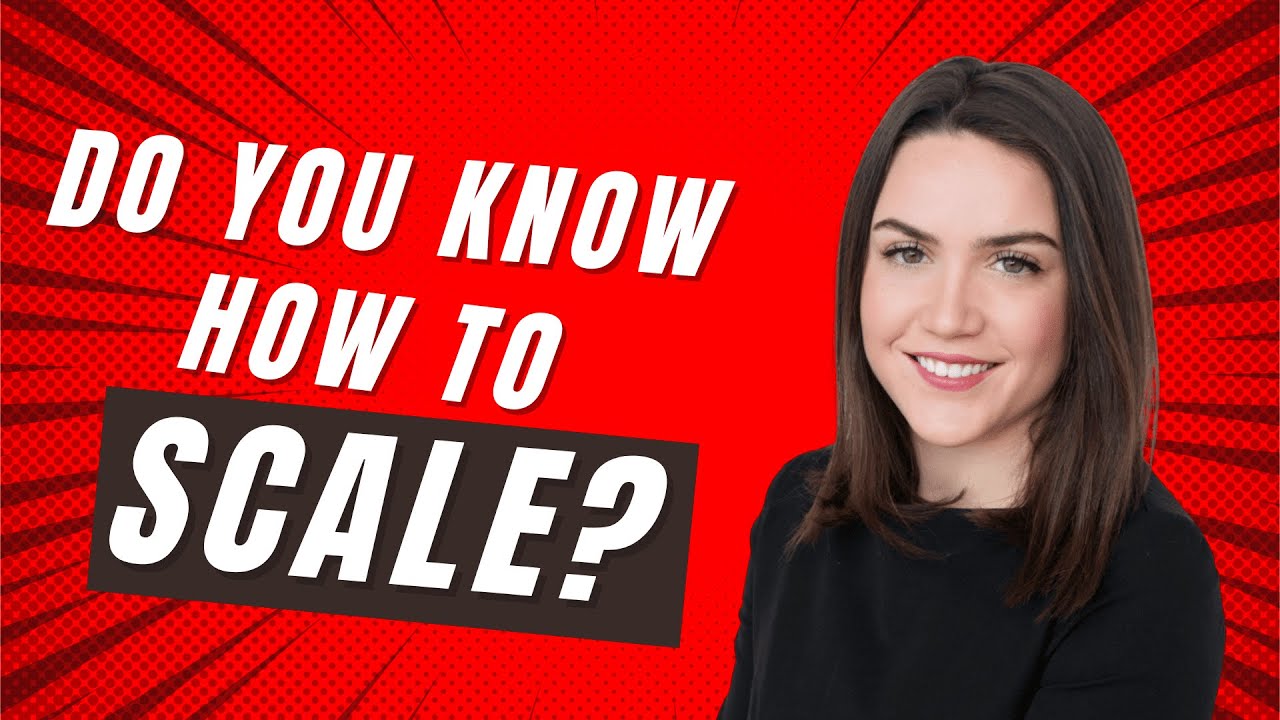
Katy Trost, a German executive coach, works with tech CEOs using the Scaling Up framework to tackle leadership, strategy, cash, people and culture. She built her practice through free coaching, LinkedIn outreach, and writing for Forbes, but deliberately keeps it small to stay hands-on while pursuing angel investing and other ventures.
Chapters
almost 100,000 companies that have used the scaling tools successfully. I can give that, and I can plug it in wherever I see suited. But I also don't try to overcomplicate it with the tools and just throw all the tools at people. That's where I think the skill of coaching and the skill of assessing and understanding somebody's challenge and then prescribing the right tools and resources Hello everyone, welcome back to another show, Zavaroness.
My name is Nir Zavaro, your host, and each time in each episode I try and find interesting people from different places around the planet where I can learn something and maybe make some new friends. And a couple of weeks ago, I went on a call, something with EO, the Entrepreneurs Organization, and, uh, I met Katie, which I've never met before. And we started emailing and we said, let's jump on a call. She had no clue that this is gonna happen now, and, uh, we're gonna meet online and do a podcast together. So Katie, how are you?
I'm doing great. How are you? Thank you.
How's the surprise? You happy?
I'm very happy. I wish I had a coffee before this, but I'm ready.
Where are you located now?
I'm in Tulum. I'm in Mexico for the winter.
Okay. So I'm in Tel Aviv. So that means early morning for you now?
It's 9:00 AM exactly.
And you don't usually wake up at 9:00 AM?
Well, I woke up at 6:00 AM actually. I already had clients before this.
Unbelievable. Every time I do an episode, apart from doing the whole surprise about you not knowing that we're going to record now, I usually surprise my guests by asking them to give a short 60-second elevator pitch about anything— who you are, where you come from, what do you do— and then we'll dive into the conversation. Are you ready?
Absolutely, I'm ready. So I'm originally from Germany, and I traveled around the world for 4 years from 2013 until 2017, and I built an online business While I was traveling. And after 4 years, I got bored of traveling. Believe it or not, I couldn't see beaches anymore. And I moved to New York City and I started a coaching business there. And I did executive coaching in all different kinds of big organizations, professional coaching, professional development, personal development. And I found myself most drawn to the tech space and the startup space. So I did another coaching certification, which was much more business-focused. And you may have heard of the Scaling Up tools, Scaling Up, Bernhard Harnisch, who is also the founder of Entrepreneurs Organization. So I'm one of their Scaling Up coaches as well.
That's the Gazelle coaches?
Exactly. So I left New York in 2019, moved to Barcelona, and was living between Barcelona and London and then eventually moved full-time to London and built my practice there again. And now I'm just in Tulum because the lockdown, because everything is cold and dark in London, but I'm gonna go back in 2 weeks. And yeah, about my work, I work with CEOs of scale-up companies, mostly in the tech space and/or tech-enabled companies. The product doesn't really matter, the scale is what matters, and I help them through leadership development on an individual level, help them with their challenges as the CEO, as they go through the scaling phase, but also on a business level, the strategic planning with the executive teams, execution, cash, and people and culture. So it's very— it's a 360. I see myself as a resource to the CEO. And wherever I can provide tools, coaching, or even other experts and people within my network.
So basically it sits on the scaling up concept of the 4 pieces, right? If I understand correctly, and then extensive experience you have from other places. But you started a long time ago, a few years back, and you've worked with CEOs remote for a long time.
Yeah.
How did they take it in 2018 and '19 working like this? Now it became something that's common, right? We just can't meet.
Yeah. I guess because I'm in the tech space and people are very forward-thinking and very— just, they're excited about these kinds of things. But it was definitely more of a challenge. And especially the ones that were not necessarily in tech or just different generation, they wanted me to be in the office. So yeah, everybody needs, everybody needs a mentor in my opinion.
Do you agree with that?
I agree with that, but I wouldn't necessarily call myself only a mentor. It's a mix between coaching and mentoring and advisory, and the mentoring is the smallest part of it.
What makes a good coach?
What makes a good coach? I would say enabling somebody else to step into their potential and not, when you compare it to a mentor, follow somebody else's journey necessarily. And I think coaching and advisory is an amazing tool for CEOs, especially because it's a peerless role. And in my experience, every time they get on a call with me, they're— it just comes out, right? It's like, there's so many things, so many things I cannot necessarily talk about with my investors or with my senior team or with my family, even with my employees. So to have that safe space and be able to strategize, not necessarily only business challenges, but in general, career, personal challenges, leadership challenges, interpersonal challenges, and create a plan for it and be smart about it rather than reacting in the moment is valuable, I think. In a leadership position.
I completely agree, and while I was listening to you, and what resonates to me, actually, I'm now remembering a few years ago, I would write in the newspaper about the food industry. I own bars and restaurants and stuff, and I would write about the food industry and everything to do with management and vendors and stuff like that. A lot of people would say, oh, if you consult, you don't do. You know that saying? Consultants tell you what to do, but they don't actually do it. And it was funny because at the bottom it also said the bars I owned at the time. Do you find it that everybody necessarily needs to be— so if you, you work with tech, do you necessarily think you need some sort of a track record, you needed to sell a company, or is that something completely different?
Yeah, I think in some cases for sure. I had somebody request coaching from me the other day who was raising a Series A, and I helped with that before, but they were looking for something very specific in terms of the pitch deck. So I referred that person to somebody else and think that they would be a better fit. So I see myself in that sense more of a generalist. And let's say, for example, consulting, going into a company, identifying, assessing what's working, what's not working, and then providing the solution and telling them, this is what I think is the right thing, is a very different approach than coaching. I go into teams and I facilitate. I facilitate the process of identifying the issues. I facilitate the process of coming up with solutions. I facilitate the process of prioritizing work. Do we need to work on setting the OKRs, the responsibilities? The team is doing that work, right? I just facilitate and I ask the questions in order for them to organize themselves. So, I don't position myself in that sense as the expert in, I know what's best for your company. I can give best practices and I can give tools that have been proven over, obviously, almost 100,000 companies that have used the scaling tools. Successfully, I can give that and I can plug it in wherever I see suited. But I also don't try to overcomplicate it with the tools and just throw all the tools at people. That's where I think the skill of coaching and the skill of assessing and understanding somebody's challenge and then prescribing the right tools and resources, but still in a partnership. So I don't tell them, this is what we're going to do. I make suggestions. And then if the tool is great but could be adjusted, then we use it as a foundation to work through it ourselves in an adjusted way. So that's where I see the art of coaching, of understanding what is suited at what point. Where do we need tools? Where do we need a typical coaching approach, working through a challenge, just changing somebody's perspective on a certain— problem that already is the solution itself. So yeah, it's definitely a mix between executive coaching and business advisory.
How many, how many countries have you been to?
Um, something around 30, 30 countries.
And, uh, in how many countries have you met CEOs or, or consulted in general?
Well, maybe 5. I mean, in Germany—
Or nationalities of CEOs you've met along the way, would be 5, 10?
Maybe, maybe 15.
I don't know.
Most of my clients are in London and in New York, and obviously those cities are very international. So Israeli clients, I have Australian clients, I have British clients, I have German clients, I have American clients.
The reason why I'm asking, because being a good facilitator is understanding the problem and then allowing everybody to lead the sheep to the right place, right? Until they understand, you kind of know what needs to happen, the process, you know the process, you just need to walk them through it. And how do you perceive the difference in cultures? Over the years?
You know what? I don't see the difference in cultures. I see a difference in attitude. And this is something that actually over the past year or so has been very interesting for me to see. And when I, um, when I saw bigger, um, just more like a higher number of entrepreneurs and CEOs, right? Because I was in accelerator programs. I was with Tech Nation. I'm still one of the Upscale coaches with the Tech Nation Upscale program. Then I led the CEO roundtable of the Mayor of London office. They launched something in December.
Yeah.
So I just spoke to so many, so many CEOs, not only on a one-on-one basis, but also in groups. And the pattern I saw in terms of the people who were successful in coaching, and they really took something away from either engagements, one-on-one engagements, or roundtables, is that they want to learn. They don't see themselves as the experts. They see themselves as the person who organizes the senior team and enables the senior team. And they acted as a sponge. And they were so curious and so open to learning and so open to receiving help and so grateful for it. And those were the people who were like, they made the biggest change in the shortest time. The ones I get on the call with that feel like, oh, prove me something. What do you have to, what do you, what do you have to offer to me? They were the ones who usually stood in their own way. So I think it's much more of an attitude and all.
Um, I can hear your, I can hear your passion when you start, your eyes light up when you start saying, and I met these people and they're like this and the excitement and Did you ever think this would be your profession?
So I was going to become an architect. After I traveled for the first year, I was going to become an architect for the sole reason that it's the only thing in school I liked was art in my teenage years. So I was like, oh, I may as well do something creative, right? I don't think I would have been that good at it. And I realized really quickly that if I have a regular 9-to-5 job, go to college, do the whole— I would have been miserable. So after 1 year of traveling, I decided, okay, I'm not going to become an architect and I'm not going to get a 9-to-5. And for now at least, I'm not going to go to college. So I did my certifications, which both took me a year and a half, but I didn't pursue the regular bachelor-master, um, career. road. And, um, my friend told me about coaching, and the moment she told me about coaching, I knew this is what I was gonna do for life. And in the beginning, it was much more personal because I was traveling and exploring, and I was so excited about personal development and understanding myself better. And then it moved more and more and more into professional and business. And just, I always ask myself the question, who is the person that I'm most inspired by What do they do and what challenges do they have and how can I help them? And it just very, very quickly identified itself as the entrepreneurs that already have the companies and that have all the responsibilities on their shoulders. And maybe it's because that's also my personality type. I'm very Type A. I usually am the person that people go to with their problems and they lean on me. And so I can empathize with that. And I For me, that's my mission. By the way, towards everybody else.
Yeah, and it's amazing, you know, when, when you go from, uh, um, dating advice to your friends, right, to actually selling your time to other people. I think that's when we understand that we like it. It's just the way of what we want to do. And you said you didn't study, or you didn't go to college or university or whatever. What do you think about, um, colleges and universities in 2021? And the reason why I'm asking is I had the pleasure of teaching in the college where I studied, in the same class, and after 7 years I quit. And I quit even though I love teaching, I love the students. Some of those students have been with me for years as employees, but I feel we need to change things. It can't keep going this way. How do you feel about it?
Whatever I'm about to say, you have to take it with a grain of salt because I never went to college, and I also see it from an outside perspective. perspective. I don't see it as an accelerator necessarily in life for people with my personality and people that don't necessarily want to have a regular job. So in that sense, if I meet my younger me, I wouldn't recommend going to college. I think I'd made the right decision. But there's— I think it's a tool, right? And When I was 20, I reverse engineered my vision for when I'm 30. And college was just not the fastest way to get there. But if I wanna become a doctor, or if I wanna become something else, then that is very much a natural—
Which 20-year-old sits and does their vision for their 30s?
I don't know. I think that's why I love company strategy and all that kind of stuff, because I just take the long-term and then I reverse engineer it and break it down. And I just executed it by the year and I just made the plan. It's hilarious. But now that I'm looking back, oh, not everybody did that, okay.
Let's do it like this. If you're a 20-something-year-old, male, female, please look at this as an idea, an option of creating your vision for the next decade and seeing where you wanna be and then check it out. By the way, As someone who didn't plan on going to college and ended up doing it, I enjoyed it immensely. I loved it.
Yeah.
It's still the network I use. The experiences I had.
Exactly.
Some of them I don't remember because of alcohol, but in general, I think—
The reason why I didn't end up going to college is because I was already traveling for 4 years. And everybody told me, well, if you go to college now, basically you're gonna just party. It's not that I partied for 4 years, but I did whatever I wanted to do all day. I traveled to 30 countries. I built an online business that allowed me to work remotely before remote work was a thing. And it helped me understand the coaching business. It helped me understand how to then later on build my practice, because I was working for other coaches. And so So I think if my long-term vision or somebody's long-term vision is something where college is a natural part of that, I think it's very much beneficial. And the network, again, I believe your net worth is your network. Networking is how I built both businesses. It's, I mean, the key to everything in my opinion. But I don't think college is the way to do it. only answer for it. But it has its place. And I don't know how it's, you know, how it's now evolved. I think it has its place. I think education, network, and so on is super important. I never want to stop learning. I always, you know, I, I think it has tremendous value, but I don't think college for me was the right thing. So yeah.
Interesting.
So do the long-term vision. In the end, I ended up doing it in half the time, but Do the long-term vision, reverse engineer it, and then execute it. Just execute it.
You just built a vision board, a business plan, and everything for yourself and executed that immensely or very successfully, and I think that's amazing as a concept.
Thank you.
So 10 years ago, I started my agency. I didn't have any money whatsoever. I didn't have a place to live. I would sleep on friends' couches in exchange of taking out the trash, cleaning a little bit, taking out the dog when need be, and making a shakshuka. I don't know if you know what's a shakshuka, and if not, we'll make sure you know what it is. But it's an amazing Israeli concept breakfast. And I had a friend who owned a coffee shop. I would go there in the morning, I'd get free coffee, and people would ask me, what do you do? And I say, I do consulting. Oh great, who are your clients? No one. Want to be the first? Suddenly, after 2 or 3 months, someone said yes. And it's been a decade since, and I've had the pleasure of working with big companies and big brands and doing a lot of the things I wanted. But when people ask me, I always wonder how they started. So what was— how did you get your first client? So you finished studying, and then what?
It was actually before I finished studying, because I did my certification through the APEC Institute, which is an American coaching training school. It's one of the top 2 in the US, and they already encourage you to start coaching before. So I was a digital nomad. I was excited about location-independent work, right? I was excited about helping people from their 9 to 5 into creating a location-independent lifestyle. So I posted in Facebook groups and I was like, Free coaching sessions. Do you want to try out coaching? That's how I got my first client and they were for free. And after I did, yes, I did a few free sessions. And then one person was like, I want to pay you for this. I'm going to give you, what was it? €60. So that's like $80 or something like that.
Right.
And I was like, oh, I still work with the guy actually. So, um, Yeah, that was my first client, but I wouldn't say that was my actual real client, right? So when I went to New York, I got clients through— I started writing for Forbes for the leadership column. So I got clients through press.
How did you get there?
I just, I wrote and I applied for it and they said yes. So I started writing for magazines, for Success Magazine. I was in their printed version. I had no idea how I got into it. For Forbes, I wrote for Forbes. And I was just writing, writing, writing, writing, and I got clients like through that, right? So I got clients in Australia and New York. I also started working with coaching firms that sent me clients, and it was more professional development and let's say new leaders, and I was practicing everything I learned, right? I never sold myself in a way where I was like, I did this and this is what I think is right and you have to do this. Never. Best practices, tools— these are the options, using the coaching methodologies, right? Um, and that's what I did mostly in New York. So I had to leave New York for, for immigration reasons. I'm German, obviously, and I had to leave New York, and I was devastated because I left all my clients there and all my business there, and I completely had to start from scratch. And that's what actually— when my business really started, I would say, when I left New York. And I was able to sustain myself before, but that's when I had to really ask myself, who do I want to work with? And what circle, what pool, what sandbox do I want to play in, right? And that's when I decided I'm only going to be in the tech space, only with the CEOs, nobody else in the C-suite. Only the CEO, only at this stage of the company. Then I found that I couldn't help them with all their challenges because they had business challenges, they had operational challenges, they had, um, leadership team challenges. And that's how I came across the scaling up. So scaling up again was aligned with my, with my vision, and that's why, why I did that.
So how, how, how did you, how did you get by when you left and you made this? And by the way, I love the concept of deciding who are your clients, and an amazing thing is our businesses start growing when we say no.
Absolutely, I totally agree, and well, let's put it this way, I went to London, I was in Barcelona, right? I went to Barcelona, and I went to London because actually, You may know the person as well. A friend of mine said, okay, you can stay in London at the hotels that we have. And I was like, okay, you know what? I'm coming for a weekend or for like 5 days. And I had a meeting with him and I also had a meeting with a coaching firm and he ended up hiring me actually. And the coaching firm didn't end up hiring me because they were really like large corporates, leadership I didn't wanna be in the big corporates. So yeah, so I was in London for one week and I had nothing to do because I had these 2 meetings and I had this week planned, right? And I was like, what am I gonna do? How am I gonna do business? I mean, if I cannot do business in New York, I have to do it in London. I went on my LinkedIn and I just emailed and sent messages to probably 50 people like, hey, I'm in London. I know you don't know me, but if you want, let's grab coffee. Within three hours, my week was packed. I had thirty meetings in there, just back to back to back to back. I was like, "What is happening?" And I met amazing people, and I just said to everybody, right? I was like, "I just met everybody. I met amazing people. Many of them I'm still in contact with." And I was. I left London, and I was like, "Ha! I got a client here, and I made amazing connections, and people who are interested in potentially working with me." And I, uh, I partnered with another coaching firm. So I was like, I have to do this again. So the next month I went back, but before I went already there, I reached out to my LinkedIn network, this time a little bit more targeted, um, investment firms and like partners at investment firms and, and CEOs, um, and did the same thing and went back to back to back. I mean, 60 meetings in one week. Bam, and back to Barcelona, picked up business. And I did that for like 3, 4 months until I had a good amount of clients. Then I also started using LinkedIn as a tool just internationally. So I got a partner at a VC firm in London, in New York, sorry, who I still work with to this day. And just started using LinkedIn as a tool to network, not as an advertising tool. Not as a posting, just connecting with interesting people, taking them on a coffee, back then that was still a thing, believe it or not, and building connections. And that's how I built my business. And then eventually I just moved to London full-time.
This is like the 3rd time in this conversation where you've said, oh, I just did, but most people don't do that. They don't start writing, they don't start reaching out to people, they don't, And you say it as if, oh, so I'll just send some messages, but it's about taking action.
Yes. So let's say, for example, remember the first time I started my online business where I was able to sustain myself traveling? I was doing my coaching certification. So I was like, in order to learn how to run a coaching business, I have to be an assistant for another coach. So I went on the global coaching International ICF website, and I emailed every single coach on there. I always made like 300 people outreaches, and I was like, hey, I'm traveling, I'm doing my coaching certification, I can help with branding, marketing, this, that, assisting. Later on, I only started writing for them. So even my freelance work for coaches evolved from $10 an hour and just doing repetitive assistant work to writing for them and pitching because I had the connections to the media outlet. So I would sell an article for $200, right? So even there, I was able to niche in that sense, right? And I took the same concept when I was dropped in London and Yeah, back to the basics. I think business is really basic in a sense, right? So you make it so very complicated and complex with all of this online stuff and this ads and this marketing and fancy website here and fancy website there. In the end, it's quite simple. You have a service to offer and somebody needs it. You don't have to push it on them.
Mm-hmm.
You don't have to have the biggest sales skills or marketing skills. If they like it and you have value, then people will work with you.
So, you know, it's interesting when you go to find clients, right? And then you find a CEO, a busy CEO, and he says, oh great, so could you come by the office next week and we'll talk about it and we'll see if it's the right fit? And you say, oh, that's great, but I'm surfing in Mexico. How do people react 2, 3 years ago when you said, I can't come to the office, or it's not the way I do coaching?
Well, 2, 3 years ago I was in New York, so I wouldn't be able to go. But for practicality, I mean, what I do like is to meet my clients. Like, I create partnerships with my clients and friendships with all of my clients, and I meet them for lunch and we have personal conversations. Like, it doesn't— it's not necessarily a, like, a therapy approach if they come into a session and lay on my couch once a week, you know. That's not at all how it works. It's really about creating a partnership where I am one phone call away after something happens, where they can pick up the phone before an investor meeting, where they can, um, where they can go for lunch with me and we can just have a personal conversation. So that's how I built my, my coaching.
So it sounds very, uh, Italian consigliere type of work, when they have someone to confide with, to discuss all these things and not necessarily something?
Yeah, so when I'm thinking of— and this is something companies obviously ask themselves all the time— what is my mission? Why am I doing this? What's the purpose of this? And I think there is a huge difference of where my focus is. Do I support the company as it's scales, and the CEO is part of that. I support the, the person who works in the company like a professional in their journey to whatever— get promoted, solve their problems with their manager, advance themselves in their career, and advance the leadership and management skills. Or is it the CEO? And I focus not on the what. I'm not a strategy specialist. I'm not a people and culture specialist in that sense, right? I focus on the who. And the who for me is the CEO. And my support is for the CEO. If the CEO leaves the company, I leave with the CEO. I always ask myself that question. Do I support the CEO or do I support the company? If the CEO leaves the company and starts a new company, I will go with the CEO. Right? I'm creating those long-term relationships. And for me, that means being of support to that person. And it's not about, oh, call me whenever you have a struggle with this, right? No, you call me whenever you have a struggle. And I keep working on adding tools and resources to my tool belt. to be able to serve you better and better and better with every month that goes by, right? I'm working on expanding my network with the best people I can find in the industry. If that's investors, if that's experts, professionals, if that's law firms, if that's PR, it doesn't matter. So I can plug the person in the moment I think it's— they are a good fit, right? So that's how I see myself. and that's where I see my purpose in my work, so the trust and the partnership and the friendship that I built with them is a big part of that.
Well, it's interesting, because when you do consulting, if you don't scale the business, it's yourself, if you're sick, the business is closed, if you're traveling and you're flying, the business is closed, and a big thing about is, If you're not, how do you scale it? So after a certain amount of hours that you can sell, then you either need to charge more or you need to charge a different service type. And basically, as you said, people don't come necessarily to the couch once a week, but rather enjoy your experience, your tools, your knowledge, your network, and so on. So how do you scale a business up to a certain point? Do you have a ceiling where you say, I'm done, I want to relax, or How do you see it?
So at the moment, I'm like in the midst of it, right? So I'm, I'm not looking to necessarily take my time back in that sense, right? So for me, this 5-year period now, from let's say 2 years ago until maybe the next 3 years, is all about becoming very, very masterful at this and having all my tool belt Filled in that sense, if you take that analogy, right? And to be able to do it in my sleep practically, right? And be a master at it. And I'm not looking to scale this coaching business. I'm not looking to hire coaches. I don't want to manage coaches. I want to be doing the work myself. And I find the fulfillment in the partnerships with the CEOs. What I will do is, at the moment, I'm at 22, 23 clients. I will want to go to about 15 clients and have bigger engagements rather than smaller engagements. So most of my clients are with me 4 to 12 hours a month. So most of them are actually 8, so a couple hours a week. And I basically help them do their job as a CEO better, right? So we work on, yes, challenges and and yes-person stuff, but it's a lot around company strategy and facilitating the executive team and enabling the executive team, and so on and so forth. So it's not taking away time from their schedule. It's actually whatever their responsibilities are, I give them tools so they can do it more effectively and faster. But yeah, so there is definitely a feeling to it. Absolutely. And I do want to scale, but not with this business. This business for me is my passion. It's what I want to be doing, even if I can only do it 10 hours because whatever, I start a family or whatever it is. This is something that I— not once, not one day in my life I questioned my decision. And so I think I'm going to Yeah, I'm just gonna keep doing that, and then start other businesses that are scalable. But this, for me, is very close to my heart.
What types of businesses are interesting to you?
I don't know if it would be necessarily a tech business. I work with tech businesses, but I understand the risk, and I understand the value of it, right? But then it would be more maybe a VC firm. Maybe that's something— I wouldn't want to run it, but that would be for me an enabler to entrepreneurs to scale their companies. So that may be something done in whatever, 5 years' time, to do that. But I would say angel investing in different kinds of projects, also being an independent advisor and having equity. I mean, all of those things are obviously not tied to my time. So I think it's more about projects. I, I go through life seeking interesting people that work on interesting projects, and if I support them with financial means, resources, my knowledge, my expertise, it doesn't really matter for me. It's about growing that where I see potential and supporting those people. So that's where I can obviously scale. And may that be an investment fund eventually, may that be co-founding another project where I don't have to be the sole operator. Now, we started a restaurant here actually, so I'm not operating that. But let's see, let's see what happens. I'm open for interesting projects, so if you have anything—
I'll tell you 2 things. One is I have a feeling you have somewhere in one of your drawers a list of exactly what you're gonna do, or, or the ideas. And, and secondly, uh, for, for everyone, before we started this conversation and, um, Katie told me she was doing consulting and coaching, I said, how can you be 23 and do consulting and coaching?
Oh, I'm not 23.
So if you'll tell me your age after this call, I'll tell you about our new venture and maybe we'll do it together. Um, first of all, I want to say a huge thank you. I think it's been an amazing call, and I'm really happy we jumped on it as a surprise. And I think this is inspiring for young people looking to kind of figure out what's the next step. Um, when are you coming to Israel? We'll do a session together.
Yeah, you know, I was gonna come last year, but then that didn't work, obviously, because COVID. I'm just waiting for it to open up. I'm coming back to London in 2 weeks. and I will be based in London and Europe, so we'll be spending the summer there. And I'm probably gonna like— I mean, if the country opens up, but I think you guys are still closed, no?
Yeah, so we'll do— if I come to London or you come to Tel Aviv, we'll do a live session and answer whatever people want, and we'll do something fun together. I have a feeling it would be amazing. And you're always welcome to my bars. And again, I want to say thank you.
Thank you. I love the surprise on a Thursday morning without coffee. But yeah, also, after this call, I want to learn more about you. I know your audience knows a lot about you, but I want to learn more about you.
I'll tell you anything you want. So everyone, thank you so much if you've listened so far. Hope you enjoyed another Zavarnas episode. If you need anything, feel free to reach out to me. Anywhere you can find me. And, uh, you're also welcome to the bar anytime you want. Um, thank you very much, and I'll see you all soon. Thank you.
More from Nir

How to gain more clients with AI? The customer journey is your opportunity: updated AIDA model +R









