
How to win the SEO game and AI search in 2025—Dave Burnett and Nir Zavaro, The Business Storyteller
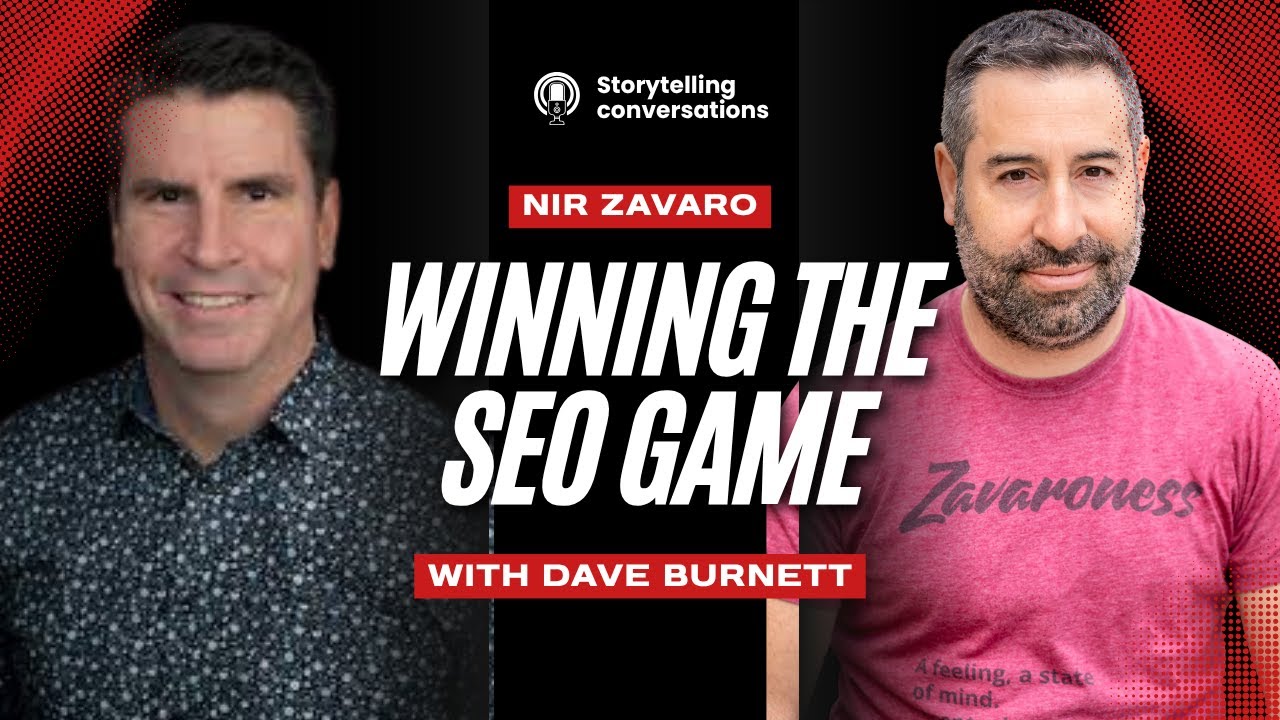
In this hour‑long recorded conversation, Nir Zavaro, founder and CEO of Streetwise, interviews longtime SEO veteran Dave Burnett to map out a practical, future‑proof SEO and content strategy for 2025 and beyond. They begin by clarifying the role of AI‑generated content, noting that large language models produce average, “baseline” copy that can satisfy basic topical relevance but rarely earns high rankings. To stand out, they propose a three‑pillar content model: (1) baseline/category content (often AI‑assisted), (2) news‑oriented pieces, and (3) thought‑leadership that injects personal voice and unique insight. They discuss how to discover and prioritize keywords using tools like TOFU, emphasizing long‑tail clusters and the pillar‑and‑spoke architecture where a central, comprehensive pillar page links to numerous supporting articles, each targeting a specific long‑tail phrase. Internal linking (minimum ~10 links in and out) and external backlinks (≈10) are recommended to signal authority, with a target of about 30 total links per pillar. Technical SEO is covered: proper H1/H2 hierarchy, meta tags, schema markup, and the need to serve both human readers and machine crawlers (Google, Bing, and emerging AI search agents). Site health is critical; they advise using Google Search Console, the disavow tool, malware cleanup, and a crawl audit with Screaming Frog. Lead magnets such as a 9,000‑word Business Storytelling Guide and weekly newsletters are positioned as entry points that convert readers into clients. They explain the shift from traditional informational search to AI‑driven “overviews” (RAG) and why appearing in Bing, Google, and the underlying data sources (Wikipedia, Common Crawl, PR mentions) matters for LLM retrieval. Finally, they explore content repurposing (office‑hour videos → transcribed blog posts) and the emerging possibility of AI chatbots trained on a creator’s entire body of work. Throughout, both speakers maintain a conversational, supportive tone, offering concrete steps, tool recommendations, and encouragement for entrepreneurs to invest in high‑quality, evergreen thought‑leadership content to dominate both classic search and AI‑augmented discovery.
Chapters
Hey guys, what's up? Nir Zavaro here. I thought this might be an interesting conversation. My dear, dear friend Dave Burnett agreed to jump on a call with me and help me a little bit. I had a million questions about SEO content, what to do with it. Will it ever rank on AI or not? Here's the conversation we had. It's an interesting, mind-blowing 1 hour. And if you're not working on your SEO after this, trust me, you wanna start. Let's go. Thank you for jumping on the call. I appreciate it.
No problem. Thanks so much for having me. I'm excited to have a conversation. Let's see how I can help.
So I think it's the first time we're calling this a conversation, not a podcast. For those of you who don't know, my name is Nir Zavaro. I'm the founder and CEO of Streetwise. And Dave Bennett is a very close friend of mine from Toronto, an EO member. And sometimes we jump on these calls and talk a lot about SEO. SEO, content, and other stuff, and I'm gonna revamp my website. And I wanna coin the phrase the business storyteller. I wanna lead the market when it comes to business storytelling and things I'm working on. Fuck This Life was the last book. The next book is called The Business Catcher. I wanna pop up and show up on all these AI tools, and I kinda think I know what I'm doing, but I'm not sure. So I reached out to Dave, and I thought that instead of just me picking your brain, I'll pick your brain and we record this, and hopefully it will help other—
I'm I'm laughing because I'm happy to share. You know, you gotta be careful when you pick my brain. You never know what you're gonna find. But I've been doing this for a while now, so happy to share whatever I can. It's exciting that you're moving down this road.
Your agency over the last few years has dealt a lot with SEO content and marketing. Is that correct?
Yeah, yeah. We are on the SEO side, have been for 17 years now since the Great Recession to fully date myself. And then we've also done a lot of paid, paid search, paid social, the content side of things. So we get into conversion rate optimization, basically making your site convert better as a result of that. And part of that is content. Part of that is making sure you get discovered. Part of that is making sure you get found. But in regards to you touching base on the AI side of things, I was also an early beta tester with OpenAI back in 2017, 2018, 2019, back before ChatGPT was cool. And so I've got a lot of history there on that side of things. So happy to go down that road if you think it'd be helpful too.
It's interesting, you know, I've always done content writing as part of my business, my passion, my hobbies and stuff like that. Is it still relevant, content writing for your website? Having a blog is still relevant?
Absolutely. The question I always get is, you know, why can't I just use AI to write the content for my blog, for my newsletter, for my whatever? And there are certain times that it's, Very useful. And the reason why you have to be careful with it is because it's the average, right? Okay, so 10-second version of what AI is, what the large language models are, just to help put a little context. The large language models are predictive engines that basically predict the next part of a word. So if I'm going to say something and I'd be like, the sky is blue, or the sky is cloudy, or the sky is whatever, those are the types of predictive things where you can almost fill in your mind what I'm going to say next. Right? That is what the AI models do. They predict the most relevant and likely next word in a sentence. So when you ask it a question or ask it to write something, it is basically the average of everything that's out there. So when you're asking it to write content, you're asking it to write an article, you're asking it to write a blog post, it's gonna write the average, the best average blog post that's out there about that subject matter. Now, Google doesn't necessarily like to rank average content. There's nothing wrong with it. Google actually has specific rules that it says it doesn't disallow, it doesn't penalize, it doesn't say no to AI-generated content. But it's only one type of content that we normally talk about with our clients. This is like base-level content. If you were going to write about like a digital marketing agency, if I needed content to talk about digital marketing, I would be able to use AI to get that base level content. So Google the machine knows what my site is about, but I'm not going to rank for anything related to anything. It's just going to be there for relevancy. So if I actually want to rank for something, there's 2 additional ways. So that we think of content in 3 pillars for your website. The first is kind of baseline content, categorization content, which is that can be that AI-based content that talks about SEO for us, like talks about SEO, talks about paid search. Secondary content to that, that's kind of a layer above is news-based. Content. What's new and exciting? What's happening in that? And you can spin that either with AI or yourself to get that news-based content. But the really valuable stuff is the thought leadership. Those are the 3 levels, right? You've got your base content, your news content, your thought leadership. Your thought leadership is how you rank. Your thought leadership is what sets you apart in the marketplace. Your thought leadership is what Google is going to like and wants you to rank. To wrap that all back into SEO and writing, basically you need content on your site to be found. What type of content you put on your site and how you write that content will determine where you rank. Like, an example I use is like Starbucks, right? If you're just going to search for Starbucks, it's going to show you Starbucks.com, right? But if you search for Starbucks near me, Google changes the search results and shows the 3 or 4 near you. And if you search for like a Starbucks Frappuccino, it's going to show you the Frappuccino page. It's not going to show you the homepage. It's not going to show you the results near you. It's going to show you the Frappuccino page. So the question is, what is your Frappuccino page? And that's the answer that you gotta answer.
So that takes me down the next step. For many years, so I do a lot of public speaking, you know this, I travel the world, I talk in different workshops, I do public speaking at events and gigs, a lot of your chapters and stuff like that. For many years when people reached out, they knew who I am or they heard about me and I would send them the website, a calling card. It was really nice. There's a few, there were 20, 25 blog posts, a little bit about who I am, what I do. And maybe a few videos or YouTube links. That was it. It's a calling card. Then we are now at the point where I'm saying, I want people to learn that I exist, to know my thought leadership, the content I'm writing and creating, disruptive ideas. No one knows about them unless they've met me before. But I'm at a point in time where I'm saying, wait, this— I know the decline on Google search is what, 80% or whatever, a crazy number. So the next question people are asking, is it still relevant to invest in content?
Yes, it is. I mean, that's how people are going to get aware of you, right? I think of awareness in kind of a funnel, marketing funnel stages, right? So there's just talking about you and just using your book, Fuck the Slides, just as an example, right? So at the very top, there is— and for those who don't know what I'm presuming that you people will have known it, it's a great playbook to try and develop your pitch for investors to be able to raise money, right? So okay, so that just using that context called Fuck the Slides, great book, highly recommend it. I don't know, is there a link somewhere that you can add in? But either way, so the 5 stages, completely unaware. So the top level stage of the largest, broadest audience is completely unaware. These are people who don't even know they have a problem. They don't know any solutions exist. They're completely unaware. Then what you have is you have problem aware. So using that example, say for example, I had a startup, and all of a sudden I realized, okay, the way that I'm going to I need money. The way that I'm going to raise money is I need to have a pitch to investors. Okay, so now I'm problem aware, right? That's the second stage. So completely unaware, then problem aware. Now that I'm problem aware, I'm like, okay, what exists out there that can help me solve this problem, right? I realize, oh, there's webinars, there's YouTube videos, and there's a bunch of other things out there. So now I'm solution— there's books. I'm now solution aware. That's kind of the third level. Then there's the fourth level is product aware. So it's okay, I've discovered this book, it's called Fuck the Slides, it's amazing, you know, I'm considering it versus buying something else or doing something else. That's kind of product aware. And then most aware is they've bought your book from you before and then they now want to book you for speaking events as an example. So those are the 5 stages, right? Completely unaware, problem aware, solution aware, product aware, and then most aware is basically what you got. So what you have right now is when you're talking about your existing network, you've done great work for EO, you've spoken all over the world, you've done great work for this network. A lot of the people in that network, your total addressable market within EO is potentially reached. I'm sure there's more reach that you could do, but you've kind of, you know, it's a channel that you've got. So what you need to do then is move up a level In terms of people and in terms of a new market to get them more aware of your product and service. So the lower down in that funnel you get, basically the less good you have to be at marketing and content. I don't know how else to say it. If somebody's bought from you before, they're gonna buy from you again if they liked your product. So they bought your book, they're gonna buy you to come and speak. If they bought you to come and speak, they're gonna pay for you individual consulting, right? Like that's an easier sale.
But that's, that's the easy part, as you say. But let's go if it's okay. Can I interrupt you for a second?
Yeah, yeah, yeah, please.
If we look at the first, let's say, tool, there's a problem and a solution. And for example, I can show you, I found this really nice tool, it's called Tofu and it's helped me, $20 a month, one-person business. It helped me kind of like structure, go to Semrush and all these, Ahrefs and whatever, tell me these are the words we need to focus, this is why, these are the key elements, these are the key phrases, keywords and everything. And basically it says, listen, let's conquer The lowest hanging fruit. So for example, storytelling, business storytelling consultant.
Yep.
There's 100 words a month, searches a month. Now I didn't think about it before using the consultant, but I do have a consultancy service. Now it's me, but later it'd be other people. So I need thousands of eyeballs. Now if I'm switching from the calling card to a marketing tool that's driving the business, right, in a sense, the first step Just understand what are the keywords, the phrases, and then I think if you can explain a little bit about the long tail concept, and I think it still exists, right? It hasn't changed.
Yeah, yeah, no, it does still exist. So that one key phrase that you talked about, you know, marketing storytelling consultant, if you added up all the different variations of that, you're gonna get into the thousands. Like if you get up marketing storytelling consultant, marketing storytelling Hourly rate, marketing storytelling mentor, marketing storytelling book.
By the way, I can even briefly go over some of the interesting things that they did is sales storytelling, low competition. It's a number 10 on the keyword. So from 0 to 100, the difficulty 0 means there's very easy to rank and very little traffic. Corporate storytelling, almost no competition. B2B focused, customer journey storytelling, zero competition. Now I do customer journey services today as consulting, which is a huge business for me. And I think it's an untapped market.
Yeah.
I'm storytelling consultant again. So I think suddenly a tool like Tofuu, which is designed for these things, I'll put the link if anyone wants, allowed me to do this very quickly. It said, are you interested? If so, it gave me on the premium version, it already gave me the list. Why? What should I do? What should I focus on? The structure, even suggested the tags I should focus on and categories on the website based on what I gave it. And again, the description I gave was quite specific. This is what I do. This is what I'm interested in. This is why. This is what I want to achieve and so on. This is the— I even gave it the percentage of my business revenue. So this is the percentage revenue from consulting under this workshops, whatever. And where I want to achieve. The next step, by the way, was that it already gave me suggestions for topics. And the next step in the premium version is it said, let's create a guide.
So yeah, okay. So to bring this back around or to bring this around to SEO and what you would do on your website. So there's a concept that's kind of a pillar and spoke concept where you would have like a main pillar page. So Just covering the basics, making sure you have a page. Like each of those things that you talked about is like your own Starbucks Frappuccino page, right? You need to have a page that talks about each of those things, sales consulting, marketing consulting, whatever, whatever it is that you're going to do. And then building additional content around that, that then points to that principal page. So SEO is still a game of links from a long time ago. This is how it originally started. And there's 2 different types of links. There's on-page links, like in your website, and And how the pages link to each other. And then there's off-page links. So that's Google and other websites linking to you. So say you got found, you got an article in Forbes.com and say it was a follow link and they could link to your website saying, great business storytelling provided by Nir and this is the page you should go to. So that's an example of an off-page link. And then on-page, having multiple pages all related to the same subject and linking through to a central subject page will create authority in your website that this is the main page. So you have to do linking to tell Google the machine or the AI bots that are now crawling websites that this is important. This is what you're known for. This is what it should rank, and this is the page. So that's how one way that long-tail keywords can work for you by having lots of small pages that are highly relevant. associated with your subject matter with a centralized page that's optimized for that subject and also can convert for you. So you can use the long tail, all those additional keyword searches, as long as you have relevant content, and then it will show, then the people will come in, they'll read more, they'll get to your main page, they'll convert. That kind of stuff.
Amazing. So let's see if I can bring this together and then we'll go to the next steps. So basically if you have a problem and a solution step, 2 out of the 5, and you're saying your website needs to have content. It's crucial for success.
100%.
Basically, you're saying one layer could be general stuff that might be SEO based on use AI, but bring your ideas. Don't necessarily have it as a copy paste, or at least use it as an editor and to a certain extent. But you're saying the main key factors are 2. One is thought leadership. Bring not just value, but your own take on the value, which I think is also more of an emotional and a personal aspect, if I understand correctly.
Yeah.
And then you're saying in order to focus, if you're using a tool like I explained on TOFU, what you're saying is figure out, let's say, 4 or 5 things you're known for as main topics, but make sure you have a pillar piece of content around that. Then the links would be internal and everything could be a highlight and you take How much would you invest into the long tail? Could I use for 100 words a month, 100 searches or 100 clicks a month? Can I just use that for the AI and tell ChatGPT, hey, give me a piece of content, 500 words? Is that—
You could, but again, it comes down to the relevancy of those 100 searches. So let me ask you a different question. If every one of those 100 searches turned into a client for you, would it be worth the time to invest on a good page for that 100 searches?
What a good question. Great question. Of course, of course, if I think I found long tail is relevant, but then I like writing.
Okay, but no, but, but it's still the answer, right? Like your gut instinct is correct, right? Like that you, of course, they would be worth it. So people look at visits to their website, and they're these abstract numbers, thousands, tens of thousands, a million, like every one of those is a person. So if you think about that page, and how can it answer the question that they have, or the query they have, or the information they need in the best way possible, then you should put out into the world the best piece of content possible. And so if you're a good writer and this is content that you're good at, then I'd say, then in my suggestion, my strong suggestion is spend the time making the best piece of content.
Here's a question for a lot of people that will listen to this, and I hope they do and they understand the concept. Would you suggest maybe, okay, 2 questions. How important is it that we write everything and launch it exactly versus improving as we move along? Will it index the same? Does it hurt the indexing rate? Does it bother? Does it crawl the same way? Can I tell it to crawl again and stuff like that? And secondly, is it okay if I do a 2,000-word pillar and 5 links and build from there?
So there's a lot, there's a lot there in that simple question. There's like, okay, so where do you even begin? Like, it's with the linking. Okay, I'll just start with the linking first because that was the last part that you had asked. With the linking, we see the greatest success with articles or pages that have at least 10 links internally and 10 links externally.
Hmm.
So if you are going to be utilizing different links, then you need to have—
So Let's say you have a pillar. Let's say for the sake of the discussion, you also need to have an average of at least 10 internal and 10 external links.
Yeah.
For the sake of this discussion. Now I'm gonna go back to the first question in a second. If I link to my YouTube page on a video, does that count as an external link?
Yes. Yeah, it does.
So if every time I post a YouTube video, which I do twice a week, and I put underneath, you can find me on this and this. And if you want the guide, the business storytelling guide, click here. That's an external link. Great. So I can also go back to old places where I had links and ask people to add this piece of content if they have successful websites, and that will also serve the purpose.
It would, but what that would do is that would drive traffic to your YouTube channel, which if that's one of your goals is great, but it's not going to help your website authority.
No, no. If on the YouTube channel I say, hey, if you need the business guide, click here, they'll go to the website, and I can also reach out to places I already was a guest, or guest blog and ask them to add this and take people to the main pillar.
Yes, for sure. That'd be perfect. Yeah, exactly.
Great. So we say now 10 internal, 10 external. So that means you also need to choose your 10 internal pages that are connected to the main pillar.
So I need to pause for a second just to eliminate any confusion for anybody who's listening. You actually want to think in terms of 30 links. Okay? At least 30. So what I'm saying by that is you want 10 Links from other websites, like those other websites that you were talking about that already have your content on them linking into your website.
Yes.
But on that pillar page, you also want to link out to 10 different places.
You want to link out?
You want to link out.
Not to internal pages, but to another website?
Correct. 10 links out to other websites and then also 10 internal links to your own website.
Okay. So 30.
So we're now to 30. Exactly. But I was, I didn't talk about the original other people linking to you yet because I was just talking about what you want to do on your page because you have control over that.
Okay. Now let's say I want to focus for a second. I have the main pillar, let's say 2,000, 3,000 words. AI will help you a little bit, whatever. And then you are saying that it's important to have a well-structured, you need to have, well, What's it called? The content structure, H1, H2, meta tags, whatever, right? Yeah. And everything you need to have the index, right? The content.
So, so there's a couple different parts here. It's gonna get a little technical. Apologies for anybody listening, but there's something called schema markup. So think about your website as serving 2 audiences. One audience being people who are there actually to read the content and, and consume your content. Second audience is Google the machine. And now there's like a third audience that's now the AI tools. So, it's just staying with the first 2. The individual, you want to have the H1s, H2s, easy to navigate, easy to consume. They can kind of flip through, see what they like, bolding, links, all that kind of good stuff for people. But it's very important to have what's called schema markup. So, you can go to schema.org and learn about schema markup if you want. If you're on a WordPress site, there's plugins that'll do it for you. But basically what schema is, is it tells Google the machine And Bing web crawler and all that stuff, what's on your page in language it can understand. So well-structured content for the machine, but also well-structured content for the users who are there. So yeah, if you've got your 2,000, 3,000, 5,000, 10,000-word pillar piece, whatever it is, you want to have all of those things done correctly. And to come, to come back to one of your earlier questions, which was like, Does it have to be really good, or can it get away with like AI for this type of thing? AI will give you the average, right? So if it's something that is really important to you and you want to be found, like, like, I guess again, the question becomes, what type of experience would make you come back? Would you come back to a website that was basically a Google response, or would you come back to a website that was like, look, I presented to this founder audience, and these founders really wanted to know how to pitch to investors. And in that, in that case, I recommended these 5 steps, and these 5 steps and why you don't need a slide deck, but you really do need a slide deck. But I don't get to that until chapter 11. You know what I mean? Like, whatever it may be, you know, any of that kind of stuff. But like, I wouldn't— writing, writing that with AI, I could write about why you need a slide deck, like just putting like on me in your shoes, I could write about why you need a slide deck, but your perspective that fuck the slides, you don't need the slides. What you need is the story, right? Which is the message of your book or one of the messages. Like you need the story. And so for AI to come up with that, it won't. But you as the individual—
First of all, I love the fact that you still remember the book after 2 years. It's amazing. That means it's not that bad.
It's a good book. No, no, really. It's a good book. I learned a lot from it.
You know that One of the key things that makes me want to do this is that once a week I will get an email from a complete stranger saying, thank you, we use this and we're selling more of our product, or we raised capital, or I was asked by an EO member, shout out to Vic from EO Uganda, and he asked me to help a guy, a young guy. He single-handedly will solve malaria.
Wow.
And I was lucky enough to work with him on his pitch. Which is insane. And he won the competition, which is in August of this year, they're gonna start trials in Uganda and everything. Wow. Human trials. And if everything goes well, in 2026, they'll start implementing. And I had a small, tiny, tiny piece, you know?
And, and I was gonna say, did you get, did you get investment in that?
Like, I— No, I didn't.
I should have traded for some investment.
Like, I didn't. It's like, but I got, I got—
it may not be too late. You might be able to go back.
I got a thank you letter, Dave.
Thank you letter, which is worthwhile. It makes you feel good.
So I'm going back to an earlier question. If I keep changing or editing the content after I upload, can I— is it okay? Can I tell the platform to index it again, or should I have like a one shot?
No, no, no. Like, Google likes when you keep content fresh. There's, there's kind of different types of content, like evergreen content. And, you know, like, you could put up— just for my business, you could put up a post that's evergreen that talks about what is an H1 tag, what is a header tag, what's a title tag, what's a meta tag. Like, that's not really going to change. So it doesn't really serve the purpose to update that. But if I have, you know, a strategy, what's working today, you know, schema markup, what's working with AI, and then I updated the post on that side of things, it was originally posted, you know, July 6th, 2017, or whenever the original date would have been. And then I update it to today, you know, June of 2025. That would be good. Google would like that. It just, you just have to Have citations in there.
So, so evergreen might be the stuff that the business or the industry is relevant and not things that would necessarily change. Basically what we can look is a combination of the pillar between stuff that is some somewhat evergreen, but also things that might change. So strategy for 2025, for one example, and also we can add the thought leadership that could maybe vary between years because marketing has changed since 2017 to 2025. And that is okay. So maybe people can put on the calendar to revisit the main pillar every 2 or 3 months. If nothing changes, maybe add another link or maybe extend or elaborate on one of the keywords or add new keywords. Am I correct?
Yeah, yeah, absolutely. And there's nothing wrong with updating your content. There's nothing wrong with with making it better. That's what Google wants. It wants to give the most relevant search results to any particular thing you type into Google, right? So the better you make it, the more it will utilize and use your results in its search results.
Yeah. I used to have, I think, maybe 100 monthly visitors, unique visitors to the website, but I never, it wasn't part of the business thing. And I was writing my newsletter and doing other stuff, and I had my agency that was doing a few thousands, but it was in my own language. And then October 2024, our websites were hacked. By the way, make sure all your plugins are up to date. They claim it was through there. We managed to bring back the website, but the links were broken, things weren't working, and kind of like we fixed it, we fixed it to the point where it looks okay-ish for the visitor, but half of the things are not working.
Right.
So I decided to go back and start cleaning and changing. We also had a lot of malware in October. We duplicated to 400,000 pages and we started to get blocked because some of the pages were, I think, gambling and porn and stuff like that. So what I've done now is to try and focus on the things. One hand is what I offer. So going back to the funnel, right? If we go back to 3, 4, and 5, what I offer, why is it interesting? And also Part of the focus will be that if you go to the website, I will teach you things, whether it's written content or video that we can also discuss, but I will get you, let's say, half of the way.
You can use it.
And how important is it to have, let's say, free content, lead wall, I don't know what they call it, the lead magnet download. Can you talk a little bit about this and how is this connected to stages? 3, 4, and 5.
Okay, so first and foremost, I will definitely get to that. But just in regards to getting hacked and having hundreds of thousands of porn and spam and whatever else on your website, that's a trust issue for Google. So Google is going to flag your site. So there's something called Google Search Console. If you're not familiar with it, you should add it to your site, go to Google Search Console, and you can— there's what's called a disavow tool there. And you can say, okay, anything that's related to this, or, you know, if people are linking into my site, because maybe there's a bunch of porn or gambling sites linking to you now, And what you want to do is disavow those things so that you don't get bad links from those. Second thing is making sure that your site is clean, that there's no malware, because any of those trust issues, Google doesn't want to serve up malware. So those are the first things. So just making sure that you've got those things done and fixed should be the very first priority. You got to make sure you're building on a good foundation.
We hired someone. I'm happy to share the link. I've worked with the guy before on other stuff. So we hired, it's not an expensive thing and I think everybody should revisit once a year that everything's working, connected. It's $100, $150.
Totally worth it.
Yeah, 100%. And they do the whole revamp, speed test, making sure your images are good and size is right.
So that's the first thing. Then, you know, I would do a crawl of your website. So there's a tool called Screaming Frog SEO Spider. It's actually called that. So when you do a crawl of your website, it'll see all the links. It'll see what broken links there are. It'll give you the 404 redirects and it can give you kind of an action plan. So if you use—
Is it a free tool?
No, it's a paid tool. It's like, I want to say €150, something like that. It's a UK-based—
Okay. I'll give you— okay. I'll put the link here to the website and to Dave's email so he can check it for you.
I can, I can. I'm happy to help if anybody needs it. I do have the paid tool and happy to do that. Feel free to connect with me. But beyond that, so that's the first thing. So coming back around to your questions about the different funnel and making sure that people, you know, are finding the right content and, you know, as they move down the funnel and how to optimize everything that you're doing further down that funnel, there's a bunch of different things that you can do, right? Like in terms of lead magnets and what content and paywalls and all that kind of good stuff. My thought process is, and this might be wrong, people have different approaches to this, but like give all the, give all the secrets away. Like give everything that is valuable. The reason for that is because if you give value away, people will come to you and be like, okay, I love that you gave all this value away. You gave me all the steps I needed. You showed me all the ways that I can do this. But there's a percentage of people who are going to be like, I just don't want to do it. Dave, you talked about schema markup. I have no interest in learning what schema markup is. I know you've said it. I know you've said that you have to do it. Just do it for me. That's what ends up happening when you give away all the secrets. Like you give away the book. I mean, the book costs $30, whatever the book costs.
$17, I think at most.
$17, right? Like it's so valuable for that price, but like you're giving away all the secrets. You give the framework, you give everything away. But are there still people who still ask you, I want you to— I want to pay you to do this for me.
Of course.
Exactly. It's the exact same thing with online. So I actually look at your book as a lead magnet, a really high-quality, well-developed, spent tons of time on it as a lead magnet. It's something that's out there in the world that shows the quality of your work but also creates a problem, right? Like a lead magnet is a complete solution to a very specific problem. That's the way you should look at a lead magnet. And there's a couple different ways that you can look at lead magnets, but this lead magnet that you've built is a complete solution to how to build and put a pitch together, right? But the problem that you create by having solved that first problem is now they gotta go do it. So because you created that second problem, they wanna answer to it. They wanna solution that second problem. And what they'll do is they'll just hire you to do it, right? They'll just say, okay, Here you go. This is what I want. I want exactly what you did in the book. Just do it for us. And that, that's basically your lead magnet. So one of the things that's really valuable about a lead magnet is putting out a solution in the world that really solves a problem. Like if you have a downloadable PDF checklist of different ways you can optimize your website, right? Like that's technically a lead magnet, but it also technically kind of sucks, right? Like you could go to ChatGPT and get that same answer in 10 seconds, right? But in order to build something you need that's a real lead magnet, you need to invest in something that will actually generate leads for you. So the book, as I said, is a great example. Your speaking events, even though you potentially, you know, you get paid to go and speak, is a lead magnet for you, right? Like you're adding so much value, but you create additional problems. So in terms of paywalls, like if you're a software as a service, obviously that's different. You can do a freemium model. If you're a Service like a lawyer. You could do a first free hour of consulting. You know, if you're like, there's all kinds of things you could do as a lead magnet that actually gives value. But that's the key. Don't give away crap because people won't want your good, like your actual stuff, because they'll think your actual stuff's crap too. So that's, I don't know.
Interesting. So I'll share with you my thoughts on this. I've created the Business Storytelling Guide. It's about 9,000 words at the moment, which is quite a lot.
Yeah, yeah.
We've uploaded that to the website and it started to rank. As we're cleaning up the website, we went from 411,000 pages to, I don't know, 24. And we're now changing, we're now updating things slowly, making it faster. We're fixing, we're bringing the newsletter content. So for example, I'm not asking for your email. The guide is open. It's in the top of the menu and go and enjoy. And it's structured in a way that it takes every one of the subjects I like talking about under that umbrella, and it gives you examples of stuff I've done, how you should think about it, the common things you probably know, but here's a way to look at them, and exercise. And if you're stuck, talk to us. I'll be happy to talk.
Yeah.
And the next thing we're now doing is we're bringing in the last 35 newsletters I've written into a different section. And that's my thought leadership because the idea of the newsletter today is 52 weeks. Every week on a Saturday, you learn something about business storytelling that you can implement by Monday.
Perfect. Sounds great.
So my idea is that, and that's, I'm telling you, but I'm also telling the audience, I'm thinking about this in a way that every piece of content should help you improve one thing.
Yeah.
And that's the thought. But if I understand correctly from you, if I do the things correctly and I am giving free value and I have the lead magnets positioned, I can probably use long-tail pillar and everything and get to thousands of relevant people coming in.
100%. Like your 9,000-word pillar could be your pillar piece, right? You're right now, you're 35 or 32 Blog newsletters or blog posts, whatever you're gonna convert them to, are your supporting pieces and they can link into different parts of your 9,000. Like this is from this section and here's it expanded and here's this. And so it all works. So the next, like if you're going to 52 weeks, I'm assuming you'll go beyond that because it's gonna, it's gonna really start working for you, I hope. 'Cause it sounds great.
Yeah.
And it will start to gain value. Like you're 100% on the right track. And then at the end you're like, And if you wanna work with us or if you're stuck, reach out. We're ha— we're happy to help, right? But you're giving so much value that people will associate that with.
So my question is, if I did this in 2017 or '20 or '22, I could probably say I'm winning the game. As Google's searches, the Google search numbers are declining very fast. Now what used to be 100 searches a month will go to 20 or 30. And then I need to understand how am I gonna win when people search for, hey, I need to improve my customer journey. I need to improve my sales pitch. Help me. How do I turn this into what's called, what is it? The AIO, right?
AI overviews. Yeah.
So the search engine needs to be optimized also so I can show up when people search on ChatGPT, Claude, and everyone else.
So the AI overviews are new. They're basically Like, okay, so I got to start at the beginning again, just a little bit so you understand how they're different from search. So search is basically, imagine it like a river, you know, stuff flows through, it's constantly changing, it's constantly out there learning what's new with the internet, right? Like it's Forbes, you publish something, your search crawler will discover it. It's constantly changing and evolving search, right? The internet itself, large language models like ChatGPT, OpenAI Chat, Claude, Gemini, Llama, all these, all these other different ones. Basically, they're a fixed body of knowledge. That's why you've got a model that's ChatGPT-3, 3.5, 4.0, 0.3, whatever. So what it does is it creates like, and you are, you imagine you're in school and you get up to the 11th grade or a junior if you're listening to this in America. And you know grade 11 math or junior level math, right? You don't know grade 12 calculus because you only know that math. That's the same as the large language models. They know a certain amount of stuff. And then once they, once they learn this, there's a cutoff date on their knowledge. And with that cutoff date on their knowledge, then the companies actually train the models to be able to answer your questions safely. And that's called fine-tuning. So all that's important because you've got your base body of knowledge and then you've got fine-tuning so it can answer the questions safely. That's, that's the start. And then what happens is people like ChatGPT or Perplexity or Gemini layer on a search layer over top. So now you've got this brain, this large language model that knows how to answer questions safely. When you put in a search, it will then go out in its crawler, find the information and bring it back. And then because of what it knew before, it now knows how to answer your question with its new knowledge. That's retrieval augmented generation. That's also called RAG. It understands how to answer your question now with the new knowledge it just learned. So it's like me telling you about search. I learned some knowledge. I'm now relaying it to you, right? I had base knowledge, but you asked me a question, so I'm relaying it to you. This is exactly what the large language models do. They have base knowledge, they learn something new, and then they'll relay it to you. You. In order to get found when the Google— when the AIs go out and search, you need to have that schema markup stuff I was talking about before. But you also need to have semantic, like language-based answers as well on your website. So you need to almost build for a 3rd layer on your website, conversational answers that the machines will be able to actually know. So where these machines are going, are taking away those searches that you're talking about is informational searches. People search for navigation, like where's the nearest Starbucks? People search for commercial, like I want to buy a Starbucks latte, and all of a sudden you'll get Uber Eats or whatever. And then people will search for information, like what is this type of butterfly, if you're showing a picture or something. What the AI overviews and ChatGPTs and others of the world are taking over is that informational search. So if you are like, how can I figure out my customer persona? How can I put something together? How can I tell a story about my business? You know, whatever those types of things, those are potentially informational searches. So if the machine crawls your website, then it can know that you're one of the potential answers. So OpenAI uses Bing Search, Gemini uses Google Search. So if you get found in those 2, Perplexity uses a combination, but mostly Bing search. So if you get found on Microsoft, ranked number 1 in Microsoft on Bing, you get ranked number 1 on Google, you will also show up often in Google and Bing's large language model search overview. Hopefully that was, hopefully that was easy enough to understand. I know that was a lot.
I really enjoyed it. Question, how hard is it or how different is it to rank on Bing? Versus ranking on Google?
It's easier to rank on Bing, to be honest. There, it's like imagine Google 5 years ago. That's before they kind of filtered out all the spam and did all this other stuff. It's easier to rank on Bing with old school SEO techniques that don't work on Google anymore.
But the article is still one article. So how do you trick it? There's different techniques, I assume.
There's, there's, yeah. So from an SEO perspective, Google is kind of flagged all the different kind of spammy or not white label things. Like if you have a lot of links to a particular webpage on Google, like that Google detects, it can flag you as being a spammy website and you then get deindexed or ranked lower. The same thing isn't— it's not the same on Bing. You can use those old kind of spammier practices that still kind of work. Hate to say it. And even in different countries like google.com, In the US is different from google.ca, which is Canada, which is different than google.uk, which is the United Kingdom. Like, you can rank in different countries using different techniques based on the knowledge of that particular model in that search engine. To be honest, it's different.
Do you— so when do you think if we will see a point where people don't go to websites anymore?
It's already happening, but you need the website So these things, the large language models and/or Google Search knows about you. You need to put the content out there. There needs to be a source for that content. So you're going to need a website whether they actually come visit your website or not. You still need a website and you still need information online.
But you need content for 2 reasons, whether it's for Google or what we're seeing as the changes, the AI platforms to find you. And then you need content for people to know on the other side that you even exist and you have something to offer, which goes back to steps 1 and 2, right?
Yes.
They have a problem, they might find you. And then it goes back to 5, they bought the book, now they want more, but they had to know that the book exists.
It's interesting.
How long do you think it will take people? Can it be done in 2, 3 months in niche markets, in niche industries? Can a lawyer rank? Higher where most websites of, I don't know, most lawyer websites are the same. They don't really have in-depth content. Do you think this is an opportunity?
100%, it's an opportunity, but I agree with you that search is getting more fragmented. Like we've been, I don't know if spoiled is the right word, but we've been pretty spoiled. Last 20 years, you go to Google search and you find the answer you're looking for, right? Social media came along and kind of fragmented it, took a chunk, Right? People are searching on YouTube, people are searching on TikTok, people are searching on whatever else. So that's kind of taken away Google search, but there's still more people in the world who are getting online. So the search numbers keep going, even though there's a fragment for social media. And then social media, like I said, fragmented to LinkedIn and Pinterest and all these others. So it's already fragmented. Search has been pretty solid, right through this whole thing. Now AI is fragmenting search. So that's what's happening now. And so there's still a total number of searches, you still need content on YouTube, you still need content on Meta, you still need content on TikTok, if that's your audience, you still need content on your website, you still need content on to show for Google, and you need content on, on a whole bunch of different places. Like, the next question I then get asked is, okay, so how do I rank in these large language models, right? Like you've got, you've been taught up to grade 11, right? The next model that comes out is going to be grade 12 or university or whatever, college or whatever you want to think of it, right? How do I get into that next one? I'm not in the one that's there currently. How do I get into the next one? And it's really traditional best practices associated with SEO. So you need to have a great website with unique content. You need to rank, but the way that you rank in the large language models is a bit different. You actually need to have things that Google or that the large language models ingest. So they use a number of different tools to ingest this information. The largest source of information that they use is actually Wikipedia because the information that they're trying to learn is actually language. The fact that they know anything about you or anybody else is actually kind of accidental, right? They're trying to learn the language. So if you're in Wikipedia, if you're in a database called Common Crawl, which is smaller, a subsection of Wikipedia, if you're in some of the large repositories like GitHub, if you're on the, what we would call high crawl frequency websites like Forbes, like business publications, New York Post, all these other high crawl, then the machine And that's where even some of the models have exclusive agreements with like New York Times and these other things. They're gonna use their information in training the models. So you need, believe it or not, a lot of traditional PR is very helpful as well to get known in these models. So if you have a good PR agency, they can help you get found in the large language models.
It's interesting. Basically what you're saying is the more, the more you're known, the more you're gonna get found in these models. advanced we become, tools, storytelling, PR, writing good content, giving away for free, everything still sticks.
It's all the same. It's just a different way to find it.
But I understand that this is an opportunity for a lot of niches. So I was talking to an EO member that has hotels. Most hotels don't really have a lot of content, an opportunity. Lawyers, an opportunity. There's so many different industries. I'm in a very, let's say, so saturated Doing marketing and storytelling.
Yeah. Well, marketing, like how I could, if you, you know, if you could slap your logo on my website, like Streetwise onto AOK Marketing, right? Like, would people know? Is the voice different? Right. But I couldn't slap AOK Marketing onto the front of the slides. Yeah. Because that's your voice, your unique thing, right? Like, that's just the best example I can think of.
So I wanna wrap up with 2 things that I think might be interesting for the audience coming back to slapping your voice onto something. One is I'm looking at doing some office hours, which is me answering startup questions in these topics, the clusters I talk about. Answering 3 questions will create a 12 to 15 minute, let's say, YouTube video. Then we cut, we chop it up. Then we take each segment, transcribe it, and turn it into a blog post. And then we do a search option on the blog on the website. So when people ask a conversational question, we might rank higher on AI, which I think on the ChatGPTs and so forth. Another thing that I wanted to ask your opinion is I'm seeing more people upload their content and start having an AI agent or chatbot answering on the website. So if you want to talk to me, talk to me, there's an AI that knows everything. It knows the book, it knows all my content, it knows all my YouTube. Every interview I ever had. So what would you think about that?
Have you had an interaction with an AI that you prefer over an interaction with a human?
I heard a podcast this week for the first time where the guy said that the AI that he made for himself is now answering some questions where he looks at the answers and he says, I didn't even recall I knew that.
Well, that's, that's us. That's us getting old though, right?
Yeah, that's part of it. Yeah, he's getting old. No, but it's crazy. If you have enough content, if you've said enough things, you can train the model.
100%, you can. So, right, you'll have this base model that knows how to speak English or any language that it's trained in, and then you can layer on. So that's a layer that you put over top that then it has to go, you know, that the question that the person asks has to go through that layer of your knowledge over top of the base layer of the model, right? So absolutely, it's getting there. Absolutely. You have to have a ton of knowledge to train the machine to answer these questions. And will it get there? Yes. I've had 2 interactions with chatbots that I've— that I had that I liked better than probably interactions with people at this point. I've had 2 total. One is— one was with Amazon when I had to get something done, you know, return an order or give feedback or something. The other one was actually when I was canceling a recurring payment from a vendor that I didn't want to do anymore. They had this very helpful bot. This is this. This is this. Yes. No. Cancel. We refund.
Blah, blah, blah.
Done. Right? But I still— it's not quite there yet. But maybe 6 months from now, maybe a year from now, these chatbots will be to the point where they are just as good as talking to you or me. They're probably better. They have better recall than I do, certainly at this point. Right? It's just, it's getting there.
Yeah. So first of all, a huge thank you, man. Like, I've been working on these things for a while and I'm so happy because I feel energized to keep doing and keep writing. And I think you gave us a structure and a lot of things I didn't know about and specific websites and ideas. So I think this was exactly what I needed. And I hope other people enjoy this conversation. Where can they find you? If they need help?
Yeah, I mean, they can find me on LinkedIn, just Dave Burnett. I'm based out of Toronto.
We'll put it here.
Yeah, yeah, there's a link for sure. AOK Marketing, feel free to take a look at some of our stuff. But like I said, connect with me on LinkedIn, message me there. If there's anything I can do to help, I'm happy to, because again, I'm all about, you know, giving. And eventually somebody might want to work with me, which would be fun. So that's, that's where we are.
It's amazing. Thank you so much, man. And We'll stay in touch and, and I'll keep you posted. And hopefully I'll get big enough to hire you to do these things with us. That's, that's the next goal.
You're doing a great job. All your structure, everything you're doing is correct. So you'll get there.
Appreciate it. Thank you. Thank you. Thank you.
More from Nir

How to gain more clients with AI? The customer journey is your opportunity: updated AIDA model +R









