
Make an impact - How these two entrepreneurs are helping companies grow| Shadow creative
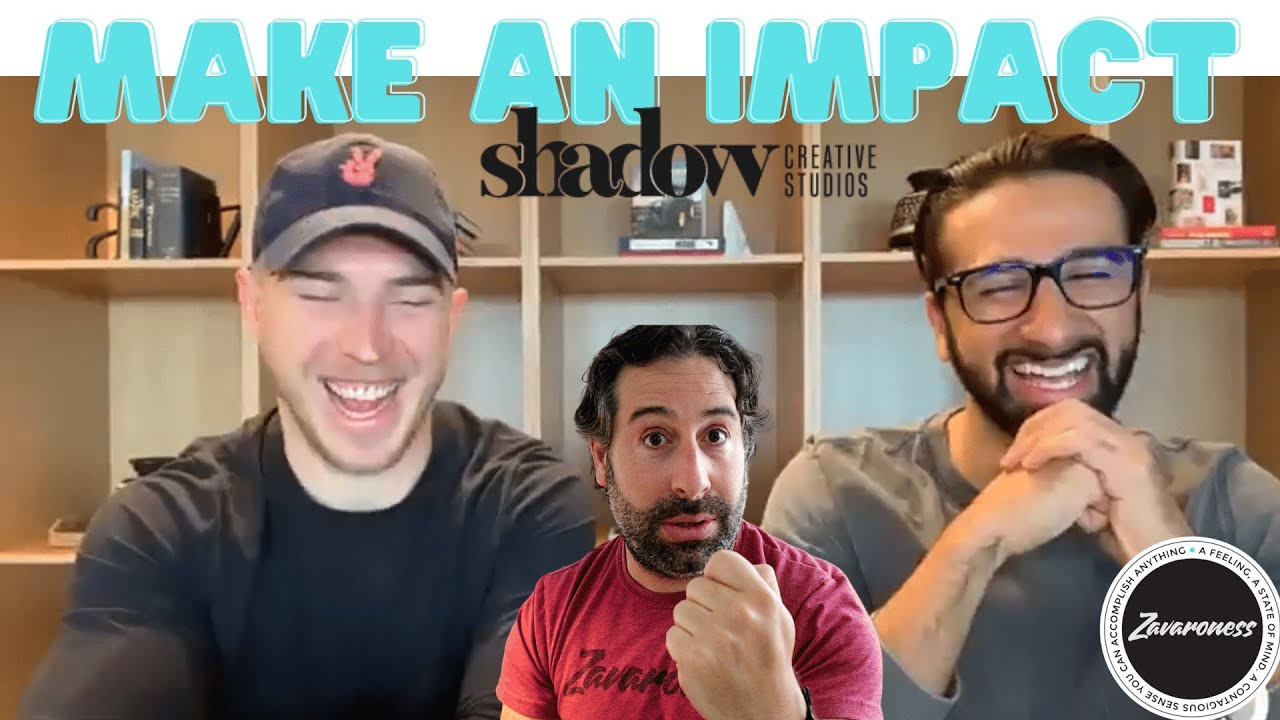
Shai and Yahya built Shadow Creative as an anti-agency that does branding and no-code development in six weeks. They charge transparently, reject the faster-cheaper-better trap, and treat their studio itself as a product that evolves.
Chapters
We can essentially take an idea. You come to us in our, you know, our first talk, our first meeting with us. Hey, Shai, Yaya, I have a great idea for this, uh, you know, health and wellness brand that I want to launch, you know, as soon as possible. And then we ask you, hey, what's the idea, et cetera, et cetera. We take that idea from concept to launch in 6 weeks. So that means that after the 6-week process, you have a digital platform to run the primary and secondary function and functionality that you want your idea and brand you have. You have a brand identity and a brand voice and a logo, a color theory, a user experience that matches what you're trying to do, not only in the current state of your idea, but what you're thinking for in the future as well. And you have a platform to now grow on.
I'm very, very happy. I'm a bit excited, you know, and I'm never excited about these things. Doing an international podcast is nothing for me, but with you guys on the show, unbelievable. Hello everyone and welcome to the Zavaronis Show, where I'm trying to interview about 100 different people from at least a couple of dozen countries. And Today, where are you guys located now?
California, right? Orange County.
Orange County. So yeah, we haven't had an Orange County yet. So like the OC, right? That's what everybody knows.
Is that like— so you can, you can knock that one off your list now.
Done. No, no, I'll knock that off the list when I come have a drink with you guys. So for everyone listening or tuning in now or watching on YouTube, Guys, give us a quick brief, an elevator pitch about who you guys are and your company and what you do.
Yeah, I mean, I think we'll start with the company, but I'm Yahya, this is Shai. We've been best friends for 8 years now.
Yeah, it's going on 8 years.
Met in college. When we first met, we knew we wanted to start a business together. That kind of evolved from the classic college boy idea of starting a t-shirt brand. That was, you know, we were gonna— but we were gonna be a cool t-shirt brand, you know, way cooler than all the other t-shirts.
We were definitely gonna compete with Kanye.
Yeah, exactly.
That was the goal.
So that's actually where Shadow started. That's where the name came from. We just really liked that name and we just kind of morphed that idea into different things over the years until it finally turned into creative agency. So we've been doing the agency for right around 3 years now. Started out as a, you know, everything for everyone kind of agency, and we can get a little bit more into that a little later. And what we're doing now is we're really just focusing on the things that we're good at, which is branding and websites. And when I say websites, we really built online platforms through no-code, which I'm sure we'll talk about a little bit later. But, you know, website is super commoditized. So what we're building is more real digital platforms for people that have, you know, online education, that are running membership portals, that are really content heavy and are doing live podcasts, are doing, you know, video series, all those kinds of things. So stuff that you can't just build in Squarespace and Wix, basically.
You mentioned so many interesting things. I think we're gonna need a series and not one episode, But I'm gonna start with a hard question, okay?
All right.
When was the moment you decided you guys are best friends? You know, my best friends are from like kindergarten. When did you guys like sit in the bar, you were looking at 2 chicks and you said, you know, I think you're my best friend. When did the bromance start?
Wow, that's such a great question.
It's a really good question.
I think for, I mean, for me, He knows this and a lot of people, you know, that are our friends probably know it as well. But I think we just had one of those long philosophical talks one night after you have a couple of drinks and you're talking about girls, you're talking about sports, talking about life, talking about dreams. And if you just, you know, sometimes it's 2 or 3 or 4, even 5 people in a group talking. And for some reason, when we would talk in this group, it would just be Yaya and I getting to another level, another level, another level, another level, and people would just be leaving.
Yeah.
They just continuously just be leaving the conversation. And we would always find ourselves in the middle, whether it's a party, whether it's going out, whether it's a dinner, whatever the case may be. It would always just be us two talking to each other, going up and up and up. So I think that's when we realized over the course of the third or fourth time we're having those conversations, like, wow, we have a very different connection than most other people do. And I think that's where the initial bromance started.
You know what's weird? It's interesting, the reason why I ask, because for the past decade I've been what people call a solopreneur, all these buzzwords, and then I own different businesses like Bars with a bunch of other people that some of them have been my partners for 7 or 8 years. But when you always meet these 2 people who become best friends and they decide around that to build a business, you know, you always say don't go into business with your friends. But at a later stage in life, you meet and you decide that maybe your purpose together is to build something and, you know, and moving forward. So why didn't you follow through on the t-shirt concept? Or did you?
I think it wasn't, you know, for us, we always think about ideas as being bigger. You need to be— there needs to be a bigger goal towards it. There needs to be something to challenge us. There needs to be something that's, something that we can, you know, see into the future of, hey, this isn't going to be easy. We won't— we kind of always kind of pursuing that struggle a little bit, and not struggle in a bad way, but struggle in a good way to get to this kind of utopian version of where we want to be as entrepreneurs. So I think the t-shirt idea was just an idea that we can always go after, but it wasn't so appealing for us to put our heads together to really critically solve problems and different angles and come at different, you know, meet different clients, different people. It didn't provide us that, and we're very extroverted people. I think meeting people and meeting new clients and new challenges is something that we love to go after, which is why I think the agency route was the initial step for us.
Yeah, I'm always, you know, I love the saying strong opinions loosely held. That's really the way I live my life. You know, I change my mind on a probably daily, sometimes hourly basis. You know, when I, when I have an opinion, that's my opinion, and I'm 100% in, and I'm gonna, you know, live by that opinion or by that thought or by that idea. But I'm very open to also taking feedback and changing it. And as soon as I see something different, I'm gonna shift and I'm gonna move. And, you know, we've kind of been like that too, where, you know, you start with an idea and you put everything you have into that idea, and And we have sketchbooks full of ideas for the t-shirts. You know, we had this— we were taking inspiration from like the 1990s Jordan, the shorts, you know, like the Chicago Bulls shorts. We had like a shirt that we had the same pattern on it. Like we had plenty of ideas, but I think at some point, and this has been a pattern throughout my life, it's just you have to also see that it's just a bad idea and you have to move on. There's too many people that have an idea and they just cling on to it for the rest of their life and are just unwilling to give up. And, you know, it's like, I'm not going to give up, I'm not going to give up. I have— I think giving up is for winners up to a certain point. You have to give up, you have to let some of this stuff go so that you can grow and you can move on and you can change your mind on things.
Yeah, I think changing your mind too often is a problem, especially when you, you are inhabiting an office with other people and you need to make a decision about what you're going to order for lunch, then it's a problem. But in other cases, it is being able to say, wait, I love the idea, but I think it's not valid anymore. I know, I know I was the champion, I was promoting it, I was all for it, it was my idea, whatever, but it might have changed, situation has changed. And I agree with you that some people, whether it's ego or just seeing that idea and loving it so much like a baby or whatever, and just failing to understand that now's the time to move on, which is interesting. And I think also COVID has been an interesting time for a lot of companies to look at that, but you guys haven't, you're not coders, you're not programmers, right?
Right. No, we're not at all.
So what made you say, let's drop the, I know Supreme was just sold for $2.1 billion, Kanye is worth like $1.3, and you guys said, nah, it's too small, small.
Let's do something else.
That was—
let's open an agency.
That actually, it's funny that you say that because that was exactly the line that Shai put on me, and he's told me that multiple, multiple times throughout our lives already, where I have an idea and he just goes, nah, it's too small, think bigger, we gotta, we gotta think bigger, go bigger than that. So The agency really came into play because after college, I went to Chicago to go to the Art Institute out there. Shai started a job at Deloitte. I came back here after finishing school or dropping out of art school over there. Coming back here, had a job, like a 9-to-5 job for about 6 months and just couldn't do it. So quit that and just started freelancing. So then I was freelance graphic designing. And any freelance graphic designer out there knows you just, you take any project that there is.
And I wanna— freelance graphic designer does not give him justice. He was freelance marketing guru. He would do graphic design, he would do website design, he would build POS systems, he would do campaigns, he would do lead gen. So he says graphic design, but he did way more than that for just—
So he was the EII agency guru.
He was the Yaya agency for sure.
Not right off the bat, but I think, you know, that's what I was trying to say. When you're a freelancer, you just take whatever comes and then you go, you Google it and you go on YouTube and you figure out, okay, how am I actually gonna make this happen? And I think after a few years of doing that, we realized that websites is just, and this was 3 years ago, I was doing it 4 years at that point. Everyone wants a website, everyone needs a website, right? I mean, there were some competing, design routes that we could have gone down if we would have gone more into kind of like PPC and advertising and those kinds of things, right? I mean, there's agencies popping up left and right for that too, but not really our thing. So, you know, we just kind of just went with the agency or with the website and branding side of things instead. Once we merged, you know, we basically just took what I had built as the foundation and the clients in my freelance business, and Shai kind of came back from Deloitte and brought that big-time agency thinking to it, you know, the whole think bigger, you know, start charging them more, you know, actually have contracts, you know, so all these kind of things he brought to the table.
The small things.
Yeah, yeah, exactly, which brought us here, you know.
So you decided— when did you decide that, okay, this is working, we're gonna create something that is bigger? And again, as Shay said, think bigger. Now we need a contract, we need a process, we need everything. And you have that aha moment of we're building something.
Yeah, this is a fun story for us because I think this was a bigger point for us just, you know, in our lives as well. But we were building the agency kind of off of the back of, you know, Yaya's freelance clients, because from my background, there isn't a lot of, you know, Fortune 100, Forbes 500 companies that, I was working for, you know, at my time at Deloitte, they're just gonna sign up with a small agency from myself from that connection. It's really hard to do that, to pull that away. So there was a client that reached out to us, you know, for basically just a website to kickstart their brand. They had a private startup that was working on this great technology for the past 15, 16 years, and they needed to commercialize that somehow. So when Yaya told me that, hey, they came to us, they want a proposal, we really dove into, okay, how do we create a proposal for this team that's going to really knock it out of the park and just show them that, hey, it's not about just building a website for a brand. You have this great technology that you've built for 15 years.
Well, hold on, you're skipping one part of the story.
Oh yeah, that's right, that's right.
So I used to work at a gym and the guy that's in charge of this brand, slash startup inside this bigger corporation used to also go to that same gym. So the one night, Friday night, he messages me on Instagram and just says, hey, we're starting a new brand at my company. I would love for you to do the logo. That's all he said. So I was like, yeah, sure. You know, I get people like that hit me up, and especially when I was a freelancer, once or twice a month, and it's most of the time just like a random $500 kind of small gig on the side. You know what I mean?
Yeah.
So in my mind, that's what it is. So I'm like, yeah, sure, I can come in Monday morning. So he's like, yeah, come in Monday morning, 10:30, here's the address. So I drive over there and it's this huge facility. I walk in, they put me in this room. I gotta take like a security privacy test, watch this little video, go inside. He gives me a tour with a freaking hard hat and goggles on. And I'm like, what is going on? Like, where am I here? So he's talking me through the whole thing. It's a biotech firm. They're, you know, all— they basically have technology to take carbon out of the air and turn it into products. So eventually we finished the tour. We're sitting in a room. It's me and that guy plus the marketing director of that startup. And I'm talking to the marketing director at this point and we're kind of figuring out, okay, what are your next steps and what's payment? So what they wanted was logo and branding. a sales flyer and a simple landing page. So at this point, you know, I wanna do it. I think it's a great step for us in the right direction. I also have shy in the back of my mind telling me, you know, think bigger. We need to, you know, get the contracts up and the proposals up a little bit. So they look at me and they go, you know, can you do all of that for $2,000? And I'm like, hmm, you know, in my head I'm like, it's not bad. Like that's probably an okay offer. But to the outside, I go, well, you know, I don't really know. Like, I gotta talk to my partner. We can put the proposal together. We'll let you know, kind of, you know, give them the runaround a little bit. So all of a sudden the other guy just looks at me and he goes, you know what? We don't have time for negotiations and going back and forth. I'm approved for $20,000. Can you do it for $20,000? And that—
That went up from $2,000.
Yeah, they went from $2,000 to $20,000 with me just saying, I don't know, let me talk to my partner.
That's— He's not very good at negotiating, that guy.
Yeah, so, you know, this is by far the biggest offer that we've ever received up until that point, you know what I mean? So I'm sitting in that chair just trying to play it cool, trying to do the thing. Well, I mean, you know, I think that sounds good, but let me talk to my partner still. I get out of there, call Shai right away. I'm like, they're giving us $20,000!
So by the way, by the way, doing the opposite is also interesting because he said $2,000 and you're like, I need to talk to my partner. He told you, I'll give you 10x on that, and you're still— instead of saying— now you're talking, okay, let's do it.
Yeah, yeah.
I mean, but I guess, you know, to answer your original question, Nir, you know, where did— when did we make that decision to get to that? And that's a long-winded story, but essentially we turned that $20K contract with that with that team, with that company to around over $200,000, $250,000 over the course of 6 to 7 months. And that is the, you know, yes, there, it's not necessarily a lot of big thinking that goes on with that, but if you can show a client user experience, brand identity, trust, loyalty, building a community, what, there's a lot that goes into really building a brand. And if, you know, companies have the budget for it, you know, we were on board with it. And that was really the big decision maker for us for, When we went, okay, wow, we actually turned this into a massive contract. We can do this. We can do this at a higher level and we can punch above our weight more than we think.
So why, why go into the no-code as a main? Basically, if you guys came from the design, what was the thinking behind that?
That the, the main thing really was that, so long story short, but after this that story eventually doesn't end so well. So it eventually actually ends with COVID hitting, us being in the middle of this huge project. We actually delivering, but just other forces unfortunately taking over and we ending up losing that client. So at that point, a lot of this year was kind of banked around that client sticking around for the rest of the year. You know, financial planning, Shai quitting his job, coming on full-time, different things that we did where we were kind of banking on the fact that they were going to stick around for a little bit longer. Then COVID plus the situation kind of took away from that. So then, you know, we really took a step back. We talked to different mentors, you, you know, Stephanie Lind over at Elohi, and we just realized, you know, what are we actually good at? Because what Chai was just saying, the fact that, you know, large companies aren't going to work with us just because of the way we look. We're too young. We don't have the, you know, Shai's dad always calls it the lack of gray hair. People aren't going to buy it from us if we walk into your company and tell you we're going to solve all your business problems. Now, what people are going to believe is, you know, we're cool, we're hip. Also, people that say they're cool and hip about themselves usually aren't cool and hip, but telling a story here.
Telling me. Stick with it.
So, you know, we're young, you know, we're in the trenches. We realize we're with the trends. We know kind of what's going on. And we can move very, very fast because we're agile. We're a small team. We don't have a totem pole that we have to run all of our projects up and those kinds of things. So that's when we stumbled into no-code because it really just supports that theory. It supports that we can move quicker and faster and are more affordable than, than our competitors. You know, it's funny because to that client, once we were in negotiations, I actually said this to them. in a meeting, but they were asking us for then the next project. We were putting the deliverables together and they gave us an offer and the timeline. And I looked at them and I go, so what you're telling me is you want it faster, you want more, and you want it cheaper. Like, that doesn't— those 3 don't go together, right?
Right.
It's like you gotta pick one or the other. But we took a step back and it's like, well, to be honest with you, that's what everybody wants. Everyone wants more, faster, and cheaper, right? So why don't we just build our company around that? And that's when no-code came in, because no-code really does allow you to do exactly that.
Yeah, and I think that's the best thing, that 6-week, you know, the whole 6-week mentality, you know, that we put together with, you know—
Wait, could you explain about it just a little bit? Because we kind of jumped. Could you explain the 6-week, the concept?
Yeah, sure. The concept that we put together with Obviously, what Yaya was talking about— faster, cheaper, better— with no-code, what allows you to do is we can essentially take an idea. You come to us in our, you know, our first talk, our first meeting with us. Hey, Shai, Yaya, I have a great idea for this, uh, you know, health and wellness brand that I want to launch, you know, as soon as possible. And then we ask you, hey, what's the idea, etc., etc. We take that idea from concept to launch in 6 weeks. So that means that after the 6-week process, you have a digital platform to run the primary and secondary function and functionality that you want your idea and brand to have. You have a brand identity and a brand voice and a logo, a color theory, a user experience that matches what you're trying to do, not only in the current state of your idea, but what you're thinking for in the future as well. And you have a platform to now grow on. After 6 weeks, you have the ability to say, okay, Now I have something where I can go and get users and I can get user feedback and I can go look at analytics after a couple of months and I can now start iterating on the idea. Whereas in the past, if you maybe go to a traditional marketing agency or you go to, you know, a freelancer and we can jump into that a little bit more, it's going to take you a lot longer. It's going to take you a lot more money to build that idea much quicker. So that whole 6-week process, we integrated no-code, we integrated agile and Scrum and all these things to make sure that We can launch those ideas much quicker for those clients.
I'll tell you, every time you, you speak and you talk about the 6 weeks, I get excited about it. And then the only problem in running an agency— and I own an agency, as you know— is, and there's only one problem, and that's the client. So the problem is the client will always want faster, cheaper, But then response time could be a week, and then you say we're gonna do it in 6 weeks. The problem is now they need to also deliver on their end.
Yes.
Check, I don't know, go over the content, whatever. How do you guys find a way to onboard or to get the client excited or to be responsive enough to not mess up the timeline you guys build?
There's, there's 2 things. One, when you say pricing, the first, they want it cheaper. Our pricing is on our site. So, you know, we, we're not a typical agency where we ask for the proposal and we go build this, you know, pricing that you might not expect. You can actually build your project on our website and say, hey, this is what I want, and we'll have the proposal ready for you. So from a pricing standpoint, it's pretty transparent what we offer, and we don't necessarily deviate from that too much. Unless there are specific add-ons that they want to a project. For example, we're doing a project in Webflow and they have a lot of different CMS-type collections. Okay, obviously for us to set up all those different types of CMS collections in the site, it's gonna take us some time, so it might add a little bit. The second part of that is expectations. The minute we put a proposal together, we don't send it over for review. We review it with the client on the call To make sure that they're aware, hey, this is when we need your approval by, this is when we need your approval by, this is when we need your approval by, what meeting, what time, what it's going to be, what content they need. So everything is laid out in those 6 weeks. And if we do extend, you know, 1 or 2 weeks, there's no catches in our proposal. If we extend a week because you haven't— you've missed a couple of your dates, hey, project's gonna go up by a fixed amount. We can't wait for you to make decisions. And we think the reason we put that in there was it's more of a culture change to help show that entrepreneur, that founder, that creative that you need to move fast too. It's not just relying on an agency to solve all your problems. You need to learn that at the end of the day, we're gonna be gone.
Are they okay with that additional— have you ever charged that additional week?
No, I think we haven't charged that additional week yet just because I think we do a great job of aligning on expectations I mean, obviously we have some wiggle room, right? If, you know, we're going from one meeting to another, if there's one or two revisions that we allow for in a couple of the deliverables, it might extend to that 7th week, but they're comfortable with that because they want a couple of changes. But beyond those, we've never had to charge a client for those additional weeks.
How do people feel when they see the pricing?
What was that?
Oh, sorry, I cut you off. I was just asking about the pricing. How do people If they call, they reach out and they say, so the price, can we negotiate if there's a discount?
Right. So I'll get into that. I just wanna say one more thing before that too. I think for as far as getting the client aligned, I think it's all about asking the right questions and asking the right questions early on because what Chai was just saying, and I'm sure you know this from an agency too, when people come to you, clients just expect you to just solve all of their problems. Even the problems that just live in their heads that they've never even uttered to anybody. They just assume that you can just get in there and you can just solve everything. So asking the right questions early on and making it clear to them that that's not the case, you still need to put in the work as well in order for this to be a quality product. You know, asking, what about this content? What should go here? You know, where's your bio? Where's this? Where's that? And making them realize like, oh, I get it now. These guys aren't just going to make up all this stuff. These guys are going to work with me, tease out all the content and the information that I want on the site, and then find an elegant way to display it. So it really, a lot of it comes down to that. And we're still learning on that too. Like our process changes from client to client every single time because we see things that, okay, this, maybe we should have asked this earlier. Maybe we should have said this before that, you know? So we're still, we're still making those changes. When it comes to—
it's an interesting concept to me, working fast. I come from a country where everybody in Israel wants quicker and cheaper than you can imagine.
Right.
But then even if you do operate in that manner, sometimes there's a point where you look at the content of the brand that gets really hurt in the long run. Why? Because now it looks good, But it doesn't hold up. So in 6 months, it's like writing a lot of content and putting it in the drawer. No one's gonna use it. No one's gonna use the brand values. No one's gonna make the attributes come to life. No one's gonna make sure that the brand identity or the brand voice or tone is actually aligned with how the customer service works, you know?
Mm-hmm.
So I think in a sense, the announcement last week of the passing of Tony Hsieh from Zappos, if you guys saw that. And I think the interesting thing is in his book, he talks about the branding. He didn't want the branding process and they told him it would take like 3 months, ended up taking 3 years. That became his life mission, you know, so, and everything revolved around the brand and the core values and happiness and— and the whole concept, but people wanted quick, cheap. You wanted that out of the way.
Yeah, to us, the branding and even your, you know, online platforms, even your marketing, all of those kind of things, they're living and breathing. They're always evolving. So, what we do, you know, our package, our flagship package that we use is called the Launchpad. So, we get you up and running quickly. We get you to a point where you can launch something, by no way means that it's done. That by no way means that it's— we'll do it once and you're going to run with this for the next 10 years and nothing's ever going to change. The reason why we go fast and the reason why we're more affordable is because we believe in the power of iteration. We believe in that you launch something, you fail, or you see you get some feedback, and then you go make those changes internally. And you're going to be able to do that because our process only took you 6 weeks instead of 6 months and you only spend $15 grand instead of $150 grand, right? If you spend $150 grand on a brand, you're not going to want to change it. If you just spend $15 grand in 6 weeks, it's a lot easier to go, all right, yeah, I mean, we can tweak it a little bit now.
Yeah, I mean, building— look, building a brand, it's like training for a marathon, but there's never going to be a marathon. You, you can't stop training after 2 weeks because then your body starts to revert backwards, right? If you want to train for a marathon, you want to get better, for a spot where you can run 26, 27 miles, you have to keep training, keep training, keep training. But with a brand, there's never going to be the actual marathon to run, but you have to keep training to get better. And I think that's just something that's in the core of ourselves too. We really believe, you know, you throw away business for a little bit, throw away ideas, startups, whatever the case may be. If I want to be a better husband in the future, if I want to be a better best friend to him, if I want to be a better you know, brother at the end of the day, if I want to be a better son, I have to look in the mirror and I have to get better every day. I have to make sure that the weaknesses that I have, I'm taking, I'm taking care of those things. I'm not allowing them to hinder all the relationships that I have. There are things that I can work on to be a better person at the end of the day. That's what I'm going to do. And if that needs to translate, and that should translate into a lot of parts of, you know, the business for us. And I think that's why we resonated with this process too, because it's a reflection of ourselves and how we think of ourselves and how we grow.
And I think the only way—
becoming— yeah.
I think the only way you can truly do that is by being self-aware and by being open to feedback. And that's if you're talking about you personally, or that's if you're talking about your brand or your company. You know, it kind of goes back to where I started the conversation of strong opinions loosely held. You know, that's what it is. When this is my brand, I'm going to support it and I'm going to stand behind it. with everything that I have, but if I see something wrong with it, I'm gonna be flexible enough to go change it. You know, the longer you cling on to a mistake, the harder it gets to change it, so.
I agree, I agree, and by the way, I think there's an amazing, there's a couple of amazing nuggets along the way of what you guys just said, and I think one of them is moving quickly, I totally agree, I do believe that we're getting to a point where even websites are not the same way as, I park my brand and I park my content and we'll be back in 3 years, you know? And I think it's becoming more like, I don't know, you go on Rodeo Drive and you see the shops, you come back in 3 months, the seasons have changed, right? The clothing, the brands, whatever. And I think we started to change just the images and we're now looking into changing the whole website of the company and I'm trying to find a way of building it I believe more in the way of what you guys are talking about and saying, okay, this is what we want to build now, and how will that iterate in 3 months? And putting that into the scope of work. And I remember last time we spoke, you guys told me you're also always changing your website.
Yeah, I mean, I don't want to steal the line because this is definitely a line that he's coined. But we treat our agency, our creative studio, like a software product. And that's essentially what it is. We're constantly changing not only the process that we use within our 6 weeks, you're always gonna see changes to our website. You're always gonna see changes to our branding. You're always gonna see changes to— you might see an article on our Medium from, or our blog, you know, maybe from this past year and a year from now, We're going to have an article that's completely different from the stance of that original article. And that's just, that's just because things move and things change. So I really liked that, that whole phrase of how we're treating it like a software product so that we take that feedback and we're constantly changing it so that people can see, hey, we're not just saying it so you can do it. And we're not just saying it so you sign on with us and we do it for you. We do it every 6 weeks as well. We do it actually every 3 weeks sometimes.
And I, we were talking about this last time with you too, Nir, and I wanted to kind of come back to that. So the whole, you know, build in public movement that's big on Twitter right now, it's huge in the no-code world. That's basically just, you launch something before it's ready to go so that you can get feedback from other people. And you basically have other people looking over your shoulder the entire time, making you, like forcing you to progress, forcing you to make changes, forcing you to, you You know, not just put that idea into the drawer and let it die because now you've just shouted from the rooftops that you're starting a company. So now you gotta live up to it, you know.
And he's used to someone looking over his shoulder all the time. Yeah, that's true.
So we, you and I, or us 3, we were talking about this idea last time we were on the call and we talked about it and I think we're gonna go ahead and do it. So basically what we talked about, just to get the listeners into this too now, We're already changing our website every 6 weeks. Kind of practice what you preach, you know, we think that you should constantly be iterating, constantly making changes. So we want to get other people involved in this process now as well. So basically we're going to open this up to the public. We're going to have open voting on our website on different features. So is this button— should this button be this color or this color? Should we use this image? Should this section go there? moving stuff around— fonts, colors, images, animations, graphics, anything you can imagine. We're basically going to just open it up to people to vote on, and then we're going to make exactly those changes. So it's going to be, you know, exactly practicing what we preach. It's one, moving fast. Two, you know, iterating over and over and over again. And then third, just listening to other people and taking feedback, because at the end of the day, your users know you better than anybody else. So If anyone's listening to this or watching this and you guys are interested in doing that, it's going to be completely free. There's no obligations or anything like that. You can sign up on our website, get a notification basically every time a new round of voting opens, get your opinion heard, and then we're going to make those changes as you guys voted.
Interesting. You know, when I hear you guys, it makes me wonder. I don't I'm not certain the word agency is relevant, and I'm sorry for stating that, and maybe I'm completely mistaken. An agency for me, that when at the end of the day, I love telling stories, you know that, right?
Right.
And when you use a story, you pick words. The word agency inherently builds something in my brain You know, that says a certain type, a certain way, and you'll do my campaigns, you'll do this, you'll do that. Basically, I feel more like, remember the game Civilization or Age of Empires? You guys are like the builders, and you'll come and you'll build this and then build upon that and build up. I always need you, and I can always trust in you and come back, and you make sure you're like the brand guardians, you know. In a sense.
Yeah, we've struggled with that actually. I mean, you know, if you go on our website, the first thing you're gonna see is we're the anti-agency. So that's kind of where we branded ourselves, but—
Your name is crazy, it's Shadow Creative Studios, so.
Right, so we've definitely been struggling with that piece because I 100% agree with you. We have very, very little in common with the traditional agency. Honestly, the only reason why we still have it is just because that's what people are gonna search for at the end of the day, right?
If someone wants a no-code agency, that's what they're gonna type in.
So we're still gonna somehow have to be accessible at the same time too, and then kind of slowly but surely, you know, transition and mold people's minds into, you know, there's a new kid on the block, basically.
But you said initially when you started, yeah, you were doing kind of everything, and I remember a long time ago people would call me and say, I want to work with you, but what do you exactly do? And I would say, it's easier if you tell me what you need. Yeah, and they would say, we need, uh, the—
yeah, yeah.
And by the way, it didn't— it completely didn't matter unless it was like construction.
Yeah.
I'd probably say yes to anything at that point, you know. And I remember I would go out on a date, and if the date was going well and she would order the second round of drinks, I was like, shit, I'm not sure I can pay rent. Okay, that's what like the beginning was so bad. And if you look at it of saying, what happens if you guys do the launchpad and you do some other things and you do it so well and people can't find you online? They can find you, the website and everything, but they're not looking for an agency. It's a word of mouth. It's finding the right people. And the reason why I'm asking is because During 2020, we raised our prices. We started to tell people, I'm sorry, I don't think we're the right fit. Where before that, I personally would struggle with that. And we're called Streetwise, a creative sales agency, because I love selling anything.
Okay.
And it's not about what we do behind that. First of all, we sell. Afterwards, we'll figure it out. And I think so, it always was kind of— and we have a t-shirt line, so it's kind of like, we'll do— I'll send you guys t-shirts. I'll send you guys t-shirts.
Yeah, I would love it.
I think that what happens if you skip it, you don't say we're the anti-agency agency, but rather we're the ones who are disrupting the way that Things are being done.
Yeah, I mean, that's exactly right. It's spot on. That's exactly what we're trying to do. And I mean, if you get into, you know, some of our pitch decks and those kind of things, that's exactly what we're saying, that this is a new way of doing things. You know, it's from entrepreneurs for entrepreneurs instead of just a bunch of guys sitting around in suits and trying to figure out how to launch the new sexy tech startup. You know what I mean? Like, what do those guys know that we don't know? At the end of the day, and culture-wise, I think that we're a better fit as well. So I think you're absolutely right, and once we kind of get talking about it, I think that comes out very quickly. So maybe we do just need to be more upfront with it.
Because I don't think you should hide, and if people don't find you— and the reason why I'm saying that, because every time I hear you guys speak, I try to find an equivalent here, and I know a lot of agencies, I know a lot of people do branding, and Various— we can have a whole different discussion about what we call branding and so on, but I can't find an equivalent. But the moment you say agency, I compare us, but we're not the same at all. The services are completely different. Even, even I'll take that one step further. I always try and think, if my client is English-based in language, can I bring you guys on board to the project so we can actually complement one another? But the word agency kind of derails that, and I don't think that gives you— yeah, I think it's interesting if we rethink what we say as a word, what we use.
Yeah, yeah. I mean, words are so important, and I'm, you know, personally just not a fan of labels to begin with, because when you say you're one thing, then People are going to group you into that label no matter, you know, what comes after that. But I think, you know, even we've played around with, you know, product studio, you know, incubator group, you know, like those types of words are very similar, but they also don't match because those labels have different meanings. Product studio, we're not essentially building products left and right, right? We're not, we're not doing that. Incubator, we're not necessarily just providing you a bunch of, in my opinion, bullshit information and have you run with it. You know, we're actually more actionable than an incubator group. So, yeah, it's, it's, I really think when we, you know, in our pitch decks, like he was mentioning, we say leading the creative revolution. Okay, that's, it really is that, but leading the creative revolution, it's, if it is a revolution, it's a new coined term. And what that term is, we don't really know yet, but we also know—
By the way, if you, if you look at the age factor, okay? So sadly I'm getting older, I don't know how that happened but I am, and some of my friends who have been like VP marketing of some of the biggest companies here, okay, people I deeply appreciate, the professionals at the highest level you can imagine when it comes to marketing, but now what you call branding and the process and the way you move and being quick and agile and being able to make a different decision from the one you just made a couple of hours, they're not— they're the dinosaurs. They're the dinosaurs mentally, not specifically lack of knowledge.
Correct.
And it's like being light on your feet. It's by the time you guys understand, we finished.
Right. Yeah, exactly.
And you guys are talking about not building a brand, here's the brand book, מזל טוב, good luck. But you guys are rather saying it's it's a process, it's building a habit. It's like when Yaya goes to the gym, right? And we all know when you know the entrepreneurs organization here in Europe, we Israel is in Europe because you know. So it's there's a saying: The entrepreneurs organization is is a gym. It's not a spa. You have to actually show up every time and work. You know, and I think in that sense you can always turn around, okay, and say that your age is definitely a bonus, you know, and the fact that, you know, when you look at a kid, they'll run and fall 100 times, you won't because you know how it feels.
Mm-hmm.
And I think In that sense, I love what you guys are doing because every time we jump on a call, I will do this and we'll change this, but it feels like there is a certain focus into it, which I love. And by the way, you know, I understand technology up to a certain point. I work with a lot of startups and everything. One thing I can't stand is the word no-code because then they always say, oh yeah, you just need to code this. And that's why I get lost.
Right.
You know, it's very easy. How can you not know? I know I can, I can do the Zapier. Above that, fuck that, I'm out. You know, and again, the fact that you guys can do all the connections between graphic and content and a bit of tech and this and that, and the no-code movement has been, I don't know, I think in the last couple of years, but no Now everybody's talking about it and everybody's like trying to understand how to do it. I think that puts you in an amazing position to build something. And I believe you guys are the future of what no agency should be.
Yeah.
Yeah.
It's interesting. So interesting.
When are you guys gonna be a billion-dollar business? Because you skipped on the t-shirts.
We did skip on the t-shirts.
I know.
I gotta make a, I gotta make another call to Kanye here and see if he's into a no-code agency. Maybe that's his next thing.
He's busy with his presidential campaign for 2024.
That's right.
Hey, maybe we'll be the no-code studio that builds his website for his campaigns. So maybe—
By the way, I have, I don't, can you see this here?
Yeah, yeah.
So a couple of years ago, Obama came to Israel. I was in the middle of a campaign for my first book. My, my, my novel was out. I had no money. I was selling it to bar owners as a gift to their employees. It was about the nightlife and stuff, and people would take a picture with the book, and it got to the point where they took a picture in the coffee shop, in Italy, on underwater with this and that, and it went crazy. It got to the newspapers. And then Obama came here for a presidential visit and they said, let's see if you can get him to take a picture. And we said, challenge accepted, no problem, we'll get him. And we made this with Photoshop, we made this picture and it's his actual signature. They got him after a certain meeting, told him the story, he started to laugh when he saw the picture and he signed it. So if you guys want to build Kanye's, uh, new website, presidential or otherwise, yeah, I'll challenge you. And I have a feeling you guys can do anything you set your mind to. Yeah, I have to say, it's always a pleasure to talk to you guys.
Yeah, Nir, always, always a pleasure, always a blast chatting with you. And, uh, I appreciate the kind words as always too. You always uplift our spirits for sure and teach us so much.
So first of all, thank you. I, I have to say, it's The feeling is mutual. Now, I can't tell you how quickly I want to build a new website after talking to you guys. So thank you so much for like everything. And I think it's interesting. And the fact that from the other side of the world, especially now when people can't fly and we're located in Tel Aviv, you guys are in Orange County. And I think it's amazing the ability that in the end, it's all the people and we're all the same. And the fact that you guys were willing to jump on this call So I really appreciate it, and thank you.
Yeah, absolutely, and thank you. I mean, this was awesome, and I really do feel like I know you already from all of these different Zoom calls, you know, but I honestly can't wait to really do have a beer in person. That's gonna be a fantastic day.
I have a feeling we might become a triplet bromance, build the biggest agency on the planet, and sell it to Kanye for a billion dollars, and I hope that happens. So guys, thank you so much. If you guys had a good one hour with us and you enjoyed this episode of Zavaroness, feel free to subscribe, write to us anything you need. And please, if you are somewhere on the planet and you need a quick website, talk to these guys. I know I am. And we'll see you on the next episode. I'll see you guys. Thank you.
Thanks, guys.
More from Nir

How to gain more clients with AI? The customer journey is your opportunity: updated AIDA model +R









