Employed vs Self Employed Making the Right Choice for Your Business 💼
Amy Guy breaks down whether salon owners should hire employees or host self-employed technicians. Employees give you control and brand consistency but mean payroll costs; self-employed techs lower your financial risk but cap your income and control. She walks through profitability numbers and a decision tree to help you pick based on your vision and growth stage.
Chapters
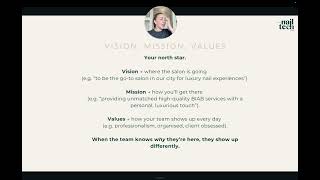
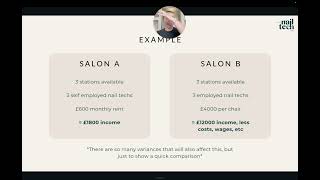
Next, we're gonna dive into the employees versus self employed business model. Now this is such an important choice that you are about to make in your business if you are at this stage. And I also just want to say a huge well done because if you are at this decision, that means that you've already created something amazing, something that you are now ready to invite more people into. And it takes a lot of hard work, a lot of great determination to get to where you are today. So I just want to say a huge well done for that. If you are at the point of deciding whether you would like to bring employed or self employ professionals into your space. Now, the first thing I want to say is there is no right or wrong here. Every business is different. There are different variables involved in every single nail technician's business. So there is no one size fits all. There is no right or wrong when it comes to deciding which one is best for you, for your vision, for your profits. However, there is a lot of information that you should know before you make the decision. And, and you should also make sure that you make the decision for the right reasons and not just because you are trying to cut corners or feel like one might be much easier than you than the other. You also want to think about your profits when you're doing this, because I see so many people just jumping and making a decision that feels easier, but leading them down a path of not actually earning any more money for taking on all that extra accountability that they've just taken on with their new salon or studio space. So I also want to share that I am not a professional accountant, I am not a financial advisor. And I would advise, advise that before you make this decision, you speak to your accountant, you understand what your affordability is and which choice might be right for you in that respect. Okay. I have had advice on my own businesses, my own salons, from an accountant and also I have spoken to an accountant before filming this module. So some of the information you'll see in this module has been given to me by our resident accountant, Rachel Harris from she accountants. And you'll also see later on in this video a decision tree that that has also been given to us by Rachel. I'm also going to pop it inside this lesson as well. So you can click on the links and things like that. But that information has come from an accountant. But I do recommend that you speak to yours when you are making decisions such as these. So let's dive straight in anyway and get talking about the important stuff. So one of the Biggest decisions you will make as a salon owner is whether or not your team are employed or self employed. And the same goes if you're opening a training academy or anything of that. So source. Now, if you get this wrong, it can cost you in money, in stress, even legally. I have seen that happen before. But the exciting thing is if you get it right, it will set the foundation for a thriving and profitable business. And I know that you are more than capable of building that for yourself right now. So you have two paths available to you if you want to start to build a team. You can either build it from an employment standpoint or you can have these people coming in as self employed or and them working for themselves. Now, there are pros and cons to each of them. Remember when I said before, there's no right or wrong here, but what actually are the pros and cons? So if you were to have employee staff members in your business. So let's say you are at a point where you are fully booked, you're at capacity, you've got a waiting list of clients who want to come to you and you've got no space for them, you've got room in your studio for another nail tech to come in. Then you might want to employ a second person and that means that they are on your payroll. You pay them a wage at the end of every month and they are your responsibility, so to speak. So the pros of this are that you will have full control over their work and hours. So you'll be able to dictate how many hours they do, what days they work, when they come in, and how long they come in for. You also have full control over the services offered. So essentially they're working for you. So they're just going to be there to fit the needs that you have. So if you tell them, right, I want you to be doing these treatments on these days and these terms, then that's exactly what will happen. This is great for brand consistency. And if you have a real clear vision of what you want to create and you see your business being this really tight brand that has consistency within it that also, you know, a client can walk in and they get the same experience time and time again because this person is there working for you, they're working to your vision, to your story, to your requirements, and they're there to help you make to grow your business in the way that you want to grow it, not for themselves. Okay. There is also a potential for more profits when you have employed staff. And that's because if somebody is self employed, I'll go into that in a minute. But the amount that they give you is the same every single month. But if you have an employed staff member, let's say they do more clients one month than another, let's say it's a really busy period, maybe it's a holidays or they, you know, Christmas or summer or something like that, and this nail technician ends up really, really busy doing more clients than what they're used to, then that is the potential for more profits for you. Because if they're doing more clients in the same amount of time that they're coming in just leads to more money for you. So you can benefit from busy periods like Christmas and stuff like that. The cons of having employed staff is that it is higher responsibility. So what that means is you will need to register them with HMRC or you will need to look into the requirements of the that you are operating in and you will then need be responsible for paying the tax, holiday pay, sick pay and all of those things. Now, although that seems like it's a higher responsibility, there is a process within that many people are employing staff members. It's not not doable and it's just that right now you probably just don't know what that involves and that not knowing can cause anxiety, can cause overwhelm and things like that. But I'm going to go into that in future slides on this video. Okay? But right now I just want to touch on the pros and the cons. So they are the pros and the cons of employing staff in your business. There are also costs involved with employing staff. So the cost of the holiday pay, the cost of the sick pay and things like that. In contrast, you could also have team members who are self employed. So they're running their own nail business, but they're just choosing to do that inside your salon or studio space. Now the pros of this are the opposite. So it's less financial responsibility on you. So you would charge them maybe a set amount or a percentage of their treatments and things like that, and then you would receive that every month. Now another pro is that there is more flexibility and less accountability. So essentially this person is responsible for themselves. They're responsible for paying their own tax, their own holiday pay, their own sick pay, they're running their own business. All they are doing is using your space to do that. So they'll come in, they'll run the business and they will go home. So there's less accountability on you and you can Be a little bit more flexible. So you can decide, you know, you can have their nail desk available one day a week, two days a week, six days a week, whatever you want, and you can charge accordingly within that. So it feels like it is quite a simple process when you have self employed staff. The cons to this is that you have less control over these team members because essentially they're there for themselves, themselves, not for you. And that means it's harder to build a strong brand culture. So if you want things doing a certain way, it is harder to get these people to conform because essentially they're not there for you, they're there for themselves and for their own business. So things like cleaning the salon a certain way at the end of the working day, or putting the desk back how you would like it, or certain processes and things like that that you would like following. Who answers the phone when you know you're not there, who gets up to see to the wind cleaner when you're not there. And if you have people who are self employed in your salon, essentially that's not their job. And if we're asking that of them, that can sometimes cause pressure on you, on them, because they're just there to do their own thing, to run their own business and to go home. There are potential legal gray areas when you have self employed staff. So you need to be very, very clear on them being self employed, what their responsibilities are, what your responsibilities are, so that it doesn't count as hidden employment. The other con is that the profit can be capped with the space that you have. So let's say for example, you have three nail desks available and you're charging 600 pound per month for those nail desks. That means that you can make an income of £1,800 off these nail desks. Okay, great. However, you can't make any more from that, especially if they're working full time. The desks are taken up, that's all you know you're ever going to bring in from those nails. Nail desks. So they're the pros and the cons of having self employed staff. As I said, pros and cons to both of these options. And it's up to you to start thinking about what's actually important to you and your life. What season are you currently in and what is it that you are trying to build? So in order to help you to bring this to life, I'm just going to give you some examples as well of a salon A and salon B, who both have three stations available. Okay, so this is from a profitability standpoint and a lot of nail technicians will just have self employed team members in their space because they feel like it's easier. But I just want to show you that actually it's not always easier because if you're running a salon that isn't making any profit, then it becomes hard, then you start getting burnt out, then you start getting worried and stressed, right? And a lot of the time, if you're running a profitable salon, you can take a deep breath out, it feels good to you, it feels a lot easier. So one isn't necessarily easier or harder than the other. And I just want you to see what is possible through this example here. So let's say, for example, Salon A, you've got three stations available and you choose to have three self employed nail techs in that space. Each of them pays £600amonth, so £150 a week for their rent. And that means that from those nail desks you're going to earn an income of £1,800 from those people. But let's say, for example, your salon rent is a thousand pounds a month, so that might cover that. Let's say your bills are £500amonth, that may cover that. From a profitability standpoint, you're then left with an extra £300. So although, you know, it's great that you've got this salon actually profitability wise, from your team you're making £300 profit, which might not be what you thought you were going to be making. When you have this vision of this salon that was going to expand your business and bring you more money in because you are capped at that income amount. However, let's look at Salon B as an option. You've got three stations available, but instead you employ three full time nail technicians. Now this is just for argument's sake. Okay, so let's say for example, right now as a nail technician, you can earn £4,000 per share. Now I know you can earn far more than this, but this is just for argument's sake, let's say your full time employees, nail technicians, bring in £4,000 per station. So in a month their clients are paying £4,000 for these treatments. That means that overall you can bring in £12,000 income. Now obviously there are so many variances that will also affect this because you've got less costs and wages to come off this. So for example, you might, you know, you've got to consider the cost of your products. You've got to consider the costs of everything that goes into making these treatments possible. You've also got to consider the cost of the wages for these people, the holiday pay, the sick pay and all of that. However, you've got a much bigger pot to take this out of. Okay, so even after you've paid wages, holiday pay, sick pay, all of those things, even after you've paid out the costs of your products and all of those things, even after you paid out rent, you might find that there's still more opportunity for more profits in Salon B. It just depends on what your costs are. It just depends what your circumstances are. So you've just got to understand exactly what is right for you. But I just wanted to show you that example to show you the difference in income. Obviously the costs are what make it worth it or not worth it, and everyone's costs will be different. But that's just a little bit of a comparison. Employees. Sorry, self employed isn't always the best route. Neither is employees, but you've just got to look at both options. So here is the self employed decision tree. Now this was given to us by our accountant and I'm going to pop it below as well. I won't go through this word for word. However, all this does is allow you to come to a decision that is right for you. So it asks you things like, do you actually understand the benefits of employing a nail technician? If you don't, then here are the benefits of that. If you do understand the responsibilities and the benefits, then that will lead you to the next part which is thinking about can you actually affect afford to hire an employee? Now one thing I want you to think about if you are going to be employing somebody is the first thing you think of is how am I going to pay this person? Right now I couldn't afford that. But the, the cost of their wages will come out of the money they are bringing in. So if you are at a stage where you're considering bringing somebody else into your business and you're not sure whether to have them employed or self employed, one tip I would give you is to start a wait list. So if your books are closed, you can't accept anyone else. Right now, rather than turning people away, I want you to start actively building a wait list. And you could have this on your stories, or you could share this with people as an automated message if they message you and ask to book in. But the message should be something like, right now I am fully booked. However, in the near future there could be an opportunity for you to enter my salon space and become a client. Pop your name and email address on this wait list if you would like to, you know, have the opportunity for that. If you build a wait list, it will give you an indication of whether or not you can employ someone. And it says here, do you have a pipeline of work for an employee? So that means basically, are you currently tearing people away? Are you fully booked yourself? If you're fully booked yourself, you're turning people away. And you can build a wait list that is so much easier for you when you come to bring someone else into your business because you've already got the people ready and waiting rather than not knowing whether there's people there waiting for an appointment or not, rather than just hiring somebody and then having that problem of, okay, now we've got to get clients in in order to pay their wage. If you've got a wait list, it's a very good indication that you can have another nail tech in your salon and that you're gonna be able to at least pay them a wage or, or you might choose to have them self employed. It just depends on your circumstances. Okay, so go through this decision tree that is below. Have a little look through it, click on some of the links that are there and available to you. You also have the opportunity to bring in an apprentice and you can get lots of help from that, like government funding and things like that when it comes to apprenticeships. But again, that depends on whether you're in the UK or not. There are variances that will come into that. If you're outside the uk, you could maybe look into what is available for, for you. But have a little look through that decision tree, make your way down it, have a little look at the pros, the cons, the responsibilities and start to think about what would be best for you. And also have a little chat with your accountant about what is affordable for you right now. Now the thing to know is when to transition. So like I said, you might be sat here right now thinking, oh no, I have just built a salon full of self employed nail techs and I'm facing some of the problems that you've spoken about. So I am struggling with the culture, I am struggling with creating a strong, solid brand. I am struggling that at the end of the day they're not cleaning up after themselves and that's not the salon or the vision that I wanted to create. Or you might be sat here thinking, I've employed everybody, but I don't like having the responsibility of that and I wish I hadn't have done it that way. Remember, you are not stuck. This is your business, you're in control and you can make a transition at any given time. So how to know if you have a salon full of self employed staff members, how to know when the time is to maybe transition into employees? Could be when you're at a point where your salon vision relies on consistency and strong brand reputation. So if in order to create what you want to create, you need a strong brand, you need consistency and that's an indication that potentially it's time for you to start employing staff members. If you want to grow beyond the rent a chair model into a structured business where you have a clear org structure, you have, you know, people in set roles within the salon and you're clear on the profit that you want to bring in, then that might be a time when you want to transition. When you are financially stable enough to cover salaries even in quieter months, or when you have a waiting list of clients who want to come to you, that is also an indicator that you could employ somebody in your business and it'd be successful. Successful for you and a reminder that it is not one size fits all, it's about what fits your vision and what fits your stage of growth. So just to conclude, as I said at the beginning, there's no right answer for every salon, but there is a right answer for your salon. And the key is to understand the trade offs, get crystal clear on what your long term vision and mission and values are for your brand and your company and make a decision that aligns with the kinds of business and life that you want to build. Remember, it is your life, it is your business. It's not hard, it's just new. That's another thing to mention. It's not hard, it's just new. There might be certain decisions that you need to make that feel a little bit tough, feel like stepping into the unknown, you are capable. So back yourself with whatever decision you go with. And I'm really excited to see you create that profitable, powerful, thriving salon that I know you can build.