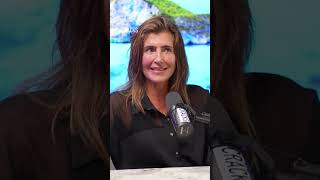
Conversation in a Cracks interview where Dra. Patricia Restrepo explains how she balances a busy social life with health by keeping a "big picture" of her non-negotiables—excellent quality of life for body, mind, relationships, and projects. She emphasizes the importance of a good relationship with oneself, recounts physical injuries and recovery as formative experiences, and identifies meditation (learned early via her psychologist mother) as a key, adaptable tool she has used for several years to manage stress.
How can you combine a modern, busy, social life with taking care of your health without one killing the other?
I love it. And how I think I go back to the big picture. What do I want to be very clear about what I want? And I continue working on this. I mean, I'm alive. I mean, we continue learning and we continue dancing with this. And I try to put it into practice. What I want to keep in mind every day is what is my guiding light. I want an excellent quality of life. So to have an excellent quality of life, I need an excellent quality of body, but I also need an excellent quality of mind. And I need a good relationship with myself and my relationships. And I need obviously for my projects to go well, to feel good about myself. So there are several things and I think having that big picture view has given me a lot of peace in this process. And obviously I still have a lot to learn. The area where I believe I have built the most strength through my own history has been in this relationship with my physical body. And life has tested me. As I was telling you, I had two accidents that led me to have surgeries. And they have been a great learning process. But also having a good relationship with myself is very important. So always questioning myself and always evaluating it in terms of what my non negotiables are. And my non negotiables are my quality of life. So that's why my family comes in, that's why my health comes in, that's why my relationships come in. And I think this relationship with myself is the most important because if I'm not okay with myself, then everything else will show me. So I think that for me, if I'm okay with myself, it will give me a big step forward in being able to balance these other projects.
And well, it's very subjective because being okay with yourself depends on what your priorities are exactly. What do you do to manage stress?
Look, I love meditation. I come from a psychologist mother who works with me in the Miami offices and has been part of everything and also helped me set up the project in Mexico. We are a life team. And since I was little, she took me to personal growth things, to courses, because I was always into the development part. And I remember going to yoga and meditation classes, which at that time were more meditative. Yoga in Medellin when I was little and. And I would die of laughter and like chatting. But I saw it from then on. During my career I was not into that. But over the years and working with people, I saw a common denominator of people I admired. And I said, I want to rub a little bit of that on myself and I want to be a little bit infected by this. It is the common denominator. They have been people who meditate and who have that internal world. So I have been meditating for several years now, and I think it is a turning point.
And what does your practice look like? Very adapted to the moment of life and where I am, if I'm in Miami on the beach or on the balcony in silence, if I'm traveling wherever I can.