Kiflo Q&A Live: Why Aren’t My ‘Paper #Partners’ Performing & How to Fix It? #partnership #gtm

Live Q&A (hosts Ignacio & Tom) with guest Peter Fogg on why signed 'paper' partners fail to produce deals and how to fix it. Key insights: the 'risk triangle' (you, partner, customer) makes early introductions risky; prefer activation-oriented onboarding (light legal, minimum necessary enablement), get an initial co-sold deal with a customer who already knows the partner to remove risk, and run a focused 90-day activation sprint for A-tier partners. Triage partners into A/B/C by fit to ideal partner profile, executive sponsorship, seller alignment and customer pipeline; track leading KPIs (sponsor alignment, POCs started, named opportunities) and lagging KPIs (first deal closed, partner-specific CSAT).
And we are live. Welcome. Welcome everyone. I know that we already have like 10 people live, which is great. And we have a lot of people also that registered and will join. So we'll give a couple of minutes. But if this is the first time that you're joining, welcome. If you're returning, welcome again. We love to see you here. So we. My name is Ignacio, I'm from the keyflow team. I'll be your host. And also I got Tom from the keyflow team as well. He's my colleague. He'll be moderating all the answers and questions. Let me just explain a little bit how the format works. Today we have a super interesting. And this is something that. Well, the guest is a returning guest from our previous season and it was one of the most popular series that we had. We. We are super excited to have him again. And this is a Q and A live session. So basically it's not the traditional webinar. We'll basically get your answers, sorry, your questions answered during the session, not at the end, but during the subtopics. So what I will encourage you to do and we'll repeat this a lot is please put the questions there in the chat and just to kick things off, maybe you can tell us what's your current role. So if you see there in the chat, just put there in the chat what's your current role? And then we'll give a couple of minutes so that people can join and then I'll introduce you to our guest and then we'll kick things off with the topics. Okay, so let us know in the chat what's your current role. And then in a minute I'll introduce you also. So we already have someone. Marco, Director of Channels and Alliances. Welcome Marco. So please don't be shy, add yourself there. Clara, Senior Partner Success Manager Nice. Welcome. Clara. Samantha, Director of Partnerships Work Workforce.
Wow.
Software. Nice, nice. That's super interesting. So please tell us. Grego, Partnership Development Manager welcome. Jari, Partner Operation Manager welcome. Yari Yasa, Partnership Manager wow, this is super interesting. And I think that our guests will be super happy that we have this audience. I think that we can help you a lot. Damien, Partner Manager at webmanuals. Welcome. Damian. So, Paula. Paula, SVP Partnerships and Co Founder Welcome Paula. So we already have 15 people live. I think that we can kick things off because we have a lot to cover today. And the topic is great because again, the topic is why aren't my paper partners performing? And how to fix it this again, it's a follow up of the session that we had in the Session one. The guest today is Peter Fogel Sanger. He's known as Peter Fogg, but he has a lot of experience. 30 years of doing partnerships in the B2B space, helping SaaS companies, enterprise companies basically drive more results with partnerships. So Peter, welcome again. We are super happy to have you here. You're a friend of the house, so it's a pleasure to have you. And I think that the session today is going to be extremely helpful for all the people.
Live well. Thanks so much for having me again and welcome everybody who's joining us. So have a few slides just to help us frame up the conversation, but please don't hesitate to throw questions at us. We'll try to answer those in real time as Ignacio already shared have a three phase career the last 10 years I've been working for early stage SaaS companies, building partner programs and enablement programs. Prior to that I was in direct sales. A big chunk of it was for enterprise software and another big chunk was for regional boutiques. And the reason I like to emphasize those two phases of my direct sales profession is that I was on both sides of partnerships. I was on the agency side implementing, you know, working to implement technology partnerships. And then when I was a software direct sales, we were building partnerships. And really what I know about partnerships I learned when I wasn't in partnerships. Believe it or not, I joined a company called Sitecore in 2010. Some of you may be familiar with them at the time they were one of the first, I think software vendors that was creating what we now talk about as an ecosystem led or a partner led go to market strategy. I was a quota carrying direct sales sales director at the time and out of my six years there, the first two to three was 100% commission. And our charter as individual contributors was to bring 50% of our revenue from partners that we personally had to recruit onboard and activate. And because it was 100% commission, if you didn't figure out how to do that, your family didn't eat. So I learned the hard way and I suspect many of you are going through that self taught phase in your own career. So I'm, I'm hoping to take some of the things that I learned the hard way and scars that I have and share what I've learned along the way. And so just to kind of rephrase this problem statement a little bit more specifically, we have paper partnerships which might be an ecosystem of tens or dozens or maybe even hundreds of partners. They've signed agreements so you have paper, but they're not performing. And at the same time, your leadership is asking you to drive results from their point of view. They may be saying to you, we made an investment in you and your team and a program and whatever the relationships, and we need it to produce pipeline. And ideally even more than pipeline, we want some ARR and predictability for producing arrangements. So hopefully this sounds familiar, but want to confirm that with a poll.
I'm sure that it does. And let's just kick things off with the poll. We need your help here from the audience. So what percentage of your ecosystem? Partners never source a deal. So this means that you onboarded them, you enabled them, and then nothing happened. So basically they never sourced a deal to you. So please put there your answers in the, in the poll. And this will give Peter an idea of what's the audience kind of like situation today. So interesting. 90% and 60, 30 and 60 seem to be kind of like a little bit more on the high side. So let's give a few mints, but seems like 30 and 60. It's almost like 50% now. One more minute.
Yeah. I think we have the winner.
We've got the winner. Yeah. So it seems like between 30 and 60% of all the partners that the audience has never sourced a deal. And this is kind of like, I think that we discussed this feature in our previous session, but this, this is something that you were expecting, right?
Yeah, and, and I'm surprised it's that good. The partner leaders I talk to all the time, vast majority are, are a lot closer to 90%. There'll be, you know, 10, 10 out of 100 are performing. And the other.
Nothing.
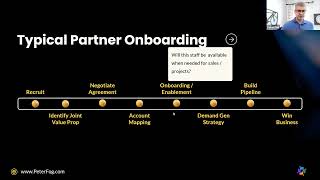
Right. It doesn't matter how, how big of a percentage it is. There, there is a percentage of your ecosystem that you've invested in and they, they've invested in you that aren't driving results. And we want to help figure out what we can do about that. But before we can figure out what to do about it, we need to figure out what's the root cause. And there's two parts of the root cause in my experience. One is what I call the risk triangle. And if you think about your organization and the other two parties involved. So I've largely worked for ISVs the last 15 years, so I'll use that as my illustration. But you might, you might be a software company, you might be a services company, but you over here, your partner of some form over here, and then the customer. So there's a triangle of three parties and when it's a new partnership, the risk first of all comes between you and the customer. It's a prospect. So you're unproven and you're trying to to sell them. Your solution then the partnership is unproven because it's new. That partner hasn't worked with your product or that product hasn't integrated with your product before. If it's a new ISV to ISV partnership, and then the third is that leg of the relationship, that partner is also unproven. If it's a service provider, they've never delivered a project for the customer. If it's a another isv, that customer may be net new as well. So in this triangle, there is risk everywhere, which is probably pretty obvious since I have unproven underneath each of these legs. And I think a lot of partner managers don't think about this problem. At the beginning of a new partnership, you've recruited a partner, you've signed an agreement and you haven't thought about how do we get them to do a deal, how do we do a deal with them? And there's lots of different tactics that I've seen companies take. The one that is a mistake that I have seen frequently is to eliminate this risk by introducing this partner to one of your customers. So that customer already knows you or you're really late in the, in the sales process. So we're going to introduce this brand new partner. Well, that's a problem because that partner hasn't proven themselves with your product and hasn't proven themselves to that customer. So every time I've seen that happen, at some point in the process, the customer says what case studies does that partner have with your product? Because I don't know them. So, so prove to me that they're your best partner or one of your best partners. And when I've seen that happen, when it's this is a deal and you're bringing this partner into a net new deal, then that kills the deal for everybody. The customer suddenly doesn't trust you because you're bringing in an unproven partner. The partner may no longer be a partner because they just lost a deal because you tried to introduce them. And they're going to say, we can't make this partnership work. So you probably all have some form of story around this. So our jobs as partner managers is to figure out how do we get this new partner to perform and mitigate the risk triangle. And the second part of the root cause for this is the onboarding and enablement process that many of us have used yours may look a little different than this, but I have found most partner programs have something with a similar cadence. We recruit them, we try to identify some kind of joint value prop, we negotiate, that agreement gets executed and then we go into this shotgun approach of let's do some account mapping, let's train your team, let's do some demand gen and let's just hope that deals fall out of the sky from these academic processes. And I'm very deliberate saying these are academic processes because nothing about the partnership has been proven at this point. So we've done nothing here to really reduce the risk triangle with the exception of having the partner trained. But they still have no evidence of applying the partnership. And maybe the integration between two ISVs has been built, but it's never been used. Or, or maybe it's an ISV and a service provider and the service provider's trained, but they've never actually done a project. So these three steps here to try to build pipeline just is going to not perform terribly well. So I always advocate for an activation oriented onboarding. And by activation I mean let's get that risk triangle out of the way. Let's activate them through an actual partnership with some results and whole webinar on this topic by itself. But the short version is skip trying to do a whole agreement in the beginning, just do the lightest weight thing you can do at the beginning, an NDA confidentiality agreement, something really, really lightweight. And do the minimum amount of onboarding to educate them from a sales point of view so they know a deal, a joint deal when they see one and they can talk about it intelligently, then you ask them to identify the first deal. Why do I suggest that? Well, if you think about these triangles, if you can get this partner to identify a customer who already knows them for that first deal, this risk goes away. That customer is already going to know that partner. If this is an agency or a service provider, that customer is used to them delivering technology for them. So if this partner says, hey, I have a new product I want to introduce you to, that I think will solve some problems for you. This customer is not going to ask about this leg because they're used to this partner doing that kind of thing already. So this is really the only risk in that partnership and in that deal is that the ISV is unproven. But that risk is going, going down as well because now you have a trusted advisor who's introducing that prospect for that first deal so that that whole risk triangle becomes much more Manageable. Then you co sell that first deal. Even if you don't have a co sell kind of program, co sell the first deal as part of your onboarding. Make that your program, process, identify. Let's teach you while doing how to sell this deal. And then any kind of enablement you do of the actual delivery staff is the project team instead of a trained a bunch of people ahead of time. When we don't have a deal on the horizon. If it's ISV to service provider, one of the problems is that staff that was trained may go away and be on some other project before you get to them. So I think we planned a second poll here.
Yep, exactly. Nacho, you're muted.
No, I was saying that that was a super complete recap and I think that it was excellent because that's the core. I mean like what you just described and identifying that first deal, it's key. So I think that it's clear now. Let's just bring the second poll because I think that this is where it gets kind of like tricky. Right. And how often do you send partners leads without clear expectations of repressive City? I mean, meaning you share leads with them, but then nothing kind of like happens from the the partner side and even you don't ask. So this is important because this will lead the conversation and Peter will put a lot of emphasis into this and we'll actually give you an action plan of how to fix this. So please tell us 100%. I don't do that once a month. Okay, so you sure? And then nothing happens.
Now we have some people telling us what really is happening and not that they want to happen.
Yeah, correct. Which it is fine. I mean, it's okay. There are ways to fix this and certainly Jupyter will show them. But yeah, let's give maybe one more minute. So again, it seems like 20% once a month, once a quarter.
This wasn't intended to be a trick question. This is a tactic that a lot of partner managers will take to try to feed the machine which is your partner. So we want to send them leads. You want to send them leads. They're expecting leads. Unfortunately, if you're doing it without any expectation settings. What I have seen as you start having partners coming to you like this with our catchers. Where's my leads? Where's my leads? And you need to set the expectation of whatever your program is, whatever your KPI is. During my tenure at Sitecore we had a rough KPI of 50.
50.
We never quite met that. But that was the goal. If you're a partner and you refer me a lead, the expectation is I'm going to refer one back to you. More importantly, if I'm the ISV and I'm giving my service provider a lead, I'm expecting you to bring me something back. I'm not, I'm not building something that's just a channel. I'm going to throw leads over there and you kind of go deliver services. I'm trying to build something that fuels my growth. And so if I'm giving you something of value, which is a lead, then I should be expecting something.
Expecting something. I think that George has a comment, right, Tom?
Yeah, he has a very interesting comment. He says if I hadn't biz devs behind me direct sales, I would have done that much more often. Yeah, so.
Yeah, we hear you, George. Yeah. So how do we fix this, Peter? Because it seems like it happens a lot or more often than we think. How do we fix this?
And even if it only happens occasionally, our thinking as partner managers, partner leaders, should be that every lead we have is an asset for our organization to fuel the machine. And so think about activation. Rules of thumb first, it requires a deal. So a partnership is not going to. It's got to be based upon trust. And trust is built upon actually doing something together. And the easiest way to do something together is a deal. So if you think about that as a way to get from onboarding to activation requires a deal. And then we need to have both parties realizing there's a give to get. If I'm giving you something, I'm expecting to get something in return. And I will freely give you things and I will help you with your business if you're my partner. But I need to get some value back. And then finally, we're talking about paper partnerships here. A really tactical thing you can do is simplify and remove as many legal obstacles as your leadership and your legal counsel will let you get away with. And I've been really fortunate to to have worked with some very commercially savvy in house counsel that have allowed us to push the partner agreement way further down the path and done a really, really lightweight confidentiality agreement, not even a full scale NDA. And the reason for that is if you talk to many lawyers who've worked in partnerships, they'll tell you that partnership agreements aren't really that useful in litigation anyway. They're really about just setting an agreement in place on how we're going to behave. So if you start with confidentiality, like, hey, we're going to give you some information about our product that the general public doesn't have and you're going to give me some information about your prospect that we don't want to share with your competitors. And if you just agree that we're going to, we're going to be professionals, we don't need a 92 page agreement and the red lines going back and forth on all that other nonsense. So. Playbook for Paper Partnerships so if you're in this, in this phase, you've got 10, 20, 30, 70% of your partners are papered and not performing, first thing I would recommend you do is to triage your list and segment them into at least A, B and C categories with a couple of signals. First is what is the closest fit to your ideal partner profile. And if you don't know your ideal partner profile, that's the first thing you should do is actually document it. Most organizations will say, yeah, sure, we have an ideal partner profile, but they've never written it down. So if you ask two people in the company, you're going to get two different answers. So if you think you know who one or two of your A's are because they are the ones that are performing, then build your profile around that. And I would argue that a lot of companies are going to have more than one, so it's called ideal. But I think you'll probably have two to three of different partner types. And you need to acknowledge that instead of having one that's this type and this type all kind of merged together, acknowledge that you might have two different kinds of partners that are ideal for different reasons. Document that and then segment based upon your partners, existing partners fit to that ideal. And then look at active customers or active pipeline within your ideal customer profile for each of those. So you're pretty quickly find that you've got some partners you've signed that has nothing in their portfolio that looks like your ideal customer. And you probably didn't realize that when you recruited them, maybe signed it. Especially if you're an ISV and you've recruited a bunch of boutique agencies. Boutique agencies are really good at selling what they want to do, not what they've actually done. So you may have signed up partners who said they want to do the kind of work that's your ideal customer and they've never done it. And so it's very forward looking. So they're going to be maybe a seed partner at best. And then look for executive air cover partnerships, voice the ideal partnerships, your A's and potential B's should have some kind of relationship that's above your level. A founder to founder, a VP of sales to VP of Sales, a VP of sales to VP of delivery, some kind of executive air cover. And if you don't have it, that's okay. That just means they're probably a B or a C segment. And then I know I said three signals up here, but the fourth signal is there should be at least a, a seller on both sides of the equation that's willing to co sell. And so if you don't have these then that tells you that they're a B or a C. And then the second is you're going to go into A. This playbook is going to go into a 90 day sprint. And that 90 day sprint needs to start with a pitch. But if you don't have a target for that pitch, don't do it. Don't go into the Sprint. So as you're triaging, you want to work with your A's and make sure there's a first deal there. So you've got some A's that fit all of these things but they still haven't done a deal. So the first job you have is to go to your executive sponsor and your selling sponsor and look for that first deal. And this has to be really action oriented. It can't be. Partner managers are famous for having a huddle. Yeah, yeah, yeah. Partnership, partner, partnership. Let's, let's go and we'll review our pipelines and I'll throw some suggestions over to you in the future. That's just kicking the. Can you schedule an hour long meeting, 30 minute meeting, whatever you find appropriate with a goal of mapping during the call your targets. It's an A partner, they've agreed, they've got executive sponsorship, they've got an executive seller. Got a seller willing to co sell with you. Should not be hard to pick three targets that you're going to consider and then you're going to pick one during the meeting. You're going to pick one that's, that's going to potentially be your first deal together. Then you're going to with them, you're going to agree to a target date. Now I know you're doing this without the prospect. So it's going to be a range. We're going to say next week or next month, but you're going to pick a specific target time do you want to pitch them together? You're going to make sure the AES, they're not on this meeting. They probably should be, but if they're not on the meeting, you've aligned both AES that this is the plan. And then during this pitch sprint you're going to have weekly check ins very tactic tactical action plans. We've got this target, we've got this pitch, we're developing this pitch check in. If an opportunity doesn't arise, both parties should agree we're not going to do any each other favors because our, our activation milestone, our activation goal is that first deal. So if we can't get that then let's, let's forget about doing anything else. That's what we got to do. And then all other favors come once the opportunity is produced. Reinforces give to get idea. So if they have a qualified OP that enters the pipeline, then we're going to give a whole bunch of stuff. We're going to give intros to maybe some other team members, maybe you create deal rooms. You're going to do se support in exchange for that qualified op. These are things that as partner managers we too freely give at the beginning of a partnership when the partnership isn't proven. We don't want to introduce a new partner who hasn't performed to our entire sales team. If you've done that, you probably have salespeople who are just exhausted with trying to understand all these different partners who are paper and academic partners only and they don't really have anything to talk to their prospects about. I can't introduce this new partner to my pipeline over here because they have no history. So don't do these things unless there is the OP in the pipeline. And then ideally you do these things after you have at least the first opportunity closed. And then after 30 days you need to either cut them off from this sprint or coach them. You want your A's to have moved a deal to be promoted and really be your top tier Partners. Your Bs you want, you should have had a conversation with them. Even if they're not an A and they haven't met these criteria, this criteria should be clear to them that to be A, you know, an A, whatever you want to call that don't need to be official tiers in your program. But they need, they need to be clear we're going to actively support the A's who have done this. And if you're a B, these are the things you need to do as a B to get that. And, and then your Cs you might need to make the hard decision to just terminate that agreement or let it expire if it's got expiration with both B's and C's. You still need your program, still needs a process to nurture them. I talk about partner recruiting and activation. There's a lot of parallels with what we need to do to to what our companies probably already do with outbound marketing. So if you think of your recruiting as the top of a marketing funnel, you want to fill the top of the funnel with a lot of potential partners. But you need this to be your qualification. And if the lead is not qualified, there's multiple reasons for that partner lead to not be qualified. One of which might be timing. They may be really interested in delivering a deal for you, but they just might not have anybody in their portfolio that's ready. So that doesn't mean you kick them out. That means you nurture them. Keep them interested in your program, keep them interested in your product. Give them excuse to keep thinking about their portfolio until the timing is right. And there may be some that just aren't a good fit that you need to completely kick to the curb. Now we're getting a little short on time, so last topic.
Peter, before we jump into the next topic, I have a follow up question because I think that this is great. And the first thing that I wanted to ask you is because you mentioned, mentioned and I've seen this and I've talked with a lot of partnership leaders where it's basically if you introduce a partner that it's too early and that they are not show that the real kind of like opportunity is not there, your sales team will basically get exhausted, they will take you. So your suggestion is introduce that once that it's proven right, like once you prove that the lead is actually a fit and you want to work towards that deal together like join and you have an action plan, then you introduce that to the sales team. And the other question is like what happens with the bee? Because you explained like the bad timing could be the case where they want, they might have, but it's not happening right now. So you suggest that you keep them as B and then nurture that until they are ready. Right?
Yeah. And that's why I like that this is a 90 day sprint. So some of those B's may be your, your sprint for the next quarter because they're, they look like they're potentially good partners but they just don't have that deal. And the, the AE alignment is really important. You want this guy to become your internal champion. You probably, everybody on this call probably already knows that our jobs are as challenging internally as they are externally getting that internal alignment, getting sales teams or BDRs or marketing, however your go to market functions, getting them to work with you and work with partners is an ongoing part of our jobs. So if you can get this person excited about that partner because of this first deal, they start becoming your advocate internally. And then when you get down here and you're starting to do intros to the extended team, when I've had the most success doing this, I don't talk on those calls. This guy does. He talks about how that partner brought in this deal and they co sold it together. And look at this great account that I wouldn't have known about before. That gets the other seller's attention way more than anything I'm ever gonna say.
Yeah, this is key, this is key. I mean, we had another session where the guest was talking exactly about this. Like this. The sales team, those AES are the ones that are actually selling for you and talking about the great things that they've done with partners. So I think that this is beautiful. Peter, before we jump into the other topic, I don't know if we have other questions in the audience. Please, if you do have questions for Peter, put them in the chat and we'll get them answered. But if not, we can move forward.
To the one question I haven't seen on the chat, but I get, when I talk about this with partner leaders, frequently is If I have 50 partners and only 10 of them are going to be my A's, do I kick the other 40 out of the program completely? And I would, I would caution you about being too aggressive with kicking partners out of the program. You will need to kick some of them out. But I've always had the philosophy and I was trained by my coach who taught me about this early on. You want everybody who's a potential partner to want to work with you and think well of you, your company, but also well of your program, even if they don't meet your IPP and your icp. Because at some point in the future they might, they might grow into an agency that works with your ICPs, or they might be talking to one of their partners and they might realize like, oh, I can't work with these guys, we're too small or we don't, but they're great. You need to bring that deal to them. Or everybody knows people in tech move around all the time. So you want them thinking really positively of you because they're going to move somewhere in a year that might become your best partner.
That's great. I mean, it creates awareness, right? Because in a way you just go and just create awareness. So I think that Marco has a great remark. Tom, I don't want. I don't know if you want to read it.
Yeah. Marco cursing this is getting lots of wheels spinning in my head.
Oh.
Oh.
That'S great. Marco, we hear you. Cool. Peter, let's get to the. To the last subtopic.
Yep. Some. Some KPIs. Some of you probably have thought about a lot of these already, but some, some leading indicator KPIs that are sometimes not measured as clearly as they should be. Do you have sponsors aligned, meaning sponsor on your side that somebody other than you sponsor on your side and somebody on that side having their partner leader and you as a partner leader aligned is not adequate. You need somebody in the business on both sides. So that should be a KPI you're seeking to grow. Meeting set of course a POC started, so that's a really strong indicator that not only do we have a deal in the pipeline, but we've started a POC with n number of partners. And then of course a named opportunity is created is something that your sales team will really pay attention to. But some lagging KPIs. So these are a little bit more obvious ones. Some lagging KPIs you want to think about is first deal closed. You're probably not tracking that now because you're probably not thinking about that first deal as explicitly as I'm suggesting you do. So if you start focusing on activation in that first deal, then track that as a really strong KPI and then you can look, a year from now, you can look at all of the partners who close their first deal and then what happened. And I can tell you from my own experience, when that happens really quickly, two or three more ops are going to hit your pipeline that wouldn't have if you didn't get that first deal closed. So the combination of these two things is going to be a really important KPI that tells your leadership about the health of that partner specifically, but more importantly about the health of your overall process and program. Because now you're showing we activated this guy and here's the pipeline that came out of it. And then finally, especially if you're a SaaS provider, don't overlook CSAT. The CSAT assigned to specific partners is a really important tool that you have to coach somebody up or coach somebody out if you've got a really strong partner. From a lead gen point of view, that is really terrible with Delivery you need to know, you need to be tracking that and you need to have a conversation about what do we do about that? Are they coachable, can we make them better at delivery or do we align them with another partner who is better at delivery or do we got to kick them out and just know that we kind of walk away from those deals because they're going to bring those deals in and we're going to have a very unhappy and very expensive customer to try to retain. And then from a cadence point of point of view, weekly you want to try to weekly with your, with your team have deal stand ups like what are our active deals with partners. You want to have bi weekly enablement sprints with that group of during the sprint and Then review every 60 days there are going to be some that you put into the A's that need to go to B's, some of the B's that suddenly become A's. So review that and then make sure you have decision gates. This is not a one time thing. This playbook is something you can just do on a rolling 90 day basis with continuing partners. You'll continue with partners you expand with and partners that you just park and let them be self service.
Yeah. So Peter, okay, that was amazing.
Amazing.
That's a clear action plan for everyone that is listening to this. And also I think that Veronica has a point. You can rewatch this. The live session is great because you get the answers from Peter or our guest. But if you're watching this you can certainly rewatch it. And I think that it's important. Important to mention that Peter, I think that we are on time but it's important that we mention also the special offer that you.
The most exciting part finally.
Yeah, no, I think that this is something that will help a lot of people not only here in the live session but also the ongoing one which is basically a special offer from. It's basically a free consultation from Peter and a special offer from Keyflow combined and then also a digital version of Peter where you can get answers from his brain with a special price as well. So if you see there, there's a CTA bottom there at the bottom please. If you are keen to get this offer, you just complete the form and Peter will get in touch with you and you can select what you want or you can get both. That's totally up to you. And also because Peter is super, he wants to help a lot of people, he's super happy to extend this too. If you're watching this on a replay you will also be able to do this and it will be evergreen. So please make sure that you complete the form and select what you want. And Peter will be in touch with you. And I think that we have a question from Clara. Tom. It's a question.
Lara has a question, but yes, I can still read it. Yeah, it's okay. And maybe Peter, you can quickly answer it. Oh, well, it's really long, but I'll read it. My company is very direct sales focused. When a partner registers a new opportunity, it is, of course, easy to convince direct sales to work with the partner as we're benefiting from the new lead. However, it is not as easy if we are the ones handling handing over the opportunity to the partner, as direct sales does not see the value in working together with a partner on a deal that we could could close on our own, especially if the partner is only pushing papers. In your experience, when is it beneficial to involve a partner in an opportunity and what expectations should be set there?
Yeah, that is one of the hardest parts of our jobs, I think, is educating a direct sales team who doesn't have experience with partners. I experienced it firsthand in my time at Sitecore, so I always advocate with the sales leadership that it's way easier to hunt as a pack than it is as a lone wolf. And if you. If you have a very authentic conversation with that sales director or ae, of course they're going to get excited about the deal coming from that partner. So I would say let's take that a step further. You're excited about that because they know about a deal that you didn't know about, so they're registering it and bring it to you. You think it's possible that they also know something about the deal that you're working that you haven't worked with them yet. Now, that might not be the same partner, but if. If you agree that a partner can bring a deal to you that you don't know about, it's equally valid logically to think that there's somebody in your partner ecosystem who knows something about. About your deal that you don't know. A stakeholder that is quiet but in the meetings, but is the most outspoken one behind the scenes that's going to kill your deal if you don't know about it. The competitor that they didn't tell you is in the deal that do nothing because somebody is advocating for killing the budget. So if you get them thinking this way and if you get them to trust to try it, they will find that every deal they do with a partner is going to close faster and in most cases it's going to be bigger than if they close it themselves because now you have somebody else telling you you don't need to discount this deal. You're already 75% of your competitor. Don't let them bully you into discounting because you don't need to. Well, if salesperson doesn't know that, what's a salesperson going to do? I'm talking to procurement. I got to get this deal done this quarter. I'll give you another 10. I'll give you another 10. You just gave away money you didn't need to. And he's gonna. I got the deal closed.
Like.
Yeah. Would you, would you want the commission on that 10? But would you. How would you feel?
But Peter, it seems like it happens more often that. Because Yari and Veronica have the same kind of like issue that, that Clara. So.
So I'm sharing, I'm sharing the digital. Peter. I know it's kind of fun and it's not intended to be a self promotion.
This is a great point, Peter, because yes, in a way, if you need like Jari, Veronica, Clara, I will encourage you, if you do need help, please get in touch with Peter, complete the form or reach out via LinkedIn. Complete the form, it's easier, simpler and Peter will be able to help you or you can pick his digital brain and I think that that will help you also a lot. So I think that we are on time. Peter, again, this has been extremely helpful. You threw a lot of power bombs there and knowledge bombs. So thanks again for doing this. And again, if you are joining live, this is the way that we actually provide value to you because you get your questions answered right during the session. And if you're watching the replay again, it's a great way for you to just see what you can actually be doing better. And please join us live in our upcoming sessions and please make sure that in this case with Peter, you can actually, if you're watching the recording, you can still subscribe and complete the form so that you can get that special offer from him. Peter, again, thanks for doing this and for extending the special offer to everyone and I think that Clara has something to mention and Damien, I don't know if you want to close with that.
The Damien has to leave, but he says big thanks for the webinar and he would love to further share with all the partnership gurus in the room.
That's great. Thanks. Thank you, Clara and thanks everyone that joined live. And Peter, thank you again. It was a real pleasure having you. Thanks, everybody.
Perfect. Thank you, everyone. See you next time.
See you next time.
Bye.
Bye.
And.
More from Peter
Kiflo Q&A Live: Why Isn’t My #partnership Program Generating Results & How to Fix It? #partner