Partnership Mastermind: Service Partner GTM Bootcamp [week 2]
Peter Fog leads week two of a partner GTM bootcamp with Brian, Dana, and others on building partner programs. The group sizes recruitment using pipeline math, maps the three-layer value proposition partners need, and learns why transactional incentives fail without understanding partner business models. When recruitment stalls, revisit GROW fit before moving forward.
Chapters
Awesome. Welcome to week two. Before we dive in, I thought I'd ask Bryant, who unfortunately missed the first week live session. Give him a few minutes to just introduce himself and what he does for a living and let you get to know him a little bit. Hey team. I'm based in. My name is Brian. It's a silent D to make it easier on everyone. I'm based out of Austin, Texas and I work for latera. We are a legal tech provider for legal tech software for legal firms, legal corporate teams, and my main role is I'm a director of professional services for partnerships. So part of that involves dealing, managing and leading the implementation partners, but also working with resellers and technology partners. I was brought into this role last year and as many of you have maybe have experiences, our team is our company has not dedicated or focused on the partnerships as a whole. So now they're taking the time to actually look at what we have in place. How do we build an ecosystem that is scalable and that is mutually beneficial for us and the partners? Awesome. Welcome, welcome. Okay, so what I thought we would first do is just remind everybody what I hope were the notable takeaways from last week. And I think a few of you shared that some of this was helpful to you. First, being that there really is no such thing as an ideal partner. Even though we talk about building an ideal partner profile, there usually is no such thing as a partner that matches that. Which means that every time you do a partner specific profile or whatever you call it, they're only going to match part of your ipp, which is okay. It just means that you have to figure out where they fit within your needs and accommodate whatever they're strengths and weaknesses are within your overall strategy. Which also leads to the idea that most programs that I've worked for or helped usually realize at some point that they need more than one ipp. That there are actually different types of partners that can service your customers and drive you pipeline. And it might be because they are very different kinds of partners that fit into your sales cycle. Or it could be that you just need different partners based upon the purpose of your program. An example I often use since I've had global rules, is that you may find that there's a very different kind of partner that fits in one geography, such as the European market could be very different kind of partner than what you want domestically. If you're building a partnership in the States, they may be similar, but they again, they may be different. So I'll pause there. Other, other, takeaways that were notable for you guys that you've thought about over the last week that you want to just comment on or talk. Nobody wants to volunteer anything. Okay. So action items that I shared at the end of the session and then on the Slack channel, I suggested you review your IPP and iterate if you have one, if you don't have one, to create one. So hopefully you had adequate time to at least start that process. So. So either vocally or just a raise of hands, who started building an IPP for the first time after last week's sessions? Awesome. Anybody else?
Oh, I kind of had one, like a draft one, and I just. Yeah, happy to share at any point to get feedback. Yep.
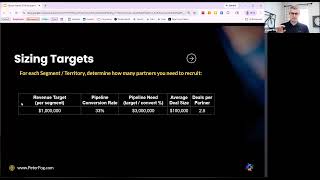
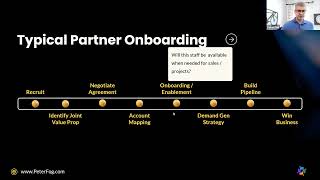
And if you didn't have one before this session, that's, you know, don't be embarrassed by that. I have found a lot of partner programs, including partners that I've partnered with. It's very typical that they have not really taken the time. They kind of have the urban myth. What is their partner profile, but nobody's ever written it down, and they may have a team of six or 10 people and they all kind of think they know what it is, and they've never bothered to write it down and come to an agreement. So just going through that process, I think can be very helpful to make you think about and then socialize that with your leadership and with your team. Second action item was to start looking at your ideal customer profile and specifically suggested you think about calling out two or three specific attributes that might help you identify an ideal partner who can help you find the ideal customer. So again, I'll ask anybody take some time to do this and have maybe an epiphany about, oh, wow. Here's some common attributes I need to think about with our target customers. Anybody have any thoughts there? I've got some stuff somewhere. I'm looking for the doc. I think it was just one of my takeaways from. And I'm less than a novice at this, but one of my takeaways from week one was like a joint value prop. Like just getting into this role. It was like, okay, how can this partner help me get net new logos? Not like, hey, what? What value am I actually providing to them? So that was really helpful. And then obviously thinking about the mutual customer we serve and that ICP is super important too. So excellent, excellent segue to what this week is about. Drake. So one, one of the final takeaways or action items from last week is to think about what's the purpose of building your program. So it all came here with some gap in how you're thinking about building a service provider partner program. And one of those might be that you hadn't really thought about. What's the top criteria? So we're going to parlay that into how you start building your recruiting strategy. And again, very typical for partner leaders and programs to take a shotgun approach. A lot of partnership teams really set out just to tackle things by activity. They want to hustle, they want to be scrappy, and there's nothing wrong with that, except when that's the only way you're approaching it and you haven't really taken the time to step back and look at, well, why are we even shooting in the right direction with our shotgun? So we're going to spend some time today talking about the alignment between your ICP and IPP and how you get to recruitment. And then I begin to build your actual recruiting action and then hopefully you'll take away how to qualify and disqualify. So again, I started to highlight this a little bit last week and we're going to talk about the overall process a bit more now next week. We're still in this early stage of how do you identify the right partners and then begin to get them into the program. So we're still kind of in this recruit to onboarding. Top of the funnel, if you want to think about partner recruitment as a funnel. So once you sort of have thought about the things we talked about last week, what's your ipp? What's your icp? What's the reason? I suggest you take these six or eight different reasons you might be recruiting and decide what are your top one to three purposes, what's the reason for getting partners into your program. And then based upon that, we need to decide who are our targets. So again, if your purpose is geographic expansion, then are those geographies and then who do we want to recruit to serve those geographies? Just as an example. And then we need to define what are the segments or territories that are going to address that set of priorities. So again, I'll use geographic expansion as an example. If I'm building out a US based ecosystem and I've got some partners, let's say in Chicago, and the purpose of building my ecosystem is to help expand revenue and influence in other major markets, then I need to decide what are those major markets. Pretty obvious where's our go to market strategy dictate? I need to be building out some partnerships and I might decide that there's five or six I'M going to start with I might do New England, I might do Atlanta, I might do Texas, and I might do California just as an example. So you got to define that. I mean, this is probably motherhood and apple pie, but if I'm going to be building a program, I have to decide where do I need them. And I'm using geography as an example, but it could be segment. If you're going from small medium business to mid market to enterprise, then that, that determines who you need to recruit. I need to recruit enterprise partners in this category of service provider. And however many of those you have, you may have one, you may have five or six territories. If you're doing a territory based recruitment and you need to define what's the size of the targets we need to recruit. Again, this might be motherhood and apple pie to you, but I find that a lot of partner leaders don't really have very strong strategy or plans here. I'm going to double down on this bullet in a minute, but we need to, we need to decide how much do we need for each of these. And then finally for each of those we need to build a target list so that then we can start executing. So when we're, when you're recruiting, this is more along the lines of let's not put the carp for the horse that I talked a little bit about last, last week. When you're in that recruitment phase, there's a couple of things that you want to focus on and a couple of things that you push off until later. You obviously start the conversation with what's the value prop to your end customer? That's, that's the reason to start the conversation. But that's not the reason they will partner with you. That's just table stakes, if you will. The second is kind of like that, what's the potential joint value prop to the end customer? So you educate them a little bit on what's your value prop and then you have a hypothesis for what is the value to the end customer of the two of you working together. Again, a lot of partner leaders stop there. They think, wait, we got this great product that's going to be really valuable to the customer. You're going to want to work with this because you're going to be able to deliver this great product to your customers. Again, I think that's table stakes and I don't think that's what activates partners. Where you want to really start spending some time if you haven't is using the Grow framework. Make sure you have alignment Especially around the problem and solution synergy. So this kind of ties back to the joint value prop, but you need to define what is your value prop of partnering. So these are three different value props and I don't think most partner programs recognize that there's three different value props. There's the value of you to the customer, there's the value of you and the partner together to the customer, and there's the value of partnering with you to the partner. This is why they want to partner. They don't want to partner with you because the joint value to the end customer is interesting. Yeah, that might start the conversation, but they're not going to build a business around that. They're not going to say we're going to train 50 people and do marketing campaigns because we have this cool thing we're going to deliver to the end customer. What's going to get them to do that is how you are going to impact their business. What is partnering with you and building competency around your service or product, how is that going to help them? I'm going to talk a little bit more about that in a second, but before we get there we need to decide how many of those do we need? And if you've never done this math before, Danny, you probably have because I think you come from a sales background so you probably have done some of this mental math. But if the rest of you haven't, this is at least back of the envelope important algebra to understand. You have to first know what is the business asking you from a partner sourced point of view, what are they asking you to do? So if I'm recruiting for specific territory and the business is asking us to do a million dollars of partner sourced in that territory, that's the North Star. So that tells me what, what the end object objective is. But how do we get there? Well, the next thing you need to know is what's our conversion rate. So if as a business your conversion rate is 33%, just a thumb in the breeze. But if, if a third of your deals in the pipeline close, that means we need a 3x pipeline. So if we need to do a million, we need 3 million in partner source pipeline to get a million in booked revenue. This should be pretty straightforward kind of marketing funnel metrics. But then you got to think about the partner side of things. What's our average deal size as a business? 100,000. How many deals in other territories, how many deals per partner per year do we typically get? And you might not have good data on this. So you may have to take a wild ass guess. And how many deals do you think a partner is going to do a year? Say two and a half. So you follow all this math so far. If you go pipeline, need of 3 million, divide that by 20 250k per partner. We need to recruit 14 partners to hit a million in ARR. And that's if everything works out according to plan. Because these are annualized. This is annualized at two and a half deals per partner per year. And that assumes of those 14 partners we've recruited them at the beginning of the year and they're performing all year, which is obviously not going to be the case. So you got the hockey stick of identifying, recruiting, building pipeline and closing deals with all 14 of them. So if we need 14. Oh, and also you're going to have some partners you try to recruit that won't convert. So to get this number you need way more than that. You're trying to recruit, trying to recruit to get them to convert to get that pipeline sourced. I wanted to go through this math because if you haven't thought about this for your own business, you need to do some at least lightweight models because this will tell you how big or how small the effort is in front of you. I have personally found that most of the time partner managers who are trying to build their territory or build their program haven't done this analysis to realize they may have a lot bigger job just recruiting than they realized. And the reason I say that is when I talk to partner leaders, a lot of times they're like, well, we have 200 partners in our program and we have 10 who are performing. So we're going to kick all the rest of them out and we're going to focus on those 10. Okay, have you done that math? Have you done the Math against the 10 that you have to get to this number? Are those 10 doing, you know, a hundred thousand, whatever that math is, are those 10 doing enough now? And if they're not, does focusing on them get them to do more? And so there's some analysis you need to do there. If you have, if you're in that situation, somebody said last week, I forget who it was, was it you, Eric, that you had a process you went through where you were pushing out some that weren't performing, you're keeping some that were performing? Yeah. So you need to make sure that as you're doing that, you actually do that analysis and then tying it back to the partner profile. The second bit of analysis you need to do is Their capacity. You might have 10 who are performing really well for you, but that might be their capacity. So doubling down and focusing on that 10th may not get you a nickel of additional revenue. You may already be, you know, milking the blood from. That's not the right analogy. Pulling the blood from that stone. Whatever that analogy is, it might be the maximum. So there's. There's just some, some lightweight financial analysis. And I'm not a finance guy, I don't like spreadsheets. But you got to do at least a little bit of that of this to figure out how much time do you need to be doing recruiting? Are you doing it in the right way? Do you have the right objective? And. And 14 sounds scary as hell if you haven't thought that you need 14 and then you just got to go into a block and tackling. I'm going to try to get one a month, you know, in, in the top of the funnel and start pushing them through. I'm going to pause there. Is this really obvious to everybody or is this like. I haven't thought about this before. I run my numbers this way before. Haven't thought about it. Me neither. I thought about it, but I use a lower pipeline conversion rate, 25% instead of 33. I try to be a little bit more conservative on that side. Yeah, yeah, I would imagine Everybody's is probably 20 to 25%. So I was being a little generous. And your average deal size, you know, who knows what that is? If you're trying to do a million and your average deal size is 100,000, I'd be surprised you were trying to do a million. I bet your average deal size is probably like 10,000 ARR or something like that. But I was just using this for round numbers to make it really simple. And the big one here is if your existing partners are doing two and a half million, two and a half deals a year, your new partners are not going to. Even if you recruit them on January 1st and they're onboarded and ready to roll, they're not going to hit that cadence of confidence and promoting your product and delivering consistently as somebody who's been in the program for a year or two. That said, the flip side of that is that I have found that when I've done a really good job of building the partnership value prop. And I'll talk again about that in a second, but if I've done a really good job of that and articulating it and recruiting, I have found that you get a surge of pipeline at the beginning that, like, it goes from, oh, I'm not sure we should partner to, oh, I've got three prospects for you right now. So there is a little bit of a surge that you get when you're doing this process really deliberately versus with a shotgun approach. So I kept saying I wanted to talk about this some more, and this is more forced audience participation. First is a question. Raise your hand. Or, or. Or say affirmative. If you have thought about the value prop you are bringing to your partners, not your product, but the value prop of partnering with you. Have you thought about that before? Okay. Dana, Jordan, Great. So of the three who said yes, what. What are the attributes of the value prop that you think you're positioning with the partner? What are some of the things that you're sharing with a partner of why they should partner with you? Dana, you went off mute. Go ahead.
One's really, I mean, very basic, straightforward. We're so, in my situation, just so everyone knows, I'm. I've been asked to bring on like a fil affiliate or referral partners only. So we have two resellers and two system integrators. And so I've just been asked to build kind of this referral partner network. So it's a little, a little different. And the first thing is incentive, incentivize. I feel like that's like the most basic thing. I mean, for salespeople, right? If you're, if you're trying to bring someone into a deal, there's got to be some incentive there. Of course, you know, we want to be easy to do business with. We want to, you know, build a relationship. But one of the first things I kind of asked here internally was what, what can we give? You know, so if someone brings us a lead and we're, you know, we're a SaaS organization, and then that lead moves to an opportunity which becomes a closed deal. How do we incentivize the partner monetarily? So maybe, I don't know if that's what you're looking for. You're probably looking for. For more, you know, of the other types of value. But so we, you know, we're putting together a program to offer that, you know, percentage of a closed deal, basically, in addition to other things as well. There's. There's other things too. So like sales enablement, you know, not per se training, but like, you know, webinars or seminar. You know, I'm trying to put together, like, educational pieces of it too, where, you know, here's how we help you win the deal. Here's how we can help you position our product. Here's like our differentiation, things like that. But I think they kind of go hand in hand also with the other just baseline incentive.
I have found that that's the starting point. Every program has to have some kind of transactional incentive. Yeah, I have found that in most ISV to any kind of service provider referral kind of partnership, that is table stakes and really doesn't get them excited. Mainly because, well, the two reasons that a lot of times your program incentives are not as interesting as we think they should be. One is the numbers are too small. So if you are, and I'll give you some examples from my, my background I think I shared most of my career has been some in somewhat in some relation to customer experience or content management. So that's infrastructure software. And my partners were often the biggest big agencies or sis implementing them. So if my software that they were referring a deal to me was 100k a year and I give them 10%, that's 10k to us. That sounds somewhat healthy. Like hey, we're gonna, we're giving them a $10,000 whatever commission, however you want to think about it. But from their point of view, a 100k software license is a small part of a million dollar statement of work. And 10k on a million dollar statement of work isn't all that exciting. And they might also look around the market and say, all right, well all your competitors are giving us 10 or 20 20k on a very similar product. So that's one reason that sometimes the referral fee is necessary. But isn't that compelling? It's not, it's not really factoring into the value prop of why they should partner with you. It's a tax we gotta pay, but it's not really that compelling. Second reason I found that it's not that compelling is the people who are the most important for us to get to never see that. So the tech lead or the SE and maybe even the salesperson on the account don't get any of that from their company. So it's your company paying their company. Especially with service providers, some of them take a really hard stance against paying the account team, any of that. Because they don't want them to be influenced by the partner, right?
Yeah, yeah, we want them to be.
Influenced by the partner relationship. That's why we're partnering. But it is a very real thing if when you are internally having that conversation, you can get your leadership to agree to some additional financial thing. That you can offer to the direct sellers. That doesn't look like a referral fee. If you can say, well, we do a Spiff or we do a gift card in addition, so we'll do 10% to the company. But the referring seller, we do a 500 visa card. Sometimes you can, you can get around that. Especially if you tell the agency and we do this for every, you know, we do this for everybody. You're going to get 10% and every salesperson is going to get, you know, the gift card. It's just a shade of gray of them not wanting to take that incentive. But I've seen that work sometimes. But your, your value prop to the partner, you know, I think you've heard me hint about this. It is not that end customer value prop and it's not even that joint value prop. The better you can get about articulating. If they build a competency around you, what is that going to do for their business? So I have some examples here from my background just to give you some food for thought. Your product, implementing your product could be a new revenue stream. So if that's the case, think about if a customer buys your product and you've, and you've got that partner involved, do they have a new kind of revenue stream to service that implementation? Maybe they're doing some content modeling of a CMS, or maybe they're doing a migration from the old ERP to ERP. Or maybe they're building workflow between your product and other products in the stack. If there's implementation work there, you want to make sure that that's part of your story, that here are the kinds of work you're going to do for a new project with us. And here, based upon these other six projects we just closed in the last year with other partners. Here's a barn or a bread basket size. They've done 100k statement of work to do phase one or whatever it is. I'm shocked at how often this fundamental part of the value partnering is overlooked. There's going to be some work they do that has something to do with your product. So the stronger you can articulate that, the better. Then the second part is, is there some ancillary work that they could sell that you enable? So when I was selling CMS work, the implementation was usually content implementation, content modeling, content migration, all that sort of mechanics of the content engine. But it usually led to other related products that that partner could do that were only loosely around our cms. So a website redesign or a mobile app Redesign was often corresponded with them putting in a new cms. Or maybe they're going to go after another channel. Maybe they're going to do social campaigns and they want to be able to use your product to manage content that's going to go out in campaigns, but somebody's got to design and manage the campaigns. Or maybe there's integration there. Of course there's productized integrations, but we all know that productized integrations only get you partway there. You still have to do whatever the rest of the implementation is around those integrations for it to work between two systems with the specific customers implementation. Again, the better you can get about articulating and even quantifying these things. Some of the best stories when I was at sitecore were about a sitecore partner who did phase one, which everybody pretty much understood at that point was the CMS and website implementation. But there was these great stories about how then that led the partner to sell sometimes order of magnitude bigger work on the heels of that initial digital transformation. So this is kind of the direct revenue stream, part of the value prop. If you haven't done some analysis here, highly recommend that this is a place you spend some time. Your kind of partners and your kind of product. What, what revenue are they going to get out of referring a customer to you? And, and this forces you to take the time to understand your partner's business model a little bit more than you might think you should. You know, many of you might be thinking, well, I'm building a partner program for, you know, for a ISV, for a product. Why do I need to understand these services work streams? Well, if those are the kind of partners that you're building and managing, you want, you want to understand that. And the better you get at this, the better you're going to get at the recruiting and managing them too, because you'll understand which buttons to push to get more out of them when you understand their business. And then there's a little bit less obvious benefits that as you understand how partners work with your customers will become valuable, but a little bit harder to quantify. I kind of generically call this helping them become sticky. If you've never worked for a services company before, it's hard business. It's very hard business because you're not, they are not selling something that's tangible. A product has tangible features, functions, benefits. You can demonstrate it, they can see it. It's very clear when a customer gets value out of it. If you're a service provider, you're ultimately selling Bodies and hours. And to differentiate your bodies and hours from somebody else's bodies and hours is hard. And even if you do that really well to keep those bodies and hours relevant in the account, once you've been there for a while and get the great rates, there's always this pressure to outsource to some cheaper offshore and drives rates down. So anything that you can do around your partner program that helps them realize that there's things they're going to do around your product that's going to help them drive value in the account to be sticky. So this might be expanding the work they're already doing into new business units or brands or countries. Maybe there's something about your product and building competency around that that's going to help them go from a departmental service provider to an enterprise service provider. This is a really big one. If you're working for an enterprise kind of product, you'll find that there's boutique agencies who work in a lot of those accounts that you can turn help them become enterprise providers. They know the account, but they never had a reason to kind of go, maybe they're doing help desk support, but they know the account really well. And if they start looking at ERP implementation in those same accounts now, they become a lot more strategic provider maintain and transform. Tie back to what we talked about last week when there's different kind of engagements that service providers perform. There's one class of agency and SI that like to do supplemental staff. So they're, they're in the job of just providing bodies and the customer tells them what to do. But there's another whole class of partner that that will do project based. So they do new implementations, they do new website designs, they do new campaigns, they do new system transformation from old to legacy to new. They're in the business of those net new business case, net new solution. The challenge they have is once they've done that, how do they stay there? They've implemented the new CMS or they've implemented the new erp. Now what? Because the companies who are really good at that stuff, they figured out how to articulate their hours and bodies in a way that's compelling. Our people know we really know how to analyze your ERP requirements and how to select the best ERP system for your requirements. And we know how to project manage to get you live and migrated in the shortest amount of time. So they know how to articulate their services around zero to hero. But that means they probably aren't very good at staying relevant when you get into operation and maintenance phase. They're used to that transformation. They're really good at transformation. But they need to stay in the account because they can't keep reselling those same people over and over and over again just to keep flat revenue. They want to grow. So anything about partnering with you that helps them be relevant in maintaining. So they're going to use your product to do a new campaign or they're going to use your product to launch a new product for the customer. They're going to use your product to go into a new geography for them. Whatever it is around maintenance that can start to look more strategic in a way that your product enables is helpful. And the same with transformation. If instead of being just the big project we did the dot com, now we're going to go into these other lines of business to help them accelerate. These are examples really from a CMS and dot com digital point of view. May not be relevant to your business, but there's got to be something. If you're recruiting service providers, even if they're just doing referrals to you, there's gotta be a compelling reason they want to do those referrals. If they're a services business, if they're just an agent and they've got a bunch of people running around, you know, selling, referring licenses and they take, you know, they take your referral fee and that's their, that's their business, then this stuff doesn't matter. But if they're in the, if they are a services business and you want them to refer business to you repeatedly, this is one of the most important things that you can spend time on is really understanding. And this is not a one and done. This is something that you're going to, just like your IPP and, and your icp, you're going to learn and it's going to grow and you're going to get more specific as your business grows because you're going to learn of new stories, you're going to learn of new use cases and you're going to have new examples from new partners. So this is something that I would work into your internal qbr. Like let's, let's go back and look at all the new deals and all the new partners for the last quarter and how do we want to trickle that in to beef up our, you know, some of it might be case studies. You might drop into these two tracks. I got a case study about some new revenue streams our partner closed because of us. Or I got a case study where an agency was going to get kicked out and somebody else brought in for fresh meat and we helped them become sticky and relevant in the account. So a lot of talking here, but you can tell I feel pretty passionate about this because I have sold for services for 10 or 12 years. So I know the product partners who get this right, get service partners really excited and very loyal. So when you get this right, if you ever talk to anybody who's in the web business and the content management business, there is a cult following of sitecore because they got this right. Now that they've killed it, they've broken it, but there's still these pockets of a cult following because they really got this, this part of their business down really well. Questions? Comments, Objections? Well, I have one question. It's maybe a bit on the side, but let's say that you're trying to penetrate a segment of potential partners that already, they already have a partner who do somewhat similar to what you do. You're confident that your product is better than theirs, but it's kind of. It's not enough to win them over. That's right. And then, then I mean, maybe their relation with existing partner is really good or whatever it is, but you're struggling to win them over. How would you approach it? Like get the sticky part? There could be one way. Yeah, that's, that's part of it. I'm glad you asked that question, Eric, because I've run into that many times and that's when all three parts of the joint, but all three parts of the value prop become. You got to get them to work together. So your better product is the value prop to the end customer. You got to reiterate that with them. They're using a subpar product. Your value prop, if they were working with you, you know one plus one is going to equal three, however you want to articulate that. And that might be hard, it might be hard to get that in comparison to the competitor they're already working with. And then the partnership value prop, your incentives versus their incentives might be apples and apples. There might not be much there. So my hope would be if you do have a better product, that there will be real world stories that validate that to the partner. So if you've got a better CMS than these other guys, cms, you can go to them and say, I know you like working with them, but let me tell you about the partner worked with us in this account where our product and partnering together drove additional revenue because these features that they have in their product are only rudimentary and the features in our product are enterprise and we were able to drive them into an enterprise relationship with this account because of our features. So that's taking the whole round trip from your product value to the partner value, end to end. Sometimes that works, sometimes it doesn't. When it doesn't work. Back on my title slide for this week. Sometimes you have to fail fast. When you, when you got this succinct way of approaching recruiting and you feel confident that you've got those, you've got the right territory, you got the right target profile, you got the right value prop and you're talking to somebody who fits all of that and they don't bite. One or two things has to happen. Let's see. I think the next slide might talk about that. No, we'll get to that in a second. You might need to just disqualify them because they're in bed with your competitor and you're not going to change their mind. Or if you think there's a hint, there's a little bit of light coming under the door, then it's a matter of just timing and you put them into a nurture and you try to keep keep going. This is where your internal account mapping with something like Crossbeam can be helpful. If you've got that partner and you can't get them convert and you go into a nurture process, at some point you might see something in crossban. It's like, oh, we've got this really hot opportunity over here with this account that they're already in. Maybe I should go talk to them again. And that net new, you know, maybe they're doing something else in the account. So maybe that net new opportunity with you in that account is enough to convert them. That can be dangerous territory too, because sometimes having that conversation makes its way back to the competitor that they love. But there are things there that you can navigate to get them to convert. I put together here a couple of things. Yeah, I put together on this slide a couple of things that this is what I use. Usually use this slide when I'm training salespeople about working with partners. But I find that there's some things here that sometimes are overlooked even by partner managers. The first is that service providers aren't exclusive, almost never are. So no matter how good your product is and your value prop is they're going to do work with legacy technology or with custom builds or with competitors that's they're in business to sell services to wherever they can get those services. Often will be how they grow their business. And you know, you could have the best partnership on the planet. That, that doesn't mean they're going to be exclusive to you. They, they have to, they have to be opportunistic to a degree. Flip side of that, some of them will very overtly tell you they're going to be Switzerland. And if you've not run into this before, when you do run into it, it can at first appear. It can be very frustrating. You're like, but you guys are a great fit for us. You're in our target market. We have the same ICPs, you deliver all the services. Here's the joint value prop, here's the value prop to you. And somebody on their side says, yeah, but we, we're neutral. We don't recommend products to our customers. When. That doesn't mean they're going to be a bad partner. Because I've found sometimes they say they play Switzerland and they're not going to officially partner with you. But the reality is you do the same thing with them, you do with any other partner, and they covertly will be a partner, a good partner with you. They'll just say, wink, wink, we're Switzerland, but we like your product. So we're going to bring you into every deal. Some of them will fit into that category. And you got to sniff that out. There are some who will legitimately say, we will bring the top three products in your category to every one of our customers. And that's real. That's still okay. You still should treat them the same as you would anybody else that you think is a good partner. If they fit your IPP and they're in your ICP and they do the kind of work that you need partners to do, then take them being Switzerland. They're still going to refer you into deals that you may not know about. Otherwise, they're going to be competitive. They're going to bring two or three of your competitors, your favorite competitors, into all those deals. These two things are really important to communicate to your executive leadership and your CRO. I had a sales director at one of my companies. He had this mindset that a partner wasn't a good partner unless they recommended our product to every customer. I said to him, like Chris, there's a difference between recommend and refer. A referral partner can refer a deal to us and still be a good partner, even if they're not prepared to recommend us. Maybe they don't know enough about us or know enough about the requirements to make a recommendation. But if they're referring us a buying opportunity we didn't know about. Otherwise, A, it goes into a pipeline that wouldn't, and B, even if they're not recommending us, they still are a trusted voice for that customer. So the fact that we're on the list because of that agency is still good. With that context, every partner has to earn the go to position. So this is, this is the mindset you need to be in with your recruiting hockey stick. I kind of use that analogy. Even when you've converted them and you've gotten them on board and gotten the first deal closed, that doesn't mean that you're going to be the go to. And I found that partner managers who are new to service provider kind of partnerships, that's not always obvious to them. They're like, hey, I recruited them and we're best friends and we got a deal across the line. But it's a big company, they're going to be opportunistic. You're not going to get that go to recommended position. Maybe never. But even if you do, it's an earned thing and one deal is not going to do it. It's going to be a repeated history of you being easy to work with, your product, doing what you say it does, customers getting the value out of it. So it's an ongoing process to earn that position. It's kind of like Switzerland. Some partners insist that they own the client relationship. This is particularly common with agencies. So if you partner with digital agencies that have historically done outsourced agency kind of work, agency of record, digital agency, where they're buying media and that kind of thing, they might be maintaining some of these client relationships for as long as 10 years. And they don't let any vendor come in there directly and talk to the client again. Doesn't mean they're going to be a bad partner. In fact, one of my best partners, the last big team I built, fit into this category. And they just ask for pricing. And when you go through the value prop and recruitment kind of hockey stick, these guys can end up becoming one of your best partners. Everybody who's ever been in sales knows the idea of a Bluebird deal. Have you heard of it? Bluebird? Have you heard of that before? If you've not heard of that, it's when a sales rep gets a deal that just kind of drops in their lap and is. You give them a price and they close with no friction, very little negotiation. That's a, you know, every sales guy's dream is to have a bluebird this is the kind of partner who would deliver that with some kind of predictability to your sales team, because they're just going to be really low maintenance. They're going to be out there working on pitches that they don't even tell you about for a while, and then they're going to call you up and say, hey, it looks like we're on a short list for this $5 million outsourced redesign for Coke, and we want to propose you as part of this deal. Can you give me pricing? Okay, I'll give you pricing. So you need to figure out how you want to work with them. The way I've always done it is I will give them list price based upon the criteria that they've given me. And then I tell them this is not end customer pricing. This is sort of budgetary order of magnitude. When you win the deal, we'll sit down and we'll actually negotiate, including the end customer. You know something that fits, because I'm not going to give you, my referral partner, permission to negotiate pricing. But here's list price for budgetary purposes. These last two are kind of funny, but they're really, really important to understand. Regional sis and agencies will say will tell you that they can do anything for anybody, anywhere, and they're going to be the best at it. If you've never experienced this, trust me, if you put a form on your website, apply for partnerships, and you have 15 things tell us what you do, they're going to check every single thing. And they say, we are great at doing, I don't know what this is, but we're really good at it. So you need to know that. And part of our jobs is to sniff that out and figure out what are they really good at and what aren't they very good at. If they're regional, first thing is they probably have a geographic focus. Even if they say they'll go anywhere in the country or anywhere in the world, that's probably really not true. They probably in the us, they probably only speak English. So they're not going to go anywhere outside the US if the customer requires other languages. Flip side of that is the really big guys will do anything for anyone if the project is big enough. And that's important to know because that's what you're competing with. You are sometimes competing with a subpar product that requires a lot more hours to implement because their project's going to get bigger. And when you realize that within your ecosystem of products and service partners, sometimes that will explain behavior that you can't figure out, like why are these guys never bringing me in? They always bring in this piece of crap partner every single time. It could be because just the value prop to them, which is services revenue, is way better than yours. Which is why this is important, because I competed against that all the time. In the early days of Sitecore when I was competing against the really big legacy CMSs, every single phase one statement of work for those guys was seven figures. So how do you get Sapient or Accenture to pay attention to you when they're doing million dollar starter projects? And we were promoting that, we were lean and mean, the product was cheaper and it was faster and easier to implement. So the total project size might have only been a million and we were 200,000 of that. So when you realize that's what you're competing against, the economics of your product in the marketplace versus your competitors in the marketplace starts making these other less tangible value proposition points more important. Okay, Ah, there we go. Cut to the chase. Partners used to making a lot of money doing something else if they've never partnered with you before. So realizing what that something else is and how you're either going to add to that or replace it with something better. In some cases, just to belabor this point a little bit, in some cases that partnership they have with seven figure sows can be displaced when their leadership has a net new logo KPI. So if they've been status quo and they've been doing one or two deals a year with your big competitor that takes 12 months to implement and are really big statements of work, you might win them over because you're going to help them do more transactions. You're going to help them open up four or five or six new accounts that might be individually smaller but in aggregate might be bigger because you're a more attractive product in the current marketplace than that legacy product is. Hopefully I'm. Hopefully you're drawing some parallels to your business in your mind with the painful examples from my business. Okay, I don't want to spend a lot of time on this. I think we might have briefly spoke about it last week, but this is a tip where you can save yourself a lot of angst if you can get your process to not have partner agreements early in your program. I like to call these confidentiality agreements internally. It's a mutual NDA. I don't like calling it that with a partner because then that makes them feel like you're giving them permission to bring in their lawyers who negotiate mutual NDAs and do red lines. I like to say this is my confidentiality agreement. It's mutual. I put it up on a prm. It's click to sign and let's go on to the rest of. You know, you notice this is really early here, so you get that out of the way. It's a legal instrument to allow you to kick the can on the hard negotiation till later. And if you kick the can on a hard negotiation, that won't be hard because you'll have all this other valuable stuff and the partnership will be clear to everybody. When you're starting to put a real partner agreement in place, you have proof that it's valuable. Okay, so you've done all this stuff, you've got an ideal partner profile fit and they've stalled audience participation. What do we do? What do you do? We're six months into recruiting these guys. They look like a really good fit. We've got them giving them the pitch on our value and they just haven't converted yet. What should we do next? Do you enable the team on your product? Do you ignore the risk triangle which we haven't really talked about yet? We're going to talk about this next week, but you bring them a deal. This is, this is a common head nodding mistake. Don't do this. Do you negotiate the park agreement? Don't do that either. This is also a common mistake. Let's jump on crossbeam and let's get really excited and start do some account mapping. I call this the happy feat. Two partner managers are really excited about an unproven partnership and they get happy feet. Let's do, let's do some account mapping and nothing comes from that. Do you qualify them out? Probably not, but maybe. I say none of the above. And I have some puppies who are. I say none of the above. So if they're stalled, the first thing that I would do is go back to that grow framework that has all the reasons that you've documented for yourself on why they should be a good partner. Confirm that, confirm that with them. And you especially want to look at the go to market fit and their willingness and confirm that you have both of those. If they're really stalled, it could be one of these two things either isn't really there or the right person is unaware. There could be a really good fit, but maybe you've not gotten to the right executive to start moving it to an activation phase. So there might not yet be willingness there. And maybe you still have some work to do to go from your champion to the person who owns the budget and the ability to turn this into a partnership. And I think the grow framework is a good kind of structured way to really simply bulletize that out and help you structure to look for where do you have the blind spots? And then what today was about was that value prop to them. Majority of the time I've seen partners stall at this stage is because the value prop of partnering with you isn't clear, especially if you're in a somewhat commoditized segment. Been in there, you know, been in a CMS where I was competing with 10 or 15 other CMSs that all kind of look the same as managing content for web pages. How complicated could that be? So not articulating that value of partnering with you versus all those other guys is a. Is a really important task at this stage. If they're stalled and maybe you emphasize something on the previous call that didn't resonate and there's something else that would resonate better. So, you know, it could be you just got to review that and get some feedback. All of this also means that as partner leaders, we have to be good listeners and good consultants. Sometimes we rush to push our product and push our program and we don't consult to listen to see what resonates. That's a really common mistake with a lot of partner managers when they're first getting started is one mouth and two ears. So we're supposed to listen twice as much as we talk and as much as I'm talking on this, on these boot camps is not a very good leading by example. But if you do have everything grow, you've got that right and you confirmed it. And everything in your value prop to the partner is right. Then what is next is the activation step at which we'll talk about next week. So we're a little bit over time. So takeaways for today. Don't use a shotgun for your strategy. You got to spend a little bit of time thinking through this. This is not again, this is not a. A doctorate dissertation level of effort. This is just some quick modeling to think about. What kind of numbers do I need kind of revenue? How many partners do I need to get that revenue? In each of the places you need to grow partners. Figure that out. If you haven't built and iterated on your partner value prop. If you're relying strictly on the incentives in your program, I'm telling you, Dana, you probably don't want to hear it. But it's not enough. There's got to be more. And you Might not know. Probably just about everybody on this call doesn't know what that is yet. So the takeaway is to think about this and talk to some folks. Talk to your best partners. What do you see as the benefit of partnering with us? Talk to your SEs. What do you think partners get out of partnering with us when they work with our product on this kind of project? And you don't need a lot, three or four bullets and then they'll start unpacking things in your mind. You can start asking follow up questions to quantify those things. And at this stage you want to use that grow framework or something like it to communicate the expectations that you have of them and what the partnership should deliver and expectation setting. We'll talk more about this in detail next week, but this is a really important thing to start thinking about if you haven't already. Service partners are going to come to you like this with their catcher's mitt and they're always going to be coming to you saying where's my lead? That's their mindset and often that's our mindset of them. So we have to frame up a way to build a partnership and set expectations around who's giving who leads and when are they getting them and how does that happen? That has to be overtly articulated as part of this process and it usually is not. It's usually both parties are just expecting leads and we think it's going to work its way out because we're going to be excited to work together. And that's one of the reasons that the recruiting process stalls is they're expecting leads from you and you're expecting leads from them. And we've not figured out how are we going to make that work, especially for the first one, because the first one is the hardest. So takeaways, do you have clear partner profiles from last week? Do you have you clearly documented those? This is something that should be an ongoing process for you, your top partners. You want to begin to collect their attributes that make them fit your. Whatever your version of the grow framework is. You need to have a clear value prop to the partner. If it's not documented, you want to document it. If you don't know what it is, you want to spend some time building it. And then next week we want to start thinking about your segment and territories. You don't need to come ready to share all of that. But think about what's your top, what's your top recruiting need? Is it a segment, Is it territory? What's that look like. How many do you need? Come prepared to at least throw a number at me and some kind of thoughts around your value prop. And again, if any of this stuff is completely brand new, you can slack me or you can hit the LLM coach on my website for free and ask it however many questions you want all throughout the week and then we will reconvene next week, same time, same channel. Parting thoughts? Questions? Nope. All right, see you next week info. Thanks a lot. See you next week.
Thank you.
More from Peter

Kiflo Q&A Live: Why Aren’t My ‘Paper #Partners’ Performing & How to Fix It? #partnership #gtm
Kiflo Q&A Live: Why Isn’t My #partnership Program Generating Results & How to Fix It? #partner