Partnership Mastermind: Service Partner GTM Bootcamp [week 3]
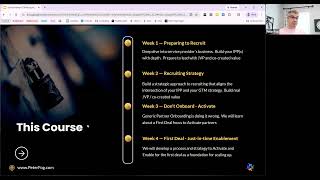
In week three of the Partnership Mastermind Service Partner GTM Bootcamp, Peter Fog challenges the conventional, generic partner onboarding model and presents a sales‑first activation framework. He recaps prior homework on Ideal Partner Profiles (IPPs) and partner sizing, then introduces the "risk triangle" (partner, product, customer) that makes the first joint deal difficult. Fog advocates using the GROW framework to validate go‑to‑market fit, focusing early onboarding on a minimal sales champion (sales + pre‑sales) and a concise joint value proposition. He stresses the importance of co‑selling the first deal as on‑the‑job training, using just‑in‑time sales enablement assets, and avoiding premature technical training or broad account mapping. The session also covers champion identification, differentiating partner types (referral, VAR, SI), articulating partner‑specific value propositions, handling stalled partners (double‑down on value, qualify or nurture), and practical actions to prune "paper partners" and embed the risk‑triangle mindset into partner playbooks. Participants (Dana, Brian, others) discuss real‑world challenges around partner recruitment, revenue models, and partner maturity, reinforcing the need for hypothesis‑driven recruiting, clear expectations, and iterative joint‑value development.
Chapters
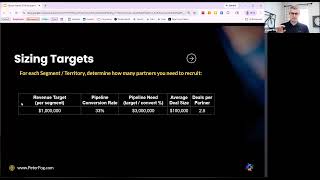
Okay, so this is week three of partner activation Boot camp. This happens to be my favorite week and hopefully is the most useful content and training as part of this boot camp. And hopefully you'll agree. My theme for this week is to stop onboarding partners the traditional way. If you're doing the traditional generic partner onboarding, you're probably doing it wrong, and instead you should be changing your approach to activation. That sounds like it's semantics. Semantic. Semantic. Anyway, so we'll talk. We'll talk a little bit more about what I mean by that. But. But before we do, the takeaways from last week was to first of all, not shotgun your recruiting strategy to spend some time modeling your needs, just like you would model your ideal partner profile. Again, not advocating for a PhD dissertation of modeling and analysis, but enough that you actually have a strategy and it's written down and you're thinking about how you're spending your time against that. And then probably the biggest takeaway from last week I hope was useful to you is to think about and build what is your value prop to the partner beyond just the normal partner program benefits. That's, again, that's table stakes, but there should be some way to articulate what's the value of building a relationship and building capacity and capability around your product. And that's, in my experience, that's different than the value prop to the end customer of your product. And it's also different than the joint value prop of you and the partner. It's the specific value prop of you to the partner. So I'll pause there and let you guys react or disagree or comment. Yeah, for me, I mean, the, the partnership value prop was just really, really helpful, I think. So often I'm like, communicating to the partner why this is a win for the end customer, but not really why this is a win for their organization, which early in my partnership's journey was really crucial insight to gain. So. Good. Yeah, it took me a long time to really articulate that. I think I was fortunate that I did that a little bit naturally without realizing it, because I had come from the agency side. And then when I was building ISV to agency partnerships, I kind of just naturally talked about that. And it wasn't until I was building a team that I had to step back and think about what I did that worked and what I didn't see my team doing that I really zeroed in on. Oh, that's part of it that we're missing as a, as a team. And I think in general, partnership discipline just doesn't focus on that enough. Okay, so the takeaway or the homework that I posted yesterday. So you may or may not have done it, but hopefully you've thought about it. Did you run your algebra? Did you run through some partner sizing to determine how many do you need to recruit by your target? Either of you guys spent some time doing that?
I did not. I will be honest, I did not. And I think my organization is a little bit immature in their partner logic in the sense that right now my goals are just around SQLs and not and not revenue. So that that makes a big difference also. I mean, maybe they do. So we have a couple key partners. Just to guys, let you guys know where I'm kind of at. We have a couple key partners right now that are resellers and system integrators and they do not want me bringing any more of those to the table. At least at this point. They want me signing up referral partners. And what's been really eye opening for me especially last week is finding referral partners where we can offer a revenue stream as well is a little bit more difficult because if you're not an si, you're not getting services out of the gig. Right. And they've given me some like here's some relationships that are started like one's like, you know, kind of like WMS adjacent hardware and it's like, well, I mean, yeah, I know we're going to give them the incentive or the spiff, but then there's really not. I mean, I don't know like. Anyway, so I'm trying to figure out where and I think I have some ideas and I have a couple ipps where we, we can, I can build that. But anyway, so we're still kind of in our infancy here. I'll leave it at that.
And so yeah, so starting with building out some ipps and testing them is going to be helpful for you. And then just keeping in mind what's that sizing. Sizing doesn't have to equate to ARR initially. You can start thinking about what's our hypothesis for the number of SQLs that are going to come from a referral partner, your CRO might call them PQLs and then start to model that and that will tell you as you build up these different ipps, how many you expect to get from that kind of partner, how many of those you need to hit your overall target. So again, this is, I do have,
I do have some of that, I do have some slides like partner types and Who I anticipate might give me two leads, who I anticipate might give me one, like that sort of stuff.
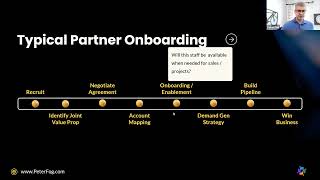
And it's not science. I mean, this is really hypotheses and testing. You know, every year when I did my comp plans and territory planning for my team, it was always, you know, let's, let's take all of our existing partners, let's look at what they did last year and let's extrapolate to they did two deals, two referrals last year, how many are going to do this year? And this I'm in a pretty educated guess. But you know, if you, if you build all that up from a foundation of educated guesses, at least you'll have a directional, a direction to go. Okay, so segue to this week. You've done your ipp, you started recruiting, you've got some partners in there and you think you got the IPP right, but they stalled. So what do you do? Do you still on and onboard them and enable a team? Do you ignore the risk triangle, which we haven't talked about much yet? We're going to talk about that today. Do you bring, bring them a deal? Do you negotiate the partner agreement to try to get this IPP officially in the program? Do you start doing some account mapping or if they're stalled, you qualify them out and cut to the chase. My philosophy is you do none of those things, but I think partner managers have historically tried to do one or more or all of these things as a forcing function and they don't work. So the first thing I would say, if you have an IPP and you're convinced that you've got your IPP right or close to right, and you have a partner who fits that mostly. So you feel like you got a good target, you feel like you've had the right conversation and they're stalled. One of the first things I would do is use something like the GROW framework to confirm do they really have the go to market fit and a complimentary service alignment and do they have a willingness to build? Sometimes, sometimes these two things can be easy to overlook because you got a champion and the champion isn't really at the right level or the right responsibility for those other two things. So your champion, you need, you know, the next thing you need to do is get that champion to help you talk to a practice lead or a founder or whatever, reviewing your value prop to the partner with whoever those stakeholders are. Again, this is probably the biggest mistake I think we have made as a discipline is that we try to get them ramped up by just talking about, you know, let's partner and we got the greatest widget for your end customer and, and really not making it about what's in it for them and then nurture. But so those are, those are kind of the mechanics of making sure you got the recruiting phase correct. But how do you activate them? So that's what today is about. Talked a little bit about this the last two weeks and I'm not going to dive into this flow in a lot of detail. This I have a ton of content if you're interested in unpacking this process and the pitfalls and my recommendations. It's a lot of content that I can share with you and recordings from webinars and that kind of thing. But the highlights for today's purpose is the traditional way of doing this recruitment, negotiate agreement, get them in a program and then start doing account mapping. This, that step doesn't work because it's too broad at that stage of your relationship and the joint value prop is too preliminary. It's a hypothesis, might not even be a very educated hypothesis and you just don't have enough depth on either side of the partnership to really do account mapping in a way that's going to result in. You still probably do this just to kind of get a lay of the land. But it's not actionable to do account mapping at this stage of onboarding and then the traditional let's sign an agreement and let's onboard a bunch of people is a mistake because if you're starting to do technical person onboarding with whatever, whatever you know, SI implementation Dana or practitioner modeling or design or whatever it is that they need to know to do the work. Doing that task at this stage is also premature because the people you're doing, it's academic. The people you're doing at this stage may not be the people who are available when you need them. And every time I've seen this happen has been a colossal failure. And eventually the founder or the practice lead who said I took sick people and put them on a bench and sent them through your training and a year later we not use them, they get really mad and you don't have a partnership. And then to try to do demand gen off of this again is very academic. What are we selling? It's just some generic academic skills and some good intent. We can't really do co marketing or any of the other things that your partner manager on the other side of your conversation is going to say let's do some joint demand gen? No, not yet. But again, this is the way partnership onboarding historically has often happened, at least in my experience. So instead the first thing we want to do is still part of onboarding, but it's very, very focused on sales onboarding. What I mean by that is you want them to focus on bringing on a sponsor. It's probably a salesperson and maybe a pre sales or a technical person. You only need one of each of those to get started. And it's, it's really just sales awareness. It's not full product capability, it's not full pricing or, or it's not your, all of your positioning and all of your objection handling. It's, it's just an introductory, it's a barn or is it a bread basket kind of thing. And the emphasis here is giving them enough information in onboarding to know a joint opportunity when they see one. That's, that's all you want to do in this early stage. Why, why is that important? We, you want them to be able to refer a deal to you, but you also want it to be easy and fast and cheap for these two people to participate. Also need it to be easy and fast and cheap for you to build and maintain. Whatever this, whatever assets you use for this initial sales onboarding shouldn't take six months to build. It should be somebody like me spending a couple hours with some sales slides and an LMS and produce a video and we put it up on our PRM to say, hey, here's our sales, here's our sales enablement ticket. Then on your side, your job, whether it's you or a partner manager or the AE that on your team that's working with them, your focus would be understanding them, what are they good at and how do I complement the conversation by being a partner of theirs, starting to draft the joint value prop. This is an iterative process at this stage. They're just beginning to outline one plus one equals three and it's probably two and a half at this point. And then again, emphasizing that value prop to them, these are the two people that you want to continue to educate and bounce it off of them and get their feedback. If you have a multifaceted partner value prop with texture, there's going to be some things that really resonate with them and some things that don't resonate with them. So you want to, you want to gather that up and not just throw up the generic partner value prop. You want to put it in context from those two coaches that you can then build upon and learn what's going to work for them. And then the important thing, I don't think again that as a discipline we do this well is to communicate and set expectations for the process and the program at this early stage. I think historically we have just assumed that everybody knew how this was going to unfold and everybody assumed that we're going to go through this process and we're going to get some deals. But the specifics were never really identified. So if you do that, and maybe you're already doing something like that, but if you've, if you've done that, then the next question is why is the first deal so hard? So I'll pause. Would you agree from your each of your experiences getting the first deal with a new partner, would you agree that it, that it's difficult?
I mean, yes, I have not gotten one yet, but I'm in the process of working one and just that process has been painful.
It's hard. This is the hardest part, this is the hardest part about building a service provider program. And I talk a lot about, and some of my other counterparts are active in thought leadership around partnerships. We talk about paper partnerships. It's a, it's a problem, it's a thing. And so how do we avoid paper partnerships? Why do, why do paper partnerships exist in the first place? I articulate it because paper partnerships are hard. Paper partnerships happen because the first deal is hard. Because there is a risk triangle. And what I mean by that is each of these legs of this triangle is a relationship or a potential relationship. So if you think about you recruiting a new partner, this is a new and unproven relationship. They don't have any past performance or any skills with your product. Even if you did full on technical training, it's academic. They have not proven that skill. So this is unproven. And then so the next, next part is we've got a customer or a prospect. So if it's a prospect, this is completely unproven. And whether it's a prospect or an existing customer, this is totally unproven. So there's risk to the end customer and there's risk to the deal with all three of these axes. And what I have seen as an attempt to get past the first deal blocker is sometimes partner teams will say, okay, we'll bring you the first deal partner. We'll, we'll seed you with the first deal. That sounds like a great idea. Don't do it. Because if you do it, there's a 99% chance based on my experience that that is going to fail and fail miserably is if you think about this risk triangle, you're saying, hey, we're going to bring you a deal. So if it's a prospect here, you bring in an AE who's selling that prospect and you're like, hey, Dana, I've got a great new partner who's a really good fit for your deal that you're closing. Let me introduce you to them. And you're okay? Yeah, I want to work with Peter in this partner led growth thing. So let's do it. You meet them, they start pitching this customer together. You and them start pitching the customer together. And then at some point in the sales cycle, the customer says, all right, Dana, where have you worked? Where has your team worked with Peter's product before? You don't have an answer to that because it's brand new and you can try to dance around it, but this person is already saying, well, Dana, you know, we haven't used your product before, so we're already taking a leap. You're selling us and we're taking a leap that, that value, that value is there. And now you're saying, this partner that we don't know, we've never worked before also doesn't know you. So these are all now big uncertainties, unknowns. That's why I call it the risk triangle, because it becomes really, really scary every time I've seen this attempted in my, even when I, myself included tried this. Not only does it blow up the deal because often this customer will say, if that's the best partner you can bring to me, then your product and your company is risky because you're, you've not brought me anybody who knows anything about how to do your product. So the deal probably goes sideways. That ae. So if it's you, Dana, you get pissed off at me, you're not going to want to work with any of my partners going forward. And this partner is now pissed off because instead of giving them a deal, they just spent a whole bunch of time chasing a deal that they lost. So now every part of this potential feeding, this first deal has not only turned into a positive, it's turned into a negative. And again, when I've seen this happen, it's not recoverable. This partner is probably toast for your company. I've not seen when it blows up like that, I've not seen that turned around with any kind of frequency. So instead of trying that from the get go, when you're starting to set expectations about the program all the way over here in recruiting, we set the expectation that you are going to work with them to identify the first deal and you're going to work with them. No matter what kind of partner it is. You're going to co sell the first deal together as an on the job training. If it's a referral partner, that's easy to do. If it's a resale partner, you're still going to co sell with them. If it's on an isv, we're going to co sell with them. Whatever. You're going to co sell the first deal together and you are going to ask them to identify the first deal from their portfolio. Somebody they know, somebody they're currently working with, and their responsibility is to prep for a joint pitch. I'm going to pause there because I said that pretty quickly. And if you've never done this before, you might feel that that is going to stall or create blockers for moving the partnership forward. Because this, this feels scary to be recruiting a partner, recruiting partner, and then say, hey, you got to bring us the first deal. And it does, it does sound like it's confrontational and you're putting your, your stiff arm out a little bit. If you communicate it the right way, this turns into a very trusted advisor consultative conversation for you to have with that partner. If you use this triangle, if you can say, hey, you've never worked with us before. This is an unknown and we're trying to close new business together. So the fastest way for that to happen without you investing a bunch of time to get ramped up on the product in a academic way is for you to find somebody who already trusts you as a service provider. Whatever kind of services they provide, they have customers and past customers who already trust them. They will already say, dana's company already does this. You're an ae. So Drake's company already does this advisory innovation kind of stuff for us. So we trust Drake and we trust this is known. So this is very comfortable kind of thing. And for Drake to then talk to this customer and say, hey, we have this new partnership that we think is a really good fit for you as a company to solve that business problem that we talked about last week that makes these other two unknown risk lines a lot more approachable because this customer will say, well, you guys, you guys do this all the time for us. You, you find new products, you get trained on new products and you implement them for us all the time. So this, this is not a scary thing. This is, I know you guys do it. And then this thing is less scary from us trying to sell that customer because Drake said, telling me that it's a really good fit for, for this problem. So no risk here. And these two lines become almost no risk because they're, they're known to the end customer. So when you have that kind of conversation with the partner, then instead of a enable them and pray that something comes out the back end of the pipeline, this is much more tactical and actionable. We can focus on this, we can focus on your much narrowest segment of customers or past customers that we can try to convert into the first deal. And we're only asking you to do the first deal. Hey Brian, I got a question.
I'm trying to adjust my mindset from the traditional onboarding process to this new. And it makes sense. I think I like this much better. My question is, one of the main points of friction when entering a new partnership is both parties are hesitant to actually allocate resources and invest time until they can see the total opportunity goal, which is usually derived from account mapping. What is our crossover, what is our opportunity in terms of the market, the product, etc. So trying to figure out what comes first and how do we get to this first deal. And the second layer to that is identifying the first deal for our, for my company and what we do, we offer. I think we have total about 75 products, right. Broken up into four pillars. So identifying what those are is a byproduct of us looking at our accounts, doing some account mapping, some of the existing experience. So I'm trying to see how we can fit this into our process given that those two outputs of total opportunity and the products to focus on are byproduct of the account mapping that we do earlier in the process.
Yeah, that's a fantastic question. So my thought is you still do some of that analysis around account mapping, but you set the expectation up front that you're doing account mapping just to assess the fit, not necessarily to find your actionable pipeline at that stage, because there's a lot of logos in there that, that this risk triangle will not convert if you just approach it from this wide account mapping. And I'm going to go, you know, one of us are going to go cold call you and try to sell for both of us that just, it doesn't work. But if you, if you're in this, you're still in the sales mode with a partnership and you've got these two champions, you're beginning to onboard them and part of, part of that process is getting them to be your focus. So you don't try to onboard the entire sales team. You try to say, all right, who's the first ae, who's a willing guinea pig? And we narrow down the account mapping to their target territory, and then hopefully that narrows it down to what your addressable market is for them. And then you switch it to. We know you're hesitant to spend time and money to train your team on our 45 products. We're not asking you to do that. What we're asking you to do is identify somebody who already knows you and trusts you as a service provider, who we can jointly pitch and won't have a lot of questions about how many times have you used this product before or one of these products before? And when you do that, that sets up a very natural progression. We'll talk about this next week. But if you look at the tail of this after, the first deal is then doing the rest of your enablement through the lens of that project. So it makes everything. Both sides are like, this is an investment we're making because we got the first deal and we're enabling that team to pitch or close or staff it. Because at this stage, if you're asking them to take a slight leap, they're not taking a big leap. They're not investing a lot of time, they're not training a bunch of people, they're not even committing to a massive partnership yet. They're just saying, this. This sounds interesting. And you've done your job pitching what the partner value prop could be if they build a competency around your products. So the only leap you're asking them to take is find the first friendly that already knows them as a service provider. And then, because doing it the other way, if I find a friendly for my product, they're still going to say, you as a service provider don't know this product. I'm not paying to train you on a new product. But going the other way, somebody who trusts them, they're already doing that. They know they're either going to pay directly as part of their existing arrangement, or the SI is going to do it as part of their BMP for that account. They know that that stuff happens and they're not worried about it. They're just like, hey, these guys kill it for us all the time. So what we then do in this first deal is align our sales resources. Instead of this broad net of I need an AE or a set of AES to do all this account mapping and the spreadsheet gymnastics, I just need to align one or two that fits the sponsors. For this first deal, we got the guinea pig, they've got their first deal lined up. Who's our AE and se, who, who have the same territory, the same account base. And our job with that for them is to make them smart on this new partner and smart on the joint pitch. What I really like about this, when it, when it, when you make this work, everybody only has incremental learning. And all the incremental learning is about value add to the relationship. So they're, they're doing a joint pitch, they're learning enough about the product, they being the two or three people on the pitch are learning enough about your products to make the pitch. And the two or three people on your side are learning enough about that partnership to talk about their value prop. As if you've been partners forever. And you don't have to stretch the truth. You can just say, hey, we're building a partnership together. These guys are great at this and, you know, you've worked with them for 15 years, are really good at whatever is relevant.
That's really good because we typically front load a lot of that work and we don't get to do any substantial tangible work until that's completed. And this way we can actually work through it.
Yeah, in parallel. Yeah, that's really good. You make this pivot, however many people are on your partner team, whether it's just you or whether it's a whole team of people, your capacity is going to pivot to more high value work. Because if you think about, if you look at your calendar and you think about how much time each week you spend on doing, you know, the shotgun, like cast the wide net to try to get something. That's why there's all these paper partners, because that is a massive time suck. Lots of spreadsheets and you still just have academic connections with the spreadsheets. Like, oh, you got this target account, you got this target account. I'll call them and maybe next month we can have a sales call. It's even what the best intent. That's too squishy. But if you're saying you got to identify the first deal, when are you going to get the meeting set? And it's very, very tactical and very actionable. And if you just think about it being as actionable, then everything else just happens so smoothly. Because now when you're selling the first deal, they're getting comfortable with supporting a pitch and you're building trust between the two teams. Hopefully two sales teams are going to work together indefinitely. If this partnership takes off, they're going to gain first hand experience with both the product and the partnership value prop. They become the champions for that internally through a real selling experience. And you build this little case study around them and the same thing on your side. How do they pitch? Do they bring 15 people to the table and have all these pocs? Is that how they like to do? Or do they do, you know, what do they, how do they like pitch and how do we kind of fit within that without breaking our sales process? And this is the most important part. If you take this approach, everything is just in time, just in time. Sales enablement, just in time, technical enablement. Nobody's making any significant investment unless it's really obvious that you should be. So you're not training any technical people in depth until this deal is somewhere in the sales pipeline and you can decide where the gate is. When I've been running teams, that has been a subjective gate that I help manage as the leader of my team where we look at a partner and we look at the first deal and then we kind of figure out do we want to ask them to get trained early in the sales process because this is a big complicated deal and we want to get ahead of it, or is this somebody that they work with for years and we can handle all the heavy lifting and we can train them as part of the billable discovery process with the customer. A subjective thing that you might standardize that there's always this gate or you can again, you know, have somebody on the leadership team like me say hey, for this deal with this partner, I think you should, should do it, you know, whenever. And then we'll talk more about it next week for these next three stages of some tools that you can put in place to, to then follow up on that once the, once the deal is in the, in the books. Good. So lots of valuable things that come out of pivoting, even the way you communicate onboarding, these begin to communicate this way even if it's not a massive process change. Just beginning to communicate this way streamlines a lot of things. Talked about the just in time investment aspect of it. But another part that's really valuable is if you're an ISB and you're recruiting service providers there, there is a tendency on some service providers part to partner with everybody. So they will willingly come into the front end of this process with no idea whether the partnership makes sense to them or no idea where they would use your products. They're coming at this Conversation because you called them up and said, hey, you know, I'm Brian from XYZ and I'm interested in partnering with you. They'll take that call because if you've reached out to them, they're thinking, oh, this is another source of leads. Okay. And if you haven't kind of really succinctly set this expectation that they need to identify the first deal as part of this onboarding, it's very easy for you to get into a paper partnership because they came to the dance from the very beginning expecting you to introduce them to the new date. Weird analogy. But if you set it up from the beginning and say, hey, I'm inviting you to this dance, you got to bring your own date. And then if you do that, I'll teach you how to dance. Get a weird analogy. But when you set that expectation up front, it. One or two things happens. It will, either they will self disqualify really fast, which is very helpful on your capacity. They'll, they'll just say, no, we don't, we don't think this is, you know, we don't think we have anybody. They'll tell you something about the ipp, about their specific profile that you didn't know that disqualifies them. They might say, we only do brick fix. We don't do any new innovation. So, you know, for us to bring a deal to you for, you know, an innovative product implementation is never going to happen because we're, we're only employed by customers to do break fix kind of, kind of work. And you didn't know that maybe. So they'll disqualify themselves out because you said, hey, you got to bring the first deal to the table or it accelerates everything. This is the best part. It accelerates everything. Because now you're not talking about academic boil the ocean. You're saying, here's our, here's our value prop to you as a partner. Here's our value prop to your, to our joint customer. Next step is let's identify a sales champion and a technical champion. And we will do very minimal sales onboarding so we can, so they can know an opportunity when they see one. And then we'll do whatever is appropriate. Account mapping, account planning, sort of addressable market analysis, as you suggested. Sometimes that's a lot. Sometimes that's just, hey, I saw this logo on your website. This feels like it could be a really good fit. And you guys identify the first deal for, for this partnership and then we will take on the bulk of the burden of selling that first deal. Your team doesn't need to worry about sizing. You don't need to worry about pricing. You don't need to worry about. Objection. Handling. You don't need about. Worry about technical architecture. All you need to do is just be participatory in the pitch and on the job training for the, for the team. So all this stuff just compresses everything down when it works. And then you get to this point where you can start doing, you know, your build, your pipeline, whatnot over here. Anybody, Anybody else have thoughts or questions?
Oh, yeah, Peter. I think the wrist triangle really resonates. I understand where this is coming from. I've tried to experiment this with a few of the SI partners themselves and it's good. They, they follow how things move. But however, I still find it very challenging for them to, you know, it's still that who is going to get the lead? They, they understand, they are cognizant of the fact that the competencies there, they need to develop a capacity of it and so on. But I somehow still feel that they're not willing to take, take that step to, you know, really work on that first deal or get us that first conversation. Though they are the right kind of fit. There's a good, decent match on the IPP as well. So is there anything that you can like really some way to work things out? When I see a resistance on that,
yeah, it goes back to that early slide about if you feel like you've got your IPP nailed and you, and you feel like as a prospect, they're a really good fit and they still have stalled and that's the reason it stalled. It's just an unwillingness there. I think there's two things you can do before you qualify them out. One is double down on what your partner value prop is. My ex. My experience in partnerships is that we don't do that strategically enough. We, we pitch them on the, the value of the product and we might educate them on the incentives of the program, but we don't spend enough time thinking about and promoting what's, what's the value of this partnership? Where are they going to make money or where are they going to open new accounts or where are they going to stay sticky in accounts, whatever that value prop is. I don't think we, I don't. That's the, that's the hard sell. If you're a partner manager, the thing that you want to really hard sell is that more than anything else, you know, you don't, you don't need to do the hard sell on the product. Hard sell on this is, this is where you're going to benefit as a partner. So you do that. If you haven't done that really like firmly. And then the second is you might not have the right champion yet. You might have a technical person that you found who's interested in your product, but they're not empowered to build a partnership. And sometimes they even say they are, but they're just not. If you see this squirrely behavior that is just not willing to take the next step. I have found there's one or two reasons that happens. Either they're not the right persons or not empowered to really push the partnership forward, or they are and they're going through the motions because they're in bed with one of your competitors. I've seen that happen a couple of times too. So you can, sometimes you can sniff that out a little bit. But if, if you've done both those things, you've really think you got the right person and you think you've, you know, really articulated the, the partnership value prop and they're still stalled. You can either qualify them out or just put them into a, a nurture. Because sometimes it's just a matter of timing. Like if you're saying, hey, the, the path, the path of success and the lowest cost for both parties to, to light up this partnership is for you as the si. To bring the first deal. If, if they believe that there still could be a delay in when they can identify a deal that fits, they might, they might talk their entire sales team and they might be like, we think this one account is going to be looking at that in Q3. And that's, that's very legitimate because there's buying cycles and there's priorities for budget. So you might have the right person, the right time, the right message and, and this thing that's so important to happen just can't happen yet. So that's fine. Just put them into nurture. And then when Q3 starts to come around, then you resurrect the conversation. Say, hey, let's, let's see if that customer's got the budget now.
Got it. I think you're right for the first part that we don't emphasize the value enough of the partner program. That's something that probably could be. But generally, who's the right champion? Would it be somebody from the partner teams who would want to really take that through? Or is it the practice team, the delivery teams generally, who take the product across?
Yeah, I Find that we all make that mistake if we talk to the person who's our counterpart because we can commiserate and we have similar responsibilities. But they're not the ones empowered, they never are. So I mean, if you think about, if one of them called you and said, hey, we want to build a partnership with you, will your company embed our services into all of your professional services? You might say, well, that sounds like a great idea. You're not empowered to make that kind of decision on behalf of your product company. The same is true from a service delivery point of view. A partner manager at an SI is a manager more than anything else, an administrator. So then that's important and valuable and you need to have a really good relationship with them. But they're not the person that's going to champion that. So. And sometimes I'm, I'm blunt about that, like, hey, I know you can't, you can't, you know, take this business case to the board, but you can help me get to the person who, who can. So that probably is a practice leader or an office manager. If it's a, depending on how their PNLs are set up, it could be, you know, who owns a geography, who owns a horizontal or vertical practice. I almost always try to find somebody who has some kind of revenue responsibility in their, in their compensation. And then that, that begins to tell you who's, who's the right person.
And would you say this is the same case for even value added resellers? Or would you say this is only subject to service partners?
I, I think there's, I mean, service partners, it's, it's even more important because where they will make money is only by turning the wrenches around your product. But you know, I think VARs too, they're gonna, they're gonna provide some kind of service, they're gonna do the paper, they're gonna manage the sales process. Maybe they're going to do some integration there, there's somewhere they're adding value to your product somewhere in the customer life cycle. So I think the same has to hold true there. You got to figure out what's the value prop to them. If they're, if they're a reseller style var, then your value gets a little bit stronger around the program economic. So you're giving them markup and you're giving them margin. So that can become a bigger factor. But I, I think the most successful ISV service provider kind of partnerships, when you get it right, are the referral based service provider because they're out there influencing and discovering and having conversations around the business problems you solve. And referral partners, while it's hard to get them onboarded, they're the easiest to work with ongoing because you don't need to train them on pricing. You don't need to train them on negotiating and doing the contracts. They just need to understand your product, which is what they're in business doing already. They're already in business to understand products and how you implement them. So you're just giving them specifics on your product and.
Hey, Peter. Sorry, it's Dana. So, on that note, I. One of the things you said last class that resonated with me was like, as part of the value prop, trying to figure out how you build revenue for companies. And that's the thing, you know, some of the partners on my list, I'm kind of struggling with that. Like, the list that's kind of been given to me, like, oh, go after these guys as partners, because they're just referring us. All they're really getting is the incentive. You know what I mean? And maybe some thought leadership respect, because they're handing over an opportunity to us. This is related to some of the list I've been given. And now I've been kind of opening it up to ERP sis, because they can get consulting work out of it. You see what I'm saying? So it's kind of hard to try to figure out what type other than the. The SIS will be really good for us, but not. Not SIS of our product, ERP sis, because they'll have, you know, they're close to those customers. They're knowing when they're outgrowing their WMS functionality. They'll be able to not only recommend us, but run, you know, the cycle and do the consulting stuff that they do. But I'm kind of struggling to find other partners where we could help then earn money, if that makes sense.
So. So unpack the. The first type. The list you were given. What. What's the what? How do you characterize those companies? What. What do they look like?
They kind of run the gamut. Some are consultants, and they're just like supply chain consultants. Others are like hardware or software providers.
Like.
And some just aren't even really. Like, as an example, like, one sells WMS adjacent products.
Okay.
If anything, we're giving them leads more than they would be giving us leads. So. Yeah, I don't know if I'm articulating this the right way, but.
No, it's. Yeah, you are.
It's It's a little tricky, like with referral, you know what I mean? I feel like it's not as well defined. Like if it's a reseller, obviously they're gonna make money. They're reselling you. If they're an SI that's going to implement your wms, great. They're, they're a system integrator. So if they sell a customer, they're going to get the services. Like with, for me, just bringing up referral partners that aren't doing either of those things, it's kind of difficult to figure out how we help build, build revenue for them. And that's where I'm coming from. And the list I was given is just like, literally, I think any, any entity that's given us a lead in the past, you know, 10 years. And so if someone's brought us a lead, they're like, hey, go talk to this company. And I'm trying to vet out the ones that I don't think, you know, we have a good value prop for, I guess. Yeah, right.
So the first thing I would say is I would push back a little bit. And the way you describe sis not being referral partners, so referral partner is just the kind of relationship you have with them. So any kind of company could be a referral partner. So your strategy could be, I'm going to go recruit sis as referral partners instead of resellers. Just to clarify type of partnership versus the type of partner. So the list you have, my guess is there are some in there that just don't make sense, but.
Right.
I would think you want to test the hypothesis. So let's say you have four different kinds of companies in there. Build a little mini profile. It's not an IPP because they may not ideal, but build a little mini profile about them and then interview one or two, say, hey, you're a thought leader around our kind of product. I wanted to see if a referral partnership makes sense to you and if so, where would you make money? Because, you know, us giving you 5% or 10% of referral fee may not get you excited. It might if they're, if they're a solopreneur and they're just a thought leader. And you're going to say, well, we'll give you three, three thousand dollars on this deal that you referred to us, and they're not going to do anything other than just say, hey, Dana, here's a really good prospect that that has a need for your product. That might be enough.
Right.
To get Them excited and you could have a category of partner in your program that, that's what they are. They're individual thought leader, deal flow. They don't, they don't add any value with services, but they get you in deals you wouldn't know about otherwise, right?
Yep.
So that's where getting smart about how you communicate the value of the partnership is going to depend on each ipp. So for that kind of IPP it like you said, it might be, you're the leader in the market, they're a thought leader in the market, so they should be partnered with you. So they can take you into every deal and say, hey, I partner with Dana's company and you know, I'm the thought leader and they should be on your short list. They don't even have to recommend you. You just say, hey, they're, they're, you know, on our short list of three vendors you should consider when I come in to consult with you. But also some of those same thought leader kind of consultants. You could potentially have a value prop of reciprocating and that's where you want to think about by partner type. Part of the value prop could be a gift to get. We are going to keep track of how many deals you refer to us and our job is to reciprocate. It might not be one to one, it might be three to one. But whatever it is, you know, to, to have us introduce you to deals as an advisor to a prospect we're trying to sell, then, you know, you need to be a referral partner. And that might get them excited. They might be, hey, you know, we don't even need to exchange money. If I give you a referral and then you're going to give me a referral and I can sell a new, you know, advisory engagement because you brought me into one of your deals. That could be really strong. Obviously the strongest are when they're actually turning wrenches with your product. That's the most obvious. They're going to make money when they refer a deal to you and then they're doing the work. That's, that's the cleanest way to articulate the partner value prop. Because then, then you can start carving out, you know, what's that look like? And what are the different kinds of work they can sell around your product. But there's not, certainly not limited to that. And I think the more we see agentic and AI taking over some of those hard technical tasks, it's going to become even more important for us to be able to articulate other parts of the value stream, other revenue streams or other value of having a partnership. So I, I shared this earlier on and I'll just give you a couple analogies from my background. Been in the CMS and DXP segment a big chunk of my career and I always looked at whatever product I was employed by. How does implementing that product uncover other kinds of work that they want to do? So if it's a new CMS and I'm recruiting an agency, there is work to do in implementing the cms. But that also if the customer is replacing a CMS with my cms, there's all kinds of nearest neighbor work around that that that agency can then sell. Redesign, rebranding, campaign management, mobile apps, all digital kinds of things that sort of sit around the CMS that aren't directly related to them. Buying a new cms, but buying a new CMS is a, is a huge buying indicator of those other kinds of work. And when you start to get that landscape of projects that kind of sit around a customer buying yours, then you can start to gather data around it. You can, you can look at case studies and try to quantify and articulate those, those numbers with not just hypotheses, but with specifics. So we have five minutes left and we lost Drake. So just to wrap up takeaways from today, I whether you wholesale buy into this activation kind of flow or not, I think you can hopefully get some value out of focusing your initial onboarding on the narrowest audience that makes sense, hopefully focusing on your sales or technical champions. And the smaller that audience is, the easier it will be for you to work with them and just be focused. And then keeping this risk triangle in mind, whatever your product is and whatever services they're providing, there is uncertainty around all three legs of that customer, partner, service provider relationship. And mitigating that risk triangle or not mitigating it is the biggest blocker in activating new partners and using the first deal. Identification is a really good tool to have them self qualify in or out be a focus and focal point for activation and minimizing investment and having it be very, very tactical around that project where they can learn your value prop and the partner value prop. So action items for you guys, your homework, think about in your program, how many paper partners do you have that you didn't take this approach with before or your predecessor didn't take this approach and how many of them expected you to source the first deal? And I bet if you looked at 100. Yeah, yep. I, I always Talk about it. The catcher Smith. Hey, I partnered with you. Where's my leads? Like, okay, you're not qualified to have any leads for me yet. So my hope is if you take some of this away and put it into your playbook that you can identify some of those existing partners. Not going to be all of them. Some of them are just going to be a pain in the ass and you probably have to push them out of your program. But there will be some that you might be able to take this approach and take this risk triangle, more consultative conversation to them and you might be able to get them to convert, especially if you turn it into, hey, you got to bring the first of us to get over this risk triangle. But if you do that, then here's all the other benefits of our program and partnering and etc. And with that, I'm done for the day. Any other comments or thoughts or questions? No.
Thank you, Peter. Good information. I need to digest it all.
Thank you.
This is reframing what we followed. It's going to take some time to process, digest and implement. But this is great.
Yeah, it certainly does. And not only for your benefit, Brian, but anybody who listens to this recording. I have a lot of this stuff in artifacts that I am happy to share. If you need slides to begin to communicate this process in more detail to stakeholders to try to educate them and get buy in or implement it. Lots of stuff you can take advantage of. Great. Perfect. All right. Well, have a great week. I will see you next Tuesday.
Thank you.
Thank you.
More from Peter
Kiflo Q&A Live: Why Aren’t My ‘Paper #Partners’ Performing & How to Fix It? #partnership #gtm
Kiflo Q&A Live: Why Isn’t My #partnership Program Generating Results & How to Fix It? #partner