Intro & UX Origin Story
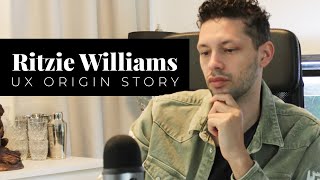
Ritzy spent 13 years in UX design, moving from art school and Photoshop teaching through agency work and roles at startups and corporations. She built skills across product, marketing, and development, created a brief checklist to streamline project scoping, and now teaches UX fundamentals and advanced practices like design sprints and cross-functional collaboration.
Chapters
Hey everybody, my name is Ritzy. I want to talk to you guys about some user experience and how it connects with other products, namely around technology and product management and all kinds of things. In my years of experience, I've just gotten heavily invested in user experience, UX design. I plan to tell you guys from, from beginning, from a beginner level all the way to advanced level information around how that grows and how it's used and how it's practiced and helps make companies successful, as well as some of these— the way the processes can help other industries as well. Just through my experience, I've seen such areas that potentially can help project management in other industries and other careers and other, other areas. So I thought I'd create a channel, at least talk more about how these— this experience and knowledge could help other people. So that's what I'm doing. So a little bit about me. I've been doing user experience design for 13 years. I've worked at a magnitude of companies, or multiple companies, from giant companies, very corporate, multiple billions of dollars of revenue and profit coming in per year. And then I've also worked at startups and small businesses startups and agencies. I've done agency work as well, where we worked with multiple companies at a time. I've also been part of startups. I've started my own businesses. I've worked with other teams and been with teams that have started businesses. I've gone anywhere from a range of design as well, from graphic design to user experience design to videography to apparel design. And it's been, it's been quite a, quite a fun fun run that's been educational. I'm excited to share some of the things I've learned with you guys. I've also gotten to dive into other skills too, such as business, marketing, development, product management, time management, all kinds of other areas that connect. I think that's kind of one of the great things around getting into user experience design, which I think I'm so lucky to have stumbled upon in my life and my journey, but it touches so many other aspects. And now with that knowledge and getting to work and can make these connections between other, I guess, jobs or other, I guess, cross-functional teams, you start learning about them and ways to create better experiences, not only for customers but internally, in which case you're reducing duplicative work, increasing efficiency, making everyone's lives better. Because internal, like, your customers are not your only users. Internally, your internal team is also your users. So I think I've just kind of developed a pretty good skill of making things easier, simplifying things, and just— now I want to share with you guys some of the experiences I had and some of the thoughts I've had and some of the areas. I have some controversial thoughts. I have some areas that may revolutionize the whole industry. We shall see. Some of the things I do plan on going over in terms of, you know, like what is UX, some, some thoughts on design thinking, design sprints, different tools and their benefits and pros and cons, cross-functional team collaboration. So scoping work, scoping UX work, being predictable, time management, connecting with the cross-functional team like development, product managers, delivering the best deliverables to help their, their process. Aligning on a product backlog and features, alignment on features, becoming predictable using methodologies like Scaled Agile Framework. Like I said, it's going to be a range from beginner to advanced, and I'm excited to share with you guys. If you guys want to hear my, my origin story, just starting from the beginning, I used to play basketball. I was pretty heavily passionate about basketball, and I actually think it It helped a lot of what I do, just because of the mentality, the desire for growth, the hard work, the constant adaption, being able to read and react. Things like that ended up helping my career. At some point I realized I don't want to always be tired and sore all the time. I want to use my brain. I want to make larger impact, and I want to do other things. So I looked at what else I was passionate about, and it was video game creation. Art, it was things like that. How I transitioned from basketball into tech, I realized and I started exploring, doing some self-reflection of what other things I'm passionate about. I used to be a little bit more artistic. I definitely wanted to be artistic. I wouldn't say I really was great. It's an area I just didn't spend enough time practicing in. Now that I'm older, I realize that there is a level of effort that it takes to be good at anything. But I started wanting to explore turning storytelling, bringing storytelling to life, and whether it was art or film or any video games, anything like that. So I went to school to learn digital entertainment and game design. That didn't end up not working out. Eventually I met up— I mean, I tried all kinds of things in between school and figuring it out, but eventually one of my friends Posted this thing, said, "Hey, I'll give somebody $15 an hour to teach me Photoshop." I reached out to him, I said, "Sure, I will teach you Photoshop." In which case, I met up with him, I tried to teach him, and he did a great job of learning. I mean, now I think he's pretty proficient, and he's got, you know, he's very skilled, very skilled entrepreneur, runs multiple businesses, just a great human in general. But we got together, we worked on that, and he realized, like, "Okay, you know what? I don't have the time to do this while I'm focusing on the other things, so can you help?" you know, run the business. In that case, I just worked with him. He had multiple businesses, including a barbershop, a retail store, was doing nightlife promotion, like all kinds of different things. So we worked together with that at the time. From there, I transitioned to an agency. One of my teachers that had taught me a ton reached out and said, hey, were you interested in working in this this agency, so I was all for it. I did all kinds of things including print design, web design, really a range of different skills. A lot of these things— this is maybe 2014 where things were starting to change. Responsive design was starting to become more popular, and we were moving, we're transitioning a lot from print to web and things like that. So I was Involved in a lot of that, made a couple successful landers, made a couple successful print designs. I really was able to just kind of get my hands dirty in a range of things and seeing areas. It was a lot less professional. When I started moving into corporate, it became a lot more structured. I don't mean less professional, but a lot more corporate. After that, I went to a startup where I just did everything. I was marketing, so I was doing graphic design. I was doing I was working with the engineer who was overworked, so I was helping to build some of the landers. And at that time I was— not even landers, like literally pages. And at that time I had to start diving into pulling data. We were using a PHP framework called Laravel along with Bootstrap for our CSS framework, coding the whole thing in HTML. And it was just a lot of, you know, just a lot of looking things up and problem solving. Figuring it out. And it was, it was a really good experience starting to get into more actual UX practices and where we're talking to users, we're getting feedback, we're iterating on the design, we're moving fast and understanding and starting to become a lot more UX-focused instead of just web design-focused. So actually implementing research at this point. Another thing to call out at this time, I had actually like met more and more people in user experience design, in which I started to explore this more than I started to explore like doing a visual, like visual things like graphic design and things like that. So understanding the— there was a process that helped create more successful products, like understanding why we're doing this, understanding what we want out of it. Things like that started just naturally coming into the process that I was doing to design things. Eventually I moved to the company to this nutrition company, and this was like my first fully UX role, and like where it was specified as UX designer. And what was very good, very beneficial with this, this job is I got to meet others that work— that we all worked well with. We all pushed ourselves, we all pushed each other's ability, we had— we all had a common alignment to build great things, to improve the process, and and extreme attention to detail. We used to call our design reviews the firing squad, 'cause it was that meticulous. Like, we were going in depth. We would tell you about how your padding is off, how things are unaligned. We'd ask you your questionings around decisions, why you went with that, what you researched, what references you had. Eventually, one of the people I worked with, his name's Rob Barone, he's one of the smartest people in UX I've ever met, he helped introduce this thing called, we called it the brief, I called it like— I ended up changing the name multiple times because I realized a brief usually is the beginning of a project, but this is actually project documentation. It was almost a successful checklist for making successful designs. We implemented it and it covered from understanding what we're doing, to doing the proper research, to creating concepts, to creating prototypes, to the strategy around implementation, technically and socially. It was probably a game changer in my career where I started understanding how How does that, you know, how do we do this? When does this happen? How does this go into a process? How do we scope this out? And a lot of things unfolded within that, which just kind of started pushing the knowledge of UX significantly farther. In which case, I started to work with other teams and making sure we were able to scope our work along with their work, making sure we were able to properly do design before going into development. Just a lot of knowledge happened throughout this time. Eventually I left, went to— started testing my hand in the healthcare industry, design in the healthcare industry, and it was completely different. Started learning a lot more things like ADA. The whole user group was a different user group, so I had to do a lot of different things. There was a lot— the company had more maturity and more buy-in for the UX design team in terms of where it sat in the organization. but some of the individual maturity was not as much. The people didn't know as much around design, but the company supported design more than where I was. That was just a different experience around that. Eventually, I came back and started to that company, to the nutrition company, as a higher position, starting getting into leadership and starting getting into product strategy. Management, working with the team instead of doing all the work as an individual contributor, helping other people do the work. And that was a challenge within itself, how to properly work with people and how to empower them and mentor them and teach them while still working with the product team and helping groom the backlog and where our team sits in the organization, starting to build our maturity at the company. Initially we were just, here, do the design, here are the requirements, to why should we do this design, what should we do next, where are there opportunities, how are we using research, and where does research sit within UX and within the company to help create better products. From there, that's just, it's been growth, it's been exploration and knowledge. I went out throughout my, from there, and realized knowing so much, I would like to venture into maybe creating my own things, letting a user-centered process drive creating new products, creating things in retail, around the food industry, both native and responsive designs and code bases and things like that. And so now I'm still doing that. I just thought I would, you know, I'm pretty passionate about UX and I'd like to share with others and help you know, talk about this. More recently, I've been— and I've worked with a lot of other design agencies and other UX designers, and I realized some of the things I thought I like that were just universal knowledge are not. Things like Atomic Design, design system structure, things like that. And so I realized like, oh, I'm assuming everyone knew this, but there are areas of knowledge that other people can benefit from. And maybe it's even within the knowledge there, it ends up being very specialized. Here, maybe I can help identify potential areas that people can do more research on and learn from. So I figured, why not? Why not talk? I talk about this all the time. I'm known for overly talking around UX design. So I figured, let's create a channel and get to it. But that's, that's where I'm at. That's my career. That's my story. And I hope that you guys can all get to benefit from this, and I hope you guys stick around for what comes of it. But till then, until next time, thanks for listening. Thanks for hanging out. Feel free to subscribe and tune in for the next video. Alright, bye.
More from Ritzie




I started my career doing lots of graphic design and having to create and edit images.



How to Upload a Project to GitHub (Using Claude + Cursor) | Step-by-Step Tutorial



