Christopher Galbraith, a BYU-Idaho student, got three Wall Street job offers without applying anywhere. He asked professors for one contact, flew to New York to meet finance professionals, sent handwritten thank-you notes, and returned a month later with relationships that led to interviews at Credit Suisse, Morgan Stanley, and Goldman Sachs.
Why do we do informational interviews? It starts with a story about a former BYU-Idaho student named Christopher Galbraith. His story is told by Steve Davis.
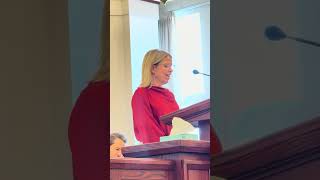
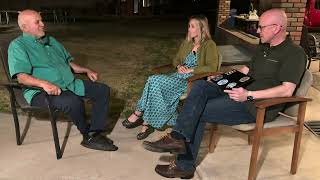
Christopher Galbraith spoke on campus on October 11th, 2014 at the Power to Become Conference, and he shared his story about how he got to Wall Street. When Christopher was in his junior year, he discovers his passion. He wants to work on Wall Street. But the more research he did about Wall Street, the more he got this message: you're crazy to even try. Wall Street firms hire from Ivy League schools. They don't come to BYU-Idaho. They really don't even come out West much at all. And so Christopher started asking this question to all of his business professors: who do you know that works on Wall Street? And he ended up with just one name. And he reached out to that person, he made a connection, and he turned those connections into a few others. And he said before he got too nervous, he bought a plane ticket to fly to New York City. And he wants to meet with as many people on Wall Street as he can. He had one connection that actually turned into about two really good possible interviews. Well, he goes out to New York City, he lands on a Saturday, and he's just trying to figure out how am I going to meet as many people on Wall Street as he could. Well, he was pretty smart about the strategy because his first full day on Wall Street in New York City, was on a Sunday. He went there and he went to church. He got there early and he cornered the elders. And he said to the elders, "Would you point out to me everybody that walks into this congregation that works on Wall Street?" And they pointed him out. And he said, "Would you mind introducing me?" The elders introduced him to Bob at church. Bob works at Credit Suisse. "Hi, my name is Christopher. I'm out here from BYU-Idaho. Could I come meet with you this week just for a few minutes to learn about your career?" Well, what Christopher did was he would meet these people. Actually did that for 2 blocks of meetings. And then the next 4 days, he is racing all over lower Manhattan, talking to LDS professionals who all worked on Wall Street. Many of them probably went to Ivy League schools. He meets Bob in his office sometime during the week for just 15 minutes, and he asks really good questions. Bob gives really good answers, and they started a little bit of a relationship. And then he came back to Rexburg and he visited with me and others, and I said, "Christopher, how did your trip go?" He says, "Oh, really well, but I didn't get any solid internship or job leads." He actually ended up with one official interview on his first trip. It didn't go that great. Well, if Christopher was just to return to Rexburg and say, "That was a good interview," and Bob was to go back to his very busy job in New York City, that relationship was likely going to stop. But Christopher sent a thank you email right away, And a few days later, Bob gets a handwritten note in the mail. And during the informational interview, Bob says to Christopher things like this, "You should meet Jim." Well, Christopher then goes and meets Jim, and he returns and reports to Bob. He says, "Thank you. I had a great informational interview with Jim, and I got a couple more questions for you." Bob says to Christopher, "You should read this book. You should go to this webpage. Say hello to my old friend in Rexburg." They might find that they have a common interest in something like mountain biking. And then over the next month while Christopher's home, there are natural reasons and ways that Christopher is continuing his dialogue and communication with Bob. He then spends some time in Rexburg and he starts preparing and thinking and learning about his first trip. About a month later, he buys another plane ticket. He returns to New York City, and this time he's meeting with some of the people for the second time. And others. Bob knows he's coming. Bob's excited to have him back. And then Bob takes Christopher down to the HR office and says, this is Christopher, please take his resume. We want to consider him to be on my team. On the second trip, he ends up getting 3 official job interviews, Credit Suisse, Morgan Stanley, and Goldman Sachs. And as he's returning home to Rexburg, he starts getting calls from these people. The first one was from Credit Suisse. Offering him a job. And then a couple days later, he got an offer from Morgan Stanley, and then later from Goldman Sachs. He accepted the job with Credit Suisse. And the amazing thing about this story is Christopher got 3 job offers on Wall Street, which people thought was impossible, and he didn't apply for a job. What we're finding out is people who apply for jobs oftentimes they're just waiting and hoping for an interview. Well, Christopher was proactive and he went out and he met these people.
You can go get your dream job and chase your passion if you learn how to do it properly. Networking is using informational interviews to gain knowledge and to be referred to opportunities. Now, you may be thinking, what if I want to work somewhere besides Wall Street? Or what if I can't fly out to New York City? That's okay. Informational interviews are the best way to gain knowledge and identify opportunities regardless of the industry or location that you have in mind. And they're just as effective over the phone or through a video call. We created a series of videos explaining how to do informational interviews so you can learn to do what Christopher did for your own career. Also, check out Christopher's full story.