Advice for Entrepreneurs and New Fund Managers from Sequoia Capital's Roelof Botha
This is a YouTube video titled "Advice for Entrepreneurs and New Fund Managers from Sequoia Capital's Roelof Botha" recorded in November 2022. The content features Roelof Botha extensively speaking about his experiences and insights as a venture capitalist at Sequoia Capital. He discusses topics such as the firm's stewardship philosophy, the challenges and rewards of venture investing, advice for founders on perseverance and articulating problems, global investment opportunities, the importance of passion and grit in founders, and innovations within Sequoia. The video serves as a detailed talk or interview aimed at entrepreneurs, mentors, and new fund managers, providing practical guidance and reflections from Roelof Botha's career.
And so I'm really honored to invite Roloff to the stage right now. Roloff, do you want to come on and I'll do a further introduction for you.
Hey, good morning, good afternoon, good evening, wherever people may be.
You're the senior steward of the Global Sequoia Partnership. Is that the proper title?
That's right. And the reason we picked the word steward is we're in service. But a steward is not the big honcho. Our job at Sequoia, the way we view leadership's role is to leave the partnership in a better shape for the next generation. So there's this real intergenerational effect we wanna foster and the title conveys that.
Oh, that's beautiful. I almost wanna stop on the intro and let's double click on that for a moment because a lot of your peer firms maybe have not done that stewardship as well. And so is there any sort of things about that stewardship thinking that you can share or how it manifests in the firm from that value statement?
Sure. I mean, it starts at some level with when Don Valentine started the partnership in 1972. And he didn't call it Valentine Capital. He called it Sequoia Capital. And for those who don't know, many of your audience members don't live in the US or in California. The Sequoia is a redwood tree that grows in California and they grow to be over 2,000 years old. So it's the longest lived tree in California. And so he named his partnership Sequoia, not Valentine Capital, because he wanted to build a partnership that would outlive him. And he didn't want to put his name on the door. And that meant there were a lot of other consequential decisions. He recruited people like Mike Moritz and Doug Leone, not to work for him, but to work with him. And they in turn inherited the partnership. And, you know, we've had this tradition of handing over from one generation to the next at Sequoia. And that's just part of what's in our blood. That's the way we view our responsibility is to leave the partnership in a better position than we found it.
You have an impressive list of companies. Let's just go there for one second. that's beautiful, by the way, I see all the hearts coming up. If you love what he just said, show the love with the little icons, okay? So you've got 23andMe, Eventbrite, Instagram, Square, Unity, YouTube, and many, many more. That is quite an impressive, well, how, like, what inspired you to become a venture capitalist and when did you know that it was the right career for you?
I didn't know for a very long time. So I want to, you know, since many of your audience members are in the investing business, I hope you steel yourself for the ups and downs that are going to come. So I was at PayPal, I was the CFO, helped to take the company public. The first time it went public in 2002, and then we were acquired by eBay later that year. And Michael Moritz from Sequoia was on our board. And by the way, Elon had recruited me to PayPal and Peter was my boss. And so It's fun to be part of this PayPal Mafia thing. But Sequoia was looking for somebody with a computer science background who did product management at an enterprise software company. And I was an actuary who was the head of finance at a fintech company. So I didn't meet the spec. And honestly, every time I left an interview at Sequoia, I thought it was the last interview. And then they kept on calling me back. And I joined. And honestly, for the first couple of years, I was just waiting for them to figure out that I wasn't the right person. that they've recruited the wrong one, just waiting for my pink slip that they were gonna fire me. And so, I mean, it wasn't obvious to me. Look, it's intellectually interesting. Many of your audience members invest in companies. It's fascinating to sit down to meet an entrepreneur and have them explain their vision for the future. A part of our job is to find these founders who see the future for what it can be and bring it forward. And our job is to help fuel their ability to do that, partly through money and partly through advice. But the thing you've got to realize is a lot of the lemons fall early, as we say. And so you're going to be an investor and two, three years in, you're going to realize some of the investments you should have made that you didn't. You're going to see some of the companies you're involved with not quite realize the potential you'd hoped for and it's going to test your resolve. And to be honest, in 2009, I nearly quit the business. I was so down, I'd missed some really seminal companies. My early investment in YouTube was a good success, but then you regret it that the company got acquired. And I thought I should quit. Unfortunately, my partners helped get me through that trough, that valley of despair. And I'm glad they did. There's always another at-bath, there's always another opportunity to find another great entrepreneur. And so I would just encourage all of you to maintain resolve, please. Persevere.
Ooh, we have this whole thing we wanna talk about. Look at all the hearts coming. That is so true. The resolve is tested really with anything that you do, any career that you choose. and clearly venture, clearly entrepreneurship. Let's switch gears for a minute and take that same statement you said. You must see entrepreneurs facing the same thing all the time. What do you counsel them? What words do you use to encourage them over the hump?
So I think it's very important for us as investors and board members and advisors to not be amplifiers. but to be shock absorbers. The life of a startup is really difficult and the life of a founder is really hard. So when the founder is going through a tough period, don't show up and beat them down. You've got to show up and give them some support. Don't be a cheerleader obviously, but help them through that difficult period. And then conversely, when things are flying high and everything looks too good to be true, it probably is, and temper them a little bit. So there's a little bit of, you know, challenge them, you know, when the times are good and support them when the times not so good. And it's a very important function of if you think about it as a wave function, you've got to dampen the amplitude. That's your job as an advisory board member.
Such good oh my God. I mean, I could unpack that further, but let's move on to some of the topics because what more can be said? That's also very perfect. All right, so so there's a lot of negative news in the world today. I mean, it might I mean, I can't even read the news without getting upset about something like, you know, and they're like, Debts down, real estate's down, commercial real estate's down, stock markets down, cryptos down. But it's not all bad news, right? And maybe what's your view of what's going on in the economy and where it's going? Do you have positive insights on it all?
I think the economy is in for a bit of a tough time, both in the US and, well, non-US. I guess your audience is global. So globally, I think we're in for a bit of a tough time. Most of the forecasts are that the US will contract next year and actually see a recession. And if there is a recession, it's more likely to be a recession similar to what we saw in 2001-2002 than the very short recession we saw in the global financial crisis in 2008-2009. So it's likely to be a little bit more protracted. But honestly, there's always opportunity for startup companies. And some of the best investments we ever made, we invested in Cisco Series A investment one week after the 1987 crash. Stock market, it was one of the biggest crashes in history. Our investments in YouTube obviously was in the midst of that economic recession. Stripe and Square and Airbnb were all in the midst of the global financial crisis. There's always a wonderful opportunity to build startup companies. There's always opportunity. The world is filled with problems that founders want to go solve. And if anything, valuations are probably a little more sane. I think the environment we saw in 2021 was not sustainable. And so I think you should never worry if you're in the investing business, right? It can never be a good time to harvest and a good time to plant new seeds. So I'm very optimistic. Even if there's a recession, I think there's always great companies to be built. So, right.
And maybe why do you think now is a good time in particular? Like because a lot of people say, well, valuations are lower, there's a lot more talent, but is there some other, insights you have about why right now might be a great time to either start or invest?
Some of the-- so there are a couple of ideas here. One is-- and it was in your introduction earlier about opportunities being global. One of my favorite-- turned out to be an economist, but he was actually a healthcare professional originally, Hans Rosling, did all this analysis on the way in which middle incomes populations are growing globally. And most of the Western world, so-called Western world, has this very dated view of what it is like to be in Latin America or in Africa or in Southeast Asia. And these countries are really growing very quickly and have an emerging middle class that is enormous. And as that emerging middle class grows, there are opportunities to build really interesting businesses globally, not just in the so-called developed world. And so I'm very optimistic about opportunities globally, and that's a lot of what your audience addresses. So that's one category. Another category is there are set of technologies that uniquely enable new things. So the emergence of cloud data warehouses was one example has led to this, a range of companies that are emerging in around the cloud data warehouse companies like Snowflake and Databricks and Redshift, you know, on Amazon to provide all sorts of interesting technologies around that to help people make more sense of data. So that's the whole category that's interesting. And then there's a whole wave of AI. and the ability to use artificial intelligence or augmented intelligence, so it's Man Plus Machine, to build really interesting new things. And you've seen all the generative AI applications over the last couple of weeks, whether it's image-based or Copilot or all these sort of things. I think there's some really interesting new technologies being built and they're available everywhere. Go back for a second to when I was at PayPal, we had to build our own data center. There was no cloud infrastructure. We had to pay Oracle for licenses. We had to buy servers from Sun Microsystems. It was so expensive and so difficult to build something. Today, you can be an entrepreneur anywhere in the world and you can spin up instances on cloud services like AWS and you're often running. It's a wonderful time to build new businesses.
Sequoia has made that international leap. Are there areas or regions of the world that you're excited about right now? By the way, you were getting every industry you brought up, you just got lots of love from the community. I'm sure the same will happen as you bring regions up, but yeah, what regions are you fascinated with right now?
Everywhere, honestly. It's really about the quality of an idea. You know, we made an investment in a company called Nubank, which is now a public company. It started with a seed investment in somebody who was working in our office who was actually from Colombia originally, and he was attending Stanford and had this vision for building a new type of credit card business for Latin America starting in Brazil. And we gave him a million dollars seed capital 10 years ago. Today, it's a public company worth, I don't know, over $10 billion. I can't remember the precise number, but an incredibly successful business. He serves tens of millions of customers in Latin America, and it was just a smart person. I mean, did we have the insight sitting at Sequoia, that there was a need for a new credit card company in Latin America. No, we didn't. But we found an entrepreneur who had the vision and the passion and who built a fantastic team to do that. So, we investments in Turkey, we have investments in Eastern Europe, we have investments in Southeast Asia. So we don't really, we're not really prescriptive about where the ideas are. It's really about the quality of the founder and their ability to articulate the problem they're solving.
I want to unpack a lot of stuff in what you just said, but articulating the problem, quality of the founder, but let's do that second. Let's just first start with the how. So you have branches, right? Or what do you call them in different countries right now?
Got it. So we have a couple of different business units that have independent teams that make independent decisions. so we have a team in India, a team in Southeast Asia, we have a team in China, and we have a team in the US and in Europe. The US Europe team really are one team. We invest out of a single fund because we feel many of the companies that start in the US or Europe will end up wanting to operate in either market, and we don't create conflicts, whereas many of the companies in Asia tend to be more region specific. So we don't have an office in Africa or in Latin America, you know, Australia, although we did invest in canva in Australia, and we've made investments in New Zealand and we've made investments in South Korea, even though we don't have office there. So we have these different teams and we really want to act coordinated in a global sense that we don't want to be sharp-elbowed with each other. So now and again, there's an interesting opportunity and if it bubbles up in Australia, it might be that we invest out of the India Fund, we might invest out of the US Fund, we might invest out of the China Fund. And we want to be good partners to each other. And so we don't try to carve up territories or play the game of risk. We try to own different regions. We just want to make good decisions as a That's beautiful.
All right, so bubble up is not a term that an entrepreneur can act on. So how do opportunities bubble up? If I were an entrepreneur, let's say in Australia, and I was, and we'll talk about passionate and that piece of it in a moment, what would your recommendation be if, because this, what, just so you know, the audience we have today are mainly mentors and founders. with some GPS, it's maybe 80-20 type thing or 90-10.
Okay.
All right, so it's a lot of, so I'm an entrepreneur in Australia, I'm like, Roloff said that I can, but what doorway, if you're in a country where you don't have a fund or an operation, what would you recommend that they do?
They can write an email to us directly. I mean, one of my partners once was sitting in a taxi and he got a cold email from a founder, in that case the company was based in Chicago, and we were mostly investing in Silicon Valley. This is 15 years ago. And he looked at the email, the idea sounded interesting. He met the founder and that company ended up going public in the US. It was a multi-billion dollar company that literally came in through a cold email. So yes, you don't have to know the right person and clearly it helps if you're introduced because if you know ADEO and ADEO introduces you to me, it's just, if you think about the number of things that are in my inbox every day or any one of my partners, it just helps make sure the things to the top of my inbox and I get to it as quickly as possible. But the door is open. Often it's best to find somebody who's got some relevant experience to what you're doing. So for example, because of my experience at PayPal and Square and are called Block, if it's a financial services or financial technology company, I might be a better person. One of my other partners spends a lot of time in enterprise infrastructure software. So if your company is in that category, then maybe he's a better one. Maybe somebody else is an e-commerce specialist. So it's good for you to think about who the individual is and then write a very specific tail email to them. Because if you write a blank email, you know, Dear whoever, please listen to me. I mean, you're setting the bar high. Right? If you say, you know, Hey, Roloff, you know, I'm building a financial services company, you know, given your background at blah, blah, blah, you know, these five companies or these two companies, I thought you might be interested in this. And then give a very good reason why the person should pay attention to you. And this is advice in general for you, whether you're trying to close a candidate, Whether you're trying to get business, whether you're trying to raise money, make it specific, make it actionable, make it memorable.
Quick point of order here. If you have a question from Roloff, we are taking audience questions. Pop it into the chat, make it short, and my team will surface them. I have a doc here with questions coming in also. There's a few other areas we want to talk about before turning it over to questions. A lot of people, and before I go in those other areas, I just wanted, the other thing I double clicked on, you talked about passionate founders that can articulate a problem very clearly. Can you help us unpack that a little further? What is it that you're looking for or what helps someone stand out when they're talking to you? This could be general advice for them as you just brought up with hiring, et cetera.
Yeah. So it depends a little bit on the stage of the company. So if you think about seed venture growth stage businesses, at the seed stage, we look for outlier founders and we look for an ability to explain the problem you're solving and why your solution is compelling. Why is it differentiated? And it's often an idea. By the time you get to a venture stage business, there needs to be some evidence Have you built a product? You have a couple of early customers. Is there a little bit of sign of traction? So are you starting to see some evidence that back up the story that you tell at a seed stage? By the time you raise a growth round, you need numbers, financial metrics that back up the evidence that back up the story. So you need to start to show that you can get revenue, get gross margin. Obviously, you don't need to be profitable yet. So think about it along that spectrum for the stage of business you're in. you're assessing. Now, in terms of the story at that seed stage, I don't expect somebody to have a perfectly clear idea of how they're going to turn it into a business. Because it might be early because often a founder just thinks about the problem they're solving. And so why did you find this problem in the first place? Explain it to me. So going back to Cisco for a second, I'm guessing most of your audience members don't realize that Cisco is a love story company. It's one of the first examples of internet dating. So the two founders of Cisco were respectively the heads of IT at the School of Engineering and the Business School at Stanford University. And it was a long distance across campus. And if they wanted to see each other, they had to walk a long distance. They didn't get to see each other. And in those days, they started with early networking in the mid 1980s. But the School of Engineering and the Business School had separate networking technologies. and they didn't talk to each other. So if you were in the business school, you could send electronic mail to other people in the business school. If you're in the school of engineering, you could send email to other people in the school of engineering, but you couldn't talk to each other. The two of them wanted to send each other love notes. So they built the first switches because they wanted to network networks to put them together. And that's why they started Cisco. So when they came in to present, you know, they could, you know, obviously, they embellish a little bit on the love story, but this idea that They encountered a personal problem of trying to network networks. That was the inspiration for starting a business. Did anybody think Cisco would end up being a $100 billion company? No. But they had a clear articulation of the problem and their solution was completely differentiated. In the early days, it broke, but it was so important that HP, who was one of the first customers, sent the product back and wanted them to fix it instead of sending it back and saying, We don't want to work with you anymore. So that's what I'm looking for is explain, How did you even think about this problem? And why do you think it's better than anything else out there to solve this particular problem?
Final question on this. Did the partners get passionate about it as well? And that's like, we joked about your decision process, but it's like, does the passion come through in the partnership with the problem and the opportunity?
I think it's very important for, if you're somebody who's going to partner with a company, let me just get rid of this. If you're somebody who's going to partner with a company, you're essentially joining the company. You've got, for those who are investors on this, you need to think about it as being a job. You're being recruited to this company. Are you willing to spend the next five to 10 years of your life working with this company? It's a recruiting decision. And so you've got to have a lot of enthusiasm for this. One of the analogies I have is it's very easy to go on one date with somebody. With almost anybody in the world, you can probably have a decent one date, one dinner, one meeting. Is it still interesting the second time you meet them? And the third time? Are you peeling the onion and finding more interesting things to talk about, more interesting problems to solve together? and does your understanding of the depth of the potential of this business just increase and you remain enthusiastic? So you absolutely have to be passionate about it. I'm very passionate about the companies I work with and my family always teases me that I'm always selling the products of the companies I work with, but it's because I authentically believe in what they're doing. I love what they're doing.
You sell them at home too?
It's more that I'm always a promoter of their products. So in the early days of Square, whenever I'd see a small business, I would tell them, have you thought about using Square? Square or when they launched Cash App, I would try to encourage people to use Cash App instead of using PayPal or Venmo. I'm on the board of 23andMe, as you said earlier, I always encourage people to get the ancestry and their health genetics tested with 23andMe. If it's a company building a new application, I'd encourage them to use MongoDB's database as their foundational database. If I come across a VR company or a gaming company, I'd ask them if they're using Unity's technology. I'm always curious. I want to sell the products. I believe in them. If I don't believe in them, I shouldn't be involved.
You're not going to hear a single argument from me on that one. I've been a fan of improving the venture industry for a long time. So you're saying things that I 100% agree with. Okay, couple other questions and we have lots of great questions coming in. Okay, so what innovations are going on at Sequoia? What innovations have you been part of? What innovations are you excited about?
So one of the things we talk about, and this is probably general advice for all of you, is to do a pre-mortem and a pre-parade. Not a post-mortem obviously, pre-mortem. And what we do is imagine it's five years from now and things have gone horribly. You didn't come close to realizing your ambition for a company or a vision for something. What went wrong? Write the script now. What decisions led to you not realizing your dream? And then you do the pre-parade, which is actually, it's the absolute pinnacle of what you could have imagined. What are the things that probably led to that outcome? And it's an incredibly clarifying exercise because it's usually only one or two pages for each of those answers. And it helps you focus on the most important things instead of doing all the urgent things, all the things that you just do day to day. And so we did this exercise for ourselves in 2020. And one of the things we put up was an autopsy report. Literally, we had a slide that said 2030 autopsy of Sequoia. and we went through all the things that happened that led to our demise. And it helped us focus on the things we needed to do. And one of them was to really extend the horizon of our involvement with companies. So at the latest stage, we built something called the Sequoia Capital Fund, which enables us to maintain relationships with companies long after their IPOs. So that, you know, I've never liked this idea of a 10-year fund lifecycle that puts an artificial expiration date. on your relationship with a company or a founder. I don't like that. So that solves that problem. And then on the early stage, you know, we've always been involved with companies right from the get-go. You know, when I got involved with YouTube, I was the fourth person to join the company. Because it were the three founders in Chad's garage in Menlo Park, California, we were the first business address. So when we invested in them, they had 9,000 registered users for YouTube. And was, you know, just the three founders, they moved into our office and I worked with them. shoulder to shoulder for the first couple of months. We need to maintain that very early relationship with founders. We built something called ARC earlier this year, and we ran it in Europe and in the US. It has an open application process, and we make batch investments, and it's a seven-week program where we share some of Sequoia's company building secrets with the cohort of a dozen to two dozen companies in a very intensive seven-week company building Catalyst program. So the goal here is not to get funded. We provide some funding as part of the program, but the idea is to give you company building advice, to lay the right foundation for you to build a company that can last. So those are two examples of what we've done. And then we've also built a pretty good engineering team at Sequoia. Actually, let me rephrase that. An excellent engineering team, because we realized that we wanted to act more like a tech company than a law firm. And the traditional venture firms were services businesses. And we think that if you want to be a great venture firm in 2030, it's going to require technology. So we have a technology team that is now bigger than the investing team at Sequoia, and they built products for us to help us automate the back end. They built products so that we can scale without having to add headcount. They help us build products that engage with our founders, and they help build products to help us as an investing team, communicate with each other, track interesting people, interesting companies, interesting trends, have lots of data science insights on companies. I mean, these are all the things things we do behind the scenes to help us compete. And to the point, I remember when you started the funding, and part of the insight from that in my mind was that there are a lot of VCs that just didn't do much, and even worse, sometimes they really hurt companies. And part of what's happened in the venture industry is there's more competition, which it makes it exhausting for me, by the way. I mean, I'd love it if life was a little bit easier, but it isn't. It's very competitive. But the ultimate beneficiaries are the companies because we have to up our game the whole time to stay at that edge. I don't know if you remember reading Alice in Wonderland. There's the quote of the Red Queen where she says, Over here, you have to run to stay in the same place. And if you want to get anywhere, you have to run twice as fast. That's exactly what it feels like.
Well, there's two major trends. And we'll start the questions maybe from the audience now. in that you have more and more startups coming and more and more funds. So to stay at the top of the heap just becomes even more challenging. Before we jump in the questions, is the tech team helping the companies or is it really a service of Sequoia?
In service of Sequoia.
That's awesome.
I mean, our technology team will give feedback occasionally. I mean, if we have somebody in our team who's a really good security expert in one of our companies, has a security question, we're very happy to provide some advice. But the best founders want to build those skills inside their business. They might want to get an advisor, but most founders don't want to build a company where they rely on everybody else. So we provide an assistant things like recruiting, we provide an assistant marketing and getting you off the ground with your communication strategy, your PR strategy. But great founders want to own those things. They want to have a communications person on their team who lives and breathes their company every day, and they don't depend on venture firm to provide that service. They want to build a recruiting muscle to help them understand where to find talent, how to screen for that talent, how to interview effectively, how to onboard effectively. Why would you want to outsource something like that? It's one of the most important things you need to get right as a founder. And so anyway, so our view is more to act as though we're a general contractor, not an end-to-end construction business. We're not going to do the flooring and the roofing and the painting. There are other people that are really good at that. And you as the founder really need to own most of that honestly.
Well, we were going to say, because I know it would come in the questions like, what are the interesting industries? And sure enough, there's a bunch of questions about, what do you see as the golden opportunity coming out of the forecasted global recession? But if you want to share your, and this is from Solomon Finch, but if you want to share your thoughts on interesting industries now, things that are.
Happening, well, Interesting thing is, this is, let me see if I can find an answer for this. Here we go.
Is this your...
Okay, let me see if I can come up with a solution.
So this is one of your companies, right? You say you always plug your companies, you gotta plug one.
Always.
Well, living is a dear friend of mine, by the way, and I just was talking to him last week, so.
Little crystal ball joke. So as I said earlier, I think there's a category, by the way, in crypto infrastructure that people don't quite appreciate. I know crypto has had this huge run up and run down, just as we saw with the emergence of other interesting technologies. And I didn't believe all the hype that people were talking about in 2021, but there's a lot of really interesting innovation taking place in crypto that I think will enable lots of applications. And so there continue to be interesting innovations there. There's the stuff around data and artificial intelligence, and some of it is building an AI specific company, some of it is using AI for your own business. So to give you one example, these companies that are doing copyright capabilities. So there's Jasper and copy.ai, and they've got really interesting capabilities. And we're not an investor, either of them. So I'm not trying to I'll talk my own book here. Really interesting applications for you to be able to get assistance in writing. But now think about how you can embed that in other applications. So if you're a HubSpot and you're a marketing company, do you just leverage some of this technology that's out there and make it even easier for your existing customers, the marketing professionals and companies and SMBs to be able to use generative AI to help you write better copy for your blog post or your website or your email marketing campaigns. So there are lots of interesting applications for AI it infuses all sorts of other areas. So that's an example for me. And then honestly, I just think you should always be open-minded to things that you'd never thought of. At the end of the day, as I said earlier, founders see problems that I don't. When the YouTube team came to us, we'd had an offsite where we talked about what was happening with broadband in the US, what was happening with browsers, and rich applications being possible in the browsers back in 2004-2005. We talked about, camera capture and you had these digital still cameras that could take videos. It used to be that you needed camcorders. We talked about all the ingredients you needed for YouTube, but none of us walked out of that offsite with the idea for YouTube. It was the founders who had the insight and it all coalesced. But we had a prepared mind that made it easy for us to be able to then spot that opportunity and make a quick decision, a high conviction decision. So we've developed a lot of other landscapes over the last few years around, you know, digital health, what's happening with climate technology, All these categories, but we're not going to make an investment for the sake of making an investment. We need to find the right founder, having done our work on building these landscapes. And sometimes something is completely out of left field, something none of us ever thought about. And that's part of the beauty of our business, being open-minded. Right.
I think you've said you need to have a lot of imagination to be in this business. So these landscapes are sort of your framework for that imagination. And then you find things that fit within the landscape often. But as you said.
Landscapes are slightly more narrow. We will pick an area and we'll say Climate was one of our teammates that recently. Climate is a huge area. What are some of the interesting pockets? And she then spent a month or so speaking to many people in the industry. It's not really a bookish academic exercise. It's not to go write a thesis sitting locked up in a library. It's a great way to then go meet people and to speak to entrepreneurs and then develop some perspective on here the categories where people are innovating. This looks interesting. That might be interesting for us. Maybe it surfaces an actual opportunity. So that's one category, but it's a little more prescriptive. So I'll give you an example. Back in 2009, I was at a board meeting and a VP of engineering talked about how they were using a new database technology. And having been at PayPal and YouTube, the thing that always stymied our scalability was Initially, MySQL at YouTube and at PayPal, it was Oracle, these relational databases. And this person talked about using a NoSQL database. I've never heard about that before. One of my partners says, you need to have Dumbo ears in this business, always be listening. This guy talked about having this new NoSQL database. I went to do research. I wrote an internal landscape for us on all the different NoSQL technologies, and that's part of how we ended up becoming an investor in MongoDB. where I'm still on the board of the company. So sometimes it's narrow like that. And then on a quarterly basis, we have what we call a blue sky session at Sequoia. We literally, we all sit in a room and we spend 60 to 90 minutes and it's literally, there's a whiteboard and we say, okay, what are the interesting things that's on your mind? What do you think the world might turn out to be? And it ranges from a little bit of geopolitics and a little bit of, you know, long-term technology trends, and we roll all these things down and it helps us all have a hive mind and a shared sense of possibility.
Now, do you, so it sounds like you do some of that landscape work, if you will, before an investment's done during an investment and even in these blue sky areas. Is that accurate? Yeah. You want to go to, you have so many questions. Let me, I mean, I'm fascinated, but let's get to some of these others. We could stay, why don't we go to picking winners for a moment? 'Cause there's a lot of questions in that bucket. Sean Lane was asking, what does Sequoia consider as the most important non-financial metric that you look for in a founder? Interesting.
Metrics of the founder or the business?
Metrics of the founder.
Oh, attributes of a founder. Grit.
How do you need a tremendous amount?
How do you tell area of judgment? And part of that is understanding the founder's journey to where they got, how they got to where they are in life. Part of it is the fact that they're starting a company. But you know, most of the time, you and I've encountered problems already today that I just accept instead of change. Founders are these stubborn people who run into problems and go, damn it, the world shouldn't work like this. I'm going to change it. Isn't that beautiful thing. So there's something already about a founder that's different that they want to change the world and not just accept it for what it is. So that's part of it. And then, yeah, Angela Duckworth's book was somebody who was just posting. I actually know Angela. That book's fantastic because it talks about the value of grit in making a difference, right? It's the base companies aren't just started by the smartest people or the hardest working people. It's sort of this combination of grit and intuition and that combined. So I don't know, there's a lot of psychographics of interviewing the founder, understanding why they're doing what they're doing, what are the obstacles they've overcome already to understand how much further that go. So, I mean, think about the Airbnb founders and hearing their stories of how gritty they were to persevere when they were turned down by so many people before they had a chance to meet us and we said yes. So, that's one example.
They made cereal boxes out of the Democratic Convention. Like they were very gritty.
But yeah, those are called the Obama O's. And then when the company went public from Sequoia's point of view, we got them the IPOs instead of the Obama O's. And we made cereal boxes for every employee of the company with the IPOs as a little memento.
So funny. So, but, but grit and coachability can oftentimes be, you know, at odds with one another. So would you say, like, you want some coachability or you just prefer more, like, because, you know, Elon's not super coachable. Let's, let's. As an example, but he's got a lot of grit.
Oh, he does. Yeah, but Elon likes to think about first principles. So coachability is a bit of a weird word, right? Because it sort of says, does it mean the person does what I tell them to do? That's actually terrible in my mind. I don't want a founder who does what I tell them to do. They know far better what the nuances are of their business. I want them to listen to what I have to say, to weigh it, to evaluate it, and to go, you said something that makes me change my mind a little bit or got it, but I'm convinced that what I'm doing is right. One of the phrases that Mike Moritz had for me early in my career here at Sequoia is our business is trying to hang on to thoroughbreds, not pushing mules. And there's a danger that coachability makes it sound too much like you're pushing mules. You just need to try to hang on. And the best founders will listen to really good advice. And I never want to be present at a company because I have the right to be there. I want to be there because the founder wants me to be there and that they want to listen to my advice and that they think they have interesting things to say.
That's, I mean, I just want, you get lots of hearts and applauses during that whole thing because I couldn't have said what you said better. And I think everybody here should just double click on that for themselves. All right, so Zazz is asking, How much do you, and this is relevant to what you just said, how much do you think your prior operating experience has helped you to be that successful VC and board member that you were just talking about?
I think it makes, in my case, it's made a big difference. There are many different recipes for being successful as an investor, and there are some very good investors who have very limited operating experience, and there are other people who enter the venture business and they you know, late 40s with tremendous operating experience and they bring different value. It helped me a lot. I think it gave me credibility with founders. You know, I'm not just another smart MBA, whatever. I mean, you know, I can actually talk about what I did to help build a business and then the firsthand knowledge of what it takes to go through company building. And all the, you know, near-death moments we had at PayPal, you know, helps prepare me for the ups and downs of being a venture investor. And I can talk about having gone through an IPO, having gone through an M&A transaction. So I think in my case, it made a tremendous difference. But as one of my partners in India likes to say, there are many paths to Nirvana. And so there are different ways in which you can be successful. And, you know, just because you don't have the operating experience I've had or somebody else has had doesn't mean you can't be a fantastic investor. If anything, if you're part of a team, then is can you build a team that complements each other so that you bring some of those other skills to bear? Right. So on the Sequoyah team, for example, we have other people who've been incredible sales leaders or people who've been engineering leaders and they bring different depth and other functional areas that I don't have. I mean, I haven't done everything, obviously. And so it's wonderful to bring a whole team's perspective and skills to bear on a company.
So, Josephine, I want to stay on you a little bit and your learning and your growth as a person, because there's some great questions here. And Josephine's asking, like, What is one of the situations where you felt you learned a lot as a venture investor in your, as she said, very decorated career, which it is, by the way.
So thank you. So the question is, where did I learn the most? Yeah.
Like what incident or situation was a great learning experience for you?
Oh, just there. There's so many. On the point of imagination, I'd say the temptation to sell early is probably the biggest regret. PayPal and YouTube and Instagram are all absolutely incredible businesses that all sold for a tenth or a hundredth of what they ultimately were worth. and that always makes me think about history. Now, a lot of the credit goes to some of the quires, the, you know, what eBay did to accelerate PayPal, what Google did to help ensure that YouTube scaled globally. I mean, I don't want to take away any credit from the quires and what they did to make sure that those companies really thrived. And I'm really proud of what they did and appreciate what they did. But as an investor, you know, just persevere, dream, imagine. And it's very hard. The YouTube investment memos in the public domain because of the lawsuits that were filed by Viacom against YouTube. So you can go read it and you can actually literally go read the words that I wrote. I don't have to make it up. Then you can go read what I wrote about the YouTube series, the investment process. And, you know, it would have been insane at that point for me to write. I imagine that one day YouTube is going to have a billion people on the planet every day that watch videos or 2 billion or whatever the number is these days. I mean, you know, it's kind of you're deluded or delirious if you think that. But sometimes these companies just keep growing and snowballing in ways that you couldn't have anticipated in those early days. So let good companies run would probably be the best learning. Right.
But as you said, you're not pushing mules, you're riding the thoroughbreds, you're trying to stay on the thoroughbreds, So with a case like YouTube, could you have really influenced the outcome that much or you feel that like you might have...
No, look, I mean, look, there's a bit of hindsight 2020. So I'm not, look, I was part of the decision group that agreed to that. I was part of the management team at PayPal that said we should accept the acquisition offer from eBay. So I'm not trying to rewrite history and make it sound like I'm smarter than other people around. Not at all. I'm just saying with the benefit of hindsight, when you see what happened, the great companies have more room to run. This is precisely why we started the Sequoia Capital Fund, because we wanted the ability for these great companies to continue to own their share. Square being an example, 1% of Square's or Block's market cap accrued after the IPO. Yes, it was a great venture investment to go from when we invested until we got to the IPO. you know, we made a roughly $15 million investment and turned it into $150 million by the time the IPO happened. That's a pretty good investment. But guess what? If you're patient and you waited another three or four years after the IPO like we did, you made it a billion dollar again. Right? And so from our limited partners point of view, we ended up with a far better outcome by being patient and letting the company ride and not saying it was great that we invested at a dollar and sold a ten, but we could have let it ride to a hundred. So that would be, you know, one of the implications is the great companies will surprise you to the upside.
So there's so many great questions. You know, let me, there's this one about from Jorge, because I just want to be sensitive of time. And this may take in 20 years, will Sequoia be a VC or something else entirely? I find that one. I'm like, I don't know.
Never say never. I think you always want to be open-minded to these things, but I think we're a venture firm. Our mission is to help find outlier founders who want to build legendary companies. That is our mission at Sequoia. It's amazing for us to work with founders who want to change the world. We've worked with many companies that literally touch billions of people around the planet, WhatsApp, YouTube, all these Google, Yahoo, all these great companies and enterprise companies. And then our investors almost all foundations, endowments and non-profits. So we don't help the rich get richer. We take money from people who are funding basic medical research, education, poverty alleviation, human rights, social justice. These are the people whose money we invest at Sequoia. And we're really proud of being able to work on the for-profit and the non-profit world at the same time.
That opens up a lot. But in 20 years, the venture world will change, right? Do you. You said you did this blue sky map for Sequoia itself, where, like, what's the pre. A parade and the pre-obituary pre-mortem, excuse me. So what is the. What is. Yeah, what, like, what is. what is the parade?
If you continue to believe that you have startup founders who want to build great technology companies that have incredible potential to become valuable businesses, that's what we want to enable. And we have a team with the right expertise and experience and a community around us. It's not just the Sequoia team, it's all the people that we have in our network. you know, we can connect an executive at one of our companies to be a board member or advisor of one of our younger companies. And so this is incredibly valuable community of people we have, and they love doing what they're doing. I mean, these, you know, for many of these people, if you've read Viktor Frankl's book, Man's Search for Meaning, for many of these people, they've realized the level of income or wealth that satisfies all their needs, and they look for different meaning in life. And that meaning is typically from helping others, and in particular, being able to share their knowledge and company building experience so they can help other people succeed with their and we're able to bring all of that to bear to as many companies as possible. Now, in 20 years, how might that change? I mean, 20 years ago, we didn't have a presence in Europe or in India or in Southeast Asia or in China. We'd never made an investment in Latin America. I mean, so all these things are obviously things that went through 20 years ago. And so what might it look like 10, 20 years from now? It's going to change for sure. You know, we'll, we'll 90 of Venture Investments in the US still be in Silicon Valley? Almost assuredly not. People are building companies everywhere. The world is, you know, talent is far more distributed than opportunity. And we need to be nimble to make sure that we work with companies and find companies wherever they may be to help them succeed. Will different economies grow in a way that really create opportunities at a different scale than you would have today? All of those things are going to happen, but at its core, What we do is finding great outlier founders and helping them build successful businesses. I think that will remain true.
Well, they're going to hopefully be a lot more outliers all around the world for you to scout as these networks grow and the knowledge of creating companies spread. We have this beautiful mix of GPs, angels, etc. that we talked about earlier on the call. I'd like to get some final maybe closing thoughts from you, but we can sort of break it into two meta groups, the investor meta group and the founder meta group. So if you want to closing thoughts, pick which one you want to give closing thoughts to first, but I'd love to hear your closing thoughts on for either of those groups.
Actually, just general advice.
Yeah, or just closing thoughts about like, hey, you know, 2022 going into 2023, here's what I think you should be. Here's my answer.
Yeah. So for the investors, I think you've be humble. I think there's a negative reputation that many investors get because they think that because they're the money, they have power and they try to push it down and, you know, have all the bravado with founders. It just doesn't work. we're in a services business at Sequoia. My job is servant. That's why my title is Steward, because I serve and I work with Founders. I feel like I'm an invited guest. I'm not here because I have the right to be there. I'm here because they want me to be there, and I'm here to help. Does it mean that we sometimes have conflict? Because we try to resolve difficult issues, of course. But you've got to make sure you have that mindset. And I think it'll set you up for a lot of success if you have that. that type of a mindset. And then for the founders, before you.
Go the founders, so the be humble, the difficult things, right? Let's just, sorry, because I figured there'd be some stuff, so I left some time. On the difficult thing front, how do you approach a difficult problem with the founder in a humble way and get to a great outcome? What's any tips on that?
If I think there is a problem that I've spotted, I would just talk to the founder. I mean, I did this yesterday. I sat down with the founder of a public company, and there are a couple of things that I'm worried about. And I just said, I said, listen, these are the things I'm worried about. Do you see it the same way? Do you think these concerns are well-founded have you thought about them? You probably have. How do you think we can solve them? Is anything I can do to help you? As opposed to running in and saying, you know, you're doing everything wrong and the sky's gonna fall and the company's gonna, I mean, You just go in and you're a problem solver and you're here to collaborate and it's our company. I'm a shareholder. I want the best for the business and let's identify the problems. Can we agree on them? Can we agree on the problem statements? And can we brainstorm on finding solutions for us and how can I help you achieve those? And what can I do to unblock some of the challenges?
Awesome. All right, the founder side. Sorry to interrupt.
All right. For the founders, it's mostly about perseverance because the journey of company building is is hard. The image we liken it to at Sequoia is the mountain climb. And if you're an early stage founder, you're down at base camp and the climb is long and windy and you're going to make some wrong turns along the way and they're going to be slips and bad weather and all the things that stand in your way from reaching the summit. And you have to persevere. You've got to realize that the press writes this beautiful up into the right story for all these companies that makes it look so smooth and so easy. and nothing is further from the truth. I'm going to tell you, at my time at PayPal, there were at least three times where I literally thought the company was going to go bankrupt within months. And instead of panicking, obviously, we just put our heads down and we kept working. So you've just got to persevere.
That applies not only to the founders, but the whole teams as well at each step. Because again, if everyone's like, oh my God, we're at the edge of death and ah, and they don't put their head down and work, they may in fact go into the pit of debt.
Yeah. So there's the element of perseverance. Then one more thing, if you'll allow me, which is this idea that I've stolen from one of my partners again that we've talked about, which is crucible moments. There are a lot of things that you do every day to help your company succeed, but there are crucible moments. There are probably two of them a year on average, really, really pivotal decisions that have an enormous bearing on the ultimate outcome for your business. and you need to make sure that you have enough bandwidth as the founder to spot these crucible moments. And then you have to make sure that you get the right group of people around you to make as good a decision as you can. And some of those are geographic expansion, product expansion, platform transitions, business model changes. There are lots of these crucible moment decisions that you face. But, you know, so many companies get that wrong. You know, Netflix eating its eating itself by going from DVD shipment to online streaming is a great example of a company that saw a crucible moment and instead of being disrupted, they disrupted themselves. You've got to think about what those moments are for you. For Unity, it was transitioning from being a paid business model to being a freemium business model. For MongoDB, it was going from being an on-prem open source business to being a cloud-based business. Lots of examples like this. For Square, it was adding Cash App. from being an S&B focused company to adding a consumer financial services business. And the company was inside the building, people wondering if this was the right thing to do. Today, Cash App is half the company's revenue. So these crucial moments are absolutely essential to building outlier businesses.
Ah, Rola, thank you so much. I mean, there are so many great pieces of wisdom in this talk. We're going to have a panel come on. Discuss some of the things you said. I want you to have a lovely day because you have helped so many people around the world with this amazing fireside chat. Thank you, Roloff.
Thank you, though. Thank you for having me and I hope it was helpful everyone. Bye-bye.
More from Roelof
Sequoia’s Roelof Botha on Decision Making, AI, and the Next Trillion Dollar Markets | Ep. 28

Roelof Botha on PayPal Panic & Sequoia’s Long-Term Strategy | The Library of Minds

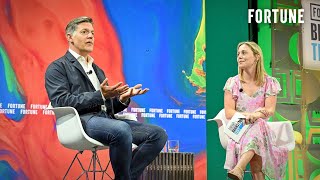
Fireside Chat: Roelof Botha (Sequoia Capital) on AI & Visual Tech with Evan Nisselson (LDV Capital)
Investing with the Best, Founder-Problem Fit, Pre-Mortems and Pre-Parades, and More — Roelof Botha