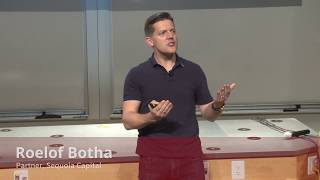
Investing with the Best, Founder-Problem Fit, Pre-Mortems and Pre-Parades, and More — Roelof Botha
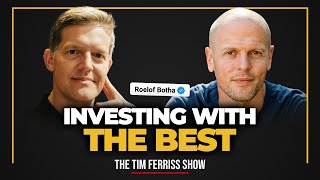
Roelof Botha from Sequoia Capital talks with Tim Ferriss about venture investing, what makes founders succeed, and decision-making tools like pre-mortems and pre-parades. He shares his investment philosophy and how Sequoia structures its funds.
All right. So for those who are wondering why I'm laughing, I forgot to press the record button and I'm glad that we were able to catch it, Roloff. So nice to see you again. It's been quite a few years and I'm so thrilled that you've been able to make time and that both of us have been able to make time to have this conversation. So thanks for being here.
Thank you for hosting Tim and look forward to the conversation.
So I thought we would start with a question that I asked before we pressed record on our backup and not the primary. And that is, how do you pronounce your full name properly if you were in your homeland?
My parents would call me Rulof Bouter.
Rolof Boitum. Pretty close. I'm not going to pass for an Afrikaans, but...
Your pronunciation is excellent. I'll respond to that.
I have heard a number of fireside songs in Afrikaans, I suppose it would be.
Afrikaans.
Having spent some time in South Africa in the last year, but we're not going to spend a lot of time on that. I want to, though, spend time on note taking and also different visual cues that you've used at different points in your life. And so here goes the first question. The first question is, I have, and you can't believe everything that you read on the internet, but something in front of me that says you used to have 10 to the ninth power written in the corner of your notepad, I guess, every week when you started at Sequoia. Is that accurate? And if so, could you explain why that's the case?
That is accurate. When I joined Sequoia, it was clear that if I wanted to make it as a partner, you needed to produce meaningful gains. And I'd set myself the goal of producing a billion dollars in gains for the partnership, because that would mean that I'd made it at some level. And so 10 to the 9, which is a billion, was my shorthand of reminding myself what I was striving for.
Now, what was the notepad used for otherwise? And was this on the top of every page or something you saw on a weekly basis? I'm wondering on the frequency with which you saw this and also what the notepad was used for otherwise.
This notepad was used generally for note-taking, but it was really on Mondays in particular when we had a partner meeting where we would review all the decisions for a particular day. And that would be the notepad where I'd make notes about the companies, that we were listening to, my own views on companies, what did I worry about, what did I think was interesting. And so that was the most important day at some level. We referred to it as the Olympic finals at Sequoia. It was the Monday partner meeting and the importance of getting those decisions right. And so that was the day where I needed to remember very acutely what was I striving for. So I had done this when I was younger too. I don't know if you had heard this.
I had, and we're going to get to that. Let me ask you, before we flash back and do the wavy Boston Powers flashback to childhood, which I will do in a minute. With the 10 to the 9th, did you have in your mind a particular timeframe for that, or was it just a reminder of the magnitude of the goal before you if you wanted to move the needle?
I didn't really have a time to mention at the time, things have changed a lot in the venture business. Technology has infused so much more of the world. I keep reminding myself when I was at PayPal in 2000, There were about 200 million people on the planet that had internet. 200 million.
That's wild.
And the vast majority of them were on dial-up. So by the time I joined Sequoia in 2003, we didn't even have broadband reaching 50% of the US population yet. So the numbers were still much smaller and technology didn't have the scale that it does have today. And so I just thought eventually get to a billion. Now, honestly, I feel like it's 10 to the 10 that you need to strive for. Because technologies didn't fuse so much of what we do.
So let's do, as promised, the rewind to childhood. And I'll let you take this ball and run with it wherever you want to go. But I did read a bit about your high school system of having your goals visible to you while you were studying. At least that's based on a bit of reading. I think this is actually from, it should be accurate because it's from sequoiacap.com or the articles thereof. So could you please elaborate? on what you did back during that era of your life?
I thought I needed, there's a concept in psychology called a Ulysses Pact, which is this idea that in the mouth of Ulysses, he wanted to hear the sirens, so he had all his soldiers, all his sailors, wax up their ears, tie them to a mast, and that way they could sail past and he could hear the sirens and they wouldn't succumb to them. And so in psychology, the Ulysses Pact is this idea that you make a pact with your future self, knowing that your future self is going to be weak. And so my technique for doing this, not having read about psychology yet, was to put notes in front of my desk, on the door, leaving my room and candidly all over my room, reminding me of what I was aiming for. And in high school, it was to be the top 10 in my state at the end of high school. At college, it was to be number one. And I would just put all these reminders of what my goals were. So if I was tempted to get up to go make a cup of tea or watch television or take a break, I would just see what I'd written to myself. And I'm reminded of what I need to do if I want to achieve.
What I want to achieve in life. Do you still use reminders like that of any type? Or do you feel like you've hit a certain escape velocity where that's no longer necessary?
I still use some of those. When I was at Sequoia, as you pointed out earlier, I had the 10 to the nine. I try to keep track of how I spend my time. When I was in college, I would literally write down the time that I started studying down to the minute, and then I'd write down the time that I got up. so that I would have an accurate tally at the end of the day of exactly how much time I actually spent studying instead of just thinking that I was studying and just loafing around the house doing nothing. And so I use Evernote to do that. I organize key things that I want to accomplish for Sequoia and for each of the companies that I work with. So I always have this running list of what are the key things you need to focus on, the three most important things you need to accomplish for a given company, over the next, say, six months as a reminder of the most important things.
I want to jump next to a headline. And this is, I believe, a headline in a local newspaper when you graduated from high school. You can correct me if I get any of these details wrong. And it was, and again, I'm not going to pronounce this correctly because I will play it safe and use my Long Island accent. So, Boethus' grandson is number one, I believe, was the headline. Could you use that as a segue into explaining who your grandfather was? But also, I'd love to just know how that headline landed for you and what it felt like.
So my grandfather was the equivalent of the foreign secretary for South Africa. And I think he served for close to 20 years in that capacity. He was ambassador for South Africa to Germany, to Denmark, and to the United Nations. In his time, he'd met Reagan and Thatcher and Kissinger and these are the sort of people he interacted with. And he was a part of the national party, the government that ran South Africa until the first democratic elections in 1994. My grandfather was an agent for change. Even though he worked in the party that was the ruling party that had enforced apartheid, he wanted to galvanize change from within. So he was part of the group that announced the unbanning of the ANC in 1990. And he actually served in Nelson Mandela's first democratically elected government from 1994 till 1996 when he retired. So he was a very well known, very prominent politician, you know, by some measure when I was a child growing up, he was probably the second most powerful politician in the country. I was named after him. It was literally, you know, the convention in the Afrikaan culture was that the firstborn son gets the father's father's name. and so that's why I was named after him. But because he was so well known, it meant that I also lived in his shadow and I was often referred to as so-and-so's grandson, you know, Papuwa's grandson. And so the headline referred to him and I was proud of my achievement and I was proud of my grandfather, but at some level I also wanted to be myself and to prove myself and not be always referred to as, you know, in reference to somebody else.
So we may come back to that. But you seem like someone who has repeatedly not taken the path of least resistance, which I mean is a compliment for sure. Let's talk about actuarial science. Now, I must say one of the funniest things that has happened to me in the last few days is in the process of doing research for this, you may know this, but if you throw your name into Google, the first thing that pops up is role of both a South African actuary, which I love. I just think that's fantastic. So could you please explain why you chose actuarial science as your degree? And also by way of doing that, just explain what actuarial science is.
So I finished high school in 1990, the year that ANC was unbanned. And honestly, at the time, it was unclear whether South Africa would have a peaceful transition to democracy. if you'd looked at the history of most other African nations that had gone through this kind of a change from sort of a colonial past, the picture wasn't pretty. And so when I chose what to study, part of the dimension was, would it give me an ability to work and live abroad? And actuarial science was something where after you got your undergraduate degree, you'd study professional exams and become a British qualified actuary. So technically, I became a UK actuary. which meant that I could work in the UK, in Canada, in Australia, and a couple of other Commonwealth countries. And so the portability of my qualification was a really important decision point. The other one was the most difficult degree to get into. You could get a bursary to study for it. My family couldn't afford college, so I got an insurance company to actually pay for my tuition. And it was challenging. So what actuaries do, by the way, is they run insurance companies, pension funds, So, whether that's life insurance or general insurance and are involved with the investment management for those companies as well. So, think of it as a financial engineering degree. So, technically, I majored in actuarial science, economics, and statistics. So, there's a heavy emphasis on mathematical.
Statistics as part of the degree. So, in addition to the math, and I don't have the full context here in front of me, but does UCT stand for the University of Cape Town? Am I getting that right? I may not be. I'm not, all right.
That's the university that most people know of, right?
Well, right, exactly. So I wanted to just confirm that and build off of what you said to add, this is a, I guess, an indirect quote, the way that I'm gonna read it, but Professor Robert DorRington at UCT has said, quote, Actuaries are trained to think 30 years into the future and accountants are trained to think a year in arrears. Do you feel like your training or maybe the attributes that led to you choosing actuarial science, ported well to entrepreneurship and venture capital, or do you think that's too much of a reach?
I think it did honestly. As I said earlier, the actuarial degree is about financial engineering, sort of the mathematics of finance, if you will. And so in a very practical sense, when I was at PayPal, The techniques I'd learned were useful in understanding the fraud problem that was latent at PayPal. And we were able to catch our fraud challenges months before others did, and as part of the reason that PayPal survived. So, you know, a bit of a twist of history that that training actually was very specifically helpful in that situation. But this idea of thinking long term, there's a great article or a concept about the time span of discretion. What's the horizon over which somebody thinks and plans. I think part of what we try to focus on, it's a great part of what I think has made me a decent investor is just trying to think much longer term, not just thinking quarter to quarter or a year out, but thinking about the possibility of what might happen with companies down the road. And if you had a chance to go read the original YouTube investment memo, for example, but there were three founders, friends of mine from PayPal days when we invested. I was the fourth person really to join the company when we invested. There was a way of imagining what might happen if this actually works. What if it goes right? Because it's so easy to worry about all the things that can go wrong with every company. So I do think the training helped, but in the classic nature nurture debate, how much, was I pre-wired to think that way or not? I don't know.
These things feed on each other. I'm not going to even make an attempt to separate those. I don't think I can do it in my own life. So I won't even presume to be able to do it for anybody else. I would love to ask you, and we're going to bounce around a lot because I don't want to do this chronologically. I wouldn't do that if we were just having wine over dinner. So I'm just going to follow my interest here. And then perhaps we'll jump back to PayPal. So the first question, I suppose, is somewhat chronological. Under what circumstances would you recommend to a young would-be entrepreneur that they go into consulting? Or would you generally advise against that path?
I would generally advise against that as a career choice. I chose to work at McKinsey. I don't regret the decision I made, but for me it was, again, an opportunity to work with an international firm. Remember, I worked at McKinsey from '96 to '98. So, South Africa just opened up from sanctions. We'd had sanctions from 1985 till 1994. The country was starved for international talent. And so this international firm shows up. I could learn from people from all over the world and they would give me an opportunity to either study or to work abroad. So that was a lot of the magnetism for me to join McKinsey at that time. I think if you're already in the US, go do something a little bit more direct would be my advice. The best business school is actually being in business. Going to join a company and actually experiencing what it's like. So if that's your ambition, if you want to be a consultant, there's nothing wrong with that. But I think as a way of delaying difficult decisions about what might happen in your career, it's a play it safe decision. It's not a risk seeking decision.
So I have a number of friends, including fantastic, meticulous doctor named Peter Attia who spent time at McKinsey. And Peter, as one example, loves matrices. And specifically, he loves two by two matrices. And I'd love for you to explain who Don Valentine is.
And.
We'Re going to explore that a bit. But could you also explain what his two by two matrix was?
Don Valentine is one of the fathers of Silicon Valley, one of the fathers of venture capital. Don grew up in the semiconductor business. He was a National and Fairchild Semiconductor back in the 1960s, and he started Sequoia Capital in 1972. We should get back to this later, but he made a very important decision calling it Sequoia Capital and not Valentine Capital. Don had an amazing career as an investor. He backed Apple when a lot of people were unsure about backing a barefooted, not well dressed Steve Jobs. He backed Atari, he backed EA, he backed Oracle, Cisco, and the list goes on. He had a remarkable track record as an investor. And when I joined Sequoia, he was still around, still alive. He passed away two years ago. And very early on, he pulled me aside and he said, There's a two by two matrix of people we get to invest in. Exceptional, not exceptional, easy to get along with, not so easy to get along with. Your job today, Deed Roloff, is to figure out in which of those four quadrants we normally make money.
So I have not heard this story. I don't know the answer. I could hazard a guess, but why don't you tell us, number one, did you figure it out? and what is the answer?
I think you have an intuition for it. It's exceptional, not so easy to get along with. And the reason is, when you think about the founder prototype or personality type, most of us encounter challenges in the world and we just let it go. This is difficult, this doesn't work, this frustrates me, and you just go, ah, whatever, and you move on to the next thing. Founders are these people who don't take no, they don't accept the way the world is. They want to change it. They encounter a frustration and they do something about it. Going back to the Cisco example, right? The founders of Cisco were the heads of the computer departments for computer science and the business school at Stanford. And they were on different networks so they could send primitive electronic mail within departments, but not across campus. And the two of them were romantically involved and were getting tired of walking across campus to see each other. They wanted to, I'm not kidding you.
This is the first infinite story. I haven't heard this story.
It's great. It's fantastic. And so the founding inspiration for Cisco was connecting the networks of the computer science and business schools at Stanford. And that's the founding story, right? Instead of just accepting the status quo. And so there's so many other companies we're backed with. This is the example, right? Jack and Jim started Square because there was a lost sale. I mean, these personal frustrations are just incredibly powerful. So when you think about a person who wants to take on the world and doesn't just accept it, that tells you a lot. about what the founder is like. Right.
And they're highly likely to push back on anything that I would imagine they don't feel is fully aligned with the change that they want to leave in the world or impart to the world. What are some other characteristics that could be related to the exceptional, not so easy to get along with, or they could be separate that you have identified within the dataset of hits from Sequoia, where you've made money. And by you, I mean Sequoia.
Well, first it starts with an authentic identification with the problem. I think that founding inspiration, because if you're trying to start a business for the sake of starting a business, it's so hard. There are so many challenges on the way to building a successful company. If you're doing it for the wrong reasons, you're going to wilt. You simply won't persevere. But if you're deeply motivated by what you're doing, you'll keep going and you'll overcome obstacle after obstacle. And so that to me is one of the key starting conditions is found a market fit, found a problem fit. I love asking a founder and I meet them, how did you come up with this idea? What was the eureka moment where something snapped and you wanted to address this problem? And what is it about the current solutions that you must have evaluated that frustrated you that you didn't think was good enough? And then the next one is what's your unique and compelling value proposition? So having evaluated alternatives and deciding to build something, why do you think what you're building is so distinct that it has a chance of flourishing and becoming a real business? So I can tell you one specific story. There's a founder, Matt Robbenowitz. He and I met in high school in South Africa in 1987 at a nerd camp. It was actually called an academic vacation school, but I mean, that's just a very nice way of saying nerd camp. And he's absolutely brilliant. He was gold medalist in our National Science Olympiad. He came to Stanford. He studied physics, electrical engineering. And in 2002, his sister had a baby that died within a week of birth. And he was shocked at the state of prenatal testing. And he went back to Stanford and he learned everything he could about biology and genetics and started this company, Natera, where I'm still on the board 15 years later. We made a million dollar seed investment in him in 2006. Just an idea. And today they deliver millions of tests to help people have healthy families. But it started with an incredibly authentic inspiration for him, which is seeing what his sister had to deal with.
I've never heard the elegance of this phrase you used before, the founder problem fit. And I am just a tourist in the startup world compared to your immersion as an entrepreneur, operator, and investor. But if I look back, at all of the Angel investments I've made, the founder problem fit is the defining feature of any of the hits, not product market fit, which may also exist, but in terms of the hierarchy of weighted importance, it's this founder problem fit. That's a fantastic phrase. What else have you learned or did you learn, rather, from Don Valentine? And it could just be anything that you observed in him attribute, behavior, habit or otherwise. But what are some of the takeaways from having spent time with him?
Incredibly good listener. You think about the stereotype maybe of an investor who's fast talking and needs to be heard. Don was very comfortable sitting for an hour and just listening and absorbing. And then he was very precise with his questions, precise with his notes. I remember receiving a note in my inbox from Don. I was confused initially because there was no to or from, so I didn't know who it was, you know, who'd written me this note. So I walked around the office saying, who left this for me? And people looked at it and said, it's written in green ink. It's Don. So Don had exclusive use of green ink in the office. No one else was allowed to use a green pen. He loved the color good money. But he would take a full page and there maybe be 10 words on the page. And they were just so incredibly concise in describing the feedback that he wanted to give about a company or when he interviewed people. I saw some of his interview notes about people. Instead of writing two pages of notes about the interview, it was just so crisp and on the point. And so his ability to distill things very concisely is incredible.
You mentioned earlier the question of what happens if this goes right? And I'm paraphrasing, but what does this look like, say, five, 10 years down the line, even more if this goes right? Could you speak to the practice of pre-mortems and pre-parades, if I'm getting the term Correct?
Correct. It was actually a technique that I picked up from Larry Summers. So, former treasury secretary Summers is on the board with me at Square. And he actually joined pretty early. He's been on the board for almost a decade with me now. And he posed this as a challenge to the management team at Square about, imagine things go incredibly well over the next three or five years. Actually, write it down. Don't just think about it. Write down what does that look like? What does success really look like? What does the company look like? What have you achieved? Which markets do we operate in? Which products have we shipped? Then go write a pre-mortem. Things didn't go the way you wanted to. What does that look like? And so we've taken that concept. We actually use it in our investment memos. So for every investment we contemplate, we write a pre-mortem and a pre-parade. And when we've had strategy offsites for ourselves, for the Sequoia Capital investment team, we did this too. We had a pre-mortem. It literally said 2030 autopsy of Sequoia Capital. And what went wrong? What are all the things that are going to cause us to not be a great firm in the future? And the value of this exercise is, again, back to the insights from Don, it really crystallizes first order issues. Because you can spend all your time scurrying around doing all the busy work. If you're not focused on the things that will really compound and matter over the next five to 10 years, you're missing the boat. And it's the urgent, important trade-off. And it's all those things woven into a very practical exercise.
How often would you do the pre-mortems at the Sequoia, I suppose, team off-sites?
Every two years.
Every two years.
I think every year is too frequent because things just don't change that often. I mean, we may revisit something if there's something that's really changed. There's a why now? Why now is one of the questions we love to ask, obviously, is like, why now? So we made an off-cycle decision to open up in Europe, for example, something we hadn't done for a decade. We kept on thinking about, should we open up an office in Europe? Should we be on the ground? Instead, we kept on flying into Europe and we made some great investments. We were early investors in Unity and Klarna and several of the companies on the continent. And at some point we realized there's just so much company formation happening in Europe. And especially after the global financial crisis, there's a whole crop of young people in Europe that now aspire to building companies when that wasn't the case before. So we revisited our assumptions and changed, and that was an off-cycle decision.
Let's dig a little bit deeper on the pre-mortems specifically as applied to Sequoia. So let's just say you're at an offsite and let's, you can pull a real one to mind and you're asking yourselves, you know, imagine the venture business in 10 years time. Sequoia is gone. What happened? Are there any answers that you can, brainstorms that you can share that prove to be very valuable in decision making for the firm? Because I will say for people who don't know the venture capital ecosystem. One thing of many that has impressed me forever for as long as I've known about Sequoia is the longevity of Sequoia. Are there any examples that you could give of pre-mortem answers that have proven very important in decision making?
For sure. By the way, the long live You know that the sequoia tree is the longest lived tree in California. I do. And that's the reason that Don chose to name Sequoia Sequoia. It wasn't an accident. He wanted the partnership to outlive him with a lot of consequent behavior and actions. And he also wanted us to invest in companies that stand the test of time, which I think we've done disproportionately. So, the couple of things from the off-sides, I think one of the most important ones is hubris. the downfall of every Greek tragedy and the extent to which we rest on yesterday's success. One of my favorite quotes is, no wreath wilts as fast as one that's rested on. We cannot rest on the past. And it's part of what motivated me when I joined Sequoia, by the way. The motto we have inside our building is you're only as good as your next investment. and I saw that hunger and determination from people like Michael Moritz and Doug Leone who clearly made it in life, and yet they were relentless in the pursuit. So very important for us as a team to think about hubris. We need to make sure that we continue to meet companies at the earliest stages of formation. So when you go back, when we made, if you think about the history of Sequoia's investments, when we invested in Atari or Apple or Cisco, we were the first investors. There were often single digit numbers of people around the company when we first invested. When we invested in YouTube, there were three people. LinkedIn, there were seven people. Palo Alto Networks, one founder in our office, incubating him. If we start losing grip of that early stage of being in touch with entrepreneurs right at inception, that's very dangerous for us. There's this temptation to then drift downstream and become a late stage investor. And so that's probably one of the most important things we talked about in the offsites is we've got to make sure that we stay at the fountainhead of company formation.
Let me ask a follow up related to that last point. This may be getting too into the weeds, but I'm curious. Early stage investing has become so, I would say, competitive, or at least the field is flooded with players compared to, say, 2007 when I first started paying attention to the startup investing world. It's almost nothing like it was today in terms of competition and the sheer number of people willing to write checks in different forms, in different fashions. I would imagine with a famous firm with multiple funds, as you get to larger fund sizes, in order to invest at the earliest stages and have those offers be accepted without over-diluting the founders, it seems like you would have to amass an army of people to maybe handle that to have sufficient capital outflows to make the entire operation work. How did you guys think about solving for still investing at the very early stages as the firm and the funds grew?
We don't want to hire an army of people. Our investment team candidly is about unchanged over the last decade. We only have about two dozen or so investors in our US and Europe business. Because if you want to make good investment decisions, you need to have small decision making groups. Committees don't make great decisions because then you average to the mean. And great investments depend on outlier instincts. And we are looking for the outlier founders, the founders who dare to build really exceptional companies, not just investable companies. So we've tried to keep the team small. We've also kept our fund separate. So we have a seed fund that's distinct from a venture fund that's distinct from our growth fund. And the teams are lined up against each of those, because I think what you point out is a real risk that if you have, I'm just going to make it up. Let's just suppose you have one pool of capital, you have one $10 billion fund, making a $500,000 seed investment and something promising seems, you know, kind of irrelevant. It's a rounding error. And then the whole team starts chasing what they think are bigger investments. And so that's one of the dangers that we've, we've guarded against. So we have separate teams focused on different areas. And the key is to look at the multiples. It's not about the input. Many of these small investments we've made have turned into very large gains. It's not about how much you invest, it's about the impact it can have. In terms of the competition, by the way, I actually think it's fantastic that there's this much competition. Because what used to be a cottage industry in the 1980s and 90s, because that's just, it wasn't a big market. I'm not saying that dismissively. It was just, it was a smallish industry. The industry has had to professionalize. The beneficiary of that ultimately are the founders. We've had to up our game. Yes, we had a talent team when I was still at PayPal. Sequoia had a talent team, but it was one or two people. Now we have 15. We're just delivering many more services to startups to help these companies succeed, to give them an unfair edge and a chance of outside success. So I think it's really in service of founders. It's fantastic that the businesses like this. It makes it more competitive, but it's all right.
Yeah, I think you guys are going to be fine. I mean, it's also, I think, incredibly advantageous to build a winning streak and to have the track record that, say, a firm such as Sequoia has, because you also have a selection bias with inbound with respect to very good deals. So I suppose that helps in part with maintaining a smaller team as opposed to a larger scouting team that's going out and canvassing sort of every corner of the landscape. Is that a fair comment or do you think that's not, is there more to the story that you'd like to flesh out?
I think it's true we're blessed by having the history we do. So the companies that we backed when they were private today account for over 25% of the total I leave the Nasdaq.
That's wild.
Over a quarter of the Nasdaq were companies that we backed when they were private. No other venture firm comes close. So that is an incredible achievement and it means that we're a magnet for other opportunities, often because of sector expertise or experience. So because I'm on the board of Unity, I might disproportionately get people who work in VR and AR because they're developing on the Unity ecosystem. And so that gives us access to this. So there is a way in which the industry success begets success for sure. But it can also be a curse because if you have a lot of inbound, are you spending enough time thinking critically about where you want to spend time, where the opportunities for tomorrow might lie? And so there's a danger there that you may spend all your time just taking inbound opportunities instead of pursuing the best founders and the best companies. So there's a balance there.
Roloff, what books, if any, come to mind as books that you have recommended or gifted the most to other people?
There are two different ones. There's Man's Search for Meaning by Viktor Frankl, which invariably shows up on these lists of 100 books you should read before you die, which really had a big impact on me. And I've spoken about it at Sequoia Founder Events. I've given it to many people. I just think the book is amazing in terms of helping clarify what it is that motivates you and what drives you? Like, what is your purpose? Because we're not really driven by monetary rewards or, you know, pleasure by itself. So that, to me, is a fantastic book. The other one is an annual series called America's Best Science and Nature Writing. And it's a collection of about two dozen articles from American publications written for a lay audience across a range of topics. You know, it could be what's the latest insights from physics and astronomy to what's happening in genetics, what's happening with anthropology, or things like that. I mean, it's absolutely fascinating.
Could you give us, and it doesn't have to be short, certainly, but I wouldn't expect you to re-deliver any of your presentations. Why has Viktor Frankl's book had such an impact on you? and it is an exceptional book, to be clear, but I'd just love to hear how it resonated with you or impacted you.
I think it reduced very clearly.
The.
Need to think about what motivates you. I mean, the fact that he, you know, he wasn't in a constant, he wasn't in a concentration camp. You've obviously read the book, and it's not a story about the life in a concentration camp, which is horrific, but the fact that he wanted to live. he wanted to survive because he wanted to recreate his work. His manuscript was taken from him when he was sent to Auschwitz in the first place. And part of what he learned when he was in the concentration camp was that some people gave up and that even though the population in the prison was Jewish, the mortality rate actually increased around Christmas and New Year because it was a marking of time and a reminder for people that they maybe had no more hope or if they knew that their family members had died. They gave up. So this idea that whatever it is that motivates you, your purpose might be your company, it might be your family, it might be your hobby, whatever it is, but identifying what it is that really motivates you and leaning into that and not pretending that you're actually motivated by fame or fortune or some other superficial motivator, I think it's just incredibly clarifying.
I'd like to ask you about a term you used earlier, with reference to some of the other general partners at Sequoia, the relentless in pursuit piece.
And.
I'd like to ask about this because one thing I've observed in some of my friends who are serial entrepreneurs who have had massive exits, I mean, they have become wealthy beyond their wildest dreams, is that this relentless in pursuit or relentless pursuit can produce incredibly good outputs in terms of objective wealth creation, job creation, solving problems in the world. But it doesn't always translate. And in fact, it seems sometimes to be inversely correlated to contentedness or a feeling of peace or happiness. How do you think about if you do, and maybe the question is just the wrong question, but balancing the relentless pursuit or counterbalancing it so that you don't always feel discontent.
That's difficult because if you're not a little discontent, I don't think you're alive.
Probably true.
I mean, it's why people say, oh, Silicon Valley's dead, innovation's dead, really, like there's so many problems to be solved. As long as there are problems, there are opportunities.
Yeah, I don't think Silicon Valley is dead or tech is dead.
No, absolutely. I think the people that I found who ended up getting unhappy wasn't because they were still in pursuit of something. It's actually that the pursuit was over. It's when, you know, because it's the getting, not the having, that makes you happy. And so unfortunately, I've seen founders where they've had a big exit and maybe the company was acquired. And what do you do then? And maybe you can borrow from analogies of athletes often, right? The peak of their career is when they're 28 or 32, whatever the case is, but they peak relatively early in their life. And then, oh, you're the person who once was that as opposed to what you are now. And I think that's very hard to deal with. But I've seen, like the Instagram founders who I worked with, you know, got involved with them very early and they're just incredibly well adjusted. Company was acquired. It's been a huge success, massive impact on the world. And the two of them are just building and having fun. And they found all sorts of other pursuits to keep them engaged. And they clearly haven't suffered from what I described because they found another outlet for meaning for themselves.
Do you remember when you hit your 10 to the ninth? And could you, if you do, could you tell us about that experience?
I probably can't get you the precise year, but it was probably about five, six years ago when I'd reached that. I think it was after the IPOs of MongoDB and Square are now called Block. I think after those two IPOs, and Atterro's IPO had achieved that milestone.
Well, what did you do?
How did it feel?
Did you pause to celebrate? Or were you just like, all right, now it's 10 to the 12th. Let's keep moving, folks.
I definitely celebrated a little bit, but it's not over. because there are other interesting companies to be built. And even more importantly for those companies, I'm still on the boards of those companies because they're still so early in their own innings. There's so much more to be done at these companies. I think it's one of the, and it, you know, I don't know if we have time to talk about this equity capital fund, but it's part of the thing.
We have all the time in the world. Go for it. Yeah.
Yeah. So last, last year we conceived of and launched this thing called the Sequoia Capital Fund. And for a long time, I'd been frustrated that the venture capital model was built on this idea of a 10-year closed-end fund cycle. And it was first invented in the late 60s, early 70s, and no one had questioned it. And there's this presumption that because you have such a short-lived fund life, that when a company goes public, you should distribute and move on to the next thing. But the truth is that many of the great companies endure and they keep compounding. And so with most of our companies that have gone public, the majority of their market cap accrued after the IPO, not before the IPO. Square today is worth 10 times what it was worth at the IPO. So almost definitionally, 90% of its market cap was created after the IPO. So why sell after the IPO? Why leave the board? What about all the other fun company building to be done? I mean, that's the thing that really floats my boat is working with entrepreneurs to help them build businesses. And for me to have the founder call me and say, Listen, I'm wrestling with this issue. Can you please help me? That's one of the most gratifying things that I have in my job, is being able to help on that journey.
So what is the structure of the Sequoia Capital Fund?
So the structure we created is essentially an open-ended fund that'll become the sole investor in all our future private funds. So we'll keep organizing private funds. And part of the reason is what we described earlier. If we have a single pool of capital, it dilutes attention and focus. So we'll still organize a seed fund, a venture fund, and a growth fund, and those will be time bound, have dedicated teams, a certain amount of money, and it's accountable for the returns that it generates in a given vintage. But all the capital comes from a main Sequoia Capital fund, where we have cash, but we also have some of the long-standing positions of our enduring businesses, where we believe the companies have an ability to compound for many years after the IPO. So that's the spirit of the investment structure.
Okay. I'd love to ask some probably naive questions and feel free to give me a wrist slap if they're stupid questions, but this is deeply interesting to me. So the first question, actually I'll just give you two questions and you can tackle them in whichever order you'd like. The first is understanding, and I have seen, it might have been published by Sequoia, it may have been Benchmark or someone else, but looking at The financial outcomes if you had held their private investments and sold as soon as lockup expired when these companies went public, or if you had invested the first day you could invest in those companies and held for X number of years and you would have made more or just as much by investing as a public market investor, which blew my mind. I can't recall the source, but my question, I guess, is with the assumption that a lot of this value will accrue post IPO, why not just distribute in kind and then let other people, the LPs, decide if they want to hold or sell. Then the second question is the Sequoia Capital Fund, and presumably there are limited partners, entities, institutions, and maybe individuals who invest in the Sequoia Capital Fund. How do you pitch an open-ended fund to a pension fund or an endowment?
Maybe you should spend a second just on who our clients are. It's a way we work for what we call great causes. So if you come to visit our office, our conference rooms are actually named after our long-standing limited partners. So the Ford Foundation, the Wellcome Trust, Stanford University, MIT, Harvard, Dana-Farber Cancer Institute, Boston Children's Hospital, these are the people we work for.
Got it.
And we put their names in the door as a constant reminder that when we generate returns, They're the ones who benefit. And there was a period actually, as a short digression, a couple of years ago, we thought about whether we had the right fee structure for our business. Because we're capitalists, we teach our companies that they should figure out the right price for their product, and we have excess demand for people wanting to invest in our funds. So why don't we raise the prices? Why don't we charge even more?
Could you just explain for people who are not familiar with venture capital, just the typical fee structure or your fee structure at the time so they understand how venture capital firms make money?
The typical structure is to charge a management fee as a function of the fund size. So typically it's 2 to 2.5% of whatever the fund size is that you charge to pay for salaries and rent and research, all that sort of stuff. And then there's carried interest, which is a share of the profits, if any, that we generate. And the carried interest varies between 20 and 30% based on a firm's history and their performance history. So let's just say that if you invested 100 million and you turn it into 200, and let's just say your carry was 20%, there's 20 million. So only 100 million of gain, obviously, 20 million would go to the partners and the limited partners would get 180 million in that scenario, in that example.
Got it.
So that's how fee structure works. So we actually talked about whether we should raise our fee structure. 'cause people were still gonna invest in us. And we actually made an affirmative decision to not do that because we were very happy with what we earned and we appreciate that the majority of what we generate goes to great causes. It goes to education, it goes to medical research, poverty alleviation. The Ford Foundation was helping to fight apartheid in South Africa in the 1960s before I was even born. So we're proud that these are the people we work for. Because we've had such a long history with them, We invited them to roll into the Sequoia Capital Fund, and 95% of the dollars that were eligible to roll into the Sequoia Capital Fund did. So they are the same investors that have rolled into the structure, and we've had decades of experience with them. We have clients that have been clients of ours longer than I've been alive, and they'll be clients long after I'm gone. And that's the way we want it. We want our LPs to outlive our GPs. The GP is the general partner, the people who work at the partnership. And we really care about that. That's part of this long-term orientation we have at Sequoia. sequoia. Do you want to go to the other question?
Yes, please.
Sure. So the reason we ended up with the structure, because it's a fair question, we talked about it. Let other people decide why should we hold the shares? Here XYZ LP, you can take the shares and decide. If you're an endowment or a foundation somewhere, you're managing a couple of billion, maybe if you're a big university endowment, you have 20 billion or something like that, you don't know this latest company that we've just distributed. And so what we found is that our LPs almost exclusively sell as soon as we distribute. And part of what we observed, we did other analysis, which is if we'd waited 12 months longer than we actually did to distribute, what additional return would we have generated for our LPs? And that was a lot of what informed the decision to form this fund. I'll give you a concrete example. At the point that Square went public, the gain for our limited partners was about $140-$150 million. at IPO. And we waited. We waited several years in that case to distribute. And we ended up generating well north of a billion dollars for LPs in that case by being patient because I was on the board, I'm still on the board, I'm involved with the company, I understand their prospects, and I just had a different view that the company's share price eventually was going to catch up with its performance.
So, question on the research, if you look at the data, and you have each of your portfolio companies value at time of IPO, and then there's lockup or whatever it might be. Let's just say, even if it's hypothetical, that you do the math on what the value would be at that point, and then 12 months later, and you've made the decision to hold. What percentage of the time with your portfolio companies to date, roughly, would you say the value is higher versus lower after an additional, say, 12 month hold period?
I don't have the precise number at my fingertips, but it's the majority.
That's good enough.
The overwhelming majority, I should say. That's the case. Obviously, past is no guarantee of the future. Disclaimer, disclaimer. But I think it's even more important, and I don't know if you've run across this book by Sebastian Mallaby called Power Law. It was recently published.
It has been recommended to me. I'm sure it's amazing. His book, More Money Than God on the hedge fund industry, I thought was exceptional. I haven't yet read the Power Law, but it's been recommended. But please continue.
I'll second the recommendation. The reason he chose the title for the book is that our industry follows a power law curve. So that there are Sequoia Funds. I can just cite some of the parameters roughly in a typical venture fund that has, let's just say, 35 to 45 companies in a given vintage, in a given fund, we probably have a third of the companies that failed to recover capital, which may mean there's a complete write-off or it may mean we only realize 50 cents on every dollar we invested. But it's not a success. Then there is a whole group of companies that have modest success. Maybe you get your money back, maybe it's a 2x or a 3x. But what really drives the performance of the fund is the typically five to eight companies that end up being 10x companies, 10x returns. And the key is that the ones that get to 10x sometimes run and they become 55x, they become 100x, they become 200x returns. And so, you know, when you have a YouTube, an Airbnb, a Unity, a Snowflake, Palo Alto Networks, WhatsApp, Stripe, Square, you have these companies, they just, they're completely blown out on the right hand side. And so you get a power law curve if you look at it mathematically, it's just a very steep curve where a small number of investments really account for the majority of our returns. So in our history, between 5 and 15% of the investments we make account for over 80% of the returns.
Sounds about right.
And so to your question about holding off to the IPO window, it's not just that even if it's 50/50, whether it goes up or down, it's what's the asymmetry? the ones that keep compounding. Look at the scale that has been achieved by a company like Google over time. That's the kind of compounding potential that exists, not with all businesses clearly. There aren't too many trillion dollar companies out there, but when you get them right, they can make a big difference.
The biggest takeaway for me in my, as I mentioned, sort of amateur tinkering in startup investing is Tim Ferriss, you don't know what the hell you're doing with public investing. Do not sell after lockup because you have clearly no idea which companies are going to end up compounding incredibly. All of my worst mistakes have been panicking. I shouldn't say panicking. Well, actually, this is a perfect frame for a question I wanted to ask you. So on one hand, I can look at, for instance, selling Shopify right after lockup. in retrospect from my financial position now and say that was a stupid mistake. It cost me a hundred million plus dollars. I should have made a different decision. However, I can also take the counter position and make a very compelling argument for why, even though now it seems like I made the wrong decision that the absolute dollars at the time were a life-changing amount for me then. And so it was a logical decision. And I use that as a segue because please correct me if this is wrong, but I found a supposed quote from you, which was PayPal was a $1.5 billion acquisition and today it's a company worth over $300 billion. I'm not sure of the timing of this article. And Mike Moritz was on our board and Mike, I think, saw the potential and pushed us and challenged us to think longer term. And what did we know? What did I know? And I made the wrong decision and didn't quite fathom how much potential PayPal had as a business. But I imagine that it had a significant impact on your life. So I'd love to know if you still feel that was the wrong decision and also how you talk to founders about this. Because not every slamming of the briefcase, Zuckerberg style, walking out on Yahoo after a multibillion dollar offer works out. Sometimes it backfires. So do you still think that was the wrong decision for you and if this quote is even accurate? And how do you talk to founders about this kind of thing?
So the question I ask founders is, my partners tease me because they know that this is my question. And it's, what's the scale of your ambition? What are you aiming to achieve? Are you interested in a company that gets to 100 million in revenue? And that's sort of your, That's the end of your ambition or do you want to get, you want to blow past 100 million in revenue on your way to a billion in revenue?
Quick question, I'm sorry to interrupt. At what point do you ask them this question? Because I imagine if it's in a pitch meeting, they know the right answer.
But when are you asking them? In a pitch meeting often. And they may not have thought about it. And it's not to be critical. I mean, often when you're a founder, you just found a problem that you're passionate to solve. But I'm still interested to understand where do you want to take it? Are you trying to build a small company? And again, that's fine if you want to do that, but we're looking for outliers who want to build really, really big businesses. That's the business we're in. And I want to make sure that there's an alignment and that we're on the same page. That your ambition matches what we're looking for. So that is the scale of ambition question.
Critically important question to try to ensure to the extent possible that you're on the same page. Let me throw out just as a thought exercise, hypothetical, right? Because I've seen it happen with founders I know. They start off, they have incredible founder problem fit. And in the beginning, their scope of ambition actually is quite modest, right? They just want to be able to buy snowboards online or whatever the hell it is, right? It's not to build an enormous company. And then partially through competency, partially through timing, partially through luck, they end up having tremendous traction. And then let's say they end up in a pitch meeting with you, you end up investing, and then a few years later, fortunately, the company's doing really well and they get an acquisition offer. And let's further say that these two founders come from middle class families, maybe their parents made 50 grand a year, and one founder wants to swing for the fences and say, YOLO, it's all or nothing. Although in this day and age, I mean, they've probably taken some money off with secondary and so on. But let's say the other really wants to cash out because they're looking at how their life would change and they're just saying, you know what? This is a bird in the hand. I don't know what the future holds. I want out. How do you navigate? a situation like that? And maybe the fast answer is if we can, we just buy out Founder B.
That is nothing.
Well, no, I don't. But like, how do you handle a situation like that?
You alluded to it. Secondaries are so important. You know, at PayPal, we did a small secondary in 2001. You know, people talk about it as though it's a recent invention. It was, it was around 20 years ago. And I remember going from having been a student still paying off student debt. My net worth was negative in 2001. But we did a secondary and I think I got $50,000. I felt rich. I mean, it was transformative. I could actually travel and I could stay in a hotel and it was really amazing to have this experience. But the reason I mention this is in the summer of 2001, eBay made a run at us in August. And I think part of what stiffened our backbone was that we'd all taken a little bit of money off the table. We were such a young team and none of us worried about making rent next month. And it was a really important, I think, ingredient to us pursuing the IPO and getting a far better price. We got triple the price that they offered that summer 12 months later. So it was a wise decision to have done that. So I love being able to provide secondaries for people. And then there's a conversation with people about the meaning going back to Viktor Frankl, you know, just what is it that you want to do? Do you really think having the money and having the beach house is going to make you happy? Or buying this fancy car? Because what we often do is we'll put them in touch with founders who've been in that predicament and have them speak to them and talk about the regrets about maybe having sold too early.
Do they ever run into someone who says, you know what, given your specifics, I think now is the right time?
Yes. That does happen. And it's part of, sorry to interrupt you, but that's part of what we try to do just given our experience is try to shepherd the conversation and to let people know, look, we have this front row seat to hundreds of portfolio companies. I've got the unfair advantage that I've seen many, many more companies unfold than you have, the founder. You've obviously personally seen many companies. And so I can't give you a perfect prediction, but I've got to tell you, you're in this outlier category. You're in this one in 10 companies that we see that really just has outsized potential. and I think you're going to regret letting go. And sometimes it's not the case. We were valiant, we made an effort, we thought the company had a shot and sort of it's ended up where it's ended up. And I think this is a good acquisition offer. It'd be a good home for your team and your technology will end up flourishing with somebody else at the helm. And that's happened sometimes where the companies have really flourished being acquired because that company has the right distribution maybe for their technology or... And that also is gratifying for the entrepreneur because their creation sees life. and flourishes, not just because it's an independent business.
For people who don't know what secondary transactions are, would you mind just defining that quickly? I brought it up, so I should have defined it. But if you wouldn't, if you, you're far more qualified to do this, so if you wouldn't mind.
A primary issuance of shares is when a company sells equity in the business as part of raising capital. So the company sells a million shares at $10 a share, and they actually raise $10 million that goes into the coffers of the company to help the company pay for payroll and for helping to grow the business. A secondary transaction is where the money doesn't end up in the company's balance sheet, but instead it's just a secondary transaction between two individuals that are unrelated. So an employee of the company, a founder of the company, sells shares to somebody outside who's interested in owning shares in that company. And so the company doesn't raise money, it's just the founder sells $100,000 worth of shares to an investor might be an example.
Perfect. Thank you for that. So we've talked about the council you might provide founders. I'd like to turn that around and ask if any founders come to mind who have had a large impact on you in any capacity, and that doesn't need to mean, of course, through the financial magnitude of their outcomes.
Several. I think it's interesting. One of my partners actually pointed this out that when he first got into the business, he had this impression that you should always maintain a delineation between your professional and your personal life and that you shouldn't mix the two. And that he found it interesting that I seemed to be doing something different because I was very close to the founders I work with. And, you know, I I'd help them with a pediatrician recommendation or have dinners with them on weekends or sometimes travel with them for family vacations and things like that. And so maybe it's just my style. I've ended up really enjoying the long-term relationships I formed with founders. So we spoke about Matra Benavides earlier. The person I'd met in high school, he's become a very dear friend. Given his background in genetics and what he's exposed to in the healthcare system, He's actually volunteered hours and hours over the last 12 months helping me with a close family member who has a medical situation. And it warms my heart to see somebody who's so busy running a company make that kind of a sacrifice. I didn't even ask. He just volunteered. So, you know, it's through loyalty and being involved with people for a long time that you can build those sort of relationships to me is deeply meaningful. the Hartes who run Eventbrite, and Kevin was the founder of a company called Zoom with an X, not with a Z, that we'd invested in as well. They've become close personal friends and I don't know, just it makes life so rich when you can have these sort of relationships with your founders. And that to me has been a big part of the job, honestly, that I've enjoyed.
Is that something that comes from your own family experience, your cultural upbringing? Is that something you made? a point of doing in terms of fostering these types of relationships after arriving in the US. Where does that come from?
I think it's a talk I listened to from Esther Perel. I don't know if you know her. I do. I met her a couple of years ago and she talks about how you sometimes grow up in a society or in a family where this is the balance around relationships or transactions. You can imagine some cultures are very transactional and you're fearful and you're out on your own or you're in a society or in a family or a culture that is more nurturing and it's more about relationships. And I think I grew up with relationships. And so I think it's part of the way I grew up that I value those. So I think it's informed the way that I behave in business, too.
Let's zoom back for a minute. This is as opportune a time as any. So am I correct that you did not grow up speaking English at home?
Correct.
Okay. So for most people listening, I would imagine they don't have much context on your home culture. Could you perhaps describe some of the characteristics, defining characteristics of the culture within which you grew up? In the same way that if someone said, Hey, you lived in Japan for a year. What are some of the defining characteristics? I could pull out a few things that I think really characterize and set it apart in a sense. How would you do that for the culture in which you grew up.
For the Afrikaner culture?
That's right. Yeah.
So at a family level, I guess started off with a bump. My mom was 16 when I was born. My dad was 18. So I doubt I was planned. She finished the high school with me. And needless to say, they were young and in love, but probably not compatible. So a couple of years later, they got divorced and. My mom moved back with her parents, who by then were in their early 40s. So they were in some sense also an extra set of parents for me. And they had a huge influence in raising me. And my grandmother in particular was just an incredibly warm, gregarious person. Everybody knew who she was. And maybe some of the loyalty that I exhibit in the way that I operate came from her, either genetically or through living with her. So it was a very warm family. It was the sort of family where if a friend or a distant relative showed up on a random Thursday night, you just assumed that you had enough food to cook for them and that you were gonna have a dinner together. It was that kind of an environment. There were always people around, always people visiting. But then my mom remarried and we moved to another town that was about a thousand miles away from Pretoria where I had been born. And hence I needed to start to speak English 'cause I moved to a city that was predominantly English, not having spoken it before. But it meant that I grew up in a different place and I was a bit of an outsider. I was prejudged, especially in a community that viewed itself as more liberal. There was a sense in which my grandfather was viewed as being very conservative because he served the national government. And so I faced an enormous amount of prejudice where I always felt as though people judged me before taking the time to get to know me and that I had to earn their trust and sort of show who I was over and over. And that was daunting in some respect, but I definitely felt like a bit of an outsider. when I moved to a new city, I went to an Afrikaans high school. And then I realized that if I wanted to live abroad eventually, I needed to improve my English. So I chose to go to an English university, the University of Cape Town, purposefully. And just to give you a sense of the challenge, I remember in first year math, I got a problem wrong because I literally didn't know what the word isosceles meant because I'd done math in Afrikaans in high school. and we had a completely different word to describe an isosceles triangle. And I solved the problem, but I didn't know what the word meant. And these are the sort of little things that you trip over when you try to switch your principal language.
Now, I remember you mentioning, and I'm not going to get this perhaps exactly right, but you wanted to be top 10 in the state or the province or the region And then you wanted to be number one in college or university. Am I getting that right? Why did you go from top 10 to number one, not number one to number one? Did you start raising your sights or was it easier because the pool was smaller? I'm just curious because you seem like a second place is first loser kind of guy not to project, but I'm just curious how you went from top 10 to number one.
So the end of high school, you, unlike the US, where you write standard, you know, sats and acts. I'm now learning because I have kids that are eventually needing to go to college. So all these new things I have to learn about. But in South Africa, you write standardized exams at the end of high school. So, you know, if you're doing math, everybody writes the same math paper, and it gets graded by people that are not affiliated with your school for neutrality. And so that was difficult because you're, you know, I was doing English as a first language, even though I was an African speaker. And, you know, so you've got languages, you've got, you know, I knew I well in math and science and things like that, but it was a bit of a crapshoot to know if you'd get number one. And they only published the top 20, but I thought I could make the top 10. So that I thought was realistic. When you get to university, you could choose your subjects a little more purposefully. And I knew that within that cadre of studying actual science, maybe I knew who the individuals were and I became too cocky, maybe it was dangerous, but I thought I could be number one. That was my goal. This is going to seem like a.
Bizarre question, but since you brought up your kids, I read that at some point they were raising South African silkworms. Now, I wasn't even aware that silkworms were a thing in South Africa. How did your kids end up raising South African silkworms? It's just not the first thing that comes to mind when I think of pet, not to malign South African silkworms as pets.
They went to the African silkworms. I mean, I bought them here in the US.
Okay, this is hilarious. Then I read, Whatever source I had, had them done in South African silk worms. So I'm like, wow, I had no idea.
Okay, that makes more sense. Yeah, well, last time I checked, they came from Asia anyway. Yeah, right. I don't know who, you know, I mean, there was this secret in China, right? They had all these, all these walled of gardens because they didn't want Western traders to understand where silk actually came from. This is true. It was a hidden secret from the West for a long time. So I guess when I was a kid, we had, it's just one of the things you do is you learn about silk worms and you, you buy a couple of eggs from somebody in primary school and, there are enough mulberry trees around so you can feed them and you actually observe the full life cycle and eventually they become moths and mate and lay their eggs and die. And so anyways, I thought it'd be fun to do with them, except in my typical eyes bigger than my mouth fashion, we ended up with a complete mess because we had thousands of silk worms to the point that the little mulberry tree we had in our garden couldn't provide enough trees. So I was driving around the neighborhood in Los Altos and I would try to find mulberry trees that had overreached the boundaries or, you know, people fences, and I would go there with bags, kind of steal leaves.
Mommy, mommy, what's that strange man doing by the fence? Oh, that's incredible.
My wife said, the vengeful capitalist caught stealing mulberry leaves.
That is really funny.
But it was actually found, by the way, my daughter ended up running experiments with him. So, you know, You get white ones and you get zebra ones. We call them zebra ones. They're white with little black stripes. And my daughter ended up running experiments where she segregated them to see how the genetics would line up. So, she was doing her own little controlled experiment, which was probably a clue that she wanted to be in biology eventually.
Well, if Dad's reading the America's Best Nature and Science writing on an annual basis, this leads me to want to ask about questions about interests outside of say venture capital or investing. If you were invited to give a TED Talk on the main stage, but you could not talk about investing, what topic might you choose?
Probably genetics. I'm really fascinated by what's happening in the field of genetic engineering.
Please elaborate.
I mean, we happen to have a company in the space that's helping with delivery of CRISPR, but I mean, the point is not about investing, it's about programmability of biology. And it's the reason I got interested in having us invest in Eterna a long time ago is I was starting to read about genetics, not having studied biology at college, because I went in a different direction. But when the Human Genome Project concluded, it really opened my eyes to what was possible with the information that we have in genetics. whether that's for diagnostic purposes, but now the ability to engineer, to treat disease. And there was just the drug approved today actually for treating blood-borne cancer disease that is reliant on genetic engineering. So this idea that we can treat human disease with precision genetic engineering absolutely blows my mind. So that's the field that I'd want to study if I had infinite time.
What would the runner-up be? Do you have any other Pet obsessions, former potential career tracks that you gave up on or put aside, if you want to put it that way. Anything else that would be runner up?
I love rugby.
Rugby.
I really love rugby because I grew up in South Africa. It's the Afrikaner sport of choice at some level. And I think when I moved to the United States, it was one of those anchors back, it was a bridge back to the country for me. It was something for me to talk about with my brothers and my dad and my grandfathers. It gave me an excuse to keep in touch with the country. And so it's an unnatural and unhealthy obsession, I realize. But I do love the sport. And I used to play until I got a pretty bad concussion. If you see this little grace patch over here. Yeah.
Is that really from the impact? No, really?
Yeah. I was playing for Stanford and I got a spear tackle right on the spot.
Oh, yeah.
I was knocked unconscious. 911 ambulance showed up. I woke up two hours later and I was inside a CT scanner and I had no idea where I was. And after three, four months of persistent headaches, I realized that was the end of my non-money making rugby playing days. But I'm certainly an enthusiast as a spectator.
You know, I will say for most of my life knew nothing about rugby. And then in the process of doing research for the Four Hour Body, my second book, spent time in South Africa out the sports at the South African Sports Science Institute with a professor, I think he was a professor, at least a PhD name.
Tim Noakes.
Tim Noakes, exactly right.
Yeah, Noakes. Yeah, he's well known.
Yeah, with Tim Noakes and did all sorts of tests and proved through muscle biopsy that effectively my enzyme levels are worse than Homer Simpson, it turns out. But in the process, I was able to watch the Springbok sevens team warm up and train. And I have to say, easily some of the most impressive athletes I've ever witnessed in my life, just in terms of combination of strength, agility, speed, endurance, absolutely mind blowing. And still couldn't tell you how the game is played other than throwing the ball underhand. But beyond that, it's fun.
But maybe just as a digression, For a second, when I was a kid in primary school, I was starting to do well academically and playing chess and doing all these sort of things. And I had a teacher who pulled me aside and really encouraged me to play rugby because he was worried that I was going down a path of doing things that were very academic and individualistic. And he encouraged me to play rugby. And, you know, I played all the way through high school and grew to love the sport, but part of it was, it was a way to bond with people from every demographic in my school. I didn't go to an academic school. I went to a public school in South Africa. And so we had people who were not academically gifted, but I'd play with them. They'd be my teammates and I had very little in common with them if we weren't playing rugby, but it enabled me to form relationships and bonds with people. And the sport itself is not about individual attribution. It's all about the team winning. No one cares who scored the try. Everybody cares that the team won. And so it had a lot to do with my approach to business and the way that we think about managing.
Our team at Sequoia as well. What are your current exercise or movement routines? If any, I don't have much to report, so I shouldn't say with full disclosure. I mean, look, I'm not intimidated. No, I'm not fully sedentary, but I mean, I wouldn't say I'm exactly winning any Ironman's anytime soon. So I'm just curious, as part of self-care, what types of physical routines are important to you or consistent for you?
I exercise at least four or five times a week, an hour or more each time. If I can on a weekend, especially if I'm watching a rugby match, I'll burn a thousand calories doing all sorts of different things, which is very helpful, by the way, because if your team loses, you're too exhausted to be angry at the end of the workout.
Oh, wait, are you doing like, Jumping jacks and push-ups while you're watching rugby?
What does this look like? No, if I'm watching a game, I'll alternate between a treadmill, a rowing machine, and an assault bike, one of those air bikes. Yeah, absolutely. And I'll spend 20 minutes on each and I'll just keep rotating. But you know, you're sort of sustained a heart rate at like 140-145 and you're just spent at the end of that and drenched. But no more energy to be angry. And then I work, you know, part of the beauties honestly of what's happened with COVID You know, obviously terrible humanitarian disaster, but the side effect has been that there are all these trainers that are available on Zoom now. And so, you know, I'll prop up, you know, an iPad in the gym and train with a trainer who just changes the workout routine and a lot of functional training as well. Cause I think especially as one gets a little older, you know, things like balance and making sure you have good core strength and anyway, I love exercise. Absolutely love exercise. And I love snowboarding, by the way. which is something I didn't know. I had not touched snow until I was 24 when I first came to the US. And a friend of mine at business school convinced me to go up to Tahoe for a weekend. I went for five days thinking I would figure it out in five days, but I was so sore that I couldn't go on days two and four. I could only go every other day. I was in pain, but now I can get up to about 60 miles an hour on a snowboard, which is fun and dangerous.
Braver man than I, that's for sure.
And it's the only sport I dream about. It's fascinating.
I have to just point out that you stopped playing rugby because you had a concussion, but you're going 60 miles an hour on a snowboard. I hope you're wearing a helmet.
Oh, yes, no, I'm wearing a helmet.
Yeah. And I love moving quickly on snow. I just have taken a little pause because I actually tore my right labrum snowboarding last winter. So it's feeling good. I'm going to get back on the snow, but I'm going to stick to the two sticks and probably keep on the skis for a bit. a bit before trying any snowboarding again. I'd love to ask you a question that I think you ask, I want to say founders reasonably frequently, and I'm sure I'm going to get the phrasing wrong, but the question relates to key career decisions. And maybe you can tell me first how you actually ask it, but I would just love to know how you would answer the question of absolute key watershed decisions in your career if one or two float to the top of the list?
We call them crucible moments at Sequoia.
Crucible moments. Perfect.
My partner Jim Gates actually is the one who came up with that. I'm not going to claim credit. He deserves credit for the phrase. We apply it to business context, by the way. I'll answer your question, but I think it's really important for companies to think about crucible moments because often they don't even identify them. They don't realize that they face a crucible decision, whether it's geographic expansion, product expansion, a key shift that the business must make. I'm not talking about pivots where what you try doesn't work. It's something really different. At MongoDB, the decision to become a cloud business was a crucible decision. At Square, the decision to build Cash App as personal individual product rather than an SMB product. That was a crucible decision, very difficult to pull off within the company. But these decisions end up having a huge bearing on the ultimate outcome of a company, and so do they with careers. And so when I interview somebody, for example, I don't focus on, you know, tell me everything that happened while you were at this job. Tell me why you chose this job. How did you find this opportunity? What else were you thinking about? And what is it about this particular opportunity that attracted you? Why did you go to the school? and why did you not go to that school? Those are the more interesting questions. They're also indisputable because it's what you actually did. You can't tell me that, what am I good at? Oh, I'm a perfectionist. Okay, great. It's just a glib answer to the question. So for me, the crucial decisions, one of them was to join McKinsey when I qualified as an actuary. I took a 50% pay cut relative to what I would have been earning as an actuary to join McKinsey. and I had to pay back the bursary that I'd gotten from the insurance company. So it was a double whammy financially.
And the bursary is effectively a scholarship?
College. Yeah, but you have to pay back if you don't go work for them. So the deal was that they would pay for my tuition and I had to work for them for the same number of years that I studied to pay off the debt. And if I didn't work for them, I literally had to pay them back every penny. And so I earned less and had the debt to pay off. I made the same decision when I joined PayPal. so I had, McKinsey was paying for some of my tuition at Stanford and I had to pay them back. And what I was getting, I still have my offer letter. Elon recruited me to PayPal/x.com and I have the signed offer letter still on my door. And I got $80,000. That was my salary when I finished my MBA in 2000 and it was less than McKinsey was going to pay me at the end to pay McKinsey back. And then the third one was joining Sequoia. And those are the three key career decisions. That was it.
How did you end up in Silicon Valley?
It was a funny story. There was an American who'd come to University of Cape Town when I was an undergrad. And he was a guest lecturer in economics. His name is Peter Baird. And it was fascinating to meet him. He had a wonderfully bubbly personality and he was just one of these larger than life people. I loved working for him. I ended up working for him later, as I'll explain. He ended up working in McKinsey coming to South Africa, and I was staffed on a project with him where he was my engagement manager. And he convinced me that I should.
Apply to business school because I'd done a business undergraduate. What is an engagement manager? Just before we jump over that, what does that mean?
An engagement in McKinsey language was a project, basically. So, he was the project manager. They just needed to come up with fancy words to merit the exorbitant fees that we're charging. Yes. Got it.
Sorry to interrupt. No problem.
So he was the project manager. He convinced me I should apply to business school, which I didn't think was necessary because I'd done a business undergraduate as part of my actual science training. And he wrote all my recommendation letters and strongly encouraged me to think about coming to Stanford. And at that point, this was in the late 90s, obviously Stanford or Silicon Valley in general looked like an interesting place. This was the, the well of opportunity. So many companies were being formed. Instinctively, it seemed like the place to be. And so that's how I got to Stanford in 1998. Wow.
1998. It's easy for me to forget how young you are. I mean, for me, it's just looking at your bio and resume. It's crazy to think you got there in '98. I got there. in 2000, 99, the end of 99-2000, it would have been in 2000, so not that long afterwards. And how old are you now? If I may ask?
48.
48, man, overachiever. Okay, so you get to Silicon Valley. Now, up to that point, your decisions seem to be very methodical. You're thinking about preserving optionality. and mitigating certain risks, as you explained earlier, with the political climate changes taking place, choice of McKinsey. How do you then, was the intention from the get-go to go to business school and join a startup before you even got to the West Coast?
Nope.
Okay. Okay. So how do we go from that to, Speculative, of course, because they all are speculative startup.
You need to change your mind. If we talk about mentors, by the way, I have a specific anecdote about one of them that really hammered this into me. But right before I came to business school, I was doing a master's degree, which I didn't complete at the University of Cape Town on long-term option pricing using stochastic simulation techniques.
You too? No, I'm kidding. Just kidding. Got it. Sorry, I was cracking screwed up the flow.
It's what one does on a weekend. You know, you run these Monte Carlo simulations on your little compact laptop. I was fascinated by finance, serious finance, and I thought I'd end up in Wall Street and work in the derivatives group somewhere. And when I was a first year of business school, actually, I was doing advanced topics in derivatives and ended up taking all the finance classes. And I thought that would be where I could shine because, you know, I've got mathematical skills. I thought it was interesting. It was fascinating. I actually spent my summer working in London at Goldman Sachs. When I was in business school, I thought, you know, is Europe interesting? I didn't know. Is banking interesting? I didn't know. And I've got a no on both of those, by the way. So try to- you- got a no from me?
You gave it a shot and got rejected? Is that what you mean by a no?
No, no. I realized that that was not the right calling. Going back to Europe at that point, to me, felt like going back to the past as opposed to the future. And the West Coast is the future.
Okay. Because the figuring out those were not the right paths is very critical, right? I don't want to gloss over that. So could you expand on that? Was Europe, as you said, felt like going to the past instead of the future? And that's how you arrived at a no for that option?
Yep. Okay. And for me as a South African, it was more, there are many South Africans that live in the UK. It's same time zone essentially as South Africa. And so it was closer to home. I mean, California is about as far as you can get from where I grew up. my family and I was very close to my family. And so I was wondering if that made sense. And so I tried it. I got enough information to realize that was not my destiny. And so I came back for second year. One of my classmates had met Elon before he came to business school when Elon ran Zip2 and this friend of mine was at CitySearch and introduced me to Elon. And I thought the intersection of financial services and technology was interesting. and he made me a job offer. And I couldn't quit because I didn't have a work permit. I was here on a student visa. And so we kept in touch and I started to learn more about PayPal. I was really intrigued when PayPal and X.com came together because I loved the business model that that had. And at that point when he made me another offer and the opportunity was actually to report to Peter, Peter Thiel, That seemed like something I shouldn't turn down. So I accepted the offer and I was so delighted they took a chance on me.
Why did it seem like something you shouldn't turn down? Because Elon and Peter were not the Elon and Peter in all marquee lights of today.
No, no, no. Just early, obviously. I loved the business model. And let me be clear, I still vacillated because I had to pay back an enormous amount of student debt. I didn't have any money. I'd run out of money actually in second year of business school and was living off borrowed funds from friends of mine and was struggling to make rent. It was tough.
Did your family know this?
They did. They didn't have money. I didn't grow up with wealth. Right.
Understood. So I'm wondering what your family, assuming you were in contact with them.
What.
Did they say about this? How did those conversations go? Were they worried about you?
They were supportive. Yeah. Yeah, of course they were worried, but they didn't have the means to be able to support me. Peter Baird, the person who I worked for at McKinsey, he lent me some money. My best friend who was working in London at that point was my best man when I got married. He lent me some money. My now wife, who was a classmate, we were dating already. She lent me some money. It was embarrassing at some level, but I had to get through. And so I was struggling with the decision because it was an expensive decision to walk away from going back to McKinsey or maybe joining Goldman. And so I struggled with those two choices and the choice to go to a startup. And my wife actually who studied computer engineering at Konica Minolta, who's also an immigrant from Singapore. She and I had long conversations and she really encouraged me to take the startup route. And she had worked at startups before she came to business school. We were classmates. We'd met there. And so she was a huge influence. I made that decision. I liked the business that they were building. It was clear that the payments piece was a way to make... Well, there was a clear path to turn it into a revenue business. I thought that the combination of X and PayPal would really dominate the P2P payment space. I fell in love with the business and the people.
Was there ever a moment in the first handful of years where you second-guessed that decision? Do any particular moments-.
Two weeks later. Two weeks later. So, my offer letter was signed on March 30th. May 2000, April 12, the NASDAQ has a massive correction. I mean, literally two weeks later. Then I go to a class where Meg Whitman was a guest speaker in one of the classes I was taking at Stanford. I'd already accepted my offer to join. And she came to this class and she says, well, we own this payment service called Billpoint and we're going to crush this annoying little startup in Palo Alto called PayPal. Don't say that. Like, I'm gonna go work there. I thought we play nice in Silicon Valley. What's going on here? Then we had the fraud challenges. Then our burn rate was $14 million in June 2000 before we started to charge for payments. Our burn rate was accelerating.
Could you explain the fraud challenges just so people don't misinterpret what that means?
So, FirstPayPal wasn't generating revenue yet. So whenever somebody accepted a transaction on PayPal, that just says $100 transaction, roughly speaking, two and a half percent was the fee that goes back to the credit card associations and the issuer of the credit card. So we were paying that $2.50 for every single transaction that was happening on PayPal and never charging the recipient, the merchant, for the transaction. So our losses were growing very, very quickly. And then we were dealing with two types of fraud. The first is unauthorized fraud. This is where somebody stole your credit card number, enters onto the PayPal website at that time, charges $100 and withdraws the money and runs away. And then you get your credit card statement at the end of the month and go, I didn't authorize this transaction. You file a chargeback. PayPal was on the hook to pay you back your $100. So we had to protect against this unauthorized fraud use case. And then there's merchant fraud, which is, you know, the person said they'd ship you something. It never arrived. It arrived damaged.
It didn't look the way it did on the website, things like that. So you have, was it a crisis of faith or were you like, not sure about this? How severe was the second guessing?
Well, I never thought about quitting, by the way. It was more just, I'm not sure we're going to make it. I might have to row a boat back to South Africa.
Okay. Why never consider quitting? This is interesting to me. Not saying you should have quit. Clearly it worked out. But why the stick-to-itiveness despite all of the challenges, the massive NASDAQ correction, why I never thought of quitting?
I don't know. I felt like we were in it together as a team. We had incredible spirit and camaraderie within the building. I felt like we had each other's backs. We became good friends. It's part of the reason I think the PayPal Mafia was as successful as it was, is we formed incredibly strong bonds. I don't know, we just rallied as a team and we sort of felt we're going to build this and if we don't build it, we're going to, you know, we'll go done with the ship rather than abandon ship. It was just a sentiment. So we just kept trying, you know, problem after problem, whether it was fraud, whether it was eBay trying to kill us, whether it was regulators, whether it was Visa, we just kept fighting. I don't know, maybe we're too naive.
To understand that it was foolish. Well, I mean, I think that, goes for a lot of founders who end up doing very well. There are people with creative projects. I mean, you hear it all the time. It's kind of cliched at this point, I guess. But if they had known what was involved at the outset, they never would have done it, right? But they did it also. So we're talking about PayPal. Clearly, all's well that ends well. And I'd like to try to flesh you out a little bit as a human. as opposed to someone who steps up and hits home runs nonstop, which you've had a lot of home runs to be clear. But do you have or could you describe a meaningful or favorite failure? And by that I mean anything that seemed like a failure at the time or was a failure that was particularly valuable for you looking back or that set you up in some fashion for later success? Does anything come to mind?
Did you say favorite failure? Did you say that?
Those are the words I used, yes.
Failing sucks. It's painful, I mean, it is. I don't know if I'd use the word favorite, but yeah, meaning most insightful. Insightful.
Yes, we can definitely re-label it however you like. like, but in effect, I say that.
Whimsically partly because I really hate losing. I'm intensely, intensely... Also something common for.
Quite a few members of the PayPal mafia.
Yeah, which has its downsides, obviously. So, one of the things we talk about in our partnership is the sense of commission and the sense of omission. And the sense of commission is we made an investment we shouldn't have. and the sins of omission are the ones you didn't but should have. And I've probably made six, seven investments in my career already that literally went to zero. And I don't think I should really highlight any of them because we made a good try. The founders were great, didn't quite work out, and it was valiant. We did what we could. I will tell you that the first time I had an investment that to zero, was a $10 million complete write-off. I literally cried in our partner meeting because I had such an immense sense of shame and guilt for having failed and for having lost money for our limited partners. And it was an important moment partly because the senior partners at Sequoia, I think part of what we do well as a team, part of our longevity is the way that we help each other. And so senior partners who had gone through this themselves were there to support me and to you know, guide me through this. Because the danger in the business is if you've had an experience like that is you recoil and you become very careful and you'll never get back to the glory days. Maybe like an athlete who has a severe injury and they never want to test that knee again, you know, because they had a bad knee injury or something. They'll never attain what they had in the past. So that to me was a very painful experience. But the ones that really sting are the ones we should have made. And I think back to meeting Jack when he at Twitter. I met him and Ev and we had an opportunity to invest in the series A at Twitter. This is in 2007. So this is before the iPhone was released. There was no Twitter app. This was text messaging, different business. And I just didn't dream enough. I failed to imagine what might happen with a service like this. And that was incredibly painful for me. And we missed the A. and we missed the B and we missed the C. And that was a huge lesson for me. And I, you know, sometimes you can explain away an investment you didn't make by saying, well, ex ante with those same facts, would you make the same decision today or not? Because obviously, ex post, you should have made the investment. But ex ante, you know, sometimes things just, you know, they're weird twists and turns in the, on the road to Company building. And so maybe you could justify that the series A was, you a bit more random because it took a lot from there to where they were in, say, 2010. But by 2010, we should have looked at it and reevaluated our decision. And that I feel really guilty for. That was terrible. I really, really messed up for not revisiting assumptions.
What did you learn from that in terms of things that you discounted that you shouldn't have, things that were invisible that you should have made visible? I'm wondering what you carry forward from that.
The two things are imagination, dreaming, sitting back for a second and saying, and my partner, Mike Moritz, often hammers this home for us in our partner meetings when Billy was part of the team full time was, you know, what if it goes right? Because we can all, you know, we're in the business of investing, we're in the business of not investing. So assume for a second and goes right, what could you imagine this being? Just imagine for a second instead of, you know, you know, it's the pre-parade exercise in some sense. Just put on your thinking caps. I remember being in a meeting Mike and Max Lefchen and Jeremy Stoppelmann when Yelp was an idea. An idea in 2005. And Mike in a meeting said, I imagine a future where there are Yelp stickers outside restaurants. I mean, that was an amazing insight, an amazing vision for the future, which came to be true. And so, I'm always reminded about the need for imagination in our business. The need to be naive at some level. If you become a curmudgeon in the venture business, you're done. You need to be naive, you need to dream. So that's the one. The second one is learning a little bit from behavioral economics of the need to revisit your assumptions. So I was really stuck in a sunk cost fallacy where I'd made a decision to, my recommendation was for us to not invest, wrong decision. So let's dig my head into the ground and hide and just keep saying, we shouldn't invest, we shouldn't invest, because why admit that I was wrong? and so you need to be able to revisit your decision and admit you were wrong. So we got the Series A at Square wrong and we corrected it. And we paid up for the Series B and I helped lead the investment and I had to swallow my pride. I'm sorry, team, I should have recommended it nine months ago. My bad. Now we're paying a high price for the investment, but I still believe in it and I think there's huge upside. And psychologically, that's a very difficult thing for people to do. And so we want to create that kind of safety for us. in our investment team.
We're going to come back to changing your mind. And before we get to that though, I just want to read something that I think is profound, which I'd never really thought of before. This is from Don Valentine. And I am paraphrasing here, but I understand that he said to you at some point, maybe in the interview process, that Successful people join venture capital only to have to face the fact that good investing means taking risks in startups that are more likely than not to fail. Coming to grips with being wrong, not 5% of the time, but 30% of the time, 40% of the time, really eats at your self-confidence. I think that's a quote from you, actually. So you had this experience of crying in the partner meeting. Did it continue to be difficult? I suppose I'm wondering if there was a moment, particular company, when you can identify that you became more comfortable with some of your portfolio companies going to zero. Is there anything that helped with that aside from the support of the partners, say, in that particular meeting?
It wasn't the support of the partners just in that meeting. In general, I think we started to have conversations about not doing post-mortems. Because at one point, we had an exercise of doing postmortems on investments. We got this one wrong. Let's hammer into each other why we got it wrong. And what does that breed? That breeds a culture where people are going to be scared, scared to take chances. And if you're dealing in a powerful business with asymmetric upside, why cry over the yet another one that failed? You need to focus on the ones that really succeed. That's where the business is one. Now, obviously, If all you do is you make a dozen investments that don't work out, then you probably need to go do something else with your time. So you need to get enough ones that are good, obviously, to survive. So that was part of it. We stopped doing postmortems and we supported each other. It was clear to me that my partners weren't judging me and that my head wasn't on the block for the next failure. I felt secure enough that I could make decisions and knew that I was part of the team. It wasn't as though maybe you want to use a sports analogy. If you go for a crazy shot, Are you going to be cut from the starting team next game? No, because you took a rational shot. It maybe didn't drop that time and there are probably a million Michael Jordan quotes you can use that make that point. So that was one piece. The other one was at some point you have enough success where you realize, well, I made an investment that made us $500 million. That excuses three of those failed $5 million investments many times over. And so you have to get over it. You just psychologically have to accept that you just have to move on from that failure and not have it encumber you learn from it. Don't dismiss it. But you just rationally have to look at the math and go, okay, next. And so part of what helped me, by the way, I was in the doldrums in 2009. I actually thought about quitting the business. You know, YouTube was a great success early on in my career. It was a, you know, I was incredibly fortunate to have had such a big success within my first three years as a venture investor. And, and then I had a pretty lean backlog. and I wasn't sure I was cut out for it. You know, one hit wonder, is this going to be one and done? And then, you know, I kept at it and I realized that there's always another red bat in our industry. So in 2009, after I thought about it, after my partner Doug and Mike and Jim really pulled me out of my doldrums, we ended up investing in Unity and Eventbrite and Square and MongoDB and a, you know, list of companies, and it was just this purple patch of investing. And so, just reminded me, you know, just don't give up. Keep going.
How did they pull you out of your doldrums? What did they say? Do you remember anything specific, even if it's paraphrased or a rough guesstimate? What did they actually say to you?
Well, there's a balance that we have of, and we, I've not learned since I've been here long enough to recognize when other people go through this as well. And you know, you can't coddle, you can't be there with, you know, making it too safe, too many boundaries, too many guardrails. People actually have to walk through a little bit of the valley of despair on their own and wrestle with it. But at one point, Jim realized that I was going too far and he would take me for walks around the office. I don't remember the specifics of what he talked about, but I remember him spending a lot of time and investing in trying to get me into the right space. And then Doug Leon showed up at my house one day. with homemade pesto. And he was knocking on the door on a Saturday. I honestly didn't feel like opening the door. I was like, Leave me. I want to be miserable by myself. And, you know, Doug knocked and he had literally from basil that he grew in his own garden, he brought this little jar of pesto for me, which was delicious, but it was the sign that he was there for me and knew what I was going through. And that it was memorable. and had a big impact.
So mentors, you mentioned changing your mind is important and you said, let's come back, if you like, to mentors because you have one in mind. Do you still have that thread? If so, would you like to pick up on that?
Peter Thiel. So Peter came back as our CEO. If you've read any of the PayPal books, another story, you know, We as a team rallied to get him back as CEO. It was difficult because the board wasn't fully supportive and we had to keep as a team, we had to keep interviewing other candidates and we kept feeling, no, but Peter, we're a team and Peter's our man and we want Peter to be our leader and our CEO. And so Peter had an incredible ability to change his mind. Peter would say, We're turning left, we're turning left. And then, you know, we weren't sure we'd go analyze, bring him data, we'd show him the results and he'd say, Yep, I've just looked at it returning right. And he would just turn like that on a dime. And he had no qualms about this. And I think most people get so stuck in the escalation of commitment where I need to remain consistent with the person you thought I was yesterday, otherwise I'm going to be viewed as irrational. And there's a whole branch of psychology that talks about this. And to some extent, people view flip-flop ers negatively, especially in politics and things like that. But in business, it's incredibly valuable if you're just rational. Peter did that to a T and made him an incredible CEO.
Do you think that's just Peter out of the box, different motherboard, different programming, or is that something that he cultivated? And if you think there's a component of it that is cultivated, how do you think he did that? Or how would you help someone to develop that ability?
So I don't know if because I obviously didn't know him growing up. I met him in the PayPal context. So, I mean, Peter is just so supremely smart and rational that my guess is it's innate in him and he doesn't suffer that kind of baggage, if you will. And he thinks for himself. I think there are a lot of people that are so worried about what others think of them. And Peter just doesn't seem encumbered by that. Not that he's indifferent to it, but I just don't think he spends his whole life worrying about what others think about him. He just does what he thinks is right. and interesting. So I think it's innate. I think in terms of cultivating it, just calling it for what it is. In an organization creating a culture, we're willing to stand up to new information and change your mind and then praising people for changing their mind on things. Look, I said no to this decision. I've reevaluated, or I walked into the partner meeting thinking we shouldn't make this investment. And I've been swayed by your arguments or recognizing that somebody else changed their mind and praising them for doing that. I think you need to cultivate that kind of culture.
Yeah, agreed. I find it so fascinating. I'm going to sit with this because it makes perfect sense, although I have some misgivings. So let's come back to it. The not doing postmortems. Psychologically, it makes a lot of sense to me that if you overemphasize postmortems, you could breed fear in those who you want to take risks and therefore it's self-defeating. But I suppose there's some postmortem required to then, at least on an individual level, to change your mind about a company that you said no to. or there's a revision of your thinking that needs to take place. How did you, if any companies come to mind or it doesn't need to be a specific company, but what is the process that you have gone through to change your mind, to kind of revisit assumptions for any of those investments where you turn down C to the series A and then you end up paying up on a series B or series C?
It takes work, by the way. I don't pretend that it's easy and that it just comes naturally. I think we've evolved with all these heuristics and they maybe served us well 200,000 years ago when we first evolved as a species, but it hampers us today. So I have to fight it the whole time. We'll start discussing a company that I remember meeting nine months prior and I could just feel my instincts like, no, I didn't like it then. Why should I like it now? why do I have to work and think about it again? I mean, the lazy part of me just wanted to say, no, I really made the decision, move on. And so it takes effort. It really takes effort. That's part of why heuristics are valuable. There are shortcuts. And for many things in life, shortcuts are great. But if you want to make important decisions, maybe shortcuts are a curse. And so, anyway, so I don't make it sound like it just comes naturally. By the way, we do do lightweight postmortems on the things that failed where we made an investment. It was just that we used to have this exercise, which is the sponser has to go write a memo and, you know, Mayor Culpa. Right.
There's a punishment. Or maybe not punishment. That might be too dramatic, but there was a dire consequence.
It was just too much. It was just too much. We have to learn from them, you know? So we got the space right, but we picked the wrong team. Why did we pick the wrong team? Oh, they had better technology, but they didn't have the right go-to-market capabilities or, you know, they, they aimed at the wrong part of the value chain. Like, you know, we try to learn from those because it informs future decisions. So, so don't make it sound like we're oblivious to the mistakes of But it's then re-looking at a company. It's one of the things we analyzed recently. I can't remember when we did this particular analysis, but many of the best investments that happened in a particular window of time were companies that we had previously met. We'd already met them before. We should have been prepared. We should be even better prepared to make a good decision now. Why do we not do that? And so we've tried to think about, do we ensure that the people who were there before meet them again because they have a sense of continuity and how far they've progressed, but do we also inject some fresh pair of eyes? to help guard against the individual who maybe is jaded by their past experience. Sometimes we have to switch who the point person is because some of the chemistry is just between a founder and an investor. It's a personal relationship. You're joining somebody's board. And so sometimes the person who met the company, and Google is a case in point, where the person who found Google for Sequoia was Doug Leone. The person who became the board member was Mike Moritz. Right, there was just Mike had the right chemistry with the founders, the right experience because of Yahoo. And that made sense for us. And so we always try to think about what's the right match? Do we have the right group of people in the room? And at the end of the day, back to the rugby analogy, we have to win as a team. We have to win as a team, which is why things like the Midas list are a little bit insidious from our point of view culturally, because it tries to create individual attribution. When we have a success at Sequoia, when there's a company that goes public or gets acquired, we actually write an email internally and we enumerate all the people that contributed to the success of the company, not just the person whose name is normally attached to it as the board member.
I love that. Sebastian Mallaby, Power Law or the Power Law, I don't know if there's a definite article on the book title. What did he leave out? What did he not cover? If he said, you, know what, Rolfe, I'd love for you to write an appendix or an afterword or a sidebar, anything at all, just to make this more complete or more compelling, what would you do?
Maybe because of the time period that it covers, I think the professionalization of the industry that's happening right now is something that's not fully captured in the book.
Could you, just for people who don't have a familiarity with with the venture capital world, what would be some of the components of that professionalization?
If you go back 25 years, the typical venture firm had eight to 12 investors. Just factually, they were probably white men at the time. That obviously is changing very quickly in our industry appropriately. But you had a handful of people sitting around a table making investments. The total organization size was maybe 25. They had some assistants, some receptionists, maybe a finance person, maybe they were outsourcing everything. And there was very little offered in the way of services to portfolio companies to help them. It was just small professional services organizations at some level that were investors. And today, our team at Sequoia US and Europe is about 180. And like I mentioned earlier, the investment team is still pretty small. We have 25-ish investors in our business. So we have marketing capabilities, we have data science, we have engineering, we have products. We obviously offer talent services to our portfolio companies. We have a big finance organization now that manages the complexity of all of this. And so we've just changed as a business to be able to serve founders. The business has gotten more competitive. And so you can't just be money. As you pointed out earlier, there's just so many people who are willing to write checks. That is not a differentiator. What is it that I'm offering an entrepreneur that makes him or her choose to work with me because they think that I have a disproportionate impact on their chance of success? And that's partly me, my experience, my partners, and what we bring as a team. And what are the other services around our partnership that we can deliver to help you succeed?
Completely agree. Just having watched from the cheap seats where I can, you know, keyboard, quarterback, just having observed I think that would be a really important addition in your appendix epilogue to Sebastian Mallaby's book. Now, let's say the editor comes back and says, okay, this is great. However, we'd love one example of the professionalization really working, if there's kind of a specific example. And then we'd love for you to include a counter example if such exists. And the reason I ask, I've been kind of out of this world for a while, but I do remember back in the day, this was probably, let's call it 2008-2009, which was a great time. I mean, I really lucked out with that time period. So if I'd started this 10 years later, things would look very different. I remember Steve Anderson of Baseline Ventures always impressing me just because he seemed to do so much with so little just in terms of actual boots on the ground. So if there was sort of a specific example that you could give of the professionalization really working, I'd love to see. And by the way, just one or two more questions. I know we've gone pretty long, so I appreciate your time. But one example of it really working, and then if there are any counter examples, kind of throwbacks or kind of lean and mean operations that you admire and think do a good job.
So when I say what I did, it doesn't mean that other models don't work. I think for us, it's what works repeatedly.
You're right.
Right. And even in our own business, there are examples where an individual partner has an idea, forms a connection with a particular team and can bring that entire opportunity home. and then that partner probably is most of the interface for that company in terms of company building, board building and things like that. So, I mean, and we want to encourage that. And actually at Sequoia, one of our cultural frameworks is maintaining tension between individualism and teamwork. It's not either or, it's and. We want both. You need to stick your neck out, you need to do exceptional work, you need to be accountable for what you do, but you also need to be supportive as a team member because that's part of what we've been able to endure as a partnership. It's both. So can you do incredibly well as an individual or a collection of individuals? Absolutely. But it's the cultural consistency for us inside our organization is we need that for us to consistently do well. To give you an example, I mean, we built internal systems now for us to track companies. So we have, you know, if you give me a company name, I could look it up and I could tell you, have we met it? Who met it? What are the notes? What did they think of the company?
More from Roelof
Sequoia’s Roelof Botha on Decision Making, AI, and the Next Trillion Dollar Markets | Ep. 28

Roelof Botha on PayPal Panic & Sequoia’s Long-Term Strategy | The Library of Minds

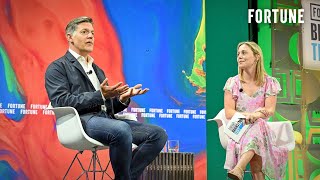
Fireside Chat: Roelof Botha (Sequoia Capital) on AI & Visual Tech with Evan Nisselson (LDV Capital)
Advice for Entrepreneurs and New Fund Managers from Sequoia Capital's Roelof Botha