How Sequoia Capital’s Leadership Views Venture Capital in Politics
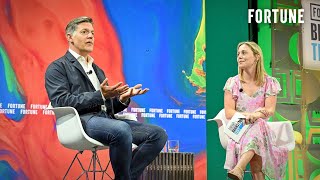
Roelof Botha, CEO of Sequoia Capital, discusses venture capitalists' political involvement, the firm's fund structure, AI's impact on investing, and fallout from the FTX collapse. He shares Sequoia's strategy and leadership philosophy in a July 2024 interview.
Good afternoon, everyone. Thank you so much for being here with us today. And thank you for the news bits that you gave us yesterday to start the conversation with. So first things first, before the news dump of yesterday, a lot has happened in the nation in the last few days. A lot of the PayPal Mafia of which you were formerly a part have come out and been influencing a lot in terms of the world of politics. We see Elon Musk is now throwing $45 million per month at the Trump campaign. Peter Thiel is now backing the Trump campaign. Your former predecessors who were running Sequoia have been political before. Doug Leone was a Republican. Mike Moritz donated a lot to Democrats. Has any of the last few days made you say, I'm going to take a stance here. I'm going to go email my LPs right now or my company right now with what I'm planning to do?
Well, that was a hello.
No time to be here.
It's great to be here.
Yes.
As an immigrant to this incredible country, I think it's important for us to be more united than divided. And at Sequoia, as a partnership, we don't take a political point of view. We're proud of the fact that we've enabled many of our partners to express their respective individual views along the way and given them that freedom. And I'd say many of my former PayPal colleagues are actually very different parts of the spectrum and everything in between when it comes to the political situation in the country. I just think it's really important for us to treasure that this is an incredible country. There's a reason people like myself want to come here. It's a reason about 40% of the founders we back are first-generation immigrants. And I think we should treasure that and treasure what's great about this place.
So that was a non-answer. Correct. So I'm going to just take it that you're just not going to answer.
Moving forward about voting or anything like that or donations. I'm not a registered member of either party. I'm much more focused on the policies that will help drive entrepreneurship. job creation and making sure that the United States stays ahead. I mean, there's so much data about how much partisan divide has sort of grown in the US over the last 20 years, and I think it's really unhealthy for the future of this country.
Agreed. Well, on another note, Stripe, you are a big investor in Stripe. Sequoia is very long term focused. We were talking earlier on the stage with some other venture capitalists who were saying like the ten year cycle is out, especially more like 15 years or even longer these days. And just exits in general have changed. dramatically in the startup landscape of late. So you had an interesting way of giving, a pretty unusual way of giving some of your LP's liquidity yesterday in Stripe. Could you just talk a little bit about that and how the changes to the structure of the fund in 2021 allowed for that to happen? Sure.
Stripe is an exceptional business, truly exceptional business. We first partnered with them in August of 2010. The company was called Dev Payments at the time, and in addition to Patrick and John, there was one other employee. who happened to be South African too, just coincidentally. So we've been a business partner to the company now for 14 years. We've seen them transcend various different economic challenges, economic cycles. They processed over $1,000,000,000,000 in payments in 2023. It's truly amazing what they've accomplished. And I love the company's mission statement to increase the GDP of the Internet. So because of our enthusiasm for the company, we thought this was an interesting transaction. There are LPs in these funds that were started more than a decade ago, some of whom have liquidity needs. Our clients are foundations, endowments, nonprofits, and sometimes they need cash to fund their activities. And so we created the Sequoia Capital Fund, as you mentioned, two years ago, to really upend the traditional fund structure, because this 10-year fund life was invented 50 years ago and is outdated, as you pointed out. And so this is an open-ended fund structure that enables us to do creative things such as offering early limited partners a liquidity alternative.
Okay, yeah, because usually we're accustomed to employee tenders, not usually the LP tender. So maybe this will be, do you think this will be something that is increasingly likely for firms to do, given especially that the IPO market is not super strong right now and people need returns?
So Space X is an interesting example of a company that has been, I mean, Elon founded that off to PayPal over 20 years ago and Space X has actually enabled secondaries not only for employees, but also for early investors in the company. So I do think you'll see other models evolve. I think the Sequoia Capital Fund is a somewhat unique structure that Sequoia was able to create, but other firms are exploring continuation funds or other mechanisms to enable this sort of secondary liquidity for private companies and LP positions.
So I want to take a little bit of a step back into 2021. You've mentioned it was the go-go days. for the VC community, a lot of money was raised. I think like double the amount of was raised for from LPs to VCs than the year prior. Now it's a very different market. It's much harder for the traditional VC to fundraise. I'm wondering how you've seen the market change from your perspective, what the relationship between VCs and LPs is like that you're seeing. I know you're a bit of an outlier because you're Sequoia, but like just in general what you're seeing. And also what does that mean for startups that are in search of capital or maybe raised capital in 2021 and now have some we have nowhere to go.
There's several questions in there, so we may need to go back and forth to make sure we catch all of them. So the sheer amount of venture capital is actually, there's still a huge overhang of funds that were committed to venture firms that have not yet been deployed. And despite the venture environment cooling tremendously since 2021, in 2023, the total amount of venture capital in the United States alone was in the order of about $130 billion. $130 billion just in the United States just in one year. Now if you think about reasonable returns that an LP might need, then you take into account the carry and fee structure of a venture firm. If you want to generate a net 12% IRR for a limited partner over, say, seven, eight year period, depending how long you need to hold the company, that implies that that $130 billion a year needs to result in about a half a trillion dollars in returns by venture firms. And if the venture firms own about two-thirds of the companies, that means that's 750 billion in company value every single year. That's 75 decacorns. If you think about some of the companies we've backed, you know, DoorDash or Snowflake or Block, they're all worth about $50 billion. You don't get 15 of those companies being created every year. So when you think through that math, the only thing that can break is the IRR assumption. So the return expectations in the venture industry are just not realistic and I keep on saying that venture is not an asset class There are a small number of firms that help disproportionately build spectacular businesses. I don't think there's a single tech IPO in the last 20 years that wasn't a venture-backed company. Venture firms do bring skills to bear to really help these companies succeed, but it's not an industry. It's not an asset class. So In terms of the, I do think fundraising has become much more challenging for firms, but I think that's healthy in the supply and demand point of view. And honestly, the best ideas will always find a home for capital. Just like the IPO market is always open. You know, PayPal went public in 2002. We were the first technology company to go public after the crash because we had a good business. And so I think the market is always available for great ideas.
Do you think we'll see VC firm consolidation? you previously saw a collapse of one or two, but do you think like will PE firms be coming in for VC firms? And what does that look like?
I never thought about that. I think it's unlikely because these are the the value of a firm really resides in the team. And so don't think it's an industry that lends itself to consolidation quite in that way. I think what you're more likely to see is that the firms shrink, slim down the fund sizes and team sizes and that some firms just to close shop altogether.
So you've been at Sequoia since 2003, formerly CFO of PayPal. You've had a number of opportunities to be a CEO yourself, to join executive teams of some of the world's biggest companies, and you've stayed on at Sequoia, and you've seen quite a bit. You took the helm in 2022, and since then there have been some quite public things that you've had to navigate. A few months in, you had the collapse of FTX, of which Sequoia was a big investor, about $213 million went poof. And then there was a bit of a public spat about Klarna with Mike Moritz previously who was on the board. It's not the easiest road that you've had to navigate, and it's also a little bit uncharacteristic of Sequoia to have a little bit of publicly facing drama. So what's up with that?
We've had a challenging few years and the thing we keep on talking about as a team is it's very easy to have a healthy positive culture in your organization when things are going well. The real test is when you face challenges. And it's been incredible for me how over the last two years as a team we've locked arms and our culture has really helped us navigate these challenges. And part of that is because of the long-term orientation we have at Sequoia. Yes, FTX was an unfortunate experience, but it's in the context of an $8 billion fund where the other returns we've had in that fund are spectacular. It's very painful for us to suffer an embarrassing loss like that, no question. But, you know, we have to pick ourselves up. We take accountability for our decisions. It was within a few days of that incident, we organized a call with our limited partners, and we spoke to them live. We took their questions because we want to own up to it. You know, one of the phrases we think about is, the cover-up is always worse than the crime. So the best thing to do is to think very long term about your relationships and to be very transparent about those. And so as a team we've navigated these.
And one of the other tougher moments was the decoupling from China and really separating out China and India and Europe and the US. So you've called that a crucible moment. I'm wondering how you made that decision. and what it means really for startups and for the world now that kind of there's just decoupling happening everywhere.
So just as a point of clarification, so the US and Europe business is one team, one fund. We used to have Sequoia India and Sequoia China. Now we made by dint of luck or genius about 20 years ago when we started those business lines, the world looked very different. China had just been admitted to the World Trade Organization and we felt as though there were tremendous opportunities for us to build a more connected world. I mean, that was the spirit within which we all were operating. And we were very successful. Our teams in India and China have built spectacular businesses. From the get-go they were independent teams, raised independent funds and made independent decisions. So I was never on an investment committee decision for an investment in India or China. What we did is we shared back office, compliance, technology, finance, fundraising, things like that. And, you know, whenever you have a decision like this, you look at the cost benefit trade-off of being a global firm with a single brand. And all three businesses along with Sequoia Heritage and Sequoia Capital Global Equities, we got together and we just reassessed whether the cost benefit trade-off was worthwhile. And it was a unanimous decision between all of us that if we think about the future, it was better for us to be fully independent with independent brands than to continue the way we had. Okay.
And so, by the way, we came.
Up with this term crucible moment. It's actually my partner Jim Gatto who came up with this term. And it's very similar to Jeff Bezos' concept of a one-way door versus a two-way door. There are certain decisions in business that are two-way doors. You can easily reverse them. And you should make those decisions very quickly. And then there are one-way door decisions, what we call crucible moments. One or two decisions a year that have an enormous bearing on the ultimate outcome of your company. And the challenge sometimes is identifying them. And even if you identify them, making the right decision. And so that's why we call that a crucible moment. It was, you know, not a decision we could undo two years later and go, Oops, sorry, we should go back to being one firm. So we changed that.
And what's the culture of the firm in making decisions like that? How do you kind of talk through it with the team, whether it's making a crucible defining what a crucible moment is or it could be arguing about a startup investment you should or shouldn't make. What's the culture of the firm in that kind of decision-making process?
So we, our COO who joined a few years ago, she remarked to me that one of the interesting things about Sequoia is that we have a culture of and, not or. And so we celebrate individualism and teamwork, innovation and performance, challenging each other while also being supportive. So it's very important for us to hold tensions hold opposing ideas in tension. And most people make trade-offs between those two. You veer towards one of those because it's easier to do that. And so when it comes to decisions like this, it often takes an individual sponsor to make a proposal, to make an investment recommendation or to spark an idea. But at the end of the day, if we make a decision, we should make it as a team because we care about making the right decision. So I'll give you an example. In 2019, we had a team offsite. and we were thinking about what it was going to take to be one of the best firms in the world in 2030, literally in 2030. And we asked each team member to write a pre-mortem and a pre-parade of what Sequoia Capital looked like in 2030. You know, what would make us successful, what would make us fail? And then we anonymized them and we circulated them to the team to read because we want the Triumph of ideas. I don't care if the best idea comes from the person who joined us two weeks ago, then we should listen. to that idea.
The pre-parade, I like that. That's the positive spin on the pre-mortem, which sounds much, much sadder.
And the reason that's important, by the way, is one of the most important characteristics in our business is imagination.
What's possible?
What's possible? My biggest mistakes as an investor has been a failure of my imagination.
So we need to talk about AI, because everybody's talking about AI. It's the thing. 60% of Sequoia investments in the last year were AI related. But at the same time, the firm recently put out a blog post that said, you know, there's a $600 billion question, which is essentially, where's the revenue? There's all this investment going in. This is a capital intensive industry, and the revenue isn't really being captured. The dollars aren't really being created. OpenAI is a bit of an exception. It's generating billions of dollars in revenue. so far from reports. But other than that, it's kind of crickets out there. So how are you justifying continue to invest in this very frothy seeming market? And how are you separating out what's real and what's just going to flame out?
We think AI is a foundational technology. When I speak to people who are really steeped in computer science, the best comparison they have is to electricity. It really is going to be a technology that infuses almost every single other industry.
Industry.
And I also think it's a technology that will benefit disproportionately incumbents, by the way. And then clearly we're investing in startups.
That will benefit from that. But because it's so expensive to just because of the capital required?
No, because the benefits of AI can accrue to everybody. And I'll get you an expense question in just a second. But, you know, breweries benefited from the advent of electricity because, you know, they're able to tap into the power grid. And I'm sure there was a time where people thought about funding companies that were electricity companies and at some point It wasn't the thing we talked about. And I thought about the fact that in 2002 when we went public at PayPal, we actually dropped the dot com from our name because at that point it wasn't a differentiator. We're a financial services company using whatever technology was available to help our business grow. I think the same thing is going to happen to AI. I think in two years, if we sit here, I won't be able to tell you what percentage of the last 12 months investments were AI because I think it'll just be a cybersecurity company. or a consumer services company that happens to have AI as a key enabling technology. So I think the rhetoric around that's going to change a little bit. It'll just be a pervasive technology. Now, to your question about the capital intensity of this, most of the big CapEx is actually going into the foundational model training, and it's being spent by the cloud service providers that are in a bit of an arms race with each other. And from a game Theory point of view, it's actually quite rational for them to spend this amount of money, because if one of them doesn't, and the other one wins the prize of AI, they may be mortgaging their future for the next decade. And two thirds of all the capital that went into foundation models in 2023 was invested by my favorite four letter word, MaNg, Microsoft, Amazon, Nvidia, and Google, not by venture capitalists. It's actually the corporate VCs that are investing this money, and they're using it in a clever way to turn their balance sheets into income statements. Because they're using the cash they have, they invest in companies that need to spend it on cloud resources, which means they get revenue back. It's clever. It's apparently legal, but we can't compete with that. The thing is very interesting for us, though, is this is going to yield an enormous dividend to all the application companies. And that's where we spend a lot of our time investing. So the foundation model companies, OpenAI and Anthropic and Mistral and, you know, robotics foundation companies, many of those, they're very capital consumptive. Our funds just don't have the resources to fund those. There's a layer of infrastructure software above that where we think we can build really interesting businesses. And we're investors in a company called LangChain that helps you chain together different applications. A company like Fireworks that helps you with inference. That's an interesting layer. The most interesting in my mind are the application layer companies. And whether it's healthcare or financial services or cybersecurity or education, there are just so many different applications that we've seen.
So, I mean, we could talk about that for much, much longer, but as we're winding down here, you guys are so good at picking founders and being close to founders and picking companies. I'm curious how you're thinking about picking founders for the AI future and what they're building. I mean, you, another portfolio approach you seem to have is investing in Elon. I mean, you're in like five or maybe all of his companies. I think it's like at least five of his seven companies. He's certainly one player in it with X .ai, they just raised, I think, a $6 billion series B or something, something really early. And then there's Sam Altman, who you're also invested in. How are you looking at these people and investing in them? And how important is that to the AI future?
Well, I think the characteristics we look for in founders have been the same for 50 years consistently. And a lot of that is looking for the quality of the idea and the unique insight that the founder has. And the founders we back really come in a variety of shapes and sizes. Steve Jobs originally was not funded by other people in San Neil Road because he wasn't wearing shoes and was unconventional and yet Don Valentine saw through that because he saw the quality of the idea. And I think to this day we invest in people who dropped out of high school and people who have PhDs. We have some of the companies we're backing in AI specifically are some of the world's leading researchers in a particular domain. You know, the robotics foundation company we invested in Two professors at Carnegie Mellon truly world experts at what they do. Many research papers that they publish. But then we listen to a founder who has a bright idea for an application. They're fresh immigrants. They're a team of three. And they have no academic credentials that we can easily verify. But the idea is interesting, and they have customers that can reference the quality of what they're producing. And so our job is to not to look at the surface level of what people have accomplished, but rather to look at the quality of their idea. And we often want to focus on the eureka moment. When did you come up with this idea? How did you come up with this unique insight? It tells us a lot about the founder, why this idea has legs.
So you're in an interesting position, Ruloff. You are at the top of arguably the world's greatest VC firm. That's kind of a scary position to be in. I think I would rather be an underdog than having to defend the number one spot. So I'm curious how you think about that. You've said that winning isn't everything, it's the only thing. How do you defend the top title? How do you not be the guy.
That screwed it up after five decades of success? Because we're only as good as our next investment. And honestly, given what we've experienced over the last two years, we did feel like underdogs. I feel like an underdog. I was an unknown immigrant. Most of the team members we have at Sequoia, we think about the fact that we're all lucky to be at Sequoia. and that it's a privilege for each of us to wear the Sequoia jersey and that we need to fight incredibly hard to win. And one of the phrases I repeat at all hands meetings at Sequoia over and over is that nothing wilts as fast as laurels that have been rested on. And so we don't take anything for granted. You know, the exercise I described where we did the pre-mortem and pre-parade for Sequoia, literally one of the pictures we used as inspiration said, Autopsy, 2030, Sequoia is gone. what did we screw up? What did we get wrong? And we keep thinking about that to make sure we stay at the forefront.
And what were the screw-ups? What's the worst-case scenario?
I think complacency is probably one of the biggest risks. The common thread in all Greek tragedies is hubris. And so that's the thing we need to guard against the most.
Well, we will be watching and excited to see what your next investments are. So thank you so much for spending time with us here today.
Thank you so much for inviting me. Thank you, everybody.
More from Roelof
Sequoia’s Roelof Botha on Decision Making, AI, and the Next Trillion Dollar Markets | Ep. 28

Roelof Botha on PayPal Panic & Sequoia’s Long-Term Strategy | The Library of Minds

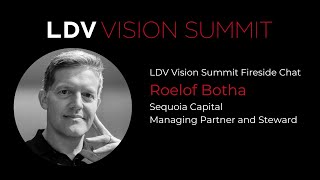
Fireside Chat: Roelof Botha (Sequoia Capital) on AI & Visual Tech with Evan Nisselson (LDV Capital)
Advice for Entrepreneurs and New Fund Managers from Sequoia Capital's Roelof Botha
Investing with the Best, Founder-Problem Fit, Pre-Mortems and Pre-Parades, and More — Roelof Botha