Shhhhhh! Don't Tell, But We're Sharing the 5 Top Community Building Secrets

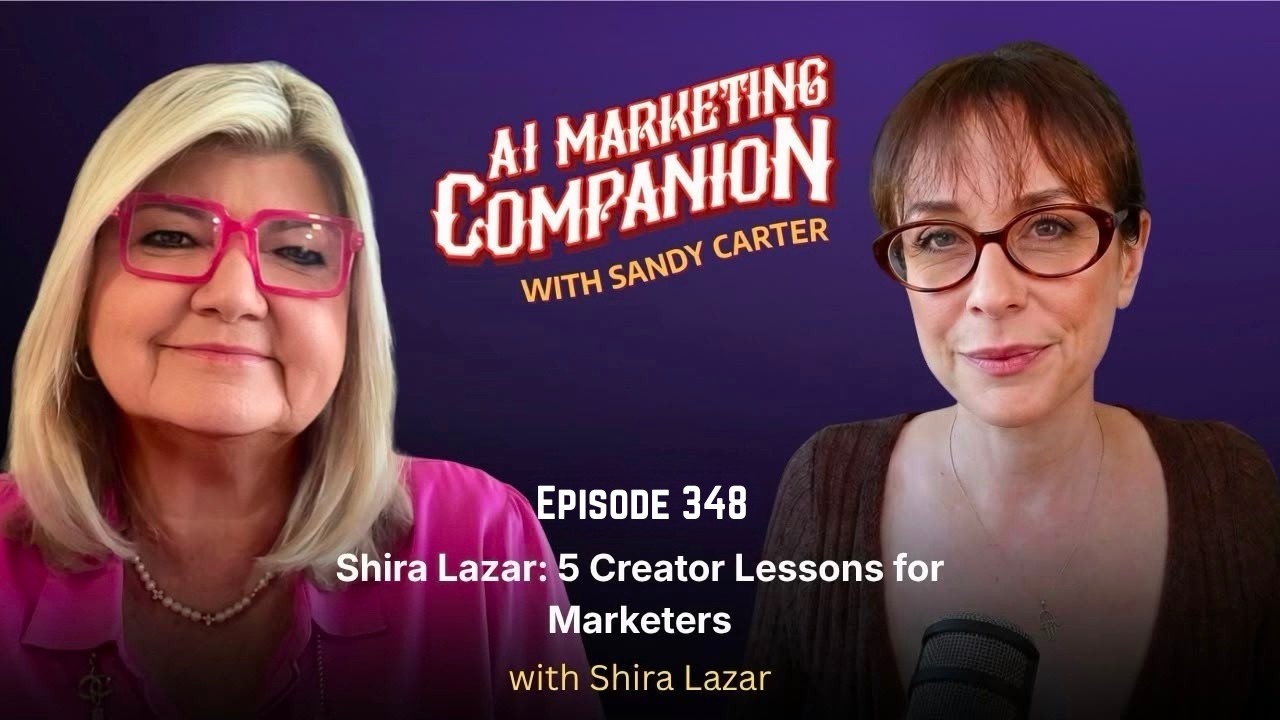
In this Marketing Companion episode, host Sandy Carter interviews community‑building expert Dana Malstaff, founder of the Boss Mom movement. Dana walks through the five core secrets that propelled her from a modest Facebook group to a 75,000‑member community and a paid app on Circle. The conversation covers: (1) finding a narrow, emotionally resonant niche; (2) positioning the community facilitator as a peer rather than an authority; (3) nurturing members through identity, shared vision, and trust before converting them to paid offerings; (4) migrating from a free, platform‑owned space (Facebook) to a proprietary, controlled environment (Circle) to protect brand and deepen engagement; and (5) becoming micro‑famous in adjacent spaces before launching your own community. Along the way, Dana shares practical tactics—podcast outreach, in‑person events, “micro‑fame” collaborations, emotional niching, shared jokes, and the importance of a clear purpose statement. The episode also touches on the shifting market where trust outweighs credentials, the rise of AI‑enhanced tools, and the broader trend of community overtaking technology topics at conferences like SXSW. The discussion ends with actionable advice: write down what you wish were true and what’s broken in your space, then rally people around that shared vision.
Chapters
Well, hello, hello, hello! We are back again with Marketing Companion. I am so excited to be with you here today, and we've got a great session today on— shh, don't tell— but we're going to be sharing the top 5 community building secrets. We've got Dana Malstaff who is with us today, and she is going to be chatting with us about all of her secrets, and it's going to be amazing. And as always, our podcast is brought to you today by Brevo, which has AI-enhanced enhanced customer relationships. I use it today in my business, and if you mention Companion when you buy it, you get 50% off of 3 months, which is pretty incredible. Um, you can get a single view of your customer journey. And we're also brought to you today by Semrush, another product that I use personally in my company for AI search visibility. Um, they've done some great research, if you haven't read it, about AI search and when it will surpass regular search. And tracking your AI visibility score is so powerful with Semrush as well. So make sure you check out both Breville and SEMrush as we go. So now back to our regularly scheduled program. So tell me a little bit about what you are doing, especially around Boss Mom. And I was just so impressed when I first met you about your 75,000-member community that became a movement. So I'd love for you to give the listeners a little bit of background on how you did that and kind of who you are.
Yeah.
Yeah.
Well, I mean, I'm, I'm in my mid-40s, so I feel like who I am is an existential question. I'm, I'm constantly looking to my business and my kids are growing up and all this. But when I got started, I was, I think, a lot like most people either in their career or in entrepreneurship, which is I was trying to figure out how to do something that felt meaningful while also do something that I was good at. And figuring out, like, I'd been in career enough to, to, to know I wanted to want to get up in the morning and go do something that was big. I ended up getting with a mastermind connection of people I had met in an event, and I— one of them wrote books, you know, was a book coach. And they said, hey, I'll give you a great deal for anybody in this group that wants to write a book. And I was a journalism major, so I always wanted to to write and sat down and I thought I was going to write a marketing book. You know, I come from a marketing sales messaging background back in corporate, and I had had my son when I quit. And when I say quit, it's like any entrepreneur or any person who's been in small business, startup businesses for a lot of their career. There was an instance where the husband and wife were getting a divorce and everybody the husband had hired was let go, right? Which is all the marketing department. So I had kind of told them like, hey, I know what's happening. I'm going to go do my own thing. I'm going to be a consultant somewhere. And we had this really nice party. It was a really good lesson for me when I was in my 20s on like how to manage uncertainty, you know? And so I was starting my own consulting career. I had immediately gotten pregnant because it's when you not— when you don't work 14-hour days and all of a sudden have time, my body was like, hey, we've been wanting to have children. We should do that. So I had this 5-month-old son. I thought I wanted to write a book. I was gonna write a book about marketing. And what came out was the mom side, was that I am a— I, it's not even that I'm a career-driven, I'm just somebody who wants to build things, do things. I love dynamic conversation. I love think tanking. I love solving problems. And I also wanna cuddle with my child who's just like this lump of adorableness. And I wasn't sure how to merge I was very clear on what my value was monetarily. I was not at all sure what my value was as a mother. And that really grappled with me emotionally and mentally of what is my place here if I have multiple things that I want and they are very counter to each other. I know I didn't want to be a stay-at-home mom. I know I didn't want to just leave my son and not ever see him again. And so I ended up writing the book Boss Mom back in 2015. And it was right when I was actually pregnant with my daughter. So my son was 1 and a half. I was pregnant with my daughter and I ended up writing this book about how do we do both when, when for those of us that are driven to do so in a way that, that makes us feel like we aren't abandoning either part of our, of ourselves. And what's great when you're starting something for any, anybody listening is A lot of what we try doesn't work, but sometimes things we try really lands. And Boss Mom just took off and it did really, really well. Now, when I say took off, it means I was dedicated to a podcast every week.
I was—
I, the very first hire I had was somebody that for 2, you know, for 2 hours a week would go out and just pitch me on podcasts. I, you know, I was, I was in it, I was doing the work, but it blew up. We started the Facebook group. Decade ago when, you know, I think Facebook groups were really burgeoning in a really great way. And we never did ads. We just— it was all organic. And, and I'm really good from corporate in the community building and what drives humans to engage and connect and build loyalty. And we just started going, oh, and it just started to grow, grow, grow, grow, grow, grow, grow. And it originally, it was about really just a space for us to build businesses and have babies together. And we did a lot of sales and marketing products that we would sell to them that I would build. And, and then we did in-person events, right, all the way up until COVID, like all of those things. Once COVID hit and once dynamic changed and things in my life, my kids started to get older and what I wanted to do, we've shifted since then around what our real goal for growth strategy is for Boss Mom in terms of really becoming the GOAT, so to speak, for moms with businesses, or really moms just with desires outside of motherhood. Um, but the beginning part was some luck, some doing, and some just this yearning to be— figure out how to be helpful for a group and community that I wanted help with at the same time, if that makes sense.
Yeah. So it sounds like, if I could summarize it, um, It sounds like your first secret to community building was one, you found a good niche that you cared about. You didn't try to go after everybody. You went after boss moms, people who wanted to work and wanted to be a mom like myself. I have two daughters. And then you listened to their requirements and then you did what they needed. So in-person events, podcast. Would that be a good way to summarize kind of your first community building?
Yeah, well, I think the— there's something that we tell a lot of people, and we, we tell them, know what your scars and your wounds are, right? For me, figuring out how I wanted to be a mom and, and do things, that, that was a little bit of a wound, right? I hadn't quite figured out in the first 7 years of me doing Boss Mom. My wound was, I don't know what I'm doing, so I'm going to build a community of women where we kind of don't both— we're all figuring it out together. I was not the expert, I was the facilitator, and being very clear that I wasn't coming in teaching them how to be a better mom or how, you know— no, it was coming in and saying, we're going to build this together. I married that with my expertise in the marketing side and the messaging side about how to actually grow their business. So the— I'd say the first lesson is recognizing that a community is facilitated, right? If you're gonna come in and you're gonna teach them something, that is in partnership with the community. But a community that really thrives has a shared vision of what they're all building together. And the best communities are where you are learning with them. You are not, I'm the end-all be-all, I'm at the top and I'm gonna tell you how it is. It's let's do this together. And then you're in service asserting all the parts. So I've had clients where they're like, yeah, I, I do real estate, but I started this community over here for moms or dads or, you know, people who love to run or whatever it is. But then they end up 10x-ing their real estate business because it's adjacent. And I think that's the real thing, is if you're going to start a community where it's just about you teaching, that's not a community, that's a membership, that's a, you know, a mastermind, that's a group coaching program. But, but a community is around a shared experience together, and then you can sell them things all within that. And I think that's, that's why it grew so well, is because I was in it with them.
And even this morning I was talking to someone who was going to do a community. They weren't really part of the community, but they were going to facilitate. How do you feel about that? Because you were a mom and you were a boss, so you were part of the community. How do you feel about someone starting a community that they're not really part of?
Um, I think that it's hard to really have your finger on the pulse of what's going on if you're not in there. I think what often happens— I was just at an event for Circles, who builds communities. It's what we built our, our Boss Mom platform on, and we were all there as community builders. Talking, and they were talking about who do you bring on to manage the community, like do these things. And everybody said, you find the person that's already in the community that everybody trusts the most and you level that up, right? And so I do think you can absolutely come into a space you don't know yet, but I think if you don't understand, like when we start talking about nurture messaging, where we start talking about how do you build connection and belonging and trust, You have to make them feel like they're not judged for who they are. So I think it can absolutely work, but it has to work for you under— you have an understanding and empathy, like you have an understanding, a non-judgmental understanding of who they are in that particular atmosphere and culture so that they can feel welcome. Because if there's any instance of, like, if I brought somebody in to help me run Boss Mom as a community but they actually believe that your children are your purpose, that you shouldn't want anything outside of it. And that— I had somebody tell me before, like, I love my kids too much to work. And I was like, why? Wow, I love my kids too much not to work. And the fact is, neither of us are wrong or right. It's just a way of being and experiencing the world that fits with who we are. If I brought that person into my community to run it, everybody would feel judged and be lose the vulnerability and openness. So I think it, it can totally happen. The only thing that has to always be aligned is that they recognize who this audience naturally is and doesn't judge them for being that way. And then I think the rest grow over time.
Okay, I think that's interesting. Let's pick back up on your point about nurture to convert, where you started to talk about that. So that's essentially leading with connection rather than selling. That's how I read it. How does nurturing actually build loyalty up and what does that look like inside of a community?
Yeah, yeah. Well, back in the day, you used to just be able to say, hey, here's my thing, it's in the newspaper. If you want it, come and get it. There was a lot of competition like a decade or so ago when, you know, I remember when there was no videos or lives or things on social media, right? Like, so even just a decade ago, we weren't even remotely where we are now in terms of selling. I don't think straight-up selling works anymore. And I think most people in most industries that I've talked to will say that, and they recognize that nurturing is no longer a nice-to-have, it's a necessity. And what we mean by nurturing is creating shared beliefs. Feeling connected. Like, like, trust is the new commodity. So people aren't going to buy from somebody they don't trust. And oftentimes we're finding that what they buy from is they'll buy the product from the influencer who says, I use that face cream, I use that, you know, that printer, I use that whatever it is, I buy this car. They're saying, this is what I love, and they go, well, I trust them, therefore I do it. So the nurturing can also happen in, in sort of, you know, outside inside the circles of the actual product. Nurturing— when we do nurture to convert, there's 4 main pillars: identity messaging, nurture messaging, results messaging, conversion messaging. And identity messaging is really around who are you and who are they, right? What's your stories, your, you know, tone, your things, and what— who are they, what's their emotional, what's their ideal client scale, all those things. The nurture messaging, which is the most popular part of it, because it goes to— it goes to how social media and a lot of messaging works right now, is what's your shared vision of the future, what's your shared opinions about what's broken with the world, and what's the permissions and belonging that people like us do things like this and that's totally normal, versus being in a circle where you feel crazy because all the things you love to do or care about, people are like, you're crazy. So it's That's that nurturing. And then results messaging is us figuring out that how do we name the results of the thing and the path that we give you. So if I go, I want to help you anti-age naturally, then if I went and showed you my program and my program and my offerings are all around injectables and Botox, then you're going to be like, wait a second, that doesn't fit. So it's like, how do we match our offerings with the belonging we've just created? And then really the conversion messaging is how do we start talking actively in a way that does sell. Back in the day, you used to say, I have good things, it does good stuff for you, I'm going to show you, it's going to be great. Nowadays, we actually have to denormalize the pain for people, right? People go, well, I'm achy, but I'm over 40, so it's expected. I haven't slept in a year, but I've got kids, so that's obviously that, you know, like, yeah, I'm not happy in my marriage, but who is? And so we we've normalized these pain in our lives. So instead of people going, oh yeah, I'll buy that thing, I'm ready, we have to actually in our marketing recognize the verbiage we need to use to help them see that change is possible, that the what they've been told is just is what it is. That's not true. That's a lie they've been told. And so Nurture to Convert is so much more about understanding how humans work, especially in today's world so that we can sell things we know will change people's lives, but recognizing we're all so inundated with so much that we don't know what's possible anymore. We don't know what's real anymore. And I don't know that we trust ourselves anymore. And so we're yearning for someone to see the potential in us and then help us move towards what you have. So we're not We're not selling things anymore. We're actually starting movements to get people to believe in themselves again so they'll even be willing to make the change we know is possible through our products.
Yeah, I want to go back to one of the first things you said about trust. I was just looking at the latest data and it says 90% of consumers will only buy from a brand or a person they trust.
90%.
That's up 20% from last year. That's a huge, huge, huge jump. And 81% of customers won't engage from a brand they don't trust, and 87% will pay more for a brand they trust. So I think the question then for me is, how do you earn that trust? Does it just take time? Or I was listening to someone this morning on a TikTok video and they're like, I'm a PhD, blah, blah, blah, blah, blah. Do I have to have like that title and that education to get people to trust what I'm saying is true? So how do you build trust? It's like the question.
Actually, I think the part about your education matters way less, which could be really frustrating for people who spend a lot of money and a little bit of time. I've had— I have some colleagues and, and clients who are pharmacists who have wellness supplement companies and wellness communities that find it infinitely frustrating that somebody who has no background but lost 100 pounds has a bigger community following and trust built than they do. Because, because I think we're actually in the market where large companies, large brands, large education systems, governments, or whatever it is— I don't know that, like, I think we're moving towards a distrust of things that have been around for too long, things that have been settled for too long. It's very disruptive, you know, wanting to disrupt the status quo, really question everything, which can be great when it comes to trust, because then what it means is openness and vulnerability wins the day. Now, what that doesn't mean is complete transparency of everything that's ever happened and ever was. Right? Like we call it the circles of understanding. Like for, for, for those of us that are in, you know, what, what corporate would consider smaller companies. So on probably under $20 million companies, we're generally the face of our brands. And so I don't have to share with you that, you know, that my kids were sick last weekend, or I don't have to share with you that I cried for something if I don't want to, but the vulnerability of what my audience does feel like they need to know in order to trust me. Like, that's what's winning today. So your education, your background, even your authority in a space matters way, way less than showing that you understand your audience. And a lot of that understanding, like the third grader, the fourth grader is king quote, is what they want to know is that you're not so far ahead of them that you don't understand them. Which is why I like to think of— I think a lot of the really big corporate companies that go, yeah, there's no way for me to show that, we've been around for 100 years, we're like a billion dollar company— they're going to influencers and they're doing— putting a lot of their marketing spend towards somebody who is relatable, because trust is relatable. I remember the very first time somebody hired me, they're like, I didn't buy Tony Robbins' program because I bought your program, because I don't I don't think he understands me, but you're closer to me. You understand me. And I think that's why the age of the micro-influencer is so prominent right now is just relativity to like understanding who we are in whatever the area is. Like, I'm going to hang out with women who are in their mid-40s trying to figure out how I'm going to age. If I'm hanging out with somebody who's 20 years old, right, and it's telling me how easy it is to look the best you've ever looked, I'm gonna look at her and be like, yeah, obviously. I also didn't have to try it in my 20s.
It's so funny, I just saw an ad, um, it was on TikTok this weekend and they were having this new makeup and every influencer they had was 20, but they were targeting 40 and above. And so all the comments were like, well, this is great if I was 20, but I'm 40, so why don't you show me something like that. So such a, such a true statement, right? Making sure that you're relatable and that you're leveraging people who really believe in what you're doing. I think that purpose statement is really interesting. Now, I know that you had a couple of really interesting moments. One of the ones I read about was when you shut down your 75,000-person Facebook group, and then you launched Boss Mom, which was a paid app. That's a big one. I'd love to know about that because most people like myself would be like, oh, that's so, so hard, right? It's terrifying almost. What did that teach you about branding and community?
Yeah, well, I think everybody needs to get more and more and more clear about the purpose of what they're doing. And what I mean by that is I know plenty of people that have started communities, right? Quote unquote communities, which in a lot of, in a lot of times they understand they're not really creating community. They're creating a funnel. They're creating a space where they can pull people in for free. They can get them all to be there. And then it's a captive, somewhat captive audience, and they use it as a lead generation tool. Right? And that— there's nothing wrong with that. That can, that can work.
Right?
Although I think that is working less and less. Yeah, I would say less and less.
Yeah.
And for me, I live in the world of movement making. I think it's way easier right now to start a movement than it is business. I think it's been that way for a decade, but now I feel like it's way easier because people are feeling so isolated, so disconnected, that being a part of something they can feel they belong to gives them purpose. And if your, your brand can give them a sense of belonging and purpose, you got, you got loyalty up the wazoo. Like it's great to have. So with Boss Mom, the Facebook group, we've always had an amazingly engaged community as one of the top engaged communities. I would get invited to speak all over to talk about how we did it. I'd, I'd help other people do it. But what we started to recognize is that it was always going to be a container in somebody else's playground. It was always going to be this thing where I was on Facebook Space and it was just this community that was part of a million other communities and, and more bots, more spam, more challenges that Facebook really was not caring to help anybody with. And so I, I actually went and saw the second Dune movie, um, it was like 2023, I think somewhere right at the end of 10th Grade. And I went by myself because I love going to movies by myself, which is a total odd thing for some people. And I came out and I— there's this scene where he really, for all intents and purposes, has to sort of die in the version that he was. Kill off is not right. To make a decision is to literally kill off your options. He had to kill all these things in order for this a new version of himself to be alive. He had to give up these things. And what we were originally going to do is we were going to launch this paid app for Boss Mom, and we were going to keep the Facebook group. And what I realized in watching that movie— I came out and I messaged my whole team and I was like, we're shutting the Facebook group down. The only way to build what I really want to build, the only way to change the face of how moms market and engage and feel like they can actually do both. The only way to do that is to make our own playground. That's it. We got to make our own playground. And I think there's a lot of companies that end up doing that, go, wow, it started out, I built a community, it was fun, or this course or this program, this thing. But then you start to recognize you have to be really thoughtful about how you build it in order to build the brand you want. And it— and as it grows, you have to have way more control of how it's built and way more control over how it's seen and what it does. And for us, clicking on somebody else's social media platform to get to us was the barrier I was no longer able to keep in order to build what I wanted to build. So Boss Mom is— if we had just wanted to build a community, I had a ton of people say, Dana, you know, just keep it and it's a good lead, you know, source and all these things. And I'm like, but it cannibalizes what I really want to accomplish. And if you really want a brand that means something, you're going to have to sacrifice things that seem like they're the easy win for the thing that might feel harder. But 10 years from now, when everybody goes, "Boss Mom, yeah, it's a household name, obviously." You know, of course, of course, all moms, when they go to start a side hustle or a business or anything, they're going there. Of course, when you buy What to Expect When You're Expecting, you also buy Someone Becoming Boss Mom, which is the book we're working on. Yeah, like all of those things in my mind seem so obvious. And being in somebody else's space to have the community is no longer serving our larger brand goal.
And it's worked out really successful for you. And now you are based— you mentioned earlier you're based on Circle, but still the entry point is Boss Moms. It's not Circle. Yeah, like Facebook, right?
Explain a little bit about that. Yeah. So Circle is a platform. There's Mighty Networks, there's multiple different ones where they— which I think is the up and coming. I think we're going to move into a world where— and I was having this conversation at the event I was just at, we were all community builders. I think for anybody in my age group and above, so 40s and above, we go, oh my gosh, another login. Like, why would I? I can't even remember the login.
That's exactly what I was going to ask you. How did you overcome that?
Well, for the, for the younger, I think that the— it's going to be more natural for us as we move forward. But for the, for the people that are up and coming, I think they are very specific about only being in the communities that matter. The idea that you're in 50 Facebook groups is no longer of interest to people coming in and really experiencing. They want intimate, they want it to feel real, and they want feel private, right? So there— and so platforms like Circle School, Mighty Networks created a universal login for all of the individual communities. So it's replacing Facebook in a way that you could log into Circle on desktop and see the 7 different communities that you're in and be really thoughtful. I think it's the community course side of Substack. It's, it's a very similar business model. For us, we paid the money to make it our own app, so we, we leverage their really well-done tools on the back end, but there is no evidence of Circle on the front end necessarily for us. There's a Boss Mom app you download, and all of those tools you can do that. You can pay the premium price to say, hey, I'm not going to have people go into your app to do it, they're going to have it where it's my own individual app, and I have control over everything there, but I get to leverage all of their tools for community building. And they're building some really cool AI components of— there's a new connection feature so that it can actually— AI recommends other members you should probably know, and you can start to actually network and actually have a space in your own profile of the people you're connecting with. They have the ability to just find people near you so people can connect locally. Yes, there's some really cool things that I think these tools are going to be doing that help facilitate connection and community for the businesses that are really wanting. And we're seeing, I'm like, from the event I was just at, Oprah, her digital community is on Circle. So I think more and more that you see—
Did you get to meet her this weekend?
No, it was just the people who built her community.
That's really cool. I love that. So I've heard you say a couple of times in this podcast and in your book, you talk about you've got to become micro famous in a space before you try to lead your own community. Break that down. Like, what are the steps that you should take before you launch a community?
Yeah. So what we find most often, I mean, there's two camps. If you already know the business, the audience, you already have a company, you already have a business or a company, and all you're doing is launching your own community, but you already have a whole base going, right? Then you can just go straight to launching your thing. You're already known in your space. But for a lot of people that are getting started, or they're doing something but they're offshooting over here into this other area, we see that a lot. A lot of people are like, hey, I'm this amazing lawyer forever, but I'm finding I really want to go and do this life coaching over here. Or we have this company, I have somebody who's friends, like, she's got this, you know, $10 million business in life coaching and wellness coaching certifications. But she wanted to launch a beauty brand really around this, this being the best version of ourselves as we are getting into our 40s and 50s. And so when we're looking at those and you're starting something that's more new, you can launch your own thing, but you don't have anybody that cares, right? So community takes people. And, you know, it's like, there's a good TEDx talk, I think it's called Make Me Care. And it's really around like, that is our goal as storytellers. When you're watching a movie and you go, wow, I just really didn't care that that person died or lived or fell in love or didn't. But I remember watching one movie and my daughter at the end of it, it was like the bad guy, like, got his uppance. And she turned to me and she goes, that was so satisfying. Or when somebody, they finally get to reunite and fall in love or whatever it is, and you're like, that was so— like Lion King, he finally like takes over the kingdom. You're like, I am so invested in this movie. Yeah, it's the same thing from our marketing. Like, we want them to be invested. If you don't have that right off the bat, you go into other spaces and you become micro famous in somebody else's spaces. It's often an adjacent community or an adjacent space, right? And so you're going over to. And a lot of those can be Facebook groups. And a lot of, in a lot of ways nowadays, what I do is I go and I do an expert talk or a collaboration with people in other communities so that I can kind of talk about my area of expertise, but I'm leveraging that. It's a similar component to getting featured on somebody else's podcast, but it's more embedded into their space. Now, if we have, like, we have people in our space that are like, hey, if you engage enough, you can come in and do certain things. But even if they're just in the community, like if you just showed up to— let's talk about you went and showed up to a rec center or the, you know, the sports bar or anything like that, it becomes your cheers. You become known because you're there enough, right? People start to know your face, they start to know your name. And then when somebody else comes in, it's like, oh, I need this thing. They're like, oh, you need Sandy. Sandy's going to help you with that. Like, you got an AI question? Yeah, Sandy's your person. Because you're going in there and you're becoming— you're there enough, talking about the same thing enough that you become known. So the number one key to that is you have to know what you want to say over and over again so people actually know you. The biggest mistake is you go hang out in a place but you talk about a million things, and then you're just another person in the community. You got to come in and really make the effort to answer that one— it's AI, it's like answer the AI question— going in and saying the AI thing. So that all of a sudden everybody goes, oh yeah, Sandy's our person. Like, that's what you need. And that— I think that's a distinction. The micro famous makes people care about you so that when you're then telling them about your thing, that trust is already there, but you've leveraged it in other spaces other than your own.
Yeah, you know, I just taught a personal branding class, and the one thing we always talk about is first you have to know what you want to be known for. Like, if you want to brand yourself, I mean, it seems so obvious but people, it's hard. It's hard to figure that out and to sort through it. And I have a great story too. A friend of mine worked at IBM, but she loved to make jams and jellies. I know that's kind of strange, right? But she on the side started having this community. It started with 2 people and then it was 10 people. Now she's got this huge community and huge business. She just left IBM to do a jam and jelly business and she's doing it great. She's doing a great job at it. Um, so I love that you talked about how your main gig could be very different than your community gig, and you can build that up over time as well.
I thought that was— yeah, I think it's way easier to build a community if it's around a topic you actually enjoy. And by the way, jams and jellies are perfect if we know what the trends are in marketing right now, because what people are want way more of, like farming homesteads, preparing for an apocalypse, right? There's a girl in my community that she helps you forage, like if there were no grocery stores, you'd go out. And she's like, yeah, we're doing it for fun, but she's like, what I'm finding is all these people are like, I should learn how to survive in this world because it's possible someday I wake up, we don't have the internet, or we don't have something. And so there's an interesting component of people wanting to— to— we've gone all the way with AI and all things to go to go, we need to know all the tech, to going, if tech takes over, what value are we going to give? I should be able to grow my own food and make my own jam. So it's really interesting to see what's blowing up in terms of interest and excitement. Some of it is self-sufficiency is hot right now.
Yeah, it's so— and it's so interesting too, her— she was using her name, and then one day she was on the, on the call like this and she had her two nieces come in and they were like, "Auntie Jane, Auntie Jane." And so then people in the community started calling her that. So her whole brand now is around Auntie that came from her nieces. Anyway, I thought that was really kind of cool. I know we're running out of time, but I really want to talk about this whole, you know, aspect of emotional connection. So community and emotional connection versus emotional niching. Um, would you take a couple minutes and kind of explain that to people?
Yeah, so one of the things we find in marketing, in traditional, more traditional marketing, is, is they will tell you you're going to find your, your ideal client. Like, you're literally mapping out, they've got 2 and a half dogs, you know, they're this exact age, and you were, um, the, the demographic of it. And, and yeah, so, so there's this very specific persona. And what we're finding in the market right now is, is that none of that matters. It's actually really confusing who your ideal client might be. We're finding that your demographic reveals itself, your name, your brand, everything that all reveals itself based on what people want. And if anybody watched the commercials during the Super Bowl, like anybody that's over 25 I was like, is everybody drunk while they're making these commercials? Like, I was— you're watching it going, I know why, I know why. Because Nutter Butter had an insane, almost psychedelic, you know, commercial or a real go viral. Like, like Burger King goes— and I know Mark talks about this— like Burger King goes and like sings his stuff, you know, sings off-key, and it goes wild and crazy. So recognizing what's working for people. But for those of us in this space, we're going I don't know who my ideal client is. I don't know how to actually map that out because of the way the landscape is. So emotional niching is a way for us to start to map out how our audience feels, what they like, what they don't like, phrases they would use versus phrases they wouldn't, right? Like how trendy are they versus not? I was just at the event and they said IRL, in real life, and I was like, I'm so I'm sorry, honey, I am in my 40s. We don't truncate words or use acronyms. It's in person like God intended. Like, I don't— like, I'm sorry, but you're like— it's like somebody at the front of the room being like, IRL. And I was like, no, no, no, I cannot— I cannot take you seriously if you're not using actual words. And the funny part is, is that my audience is going to be a certain way than other audiences. So the emotional niching part is recognizing phrases they use, phrases they don't use, things that they like to say and don't like to say, visuals they like to see and don't like to see. Like, my audience wants to know that even if I didn't shower this morning, I'm still smart. They want that validation, right? So if I show up perfect all the time, then it's not going to be relatable to who they are and what they want. The way that translates into actual connection, right, is that your emotional niching and the way that you show up to your audience and recognize how they're feeling, and they can see that in your marketing, see that in your messaging, means that when they come into your space, they bring that culture with them. And so everybody already knows how to act. Everybody already has a shared language. Like, I was talking about this at the event I was at. The two things that decide whether or not your community is going to live or not is shared secrets and shared jokes.
Oh, that's it.
Share tips and share jokes. You want inside jokes, inside things. You want terminology that only your audience knows, right? You want things that only your audience gets to joke about, right? Like, everybody wants to be a part of the clique where they get to go, we know and you don't, right? We'd all love to live in a world where everybody wants every— but we don't. We want exclusivity in some. And, and I don't think that moms over here are going to get me, but Moms get, we have our little, you know, our little way of talking. So the shared connection is an extension of the emotional liturgy. If you're out there just trying to catch a very specific demographic, you're not going to do it by stating the demographic. You're going to do it by recognizing who they are in their day-to-day life, and then that gets translated into community so that those inside jokes, inside secrets sort of happen naturally. You just help facilitate them and give them a name. And then it just starts to grow on its own.
I would have to say that Amazon does this really well. They have— when you come in, they tell you a lot of the inside stories and they track the history so well that they're really bringing you in. So you want to feel like that insider, I would say. And their philosophy on marketing, which was so helpful as being, you know, the chief product officer for a group, was make sure that you're marketing to the person. Like, if you say, oh, my, my target audience is IBM, that's too big. You say my target audience is an industry, that's too big. Tell me about Fred, who is the chief data officer inside the company. That's the person you want to target. So I think that they did that, um, really, really well.
Well, also, by the way, with Amazon, when you see women like me, that catch me in understanding how I use Amazon, right? You get— I've seen a real ones where there's a woman and she's a mom and she's got a business at home and she's like, oh, um, I've got to support my other women, like I'm gonna buy this thing off Amazon. Like, oh, okay, I've got to do this. Like, of course I've got to learn how to do that skill. And so all of a sudden her husband's walking by and just every day is like a new Amazon package and he's like, what do we do? What do we buy? There's another one with a husband where he just gets on and kind of jokes acts like he's his wife. They're this like comedy duo and he gets on and he's on a vibration plate and then he's got, and then all of a sudden he's got a huge thing of water and then all of a sudden he's got a rucking pack and he's like, oh, this is the next, this is gonna work. Oh, this is gonna work. It's like, oh, just had a new package. Like that's gonna be the next thing. And she's laughing because she's like, yes. And I'm not done yet. I have no idea what's coming next. And I do think that recognizing from the emotional part of we're constantly yearning to figure out what we can do and what can work, which means we're constantly buying and constantly figuring it out. To the outside world, it looks like we just spend too much money and we're fickle, but to us, we're testing. We're like the ultimate— moms are the ultimate testers because we'll tell you what we pick up or don't. That's why Amazon loves us so much because we're always— we're already home and we'll just keep buying things as long as people start showing us ways we can get better.
Yeah, it's so funny because This Christmas we have a girls group and we do Secret Santa and everybody was like, "Oh, Sandy, I want to be in your group because you buy all this different stuff that are female founders and we want to try what you try." So it's back to that same interesting point. Well, I have to tell you, this time has flown by so fast. It really has. I could talk to you all day. You are truly phenomenal. I mean, I learned so much. So much myself today, I have to say. Um, what would be like your closing statement to leave with anybody who wants to start a community today? What would be that one nugget that you want them to take away?
Yeah, I, I think the biggest thing is to sit down and think just two, two things. You say, answer the question, I want to live in a world where— write down a bunch of things that you wish were true but aren't in your space. And then write down what's broken, right? Like, what's— what cultural component, what way of thinking, what, you know, general 'it is what it is' normalized thing. And if you do those two things, then all of a sudden you can see what the shared community would be around. Because it's around— like, the communities that work are the ones that are about making things better, making us feel more seen, heard, valued, and valuable. You're going to do that by agreeing on what you wish was better. And if you can do that and you've got something to say, then, then all you have to do is start saying it. Because people are in such dire need of feeling connected and feeling like there's a safe place to have conversations that are real. Get excited about something that I think this is the era of real community. You just got to know what shared vision of that future looks like.
Yeah, I'll just share one closing fact to close this out today. So every year I'm a keynote speaker at South by Southwest. I typically speak on AI because that's what I'm known for. And this year in the South by Southwest note, they came out and they said they had more people people this year vote on community and community building than they did on AI. So it completely flipped from last year to this year. And I think that really showcases the trend you're talking about. People are feeling alone and AI is making us more productive, but also more alone in what we're doing. And so I just thought that was really fascinating that South by Southwest, known as being a tech convention, and festival had community as number 1 above technology. So with that, we'll close out our marketing companion. Thank you so much for coming on. Thank you for sharing about Boss Mom. We wish you all the best. Do you want to give a little plug for where they could go get your app or get your book or whatever you want to talk to them about?
Yeah, well, we're at bossmom.com. That'll take you to the podcast, to everything, who we are, what we care about. And you can just go to the Apple Store, you can go to the App Store, go to the Android Store, Google Play, and go get just Boss Mom. Do a search and get us. Now I will say we're mom-driven, so I'm gonna get it today for sure.
Yeah, so if you're down, we have a lot of resources for moms.
And, um, my, my brother has actually come in and is our new COO, um, and we've talked about Um, actually I own Boss Dad, so at some point launching, um, Boss Dad. We used to have a Boss Dad podcast and I just couldn't manage both at the same time years and years ago. So maybe that'll come at some point.
Oh, that's interesting. Some great alpha there at the end. Thank you so much. Thanks for joining the Marketing Companion today. And don't forget, we have both Revvo and Semrush, both great tools for marketing, if you'd like to try those out. Thank you so much. Really appreciate it.
Let's—
let me turn this off now. It's video off, and then we'll go on. Stop recording. Okay.