Monday Coaching Call Facilitated by Tracy Think Feel Act Cycle Aug 4 2025 1

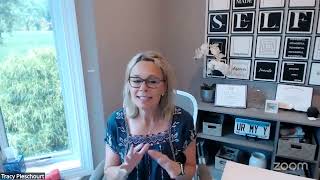
Tracy Pleschourt leads a group coaching call on the Think Feel Act cycle, walking through the Becoming Self Made Goal Planner workflow. The process includes reflecting on the past week, writing a one-sentence strategy, setting up to four weekly intentions, breaking goals into tiny steps, and rehearsing desired feelings through belief prompts on three daily events.
Chapters
Here comes Kiki.
That should add some excitement to today.
Exactly what we need, a little bit of Kiki. There she is. Good morning, Kiki. Anna and I just said this is exactly what we need as a little Kiki this morning. She might not know how to get herself off mute.
You're so sweet. I may not have anything coherent to actually offer. I feel like the last three months have been somewhat of a whirlwind of chaos.
No, I think coming here is like a really smart thing to do when you're feeling like that.
Yeah, no, I'm. I'm. I'm beginning to be able to string a sentence together. And I don't have, you know, children running around, jumping on me, sticking things in my ear, you know, that sort of thing.
That's hilarious.
Oh, dear. Yeah.
All right, I'll just give it.
Interesting. It's interesting when things like this happen and you. You realize how many. How much more learning you have to do and how much more you. You can. Yeah. How much more learning. How much better. Better you start understanding yourself and.
Yeah.
Realizing things that you've always done that are habits that you've. You almost default to. And it's very interesting. It's been very interesting.
Yeah. Like, can you give us an example? Is it more habits of thinking or habits of doing?
Habits of doing. So I have a. I'm not very good at setting up boundaries, which then leads me to getting really overtired and grumpy and, you know, not enjoying situations that are potentially truly joyful. And, you know, I'm very lucky to be in them, but it's because I'm. I'm setting standards. You know, we do this with us with a lot of the time with the self. Self sort of analyzing, you know, where you start. You know, is this true? Do you really need to do this? Is this actually necessary? And you start picking it apart. And I mean, obviously hindsight is always brilliant, and I wish I'd had more of this hindsight in the moment, but still, I'm not looking at it as a loss. I'm looking at it as a win because I'm definitely more aware of it.
Yeah.
I think what it has shown me is that even whilst I was aware of it, I didn't know how to ask for the things that I needed and to put in place the boundaries that I needed. And, you know, that I've always felt guilty putting boundaries in place, but actually, when I look at it now and I look back and I think, well, actually if I had put some boundaries in place, there would have been situations where it would have been better for everybody, not just for me. It would have actually been better because I would have been able to be there better. So. Yes. But I do, I do feel, I do feel slightly. Yeah. Because I traveled an enormous amount, but I've never actually had a moment to catch up with myself. And it's just like. So this is really important today.
Yeah.
This is my gift to me.
Yeah. Amen. I truly believe that deciding, like, how you want to think about any given circumstance, any given topic. So it could be something really expansive, like the last year of my life, or it could be something smaller, you know, like, you know, a conversation that you had yesterday, like. But regardless of the significance or insignificance, just deciding how you want to think about it changes everything. Because if you don't decide, you still sort of subconsciously, unintentionally, I'll be really honest, getting on this call, the reset call every Monday, you know, it takes commitment and it takes courage. And you can see often it's. We have other commitments that, that we just have to, you know, fulfill. But I would argue that a lot of it comes down to. It's painful, it takes a lot of energy. It.
It's interesting that you say that because for me, I, I got to the point where this was like, it was almost like a rite of passage. It was like I couldn't start my week unless I had done this. And I, and I know not having, had, not having been here for a very long time that it has impacted because there are certain things that, you know, we think we've got them sussed, we think we've got them, you know, their routine. But actually they always benefit from being revisited or reinforced or, you know, just the act of coming here and being reminded that that's what you need to do. So for me, this was it, was it, was it. I've missed it and I've noticed the impact that it has had, but it also ties in with what I was talking.
It's easier for me to understand a definition if I know what the, what.
The.
What the opposing definition is like. So for me, like, okay, what's the ultra. What's the other end of the spectrum from self sabotage? In my opinion, it's self made. It's, you know, not running on default. It's being intentional. It's deciding what it is that you want and it's moving towards it.
So.
So you're either going towards becoming self made or self sabotaging. Like one is Driven by your primitive brain, one is driven by your prodigy brain. Being driven by your prodigy brain arguably takes far more effort and energy. You have to be intentional. And when we're tired, when we're distracted, when we're stressed out, the default is typically just running on autopilot by our primitive brain. And so it makes tons of sense that we move closer to self sabotage or we move further away from what it is that we want when we don't have the energy to be intentional. Nothing is inherently wrong with that. It's just having an awareness of what's actually going on helps us just accept the situation and not like create unnecessary suffering by like shaming ourselves for that realization. It's just realize it, learn from it and maybe make a 1% shift the next go round. So I love what you've said, Kiki. It's like you realized in retrospect how boundaries could have changed some of those outcomes. And instead of telling yourself, you know, geez, what a missed opportunity or you know, things could have been so different, you're just having that kind of back and forth conversation with yourself, looking at how could it have benefited all of us? And now I would just ask myself, what's the 1% shift I can make? And it doesn't even have to be next time it could be more like what's the 1% shift in my thinking or in the way I feel that could make a difference. Just a tiny step. So, and I, I would say for you it's obvious you're here, you came to this call. You have a like strong desire to better understand yourself so that you don't default into the beat down. Like that's more than 1% of a shift. And so I applaud you for that. Like this is the work that's not easy. A lot of people don't want to examine their past or they don't want to look to their future. They don't want to think about the pain that they felt or ask themselves what is it that I really want? Those kind of questions take a lot of energy to answer. And so most people don't do it. And that's why I'll be really honest, getting on this call, the reset call every Monday, it takes commitment and it takes courage. And you can see, you know, the dwindling attendance and off, you know, often it's, we have other commitments that, that we just have to, you know, fulfill. But I would argue that a lot of it comes down to it's painful, it takes a lot of energy it.
It'S interesting you say that because for me, I, I got to the point where this was like, it was almost like a rite of passage. It was like I couldn't start my week unless I had done this. And I, and I know not having, had, not having been here for a very long time, that it has impacted because there are certain things that, you know, we think we've got them sussed, we think we've got them, you know, their routine, but actually they always benefit from being revisited or reinforced or, you know, just the act of coming here and being reminded that that's what you need to do. So for me, this was, it was, it was. I've missed it and I've noticed the impact that it has had, but it also ties in with what I was talking about, with the boundaries and that sort of stuff, because it is interesting how, and I don't mean this to be sounding like a sob story, because it isn't.
I'm very lucky.
I'm very fortunate. I have a lot of wonderful things happening in my life. But it is very interesting to me how the first things to go are always the things that are beneficial to me if they impact the running around. So, for example, for me to take the time to come to this call would have meant that somebody needed to be present and aware of with my granddaughters. I mean, the time difference. I, I love you all, but I'm not getting up, you know, I'm not staying up until midnight to be on this call kind of thing. That was another story. But this, this thing, I just felt, you know, I didn't feel comfortable or able to tell somebody else to take time to do something that I had put on my plate. And so as I said, this is very. I'm glad to be back. I'll shut up now.
We're very happy to have you. So this call is what we call the Monday reset call. And it truly is just that. It's your opportunity to reset your intentions, to reset what it is that you're working towards and how, and really be supported through that. So whether you're here to grow a business, write the next chapter of your book, change your dating life, this is the moment that sets the tone for your entire week. And you showing up this morning already changed something. Just being here means that you made a decision to stop living on autopilot, which is just being run by your primitive fear based brain, which is very dramatic, and to start leading with intention. And that one decision shifts everything. It shifts your energy, it shifts your Choices. And ultimately it shifts your outcomes, your results, your life, the way you're experiencing your life. So at Self made you and dating with Gracie, we teach that your goals aren't out there in the distance. They're shaped by the decisions that you're making today from the mindset that you bring into the room. And here's the truth. Most people don't rise to the level of their goals. They fall to the level of their training. And that's why we meet here every single week, every single Monday is so that we can train together. It's literally our mental fitness routine. It's what creates strong mental health. We're not here to wait, to feel confident. We're here today to train for it. So for the men that are here that want to change their dating life, who want to stop overthinking around women, or they want to stop tying their worth to whether or not she texts you back, this is where that shift begins. And for the women who are here who want to stop spiraling in overwhelm, that is completely me. Today. I literally woke, woke up. And I'm like, oh, my gosh, I'm so overwhelmed. I'm so glad that this morning is kicked off by a reset call. It's exactly what I need. And I'm not making that mean that I'm broken or that I'm bad. It means I'm human. I'm human. I feel overwhelmed just as much as the next guy. And the way that I can put a stop to that is by making decisions. Not necessarily about where I'm going to be and what I'm going to be doing. But hear me when I say this, it's the decision about how I want to think. So confidence, confidence in your ability to show up, confidence in your ability to reset every single week. It is not something you're born with. It's something that you have to practice. We say that we want growth. We want to engage in personal development. I hear that all the time. I hear Gracie and I get podcast submissions all the time. That's like, I'm very self aware. I'm super into self growth and self development. But what that same person who says that is doing their rehearsing, self doubt. They're rehearsing the rejection loops. They're rehearsing people pleasing. They're rehearsing excuses. And when you show up to this call, this mental fitness routine, it flips all of that. It trains your brain to say, yeah, I feel off, but I still get to choose how I'm going to move forward. So that's what we're building today. One decision at a time, one belief at a time, one rep at a time. So let's get into it. The weekly reset call is really like outlined through this book. The becoming self made goal planner. And yes, it's a goal planner. Yes, it helps you decide what it is that you want and why you want it. And then it holds your hand through three months of daily planning. And so every single week we set our intentions. We look back at the past week and assess what worked, what didn't work, what are we going to do differently. And then we jump into the actual planning day by day by day. And so every single Monday I take you through those key steps so that the weekly reflections and the weekly intentions are done. We do those together and then we actually plan out today together so that tomorrow when you come back here and I'm not here to hold your hand, you know what to do, you know how to plan out Tuesday. So we start by looking at last week so that we can move forward with just a little bit more clarity. Okay. Doesn't mean if this last week was a complete dumpster fire. I don't want you thinking, well this week. And then the third question is answered based on the first two answers. You're looking at what worked, you're looking at what didn't work, and you're coming up with a one sentence strategy about what you're going to do different this next week.
It.
Okay, now that strategy is going to show up as many times as possible on as many of the daily plans as possible. It should show up in your weekly intentions. So now we're working on the weekly intention sheet. On the top right hand corner it just has the date. Put Today's date, Monday August 4th. And now I want you to just ask yourself, what are my goals for this week? It can come from that strategy that you just decided. It can come from the front of the book where you did an entire goals analysis and decided what it is that you wanted to create in the next three months. It could be simply a transfer from that goals page to this weekly intention sheet. It can be micro goals, goals within the goals. Just decide what are the four, I should say up to four areas of focus for this week and what actions you will take to move yourself forward. Now if you know that you can't take some of these actions, if it's impossible, if you're not ready to take those actions, if there's a lot of actions that have to happen for you to be able to get there. Don't write that down. That is a very self sabotaging, primitive brain idea. Let's break it down into steps that are so easy it's hard not to do. Okay, we're going for the wins here. So, so easy it's hard not to do. You look at goal one, what is it that I'm trying to achieve now? What are the actions that are going to get me closer to achieving that and how do I break that down into steps that are so easy it's hard not to do? Keep asking yourself that question. How do I make this so easy that it's almost hard not to do? Now give you a few minutes to fill out that page. Anybody have any questions so far or any comments?
I was just going to say sometimes it's helpful when you show, show an example because sometimes it just helps me click into what I should be putting there. So if you, you know, if you share what you put in, it kind of reminds me what I should be putting in.
Yes. So one of my goals for this week is to start some sort of like analysis on the book sales. And to me, if I just say analyze book sales, my brain shuts down. It's like, okay, like where do you start with that? And ultimately it won't get done if I just, if, if I just had that one line item of things to do. My brain says, too complicated, don't know how to do that. Let's move on to something I do know how to do. And it'll just keep doing that all week long and then we'll get to next week and no progress will be made. So in goal one, analyzing book sales, the actions are going to look like connecting. I have somebody that actually runs the ads in inside of Amazon. So connecting with him today is the first goal. Just connecting with him, finding out how things are going, what is it that he looks at to make some decisions about these ads so that I better understand so I know what the key metrics are that I should be looking at. Logging in. Amazon has a dashboard that I don't really understand and they do have a couple tutorials. So watching a couple of the tutorials so that I better understand the dashboard. So those were the two things that I wrote down under analyzing book sales. I probably won't do much analyzing this week, but those are the two steps that are pretty easy, that are going to make some significant progress. So I'm not expecting myself to get to the analysis stage because there's just too many Steps that need to be taken and I probably won't have that kind of time. So reaching out to Ahmad and watching one of the videos on Amazon, that's what I wrote down as my actions. The old Tracy would have wrote down, like really would have probably spent a bunch of time looking at all of the big bad strategies. Like literally, I would have asked ChatGPT, how do you analyze book sales? What should I be looking at? You know, books that are being sold on Amazon and it would give you a list a mile long. And then the old Tracy would have transferred that, and then the old Tracy would have beat herself up for not doing any of it. Because I don't have the time to do that. But what I do have the time to do is, is two steps that are pretty darn simple. That's what I write down. That's like the most loving and compassionate thing I can do for myself is to be far more realistic in what I actually have time for. So when I say what's the next step I can take, that's so easy it's almost hard not to do. Like, I really ask myself that all the time. Easy, easy, easy, easy, easy. Because even, easy, even small steps are progress. And I would much rather be able to celebrate those small steps that have made progress than beat myself up for this long list of things I didn't do. Okay, so be compassionate with yourself. Give yourself the small steps so that you have some wins to celebrate. And that's how I want you guys to progress towards your goal. This is not a race. There is no timeline. Progress over perfection feels so doable. Right, let's go for progress. Okay, so now the next sheet that's just there as a support tool. This isn't something you have to fill out today, but I know how my brain works and there's all sorts of to dos that are unrelated to my goals. Doctor's appointments, weeding the yard, making some travel arrangements, grocery shopping, vet appointments, those kind of things that just kind of rattle around in your head. Our brain is not a vault. If we treat it like a vault, we give ourselves yet another thing to beat ourselves up over. So instead let's use our brain for what it's meant for. And that is to process. And we're going to use things like pen and paper to capture the things that we don't need to hold in our head anymore. Remove those things so that you have space to actually process. Okay, so that weekly where I want you to compile all the non goal related to do's look back at last week's. Some of those things probably got taken care of and some of them didn't and simply transfer them so that nothing is slipping through the cracks. And this is a list that is a living list, right? Every day, just peruse it, add to it, check things off, make it work hard for you. I'll give you a minute to fill that out. And the next page is yet another support page. It's called the Brain Dump. And it's literally just a free right space. So when you are recognizing unwanted feelings, when you wake up with that overwhelm, or with the frustration or with the lack of confidence, I want you to ask yourself why? And just have a little back and forth conversation with yourself. But put it on paper. There's so much research that says you better understand yourself when you take those conversations out of your mind and put it onto paper. Journaling, it's just a form of journaling. Nobody has to be able to translate it. It's meant for you. So if you want to write it in shorthand or use code or whatever makes sense for you, feel free to do that. I am a super visual person. Often I doodle or I like draw like little like ways to organize my thoughts. It's super helpful for me. Most of my Brain Dump pages are more sketches for me. So you use it in the way that it serves you best. But that's what that page is for, is for you to have a space every day that you can come back to and just sort out your thoughts and recognize how those thoughts are making you feel. It's the best investment you can make into your day for sure. You can take that to the bank. I promise if you do that, one thing. If you ask yourself how am I feeling right now? And you actually take the time to decide what emotion you're feeling and figure out why what thought is creating that feeling. You will be so much better off for it because you will not needlessly unnecessarily suffer because you're feeling some sort of pain. We are supposed to feel pain. Suffering unnecessarily looks like beating yourself up, belittling yourself, self loathing because you're feeling pain. So the, the antidote is recognizing what am I feeling. And we have a list of feelings. The self sabotaging feelings are on page 26 and 27. There's even a place a column for you on page 27 to write what thoughts create those feelings for you as you notice them. Because they're going to happen over and over and over and over and over, what thought goes through my mind? I don't even notice it's going through my mind, but it's actually responsible for the guilt that I feel. What is that thought? Pinpointing that is a form of healing. It puts you on the healing journey because you recognize this is not just happening to me. It's happening because of me. And that's not a reason to beat yourself up. It's just a reason to recognize how you have control. You can fix that. If you're tired of feeling guilty and you subconsciously think, I should have done better, that's what we need to change. That's the root cause. It's that thought. And so that's what we pinpoint as our area of growth. We can ask ourselves, is that really true? What else could be true? Is that even helpful? Okay, but you can't get there unless you first recognize, what is it that I'm actually feeling? What flavor of pain today am I feeling? And then you ask yourself, why? So sometimes doing the work on page 27 makes doing the work every single morning quicker because you know yourself better. It's like, oh, I'm feeling guilty. Here's why. This is the thought that runs on autopilot. And now you can just question that thought. Any questions on that? Okay. And since I pointed out the self sabotaging feelings, I also want to point out the self made feelings. So on page 32 and 33, we have the same sort of table. And on the far left we have primary feelings. Gratitude, love, empathy, confidence, curiosity. And then the next column is secondary feelings to those primary feelings. And what is so important to recognize on this table? These feelings are available to you at any moment, on any day, anytime. If you're somebody who says, I want to feel peace, this is how you do it. It's available to you. It's directly connected to what it is that you're thinking and believing. So. So we offered you some thoughts, but the far right hand column gives you a place to add your own thought. If my thought isn't working for you, and it doesn't really generate peace, and maybe it actually backfires on you and it creates skepticism, you want to put your own thought, your own belief that actually generates peace. I promise you at some point in your life that you have felt all of these feelings. You felt gratitude, you have felt alignment, you have felt courage. What were you thinking that created that feeling? Capture it. Now, arguably it was under a different context. Right. But that's okay. This is a great place to Start is to realize you're capable of feeling that and under a different context.
Right.
But that's okay. This is a great. The reason you felt that at any given time, I don't care if it was 20 years ago. The reason you felt that is because of what you were thinking, what you were believing. And that is a really good belief to better understand because then we can manipulate it, we can refine it, we can curate it under any context. I promise you. That's what all of our coaches have become so skilled at doing, is helping you, prompting you to find those beliefs, dig them up, that create the feelings that you want and we help you believe those under any context. It takes time, but that's what we do. Okay, so as you can see, this is a process. This is why we started off the call congratulating you for being here. Because this takes effort, this takes energy. This is not easy, but it is absolutely life changing. What you're learning can be applied to any circumstance. Your social life, your professional life, your finances, your romantic life, your health and wellness, anything. You actually have far more control than you think. And the only reason why you don't believe that right now is because your primitive brain is in the driver's seat. And that's okay. But with this sort of awareness, with this sort of support, things can be different. So now turn the page to today's daily planner. In the top right hand corner, there's the date. Monday, 8, 4. I always write something that makes today significant. So if there's a birthday or an anniversary or something that I want to remind myself like so that I reach out to somebody, I always write it right underneath that. So today is a friend's birthday. And then on the far left hand side, under today's schedule, all we do is look at what our commitments are for today, the things that we are committed to doing. So I often look at my digital calendar and I just transfer the appointments that I have and I write it by hand. Yes, it's duplicating information. I don't care. It grounds me in the day. If it stays digital, it stays very abstract for me. So I want to ground myself into today. It's a way for me to really get present with where I'm at. So at 9:00am today, we have the reset call. At 10:30, I get to go have an iron infusion for 4 hours. I have to go sit in a chair with an IV in my arm and take in iron. So that pretty much takes the rest of my day. And when I come Home. I'm just letting. I have no other appointments. I don't know how I'm going to be feeling. So I just didn't book anything else for the rest of the day with a lot of intention. So my Monday that is normally back to back to back is two things. I've got a 9 o' clock and I've got a 10 30. That's it. I do have quite a few to do's in my to do box because I'm not sure. I'm not. Maybe I'll come home and I'll be like raring to go. That's knock on wood. That's the hope. And I'll be able to knock out of all these to do's that I've got edit the podcast. I have a technical issue that I'm working on connecting with Ahmad from Amazon and I always have have at the top of my daily to do's look at my weekly to do list. There's always a gold mine of things in there that can be done. So I write that little note to myself in that box. So I want you guys to just plan out your day, make some decisions about where it is you're going to be, what it is you're going to be doing and what time. Okay, so lots of blank lines because we want you to curate this to your day.
It.
Any questions? Okay, so now I want you to pick three key events for today. Now, they don't have to come straight from your schedule. They could come from a goal. Some of you have weight loss goals. Your weight could be an event that you're choosing. How you want to think and feel about today, your job, your boss. It could be a person, but it certainly could be something that you actually have scheduled. The whole point of this part of the exercise is to put in the reps. This is what it looks like to come to the mental fitness gym every single day. And I have you picking three events from your schedule because I'm trying to strip away any of the drama. So many times we think that being intentional about how it is we're thinking and feeling only applies when we're thinking and feeling poorly. And that's not true. I want you to get in the reps on things that are kind of insignificant. How do you want to think about the remainder of this call? How do you want to feel about the remainder of this call? How do you want to think and feel about your commute home today? How do you want to think and feel about doing the dishes today? Doesn't have to be anything significant. It certainly can. It can be super helpful. Especially if you have an event today that you're really worked up over and you're spiraling. Decide. Okay, I'm not changing the circumstance. This meeting or this event is still the circumstance. But ideally, how do I want to feel? That's the question that you need to ask yourself. So each event, pick three. And then the question you ask yourself about each of those event. Whether it's your dating life, your weight, a date that you might be going on, a video that you're going to watch, your next appointment with your boss, a phone call to a client. It doesn't matter. Ask yourself, how do you want to feel? Looking at this bookmark that comes with your book is a great idea. Trigger for feelings. You can also go back to the front of your book. Go back to the self made feelings. Peruse the vocabulary of feelings and just ask yourself, do I want to feel courageous? Do I want to feel trusting? Do I want to feel inspired? Determined? Optimistic? Courageous? Creative? Resilient? Joy. Abundance. Peace. You guys, the choice is yours. If you don't make it, if you do not choose intentionally how you feel, your primitive brain will choose for you. This is all about making decisions. If you decide not to make a decision, you're subconsciously making a decision. You're letting your primitive brain stay in the driver's seat. So decide. Decide. At three o'clock today, I want to feel trusting. Awesome. And then you have to ask yourself, what would I be believing if I was feeling trust? And that might come across like, okay, this is where you lost me. This is complicated. It's not. I promise you. You have felt trust before in your life. Ask yourself, what was I thinking? Because the only reason why you ever felt that emotion was because you were believing something. What was it? Maybe you have a work presentation at 3 o' clock today and you've decided, I want to feel confident. A thought that generates that feeling might be something like, I've prepared for this. I know what I'm doing, okay? Doesn't have to be anything poetic, it just has to be believable. Maybe you have a date tonight and you want to feel calm. The thought is my energy speaks louder than my words, right? From that you can deduct. It doesn't matter what the hell you say. It's all about how you show up. The energy, the confidence that you are exuding. The curiosity, the excitement. That energy speaks far louder. Maybe you have a workout as one of your events and you just want to Feel focused. This is a rep, not just for my body, but for my brain. This mental fitness that we're doing right now isn't about big, dramatic actions. It's small decisions that build alignment. I want you guys to think about three things and if you can't come up with three, just pick one thing that you've been avoiding or resisting. Okay. I want you to think about one thing, one to three things that you've been avoiding or resisting. And now complete this sentence. If I stopped trying to fix this and just allowed clarity to rise, I might what? I might think this, I might feel this, I might do this. This is what it looks like to engage in mental fitness, to train your mind. You catch the resistance. You ask yourself questions like, what is it that I'm avoiding? Or what is it that I'm resisting? You catch it, you, you become aware of it, and then you choose curiosity instead of trying to control it. Self coaching is all about staying curious. It's all about asking yourself questions. So if I stop trying to fix this and I just allowed clarity to rise, I might what? Answer that question. And now I want you to go back to your strategy that you came up with after looking at last week, after reflecting on last week and ask yourself, what is the standard that you're going to commit to this week? Like at the very beginning of this call, Kiki was talking about setting some boundaries. So what's your standard? What's your mental standard that you're committing to this week? Maybe it's I'm not going to talk down to myself or I'm going to move forward, taking one step that's so easy it's hard not to do. This is what training looks like. Okay? This is how we build mental fitness. This is how we become stronger in our, like, mental health. Daily. Mental fitness creates strong mental health, but we have to put in the reps and you don't have to believe in yourself to start. That is a misnomer. That is a primitive brain thought. You just have to stop letting your worst thoughts lead the way. Okay? So if you're telling yourself, I don't even believe in myself, that's okay. You're the perfect person to be in the very perfect place. Show up here every Monday and make some decisions about how it is that you want to think and feel. Yes. Kara. Morning.
Hi.
So if I. So I'm trying to fill this in and I know I'll need a little more thought time on this, but.
If.
I stop trying to fix losing weight and allow clarity to rise. I might feel or think. And all my brain has right now is better about losing weight. Like, I might feel better about losing weight, but that's really. That's shallow. You know, it's surface. Surface level thinking.
But that's a really great realization. Like, even asking yourself that question and looking and seeing where your brain goes is interesting. Okay.
So just ask the question, and then focus on what other thoughts or feelings come out of that. So it is that simple?
Yes. Yep. Okay. Okay. It's just. It is really an exercise in better understanding yourself. And if you were to allow clarity to rise, which is just a better understanding of yourself, then what comes to mind? It's like, for me, when you said that, I'm like, oh, that's interesting that that's where your brain. Brain goes. Your brain. Your primitive brain is really strong. It's like, no, no, no, no, no, no, no. This is what I want, so I'm not gonna take my focus off of that. Yeah. Like, oh, interesting.
Okay.
You can have that kind of compassion and kind of intrigue into yourself. Compassion is what starts to rise. You start to fill up that, like, emotional bucket that used to be so full of, like, defeat or, like, a burden of having to lose weight. Yes, yes. That bucket starts to be filled with something else called intrigue, curiosity, interest. It's. It is like a. Kind of like a shiny object, you know, it's like, oh, let me take my focus off of this and put it over here. Like, we've got to figure out, okay, what is that shiny object that will take our focus off of this? It works really, really well. And so that initial thought, maybe it's true, maybe you do need to lose weight, but the way that you're interpreting that is not helpful. Yeah. And so let's shift our focus and just start being interested in how our brain works and how things start to unfold when we believe those kind of thoughts. And now when you come at it from a place of curiosity and interest and intrigue, the beatdown starts to, like, be tempered.
Yeah.
Cool.
Okay. Thank you.
You're welcome. Any other questions?
Just good to hear Kiki's voice again.
That's all.
I 100% agree.
We're all so sweet, but it's. It's. I feel the same way about being back. Back. I love you all guys. It's very nice to be back.
We all need a little Italian flair, spice.
I mean, you need the chaos and insanity that I provide to this.
All right, you guys have a great rest of your day. We'll see you back here. For those of you on my coaching calls, we'll see you guys on Wednesday. And the rest of you will see you here back next Monday. Take care.
Bye.
More from Tracy




editedMonday Coaching Call Facilitated by Tracy Think Feel Act Cycle Aug 11 2025