Monday Reset Call Apr 7 2025
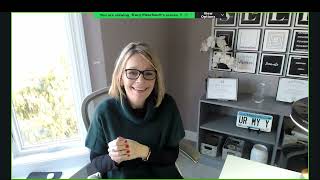
Tracy Pleschourt walks through the Becoming Self-Made 13-week planner, showing how to set weekly intentions, rate your week 1-5, and use the SELF method to catch self-sabotaging thoughts. The planner tracks what worked, what didn't, and up to four concrete actions for the week ahead.
Chapters
Morning everybody. Sorry, I'm having my usual computer issues.
All right. Welcome, welcome, welcome. Well, I usually have the capability of the desktop view being able to show you what I'm doing and for some reason it doesn't want to work this morning. So we're just going to go with the old fashioned way. I'll hold it up. So for though I know we've got a few new people on here. And just to give you a little bit of background of what, what this call is meant for is to really reset your week to be very intentional about what it is that you're going to be thinking and feeling as you show up to the different parts of your day. Okay, so we're working from the becoming self made goal planner. If you don't have this yet, it's a really good idea to get one. You can get them on Amazon. I'll have Gracie put the link in the chat. So if you don't have one of these, you can certainly work from worksheets. But it's so nice to have it all contained in one book that you can carry around with you. But also be very confident that it is kind of the vault, the archive of everything that you're working towards. So, so we go week by week. So right now I'm on week eight of this book. You might be on week one or you might be on week 12. So it's a technically a 13 week, a three month book. And it's kind of cool because at the beginning of this book it takes you through the exercise of what area of your life you might want to focus on. So this is a goal planner. The intention is to make a decision about what it is that you want to improve upon in your life, what it is that you want to change in your life. And it has you focus on eight specific areas. So you're assessing your life from eight different areas. So that is a workshop in and of itself. If you haven't been through that workshop, just let me know and I'll point you in the right direction from there. Once you found the area that you're least satisfied with, then you set some goals. And that too is its own workshop. So I ask that you have no more than four goals that you're focused on in a three month span of time so that you don't get distracted, so that you have more focus, so that you also have space in your life to enjoy. We don't want you having so many goals that it takes away from the little things in life so you don't and with that being said, you don't have to have four goals either. If you decide that health and wellness is your area of focus and you have one weight loss goal, that's enough to focus on over the course of the next three months. If you have a professional goal, that goal certainly can be broken down into multiple areas of focus. So that's fine. If you just have one goal, maybe it's a revenue goal. So we use this book to first come up with our area of focus, then to be very specific about what it is that we want to optimize in our life. And. And then from there we set weekly intentions and then those weekly intentions carry us through the seven days of the week. Okay, so that's why this book can be such a great tool is it organizes your entire week for 13 weeks. So I want you guys to turn to your weekly intent or excuse me, turn to your weekly reflections page. If you're new at this, there is an example of that page on page 41. So what we're doing is we're reflecting back on the past week. What worked well, what didn't work, and what are we going to do different next time. This provides us data so that we can set really strong intentions for the upcoming week. So I want you to look back at this past week. If you don't have a worksheet or you don't have a planner in front of you, just take the time right now to reflect on the past week. And I want you to challenge yourself to only think about the facts of what worked well last week. Okay? Your brain is going to want to skew to all the things that didn't work so well. I want you to challenge yourself to focus on what worked about last week. Did you get some of the smaller things checked off of your to do list? Did you get some of the big things that were on your weekly intentions checked off? Did you notice some of the self sabotaging feelings that occurred? That's a win. Were you able to create some of the self made feelings that you had decided on creating? What worked well about last week? I'll just give you a minute to fill that in. And again, reflecting on your past week, just perusing some of those sheets can be super helpful, can be very informative. Looking at the to do list, Looking at your weekly intentions, look at the brain dump page. Did you do some self coaching last week? It's a great win. And this is just a bullet point. You don't have to journal, just make some quick bullet points. Question. Yes, Hi. So what is, what are the, what are the self coaching techniques? So the self coaching techniques are asking yourself first, what is it that I want and why do I want it? So self coaching is literally having a very intentional conversation with yourself. So the S in self is start with a decision, what is it that I want and why do I want it? The E is eliminate the self sabotage. When we're not being intentional, we will react from the self defeating thoughts that are programmed in our mind. We've thought these thoughts. We have well driven neural pathways. Our fear based brain that's just trying to keep us safe, offer us a lot of dramatic thoughts and we need to stay aware of them. We're not trying to eliminate the thoughts, we're trying to eliminate the risk of reacting to them. And you can do that simply by being aware of them. So that's the E, the L is leveraging your strengths and we learn in here how to do that. Those are strengths like empathy, curiosity, creativity, innovation. And then finally it's finished with a decision to take action. So that's what the self stands for, It's a process. And this call today of setting intentions for the week is that first step of starting with decisions. Does that help? Yeah, yeah, yeah. That's very, very helpful. Yeah. And then Gracie just said in the chat, if you don't have the book but want the worksheets, she put the link to the school community where you can print out the worksheets.
Okay, great.
Okay. So on this weekly reflections exercise, the next question is what didn't work this week? Now this is what your brain's been waiting for. It wants to complain, it wants to swim in all the drama of the things that didn't work. Now in we notice that we recognize our brain as being very normal, but we don't really want to indulge in that. What we want to do is just be very factual, look at the facts. What didn't work? Now again you can quickly peruse the past week. Maybe there's a number of things off of the to do list, a number of things off of your weekly intentions that didn't get done. Maybe a conversation with somebody didn't go as well as you had planned. Maybe you had feelings that you're only recognizing in retrospect, even that I would say is a win. But what didn't work? Well, I want you again to just bullet point. I don't want you to journal about it, just facts.
Excuse me.
And then finally, what will you do different this week based on what worked and what didn't work? What is a strategy that you can take from that and implement this week? This is the benefit of reflection, is that you're learning. So even if you had fails, most of the time, our greatest learning opportunities come from the fails. And so ask yourself, what is it that I'm going to do different next week? Maybe it is more of the same. Maybe if you had a long list of wins, maybe it's doing a very similar protocol, but if you have a long list of things that didn't work, there's definitely room for improvement. And so what are we going to do different next week that's going to get us closer to living the life that we want to live? What it's going to, what's going to get us closer to progressing towards our goals or achieving the goals that we set? And then at the bottom of the sheet you'll see in this oops. In this blue area it says rate your week. And this is a way for you to measure your progress week over week. So on a scale of 1 to 1 to 5, 1 being not at all, 5 being highly aware. How aware of sabotaging feelings throughout the week were you? And you'll notice on the daily planner. At the bottom of every single daily planner, there is an opportunity for to reflect on the types of feelings that you had throughout the day. This is so very important. This teaches you how to not be afraid of emotions. So many of us are afraid to feel lonely, we're afraid to feel frustrated or disappointed. I want you guys to lean into it when you're feeling it. I want you to recognize how normal it is. That's the response I want you to start creating in your day. Oh, this is me feeling frustrated. This is me feeling angry. Instead of making it mean something about yourself, I shouldn't be feeling this way. Or even worse, layering on some sort of self deprecating meaning to that I'm broken. Because you're simply angry. It's an emotion that you're meant to feel. What sabotages you is when you react from that emotion and you make it mean something. That's what creates this unnecessary suffering. So we want to recognize all of the feelings that we're having. And so on the bottom of every single daily planner, there's an opportunity for you to check a box if you notice that you're feeling guilty, if you're feeling overwhelmed, if you're feeling frustrated. Now, I do this typically in a retrospective way. So as I sit down each morning to do the self Coaching. I think back to yesterday. Do I remember feeling frustrated? If so, I simply check the box. I'll sit there for a moment and ask myself, why. Why was I feeling that way? 100% of the time, it's coming from what it was that I was thinking. And that's really good to know. So if you. For some of the men who are on the call, you were out on a date, and retrospectively you remember feeling nervous, you ask yourself, why was I nervous? Because this is a new experience. Because I want her to like me. Because I want this to go well. I want this to lead to a second date. Those are all thoughts, okay? There's nothing wrong with feeling nervous. And when you recognize that you're having that feeling, you'll be able to leverage it. You'll be able to use it for you instead of against you. So the first step is awareness. So that's why I want you checking those boxes. So on a scale of 1 to 5, how many boxes were checked last week and are you meeting or exceeding the week before? We're trying to keep our awareness high. And then on a scale of 1 to 5, how much control do you feel over the progress that you're making towards your goals? Do you feel out of control? You feel like you're losing sight of those goals? If so, that's good to know if you're feeling in control. If you're using this process, you're probably feeling in control, which is great. And we want to keep ourselves at that level. That's the standard that we want to hold as we move through our weeks. Okay, so you're looking to meet or exceed your past week's rating. All right, now we're going to set the intentions for the week. Now, again, this is all based on what it is that you've decided that you want. Okay. So even if you haven't been through the focus wheel exercise where you're assessing your entire life, a lot of the men on this call, they're in the dating with Gracie community. They have a goal of changing their dating life.
Okay.
They also know what the best practices are to changing their dating life. So this exercise of setting weekly intentions can be done in even if you haven't been through that goals workshop. It's very enlightening to go through that workshop because it's assessing your entire life. And there may be other goals that you want to put your finger on the pulse of over the course of the next three months, but maybe not for some of the others that are on this call. You might have weight loss goals, you might have relationship goals, you might have professional goals. We want to make sure that as we're setting our intentions for the week, we're keeping our finger on the pulse of those goals so that we're not setting goals and then just forgetting about them. That's what most people do. They go through this extraordinary process of setting goals, maybe even using the smart goal system, but then they never, ever work from them. They never use them as their guide for their week. That's what we do. We stay very, very, very intentional. So on this weekly intention sheet, you've got four highlighted areas to write your goals. Again, if you just have one goal, that's fine. You might have four priorities that are going to help you get closer to that goal. You can break it down in that way. So these are your primary focuses for this week. So you simply write those down for me, I write it down as self made you is a focus. Mine are very broad. Self made you is one of my focuses. Dating with Gracie is one of my focuses. My family is one of my focuses. And then my strength training is one of my focus. Okay, so mine are very broad, but they all came from the awareness that I was gifted through going through that focus wheel exercise. Any questions on that? Okay, now we want to decide what actions we are going to take this week to meet some of these priorities. Okay, so for me, self made you is one of my goals, one of my priorities for this week. And I'm putting in an order for our next book, our next planner that's coming out that is going to happen at some point during this week. There's a whole lot of things that go into putting that order in. And so all of those things are going to be listed. They're all going to be bullet points underneath those actions to take. For my strength training goal, I need to look at the schedule, see what classes are offered, look at my calendar, figure out where. For my strength training goal, I need to look at the schedule, see what classes are offered, look at my calendar, figure out where I have some white space and actually make the appointment at least three times this week, I have some white space and actually make the appointment at least three times this week. For family, we have some upcoming trips that we're taking. For family, we have some upcoming trips that we're taking. I'm trying to coordinate somebody to come stay at our house, somebody to come watch our dogs. Like we have an out of town guest coming this week. I have all sorts of different things that are Bullet points that are to do's. I'm trying to coordinate somebody to come stay at our house, somebody to come watch our dogs. Like we have an out of town guest coming this week. I have all sorts of different things that are bullet points that are to do's that I am getting ready for her arrival. So I want you. If you were watching somebody else make progress towards your goal, what would you see them doing? It's a great that I am getting ready for her arrival so I want you. If you were watching somebody else make progress towards your goal, what would you see them doing? It's a great question to be asking yourself what are the best practices that are going to get you closer to achieving that goal? Question to be asking yourself what are the best practices? Does anybody have a question or need some help with the actions? We have lots of coaches on this call which is a huge benefit if you are stumped. If you are somebody who had this, this goal last week and you had a long list what didn't work, you were taking action that didn't get you closer to your goal and actions will result in whether or not you achieve your goal. So it is important that we are fine tuning the actions that we're taking and so sometimes talking to an expert can be really helpful to get new ideas. So if anybody needs any help on ideas of different actions to be taking, this is a great time to ask.
So I just wanted to say so I have very similar actions for the weeks but you know, I've noticed that I struggle with some of them. If you have done the self. Self, you know, I'm sorry I caused you to English this morning. If you've done the. So you know, work through the self coaching steps and you realize that you've got, you know that you. And you can kind of tweak out what it is that is blocking you. How do you then work out from there? What I mean, I suppose what I'm trying to say is what's the next step after that? Once you've worked out that you've ended you. You've got either these self sabotaging thoughts or you've got these, these like in my case it's, it's. There are, there are some tasks that I have to get done because I'm. I'm actually leaving. I'm traveling next week or the end of this week and I've been procrastinating and I had to sit down and I had to sort of do my, my self coaching and I realized that it's Because I'm. I'm really worried about not getting it absolutely right. You know, I have to prepare certain things, and I have to. Have to send out stuff to some of the students that I. That I work with. So what would be a step that you could put in instead to help me get past that kind of stage? I mean, I did, you know, say, okay, what am I going to do differently? Well, now I know that it's sabotage. At least that's. That's something I'm aware of. But what. What could you. What would you. Could you put in?
Yeah. So knowing that you are procrastinating is a huge step in the right direction. So now it's trying to figure out why. What is it that you're thinking that is leading to the procrastination? Procrastination is the result you're not getting. You're not making any progress towards the. So what. What would you say is the thought and. Or the feeling?
So that was. That was where I got to. Because I worked through that and I realized the feeling and the thought was that I'm too scared to put down any. Anything or to start it because maybe I won't get it absolutely right, or maybe I'll miss something out, or maybe I'll, you know, make a mistake. And it's that it's. I. It's. It's. It's limiting because I know that whatever happens, I can still cope with it. But it's that knowledge that. Because essentially what I'm doing is preparing packs that I leave with the students here because I will be conducting the lessons over zoom. So what I don't give them, they won't have, is that panic. But I can't.
Okay, So I have to do this, right?
Yeah.
It has to be perfect.
Yeah.
Okay. So what does perfect or what does right look like? That's where I would start. Okay, what's your answer? What's your answer to that?
Well.
Did I lose you?
For some reason, I got put off audio.
Okay.
So there isn't really a perfect. When I look at it, without the fear.
Did I lose you?
You know, because of the panic mode in my head, I realize that there is no. For some reason, I got put off audio.
Okay.
So there isn't really a perfect. When I look at it, without the fear, there is no perfect way. And as long as they get the basics, I can always work around it because the kids tend to lose the sheets or they misplace the folders when I'm actually booked to have the lesson with them and I've always managed to cope irrespectively. But you know, because the panic mode in my head I realize that there is no, there is no perfect way. And as long as they get the basics, I can. It's just that for some reason I'm stressing about.
Okay, so what are the basics?
Always work around it. Because the kids tend to lose the sheets or they misplace the folders when I'm actually booked to have the lesson with them and I've always managed to cope irrespectively. They have to have the. That's a very good question. Actually. I can see where you're going with this. Yeah. So as long as they have the photocopies of the work that we're going to be doing, it's just that for some reason I'm stressing about.
Okay, what are the basics?
They have to have the. That's a very good question, I think. And the, the folder contains the material that we're using during the lessons. Then that's, That's. Yeah, that helped. That helped. Actually, actually I can see where you're going with this. Yeah. So as long as they have the photocopies of the work that we're going to be doing and the, the folder contains the material that. Okay, just saying that really helped. Yeah.
Yeah. So for everybody who's listening, she recognizes that she's been procrastinating. Those are some of the things that weren't working last week we're using during the lessons.
Then that's, That's. Yeah, that helped. That helped actually. Okay, just saying that really helped. Yeah.
Yeah. So for everybody who's listening, she or she's noticing that she's having self defeating thoughts and feelings right now about the preparation, recognizes that she's been procrastinating. Those are some of the things that weren't working last week or she's noticing that she's having self defeat for her vacation. So that is eating thoughts and feelings right now about the preparation for her vacation. So that is, first off, that's such good awareness because if you keep operating from that feeling on autopilot, you're going to self sabotage what it is that you really want. You want to be able to go on this vacation. First off, that's such good awareness because if you keep operating from that feeling on autopilot vacation and remotely be able to facilitate the calls, you're going to self sabotage what it is that you really want. You want to be able to go on this vacation and remotely be Able to facilitate the calls effectively, you want the kids to still be able to get the lesson even though you're remote. Okay, so effectively you want the kids to still be able to get the lesson even now you're recognizing that things have to be perfect is no, you're remote. Okay, so what is hanging you up? And so asking yourself a few more now you're recognizing that things have to be perfect is what is hanging you up? And so asking yourself a few more questions like what does perfect look like? Got you to realize. Actual questions like what does perfect look like? Got you to realize actually they just need the basics. Okay, what do the basics look like? This is what self coaching is all about. It's asking yourself questions and really they just need the basics. Okay, what do the basics look like? This is I like to use this sheet that's opposite of the weekly this is what self coaching is all about. It's asking yourself questions and I like to use this sheet that's opposite of the weekly to do sheet to really work that out so I can see it. And I literally write to do sheet to really work that out so I can see it and I literally write out what does perfect look like? And then I answer that question. So I am self coaching if I don't have out what does perfect look like? And then I answer the coach at my disposal, I self coach, I ask those kind of questions on that sheet, that question. So I am self coaching. If I don't have a coach at my disposal, I self coach, I ask those kind of questions on that sheet and then when I come to the conclusion all they need is the basics.
Eat.
And then when I come to the conclusion all they need is the basics. Then I ask myself what are the basics look like? And I expect myself to sit here and think about that. And it's amazing. The like innovative type ideas that start to come to you when the defeat and the doubt have been tempered but you can't get there if you're being driven from defeat and doubt. So having that self coaching session tempers those emotions and opens up the space for creative ideas. Nothing earth shattering. We what we landed on was they just need the basics but that's a huge move towards in the right direction for somebody who's been procrastinating and not making any progress. So once you have the this is backwards, I don't know why my camera is backwards today. But once you have the weekly intentions filled out with your four goals, up to four goals and you've got the actions the actions that you intend to take to get closer to your goals. So if you have a weight loss goal, maybe it's it's deciding ahead of time what it is you're going to eat twice a day. Or maybe it's getting out for a walk three times this week. Or maybe it's eliminating all of the sugar this week. Those are all best practices that would be actions that you might want to take this week. If it's a relationship goal, maybe it's setting up, setting time aside to connect with that person in a small way. You might even decide ahead of time how you're going to kick off the conversation and via what vehicle. Are you going to do it over text? Are you going to call them? Are you going to set up a copy date? Okay, none of this has to be rocket science. This is all what are the steps I'm going to take this week that get me closer to my goal? Okay, that's what these weekly intentions are. Now when you turn the page you'll see there's always a weekly to do sheet. Now these are the non goal related to do's that we all have. Okay, so we all have our goals that we are making progress towards, but we all have the non goal related to do hanging over our head. I want you to have a place inside this book to capture that so that you don't have some to do's on your on your text thread and some in an email thread and some sitting on post it notes on your counter and some that you're just trying to keep top of mind. Write it down. Your brain is not vault. Your brain is a processor. Write it down. So use that page to compile your non goal related to do's. Look at last week's transfer. Anything that didn't get done last week that is still important to you, transfer it to this week. But is it still important to you? Is a great way to assess because if it didn't get done, it may not be as important as you once thought. Is it something you can delegate? It may be something that just gets deleted. But if it's still important to you, you transfer it. This is how we can ensure nothing slips through the cracks. This system works really well if you work the system. So take a minute. This list is a living breathing list. I fully expect this list to grow as the week as we move through the week. This is the list you go back to. You go back to it to check things off. You go back to adding to it. The opposite page is the brain dump page. This is the space for you every single day to do a little self coaching. And here's the simple way of starting you put today's date April 7th. How am I feeling? We've just got through over half of this call. How are you feeling? If you need help deciding on how you're feeling, turn to page. Turn to page 32. We have the self made feelings. These are all of the positive emotions that drive positive results. We also have the self sabotaging feelings on page 26. These emotions drive a lot of self sabotage in our life. It's not to be avoided. It's to heighten your awareness around it. So look through those lists of emotions every single morning. Ask yourself, how am I feeling? And then the second question is why? It's always a thought. It's what it is that you're believing that's driving that feeling. And the second column or the third column in that chart has some suggested thoughts, thoughts that may be driving those types of feelings. And the fourth column asks you to fill in thoughts, beliefs that you notice you're having.
More from Tracy




editedMonday Coaching Call Facilitated by Tracy Think Feel Act Cycle Aug 11 2025