Monday Reset Call Jan 13 2025
Tracy Pleschourt leads a Monday planning session on reviewing the past week, rating your awareness and control, rewriting your 12-week goals, and scheduling concrete actions. She covers brain dumps, deciding how to feel for three daily events, and mentions a new book shipping to Amazon.
Chapters
Good morning.
Good morning.
How's it going? I'm so glad to hear he's getting better.
Yeah, he's getting better. What's driving me crazy is all these appointments. Like, just this morning, we got a call. They want to do an EEG at home, so they want to come in, put it on him, and it stays for, like, 24 to 48 hours, and then they come back and take it off. So it monitors his brain waves. And. Oh, and by the way, he really wants to go back to Florida, so we're flying out on Saturday.
Whoa. Can you transfer his care?
Well, he. The problem that we had was he had transfer his care, and it's really hard to get, like, a primary doctor now in Rhode Island. So he ends up getting a neurologist and a cardiologist, but it's not his true doctor. So going back, he wants to do, you know, we schedule all the appointments and so on, but it's, you know, between physical therapy for the shoulder, the doctor's appointments.
This is crazy.
But anyways, we're all good. We're gonna do it.
Good. Wow. So you're happy about going back to Florida?
I am. I think he'll probably heal better. We can go out, walk and stuff. Just get him out of the house because he's Mr. Active, so.
Good.
Yeah, I think he'll be good.
Good, good. Well, that's a great update. I'm glad to hear that he's doing better and that you're going to be where you want to be and be inspired by your new physical environment. That's it. Hi, Linda. Hi, Janet. Hi, Kim.
Very out of the loop. I haven't been on any calls yet this year, so. Oh, bye, everybody.
Well, this is the call to be on. This is the call to be on.
I know I keep saying I'm gonna go back and watch the things, but I haven't.
Don't bother. Don't bother. Honestly, I don't think. There's very few calls that I feel like. If there's a call that I feel like you guys have to go back and listen to, I'll tell you. But I think that so much of what we do is in the moment changing, kind of the vibration of how we feel in the moment. And, you know, if we stay in the moment, then we can kind of. I feel like we can really be more satisfied if we sit here and think, oh, I've got to go back and. And re. Listen. Or I have to go back and catch something that I missed. That's not staying in the moment. Staying in the moment. Looks like I'm confident that I have what I need to move forward, and if I don't have what I need, I'm confident it's coming. So that's, I feel like when I start to go down that hole and I start worrying about the things I missed, it keeps me from being satisfied right now. And that is very contradictive to the whole purpose of this. And so instead, I catch myself feeling kind of that overwhelm, that daunting feeling, and I tell myself I know that I will get what I need. It's like, just stay in the moment. Does that make sense?
That feels great. Yeah.
Okay.
Take those off my to do list.
Heck, yeah. Heck, yeah. All right.
So technically, what week are we in in our books?
I'm curious. It will be different because of, because the people that came to the retreat would be a week ahead. At least a week ahead. Yeah. But week nine is. So I'm in week nine, I think anybody that you know, I would say we've got people six, seven.
Okay. Somehow I'm on week five, so I'm going with that.
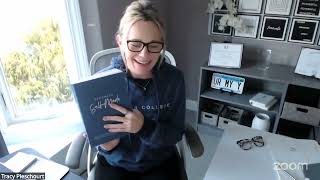
Great. Great. That's awesome. Yeah. And the new books, the we made at the retreat, we made 16 edits. Yeah. I would say they range from major to minor. I, I, they'll be definitely noticeable, and I definitely think that they are really solid edits. And that's in the new book. The book ships today to Amazon, so they'll, it'll be there in, like, in about a week. And so then we'll start the push for reviews and things like that. So timing is great. I mean, for, for the people that did start at the retreat, the timing is actually almost perfect as far as needing to get the next book. And I've been taking this time just to really focus on legacy members like Janet and coaches and getting them into the, to the new system. So I gave myself kind of this month to do that and not putting a pressure on myself to have to market things and just really trying to get my, you know, my sea legs and figure out, okay, what's this going to look and feel like? Which hopefully you guys allow yourself to do that too. I mean, there's been not only the holidays, but we all have had so many curveballs, and we just need this time to kind of recalibrate and ask ourselves, how can we be satisfied with where we're at right now and feel confident that we'll get what we need moving forward instead of feeling like I have to Go back and I have to do this and I have to do that. You don't have to do any of that. Just be confident that you'll get what you need moving forward. Okay, so I'm so glad you said that, Linda. Okay, so I always want to make sure that the I never quite me not having to hit record button throws me a little bit. But in addition to the new platform, I also subscribe to this new note taking system called Fathom. And that's the link that I send on to you guys and it does have timestamps. So if you're in the call and you're like, oh, I want to go back and re listen to maybe something that she addressed specifically to me or there was something that she said that I want to hear again, you'll be able to look through the timestamps instead of having to re watch the whole thing and find it and just go right to that section. It also summarizes it. So I send that link to Fathom to you guys and hopefully you'll find that to be helpful. Okay, so this. Oops. Okay. All right, so if you don't have the book, no worries. The worksheets are inside the membership. They are under the welcome tab and it says 1, 2, 3, 4, 5, 6. These are the things that you need to do immediately upon getting into the the portal. And if you don't have a book, the worksheets are in there and so you can just simply download them. And so that is meant for anybody who doesn't want to have to add an additional expense of buying the book. You can continue to use the worksheets and all is good. That will not keep you from being able to take advantage of this exercise. And this exercise is meant to hold your hand through planning the most optimized week. And we do that through utilizing data. So we look at the past week through the lens of what is it that we learned so that we can use that information to our advantage for this upcoming week. We're also using the goals that we set. And we set these goals every three months. And these goals, you have complete autonomy over these goals. If you decide on week five that actually this goal has either been achieved or it's not that important to me or something else has become more important. And knowing how much time and energy I actually have right now, I going to let this goal go and I'm going to bring this goal online. That's your prerogative and I am here to support you in that. So the exercise that we're doing today helps us not only plan out our week to experience the most optimized week, it also keeps our finger on the pulse of what we decided we want in response to our goals. So what were the goals? Early on you can remind yourself of that. You can go back to pages 18 through 21, or if you haven't yet taken a goals worksheet workshop, take a goals workshop. We do those. The next one is this coming Saturday. And the way we go about that is we assess comprehensively, we assess our life and we find the areas that we are least satisfied with. We find the areas of life that we are least satisfied with so that we can set informed goals. Goals are often set by people and the minute they set them, they forget about them. They become almost spoken dreams. The difference between a dream and a goal is the goal. We're actually going to commit to the strategy of achieving it. We're not just going to speak it out loud. Be like, wouldn't it be nice to be able to make $100,000 this year? There's a huge difference between wouldn't it be nice? And setting it as a goal. When you set it as a goal, you have to do the work to reverse architect how you are going to actually make that happen. And that's what we do here. Okay. And so we assess what areas of life you're least satisfied with and then we set the goals from there. And again, the whole intention is to keep this cycle going on a quarterly basis, on an every three month basis. So when we get to the end of the three months, you can continue down the path achieving that same goal. You can tweak it a little bit. You can maybe go, okay, feel like relationships are in control or they're not as important to me. I'm going to now focus on my fun and recreation. Awesome. Okay, so go back and remind yourself of what are your goals. Even if you haven't done that workshop, this is still a very important exercise because again, we're going to plan out our week. And so now I just quickly, before we start with this week's intention, we want to reflect on last week. And so it's at the end of the week that you're on reflecting on the week that you just finished. Ask yourself what worked? Well, even if you, you don't have an intention sheet from last week to reference in this call, we, we set our intention. So if you weren't on this call and you didn't do that, that's okay. You can still look back at Your week and think about what worked. I actually got to the club. I actually had the phone call with the bookkeeper that I've been wanting to have. I got to the bank and set up that new account. I made an appointment for my nails. Like it can be as significant or insignificant, but if it's things that worked well for you, I want you to jot that down for me. Lots of pickleball. I met new people at pickleball. That was awesome. I have had on my to do list to set a date with my husband. We sometimes are like two ships passing in the wind. We have that date. Gracie and I found the podcast support that we were looking for and I can't read my handwriting. I'm not sure what the other one is that it says, but I had. I. I found things through my weeks that I feel like really worked well. Now, if you're having a hard time and you were here last week, look at your intentions from last week. Look at your to do list from last week. How many things actually got done. Look at your brain dump from last week. First off, good on you for even doing those exercises, even if you only went back once or twice into the brain dump. But you did jot down your thoughts and feelings. That worked, right? You had a place, you had a resource to deposit those thoughts and feelings. So just take a quick look or reflect back and ask yourself what worked well. And then ask yourself, what was it that you were thinking or feeling as you were executing on those things? Because that's a hint. That's a sign. That's data that is so incredibly important and useful for you to learn from and to repurpose. What was it that I was thinking and feeling? Because if that worked for me, why wouldn't I want to put that feeling or to remember to think the way I was thinking this coming week to use that to my advantage? And now, what didn't go so well? Inevitably. Remember, life's 50 50, right? And the key is not make the things that didn't go so well mean something about you and your worthiness. It means nothing about your worth. But you might be sitting here in this very moment feeling so overwhelmed, so sad, so depleted because you didn't have the kind of week that you had intended. It means nothing about your worth. And I want you to just reflect on how true that is for you and sit with that for a moment and recognize how quickly we conclude that if we didn't get something done, we didn't get to the gym, we didn't Lose the two pounds. We didn't eat what we said we were going to eat. How fast we are to make that mean something about our worthiness means nothing about your worthiness. It simply means you didn't get your intentions to the finish line, and that's okay. And we're going to figure out why. And this is gold. I was actually just listening to Mel Robbins and she is. She has a YouTube short out right now that says, the three lessons I learned from the worst year of my life. And she starts off by saying, I want you to learn these lessons so you don't have to have the worst year of your life to be able to learn from. And the number one thing was life is always trying to teach you something. It's always trying to teach you something. And the most important, most impactful lesson lessons come during the hard times, during the resistance. And when you start to wrap your head around that, it's crazy because you find yourself almost being grateful for those hard times because you learned something. So when you have a moment to reflect on what didn't work well, what could you believe to achieve a better outcome? I borrow that one from me, that this outcome was perfect because I've learned something about myself. I've learned what I can do differently next week. And how does that make you feel? Maybe that gives you a sense of freedom, maybe that gives you a sense of peace. Maybe that makes you feel a little lighter and what actions will come from that. Maybe you'll put it down on the list of things to do for next week. Maybe not. Maybe you'll decide, actually, this isn't that important to me. That's why it never bubbled up to the top of my to do list. And then as part of the weekly reflection component, it's really important that you rate your week because we want to look at last week's rating and we want to see are we meeting or exceeding that rating. It's so easy to overlook this piece of it, but the competitive part of me, I like to keep myself. I like to continue to measure, not for a reason to beat myself up, but with the objective of optimizing my life, living the life that I have decided I want to live. So on a scale of one to five, I was aware of my Sabbath. How. How aware of my sabotaging feelings was I? It's just a means to measure your awareness throughout the week. How aware were you of those feelings like guilt, overwhelm, anxiety, anger, frustration, disappointment, resentment, unworthiness, feeling vulnerable or lonely? How often do those Come up. Not to beat yourself up or to feel bad, just to heighten your awareness. Because all of those feelings drive sabotaging results and the best remedy is awareness. So on a scale of 1 to 10, how aware was I of those feelings? And then on a scale of 1 to 5, how much control do I feel over the progress towards achieving my goals? How much control are you feeling? Like, you know what, I'm here today. This is me taking control of what it is I want. I would say if you're, if that's a believable thought to you, then you get to put a five. If you're feeling, you have thoughts like, still haven't. I still don't quite understand this, but I'm showing up to understand it. Maybe that's a three. Maybe you got a lot done last week and you're like, yeah, I feel really good about the goals that I set. And even if the progress is very slight, still made progress. 5. So just put your score down and then turn the page to the weekly intention. And now you get to use what it is that you learned about yourself from last week, from the data that you gathered last week, and you get to set the intentions for this week. Last week is in the books. We get to turn the page, Literally, figuratively turn the page. And now we get to set the intentions for the next week. You keeping your finger on pulse of the goals that you've set. So for mine, I had a financial goal, I had a self care goal, and I had a relationship goal. So I had three goals that I'm keeping in the air that I'm keeping my finger on the pulse of. So I rewrite those goals. It's really important to rewrite your goals every single week for 12 weeks. We are rewriting the goal at the start of every single week. And if you want to know where you find that goal on those SMART sheets, those worksheets, it's the very first section where it says, what is the specific? The S of smart is specific. What's the specific goal? That's where you rewrite it. And then underneath that goal, there may be specific priorities or it may just specifically be that goal that you just wrote. So you're either rewriting that goal or you're kind of whittling it down to something even more specific. So for me, like last week I wanted to launch the membership and. But there was something very specific, like getting all the coaches in was the specific goal for the week last week. Okay, so you can get even more nuanced More specific, under the priority, you don't have to have four, but you certainly can as far as the priorities go. And then we want to whittle it down even further. What are the actions that need to be executed in order for this priority to happen? In order for me to get this out, what actions do I need to take? Now, if you remember, back to the goals workshop, at the very bottom of that Smart Goals worksheet are the actions that we brainstormed. So that's a place that you can reference for actions. But let's say you're somebody who has weight loss. Kim did a great workshop on Thursday, and she's got another one coming up this coming Thursday all about actions in the context of weight loss. Okay? So that Smart Goals worksheet, the actions part at the very bottom is a living, breathing, like resource. As you come up with more ideas, more actions to take that you like, that you want to try, they should go on that sheet because then it becomes a great tool for you to reference. When we're doing this work every Monday, what are the actions that you're going to going to take to execute these priorities? And just as a side note, as kind of a little tip and trick on this page, this is where I start checking things off. This is kind of between this page and the next page, which is the weekly to do list. I look for check marks and I cannot wait to make the check marks. Typically right after this call, I get to work and I get a whole bunch of things checked off because a lot of it is very administrative for me. So blow out those sections. All the actions, whittle it down into so easy, it's hard not to do. One of the things that in my opinion, you guys obviously have committed to an optimized life, you've committed to self, made you somewhere under one of those priorities. Showing up every day, holding yourself accountable to this process should be on there. I don't care if your priorities work. It's a relationship, it's fun and recreation. It's its contribution. Giving this book is one of the tools that is going to get you there. So that is one of the actions. Don't overlook it. Like, write it down so you get the advantage of every time you show up every morning, you get to check, put a check mark next to it. Be like, yeah, this is me doing what it takes. Does anybody need any help coming up with actions? Because I know that this is a process that can be. When you're trying to learn this process, your brain is like trying to wrap around, okay, these are the steps that I need to take. And then you get to the actions and you're like, ugh, I'm out of ideas. Does anybody need any help with ideas on how to execute some of these priorities? Because that's the beauty of this call. You also get help brain corning. Anybody need anything? If weight loss is on your goals, Kim suggested making a decision ahead of time about when, when you're going to eat, what you're going to eat. She talked about getting in enough water. She talked about like the importance of hydration. She also talked about watching the fats or the oils, making sure that you're increasing the good fats, getting rid, eliminating not only sugar, flour and alcohol, but the bad oils, they're toxic. She also simply just said focus on eliminating snacking. Okay, Those are great actions that can be underneath that priority of losing weight. Okay, turn the page. Now we've got the weekly to do's. This is all of the other things that are kind of lingering out there, okay, that may not have anything to do with the goals that we set. This is where I feel like somebody just put like 10 pound weights on my shoulders. It never fails. I turn the page and then I start looking at the weekly to dos and I'm like. Because once I was really focused on the goals I could wrap my head around, okay, these are all things I have to do. And then I turn the page and I'm like, and I gotta go grocery shopping and I have to go see the doctor and like all these other hands. And I'm telling you, one of the greatest gifts is to be able to get all of that out of your mind and onto paper in one place. The same place that holds your goals and all the actions that are going to get you to the finish line of that goal. The same exact place also holds the to do's. The, the chaos that right now is floating around in your head. And maybe it's in the kitchen underneath a magnet on the refrigerator. Maybe it's just something that it's, maybe it's in your text stream. You said to somebody, yeah, yeah, yeah, let's get that on the calendar. And the reply said, how about this date? And it's just kind of nagging on you. Get it out of your head and get it onto paper. Schedule lunch with Susie. These are all the weekly to do's. Reference the emails, reference the texts. Be as comprehensive as you possibly can. Okay, now the next page is the brain dump. I wouldn't say that any of These pages are more important than another. But I do want to highlight this page because I think it's easy to skip. And this is actually a page I want you to come back to every single day. I want you to use this page as a tool. So Kim had suggested in the workshop that this can be the page that when you're feeling an urge to go eat the Reese's Peanut Butter cups, you come back to this page and you write about what it is that you're feeling and what the thought is. I want this doesn't have to be anything poetic. That's usually what it sounds like in my head. I deserve this. I need this. I can eat this if I want to. Nobody's going to stop me. That's usually what it sounds like in my head. So all I do on this page is I write Today's date, so 1:13. And then I simply write the feeling that I'm experiencing. And I reference this all the stinking time. So this is the bookmark that when you buy the book, you get this bookmark. It has a list of. These are actually all the intentional feelings that I want to be feeling. And then on the back are suggested thoughts. I'm. I'm usually pretty good at coming up with what I'm feeling in the moment, if it's negative. But I write, I simply write what it is that I'm feeling. One and two. One to two words. And then I let myself just kind of whine about it. There's nothing wrong with letting your brain, your primitive brain that's scared, that's doing what it's supposed to, it's trying to keep you safe. And so it's out there looking for all the danger. It's often being very dramatic. Give it air time. Don't try to push it down. It's there for a reason. Let it have its time. So just simply put it down on paper. What is it that it's telling you? This isn't fair. I should be better at this. Things should be happening faster. Just write it down again. It helps to be aware. It's so helpful to see how your human brain is working the way it's intended. Your primitive brain is meant to keep you safe. It's always out there scanning for danger. And when it's being hypervigilant, it can really start to pull you down. Awareness alone can be the antidote. So that brain dump page is a great place to go just to simply capture what it is that you're thinking and feeling and try to use it throughout the week. So you're. You're referencing. You're using that tool. You're resourcing it multiple times. So another little tip is I put a book. I put a paper just on that page so I can quickly flip back to it. Because as you get to Thursday, then you're, like, thumbing through, trying to find that page. So paperclip it. Okay, now here's where it gets fun. We take everything that we've learned from the past week, we take everything that we've decided for this upcoming week, and we start to plan. I absolutely love to plan. I think I was put on earth to look forward and plan, definitely my gift. And Kim sent me a text this morning that said, what is it? What was it? Realizing what you were put here on earth to do is.
The meaning of life is to find your gift. The purpose of life is to give it away.
Yes. I love it. I screenshotted it and made it my wallpaper. So true. I so wholeheartedly believe. Okay, so the very first thing I do when I come upon this week is I make it really simple. What's the easiest thing I can do? That's so hard. They're so easy. It's hard not to do. I just quickly put all the dates. So I thumb through the next seven days and I. I actually date out those dates. So Monday, 1:13, Tuesday, 1:14, flip the page. Wednesday, 1:15. The 15th happens to be my husband's birthday. So right under that, I put Bryce's birthday. I always do that if it's. If it's a significant day. Right under that is what I write about, the significance of the day. Thursday 1 16. Friday 100 17. Saturday 100 18. Sunday 1 19. And then that next page is the reflection page. So, so easy. It's hard not to do. That's how I started. And then I look at all of the reoccurring events, the things that, like Today, Monday at 9 Central, you show up to a reset call. So I put 9am reset call. I did this last night, and I had an appointment with a bookkeeper at 10:30, but she just canceled. And that was written in pen, so I just squiggle it out. Now I have some free time. No big deal. I thought it was going to happen. I had already scheduled out my week. But this is why I like to schedule out the whole week with the reoccurring events. And then the morning of, I just kind of reassess and I tweak because inevitably things have changed, which is great. I'm ready for it. I don't make it mean anything. It's perfect. So all the things that you normally do on Monday that you've already got set, you already know, you've committed to, even if it's not a reoccurring thing, it's already on your calendar. And so Monday through Sunday, add those things with the time. If you already know what time you're going to do it, add the time. I work at lifetime from 4 to 8, Monday, Tuesday, Wednesday. So super easy. We record our podcast every Monday at one o'. Clock. All those things hits. I get my. I'm getting my hair done tomorrow at noon. So all you're doing is just simply transferring. I reference my digital calendar for this. I do sort of sometimes peruse my phone. I always have little commitments in there that I've made that I'm like, oh yeah, Sam Sa okay, now it's really important that we do not go any further before we reference our intentions. Okay, so now you're going to go back to that weekly intentions page that we did five minutes ago and you're going to look at the actions under each of those priorities and ask yourself, is it obvious to me where some of these actions can fit in? You just planned out the week with the things that you're already committed to. It should be a little easier to see where you have some open space if you can't actually say on Monday at 3 o' clock or on Tuesday at 11am I can write this newsletter, but you know that you actually have some time. You're just not totally sure what time you're going to be able to pull the trigger, put it under the daily to do's. So this is where my brain wants to get overzealous and it wants to literally go to the actions on the intention page and transfer him to the to dos throughout the week. Because I want to get these things done and in reality a quarter of them typically get done, if I'm being honest, because they take far more time than I ever thought. My Actions like newsletter, the one that we've been trying to create like a sponsorship package that's been on my actions to take for three weeks straight. But I have made progress. It's just not done. And so I find days where I've got a block of time that I'm. I'm pretty sure I'm not going to get distracted by something else. And then I, I can't actually schedule it. It goes under the daily to do's on that day is that Making sense. Does anybody have any questions? So I'm referencing the actions to take on the intentions page that are directly related to my goals. And I also reference that weekly to do those additional things. The doctor's appointments, the grocery shopping, the kids sports. And I put those, I transfer those onto the daily to dos and I also continue to reference it throughout the week. Sometimes a little helpful trip trick or tip. If I have blocks of time and I am somebody that really lives by my schedule, if I have blocks of time, I open I, I schedule it as focus time and I'll put a little note there goals. And then that reminds me that because I have this open time, it doesn't mean I get to go out and grab a cup of coffee and sit on the couch and peruse Facebook. It means, oh, here's the open time that's going to be perfect for me to execute on one of those actions. Sometimes need that little reminder. And it can just be a few of the weekly to dos transfer to your daily to DOS and yeah, okay. And it can almost be organized as like, like immediate, non urgent can do next week kind of. Yeah. I, in my mind the daily to dos. I tell myself these daily to dos are going to get done before my head hits the pillow. If I'm, if I'm not and this is just how I do it. If I'm not confident that it's something that I can get done that day, I typically don't put it on my daily to do's. I will put, maybe I'll be a little bit more generic like get one thing done off of my list. I'll do something like that because it gives me kind of that freedom. But I, I know myself and I tend to be very overzealous and I will plan the heck out of two hours of open time with it not being very realistic. It's not very realistic that I'm going to get all those things done. But if I just actually took 15 minutes to create an outline of what needs to get done in that project, that was progress. And so I've learned to. Instead of asking myself these huge burdens, instead I say what's the easiest thing I can do? That's actually hard not to. That's how I measure and that's how I motivate myself. Easy, easy, easy, easy. I break it down. And so most of the things that hit my daily to do list, they're so simple. They're so broken down and I love putting the check marks next to it. Okay, okay. We are not done yet. So here is where we go. This is the next step. And we're only going to do Mondays. I look at today's schedule, the things that I know at this point in the, in the day, I'm pretty confident this is how the day is going to unfold. I look at my daily to do list and I decide which of these items, which of these items do I want to decide ahead of time how it is that I'm going to feel? This is the biggest gift you can give yourself. I don't care how significant this event is, because even if it is, here's, here's a visual for you. And one of my to do's today is to fill up my pill container, okay. Because it's a pill container for two weeks. So what I do is I throw this on my desk tip every other Sunday and it hits my daily to dos. I mean, it's not hard, right? But. And it's super insignificant. But let's say I'm somebody that like, puts it off and puts it off and puts it off and puts it off and puts it off. Because I'm sitting here thinking, hate doing this. I hate having to spend time doing this. That thought I hate having to spend time filling up my pillow container makes me feel like kind of overwhelmed, frustrated, resentful. Why should I have to do this? This is so stupid. It's a waste of time, right? They're all thoughts and feelings. Maybe I want to decide how I'm going to feel ahead of time about filling up my pillow container. Can be super insignificant, or it could be very significant, like recording a podcast that 10,000 people are going to listen to. Maybe I want to decide ahead of time how I want to think and feel as I'm executing the podcast, right? I get to decide. So pick three things off of today's schedule and. Or the to do list that you don't know when you're going to do it, you just know you're going to do it. Call these things events. And so you feel fill in event one, event two, and event three with what you've chosen. Not we're not going into the thoughts and feelings, but what three things do you want to give yourself? The gift of intention. So just decide right now. What are the three things today that you're going to be intentional about? Event one, event two, and event three. Okay, now go to event one. Doesn't have to be anything earth shattering. Whatever you chose. Now just ask yourself, ideally, how do I want to feel as I am in that moment, executing. Now, I want to give you a little tip or trick. If you're somebody who's like, I can't even imagine myself getting to that moment, then the event is the prep for that event. Does that make sense if you can't imagine yourself even getting to that moment? Let's say you thought the event, a good event would be getting on the treadmill to run a mile. And you're like, yeah, that's a great event, and I want to feel excited. But you're like, I don't even know how I'm going to get on the treadmill because there's nothing exciting about that. Like, that's a thought, right? Let's just talk about the event being the prep to the treadmill. Do you see how I'm whittling this down? I'm telling myself I am picking the easiest thing to be intentional about. It's so easy, it's hard not to do. I'm talking about the prep to get to the treadmill. And remember, you guys, when I was trying to do a mile for 100 days, I started off by just going down, turning on the treadmill, and turning it off and going back upstairs. Literally. That's how I started. Because I told myself, what's the easiest thing I can do that's so easy it's hard not to do? And that's what I came up with. And by golly, it worked. And for 100 days, I got on that damn treadmill because I started to prove to myself, because my brain needed the evidence that it was possible. And so I just took these tiny little baby steps. So you got your three events. Now ask yourself, so mine, one of mine is the podcast. Every week, Mondays are so easy for me because the podcast is always one that I want to be intentional about. So the question is, how do I want to feel while I am actually exiting? I came up with, and by golly, it worked. And for 100 days, I got on that damn treadmill because I started to prove to myself, because my brain needed the evidence that it was possible. And so I just took these tiny little baby steps. So you got your three events. Now ask yourself, so mine, one of mine is the podcast. Every week, Mondays are so easy for me because the podcast is always one that I want to be intentional about. So the question is, how do I want to feel while I am actually executing the podcast? And for me, and again, if you don't have. If nothing comes to mind, this is another great time to look at this bookmark it's all intentional, self made feelings that you can choose from. There's hundreds of thousands of emotions that you can choose from. But these are the ones that for kind of the intentional people like you, self made people that I felt were most relevant. So I put them on this bookmark and then on the backside I suggested some thoughts that create those feelings. So I love the feeling of abundance. To me it is, it's like freedom. It's almost like I'm flying when I think about emotion of abundance. I love feeling that. And if I can feel that way while I'm recording this podcast, I'm unstoppable. So I'm going to put abundance. How do I want to feel? I want to feel abundant. What do I have to be believing in order to feel that way in the context of my event of recording the podcast? And immediately what comes to my mind is there are so many men out there who need us. I wholeheartedly believe that because the submissions to our podcast have, they just keep coming and we keep giving the best advice, the best coaching that keep these men coming back and telling other people about it. And it's just like this ball, the snowball is just off. It's off the charts. There's so many men that need us. And now at 1 o', clock, when it comes time to record that podcast, I actually kind of star the one o' clock underneath today's schedule. So I remember, oh yeah, that's one of the events that I chose. And I go back and I remind myself, what is it that I decided ahead of time? I wanted to think and feel. It's the biggest gift you can give yourself. Now go to event number two. Ideally, how do you want to be feeling as you're executing? You want to feel a sense of clarity? Do you want to feel compassionate? Do you want to feel hopeful, trusting, curious? Does anybody need any help with emotions or what it is that they'd have to be believing? And here's another tip or trick. Often let's say we want to feel creative. And the suggested thought that I came up with, for creative to feel creative, new ideas and solution flow effortless, effortlessly. To me, you got to be honest with yourself. Does that feel true? Because if it doesn't feel true, guess what you're going to be feeling skeptical. That's why affirmations don't always work, because it was somebody else's idea. So you have to ask yourself, you have to check your work. Does that feel true to me? And if it doesn't, then maybe there's a slight tweak to that suggested thought you could make like it's possible that an idea, one idea is going to effortlessly flow to me. It's possible. How does that make you feel? I wonder what idea it's going to be. Checking your work like that, it might actually lead you to changing the feeling. That's okay. That's okay. This is a self made day and day after day after day you are compounding into a self made life. This is what it looks like to take control, to allow even the unwanted feelings be there. Because we realize that it's through those unwanted feelings that we learn a lot about ourselves. So we don't need to be afraid of them. And now do event three the same way. What is it that I want to be feeling as I'm executing that event? And again, if you can't even imagine getting to that event, make the prep to the event, the event and then ask yourself as I'm preparing for that event, how do I want to be feeling? Maybe it's confident because a lot of people that are anticipating an event, they're and now do event three the same way. What is it that I want to be feeling as I'm executing that event? Afraid. So as you are working towards that event, maybe it's confident and a great thought, a great belief for you to try on to create confidence in the anticipation of an event is I am going to take the smallest steps, the steps that are so easy they're hard not to do. Notice how that makes you feel. It's so starkly different than sitting here thinking about the event. Like Anna is getting ready to move back to Florida. And again, if you can't even imagine getting to that event, make the prep to the event. The event. She's probably got a million things on her mind. But if she can believe that it's the small steps that are going to make all the difference. Because it's small steps that are. And then ask yourself, as I'm going to compound, all of a sudden this becomes easy and dare I say, even kind of fun. Lastly, preparing for that event, do I want to be feeling? Maybe it's every single day. I want you to commit to staying aware of those self sabotaging feelings that will show up. Because nobody's going to take the primitive part of your brain out of your head. It's meant to be scanning for danger. But if we're aware of that and we realize all it's doing is its job and it's pointing out all of these Very dramatic what ifs. You don't have to let that take you down the rampant because a lot of people that are anticipating an event, they're rabbit hole of sabotage. You can be like oh, there it is. There's the vulnerability that's coming from a very dramatic thought that my primitive brain is offering. Afraid so as you are working towards that event, maybe it's confident and a great thought, a great me and let it be there. Just allow it to be there. You don't even have to like believe for you to try on to create confidence in the anticipation of an attack it with a better feeling thought. You don't even have to do that. Just awareness alone. So I want you to just check the boxes as you notice you're feeling. It's not a game of how many days can I go without feeling those it's how aware can I be of those feelings. Okay, so I just want you to simply check the boxes. Any questions on any of this? Was it helpful? Event is I am going to take the small. Okay. All right coaches, we do have a call at noon. The link is inside the school platform. If you click under classes, coaches can see steps. The steps that are so easy they're hard not to do. Notice how that makes you feel? It's so starkly different than sitting here. A whole module that says self made use certified coach portal. You can click on that. You'll see the zoom link right there. So it's at noon central. Any questions? Anybody need anything? No? Okay. I do highly recommend if you need additional support on anything that we went over, get coached. Most of you on here are legacy clients or coaches. You get an hour a month with me. Okay. You can break it into 30 minute sessions. You can do the full hour. Get coached. If you're feeling confused, if you're feeling any sort of unwanted feelings, get coached. Okay? Self coaching sometimes does not get you beyond that. Sometimes you need another brain on that. That's what I'm here for. All right guys, we'll see you soon. Take care. Thanks, Tracy. Yep. Bye. Bye. Thinking about the event like Anna is getting ready to move back to Florida. She's probably got a million things on her mind. But if she can believe that, it's the small steps that are going to make all the difference because the small steps that are going to compound. All of a sudden this becomes easy and dare I say, even kind of fun. Lastly, every single day I want you to commit to staying aware of those self sabotaging feelings that will show up. Because no.
More from Tracy
editedMonday Coaching Call Facilitated by Tracy Think Feel Act Cycle Aug 11 2025