Monday Reset Call Jan 20 2025
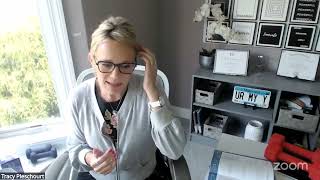
Tracy Pleschourt leads a weekly reset coaching call where participants reflect on last week's goals, rewrite intentions for the next seven days, and break tasks into small, high-probability actions. The framework includes rating your sense of control, brain-dumping emotions, and pre-specifying how you want to think and feel during three daily events.
Chapters
Good morning.
Hello.
How's it going?
Oh, it's so cold here in Georgia.
Oh, give me a break.
It started to snow yesterday. It was so funny. I was coming out of Sprouts. It was probably around 4 o' clock, and they're saying it's supposed to snow here on Tuesday. And I was walking out, I was like, is it snowing? And there was this lady that was walking in and she goes, she starts yelling. Like, I, you know, I didn't. I kind of guess I made eye contact with her. I don't really know.
She goes, it's not supposed to start snow until Tuesday.
It's four o'clock on Sunday. And I was like, oh, okay. She was so funny. She was fired up.
Well, Kirsten and I are not feeling for you right now.
Yeah, no, I know. I have nothing to complain about, but I have got my winter coat on.
It's a rarity.
I've learned not to trust the weather app in New Jersey. It's different on all three of my family's phones. And it.
You just can't. It's not correct ever.
So.
And Gentro is on too, so. Yeah, I just pulled up the weather app. It is currently negative 11. Feels like negative 18. The low today is minus 15.
What do you have your house thermostat set on?
Right. So it, it defaults to 64. And I told my husband, he's. He's up north ice fishing. And I told him, I'm like, if you touch that freaking button remotely one more time, the doors will be locked when you get home. I'm like, oh, my God, what are you trying to do? Like, this is ridiculous. It is freaking cold in this house. And so every time I walk past it, I, like, crank it up. Like, I spin it like the Wheel of Fortune. Like, wherever it lands, that's the temperature we're going to be. So. No, it's. It is set right now, I think.
At 68, but ours is 68 and. Yeah, but that's too hot at night.
It is. I know. Yeah, it is. Yeah, it's. It's been crazy. And then you open up your door and the docks are like.
I was gonna say the bigger problem was the dogs. And I bought little boots for the little dog. He. They don't. They're not the right size, but I had to do a couple trips because his feet get so cold.
Yeah. And isn't it like the worst feeling in the world when, like, you let him out and then they go outside and their paws touch the, The Tundra. And they're like, I can't move. I can't move. You're like, oh, God, I have no shoes on. How do I go out and rescue them? And what's gonna happen? And, like, it's just. Yeah, it is. It just brings such a unique set of circumstances when it's cold. And I went Saturday night. I went Saturday afternoon. I went up to Visit Gracie in St. Louis Park. Gracie had been here on Friday, and she was doing a recording in my car. So I had gotten home, plugged in the car. It's an. It's an electric vehicle plugged in the car. She decides she's going to record in the car. She unplugs it, pulls it out, does her recording, finishes, pulls it back into the garage and does not plug it back in. Oh, no. Yeah. So the next morning, I needed to be somewhere, and it had had 15% of a charge in it, which. Or maybe even said 15 miles. I'm like, you've got to be kidding me. So I texted her. I was like, I go to where I needed to be. Barely got back home, plugged it in really quickly, and I told her. I'm like, I don't know if I can come see you now, because it's a. It's like a drip charge. You know, it's like that's. It's not a supercharger. So I charged for like three hours, got enough that I could get to St. Louis park, hang out with her. We went to dinner, and my car was telling me that you might be able to make it home, but it would be really smart of you to stop at a supercharger. It was so freaking cold. I'm like, I just want to get home. I did not stop at a supercharger. I hit zero about two miles from my home. And it was so cold. And I'm like, oh, my God. Because when your electric vehicle is out of battery, you can do nothing. You have to get. And so I'm just having all of these visions of what's about to happen. Thank God. It over. You know, it. Obviously it has a little bit of spare energy and it got me home. But I was having huge visions of being stranded in below zero temps at whatever time. It was 9:30 at night. My husband's up north fishing. I'm like, oh, God, this was a really dumb move, but all is well. I made it. Oh, wow. Yeah, dumb, dumb. I shouldn't have done that. But we have no supercharger south of the river. There's none the Superchargers are like St. Louis park area. So there was one that was closer to her house, but it just wanted to get home. Wow. Okay, so reset, let's reset for the week ahead. We always start by looking at the past week. So, so I want you guys to be on the reflection page of the week that you've just finished, if that makes sense. And so now you rewrite at the very top of that page. You're looking at the, you're referencing the intentions of that of last week and you're asking yourself what worked well. So the intentions page at the top is a review your goals. So for me it was health and wellness, family and finances. And I, and I actually specifically stated health and wellness. I wanted to strength train three times, I wanted to play pickleball three times and I wanted to do three self care exercises. Family. I wanted to plan at least three connections. I don't know, I'm always about the three number finances. I wanted to get our 2024 finances like done. And we worked with our accountant last week to get all the paperwork in. So that's that. What were. Those were the goals for last week. So now reflecting back on that, what worked well, I can as quickly be like, you know, I got two of the three things done. From a health care standpoint, I didn't do as much self care, but I got the, I got my toning or strength training protocol established. So it's just a quick little blurb. What worked well this week? Some of you don't have to re, don't have to reference the weekly intention page. It might just, there might be a sentence that pops into your head. What worked well and then what thoughts or beliefs contributed to that outcome? Were there some thoughts and beliefs that in reflecting back you noticed you had a lot? I'm tired. This isn't fair. This is easy. I make things harder than they have to be. Like, these are some of the thoughts that I notice that are going through in my mind. And when I think these thoughts, how do I feel? So you're noticing what thoughts and beliefs contributed to your outcomes of what worked well and what feelings do those thoughts conjure up? This is a really good learning opportunity for you so that you know what beliefs, what thoughts work well? What didn't go so well this week? Is there a, was there a conversation that you wish you would handle differently? Is there. I know a lot of people are working on weight loss right now. What was there too many temptations? Did you spend more money than you would have liked? To have spent what didn't work so well this week. And what could you believe? What are some thoughts that are going to help you achieve a better outcome this week? So in context of what didn't work, I always, I believe now I know I was able to learn from that experience, which always makes me feel kind of. Responsible is a good word, I guess when I think that about something that didn't go so well and now I've, I've learned what not to do, what, what works, what doesn't work. I feel a level of like, responsible, responsible. I feel like I'm in integrity when I'm thinking that way. And that keeps me out of that pool of suffering. So it, it helps me just objectively move forward. It helps me move forward without drama. So what actions will come from the feeling of being responsible, Just being really objective about what's, what's coming down the pike? And then on a scale of 1 to 5, how aware of, of the sabotaging feelings and the thoughts that were causing them, how aware were you throughout the week? Did you notice any sabotaging feelings throughout the week? And again, those are listed on a daily basis for you to be able to check off. Where did you feel guilt? Guilt and shame are two biggies for me. I have practiced the thoughts that create guilt and shame so well that they always show up. And so on most days I notice it, which is a good thing because I'm noticing that feeling. I can tether it back to what's the thought? Did you feel lonely? Did you feel vulnerable? Did you feel frustrated? Okay, so on a scale of 1 to 5, how aware were you of the feelings throughout the week and the thoughts that were causing them? And then on a scale of 1 to 5, how much control are you feeling over the progress that you're making towards your goals? So that weekly reflection is just an exercise to really like get back aligned with your goals. What worked? What didn't work? What were the thoughts and feelings.
That.
Were contributing to that? So that going into this next week, the intentions page, you can set intentions with the data. So the first thing I do now you flip the page. The first thing I do is I just date out the next seven days. So we've got Monday 120, Tuesday 121, Wednesday 122, Thursday 123. So today we're doing the weekly intention. Monday 120. This is a very simple first step. You're just rewriting the goals. What are the goals? If you go Back to page 18 through 21. What are the goals that you create? Created for yourself? Rewrite them. This is the opportunity that you have to not lose sight of your goals. We're three weeks into the new year. This is where goals start to drop off. People start losing sight of what was important to them. We're not going to let that happen. We're going to keep our finger on the polls. So evaluate your goals, look at them, rewrite them. And from there, we're going to decide what are the priorities for this week. So again, my goals, health, family and finance. What are going to be the priorities that I'm going to create from those three goals? And so you can write those under priority one, priority two, priority three, priority four. And then from there, we break it down into actions that are so easy to do, they're hard not to. Okay? That's how we navigate this. We determine. We remind ourselves of what the goals are. We determine from there what the priorities for this week are going to be. And then we whittle it down into the actions that are so easy to do, it's almost hard not to. So that we can ensure that those priorities are achieved.
And the goals are on the weekly. It's the four goals on the weekly intention pages, not the daily planner pages. Right.
So, yes, we're on the weekly intention.
Okay.
Review that very first top section where it says, review your goals. Some people. Some people established two goals, some people establish four. So you're just rewriting your goals. And from there, this week, you're determining, okay, what are going to be the priorities? You might not have priority from. Let's say you have a fun and recreation goal. I know a lot of people. Not a lot. I had a few clients who had fun and recreation goals. Okay. And they had determined as part of that goal setting exercise that reaching out to three people a week for, you know, some sort of date was part of their goal. Okay, this week, because we're living in Siberia, maybe you're gonna decide ahead of time. Yeah, I'm not leaving the house. So this week that's not my priority. This week I'm going to prioritize. I'm going to create priorities from the other two goals. You get to decide that. So typically, I have four priorities. This week noticed I only have two because they're big. One is dating with Gracie, and the other one is self made you. Those were very big priorities. And then there were actions underneath both of those that were. They're hefty. And so I did not. I'm not Prioritizing a family connection. This week, I'm not prioritizing finances. I guess I'm not prioritizing health. And the reason why is because for me, I'm on week 10, and the health goals are. Are built into my day now that I don't even have to prioritize it. I don't even have to try. Like, those goals have become a habit. It's part of my daily. So it's really not necessary for me to prioritize that. So I'm shifting my focus. Does anybody have any questions on any of this? I know goals, priorities, actions can get a little bit, I don't know, mucky. So I want to make sure that you're understanding how to use this page.
Tracy, can you give me a specific example on one of the health and wellness goals that you had that has now become a habit?
Yes. In just 10 weeks? Yes. Okay, so my health and wellness goals were. It was self care at least three times a week. It was strength training at least three times a week. And it was playing some sort of, you know, sport, AKA pickleball, three times a week. That is what my health goal. When I. When I created that goal, underneath the actions on page 18, underneath the actions, I had a whole list of things that I could do to achieve that health goal. And the health goal for me was mental, physical, emotional, metabolic. Okay. So it was very comprehensive. So self coaching is something that literally this butt hits this chair, and the very first thing I do is open up this book and I do my self coaching. I decide ahead of time how it is I'm going to think and feel about three events every single day. I don't have to prioritize it anymore because it's become part of my daily routine, the strength training. I've now decided that Monday, Wednesdays and Saturdays, I do this strength training, and I do it right before I go into the, you know, work at Lifetime. And then Saturdays I play in a women's league. So I go do the strength training on the front end. So now I. It's not even like I have to schedule that anymore. It's not something I have to focus on. It almost has become a habit. Same thing with the plane. It's all scheduled. I've got into this pattern of scheduling. It. It's not that I'm not going to do it. I am still doing it, but I'm not going to focus on it as a priority because it's become a habit. Did that help, Kim? Yes.
And I, you know, it's Happened organically. And I'm glad you explained it that way because it's kind of like, all right, well, you know, you don't need to keep focusing on it, so you can then open up a spot for something else.
Yes. Yep, that's exactly it. And this week is hefty. The two businesses that I'm like, business priorities that I'm focusing on. And so I'm like, why am I even listing this health thing when it's like, it's. It's a checked box already? And the actions for both the businesses are. There's just a lot of them. So I just left it at two. But prior weeks, I had four priorities with all of the actions underneath all four. So I just wanted to mention that because every single week you are resetting, you can take this exercise and. And make it your own. But I would encourage everybody who does this reset every single week to do it from a place of love, from doing it. Do it from a place of compassion for yourself. This is not an exercise of brow, beating yourself into compliance. That's not it. This is an exercise of loving yourself, setting yourself up for success. That's why when you're looking at the actions. So I've got, let's say the. Let's say family was one of my priorities this week. The actions is like, what are the actions that are so easy they're hard not to do? Well, maybe make a list of who it is that I want to connect with this week. Maybe it's now the next action is looking at calendar, figuring out where the openings are so I can offer those up. Maybe it's deciding. I'm going to call my grandma. Okay, these are. This is what I'm talking about when I say actions that are so easy, they're hard not to do. Does anybody need help? For the coaches on the call? This is the point in time where I envision we will have a lot of people on this call who will be saying, okay, my priority is to lose two pounds. What are the actions that I need to take? Can you help me with that? Okay, this is the point in time where we ask, does anybody need any help with the actions that you're going to take this week? Because we just did the weekly reflection. You just realized you didn't lose any weight and in fact, you gained weight. Okay, so what are we going to do different this week? Okay, so that's what the intention page is for, is to decide what are the actions that I'm going to take this week? You're Making a decision ahead of time. Not in a condemning way, in a very loving way.
Does the updated planner have that little blurb in there at the top or something? It's just like, decide what the actions are going to be to kind of help describe the page a little more.
Are you looking at this page where it says actions to take?
Oh, nope, I'm on the weekly intention page. Oh, my God.
Yeah. So the weekly intentions is reviewing, putting your finger back on the pulse of what the goals were, what the priorities are, and then the actions that you're going to take to achieve those priorities. So that's kind of like our weekly. Well, it's our weekly intention. It's like, it's our declaration for the week. So a lot of times when I get done with this page, I'm. And I would say it's if I do this on Sunday night or I do it Monday morning, but a lot of times when I get done with that page, I'm like, whoa, I got a lot to do. And I feel a little bit pressure. Okay. And that's because I also know that there are so many other to do's lingering out there that have nothing to do with my goals. So for the last three weeks, I have had on my weekly to do's help Gracie get her bank account connected to the new stripe. Now Gracie's the one that actually has to do this, but I'm the one that behind the scenes going, did you get it done? Did you get it done? So it's still on my to do list. It's things like that. Okay. Coordinating. I need to coordinate a pickleball game with my sister's family that we gave them as a gift for Christmas. We've got friends coming into town the last week in January. We're trying to figure out a dinner date with them. Trying to get a birthday card in the mail to a guy in the UK that Gracie and I know. I need to mail out our tax documents and I have a podcast clip that I want to make. Those are all things on my to do list that don't have a lot to do with goals. They didn't hit the actions on that weekly intention. But this could be like, get to Costco, pick up a prescription, take the dog to the vet or the groomer or whatever. This is the weekly to do list that you are, like, feeling like this is the catch. All right. Here. So it's not in your phone, it's not on your desktop. It's not. It's not magnetized to the Kitchen to the refrigerator. All right, here. And reference last week's to do list. Reference last week's carry over anything that didn't get done. Reference the Daily Planner pages from last week. Capture those things that didn't get done that you still are interested in completing. Because this is the point in time where we're being really comprehensive so that you get off this call and you're like, all right, I've got it. This is what needs to get done this week. And if it doesn't, it'll be carried over into next week because I've got a system. That's my thought. And now the next page, because this is a two page spread to do and brain dump the next page. I want you guys to just put the date 120 and I want you to list how you're feeling right now, this very minute. You can reference your bookmark, you can reference. These are all positive emotions. Maybe you're not feeling a positive emotion. That's okay. It's just being honest with yourself. How are you feeling right now? And next, ask yourself, why? Why am I feeling that way? What is it that I'm thinking that's generating that feeling? We call this self coaching. We call this the brain dump. This is just getting the thoughts and feelings out of your head. Okay, from here I want you to turn the page. And now you're on your first of seven daily planner pages. So you date it. Monday 120. You look through your digital calendar, you look through your phone, all of your commitments for the day, you're on this call. So 9:00am Central Standard Time, 10:00am Eastern, you've got the reset call. I had a call right before this. So I had an 8 o' clock call, I had a 9 o' clock call. 1 o', clock, we're recording the podcast. 3:30, I leave for Lifetime. I have the time that I'm going to be at Lifetime locked in and we have a birthday party this evening. Okay, that's what my Daily planner looks like. It's not any more elaborate than that, but it helps me clearly see where I have the openings so that I can be really intentional about how I'm going to use those openings. So for people who are wanting to lose weight, they can clearly see when they can eat, when they're fasting, they can, they can write down what it is that they want to be eating at what time. Now I want you to look, look back to that weekly intention page and look at the actions and determine, do I have space today for any of these actions so that I can move closer to my goals. So that I can not only get through the things that I've committed to getting through, but do I have space to actually make progress on any of these goals? Look back to that intentions page, look at the actions. Do I have space? You might not know exactly what time you could do it. And if that's the case, then I would just put it under the section that says daily to do's. This is the point in time where I actually go through my entire week and any sort of commitment like reoccurring event. I know that every Wednesday we've got the group coaching call. I know where my one on one, my one on one calls are this week I fill all that in for the whole week. I know where I'm playing pickleball, I know what time I'm in lifetime. So my whole week I just quickly schedule in those commitments or reoccurring events. I personally, once I have that, I have a very clear vision of where the openings are. I actually look back on that weekly intention page and I schedule some of the actions for the into the week. So right now I'm making some copy changes to the website and so that's going to be a priority for me. I'm going to schedule that right now. I can clearly see where I've got some openings and I'm scheduling that into my daily planner and I can see that it's going to fit tomorrow. And if you cannot schedule that but you know, okay, but some at some point tomorrow, I don't know exactly when but at some point tomorrow I'm going to get these copy changes done. Then I'm going to put it on the daily to do's of that day. And for me, if it's something that I put in the daily to do's, I'm pretty good about not going to bed until I know those things are done or I move it to the next day. I do that all the time. So it's this is my commitment. These pages really reflect my level of commitment to the things that I'm wanting to get done. The things that make up my day, the things that get me closer to my goals. Okay, go back now to if if you were scheduling ahead into the week. Now go back to today as date the Monday 120 daily planner. I want you to review the things that are on your schedule today. I want you to review the things that are on your to do list and I want you to pick three events. Event one, Event two Event three. So right in pick your three events and write it in into the event one event two event three boxes and this. So like the podcast we record every Monday, the podcast is almost always an event I choose and and I can't tell you guys it is night and day difference, night and day. If I do not decide ahead of time how it is I want to be thinking and feeling going into that podcast. It's clear. It's evident in post production. You can tell. So podcast is always one of my events. How do I want to feel? Clear is a really good emotion for me. Abundance is a really good emotion for me. This again, this is where you would use this bookmark because these are all the emotions that are going to help you move closer to your goals. These are very motivating, positive emotions. So reference your bookmark.
It.
Now let's say that your events are outside of sitting next to this book. Something that I love to do is I love to set my alarm for one minute prior to that event happening. And all I do is because you can label your alarms at least in an iPhone, you I have hundreds of alarms set, but I just go to that. I re. I edit the name or relabel it and I actually label it with the thought and the feeling. So at one o' clock when we're recording the podcast 12:59, my alarm goes off and it says we will help every man who wants to be helped. Which makes me feel excited. It's a great little hack to get yourself back into that place. You've done the work. You've made the decision to think and feel with intention. Don't forget he said label the alarms.
With the intention, not how you with.
With the thought. With the thought.
The thought.
And I mean this book does ask a lot of you. Like it is something to be really proud of when you are taking. When you're being deliberate about your thoughts and feelings all day long. It takes a lot of energy, takes a huge commitment. One of the, one of the asks is that you stay aware of those sabotaging feelings that come over you throughout your day so that you can remind yourself that that's just my primitive brain scanning the landscape for lots of danger. It's doing its job. It doesn't mean you're in danger. It's just doing its job. It's on the lookout. It's offering you very dramatic thoughts which in turn create self sabotaging feelings and results. And so simply by being aware of them you can temper that. And that's what the bottom of these pages are for is so that when you're feeling it, you pause for a moment and you just go check the box and you remind yourself that that feeling is a result of my primitive brain doing what it's intended to do. It's out there looking for danger, and it does it in a very dramatic way. And I don't have to feel this way. I can spend the 30 seconds it takes to question that thinking, okay, what kind of questions do you guys have? Tell me. I just would love to know, honestly, how far did you get? Did you get your weekly reflection done? Did you get your weekly intention done? Did you get today's schedule done? Were you able to pick three events? Is there anything you didn't get done? Jen?
Sorry, someone's texting me. No, I don't have it all done. I did and I always start ahead of time, but so I had like, my weekly intentions page done already. And then so on this call, I did my weekly to do list. I started laying out my week, but I have a lot. It would take me. It takes a while to get everything on my. On my plan. So I'm focusing on the things that are relevant to my goals or kind of.
Great. Is there anything about this process that's hanging you up, that's keeping you from being able to move forward?
No.
Okay.
I just need to, like, on the call, I get some done, but honestly, like, I. I have to have, like, quiet. No, no, like, this is helpful, but, like, I need, like, quiet time to just.
Yeah.
You know, and then I'm finding that I. I don't know if others do this. Probably I'll have the same actions. Like, some of them get done, a lot of them don't. And I just feel like I'm moving them from week to week to week. And so then I start feeling bad, which I know it's not supposed to. So I'm like, okay, why is it that I really don't have time to get them done? Is it that I'm avoiding them? And it's kind of. It's a combination, honestly, of.
Yeah, you know, is it really that important? Like.
Right.
That's often the case. Is that it's really not that important to us. That's why it just keeps getting, like, pushed down on the priority list. And so if that's the case, is this something that I could let go of? Yeah, like.
Or, like, why am I avoiding scheduling my. I'm not really. Like, I just need to schedule a bone density scan. Why haven't I done it in the last month. And I don't, I just need to do it. I just need to put like 15 minutes on my calendar and do it right.
Okay. So that's when. So something like that. I ask myself, what are the steps to getting that done? Like reverse architecting it and just whittling down to the easy steps. So it's like, okay, I'm going to block out one half an hour in my calendar from, you know, right after this call, I'm going to find the phone number, I'm going to write the phone number in my daily to and I'm going to call, leave a voicemail. I'm going to call multiple times until I talk to somebody so that I get that schedule. So the breaking it down into super easy steps, it's blocking out my calendar, it's finding the phone number and it's calling maybe once, maybe five times until I get somebody. Like those are the steps and I literally write those down so that I have at least three things to X off. That got me to the outcome I was looking for. Because scheduling a bone density scan sounds a hell of a lot harder than doing those three little micro steps. And so it is, it is a way to really quiet that primitive brain that saying this is way hard. I don't know where to start. Yeah, I also find.
And then I'll be quiet. I also find when I have like gaps in my calendar, I don't like to fill them up. Like I. So I. So that I sometimes, sometimes I'm really productive and get stuff done. Sometimes I, I'm totally unproductive because I just have a gap and that. And I think it's okay. Like maybe, maybe just schedule. Like I don't have anything for 30 minutes at this time and I'm gonna just like go walk on my walking pad.
Right.
Versus feeling like every minute has to be scheduled.
Right.
And then when I don't get things because I'm over scheduled. Right.
Yeah. When I start.
So it's okay to have downtime even in the middle of the day.
Yeah, that's so good to know. And I, I purposely like, the reason why we took the times out is because I like to schedule. You know, the 9 o' clock is up at the top, the 1 o' clock is midday, the 7 o' clock is at the end. And I like to have a lot of blank space and I don't schedule. I mean, it's kind of vague what it is that I'm scheduling because I know that about myself, that if it Looks like every line is filled in. I'm like, yeah, this is going to be a rough day. Like, that's exactly where I go. So I know that about myself and I like to give myself a lot of white space. A lot. And that's part of my self care is to let myself like get up and run into the kitchen and grab another water Diet Coke and come back and not be super regimented. So I've learned that about myself through doing this. It's not an exercise in brow beating. It's not an exercise in filling up every hour of the day. It's an exercise of being intentional. That's the exercise, I think, prioritizing. Yeah. Kirsten, how about you? Where are you at with this?
Well, and I was going to say on the, on the calendar part, like, I don't want to put everything from my like, workday in there. So a lot of times I just have it like a bucket of like, yeah, eight to five downtown. But I still might have things in, in that bucket, though, that are an event.
Yeah.
That I'm focusing on, but I'm not gonna. I don't want to transfer it all back and forth.
Right. Yeah, I don't think that's a good use of time either. I do think I like the way you're doing it. And I also think that when you've got that bucket of time scheduled for whatever, 9 to 5, you also get to use that as an event that you're going to decide ahead of time. How am I going to think and feel about being downtown from 9 to 5, like, and all the things, you know. And of course, if you did schedule, like, let's say you have an interview and that falls between that nine to five and you actually slated that, that gets to be an event that you might want to decide ahead of time how you want to think and feel. So I 100% agree with the way that you're doing it. Just don't forget that those get to be considered events that are probably worthy of being intention. Intentional about.
Yeah, I mean, that's a really good point too because there's many. Like, because sometimes I'm like scheduling like, okay, like Wednesday, I could run home at noon and work from home half the day. But I'm not like, sometimes I have to prepare myself to be downtown all day.
Yeah, right. Yeah. And noticing that how you default to thinking and feeling about having to be downtown all day and asking yourself really honestly, like, do I want to feel this way? Sometimes the answer is yes. Sometimes it's like, maybe your thought is, this is the grind, and I am proud of being able to kind of grind my way through it and not having to love it. I can get things done even if I don't love it. That's a great thought. That might be very motivating to you. So there's no judgment here. It's like, but you have to be honest with yourself and ask yourself, how am I, by default, thinking and feeling about these events? Is there any room for shifting? And 100. It comes back to your opinion. Your opinion is the only one that matters.
Yeah, no, I like that. And I'm thinking, like, this week, like, one of my, like, priorities this week is yearend reviews. I need to get them done and get them out.
Y.
Do I make that, like. Like, every day? It could be an event. Yeah, right. Do I look at it, like, every day as an event or 100?
100%. A lot of my events, day after day after day are the same thing because it's. It's a project that I'm working on throughout the week. And I see such a big difference on when I'm intentional about how I'm thinking and feeling about that. Like you just said, these have to be done. Right. Which might make you feel like, for me, when I tell myself this has to be done, come or high water, immediately I feel like somebody just loaded £200 on my shoulder and it's like, okay. And when I notice that, that's when I'm like, okay. That's not the way I'm going to be thinking about this, because that's going to slow me down. That's going to make a less than enjoyable experience. So instead, I'm going to. When I look at that event, I'm going to think that I'm going to get this done in baby steps. I'm going to do this in the easiest way possible. I'm going to challenge myself to think about this event differently. All of those are thoughts. Even though it gets very meta, it's. They're all thoughts that make me feel different than I have to get done, come hell or high water, which is the way that my primitive brain operates. That's the default thinking, and it slows me down, and it just, like, compounds the disdain that I have for jobs like that. And so it's like, absolutely. I don't want to feel this way. I want to actually enjoy this week. And it's. It's only within this exercise that you get to catch that and you get to, like, tweak and refine and like curate a week that's going to work for you that you at the end of the week get to be like, damn straight. This week was self made because I was super intentional from the jump.
I like that because I look like as we're going through like the weekly to do because it's like so much in my head as I listen to you say it is have to, I have to do this week. Like I have to do all these things this week. And it's such a difference. Like when you say it, I'm like, yeah, that does sound pretty. Like, do I have to, like, am I making it harder?
You know, and we're not necessarily trying to change the vernacular into, you know, sliding down rainbows. That's not it. It's just noticing if the vernacular in your head makes you feel something that you don't want to feel like, that's it. That's the, you got to be honest. You've got to have that evaluation component. And it's like, even if you're shifting to more of a neutral feeling, that's better than the daunting feeling. And so you'll notice the progress, the difference, the contrast in progress when you are intentional, even if it's to create a neutral feeling, it makes a huge difference. Yeah.
Okay. I like those.
Awesome. Kara, how about you? Oh, no.
So I kind of have to go day by day because my, you know, I was struggling a little bit to pick the top three events because for some reason I just think big events are more important. And so I have, so I, I. But then I, you know, realized like, it doesn't have to be a big event. It could just be something small, like stretching.
Yeah. Yeah. Yep. That's really good awareness that you're having that your primitive brain says it has to be three events. I would, just to clarify, I would only do the events piece on the day of. So just today, today only is when you're picking the three events. And then now tomorrow you'll pick the three events and decide how you want to think and feel about those tomorrow.
Right.
Okay. And so one, my brain used to do that too, would say these events need to be very significant. You know, don't waste, don't waste your choice on something insignificant. My brain used to always tell me that. And what I have done with that is I challenged myself to pick some of the most insignificant, like vacuuming my room. It's so stupid. It's so stupid. But what it does is it shows me that even if I'M intentional about how I want to think and feel about something insignificant. It changes the trajectory of my day. And so nothing too insignificant or too significant to choose. It's, it's, it's an exercise in really better understanding yourself.
Yeah.
And, and when you start using that example, it's insignificant. But considering some circumstances like we have three dogs and my husband is like low key allergic. So vacuuming is kind of a big deal because we always forget it. But it helps him feel better sometimes even though he doesn't have allergic reactions, like it's still healthy for us. So we're not breathing and dog.
Yeah. So that's an event. That could be an event. And your thoughts and feeling like the feeling that you're going for is maybe responsible. I don't know. That one always comes up for me is like that's a very responsible thing for me to do. I want to feel that way. And then my thought that generates that feeling is I'm not only doing this for me, I'm doing this for my husband and for the dogs.
Yeah, yeah. It makes you feel like an adult. I'm adulting today, but make my floor. Okay.
Yeah.
So even insignificant or things that are perceived as insignificant can have significant.
Yeah, yeah.
Like my small thing was stretch. But that is significant for me because I wake up with back pain, but if I stretch more then I wouldn't. And so it's like this vicious cycle that. Yeah, that's one of my goals is trying to like just.
Yeah, awesome.
But yeah, so I, I planned out my day and for, you know, I, I did include work stuff, but it was overall work stuff instead of, you know, like the, the full breakdowns. And I knew that I had a busy day, but now I've got a really good.
Yeah, yeah, yeah, yeah. Well that's, I mean, and that's good. It's like if this exercise heightens your awareness, that's a good thing. That's a win.
Yeah. Yeah. And I love.
I'm a Scorpio.
I love lists. I love to do and check out. So it works.
Awesome. Hey Kim, how about you?
Hey.
So I would say I'm good with the weekly intention. I get that there I go and do my weekly to do's. I'm probably focusing more work stuff there and then I get what I have knowledge of scheduled. But some things like you know, you were saying that don't really require the intention anymore. It I don't put on there. Right. Like if it's just for example, like I use an app to, to schedule my workouts and I, I just do that. Like, it's just automatically, I'm, I'm booked out. My workouts are booked out like two weeks ahead of time.
So.
Yep, that's not something I really have to focus on. And I mean, I, I don't really have like, events that I have to like, set myself up to be positive about at the time. Right.
Like, so, okay, so two things I want to say. Even if you don't have an event that you're like, okay, there's nothing obvious popping out at me. Let me play around with this. And I just, obviously we're good friends and I know kind of how your day unfolds. But like, I know Brandon calls every day on his way to work or on his way home. Chandler usually calls on a drive. Like, you know those are going to happen.
Yes.
Why not pick something like that? So Brandon's phone call. How do I want to feel about that? Challenge yourself to pick something that is not like a default setting. Like, we love our children. We most the time love when they call if they're not asking for money. So challenge yourself to pick like something like trust, trusting. And then ask yourself, what would I have to be believing in order to, to feel that emotion?
Okay.
In the context of that phone call. So this again is more of an exercise in self, like awareness and self development and really understanding yourself. Events don't have to be big deals. Yeah. You don't have to pick them in order to get a different outcome. Sometimes you're picking them just to learn something about yourself. And then secondly, I love the fact that like you're in this habit of using this workout app and so it's nothing that has to have a big focus. But let's say at the end of next week when you're, or at the end of this week when you're reflecting back on the week and you're like, crap, I didn't get to a workout, like, for whatever reason or I only got to half the workouts I typically get to. Now you can say, okay, well that didn't work this week. So now what am I going to do different? Maybe I'm going to put more of an emphasis on using that app this week. Oh, you're going to catch it. This is kind of a no fail approach using this book and this system to being really intentional and getting the, that you have decided you want to achieve.
Achieved.
Okay, I like it. Okay, great. Thank you guys for being here. I hope that this was helpful for you. Now I challenge you to not just let this. Now don't close this book and not reference it throughout the week. Literally. This is a daily exercise. Every single day. You're going in, you're, you're manipulating the schedule as necessary. You're adding more to your to dos. You're reflecting back on that weekly intention page. You can't lose sight of that. You're asking yourself, how am I feeling? You're writing that into the brain section. Why am I feeling that way? That's your journal section. And then picking those three events every single day that you're going to be intentional about and staying aware of the self sabotaging feelings. It's a huge ask, but this is what a self made life looks like. It looks like staying intentional moment after moment, hour after hour. All right, have a great day, you guys. We'll see most of you later on this week.
More from Tracy

editedMonday Coaching Call Facilitated by Tracy Think Feel Act Cycle Aug 11 2025