Monday Reset Call Mar 31 2025
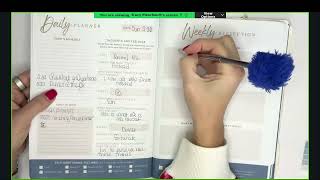
Tracy Pleschourt leads a weekly planning session where participants review what worked and didn't, then set concrete changes for the week ahead. The focus is catching primitive brain thoughts that sabotage you, then reframing them into tiny actions like five minutes of reading instead of avoiding the task entirely.
Chapters
Good morning.
This meeting is being recorded. Hi. Hi.
You look colorful today.
Thank you. Oh, switch camera. Oh, there we go.
Hey, Salvador. Yeah.
Okay, let's see. Oh, there we go. Give it another minute. Let people get in. Good morning, Kiki. I was just recording everyone. Sorry, sorry. Good morning, everyone. I'm having computer issues. So I've got my laptop in one place that is working and my computer which is not working. So I'm running between the two. Okay. I was just recording a video talking about the becoming self made membership and what we do. And I had you, Kiki, in my mind the entire time. I was talking about like the type of woman that is in the, in the program. So you helped me tremendously. Whether you know it or not. It was so sweet. Is it cuz I'm really crazy. No, it's not. Here comes Jen Truman. Does anybody have any idea why Chrome should be playing up so badly on my computer? I want to grow. Why? What? Chrome is just messing up my computer so badly. It just won't open and then it just. It freezes my entire computer. So I don't know. Okay. I will have to be here. All right. That's okay. Good morning, Sandy. Hello. Hello. All right, we will go ahead and get started. I think there'll be more people joining us. Thank you so much for coming today. This is the reset call. This is where we take advantage of an hour to plan out with intention the way our week is going to unfold. So for those of you who have goals, big or small, this is our time to plan out the week, keeping our finger on the pulse of those goals so that we continue to progress. It is so easy. I just finished recording a video talking about how easy it is to set goals and then to forget about them. And it's kind of funny that tomorrow is April 1st and it always is that like, you know, the start of the second quarter where people look up and they're like, oh my God, I made zero progress on these big New Year's resolutions that I made three months ago. And so we do not want, nor will we allow that to happen. We want to make progress towards our goals. Not in a grippy way, not in a way that feels like we're kind of being beat, to actually make progress. We're making progress in a way that actually that feels good, that feels powerful. And this is how we do it. We meet every single week. We carve out the time to make intentional decisions about where it is we're going to be, what it is that we're going to be doing, how we're going to be feeling and what we need to be thinking in order to feel that way. That is the formula that works that keeps you in the driver's seat, that keeps your primitive brain in the back seat. Our primitive brain is trying to keep you safe. Like essentially it's trying to keep you safe, but it does it in a very destructive, sabotaging way. Your primitive brain is constantly seeking pleasure. So if you're somebody who's trying to lose weight, it's telling you you need to eat that cookie. You need. If you, if you're somebody who's trying to quit over drinking, it's telling you you need to have that glass of wine otherwise something is going to go terribly wrong. Right? It's very dramatic and it's trying to keep you in this safe place of not being doing anything different. It's seeking pleasure, it's avoiding pain and it's trying to always take the easy way out. That is a deadly combination. So we want to keep the primitive brain in the back seat. How do we do that? We poke holes in the thoughts that it's offering us. It's always dramatic, it's almost always a lie. But if we don't question it, we'll believe it and we will operate from it. And that is what sabotages us. It's what sabotages our moment by moment day. It sabotages our goals. So being intentional is the antidote. So how we start, if you are inside of the Becoming Self Made Planner, we always start with our weekly reflection. So we're reflecting back on the past week. So I want you just to take a peek at the past week, look at everything you have accomplished. Look at where you started. If you were on this call last week, you did these pages. Okay? That is a step in the right direction. So I want you now to answer the question, what worked well this week? And I want you to be very factual. What worked well? Give me the facts. What are the things that have check marks next to them? What are the feelings that you actually created? Did you pay attention to the self sabotaging feelings that were showing up? What worked well? Notice how your brain wants to jump to what didn't work. I want you to resist the urge to give that any time and stay focused on what worked well this last week. Okay? It's always helpful for me to just kind of peruse last week's calendar to come up with that answer. So what worked well last week? It. Okay, so now from that high intellect place where we were looking at the facts. I want you now to indulge in the answer of what didn't work well. But I don't want you going into the drama that your primitive brain wants to offer you. So the primitive brain wants to beat you up for all the things that didn't go so well last week. And I want you to resist the urge of swimming in the pool of drama and just state the facts. What didn't work well, what didn't work last week? Just the facts. It now, what are you going to do different this next week? This upcoming week? You have the facts of what works and what didn't work. Now I want you to use your prodigy brain, use your prefrontal cortex to come up with a strategy of what you're going to do different this week. Maybe it's a different focus. Maybe it's a different feeling that you want to generate. Maybe it's a different thought that you want to work on believing. Maybe you want to delegate a specific task that keeps going undone week after week after week. Maybe it's a task that you simply want to delete. Maybe you're realizing it's really not that important. Maybe it's something you want to postpone. Maybe it's something that you want to add. What is it that you're going to do different this next week? All right, now I want you to rate your week on a scale of one to five. One being not at all. Five. Being highly aware. How aware of the sabotaging feelings were you? Did you notice anxiety, guilt, overwhelm, anger, disappointment at all through the week last week? Heightening our awareness around these feelings is a good thing so many of us want to avoid. We want to hide from from those feelings. We want to shine a light on them. We want to understand why they're showing up. When we understand ourselves, we can more accept ourselves as a human being. We are meant to have those emotions. When we understand those emotions, we're way less likely to compound any sort of suffering by making it mean that we're broken or that we shouldn't be having those emotions. Feeling frustrated and disappointment, feeling resentful, is all very normal. We want to connect the dots as to why we felt that way. What was it that we were thinking that generated that feeling. When we understand that, we are far less likely to to experience that feeling and subconsciously make it mean that we're broken. We are supposed to be feeling those things. The the this exercise is not to eliminate those feelings. It's to eliminate the self sabotage and Self sabotage is when we compound the painful feeling with suffering by making it mean that we're broken. We are not broken. We are supposed to feel those feelings. Understanding why is the key. Does anybody have any questions on that? Checking the boxes day after day after day is what you're supposed to be doing. You're supposed to recognize those feelings. I do not believe for one minute that anybody goes through the week without feeling those feelings. Okay, so the goal is not to have any of those boxes, is not to not have those boxes checked, is to become aware of when you're feeling that way. So on a scale of 1 to 5, how aware of those feelings were you throughout the week? And how much control do you feel over the progress that you're making towards your goals? On a scale of 1 to 5, how much control do you feel over the progress? Go ahead, Salvador. I'd love to hear what you have to say. And you're on mute. Hello.
When you have those feelings, like the self sabotaging, what that made me go into. When I first started self development, I would get the thoughts of obstacles instead of what I wanted to achieve and I would let the obstacles hold me back. I surpassed that level. And then after that came the I deserves, I deserve a day off from the gym. I deserve to eat that. I deserve. I've pretty much overcame that. And now this is like unknown territory. Unknown territory for me. It's almost like I don't feel like it and like it's just like no matter and there's no, like there's no pain there. There's no negative self talk. It's really just like playing and sometimes it's really hard to want to read. Like my challenge last week was reading more and I didn't do so because I didn't feel I was indifferent about it. Yeah, maybe you have a perspective on that.
Yeah. Yeah. So was it scheduled? Were you intentional about it or was it just a goal that was sort of thrown out there without a strategy? I'm curious.
So now this week I can be more intentional and scheduling things. I've been working 6:12, 7am to 7pm so it's. I read when I'm at work, it's all just whenever I find time because the non negotiables that I have in the day is like waking up at 4am, cold showers, meditating, affirmations, and boxing. So on top of that, it's just.
Like, yeah, so the thought I just don't feel like it. And all of the other things, all of the other Non negotiables are a lot. Those are two thoughts that are probably working against you. So even though the non negotiables that you are successfully executing on are like they're being made and they kind of, they look pretty the from a distance, it's like, okay, I'm doing it. But if you have a subconscious thought that this is a lot, it's going to make you feel entitled to not feeling like doing other things. Does that make sense?
Yeah, absolutely.
Thank you. Yeah. And so that's the sneaky thought that we need to work on that it's a lot. How about like, these are the things that I've chosen to do that make a difference in my life. Because at any moment you can choose to eliminate any of those things. You can choose to alter kind of the schedule. You have agency over your schedule. And you can also choose to put in five minutes of reading time here and there and choose to believe that that's enough. Our primitive brain wants us to believe there's no way that's enough. It's got to be at least a half an hour. It's got to be at least a chapter. Right? That's the type of self sabotaging thoughts that our primitive brain is going to offer us. And we have to poke holes in it. Because if progress is the objective, five minutes makes the difference. If progress is the objective, understanding the thoughts that our primitive brain is offering us makes a difference. Those are huge wins. So we're really breaking down like what it is that we're being intentional about. Like to the nth degree. It really gets broken down into the way we're thinking, the way we're feeling. That makes all the difference. That's what this program is all about. Everybody thinks it's about the hacks. It's not about the hacks. It's about the way we're thinking and how those thoughts make us feel. Those feelings drive our behavior. So if this is all about the hacks, we'd spend this hour giving each other tons of advice, which is kind of fun, but it doesn't solve the root cause of our problems. The root cause of our problems is the way that we are unintentionally thinking. So when we have a thought that five minutes isn't enough, then we're going to feel compelled to make an hour long, like reading session our goal. And when we don't have time to do that, we sabotage ourselves. Does that make sense?
Yeah, of course.
Okay, thank you so much. Does anybody else have a, have a comment?
Yeah, What I think about all the time that kind of helps me kind of be grateful for my progress is that there's a concept in the, like in stocks where there's a simple moving average where you have like, like, I guess like 200 days. You have a hundred day simple moving average and 50 day and all, et cetera. And as long as you keep that average moving up, like that's making progress. So like you were saying, like just doing, going from 0 minutes of reading to 5 minutes a day to maybe 10 day or 10 minutes a day in the future when you step it up, like that's progress. And like for me, I mean, that's why I come to the call. That's why, like I post in the community, because I know every, every day I do that, every week I do that. Like I'm challenging my thoughts, I'm gaining more tools in my belt, I'm connecting with more people, which ultimately when I do the reflections, I'm like, yeah, you know, I may not have done something every day, but every week I can see the difference.
Yeah, yeah, that compounded effect. And it's really interesting to assess whether we're going for perfection or we're going for like power or control. I want to feel like I'm in control. Even if I didn't hit the goal, I want to feel like I'm in control. I want to take responsibility for the outcomes. And so it's interesting, if I go for perfection, I sabotage myself like before I've even started. So instead I'm going for more of the power, more of the control. So we're doing this in a very powerful way, not in a perfectionistic type way. We're doing this for progress. So the next step is the weekly intention. So first off, just date, put the date at the top. And now I want you to decide with intention. We're going to decide what are our one to four goals for the week. Now the place to find that is you can either flip back to where you set your goals, pages 18 through 21, you can actually take this specific goal, or you can peruse what were the action steps of these specific goals, and you can focus on a specific action. It doesn't have to be four goals, it can be one 24 goals. So what we're doing is we're setting our weekly intentions for between 14 goals. So for those of you who are in the dating with Gracie community, you probably have a goal to change your dating life. Now you can put that under goal 1. Changed my dating life and that's very broad. If you look at your smart goals, there is, there are going to be actions associated with changing your dating life, or in this case, somebody who wanted to lose weight, who wanted to lose two pounds in the next three months. Here are the actions that they would need to be taking in order to achieve that goal. And so what we're doing is we're breaking it down so that it's far easier to make progress. So for those of you who are in the dating with Gracie, maybe it's optimizing your dating profile, your online dating profile. There's going to be steps to take in order to optimize it. But this week might be the week that you want to knock out that goal. Okay, so I want you guys to decide on one, between one and four goals for this week. I always look back at last week's weekly intentions to help me decide what this week's intentions are going to be. It sa does anybody need any help with coming up with goals or the actions they'll be taking to make progress towards those goals? All right, the next page is the weekly to dos. Now these are to do's that are non goal related. We just created the goal related to do's. Now I want you to capture the non goal related to do's. The point here is to have a place where everything you're committing to doing this week is in one spot. So you don't have to feel like you have to check your emails or you have to go out and check the family calendar, or you have to check your texts. Everything is in one place. This book or this worksheet captures all of your intentions. It captures your goals and it captures the actions that you intend to execute on as well as all of those to do's that are likely going to distract you if you don't compile a list. Our brain is not a vault. Our brain is a processor. So if we believe that we're going to keep it all up here and we're going to be able to navigate this in an effective, efficient way, we're kidding ourselves. Take advantage of having one place to capture it all. Again, I look back at last week's to do's and I transfer the things that didn't get done. I decide, are there things that aren't that important if they're consistently being skipped over or not getting done? They're probably not that important and something that you can either postpone, you can delegate, or you can delete. This is a list that is meant to be Evolving. I added to this list almost every single day last week. It sa. Okay, the next page is the brain dump. All I want you to do is on the top line, I want you to put today's date 331. I want you to check out page 26 and page 32. These are lists of feelings. These are the self sabotaging feelings that we often are experiencing. Here's the primary. The primary is in the first column. The secondary is in the second column. Peruse those emotions. Is there an emotion that you're feeling right now? Also peruse the self made feelings. Are you feeling grateful? Are you feeling cruising, courageous? Are you feeling brave? I just want you to note on this page how you're feeling right now. And once you write that feeling, I want you to ask yourself why? Be honest. What's the thought that's running through your mind right now creating that feeling? All right, the next page. Now we're on to the daily planners. I just want you to notice it took probably 25 minutes to assess the past week and prepare for this week. Now we do this one time, one time a week. We do the assessment of the past week to tee up the intentions for this week. This next part, and we went through it relatively slow. This next part is what it looks like to plan out your day. So I want you to first just date the next seven days. So today is Monday 3 31. Tomorrow, Tuesday 41. Wednesday 42. Thursday 43, Friday 4 4, Saturday 4 5, Sunday 4 6. All right, back to Monday. I want you to fill out today's schedule. Right now we're on a nine o' clock central standard time. We're on the reset call. You probably all had commitments prior to this call. Go ahead and put those down. A lot of you like Salvador has non negotiables that he gets up, he gets up. What do you say for 430 in the morning? And he gets to work on those non negotiables. Like you get to give yourself a pat on the back and sit. See it, see it in writing. See how much you have already accomplished. Write down your schedule for today. I want you to be able to see clearly where the white space is. You might not have any. Maybe your book back to back to back today. Good to know so that you don't tell yourself that you're bad because you weren't able to get reading in. You didn't have time, right? Like, but if we aren't setting ourselves up for success by looking at the truths about our day, then our Primitive brain is going to jump in the driver's seat and tell us how wrong or how bad we are. So I want you to fill out your schedule for the day. For those of you who are maybe you work outside of the home and maybe you have lots and lots of meetings throughout the day and it would be too tedious to put all of that down. Or maybe there's not even enough lines. You can say nine to five at work. Okay, so you can block out your time. This is your schedule to use in a way that's most helpful for you. Obviously this might take looking at your digital calendar. It I also like to put any sort of reoccurring appointments that happen on the other daily schedule. So I know that every day at 7am I get on the treadmill, I go ahead and I book that throughout the entire week. Anything that's reoccurring or that you know that you've got on the calendar, feel free to book that into these upcoming days. I want you to see the white space that you've got or the lack thereof. And I want you now to look back at your weekly to do's as well as your weekly intentions and decide is there are there any actions that are going to get me closer to my goal that I can take today that I can actually schedule or I can drop it into my daily to dos? I might not know exactly what time I'm going to be able to accomplish this or execute, but before my head hits the pillow, I'm committed to getting this done. So look back at the the weekly intentions, the actions that are listed for each of your goals. Look at your to do list and decide what can get done today. If there isn't any extra time today, that's okay. You are making that decision with intention. This can be very informative. So many of us set goals that we actually haven't created any time to execute on. Good to know so that we can adjust that. Okay, the next step is deciding three events that we are picking from our schedule or from our goals. It can be a circumstance that we are currently dealing with right now. It can be a person in our life. It doesn't have to be something that is actually scheduled into our day, but something that is important and significant to us today that is an event. So easy is picking your 10am appointment or the broad goal of changing your dating life. Something that's a little bit more strategic is maybe the family member that you are really dreading connecting with today. That's circumstance. The family member is the Circumstance. So this could be a person, it can be an event, it can be insignificant or as significant as you want. But I want you to pick three events that are coming from your schedule, from your intentions, or from your your just everyday life. Go ahead. Austin, do you have a question? No, sorry. Oh, that's okay. So for me, I always pick the podcast because I always want to be in the right frame of mind when we're recording that podcast, that's always on Mondays, that's always one event that I very consistently choose. So the podcast for me is event one. I am doing a webinar tomorrow. So today there's a lot of practicing that's going to happen. So event two for me is practice the webinar. And my third event, I'm going to choose one of my goals. One of my overall goals is to increase strength. So I'm doing strength training. So I'm going to choose my strength training goal as my third event. For some of you that are looking to lose weight, one event might be fasting. You might have 12 hours today where you're not eating. So one that might be fasting. For some of you who are trying to lose weight, you have a lunch meeting on your calendar with a client or with your boss or with a friend. That might be the event that you're going to choose. For those of you who are wanting to change your dating life, maybe the time that you've set aside today to work on your dating app profile, that could be the event might be a meeting with your boss. It can come straight from your schedule. It can come straight from your to do list. It can come straight from your goals. Just choose three events that you are going to decide ahead of time. You're not going to wait until you're in the event. You're not going to just see how it unfolds. We are taking a powerful position by deciding ahead of time how it is that we want to think and feel about this event. So hopefully you've got your three events filled in. Now I want you to ask yourself about event one. Ideally, in an ideal world, how do I want to be feeling about this circumstance? A good place to start is with the bookmark. If you've got the bookmark. Otherwise you can look at the self made feelings on page 32. Ask yourself how is it that you want to be feeling? Ideally, peruse the self made feelings. Do you want to feel grateful about this event? Do you want to feel confident? Do you want to feel optimistic? Do you want to have clarity around this Event. Do you want to have compassion in an ideal setting, in an ideal place? How do you want to feel? You get to decide. So decide how it is that you want to feel about all three events. And now go back to your first event, look at how you want to be feeling about about that event while you are executing and ask yourself, what would I have to be believing in order to feel that way? Another way to ask this question is if I was watching somebody execute this circumstance and I knew they were feeling confident, what is it that I think they would be believing? This, you guys, is the game changer. This is not about affirmations, this is about digging deep, being very introspective, finding out what it is that actually creates emotions for you. Spiritual specifically. So if you're using that self made feelings page, it can be extremely helpful to do the work on the front end of creating of digging deep and creating the thoughts, recognizing what are the thoughts that create self made feelings for you. So on these pages, gratitude. The secondary feelings are appreciation and thankfulness. We gave you some suggested thoughts. I am deeply thankful for all the blessings in my life. But what is it that you believe that creates these feelings? Do this work? I have so many blessings in my life that to me is so believable. But guess what? I forget. I forget that this is what creates gratitude. So it's so helpful to reflect back on this page to be reminded when I want to feel grateful. This is what I have to be believing. I have to be reminded of this. Our brain is not a vault, it's a processor. So set yourself up for success and capture these thoughts, capture these beliefs. If you want to feel peaceful and you felt that way before, ask yourself, what is it that I was believing? Everything is always working out for me. That is a belief that I feel to my core. But in times of like uncertainty, I'm not going to believe that. I'm not going to remember that. So having something to support me in or remind me of what it is that creates peace in my life is so incredibly helpful. And when I get to the point of deciding ahead of time how it is that I want to feel, having those thoughts at the tip of my fingers is so helpful. Any questions on that? Okay, so I want you to fill in the blank of what believable thought creates that feeling. You've decided again where it is that you're going to be today and what it is that you're going to be doing. Take the next powerful step to decide ahead of time what it is that you're going to be feeling while executing. This is what sets you apart from everyone else. This is what creates a self made life is when you take that extra step to decide how it is that you're going to be feeling and you do the work to create that feeling, you come up with what it is that you're going to be thinking. It sa and as you can see, it's so funny. I get people all the time saying I don't want to. I don't want to write in my book because I want to keep it clean. Mine look like a mess. I mean I am like scribbling all over this thing. Look at this. It's a mess. But you know what? Life is messy. I feel very in control when I plan out my day down to the point of what it is that I'm going to be thinking and what it is that I'm going to be feeling. So do not fall into that trap of this has to look pretty or this has to be perfect. Life can be messy and you can feel in control. When you're deciding how it is that you're thinking and feeling, you take back control. It doesn't have to be perfectly filled out. Okay? So don't fall into that trap. Trap believing that. Now I want to draw your attention to those again, to those sabotaging emotions that are listed at the bottom of this sheet every day. I want you to stay aware of these feelings that will show up. These are human emotions that are meant to be felt. There is an entire spectrum of emotions that are meant to be experienced. There is nothing wrong with you. If you're feeling resentful or you're feeling shame or you're feeling overwhelmed, you're meant to feel those emotions. What sabotages you is when you make it mean that you're broken. That is the unnecessary suffering. I think we can all agree that guilt and overwhelm and frustration, they're painful feelings. We learn through pain. Suffering is unnecessary. So we stop at the pain. We let those painful feelings be indicators. They are like an indicator light in our car. The change your oil light goes on when you need to do maintenance on your car. Think of the painful emotions in the same way you feel frustrated, it's an indicator you feel overwhelmed. Indicator you feel resentful. Indicator. Let those feelings be triggers for you to ask yourself, why am I feeling that way? Instead of making it mean that you're broken or that you're bad or that you're never going to achieve your goals. Most of us who don't do this work? Believe that we shouldn't be feeling that way. And that is the greatest lie out there. You're meant to feel those feelings, but if you can learn from them, you're able to leverage them. You're able to optimize your life. So again, keeping track of those emotions or when you're feeling them is not in the attempt of never feeling them or keeping score of how many times can I feel it less? That's not the goal. The goal is to heighten our awareness so that we can learn from it. We can less often come compound the suffering by making it mean something about us. Does anybody have a question about that? Does anybody need clarification? It is the most powerful realization sometimes of our entire life when you realize that guilt, overwhelm and anxiety are meant to be felt. They are meant to be leveraged so that you can better understand yourself, so that you can accept yourself as a human being and you can move forward from that. Exactly. Don't resist it. Don't push it away. Lean into it. Allow it to be there. This is an exercise of allowance. When you're open to it, you're more likely to be able to learn from it. So I often will be feeling these emotions, and I don't have the book with me to check the box, so I often do that work. In retrospect, I think back to the day before as I'm scheduling out. So tomorrow, as I'm doing my daily work of planning out my day, deciding how it is I'm going to think and feel. I think back on yesterday, and I asked myself, did I feel guilty? Did I feel anxious? Did I feel unworthy? And I asked myself, why? Because the answer to that question is what it is that you were thinking. And that realization is gold. Because that gives you the fodder, that gives you the springboard into coaching yourself into better understanding yourself. So when I answer those questions, why was I feeling that way? I start to write it right here. I go back to the brain dump page and I ask myself, okay, what was the feeling yesterday? Maybe it was frustrated. Why was I feeling that way? And I capture that thought. And I also, I almost always take it one step forward, and I ask myself, is that even true? And you'll blow your own mind when you see how often your primitive brain lies to you. It's almost 100% of the time it's offering you lies. Very dramatic, exaggerated lies. And we don't slow down to question those thoughts. And so we live from them unintentionally. But it sabotages us. So we slow down our day by being super intentional and that's how we get back control. And yes, this took a full hour. Doesn't have to take that long. You can carve out 10 minutes to do this work every day. I promise you it will pay dividends. If you are somebody that has goals, big or small, this is the way that you see them, from the point of setting them to the point of achieving them. If you're somebody who's really good at setting goals, but you never seem to cross that finish line of achieving them, this is why is because you don't break it down into a strategic way of progressing towards it. So I encourage you to do this work every single day. Is it easy? No, it's not. Not going to lie. Janet's not on the call, but she reminds me all the time. This is not easy. Don't say it's easy, it's simple. Because we have a framework to work from. But it's not easy. It takes work. You have to roll up your sleeves. You have to make a commitment to yourself to spend the time. You can apply this to losing weight, to progressing in your career, to changing your financial situation, to changing the relationships in your life, to changing your physical environment. This has unlimited applications. I challenge you to carve out 10 minutes every single day until we meet next Monday to do this work. Keep track of any questions that you have. You are more than welcome to dm, Gracie or I inside your school platform. We will get back to you with any sort of clarification. This call is meant for you to bring your questions. If you don't know how to move forward, if you don't know what the actions are to achieve the goals that you set, we're here to help you with that. But the most powerful part of this call is figuring out what it is that you have to believe to feel the way that you want to be feeling. That's the most powerful piece. So this is unlike any other planner that's going to keep track of where you're supposed to be and what you're supposed to be doing. It takes it one step further and you decide how it is that you're going to show up. It's the game changer. Okay, Any questions? All right. I do have a webinar tomorrow at 9am Central Standard Time if you want to be on that. I'm diving deep into how to leverage the Becoming Self Made Planner. It's encouraging people to get into the Becoming Self Made membership. I know all of you who are here are obviously in either the Dating With Grace or the Becoming Self made Membership. So you're actively participating in all of this. But if you know somebody who could benefit from the this new concept, please invite them. We'd love to have them. And if there are no other questions, I will let you go and encourage you to show up to your weekly group coaching calls. And hopefully we'll see you next week. How long is the webinar tomorrow? How long? Yeah. One hour. An hour. Okay. Yep. So it's 9 to 10 Central Standard Time. Cool. All right, you guys, thanks so much. We'll see you soon.
More from Tracy






editedMonday Coaching Call Facilitated by Tracy Think Feel Act Cycle Aug 11 2025