#124 - From Inner Conflict to Clarity: Unlock the Power of Subconscious Mind with Ryan Christensen
Transcript of a YouTube interview with Ryan Christensen about hypnosis, the subconscious, and personal transformation. Christensen defines hypnosis as tools to access and reframe unconscious emotional conclusions (left/right brain conflict), explains how changing emotional beliefs can alter behavior and resilience (not by denying facts but by shifting frames), discusses practical uses (anxiety, pain interpretation, self-hypnosis, coaching), and shares his personal turning point and offerings (book and programs).
Chapters
Explain to the audience what hypnosis really is. Because if we believed on the media, it's about what you do to people to act like chickens on the stage. What is really hypnosis.
So, number one, it is that. Exactly. But basically it's a set of tools that allows us to give us get access to the unconscious mind. Okay. Allows us to open up that door between the conscious and the unconscious mind. That's really it. It's your mind helping you find problems that you're facing. Once you know what the problem is, it's easy to solve. And all these negative emotions are trying to help you figure out what the problem really is so you can actually solve it.
Hi, Ryan. Welcome to the show.
Thank you so much. Great to be here.
Happy to have you here. Welcome to PE Performance Perspective, where we help entrepreneurs master health, wealth and relationships. From your perspective of a former intelligence officer, someone who focuses on peak mental performance, what does peak performance mean to you?
It's really very simple. It's when every part of your mind is fully aligned on the same team, working together, dedicated to the same common goal. It's really it. Most of us have these internal frictions, these internal conflicts, these emotions coming up, these thoughts coming up. All this stuff we have to do to keep ourselves balanced. If that's the case, your mind is not working together as well or a team. But when you get everything cleared out, when you get everything lined up, when you teach your mind how to work together as a solid, integrated team to where your mind can give itself what it needs down there, it doesn't have to bring all that stuff to the attention of the boss to get it deconflicted and decided, which means your mind is now working at a hundred percent, going exactly where you need it to go.
It's one of those things that's so easy when you think about it logically, but when so difficult when you do it in real life, how does one go about aligning their mind in that way so that they can achieve peak performance in life?
Sure. So it's gonna be very difficult to do on your own. All right. Just gonna say that right there. Because all this stuff is happening in your subconscious mind. We don't have access to that. When our waking state, there's a wall between those two when we're awake. Right. Which means you need to have some techniques to go back there to figure it out and clear things out. That's why I use hypnosis. It's one of the best tools to do that. Other things will get you there, you can get there in meditation, but now you don't really have the ability to do anything. Cause you're trying not to think right. You can do that with things like psychedelics, but then you're gonna ride that. It takes you on. You don't really get to choose what you do. So for me, the best tool has always been hypnosis. And the reason why it's very difficult to do these p performance things and clear everything out on a conscious level is it's a left brain versus right brain issue. Left brain, very detail oriented, very individual problems, very individual, that kind of stuff. Your right brain, the emotional brain is very high level, 30,000 foot view patterns over time. And what we get wrong. One of the biggest things that messes us up whenever we're going about this is we think that thoughts and emotions, that one of them is right and one of them is wrong. It's not how it works. Both of them are correct at the exact same time because we're seeing the world from different perspectives. Things look different from 30,000ft as we do on the ground. Right. So we keep on focusing on the trees and we don't look at how things look at from the forest level.
In your book winner piece, you talked about inner conflict. Is this the conflict that you're talking about, the left brain, right brain conflict? And why does that happen?
That's pretty much the root of it all. Yes. The reason why it happens is we're growing up, we're kids, we don't really have a lot of really powerful rational understanding in the world. Right. Not until we like five, six, seven years old does that really come online. So we're understanding the world in a very basic, very unnuanced ways with fairly rudimentary tools. Right. So our mind is coming up to these different conclusions about how, who we are, how we work, how the world works, how we need to move through the world in order to survive. These are these emotional conclusions, these high level, 30,000 foot conclusions because we don't have the real level of detail yet. Okay. But once you get five, six, seven years old, that conscious mind really comes into play, that rational mind comes into play. And now that wall is up. And from that point forward, your unconscious mind is judging true and false based on what it already believes. Which means the stuff that happens out there, if it doesn't match, this gets ignored. So you get this idea when you're young, oh, I'm not good enough, I don't deserve things. Because you can't get what you need in your environment. Great. That is now your truth. You're successful. Does that match this? No. Do you have a happy family and everybody loves you? Does that match? I'm not good enough. No. Deserve. No. And that's where that disconnect comes in. Because our mind, we're looking out there and the world says this, and everybody says this. We've chosen this path. We've had these things, and we know exactly what these things are. But it doesn't match this emotional conclusion we've had since we're a kid. And since your emotional mind can't change that, because already came with the answer, has years and decades of reinforcement. Now you got this inherent conflict.
Explain to the audience what hypnosis really is. Because if we believed on the media, it's about what you do to people to act like chickens on the stage. What is really hypnosis.
So, number one, it is that. Exactly. But basically, it's a set of tools that allows us to give us get access to the unconscious mind. Okay. Allows us to open up that door between the conscious and the unconscious mind. That's really it. Once you're there, there's all kinds of different things you can do. The reason they can make people cluck like a chicken on stage is because the people want to play the game. The hypnotist is doing some tests, reading the audience. Whoever really wants to play is responding very well. Awesome. Come up here, test you some more. Great. These are the people that really want to play the game. They know what they're getting into. They want to play the game. And that's one of the most important things about hypnosis is it's me leading you through a process. It's me leading you down there. Me leading you through a process, which means you have to allow me to lead you. You have to be willing to follow. So it's not like I take away your free will. It can't happen. Right. And if you think about it like your moral compass, that those deep parts of you that guide really you, that's in your unconscious mind. And hypnosis, we're taking those and we're putting them in charge. The idea that I can mess with you when that's in charge and has more power, doesn't really work that way. But most of the time when we're talking about hypnosis, people talk about in terms of like, suggestion and persuasion. Right? Oh, if I put you hypnosis, then I can convince you of things. Easier. Just say yes. Easier. That's not actually how it works. When hypnosis, we drop that, that critical factor, that barrier between the conscious and the unconscious mind. So what it does is it removes the reflexive no. You don't automatically say no right at the start. That doesn't mean you're going to say yes. This is why a lot of suggestion based stuff fails. Open the door, you think you're not good enough. So I'm going to open the door, I'm going to tell you how awesome you are in about a million different ways. Great. And now you have this package that says I'm awesome and I'm not good enough at the same place. This has a lot more weight, a lot more evidence, decades of it. So this eventually just fades away. They're in conflict, right? This is why what I do is so unique in this space. Because every single one of these conclusions you drew, like, I'm not good enough, I don't deserve whatever happens to be, you had a reason for it. There was a chain of logic over time, over a series of events that created that belief. But I've got access to your unconscious mind. Why not just ask, right? Your mind knows exactly what it's doing. It knows exactly why it's doing it. It knows exactly how it got there. There's no mystery. There's nothing to figure out. And again, 23 years in intelligence, I'm really good at asking the right questions to get the pieces of puzzle, I need to put it together. So we just open the door and say, hey, you're not letting yourself to succeed in life. Not letting yourself get to where you want. Great. Show me why. Show me the problem you're trying to solve by holding yourself back this way. Just let it tell the story. As soon as I have that chain of logic, now I know how to break it and build a new one. So we go from I'm not good enough to I am good enough. And that allows us to do stuff really quickly. If you can imagine like a big box in your mind, right? Big box, label on the side says I'm not good enough. Got a million different things in it, right? Standard stuff we do like meditation and going and talking to a therapist and so forth and so on. We're taking ones out, put them in a different box, we're really good. Maybe we're taking 10 or what amount at a time, right? But there's a million things in there, so that takes forever. And every day more stuff is getting stuck in. So of course it never ends. But there's a label on the side of the box says I'm not good enough. Why don't I just take the label off, put a new label on it says I am good enough. Now, everything that books in that box means I'm good enough. You don't have to deal with it. Nobody says I can't. So we're gonna do that. And it works really well.
Is it the intrinsic way we feel ourselves that's actually ending up deciding how we move with life? If I was obese and I felt like I was obese, and a label was put in by hypnotist that said I'm obese, I'm really fit. That doesn't change the fact that I'm obese though. Even though I believe it.
Exactly. Exactly. So, number one, I wouldn't try that because it doesn't match reality. Again, when we create these new beliefs that I am good enough, it still has to explain your past. We can't change the past. It still has to line up with reality. Okay. Which is the tricky part. Right. So if I'm trying to say, oh, you're not obese, that's not it. But if you feel you're obese and you feel bad about yourself, you have no confidence. No. You can have confidence even though you're obese. Right. Your body doesn't define you. Your appearance doesn't define you. It doesn't change your worth. Right. That's the other thing we could do. Okay. But yes, any suggestion I create, any belief I create has to match reality. And that's where a lot of things go wrong, is we're trying to prove our feelings wrong. Ben Shapiro had that phrase, facts don't care about our feelings. That's true. Feelings don't care about our facts. Right. The details on the ground really don't matter a whole lot at 30,000ft. But the really interesting thing is this. Yes, our feelings determine how we view the world. Because the emotional mind is faster. Because it's looking at things from a 30,000 foot view. The packages of information you need to understand that are much smaller than you would at the foot, at the ground level. So it can process more of those per second than your astronomy can. It's faster. Which means it's deciding the frame that the rational mind is analyzing it. Right. It's already conclusion that this is the kind of situation we're in. And then every detail is filled in within this frame of understanding. So yes, the way you understand things on an emotional level sets the frame for everything after that, all the analysis after that. So if we can change those emotional conclusions. We really change how things move here. If we go from I'm not good enough to I am good enough. Now you're moving that thing where instead of fighting to become good enough, fighting to prove yourself, and fighting to do all this stuff grinding 24 7, 365, you just get to be good enough. And then that opens the aperture for what you can do because you're trying to prove to yourself how good you are. Gotta have a scoreboard. Gotta have a way to measure it, right? Something to measure. Way to measure it. Whether that's money, whether that's fitness, right? As a competitor, gotta have a scoreboard. But the thing is, if I get to choose the thing to measure, I get to choose how to measure it. I come up with any answer I want. If I just say, okay, I'm supposed to be strong, great, is that my bench, my deadlift? Is it the big three, or am I just okay, so y cross. How long can you hold that? Ever seen a bodybuilder try to do Pilates? Good luck. So even if I say something like strong, there's a million different ways to measure it. So if the thing I choose to measure is entirely my choice, entirely arbitrary, the way I choose to measure it, entirely my choice, entirely arbitrary, then the answer is just a choice. But we've already made that choice on an emotional level way back when. That's why it's so hard to change. So you gotta make that choice again. Find a way to make that choice again on that emotional level to really change how things are out here.
Entrepreneurs suffer from so much anxiety. Anxiety is just one of those feelings that we don't really choose to have. It just happens to us. So explain in this context to our audience, like how hypnosis can help with anxiety. Things that we are not choosing to happen during the day going to have to cha.
We're going to have to challenge a couple things here. Okay? First is we're not choosing this. Okay? Number one, what part of you is you? Got your consciousness, your emotional mind, your rational mind, got your instinctive mind, got our neurochemistry, got our physical body, start getting wound, talking about emotional body, so forth, so on. You got a soul. Great. Which of those is you? Now, which of those is you? It's very easy to simply identify with consciousness because that's the way we experience all that is you together, probably more so. Even not consciously choosing the signal, you're not consciously choosing to be anxious. But another part of your mind is saying, this is the Right answer to give you. Instead of thinking about emotions as things to happen to you, thinking about the way I think about them is it's your mind asking you a question. It's mind asking for help, right? Communicates you with thoughts, communicates through with feeling. The feeling that kind of feels bumbles up. That's your mind saying, hey, here's what the world's going on in the world. Here's what we need you to do. So anxiety is an emotion that says, hey, there's a problem coming down the pike, right? It's gonna be down. We've got a problem, we see it coming. What are we supposed to do? It's just like if you look at the survival responses. Fight, flight, freeze, fawn, flop. This is that freeze response branch cracked in the woods. Gotta stop, gotta look around, gotta figure out what's going on so we can do next. But as entrepreneurs, there are so many freaking problems out there, so many things that go wrong. And so your mind's saying, okay, we need to solve all these problems. Here's a problem, here's a problem, here's a problem, here's a problem. The way to get around that is this is all about control, right? We feel like if we can control all these different outcomes, all these different problems coming on, we've got solutions for everything that go wrong, then we can determine the outcome, right? We have control over the outcome. We can get exactly what we want. But the problem is we don't. The only thing we have control over is our actions, right? And you sit in there, plan for the million different things that could go wrong, get in that situation. The thing that goes wrong is 1 million, 1. So things you never plan for, almost always, right? If that's the case, then every single time you've been in a situation where you had to figure it out in the moment anyways, and every single time pretty much made it through. So instead of trying to control every outcome and control every, figure out the answer to every possible negative. In the military, we had three different things. Whenever we make a plan, three different things. Most probable course of action, most dangerous course of action and most favorable, right? Because if you're always focusing on the problems, you're not planning for success. And that could be a problem on its own. Figure out, okay, this is what I think is going to happen. Best way things can go is this. The worst way I can go is this. Now I've got the left and right limits and I can go right if I'm prepared for the worst and prepared for the best. Everything else in between. Pretty easy to do.
Your personal journey is deeply moving. And we got a little chance to talk before our interview. Tell us our audience about what was the turning point in your life that made you commit to understanding and transforming your own mind and then help others.
Okay. Turns out that I'm autistic, but I didn't find that out until last year. Okay. So I knew at a very young age that the world did not work for me. Works for everybody else, works just fine, doesn't work for me. So I knew very young that I would never be able to get what I wanted, need in life. So the first time I wanted in my life was about nine years old. @ that point, you have to give yourself a reason to live. My reason was heroic sacrifice. Reading a lot of sci fi novels and military history and so forth and so on. I became Batman's life sucks. He doesn't get to be Bruce Wayne. Batman's life sucks. But it's a real good thing that he's around. Just got them said he's a better place. So that's what I did for 23, for basically first 45 years of my life. That's why I joined the Marine Corps, Air Guard, national intelligence stuff. Try and save the world. 44, 45 years, roll, roll by. And I'm realizing the world does not want to be saved. So now that reason of living stops working, right? Transition to working with people I want. Now I'm still helping people, but I'm in a position where I still can't get what I need in life, can't get what I want in life. And that has got to a point where that is no longer tolerable. Right. I've got to find a way to get what I want in life or life is not worth living. So that's where I really started that sort of jihad, that personal improvement jihad back in beginning of 2021. And I tried everything, coaching and therapy and somatic stuff and breath work and energy work and spiritual retreats and psychedelics and hypnosis. Like I did all of it right. And all of it helped. Got processed with all of this, right? One of the tattoos I have, my chest is I am Alive Today is July 29, 2021. Because it's the first day in my life that I actually believed I could get what I wanted in life, that life was worth living. And it took me another two years actually make it through. Right? Because along the way what I was realizing is none of these things actually did what they said it would. None of these things did, would actually deliver the results that they said they would. You say, oh, you do this thing, you get this result. And that's not actually what happened. But I had to find a way to get across the finish line where life would not be worth living. There had to be a finish line. I had to be able to find a way across it. Otherwise I wouldn't be able to get what I wouldn't. What I wanted and needed in life would not worth living. So I started questioning all those underlying assumptions from all these different projects, all these different techniques. I started realizing, oh, this is what they get wrong. Oh, this is the limit here. That just started me digging more and more because I had to fix my own mind. I had to figure this stuff out or I was dead. I didn't have a choice. But all this time I'm working with all these clients, so I don't just see my client, my own problems, I can see all theirs as well. I could use the different techniques to help them. And as I got better and better, I got to have more and more impact, bigger impact and more help. More and more people completely change their lives. So I got to help them while I'm fixing me. And since I figured all these things that I don't really see anywhere else, I can't let that not get out there in the world. Which is why I wrote the book. The book is essentially what I do. Start to finish. As most as much benefit as you can get from working one with me. The book is designed to give you everything I.
Can. Mental resilience. Emotional resilience. Are the two.
Pillars.
Yes. Key theme in your work. Now we touched about it a little bit about changing the inner core belief systems. When we're speaking specifically talking about the mental and emotional resilience. How do you redefine these emotions that one has been growing up.
With? Ah, perfect. We have this narrative pretty much across the world that emotional pain comes from emotional wounds caused by emotional traumas. Right. Has anybody ever proved that? Interesting. So what if emotions aren't pain, right? Everybody knows that they are because you feel them here, right? You have this powerful sensation here and it's a hurt. That's. That's pain, right? But thing is, if your hand hurts because you burned it, that pain is a signal. Look at this thing, it's broken. The pain you feel in your chest because you're sobbing so hard is just your muscles. All those emotions you feel are your body preparing to take action or it's going through a Process of some kind. You're afraid your body's preparing to run. You have that freeze response your body's trying to hide, right? You forgot that flop response where you got no options. That's depression, right? So if that's the case, if your body's just preparing to take action, going under process, it's doing exactly what it's supposed to, that's not broken, working as intended, functioning exactly designed, nothing to fix. Which means that's not pain. But even if it is pain.
Not pain, then what is it.
Then? Ah, it's a signal. It's mind asking you a question. Because there's two parts to every motion. There's a physiological response, but there's a mental piece. There's a psychological piece is what that thing means, okay? And it's telling you what the world around you means, not what is going on, what it means, right? So if you get angry, it's because there's a threat in your environment of some kind. You use force to overcome it. That's physical, emotional, psychological, social pressure, whatever it happens to be. If you're afraid, it's because something out there is dangerous, presents a threat of some kind, okay, what is it? How do I get away? But because we interpret emotions as pain, because that's the default setting when we're in significant emotional pain, that triggers the survival circuits of our mind starts interpreting that severe emotional pain as severe physical pain. Which is why I get these massive reactions. Because a lot of what happens with entrepreneurs when we're talking about mental and emotional resilience is we're up against a situation where the image we have of ourselves can be challenged with the idea of I'm not good enough can be proved. And that emotional pain of that being proved could be too much. So our mind keeps us away from that stuff making sense. So once you can actually get down there and redefine emotions as not pain, now you've got a different way to deal with your emotions, right? Because you don't have to avoid them. They're not pain. It's no longer a threat to your physical survival. So your mind doesn't have to freak out. You disable that survival circuit, which means it just becomes questions that your mind is asking you. It's your mind helping you find problems that you're facing. Once you know what the problem is, it's easy to solve. And all these negative emotions are trying to help you figure out what the problem really is so you can actually solve it. At that point, emotional resilience isn't really an issue anymore because every negative thing you feel is your mind trying to help you. So feeling bad becomes a good.
Thing.
But. But why do you need to feel stress if everything in your mind is working right moving towards the same direction? Stress is almost always got too much on your plate. Gotta prioritize. As soon as you do that, everything's good to go. But if your mind knows exactly what needs to be done and exactly what's important, it can just handle that sort of organization that'll make sense. It all comes from that idea that emotions are pain. But let's just say for the sake of argument that emotions are pain just like physical pain is pain. I'm a hip test. We've been using hypnosis for pain control for hundreds of years. Kate Middleton, for example, wife of Prince Henry, used something called hypnobirthing, which is hypnosis as pain control during childbirth instead of using epidural. Right. An old mentor of mine had a client of his with severe back pain. Back was messed up but his truck driver had to keep on going. So he changed the pain to heat. So instead of getting more and more painful over the day, he got more and more warm. So he knew when to take a break. But it wasn't distressing. So either emotions were never pain, we just got it wrong, or they are pain, but we can change how they're interpreted with hypnosis. Either way, we end up in a place where emotions are no longer pain makes.
Sense. We're talking about conscious beliefs, we're talking about subconscious beliefs. You have tremendous expertise in working with not only high achievers, but also neurodivergent people. So what are some of the most common subconscious beliefs that hold them.
Back? Oh the one, it's common one, the single most important one is this idea that there's something wrong with me, that I'm the problem, I'm the one that's wrong. And that's actually affects more than just them. It's just, it's more obvious for them because my mind doesn't work the same way as everybody else's does. I can't process the world the same way. I can't move through the same way as everybody else. So it makes it very sense. They're fine, I'm not. That was what got me when I was a kid, got autism. One thing about having autism and Asperger's syndrome is I can't perceive a lot of things that you do socially. So I'm socially colorblind. So I'm hanging out at A wine party. Y' all are somewhere. I was talking about terroir and the tannins and the. What? This? And I'm like, okay, yes, the red wine doesn't taste like red wine. I just can't see it. So you're all using all these details to navigate that I can't see. So I can't move through the world the same way you do. It's hard to say, oh, there's everything, nothing wrong with me, when it's very obvious that there's something wrong with me. But the thing is that problems have solutions. Seems obvious, but problems have solutions. If my mind is wired the way it is, there's nothing I can do with that. The problem is how to navigate the world. Given how this is, there's nothing wrong with this. This is where everything is working as designed, functioning exactly. This doesn't functioning exactly as intended. It's just built different. So once you start looking at things that way, it's like, okay, challenge is out there. Challenge is how do I navigate this? I have bipolar disorder. Gotta take medication to keep myself stable. I got adhd. If I don't take medication, I've got. Don't have enough dopamine, don't have gas to do the things I need to in the world. But those are just like chemical things that I can fix. That's not who I am. It's not what I am. But if you go back to that idea that emotions are painful, feel the emotions in here, and since we're supposed to look where the pain is, where do we look to fix things in here? So almost everybody who's had those significant emotional pain when they're young, whenever starts looking at this is a thing to fix, gotta improve, gotta change this. This isn't good enough, right? Gotta get 1% better every day, right? Everybody's looking for the thing that's wrong inside them. It's almost like you're looking for a needle in a haystack, right? Changing this and fixing this and changing that and so forth and so on. Almost impossible to find that needle and haystack. That's why I keep on going. But the harder thing is to find a needle in a haystack. When there's no needle in the haystack, you look in the wrong place, this is the thing you need to fix. Nothing wrong with this. Given how this is designed, everything is working exactly as it should to include the beliefs in the back of your.
Head. Almost always when we're given a choice in between two tasks, one is simpler. And one is harder. We'll pick the simpler thing. If I'm playing devil's advocate, I'm asking why do I have to go through all of this? My doctor gives me pills for anxiety and that takes care of it. Why do I have to go through all this transformation process? Why can't I just fix the chemical imbalances just like any other thing that Ryan just.
Mentioned? Great. So what's actually happening there is. You're not actually fixing the problem at all. You're masking the symptoms. Right. I'm anxious and I'm afraid and I got all these. I just broke up with my girlfriend, I'm feeling terrible, so I go to the gym and I just rack out hammer myself for an hour and a half. Great. I feel better. Why? Because my system's fluid with dopamine and serotonin and all the feel good chemicals. Not because the problem's solved. Right. Got anxiety. Great. Take a pill. Not anxious anymore. Does that solve any of the underlying problems? No. Do I still have problems coming down the pipe? Absolutely. And what you're doing there, even more dangerously is you're taking away your mind's ability to tell you what's going on. If I'm avoiding all these problems, if I'm meditating it away, if I'm distance myself from my emotions and my thoughts, my mind no longer has a way to communicate with me. So what it has to do is figure out a way to get through the world without my help, which makes my life smaller and smaller because there's things I just can't navigate on my own without conscious help. Okay, Now I'm not saying don't do those things. What you can do is you can use them to create space for you to do the real work. But anybody who's trying to like, chemically modify themselves, like biohackers trying to do this thing, or okay, I gotta cold call all the time. I gotta meditate all the time. Great. You're suppressing all these signals. You're spending all this time kind of manage the emotional state to create a state that's not actually true. So you're getting false signal and you're preventing your mind from giving you the real signals. And that's always going to be something you have to keep on doing. That's not a solution, that's a coping mechanism. If it was a solution, it would have solved the problem. You wouldn't have to do it all the time. But if you do the real work, fix it once and for all. Especially if you're fixing those things on an emotional level. Don't have to do anything anymore. Don't have to meditate to keep yourself safe, stable. You don't have to do the cold plunges and all this other stuff. You just feel normal, right? Your mind is clear. Got a general sense of well being. That's your general baseline state. Once you fix all this stuff, which means if I don't have to do any coping and you do, I've got a huge advantage. I get to hear true signal. I know what's exactly out there. I'm not fooling myself. I'm not lying to myself. I'm not telling my mind to shut up. And I don't have to spend all that time with all these coping mechanisms. I'm not dependent on that stuff. I have more information coming. I've got a better view of the world. I have to do less to keep myself up. That's a huge edge right.
There. Not all doctors are created equal. Not all coaches are equal, not all trainers are equal. What separates a good hypnotist from not a great one? And what role does storytelling play in all of.
This? So it goes back to that suggestion thing, right? Almost all hypnotists are based on persuasion and suggestion and so forth and so on. Even the lady that I learned some of the techniques I used to do the deep diving and figure out what's going on, they get all that information and they tell a better story. Okay, so the real test for most normal hypnotists, and they're doing individual problems like weight loss and smoking and so forth, is can you craft a story that the patient, the client resonates with and can understand? Right? Because if I can create, craft that story in a way that you understand, using language, using stories and metaphors and references, that's easier for your mind to receive it easier for your mind to incorporate it. Right. So with that, it's how well can I get you into trance and how good of a story can I tell? How make, how well can I make it resonate with you? That's a very creative effort and so forth and so on. I work different. I'm not about telling stories. There's a chain of logic to build these things. So I'm working on chains of logic and working on chains of reason. And my skill comes from can I get the right answers. The way I've navigated the world, being autistic and not knowing it is essentially built my brain into a machine that reverse engineers human behavior in the human mind. Point you have something going into a black box, something coming out. If there's a pattern of behavior, there is a specific system, there's a deliberate mechanism that converse A to B. So all I gotta do is watch enough stuff coming in and stuff coming out. I can figure out what's going on inside by breaking codes by the nsa. But I'm a hypnotist now. I don't have to figure things out. I just got to open up the black box and see. I was wired. But because I've got so much, essentially 48 years of doing this, it's really easy for me to figure out what buttons I need to push, what questions I need to ask to pull this, to pull the pieces of the puzzle together and then wire it up in a different.
Way. If I'm an entrepreneur listening to this and I want to take my game to the next level, what are some of the mental tools that you say hypnosis can give me that are critical for my professional.
Growth? Oh, that's a really good question. There's really two pieces of that. There's. There's a tools you can use on your own, and then there's what hypnosis can do for you. Okay, I'll talk about the second one first. Because when you're in a situation where you're in conflict with your mind, right? There's all this inner conflict, there's this friction, there's a battle between what you know, what you feel, right? Essentially you're in conflict. You're in an oppositional state with your unconscious mind, right? So it's really hard to make these changes. Not only do you not have visibility into it, but your mind doesn't trust you. And all the changes you want to make are things that things are going to let you do stuff that's dangerous. So it's not really going to let you do a lot of that work on you. It's really hard. One of the most frustrating things in my own journey was I knew exactly what was wrong. I knew exactly how to fix it. Couldn't do it by myself, so I had to hire somebody else to do it for me. Right? Because when you're in that sort of deadlocked situation, like you're CEO of a company, everybody's on strike, they're all unionized, so you can't fire them, right? You're deadlocked. What do you have to. You got to have to neutral third party come in and act as negotiator to do that work on your behalf. Right? Which is why it's so critical to get that third person involved because they can act as a third party mediator on your behalf. Okay? So hypnosis is getting incredibly powerful because now we, now we have both access to both sides of the table. Got management, we got labor, we can talk to both of them, figure out what's really going on and actually negotiate a real solution. Hypnosis tools you can use are, on your own, affirmations, visualization, very powerful tool, right? You can use hypnosis to make those things even powerful. More powerful, right? Because we get to open up the door, drop them straight in instead of trying to get them through the conscious mind. So instead of trying to repeat an affirmation a hundred times and write it down a hundred times every day, just go ahead and drop it in your mind using hypnosis, right? You can make a recording on your own. Learning how to hypnotize somebody is the easiest thing in the world. Or there's hundreds of millions of them out there on the Internet and YouTube and so forth and so on. Oh, I need to feel more of this. Great, let me grab this one. Go ahead and drop these ideas in my mind more. As long as it's not in direct conflict with something you already believe, that's the opposite. It's going to have a benefit, it's going to have an effect, right? There's hypnosis for sleep, help you get to sleep better, sleep easier. There's hypnosis against anxiety and so forth, so on to help calm those things down. It's like taking a pill. But hey, if it gives you more space to operate, that's a really good thing. The other thing I really like is self hypnosis, Being able to take yourself in a trance and back out. And the beautiful thing, there's all kinds of different texting techniques and ways to do this. Part of that is doing that affirmations. But when you bring yourself into trance, whatever emotional state, whatever was going on before then stops, put pause on time. You're coming out of the state, you can come out any way we want. So if you need to be some creative work, awesome. Drop yourself in a trance. Say, okay, when I come out, I'm going to be in this creative space where I can really focus and drive on that. Great. Drop yourself in, come out. Now you've got that space, right? Heading to public speaking. Drop yourself in, come out confident, need to do a lot of work, need to really focus. Drop yourself in, come out, focus and rock and roll, okay? Because you've got that state Break. Because you got the ability to just hit pause on your state, come out any other way you want to. You can essentially put yourself in any state you need to, anytime you need.
To. Whatever we don't understand, we.
Fear.
Yes. And hypnosis is one of those things. If I put my. If I do self hypnosis and I put myself in a trance, what if I can't get out of it? What are some other, like, common misconceptions that you find when you're working with clients about? Is it rational fear of.
Hypnosis? I wouldn't say it's rational. Right. It's a very rational fear. And part of it is that it's not that we fear. The known is that we know these things about hypnosis. Oh, I'm going to have control over your mind. What are you going to do down there? You're going to make me forget it? Am I not going to understand? Right. All those things are rational fears. Because you've seen this stuff before, movies, on tv, on stage, so forth and so on. One of the common stage tricks is okay, I'm going to make you Forget the number 6. Count your numbers, fingers in your hand. 1, 2, 3, 4, 5, 7, 8, 9, 10, 11. Why do you have 11 fingers? Fun stuff like that. But the thing to remember is they chose to do that. They chose to play that game. They chose to do that dance. You can do anything you want as long as you're willing to, like, accept it and just roll with it for a while. So you can be afraid. If you can be afraid, that's perfectly fine. It's totally okay. As long as you're willing to do it anyway. As long as you're willing to let go anyway. Right. Doing anything for the first time is always scary. Doing things that you're uncertain about, always scary. Does it take more work for me to get you there? Yes. Does it take more work for me to keep you in there? Yeah. But that's fine. As long as you're willing to do the dance. I'm willing to do the work I need to get you there. Talk about whatever you're afraid of. Talk about whatever concerns you have. It's.
Fine. We are taught, we are raised, we believe ourselves to be separated with analytical skills and emotional skills based on genders. Most men are more analytical than, let's say, emotional. And women are told to be more emotional than they're sometimes analytical. I don't know how much truth is that in there, but when you are working with people trying to balance Their analytical mind and emotional mind for better decision making. Do you feel that one gender is more prone towards or there is more resistance from one, one type of person or.
Not? I wouldn't say there's any difference in terms of resistance, but I do believe there, there definitely is a difference between preferring rational versus emotional or linear thinking versus like diffuse parallel thinking is actually more, more the reality. Men, our brains are simply designed to be more linear focused. We're the people that are just making things happen. That's how we're designed. Right? Women have that diffuse processing. They're the ones that make the connections. They've got the social connections and so forth and so on. So that is very left brain versus right brain processing. Right? So yes, women tend to have those emotional conclusions more powerful and more influencing on these things. And men, we tend to favor this because it's easier for us. It's the thing that we're most used to, it's the thing we're most skilled with. But also because we as men are taught what to not be emotional. Right? We're taught to not do that. We're taught not to listen that, we're taught not to react that. So it's not that we don't have the capacity for it. We're just generally ignoring those signals. Okay. And there's a lot of clients I've had where they're coming in, they just don't really feel much. They're not very emotional guys at all. They haven't felt in years. That doesn't mean that part of your brain's not working. And because I'm focusing on the stories rather than the emotions, it doesn't matter if you can feel the thing as long as we can get to that emotional conclusion. All right. With women, it's a little bit more challenging because they want to feel that thing. When we're talking about stuff that's pretty negative, that can be a pretty negatively emotion charged event. So it's actually harder to say, okay, we're not going to feel the thing, we're not going to re experience it, just tell me the story. So there's challenges with both, but it's just a matter of knowing, okay, this is the sort of way that I need to work with this person versus this person. There's plenty of women that are very control oriented, have very big control issues. They want to be focused and rational. They don't want to feel those emotions because it's been too hard for them in the past. So it's not like we can't be one or the other. It's just we have a tendency to be this way. We have a tendency to be this way. They throw some unique challenges. We can work with them.
All. Ryan, your life story is a testament to how one can really work on themselves and change themselves for the better. We live in a world where professional development is like one of those cliche words now, but we in that world, we've truly forgotten the power of true personal and professional development. And the work that you have done on yourself, the way you have transformed your life, the way you have transformed your client's life. The books that you're writing to literally helped humanity. I think it's a powerful statement to not only the importance of the work you're doing, but also the type of person you are. So it's been an honor and a pleasure to have you on the show. Tell our audience about what's next for you. Are there any new projects, any ideas, any new discoveries that you're excited to.
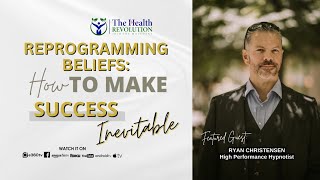
Explore? Man, there's a lot of stuff going on. First of all, there's the book. It's called Winter how to end in your conflict, make success inevitable. Available in all the different formats and on Amazon to include Audible. And again, it's designed to give you as much as I possibly can, much of the benefit as I can in that format. Of course, there's always an opportunity to work with me one on one. My webpage is www.ryan. book a call. 45 minutes. Dig into what's going on in your life, tell you exactly what's going wrong, exactly why things haven't worked for you. We'll talk about moving forward together. All right? I don't do individual sessions. It's a programmatic thing. You pay me a flat fee. You and I work together until we're done. The end state we're going to get you to is this belief set that says, there's nothing wrong with me and never was. There's nothing to heal and never was. I'm good enough as I am to deserve whatever I choose. Don't have to prove it to anybody, not even myself. That becomes the core truth against which everything else gets compared. Okay? Which means you're not have to fix yourself anymore. Don't have to worry about emotional fear. You don't have to prove yourself anymore. You're as good as are. You get to go live your life. All right? Typically, we're able to do that in less than 30 days because there's only a few things we actually have to fix. Doesn't actually take that long because we're playing it with much bigger level things. Okay. After that, right now, I'm the only guy doing this way. It was just me. So right now I'm focused on getting exposure, getting awareness, getting more traction so that this word gets out that this is actually possible. Nobody's out there saying, you can be done with your healing journey, you can be done with self improvement, you can actually fix everything. You can be done. Pretty much the only guy I've found to saying that. Right. As we get more exposure, as we get more demand, the next thing I want to do is I want to put together a training program so other people can learn how to do this. Because basically any coach or therapist or counselor or psychologist or social worker has the requisite skills. They know how to ask questions. They know how to put the pieces of puzzle together. They know how to reframe you to add the hypnosis, a new framework. They're pretty much off the races. That's what I got on my table for it.
Now. Amazing. Thank you so much, Ryan. It was a pleasure meeting you and I hope to talk to you soon.
Again. Outstanding. Thank you so.
More from Ryan

How to Improve Yourself as a Man with Celebrity Ghostwriter & Writing Coach Joshua Lisec ft Hypnosis
Talking About... How To Reshape Your Emotions In A Relationship | Behind The Shades Show
Unlocking the Mind: Ryan Christensen on Overcoming Internal Conflict and Embracing Curiosity