How to Improve Yourself as a Man with Celebrity Ghostwriter & Writing Coach Joshua Lisec ft Hypnosis
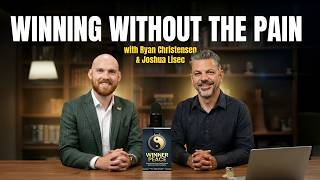
Ryan Christensen, a former intelligence officer, discusses his book Winter Peace and how hypnosis can integrate the protective parts of ourselves that drive problems. After 23 years in intelligence and trying therapy and psychedelics, he found that subconscious conclusions and masks can be resolved so all parts of the self work together.
Chapters
All right, looks like we're ready to go. I'm Joshua Lycik, of course, your host, and I'm here today with Ryan Christensen, who's author of Winter Peace. Ryan, how you doing?
Doing really well. It's an honor to be here.
This is great. So I got to collaborate with you on Winter Peace. Would you hold up the fancy book cover there for us?
Voila.
That's great. That's great. All right, so, Ryan, tell us a little bit about yourself and lead us into another question, which is why did you decide to do a book? So what about you? Your work and your career has brought you to doing a book.
So I spent actually 23 years in the intelligence community, Marine Corps, Air Guard, worked counterterrorism, counter proliferation in D.C. around 2019, 2020, I realized the world does not want to be saved. And I'm obviously in the wrong line of business, which is when I got into hypnosis, especially around the same time. I was doing a lot of work on myself. And over the past, like, three, four, five years, I've learned a lot about how the mind works, my own, as well as a lot of other people's, and really started building my own kind of modality and model of how the mind works and what you can really do with beliefs to shift how your entire world works and your entire life goes.
Excellent. And so what about the transformation you personally experienced? What about that? Did hypnosis play a part in?
Man, it was. Well, I tried pretty much everything under the sun in my own journey, like, pretty much everything. Therapy and spiritual journeys and energetic stuff and somatics and psychedelics and hypnosis, and everything really helps. Everything moves. A needle opens door. Psychedelics were great, particularly in terms like breaking things open, creating a lot of possibility, but none of it really fixes the problem. Right. 90% of the problems we have are in the subconscious mind. Only two ways to get down there are psychedelics and hypnosis. Psychedelics are beautiful for generative stuff, creating new possibilities, not so good at fixing things. But hypnosis allows me to do that. Direct, targeted, get down there, work on exactly what I need to, and stay down there as long as I need to to fix it before coming back. So it was very much a process of, like, finding out what was going on using these other tools. And as soon as I realized what the problem is, using hypnosis to go down and actually do the work to fix it.
Winner. Peace, of course, is a fantastic little pun, but the idea is that there is winning involved here. And there's an inner peace that's in process. And if I could hypothesize for a moment for our viewers, often those people who are the highest achievers and top performers in any given field have the least inner peace. In fact, they have an inner turmoil. There's depression, there's anger, there's a negative motivational force that is driving them or propelling them, or perhaps that they're being driven from or that they are running away from. And so it's often thought that in order to be successful, you had to have had a hard life and have had miserable experiences. And those are what propel you forwards. Well, what this book is, this book does is it breaks that frame to say you don't have to choose one or the other. You don't have to be happy inside and also be comfortable in mediocrity or in turmoil inside, but having all the trappings of successful and be dripping with money, accolades, women and so on.
Exactly, exactly. And quite frankly, yeah, pretty much every high performer entrepreneur out there, every famous person has this like Batman origin story of, you know, childhood, whatever environment was, was terrible. And so I found this, like one thing that got me out of there and that's what's driven me for so far, right? And it's really is like driven by pain. If you look like Elon Musk. Horrible childhood. Childhood, right. Alex famous, one of the most successful entrepreneurs. Same thing, incredibly critical childhood. Shoot. There's a guy by the name of Andrew Wilkinson, he's a billion upper billionaire up in Canada, wrote a book on his journey from being a barista to being a billionaire and was talking about this is never enough. Still as insecure and anxious as I ever was. And once you start looking at it, it's like, well, maybe that's not actually how that works, right? And fundamentally what these people are doing are trying to prove these negative feelings, these negative concepts about themselves wrong through their success. Unfortunately, that just doesn't work. But the beautiful thing is you've got guys like Michael Phelps, the swimmer, right, crushed like, you know, got like what, 25, 30 gold medals that one year, crushed like 10 to 15 world records. Not the same origin story. Had a talent, young, nurtured, supported, just kept on going, right? He's doing it for the love of game, right? Rather than being driven by his fear and his pain. And that's where I want people to be able to get to, because it's entirely possible. And it's all about kind of addressing those root causes that repaint that, that Batman origin story, reframing it and understanding a different way so it's not driving you forward and you're being fully pulled forward by those things you love, the things you succeed at, things you're good at, your passions in life.
So I think that there might be a. Yeah, but there's too much here that's too good to be true, Ryan. And I'm not quite sure how to parse it out. Objection. Because if like, well, if I'm comfortable and I'm happy, then what is there to drive me? What is there to fuel me? I need to do shadow work, to go in there and find the thing that is going to be my anti hero origin story. Or maybe I'm going to develop some kind of an alter ego where I go into that mode and be like a character or character version of myself and maybe learn this and learn that. Or I'm going to do psychedelics to find my real purpose and find what I should be doing in that way. But what seems to be the threading of the needle that you do with Winter Peace, Ryan, is what hypnosis does is it allows you to. To go into the subconscious mind, which I think the book does really well, is it's sort of a hypnosis and print type of an experience where it's in like an extended session self hypnosis, because you're reading it yourself. And what the book allows you to do is it allows you to accept those parts of yourself that you find unacceptable, but that doesn't excuse them. And I think that might be where a lot of people are really struggling with personal improvement, self development. It's like I need to be ashamed of myself. I need to hate this aspect of me, or I need to be really embarrassed about this bad habit or this whatever I've got going on. Because if I don't have a negative emotion, then I'm not going to have a reason to change it. I got to hit rock bottom, right? Or there's not going to be anything that's springboarding me up from there. There's not going to be a motivation. I'm just going to be in chaos and bliss. And there's real fear that if we don't dislike some aspect of ourselves, then we're stuck. Would you debunk everything I just said, please?
Sure, sure. So fundamentally, the book isn't about excusing or forgiving. It's about understanding. Because fundamentally, everything your mind does, even the stuff that's in your way, is done to help you. All of it. If you don't understand. If it's in the way and you're judging it, it's because you don't understand what it's doing, right? And quite often what it's trying to do is protect you from emotional pain, from going back to that Batman origin story for being back in that situation. And that shapes your choices and your decisions and your path in life. But if you are driven by pain, then you don't really have a choice. What you're doing is a compulsion. It's what you're driven to do, what you're forced to do, not what you choose to do. So there's probably a lot more possibility in terms of thinking bigger, in terms of thinking you have a bigger impact and even more passion once you take that motivator away, because it opens up your aperture, breaks open the cage, right? Gets you off of that treadmill to where you can actually do more by understanding and integrating these different parts of yourself that you previously judged by seeing how they're actually helping you, understanding how they're helping you. Now you don't have to fight yourself now you're an integrated whole because every time you're fighting yourself, you're creating all this friction inside. That's why we have to do all stuff like the cold plunges and the meditation and psychedelics and the microdosing and the whole nine yards just to manage our emotional state. Wouldn't it be nice to just have all parts of our mind on the same page working together as an integrated team instead of having to spend all that time managing our emotional state to where what we feel is actually a accurate reflection of what's going on so she can leverage those emotions to actually help you navigate the world better and get what you want in life.
So the book winner piece is for the self improvement consumer types. It's for the personal development enthusiasts, the self help enjoyers who are regularly looking for the thing. And it seems like the thing that they're looking for is the thing that will change me into the person I wish that I was. I wish I could do this or I could achieve that, or I could just be differently. And so if someone has like a, let's say codependent relationship style, those people tend to be successful in services based businesses and careers because they're in tune with what the other person is feeling and they just sort of chameleon their way into being that. But there's not necessarily a strong sense of self and it's, well, if I don't do that, then I won't be successful. And if I don't do that, I won't get what I want because nobody really cares about me. And, and then it gets into identity about who you are as a person. And I'm fundamentally unlovable and I'm trapped in the cage of my own making and it's locked from the inside. And I threw the key out. These sorts of, let's say, self concepts and the metaphors that explain them. And yet again, what is the answer to that, Ryan? That if I don't have something negative feeling me, I won't have fuel at all?
Well, and again, that really kind of comes down to this idea that you have to be somebody different than you are in order to get what you want in life. Even the successful people are like, I'm going to be an entrepreneur and I'm going to be successful. I'm going to create this Persona because I don't like the answer when I ask myself who I am. The purpose of Winter Peace is like, okay. It's okay to be you. You actually get to own all that. And because you own all of that, you get the most we want. You get everything you want in life. You get actually everything you need in life. Because when you're pretending to be somebody different, trying to be somebody different, the world gives you who what that person you're pretending to be wants and needs rather than what you want. Me, and I want to be the.
Annoying arguer reader reviewer who two star reviews you and disagrees with it. I have a sense of what you would say, having worked on the book with you, that it remains that persistent. But if I was already the person I wanted to be and I was supposed to be, I would already get the results that I want. And what I've been doing hasn't been working. And what I do is based off of who I am. So that means I'm not working. So I need to go down to Peru on an ayahuasca pilgrimage, right?
Yeah. Yeah. Well, and again, that comes down to self judgment of I have to be somebody different. Right. You're not getting what you want. Perfect. Why? Because you're going for all these things don't actually give you what you need. Why do you want to be successful? So you can feel good about yourself. Why do you want to be successful? So you can be accepted and loved. That's the underlying need. So you're chasing these things that don't actually give you that underlying need because you can't actually give that to yourself until you show the World who you are. Right. That's why it's so fundamental to get down to that idea of being your actual, true, authentic self. Right. There's all sorts of ways to discover it. But fundamentally, the way that I find best is the hypnosis. Figure out why you can't accept these parts of yourself. Figure out why they're helping you. Figuring out how you got to the idea of you don't like yourself in the first place. And once you get there and you change that original conclusion, because it's really all about conclusions. I thought this about myself. Great. I think this about myself now. Great. Now you're actually be able to be your authentic self. And you get to bring more of yourself to the table and more of yourself to the task. I talk about this making success inevitable as part of the title. Once every part of you is on board, once you can coordinate together, now there's no friction. Now every part of you is helping you get what you need and what you want in the world faster. So it becomes inevitable because you don't have to fight yourself. All your problems end up being out there. And your mind helps you figure out those problems are faster and solve them faster.
What I just heard you say was something like, if you watching this, you considering buying this book, or even you reading this book, Winter Peace, the reason you don't already have what it is you want, be it in your career or in business success or in your personal health, nutrition with the opposite sex. Let's say if you're not getting these things that you want, it's likely because you are wasting energy trying to change parts of who you are, your traits that are actually meant to serve you. So those things you think are quote unquote wrong are actually tools you just haven't used yet. Is that the assertion?
Pretty much. Pretty much what I would say is that your conscious and your unconscious minds are on different pages in terms of what the priorities are. Your unconscious mind is fundamentally trying to protect you from something generally that emotional pain, that Batman origin story, going back down that hole until you fix that, until you find a way to navigate that and make that okay, sort of disarm that ticking time bomb. It's always going to have to put that first, which is why all this friction gets in there.
Right.
It's kind of like you're a CEO of a company and your unconscious mind is like your workers and the employees and they're all union and they're on strike. Right. You can't force them to work and you can't fire them. So you have to sit down, negotiate, and say, okay, what actually is the problem? Why aren't we able to work together here? But once you're able to figure that out, come to a different conclusion. Now all of a sudden, the whole team is working together again, moving in the right direction, and you get what you want and needed all along, because that part of you can now help you get. But you've consciously decided instead of fulfilling these other needs that it believes are more important.
Interesting. Okay, so the unconscious mind will have you stick with behaviors that may have kept you safe in the past. Because these behaviors keep me safe, even though consciously you find yourself doing things that seem counterproductive.
Yes.
So then the question maybe, and then is, okay, so how do I make my unconscious mind just, you know, my subconscious mind just stop doing that?
Sure, sure. Well, the idea is if you're not getting what you want, you're getting what you need. And if you don't understand what that underlying need is, you can't find a different way to fulfill it. So telling your mind, just do what I tell you to do is essentially telling you, ignore the priority and the height that the incredibly important thing you need to be doing and do what I ask you to do instead, which doesn't work. We've always had that boss, you know, all of us have had that boss where it's like, just do what I say. Just do what I say. Just do what I say. Who just does not freaking listen when you try and tell them they're a problem. That's fundamentally what you're trying to do. Your unconscious mind, when you're saying, just do as I say, it has a problem. It has a priority. There is something it needs to do, which is actually for your better good, your highest good as a whole. And you're not listening, so it has to do it anyway, whether you don't like it or not. It's like, if you're playing Captain Ahab, you're going to get them all killed if you keep on chasing Moby Dick. The best thing the crew can do is just tie the mask, shove a rag in your face, and just keep on doing what it needs to do. This is trying to keep all of you together, all of you alive, all of you safe. You need to sit down and figure out what that underlying need is, what the underlying problem is it's trying to solve. And as soon as you fix that, it doesn't have to waste time doing that anymore and actually support your goals and actually support your success. And what you wanted to do in life.
Is it all right if I throw you an opportunity for a. A mini little micro session to prove that winter piece works? Okay, so I brought up the codependent attachment style earlier. That's been on my mind a lot because I was recently at an event where there are other ghost writers, a lot of other ghost writers, and I noticed that there is like a type of ghost writer and how they relate to people. And it seems like those people generally who have a codependent attachment style where it's like I'm okay. If you say I'm okay. How you feel is how I feel. I am not acceptable until you directly and indirectly accept everything about me. I don't have an identity. Except that's what you say. It's okay for me to have people like that end up as ghostwriters and speechwriters because they are their clients. Whoever their clients are, they just simply become. And it works really well to be chameleon, like in that way. And I think, well, this, this lack of an my own self concept and identity pays a lot. It's how I be successful. When I hear what someone says and I just, I just believe whatever you, my client, are paying me to believe that you believe that will I can write better. It is, it feels like you wrote it. And that's a superpower. I don't want to give that up by changing myself. And yet when I show up in relationships, I am like the 22 year old girl on a date. Where do you want to eat, honey? I don't know. What about here? I don't know. What do you want to eat? But you're like that about everything. What's going on? There is something wrong with them? Do they need to forgive themselves? Can they hypnotize themselves out of being a ghostwriter? Like, what's up?
Hypnotizing out of being a ghostwriter is probably not what they want to do. Probably want to create some identity and actually have two feet to stand on and be able to have boundaries and things like that. Fundamentally, probably growing up in a situation where you couldn't really get what you needed in life, it wasn't actually okay to be for whatever reason either. You know, the stuff just wasn't available. There were all these expectations of you. You have to be this, this and this, right? Think about everybody from India who has to be a doctor, an engineer. That's like all they're allowed to do, right? Or, you know, you just had to be in a situation like, you know, I grew up in a fairly emotionally volatile household. You just got to be in 100% in tune with that person to figure out, okay, who do I need to be, not step on toes, what do I need to be doing in order to stay safe? It's not okay to be you, so you have to be something else. And you become whatever anybody else needs in order to get what you need, right? You can't be get it as who you are. So you have to figure out who to become in order to get what you need. And there's a lot of people out there say, oh, just be this perfect, outstanding. Just tell me who I need to be and I'll be that. Right? But fundamentally, again, it comes down to that, wearing that mask, you get whatever you're pretending to be, wants and needs, right? Oh, I'm going to be a successful ghostwriter. Great. I'm going to give you that. What that person wants and needs, not what actually you want and need, but the person you're pretending to be wants and needs. So fundamentally is recognizing like, number one, I can't actually get what I need unless I show the world who I am. Number two, it's okay to be me. It has to be okay to be me, right? Because otherwise I don't get to have an identity, don't get to have my needs met. And fundamentally, it always was. You were just in a situation where you had to play a certain game, a game you couldn't win. Talk about this in the book. The game that cannot be won. Nothing you do fixes things. Nothing you do works. You're just, it's. It's just a losing game. But because we don't understand that it's our environment rather than us, we keep trying to change ourselves instead of just changing our environment, get in a different place where you can actually get what you want and need by being who you are.
Fantastic. So someone listening to that goes, it's okay for me to write what I want to write. And if it's not okay for my clients, well, then maybe I should just write my own books instead, or I should write short stories or I should have a blog or I should do whatever so that they can begin developing their own voice. And there's as many men as women who have this attachment style, I think, this codependency. And it shows up in a number of different ways. And I think that there's probably, as you pointed out, there's probably a root cause across different professions that people ended up in that profession because, well, this is the mask that the people closest to me as I was growing up needed me to wear in order for me to be okay or for me to be safe. And that can make someone go inside and be a fearful introvert or be the bombastic life of the party, because that's what's good for them. It's safe for them to wear. So it seems like what you're saying, Ryan, the winner, peace, worldview, or that lens through which you can view yourself and others is something like. There are experiences we have early in life that teach us in order to be okay, we need to fight, flee, or freeze or fawn Fawn. And we put on a mask of the flyer, the freezer, the fawn, or the fighter, depending on what's going to work. But when we leave the situation where fighting was necessary, we often still have the fighter mask on.
Yes, that's exactly.
And we carry that ultimately. Oh, you're a fighter. So you should go to school here. You should study this when that's just the mask. And that's how people end up needing a book like Winter Peace.
Yeah. And in some ways, that's actually a strength. In a lot of ways, you're leveraging your strength because that's the. The skill, the talent, the modality, the approach that worked for you to get you out of that situation. And it's brilliant for a ghostwriter to be able to empathize with their client that well in order to be able to write from their perspective and do that. Right. And so maybe you don't become. You stay a ghostwriter. Maybe you don't write your own books. Maybe you just start building better boundaries and treating yourself better and having higher standards and taking less guff, you know, less crap from your clients. Right. You choose clients that are more interesting and better to work with. Right. Where you're still doing and leveraging all the talents you have. You're leveraging your empathy, but you're doing it in service to the way you want things for you so that you can actually get what you want and need. Right. And quite frankly, codependency is just the fawning response. Right. Who do I need to be that surrender? Just say whatever I need to be taken care of. Right. And that's incredibly useful when trying to figure out what the client needs to deliver a book like Winter Peace. Right. And fundamentally, that's kind of like the tools you were leveraging to help me, because I had no idea how to say this stuff. You know, I'm autistic, trying to figure out how to convey this in a way that normal people can understand was freaking impossible. I banged my head against the wall for seven months before I. Before I started working with you. And so having somebody like you that could bridge that gap has been enormously valuable.
I appreciate that. Thank you. But I want to turn on you. This little spotlight. How did you figure this out? I imagine it's when you realize that the mask that you were wearing was not useful for all contexts in your life, and maybe you should take it off and look in the mirror and see who's really beneath it.
Oh, my Lord. It was, you know, autism. I didn't get diagnosed until I was almost 48 years old. So, you know, I had no idea growing up that's what was going on. Just knew that things didn't work. And so autistic masking is 100% thing, right? And 2009, I ended up having a major depressive episode because I was wearing too many masks in too many places, just completely fractured. And then like six, you know, about 11 years later, I'm sitting there going, wait, I'm not getting what I need. Throwing myself under the bus, doing all these things, trying to save the world, trying to help everybody else, and I am not getting what I need. And this is not acceptable anymore. So that's really what drove me to figure out, okay, how do things actually work? How do I actually get to be me and get what I need? And that's what took me down the road of like, okay, let me figure out why I am the way I am, why I believe the things I believe, what's in the way. Help me identify those two traps of being in the cage, being on the treadmill. How do I break out of those, right? How do I start leveraging those negative emotions so I don't have to avoid them anymore, to where they can actually serve me and help me, right? And it's just that process of sitting down, just reverse engineering everything. Okay? I was supposed to get this result from this process. I did not. Fair enough. What? How did it work? Why did it not work? Just keeping on digging and reverse engineering and playing around until I came up with the answers I found in Winterpiece.
Wonderfully put. Then there's one word that you used here and at other points in this interview that lights up a lot of the people in the so called manosphere or like male self improvement space. Sometimes they call themselves red pill or, or whatever, but it's the word needs. A man does not have needs. A man is more than enough. This Sort of mojo bravado, sort of imagine the lone wolf, sigma male type of character that we're all supposed to be. Because if we're, if we have needs, that an adjective form means we're needy. And nobody wants a needy man. Not a woman, not a boss, not a client, not a nobody. So how do you mean need when you use it? And is, is the, let's say the, the male self help space incorrect on this matter?
Well, that's actually where I started, my self improvement journey was in that, you know, male helps help sa. The male self help space. You know, I was trying to figure out dating after my second divorce and there's a lot of good stuff there in terms of like building yourself to be a better man, more capable, more able to do things. But fundamentally, if you don't have needs, then you're always giving, never receiving, right? You're building stuff, creating stuff for everyone else. Outstanding. And then what? You just run yourself empty. And the idea that you don't have needs is a lie, right? If you didn't have needs, why are you trying to get acceptance? Why are you trying to get love? Are you trying to get money? Why are you trying to get fame? Right? You're looking for something, right? And the, what I talk about in terms of need is what is that deep core piece? I want to be successful. Why? Because I have nice things. Why? Because then I can get the girl. Why? Because then we'll have love and acceptance. That's the need, the love and acceptance, right? And I think we do ourselves a disservice by ignoring that and pretending that's not a thing. Because what that turns you into is just somebody who self sacrifices. It turns you into a tool, it turns you into a pawn, right? And that's nothing. That's the complete opposite of what you're supposed to be doing in that space. That's complete what? Opposite of what anybody should be doing, right? The idea that a man should continue to sacrifice himself for no reward whatsoever is one of the most toxic and destructive ideas out there. It's what drives so many people, so many men down those dark holes. Just self destruction and just watching their lives get ruined. You have to receive in return for what you give or you're going to run out, you're going to be empty and you're done.
It feels like there's, there's a sort of ingrained instinctual male code of honorable on reciprocity. Ultimately the barter economy comes out of that. And that is of course the first economy. But I. But ultimately, that is what it means to be fundamentally a male human being is, let's say I have ivory, you have fresh water, we trade. I give you ivory, you let me drink from that area that you're defending over there with the fresh water.
Well, think about it this way. Why do we go slay the dragon? To either get the treasure or rescue the damsel in distress. Why? Because we want the treasure or want the damsel in distress. Otherwise why go slay dragons, right? We're doing this to get something in return. We always have to be otherwise. You know, there has to be something you're receiving to make all that effort and challenge and trial and pain worth it. Otherwise, it's just, you know, masochism. Let me just go ahead and just beat myself up for years and years and years for no return. No, no, no, you're doing it for a purpose. There's something you're trying to get own that. Just acknowledge it, right? Because if you can do that, then you can actually get what you need.
And the modern male malaise is slaying dragons for no girl and no cash money. What does that mean? Metaphorically speaking. But in the real world, what does dragon slaying without reward look like?
You know, building a successful business, you know, doing anything. Enlisting in the military. Horrible idea. For a number of years now, right? Because you're being just essentially thrown away and you're not really getting any reward. Why would you spend the time getting a good job and building the house and getting the car and lining everything up if there's nothing in the end of it for you, if it's just as empty and lonely as you are when you're just hanging out in your apartment playing video games, there's no point, right? And a lot of the challenge these days is just that the American dream used to be a thing. There used to be a path used to be defined. Go to college, get the job, get the girl, build the house two and have kids, cat, dog, picket fence, right? And that thing broke a long time ago and there hasn't been a new one built, you know, so there's simply not the same opportunities to create this stability and create the success and build that foundation as there used to be. And guys are looking at that, saying, I refuse to play a losing game, right? But unfortunately, it's like, okay, if you refuse to play losing game, then either you have to build one of your own or give up. And a lot, way too many people are just giving up.
What's a different game people can play that's winnable.
That's kind of something you have to build yourself, right? The beautiful thing about games is that you can build one yourself. You can come up with your own rules, right? And I talk about, In Winter Peace, moving from the finite game to the infinite game. Finite games are like video games. Rules, way to keep score, winners and losers. The infinite game is players come and go, rules change, no way to keep score. There's no winners and losers. The point is to keep playing. And life is an infinite game, right? The entire. The entire point of living life is to find interesting things to do until you can find more interesting things to do, at which point you go somewhere else, find some more people, find interesting things to do. And just that process of, I'm going to find interesting things to do that move me forward, that keep me engaged, that give me the things that I want and need. If you're doing that, you're winning. How could you possibly lose if you're living an interesting life, doing things you want and getting what you need?
So the question then, metaphorically speaking, becomes, what kind of dragons are interesting for you to chase and subdue? What kind of gold is available? What kind of dragons are guarding it? What. What gold may be unguarded? What kind of distressed damsels are worth the angst?
Yes, exactly. Exactly. Yeah. Yeah. And that's. That's kind of what took me down path. You know, I spent the time saving the world. Now I started helping people. Then I spent a lot of time helping myself. And now that I've helped myself, I get to do something much more interesting, which is help people on a much deeper and more powerful way.
And that's a good place to be. I know that there are a few people watching right now who are thinking, oh, shoot, where do I get that? What's that book? Winter Peace. Learn to play the infinite game. Feel good about yourself, especially those parts that you're not supposed to feel good about. It's over on Amazon, multiple versions of it. It's great. It was a blast to work on. Ryan, thank you so much for joining us today and going deep into that set of examples there. That's great stuff.
Outstanding. Thank you so much, Joshua. It's an absolute pleasure.
Pleasure's all mine. Take care.
More from Ryan


Talking About... How To Reshape Your Emotions In A Relationship | Behind The Shades Show
#124 - From Inner Conflict to Clarity: Unlock the Power of Subconscious Mind with Ryan Christensen

Unlocking the Mind: Ryan Christensen on Overcoming Internal Conflict and Embracing Curiosity