Everything they told you about confidence Is wrong
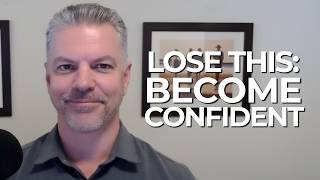
Ryan Christensen argues confidence isn't built by chasing skills and status. It comes from losing the fear and doubt patterns formed in childhood, and recognizing the authentic self underneath them.
Chapters
People talk about confidence like it's a game of learning how to be you. But you're already best in the world at being you, so why aren't you confident? After years of trying everything but acupuncture to sort myself out, I've learned that it's far more about what we lose than what we gain. And understanding that helped me discover who I truly am. Let me share with you what I've learned along the way to help you do the same. So how do we get ourselves into this mess? Well, like most things that never seem to go away goes way back. If you're here, you didn't get what you needed when you were young. Could be, for any number of reasons, chaotic home life. Or maybe your parents were just never around, you didn't fit in the school. Or maybe you always had to be perfect. In my case, well, I was just different. The world seemed to work for everybody else and not for me. Turns out that I have autism and grew up in Kansas before the Internet was a thing. So that checks out from there. We all end up in basically the same place. We can't get what we need. We must not deserve it. That means we're not good enough. So something must be wrong with us. We decide that we're the problem, and it makes sense why we do. We're too young to understand that it's not about us. We just have no control over environment, no way to provide for ourselves. But once we've decided that we're the problem, we go looking for the reasons why. We make a list of things that we don't like about ourselves. All the ways that people say that we're wrong, all the ways we fall short. That's the problem solved, the version we feel we have to fix in order to be good enough. This isn't always about trauma. It doesn't have to be about neglect or abuse. Just not getting what we need in an important way is enough to start this process. We have to understand that this was our best option back then, the only cards we had to play. And it worked well enough because we're still here. Now that we know what we have to fix, who that problem solve is, it's time to find a solution. So we look at the world around us to see who we're supposed to be, who looks like they've got it together, has caring parents maybe, or who's popular or successful. We try to figure out how they do it, what they have that we're missing. And we look for ways to become that instead of being us. That's not always easy, especially if your problem self doesn't fit the mold. Like I didn't. If you're into comic books and everybody else is into baseball, fitting in is tough. Still, most of us find some group, even if it's band camp, where we can get just enough of what we need to get by. Now, when we hit our teens, things start to shift. We have more agency, more control over our lives. This is when we start to figure out how we'll make it work. We find something we're good at, and we lean into it. Maybe it's sports or academics. Maybe it's something else. We pick a game we think we can win, and that's who we decide to be. That's our ideal self, and we spend the rest of our lives chasing it. And that is where the confidence trap comes in. Typically, we think of confidence in terms of learning a skill, Kind of like when you learn how to drive. You started out terrible and didn't even know how bad you were. But you practiced, got better. You stopped making mistakes, even learned how to parallel park. Pretty soon, driving felt natural to the point where you barely thought about it at all anymore. You became more certain of your ability the more you improved. And you stopped worrying about it. You stopped doubting whether you could make it somewhere safely or handle it if things go wrong. So we assume that confidence in who we are works the same way. And in a sense, well, it does. Because we're basically learning to be our ideal self. The closer we get, the more confident we feel. But that confidence depends on outside approval. It's all about whether the world sees us as our ideal self, and if we're getting the rewards that come with it. Our confidence is 100% based on external validation. We haven't truly become our ideal self. We're just better at playing the role. And if anything goes wrong, well, our problem self pops back up again, doesn't it? Basically, we're hoping and praying that if we can become our ideal self, we'll finally prove once and for all that we're not our problem self. It'll disappear, but it never does. That's because playing the ideal self is just proving to ourselves that we're good enough in one way, not in every way. It's conditional, not universal. We're actually proving to ourselves the world can accept us only if we keep pretending to be that ideal self that it wants to see, not who we truly are. Remember, we decided we were the problem before we even knew why. Our mind saw A pattern and decided we weren't good enough. Only after that did we look for the reasons why. So every problem we're trying to solve by being becoming our ideal self is just a symptom, not the root cause. The part of our mind that decided we're not good enough is looking at the forest, not the trees. Patterns, not details. So becoming our ideal self, showing that we're good enough in some way only proves an exception to the rule. But the rule hasn't changed because the rule is based on patterns, not specifics. That's why even successful people still feel insecure sometimes. Take Andrew Wilkinson, who wrote the book Never Enough. It's about his journey from being a barista making six bucks an hour to being a billionaire. He grew up poor and thought making money would fix all those problems he used to have. But even as a billionaire, he was just as anxious and insecure as when he started. And so were all of his billionaire friends. If becoming a billionaire doesn't make the problem self go away, no amount of success ever will. But if you're watching this, you already know that you've chased your ideal self for years, and the problem self is still there, waiting for you to fall short once again. So confidence can't be about what we gain. It has to be about something else, doesn't it? What if it's about what we lose instead? That doesn't seem to make much sense. As we became more confident driving, the better we got at it. And that's true. But there's another side of the story. It's not just about gaining skills. It's also about losing the fear, the doubt, and the uncertainty. As you get better at driving, you're less scared of messing up. Stop doubting your ability to handle problems, and you worry less about what can go wrong. The uncertainty fades. That's why confidence is just as much about what you lose as what you gain. The reason we're always trying to be our ideal self is because we're scared that we're really our problem self. That's why those same old fears creep up when things go wrong. It's why we keep doubting ourselves, why we still worry about what people think and feel, uncertain about who we are. Because if the world says we're still our problem self despite all the work we've done, then we're screwed. So we keep chasing validation, pushing to be 1% better every day, terrified that if we stop, we'll all fall apart. Those demons in our head will catch up to us once again. So how do we get out of that trap? Well, we proved that problem self never existed in the first place because it was never who we are at all. But knowing that isn't enough. After all the stories we've told ourselves that greeted were not good enough. Made too much sense at the time. And since those stories about patterns, not just individual events, playing trauma, whack a mole doesn't fix it. The familiar story we've told ourselves for years about why we are the way we are doesn't hold the answer. Those stories are based on individual events, the memories our mind chooses to share with us, not the whole picture. When you're looking at pattern based beliefs like the problem self, it's like you've got a big box inside your head, label on the side that says I'm not good enough, that's packed with a million different things. When we're working on ourselves or trying to heal, we're just taking stuff out of that box, putting in a different one, maybe a lot of stuff at once. If we're good at it and it works, things get better after all, easier. But the box is still there, it's still full of stuff, and the label is still the same. One way to start changing the label is to understand that when we were growing up, we were playing a game that cannot be won. We were trying everything we could, but nothing we did ever really got us what we wanted or needed. So after a while, we start thinking the problem is who we are, not what we do. It's like we were playing a game where the rules of game are always changing and the goal posts are always moving. Like what's good enough one day just isn't good enough the next. The game is rigged so you can't win no matter how good you are. But if the game is rigged, then losing his expected outcome. So it doesn't actually tell you anything about who you are or how good you are. The problem self was based on a lie. There's never anything wrong with who you are. You just didn't understand that at the time. Once you understand and integrate that on a deep subconscious level, you can change the label on the box and the problem self disappears. But we're not quite done yet. We need to make the ideal self go away as well. I know that doesn't make sense and it's the opposite of what you've been trying to do your entire life, but it will in a minute. The reason why we have to let go of our ideal self is because chasing it means we still think that who we are right now isn't enough. We're still trying to fix ourselves even after the problem self is gone, which means who we are is still the problem. We're still trying to measure up to society's standards, to fit ourselves in a box that isn't made for us. We're still afraid of falling short, still doubting if we really measure up, still not sure if problem self is really gone. But if we can let go of needing to be that ideal self, let go of the idea that we can't live the life we want unless we become that person, it's left to fear. Why would we need to prove ourselves or care what others think if who we are right now is enough? Why would we need to hide ourselves if there's nothing wrong with who we are? The only self that would be left after letting go of the problem and ideal self is who we really are, the part of us that never really changed, no matter what happened. It's who we are when we're just being ourselves, not trying, not pretending, not forcing ourselves to fit in. And once you stop doubting that true self, you quickly build an unshakable certainty about who you are. What happens in the outside world can't touch it. Things go wrong. That's just a tough situation that you're in. It's not proof that you're a failure. And the only thing that matters is how you deal with it. Getting what you want is just about doing the work, not waiting for someone else to say you deserve it. Which means all that fear, doubt and uncertainty about who we are goes away. That is what we have to lose to get that true confidence we've been looking for all along. Life gets a whole lot easier when you don't have to spend every moment of every day worried about what people think about you. Now, getting to your true self isn't easy. It takes some deep work and accepting that your problem self is still around after all those years. But at least now you know what the problem really is so you can get to work. You've already got a number of tools you've been using to sort yourself out, so just use this new perspective to point them at the right target. Right target. My guess is if you zoom out and start focusing on patterns rather than individual events, you'll start to see changes faster than you expect. Now, we're just getting started here, and there's a lot more to come. In the meantime, be sure to join my email list where I'll be sharing more insights like this every week. I'll also send you the first two chapters of my book, Winter Peace. It's available on Amazon and will help give you a head start on all the topics we'll be diving into more deeply soon. Until next time, stop pretending to be who you're not and start living as who you truly are. Cheers.
More from Ryan


How to Improve Yourself as a Man with Celebrity Ghostwriter & Writing Coach Joshua Lisec ft Hypnosis


Talking About... How To Reshape Your Emotions In A Relationship | Behind The Shades Show

#124 - From Inner Conflict to Clarity: Unlock the Power of Subconscious Mind with Ryan Christensen

Unlocking the Mind: Ryan Christensen on Overcoming Internal Conflict and Embracing Curiosity