Unlocking the Mind: Ryan Christensen on Overcoming Internal Conflict and Embracing Curiosity
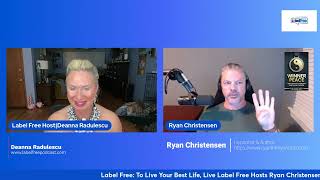
Ryan Christensen, an author and former intelligence officer, discusses his neurodivergent diagnoses and suicidal ideation, then explains how reframing emotions and beliefs can end internal conflict. He critiques common therapy approaches and advocates for curiosity as a path forward.
Questions this video answers
Winter how to End Inner Conflict and Make Success Inevitable
Amazon (also via his website)
www.ryanthehypnotist.com
Kindle, paperback, hardback, Audible
45 minutes (free)
Chapters
Let's learn something really quick if you.
Got the time, yo. Absolutely. And you got the discipline. There's no question about it.
I love that. Yeah, that's a great practice to put into your everyday life, you guys. You generally regret the things you don't do, not the things you didn't do. Let me say it that way. Mic drop. This was just awesome. I love meeting my guests in person, and it's a whole nother animal, and the energy is just electric. You guys, this is your host, Deanna Radulescu with Label Free podcast. To live your best life, you must live Label Free. Everyone, this is your host, Deanna Radescu with Label Free to live your best life. Live Label Free. And I'm back with another incredible guest, so sit back, relax, and stay tuned. My next guest is an author, hypnotist, veteran, former intelligence officer, and he f that focuses on peak mental performance and ending internal conflict and suffering. Please welcome Ryan King Christensen. Ryan, welcome to the show.
Thank you so much for having me. It's an honor to be here.
It's an honor to have you here. And like I said before we started recording, you're an enigma. You are very fascinating because aside from all these things that you have accomplished that are titles, so to speak, of things that you are. Are skilled at, you've also deal with autism, which is very like. To me, I think autism is like a gift. I think that some. A lot of people that do have it. Have very unique abilities. And especially the ones that I've talked to that are on the show, they have not allowed that to really hold them back in life.
That's. That's a really interesting perspective because in a lot of ways, you know, I grew up in Kansas back in the 70s and 80s and knew from a very young age that I was different, like, world worse for everybody else. Everybody else seems to get it. I have no idea how to make it work. Right. I just cannot make it work. I cannot figure out what's going on. I cannot figure out how to get what I need. And so it was frustrating. My entire life, you know, I had no idea. I couldn't figure it out. Nobody else knew what was going on. Nobody could help me. I couldn't figure it out myself. So, you know, at a very early age, like around nine years old, I was. I was already thinking about ending my life. Right. So as far, you know. Yeah, for sure. Like, I've dealt with that for most of my life, but essentially, I turned my brain into a machine that essentially reverse engineers Human behavior. Because what I saw. What, you know, one thing about having. I probably would have been diagnosed with Asperger's a while back, but they just rolled it in autism. So probably more on the Asperger's side. But what that basically is, is being kind of like socially colorblind.
All right?
To where there's all this nuance and detail of social interaction. The things you guys do that I'm just blind to. It's like walking into a wine club. You guys are also my A's talking about the terroir and the tannins and this, that and the other. I'm like, yes, this red wine does in fact taste like red wine. You know, I just blind to it, can't see it. Right?
Yeah, yeah.
But the thing is, if there's a pattern of behavior over time, if there's something repeated over time, then there's a deliberate process that creates. It has to be, otherwise it wouldn't be random, right?
Yeah.
So I said, okay, well, if it's a deliberate process, I see the stuff coming in, I see the stuff coming out. All I gotta do is figure out the transformation. There's a mechanism, there's an algorithm. All I gotta just figure that out. I've got a lot of horsepower up there. I'm rocking an IQ about 145. So I essentially just brute force my way through life. Right. And it's that skill set of just being able to understand, you know, reverse engineer, deconstruct a system, understand how it's built, that has not only allowed me to navigate life in social situations, but it's what made me so good at the intelligence stuff. Yeah, it's all about trying to ask those questions, putting together the pieces of the puzzle, figuring out how it stuff put together. So once I started getting into hypnosis and starting helping people, I just use that same skill set, that same approach. Only now I've got direct access to your unconscious mind. I have direct access to where all the answers are that are driving these things. So instead of just saying, telling you, you're awesome. No, it's like I can go in there and figure out why it's happening.
Yeah.
I just have to ask right questions, put the puzzle together, rewire things. And so it's the most natural thing for me to do. And what's kind of cheating because I don't have to guess. All the answers are down there. I don't have to guess. Right. There's no. There's no guessing. Like, your mind knows exactly what it's doing, knows exactly why it's doing it, knows exactly what it's trying to accomplish, Knows exactly why it's trying to hold you back. All you gotta do is ask right. Questions.
Yeah.
And since I've got access to those questions, since I've got access to that part of your mind that's driving it, easiest thing in the world for me.
So I want to kind of. I think that's fascinating. We're going to unpack that. But you mentioned, you said something that you've. You kind of have had thoughts of suicide since you were 8 years old and you've struggled with that a lot your life now. How does this process that you've created for yourself to, to manage all these different thoughts and, and just kind of get through life? How does that work when you apply it to something so heavy as thinking about suicide?
Well, it really has to do with the idea that I couldn't get what I wanted and needed in life. Right. Fundamentally, if you can't get what you want and need in life, it's really kind of not worth living, you know, simply is. So. So for a long time I was basically keeping myself alive by that idea of like heroic sacrifice. You know, I'm gonna become Batman. I'm saved. Gotham City Batman. Life sucks. Everybody hates him. Never gonna get what he needs. But it's a really good idea that he's around. Which is what took me to the Marine Corps and the International Guard doing all the intelligence work. But by the time 2020 rolls around, that's not really working for me anymore. Cause the world rather stubbornly does not want to be saved. Right.
Yeah.
I'm doing all this work, not getting anything out of it anymore. So that's when I started working with people one on one. So now I've got that ability to still affect people's lives, but I'm still not getting what I need. That's what started that like four or five year self improvement journey to try and figure this stuff out. I did everything, you know, the coaching, the therapy, the belief work, the somatic stuff, the, the energy work, you know, to reiki healing. I did spiritual journeys, I did psychedelics, I did hypnosis, I did all of it. And the problem was none of it actually delivered what they said it would. None of them actually fixed the problem that they said it would. Nothing actually worked the way it's supposed to. And unfortunately, because I'm autistic, I can't lie to myself.
Yeah, yeah, yeah.
Couldn't pretend it did. So I'm like, okay, I have to figure this out. I have to figure out how this stuff works, figure out what I'm missing. Or I can't get across that finish line. Can't get what I want, can't get what I need. This ain't worth living. So it's very much like, figure this out or I'm done. So I did again, really good at reverse engineering systems. So I figured out all those implicit assumptions that underlie all these different modalities, what their limitations were, kind of how far they could get you. It's like, okay, this is where we're stuck. This is what's missing. So I just need to start going here. Which is what got me on those ideas of beliefs and how those are structured. And not only just on, you know, the thing that I realized is it's a very left brain, right brain issue. Rationality versus emotions.
Yeah, right, yeah.
Because both of those systems are running at the same time at all times. And they're looking at reality through due different lenses, looking at the forest. And everybody's looking at this stuff. Nobody's dealing with these emotional beliefs. Nobody's looking at how these things are running. Nobody's looking at how these are created. But they're also algorithms, they're also systems. They also have a set of beliefs and a mechanism that they're using the world to interpret it. We can reverse engineer that, we can figure that out. And as soon as you change that, that's when everything really changes. Because the idea that I can't get what I need in the world, can't create what I want in the world, is based on the idea that there's something wrong with me.
Right.
Different. I'm broken. Right. But that's an emotional conclusion and that's.
What a lot of people deal with. Not just someone with autism.
Yes. It's all over the place. You know, there's. Look at attachment theory. 75, 70% of people out there have an insecure attachment style. Anxious, avoidant or disorganized anxious people. I'm not good enough. Who do I need to be to be loved? Avoidant. I can't handle the pain. I got to run from it. Anxious, avoidant. They got both. All those things are, I'm not good enough. There's something wrong with me, I don't deserve. Right. Yeah. It's all the same basic emotional conclusions. And the problem is because we come up with these things when we're young, right up until about five, six, seven years old, we don't have that rational capacity Our intellect isn't really online, so we're always drawing our conclusions based on emotions. And emotions are not looking at individual events. It's looking at patterns over time.
Yeah.
This narrative is going through a series of events.
Right.
So it's not this thing happened. This is what it know. It's a general conclusion of, I am simply not good enough. Not I'm good enough because I'm not good enough. And once a rationality comes online, there's a principle in hypnosis called the critical factor. What that means is that your unconscious mind judges true and false based on what it already believes. Okay. So if I am not good enough is the conclusion you drew as a kid. Nothing out there can never prove it wrong.
Right.
Because it doesn't match. It's false by definition, gets ignored.
Right.
Which is why these people get stuck in these traps of, I'm trying to prove things. I'm trying to, like, make all the money, and it's never enough.
Yeah.
Try and be this, Trying to be that, Be the other. It's never enough. Why? Because you can't prove this wrong from the outside in. Right in there. Yeah. You got to get in there, figure out how that came to be, dismantle it on an emotional level, do the work. Yeah. Which a lot of people out.
What's that? Yeah.
Do the work from the inside out. Because that's one of the limitations of most of the tools that we have. What are we doing in psychology and therapy? We're talking about it conscious. We're not getting in the unconscious mind. Even cognitive behavioral therapy. What are you doing? You're dealing with the emotions after they're generated. Right. All somatic work, you're releasing these emotional stuff. Great. But you haven't changed anything about beliefs. Right. Trauma stuff. Great. You're dealing with all these individual wounds. Great. Every single traumatic experience, everything is another wound you got to heal. That process never ends. Trying to fix myself. Wrong. Never ends. Right. Even the secret hypnosis stuff is much more about suggestion, persuasion. I'm gonna open up your head, throw a bunch of good stuff in, and hope it sticks. Kind of like affirmations on steroids. Right. But the problem is now you have a new belief in an old belief. The old belief has got a lot more evidence to it, so this one eventually fails.
Right.
So what I do is pretty unique because I'm actually going in there and saying, okay, show me how you're built. There's a chain of logic that created that belief. Right. There's a. There's A prior notice made sense. There's a way that you drew that conclusion. But once we understand that, we can go back and we can dismantle that old one by bringing the new perspective we have as adults to re. Take another look at and reframe those old events.
Yeah.
Not to make them different, but just to understand them in a different way. That allows us to come up with a different conclusion, which allows us to go from I'm not good enough to I am good enough. There's something wrong with me. There's nothing wrong with me. Right. Because the place that I got to is, you know, I don't only have bipolar disorder. I also have adhd, and I also have not just autism, but I also have ADHD and bipolar disorder. This thing's wired up really weird.
You know, special things are going on.
Oh, yeah, yeah, yeah, yeah, yeah. But given how this is wired.
Yeah.
Everything in my life has happened exactly as it should, given how this wired. I'm reacting to the world exactly as I should, given how this is wired. I'm having the troubles. I should have given how this is wired. So there's nothing wrong with this. It's working exactly as intended, functioning exactly as designed.
Right.
This isn't the problem. Because problems have solutions. I can't fix the fact that I'm autistic, fix the fact that I have bipolar disorder, can't fix the fact that I have adhd. Therefore, that's not the problem. Can't be. Because there's no solution to that. The problem is, given how this is work, how this works, how do I navigate the world?
Right.
How do I get what I want, how do I get what I need? The problem is always out there. But because we have all these powerful feelings, because we have all this pain, we always. Look in here, your hand hurts. That means this bus is. You need to fix it. Feel that emotional pain. You feel it in here. Problems got to be here. And because we're growing up in these environments, those of us who kind of stuck with this stuff or, you know, anybody with insecure attachment style, you grew up in an environment with a lot of emotional turmoil, a lot of negative emotion you couldn't escape and couldn't handle.
Yeah.
So that's when we create that association of emotions or pain to the extent that it becomes a survival issue. Right. That's what triggers that amygdala, that survival response is when you've been through that stuff so much that the pain is too much, that's when that gets engaged, and that's really dangerous.
Right.
Because when you get that place, emotions can end your life. 300,000 people in the US last year died from death to this fair because of how they felt.
Wow.
That's what was driving my life.
Pretty big number.
Yeah, it is. That's as big as the hometown I grew up in. That's the entire population of Iceland in one year.
Wow.
Yeah. And that's not counting all the lives that are ruined and messed up and all the turmoil and the domestic abuse and all that kind of stuff.
Yeah, I. I have. So I've done a lot of work on myself. So everything you're talking about, like I'm. I've gone through, I've done the work. Right. You know, I. No long you. When you have trauma, you do have to deal with that forever. But you learn as you continue to grow and you learn new skills and heal you. You don't get as triggered. And it's not as. It's more like way below the surface. It's not as on top of the surface. So now I have family members that have never dealt with their trauma, never done any work, and they're still living in this woe is me. I'm the victim. And it's everybody else and it's never them.
Let me go ahead and I'm gonna kind of blow your mind again.
Okay? Yeah, let's blow my mind.
There are only. There are only four things we need to fix in order to actually live a really good life. And the place I get to my clients too, is a place where there's nothing wrong with them. There never was, there's nothing heal and there never was good enough as they are deserve whatever they choose. Don't have to prove it anybody, not in themselves. And to fix that, we got to do four things. Number one, we have to fix this idea that emotions are pain.
Right? Because feelings are not facts.
Feeling. Well, that. Don't look at it that way because that's saying the facts are right and feelings are wrong. No, it's 100 correct all the times. Your feelings are 100 correct at all times, given how they're generated. Because looking at the forest rather than trees. Okay, so don't ever say facts are better than feelings. No, no, that's not how it works. Both of them are 100 correct at all times. Okay? But when you're looking at as pain, that does two very important things. Number one, you have to avoid it. Scary. You have to avoid it.
Right, Right, right, right.
And the other thing is it triggers that. That survival thing, right? But the thing is, when you've got that pain in your chest because you're heaving and sobbing, that's because your chest isn't hurt. You know, used to working that hard, but that processing you're doing is your body doing exactly what it's supposed to do.
Right.
Which means it ain't broken, which means there's nothing to fix. Which means that thing that you're experiencing is not actually pain. Because pain means this is busting. You need to fix it. This isn't pain.
Right.
And once you reframe emotions away from that, now every negative emotion is simply your mind asking you a question, asking you for help to solve a problem. Right? At which point negative emotions become very useful tools, and feeling bad actually becomes a good thing because it's helping you navigate life better.
Okay.
Once we make emotions no longer pain, we get to do something else, which is make sure that this thing is not the problem anymore. Yeah, because we're always trying to fix this because we feel the thing in here, because we think this is the problem, but it never ends because we keep on trying to fix something that ain't broken.
Right?
We're looking for the needle in the haystack, and there's no needle in the haystack to find. Right? So number one and two, emotions are long. In pain, you're not the problem. At which point you can actually create value. Because if there's something to fix, that means you're broken. That means you can't be good enough. Because broken things aren't very valuable. If you're wounded, means you got to heal yourself, means you're broken, not very valuable.
Right? Right. Right. This makes sense.
Yeah. So once you get there, now we can create value, but the problem is, if you're still measuring it, the answer could always be not enough.
Right. And isn't that where people get stuck is they're always measuring it?
Yes. Well, yeah, but they have to. If they don't. If you feel like you're not good enough, that's not an answer you can accept. So you have to find a way to be good enough. So you find something that you're good at, and you try and measure it by that. You pick a thing to measure, you pick a way to measure it. That's a way to prove it to yourself. But again, your unconscious mind doesn't care because that doesn't match what already believes, which is why you're stuck on that treadmill forever, because it's never enough. But that's the only way, you know, to Try and counter that feeling, because that's what everybody out there does and says, yeah, so that's the only option you have. So you just keep running. But the thing is, once you realize that emotions are pain, then that means there's no emotional wounds that you have to heal, because it doesn't come from emotional wounds anymore, which means trauma takes on a very different meaning. Trauma is just a situation where you couldn't find a way to win. That's it. You were stuck. You had a big problem. Your mind was screaming at you for help. You didn't have an answer, and you were stuck. That's it.
Yeah. Yeah.
But the thing is, everybody says, oh, my God, I lost. Because we talk about things in terms of fight and flight, Right. If I fight it off, I don't get hurt. If I went away, I don't get hurt. But the thing is that people have five survival responses, not two, fight and flight. But there's also freeze, which is hiding. There's fawning, which is that rollover shoulder. Do be at least, you know, submit, beg. And number five is flop. See two guys scrapping in the. Yeah.
Flop.
Two guys are scrapping in the schoolyard. Get a big crowd around him. One of them starts to loose, tries to get away. Can't. What does he do? He hits the ground, curls up a ball, protects his head, and takes it. Wow. Simply endures because he doesn't have any other option. Flop. Protect yourself. Best you can endure. Everybody who is here is still breathing, which means even in that situation where you couldn't find a way to win, you did execute a viable survival strategy because you simply endured it because you didn't have the option.
Right.
And if. And if somebody tries to destroy you, throws everything at you in the kitchen sink, you're still standing. Who won? You did. Yeah, Right. So now trauma takes on a very different perspective. You still won. You did what you need to get through that. That's not losing.
Yeah.
You took your hits. Fair enough. But now all you need to do is figure out how to navigate the world given that situation. Don't need to fix that thing. Just lessons to learn. That's a lot easier to do.
Yeah.
And once you're done with that, healing journey's done nothing to you.
Yeah.
You're done fixing yourself. Nothing to fix.
A lot of people, though. I feel like we're almost programmed to highlight the trauma and make that almost like a scapegoat or a crutch.
Yeah. You're not wrong about that. And I think it's not necessarily programmed, but because we're trying to figure out how to solve the problem. Right. We've got a problem. We're trying to figure out how to solve a problem. We go looking for stuff and trauma makes so much sense. It's so instinctive. Right. It's such an instinctive, natural way to look at it. So we say, okay, this must be the answer. And when you start working on it, it actually really helps. Right. You're making some really good progress at the beginning. The problem is there's a certain point which you lose the capacity to make any progress. There's a limit.
Yeah.
Fix all the big stuff. Now you're playing whack a mole with all the little stuff. And it never ends.
Right. Right.
Because every single thing that you feel is a negative thing which comes from a wound. Another thing you got to heal.
Right?
Right. It also puts you in a permanent state of victimhood because if people make you feel things, that means you're not even in control of your own feelings. Right?
Yeah.
That's what I was figuring out about all these things. Like there's these underlying assumptions that really, really limit. But the beautiful thing is the trauma narrative is incredibly useful because when you're deep in that hole, it's the easiest way to reach you and bring you out of it.
Right.
So even though it's not the best tool ever, it does have its uses. Every single modality out there has a use, has a. Has a place. There's a point at that journey where it is extremely useful. But there's also a point at which stops being useful. Right. I can't help you if you're deep in the hole.
Right?
No, it's just I can't. Right. You kind of got to get yourself to the 20 yard line and then I can get yourself across go line. But most things can't get you anywhere past that 20 yard line. That's about as far as I can go. Right. And that's just because of limitations to these things because that aren't really examined because they work well enough and they get results well enough.
Yeah. I. I think it's. You did blow my mind. I'm gonna say you did. Totally blew my mind. And it makes a lot more sense when you break it down like that. That opposed to what we're so used to believing. Right. That's so that we don't. We change. Ultimately what we want to do is live a better life and change a negative pattern that we've created that keeps us in this. This vicious Cycle that never allows us to get to the next level. Right. And so like what you, how you've broken it down, it really kind of allows people to maybe wrap their head around like okay, well I'm doing, I'm self sabotaging almost, right. And I, there's a better way to look at this so I don't continue to self sabotage and I step out of this vicious cycle. That's what I'm hearing you say 100.
And it's, it's more just the fact that there's other options. Yeah. Like I just figured this out last year. So like this is new. I'm not seeing anybody else talk about this, you know, so I'm kind of like on the forefront of this stuff. But the other piece is like one thing I really wanted to caution people is like there is no such thing as self sabotage. Okay?
There's no, if you look at you.
There'S no self seeing sabotage. Okay. Because you're not just your conscious mind, you're also your unconscious mind. All that is you plus your body and everything else, all that together is you. But because we experience things on a conscious level, that's the way we interact with the world, that's the way we experience things. We have a tendency to identify consciousness itself. So things I want, the things I choose, those are, those are what I want. But if you're not able to get these, it's because another part of you has a higher priority, right. You're doing something else. And often it's protect yourself in some way, this is dangerous in some way. So it's actually protecting you. So you're actually helping, serving, taking care of yourself. You just don't understand the way you are. And because everybody's looking at the conscious thing of this thing. That's right. No, no, no, no. There's a much bigger thing at play. And your mind exists to keep you breathing. It doesn't really care if you're happy. That's not its job.
Right? Yeah, yeah, yeah.
So if it's holding you back from stuff. Yeah. If it's holding you back from stuff, it's trying to protect you in some way. And you need to understand how and figure out a way to solve that, figure out another way to navigate that. And we're actually go forward to what you want. But once you do, doors are open, you can do whatever you want.
But I would have to argue that you there you are self sabotaging if, you know, if you keep doing the same thing over and over again and expecting different results. And you're you, but you know better, but you keep doing the same thing. That is self sabotage. If somebody comes to you and you. And you're teaching them so they're listening to this episode, they're like, yes, yes, yes, I totally agree what he's saying. I get his methodologies, the way his, his modality on dealing with, on, on flight or fight or trauma, whatever, and they agree with you. But they still decide to do the same thing to deal with stuff that keeps them stuck in the same place.
That may very well be because it's not safe for them to come and work with me. Because a lot of times, here's the problem. Hope is the best. Hope is usually the only thing that's keeping people, keeping people going. If they tried a lot of this stuff and it's not really working, there's a fear if I try this too, and this is the last thing that could possibly help me, it doesn't help me. There's nothing that can help me. And down the hole they go. So I see a lot of people where I'm like, okay, they're just, they're just, they're holding onto those things for dear life. If I don't help them, if they don't think, if they don't think that this could work, they can't take that shot because they can't lose that hope.
Sure, I understand that. And I've. There's been many times in my life where all I had was hope. And you know, I would try something and it didn't work out. And so I had to pick myself up off the floor and continue. Life keeps moving forward. So whether that thing, like whether that thing doesn't work out or not, life keeps moving forward. And you have the strength, everyone has the strength, whether they believe it or not, to rebuild that hope and that trust in themselves again and to try something different again. So maybe I'm just very different in the way I see things and view things. And I've just been through too much to not allow, allow that negative so much.
Some of us are just too stubborn to die. That's really what it is. We're just too stubborn to die.
Beautiful thing.
It's really helpful. It's really helpful. It's the reason I'm still around, that's for sure.
I love it. We're getting really close here on time, so I want to just. Let's really, let's talk about your book really quick. You're an author. What is the name of the book? Do you have a copy of it next to you.
I didn't bring a copy in here. I'm so sorry. The book is called Winter how to End Inner Conflict and Make Success Inevitable is essentially my entire process that I work with my clients. All the changes I do start to finish, plus all the theory behind it. Here you go. Everything that I can do for you in written form, it is. It's basically a hypnosis program in written form. So to the extent that I can give you the benefit of working with me one on one. Here you go. As much as I can give you in that format.
Okay. Love it. And where is available on Amazon.
Your website available on Amazon? Yep. You can get to it through my website as well. Kindle, paperback, hardback, Audible as well.
Okay. And what, where can people find you, connect with you and learn more if they want to work with you, if they're willing to take that step forward and really kind of debunk all these myths that we have in our head.
So My website is www.ryanthehypnotist.com. you can book a quick 45 minute call. It's free. We'll sit down, talk about what's going on in your life. I'll let you know why it's happening the way it is, why other things haven't worked for you and we could talk about moving forward from there. You can also find me on LinkedIn, Ryan W. Christensen on there. I've got a YouTube channel which is old, not really put together Instagram and is also Ryan the Hypnotist.
Excellent. You guys. I'll put those links in the show notes. If you connect with Ryan or interested in purchase purchasing his book, go click the links. Go schedule a call. If you are stuck and needing some help and you like his methodology and the way he's going to break that down for you and change your, your. The pattern that you're in, the bad thinking pattern that you're in. Go click book a call. Reach out to him. I'm sure he'd love to have a conversation. Ryan, I always like to end the show with last words of wisdom or advice. We talked about some very deep things today that I, I personally love. I, I love that you blew my mind on some things that and helped me like rewire my thought process on some things, you know, and like you, like you just. I won't, I can't die. You can't kill me. So what, what would you like to leave with us today?
The number one thing that's going to get you out of any problem, any. Any issue you have is just to simply get curious. That's all you got to do. Right. If things are not working the way it's supposed to. Get curious. There's a reason. If something's complicated you don't understand yet. Everything's really simple once you get it. So things are complicated. You just got to keep asking questions. If you don't have the answer, figure out who does. Get curious about who might.
Yeah.
Go down whatever rabbit holes. Follow your. Follow your curiosity, follow your instincts. You're going to get to something that. That grabs your attention. That's where you should go next.
I love that. That's really good advice. And I haven't. I haven't heard anything like that before. And I don't think it's. It's something to be afraid of, to be curious. Right. I. I love that. Beautiful. With that being said, Ryan, thank you so much for being such a dynamic guest and sharing your skills and talents and your background with us because I think it allows people to maybe connect with you a little bit better and know that just because they're dealing with this doesn't mean they can't get to where you are and they are just lacking the tools to get there. So thank you very much for all that you do.
It's been an honor. Thank you so much for having me. I love the discussion.
You're welcome. You guys, this is your host, Deanna Radolascu with Label Free to live your best life. Live Label Free. Please join us next Monday at 6:00pm Pacific Standard Time. And as always, live Label Free. Thank you, guys.
More from Ryan

How to Improve Yourself as a Man with Celebrity Ghostwriter & Writing Coach Joshua Lisec ft Hypnosis
Talking About... How To Reshape Your Emotions In A Relationship | Behind The Shades Show
#124 - From Inner Conflict to Clarity: Unlock the Power of Subconscious Mind with Ryan Christensen