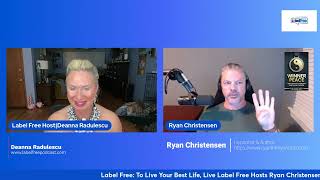
Hypnotist and WINNER PEACE author, Ryan Christensen, S6 E1

A recorded interview (YouTube/podcast) featuring host Sarah Stockham and hypnotist/author Ryan Christensen. Ryan describes his path from military intelligence (Marine Corps, Air National Guard, contractor work beginning June 2004) into clinical/hypnotic work, explains his distinct approach to hypnosis (dismantle old unconscious beliefs then install new ones), and promotes his book Winter Peace. Major topics: practical differences between common modalities and targeted hypnosis, autism/Asperger's as a cognitive style aiding pattern-reverse-engineering, a survival-response model tying emotions to fight/flight/freeze/fawn/flop, and cautious, practitioner-led use of psychedelics with integration.
Questions this video answers
1997 (about 21–22 years old).
June 2004.
Started his business in April 2020 and went full-time in October 2020.
July 29, 2021.
About three 90-minute sessions.
Chapters
Foreign. Welcome to Simply Sarah. I'm Sarah Stockham, your host and I am so glad that you are here. Whether you were watching as a television show or you were listening in as the podcast, we are just so delighted for you to be here with us. We also want to take a quick moment to thank our sponsor, Glass Arts Collective. And then I would love to introduce you to somebody who has, is a hypnotist, but who has a background that is deeply connected in with so many other things. He is somebody who has done the work, he has tried several different methodologies and realized through his work with the military, through work with counterintelligence, with counter proliferation, that there were other ways to be able to come into a place, to be able to hear our own thoughts, to be able to understand what we believe and actually shift some of our beliefs, if not so many of them. Ryan Christensen, I'm so delighted that you are here today.
Thank you so much for having me. It's an honor to be here.
So how did you move into the military and then for the military into other things and now doing work as a hypnotist, a high performance coach, and so many different ways, helping people to shift, to see differently, to let go of beliefs that absolutely are tripping us up. What's your journey story, friend?
Man, that's a, that's a really good question. So, grew up in Kansas in the 70s and 80s and knew from a very early age that the world worked for everybody else and not for me. Right? So there's just no real way for me to get what I wanted and needed in life. And that kind of led me to a place where I needed a reason to keep living, to keep going on. The thing I chose was that idea of heroic sacrifice. You know, I was reading a lot of like military fiction and science fiction fantasy and the idea that even if your life sucks and even if you're like, you know, even if you're suffering, if you're doing it for a greater cause and it's worth it, right? You can become Batman. You know, Batman's life sucks, but it's a really good thing he's around. So that led me to join the military in 2000 or, sorry, 1997, when I was about 21, 22 years old, the Marine Corps, first working as a Russian linguist and then onwards from that into the Air National Guard, working intelligence for like Predators and U2s and F16s and F22s. The military stuff really wasn't working for me. I was hanging out in Kansas Back at the time when I was in the International Guard, and that was just not the space for me. I need to get out of there. So through my resume up online, got picked up by a company in D.C. in June of 2004. That's when I started my career working as a contractor in dc. I've worked counterterrorism for about seven years, seven and a half years, to counter proliferation, you know, nuclear, biological, chemical weapons stuff for about six and a half years, and did a lot of project management stuff after that. By the time about 2019, 2020 came around, I realized that the world doesn't really want to be saved. So that reason to live was just like not working for me anymore. And that's kind of when I transitioned into working with people. One on one. Is a hypnotist at the beginning of 2020. You know, started my business in April 2020, went full time in October 2020 and been doing it ever since. Along that same time was really when I got started on that big healing and self improvement journey of my own. Between like 2019 and 2023 was when I tried pretty much everything, right? You know, coaching and psych psychotherapy and belief work and somatic work and breath work and energy healing and spiritual retreats and psychedelics and hypnosis, like all of it, right? And what I realized was that no modality actually was able to deliver results that they said they could. You know, everything helped, everything moved the ball forward. You know, psychedelics were absolutely key in kind of opening up the door and getting me to realize and understand on a deep level that life actually was worth it and I could get what I wanted. I actually have a tattoo on my chest that says I am alive. And the date is July 29, 2021. That's the first time in my life when life was actually worth living, you know, but it still took a lot of work to get to that place where I could actually get what I needed. And what I understood then was I kind of had to reverse engineer all the underlying assumptions behind all these different modalities, kind of figure out how they actually worked and what the limits were. And that's what led me to really focus on hypnosis. Because a lot of our problems are actually stemming from the subconscious mind, how we're interpreting reality and that drives our emotional responses, our behavior, our thoughts and so forth and so on. But we're focusing the things, focusing on things from kind of a very left brain perspective. Individual events, individual beliefs, individual problems, and nobody's looking at the Right. Brain, the emotional side of our brain. Right. And the reality is our mind is looking at reality through both of those lenses simultaneously looking at three trees as well as a forest at the same time. And that emotional side, those emotional conclusions, you know that that part of your brain has an entirely different set of beliefs coming from an entirely different perspective with its own logic. And if you don't fix those, this little stuff kind of doesn't matter. I mean, helps you, moves the ball forward. But a lot of this little stuff is just like, I'm not good enough being applied to individual situations. I don't deserve being applied to individual situations. So I had to fix that in order to be able to get what I wanted in life. And that's kind of what I do with my hypnosis work these days, is I take that tool and I go down your unconscious mind. I explore kind of the. The chain of logic created those beliefs, do the disproven to get rid of the old belief and create a new one, to draw a different conclusion, you know, and that's what I found to be an incredibly powerful tool. It lets you get some really huge results really, really quickly.
Yeah. I also am loving your book Winter Peace. Just finished it last night. It's such a great read. And you talk about all these different things that you've just shared about these different modalities and how they are helpful, but they don't come all the way through to the very, very end. I think that for me, some of those modalities gave me the space of the possibility of what could. Because it got my mind to be quiet for a moment. And then I could start to begin to feel into what. What is possible for me, what is my skill set? Not what I was told my skill set was, but what. And then what do I believe about who I am? And that space for hypnosis is so, so vast, so helpful, such an incredible underpinning for being able to begin to look at some of those pieces. And for people who are wondering about hypnosis, are they fully in control the whole time that they are hypnotized?
Yeah, absolutely. You never actually give up control. This is a very. Sorry about the closed doors. Who's being a little bit. But right now, this is a very voluntary process. Right. I'm leading you through a process, kind of like a guided meditation to get you down another level, deeper in your mind. But it's voluntary, Right? Right. You have to. You have to choose to go along with the process. You have to choose to let me Lead you there and you never really give up. Control. All we're doing is putting a different part of your mind in control. So your conscious mind, we're putting your unconscious mind in control. And that's really where the deepest parts of you live. Right. That's where your deepest sense of self live. That's where your moral compass lives. Right. So I can't actually make you do anything you don't want to do. If you don't want to be in hypnosis, you can bring yourself back out. You know, you can go ahead and control what we see or what we don't see and what we work on and what we don't work on.
Yeah, I think it's really important to have that conversation up front because movies have distorted and completely fine. They are make believe and so that's completely fine. But for people who are curious about the work, Ryan, in your experience with working with people of all different ages, what has been, how many times do they need to come for hypnosis in order to begin to see any difference in their life?
So I approach things in a very different way from triple hypnosis, and that's kind of what causes a lot of people to have a lot of doubts. Typical hypnosis, Very much. We're going to open the door to your unconscious mind, throw a lot of good stuff in and hope it sticks. Right. It's kind of like affirmative motions on steroids and basically. Right. And what happens is you're not creating a new belief set down there and the old belief set is still there. So they compete.
Yes.
And that new belief set often lose because the old one has still a whole lot more evidence to it. Right. So it can take quite a few number of sessions before you're actually seeing really good results and make them stick. And you're only really able to address small things. Where that type of hypnosis is most effective is in things where we're changing the way your mind is processing signals and information. Like smoking cessation. Phenomenal for that. You're often able to quit smoking in a single session. Pain management, Phenomenal for that. Right. Kate Middleton, the wife of Prince William, actually use hypnobirthing for all three of her kids. Right. The way I do things is very different. The way I do things is go down. I actually figure out what that belief is and how it came to be. Dismantle that old belief before we create a new one. And as a result, we're able to get results very, very, very quickly. Right. Typically, the place That I try and get my clients to. In the end of everything is a place where there's nothing wrong with them. There never was. They're good enough as they are to deserve whatever they choose. There's nothing to heal that never was. They don't have to prove anything to anybody else, not even themselves. Right, Right. And to get there is typically to lay that foundation of work is about three 90 minute sessions and it's permanent.
I'm just wanting the audience to soak in on that word. Permanent Ryan. It's such a beautiful, beautiful word. And again, that space of that the client is always in control all the way through. My experience with being hypnotized has been one. In college, I was taking a psych class and at the end of the class we were. And we were told this weeks in advance that somebody was working on their doctor was going to come in. If we wanted to stay, we could. We didn't have to stay. It was, you know, completely up to us. And what they didn't tell us, that they were looking specifically for men. So everyone got to stay who wanted to. And then they were all of us afterwards. But I went home that night and slept so incredibly well. And just the release of any tension of getting close to finals in college and eating the cafeteria food, all of those things being far, far away from my family, none of those things were being carried. It's the word I'll use for it inside of my being. I just was so relaxed in such a different place. And so for people who are struggling with sleep, I personally not a doctor, but I just, I have found that to be just something of deep interest.
Yeah, absolutely. There's so many different uses for hypnosis and one of the biggest ones is to kind of like get rid of some of the baggage. Like one of the first sessions I did was with a hypnotist who's talking about toxic shame and emotional baggage. I'm like, well, you know, Catholic, grew up with a lot of that. So did a session with him and things were just lighter. It's like if you're carrying around 50 pounds of stuff, you get rid of 30 pounds, everything's easier, right?
Yes.
The things to understand though are that number one, that doesn't actually fix the underlying problem.
Correct, Right.
The other thing to recognize, and this is something that I've really kind of, really kind of bothers me, this whole idea of like, this is what we're told, we're programmed, we're given these things so forth and so on that never actually happens. We are always the ones to create our own beliefs, period. It is always our own interpretation of the world. Right. So you weren't told that this is who you are. You decided that this is who you are based on what you're seeing and hearing the world. Right. You weren't given these beliefs. They weren't installed. That's always your choice. We're never programmed, unfortunately, that makes a little bit harder to do stuff because it means that nobody can actually just program us out of it. Right. Which is why this stuff, you know, that'd be a lot easier. But at the same time, you don't want that kind of thing to be floating out there where anybody can play with your mind, right?
Yes. Yes.
And when you're in that place where you feel like you can be programmed and the stuff was given to you, it actually creates kind of a victim mentality in a way, because it means you're not even control over yourself or your own mind. But the reality is, it's always a negotiation.
Yeah.
Right. You can't just add a new belief. It's like, okay, can we make this? How do we need to negotiate this? How do we need to create this together to get you to the place you want to be?
Yeah. And you used the word bias earlier, which I think is such a profound word to be using, because when we begin to create beliefs on things, it's called confirmation bias. We begin to confirm that, and so we can be looking at exactly the same thing. But if I'm trying to decide that it's really, really white, and you're trying to decide that it really, really is a shade of gray, we're both going to find ways to be able to confirm that bias and what we are looking at.
And.
And neither one of those is necessarily right or wrong. It's just what we are trying to confirm. And so I really appreciate what you're saying is that nobody shows up one day and just says, okay, here's what you're going to believe, and, you know, take it in. It really is a. Is a constant decision, and then what's around us makes a difference as well.
Well, let me kind of challenge that a little bit, because there's this idea in hypnosis about the critical factors, kind of the barrier between the conscious and the unconscious mind. All right? And the way it works is that our unconscious mind only, you know, judges true and false based on what it already believes. So only accept things that it already believes. But it's not that you're constantly reinforcing it? No, no, no. That belief exists, it stays there and it's ignoring any evidence to the contrary. So you can't prove it wrong.
Yeah.
Right. So it's only letting things in that match. That's why confirmation bias is such a thing. But you're not constantly reinforcing it. It doesn't have to be reinforced. It's already true. Right. You never have to prove something yourself. That's always true. That's already true. Right. You don't sit there and walk in the mirror every to say, I am a woman and I do podcasts and I help people like, no, that'd be ridiculous. We sound ridiculous. Why? Because it's already true for you. But if you're sitting there in the mirror saying, I'm awesome and I can do it and I deserve things, you're doing it because you don't believe it yet. And unfortunately, doing it from the outside end doesn't work. It simply doesn't work.
So I'm intrigued by this because if we're going to talk about muscles and you find a five pound and you move it to ten pound, you are building the strength in the arm or whatever.
Yes.
And so repetition and then it becomes stronger. So what I'm hearing you say is once the belief is in, there isn't any strengthening it. I am fascinated by that.
Yeah. Essentially it just becomes truth. This is the thing that's true. Right. And you don't have to keep proving things that are true. You don't need a mountain of evidence once you've proved it. Right. If you believe in God, you don't have to sit there and every day prove that God exists. No, you have to have a lot of evidence to prove it wrong. Right. Now, we often talk about things in terms of like, habits where you're like creating this massive neural pathway that exists over time. Right. I'm sure that's a neurological thing that happens, right?
Yes.
But the reality is, if you got this like eight lane highway that you built over 30, 40, 50 years in order to change that, all you have to do is take the on ramp and put it somewhere else. And all of a sudden this entire eight lane highway becomes completely irrelevant. Right. So it doesn't actually take you any time to change those things. The reason it takes so much work and so much repetition from the outside in is essentially you're trying to convince your mind to let you live the lie in some way, shape or form. You're saying, this is important for me, I need to have this. And you're Actually making it kind of like using a pain signal in a way to create that space. You're saying it is too painful for me to not have this.
Right.
And that pain outweighs the pain of, like, confronting this or dealing with the insecurity, whatever that thing was that was holding you back. So you're essentially just trying to outweigh one pain with a bigger one. Does that make sense?
It does. It totally makes sense. Yes. Let's take a quick break. We'll be right back. Glass Arts Collective is doing something so fun and amazing, believing that all of us are creative. They are opening up their Instagram page, page for people who are creating things to be able to post those things there. I also believe that you are creative and I'm super excited about this opportunity to be supporting Glass Arts Collective. They are amazing. So glad to have Ryan in studio today as we're talking about his book winner. Peace. And I was talking with a client of mine this week and I said, this is a book I believe that you will find to be incredibly helpful because it's that space of not having to continue to tell ourselves over and over and over again that we're going to move a different direction. Ryan has a way of helping us be able to move to that space, to be able to process, to be able to look at our beliefs. And I so appreciate that you took the time to write this book. What was the determining factor for you to take the time to set down, to put your thoughts in order and then rearrange them till you were happy with them and then write out the chapters and all of that. What, what was that point for you?
Well, a lot of it had to do with the fact that, you know, I created this whole modality and this whole theory and this whole framework that I haven't really seen anywhere else, and that it was the thing that kind of got me across that finish line. Right. If you look at a lot of techniques and a lot of modalities out there, a lot of therapeutic stuff that can kind of get you that, like 30 yard line or that 20 yard line, but then they kind of hit a wall and you're just kind of spinning your wheels. Right. And for me to be able to get what I need in life, like I had to move across the finish line, I had to find a way to get in the end zone. And that's why I developed this modality to get you from the 20 yard line into the end zone, actually finish things up for good. Right. Because this idea that healing is A lifelong journey not acceptable, right? Because what that means is that no matter how hard you work, no matter what you do, you will always be broken, right? And the reality is if you have this idea that there's something to heal, that means you're broken, that means you can't really be valuable, right? If there's something to fix, that means you're broke and you can't really be valuable. As long as you have one of those two ideas in your head, you can never actually have healthy self esteem, right? So we have to fix those kinds of things and we have to create a new way to have self esteem where it's self determined. Because if you're still measuring things, if it's about comparison, the answer could always be not enough, right? And so once I understood all these things, once I understood how like these emotional beliefs work and kind of where they came from and how to shift them, I'm like, this is, I don't see this anywhere else in the world. I need to get this out to people, right? Because my mission in life really is to, you know, in human suffering and unleash the fullness of human potential to extent as possible for me to engineer in this lifetime. There's 7/2 billion people in the world. I can't possibly, I can't possibly do all this on my own, right? But if I can go ahead and put together a book that's 120 some odd pages long or about three and a half hours on Audible, that's accessible to a lot more people and even though I can't like fundamentally dismantle your particular story, it's going to get you a lot further down the road and create a lot more space. Now as far as creating the book goes, I spent about six months or so banging my head against the wall trying to figure out how to mind map this out and structure it and so forth and so on. And a friend introduced me to a guy by the name of Joshua Lysik, who's a ghostwriter, one of the best in the business, who's also a hypnotist, right? So I'm like, ah, this guy can understand things and he's really good at weight. So I went ahead and hired him. I basically took, you know, I recorded about 10, 12 hours with audio about everything I could kind of think about, you know, about what I do and how it works and the structure and so forth. So I just dumped on and said, make this make sense, right? Because I have autism. And one of the hardest things for me is to Understand how somebody else needs to understand a project. Like, for me, it's this big mass in my head. It just makes sense. Right. And trying to figure out where to start and structure it is just almost impossible. So give it to him. His entire world is taking stuff and make it make sense. And so he had a rough draft that was about 80 there in the first week.
Wow.
Yeah, he's really good. He was really good. And then, you know, three months of kind of going back and forth once a week, you know, parsing things out, adding some stuff in, restructuring. He had things pretty much set. He did the final edits, put the, you know, put the whole, like, typesetting and cover and getting up on Amazon, all that sort of stuff. It was phenomenal process.
Yeah. Yeah. It's an excellent, excellent book. Ryan, I hope you. I hope that you feel that as people are sharing with you the. The impact it's having on their life.
Absolutely. It's. It's been so good.
Yeah. So you shared that you have Asperger's. How did that help or not help you in the military and counterintelligence in all the things that you've done?
It's a complicated question. Fundamentally, it's a situation where it's kind of like social colorblindness in a way. Right. Where there's a lot of nuance and detail to human interaction that I'm just blind to. Right. I just cannot perceive it. And so that makes it really hard to navigate the world. You know, like I said from the beginning, you know, life just does not work for me the way it does everybody else. But what that means is that it's much easier for me to actually see the patterns, behavior, the patterns that go through things. Right. Because I can't see the detail. I can't get lost in it. So I'm always just kind of looking at the forest. And in order to navigate the world, what I realized is like, okay, if there's a pattern of behavior, then there's something that drives it. There's a mechanism, there's a system of beliefs that create that. So if I can see enough inputs and outputs, I can figure out, reverse engineer how that thing works, right? So that's essentially how the world, my entire life is just reverse engineering people, what they believe and how they work. Walk into something like, you know, the intelligence world, where it's all about putting the pieces of the puzzle together, figuring out how that thing looks, right? Figuring out how to ask the right questions to get the right information, to map out that network. Or that system or whatever that happens to be. And that allows you to figure out where the weak points are so you can, you know, grab that crowbar and just start taking things apart. And so I was phenomenal at that part of it.
Yes.
Being a Marine, not so much being an airman, not so much office politics. Absolutely horrible.
Right?
So that part of things was always just incredibly difficult. But terms when. When it comes to things like actually delivering, you know, for the client, for the military, the results that they're looking at, getting them from point A to point B, that was always my forte. And it was so easy for me. And this work now is so easy for me, is that I can see so clearly these patterns. And when I'm gathering the information from the client about how this thing can be, it's like, perfect. Now I know exactly how this works, exactly how to take it apart. So in a lot of ways, my Asperger's, my autism, that. Absolutely a superpower when it comes to that.
Yeah. For people who are listening, if they happen to be working with a co worker who has Asperger's or something along those lines, because it is a continuum, what would you suggest that they do consistently or not do consistently that could be helpful. What would have been helpful for you?
Say what you mean. That's just easier. Just say what you mean. I remember sitting down, had this boss and sit down, and she had to critique me. So hey, sat me down. It's like, hey, you know, you're doing awesome. I love this stuff. But, you know, this is a problem. Yada, yada. But you're really great. It's like, just do me a favor, just tell me the problem. Just tell me what the problem is. Because when you do that sandwiching thing, I know that everything you say before and everything seen after is a lie. Right? So just give it to me like I don't care. You can tell me the truth. Because if you're telling me the truth from your perspective, I can actually understand what's going on.
Yeah.
The mistake, the reason I'm misstepped is because I don't get it. I can't see it. So show me the thing I'm missing. Once I understand what I'm missing, once I understand how that fits in the puzzle, great. Now I can navigate things easier, which means I make less mistakes in the future. Just tell me it's okay. I'm not going to be offended right now. Other people may be a little bit more sensitive that you might be out. Have to be a little Bit more gentle. You know, Maureen, you can be brutal with me. I don't care. But, you know, some people, you need to be more gentle and stuff like that. But just tell them the truth. Just help them understand what's actually happening. So all you got to do.
When I was in the classroom teaching, I taught elementary for a number of years and had different students with different diagnosed and undiagnosed things, you know, younger elementary. And one of the things I also found was having somebody that could. Whose temperament was such that they would not get frustrated.
Yeah.
And also that they had the temperament that they didn't mind being watched and to pair them up together at different points. So that one was just showing the other in both. Both directions. Right. We did something called the Mind Institute, where we'd go into the piano lab two times a week with our second graders and into the computer lab two times a week as well. And those are very different parts of the brain that we were working with. It was our absolute highest year test scores, hands down, when we brought in the Mind Institute and continued to use it. Also, though, it gave us an opportunity in the class to be able to have different people with different strengths. And again, there's that part of, can I watch you? Do you mind being watched or not? That always played into that, because some people were just like, let me just get it done and I can check off this, but if I have to slow down enough for someone else to be able to watch me take it in, then thanks. No. And so that was just one of the things that I. I'm just so grateful for having different people, different other educators around me as we talked about what worked and what we found to be the most helpful in the classroom. Such an important piece.
You know, learning through observation has always been the most difficult thing for me. Right. Because again, there's. There's stuff that I simply can't perceive in what you're doing. You know, I remember going to. Taking an aikido class for a couple years, and the guy was a very, you know, traditional Japanese. He says he's going to demonstrate and you guys practice on each other. A lot of times, like, I don't say, come here, do the thingy on me, because I don't get it. You know, I gotta actually feel the thing in order to feel it. Right.
Yeah.
The other thing I've recognized is that quite often when somebody's kind of like, naturally good at something, they don't know how, they don't know why you're right in the process. Right. They just don't understand. No, I just do the thing. It's like, right. How do you do. No, just do the thing. Yeah. One of the most frustrating things.
Oh, and that's so, so true. I think that people, even when you were in that Survivor, let me be Batman and let me be of service, that that was something so natural, I think, for you, that others would have wondered, you know, how could you possibly do that? And you're just like, this is. This is my next step. This is what I'm doing. This is what I'm investing in. And so coming on that as well, the military has a lot to do with. You've done these things really, really well. Therefore, you have achieved, and therefore you get the. Whatever it happens to be. You touch on achievement in the book. You touch on it on your website. How are we masking our inner conversations of I'm not good enough with, I just achieved something more?
Right, Right. Oh, man, that's such a good topic. This is something that once I saw this, I couldn't unsee it. And really, I kind of, like, started uncovering this once I started watching an entrepreneur named Alex Hormozi, right? Big famous guy in his 30s. Like, he and his wife have built a, you know, business empire that's pulling in over like, 500 million a year. In their 30s, right? Phenomenal. One of the most accomplished entrepreneurs out there. But as I was kind of watching his videos from the beginning, I saw so much insecurity in him from the beginning, right? It's like, oh, I just want to overachieve and, like, because I just want people to like me, right? Like, I can't let myself fly business candidate class because I don't deserve it. Stuff like that. And it continues this day where he's talking about building up this stack of undeniable proof that you are who you say you are. Right? Well, if you got one piece of undeniable proof that you are who you say you are, that should be enough, right? So why do you need a stack? Why does the stack have to keep growing? Right? And fundamentally, what the issue is is we ask ourselves this question, like, okay, am I good enough? How valuable am I? And we get, I'm not good enough. Not particularly valuable. And that is not an answer we like, nor is it an answer we can really tolerate, right? Because how good we are and how valuable we are determines what we deserve in life, right? Right. So if we're not valuable enough, we can't actually get what we need in life, right? So that's not an answer we can accept. So we have to come up with a different answer, have to prove ourselves wrong. Right? So we figure we find something we're good at, you know, whether it's military, sports, business, whatever that happens to be. I'm good at this. So I'm going to measure myself by achievements in this space. Right. This is going to be my scoreboard. Right. If I run up a high score, then I'm valuable and then I can deserve. Problem is, number one, your unconscious mind ignores anything that doesn't match what it already believes.
Right?
So it doesn't matter how high your score is, it's never enough. I got a million dollars, but that guy's got two. I've got five, he's got 10. Right. The other thing is you get that achievement and you get that pride of accomplishment in that moment, and it feels good. So you think you're there, but then that fades away and you're back in the space of that insecurity and doubt. And now you have to set that next goal. That's why this is such a continuous treadmill. Right. And a lot of times what happens is you end up sacrificing the rest of your life to focus on that because that's the only thing keeping you going. Right. So your relationships are a mess. Your house was a mess. You never take time off. Right. You're just always grinding, and it's just such a horrible trap. And it's so hard to see because everybody else is looking at you going, man, you're killing it. Right, Right. It's like, how can I be you? How do you do this thing? It's so amazing.
Yeah.
So from the outside in, everybody's like, you're crushing it. It's great. And from the inside out, you're like, yeah, but. Yeah, but, you know, and so that dichotomy and that conflict is just so difficult to kind of breakthrough, especially when nobody is talking about achieving success being a bad thing.
Right.
Facing success being a trap. Right. But there's a guy by the name of Andrew Wilkinson. He's a entrepreneur, investor, VC kind of guy up in Canada. Wrote a book called Never Enough. It's his journey from being a barista making $6 an hour to being a billionaire. And how when he was a billionaire, that insecurity and the anxiety was still there, the same as when he was a brisa. It's like, if a billion dollars ain't enough, that's just simply not how that works. Right?
Yeah.
The reality is we just get confidence and self esteem. Wrong. We think that confidence is something we gain. Right. This idea that confidence comes from competence and it kind of makes sense. Right. You're learning how to drive. The better you get, the less afraid you are. Easier to do everything and just keep on going and so forth and so on. Right. Same thing with basketball, investing whatever that skill happens be. But if confidence came from competence, everybody's 100 competent being who they are. So everybody should be 100 confident.
Correct?
That's not how that works. Confidence isn't about what we gain along the way, it's about what we lose. It's losing the fear and the doubt and the uncertainty. So when you don't like who you are, you can't be confident. What's happening is you've created this ego, this idea, this conscious concept of self of like, I can't be who I am because that's not good enough. So I'm going to be this other thing. And the confidence you're gaining is being good at playing that role in that Persona. Right. Which is not actually true. Confidence, that's fragile. Anything goes wrong in that space and that's done.
It was so refreshing in your book as you talked about that. And then you said if people didn't like who that was, that was never you to begin with. Right. Because it's just a made up Persona that you're taking in from all of the outside information. You're trying to be this, whatever they want that keeps being molded into whatever you think that they want. And perhaps there's some conversations also in there, people saying, this is what I'm expecting. So now you have verbiage to go along with it as well. But if it was never you to begin with, you know, they, it doesn't matter that they don't like that person because it was never you. That. I thought that was absolutely brilliant, Ryan.
Yeah, absolutely. And, and that's kind of an interesting trap where you're trying to be what people want. It's like you're trying to buy the things you want and need from life by saying, I'm going to give you what you want. I'm going to be who you want me to be, whatever that happens to be. And even if you get it right, the worst thing about it is if you get it right, that person gives you what they think the person you're pretending to be wants and needs, not what actually you want and need. Right, Right. Which is why being a people pleaser is so freaking toxic and so damaging because you're doing Everything everybody wants, you giving them everything they want and need, and you're not getting it, what you need in return. Right. But understanding that when you're being rejected out there, when you're not being accepted out there, if you're playing a Persona, it's not you that's being rejected. They're rejecting your performance. You're not a good enough actor.
Right.
Which is kind of an interesting way. Yeah, it's an interesting revelation once that hits.
Yes. And it's one that just lands so well. It's when you talked about. You can't unsee it. You know, it's one of those pieces also that when you realize that the manipulation that whatever that is of trying to be something for somebody else. And I do understand in this, the social fabric of people who move into caregiving of a loved one, I understand that may not be their gift and that they are something that they feel empowered to do, but yet out of the sense of commitment and perhaps even sacrifice, perhaps love, whatever that happens, to be choosing to take on that role for a period of time and even inside of that afterwards, to be able to take that mantle off and say, I did that for that season. That's not who I am necessarily as a person. But I did these things because it was the right next best step for whatever the situation happened to be. I really like that idea of being able to say, that was never me, or that's, you know, I'm playing that part. I think that's really helpful for people to be able to process and to hear that and to know that it's not them. So in the space of that we're not broken, that we don't need to be healed. Tell us a little bit more about that. Because that, for me, is a place that I think that some people might just say, I can't. I can't hear that. You don't know my life. You don't see what's in front of me. You don't see what's behind me. How can you say, I'm not broken? How can you say that I don't need healing?
It's actually pretty easy. You know, when it comes right down to it, everything's very simple. All right? Number one, the most damaging belief that we have is this idea that emotions are pain. Right? Emotions are pain. They come from emotional wounds. They're caused by emotional trauma. Right. And the reality is, it's the easiest belief to come to. Right. When you're a baby, you really only have one tool to get help. Right. All you can do is cry. And everybody responds to the same way. So any kind of distress, whether you're cold or hungry or in pain or lonely or whatever that is, you treat it all the same. You do the same thing, get it fixed. And as you're growing up, you're hearing things like, you broke my heart, you hurt my feelings. I feel so wounded. Right? So that just continuously reinforces that idea. So how would you think of emotions in any other way? But the problem is, when you think of emotions as pain, a couple different things happen. Number one, when you're growing up in environments with a lot of significant negative emotion that you can't really escape when you're trapped in, that essentially cranks up the pain to such a point where you. Your mind begins to treat it as a threat to your physical existence, your physical survival, right? Starts triggering all the survival circuits back there. And the reality is, to be one, you know, emotions kill. Over 300,000 people last year died between, you know, alcoholism, drug abuse, and suicide, right? How they felt, their mood actually ended their life. Right? When pain becomes too much, that's where things go. So your mind has to take it incredibly seriously. So you end up avoiding all these negative emotions. You end up avoiding all these traumatic situations, right? Right. You can't deal with it because it's too painful. Triggering that emotional response might take you down that dark path. Okay? So as a physical survival response, your mind simply doesn't let you go there. Okay? But the reality is emotions aren't pain. They're just signals. They're questions your mind is asking you. Every emotion is the kind of problem that your mind is trying to solve. The reason why this is is because when you burn your hand, your hand hurts. You're supposed to look at your hand because that's busted. Needs to be fixed, right? We feel these emotions in here, these powerful physical sensations and stuff like that, but each one of those is just either our body preparing to take some kind of action, right? Run, hide, whatever that happens to be, or it's processing something. You're heaving and sobbing because you're grieving, because you're trying to process that loss. If that's the case, then your body's doing exactly what it's supposed to. Everything's working as intended, functioning, exactly designed, which means it's not broken and nothing needs to be fixed, right? So once you separate that out physiological response from that mental part of what it means now, you can start looking at it in terms of it not being pain, but as terms of it Being a signal as a question. Right. But because we think of it as pain and because we're supposed to look at the thing that hurts to fix it. That means we're always looking at the problem in here and up here.
Yeah.
Which is where that idea that we're the problem, we're broken and need to be fixed comes from this hers. Distance to be fixed. Right. So what do we do? Start looking to try and figure out what's broken. Ah, this person says I'm fat. This person says I'm ugly. This person says I'm like not smart enough, whatever that is. Great. I need to fix that. So you fix that. Yeah. So don't feel the same. Ah, must be something else figure out and just keep on going through that process of fixing things and fixing things and fixing things. Right. Talk about this in my book about, you know, this idea of like trying to find a needle in a haystack. Almost impossible.
There is no needle.
But if there's no needle in a haystack, it's impossible to do it.
Right.
But it's the idea that you're broken and need to be fixed in the first place. Because the reality is when you're in these terrible, you know, positions, you know, talk about abuse or whatever that traumatic event was, that was not an environment you controlled. Right. There was no way for you to win because it didn't matter what you did or didn't do, that stuff was going to happen anyway. You didn't have the capacity to prevent it. You weren't old enough.
Right.
But when it comes to things like survival, it's not just fight and flight, which is what we always talk about. And that's kind of dangerous in itself because if you fight something off, you don't get hurt. Right. If you run away, you don't get hurt. So if you got hurt, you must have failed. It must be a survival. But there's actually five survival responses. Fight, flight, freeze. That's hiding, Fawn. That's like rolling over to surrendering, just begging, trying to get that out. But number five is the most important. It's one we never talk about. And that's flop.
Yeah.
I start scrapping this schoolyard. Big crowd goes around him, right. One of them starts losing, tries to get away, can't. What does he do? He hits the ground, curls up in a ball, protects himself as best he can and just takes it. He just endures.
Yeah.
Because sometimes the only thing you can really do is just endure and take it as long as you have to. But what that means is every single thing you've ever gone through in your life, you've survived, you've handled it correctly using the best option available to you at the time. Which doesn't mean you didn't take some hits, doesn't mean you didn't get hurt, doesn't mean that stuff doesn't suck. But you survived, which means you did it. Right. And if the world does everything it can to destroy you and you're at the end of it all, you're still standing. Who actually won? Yeah, you did. Right. So when you start looking at things from those lenses, it's like, okay, well if emotions aren't pain, then they don't actually come from emotional wounds. There's no such thing as emotional wound. There's nothing to heal. And then trauma takes on a very different meaning. Right. Because trauma then becomes not something that creates an emotional wound. Trauma is simply a situation where you could not find a way to win. You're sitting there in a situation, your mind is screaming at you for help and you don't have an answer. Right. But when you're looking at emotions, it's not pain. And those situations are simply situations where you can find a way to end. Now it becomes trying to figure out what the lesson was that you need to learn from that, what that situation mean about me was a situation mean about the world around me. Because it's never what they did, it's never what they said. It's always about what that means about you. Yeah. Because your mind is trying to figure out how to navigate the world, how to survive. So it's trying to figure out what this stuff means, about how I need to move through the world, who I am, what I'm capable of, how I'm built and how I need to get what I want. So that's always where we need to put the focus.
It's just so profound because it is always our own individual perceptions. It's our own, our own way of looking at it. It's our own. I have pretty much a running commentary going most times, right. It's my running commentary on what I'm seeing around me. And a lot of it's very boring. Commentary matters in terms of how I choose to show up and interact. And I really appreciate also I known about fight or flight, I know about freezing, I know about fawning, where you're also able to over exaggerate anything to get the attention off of yourself. It was the first time that I had heard about flop and it just helped me to see Things so differently. Because choosing to get into that fetal position is a. It's a mechanism to be able to survive. And at times, it really is the right, best one to choose in terms of how. What is bringing you in that particular moment.
Yeah. And that flop response is correlated with the emotion depression.
Yes.
Right. You're out of options. Yeah, out of options. So all you can really do is wait it out. Right. But the thing is, if every emotion is a question, then it's actually helping you understand the problem, find a way out. Right. So if you're in depression, Right. That means that you don't have any options at that moment, which means what do you need to do? You need to go find some options. And as soon as you're looking for that answer now you've got agency and power again, which means you're not stuck. Even if you haven't figured out what the problem is, even if you haven't figured out how to fix it, at least you're not stuck anymore. At least you're in motion again. Right. Which gets you out of that freeze response, out of that flop response, and back in motion. And that's a powerful, powerful thing.
Ryan, your book was the first place that I had seen a emotion attached to one of the. One of the Fs in the fight or Flight. Freeze on or flop. I was. I took copious notes on that. For me to be able to go back later on and just sit with that, because I had never seen how each of those choices, those actions that we choose, has a correlation with. With an emotional part as well. So the one for fight, Is that going to be anger, perhaps?
Yeah. So actually look at it kind of like as a ladder. Okay.
Okay.
The first two, Fight and Flight, and actually Free or Sorry, Fawn and Flop, are all. When you're actually being confronted by an existential threat, when something's actually on you. Right. The first thing that actually happens usually is like, that's that branch snaps. When you're walking around the foot in the woods, what do you do? You freeze. Right. Because you're trying to figure out what's going on in your environment. There's a problem out there that may or may not be a threat, but you got to figure out what that is. That's the emotion. Anxiety. Right. Something's kind of coming down the pipe. Got to figure out how to deal with it. Right. Once something's on you, there's actually that hierarchy because it's actually in terms of effectiveness, fighting is first. That's anger. There's Something out there, this problem, you can overcome it using force. So that's what you should do. From a survival perspective, if something's trying to hurt me and I kill it, it's never a problem again. So that's a really good solution. Right, right. That's just how that works. But if you can't fight it, the next best option is to run, flee. That's fear. Something else are a problem can't overcome with force. Best to get away if you can't fight it or if you can't run. The next two options are fawning, roll over, shoulder. Your better surrender. Right. The submission response. If that doesn't work, curl up in a ball and take it. Let's flop this depression, right? And the thing about these emotions is because each and one of them is associated with trying to deal with the survival threat, your mind can't really take no for an answer, right? Asking you for help, it's asking you a question. It can't take no for an answer. So when it doesn't get an answer, what does it do? It cranks up the intensity of that emotion. You're not listening, so it screams louder until it gets to a point where that emotional pain is too much, that it becomes its own problem. That's when it shuts up. That's when you shut down.
In my observation, people who are angry are typically physically agitated. You'll see redness in the face, perhaps, you know, perhaps their eyes get bigger, their mouth can get to get louder. Oftentimes when I think about somebody who's depressed, I think about the solar plexus. They're just closing that space up. Right. And so if they have a hoodie, the hoodie is on. It's just this forward closing. And serious depression can have not. It can look like that there's not a lot of activity or action going on with the person. How does that, how does the actions of that impact the way forward in terms of being able to answer the question to get, to create action, to start that forward movement?
Again, good question. So anger in itself is exactly how you should be responding to the situation, given how you understand it. But most of the time we're not responding to a physical threat. We're responding to a threat to our ego, to the identity we've created. Right. To that insult. Right. Not because somebody is. It's the, it's the idea that they are questioning whether or not that's really us. Right. Because if that's not us, that means that other version of us, the negative version the shameful, whatever that is, version is true. So we have to push that person, that idea away as strongly as humanly possible. Right. And that's an incredibly difficult emotion to interrupt. Right. Because that is a threat to your survival, because it's pushing you down that dark path, and you can't really go there. The way you need to deal with that is if you can take that step back and take that deep breath. Right. Which is hard to do when you're physically agitated that way, because you want to fight. And it's not necessarily physical violence. Psychological and emotional pressure are just as effective. More so, yes. But if you can take that step back, recognize that trigger, and go, okay, do I really want to go there? Before you go there, that's about. That's your opportunity to intervene. There's also something that we talk about in the Marine Corps, in the military, called the continuum of force. All right? This is something that people don't really understand. Where there's starting from, like, you're just chilling to. You're actually, you know, taking that shot and actually ending their life. Right. And instead of going from 0 to 100, the. The idea is, like, if they're here, you want to take one step more.
Right?
Right. You got that verbal warning lottery. Verbal warning, louder verbal warning. You get your weapon, you put it in your shoulder, you start pointing it, then you pull the trigger. Because what you're essentially saying is you're at this level of violence, I will go one step further. Go. Do you really want to go there?
Right.
If you match me, you really want to go there? Right, Right. And so when you're in these situations where you are feeling angry, when you are having that response, great. Match them where they are and just go one step further. Not to max. Just go one step further. And you're creating this sort of finesse, this. This delicate sort of balance of the amount of force you need to use. Because if you go straight to max, then there's no. There's no possibility of, you know, de. Escalation. Right. But if you just go one further and they choose not to go, great. Now we can continue to walk them down that ladder, right? Which is where that creates that space for reconciliation and conversation and so forth. So when it comes to depression, man, that. That closing in on themselves is that protection from the outside world. There's too much pain. There's too much pressure. There's no way for them to endure it. Great. That's the kind of place where somebody is really, really depressed. That's really difficult to get them moving again, what you have to do is remove the pain and restore hope. Hope is the thing that gets you out of depression. Hope is the thing that moves them out of that freeze response or, sorry, that flop response, right. Where they just feel like they have to endure. The difficult problem is people were in severe depression like that, or have been depressed or seen in long periods of time, have probably already tried everything. Probably already tried everything, hasn't really worked. So the point there is that if you're trying to engage with somebody like that and say, okay, what problem does you have? Perfect. Great. What have you already tried? Great. Why did that not work? Great. Now you actually understand the framework of tools they've used and why those tools have failed, which means you now know how to either A, apply the tools correctly or B, which tool to go to next.
Right.
And for me, you know, in my own journey, the biggest thing that, that made huge progress in that regard was psychedelics. Right? Because taking a psychedelic going on that journey is essentially cracking open that narrative you had just breaking that narrative and opening a whole new possibility as well as giving you a lot new emotional experiences, sensations, so forth and so on. Right. MDMA was a thing that made me feel like I could actually live because I had that powerful experience of like, wow, this is amazing. I love how I feel. This is awesome. If I could feel this way, then there's hope, right? Right. If I can feel this way, this way, there is possibility exists for me to do so. Outside of that, a solution to the problem exists. I just gotta find it.
Yes.
Another two years to figure it out. Two, three years to figure it out. But I knew because I knew that a possible a solution existed. I knew it was just a matter of time, cranking through things and figuring things out until I got there.
When you talk about psychedelics, I had interviewed someone else who had. Was working with Berkeley, UC Berkeley, and they were doing tons of research and they were coming out to share just their observations. And in each of the different episodes, they then would interview somebody who had that experience through that process. So there are so many different kinds of psychedelics that are out there. Would you recommend people doing them alone, doing them with somebody who is trained? What. What's your suggestion for people who are interested in saying, let me. Let me try something other than what I have been doing, looking for space again, looking for a different response forward? What would you say?
Well, in my personal opinion, the best way to do any psychedelics is when you're with a practitioner who knows what they're doing and create the. Can create the particular, you know, that safe space. Right. I'm, you know, I've always been a religious guy. I've always believed in spirituality and so forth and so on. So in my view, reality is more than just physical reality. You've also got this other immaterial world. Right. So to me, from a spiritual perspective, you want to create that container that's safe so that no negative influences get it right.
Correct.
I also think that if you're in a space and you haven't really done a lot of work, going down the route of something like ayahuasca is probably a really bad idea. You know, stuff like that is incredibly difficult. Exposes you all kinds of stuff and you haven't. If, if you haven't done a lot of work before, then you're bringing a lot of baggage. And that thing is going to take, you know, it could take you on a ride. That's going to be incredibly difficult. And people have come out of that and they've ended their life. They just. Just completely destroy their lives. So don't go there. Start light and easy, right? There's companies that do, like at home, ketamine therapy. I think that's a great place to start if you want to explore this sort of thing. Because ketamine is sort of a hypnotic as it's disassociative. It kind of allows you to kind of create some space between you and your. What you're doing or the things you're dealing with, which makes it easier to engage and understand and start making shifts. Things like psilocybin, mdma, lsd, whatchima. Things like that, I think are great for opening up doors and, you know, exploring and more than that, bringing things to the surface and showing you stuff that's going on, giving you a perspective what's going on inside you. The difficulty I see with psychedelics is that, number one, it's very difficult to do work while you're on this. If you're actually taking like a hero dose, if you're going on a trip itself, that's going to take you where it wants to go, that's going to. And it's very difficult to sort of do the work when you're on that ride. And after your ride is done, the door is closed to your subconscious mind. Again, hard to do that. Right. So you got a lot of conscious integration, but beyond that it's kind of hard. What I like to do is kind of combine psychedelics and hypnosis in terms of use the psychedelics to kind of open the door and kind of understand what's happening. And as soon as you've got a good idea what the problem set is, then you go around and use hypnosis as a targeted tool to go out and actually fix the thing you want to do. Because you can open up the door, go down exactly what you want to go after, target it, fix it directly and then close the door after you're done.
I, plant medicine has never called my name so I haven't done ayahuasca and, or mushrooms and. And I just say that what I'm going to share next is completely from somebody who hasn't. I have dear, dear, dear friends though who have done multiple times of ayahuasca and one of them came out and finally said if you're not going to do it with somebody who understands the medicine and can actually help you through the process, it's actually so much more damaging to go in and do it.
Yes.
So to be really, really selective. And that group of friends have all found different people who they have trusted, that they believe that they and have had good experiences with. That's allowed them then to be able to open up, to see, to, to breathe differently. I mean literally one of them is a two time cancer survivor and came into Ayahuasca, I would say probably at the second time that he had been diagnosed and just talked about the anger that he had previously and that who he is at this point in his life and you can see it on his face, the difference. But he's also working with somebody who is really good, really good multi generational shaman, you know, all the things and, and took them a while to find the right person. And, and so I just also put that out there for people who are, who do have plant medicine calling their name and you know. Yeah, yeah, absolutely. Where to next, friend? You talk about mental performance and emotional resistance. Sorry Emotional resilience and life satisfaction. Those are the three things that you have found that you target the most perhaps as a way of saying it when you are working with people or for people to look at their own lives and go is this something that I am I ready to work with Ryan or not? And I do invite people to go to your website, all the information in the show notes. But if people are experiencing that, they are not where they want to be at their own personal mental performance, if they're not experiencing the resilience that they know that they have hope for in their life that they know is a possibility, perhaps they've had it before or they see someone else and they have that just that tug in their heart of the possibility or in that place of life satisfaction. I do invite people to get a hold of you, to have conversations with you. Ryan. I so appreciate how nothing is off limits with you, that conversations just flow easily. And I just so appreciate your willingness to continue to look at all the different things that are out there, that people are not doors that they are knocking on. And that you so clearly say, when you knock on this door, when you knock on yoga's door, this is what's going to help you. This is where it's going to help you. It'll get you to the 30 yard line, maybe to the 20 yard line, but this is going to how it's going to help. And that you're not saying, don't do any of those things, you're just saying there is, there's more. Because our belief system is what is driving our work, it's driving what we are doing. So is there something that you would like to share with and close reiterate for our audience?
Sure. So the biggest thing is once you start doing this work, the goal is to get to a place where you're no longer rejecting or judging any part of you because that's what allows you to accept and forgive and integrate all those parts of you. And once you do that, you get to be in the space where nothing's off limits. Because there's nothing you're afraid of and ashamed of. Nothing can hurt you that way. Right. And getting that place where emotions aren't pain means that you can engage with any negative emotion long enough to figure it out. Because. Because your mind's trying to help you solve things and get you where you want in life. My book winner piece is designed to give you as much benefit of doing this work as I possibly can in that format. So definitely start there. If you don't want, if you're not ready to work with me individually, and when you're ready to finish rewriting those stories once for all, give me a call.
That's perfect. Thank you so much, Ryan. We look forward to more conversations in the future. You just have so much wisdom and you are able to dissect it to a place that's so easy to take in. So these are huge concepts, huge ideas and you make them. You've created the primer for the rest of us winter piece and I just invite people to get a copy of it, to read it. And when you're ready to work with Ryan, reach out. Ryan, thank you so much.
Thank you so much for having me. Sarah, it was a pleasure.
And to our audience, we say thank you so much for being here, for investing in yourself, for taking the time to listen to what is happening internally for you, knowing that when you are hearing these conversations that there is something inside of you that's pulling you forward. And I love the word that Ryan used today. It's the word hope. And so, yes, we desire that.
More from Ryan

How to Improve Yourself as a Man with Celebrity Ghostwriter & Writing Coach Joshua Lisec ft Hypnosis

Talking About... How To Reshape Your Emotions In A Relationship | Behind The Shades Show
#124 - From Inner Conflict to Clarity: Unlock the Power of Subconscious Mind with Ryan Christensen
Unlocking the Mind: Ryan Christensen on Overcoming Internal Conflict and Embracing Curiosity