Unlock The Subconscious Mind Of A Happy Person - Ryan Christensen
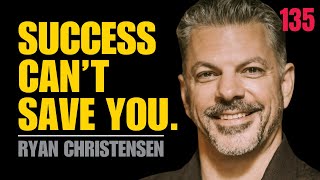
A conversational interview (YouTube) between host Brant and hypnotist Ryan Christensen about identity, happiness, and the psychological patterns common to high-performing individuals. Ryan explains two common childhood-derived traps (the ‘cage’ of pain and the achievement ‘treadmill’), frames negative emotions as signals/questions rather than wounds, argues that deep change requires accessing the subconscious (via hypnosis or altered states), and describes his clinical approach of mapping and dismantling underlying belief-chains. The episode also covers his background (intelligence work, autism and bipolar diagnoses), views on spirituality and meditation, and claims of comparatively large reductions in neuroticism from his methods.
Chapters
What's up, slappers? Today is a very interesting guest. His name is Ryan Christensen. Ryan is a hypnotist for specifically high performing individuals. In this episode we explore the complexities of identity, happiness and the psychological traps that high achievers often find themselves in. Ryan shares how hypnosis is an absolute must if you're having some big self worth self identity problems. If you find yourself gaining motivation so solely from your ego, past traumas, a victim mentality. Ryan is here to show you that motivation comes from inspiration. And not everybody has to be Batman. Let's get right into it. Cue the intro. I've met plenty of highly achieved people who seem to still be in the infancy stages of identity and happiness. Why is this so common, man?
I think the easiest question, easiest way to answer that question is in my book I write essentially about two traps we get into when we're coming from this place where really can't get what we need growing up, right, Just whatever that happens to be. Whether it's, you know, you grow up poor or just neglected, or you're in a highly critical environment, you know, where you nothing you ever do really measures up, you know, either we end up in the cage where we're just kind of like boxed in by our pain and insecurity, we really can't do what we need to. But the other one is much sneakier. Call it the treadmill. Or you could call it a hamster wheel, right? You got that Batman origin past, right? You know exactly what I'm talking about. But you got that thing that gets you out of it, right? Usually around high school you find something, right? Whether it's athletics, academics, you know, people join the military. That was me getting me the heck out of Kansas. No matter what it is business, something, right? You got a talent and allows you to get away from that environment. You're good at it, you enjoy doing it. You're having a lot of fun, you're getting a lot of rewards. Everybody's telling you how awesome you are about it. It's like, oh my God, you're so good. This is how good. How do I get to be you? So there's no indication that you're doing something wrong except for the fact that you can't take your foot off the gas. Except for the fact that you set that goal and said, I will be happy when. And you check that box and you're like, I ain't happy.
Do you believe the treadmill is almost necessary to get to that point where you realize the happiness is inside you? All the time, or do you think someone can skip the. The treadmill?
There's these very strange, very weird people. You don't see them very often. They're almost unicorns. They're called healthy people. Right? Like, some people actually got what they needed growing up. I was. I was running my head around this last year. There's a guy by the name of Zuby Zby. He's on Twitter. He's been on the Piers Morgan show all over the place as a rapper from the uk. Black guy. Guy is just like the low slave. Chill, articulate, talented, eloquent. Like, guys, guys got it right, right? And he keeps on talking about how, like, he just like, naturally low neuroticism, you know, Neuroticism is that, you know, big five personality trait. That's about negative view of self and negative view of the world. Right. Why? Because he grew up in a healthy household. He got what he needed. He got support. Right. He's good at what he does. He just got supported along the way. Think about, like, Michael Phelps, the. The Olympic swimmer guy's just phenomenal. He's a genetic freak that just does that well. And he's been supported since he was a kid versus, like, say, Michael Jordan or Mike Tyson. Right. They're motivated by what, you know, that. That insecure, that need to prove themselves, that. That rage, that resentment, Right. It's not necessary to have that to succeed, but it tends to be what you see most often, because those people are very driven. They're driven because if they slow down, those demons catch up to them, right? So they got to keep running. They got that pressure from behind. They're driven by that fear and the insecurity. They need to prove themselves and stuff like that. So they just can't let up. That drives him to heights, but, man, it's got a heck of a high cost.
Yeah. I'm 25 now, and through a little bit of my earlier 20s, I was constantly on that treadmill, and I had to wake up and work out and I had to see progress and I would not be happy. I found a lot of my identity specifically in, you know, Jesus Christ and Christianity, and that's really fulfilled my identity where I can be myself and I'm a very happy person now, given me whatever the day looks like. How often, if at all, do you ever bring up spirituality in some of your hypnosis sessions?
I usually don't. And a big part of that is I don't want to impose my view of the world or the universe on somebody else. Right. I see the world in a certain way. I grew up Catholic, but not. I lost my faith in that a long time ago. I'm very much on the more deist sort of perspective of there is a ultimate power, there is a universal consciousness, but there's no way for us to know what the heck that is. Every religion talks about the same, same thing. All of them have it wrong because we're human by design. Right. So yeah. Do I believe in that sort of stuff? Absolutely. Have I had some unbelievably powerful experiences? Absolutely. Is it necessary for this work? No, not at all. Right. And rather than incorporate it as a necessary thing, I'd rather you just be you. Like my job is to help you get out of your way so you can be the most powerful version of yourself, the most authentic version of yourself you can. And whatever way that expresses or you conceive of it. Right. It's not my job to tell you who that is. It's no way for me to know. You know, if you talk about identity, it's like I don't even know who I am anymore. That's the most beautiful thing. Because if you think about, you know, from a religious perspective and just kind of a larger perspective, I kind of have a model of mine that says you've got a conscious, rational, emotional and instinctive mind. You got your neurochemistry or neurology, you got your physical body, start getting a little bit ended. Like the body keeps a score. You got an emotional body, start talking woo woo stuff. You're talking about energetic body or an astral body. It's getting religious. You got a soul. So which that is you? All of it combined, probably more. There's no way for you to come back, comprehend what that is. A lot of the identity stuff we do is like, okay, I don't like who I am when I ask who I am from the inside out. Can't be that. Fair enough. Who do I want to become? Right. So we create an identity and try to become that because we don't like who we are on the inside.
You specialize in helping specifically high performing individuals via hypnosis and you know, accompanied by some therapeutic things. Once you're in there, I'm. I'm sure. Yep. What commonalities have you found between these people? Yeah, any commonalities between them.
It all comes down to a very simple set of conclusions we draw when young. Right. There's something wrong with me, therefore I'm not good enough, therefore I don't deserve. That's it and it comes down something. It's like, okay, if you can't get what you need in the world, you got to figure that out. But the only thing you have any agency or control over when you're young is you, you. So that's got to be the problem because it's the only thing you can fix, right? And the other piece is, you know, when you experience a lot of negative emotions when you're young and you're, you know, you're talking about emotions in terms of like pain and wounds and trauma, it's like, okay, that pain is going to get to a point at some point where it's too chronic, too pervasive, too big. It becomes a threat to your existence, touch your physical existence, right? And so your mind from that point on has to shape your life as a way, in a way to minimize that emotional pain, minimize situations where you can feel that. Right? Which is what that pressure on the treadmill is, right. If you slow down, if you don't do those things, if you don't check those boxes, whatever identity you've got, whether that's the religious identity that you have now or the success oriented stuff, or the fitness oriented stuff, you start feeling really freaking bad about yourself and that pressure builds. That's your mind saying, we got to get you back on the track. Gets you back on that treadmill, gets you going again to prove to yourself how good you are, that you're the right kind of person.
I believe that emotions and fears don't go away until you learn what they were there to, to teach you. Do you help people along with that?
Sort of. Actually, not really. And this is what I mean by that. Every emotion you experience, every negative emotion, is your mind asking you a question, saying, I'm facing a particular kind of challenge or a particular kind of problem. I need you to help me solve it. So if you have fear, great. That means your mind is saying there's a threat of some kind that you're being faced with, right? Fair enough. You got to figure out what the threat is and how to respond to it. But often we're like, oh, that doesn't make any sense. It's not rational. It's just emotional. We should set that aside. It's like, no, it's a threat. And often that threat is, okay, this is a threat of emotional pain, typically. Because this is going to show you something about yourself you don't like. Identity and ego related pain is the biggest, most powerful trigger we have. Right? Because if I'm feeling like I'm rocking and rolling. I'm putting myself in a situation where I could fail. And that proved that I'm not good enough or I'm, you know, piece of, you know, whatever. Like I'm a screw up and can never get it right. There's gonna be a lot of fear involved with that. Why? Because the price of failure is so high. Could put me down that hole again, right? And so we can't really allow that to happen. So our mind just ramps up the fear until we back off. It's like you're not paying attention, so it screams louder until you do what it needs to. It's got a stick. It's gonna hit you with it as hard as it needs to to make you do what it needs, what it needs you to do to protect you from yourself, quite frankly. Right? So once you start looking at these different emotions as those questions, like, okay, if I'm afraid there's a reason for it, it's right. Based on how it's seen in the world, based on how it understands is correct whether I think it is or not. Fair enough. You're right, I'm wrong. Show me. Help me understand what the problem is. Help me understand what the threat is. Help me understand what's going to happen if this goes wrong. Because once you understand that, you can start working on a solution together. Because that's all it really wants, is for you to help it figure something out so you can, guys, so you can get the best life you possibly can. But it's not necessarily about in the moment. It's not about learning the lesson. When you're looking at stuff from the past, that's a different story, okay? Because when these memories come back from your past, it's not about that event. The emotional part of your mind is looking at patterns over time. Narratives run through things. Is looking at the forest rather than the trees. So any particular event doesn't really matter. Biggest things and, you know, big heavy stuff aside, like most stuff just really doesn't matter as an individual event. It's an example of a problem it's trying to solve. Example of a pattern it's seen. And for those, this question like, who did I believe I was in that moment? And based on who I believe I am, how do I need to navigate the world to get what I need? Right? If you're in a situation where, like, you know, I grew up in a rough situation where you got a lot of abuse or whatever that is, whether it's physical, verbal, emotional, whatever, it's like, okay, it's very easy to conclude. Like, I'm powerless, so weak I can't protect myself, right? A lot of people become, you know, complete badasses and getting martial arts and stuff like that to prove that wrong. But if you're in a situation where it's like, oh my God, I'm getting like verbally pushed on, so forth and so on, it's like, oh, if I'm powerless, we can't protect myself. I gotta navigate this in a certain way, Gotta avoid this, right? Gotta not put myself in those situations. But if we can change powerless and weak to strong and resilient, that changes how we engage with that. Right? Good example. I was in a relationship a couple years ago and getting some really powerful things, right? But she had anger issues, a lot of instability and chaos in her life and took a big toll on me, right? But I was used to that. Like, grew up in a situation where my mom would kind of lose her crap like every six, eight weeks, you know, just like, just waiting for that, that pressure cooker to blow. So that was a price I was willing to pay. It's not that I wanted that, obviously, clearly, like, if I could choose not to, 100%. But I was getting some really powerful stuff and I was willing to pay that price. So lesson was like, no, I need to treat myself better. Like, yes, I was getting something valuable. I was paying way too high a price for it. I was not holding people as standards I should, right? Like, that's the lesson from that moment.
Does identity solve all the issues?
No, not even close. Because again, if you're. If you're creating an identity, you're saying, whoever I am, what I am is not right, is not good. Is not it. I cannot be me. I cannot be who I am. I have to become something else, anybody else, someone else, or get what I need in life. And if that's the case, then you're kind of sol. It kind of doesn't matter how much work you do. Why? Because you could never be anything other than who you are, right? You're trying to create a mask. You're trying to create a different Persona to live. And the game is like, okay, how well can I act this new role? How well can I play that out, right? Okay, great. But, you know, it's a lie deep down inside. That's why no matter how. How far you go and how hard you work, it's never enough, right? Alex Formosi, a beautiful example, is right? He talks about how you have to have an undeniable stack, a stack of undeniable proof that you are who you say you are. Which brings up some interesting things. Number one, it's not a stack of undeniable proof of who you are. It's the undeniable proof that you are who you say you are. Yeah, very different thing. Very different thing, right? Number two, if you have one piece of undeniable proof, aren't you done? Why do you need a sack? Why is that sack not big enough? Why do you keep adding to it? Your unconscious mind judges true and false based on what it already believes, right? So anything that doesn't match is false by definition. It gets ignored. So if the view from the inside out is I'm not good enough, I don't care how much money you have, I don't care how much success you have, I don't care how much undeniable proof that you are who you say you are. I know how things are from the inside. And why are we trying to prove ourselves from the outside anyways? Like if I'm trying to figure out you are, I need to see who you. I need to watch what you do, I need to watch what you say. But I can see myself from the inside out. I know what things really are in there. So why do I need to prove it from the outside? And the only reason I need to do that is I'm trying to be something other than what I am if I don't like what I see from the inside out, right? So identity does not solve anything, quite frankly. Identity is ex. Anybody who's trying to create something is a big sign that what they are inside is not acceptable in some way, shape or form, period. Anybody and everybody who's doing that. So the game is really understand why you believe those things about yourself, right? We're growing up trying to figure out how to navigate the world, right? Trying to figure it out. From the second we come out of the womb until the day we die, and up until about five or six years old, you don't really have your rational mind. Your reasoning capacity just really isn't online the way it needs to be. So you're drawing some pretty simple conclusions about who you are and how the world works based on what you see. And it gets patterns, not individual events. So if you can't get what you need, well, obviously means you don't deserve it, which obviously means you're not good enough, which obviously means there's something wrong with you, right? Going through a lot of pain, shooting, you know, that's got its own consequences. But those conclusions Those ideas were drawn, you know, you made those decisions, drew those conclusions based on pretty simplistic understandings. Fair enough. You've got to change those, right? And you got to change it to the level they're playing out. You got to get down to the subconscious mind. Doing it from the outside in doesn't work because again, anything that doesn't match is false by definition. You can't change it from the outside in. Wish you could. You can't. And you got to understand why it's right before you can prove it wrong. You got to understand how it came to that conclusion. Like if you say I'm going to prove him good enough, great. How do you know? How do you know what standard it's using? How do you know what it's seeing from that 10,000 foot view? How do you know what pattern has been seeing and how it got to that conclusion? Because if you don't, you can't prove it wrong.
This struggle of constantly wanting to prove oneself because we can't sleep with ourself at night without being who we are, who we say we are.
Yeah.
Is this a net positive for society? While no. The per. The individual person is at struggles with themselves.
No. Think about this. You can do the right thing or the wrong thing, right? And so a lot of these guys, chasing success, doing big, building big things, fundamentally they're kind of doing the right thing. But you could do the right thing for the right reason. You can do the right thing for the wrong reason. If you're doing the right thing for the wrong reason, you're going to do it the wrong way. So if you're doing out there trying to create something big because you're trying to, you know, deal with that underlying fear, insecurity, pain, you're doing it for the wrong freaking reason. Which means you're going to do it the wrong way. Because the way you do something is to satisfy the underlying need. If the underlying need is my ego, my identity, my pain, my insecurity, my fear, how the heck can you do it? Right? That's why you got a guy like Alex Ramosi. He's one of the most fabulously talented people out there. I mean guys, smart, he's hardworking, he's brilliant, he's talented. All he can do is run up the score. All I can do is put points on the board. All he can do is make number go up. That's it. Guy doesn't even believe in legacy, for God's sakes. He thinks the second you die, everybody forgets about You. And nothing matters like that. What a waste. What a waste of talent. What a waste, right? And it's like if you got him in a situation where it's like he didn't have to do that anymore, where he was just good enough as he was, didn't have to prove anything more cool, how does that open the aperture? What else could he do? What else could he be? What could he build if he was focused on making sure his name rang out through the ages, you know? And so, no, I don't think it's in that benefit of society. I really don't. You know.
Do you think there's a little bit of a trouble to losing that motivation? Do you gain motivation in a different way when you're completely okay with yourself being who you are, where you are, where you're at right now?
Well, here's an interesting question. If you're worried about motivation of doing the thing you're doing, if you don't have the pain to drive you, are you saying that you wouldn't have done it if you weren't in pain? Because that's kind of what she's like, oh, my God, I'm not gonna do this thing if I don't have the pain. Okay, does that mean you shouldn't have been doing it in the first place then? Right? Like, if that wouldn't have gone down that road if you weren't in pain. That's not true. Like 99% of the time, the things you're running, the reason you're running down that road, the reason you're chasing that particular care, is because you're freaking good at it. You love doing it, right? But yes, the, the motivation changes. You're not driven by pain, you're pulled forward by inspiration, right? And the biggest change that happened for me, you know, a couple years back, I was trying to build that seven figure business, right? And it's just simple math, right? X number of clients, y amount of money, right? I'm charging like 6,000 clients a time, 15 clients a month. I can easily handle that. That's $90,000 in revenue a month. $1,080,000 in gross revenue for the year, each day. It's not the game I'm playing anymore. Game I'm playing these days is to, you know, I was kind of framing a little bit more grandiose earlier in the year where it's like ending human suffering and unleashing the fullness of human potential to maximum possible that I can engineer his lifetime. I dialed that back a bit because yeah. And actually, well, think about this way. One of the biggest changes I do with my clients is we take emotions from pain. We turn them a question so they're not pain anymore. Right. Well, if you. If there's emotions aren't a pain, then there's nothing to heal. Trauma's not a thing. And, oh, by the way, you can't suffer mentally or emotionally ever again. So if I can do that one on one, why not do it for more?
Do you feel like there's a masculine obsession with this idea of being driven by pain? Almost as if some people search to be a victim in certain life circumstances so they can add up to something? I mean, people love Batman, men love the Batman, and that's because he's driven by pain. He's driven by vengeance. What's this, like, masculine urge in us to want to be a victim of something catastrophic so we could add up to something brilliant?
That's such a good example, because playing Batman was essentially how I kept myself alive for, like, the first 45 years. Like, I gave up on life young, right? You know, I'm autistic, grew up in Kansas. Nobody had any idea what was wrong with me. Nothing worked for me, period. So I knew very early on that was never going to get what I needed, right? So sticking around, there was no point unless I could be, you know, in service to this higher power. And it's service to the greater good, right? I'm gonna play Batman because even though Batman's life sucks, let's honest, it sucks, right? It's a good thing he's around. And, you know, so that was. That was basically what I did. And it wasn't necessarily that I wanted to. That wasn't it. It's that the best option that I could possibly have. The best. It was the best way to turn my pain into something that mattered. And so I don't think that men necessarily want to be a victim and want to be in pain or want to have that tragic past. It's that it's like masculine status. There's a great book by Jack Donovan called the Way of Men, and what he said was, women form status hierarchies, right there. It's all based on status. Men form competence hierarchies. So best of the thing is at the top, right? So part of the reason why we glorify and revere people who are driven by pain is because that pain drives them to freaking heights of performance, right? You know, Batman 100, driven by pain. You think about the entire bodybuilding scene every Single one of them. I'm in the gym. Why? Because I want to make the bad feelings go away. I want to convert the emotional pain to physical pain, because that's the best thing. And they've just driven like hell. Right. And so, yes. Do you achieve these, like, phenomenal heights of performance? Absolutely. And that massive level of competence you gain when you're driven that hard, it's undeniable. Not saying it's not. And because men focus so heavily on competence as the way we measure value and everything else, it's very easy to go like, well, if that's what's necessary to get me there, then give me some freaking pain so I can be at top of the pyramid. Right? But that's only one way to play the game again. Michael Phelps, guy, absolutely murdered just, like dang near every world record. Came back with, like 300 gold medals that year. Not driven by pain. You look at him, he's chill, he's laid back, he's smiling, he's happy. Right? Zubi, another one. Phenomenally talented, phenomenally eloquent guy on all kinds of podcasts. Guy sat down and interviewed Elon Musk, for God's sakes. Right? Like, he's playing on that level. Not motivated by pain, pulled forward by inspiration. Right? You just don't see it as much. And I think that's the big key, is we're focused so much on aligning ourselves with what we see, because we're looking around trying to figure out how to make this stuff work. We look at all examples that are on top. It's like, okay, if that's what necessary to get on top, if that's what's necessary to get all the rewards, fair enough, that's what I'll do. And we just don't see the other side of it. I was talking about the other day to a friend of mine. It's like, you don't see healthy people in the world I run with because they don't have problems they need to solve that are like this. They're too busy living good lives and enjoying themselves to hop around on Twitter. They're not posted on Instagram, Right? They're not thrift shopping on Instagram. They're not showing off their yachts and their Lamborghinis. They're not doing that stuff. So you don't see them. Right? They're living quiet lives because they don't have to worry about stuff. They got it right. They're doing it right from the start, you know, so it's an availability heuristic thing, and we just don't see it. It's not out there. So if you. We assume it doesn't matter. It doesn't exist.
You've said you're not a huge fan of meditation. Why is that?
What I would say is every tool has a purpose, right? And so the reason I'm not a big fan of meditation is that most people are using meditation as a way to disassociate from their thoughts and feelings that they don't. I don't like this. Let me separate. Let me distance myself from it. Like, I am not my thoughts, I am not my feelings. Why? Because I don't like him. But if you look at Eckhart Tolle, right? He's like, okay, distance yourself from this negative stuff. But the joy and the happiness that comes from something deeper, you want to have that. It's like, great, awesome. I'll take the good stuff because I like that. I'm going to make the other stuff go away because I don't like that. Awesome. As if some stuff's true and some stuff's false just because you like it or don't like it. No. Now, is there benefit to kind of training your mind to turn down the noise? Absolutely. Right. Use that tool. Create some space. Beautiful. Then do some work. Because those thoughts and emotions, again, they're coming from truth and from a certain perspective. So you can probably just sit down and figure out why. Right. The other piece is like meditation as a tool to explore consciousness is a completely different beast. Right. You're doing some deep Buddhist meditation, like getting the deep Jhanas, where it's like, okay, I'm in a place of non perception. Like I did. I remember two meditation sessions where I got so deep, it was basically consciousness floating in nothingness where I couldn't even sense or be aware of my own body. Like, I was just like consciousness.
Wow.
Which was freaky. Yeah, freaky. I came back. Yeah. I felt like I was in mushrooms for several hours after that. It was. It was a bizarre experience. But in terms of human using meditation, like all that kind of stuff, man, like, phenomenal. Love it. Right? There's just so much like every tool has its upsides and downsides. And if you're using meditation as a way to turn calm your mind by disassociating from and distancing from your thoughts and emotions, then. And essentially what you're doing is removing your capability and capacity for your mind to tell you what's going on in the world. If you look at the lives of People who are living very, who meditate a lot, they're living pretty simple lives. Why? Because negative emotions come up when you're facing challenges, when you're facing problems. So if you want to build a life where you're not feeling those negative emotions by distancing yourself from them, guess what? You have to live a very simple life and not face a lot of challenges. All right, so we don't talk about the downsides of this stuff because I don't think that a lot of people are looking at emotions as a valid signal of truth. We think because one thing's right, one thing's wrong, one's correct, one's not. No. We're looking at the world through two lenses simultaneously. Working the forest and the trees. Both of those things are true and correct at all times given the perspective and given the tools you're using.
I remember I had a out of body experience. I was breaking up with my first love, my, my first long time girlfriend again. I'm 25 and married now. So this was really the only one before this. I was going to break up with her and my perspective shifted to the corner of the room looking down on, on both bodies and, and this is, this is the truth and you know, just not logically possible. What, what was happening in my brain right then?
Good question. When you start talking about those kinds of experiences, you're really getting into a space where you're moving beyond three dimensional physical reality. Right. Holy crap. Right. Well, fundamentally you are, right. Yeah. If you talk about, well, think about this like you're Christian. Great. There's a soul, there's God. Those exist beyond three dimensional physical reality. Okay, perfect. So you already know that there's more than that out there. Great. So one of the things that I've been wondering about is whether consciousness actually exists in three dimensional reality. Right. We can pinpoint the parts of the brains that create a thought or a feeling or a noise or whatever. Right. Where's the part of the brain that hears it? Right. Because consciousness is the one that receives all that, that receives the visions, the construct of the world that the brain creates. Great. What part of the brain is that? Because I don't think it was. I don't think we mapped that out. Which means maybe it's not even in physical reality. Right. I think of consciousness as kind of like the interface between physical reality and those non physical states. Which means if it's between those two things, why can't you move it around? Well, right. And quite frankly, I don't spend a Whole lot of time thinking about sort of that sort of stuff because I feel like the reason I'm here is to enjoy this reality and so trying to escape it and play in realms that I'm not built for. It's like, no, I'm going to spend my time here. I'm gonna play in that space enough to get some awareness of it, to do the work in those areas that I need to. And I'm gonna wait for that stuff to filter down through consciousness the way it needs to. I'm not gonna go looking for it if I don't, if I don't want, if it's not necessary. Right. I got enough stuff to deal with here. I don't need to run away there. Then again, like other people, that's, that's their, that's their jam. They want to explore this stuff. Awesome. You do that. That's your soul's purpose. Knock yourself out. I'm doing something else.
What purpose does hypnosis serve when used for non therapeutic reasons? The, the videos of people using hypnosis to point at somebody and they instantly sleep. Things of this sort. How does this correlate with what you do at all?
I don't really do a lot of stuff. I have done some really fun stuff with hypnosis and past relationships. Let's just say that one of the earliest uses of hypnosis is to modify the ways you experience different sensations. Turn it up, turn it down, move around the body. Let's just say that could be a lot of fun.
Okay, Post podcasts, have a few questions.
For you, then I'll tell you what, man. Oh, that could be. That could be really interesting times. But it's not something that I do with my work. And the reason why is like most, most people that do hypnosis based around like suggestion and persuasion, right? It gets you in a trance. You're more susceptible, you're more suggestible. I can get you to do things easier. All right, fair enough. That's not really the way that I do my work. I spent 23 years in intelligence, right? National Guard, Marine Corps, you know, working counterterrorism and counter proliferation in dc. I want to know how that little black box works. So if everything you do, every pattern has a purpose, right? Every set of behavior has a purpose. It's trying to accomplish a particular goal, a particular outcome based on a particular understanding. Well, great. So instead of guessing if every bit of information I need is in the back of your head, I'm just going to open that sucker up and say, show me how you work, right? I'm going to start asking questions. I'm going to go digging them and say, show me how this works. Show me the pattern. Show me what this. Show me how you got here. Like, what is. How does this make sense? Help me understand the problem you're going to try to solve. Why? Because all the information I need is back there. I know how to ask the right questions. I know how to put together the puzzles. As soon as I map that sucker out, then we go to work. It's like, got this idea of, I'm not good enough. Great. There's a chain of logic that creates that. Your mind saw some stuff, said, okay, if I see this, this, and this, it means this. Fair enough. Show me that chain of logic. Show me how you got there. Once I understand that, then I can take that chain of logic apart, right? I can disprove that old chain of logic. And once I take apart that old chain of logic, great. That belief is now false. Which gives a space to create a new chain of logic and a new belief using the same data.
What beliefs have you found with your. Your clients that are outside the realm of I'm not good enough? Maybe something more so along the lines of I'm inherently evil, or do you find anything else that you need to disprove for your clients?
So a lot of those are just variations on the themes of there's something, I'm inherently evil, is there's something wrong with me, like, God hates me. There's something wrong with me. Right? I'm ugly. There's something wrong with me. I'm different. There's something wrong with me. All those different things on that I'm weak. Something wrong with me, right? Change. Essentially, there's something wrong with me, therefore I'm not good enough, therefore I don't deserve. That's kind of the fundamental, like, core chain that we create. All right? The place I get my clients to is a very specific set of beliefs where this becomes your initial filter on reality. You're like kind of base, core belief. Like, number one, there's nothing wrong with me. There never was. You are not the problem. You are not the thing to fix. You never were the environment. You were in an environment where you could not get what you needed. You're essentially playing a game that was rigged. Losing his expected outcome didn't have anything to do with you. Number two, there was nothing to heal, and there never was. If emotions are not pain, they do not come from emotional wounds, right? They are not caused by emotional Trauma, they're just your interpretation of the world and what's going on. No more, no less. So there's nothing for you to heal, things to understand, but nothing to heal. When you need to fix yourself, that means you're broken. And broken things aren't valuable. And we know that need to heal. Gotta fix yourself. Broken, not valuable. So while either of these two things are true for you, you can't really have healthy self esteem, period. So the next thing is good enough as I am to deserve whatever I choose. We want to know how good we are because we want to know what we deserve. How much money do I have in the bank to buy the things I need in life? Right. But you have to do in a way that doesn't have to be measured. Because if you're measuring, the answer could always be not enough. So it then becomes, don't have to prove it to anybody, not even myself. Wow, nothing wrong with me. Never was nothing to heal, never was good enough as I am, deserve whatever I choose. Don't have to prove it to anybody, not even myself. To get there, we just start digging. Say, what are the beliefs that are in the way? What are the things you concluded along the way that are in the way of that fix that get you that spot that covers about 80 or 90% of the stuff that people are dealing with, kind of in a big picture way.
Could you accomplish these ideas without using hypnosis?
No, as best I can tell, no. Yeah, because again, number one, your unconscious mind doesn't believe you know anything that doesn't match what everybody believes. Falls by definition, gets ignored. Number two, your rational mind is looking at details, right? Individual events, problems, traumas, symptoms, whatever. Your emotional mind is looking at patterns over time, narratives that run through things, forests rather than trees. You cannot get to that forest level view by mapping from trees. Try to go from here to here, you're going to screw it up every time. That's why I've got this beautiful idea story about why you are the way you are. Yeah, it's wrong. If it's right, you would have fixed everything by now. So it has to be wrong, right? So number one, you can't get there from there. Number two, you have no idea what the pattern is I saw. You have no idea what it's cling in on. You have no idea the conclusions that you're along the way. You have no idea what that chain of logic is and it doesn't have to give it to you. Number three, if you and your mind are at odds, if you guys are fighting it. Doesn't trust you, doesn't trust your leadership. So why would I let you change it? Everything you want to do, everything you want to make, is to let you do the things that are bad, wrong or dangerous in some way according to it. So why would it let you change it? So there's actually no way for you to do this for yourself. And number four, you can't get access stuff, access to that stuff unless you're in some kind of altered mental state. Psychedelics or hypnosis. But with psychedelics, it's going to take you on whatever ride it wants to. You don't have any control over that, don't have, you have very limited capacity to change while you're down there and you're only taking in the tools you have. Hypnosis is the only thing that I found that allows you to open that door, go down there after exactly what you want, stay down there to fix it as long as you need to, and then come back and oh, by the way, I couldn't even do it to fix myself. I had to find other people that could use tools to let me do the work by proxy. You have no idea how frustrating that is to know exactly what's wrong, know exactly how to fix it. And your mind's like, nope, not allowed. I'm like son of a gun.
My short lived basketball career, I learned about this thing called learned helplessness. That one lesson changed my entire life because I had this like learned helplessness that I'm not as good as those people around me and I just missed the go ahead shots and I, and, and I disapproved that in my, my own head. And then all of a sudden the shots were going in and I physically, I was the guy they were going to at the end of the quarter. And it was just an insane, insane thing. When you get to the subconscious mind. What type of therapies do you use when speaking to the I'm not good enough specifically? Like, how do you reverse engineer that?
Well, again, number one, I'm not a therapist, I'm not a hypnotherapist. I'm just a hypnotist. I'm just a guy that takes apart logic chains. Right. And so I don't have to address I'm not good enough directly because I'm good enough is the conclusion of a bunch of stuff. So you're not addressing it directly. Right. You're addressing all the things that create it. Right. If you think about learned helplessness, that's not actually Everything in psychology is based on an observation of what goes on in the subconscious mind. That's kind of like the, the downstream consequence of that, Right. If you look at that, what is it you forgot? The idea that I'm not good enough. And it hurts like hell to be seen that way. So you don't take shots, so you can't prove that that part of you. Correct. That's it. And by the way, with learned helplessness, the second they took the dog's foot and put it outside the cage, gone. Every single one of those mechanisms, every single one of those habits, every single one of those coping mechanisms becomes completely unnecessary immediately once it's no longer required. So I don't worry about habits, I don't worry about. None of that stuff matters. Why? Cuz as soon as you change the needs that are driving that, the behavior changes. So why would I worry about that stuff? Right. But as far as like the therapeutic stuff, what is it? It's just sitting down, it's like understanding. Okay, great. You're five years old, you're on the playground, right? Billy comes over, shoves you down, everybody laughs at you, right? So you feel like you're power, super. Feel like you're weak, you feel like you're different, feel like nobody loves you. Makes total sense. Make complete logical sense to conclude that when you're five, fair enough. But you're 25 now, not five. And so you could understand that. Well, if Billy's eight year old years old and you're five, well, there's really nothing you could do to stop pushing you down. So in some ways you are powerless and weak. But if you think about guys like say Martin Luther King, their superpower was just being able to take everything the world could throw at them. Just go, what else you got? Just endure, right? Which is exactly what you did. And that ain't weak because they changed the course of history by doing that. That's strength, that's resilient. That's doing what you'd have to do to protect yourself as best you could. Sometimes you don't have good options, but you did what you needed to because you're still breathing. That's the opposite of power. This week W lesi well, kids are.
The most amazing people I've met in my life. Always have this kind of. They transcend your opinion of them and you know, anything you think of them could not touch them at all.
Yeah.
And those are just the greatest men and women I've, I've met in my, my time here is those people Who? It's just like, you know, they're fun to be around. And my opinion about them will not shake them, because they know who they are, and they actually are what they say they are.
Yeah. There was this idea that, like, love is the highest vibration. Love is the most powerful emotion. It's actually false. When they were doing the experiment, they were measuring, like, the power of these motions they had in, like, this Faraday cage and measuring stuff. And they're having to talk about bad stuff, having to talk about good stuff, and that's how they kind of measure the different emotions. But along the way, they saw these, like, massive spikes, just kind of randomly throughout stuff. And they're like, what the heck is going on? And they went back through the tapes and they saw that these moments were, like, moments of recognition. Like, ooh, that's interesting. So they did another experiment, and what they found was those spikes corresponded with authenticity, moments of truth. And those spikes of authenticity were 40 times more powerful than love. Wow. The highest, most powerful emotion and most powerful state is authenticity, not love. You know, think about your question. Great God, people say, oh, God is love. No, he ain't. No, he ain't. God is. God is truth. God is. God is, like, way more than truth. It's not good, bad, Right. Wrong, left, right, up, down, you know, evil, good, none of that stuff. God is. The universe is.
I am.
Yeah, exactly. Often.
Who are you?
I am. Exactly. That's why those people are so freaking powerful. Why? Because they're just them. It's just. Truth just is. No pretending, no apologizing, no nothing.
Just is to build off of that idea. Something I've. I've changed in my life is, say, my wife sets dishes outside of the sink, and I don't like when she sets them outside of the sink. I like it when she sets them inside of the sink. I lead with. Rather than saying, I love you, but I don't like when you set these dishes here, it looks like a mess. I say, I don't like when you leave these dishes here, but I love you. It's because something in the human brain thinks you're. You're just lightening the blow. And what you said is disingenuine. And you only said, I love you because this but is coming afterwards.
Yes.
When I. When I easily switch, I lead with the blow. But I love you. The authentic part of it is the but I love you. And this other part is kind of just a lot easier to take in.
Well, they're both. They're both authentic. And that's the piece. Right? But when you're, like, when you do the good first before you deliver the bad, and you've got that, like, suspicious motive thing going on, right? Absolutely. How to manage your. That whole sandwiching thing with me, it's like, okay, look, let me just go and stop you. Anytime you do this. I think that these two things are bullshit and this is the only thing you really care about, so just give me this.
Yeah.
If you got a problem, just freaking tell me what the problem is. I don't care. Honestly, I don't. Right. If I'm doing something wrong, I need to know so I can fix it. Not an ego thing. If I'm screwing up, let me know. Right?
Just do the sandwich right back at him. Make him.
No, I refuse. I refuse. I'm sorry. And again, Mike, I've got autism. Like, I'm just not gonna play those games because they don't. Like, nine times out of ten, I don't even think about it. Like, it's just my brain doesn't work that way. Social stuff is different for me. You know, There's a lot of things I just flat out can't see. A lot of the little cues and stuff you guys use to navigate the world, I'm just blind to. So after a while, I'm just like, you know what? I'm just done. I'm just gonna do me. It's like, you can manage it. You can not manage it. Like, I screw up. Let me know if I'm hurting your feelings. Let me know if it's too much. Let me know. I'm more than happy to adjust. But I'm not guessing anymore. I'm sorry.
So how. How many people are you working with right now?
Uh, I would be. I'd much rather be a lot busier than I am. Part of it is that I'm in a rebuilding phase. Had a mental health episode about two years ago now. Found out the hard way that I have bipolar disorder, which is also. I got diagnosed with the autism. Um, the autism wasn't much of a surprise. The bipolar definitely was. So it took me about a year and a half to get things sorted out on the medication side, you know, and so I really couldn't get back to work and rebuilding things until earlier this year. And what I do is very different. You know, what I do, kind of how I do it is very different. And what I do is pretty much opposite what everybody says you should be doing or how things actually work. So kind of difficult to get people to Understand, like, what I do, why it's important, so forth and so on. So I'm still navigating that process, but my feeling is I can handle about 10 to 15 clients a month. 10 is pretty comfortable. That's kind of where I. My sweet spot. Right. Because the other piece is what I do is not really all that hard. You know, once you have the tools and the framework, all kinds of people can do what I can do. So eventually, I want to transition into training. I wanted to transition in the research side of things because talking about treatment, neuroticism, you know, people with high neuroticism, high negative view of the cells in the world, like, that's associated with, like, pretty much every mental health issue, PTSD and general anxiety and all sorts of stuff. Right. But what happens when you're on the other side of this is you no longer have a negative opinion of yourself. Right. So you go from really high neuroticism to really no neurosis. Like, I went from like an 86 to a 9 out of 100. I had a client recently went from like a 96 to a 42. Based on research I've done, typically just about every other modality out there, even the best of them, can only get you about 15 points in terms of a shift.
Quick little ice plunge come out. 15 points.
Yeah, exactly, exactly. But this is more like quick little ice plunge come out three to four times as big of a shift. Right. It's like, okay, I need to be doing some more work on this. We need to be taking a better look at this, deeper look at this. If this is blowing everything else out of the water by that much. Right. So it's going to be an interesting few years to kind of see how things shift, to develop.
Well, Ryan, I appreciate that you are serving people and you're making people's lives worth living. I think that's a big thing. I like how open you are about, you know, your trials and tribulations throughout life. I can tell you have a strong sense of self because of the way you talk about divorces, the way you talk about suicidal ideations before. It's very comforting. And it's your testimony itself plays onto others without the hypnosis at all being. Being there. So thank you for what you do now.
Thank you so much.
I hope I don't need you soon. I might need you. I'm getting to that age.
It's one of those things where it's like, you're going to get to what kind of happened with me is I got to a point where it's like, okay, things are just not working. Like, I've done all the. I've checked all the boxes, done all the things, and I'm not where I should be. It's like something is not working the way. Like, something in that whole model is wrong. Right. Eventually you're going to. Most people get to that point, was like, I've checked all the boxes. I've done all the things. I'm supposed to get a certain result. Like, something's not right, what's missing. It's when you start asking some questions. That's kind of when you need to. To start taking a deeper look inside and taking a look, like, why you're doing all this stuff. Oh, I was chasing success because I didn't feel good about myself. Probably just stepped through my door. Right. But until you're there, if everything's rocking and rolling, you're working just fine. You probably don't need me yet. Some people understand they're probably going to get there at that point, at some point, and they kind of want to get a jump on that thing. Had a guy I was working with recently who's like 21 years old, like, yeah, I know I'm going to need this. It's like, okay, I kind of hate you for getting started this early, but good on you. The other thing is you talk about those trials and tribulations. It's like it was essentially necessary for my life to play out that way in order for me to figure this out and develop it. Like, I could not have done it if I hadn't been put through that stuff, if I hadn't put myself through that stuff, quite frankly. And so if that's the price I had to pay in order to create this so I could do what I do for others, and so be it. Pay that all day, every day, twice on Sunday, no problem.
Well, if you struggle with anything we spoke about, please click on his website. Schedule a meeting with. With Ryan. Man, I really appreciate you stopping by. Hopefully a few months to a few years, I can have you back on and we could touch base again, see what's changed.
Outstanding. Looking forward to it. Brant, thank you so much for having me on. It's a beautiful conversation.
Yes, sir.
Bye. Bye. Sa.
More from Ryan


How to Improve Yourself as a Man with Celebrity Ghostwriter & Writing Coach Joshua Lisec ft Hypnosis
Talking About... How To Reshape Your Emotions In A Relationship | Behind The Shades Show
#124 - From Inner Conflict to Clarity: Unlock the Power of Subconscious Mind with Ryan Christensen
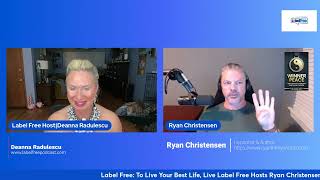
Unlocking the Mind: Ryan Christensen on Overcoming Internal Conflict and Embracing Curiosity