The Hidden Power of Beliefs: A Hypnotist’s Guide — Ryan Christensen
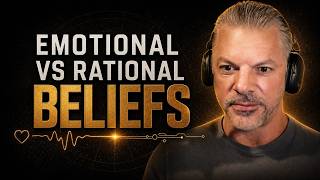
Recorded interview between hypnotist Ryan Christensen and host Brad Hook exploring how beliefs form, how they drive behaviour, and how hypnosis can access and change deep emotional beliefs. Ryan explains hypnosis as a technique to bypass the conscious "critical factor" to access emotional (unconscious) beliefs formed in early childhood, distinguishes emotional (right‑brain, pattern-based) from rational beliefs (left‑brain, detail-based), and argues that negative emotions are signals (not wounds) that help identify problems to solve. He describes a method of deconstructing belief chains and re-labelling core emotional boxes (e.g., "I'm not good enough" → new label), discusses trauma as situations where no solution was found, and connects belief-change to increased resilience, agency, and "inner peace". The interview ends with Ryan promoting his book (Winner/Winter Peace) and offering free 45-minute consultations via his website.
Chapters
Foreign.
Welcome. Great to have you here.
Thank you so much for having me. It's an honor.
My pleasure. So before we dive in to a little bit about you, what is hypnosis?
So hypnosis is actually just. It's very simple. It's a set of techniques that allows us to get more direct access to your unconscious mind when you're in your conscious state. There's something we call the critical factor in hypnosis. It's kind of like the wall or the barrier between conscious and the unconscious mind. And when you're in that state, your unconscious mind is really judging truth by does this match what I already believe? So if it doesn't match what I believe, it's false by definition. Kind of gets ignored. So the beautiful thing about hypnosis is we kind of get to bypass that. Once we get you in trou, we get to bypass that critical factor so that automatic. No, that automatic rejection goes away. So now you have more space to have that negotiation, have that discussion, do some exploration, actually get access to those deeper parts of your mind, like your emotional mind, the instinctive mindset, and actually have direct interactions with those as opposed to trying to mediate it through rational thought.
How did you become interested in hypnosis? Perhaps you could tell us a little bit about your background.
Sure. So I spent 23 years in the intelligence community, five years in the Marine Corps as a linguist, and I have six years with the International Guard working like F16s and F22s and Predators and stuff like that. Spent 16 years in D.C. working counterterrorism, counter proliferation. So my entire professional career was really national security stuff. But by the time 2019, 2020 rolled around, you know, I was really doing it, trying to, like, save the world and help the world and stuff like that. The world rather stubbornly refused to get saved. So time for me to move on and do something different. I was doing a lot of work on myself. I was in immense couple men's communities at the time. One of the guys was a hypnotist. Talk about, like, toxic shame and emotional baggage. I'm like, well, you know, Catholic. Got some of that and did a session with him. It just felt lighter afterwards. Like, if you're carrying around 50 pounds of stuff in a backpack, take 20 pounds out. Everything's just kind of easier to do, right? Like, okay, that's very interesting because at the time I was thinking about becoming a psychologist. I was going to take like six years and half again, half a million to get my PhD, which is unappealing. In your 40s, but I get certified as a hypnotist for like two grand in six weeks. I'm like, all right, let me go ahead and do this and like, see if I even want to do this. Like one on one change work. So that's February 2020. And about two weeks later, everything shuts down because of Pandemic. So now I've got all the time in the world to play with. And I started working with some folks online, found out I have a little bit of a talent for it, get some more training. Launched my business in late April, early May, and then by October, I was going full time.
Okay, wow, Interesting. And was hypnosis something you had always been interested in or it was just after that one intervention that you. It opened your mind to what it is?
Yeah, it was, it was definitely like the one intervention of like, oh, wow, like, you can have this big of an impact that quickly. Like, I'd had, you know, major depressive episode in 2009. Kind of been in and out of therapy for a while to deal with that and marital counseling, stuff like that. So I'd been in that mental health space for a while and just never was really impressed with therapy. Right. You get an understanding of things, you get some knowledge of it, but that never really changes that stuff really down below. Right. You're kind of fiddling around the edges. So the idea that I can actually get in and get to the root of stuff where it's really stuck in the back of the unconscious mind, like, that was really appealing. But the other thing is I started working on beliefs very early because what I realized is that a lot of suggestion based stuff is like, okay, let's go ahead and open for your head and tell you how awesome you are. But now you've got I'm awesome, and I'm not awesome, and I'm not awesome has been there for a lot longer. So over time, this just kind of overpowers it. Right. So the suggestion based stuff never really stuck from the way, from what I understood. So I started looking at, okay, what are beliefs? Where do they come from? How do we create them? How are they formed? And again, I've got 23 years of intelligence experience. My entire background was, okay, how do I ask the right questions to get the right information to put the pieces of the puzzle together? So you give me a tool like hypnosis, where I've got direct access to the part of your brain that has those answers, and it's very, very easy for me to start pulling those Teasing those pieces out.
Hello, it's Brad Hook here and I'm delighted to share my new book, Start With Values. It is a guide to to help you discover what matters most and then bring those core values to life through tools such as microhabits. It helps you make clearer decisions through the Decision Making Guide. It helps you to activate your values in conversations, particularly those courageous conversations where you need to assert yourself. And it helps you explore some potential shared values, such as nature stewardship, to help us all look after this planet that we call home. Inside, you'll find thought experiments, you'll find worksheets, you'll find action plans, and lots, lots more. If you are interested in reducing your stress and building a life that's meaningful and purposeful, get your copy now. They're available on Amazon both as a paperback book such as this and in Kindle format. So if you have some feedback, please log it in the reviews. I'd love to hear your experience of bringing your values to life. This approach has helped hundreds of thousands of people around the world and it's now ready for you. Get your copy.
And the beautiful thing is, you know, looking at things like self, self sabotage and always kind of like holding yourself back in all these different ways. Fundamentally, at every point, your mind is trying to help you as best it can, right? It may have a different concept of what that means, but it's always trying to help you. So when we get down there, we start playing with these things and start trying to figure out what's going on and why. It's like, okay, help me understand this. It's more than happy to do.
So does the intelligence community use tools like hypnosis or is it more, it's more cognitive tools that they would use in terms of suggestion and so forth?
Well, I was never really on interrogation side of things. I was more like supporting operations. So like, these people are doing stuff we don't like mess with them until they stop. And that has very different implications depending upon what flavor of intelligence work you're doing. The, you know, the interrogation stuff, again, it's not really, they don't really use the suggestion stuff because it's a, it's a conversations negotiation. We like need you to have me on your side. So if I'm trying to manipulate you and play with you, then that breaks that rapport, makes it actually difficult.
Got it. Can you be hypnotized without realizing it, or do you need to be willfully engaged with someone who knows what they're doing? I think a big something people Struggle with is the thought that I'll be hypnotized up on the stage and then that person will be able to control me forever. Is this real?
Two pieces that. Number one, hypnosis is a voluntary process. I can't take you there if you don't want to go.
Right.
Which is kind of difficult. My work, because a lot of people that want to do this work, they're too anxious, they've got control issues, they're afraid of stuff. So it's like, okay, now I have to work around that or like do a lot of work with you beforehand so we can actually get to that place. But when you're talking about things like stage hypnosis, stage hypnosis is a very different kind of application of it. And when the hypnotists, before you even start the show, they're starting that pre stuff, they're actually doing a lot of exercises with the audience to see who's responding the best. So the only people that come up to the stage are the ones that are responding. They want to play the game. Once they get up on stage, does some more testing to see who's really playing the game, who's not. Okay. You go away. You go away. Great. I got these four people. They really wanted to do the play the game. They're there to have that fun. It's like, okay, cool. They're more than willing and able to do this stupid, crazy stuff. Yes. Cluck like a chicken. Yes. Forget numbers. Like all that stuff. That's where they're. That's what they're there for.
That makes sense. Very interesting. I never thought of that. So the hypnotist in the stage context is really good at reading the room and identifying who's playing along at the beginning. Ah, that's an interesting. That's an interesting insight that I never thought of. So we touched on beliefs. What's the difference between emotional beliefs and rational beliefs?
This is one of the big keys that was really what helped me kind of take care of myself and clear out my own mind and take care of my own issues is that it's a left brain versus right brain issue. Okay. The left brain is very detail oriented, very individual issues, specific moments of time, very detail oriented. Right. Your emotional mind is looking at things from the 30,000 foot view. Okay. It's looking at the forest rather than the trees. It's looking at patterns and themes over time through a series of events rather than individual events. Okay. And the difference, the really, the important thing that I realized as I was doing this Work was like, okay, your mind is always looking at the entirety of reality through two different lenses from two different perspectives, processing it in two different ways. And these parts of your mind are not talking to each other. Right. They're processing independently. So it's not that your thoughts are right and your emotions are wrong. No, they're both 100 correct at all times, even if, and especially if they're different, even if they conflict. Okay. The difficulty with emotional beliefs is up until about 4, 5, 6, 7 years old, you don't. Your rational mind, your intellect, logic isn't really online yet. So all of the understanding you have in the world, all of the decisions and beliefs that you're creating are on that emotional level. Very general, looking at patterns over time, trying to understand that once your intellect, that rationality comes on, that's when that critical factor comes into place. So now all these beliefs you created back then, when you were young, didn't understand the world with a lot of sophistication, are now locked behind that wall. And true and false is based on, what do I already believe? So if you have this conclusion back then of like, okay, I can't protect myself, that's going to show up in all these individual ways. A lot of these individual beliefs that we deal with on the left brain perspective are just, I'm not good enough applied to all these different situations. I can't protect myself applied to all these individual situations. So you can unlock and change these things. You can chop down a few trees at a time, but you're only clearing out a small space in a big forest. Does that make sense?
That makes sense, yes. And would you say, and I speak from my own experience, that emotions are more powerful drivers of behavior than rational, logical thoughts?
Yes, 100%. Yeah. Because your emotional mind is processing reality faster.
Okay.
If you look at like a 1080p camera and like a 480p camera, right. You can get. The file size is much smaller, so you can process more of those in the same amount of time. Because your rational mind needs a lot of detail to be able to dig into stuff. So by the time the rational mind comes around and reaches a conclusion, you've already set the frame and the context using that emotional mind.
Yeah. Makes sense, right?
Yeah.
Even from a, you know, if you look at the structure of a brain, the amygdala and those strong emotions are further down, connected to the spinal cord, and it takes a lot longer for information to reach the prefrontal cortex, the logical, rational part of the brain.
Yeah, that's that's actually an interesting thing because it's the emotional mind driving the amygdala response in a lot of ways.
Yes.
Okay. Because the. The emotional mind is part of you that's really kind of concerned with what things mean rather than what things are. Rational minds are. This is what this is. Gravity, details, physics, that kind of stuff. This is how this works. This is what this is. The emotional mind is what this means. So if you think about, say, like, somebody's, like, afraid of public speaking, right? They're out there, they've got all these nerves. Their mind is freaking out. That threat response is going off. Why? Because they're afraid of being judged. Because they're afraid of being seen. That's an emotional thing driving that survival response.
Makes sense. Yeah, for sure. Interesting. So how. How do our beliefs drive behavior? I've been very interested in values, things that are important to us, but there's this other whole layer above there, which is the things that we believe. And obviously, you know, I could believe that. And I say this in my book, I say I could believe that in order to be healthy, I rely on healthcare, medicine, or in order to be healthy, I rely on fitness and looking after myself and sleeping well and my lifestyle. So it's, you know, both of those come back to the same value of, I value health. But there are two very different beliefs that could drive someone's ultimate behavior. What are your thoughts?
Yeah, so, God, this is so juicy. I love this stuff. A lot of this beliefs of, like, oh, I have to be dependent on this. And the other is like, okay, how much agency do you have, right? How much control do you have, how dependent you are on others? How much can I trust myself? And that's very much an identity issue, which is an emotional thing. It's emotional concept, right? The reason we create an ego is because we don't like who we are. The reason we create that conscious concept of self is like, we ask ourselves, who am I? And it's like, I don't like this answer. I'm going to create a different one. I want to be a different person, right? I want to be the entrepreneur. I want to be a weightlifter, or I want to be famous, whatever that happens to be. Because, like, oh, I don't like this insecurity. I feel like I'm not good enough. I got to be this other thing instead, right? So these very deep, powerful emotional responses and beliefs, again, they set the context. And your unconscious mind is really the part of you that essentially creates the reality. You Interact with. Okay. There's a beautiful set of experiments back in Germany in the 1970s that proved that basically you become consciously aware of something happening about a half second after it occurs. So there's about a 500 millisecond delay between when something happening and you actually perceiving it consciously. And it kind of makes sense because your brain's got to take all this sensory input in. It's got to process it, it's got to filter it, say, okay, this is what's important. Well, if your unconscious mind controls the reality you perceive, then it basically decides what you get to do. Right. And it's doing that interpretation based on what? The beliefs you have, how you understand yourself, how you understand the world around you, how you need to move through the world, almost solve, which is a emotional thing. You've got these conscious frameworks, these rational frameworks to navigate, but again, they're being leveraged within the context of that emotional response, that emotional belief. Right. So, yeah, those things are like 100. And the other thing is that there's something called the basal ganglia. It's a part of your brain that's essentially the gatekeeper. There's a thumbs up and thumbs down to stuff. Once you've made the decision, okay, so if I control the reality perceive, I've got a veto over your decisions. You kind of don't get to do anything that your unconscious mind doesn't want to let you to. Okay. At least when you're operating from a place of, like, fear or pain or a need to prove yourself. Because when you're in those situations, you know, talk about emotional pain a little bit later. But this idea that emotions are pain means that if you experience a lot of severe emotional pain or severe negative emotions when you're growing up now, your unconscious mind, that the survival parts, that amygdala has to treat your negative emotional state as a threat to your physical survival. Right.
Never thought of that.
Which is why you get so triggered. Right. And again, like, talking about, like, identity issues, like, you've got this ego. It's like, oh, I'm an entrepreneur. Okay, well, if this gets challenged, then it's gonna bring up those feelings of insecurity which is a threat to this triggers that survival response.
Again, that is really interesting. I've never thought of it from that perspective. Can. Can you dig into the ego a little bit more? Like, it seems like everyone kind of gets what your ego is. You said something very interesting there, which is that. Well, I'll let you rephrase it.
But sure.
Self development is a way of us, we dislike our, who we are, so we feel like we need to improve. And that's a really interesting thing. I never thought of it. It's like, it's that we don't like who we are. And that's ego driven. Roughly.
Yeah. Well, it's like. So I look at ego as the conscious concept of self. Okay. My conscious understanding, the rational understanding of who and what I am or who and what I want to be. Okay. But if you're coming out from perspective like, okay, I'm not good enough or there's something wrong with me now I have to do what I've got to improve, I've got to change, I gotta fix, I gotta be something else. Because this is unacceptable in some way, shape or form. Can't get what I need in life if this is like what it is. So I gotta be something else. I gotta have that higher self. Right. I gotta be my best version of myself. Right. I gotta constantly improve. I gotta be 1% better every day. Yeah, right?
Yeah.
And we're in that space, it's like, okay, great. So you gotta be 1% better every day. Right? Cool. Where's the finish line? Are you ever done? No. Because you wake up in the morning, oh, shoot. I gotta be 1% better every day. So if I'm not 1% better day and then I'm behind, I gotta do even more the next day. Awesome. So if there's the finish line, you're just always a loser. Huh?
Sounds exhausting.
Nothing but lose. Yeah, yeah. And that's. And that you see this all the time with like high performing individuals and businessmen and entrepreneurs where it's like, okay, I've just got to build, build and build and build. And for whatever reason, like no amount of money is ever enough. There's a guy by the name of Andrew Wilkinson. He's a venture capitalist entrepreneur in Canada. Wrote a book called Never Enough. It's about his journey from barista making $6 an hour to being a billionaire. And when he became that billionaire, he was looking around saying, no, I feel same amount of anxiety and security as I did 20 years ago. He was saying, oh, shoot. All these people making tens of millions. Same way. Hundreds of millions. Same way billionaires, same way multi billionaires, same way. If being a multi billionaire is not enough to prove you're good enough, you can't do that from the outside in. Right. Because again was the. The unconscious mind do it rejects anything that doesn't match whatever I believe. What's the Belief I'm not good enough. There's something wrong with me. Doesn't matter how much you do out there, it's never gonna prove this wrong. Ben Shapiro, that thing of, like, facts don't care about your feelings. And he's right. Guess what? Feelings don't care about your facts.
Very true.
Yeah, Yeah.
I. I never thought of emotions actually triggering that response just through the emotional state. Like, the body sees that negative emotion as a real. I'm just continually feeling angry at myself, like, oh, Brad, you did it again. Not only is that filling me with cortisol and adrenaline, but it's actually perceived as a threat to my survival because I'm experiencing that emotion, which maybe I experienced a whole lot as a kid or. Or probably more with fear and sadness. I suppose that signals that there's something.
Sadness, guilt, shame. Yeah, yeah. All that stuff. All that stuff. But think about this way, like, oh, you've got this cortisol and this adrenaline stuff going. Why? Because your mind decided that needed to happen. Why? Because of how it's interpreting the world. Why? Because those beliefs.
How can we reframe these negative emotions so that we can live. Live a better. A better life with less distress?
There's limits to what you can do as an individual to really change how that stuff works. Okay? Because again, you're trying to do brain surgery on self. That doesn't really work too well. The other piece is that if you are in conflict with your unconscious mind, right? If there's a friction, if you don't like yourself, you're trying to change yourself, all this different stuff, great, that means you guys are in conflict, which means it doesn't trust you. So why would it let you change it? And all the things you want to do, all the things you want to change are to let you do what things? That things are dangerous. Why would it let you change it? Right? Which is why, you know, when I was going through my own journey, it was so frustrating because a lot of times I was like, I know exactly what was wrong. I knew exactly how to fix it. And my mind's like, nope, not going to let you. So I have to hire somebody else to fix me. Even though I knew exactly what was wrong, even though I knew exactly what needed to be changed. It's kind of like if you're the CEO of a company and, you know, management, labor and conflict, but labor's all unionized, can't fire them, so they don't have to go anywhere. Now you're at loggerheads. What do you Got to do. You got to hire a neutral third party to come in and make that negotiation happen, right? Which is what somebody like me does. I get down there, say, okay, cool. Show me what's going on with all these things so we can change that. Right? But we're talking about, like, reframing emotions. The idea that is, like, one of the most dangerous things is the idea that emotions are pain. Because that's what starts that survival thing, right? And when emotions are pain, negative emotions are pain. Why you gotta avoid them, can't engage with them. There's all these parts of yourselves, places you can't go. So when you're trying to change things and fix things, this stuff here is off limits. And this is where the problem is. Right. The way I see emotions is that emotions have two components. There's a mental aspect, what the thing means, and then there's a physiological response. Okay. Pain is a signal that says, okay, I put my hand on the hot stove, burn myself. What happens? My hand hurts because it's telling myself, hey, this thing's busted. You need to fix it. Drawing my attention to the problem. This is where the problem is. Fix it. Right. But when we have those physiological responses, like we have that fear response, what is that? That's our body preparing to take an action of some kind. Right. When we have that sadness and that grief, what's it doing? It's our body processing something, Right? So this physiological response is just our body either taking action, getting ready to take action, or processing something, which means it's working as intended, functioning exactly as designed. That's not broken. There's nothing to fix. That's not pain. Pain says, this is busted. You need to fix it. If everything's working right. Exactly right. And there's nothing fixed. This isn't busting. We're not supposed to be looking here. Okay, but because we think about emotions as pain, and we feel it here, where do we look? In here. In here. Which is why that whole idea of I'm the problem and I need to be fixed comes from the first place.
Yeah, right, Right.
You're in an environment when you're young, can't get what you need. Things are not working. Freaking out, trying to figure stuff out, overwhelmed with emotion. You don't have any control of that stuff out there. So where do you look? You look here, problem must be me. It's not the things I'm doing. Try, try, try, try. Nothing worse. Nothing worse, nothing works. I got to be the problem because I'm the common denominator. Right. All that stuff kind of works together where it's like, I'm broken, I need to fix myself, I'm the problem, that sort of thing. But when you think about that second piece, the. The. The meaning of the emotion, right? In a lot of ways, the way I see things now is every negative emotion is just asking your mind for help to help it solve a problem. If I'm angry, it's because something out there, the threat of some kind, and you make it go away. And I use force to do it. If I'm afraid, was it something's out there I can't handle, deviate away from it. That freeze response, that hide response. Okay, let me just hold on that here. That's anxiety, right? Something's a problem out there. It's not got me yet. I need to figure it out. Right? That flopper or that. The fawning response. Roll over, showman belly. Submit. Right? That's the submission Surrender. Right? The flop response. This is one that doesn't get talked about. You see two guys that get in a fight on the schoolyard crowd, goes around them. One of them starts losing, tries to get away, can't. What does he do? He hits the ground, curls him a ball, protects his head, just takes it, right? He endorse. That's the flop response. That's actually a viable survival strategy. Welcome to depression. I'm out of options. I'm out of options. The only thing I can do is endure. So let me just go ahead and hold on until this thing passes or until I find some other options, right? Shame. Shame is the thing that says, okay, I failed to meet a standard, right? Is it an appropriate standard? How do I fix it? Guilt is the thing that's like, okay, you've got a problem, I've got a solution. I'm not giving it to you. Right? Sadness is okay. I've lost something valuable, lost something I needed. Okay? Regret is I had an opportunity to gain something valuable and screwed it up, right? So when you look at emotions as just these signals, okay? Every single negative emotion I feel is just my mind helping me figure out what the problem is so I can fix it. Because once you know what the problem is, it's really easy to find the solution. The problem is figuring out what the problem is in the first place. So when you look at negative emotions as signals, rather than pain, number one, you can engage with it. You have to run from it. Number two, you can be in it as long as you need to to help it, to let it guide you to where the problem is so you can fix it. That makes sense.
That makes sense, absolutely. And I suppose trauma occurs when you haven't fixed it and, and you basically haven't taken any kind of action, so you. A certain trigger sends you straight back into that full blown emotional state. So, for example, as a child, you're told you're worthless, you're nothing. And then you develop a set of beliefs around that. And as such, you start being afraid of new situations. Trauma, I suppose, is when that takes over your life. Every time you encounter a new situation, you're just a mess and you freeze up. Is that kind of what trauma would be?
I look at it slightly different, but you're like, definitely on the right track. Okay. If emotions are pain, then they don't come from emotional wounds. So there's no such thing as emotional wound, which means they're not caused by emotional trauma. That doesn't exist. Okay. Again, every emotion you feel is just your interpretation of what's going on. So nobody has ever made you feel anything. Right. Part of the problem with the trauma narrative is these things are done for you. You're wounded, which means you're a victim all the time. You don't have agency, you don't have sovereignty over your emotions. Bad, not good. But when you. Okay, when you look at it, it's like, okay, I felt these negative emotions, these really powerful negative emotions in this situation. What's going on. Trauma to me is a situation where you could not find a way to win. You're in this situation, you don't have a way out. You can't figure it out. Your mind is screaming at you a full volume to help it. You don't have an answer. Okay.
Yeah.
Now the problem with that is, is like, okay, now you're in a situation where again, your emotional mind is not looking at individual events, it's looking at patterns, similarities. So now you have this situation or this general kind of problem, this general kind of situation that it doesn't know how to navigate and you can't help it. So it's got to make that. That part of your life is now off limits. Right. And anything that's kind of similar to that starts doing that thing again. Because why you can't survive that. Right.
Makes sense.
Now you want to talk about flashbacks and things like that. The reason why memories are coming back and you're having these emotions again is your mind is saying, hey, we haven't figured this out yet. We still need to figure this out. And the more important it is, the more it's going to come up. But again, the only thing you really need to learn is the lesson, how do I need to navigate that? Not what's wrong with me? Not what, what should I have done different? Because that doesn't matter. Because you couldn't have done anything different. Because if you could have, you would have, right? And oh, by the way, you're never gonna be in the situation again. So that's not it. Right. It's like, okay, what does mean about me? What does it mean about the world? What does it mean having, how do I need to navigate it? Like, those are the questions your mind's really asking. So when you sit down and number one, you have to kind of like get out of that pain response period or get yourself to a place where you're stable enough and things are good enough that you can actually engage with that stuff, right? Which is, which is a process, right. It's not something I can help somebody with. That's why you got to kind of go to a trauma person or a therapist or whatever that is to kind of get you from in that hole to a stable state. Right now we're here, now we can start playing with things around beliefs and reframing emotions and reframing emotional pain and like learning from these things in a different way.
So how can we change our beliefs? And I know that an area you're interested in is resilience and how changing your beliefs can actually increase your overall resilience. So what's the process of changing a belief? And of course, I realize hypnosis is part of that.
Yeah, well, again, these individual rational beliefs are pretty easy to change, right? These individual, like left brain ones are pretty easy to change. Have some conversations, pretty easy to do. But that kind of process isn't going to work on the emotional ones. So you're still operating within this frame. Okay, so the way I kind of look at it is let's pretend you've got a big box in your head with label on the side that says, I'm not good enough. Right? And there's a million things in that, right? And the standard process is like, okay, let's take some out, put it in a different box, maybe taking handfuls at a time, right? But there's a million things in that thing and more stuff's getting added every day. So that process never ends, right? But there's a label on the side of the box says, I'm not good enough. Take the label off, put a new label on, says, I am good enough. Now all that Stuff now means I'm good enough. I don't have to worry about it anymore. Right. You're forcing your mind to essentially reinterpret all that stuff from a different lens, from a different perspective, different context. Okay. Doing that kind of work requires hypnosis. Okay. Because you got to get access to that emotional mind. And once you're there, basically the way I do it is like, okay, give me some examples. Like, you're. You're in a situation, you're holding yourself back, not allowing yourself to succeed. Fair enough. Trying to help yourself in some way, shape or form. Got an objective you're trying to achieve. Cool. What is the problem you're trying to solve by doing this? Okay, give me a couple examples. Tell me the story. Like, this happened. This happened. This happened. What did I feel about the situation? That tells me the emotional conclusions you drew about the situation, about the world around you, about what everybody else is doing. What did I feel about myself in that situation? Because that draws. It creates that idea of, like, what were the emotional conclusions about myself. Right. So now I have the situations. Now I have what to see how the world and how you see you and how you need to navigate in response. Great. Now I've got all the pieces of puzzle because there's this chain of logic that creates that belief. Right. There's a crate. There's a chain of logic, like, this happened. This means this. This means this. This means it's great. All I have to do now is take that thing apart, disprove it. I've got an adult perspective now. Great. Sure. You understood it this way as a kid. Like, you know, Billy pushed you down in the schoolyard and you fell down and everybody laughs at you. Fair enough. You thought you're weak and powerless and nobody loves you and so forth and so on. Right. But Billy's just a jerk. Didn't have anything to do with you. Right.
Yeah.
And, oh, by the way, you survived it. So you're not actually weak, you're resilient and strong. Cool. So now this thing doesn't mean this, and now this means this. So it's about taking apart that old belief and creating a new chain of logic to draw a different conclus that still explains everything that happened in your life. Right. Because we can't change what happened. That doesn't work. And if the new chain of beliefs and the new conclusion doesn't match, that doesn't work. Right. So it's a very interesting process where you kind of have to do this. This interesting dance of, like, Deconstruction and reconstruction. But again, 23 years of intelligence. It's what I've done. By the way, I'm autistic. Didn't know that until I was almost 48. But that's how my brain works is essentially to reverse engineer belief sets. Because if there's a consistent pattern of behavior over time, there's a deliberate process that drives it. All I have to do is figure out what that process is. But I'm a hip test. I don't have to figure it out. I just open up the box and say, show me how you work. It's totally cheating. It's awesome. I love it. I love it. Right?
It's an awesome hack to be able to get in there. I mean, another way of changing your beliefs. What are your thoughts on, for example, affirmations? Every morning, go outside and tell yourself, I am beautiful. I am beautiful. I am beautiful. Could that eventually lead to you believing, I am beautiful?
One of two things is going to happen. Okay. Either, number one, your mind is going to say, okay, I'm going to let you live the lie.
Yeah.
Or number two, it's not going to work. Okay. Yeah. But fundamentally, let me put it this way. Do you ever stand in front of the mirror and say, I am a podcaster over and over again? No. Do you ever stand in the front of the mirror and say, I'm a businessman? No. Do you ever stand in the front of the mirror and say, I'm a man? No. Why? Because you don't have to prove to yourself anything you already believe.
Mm.
You only have to prove stuff that you don't believe. So if you're standing there telling yourself how awesome you are, why you need to prove yourself? Why? Because you don't believe it. Unconscious mind, just as true and false space when you are, I believe false by definition gets ignored.
You believe the things that you've done. Because, for example, if I'm. If I actually sit in front of this computer with that camera 200 times, I believe that I'm a podcaster. In the beginning. I didn't actually. In the beginning, I thought, not quite sure what I'm doing here, but it's quite fun speaking to people, and I'm.
Not very good at it.
But after 200 episodes, you just start enjoying it. And then one day someone says, oh, you're a podcast. And you go, yeah, I am. There's no. There's no beating myself up over it.
Conscious concept of self again. So your podcasts are great. Is that all your.
No. Exactly right. It's a small piece.
And you've proved to yourself that you're a podcaster. Yes. Why? Because you did all this stuff, proves yourself. Yes. Awesome. You've now had this piece. Great. What about the rest of you? Right, there's this idea of like, okay, confidence comes from competence. The more we do stuff, the more confident we become because we get better at it, right? Yeah. So if that's the case, then Everybody should be 100% self confident at all times. Correct? Because you're 100% competent at being you. Absolutely crushing it. Nobody done it better in the history of your world. So why is everybody so insecure and not competent, not confident in themselves, when they're 100% confident? Because confidence isn't about what you gain, confidence about what you lose. You lose the fear and the doubt and the uncertainty. Yeah, right. You got confident at being confident and competent at being a podcaster because you learned a skill, not your identity, not who you are.
This is true.
Which is why it can be a phenomenal entrepreneur, phenomenal podcaster, phenomenal athlete, and still be insecure as health. Because this is not your identity. This is just what you do. This idea of like, oh, I repeat what I repeatly do. No, no, no. You're a person that does things. Your actions don't define you from the outside and you define you from the inside out.
Nice. Very nice way of putting it. And in terms of building our resilience, how would you help someone who comes in and says, you know, I'm just super anxious and I'm, I'm incredibly self critical. So what, what's the starting point? What's, what's the actual process?
So fundamentally the place I get my clients, essentially there's a set of beliefs I want to create for them. Okay, first is that there's nothing wrong with me and there never was. I'm not the problem, don't need to fix myself. Number two, there's nothing to heal and there never was. Emotions don't like pain. Wounds don't exist. That all goes away. I'm good enough as I am, deserve whatever I choose. I don't have to prove it to anybody, not even myself. Okay, so there's really only four things you have to fix. That's it. Versus this idea that emotions are pain. That's why emotions are pain. You got that ticking time bomb. It's a survival issue, and it's hard to judge with it, it's hard to play with. Okay. That also is the thing that creates the I'm the problem. So we gotta fix. I'm the problem, right? So we can stop fixing ourselves and start dealing with the world. Because every challenge we have is out there. Given how this is built, given who, what I am, how do I navigate the world, how do I get money out there? Right. Given how this is. Right again. Like, I have adhd, I have bipolar disorder, I have autism. This thing's wired up really weird, right? Can I do anything about being adhd? No, can't solve that. Therefore, that's not the problem. Problems have solutions. Can't change that. That's not the problem. How do I navigate? I got bipolar disorder. Can't do anything about that. No, that's not the problem. Problem is I get these crazy mood swings. Great. Can I do anything about it yet? Yes, that I can solve. I've got autism. Anything I do about that? No, that's not the problem. How do I navigate the world, given I can't see a lot of social cues and all this other stuff. Okay, number three, you have to actually create good self esteem. But here's the thing. If you're thinking of yourself as a problem, that means you have to fix something. Which means you're broken. Are broken things valuable? Not really. If you're wounded, that means you got to heal yourself. You got to fix yourself. Things are broken. Are broken things valuable? Not really. So until you fix these two things, you really can't have value. Can't be good enough. Why? Because you're broken. So once these two go, things go away. Say, okay, great, now I can have value. Like for the first time in your life, you can actually have value as a person. Okay, great. How much value do you have? Can have a great. How much? Awesome. But the problem is, if you're measuring it, the answer can always be not enough. I got 10 million, that guy's got 15. Not enough. So we have to create it in such a way that you don't have to prove it or measure it. Okay, so this person comes in, they've got a lot of anxiety, a lot of self esteem issues, they got a lot of anxiety, so forth, so on. Right? Okay, great. Once you go through that process, are they gonna be anxious about themselves? No, this is solid, this is good. Nothing wrong with this, right? So the self esteem issues go away. And when you talk about anxiety, what is that? Problems out there that I have to worry about. But a lot of that is threats to identity, right? Threats to identity, right. Are they going to say that I'm. The judgments we have, we get from everybody else, right? I was like, oh, I don't measure up. And like, I did this wrong. I did this wrong. And this person's making shame and all this other stuff. Right. Okay. If you know with absolute certainty that you're good enough, does any of that really register? Not really. And since you don't have to prove to measure yourself anymore, they can't really judge you that way because again, the only way somebody can judge you is if they have authority over you. Right. So why do we think people can judge us? Because we're looking to them to decide how valuable you are. I don't feel like I'm valuable enough. You tell me I valuable. I am giving away your power, which means when you. Yeah, well, exactly. Right. Well, you don't like the answers. You're trying to get an answer from the outside in. But the interesting thing is what we're choosing the people who give us an answer, which means we're still deciding our value by deciding who to listen to. So it's always our own choice. But the problem is that decision was an emotional one. We already made it 30, 40, 50 years ago. So that's why we have to go in. Give yourself that space to make a due decision about who you are and how valuable. Okay. But the other thing about resilience is this, your capacity. So to get anything you want in life, it's really just solving a series of problems. Right. And once you know the problem is pretty easy to solve. Okay. And when negative emotions are now just signals that are helping you figure out what the problem is, that means you get to do that faster. Right. The other thing is your capacity to do work is really kind of like your capacity to withstand suffering and discomfort. Right. Like, my physical capacity works, like, until I get sore, until I get tired. Okay, great. Well, if emotions are no longer pain, then you can't really suffer mentally or emotionally anymore, which means your capacity for mental and emotional work is essentially infinite. How far can you run if you never get tired? How hard are you going to train if you never get sore? So now I'm in a position where I can work as hard as I want as long as I want. It's not a matter of, like, can I? It's a do I want to. I can stay in those negative oceans as long as I need to to figure out what the problem is. I rapidly. I identified a heck of a lot faster. Anything I want in life is mine. Just a matter of time.
And you can allow your physical body to signal things like fatigue, which is natural. That's when you can take a break.
Exactly, exactly, exactly. Or just like, okay, my mind is the point. It's like, no, this is not what I'm supposed to be doing right now. I should be doing something else. Okay, cool, let me go to this. Because my identity isn't wrapped into what to do. I can take those breaks. I can do this stuff. I don't have to be a pedal of the metal 24 7, 365. Which is a big problem for those high performers. They can't take their foot off the gas. Yeah, but if I can drop the pedal metal, take my foot off the gas, do whatever I need to, if my, my identity isn't wrapped up in it, right? The other interesting thing is this. When you're operating from that place of fear, pain, or a need to prove yourself, then those emotional. That survival response is going, right? Which means you're in survival mode 24 7, 365. Which is why everything feels so urgent. Because you don't have time. Because you don't even know if tomorrow's coming. So there's no time to do everything. Everything has to be done right now. Because everything's an emergency, everything's threat. What happens when this is no longer activated now you're not at survival mode anymore. Got all the time in the world, right? So you can slow down, you can step back, you can actually do other stuff, right? You can say, okay, I don't have to grind 247 on this thing. Let me take a step back and see if there's an easier, better way to do it, right? The pressure's gone and it just becomes a. For the love of the game. Because this is what I like doing. What's what I love doing. This is what I want to accomplish, this mission I have in the world. Instead of pointing points on the board of my. With money and KPIs and so forth and so on. No, this is the mission I have. I want to have this bigger, beautiful impact in the world, right? It's like the difference between like Alex Hormozi and Elon Musk, right? Alex has been a lot of points on the board, right? Building companies, selling them, racking up points, getting that stack of undeniable proof he likes to talk about so much. I'm going to make humanity and interplanetary species completely revamp like 97 of the technologies we have, right? Why? Because he's not playing this game, right? Simon Sinek had this great talk. He's talking about finite games and infinite games in game theory. Right. Finite games have a set number of players, set rules, way to keep score. There's winners and losers, right? When you're in that place of having to prove stuff to yourself, you're playing a finite game, right? But there's the other type. That's your infinite game. Infinite game. Players come and go, rules change. There's no way to keep score. There's no winners and losers. The point of an infinite game is to keep playing and keep it interesting. Welcome to life. Life is an infinite game. There's no scoreboard, there's no rules. People come and go all the time. Which means if you're playing as a finite game, you're doing it wrong. You're playing life like a video game, and you're not really living.
I like it a lot. So labels, the labels that we assign to ourselves are a real issue. And I've thought a lot about this. Like, I am this, or I am a victim. A lot of people I think we touched on this have that victim mentality. And it feels good in some way because you give away your control to the world. You say, well, this happened to me. And that's just how it is. Whereas if you can shift to that creator mode, as Joe Dispenza says, shifting from victim to creator is probably the most important shift you can make. It turns you from the NPC in the game to an actual player. And what's better than that?
Yeah, I completely agree. That has to do with agency. Yeah, right. It's a. Do I have power and agency? Can I. Can I do anything in the world? So somebody who is stuck in a victim mindset, in a lot of ways, it's a situation where it's a hope. It's hope, okay? And the reason why I say that is if I never let myself take the shot, I never miss, if I never do that, then I still have hope. And hope is what keeps you alive when everything's done. Like when you don't want to be around here. Hope is what keeps you alive. Right? And that was. That was what kept me alive pretty much my entire life. Because, again, grew up on autistic in Kansas. Nobody any day was wrong with me. I couldn't fix myself. Nobody could help me or worse for everybody else. Not for me. So the first time I wanted in my life, I was like nine, right? So I had to create reasons to keep myself going, give myself hope, give myself missions to keep myself going. Because as soon as I hit that point where it's like, okay, I can't do this mission anymore because the world doesn't want to be saved and I can't get what I need. Life. Life is no longer worth living. That's when I started that whole like, okay, I got. I went to war, just like figure my stuff out. Because I had to find a way to get across the finish line, fix myself for good so I could actually get what I need in life. Otherwise, I was done. I was done suffering, done not being able to get what I need. Right. So it's a death of hope that keeps them stuck there. Because if there was idea of like, oh, I could help myself, I got to change things. So for. And so on, then that means it's their fault, that that's where they're at. That. And that is too painful, too devastating reality to confront. Again, survival mode. I'm going to keep you from that emotional realization because it's too dangerous because you might go down that hole again. Maybe you go ahead and end things. 300,000 people in the United States died last year from deaths of despair, alcoholism, drugs, ending your own life. Emotions kill. Right, that's. That's a. Right. Your unconscious mind. This. Yeah. Your mind. Conscious mind's primary goal is keep you breathing. It doesn't really care if you're happy. Not his job. Right. There's a thing about the unconscious mind we talk about where it doesn't really understand time. The way to. There's no past, present, future. It's just the instantaneous now. It's the party that's acting that first half, second. Right. So that's this kind of time frame, that's this, that's this understanding. So the solutions it creates are about right now. Doesn't have time to consider second, third order effects. Doesn't have time to think about. If I'm holding you back from this, that means life is worth living because you don't get what you need. Right. It's like, okay, feel sad, eat a donut, feel better. Right. Great. Works just fine. Unless you're depressed for a year and you're eating a couple dozen donuts a day. Now you're £350. Completely different set of problems. Doesn't have the capacity do that. So solutions it creates often drop us in all these different ways. They're the ones that keep us chasing that carrot, chasing that achievement. They're the ones that keep us trapped behind that lack of potential. But it's doing it. Why? To keep you alive. To keep you alive. Which is a good thing.
Yeah.
Only, you know, causes another cause a lot of other Problems, right? And it's like, okay, well okay, fine, we're not dying fast, but I'm just dying slow. And that's where that catch 22 comes in that you got to play with.
Tell us about your book, winner Peace.
Awesome. So Winter Peace is really, I figured all these different things about how the mind works are very kind of like not typical, very non standard ways of viewing things and selfish improvement and so forth. And so Winter Peace is really my effort to get this out, if you will. It's essentially walks the reader through my entire process that I work with my clients, start to finish all the theory and the modality and everything else behind it. And I worked with a guy by the name of Joshua Lysik who's a hypnotist as well. And he writes this book for maximum impact, maximum persuasion. So to the extent that you can get all the benefits working with me one on one in that format is designed to give you as much as I possibly can. My hope is this book puts me out of business. I never have to work again. Not going to happen. But it's my hope, right? To the extent that I can give the world everything that I can in that format. I'm trying to it. It's available on Amazon.com winter piece how to end in a conflict, make success inevitable. It'll help us get the ball rolling on all these concepts we talked about today.
Amazing. You've got a lot of very good reviews on the book. Why the COVID What, what does the COVID mean? I see the Ying Yang.
So we're. Yeah, well it's also with the yin yang, but it's a medal too, right? It's an award. Right. Because the standard idea is like, okay, I can have this in a piece or I can be successful. Got to be driven by the pain and the ego and the insecurity, yada, yada yada. Or it can have inner peace. And a lot of ways that's kind of the way it works out because a lot of the ways to approach inner peace these days is disassociation from I'm not my thoughts, I'm not my feelings. I'm going to meditate, I'm going to medicate this stuff away. Which means what? Now there's all this stuff about your life you can't do because you can't be hitting any challenges, any negativity, otherwise it breaks you out of it. That's why monks have to live in monasteries, right? They got to build this very, very simple lives that doesn't allow you to succeed.
Yep.
And people are driven to succeed. Can't handle this. But the beautiful thing is once you start reframing emotions is no longer pain. The negative emotions actually become good things. Feeling bad becomes a good thing. Just help you solve a problem. If you're feeling about it, you're doing it. Right. Why? If I'm afraid of something, that means that it's this challenge I can't actually just automatically overcome. Means I'm challenging myself. Right. If I'm never sad, I've never lost anything valuable, which means I didn't have anything valuable to begin with. If you never feel shame, then I've already cleared the bar. Bar is probably too low, right? So once you start now, it's like, okay, great, I can be at peace. Like, that's my default state. Because the other piece is that when, until you've done this work, your mind is like at war with itself underneath. It's like your, your management teams are talking about these and like they're, they're all bickering, right? Because they don't know how to communicate. But once you start understanding, like, okay, this is what emotions are, these are the problems asking, no, I'm trying to look for this. Great, now I can handle it. Below that level, you don't have to ask the boss for help. You don't ask to ask the boss to resolve these conflicts because they can handle it. Lower level, because they know what to give each other now. Which means your mind becomes very, very clear, very resent, very, very fast. Right? The CEO consciousness can just focus on doing CEO stuff as opposed to working about, you know, worrying about TPS reports in the accounting department. Again, handle that. Right? So that's that, like, peace of mind, that clarity, that lack of stress, that focus, that drive. You just do anything you want so you can win with inner peace. Winner peace.
I love it. Very cool. Yeah, it's so interesting. People try and introduce modalities such as meditation into their lives. Struggle with, with it. In my workshops, I've had people who torture themselves. I remember being in Nepal and the monks used to come down from the monastery at lunchtime and they'd filter into this cafe where I was working, and they'd all jump on World of Warcraft or Call of Duty, drink these huge lattes and play Call of Duty for like two hours before they, they went back up. And I thought, if only you knew that then people glamorized the monk lifestyle. You know, meditation is going to make you so Zen. They actually come down from there and, and Play a little bit of first person shooter just to offset, I guess, how boring it is sitting in a monastery all day.
And the thing is, like, once you've done this work, like, all that stuff kind of takes on a different meaning. Okay. Like, meditation becomes an exploration of consciousness rather than I have to, like, tamp down the stuff. Like, I don't have to manage my emotions anymore. That's like. You wake up in the morning, your mind is clear, you're good to go. That's your default state. So you don't have to do, like, the journaling and the gratitude and the prayer and the yoga and the hot and cold and the. All this other stuff. It's like, no, that's. That's not. Not necessary. Yeah, yeah, just maintain the stuff because you're already there from the beginning. Yeah, Right. So now it's like, okay, I'm doing the cold plunge for health, doing the sauna for health, meditation to explore my mind, explore consciousness. Right. It just takes on all these different means. Like, okay, I don't have to maintain this. This is my baseline state. Yeah. So I get to do these for. For other reasons, for other benefits.
Yes.
It's really simple. There's only. Once you hit there, there's only. And quite frankly, on. On all of. There's only three things you have to do. Do you have to be your authentic self to maximum possible. You need to listen, you need to get curious. That's it. The problem is that first one being your authentic self. Most people like, oh, I got to fix myself. Yeah, yeah, well, you can't be really you. You gotta be something else. So you gotta figure out that stuff first so we can actually be you. Once you're being you to the most extent you can. Great. Now you got all these different parts of your mind, like your instinctive mind, your emotional mind, and this part and the other. They both kind of like got compasses, right? Pleasure, pain, and right and wrong, good and bad and true and false and should and should not and want and don't want. Right. Kind of look at these as compasses. You know? Where you want to go in life. Great. Is everything's lined up, you're good to go. Just keep rolling. But at some point when you start turning point in another direction, at which point something's gonna feel off. Listen to that. It's like, okay, cool, something's off. What do you gotta do? Take a step back and get curious. What am I feeling? What's this about? What am I missing? Right. Because your mind's trying to help you understand something. So all you gotta do is get curious about that, let it lead you to the problem, fix that, everything's light up, go again. Yes.
Curiosity is almost the opposite of fear, isn't it? It's, it's such a positive step.
Yes. And that's actually one of the, one of the interesting things about these negative emotions. It's like, okay, if everyone's asking a question, as soon as you start getting curious about it doesn't feel bad anymore, does it? Diffuses, because now you're doing the right thing. It's exciting, it's interesting. Let's go down the rabbit hole. Let's play.
Yes. I love it. Ryan, how can people connect with you? Where would you like them to go?
Sure. So My website is www.ryanthehypnotist.com. i do 45 minute consultations. They're free. We'll sit down, talk about what's going on in your life, what's not working. I'll give you an idea like where does this all came from, why things haven't working before? And we'll talk about whether or not we want to move forward. My book is on Amazon. Winner. How to End Conflict makes Access available. It's available in all the different formats. Some Audible is kind of messed up right now. We're already recording it. And the last but not least, LinkedIn. Brian W. Christensen on LinkedIn.
Awesome. Any final thoughts for those who stuck with us all the way to the end?
If I had one thought, it would be this. There is a finish line. Everybody talks about self improvement, being forever hurt, healing journey forever. No, that's not true. There's a finish line. You can be done with this stuff. It is actually possible and it's actually not hard when you're fixing the right problem. The only thing is we're trying to play the wrong game. We're trying to fix the wrong problem. Just need to go somewhere else.
That's a great way to put it. I remember hearing the spiritual teacher Osho say I stopped reading books in 1982 or something along those lines. He said, because I don't need them anymore. It's all the same. I'm. He was his authentic self. Don't need it.
Yeah, it's amazing what happens when you get there. And part of that whole like process is like, okay, let me just go ahead and bring back in and accept and forgive and integrate all those parts. So I have to push more anymore. As soon as you do that, you're all lined up, you're all integrated, you can just be you. It's amazing.
Brian, thank you so much. Great conversation, everybody. Do check out the links in the show notes. I've got the book on my browser right now. It looks fantastic. I'm going to get a copy and I hope you all do too. Ryan, thanks again.
Brad, thank you so much. It was our pleasure.
Likewise.
More from Ryan

How to Improve Yourself as a Man with Celebrity Ghostwriter & Writing Coach Joshua Lisec ft Hypnosis
Talking About... How To Reshape Your Emotions In A Relationship | Behind The Shades Show
#124 - From Inner Conflict to Clarity: Unlock the Power of Subconscious Mind with Ryan Christensen
Unlocking the Mind: Ryan Christensen on Overcoming Internal Conflict and Embracing Curiosity