04 | Culture, Clarity & Conversations: Leading in Uncertain Times with Benjamin P. Taylor
In this episode of the We, Me & Us podcast, host Pia Neiss interviews systems‑complexity consultant Benjamin P. Taylor. After a brief personal introduction, Benjamin frames the contemporary leadership problem as “too much, too fast, too confusing,” and presents his five core leadership practices: (1) honest, productive conversations; (2) clarity of boundaries; (3) triple‑loop learning; (4) culture shaping through leaders’ behavior, symbols and stories; and (5) clear intent measured against customer value. He explains how these practices interlock, why culture is an emergent motivational system, and how hierarchy and self‑organization must coexist. Benjamin describes his coaching method – surveys, brave‑space focus groups, deep listening for emotional‑trigger stories, and sustained accountability – to surface legacy narratives that shape psychological safety. He critiques both extreme command‑and‑control and naïve self‑organization, arguing that effective organizations blend disciplined structures with freedom. The conversation also touches on his professional background (public‑service consulting, Red Quadrant, Open Eyes Collaborative), his unique value proposition (a broad toolbox of approaches, humor, reliability), and his broader vision of connecting people to their humanity in work. The episode ends with Benjamin sharing his online presence (antlerboy.com, LinkedIn, Medium) and a call to spread the five practices widely.
Chapters
Hello and welcome to We, Me and Us. We are delighted to have you here as we dive into the exciting journey of leading, coaching, and transforming organizations in our rapidly changing world. I'm Pia Neiss, your host and Agile coach. I'm truly passionate about sharing real-world insights with those eager to create meaningful change. At We, Me and Us, we are all about exploring new tools and perspective that inspire impactful transformation. Let's embark on this journey together. So hello, Mr. Benjamin P. Taylor. How are you doing?
I'm good, Pierre. How are you? I can see you're in a hotel room today with your very fluffy microphone.
Yeah, thank you so much. This is to make— try to be very serious and very professional, which you know me very well, so it's not always the case, but I try to do my best. So it's, I'm, I'm still a work in progress. So thank you so much for being here. So for the people listening, I'm very happy to have Benjamin here. We know each other since a couple of years now, nearly 7, 8 years, I guess so.
Oh, maybe. Yeah, maybe. It's, it's a long time. It's a long time. Yeah.
So we, we met the first time when we attended the Requisite Organization Team, and then since then we are interacting together. We, I call it a research group, it's called Open Eyes. And we have a couple of things people are thinking about the new way of working. And we love to really find the world and debating, which is for me, for my mind, absolutely refreshing. And I think Benjamin is, he's UK-based. I know a couple of things about you, but I would love to, you're making your own introduction because, you know, I'm quite lazy. It's the end of the day.
Yeah, me too. For me too. And it's been a long and busy day. Well, I suppose the main thing to know about me is that I am obsessed. No, the better marketing word I've been told to use is passionate about systems complexity and cybernetics and how to engage with, understand, and use those approaches in organization. So I do a lot of work in public services, one of the more complex and constrained types of organization, but I do a lot of capacity building. I'm interested in facilitation, leadershipiness, leading and consulting and building capacity really. So although I'm a consultant and I solve problems for people, I'm so interested in understanding how things work and also helping other people to have those kind of useful breakthrough insights and so on. So I'm involved in all kinds of organizations and networks like the Open Eyes Collaborative that you described quite well as a research team. I'm involved in Systems and Complexity in Organization, the systems practitioner professional body, and I run my consultancy, Red Quadrant, and a social enterprise for public service transformation.
Very well. I know you have a lot of topics which you're quite good. Which topic would you like to talk today? I'll give you a choice.
Well, I'm thinking about what— I mean, what's out there at the moment is that people are consistently facing challenges of Everything's too much, too fast, too confusing, too hard to orient. So I think that's a really very core problem that we're both really fascinated about. I've had sort of idealistic phases. I've gone into this more than once in my own organization of trying to sort of get real true self-organization and all the rest of it. And I've often tempered that over the years with an understanding of the value of hierarchies, interestingly and surprisingly. But I guess the thing that might be what I go back to time and time again when I'm looking at these kind of issues on a kind of broader scale, if that makes sense, is the 5 core leadership practices that I work on a lot with people. So I would love to talk to you about those today. And how they help with dealing with turbulent, uncertain, novel, and ambiguous conditions, to use Rafael Ramirez's phrase. Tuna, how do we deal with tuna?
How do we deal with tuna? Sounds very amazing. And I was struck, you still believe in structural organization with hierarchies.
Well, it's not so much that I believe in them, although it's probably true that I do. It's that I don't think they're going away anytime in the near future.
Sure.
I think it's fair that Deming was talking in the 1960s about command and control as dinosaur organizations. I'm not such a big fan directly of Deming and so on, but isn't it interesting that the same kind of phrase, the world is getting more and more complicated and more and more speeded up and more and more difficult, as marketing. And the same kind of solution of self-organization and so on has been present all the way through at least that last sort of 60 or 70 years now.
Yeah.
People like us trying to do good stuff in organizations. And actually, I have learned that lesson myself, Pierre, that in order to be loose, you need to be very tight. In order to be self-organized, you need to have very good structures, underlying processes, commonalities. You need something, you need a glue that allows the freedom to happen.
Yeah, this is bizarre, right? So you say self-organization needs discipline, some kind.
Discipline is a really good word. Yeah.
And I have to be absolutely honest with you. Yes, I recycle a lot. So what we do is pretty much mostly— yeah, I have also the feeling that I'm repeating myself since the last 20 years and we are still talking. And for me, unfortunately, this is what separates us. I'm quite a fan of Deming. It is good. It's good.
I mean, yeah, we don't need to get into technical discussion about that. I just think that while he made a really big contribution, there's a lot of that stuff which is very limited in hindsight. I'm a big fan of going back to organizational development and organizational and thinking from the mid-20th century, because I think there were some really great ideas developed then which often get muddled and mishmashed or overblown in kind of more recent implementations. I think Deming was very useful for his context and his time, despite he certainly has some foibles of his own, but he's one where I'm happy to say I think we've moved on. I think we've got better ways of doing and deeper knowledge and more good orientation to contextual understanding that takes us away from his prescriptions while following the same concepts that he took from others and of course developed himself as well.
No, I love the challenge because I would hate working with people just like-minded, only thinking the same thing like me, and see every 5 minutes, oh, Pierre, I love what you say, which has honestly never happened. But there's something which is very, very refreshing, having the challenge and has to manage the status quo and have to rethink things differently. Let's go about— you talk about something very intriguing to me is about your 5 layers of leadership or your 5 steps of leadership or how you name it.
5 practices, or even you might call them disciplines. Sorry. Yeah. So it's 5 things that I have almost always found it incredibly valuable to introduce in the right order, in the right way, to leaders and managers in organizations. So let me run through them very quickly, and then we can get into more detail. There's a kind of basic 3 that fundamentally go together. That's constructive or honest or productive conversations, the ability to actually confront each other with the truth, to engage directly, and so on, and to have better quality conversations, number 1. Number 2 is clarity practices, giving people the boundaries within which they are to work, setting the boundaries on their freedom. And it can be a hierarchical giving if you're justifying and making a hierarchy work, or it can be mutual negotiation between peers in a network. But clarity, Brené Brown has that fantastic expression, clarity is kindness. And so many problems in organizational life, things we do to ourselves to hurt ourselves, stem from lack of clarity. The third one is learning. And if we can build learning practices that preferably are triple-loop learning, learning to do things better, reconsider our context, and even sort of change our identity, the fundamental way we're approaching things, we'll be on a winner. But it's only if you've got the ability to have really honest conversations and some starting point of an of a practice towards clarity that you can really do useful learning. Because without those first 2, the learning is just, oh, we were a bit wishy-washy about what we wanted and we weren't completely honest with each other, or even the conversation about learning isn't honest, so you don't get anywhere. And those 3 are kind of a learning system. And in a way, those 3 alone would transform most organizations at a very fundamental level, at the interaction level, at the practice level, things you practice every day. What I do is I put them together with the other 2, which is culture shaping. Leaders or whoever is shaping the tone and setting the culture in the hierarchy, that's the leaders primarily, really understanding what the impact of their own behaviors, the people systems, organizational systems of the organization, and the symbolism of the organization, the impact that that is having on the motivation, the productivity, the discretionary effort of the people? And then the final one is good and clear intent. Do we actually measure and manage to what creates value in the world of our customers? And those 2 are very self— they're like a sat nav. They are self-correcting measures. If you keep measuring them and working to them, you will get back on track even if you've gone off track in terms of motivating and engaging the people and in terms of you know, actually focusing on creating value in the world, which is kind of what organizations are supposed to do, if you see what I mean.
A bit complicated. You have a lot of things to do, right?
That's right, that's right, that's life, I'm afraid. It is funny, I so often get— I vividly remember for a London borough I did this, I thought, really nice kind of core customer contact model which had 4 different boxes, 4 different ways that you could fundamentally manage different types of inquiries from the public. And they said, Benjamin, we really like this, but it's a little bit complicated. Could you make it 2 boxes instead? My answer to that, Pierre, is always these days that during the pandemic, we got very clear that it takes 12 steps to properly wash your hands. So if we're going to be managers and leaders, I think we need to be able to think about as many as 5 different things Not at once, but on an ongoing basis. So these need a cadence and they need a focus and you need to keep coming back to them. That's why they're practices.
All right. So you mentioned something which raised my eyebrow, energy or setting up culture?
Absolutely. Well, I don't really talk about culture in terms of cultural flavors. Are we dynamic or innovative or entrepreneurial or collegial or those kind of things? Those are obviously facts of life as they evolve in organizations. And I fully agree with the people who say that culture is an emergent property. But, and this comes from Systems Leadership Theory by McDonald et al., which comes from the heritage of Eliot Jaques, one of those people trying in the mid-20th century to justify hierarchy. I think this is a really good model of culture as motivation and productivity, which is as soon as you experience part of the organization that is the context around in which you are doing your work, and the principal things are you see the behavior of the leaders or the senior people or whoever's setting the tone, you experience a system of the organization. How do I get my leave signed off? How do I get paid? Who gets what promotion and training? Or there's a use of symbolism, who gets to park where, who gets what privilege. All of those things trigger an emotional response in every person in the organization. That emotional response will either motivate or demotivate them. And the tricky thing about this is then they'll tell stories to all of the other people about those peak emotional responses, mostly negative, occasionally positive. And the other people will have a gut emotional instant response. to the stories as well. And it's the sum total of the triggers and the stories that are told about the triggers which decides how motivated or demotivated, how hardworking, how much they're really able to bring their whole selves of all the people in the organization. Does that make sense?
Yeah.
Go on.
Yeah, I was asking, just going more deeper in the details, because I want to have some precision regarding culture, because I guess even people here in the audience, because what you see very nearly looks like corporate culture. And maybe we're talking about different cultures. What kind of culture are we talking about?
Oh, well, it's interesting. Yes, what I'm talking about is corporate culture. And I think this can be applied to the relationship between an organization and its customers. or public service and its citizenry. But yeah, the model was designed for talking about corporate cultures. It certainly works in partnerships and joint organizations where there are more lessons and perhaps a nuanced approach to it. But yes, you're right, we're talking about corporate culture in principally one organization.
Oh, and now what kind of corporate culture is that corporate culture? Is it something imposed top-down Or is this emergent?
No, this is the only way that leaders can do this kind of culture shaping is by getting into a learning mindset, by being interested and willing to find out how the things that they're responsible for, the way the organization works, their own behaviors, symbols, symbolism in the organization, is actually creating these, the outcomes that they're getting at the moment, and by going out in a very specific way and really collecting the stories, really listening and really understanding. So it's getting them to build an appreciation and learning for how the culture is emerging from those triggers. If they then want to change it, they can't just go out and by dictate change it. They can't say, on, you know, next Wednesday, we're going to shift to a supportive culture. What they have to do is change people's experience of the organization. And only with persistence and great consistency over a period of time will they get people to believe this new experience is real and is the way things are going to be. And at that stage, people feel greater psychological safety, feel more motivation, and will put in more discretionary effort, which will actually be the thing that makes the difference to productivity.
How do they analyze the situation? Because if I listen to you, I have a couple of things coming, bubbling up in my mind. One is the behavioral part, then the second part is maybe a metaphorical part, is a way you can coach and discuss and detect information in the system. Or is this something more like a sociological part?
Well, I'll describe the process and leave it for you to judge. I think it's got elements probably of everything that you just described. just talked about. The way we do it, and if you look at systems leadership theory or Carolyn Taylor's Walk the Talk work, I believe that it's very comparable because it's from the same tradition, is the leaders— usually we do a bit of a survey, and that's just a MacGuffin, a reason to trigger leaders to get into the behavior. But the point is leaders run focus groups, you might call it, with the people in their direct reporting line, where we do a lot of work to create a kind of brave space. We set it up in a particular way. The leaders are partnered with somebody to hold them accountable, where their job is just to ask a set of questions and really intensely listen. And they're forbidden from apologizing, reacting, fixing, getting angry kind of in the space. They're just listening. So what they're doing is they're prompting for how are things going around, you know, all the classic areas you ask about in organizational life, you know, your engagement with your line manager, your belief that you're contributing to the overall mission. But what they're listening for in the replies is what are the stories that are holding those emotional triggers? And again, it's a gut, raw emotion, not not something thought through and kind of processed. What are the stories that are pushing those emotional triggers to either motivate or demotivate people? And what's the source of those? Is it the way the parking is organized at the headquarters? Is it the way people who are based outside headquarters are treated? Is it— we've had examples where stories of corporate behavior from 15 years ago have been the big things that are still shaping the culture now, even though the last person, the oldest person, the longest-serving person in the team joined 12 years ago. So didn't experience that directly, but the story is still being passed on because actually the organization has never done anything to fully contradict it, to prove. So in this case, it was a fear of a domineering negative judgmental evaluation of people's work. And we were doing agile, lean, rapid improvement kind of work. And they had some great ideas, but they wouldn't implement them. And we discovered that it was because 15 years previously, they used to work in this kind of open-plan office with a mezzanine floor where the bosses were based doing manual processing of papers. And if you said— and they could take in your big pile of folders of papers, physical Papers. This is the old days. And they take them up to the mezzanine level and they'd evaluate them and check if you did your job right. And if you did your job wrong, they'd put a red sheet on the top of your folder. So people were living in fear of seeing the bosses coming down the stairs with a great big stack of red sheet folders to come over and contradict them. And it turns out nobody we were talking to had ever had that experience directly. Some of them had had a version of it, but the story was from before their time, but it still summed up their experience of the organization. So to change that, there's a real accountability on leaders to create more psychological safety, if you want to coin that phrase, to show that it's about learning, not about blame, to do some really intentional changes that are very well signaled. But it's all very well to launch something. They have to still be consistently doing it 3 and 6 months later. That's when you start to get the change in the psychological experience of the staff, because they go, okay, maybe we're not going back to the days of the red sheets descending from the mezzanine.
Oh, this is too bad for the people from Amazon and for people from Tesla, not going back to the old school command and control and very terroristic approach. That's so sad. I'm kidding. I'm very sarcastic here.
I mean, look, we should be realistic, right? The Tayloristic approach existed for a reason. Some people argue that originally F.W. Taylor wanted to create greater wealth that could be shared with the worker. It certainly got corrupted, but it still does get results, right? If you actually don't care about the motivation, about the love, about the fear of your employees, as clearly some of these organizations that you've name-checked don't, then you can manage in different ways and you can still get big results. Most of the biggest organizations in the world, I'm really sorry to say this, but they operate in atrocious ways as far as that. So if people want to follow that kind of path, I can't really help them. I think we have to be honest about this. I think going back to that thing about Deming saying command and control is a zombie way of leading organizations, if you I don't know if he really said that, but as a metaphor. We shouldn't keep pretending that the old negative, nasty ways are going to die away and that the empowering, freedom-creating ways are going to take over. They're only going to take over if more and more leaders commit to them and put in the effort and really do the work. And I'm afraid some of the nasty but successful Real command and control, no, real negative directive leadership. Command and control is actually a good thing if you do it right. People just misunderstand it. But some of that nasty controlling leadership will still be in the top 10 of any given stock exchange. It does get results. It just has a human cost. And we like to think that more and more leaders would like to avoid that horrible human cost.
Yeah, but this works indeed when the demand is bigger than the offer. So if you are in some kind of monopolistic situation, so to be really honest between the different layers, this is something you can see and we can know. I think it's like a reptilian response to stress on the market. So patronizing is mostly from a psychological perspective when I'm working with leaders, is mostly reptilian response, is a panic effect, is I want to over-control everything. It's not really helpful. It's good on the short term, maybe not that much good on the long term.
I know, but if you're a leader who only cares about getting results in the short term and then you get fired and somebody else who gets brought in to achieve results in the short term, that can go on pretty much indefinitely, I'm sorry to say, until we've exhausted all the resources on this planet. You said reptilian. I don't like that sort of type of neuroscience personally. that kind of general thinking. I might say Thanatosian because— This
sounds so sweet. This sounds better.
Well, Thanatosian is Freud's death urge, right? So, you know, there is this psychological concept which is probably just as dubious as us having a reptilian brain, but it's a different metaphor at least, that the desire for control is ultimately the desire for death. Because the only state in which you or another person are actually controllable and still and not adaptive and fighting back or responding is when you're dead. So the idea is that if you actually set out to dominate and control the world around you, the ultimate urge is to the death of others and to the death of yourself. And in a way, I think I can, I don't think it's too fanciful to say that that is the kind of dynamic that we see in the kind of leadership that you are talking about. It's also worth saying, though, that the most freedom-loving, the most kind of teal, the most successful organizations tend to be ones that have 2 or 3 big advantages. One is they've got a kind of a niche, an established organizational success already running. Yeah. And the other is they've somehow got somebody who's a big picture thinker, got a big brain, maybe a good adult development level, if you want to talk about that kind of thing, who becomes a benevolent dictator. So most of the examples of self-organization actually have this massive protective veil of hierarchy, which is the person who owns the organization or inherited it from their parents or whatever else. wants things to be done in the right way and has the power to say, make it so, just has the authority across the whole organization to enable it. So it's fascinating. There's an inherent contradiction there that the organizations that take freedom in the strongest direction are, in a way, the ones with the strongest top-down leadership.
Yeah, I got your point. It's a very good point. But usually you don't find that much innovation at such organizations.
No, that's right. And I think most of us are— most of the organizations I work with are muddling through. And, you know, they've taken some of the wrong lessons from people inveigling against command and control and other boogeymen, which means that they have stopped doing management. So they've stopped doing supervision. They've stopped doing management by walking around because they fear that that will be branded as micromanagement. They've stopped having challenging conversations, and they've stopped really holding people to account. And Those are reasons why organizations get wishy-washy. So I think there's a lot of muddling through that isn't very good. But yeah, the organizations that are truly creative just sort of start to tap into that spark where they've just got enough of a sense of mission that they push each other a little bit harder, that they have to get to a more honest position. And I think you would see these 5 practices in play in the kinds of organizations that we're talking about wanting to help people to create.
Okay. If I want to go a step further with you, what makes you special?
Oh,
I know it.
Oh, well, you should tell me then. What makes me special, Pierre?
Oh, you're annoying.
Takes one to know one, mate. Yeah, we're both definitely annoying. That's fair.
Absolutely.
Yeah, yeah, yeah. Say more about that.
About Tom being annoying? No, I don't see
it. Fine.
No, what makes you special? What should I come to choose you? I love to choose people which I trust, which are friends. So friendship is for my relation with you. So it's not valuable for somebody who doesn't know you. But let's say, I know you're exuberant like me, But in fact, you're a little bit humble, less than me. And the thing is, what makes you special? So let's say, what should we come to Benjamin Taylor?
Yeah, I guess the thing is, I'm really interested in this stuff and I have some kind of capacity to sort of bathe quite deeply in it. So I can bring and enumerate and enunciate and bring together and merge. Even though I'm talking in quite fancy terms with you because we're having fun together, make it quite practical. The right— you know, I've got a big toolshed of ideas, approaches, ways of seeing things that I can bring into your context as appropriate. I think people who work with me value that, and they value that often with a fairly light touch. If I don't get too carried away, I will be able to bring them an approach. that is a better fit because I've got 20 or 30 or 40 approaches to choose from compared to somebody who's just got one. And I do it with a bit of humor and I'm basically okay at meeting my commitments. All of those things, I used to say that you can kind of stay in business, in this business, if you basically know what you're doing, you're basically socially competent to a certain level, And you do what you promised to do. So as well as the kind of deep knowledge and interest in these areas, I've probably got just about enough of those 3.
Yeah, that's good. Now, what I love also, because we are sharing the same group with OpenEyes, and it is similar and different together. So it is some kind of link in respect, and it is also good having different approaches. So I love people who have really this diversity point of view because you will detect things I can't see because maybe I'm diving too much in one direction. It gives us really a better spectrum how we can help the best the companies. Now, the last questions before— absolutely annoying questions, very high-level questions. Benjamin, what would you do to change the world?
Oh, My instinctive answer to that, maybe a bit rehearsed by now, is I want to connect people to their humanity. I want them to be able to— not authenticity, not kind of bring your whole self to work, but just be a bit more human all the time. And I want to create organizational contexts where people are enabled to be a bit more human, to connect. more to their humanity and therefore to other people as well.
What means being human?
I think a big part of it is recognizing our commonality and seeing other people as equally human as well. I would like to say that that should extend to the natural world, that sense of interconnectedness and the importance of it all to us all. But it also means not being an asshole, not being too stuck up, not being too stuck in your role that you can't see the potential of interacting human to human rather than role to role. So it's just that chink of light that humanity gives us in any given situation to think in a more humanistic way. And I know that's a bit of a circular definition. But to not follow through on things because we feel we're constrained, but to recognize our essential freedom and hopefully use that in a nice and positive way.
I love that approach and I can relate. So because also traveling a lot around the globe with different cultures, different type of people, and I'm always absolutely fascinated and amazed about the commonalities, not the differences.
Yeah.
See how much people are very common. So I use sociology and ethnology approaches for my organization design, which is absolutely systemic. That's, we are all doing the same thing, but just with a little different flavor. But yeah, people are people, and that's very great. And yeah, lovely. And Jimin, what can we take away from you? Maybe I will try to share with the platform maybe some workshop you can provide. Something you can have here because, and I will come with another questions for the audience if you want. Feel free to raise up questions you want to have, maybe to reach out with Benjamin because we can find Benjamin even off LinkedIn.
Definitely.
And you're talking a lot of LinkedIn.
I am. Yeah. So I mean, I publish on LinkedIn usually every Tuesday morning, something that's hopefully of interest to the kind of people who might listen listen to your podcast. It's also on my blog and on Medium and on Substack. I just publish it on all the channels. But if you want to connect with me in any way, go to antlerboy.com. That's my online name, Antlerboy. So antlerboy.com has the connections and the blogs and the LinkedIn newsletter and all of those kind of things. And I really love to connect with people who see some application of this, the kind of things that I'm talking about in their world. Unfortunately, that's not, you know, business-oriented for raising income for me. I make as many connections with mid-level people in organizations, with other consultants, with coaches and stuff, as I do with potential clients. But I do think that every organization could do with a bit of this, and that the 5 core practices, as an example, is something that I would love to see spreading and spreading really, really widely. To a lot of people.
Dear Antaboy, I have a stupid question for you.
What's the stupid question?
Are you related to Ant-Man?
Not as far as I know, although you might like to know. You might. We may already know, but I vividly remember from my childhood that the French version of Ant-Man is La Formule Atomique. Ah yeah. No, Antaboy is an anagram of the short version of my name because I have unfortunately a very common. name around the world. So often Benjamin or Ben Taylor is taken when I sign up for Twitter or, you know, social media thing. Funnily enough, Ant Leboy is not usually taken.
That is good because I like it. You're very serious and you have a very good sense of humor. That's great. It's very appreciative. So Benjamin, thank you so much. And for the audience, feel free to raise up any kind of questions you want about organization development or whatever, you're absolutely welcome.
Thank you so much for joining us at We Win Us. We are excited to be on this journey with you as we support your growth as a leader and changemaker, helping you build resilient and agile organizations. If you enjoyed this episode, we'd be grateful if you could share it, or connect with us on social media. And if you or someone you know has valuable insights to share, please reach out. I'd be thrilled to feature them. Until next time, keep evolving and stay inspired!
More from Benjamin

How to Transform Public Sector Organisations Through Systems Thinking With Benjamin P. Taylor

Cybernetics is not the banana, part 2 — Benjamin P Taylor with Laksh Raghavan (2025)

Cybernetics is not the banana, part 1 — Benjamin P Taylor with Laksh Raghavan (2025)

The Key To High-Performing Teams Based On Trust – Benjamin Taylor | Compass Tech Summit 2023

Benjamin Taylor - Jan 2021 - SCiO Open Event - The 'Four Quadrants' of Thinking Threats
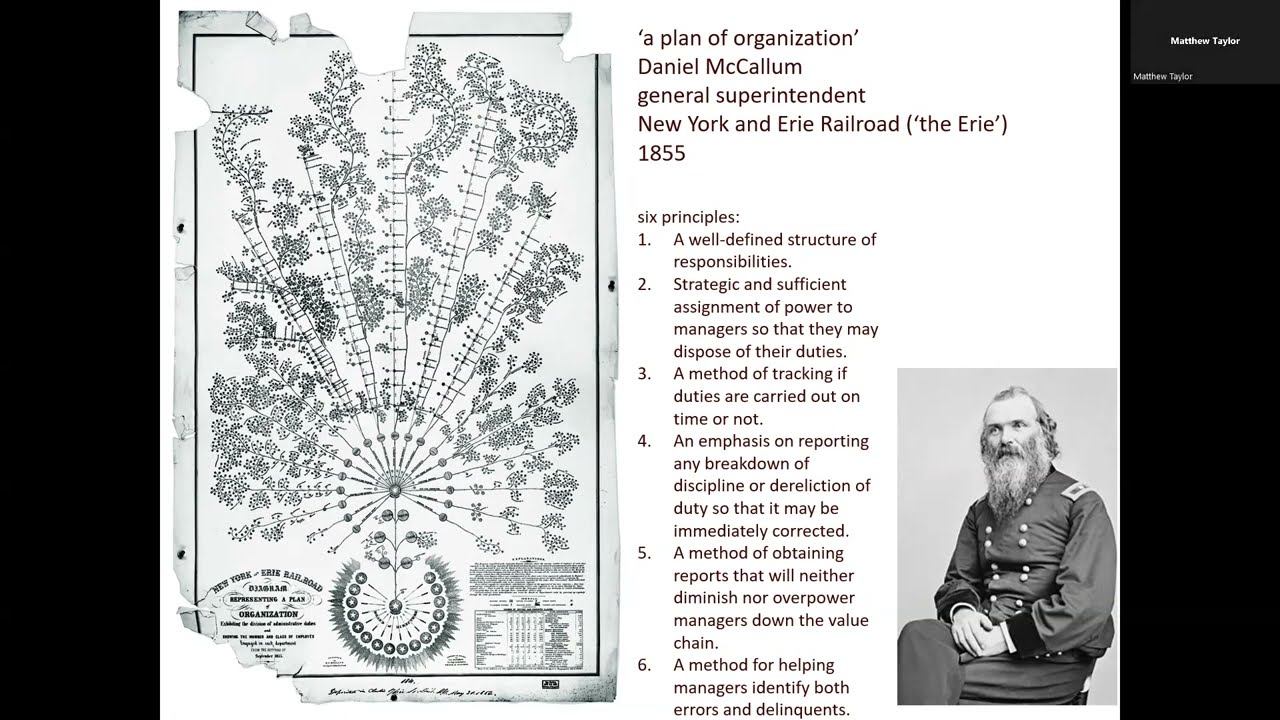
Five core practices for effective organisation - Benjamin Taylor | Stretch Conference 2022

Ep36: A wholeheartdly work Is Crucial To Your Business. Learn Why! Benjamin Taylor - CX RedQuadrant