Cybernetics is not the banana, part 1 — Benjamin P Taylor with Laksh Raghavan (2025)

In this 2025 Cybersyn Labs podcast episode, host Laksh Raghavan interviews systems thinker Benjamin P. Taylor about his personal journey into systems thinking, complexity, and cybernetics and how these ideas shape his worldview, consulting practice, and everyday life. Taylor recounts early influences—from a trans‑Atlantic childhood, exposure to philosophy, politics, and economics, to encounters with Stafford Beer, Barry Oshry, David Chapman, and others—culminating in his involvement with the UK‑based PSYO community that evolved from Cybernetics North. He describes the Viable System Model (VSM) as a parsimonious lens for understanding organizational dynamics, and explains metarationality through Bongard games, emphasizing that organizations are "human‑complete" problems that cannot be solved with rote playbooks. Taylor explores core cybernetic concepts such as boundaries, feedback loops, the tension between control and freedom (the enantiodromic effect), and the existence of distinct sense‑making worlds (top, middle, bottom) that shape behavior. He illustrates these ideas with vivid analogies—from tidal flows on a beach to the historic Lake Erie Railroad chart by Daniel McCallum, and with a workshop exercise that assigns role badges to reveal instant role‑based patterns. Philosophical underpinnings from Wittgenstein, Alasdair MacIntyre, Buddhist thought, and ethical considerations (exploitation, paradigm shifts) are woven throughout. Taylor critiques simplistic frameworks like 2×2 matrices, arguing that mirroring a client’s worldview can give false confidence. The conversation culminates in a set of mid‑century quotes (Stafford Beer, Eliot‑Jaques, Kurt Lewin) that frame his view of organization as a tool for handling complexity, yet inadequate for today’s hyper‑complex world. Overall, the episode offers a rich, narrative‑driven exposition of how systems thinking informs personal perception, organizational development, and leadership practice.
Chapters
And it blew my mind again. I was like, wow, this is it. This is why I'm correct and all my managers are idiots. And that's what I've been trying to offer other people ever since that moment of kind of, whoa, you know, brain explode and see things differently. These incredibly powerful dynamic forces which have achieved temporal stability with flows and literal tides in this case. I see the patterns now. I can see the differentiator. I can see the difference that makes a difference. The more we seek to control and tighten our worldview and firm it up, the brittler it becomes, the more likely it is to shatter with a kind of big shock. What's interesting is that it's also about freedom and creating possibilities of people really bringing their discretion to bear and really doing work. Organizations are, you know, traps for the human soul. On the one hand, organizations are ways of achieving the Consensual coordination of meaning that allows us to work together really effectively and dynamically.
Hello everyone. Welcome to Cybersyn Labs podcast, where we explore multidisciplinary insights that help improve the effectiveness of technology executives and practitioners. Today's guest is Benjamin Taylor. A personal inspiration for me in terms of his relentless quest to spread the message of systems thinking, complexity, and cybernetics. I've learned a lot from Ben over the years. I think we met on what was back then called as Twitter, and I've been following your works ever since. Super glad to have you on board. Ben, for those that don't know you, Please introduce yourself. And as you do that, maybe you can talk about your journey into systems thinking, complexity, and cybernetics.
Thank you, Laksh. It's very nice to hear that. It's an honor to be here. I'm very impressed by what you're doing at Cybersyn Labs. I think it's a really, really positive thing. And yeah, very much reciprocated. You know, I think it's, these are really powerful, deep, interesting, and fun ideas, which are very useful to get out there and very valuable at this time. I have told this story a few times before. I don't know what impact that will have on, on, on the telling of it. There's so many different dimensions of kind of how I've developed, if I have, and how I got into and got interested in what I call systems complexity cybernetics as one extended field. And, you know, it goes from being slightly an outsider through, through school and the like. Steve Whitler once did a post on LinkedIn speculating about how many systems thinkers got bullied at an early age. I know that's not necessarily a badge of pride these days, if it ever, if it ever was, but it's a reality. I did a little bit, and partly because I spent a year in the States. I grew up in the north of England, but as a sort of transplant from down south, but then spent a year in Denver, Colorado, when I was just about to go to school in England. So I was 4 turning 5 when we arrived and I was assessed and put in first grade. And my best friend, my mom was just reminding me the other day, was a kid who'd been held back cuz you could do that to sort of boost people's sporting chances and things like that. So he was 8 in first grade and I, I was 5. Um, so, you know, I've always had a little bit of a perspective on things or some kind of awareness that I had a perspective in a way. Mm-hmm. And if we skip Star Wars, which was a huge thing for me in the States and my sort of regular babysitter, I saw Star Wars 14 times that year. It was actually science fiction and then sort of science fiction and fantasy, but also my mum and dad's impeccably political reading. So lots of material from South African authors in the time of apartheid. Lots of Stokely Carmichael's Black Power was on the shelf and I would pick it up and try and read it and all kinds of things like that. So, you know, I got this quite interesting set of thoughts and ideas and the reading family and thinking about things. Although interestingly, I think none of us were very emotionally capable and intelligent and maybe still below average in that kind of way. These days, I suppose we might say, does that imply some kind of neurospiciness perhaps? But you know, what does that mean? It fed into the fact that I was interested in loads of things and philosophy, Douglas Adams, and all of those kind of things. I ended up doing this very prestigious degree, philosophy, politics, and economics, which has provided whatever it is, you know, 95% of all of the British prime ministers since the Napoleonic War or some, something like that. I studied mostly philosophy. I dropped the economics fairly, pretty much as soon as I could, although I did some really interesting things in economics that we could spend a whole day talking about. One of the things that our tutor made us read was Tibor Skitovsky's The Joyless Economy, an inquiry into the psychology of human satisfaction and consumer dissatisfaction, which is something I think everybody in tech should read. I'd love to do a course on that for, for people. And that was about the interplay of pattern and nebulosity, interestingly, since I'm so deeply into David Chapman's work at Meaningness. And the fact that when we're most profitably stimulated is when there is a high degree of redundancy and a high degree of novel information. And I think that's something that absolutely, there are dark patterns through a lot of tech picking up that. But anyway, I mostly studied philosophy, including sociology and aspects of things like that. It kind of warped my mind even further. And then through a sort of twisted sense of duty, I went into public services. A couple of, well, it went into a charity, a youth development charity, and then a frontline job. And really, to speed up the story a little bit, it was in my first 2 operational jobs, I had these real moments of process breakthrough, of excitement, where we had the whole team together, we were working on things, and I was part of a process and at least a catalyst of a process where we suddenly saw a whole process radically differently and a radical way to improve our outputs and our performance and, you know, achieving our purpose. That was very exciting to me. And when I went on to a sort of slightly higher level job in this, at that time, as the advisor to the mayor of Hammersmith and Fulham London Borough, so one of the 33 councils within London, I went to see, I went to a conference and I saw a mini-me of John Seddon from Vanguard Consulting doing the standard presentation, which I believe is pretty much the same now. I go and see a performance of it every 5 years. Also, just out of kind of nostalgia. And it's a Demingite. Actually, it's almost directly from the Sholz Leader's Handbook and Team Handbook, but it's an application of Lean to service systems. Very good stuff, very limited and dangerous in particular specific ways, but it blew my mind again. I was like, wow, this is it. This is why I'm correct and all my managers are idiots. And I dutifully went away. Wrote a 17-page memo quoting loads and loads of their material and submitted it to the chief executive of the council saying, you know, this is what we should do. And a very good life lesson, he took me aside and said, you know, Benjamin, thanks for that. This is probably not the way to achieve change in organizations. So after that, I was on a mission. They called their approach to process change systems thinking. So I thought, well, this is a thing. I dutifully got the 5th discipline, couldn't stand it, couldn't get through it at all. To this day, I still don't. Get it, why, well, why it was so popular. And indeed, I had a really interesting conversation with a British author who offered the title, The Learning Organization, to his American publisher at one stage, who took it with alacrity because she said she had quite a boring book that she was obligated to publish from an American academic. So that didn't turn me on. It wasn't the system dynamics. It wasn't the learning organization, although the concept is good. It was then I joined PwC and I was first exposed to Barry Oshri's human system dynamics work, or the organic systems model, as he calls it. And then got onto social media, bumped into a certain Geoff Elliott, who loves to go around telling people what's what, what's right and wrong in systems thinking. He recommended me to SAIO, at that time called Systems and Cybernetics in Organization. And to Patrick Orestan.
I did not know that. So when did they change it to Systems and Complexity?
About 10 years ago, probably. I mean, we've basically, yeah, I mean, before my time, PSYO started as Cybernetics North. The story is that at the time of Stafford Beer's death, there were 2 separate kitchen tables in the north of England where people met to carry on his legacy. Out of one of those came Cybernetics North, which became PSYO. which became the Systems Practitioner professional body. Out of the other came, became Metaforum, which is still Metaforum and still a really powerful force in cybernetics. And with it retained, I think it's fair to say, a stronger beer and cybernetics focus as part of what we still look at at PSYCH-O. So somehow I became associated with PSYCH-O and I had several years where I was hosting in the little consultancy office, because by this time I'd left, left, left both a partnership consultancy and a business process outsourcer and set up my own consultancy business with a business partner. We had an office above the British Interplanetary Society in central London, just across the road from MI6, the building that gets blown up in that James Bond film. And we used to have on a Sunday, 4 times a year, folks come from all over the country and all over the world. Ivo Velichkov was a regular attendee, just loads of really fantastic people who really understood the VSM. And I was able to do what in the old days of communities of practice they called legitimate peripheral participation. So I just sat there and it took me 4 years to sort of absorb the operational way they were talking about the VSM and other core systems concepts. And they were big fans of Gregory Bateson there and all the rest. And it was a, it's the best learning environment I've ever experienced in my life, to be honest. I know that was probably a longer explanation, but it takes you into some of the passions and the interests. And for me, it was just the fact that this explained so much. It offered parsimonious, effective explanations of, you know, some of the core patterns that underline, you know, just why things happen the way they do. And that was incredibly exciting and incredible. And that's what I've been trying to offer other people ever since that moment of kind of, whoa, you know, brain explode and see things differently, see things more powerfully and go, yeah, yeah, this seems to fit. This seems to work.
Awesome. So do you use these insights in your consulting practice? I'm sure you do, but I'm also curious to learn about how do you use it on a day-to-day basis in personal life as well?
Yeah. I mean, I am not a purist, Laksh, and I've never set out my stall to say my consultancy does systems complexity cybernetics consulting. I used to say it was about 10% of what we did. These days it's a bit higher and we are doing some specific work, which is that. But for me, it really kind of infuses the way I see the world, if that makes sense. So, you know, once you've understood, I don't know, boundaries, the way feedback works, the way social systems get locked into self-sustaining loops and need to sustain themselves, constraints, emergent properties. So I kind of, I just moved to live on a beach. It was absolutely fantastic. And you can dynamically see day to day, minute to minute sometimes as the weather sweeps over and so on. Mm-hmm. The incredible way I'm looking at the, looking at the tide now, the way the tide is shaping the beach and the beach is shaping the flow of water, which is then shaping the beach in a, in a, in a reciprocal structural coupling kind of relationship. The impact of the, of the breakwaters, whether when my dog loses his ball in the water again, it flows back or it flows onwards down, down, down the coast. You know, the way the vegetation adapts to life here at the beach. The incessant rusting of every single metal thing that's outside. You know, these dynamic processes are all around us. So it's the combination of the dynamic processes and the way that that constant energy, I mean, incredible. Think about it. I can see the moon at night coming from, from, from my window. That moon is directly affecting the strength of the tides outside, outside my door. These incredibly powerful Dynamic forces which have achieved temporal stability with flows and literal tides in this case, but between them, and that is happening all the time in organizations. In organizations, obviously, I'm looking much more, and I've always had that critical eye, as you might expect, given what I talked about in terms of politics and my, or hinted at in terms of politics and my upbringing. You know, power dynamics, exploitation. I'm not particularly good at reading subtext, Laksh. I'm I'm the kind of person who, what was the big debate on Twitter recently in the last year or two? There was a whole thing about Starship Troopers and whether people got the fact that it was a parody or not. And I absolutely didn't. I was just like, what's all this? Why do they all look like Nazis? But what I am good at seeing, I think to some extent, or, you know, is useful to me, is, is, is the way patterns are held over, over time. Or broken up dynamically. And I think that's incredibly useful. So I've ended up gravitating personally, I do quite a lot of organizational development, team and work, not in a navel-gazing way, I hope, but very much in an action learning, applied, practical way where I'm looking at applying a lot of that to people dynamics, but then it propagates out into structural dynamics, into viable system model dynamics of how organizations work and all the rest, if you see what I mean. But when you start to see this, one of the wonderful things is, I put a swear word in my preparation document for you. I'm not sure if I'm allowed to say it, probably not on YouTube, but when I'm picking up the dog's mess or trying to find it in the leaves, I can see parallels with the process that I'm using, or let's say trying to find his tennis ball, which always ends up the same color as the sand. With the process I'm using to try and do that compared with the way we prospect and look for opportunities in organizational strategies, if that makes sense.
Awesome. I am curious for your worldview on fundamental human nature. What kind of lens do you use to view organizations? Any other heuristics that you've developed over the years working with these ideas?
Yeah. So it's an interesting and important debate whether you change your worldview first
and
then you're able to change actions, or whether— there's a famous quote which is variously attributed, and I've done a post trying to track it down. I'm interested in that kind of thing. It's easier to act yourself into a new way of thinking than to think yourself into a new way of acting. I am by habit. somebody who, even though perhaps I'm not very naturally reflective, I am interested, do try to change people's worldviews and get people into a thinking thing. I don't have very explicit, you know, political agenda or a very strong trust that I can direct or, you know, have strong political views except on, you know, some specific issues where I, where I do have very strong views. You know what I mean? I'm not, I'm not the sort of person who has an agenda or has a belief that things operate in a particular way and therefore you have to manage things in a particular way. I think it's much more contingent and much more situational, usually, almost always. Although if you look at my Twitter, you'll see the things I'm frantically retweeting and liking have some quite strong and unsurprising political messages. One of the things that really changed or confirmed or objectified for me, my, my worldview was a David Chapman Meaningness post. I think it might be called The Bridge to Metarationality. I forget exactly what the title of the post is now. Yeah. But he talked about Bongard games as, as used in Gödel, Escher, Bach. And as developed by Mikhail Bongard, a Soviet computer scientist, as a way of evaluating and developing artificial intelligence. So Bongard games are a pattern recognition and differentiation task. Yeah, I'd love to hear Harish's take on them one day. I must send him that post to see what he thinks. Where you have 6 postcards type images on the left and 6 postcard type images on the right. Mm-hmm. And the left have a, an overall, they have some similarity. They are, you know, particular types of triangular and circular shape. All of the images have a certain type of similarity, but the ones on the left have a pattern which distinguishes them, which brings them together, but also distinguishes them from the one on the right. So intellectually, it's just quite an interesting puzzle and it's very similar to some forms of a cue. test. So there's a guy called John Raven who used to come to all the development days at, at, at PSIO, whose father developed a thing called the Raven's Progressive Matrices, which was a pattern matching. So this is shape rotation, right? Can you, can you do shape rotation? Which I'm not hugely good at. But what is interesting about it is, first of all, that there are infinitely many solutions to every Bongard game. Mm-hmm. Because there are actually infinitely many ways to conceptualize the patterns on the left and the patterns on the right. Sure. But when you get the desired solution, the one that's the most, you know, amenable to human thinking, you have this instant insight and recognition. I see the patterns now. I can see the differentiator. I can see the difference that makes the difference between, between the two. Now, the original Bongard games have a set of rules. They have to be geometric shapes that, but if you actually loosen those rules, and so you can have a Bongard games where instead of recognizing the relationship of geometric shapes, You've got a set of shapes on the left, which are drawn from alphabets, a set of shapes on the right, which are drawn from alphabets, but the ones on the left would fall over under gravity. They're unstable. And the ones on the right are stable. And it instantly becomes a human complete problem. A problem that if you were able to create something that was able to solve this, you would be able to, you, you would've created something that has equivalent to human complete
Interesting.
And for me, that was a moment of saying, this is why everything is situational. This is why you can't do consultancy by a rote playbook. You can't send in business school graduates and run a process and transform an organization because organizations are human complete problems. Humans are human complete problems. So that was very, very powerful for me. And I think that David Chapman's explanation drawn from Vajrayana Buddhism of the world as infinitely nebulous and endlessly patterned. So both of those things are, are true simultaneously. And that's why things are contingent, relational, and messy. And the stories and distinctions and practices, embodied actions, the things that allow us to bootstrap a rational meaningful world in which to situate ourselves.
Mm-hmm.
Where things make sense, where you and I understand the same language and could communicate to a certain degree. And where we can partner together, we can make progress together, we can, we can build together, we can do science. All of those things. Yeah. Are only allowed, only possible Where we are shielding ourselves from the complexity of the world. We have metarational practices and we have circumrational support. We have ways of error correcting, ways of making do, ways of counting as, ways of seeing as, you know, what can we both wear in blue shirts, but what is blue really? If, so a lot of this comes from Lucy Suchman, who does, who did microethnology of science and actually studied people doing pure science in labs, chemistry, I think. And the, you know, you, you, you're supposed to run a heated reaction until the reagent turns blue. Well, what counts as blue? How are you defining and actually understanding what blue means in context? Yes. And that means checking, it means throwing things away, it means correcting, it means balance, you know, rebalancing. Drop, drop in 3 drips from the pipette. Well, what really counts as a drip? What if you squeeze it a bit too hard and an extra half drip goes in? What do you do then? Yeah. So the rationality that The sensemaking, which is coherent, which, which we're allowed to do. I wanna back away a bit from the, the idea of rationality per se, but you know, the coherent sensemaking is held within a kind of bubble within a defended and defensible space.
Yeah.
And that can break down and it does break down time and time again. It's called paradigm shift. And it gets reconstituted ideally in a way which is better, which transcends and includes, which explains the things that the old paradigm explained. And explains the gaps and the things that caused the old paradigm to break down as well. Mm-hmm. But not necessarily so. There's a philosopher called Alasdair MacIntyre, which is what I instantly connected the, the, the, the David Chapman work with, who talks about how this develops in practices and communities over, you know, millennia, decades, centuries, and how those different worldviews are in a sense in, in conflict with, with each other. So the There's this sense of, to quote Chogyam Trungpa Rinpoche, this very problematic Buddhist guru of the mid-20th century in America, the bad news is you're falling through space with no parachute and nothing to hold onto. And the good news is there's no ground.
Yeah.
Yeah. Should I be, I can be a bit more practical as well. So, you know, organizations are the way we're trying to deal with complexity. That I just described. And I do think, you know, if you look at the viable system model, I think there are some underlying principles and truths about organization per se, that the process and the capabilities that you need for organization, which include a cybernetic explanation of that kind of shielding from the world that I just talked about, the transduction, what signals we see, what we allow to come into the organization and include the concept of meta languages, that the language that operations speak has got to be different from the language that management speaks, but management has to understand the operations language if it's to, if it's to be capable. So these, these are all deeply related. And I think we need a little bit of a, what's the word, resurgence, resuscitation of some of Eliot-Jake's work. It still continues with people like Systems Leadership Theory from, from McDonald, but some of his insights into hierarchy and how boundaries and freedoms come together to enable discretionary effort and the exercise, the actual work in organizations. I think, I think work is a deeply cybernetic concept. I think those are fundamentals, as my friend Arthur Batram talks about irreducible essentials in organizational life. I think Barry Oshry, He's also deeply underrated. His understanding of real spaces that we create in human interactions, like top, middle, bottom, customer, helper, and it applies to the viable systems model space as well. As soon as you step into them, you feel a real dynamic.
Yes.
I do a workshop exercise where I just give people a badge and describe that they're going to be a top, they're going to be a middle manager, they're going to be a team member. And just like that, they snap into role and the tops assume responsibility and get a bit nervous and, well, I'm going to have to take responsibility for all of this. The bottoms go like this. They literally have this body language. Okay, well, you know, I'll do my best, waiting for my instructions. They probably won't be very good, but I'll try and I'll, you know, I want this to succeed. Yeah. You know, and the middles are going like, oh God, look at them and look at them. And I'm going to be in the middle and I'm going to have to be shuttling back. So you, just by telling people the role, you create the conditions of organizational life. And our instant instinctive responses to those conditions turn out to be one of those lock-in patterns. Whereas the top, I understand that I'm responsible and that I've got multiple, lots of complexity to deal with. And my reaction to that is to suck up responsibility to myself, which creates the conditions of overload. But we don't understand that our reaction is part of the patterning of organizational life and locks in those patterns and those structures, and that the that another way is possible. That's kind of the point, if you see what I mean. So I think even before I was introduced to Barry Oshry or the Viable Systems Model, in thinking about the way the frontline, the workers, the edge of the organization, the interaction of citizens with an app or a website or whatever, is an interaction of 2 different worlds. The world where we live our lives and we have our purposes and we sometimes have demands on organizations in the world where we try and respond to those through tech and/or through people. And there's a transduction of the signal there, which means that inside the boundary of the organization, you only know what you have eyes to see and ears to hear, as it were. But similarly, between each different department, each different team, between different, you know, between operations and management and management and senior leadership, there are these sense-making worlds that are separate and apart, and necessarily so in a way, these different parts of the elephant, as I call them, that you can't just hold up a light and see the whole of the elephant and have it all make sense. You have to appreciate that these are real experiences, real sense-making worlds, top, middle, bottom, frontline, strategic managers, strategy people, and understand the dynamics that are going on for them and the interplay of dynamics between these different worlds, if you see what I mean. Yeah. So that concept that these different sensemaking worlds exist and are necessary for coherent sensemaking, but have implications and conflict and interplay of dynamics is absolutely central to the way I see organizations and the way I see everything, I guess.
Ben, this is intriguing. I know you've kind of distilled some of these core ideas that you've been thinking for years into a couple of slides for our listeners. I'm curious to dive into them.
Yeah. Okay. Well, I mean, some of this may hopefully restate in a useful way some of the things I've just said. So I think these 2 quotes together are really powerful. I absolutely, I fell in love with later philosophy of Wittgenstein at university. At the same time, I fell in love with, with MacIntyre. So as the, as the quote goes, a man's work is nothing but this lifelong trek to discover through the detours of art, those one or 2 great works in which, under which he first felt awe. I think I'm misquoting the quote a little bit. That's from the, from the inside cover of Scott Walker's Scott 4 album. It's, it's a Camus quote. So, you know, everything that you learned at the age of 21 is probably important. So if you say Wittgenstein, to understand is to know what to do, understanding value, truth is fundamentally tied into, you know, making sense contextually and being capable of responding To the context in which you are in. But MacIntyre situates this and says that it needs to be situated. I can only answer the question, what am I to do, if I can answer the prior question of which story or stories do I find myself a part? Yeah. So again, this is cycling back to the things I've been talking about. What is the contextual holding space in which we can be capable, in which we can understand what story we're a part of and, you know, what it is we have to, to do in there?
Mm-hmm.
The, the next section here is that if you, the world can be seen, the universe can be seen. I think to quote Philip Boxer, as soon as you say ontology, you've lost, you've lost it. But to the extent that we should, we should categorize what is the world, coexisting nebula, nebulosity and pattern means that you can interpret the world in unlimited ways. You can never completely control the world. But of course we do, and we have distinctions, we have framings, we have ways of seeing, right? Which allow us to make sense contextually, which allow us to manage complexity and therefore generate meaning and value, purpose, legitimacy, power, you know, the ethics by which we live and so on. This quote is attributed to lots of people. We shape our world and our world shapes us. Churchill is one of those. A lot of people have said it. But That means that we have a gap. If you look at Tarski's undefinability theorem or Gödel's incompleteness theorem, so by definition, if there's an infinite amount of patterns to choose from, then our view and an infinite amount of nebulosity that can disrupt that pattern, whatever is our situated view of rationality, it's incomplete because otherwise it wouldn't be a view of rationality. It would just, just be the, what's the pragmatist philosopher's blooming buzzing confusion. So there's undiscussables, there's framing, there's behavioral cues, context cues, and there's undeniable things in our ethics. And there's questions of legitimacy, which we don't ask, because if we did ask, we would be undermining the framework of our, of our views. This, this could be a very radical view. It could be a very conservative view as well, obviously. So, so the point is that every worldview in which we can make sense is ultimately vulnerable, not necessarily fragile, but vulnerable. So feedback from the world, which I don't deny the reality of the world, I just don't think we should talk about it, but feedback from the world can create a shock. You know, we had this way of framing, this way of understanding, this way of working, whether that's, you know, our competitors are suddenly eating our lunch or our civilization seems to be under massive threat. or both simultaneously, to, to, you know, to go kind of meaning crisis-y. We can realize, come to realize in a very, very painful process that what we thought was true about how to live in the world was wrong in certain important ways. It's also the case that we can start to see that the way that we are seeing and being in the world is undesirable. And no, that's different. That's different from a learning shock where our paradigm breaks down. This is a way I can start to see and acknowledge that my world is built on exploitation in certain particular ways. And then the third point here is, even if things are buzzing along quite nicely, there's no external shock. We're not deeply worried about the way in which our way of seeing seems to be shaping us and the world around us, but we start to realize that these different sensemaking worlds are coming into conflict, or there might be confusion, or there might be exploitation between these different, you know, transduce these different social realities. And then finally, people just do weird shit. Oh, sorry, I've said the word, having avoided it before. People have agency, right? So you can't actually predict or control people. So you're always in this balance of control and freedom one way or another, which is, to coin a word that I learned by talking about this on one of my LinkedIn posts, Enantiodromic. That, that's a, a word used by Freud, I think, or one of the early— enantiodromic from the Greek obviously means a thing which in the extreme becomes its opposite. So do you remember the Princess Leia quote to Darth Vader? The more you tighten your grip, Lord Vader, the more star systems will slip through your grasp. So, you know, the more we seek to control, And impose our worldview. And you can see how this instantly has implications for politics and, and for strategy and operations in organizations and so on. The more we seek to control and tighten our worldview and firm it up, the brittler it becomes, the more likely it is to shatter with a, with a kind of big shock. But the more we loosen things up, the harder it is to have any coherence and so on. And this is where, you know, you can see lots of people coming through Stafford Beer, Anne Barrios, we have versions of it. Ivo Velichkov wrote a really excellent book, Essential Balances, about core balances that we're having to maintain, attend to, and kind of work through in organizational life. So my view is that systems cybernetics and complexity is through these patterns and this nebulosity and making sense of it. And I know I've been very philosophical here, Lex, but You know, particularly for leaders, you often find yourselves in situations where these dilemmas are very real, whether it's, whether it's, you know, engineering isn't able to communicate with marketing, or whether it's our strategy seems to be coming to the end of the runway and we're not getting anywhere. This is all about thinking through and resetting our approach to some of these kind of essential dynamics. Yeah, so that's one of them. I've got more. Where do you want to go? Where do you want to go next?
I think we can dive deep into the next couple of slides, but what you just said, like how this is also real for leaders, I think it was Churchman who said, obviously paraphrasing, like improvement, whether it's efficiency or effectiveness, always raises questions of an ethical nature. And so this is all super important for leaders, and I'm glad you are raising these points so elegantly.
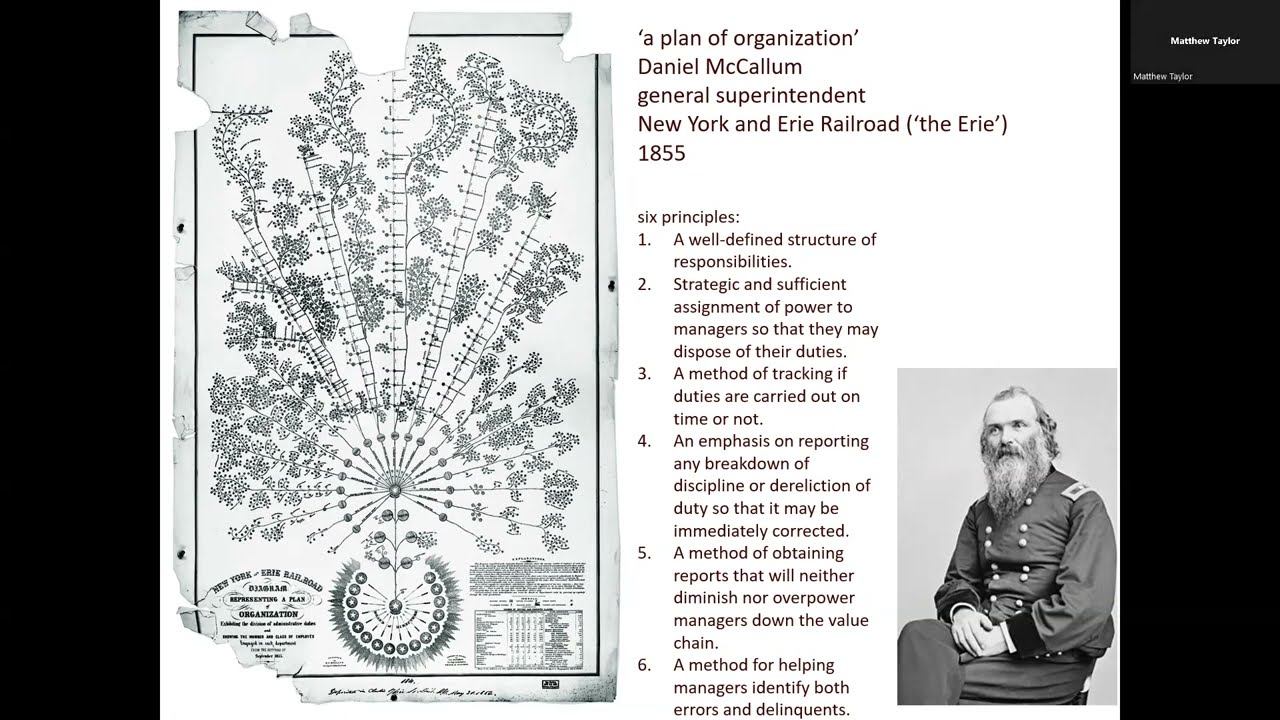
Thank you. Good. No, I think that's right. I think we have to, we have to really practice with these things. And then the next thing is, is, is kind of a little bit lighter, I suppose. Yeah. I've just got 3, 3 quotes again from classic white men from the mid-20th century. The tool for handling complexity is organization. But our concept of organization belongs to the much less complex old world, not to the much more complex today's world, and seems inadequate to deal with the next epoch of complexification in a world of explosive change. Now, I think this was Stafford Beer writing in 1984, by the way, so 40 years ago. So we're deep in that next epoch now, I suppose. The narrative of everything speeding up and everything's changing can be overdone and is a pretty Tried and trusted sales technique. When you think about it, people went as as Patrick Overstat says, people went into the Second World War with biplanes; they came out with jet engines and the nuclear bomb. It's a really significant speed of change has been with humanity for quite a long time actually, with maybe long periods of consistency. Creativity and innovation like freedom and liberty depend not upon the soft pedaling of organization, but upon the development of institutions. with the kind of constraints and opportunities that can enable us to live and work together harmoniously, effectively, and creatively. I think there is something about the toughness, the crunchiness, the being real of some of the management thinkers of this kind of period, mid-late 20th century, which is really quite valuable and really quite fundamental and important. And I go back to what's often called the original organization chart. of the Lake Erie Railroad. And this again is referenced in, in Schultz as the rail crash system of management, where there was the first fatal railroad accident. This doesn't include all of the migrant workers who died in the building of the railway, who obviously didn't count in the same way, I'm afraid. But somebody, you know, was hit by a train going at 30 miles an hour and died. And this, this guy who was the superintendent of the Erie Railroad Daniel McCallum. He was a Civil War engineer. Fantastic beer, just like Stafford beer. He was tasked with being, I would say, the first enterprise architect. Now they had organization structures in the Bible, in the Roman times, in the Jewish times. So it's not as though, well, way back in the, in all of the ancient Indian literature, you'll find really good stories of organizational design and so on. Sure. But, you know, in the modern era, Daniel McCallum wrote a handbook to managing the Lake Erie Railroad and an org chart which looks like this fantastically beautiful thing with the board of directors at the root and all of the things propagating out from that. Yeah. And one story about that org chart that relates to this Eliot-Jakes quote is, you know, Is it the case that organizations just became about the allocation of blame? And there's certainly quite a few principles in the Daniel McCallum Handbook about identifying delinquency and dealing with it very quickly. So there's that kind of language of, of blame and so on. But what's interesting is that it's also about freedom and creating possibilities of people really bringing their discretion to bear. and really doing work. I'll come onto the, my definition of work in, in a minute. So Daniel McCallum was doing what Elliot Jaques is talking about here, was doing balancing of boundaries and freedoms that allows partnership, allows coordination of meaning and working together. So on the one hand, he was creating In a mechanistic way, and that org chart looks like the railway lines, looks like he would've drawn as an engineer in a way. He was creating this clear structure hierarchy of accountabilities and responsibilities and what, who was free to do what. Mm-hmm. On the other hand, and that org chart does look like one of the pussy willow trees, shrubs that grew up along the railway line that he also sketched and, and, and drew. That's what it was based on. He was actually creating the possibility for human flourishing and human contribution in organizational life by setting the boundaries and by setting some of the rules, very Jakesian rules, like, you know, managers should understand the work two layers below them. And he was also prescribing getting rid of the possibility that at the first time when the telegraph was being introduced. This was the first time that management back at headquarters could practically in real time interfere with the operations of the branch lines. He was saying, you know, we actually have responsibility here to manage what we manage at the centre and to enable and to direct and to a certain extent control how the railway runs, but we don't have the responsibility for actually interfering real time. We have to leave that to the boundary discretion of the people working in the front line. So, you know, organizations are, you know, traps for the human soul on the one hand. Organizations are ways of achieving the consensual coordination of meaning that allows us to work together really effectively and dynamically on the other. And then the third quote here is Kurt Lewin, you never understand the system until you start to try to change it. Which again, another mysterious quote. Nobody knows if he really said it, but it's an important quote because it actually, it talks to the reality that systems are dynamic. And when you change them, you learn. That's central to my point is that complexity is an experience. It's not a, it's not a condition of the world. The world is complex. The world is also simple. It depends how you're defining and approaching it. Depends on your purpose, experience, expertise. T's, condition, context, perspective, a million different things. So I don't believe in an ontological definition of complexity or indeed of VUCA or the complexity that we live in.
So no 2 by 2 matrices for you?
No 2 by 2 matrices. No, I do. I do. I have a nice quadrant thing for the ways people, you know, get systems thinking wrong, but that's been characterized as being mischaracterized. Yeah. All you're doing if you offer a matrix or, or a structure for how people can characterize the situation they're in is you, you're just mirroring back to them their own understanding of the situation and giving them a false confidence and quite likely a wrong prescription as to the type of action they could, they should take in that context. It empowers people. I understand that people, people love to have their worldview mirrored back to them, and it may not altogether be a bad thing. People. Acting as if they were working in complexity more of the time would generally be a good thing, right? And there is a distinction between when you've properly framed the problem based on your context and reaction to it as complicated and complex. That's a real distinction, but the distinction is based on your understanding and your framing and your purpose, not on something out there in the world.
Yeah. So a lot more epistemic humility and a lot less ontological arrogance.
More from Benjamin

How to Transform Public Sector Organisations Through Systems Thinking With Benjamin P. Taylor

Cybernetics is not the banana, part 2 — Benjamin P Taylor with Laksh Raghavan (2025)
04 | Culture, Clarity & Conversations: Leading in Uncertain Times with Benjamin P. Taylor

The Key To High-Performing Teams Based On Trust – Benjamin Taylor | Compass Tech Summit 2023

Benjamin Taylor - Jan 2021 - SCiO Open Event - The 'Four Quadrants' of Thinking Threats
Five core practices for effective organisation - Benjamin Taylor | Stretch Conference 2022

Ep36: A wholeheartdly work Is Crucial To Your Business. Learn Why! Benjamin Taylor - CX RedQuadrant