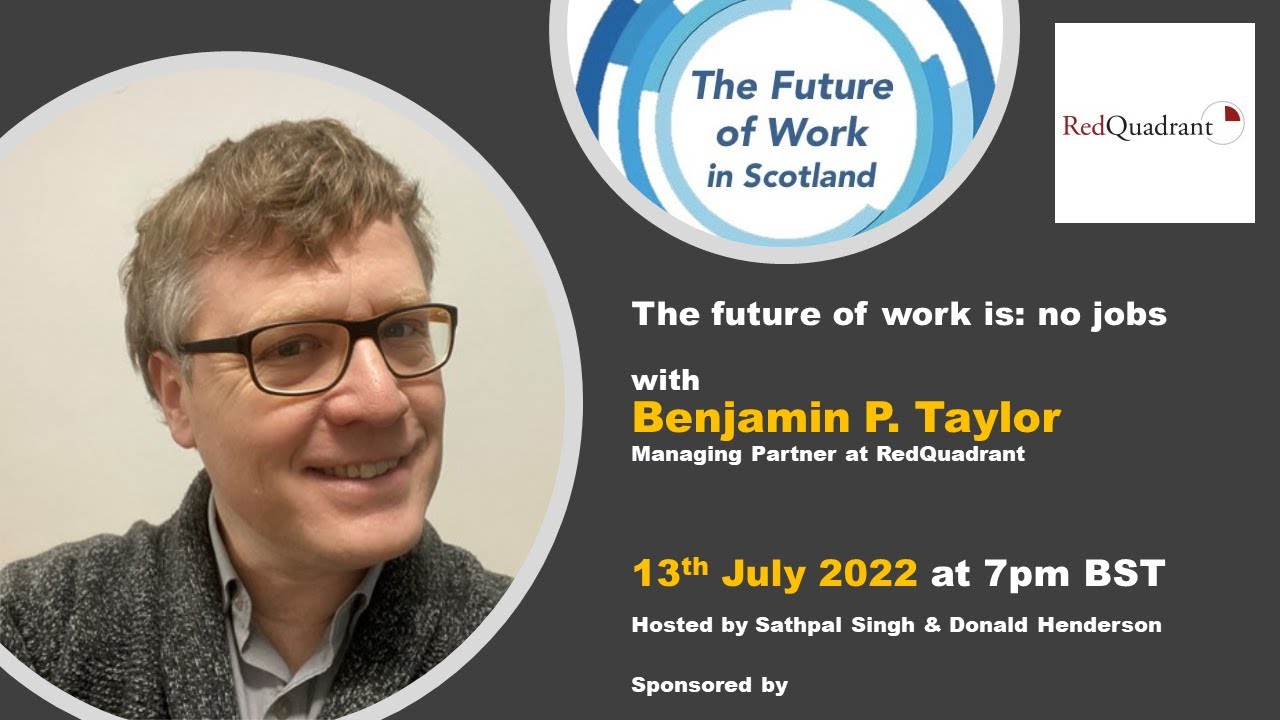
Benjamin Taylor - July 2022 - SCiO Open Mtg

In this 90‑minute open‑meeting presentation, Benjamin P. Taylor surveys the fragmented landscape of "Systems X" – systems change, systems leadership, systems practice, systems convening, systems weaving, and the notion of robust systems. He first maps how these terms are used in public discourse, noting that many practitioners conflate them or apply weak definitions. Taylor then introduces a meta‑model for systems change consisting of four inter‑related questions: (1) Who are we? (identity and mandate; (2) How do we appreciate the system? (system understanding, opportunities); (3) How do we intervene? (designing actions, strengths); and (4) How do we learn? (triple‑loop learning about interventions, framing, and identity). He critiques common approaches – collective impact, the Systems Change Alliance, Peter Senge’s leadership model, Barry Oshry’s organic systems, Viable Systems Model, and others – highlighting naïve mapping, over‑reliance on hierarchical authority, and the danger of “over‑correcting” by imposing a single paradigm. Taylor outlines a taxonomy of systems leadership (external change, emergent internal change, innovation‑focused, complex‑systems leadership, and systems weaving) and argues for discriminating among them using criteria such as complexity appreciation, ethical awareness, power/legitimacy analysis, and capacity for triple‑loop learning. He then details the six‑element framework of systems convening (convening call, legitimacy work, boundary‑spanning, identity work, agency work, power work, narrative work) and stresses its pragmatic, observation‑based nature, while warning that it is not a programmable method. Finally, he presents Barry Oshry’s four dynamics for robust systems – differentiate, homogenise, individuate, integrate – and links them to classic differentiation‑integration theory. The talk concludes with a call to develop evaluation criteria that test whether an approach truly engages complexity, ethics, human dynamics, and produces actionable learning. Audience questions probe the alternative to systems thinking (mechanistic/complicated thinking, monist/eternalist worldviews, fatalism) and reference West Churchman’s critique of the systems approach.
Chapters
Well, David and I, as you can tell from some of the comments, have been in a sort of rhythmic or orbital conversation for some time, and I hope that will continue. And I've been deeply enriched by that, and I think David's been occasionally amused. And it's connected me to lots of great people like David, many of whom I have recorded, like David. and not yet released podcasts, which is a burden of guilt I carry. And that's really the nature of the relationship between these 2 presentations. And in a sense, some of the things that I'm putting out here are to see how the brilliant brains around this room might respond. So you mustn't take anything here as endorsed. By Mr. Ing, but a number of things will have been triggered by things that he's put me onto, put it that way. And he may well disagree with my triggering, my interpretations of them. I think people know me, but you can go to bentaylor.com if you'd like to connect. I'd love to connect on social media if you don't already know me and are connected. And despite the website URL and all the people in SAIO who've known me for years, I tend to go by Benjamin these days, but I'm fairly flexible. So what I'm going to talk about is a kind of overview of a set of fields of systems change, systems leadership. I won't really attempt to give an overview of systems practice and systems thinking, but I'll also introduce systems convening, an interesting concept called robust systems, some things that I think go wrong with some of these approaches, very tentative, and open a conversation about how to discriminate between them. This is work in progress, perhaps comparable to 4 years out of 10, but certainly less, less coherent, I guess I would say, than the systems changes group. And in a sense, that's because I'm not in a cohering project. What I'm really trying to do here, and the final bullet point points at it, is to try to take an overview of these ridiculous galaxies of systems, things that are out there, and help us to find ways to contextualize and discriminate between them, use, adapt, etc. Right. So let's just start with that kind of range of Systems X things. Systems leadership— I did a LinkedIn post this morning saying systems leadership, systems change, things you hear about all the time. I got about 3 or 4 responses saying, no, I've never heard of those things. But if you move in certain circles, systems leadership is a thing that trips off people's tongues. and which there's a bunch of stuff written about, but it doesn't really add up to a huge amount. Most of the time when people are using that phrase, they mean exercising hierarchical authority over a bunch of institutions that are supposed to work together, like a healthcare system or occasionally an education system. And I've got a Google alert for systems leadership, and it's almost always systems leadership said they would address this This scandal or something like that, you know. Even in the published context, the definitions of this are rather weak, but I'll go through some of them and illustrate the kind of range. And I think this is really important because actually all of these things are reflecting on each other. and most of the world out there will come to whatever we propose, will come to David's presentation, and will go, oh, I've heard of this, it must be a bit like that Peter Senge thing, and so on and so on. So these things are all quite important. Less often it means leaders who are good systems thinkers. Occasionally it means finding ways for groups of organisations relating to some kind of context to work more effectively together. And systems change very often is the kind of summed up by the banner you see at Extinction Rebellion protests, which I can't remember now, but refers to systems change as in changing the system. If anybody could— you see it in all the photos. And it tends to mean creating alternative authority systems that are considered to be, by the advocates of the approach, more legitimate, or reshaping structures to generate more equitable, inclusive, better outcomes. Often you see really strong norms here. Connection is better. The system seeing and understanding itself is is better, and bringing together governance across the whole system is a good thing. So those are quite big generalisations in my opinion, quite big assumptions to which I want to say perhaps, depending on the context. Systems change and systems leadership have a huge space of overlap between them in the literature and in the practice. Roger has provided the answer, the banner says systems change, not climate change. It's very clever. Actually, in practice, what people talk about and promote in systems theory is often a very oversimplified version of systems dynamics something, and maybe something that's derived loosely from general systems theory, and occasionally concepts from complexity theory. So, you know, my favourite slide around the Systems Leadership movement in UK public services is the one that says organisational systems are autopoietic. Autopoietic systems act to maintain their integrity, therefore they defend themselves, therefore if there is a threat to the system that threatens to change it, it will act to kill it. To which my friend Arthur Batram says, that must be why I'm finding all those dead rabbits around my cabbage patch. Because the auto-pollinating system of the cabbages is acting, you know, it's broad reading, put it that way, of a really elegant and complex bit of theory. So what people are trying to cross-apply some very simplistic bits of systems theory, and we hopefully know that the potential there is very much greater. Again, systems practice. Very often what people mean or think about when they do systems practice is basic mapping that gestures something related to causal loop diagrams. Causality is kind of a key word there. There's a recent publication about systems mapping that explicitly links it to causal mapping. And my, you know, for For example, these maps are usually flat. They usually have no hierarchy of structures, properties, or effects. There's no ordering. There's no emergence mapped in there. They're often naive, first order, assumed to be correct and objective, technically changeable, actually the opposite of what they should be. And now we have systems convening, which I've been marginally involved in supporting to come to publication in a book, Social Learning About Social Learning. So it's by Etienne Wenger, who are the social learning experts who created community— the idea of— named the idea of communities of practice. And they're good at naming things that exist and giving them instantiation. And they've done that with an approach that they've called systems convening, which is social learning across contexts to shift whole systems of impact and change, usually around, again, trying to change things to a normatively, ethically better kind of set of outcomes, which are then considered to be more legitimate. But they explicitly name work on legitimacy, boundaries, agency, power, and identity, and that is great, really, really powerful, but what it's not is actually a systems approach. They really regret calling it Systems Convening because they get all us curmudgeonly systems thinkers arguing on their mailing list. It's an observation about ways in which real people in the real world have actually changed complex and important systems. Then there's also systems weaving, which is from June Hawley— facilitative, opportunity-seeking, network-thinking-based relationships. There's an interesting kind of wu-wei aspect to that, which is non-forceful systems change, I guess I would say, and draws on network theory. And you will find in this space constellations work, futures work design, sometimes called systems design, and adaptive leadership as a corrective to what's considered to be the bugbear of all of this: top-down command and control, directive controlling leadership. So I probably haven't told many people here anything that, that's new to them, but I think, you know, I wanted to sort of set out when I am trying to map and think about how all of these things work out there in the world under these brands, what are some of the issues and possibilities? So the question arises, okay, these are the distinctions that are kind of in practice. Says me, I probably read a wider range of this than most, than almost anybody frankly, but that doesn't mean that I have a better grasp on it, but that's my perspective. You know, comments, queries, welcome maybe in the chat as we go along, that can be picked up later. So what I'm going to do is I'm going to go expand these, you know, sharings. I'm going to essay, and those who've been in sessions with me in the last month will recognize it, my thinking about systems theory and practice. And I'm going to come back to how can we distinguish these approaches and ask for your inputs. Okay, that's what I'm going to do today. And each of these is like a giant universe of good and bad stuff. So much of it disappointing, to be honest. However, in systems change, having done a kind of review of the field, and you know, you'll see for yourselves any similarities or differences that happen to come up from David's work, but this work was completed a couple of years ago, we have a model that tries to be a meta-model of thinking about systems change. Starts from— I suspect I pinched this from a guy called Toby Lowe who runs now the Human Learning Systems movement, but it's not an original thought. The big picture is that outcomes— and most people in systems change are seeking to change some kind of outcome— arise from complex adaptive systems. They're not— they don't arise from mechanistic systems. The first level, and I'm hesitant to use any words like levels or steps or any of those kind of things, is who are we, the systems changers? So to keep that question open, who are we, what are we here for, what is our mandate? And that brings in what principles and practices are we using. Then there is how can we appreciate or understand or see what is the system that we are interested in and working on, you know, starting from appreciation for perhaps what works, but then really thinking what are the opportunities, what changes would we like to see. Then there's intervening, perhaps building on strengths and shaping positively. This was done for a client in the children's services field. We tried to— I believe it's generic in a core sense, but that's hence some of the flavour here. Then there's learning. And that seems to be really, really critically important that we're actually learning in that sort of triple loop way, learning about our interventions. Okay, I thought there was going to be labels here, but there are not. Learning about our interventions, i.e., are our interventions ones that are taking the system at all in the right direction? Do they look like they're successful? Learning about our framing, our way of seeing, our way of appreciating and understanding the system, and then learning about our identity and who we are and what is our purpose and mandate in going into trying to change the system. And then I'm hesitant about David's characterization of the system learning, and I have it myself. You know, can it be said that a system can learn? David names the organic systems assumption that's behind that, but anyway, there you go. And there are interconnections between each of these levels that show the reflectivity of each level with each other level, so they're not necessarily hierarchical levels. So, you know, as we see the system, we might see our role differently as we intervene, we will learn and see the system differently, and so on and so on. So, you know, that was our attempt to— not in the critical vein that I started off in, but to actively distill some really core things from the huge systems change literature and try to come up with a way of thinking at the highest level about what systems change theory and practice might be. Okay, systems leadership, another giant universe, and I did a piece, the blog link for which is the first link there, because it seems to me that there are 6 or 7, perhaps fewer, perhaps more, this is not yet a fully defensible schema, There is kind of like better leadership of the system, actually introducing inclusive, wider leadership, typically using words like hearing all voices and the voices of the marginalised. If you want an example of that, the famous Peter Senge piece, The Dawn of Systems Leadership, about 12 years after people started talking and working on systems leadership, by the way, is a really good example, the United Nations Systems Leadership Framework. Types 2 and 3 are closely related, I think, but effectively I believe that system— that Type 2, it could be characterised as externally driven systems leadership. trying to drive from outside the established system to create a more legitimate authority system. This might be the kind of systems change that you see in terms of regime change in organisations. It might also be a lot of systems leadership work— this is where you get into a big overlap between systems leadership and change— It follows the collective impact methodology, and the foundation story of collective impact was effectively a community in the Bronx in New York who were not being well served by, well, any of the institutional systems around them, but in particular a Black community, but in particular the education system. And the story of collective impact is that effectively They created a few foundation institutions, including a school, which became the backbone of a new institutional set of arrangements around them. So they effectively built up a substantial part of their new institutional context in a way that it included them, that it had their voice at the heart, that they had ownership of it, that they felt some kind of control. So this is a little bit like Like the systems change, not climate change. 3 is a little bit more emergent, a little bit more within the system, and it focuses on allowing greater effectiveness and greater authenticity— legitimacy, I should say— to emerge from within the system. Very often futures work visioning, design, co-creation, and those kind of things. So broadly in these categories 2 and 3, we've got systems leadership from the Harvard Kennedy School, the FSG publication, The Water of Systems Change, lots of future search and Theory U kind of work. Type 4 is focused on innovation and how can we create possibilities To— maybe I've got 3 and 4 the different way around in these schemas. Anyway, it doesn't really matter. There's one here about innovation, you know, how can we create a more entrepreneurially focused approach that allows possibilities to bloom within the system that hopefully are selected for both by effectiveness and legitimacy? Systems Type 5 is basically leadership of complex systems, i.e., how can we actually have better leadership skills by understanding systems thinking and system and how systems work, right? So many of my favorites fit into 5. Barry Oshry's Organic Systems Framework, I think the Viable Systems Model, I think looking at an organisation within an environment. I cited Patrick's work with Lucy Lowe on patterns of strategy there, and a lot of the work that's done in public services, although a lot of that is about actually helping the system to be more of a system. Again, with assumptions that single governance that actually working in an integrated way is a good thing in itself and will achieve all the good outcomes that we're setting out to achieve. So you can hear from my tone that I believe there's an element of naivety in there. And then there's much more organic types of systems leadership, like I just described systems weaving to be, which are much more about being in and amongst the system and gently help the the good things to emerge and be slightly more successful. An element of entrepreneurship there, but also an element of that network focus on knitting, weaving, bringing things together. So, you know, why have this categorization? My goal is— so why have this categorization at all? I think it's important to start to try to differentiate separate flavors and approaches. because at the moment they all get lumped together. It allows us to critique different approaches based on more essential characteristics and therefore allows some learning to emerge based on that. And you can say, you know, there are strengths and weaknesses of each of these approaches, really. You know, at their best, they're all constructive. At their worst, better leadership of the system is just about reinforcing existing authority structures. Move to a more legitimate authority system is imposing an external model. Supporting the system to develop itself and find more legitimacy and all those innovation models are simply naive and kind of, you know, wasteful of energy and encouraging a false hopes. Then we've got systems convening, which I put in roughly this space, about learning together with people to redefine the system, which is again why I keep, you know, I still come back to that approach and start to think about— I think it's valuable, I think it's powerful. In terms of systems practice and systems thinking, Um, this is my attempt to put a little line in the sand and say, what do I think is the, is the power of, is the most true and useful way of thinking about this stuff? And it might be more similar to American pragmatism than to traditional systems thinking, and certainly general systems theory. So it's a 3-part argument. You know, I love these 2 quotes. to understand is to know what to do, and I can only answer the question, what am I to do, if I can answer the prior question of which story or stories do I find myself a part. So it's about contextual implications in a very significant way. It certainly draws on affordance theory. And it embodies a way of thinking about understanding and meaning, which suggests that the world can be considered as both nebulous and patent, i.e., both slipping away from strong characterization. I always think of the Princess Leia to Darth Vader quote when I say that. The more you try to impose your will, Lord Vader, the more star systems will slip through your fists or something like that. And on the other hand, deep underlying patterns. So I think there's an intriguing loose line to the stuff that David was talking about there. In order to create meaning, given that these things can be interpreted in unlimited ways, we need to have distinctions, framings, ways of seeing. And it's not that we draw a box and therefore that's our framing, it's that they emerge and they allow us to make sense of things in ways that are useful to us at the time. So there's that, they're driven by some essence of our drives, our ways of interacting with the world, and the world's ways of interacting with us. But they also float free of those to the extent that we're able to intentionally be creative, reframe, rethink, and so on. So in order to make, you know, that nebulosity and pattern manageable, we frame. That generates meaning and value, purpose, legitimacy, power, and ethics, all of which then start to have a circular influence on framing. So as soon as you have a powerful frame, that gives you power, That means that you can use that power in whatever ways power can be used, regardless of the frame itself. So you can have one frame that gives you power, but use a completely different frame to, you know, manipulate for your own interests based on that, and so on. So, you know, in summary, we shape our world and our world shapes us. And importantly, this includes what we don't see, so undiscussable behavioral cues, context cues, those kind of things. However, obviously the framing is just the framing, so the complexity, nebulosity, pattern, multiple interpretability don't go away. That means that feedback can create learning shocks, that the way the natural evolution or emergent results of our ways of seeing and being can seem undesirable. You know, we love Most of what capitalism gives us, but impending climate catastrophe may seem undesirable, and that might mean that we need to—we're struggling right now, aren't we—to reframe our understanding of what is desirable in the short term. Within systems, we will all occupy different spaces with different incentives and drivers and. and ways of training us to think and respond and behave. So those separate world dynamics in whirls and rhythms will create conflict, exploitation, confusion, and so on as well. And people are people and cannot be fully predicted or controlled. So that raises the possibility of learning, reframing, understanding framing, holding multiple frames, reconfiguring identity, and so on and so on. So that's what I think I'm trying to find a way to bring to all of this. And as you can see, it's hard to capture in the diagram because it's lots of things, it's very fractal. So that's my flag in the sand. You know, if you want to be practical about this, we know where to go. As you've seen over the years with the systems laws in SAIO, they're incredibly practical and useful. Patrick's long-awaited book is great and just gives you lots and lots of core stuff. And we've put another set of flags in the sand— that's not the right expression, is it? But you know what I'm talking about. Well, flags in the sand might be the right expression, that might be a good expression— with the competency framework. apprenticeship and the sources that PSYO has put out over the years. So I talked a little bit about Systems Convening, and I just want to give you just the high-level overview of it. It's a great book, it's Creative Commons, it's available for free. And the— I think this is the introduction or towards the start of the book, and this paragraph I think sums it up really well. Stance of systems conveners is both visionary and pragmatic. They look at the social landscape in which they operate, and they see unrealized potential that exists across traditional boundaries and silos. And you can see that for me, a decontextualization and an ability to see the unseen, the context cues, the framing, and see the potential for reconvening and reframing seems to lie behind that. There are 2 great sets of diagrams in the books that sum this up. I won't linger on this one, but all my slides are available at the link I posted in the chat. And anyway, this is in the book. Go and get the book. It's free. It's worth a flick through. This one I will linger on. They've just— they designed it in a really late 1960s style for some reason, which, fine, why not? So, oops, so I was hoping to zoom in there, but that didn't work. I think I can do it this way. Yeah, so they have these set of elements: crafting a convening call that creates that potential nugget of the future system in the world and breaks people potentially a little bit free from the existing framings and ways of looking; legitimacy work, which is building the authority or legitimacy, I guess, why don't we just stick with the word, of the conveners themselves. So actually their ability to work across multiple constituencies with legitimacy, maybe even with authority. Then the work of working across the silos, across the different framing, across the landscape, and working— and I've got a little bit that I really like that I'll talk about, about engaging across boundaries, and then bringing in identity work, which supports both personal and system transformation in the sense that people can start to see their identity differently and create a different set of meaning for themselves in their lives. That needs to go with agency work, which is enabling people to unlock that potential in themselves and start to act in a way that's consistent with the potential new or the newly being framed identities. That means that you have to deal with power work because the social landscape is shaped by power hierarchies and structures and so on. And this is very much about, you know, what I like about this is it's just pragmatic because it's based on observation of people who've really achieved change in life. Some of this is reinforcing existing power structures and some of it is challenging. So the point is, account for and understand and work through dealing with existing power structures. And then there is— I'm not exactly as convinced about this one, but it's something like build the existing narrative into a new narrative so that all the people start to be able to see themselves. I guess the value point there is in a more positive, self-regarding way within the new narrative, within the new way of doing things. So those are the 7 kind of key elements they pulled out in terms of what systems conveners do. By the way, they've identified an assistant role is very important for systems conveners now, which I think is really intriguing and fascinating. Systems convening is explicitly not a systems approach, and it's not about systems theory or practice. although I hope you can see some connections. Lots of systems conveners suddenly learn later in life that they've actually been systems or complexity thinkers, or whatever the thing they find is, all of their life. I don't think the NHS has rushed out with the backing of Matthew, this brilliant guy who supported this massively, who brought the book together, convened the book into existence. Matthew, MEDE, and has recruited systems conveners. And I think that's a misunderstanding, personally. They may do a great job, but they're not going to be systems conveners in the sense that I think they've been observed in the wild. Domesticated systems conveners, especially in the NHS, is probably not going to work. Anyway, I don't think systems convening is programmable, recruitable, etc. Not within fixed boundaries anyway. And it's not about institutional systems, it is about, you know, changing the lot of young women suffering from partner abuse in parts of Africa, or creating sustainable cities through the Strong Towns Movement in the USA, or those kind of things. And it's not a method or theory either. So I'm going to throw in the robust systems approach, um, because apparently I have time, um, and then I'm going to go to the kind of how can we discriminate amongst all this stuff. But obviously I hope I've sparked some opportunities for discussion. Um, Barry Oshri, um, has this model to have systems which are capable of engaging with the other within their own system or as they meet others, the, the marginalized, the excluded, um, the new arrivals, the, the new generation, etc. And he says you need to have these 4 dynamics, um, happening in a zestful way in the system for it to be able to— what he uses is robust, but what he really means is engage fruitfully and constructively and not in a sterile, controlling, or arm's-length, um, putting up with way with that other, right? And I think this is just deeply powerful and interesting. So you need 4 dynamics. You need to be able to differentiate, and so use the different strengths and capabilities of the different— the dominant and the other, etc. You're good at that, we're good at that. Okay, you do that, we'll do this. At the same time, you need to homogenize and actively learn about each other and share and start to incorporate bits of each other's practices. You also need to individuate, so identify people's unique talents and really allow them to be part of contributing to the system. And you need to integrate, feed and support and modulate your behaviour as part of being part of a whole. And if you are familiar with Sandra Yanov's differentiation integration theory. I'm not sure if there's a published theory behind it, but it's about in-groups using the power of differentiation and integration. And interestingly, there's a, I think, kind of along the causal texture, the long lines of the causal texture paper that David talked about. And I can't remember if I was also introduced to this by one of David's blog items. There's a 1960s paper called Differentiation and Integration in Complex Organizations by Lawrence and Lorsch, which just is one of those papers that's just got so much in it, and along these lines basically from 1967, and sort of incredibly powerful. So the point is, if you can have these 4 dynamics operating zestfully in an organization, it's got this ability to engage with and make the most of encountering something which is different and othered from it. And I think this is quite powerful in terms of the things we've just been talking about, not least because we create our own boundaries and then our own little worlds and then our own little conflicts within any given system due to hierarchy, differentiation, and all those kind of things. And there's a really nice piece of work from the Centre for Creative Leadership which says, in a sense, these are just 4 tools for systems change, systems leadership. systems convening. 6 tools, I should say. If you can look at these balances and use them appropriately, I think that's incredibly powerful. Strengthen boundaries and be, you're this, you're this, in order to give people the security of their identity, but then also suspend the boundaries to build confidence and trust. So you come to the event at work and you leave your lanyard at the door day kind of thing, in my kind of slightly naughty organizational system And cross over the boundaries for interdependence and collective learning. And so that's basically saying we're all part of a bigger thing at this point, and we don't give up our identity, but what is it like to think of ourselves as part of this bigger thing? So there's a narrative aspect going on in all of this. Understand each other's boundaries and understand what's going on in each other's worlds to build awareness, respect, and and so on. Reframe the boundaries, so what is it like if we're all as individuals thinking about ourselves in a bigger context? And fundamentally the systems convening thing, and a lot of systems change and leadership is really— I think they've just defined it nicer than a lot of the other stuff. Change the boundaries to find alternative futures. And this is very much a work in progress, as you can see from the shoddy nature of the slide. There's something going on there about the dynamics of differentiation, homogenisation, and integration in these things. But I'm not going to go into that now. That was my only messy bit. Where systems change and systems leadership often goes wrong. David made a really interesting gnomonic comment about these points. These points were made in response to a paper from the Systems Change Alliance, who use kind of general systems theory-derived stuff, mostly from the sort of Fritjof Capra direction, which we could have a whole discussion about where that actually situates itself, to advocate for systems change for sustainability. And I think they make— I think they are guilty, and lots and lots of systems change is basically overcompensating So all the stuff that kind of says, you know, we must center the marginalized voices— well, probably yes, that can't be a bad thing overall, but is that the right thing at every moment? Is that the thing that we need to do? There's a great paper called— with the title Involving Epistemic Deference that I encourage everybody to read if you're interested in that kind of thing. You know, the naive assumption that we need to all work as one united system Well, possibly we do, but that means that you've got one united system subject to power capture and manipulation. So in context, that might be absolutely the worst. That's— that is totalitarianism. And, uh, you know, so I think the Systems Change Alliance and lots of people engaged in systems change and leadership are overcorrecting by positing something that they see as lacking in the current way the world works around them as the answer, and not just as the answer in the end state, but rehashing all those arguments about— from the 1960s and '70s communists and socialists about, you know, does the nature of the people's revolution predetermine the nature of the revolutionary state? They say the only way we can get to a future where marginalized voices are heard and where we've got an integrated, perfectly functioning system is to mimic that now. And that's also a dubious assumption, if you see what I mean. So certain things that go wrong, what they're trying to point out is that we don't see we're part of an interconnected system. Fair enough, right? You know, the, the, the logic of extractive colonialist capitalism, uh, fossil fuels and all the rest is deeply problematic in that way. Um, however, they fall straight into believing that we know what what the whole system is. We believe we can see the elephant if we map it, but we might just be seeing, you know, a rope and a spear and a brick wall and disconnected parts. They assume then that the whole that they see is actually instantiated in the world. It's not just a framing. It's not just a way of understanding the system. It is the system. Then they deny that the realities of the parts are important Because once you've seen that you're at this sharp pointy end of the elephant, you can appreciate the whole elephant. Well, actually, the problem is that doesn't take away the nature of the incentives and the problem of being at the sharp pointy end. They also assume that seeing that we're part of the whole creates in itself a paradigm shift and will open, you know, that famous Earth Rising picture from the Whole Earth Catalog. of seeing the Earth rising above the moon allegedly created the New Age. And I'm broadly— I'm being very broad here— and the paradigm shift in US culture. But it didn't really, did it? It created some new ideas and a breakthrough for some people, but basically, you know, a lot of people in systems change think if we can just get people to see our interconnectedness, then everybody will be nice to each other. believing that we're speaking from a different paradigm. I think this is where Nora Bateson is actually really good and really challenging, albeit it's sometimes not clear, uh, her arguments to me. Um, but her point is, um, and I heard this on a podcast years ago, you know, we can't create, we can't heal the whole from our broken selves. And if we are brought up, you know, a quote from, um, Smaller Arcs of Larger Circles was the systems paradigm emerged into a world that was about mechanistic, predictable systems. Therefore, it is not surprising that most of it was interpreted through that lens, and that most of what we had about working— people thought that they got a new paradigm. Actually, in Three Horizons, they just got hold of Horizon 2. They just found a temporary innovation and something that allowed them to think differently, but because it was still rooted in colonialist thinking, in extractive thinking— and all these are broad terms we could debate for hours— but the point is, you know, if you believe you're speaking from a different paradigm, and by the way, that probably makes you superior, which probably makes your ability to achieve change worse because you now think you're better than the other people you're trying to change. But if you believe that you're speaking from a new paradigm, you might well be wrong, and you might well be bringing with you all the assumptions of your upbringing and the existing system which has created the existing problems. And the holistic paradigm ain't that great after all. It's really important to remember that there are huge cycles of waste and life and death and birth in nature, and depending on your framing and depending on your perspective, And in resilience in ecosystemic terms, there is die-off and there is death. So, you know, just don't assume it's perfect. And all of that makes you not a good advocate for change because you're coming at it assuming you know better, telling people that they're wrong, and so on. So I want to end with how can we start to discriminate between these approaches and set out a set of evaluation criteria or ways of thinking that allow us to say, this is likely to be a good and fruitful and productive one in a range of contexts, this is not. So I'm saying interrogate them for, do they appreciate complexity? That the type of questions that involve in this work inherently involve? Do they acknowledge ethical complexity and a shadow side? Do they appreciate human complexity and the underlying systems patterns? Do they understand that there's a difference between means and ends and that ethical Ethical means do not automatically lead to positive ends. Do they understand the ever-changing nature of the system and the contestation inherent in power, ethics, and other types of dynamics? Do they bring multiple definitions of the system in question and of leadership itself to avoid that what I talked about in terms of those very flat maps? And do they lead to practical action and shared triple loop learning? I guess I've squeezed in 2 at the end. So that's where I'll stop. I'm aware there's, as with David's but differently of course, there is a lot of stuff in there, but hopefully that's provoked some thinking and possibly some constructive conversations. I see there's been quite a lot of chat, but I haven't had a chance to— I was—
Don't worry. Thanks, Benjamin. We have just a few minutes left for a couple of questions. Is there anything burning, please, that people would like to raise? I've got one to pop in if there isn't, but I'm happily— I'm happy to stand aside.
I have a question, Benjamin. Thanks very much for the presentation. I quite like the overview. If you'd go back a few slides, Oh yeah. Don't go back, but in essence, a few slides earlier, you were discussing systems thinking. What is the major alternative in your mind to systems thinking, either as an enemy of or impediment to or totally different?
I mean, I guess I could take each of— let me, let me just, let me just play around with this for a second. I'm going to put that slide up. So very, very briefly, I guess I would say mechanistic, you know, complicated focus type of thinking. I would say I would refer to David Chapman's work in meaningness and say that the philosophical models which are about eternalism or the, you know, which are about monism, eternalism, And the idea that there is eternalistic meaning beyond the world which we can try to approach would be enemies of this. And that's definitely reflected in the Systems Change Alliance approach, this kind of belief that if we all— there is this kind of Age of Aquarius thing in there, which is kind of just if we just cross the threshold, then suddenly everything would be good and we'd all be good and we'd be in the best of all possible worlds, if you see what I mean.
Right, right.
And the opposite, which is— what's the word for the philosophical, you know, being depressed? You know what I'm— fatalism? No, not fatalism. Anyway, you know what I mean. So anything that denies the inevitably gray space of human experience. Ironically, I can't say this in polite company anymore, but Jordan Peterson is quite interesting He's created his own hell on earth, I suspect. That kind of way of thinking about humans inevitably create shadow in their light and light in their shadow kind of thing. I think it emerges from— oh, sorry, the slide's gone changed, hasn't it? So I could go through each of these elements, David. and say there are things acting against them. And I guess the final one I'll say is accidentally or intentionally leaving the undiscussable undiscussed.
Sure. The reason I raise this, Benjamin, is reflecting back on West Churchman. Late in life, this became his major question.
Yeah.
So his last book, The Systems Approach and Its Enemies, tried to address that question. And so I was trying to put this in the reference to what I think he very nicely said in that book, which of course confused a lot of his followers. And many people abandoned ship based on reading that book. But in essence, he tried to reach out and abandon some of the enemies of the systems approach. to better understand the context they were in. And so I think you're doing the same. I quite, quite appreciate what you've outlined.
Thank you. Thank you. Appreciate that.
One last question, maybe. Anyone have anything? Roger, I think, was it? What, if any, other distinctive insistence? complexity theory. I think that's a useful one to bring up because we seem to have come across that one before, Benjamin.
Yeah, well, I mean, I have a piece. I don't think there are useful distinctions. I think there are many useful distinctions. That's why I consistently use this weird little concatenation: systems bar complexity bar cybernetics. And Just trying to find the reference for you. I think there are lots of useful distinctions to be made that I've pointed out in this piece, and none of them, and no useful distinction sweeps in everything, sweeps into complexity everything that's under the barrier of the banner of complexity, and in systems thinking everything that's under the banner of systems thinking. So that is my, that is my answer to that question. But yeah, I'm, I'm, I, I'm not best qualified to give a definitive answer to that, that's for sure.
More from Benjamin

How to Transform Public Sector Organisations Through Systems Thinking With Benjamin P. Taylor

Cybernetics is not the banana, part 2 — Benjamin P Taylor with Laksh Raghavan (2025)

Cybernetics is not the banana, part 1 — Benjamin P Taylor with Laksh Raghavan (2025)
04 | Culture, Clarity & Conversations: Leading in Uncertain Times with Benjamin P. Taylor

The Key To High-Performing Teams Based On Trust – Benjamin Taylor | Compass Tech Summit 2023

Benjamin Taylor - Jan 2021 - SCiO Open Event - The 'Four Quadrants' of Thinking Threats
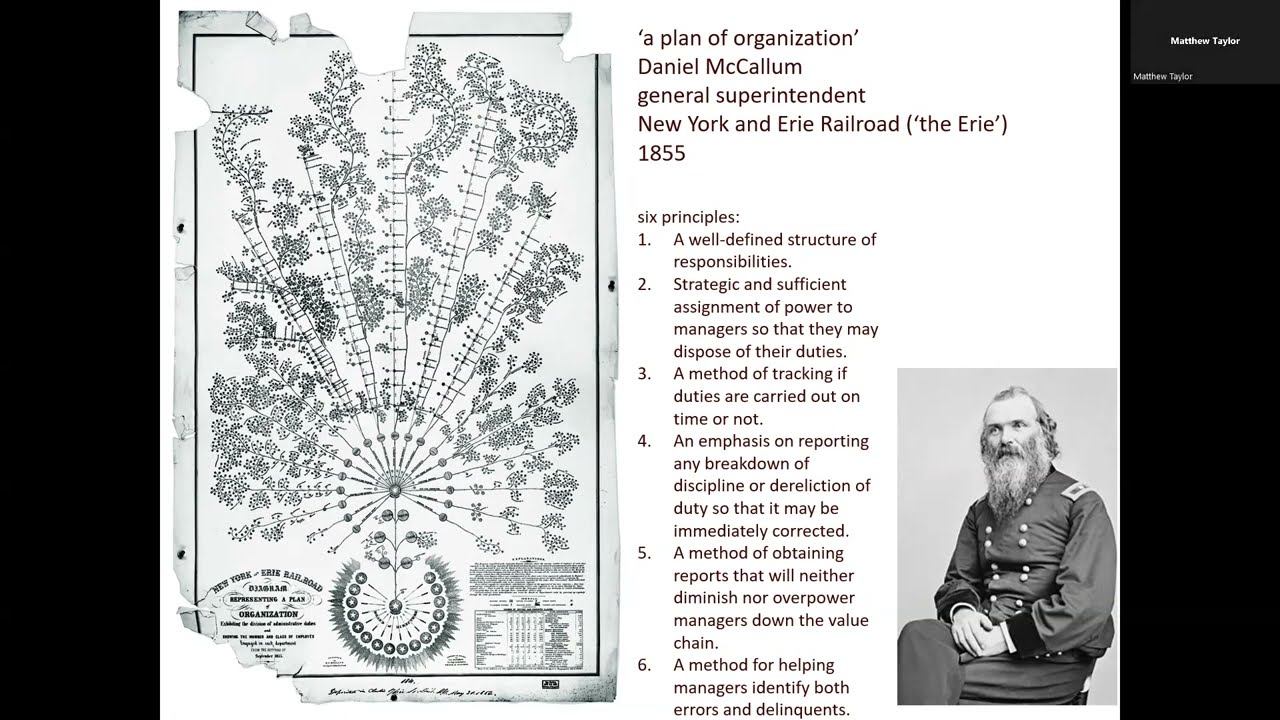
Five core practices for effective organisation - Benjamin Taylor | Stretch Conference 2022
Ep36: A wholeheartdly work Is Crucial To Your Business. Learn Why! Benjamin Taylor - CX RedQuadrant