Benjamin Taylor - RedQuadrant

In this interview, Benjamin P. Taylor, founder and CEO of Red Quadrant, discusses his personal journey into public‑service consulting, the origins and philosophy of Red Quadrant, and how the firm operates as a network of independent experts rather than a traditional partnership model. He explains how the business secures work through a mix of competitive tenders, follow‑on contracts, and warm leads, noting the increasingly limited competitive tendering in UK public‑sector procurement. Taylor describes the firm’s use of AI tools such as ChatGPT and Copilot as a ‘thinking partner’ for drafting notes and tender content, while cautioning about its limitations. He highlights recent achievements, especially Red Quadrant’s involvement in the major English local‑government reorganisation (the shift from two‑tier to unitary authorities) and the development of the LGR Hub, a framework to manage the complexity of mergers and de‑mergers. The conversation also covers the Public Service Transformation Academy, a social‑enterprise offering leadership development, and the challenge of maintaining community among alumni. Taylor touches on international work, noting limited but valuable experiences in Australia and Ireland. Throughout, he emphasizes a mission to act as a critical friend to public organisations, aiming to improve services while ultimately ‘doing themselves out of a job.’
Chapters
So today we have as our guest Benjamin Taylor with Red Quadrant. He's the CEO and founder of the organization. They offer a wide range of expertise in terms of organizational development, strategy, leadership, sustainable delivery. They've been recognized as a leading management consultant by the Times UK, the Financial Times UK. And Benjamin himself is spearheading pretty much majority of the key topic areas that you work with, the adult social care services and criminal justice, learning and organization development, human resources, and commissioning. I was also curious, and we'll probably get into it a little bit, is about your LGR Hub, which sounded like a kind of an interesting new development, and just probably hear more a little bit about that.
Great. I'm very keen to talk about that.
Absolutely. Fantastic. Fantastic. So I just wanted to start off kind of like how, what your story is and how you arrived at, you know, creating Red Quadrant.
Well, I guess I'm kind of fascinated by 3 things approaching a special interest if I was on the spectrum. Public services, which are really complex, interesting, important, you know, have a huge impact on people's lives, and services in general. I'm, you know, interested in service organizations and businesses of all kinds, and consulting and facilitation and doing change in organisations and the way people relate together, and systems complexity and cybernetics. So I started— well, I worked in a charity, I worked in the private sector, but my first kind of big job was in local government in London, a very frontline job where I got to do some real transformational change, which started to kind of get me hooked in a very small sphere, as I had done in the charity as well, actually. And the I got a job as the advisor to the leader of the council, who then became the mayor, who then became the leader again as we went through some bewildering local government reorganizations, which is kind of a recurring theme. And I got to do some really interesting stuff there, overview of a sort of £200 million organization working on some quite big change initiatives and the annual budget and working quite closely with politicians. And then as e-government manager for a while and bringing in a big strategic partner, a consultancy/IT firm firm where it actually really worked. And out of that, I ended up working, getting a job at PwC in the government and public sector practice at the time. And then I went to a bit of Capita, a business process outsourcer, where I had the opportunity to start a new practice really in organisational change in public services. But all that time I'd been having conversations with a really good friend of mine, Dennis Verne, who had come in as the programme manager with that big firm, well, small at the time but now a big firm that we'd brought in to Hammersmith and Fulham, to the council I was working at, and we'd been really passionate about change and talking about change approaches, and as I started to get into systems thinking and the like, and we wanted to set up— we spent about a year meeting up about once a week and working ourselves up to find a way to go into business together. And initially with another partner, but that ended, that ended very quickly just before we, just before we launched. We got to work with him later, a great guy, but he, he, me and Dennis were very much 50/50 kind of all in, and he was already an experienced contractor, so he wanted something a little bit different. So yeah, me and Dennis set up way back in 2009 with perfect timing. I had worked for this business process outsourcer, but I'd worked in a bit of the business that was closely associated with treasury management, with banking. So I'd been hearing about this credit crunch in the overnight swaps market, which turned into the global financial collapse. So we set up Red Quadrant as a consultancy with some radical ideas. We wanted to be— we were Uber for consulting before Uber existed, I think. We were going to do agile, delivery of change, and we were going to change public services and change consultancy. So just small goals, and we came straight into— within our first year of getting set up, we had an election, we had a government that was brought in that was very strong on the austerity agenda, and it's been austerity ever since, along with a few opportunities to do kind of radical and interesting things that Fortunately, as well. So that's kind of, you know, a lot of the story up till date. Yeah. It's been, as my Indian friends say, it's been really challenging, really interesting, loads of opportunities to grow and learn. But it seemed, since I found each of those interests fairly natural to me, and it's a problem because as one of the people who worked with us in the early days and we tried to rope into more of a leadership role, he said, you know, Benjamin, The thing is, my job is not also my hobby, so it can be a real risk when your job is also the thing that you're fascinated with and your hobby, if you see what I mean. And I've fallen foul of that more than once.
Now, you know, my sense is that you have a lot of success in terms of, you know, being a catalyst for change and helping organizations and so forth. But as a business, as a, in a sense, it's a business too. It's not just the hobby.
In a sense it is.
How do you, how do you manage that? And do you, you know, what are your, do you feel like you have any challenges in that area or is it something that you've found a way to balance that, the whole thing between the, you know, the public sector and the private, you know? It's a real challenge.
Yeah, and I think we have found a balance. I mean, the really interesting thing is, I was just thinking as I was on the beach with the dog, I used to be a part of a really great network called the Consultancy Growth Network. People who I knew and trusted who'd built businesses and sold businesses in the public sector that were decent, you know, were ethical, were good, and so on. And I can still recommend that network, but it wasn't really for me Because one of the real big challenges for us is anytime you want to go and look at what makes a really successful consultancy business, particularly one that's saleable, that's exitable, most of the advice is, well, I wouldn't start from where you are. So we know and have accepted a number of times along the way, but are always trying to find ways to really make it fly that, you know, we're too passionate about, you know, real consulting. We don't like doing the same thing again. We are very committed to a network model. We have less— we have almost zero turnover during projects in the whole 16 years of our existence and probably less turnover in our overall personnel than, you know, the employed model consultancies that I've been a part of. But because we're working with a network of independent experts, We don't have people with time on the bench to write bids or do other development opportunities. We don't have a big pyramid going up to a partner and so on. It's funny, Dennis, one of the things that we made a big song and dance of when we set up Red Quadrant was, well, all those other consultancies, they're really optimized for the partners. And well, the answer is yes, I guess they are. And if you're going to go into being a leader, then perhaps you do want the organization to be optimized for you. But we do really try and balance the needs of consultants and the needs of our clients. Rates are not good in the UK public services. The rate now, day rate on average, is about the same as when we started in 2009. There's been quite significant inflation since then, so we're really, you know, managed quite tightly on margins. We are quite networky and really try and bring in really great experts, give them any tools they want, and we've got loads of really great methodologies, but Generally, let them work and really engage and really ask good questions and don't go in and just try and implement, but, you know, do proper good quality consultancy.
How do you find projects? Do they come to you? How does that all show up?
We're quite deep set up to respond to tenders.
Okay.
You know, there is quite a lot of certainly when we, when we set up in 2009, a lot of real competition for, for open tenders in public services. That has got squeezed in 16 years when people have cornered the market. There've been these frameworks set up, most of which we're on, but even on the frameworks, most of the, the idea is you get, you know, a set of prequalified consultancies and then you can go out to mini competition amongst them. And you know that, you know, you, you don't, you're not asking for 100 people to bid. It's not a completely open bid, but you're getting some good bids. Even on those frameworks, 85% of it is now direct award. So we still win about a third of our work through mostly cold tenders, about a third through follow-on work and so on, where we tend to get some but not huge big delivery chunks. And then the other third is networks, and we usually have to make a bid for that, sometimes competitively, but it's a warm lead. It's people who've worked with us before, who trust us, who bring us in. So it's an interesting dynamic, but we are having to recognize that while we're set up to win a fair fight for tenders, and it's always been a bone of contention that obviously there's not that many fair fights in tendering, but there are some, or there were some, there aren't many tenders anymore. So it's actually a really interesting period where there's been a real shift in that market. Some of it is kind of quite normal and legitimate where people have developed very specialist products and become quite nichey and do quite a good job. Some of it is not so healthy for the market, in my opinion. It's certainly fascinating that I would say about 5% of the consultancy in UK public services is actually competitively tendered, and that's not a healthy situation for the country to be in, and it's not the way that UK procurement typically has worked.
Yeah.
So, you know, we're not really doorstepping people, we're not really sponsoring conferences and taking them to the pub or putting on nice meals. We're actually keeping our margins low, trying to engage people with good conversations about the work itself, and it works okay, but it's not exactly where you'd want to go if you were trying to build the most profitable consultancy, you know what I mean?
No, yeah, absolutely. You know, I'm just trying to— I was curious, like, how do you see— where do you see the pathway in the future just to keep yourself and the company and Red Quadrants, you know, relevant and sort of engaged in being able to do really good public work that you do, you know, like the work that you're doing now? But what other ways are you thinking about to To add more consultancy work, perhaps, you know, and from other, you know—
Yeah, I mean, we, we work best, and this has been something which we, we tend to have one or two happening at the moment, where we're really kind of working as an informal and fairly long-term strategic partner to an organization. So we've done this with quite a number of organisations over time, because what we can offer people is a really good critical friend and really strategic advice to leaders and so on, and a rare mix of strategic consultancy projects if they want a business case, a merger of 2 bits of the organisation, you know, strategic decision-making and review of opportunities in particular areas, We can put in people for implementation. We don't do interim managers, but we do change people, projects, program change, all that kind of stuff. But most importantly, in a way, we do a lot of development. We can do from senior leadership development through to skills and capabilities for transformation. One of the little marketing things we did when we set up was we ran a campaign against consultancy where we pretty quickly admitted we were consultants, but The job of consultants, I think, just like the job of public services, is to really try and do yourself out of a job, and you've succeeded if people don't need you anymore. Ironically, of course, we work best when we work for 3, 4, 5, 6 years in partnership with an organization where they bring in other specialist consultants as and when they're needed, or if they need bulk people for a project, they might go to one of the big agencies that just runs AI over a load of CVs, but they keep coming back to us because they trust us, and we get to know the organisation, and we've helped develop people, and we can shadow and second people into our teams. So I'm hoping for more of that. Mm-hmm. And what we really need to be better at, and we're trying, and we're going to be focused on, is we've developed so many people over the years. We run a social enterprise, the Public Service Transformation Academy, that runs some really significant leadership development offers across public services. We're not really good at keeping in touch and bringing those people back together and creating communities of practice where we can be inputting and sharing and learning, but we keep those relationships much more alive, so we're more front of mind when people need help and need consultancy. So that's definitely going to be a priority.
That sounds really good. So you have a lot of different avenues to, you know, kind of take your business and your organization to, you know, the next level. Yeah, absolutely. How do you see, uh, is there anything that in terms of technological advances that you use within your organization, or are you—
Well, yeah, we're making a lot of use of, of AI as a kind of thinking partner. It's really risky if you don't really treat it as kind of bright but stupid intern and check everything. And it's going to be really interesting, the implications all around. But one of the things for me is that it doesn't really have a concept of building on frameworks unless you really strictly direct it. So almost everything it creates is a new iteration. if you're not careful. So it's not very good at mutually exclusive, collectively exhaustive categories. It's quite likely if you're trying to get it to do a first draft of some workshop notes to make the same point in 3 or 4 places. That's even after you've got it to stop doing all of the sort of Sirius Cybernetics Corporation. This was a great, you know, over-the-top marketing language. But I think we're getting quite good at
Oh,
good. Writing up notes, first drafts of notes. It's really useful for tenders specifically where you want to extend paragraphs with adding extra points, but you want it to help you to add them in. Or more likely, because we're always up against word counts, where you want to turn paragraphs into bullet points and/or lose a few words to fit within the word count and so on. So we're very much using AI as a partner And that's a little bit of Copilot and a little bit of ChatGPT. Unfortunately, for security reasons, we have to be a Microsoft site, but I'm deeply unimpressed by kind of everything that Microsoft does, including Copilot, even though it uses ChatGPT. But actually, the projects feature in ChatGPT where you can load a bunch of files in and deeply reference them in engaging something is quite useful for building pictures and feedback. And then unfortunately, some of our clients have really strict security requirements, so we can't even do that, even though we've got quite secure systems and all of the feedback on training turned off. Yeah, sometimes it just doesn't wash, unfortunately. We haven't— because we're a consultancy that seeks to deal with human-complete problems, with problems where the framing needs to be checked and challenged and real expertise needs to be applied, but not in a way where we're coming in with a blueprint and telling people what to do. So in terms of developing kind of deep models and using deep learning and AI to generate things, it's a little bit useful in terms of bringing methodologies to bear and checking you haven't missed anything with different framings and different ways of thinking. Our business is not at the moment susceptible to real automation. So I suppose that's a good thing in the long term. But we're not really able to make a big play on the on the AI front as far as I can see.
Okay, I was just curious. And, and what do you say in this year, this past year, what, what accomplishments do you feel like have been the most significant and stand out for you, for you and your organization? Well,
it's really good, um, that we are, um, really deeply involved in, um, local government reorganization, uh, here in the UK, which has been running for almost a year now and has another, well, 3 years in some ways still to run. That is given we were founded in local government and it's always been sort of 50% or a bit more of our work. This is the biggest shift in English local government in a generation. The details are quite boring and technical in a way, but basically where we had 2 tiers, a larger county council and smaller districts and borough councils, they're going to be merged and demerged into unitaries. I wouldn't have done it this way, I wouldn't have done it at this time. We're dealing with an exhausted, drained sector continually suffering from austerity, from the hangover from COVID in which it played a major role, from all the damage inflicted by Brexit, and from the global financial crisis still. But, and, you know, it's a change, it's a big shake-up. There's many ways in which the sector does need a big shake-up, and we're really being able to engage and help people with the current processes, which is putting forward proposals for how best to do that rearrangement, those mergers and demergers. And we've just got this LGR Hub offer out where we've been thinking quite deeply, thinking through the complexity of how to actually do the transition. You know, most mergers and acquisitions really, really don't fail— don't succeed, sorry. We've probably all had some quite interesting experiences in our career of different aspects of that, but we've got some really great experienced people who really understand, you know, what they're talking about, and we've put it all together to try and give people real assurance and a framework that can deal with all of that complexity, that can allow them to do governance across multiple organisations and bring multiple organisations together. So I'm really hopeful that we'll still be involved in the next stage, which is the pulling everything together once the new forms have been decided.
Mm-hmm.
You know, even as I say that, I'm aware that's not super exciting to people outside the sector. And it shouldn't be because it's a rearranging the deck chairs. You know, what I'm really excited about is relational public services where you're actually really engaging and listening to citizens, much more place-based working, much more enabling commissioning where you're creating the conditions for people to not be disabled, to be healthy, to be engaged and supported by their family and their neighbours. And all of that, I'm afraid, there's a big risk that it will end up taking second place to reorganisation as people go through the pain of reorganisation. We're going to do our best to keep it front and centre, but there's only so much change capacity. There's probably negative change capacity at this stage, and there— and there— and again, people are being asked to run on fumes and dig deep and make these reorganisations work, create organisations with the tag is safe and legal where they can continue to run child protection services, schools, um, adult Home care and all the rest of it, and libraries and planning and transport. When I worked in London Borough of Hammersmith and Fulham, there was a national service list and we had 1,111 different customer-facing services. So it's a big complex area, there's loads of opportunities to do things better, and we're in there trying to help them.
Yeah. Wonderful. Well, that's—I mean—it's—it's—it's a noble thing you're doing, and and your company, your organization is doing. And you know, it sounds like that you know you're giving it all your effort and attention to making it you know be a lasting successful organization, and that that makes a difference in the UK and. And probably beyond. Do you work outside of the UK?
Yeah, from time to time. We've had 2 or 3 ultimately failed partnerships in Australia that we've learned a lot from. We're working in Ireland from time to time at the moment, which is really rewarding and interesting. That's really nice. And we do training and other things internationally and around the place from time to time. So we're not entirely limited the public sector, we're not entirely limited by geography, but we do tend to— I mean, that's what the majority of the people in Red Quadrant are passionate about and experienced in. I mean, the fact is that if you can do change in UK public services, you can probably do change in a lot of places. I think so.
Because it is hard.
But thank you for your kind comments. I mean, we don't deserve much of the credit compared to the people In the services, I've got to say. But I suppose, yeah, we'll all get our reward in heaven, as they say.
Exactly. No, I'm sure, you know, it is amazing work what is done in those, you know, organizations that you help. But to help facilitate so that they can operate better and, you know, provide better services and, you know, do it in a way that you know, can, you know, create change in those environments and so forth. So I think, you know, it's, it's great that you're doing this. And, uh, thank you. I'm glad we had a chance to chat. In summary, it's just kind of like, I think, I think you have a very unique and, and important role in society and in, in, uh, you know, the UK and so forth especially. And, uh, I'm glad that, uh, That you've taken your talents and been able to use it in a way that, you know, can make a difference and so forth.
Thanks. No, I appreciate that.
That's nice to hear. Thank you very much for being on. And if, you know, down the road, it'd be interesting to see where your organization, you know, evolves to.
Yeah.
Keep an eye on that.
Thanks a lot.
I appreciate it. Thank you. And thanks for the opportunity.
It's been fun. Cheers.
Okay, bye-bye.
More from Benjamin

How to Transform Public Sector Organisations Through Systems Thinking With Benjamin P. Taylor
Cybernetics is not the banana, part 2 — Benjamin P Taylor with Laksh Raghavan (2025)

Cybernetics is not the banana, part 1 — Benjamin P Taylor with Laksh Raghavan (2025)
04 | Culture, Clarity & Conversations: Leading in Uncertain Times with Benjamin P. Taylor

The Key To High-Performing Teams Based On Trust – Benjamin Taylor | Compass Tech Summit 2023

Benjamin Taylor - Jan 2021 - SCiO Open Event - The 'Four Quadrants' of Thinking Threats
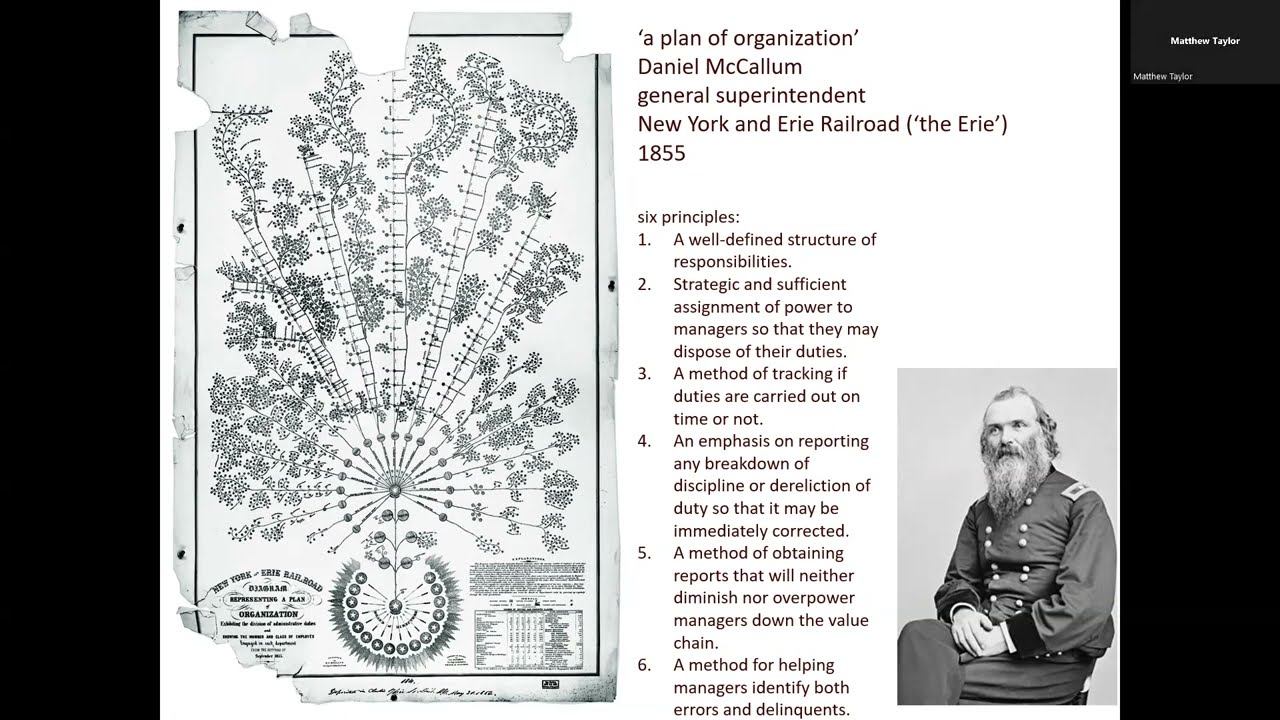
Five core practices for effective organisation - Benjamin Taylor | Stretch Conference 2022

Ep36: A wholeheartdly work Is Crucial To Your Business. Learn Why! Benjamin Taylor - CX RedQuadrant