Ep36: A wholeheartdly work Is Crucial To Your Business. Learn Why! Benjamin Taylor - CX RedQuadrant
In this Values and Leadership Podcast episode, host Ahmed Aref interviews Benjamin P. Taylor, Managing Director of Red Quadrant and leader in public‑service transformation, to explore how systems thinking, cybernetics, and complexity can reshape leadership and organizational development. Taylor explains that systems thinking pushes leaders to look beyond surface‑level symptoms to underlying motivations, structures, and emergent properties, fostering humility and a sense that control is limited. He discusses how incentives—especially short‑term financial targets—shape behavior and offers practical ways leaders can balance short‑term performance with long‑term innovation, emphasizing strategic framing, credibility building, and the risk of “brick‑wall” conflicts when theory meets reality. The conversation introduces the Beyond Budgeting movement as a concrete example of challenging traditional budgeting’s single‑metric control, highlighting its intent to free organizations from outdated forecasting cycles. Taylor outlines five key practices he promotes: (1) clear, stakeholder‑oriented intent, (2) culture measured through discretionary effort, psychological safety, and commitment, (3) honest conversations, (4) role‑relationship‑task clarity, and (5) continuous learning. He describes the Systems and Complexity in Organisation (SCIO) competency framework as a self‑ and peer‑assessment tool for measuring systems‑practice skills, linking capability development to bottom‑line results. The dialogue also touches on adult development, noting that people from extractive industries, engineers, and those who have experienced personal life changes can become effective systems thinkers. Throughout, Taylor stresses the need for rigor, empathy, and sustained practice to embed new mindsets, positioning the work as an evolutionary, not revolutionary, shift toward more humane, sustainable business performance.
Chapters
You're listening to the Values and Leadership Podcast, where business leaders share their stories of purposeful impact and success.
Hello, and welcome to the Values and Leadership Podcast, the podcast for innovative leaders who want to apply new ways of doing things in work, and deploy their talents and time to earn their legacy every day. I am your host, Ahmed Aref. This episode is the production of CorpoCure, a values-based leadership development advisory firm that unleashes possibilities for leaders in elevating their business and its people to their next best stage, and have a purposeful impact in business and in life. Today, we have a special guest from the UK. We have Benjamin Taylor. Welcome to the show, Benjamin.
Hi, Ahmed, it's fantastic to be here.
Great, great. Thank you for accepting the invitation today. It's very— I'm honored to have you today in the show. I really like and admire the work, the excellent work that you are doing. You're doing a lot of great things. Currently, I think you are the Managing Director at Red Quadrant, and at the same time, you are the Chief Executive of the Public Service Transformation Academy, and a faculty member of Good Governance Institute, and a speaker and core team member of Requisite Agility, and the moderator and contributor to the Systems of Community and Inquiry. Maybe I'm missing something, but this is what—
That's enough jobs, that's fine. Yeah, I like to keep myself busy. I'm interested in all of those things, and really, you know, systems thinking, complexity, cybernetics, but all in the service of real organizational development, and I think the kind of things that you're also interested in, Ahmed.
Yeah, great, great. System thinking is a new way of— I mean, new branch, I mean, in science or in modern theory. So how system thinking can help leaders be better people, and how it can enhance the corporate process, the company process, how can it help people in general, how would it help customers?
Oh, that's a really big question, that's great. I mean, there are— systems thinking is a big field, and I, you know, include cybernetics and complexity across that field, so there's loads I could say, but I guess probably 2 or 3 things I want to say is, you know, at one level, It's about trying to look for deeper patterns and trying to understand things not only at the surface level, but at the level of motivations, structures, paradigms, and how things are really shaped before they become visible underneath the surface. Why things are happening, why there are repetition, understanding that things emerge that are not the properties of any individual. Individual or any part of the system, but the properties of the whole. If you take that seriously, you start to realize that there are infinitely many ways of looking at any given situation, and that you are part of the analysis that you are doing. There's no such thing as true, perfect objectivity. You're part of the system that you're in if you're in an organization. but you're certainly part of the analysis that you're doing. And I think that can give us, Ahmed, a real sense of humility, of not knowing what— however grand our position is in life or in an organization, we're not actually in control. We are part of the flow of things. We're part of a much bigger overall system. But just the way we think about things can give us that bit more influence, power, engagement, way of shaping and working with the system. So, you know, we could go down lots of angles, but that gives you some different perspectives on systems thinking, hopefully.
Great, you mentioned really great things. You are talking about the motivation of people going— systems thinking helps into try looking into deeper level, like motivation, like how things are shaped even before emerging, and you mentioned that we are being part of the flow. So does this mean that sometimes we think we are in control of our decision while really we are not in control? Does this what it means?
Always, you can look at anybody's actions as being completely in control or completely not in control or somewhere in between. There was a great I think it was by Andrew Yang, who was a presidential candidate in the US for a little while, or preliminary candidate for the Democrats. He came up with this phrase, which is really debatable, but great grounds for debate, when he said, I try to never blame somebody for responding to the incentives of the situation that they're in. And I think that shows some of the insight and some of the humility of systems thinking, that there's a really open question. If somebody does something evil, does absolve them because they're responding to the incentives that they've been raised with in the system they're in? I, you know, we could, we could talk about that all, all night, but that is a way of showing that we're always, um, subject to certain incentives in the situation we're in. We've got a certain framing that we will naturally fall into as a result of our upbringing, our culture, our DNA, um, our personalities. Mm-hmm. So yes, I think it's fair to say that we're in control much less than we think, if we think we ever have perfect control, that we are always being shaped and we're always shaping the system around us. And actually, just, just holding on to that— how am I being shaped and how am I shaping— those are really great ways into powerful conversations. And this might sound a bit philosophical, but it's really practical in organizational life. You know, how does the behavior of a leader shape the way everybody else behaves? How do our expectations, like in a crisis, the expectation of having to have all the answers, how does that shape the way we respond?
Great. Let's say I'm a leader, and I understand what you are saying now. And I think there are some incentives in the system, let's say the quarterly reporting, which is always saying I have to make financial performance better than the previous quarter. And the same quarter, harder prior year, so I have to do my best to get more money, that's it, and this is my ultimate thing, so this is what the system rewards. How can I change this kind of my mentality, and my decision, and my behaviors to act differently, while this is the only way that I will be rewarded?
That's a very good question, I think even just framing it in that way, takes you a good step beyond what most people are thinking about and gives you options. So I don't necessarily, you know, the answer will depend on the context, that's a good systems thinking answer for you, but just based on what you just said there, your own analysis, your own framing, you can, you know, be strategic in what you do when you see those incentives. So you could say, Okay, well, I'm going to play the game as much as necessary and, you know, keep looking at the short-term returns, but I'm going to reserve some space over here to build some longer-term thinking and actually free up a bit of the organization to innovate, to think longer term, to think about longer impacts. And when that's ready and bubbling up and actually offering something powerful, then we can bring it into the mainstream. You might say, I'm going to build loads and loads of credibility, maybe I'm going to have 18 months of just driving and showing that we can really perform. And with that credibility, I'm going to go to the board and the stakeholders and the shareholders. And I'm going to say, you know what, we've done great. We can play this game. But there's a better game that we could play, which is for 18 months, let us ignore the short-term indicators and build, sow the seeds underground. Metaphors are a really powerful way of getting this point across. Build some deeper foundations that take a bit longer that will allow us to grow you know, faster, more effectively achieve whatever goals we're trying to achieve. So those are, those are 2, you know, obvious tactics that you could do when responding to that kind of short-term incentive. What does often happen, I have to say, when people somehow open their eyes or have their eyes open to these kind of things, well, the most common thing is that people are not skillful at first. Everything, we're not skillful. And lots and lots of people do these amazing deep systems thinking academic courses, and they then go running out and proclaiming to the world there's a better way and we're going to do it differently, and just smack into a brick wall of just not being able to deal with the, the conflict between that bigger picture and the kind of short-term constraints you're talking about. And there is a small proportion of people because all power that I've ever understood can be used for evil as well as for good, who will take a kind of systems thinking perspective and use it to manipulate, use it for their own gain, use it for their own focus. So we mustn't forget about those people who I'm sure are also responding to different incentives and upbringing and wiring and all kinds of things. I think I've lost track of your question, but I hope that covers some of the territory.
طيب، can you give an example of people who use the system thinking in the right way that you that you think؟
Oh, that's always a really difficult question because as soon as I as soon as as soon as I name somebody then then they're going to probably get into trouble.
You can see the situation without the name if you think the name would be well.
I mean one one you know one example since we've just been talking about short-term financial reporting incentives. One really nice practical movement that I think has the power to make a bit of change, just suggests itself, is the Beyond Budgeting movement. So that's a way of saying that actually what we're trying to do with this whole concept of setting an annual budget is we're trying to get one indicator, one figure, spend against budget, you know, budget limits, to help us with 3 or 4 different organisational tasks, to provide an incentive for 3 or 4 different things, right? So we're trying to institute fiscal control with a budget, we're trying to make sure we don't overspend, spend money we don't have, we can't afford, we don't want to spend. And we're also trying to resource to target, to achieve, you know, we know there's going to be a certain amount of resource needed to achieve the things we want to achieve. And thirdly, We're also trying to resource to prediction because we've got a prediction about what will go on, how much we will do. And those are 3 very different things. Mm-hmm. And we're trying to achieve them all with a single number. And by the way, we're trying to do that through a process that takes the good part of a year to plan, is immediately out of date before it's even started, that has concertina forecasting where at the end of the financial year you're forecasting a week or a month in ahead, but the next week you're forecasting 12 months ahead. Well, Where's the logic in that? And that probably takes 12 months to close at the end of the year anyway. So there are better ways of doing that. Beyond Budgeting, they're not perfect. I tried to open an account with one of the banks that does Beyond Budgeting and it didn't work for us. But there's some great organisations there really trying to do stuff. So that's a nice example of a movement which is out there, if you see what I mean?
Beyond Budgeting movement, I think. Beyond Budgeting. Yeah, Beyond Budgeting. Yeah, this is, I think, yeah, this is one of the— budgeting is nice as a control thing, but sometimes it can limit, it can make, it can be a limitation to our motivation, it can be a limitation to achieving a bigger purpose or something. So I think, yeah, the term itself, Beyond Budgeting, it's something that attracts attention. What are you trying to do? Are you trying to change the old way? Are you— what are you aiming for? So maybe it seems for some as a threatening thing. So how can you sweeten this kind of offering?
You draw attention, you know, as you've mentioned, systems thinking, this kind of thinking, this kind of approach is always something new. And I don't say that all change is resisted, but it has implications. There are winners and losers, there are implications, and there's definitely uncertainty. And just as I said before, people come out of deep systems thinking courses and then have to reconcile the reality of living in a world that's wired in a different way from all the stuff they they've learned and they want to do. So many people come under the sway of movements, maybe even beyond budgeting, or approaches to organisational change, where the marketing, the way of getting advocates, getting converts to what can quickly become a little bit cult-like, is to say everything everybody's doing in traditional management is wrong and they're all idiots. And you now, because you've seen the light, you have the way of doing things. So there's been an unfortunate tendency, because it's another incentive thing, it really works to grab attention and to brand and to get profile and to get prestige, to set up these kind of ways of doing things. Let's not just talk about systems thinking, you know, bringing family and social values into work is something that everybody can pay face value too, because nobody's going to say that's a bad thing. But it's really easy for us to fall into the trap of saying, this is new and radical and different, and you've got to change your ways. And that turns out to be a really bad way of selling things. So what I say is there's no need to call it systems thinking, certainly not cybernetics and complexity. Those words are scary. What you really want to do is actually get people into the doing and thinking and opening up of new possibilities.
Yeah.
But you've got to do it with a real rigour. You've got, I suppose, the other side of things. Sometimes people come into this kind of change to systems thinking approaches with that marketing, with that polarisation, with that this is right and everything else is wrong. Other times people come in with a very wishy-washy attitude. Well, we're going to do this and we're going to open up our thinking and we're going to conceptualise and this will change the world. Well, you know, you still need rigour, you still need discipline, you still need analysis as well as the kind of synthesis and broader thinking that systems thinking often focuses on, because the world has a lot of analysis and very little synthesis. So I think the people who introduced this best are the ones who are just good managers, who actually just have good interpersonal skills, who are able to keep an eye on multiple variables at the same time, keep people on board, listen well, engage well, and gently introduce new ways of thinking and bring other people along with them and demonstrate that they're achieving better results. So it's not something that's really so easy to want to say it's a revolution, but actually, that's why I call myself a business evolutionary. I think it's about evolution towards better ways of thinking, better ways of conceptualizing, better ways of doing things, that kind of thing.
So what do you think the most success that you have achieved so far?
Oh goodness me. Yeah, you know what I would say, Ahmed, is that I think my biggest success has been, um, uh, showing people that they've got this insight themselves. It's actually the— it's actually the development of the people. Um, Mm-hmm. We've had some— we've had some great organizational successes. We've had to help people to, you know, set really effective strategies to restructure their operations. We do a lot of leadership and organizational development. But the real results is the changed people in the organization. And the biggest reward of all is when we kind of, you know, you give somebody that little extra spark of fire that they've already got within themselves, but they realize it and they start to think creatively and they start to really put the thinking into practice. And that's incredibly rewarding. But the greatest success is when you hear about them teaching other people and you realize you've got that real generational sustainability of just a different type of thinking going on through the organizations, if that makes sense.
Great, great. So development of the people, and when people do change in their organization, and they think creatively, and the greater success is when they teach others. So you ensure that there is a sustainability of the knowledge that you have given to others, and there will be a continuous effect. So how can you measure this kind of effect?
Yeah, it's really difficult. I mean, there is now— we've spent a lot of work over the last few years at SCIO, Systems and Complexity in Organisation, if I can give a little plug. It's the practitioner body for systems thinking, it's a not-for-profit, it's systemspractice.org, and if you look in there under profession and career, we've created a systems thinking in practice competency framework, or rather a systems practice competency framework, and you can do this. It's designed as self-assessment, designed as peer assessment. We don't want to be, you know, a great big certifying body and create one of those industries that we see so much of in agile and in other spaces. That is our best attempt so far to help people to see where they've developed systems practice competencies and skills and approaches. And what I like about that is it's about systems knowledge and skills, systems thinking, but it's also about intervention skills. So it's about practicalities, not just the great big theories— Viable Systems Model, one of my favourites, Soft Systems Methodology, Systems Dynamics, and so on. the sort of technical skills, the application of systems laws. But actually, yeah, you know that, fantastic, because so many people don't. But can you also run a workshop? Can you also really engage with stakeholders? Are you actually a good listener and a good presenter of your ideas? So that's the way that we tend to measure it these days, that and similar frameworks. That's really testing the embedding of the capabilities. Otherwise, it's really looking at the bottom line. You might measure the bottom line in a slightly subtler and kind of different way, if you see what I mean. But I would say that as well as the capability development of the people, it's got to show through in the business results. So I would be, you know, looking to measure the business results that you're actually achieving through your changes.
Great. So it's challenging to measure the success, but it is— and you think that the best way is to monitor the bottom line because capability development should lead in the end into better results. So this can be the best way to measure?
Yeah, I would say so. Well, I mean, we talk about And I guess this is a useful thing for me to— we talk about there being 5 key practices that we try to introduce into organizations that are incredibly impactful if you can get to them. And the top 2 are the ones that you can really measure, and they're what I call self-correcting measures. So the first one is good and clear intent. Are we actually clear about our intent as an organization, and are we actually meeting our intent in terms of the stakeholders in the world that we affect? Are they actually reporting that we are making a difference? So it's not an absolute financial return, it's the satisfaction of the stockholders. It's not quarterly returns, it's are we actually doing well in our market? The second one is culture. Are we actively measuring and getting a return from our culture, which is that people are willingly putting in the discretionary effort? They actually want to do the work for the organisation wholeheartedly with their whole self and spirit, and you can measure that in terms of psychological safety, in terms of commitment, and in terms of results. You only get to those 2 real big impact measures if you also do the 3 basic practices, which is honest conversations, clarity practices of roles, relationships, tasks, etc., and learning practices, building ongoing learning as an organization.
Great. I like these 5 practices that you are trying to— 5 key practices that you are trying to introduce. The first one is to have a strategic intent beyond the financial performance, to measure the satisfaction of the stakeholders. Second one, it was about thinking about the psychological safety. Yes, culture. Discretionary efforts, which is very important and something that you can measure. So I think this is more— this can be even more easy to convince management with.
Yes, yes, I think that's right. That's the selling point. The problem is that the honest conversations, the clarity practices, and the learning require you to surface things that are being kept beneath the surface.
Again.
Yeah, not brutally and not in a way that generates unnecessary conflict, but it does mean that people have to have conversations that maybe it's easier to avoid those conversations. the kind of real difficult holding each other to account, the talking about emotions that has a place in business if it's managed right. You need to make those undiscussables discussable, and you're not going to be brilliantly skillful at it at first if you're not practiced in it. So you keep practicing it, and you need a little bit of holding the space, you need a little bit of psychological safety in there, a bit of facilitation, a bit of you know, context that allows people to let things out a little bit unskillfully and realize, oh, it's okay, the world hasn't come to an end. It was okay for me to talk honestly about my experiences. And actually, that was a worthwhile, productive conversation in the end.
Yeah, I think it's great to have a conversation about things that was previously in the past thought that it is a waste of time or not important. or is not— is going to cause problems rather than positive results in the end. And when we talk about emotion, as you mentioned, and you can create psychological safety, and be better people, and get different results and better results, definitely, this is going to change the mindset of the leadership in the organization.
That's the goal, absolutely. And it's, it's not an instant process. You know, the work I do, you know, you can make a breakthrough in an operational process, you can make a breakthrough in a strategy, and that's fantastic work. But to make it really sustainable, to have that impact on the people over generations that we talked about, you've got to be willing to do practices over an extended period of time that really shift the culture and the thinking in the organization.
Great, great work. And as you said, it's long-term, long-term project. It's not a small project, and it needs to be embedded, as you mentioned, in the culture of the organization. Have you found a company that really implemented that?
Oh, again, really interesting to sort of think about examples. One of the One of the really interesting things I'll say is that we've consistently found— and maybe it's just the people who, you know, select us to work with— but we've done work with some of the most extractive and, you know, polluting, climate-damaging industries in the world, with oil and gas and with coal. Mm-hmm. And Those people obviously are not evil people. They're the normal mix of people. Those organizations where they've started to open up the conversation about how they need to adapt for the future, they see a real pressing need. Because they have deep safety cultures, the good ones, that they take really seriously, that bring in some of these requirements for real honest conversations, for mutual respect, for breaking through the hierarchy when it's needed. They can be really fruitful organisations to do this work with, and they're also able to think about doing real root and branch change. So it's been really interesting to me that some of those organisations that you from the outside might think are the most traditional, the most resistant to change, are actually good at it. And that gives me a lot of hope.
Yes, yes, I share your hope. And I really like when you mentioned that some companies from the extractive industries, which is normally known for getting the benefit till the last drop, or till the last piece of coal, we should get the maximum profit out of it. So when this kind of mentality, I mean, I mean, they embrace different mentality, they have real honest conversation, and they start to have new practices into effect and get different results. So definitely this is something hopeful. Yes.
And if I can add a word to that, what that makes me realize, there's a whole strand of this is about adult development. It's about developing ourselves as people with broader thinking capabilities. And I do see that happening, you know, gently, Unevenly spread, but but all across the world. And and one of the one of the great joys of this Ahmed is that um it's people who have a big shift of perspective in their lives, who have a possibility opened up to them of doing this. Um so you know it can often be people who've moved country, as I know you yourself have. If you've lived in a truly different culture, that gives you the possibility of you know just a bit more perspective. Um engineers. People who are real hard scientists who are aware of, but who really open up to the value of, you know, the soft stuff of organisational development, of those kind of practices, they can be some of the most insightful people about this. People who were really determined to say, you know, there's no harmful side effect, well, my industry is all to the net good, who have stopped and said, yeah, maybe things need to change, maybe we need to be part of the change. It's often those people who've had a change of heart that comes from their personal life, and everybody who has been through a marriage, a divorce, everybody who's got children have had these learning opportunities too. Yeah. That's the kind of thing that can enrich our thinking and bring out the systems thinker in all of us.
Great, I like the ending message that you tried to give us now. Yeah, it's really important when you change countries, and you have different culture and have different perspective, you can be a different person even, despite that, as you mentioned, people who are hardwired into information and into numbers, they can change, even these people can change. So definitely, there is hope, definitely, people can touch again with their hearts and have different practices, different perspectives, and achieve different results in the end.
Absolutely, absolutely.
Great, great. Thank you, Benjamin. Thank you, Benjamin, for this insightful conversation, going deeper into, into our humanity, going deeper into our hearts, into our souls, and discovering new perspectives and new ways of doing things in work. Thank you very much.
Thanks, Ahmed. It was a pleasure.
Thank you.
More from Benjamin

How to Transform Public Sector Organisations Through Systems Thinking With Benjamin P. Taylor

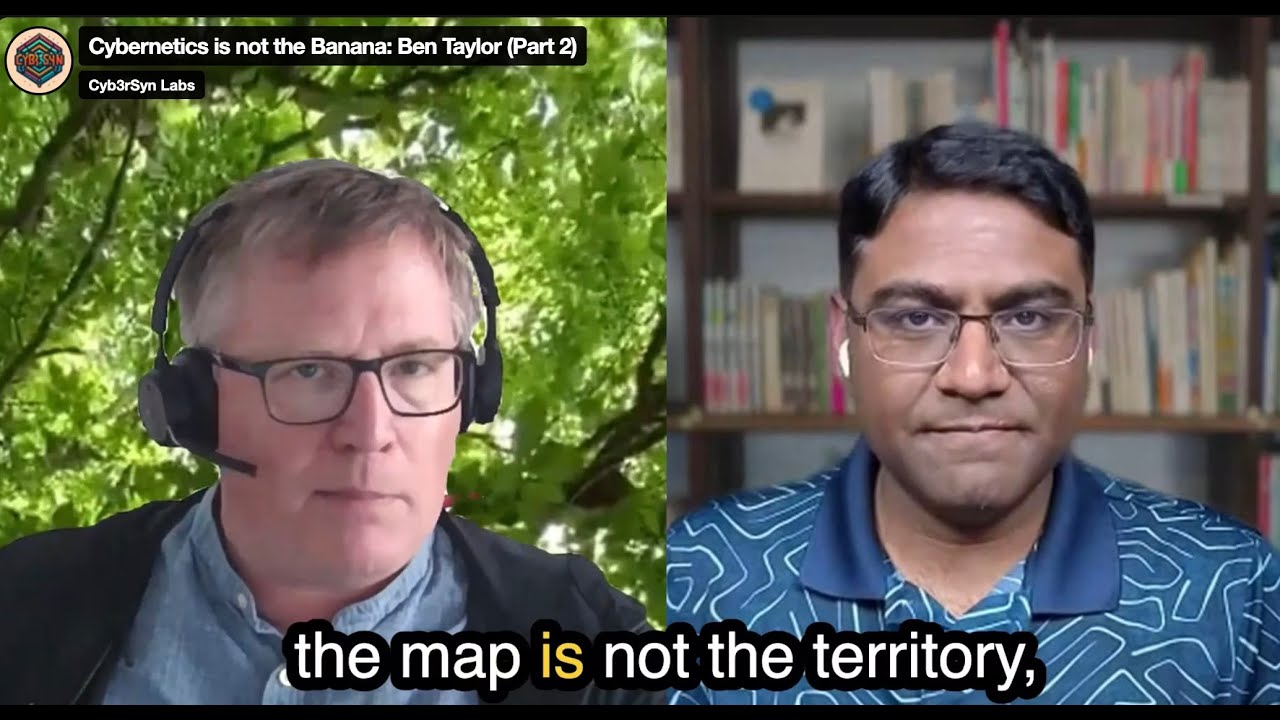
Cybernetics is not the banana, part 2 — Benjamin P Taylor with Laksh Raghavan (2025)

Cybernetics is not the banana, part 1 — Benjamin P Taylor with Laksh Raghavan (2025)
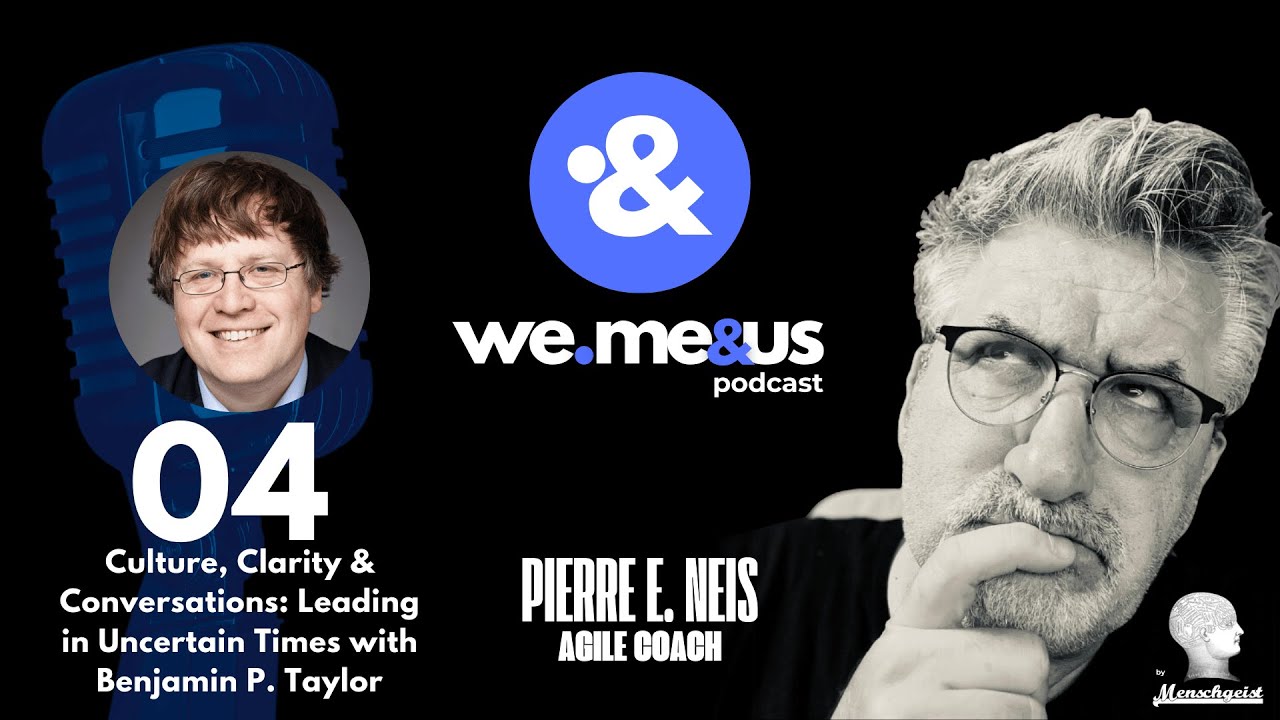
04 | Culture, Clarity & Conversations: Leading in Uncertain Times with Benjamin P. Taylor

The Key To High-Performing Teams Based On Trust – Benjamin Taylor | Compass Tech Summit 2023

Benjamin Taylor - Jan 2021 - SCiO Open Event - The 'Four Quadrants' of Thinking Threats
Five core practices for effective organisation - Benjamin Taylor | Stretch Conference 2022