The Key To High-Performing Teams Based On Trust – Benjamin Taylor | Compass Tech Summit 2023

In this closing talk at the Compass Tech Summit 2023, Benjamin P. Taylor presents his "Cadenced Culture" framework for building high‑performing, trust‑based teams. He argues that organizational success hinges on a balanced interplay of four dynamics – Segment (grouping people by expertise), Blend (connecting those groups), Empower (granting individuals autonomy), and Harmonize (aligning everyone to a shared purpose). Taylor maps these dynamics onto six fundamental human needs (uncertainty/variety vs. certainty/comfort; significance/uniqueness vs. love/connection; learning/growth vs. contribution) and shows how they correspond to organizational needs for specialization, stability, integration, and agility. He explains how to diagnose imbalances using weight maps, rhythm maps, and time‑energy analyses, and how to correct them by adjusting the intensity of each dynamic. Practical rituals and practices for each dynamic are offered – from specialist directories, communities of practice, and mentorship (Segment) to cross‑functional hackathons, town‑halls, and shared learning sessions (Blend); feedback loops, coaching, and flexible work (Empower); and company‑wide vision work, symbolic celebrations, and spatial rearrangements (Harmonize). Two brief case studies illustrate the model: a SaaS startup where siloed engineering and marketing caused mis‑alignment, remedied by cross‑functional meetings and blended rituals; and an e‑commerce platform where excessive blending led to role ambiguity, fixed by a weekly “harmony” ritual that re‑configured physical space to reflect current collaboration needs. Taylor grounds the model in systems cybernetics, citing Barry Oshry’s work on human systems and Stafford Beer’s management cybernetics, emphasizing that viable organizations must master the four dynamics. He concludes with practical advice for leaders – continuously monitor balance, involve leaders in learning spaces, avoid one‑sided focus on empowerment or segmentation, and use rituals thoughtfully. The session ends with a brief Q&A and invitation for further contact.
Chapters
And now let me introduce our last speaker. He's in the business of making the work of change fun. He's been a managing partner of Red Quadrant for over a decade and is on the board of several nonprofits. He's passionate about helping employees be the best version of themselves to create better outcomes for citizens and communities alike. The title of his talk is Cadenced Culture: The Key to High-Performing Teams Based on Trust. Please welcome Benjamin P. Taylor.
Thank you. Hi, everyone, and thank you so much for sticking with this right to the end, the graveyard shift. I want to make a confession to start off, is that I am not in tech. I was born at the right time to be kind of a digital native. I got my first computing done on a ZX81, programming in machine code, where we had 1 kilobyte of RAM to play with and a 16 kilobyte RAM extension pack that needed to be held on with Blu Tack at the back and a little bit of Vaseline on the connector just to make sure it didn't crash too many times. But the peak of my actual coding was in 1993 when I spent a year programming advanced databases in compiled Visual Basic. We had a product that actually went into the management of the Fiat supply chain. I'm not sure how proud of a boast that is from 1993. But what I do is I help organizations to be effective. And we work across sectors. I do a lot of work in public sector, which is extremely complex, but we work in, as you'll see in the case studies if I get to them in time, time, all kinds of organizations. My claim for this talk— I really wish I hadn't called it this very long, unwieldy title. It is about high-performing teams based on trust, but that makes it sound like it's another presentation about how to make teams work. My claim is that I'm going to be saying something that's probably quite original to you. And I heard some great talks over the course of the last 2 days, really some really good ones. Most of them were things that were somewhat familiar to me. And then of course Jason's last presentation, well, I said there was a strong link between what he was talking about and what I'm talking about, and you'll definitely see it as we, as we go through. So maybe it was original, this stuff, until about an hour ago to you. I'm available on the internet at antleboy.com, and for complicated reasons you can ask me about later, That's my internet name. So I am going to talk about 4 dynamics that enable high-performing organizations and teams and people, and the rituals and practices that support them. What I'm going to say is that it's all about the people at the end of the day. Whatever your structure, whatever your process, whatever your market, whatever your work is, it's the people who do the work. That is, until we achieve autonomous organizations in the next couple of months, and we'll see where we go from there. I'm going to tell you that there's a deep underlying pattern for organizational success, and that it has 4 elements: to segment people into groups for expertise, to blend them together to work coherently with other groups, to empower individuals and to bring those individuals together and harmonize them in pursuit of a bigger goal. I know it sounds a little bit like a hair product, but I'm trying to find words for really kind of core concepts here. Look, I'm talking at StretchCon. I'm going to say that this pattern, working with these 4 dynamics, brings human and organizational needs together, and that if you understand how this deep pattern works, You can use this to diagnose organizations and to fix them. That's really the important part. And you fix them with the right application of rituals and practices that make a difference to the balance of these dynamics. If there's time, I'll get into some case studies of working with these dynamics and some of the deep theory that this comes from, principally from systems cybernetics and complexity, which I just love. love and find incredibly useful for getting insight quickly into organizations. As you can see, I've been playing with Midjourney and the like, so this is going to be a highly illustrated presentation. Hope it doesn't distract, but I'll come back to this overview if I need to jump around a little bit. So I said I would say it's all about the people. Okay, fundamentally, organizations are made of people. Anybody here from Oslo? No, this is Oslo Sculpture Park. Sometimes it isn't comfortable. We have to work together. So here's my question. Please raise your hand if you've seen any of these dynamics. Have you ever seen turf warfare where functional teams know who the enemy is? It's those other bastards over there. And eventually the organization tears itself apart with an explosive energy. Put your hand up. Go on, be brave. Anybody seen any of this or a little hint of it? Okay, maybe. Everyone does everything. I set up my consultancy, Red Quadrant, in 2019. We believed in being a flat organization, no hierarchy, no managers, right? And it was exactly like this, especially when we recruited quite junior, affordable admin people. I literally had people crying, speaking to me, begging for a line manager and regular one-to-ones. And I was like, no, you don't understand, those are outdated HR practices. But actually what was happening is— this expression is probably an English one— schoolyard football, right? Wherever the ball is, all the players on the pitch are where the ball is, right? Everybody's in everybody else's business, or maybe they're not because nobody really knows what's going on. Has anybody ever seen an organization like this? Oh, a few brave people. There's tendencies to all of these things in all of our organizations. Then there's every person for themselves. Like desperate passengers leaving a sinking ship, everyone is doing their own thing regardless of anyone else or what might be needed in service of the organization. Anyone seen this tendency in any— okay, a few more hands. And finally, total groupthink. Welcome to the Borg. You'll soon be absorbed and become part of us. We're the same, we're unified, we're completely undifferentiated. Anybody seen any of this? Yes. I worked in PwC for 3 years. One of my colleagues did it much earlier, straight out of university. He was sent home for wearing a shirt with his suit and tie and shoes that was the wrong shade of blue. Okay? So these organizations do exist. PwC, great organization if you get the right people. I won't say a bad word against it, but it had a certain way of working in those days. Have you ever seen an organization which is just flat and boring with no productivity and no life? Okay? All of these are about the absence or the failure of balance of these 4 forces. dynamics. So there's a deep underlying pattern of success which we can find. It requires these 4 dynamics. This is what the 4 dynamics are. First, to segment. Straightforward. You divide people into groups based on their skills, interests, background. The point of this is to develop diverse specialized capabilities. In one world, the lawyers are very different people and want a different working environment. than the salespeople. The engineers are very different people and want a different environment than the quality assurance people. Second is to blend. Bring those separate teams together. Very symbolic, very important. Break bread together. Share knowledge, learning, and experience. Understand what you've got in common. Okay? Allow people to slightly break cover. Well, I'm a lawyer, but I kind of quite like working in a hot desk environment. Those kind of things where people can identify that they quite have overlap and connection across the teams. Empower. We talk about this a lot, don't we? Empower each person to use their unique skills, perspectives, and develop their unique talents and abilities. Very important. But we also must harmonize. Bring every individual together to work towards a common goal, unifying and aligning efforts around a shared mission, a sense of zest for meaningful purpose. So you need a zestful balance of these dynamics. When you segment, you create the silos, and you need to blend to weaken the silos at the edges, so the important communications, so the ways of working, so the accommodations to each other happen. When you empower, you also need to harmonize so that you've got the unique perspectives and talents of every individual, but they're in the service of a bigger thing, in the service of a whole. Who has seen a situation where there's a football team that's— my team, Ipswich Town, at the start of the Premier League in the UK, a long, long time ago, they won the league below the Premier League. They got into the Premier League. At Christmas, they were in 4th position, and they were in the quarterfinals of one of the European Cups. And then they signed a few star players. Right? And that unit, that team that had risen up through the ranks, started to be broken up by ego, by individuals, started to lose its synthesis. And that's a dynamic that we can see through these. So just to be clear, when one of these dynamics dominates, or in general they're out of balance, bad things happen. When segment dominates, you get that turf warfare. When blending dominates, everyone does everything. When empowerment dominates, it's every man for himself. Excuse the sexism of that expression. When harmonization dominates, it's total groupthink. Okay? So this is just one example, the simplest way, and I'm going to go deep into how these actually work and how you can work with them and adjust them. So it's the same when either one is weak. It's all about balancing them. Okay? It's all about having all 4 working in a zestful, powerful way. So once you know that this is what we need, these 4 things to be balanced, you can do an awful lot with that. First, I'm gonna talk about what I'm not offering you today and about human needs, and then we'll come back to how you use this to diagnose and to fix. What I'm not offering is a model where you pick a quadrant, right? It isn't choose one of these 4 or map your organization and know and accept that it's into one of these 4. There are cultural models like this. They're probably quite good in their way. I think they risk normalizing dysfunction in organizations, because you need that balance. This is not a prescription for a best way to work. That would be against the Agile principles, right? If anybody tells you you're doing it wrong, check, are we adapting to our context? If so, we're probably not doing it wrong. I'm not offering you an approach for teams or for organizations, because it's actually about both. It's about human organization from the personal to the team, To the subgroup, to the operating area, to the whole organization. Oh, there was another one there, I thought. That's interesting. Well, it's not made it through. Oh yeah, it's at the bottom. I'm not offering you a framework for scaling Agile, just in case you were worried. Excuse me. So how does this pattern of these 4 dynamics meet human and organizational needs? needs. I have this really nice graphic. I spent a long time thinking this through and coming up with these 6 things that human beings need, right? They need uncertainty and variety, but that has to be balanced with certainty and comfort. We need to feel significant and unique and special, but that has to be balanced with love, connection, with belonging. And we need to feel we're making a contribution to the world, but that has to be balanced with personal growth. So I spent a long time on synthesizing and reading and analyzing, and then I realized, oh God, this is the exact same thing that Tony Robbins uses, the cheesy kind of televangelist type of personal development character, right? I was slightly relieved to understand that it was originally developed by a woman called Chloe Madanes, so I give credit where credit's due. And in the full version of these slides, which you'll have available, I'll give a few more credits to where these things come from. But anyway, those are the core things that human beings seem to need to survive and thrive. So we have these needs: uncertainty and variety, but certainty and comfort, significance and uniqueness, and love, connection, and belonging, and learning and growth, contribution to value in the world. Organizations have needs too. Organizations, to survive and thrive, need to be able to do different things. They need to be able to do both legal agreements with their vendors and hard infrastructure, coding, refactoring, and everything in between. Right? And, oh, sorry. We need to also have stability. Do you remember, was it McKinsey or was it Harvard Business Review? It's kind of, these days, I think 80% of it is dross, and then every now and again there's something good. And I shared a post. I'm very active on LinkedIn and on Twitter. And I do blogs every week on this kind of topic. I shared a post where McKinsey or HBR had done an article, Agility, It Rhymes with Stability, making the point that in order to be agile, you have to have a sense of stability in your organization. And everybody kind of piled in, including Dave Snowden, if you've ever come across Dave, and was like, what the hell are you doing? Why are you saying this? This is nonsense. But actually, there is something to that. Right? In order to be agile, as we heard in the trauma-informed session, you need a deep base of confidence. You need some form of stability. Okay? We need to individuate and maximize the autonomy of the people, but we also need to integrate, feed, and support each other and moderate our behaviors in the service of the whole. Those superstars, whether they are coders or salespeople or footballers, who come in and disrupt everything and you build a system around them. Maybe it works, but very often it doesn't. Okay? So you need that balance. So it turns out that the 4 dynamics in organizational life meet these human needs. Uncertainty and variety, segmentation, give people the chance to be fully their own thing. Certainty and comfort blend them back together so they know they're able to get on with the other teams. Significance and uniqueness empower them individually. Love, connection, and belonging harmonize the whole thing together. Creating a context like this meets the needs of learning and growth individually and contribution to value in the world. And there was one of Jason's slides that almost had these 6 dynamics on it and the way that organizations work. So the 4 dynamics also meet organizational needs. I'm not going to belabor this point. Differentiate, segment, homogenize, blend. You get the idea. Okay. So there's a really deep pattern here where we're trying to meet human and organisational needs. If you want it put another way with my little nice diagram here, segmenting is this dynamic balanced over here by harmonising. Empowering is this dynamic balanced over here with blending. So this is what I'm looking for in systems and cybernetics and in consultancy, in organisational development and change and transformation, which I do. These deep, powerful things. And these are not things that you can just go and apply as a tool. Okay? Because something that you— when you segment somebody and you give them uncertainty and variety, send them out on this new prospecting team to create a new product, after a while, that's gonna become very comfortable and very boring for them. Right? So you have to pay attention to the— each of these dynamics will kind of bring about its opposite. And you just need to be sensing the dynamics fundamentally. There's no super quick guide, but these are human things. They're easy to see. Okay. So how can we use these dynamics? If we understand this deep pattern, we can use it to diagnose and to fix things in organizational life. There's a lot on this one. I'm really sorry, but it's useful, I think. So we can see what's wrong By understanding which of these dynamics are we seeming to be stuck in, overpowered in. You can look at this in terms of energy in an organization. You can also look at it in terms of time. How much time do we spend doing things that emphasize, I am my group, I am my profession, I am my task, I am an assurance tester, right? How much time do we spend focusing on the segmentation? If we do that too much, we get silos. They might even declare independence. We lose sight of the bigger picture, and teams blame each other and lose collaboration. But if we do it too little, we don't have enough expertise, right? We're too generalized. We're unable to bring that deep expertise to bear. And if it's imbalanced, if the segmenting is stronger than blending, even good blending, even if you bring all your separate teams in your organization together, Like bringing school kids to the disco, they're all going to stand in their own corners with their arms folded just looking at the other groups over the other side of the conference hall. You get the idea. How much time do we spend in blending? Thinking about, yes, I'm an expert, I'm a coder or I'm a lawyer or I'm a financial analyst, whatever it may be, but I dance well with the other groups. I'm one of these people who can get on in all of these different cultures in our organization. If you do too much of that, you lose the unique perspectives of the parts. You get too much focus on boring consensus, right? You limit innovation and risk-taking. But if you do too little, you lose the ability to share, to communicate, to have a sense of community and belonging. You lose your innovation capability. You fragment. And if blend is overpowering segmenting, then you're always going to be stuck in that loop of consensus. Consensual decision-making. How much do we spend emphasizing the identity, I'm me, I'm special, right? I'm the main character. If we do too much of that, we'll end up with people focusing on individual goals at the expense of what we're trying to achieve as a team, as a group, as a directorate, as an organization. We'll end up with conflict and lack of trust and respect. But too little time, lack of initiative, low satisfaction, people not empowered to actually go and take the risks they need to take, make decisions. If power overpowers harmonization, you're still going to have destructive behavior from individuals. And finally, how much time do we spend thinking, I'm part of something bigger, right? If we spend too much time, we get groupthink, conformity, suppression of dissent. Remember all those talks about what an inspiring, incredible mission statement all of the organizations that have caused the biggest ethical disasters in our world over the last few years had. In not enough time, we get lack of alignment, a fragmented culture, and no sense of having an overall purpose or direction. And if harmonize is too strong, even strong empowerment can't overcome this numbing focus on group harmony. So to diagnose this, you need to get in there and really understand these dynamics, and we recommend multiple forms of diagnosis and engagement with the organization. How do you fix? Once you understand where our weighting, where our balance is out, well, it's pretty straightforward. If there's too little of one dynamic in one place or in one part of the organization, you bring in more. If there's too much of a dynamic, you reduce it a little bit. If there's an imbalance, you balance it with the opposite dynamic. And if you get to the advanced level, the diagonal dynamic also has an impact. That blending of bringing teams together and getting on well with each other can undermine individual empowerment if you overemphasize it, if it becomes the focus of identity. The segmenting, separating people out to go and be with your colleagues who will challenge your superpowers and use them and be brilliant as a team, can get overpowered if you spend too much time on the harmonization and we're all in the service of the bigger goal, because that becomes the focus that draws you away from your specialism and your segmentation. And the up-down relationship is also important and needs to be balanced, but we haven't got infinite time today, so I will move forwards. There is a deeper pattern going on here where those on the left represent dynamics of power. Right? Of getting out there, empowering individuals, giving specialists their head, getting it out in the world. And those on the right represent love. More at home, more focusing on the internal, more our dynamics of working together. And of course, it was Martin Luther King who memorably spoke about power on its own being useless and love on its own being useless, or anemic was the word that he used at the time. Those at the top are more about looking at the whole picture of the organization. Those at the bottom are more looking at the parts or even the individuals. Okay, so there's a lot you can think about from this, but this is just the start. How do we use this then? Right? So be really clear. Running a great big town hall event that says we're all going to unify around this big vision to change society, for some people will be seen as very much a blending experience, but for others it will feel very different. They'll take something different out of it, right? They might take, oh, they're talking about me, I'm the superstar, I'll use my expert skills to deliver this for everybody else. So you can talk about this openly with teams and organizations as well. People pick up on this. They will start to use those words and You can get people to take a diary. Well, we'll talk about that in a minute. Often for a quick engagement, we use what we call weight maps. I'm not sharing these maps. That's the proprietary bit of the material, which we don't have time to go into anyway. But you build up for an organization a weighting in each of the dynamics. What's the overall balance of what people experience? This is quick and rough and ready. It's a bit static. You can also do a rhythm map. This is where the cadence comes in. What's the pattern of somebody's week and month and year? Is it moving in and out, flowingly between these 4 dynamics, or is it getting stuck in one of them? And when you're introducing changes to an organization, you can focus on how to bring in each of the dynamics in a positive way, right? So if you're doing personal development and you're aware of the risk of going down that route of just focusing on the personal, Really ensure that the personal development is about achieving the bigger picture, is aligned with company objectives. If you're setting up a new team, ask at the start, how do we stop this team going rogue, and how do we build their connections, their reliance, their dependency, their sitting down and having lunch with all the teams that they really, really need to work with and some of those that they don't? And look out for rebounds and squeeze-out effect. Too much time focusing on the individual and some people will go, sod this, we're gonna form a little group and go off and work together, okay? Because people are like that. People resist too much being pushed into those dimensions and that's what causes some of the tension and explosions in the organization. So if you're really trying to ramp up one energy, you might actually be accidentally increasing the opposite that you were trying to balance. If you've ever done work called constellations, if we had a bit more time and more space in the room, I'd get you all to stand up and move Into the spaces. You can do this to get a real map in the room. Monday, Tuesday, Wednesday, Thursday, Friday. How much time are you spending in each of these 4 dynamics? And get people to move so you really see it viscerally in the room and you experience it and you feel it. And this can't be something you give to HR, right? It's not something you can do once and it's finished. It has to be an ongoing balancing, readjusting process. So I talked about rituals and practices. It all sounds very woo, but of course we are in a tech space, so we know rituals and practices are not really that exciting or mysterious. What are they like? So if you want to segment, you want to build your specialization and expertise, we're quite good at this. Build silos. Silos are critical for business. This can be expertise or purpose-based. Build directories so you can get to the right expertise. Build skills. Hold team or departmental meetings on a regular basis, even stand-ups, all the same dynamic. Mentorship, communities of practice. Professions and tribes are actually another dimension of specialization. Now they can undercut and undermine the others, but if all you're doing is building a new silo to undercut the silo of the team, all you're doing is building a new silo. And when we offer recognition for being the best at whatever the specialist technical thing is, that's a segmentation dynamic. Specialism-based feedback, the same. Acknowledgement of the needs of one group, carrying out tasks where one group says we need to do this across the whole organization, or even the imposition of the needs of one group on another, right? So product managers need this, so everybody has to do it for them. At heart, this is about allocation of responsibilities, right? Allocation of clarity of responsibility is what empowers, and if it's overdone, disempowers people in organizations. To create that blending dynamic, to share learning and work together. Cross-functional teams are good, but they will become another silo. Hackathons, special short-term projects, anything that blends people together in a way that breaks the normal dynamics. Lunch and learns, brown bag lunches, we've heard about those today. Whole organization development activities, town halls, conferences, team-based feedback where you're actually feeding back from one team to another rather than from one individual to another. How does quality assurance, testing, implementation, experience, production, etc., etc. Marketplaces where people set out their stall and explain what their team does and what their foibles and what their grumbles are and why they've got that strange stuffed teddy bear up on the wall and what that means and some of the little bits of the history of their team. Knowledge sharing, group appreciation of each other, cross-functional team building and social activities where you're blending across the boundaries, and recognition and reward of people who've actually stood— stepped out from their own team and supported others. And focusing on how do we achieve our organizational strategy, that's a great way of blending. Have you noticed that the blending is a bit harder. It's a bit less obvious than the specialism dynamic. We're really good and really well-equipped to build lots and lots more specialism. We're not as good, somehow it's not as natural to organisations to blend. A lot of these feel a little bit cheesy, right? A little bit, but if you get into them, along with the specialisation, they build power. To empower individuals, we're pretty good at this as well. We think we're pretty good at this. We certainly have a lot of buzzwords and ways of doing this. Feedback, coaching and mentoring, employee recognition, personal feedback. What's the difference? Oh yeah, 360 versus personal. Personal appreciation. Flexible working, where we're recognising the individual needs, the individual requirements, innovation and experimentation programmes, personal development plans, training programmes, good management and delegation with clear boundaries and discretion. So you're empowering somebody to know what their room for maneuver is. These are the most advocated for, right? If you look in any management manual, there's probably more of these than there is of anything else. We're actually really bad at doing it really well in ways that really empowers people, and I have a hunch that that's because of a lack of balance with the other things, but also because a lot of these on the face of them are just not logical. So the final dynamic: what are the rituals and practices that actually help us to harmonize and focus on, you know, a bigger picture, what we're trying to achieve as a whole. Company-wide engagement. When we're working as a whole team to work on the what and why of our strategy. When we're developing our company vision, mission, and values, but almost always, almost all of the time, those are counterproductive. If you have a vision, mission, and values up on the wall, what mostly happens, some people get inspired by it, but most people judge the behavior of their leaders by the mission, vision and values. They find their leadership behaviours wanting, and they become disenfranchised from the organisation rather than empowered. And of course, the advocates of this approach say, well, this should empower them to speak up and say, well, my leader isn't behaving according to the behaviours that we've stated in our organisation. But how often does that actually happen? Whole organisation celebrations— they can support each of these dynamics depending whether the focus is individual, team supporting each other or bigger picture. All-hands meeting, similar thing, rewarding the contribution to actually achieving our goal. Doing community service which reflects the missions and values of the organisation. So what I would advocate always is for leaders and everybody to live out your values before publishing them, or instead of publishing them, even better, right? Demonstrate the way you want people to behave. Symbolism, belonging, identity, story. Rituals are at work in every dynamic. But these things are very powerful for harmonization and alignment of individual and team objectives with organizational strategy. So think about the symbolism when you pull people together, when you make an announcement across the organization, when you reward or promote somebody. Think about, are you rewarding or promoting them because they're a superstar and they go somewhere else if you didn't? Are you doing it because they're a valuable team member and they're just super, super at their job? and they're a core part of that team? Are you doing it because they're great at bridging between the teams? Or are you doing it because they hold the whole organizational vision? This is taking a lot longer than it did in my rehearsal. So I haven't got much time. I'll give you a couple of case studies. A startup, software as a service, rapidly growing startup, challenges in collaboration between specialized— engineering was highly specialized. They were really getting on with their thing, but they were very isolated from marketing. So guess what? They were selling things that they couldn't really deliver, and then they had to deliver them, and that led to the usual lack of understanding and alignment. If that continued, it would have led to war between the departments. The implementation was really just cross-functional meetings, joint projects, team-building activities, and we had to use and mix rituals and symbols from the 2 teams. It sounds quite simple, but that blending led to more shared understanding and better communication and alignment. There was a lot of thinking about what's actually going to have the impact. This is the question that I would just urge you to think, not we're going to do a thing that is symbolic, that sounds like it's going to bring everybody together. What's actually going to bring everybody together? One more and then I'll just touch on the deeper symbolism and then I'll finish. E-commerce platform. Strong blending of groups. They were really quite good at working together. They'd grown up from quite a small organization and they kept that dynamic. One thing we zeroed in on is that the open office layout intended to foster collaboration actually became a symbol of chaos and lack of direction. So everybody was kind of working together well with everybody else, but everybody was kind of doing everything for everybody else, and nobody had real clarity about what the boundaries between the groups were. This was hindering their growth. This was really fun because this was— we named this as a ritual. It's a dangerous thing to do because people don't particularly like it, but we had a weekly harmony ritual. It had a slightly different name, but This was a symbolic rearrangement of the open office of where people were going to sit, where the whiteboards and things were going to go, and the big screens and so on, to reflect what are we really focusing on as a whole for this week. So we literally rearranged the workspace and put people close together who needed closely to collaborate this week so that we were really every week looking as a whole and working together and self-organizing to go, how can our space best serve us? How can we best work together in dynamism? If you're not yet fully virtual, space has a really big impact. So I am going to say there is some deep theory behind this. From Barry Oshry's work on human systems, he has a remarkably similar pattern. So take it all from him and from the next one, where he says that for a— human culture to be strong but to be able to meet other cultures in a productive way and to engage in mergers, in takeovers, in colonialisation, in culture wars, you need these 4 dynamics operating. Stafford Beer in Management Cybernetics said organisations that are viable, that exist and thrive now and will do so into the future, need to be able to do these 4 things really effectively. So you can see There's that theme and pattern constantly coming through with my cadenced culture dynamics. So what I said, I think roughly, it's all about the people. There's a deep underlying pattern for success: segment, blend, empower, harmonize. Available at your local hair salon, probably. That pattern brings together what humans need and what organizations need. And if you understand it, you can use it to diagnose and to fix using the right application of different rituals and practices. There wasn't really time for case studies and deep theory. My prediction was correct. So estimations sometimes work, but they never help. So thank you very much, everybody. I'm very happy for you to contact me. I'll be staying around for a few minutes. I'm on all the social medias, yada, yada, yada. I'm being a bit cheeky. I'm hungry for your feedback. This is a new iteration of something I've been working on for 12 years. If you— this is an additional Slido, an extra Slido, because I think you might be tired. I want the feedback. Give me some feedback on what you thought was good, what you take away from this presentation. But please do the official feedback Slido as well. Thank you so much, everybody. I appreciate it. Thank you,
Ben. Thank you, Benjamin, for your talk. Great way to close out the conference. We just have 4 minutes for questions because we have to let the audience get back for the big conference closing. But if you're going to stick around for a few minutes, people can approach you. I'm available.
Yep.
Okay, super. Let's see what we got here. What's the story behind Antler Boy?
Yeah, it's really a simple one. And I like to now go by Benjamin. I just like the name better, I always have done, but I was brought up in the north of England and it was considered extremely fancy and a little bit offensive to ask for a long version of your name, so I was always called Ben Taylor. But in the world there are probably a million Ben Taylors, so although I achieved getting ben_taylor@hotmail.com, that's been my email address since '94 or something, I never get my username. But guess what? At a Christmas party sometime somebody did an anagram round. And Antlerboy is an anagram of Ben Taylor. So usually I can obtain Antlerboy as my username on any given platform.
That's great. Wondering if you see multiple stable balance points given differences in context, example stage of product lifecycle.
Yeah, this is where I started. I was going to present on something more like this, hence the cadence in the title. But I realized I had to explain all of this, and that would take all of the time of the talk. So I thought I'd better try and explain really well what I wanted to get across. So it's absolutely the case, and you will all have experienced it in your life, that the tensions get ramped up as you go through the product lifecycle at various points. And it's really interesting that these come out almost as instead of a general blending You're really heads down, delivery, delivery, delivery, delivery, delivery, and then suddenly we've got to engage with another team and we've got to collaborate and work together. So there's lots that could be said about that, but it's definitely the case that in each of those phases of the product lifecycle, you will see a different pressure that will drive you into one corner or another, and then a different risk, which is you fail to get the opposite.
Okay, and quick one. Have you felt the blending is received as cost by the management?
Yes. Yes, and that's probably why all of the management books have so many of those individual empowerment and focus on the segmentation, right? Because that seems to be what gets the work done. And then we do that very badly, partly because we haven't invested in the blending and so on. So I think that's a real issue. That tends to be why we get brought in when there are real problems. Rather than actually to help everybody thrive and succeed when they're doing relatively well. So one of the techniques we use is just to pick up where they're already doing blending activity, where that's really working and where it's adding value, and really try and reinforce and strengthen that rather than say there's a great big gap. The key to this is, with all real organisational development, all real culture work, is You really need to get the leaders into a learning space where they're trying to learn about the organization and their effects on it and how they're interacting with it, which is not by any means easy. But really, unless they're actually willing to say they're learning about their organization, it becomes really hard.
Wonderful. Thank you so much.
More from Benjamin

How to Transform Public Sector Organisations Through Systems Thinking With Benjamin P. Taylor

Cybernetics is not the banana, part 2 — Benjamin P Taylor with Laksh Raghavan (2025)

Cybernetics is not the banana, part 1 — Benjamin P Taylor with Laksh Raghavan (2025)
04 | Culture, Clarity & Conversations: Leading in Uncertain Times with Benjamin P. Taylor

Benjamin Taylor - Jan 2021 - SCiO Open Event - The 'Four Quadrants' of Thinking Threats
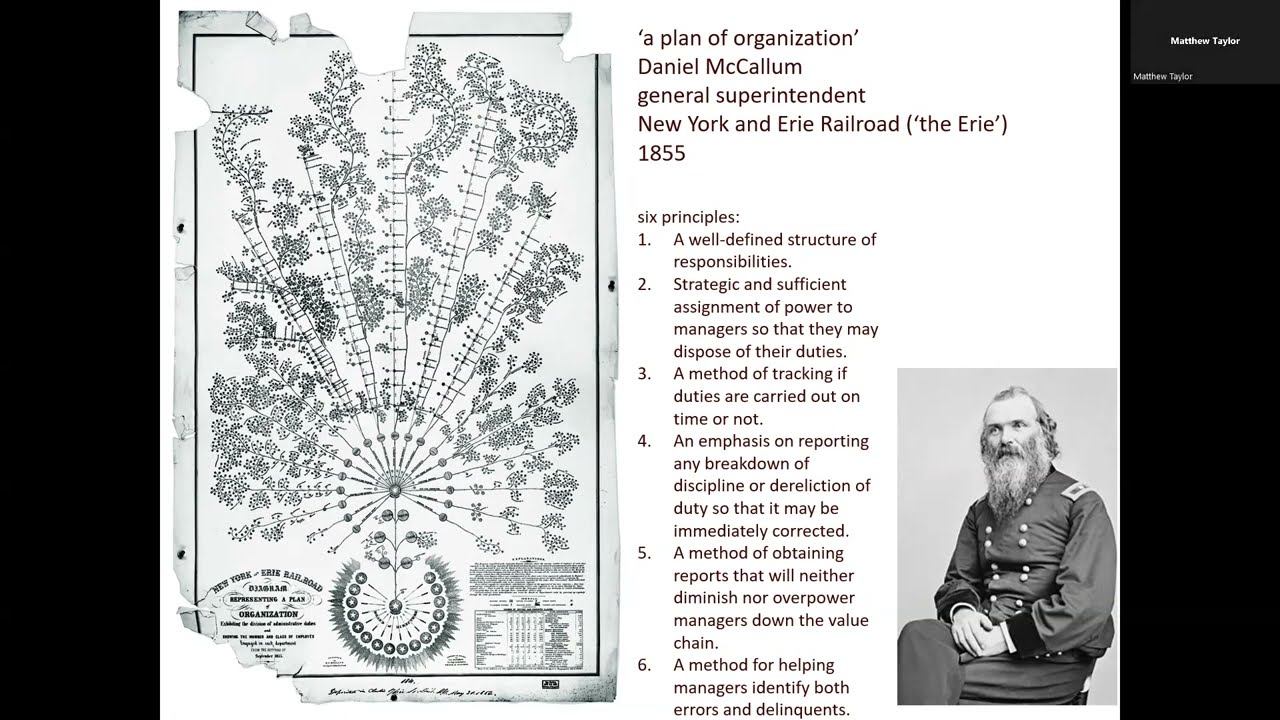
Five core practices for effective organisation - Benjamin Taylor | Stretch Conference 2022

Ep36: A wholeheartdly work Is Crucial To Your Business. Learn Why! Benjamin Taylor - CX RedQuadrant