Benjamin Taylor - Jan 2021 - SCiO Open Event - The 'Four Quadrants' of Thinking Threats

In this interactive workshop, Benjamin P. Taylor presents a concise 2x2 model – the "Four Quadrants of Thinking Threats" – that maps ego‑driven roles people adopt when engaging with powerful ideas such as systems thinking, cybernetics, or service design. He frames the model as a warning about how movements that begin with high potential often devolve into dysfunction. The quadrants are: (1) Naïve Enthusiasts, who see a new tool as a revolutionary solution; (2) Systems Popularisers, who oversimplify and chase followers; (3) Curmudgeons, who insist they alone know the right way; and (4) Gurus, who claim exclusive ownership of the truth and build protective ecosystems. Taylor draws on personal anecdotes (e.g., a service‑design conference), literature (David Chapman’s "Geeks, Mops, and Sociopaths"), and critiques from figures like Dave Snowden to illustrate how these roles emerge, interact, and can corrupt a scene. He proposes engagement tactics for each quadrant (e.g., naive questioning for enthusiasts, teasing for gurus) and suggests a middle‑ground approach that emphasizes value‑creation, critical thinking, and improvisational play. The session includes a Jamboard‑based breakout activity where participants discuss adult development, the dynamics of the quadrants, positive shadows, and how to keep the model fluid. Reflections from breakout rooms highlight emotional experiences of power, the usefulness of each quadrant in practice, and the importance of viewing roles as improv parts rather than fixed identities. Taylor concludes that the model is a useful lens for understanding ecosystem variety, not a tool for shifting positions, and invites further feedback and iteration.
Chapters
This session is going to be a bit different, but hopefully also valuable. And for me, it's a record low number of slides, some people will be very pleased to hear, which I'm sharing one of now. And actually, I'm pasting a whole bunch of links. There's a whole bunch of links available if you're interested. And I'm going to go through a really, really simple model, 4 quadrants of thinking threats. as quickly as I can and give us some time to do some work on it. So this model is a sort of a warning about people entering into any kind of field of powerful thinking— systems thinking, complexity, cybernetics for sure, many, many others I'm pretty certain as well— and I actually did this up on a flip chart during and because of a discussion at SIIO board, which was a discussion about sort of setting the boundaries as the systems thinking professional body constructively for what systems thinking is and isn't, and that sort of dynamic. But I think it's one of those sort of like in a book, all credit for any good thinking in here goes to the board, and all censure for any horrible mistakes should accrue to me. And again, this is green status for feel free to share, maybe with attribution would be nice. When I put this out on social media recently, you couldn't really make it up. I had one of our beloved friends, Jeff Elliott, tell me that I was wrong in a slightly curmudgeonly way, and I've told Jeff he's a curmudgeon to his face, so I think that's fair. I had Dave Snowden, a little bit of a guru, tell me that it was crap and wrong. And I had 2 followers of Dave Snowden kind of pile in, and one of them told me that categorizing reality brings a feeling of order, predictability, and understanding— order, predictability, and understanding the logical structure of the world. Nobody else benefits from these models than the person running the categorization process. That from a follower of Knepfin. So that was a nice setup for this session, I thought. And my LinkedIn post is linked in the chat as well. One of the framings that I want to get to before I go into this model itself is why do movements, scenes, these things which hold this incredible potential, possibility for human potential, Predictably— not always, not every time, but predictably and with great reliability— goes so horribly wrong? And why is jumping the shark, which used to be an expression for something which maintained its quality over a very long period of time, the Happy Days TV series being the archetypal story there, but then just turns bad— why is that happening faster and faster and faster? Just to give you an example of where I first started thinking about this, I guess it was about 7 years ago when I went to a conference called Service Design in Government, and I was quite excited at the time about the potential of service design, which was a new thing, although I knew it wasn't new because I'd been working with it in 2007, I think, to sort of change the world. And what I found was incredibly reminiscent of a lot of systems thinking events I'd been to. There was a certain type of people there. I'm not going to be offensive, and I mean absolutely nothing negative by saying that I find, just like systems thinkers tend to be a certain type— not always, not every time, but predictably and with great reliability— that service designers are slightly different but also have a type of their own. And yeah, and I won't say any more about that, but you know, a group of people with some kind of social connection, some commonalities anyway, and the whole conference was them going, this thing that I've discovered, this simplified version of customer journey mapping, should change the world. It's revolutionary. Why is everybody stopping me? Why won't they let me do it? Why are they getting in the way? And I was sort of this little, little voice of— there must be some classical analogy— this sort of voice of the statue or something, sort of booming out saying, ahem, have you ever heard of TQM, JIT, Lean, Vanguard-style systems thinking? All of these things that had exactly the same dynamic. Knowledge management, the learning organization, whatever you want to pick, that every 2 years back to the dawn of eternity had all of these young acolytes going, this is an amazing thing, it should change the world, why won't people let me do it? And trying to say there seems to be a pattern here, right? And there's a lovely piece by one of my favorite cybernetician David Chapman called Geeks, Mops, and Sociopaths, which I commend to you for a little read about why scenes and dynamics go wrong. And what he says is that you get a small number of geeks who are kind of creating the art in this little scene, and they're creating all these ideas, these brilliant things, and so on. And they draw mops, members of the public, to them. So a certain number of members of the public get involved and they start to follow the geeks. And the geeks get a little bit of success and it goes to their heads and all kinds of dynamics start happening. But the scene really changes when it gets big enough to draw the attention of a few sociopaths. And the sociopaths come in and they go, aha, there's people performing here and there's people following. I could be a performer. And they simplify and standardize and do a little bit better actually of the performative aspects of what the geeks are kind of refusing to dumb down or sell out. And then they become a little bit more successful, and to the members of the public, indistinguishable from the geeks. And they become the leaders of the scene. And the geeks who were not the performers, but the ones who were kind of the administrators and ran the venues and made all the stuff happen, they become the servants of the sociopaths. And they don't feel it's quite right, but they don't quite know what's going on. And then it becomes mainstream, and it becomes corrupted, and all the rest. Chapman says there's a few ways to defend against this. You can keep the scene deliberately small, you can be a little bit sociopathic yourself, and actually deliberately— but none of these seem to be quite the rounded and kind of holistic, agile enterprise architecture. We could go on, couldn't we, with our lists of the next big things? So this seems to be something of a pattern, and of course it's a 2x2 grid. So this is the core of what I'm here to discuss today. I think there's a sort of distinction between people who find a powerful idea, a gateway idea— what's that, what's the word? A transitional idea, you know, these things where nothing quite seems the same once you've grasped this thing. They go, this is the right way to change the world. This is the power to achieve something. And on the other side— I'm ignoring that comment, Andrew— on the other side, there are people who see this idea as the potential to give them power over, power for themselves, if that makes sense. Then there are people who believe that their approach to it, their tools, are right. And those tend to be more inclusive, more a herd, a group of people, enthusiastic, more influenced by the few, perhaps dependent on the scene, and perhaps flighty and short-term. They might be drawn away to the next big thing fairly quickly. Then there are the people who think, well, your tools are wrong, is their primary orientation. They tend to be more exclusive, individual, grumpy, very fewer people seeking to lead, more focused on their own independence, and persistent and long-term. This gives us our 4 quadrants, and in a sense these are the 4 ego traps in powerful ideas, I think, in fields of powerful ideas, that at the very least I try to avoid. The naive enthusiasts, the people who were there gathered at that conference with their selected Post-it notes and Sharpies, who believed this tool was just going to change the world. Perhaps we've all been all of these at times, by the way. I don't want to make it as restrictive as putting people into those boxes, and this is where there's an inherent tension in doing this, right? And this is a lot of simplification, let me be clear about that. Then there's the systems popularisers, oversimplifiers who want a following. Who's that German chap, Jürgen— anyway, the people who come out with the big book full of the 300 patterns of systems thinking or whatever else the thing is, Management 3.0, you know who I mean. who kind of have this, you know, I'm gonna be the one who captures all of this and shares it with the world and gets all of the following and all the rest. Then you get the curmudgeons. Why won't people listen to me? I know how to do this right and they're all bloody well doing it wrong, right? My favorite position, to be perfectly frank. And then there are the gurus, and I'm aware that, you know, using the word guru out of the religious and originating context. I get guru spelled with the double O's from Arthur Batram as a way of trying to avoid that, but it's a useful, you know, connection. I think it's become signifying the role in our culture of this concept of guru who wants to own this intellectual property and this power and defend it quite well. You can do all kinds of patterns around this. the gurus get these kind of dynamics around them that are people trying to build off and live off and work in their ecosystem, but then it becomes too stifling and there are these implosions and explosions, and then they'll reform again but with the same guru model around the intellectual property and around the ideas that were kind of broken and kind of stolen from the origin. Well, you can see that in my favorite example of a guru, can't you, with, you know, who originated the ideas, who really owns the ideas, and all of those kind of And all 4 behaviours are really saying, this is what systems thinking is, right? The naive enthusiasts are going, systems thinking is this little thing that I found that's absolutely amazing, and it's this book, and this is the thing. The popularisers are going, I'll show you, look, it's all these nice simple diagrams and charts and PDFs that are taken from Wikipedia without attribution, but I've made them look a bit, a bit nicer, etc. I'm thinking of specific people in almost every example I'm giving today. The gurus are saying, you know, only mine is the true systems thinking, and the curmudgeons are saying, well, I'm the only one who really knows what systems thinking is. You get the kind of general idea. It's a game of Where's Wally, this, isn't it? Who are you talking about? You can do all your own projections onto this. I'll spare you my projections of my superego or whatever it is. So— oh no, that's not right, is it? I've done a slightly wrong thing there. What do they want? The naive enthusiasts want change, and now, and lots of it, and revolutionary change. The systems popularizers want likes, shares, and followers. The curmudgeons want to prove people wrong. These are all the vanity metrics. This is what people are kind of counting as their main driver of success, I'd say. And the gurus want the followers locked in and the ground poisoned against other alternatives that would subtract from their kind of approach. What else can we do? What else can I say about this? I've got a couple more little iterations of this, then it'll be a bit of my inputs and a bit over to you. Naive enthusiasts will see you as an inspiration or a killjoy. And perhaps the way to engage with them is through naive questions. Popularisers will see you as either a fan or a source, and perhaps the approach is to give them a bit of flattery but ask some very naive questions that draws out the limits of their understanding. Curmudgeons see you as either wrong or right— very clear for the curmudgeon— and I think the trick is to engage and get the value from them. And gurus are the most problematic for me because they either see you as a disciple, but I should say, or a problem. So it's very hard to engage with them as a critic because they are incredibly vested in seeing you either as a disciple or a project or a problem. It's very tempting to flatter the guru because that's what gets you into their good books immediately, but very dangerous because that just cements them in their relationship over and above you. So I say tease them. but don't flatter them. And finally, what are my first thoughts about how to balance this out and how, if at all, maybe it's not advisable, to seek to pull people into this middle ground? Give the naive enthusiasts the tougher challenge, give the popularisers the robust old stuff that's actually got the deep thinking and the quality in it. You can see there's an element of kind of the pulling of the opposite almost is the is the remedy, in a sense. Bring the curmudgeons into the context. I'm not sure I'm completely happy with that formulation, but, you know, make sure that they're actually confronted with application, not just with their idealized situations. And bring the gurus into the swampy lowlands. Again, not sure I'm completely comfortable with that, but I'm going to let you all run free and play with this in just a minute. Some other things to say about this. I've given a few caveats. It's just my projections and my own ego and my own thinking. 4-box models can never, as we know, handle complexity. And it's a big simplification, and it's a static simplification, and I don't think it should be that static. What I'll certainly say is that they're all relative to wherever you are, because obviously you're going to see yourself in the middle and everybody else in the 4 corners. And, and the middle certainly shouldn't be static. Sorry, and what I wanted to say about the middle is that I think the value of the powerful thinking should be constituted by the value it can generate. All the others are seeing it separate from the value it is actually generating now, and that's what brings you into the praxis, I guess. I think it's all about practice, all about focus on value in the real world, getting you out of that— somebody just said critical thinking, you know, it's about bringing in the critical thinking for everybody. And for me, it's steering safely between extremes, which could just be considered a bit boring and middle of the road. I am now a Liberal Democrat, so there you go. And there is a bit of, I know you are, but what am I? That old schoolground taunt, because everybody can always turn this back on the user. So I mean, if I'm being safe, I'm really talking about using this as a tool for myself and for my own avoidance of the ego traps wherever possible. Maybe I'm a meta-curmudgeon because I want everybody to be damn well open-minded and middle of the road, just like me. And one way of thinking about the ego traps is which one irritates you most. That might be a clue to which one you actually are more likely to be, I suppose. So my suggestion was— what I've done is I've prepared a Jamboard. And how long have we got, Tony? 10 minutes.
You have 25 minutes.
Oh, super. Okay, well, I mean, do you feel up for this? What I've done is I've done a Jamboard which on the front page— let me see if I can share it with you— which on the front page has the model, and then the suggestion is join that Jamboard Let me see if I can share that here. Yep. And put your name by a topic, and what we're going to do is we're going to create 15 breakout rooms, and we're going to give you 15 minutes to just play around. Put your name by a topic, go into any of these topics, discuss and make a few notes in the Jamboard as you go, and I'll do a quick run-through of the, of the pages, whatever pages have got populated. In, in the meantime, so I thought some aspects of what we could talk about are: is this related to adult development? Do we naturally go through those phases in our life? Do the opposites neutralize and balance each other? Is there something about that dynamic tension of the corners in the grid? And how does transition between the states happen? What does it really feel like in each of those spaces? What keeps you locked in? Because they're all quite tempting and quite locked in once you're in them. What do you want to say about how scenes and movements die? How can— how could we make this model less static? What are some good tactics to try to deal with each of those things? Is there a positive shadow? There is something about a constructive ecosystem has all 4 of these dynamics in it, but working positively together? Dave Snowden says that's not possible. In fact, I think he agrees with Geoff Elliott there. Or, you know, are people just like that? There's a bunch of other questions. How to describe the middle ground? Is this just an aspect of personality that comes out in the way people engage? Could we use it in stakeholder mapping? Where do you belong? Is there a sort of drama triangle aspect to this? Is there a hero's journey aspect to this? There's quite some rich ideas, but the ideas of thinking about, is it a crap idea, is not included. Sorry. So do people want to take 15 minutes and dive into the rooms? Thanks for that, everybody. Nice to see you all come back into the room, and thank you for sticking with us. We're going to have to do the wrap-up fairly swiftly, but it just felt like that was a good start of a conversation. So do come back again next week for the Later in the Bar, and we can chat this through if you like. Or there's lots and lots of ways, no doubt, that we'll be able to pick it up again. So if it's okay, I'm just gonna whiz through. I'm gonna simply ask for the top 2 points as we look at the overview of each of the rooms that were active, which was a nice, a nice balanced number of rooms, and then ask for just anything else that people feel is important to say to wrap up the session and hand over to Tony for wrap-up, and then a bit of Loose talk is available for anybody who can stay for 20 minutes or so longer. So breakout room 5, there was some great chat every time I just dropped into a room, some really interesting ideas. And this makes one, of course, very self-reflective about one's own judgment and one's own ego. So may I say, this was just such a thrill to have all these people discussing these ideas that I'd come up with and taking it seriously. And, you know, it's good to be reflective about these things, I think, sometimes, isn't it? So, so, um, room 5, a couple of comments from that room. This is what does each space really feel like? If nobody else is going, we ended up talking about the difference between just feeling powerful and the, the kind of— it's that when the lights turn on, when you, when you get that feeling of contribution, there's a different elation from making a contribution than there is a different elation from feeling powerful in one of these quadrants. That was my summation, so other people may have different inputs on that. Okay, I'll move forward in the interest of time. And Room 9, the positive shadow of each of the spaces, perhaps.
We did talk around what we were trying to do and the model, so it took a while for us to sort of land a few thoughts. But just a little bit like the last group, the naive enthusiasts, bringing that energy and that openness, which can counteract some of the stickiness of the perennial conflicts. Also, popularizing is a very good thing if this is sometimes a bit of an echo chamber or it's the usual suspects. So drawing more people in and being less exclusive. It can be entertaining to watch the gurus fighting. And instructive for the rest of us. so that you know that it's, you know, it's like religion, you know, they may be all the same but there's more than one. And the curmudgeon thing, we had a theme about emotional intelligence whilst demonstrating it in our group, I think.
Lovely, thank you. Room 10, how to describe the middle ground?
Okay, well, I suppose the main idea, I suppose, was how do you synthesize those 4 extremes? But I think that does beg the big question: how? Now I think, you know, various possibilities here is that, is it somehow a dilution of all 4? Or do you need some kind of transformation rooted in critical thinking? How about just a little bit of healthy cynicism? How about actually somehow trying to, you know, get into a completely new phase? And right at the end, one of our groups started mentioning drama. It wasn't actually me, it was someone else. And it made me think of a Cybernetic Society presentation only a couple of weeks ago by Tom Schultz, who's a professor of drama and cybernetics at Vancouver University. And he talks about the cybernetics of naturalistic drama. But the basic idea is, right, is that reality is your constraint. No matter how non-idealistic and dirty and messy reality is, all your ideas will always hit the buffers of reality. And I think that is the— and that's an ontological idea about does reality exist or not. But I think that sort of thing in the middle is how do we perhaps not only synthesize those 4 things, but perhaps apply a little bit of healthy cynicism rooted in reality and ontological reality.
But this made me think of— I really commend to you the The sequence in meaningness.com about stances, positions that people take with respect— with regard to epistemology and ontology. This is not— this is an entry into that. I can't find exactly the right page, but one of the really interesting things is about David Chapman again, my little hero, and is that he talks about a set of incomplete stances that give people real evident obvious meaning in the world. and how they're all fundamentally unsatisfactory, but how the complete stance has its own different type of satisfaction, but involves being able to take on in fluid mode and play with each of the incomplete stances. And I think there's something in what you were just saying there, Malcolm, that sort of echoed that. That's why I picked it up. If I could just throw one thing in from the group. The simplest thing I would say is that In any real-world situation that's not static, where you're hoping to make something better, some situation better, that the best thing is to view those roles as roles in an improvisational play. And you take whatever role is needed to move the play toward a generative end, as opposed to a tragedy. Right. Nice. Brilliant.
Benjamin, apologies. I'm just gonna have to freak the system because I actually— I'm going to have to disappear in a couple of minutes. I'll just give a quick update on Room 15, just to—
Oh, fine. Oh, sorry, I see. I thought you were needing to make some parish announcements before you left. So I can't share the screen anymore.
No, it's okay. I mean, we just had an interesting discussion about the idea of trajectories or journeys. A, how you got into the room. Was it by accident? And most of it seemed to be by accident for people. Ilya brought up a really interesting point about the idea of discontinuous journey. You might arrive in the field for a particular reason, but then realize that your understanding of what field you've arrived in is rather different to its own reality. And also this idea of even that people maybe hold multiple positions in the field, depending on what they came in knowing and thinking and being able to do. So you couldn't sort of say, I'm in one place, because you could be in multiple places for different reasons at the same time. time. So this discontinuousness, arrival, what the nature of the kind of the hero's journey was, and what was the nature of the hero even. Rob raised some interesting points about that, about the nature of the hero being someone who necessarily, who actually in theory learned something about something rather than just shot it all up.
Cool, thanks Tony. See you next time. And I'm sorry if we're running over a little bit, my apologies. Do do the checkout survey if you're leaving earlier. I'll put the post, the link in the thing, and I'll do it again. Breakout room 11, a couple of quick points about is this just people's personality shining through kind of thing? I think we started with quite a lot of conversation about what this thing was and what do we do with it, the so what. And certainly my conclusion towards the end was, it's a description of the ecosystem, it's the way people are, and we should enjoy it for its wide variety, and the way it stimulates debate and interaction between people, rather than trying to shift people's positions. Just consider it as giving us the requisite variety we need to have an interesting and fruitful time discussing these things.
things.
Very wise. Great. And another comment. Great.
So I think just to add to that, we sort of demonstrated a bit of that variety by debating where we as individuals sat on those 4 quadrants, just looking at that theory through a specific lens and playing with it for a while. You know, one of us thought that the top left, which was more focused on the tools and techniques, and maybe being specific— specifically focused on, say, VSM or System Dynamics, is quite useful in a practical consulting type— from a practical consulting perspective in the workplace. Whereas the quadrant on the right-hand side, which is a simple demonstration of systems thinking principles over quite a wide view of these things rather than deep might be useful to an individual that's just trying to get the concepts out, you know, sort of in a teaching role. So it was useful to see where individuals in the group actually sat on that matrix.
Makes me think I've had enormous value from people in all 4 quadrants in my learning journey as a systems thinker, so that's an antidote to the judgment a bit, isn't it? And I think the final groups of feedback, a couple of points from Room 12. We ended up focusing quite a bit on actually what the stakeholders were after and whether the model would actually help the stakeholders or whether it was more introverted to us being suppliers, so we're talking about the supply and demand whether we were actually trying to push a model onto them. What— and then we ended up talking about language, of what do the thinkers outside this group actually need, common language, things like that. Great. And did I miss anybody, or a couple final points that people would like to make about the picture overall? Well, good. We've talked ourselves out, I think. I'll send around all the slides, all of the learning bits that people have contributed, and so on. And thanks for paying— taking this so seriously and going through it. If you use it and find it interesting, I'd love to have feedback to sort of enrich and build and continue to learn from all of this. It was a surprise to me that it was so popular on LinkedIn. And in a sense, a surprise that people found it quite generative tonight. So it's very, very encouraging, and I think I will leave my bit of the conversation here.
More from Benjamin

How to Transform Public Sector Organisations Through Systems Thinking With Benjamin P. Taylor

Cybernetics is not the banana, part 2 — Benjamin P Taylor with Laksh Raghavan (2025)

Cybernetics is not the banana, part 1 — Benjamin P Taylor with Laksh Raghavan (2025)
04 | Culture, Clarity & Conversations: Leading in Uncertain Times with Benjamin P. Taylor

The Key To High-Performing Teams Based On Trust – Benjamin Taylor | Compass Tech Summit 2023
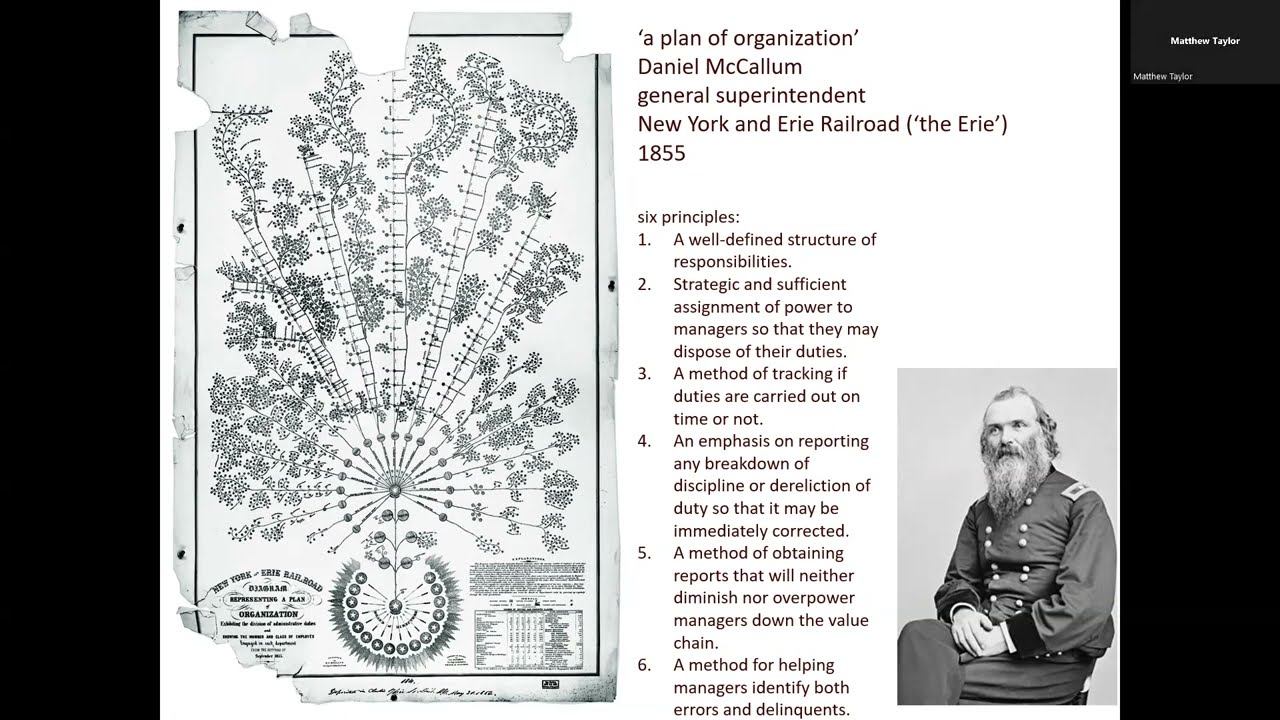
Five core practices for effective organisation - Benjamin Taylor | Stretch Conference 2022

Ep36: A wholeheartdly work Is Crucial To Your Business. Learn Why! Benjamin Taylor - CX RedQuadrant