All About the People - Five Core Leadership Practices for OpEx
In this concluding segment of the webinar, Benjamin P. Taylor expands on the five core leadership practices for operational excellence, focusing on how leaders can speak up skillfully, leverage personality traits, and use concrete tools to create clarity and shape culture. He introduces a three‑box role‑clarity model that separates non‑negotiable red lines, discretionary freedoms, and consult‑required areas, emphasizing the need for explicit delegation. Taylor then presents a culture‑shaping framework derived from Systems Leadership Theory, identifying three triggers—leader behavior, organizational systems, and symbolic structures—and eight emotional response scales (trust, fairness, betrayal, etc.) that drive employee motivation and discretionary effort. Real‑world examples (an Australian mine closure and a county‑council leadership conflict) illustrate how emotional judgments affect outcomes. He uses a cybernetic “steersman” metaphor to argue for adaptive, sea‑leg leadership and stresses the importance of learning experiences that create unlearning moments for leaders. The concept of “good and clear intent” is linked to measurement: metrics must reflect end‑to‑end customer outcomes rather than proxy internal KPIs, turning culture into a self‑correcting system. Finally, Taylor promotes the Red Quadrant Way Toolshed—a suite of 24 online modules and action‑learning groups—and notes that presentations alone rarely win; experiential engagement is essential. The session ends with invitations for follow‑up, case‑study access, and contact information.
Chapters
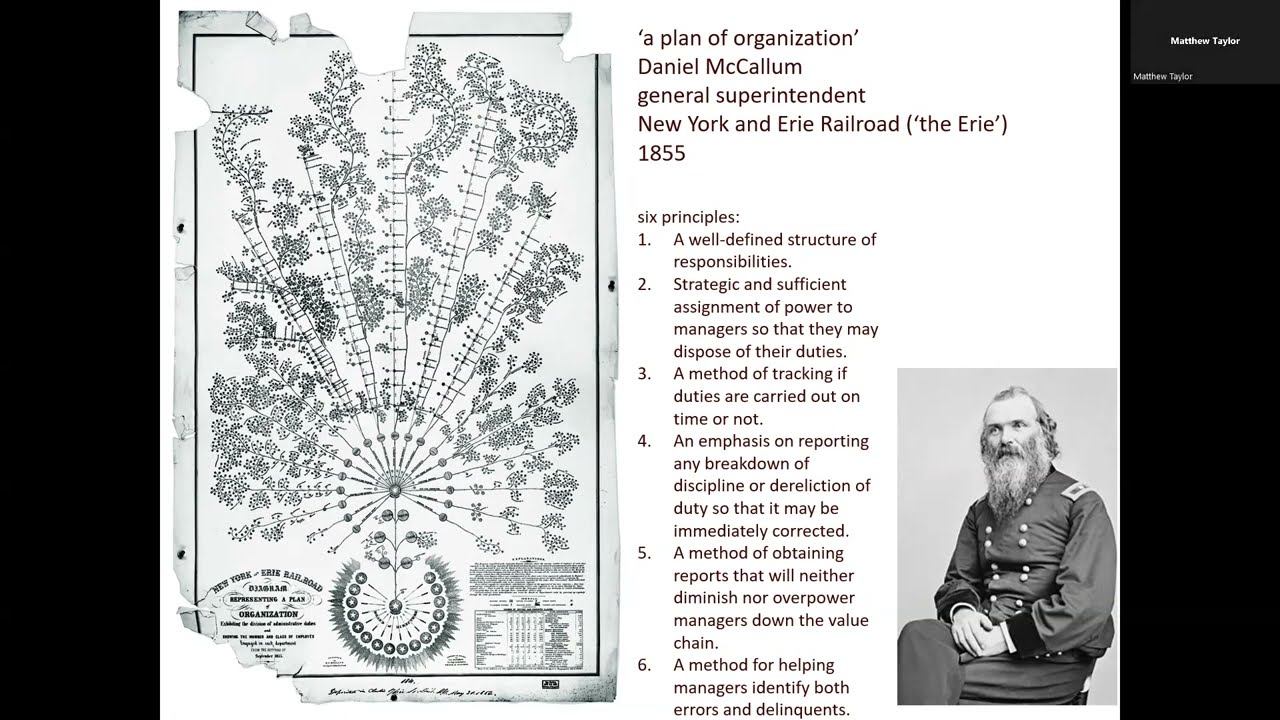
What I'll do is I'll go directly into sharing slides and telling the story, if that's okay with everybody. And my suggestion is we just kind of see how we go. I'd much prefer it if, when it's comfortable and convenient, you keep your video and audio, even if you want to, on and just jump in and ask questions and so on. As I say, I prepared for a bit of bigger a longer talk than this. So I'm going to share group, my screen. not a problem for me. So we can make this more discursive and so on. But it is very much in presentation format with opportunities for chat and so on. So yeah, don't worry about diving in as we go. The reason I set up this particular session is that I hosted a thing called the Operational Excellence Summit in Hamburg in June, which I felt overall on balance was a really good event. I wasn't organizing, I was just hosting. There's always some kind of drawbacks and commercial drivers for those kind of conferences, as you'll appreciate when you've been to some of them. But there was a really strong theme coming out of them all, which I wholeheartedly endorse, which is, at the end of the day, it's all about the people. So that was the theme. And I've been developing these 5 core practices along with a bunch of other core material that's sort of in, in, in my flavor over many, many years, probably since the first time that Chris and I worked together, if not some of it before, actually. So that was, yes, as Chris said, a very long time ago, probably 16, 17 years. But a bunch of stuff is in this which is not all my, you know, creation. I very much believe in respecting the history of organisational development, operational excellence, and all the rest, but which I think we found ways in which these 5 sets of practices really work together that are really, really effective and really interesting. So without further delay, I will dive into them. I'll do more about me at the end. You're probably all connected to me and get rather too much from me on social media. If not, it's all on antlerboy.com. What I will broadly cover in this presentation, depending where we get to in different conversations and so on, is the possibilities of organization, how that can go well and how it can go badly. I've got a little exercise for you all now, now that I've managed to capture your email addresses from the Zoom sign-in. Haha, you'll see in a second, called the blue dot. And then we'll get into the 5 core practices with some caveats. And those 5 core practices are spelled out there, but I'll go into them all in detail. And I might connect to some other bits of my core material, or we might not have time for that really. And there's a whole reading list of references and things that link into these 5 core things in the materials that I'll send out afterwards. I'm not going to go through all 98 slides, but I will go through a whole bunch if it seems to be working for us. Is that okay? So let me tell the story. These are 3 quotes that I find really quite useful from 3 interesting, all men, all mid-20th century kind of gurus of organizations. The tool for handling complexity is organization. But our concepts of organization belong to the much less complex old world, not to the much more complex today's world. Still less are they adequate to deal with the next epoch of complexification in a world of explosive change. This was written in about 1980, 1983, or something like that, so 40 years ago now, horrifyingly. And of course, that theme of everything speeding up, we need new tools, we need new approaches, has been going for like probably millennia, I expect. I doubt— I don't really care whether we're in the fastest ever moving environment. What I care about is our ability to respond. And I think the tool for handling complexity as an organization is very powerful. Eliot-Jacks sprung to life in a timely way today on LinkedIn as a controversial topic. Oh, Angela is joining. Is that the Angela who we know, Majid? Oh, I think she's coming in now. That's great. Because Elliot Jaxx talks about a justified hierarchy and how different people with different levels of capability can be put into different roles in an organization. So that right gets the backup of some people who are very focused on Agile, and reinventing organizations and things like that. What I like here is creativity and innovation, like freedom and liberty, depend not upon the soft pedaling of organization, but on the development of institutions with the kind of constraint and opportunities that can enable us to live and work together harmoniously, effectively, and creatively. One thing that helped me to get to the effectiveness of these 5 core practices was putting aside my rebellious streak of just wanting to be against everything hierarchical and against everything structural and against all kind of micromanagement in organizations and realized how much we'd actually lost by taking that attitude and how much of rigorous mid-20th century management thinking we actually still need, particularly if we want to be agile, particularly if we want to create opportunities that really bring people to life. And I appreciate some of you might need persuading about that, but that's what I think, and we'll, we'll see if that comes to life as we go through. So it's constraints that create opportunities that I'm interested in here. And you never understand an organization until you start to try to change it, often attributed to Kurt Lewin, one of the founders of organizational development and a really great organizational thinker. So hopefully you'll see how all these 3 things come through. In in the five core practices. Now, does anybody know what this bit of spaghetti on the left is? Few people leaning forward and putting glasses on. That's good. Maybe no, maybe not. Okay, it's just a bit of fun. It's not really a quiz. Does it help if I say that this was the hairy-faced gentleman who Put it together. I can see it's not ringing any bells. So this is a plan of organization. The gent is Daniel McCollum, who was the general superintendent of the New York and Erie Railroad, known as the Erie. He was a Civil War engineer, built a lot of bridges and things like that in the American Civil War. And around about this time, they had the first ever railroad fatality. I'm sorry to say that a lot of mostly immigrant workers working on building the railroads had died, but this was the first time that somebody was hit by a train and died. So he was asked to create a method of organization that would allow the allocation of blame and identification of delinquency It's a good old-fashioned word, if such a terrible accident were to happen in the future. Okay. So he came up with 6 principles. This is allegedly, possibly the first modern organization chart, and he probably wrote the first modern enterprise architecture. His principles were a well-defined structure of responsibilities, strategic and sufficient assignment of power to managers so that they may dispose of their duties. A method of tracking if duties are carried out on time or not. Accountability. An emphasis on reporting any breakdown of discipline or dereliction of duty so it may be immediately corrected. A method of obtaining reports that will neither diminish nor overpower managers down the value chain. And a method for helping managers identify both errors and delinquents. So this sounds very, very command and control. It sounds very strict. It uses words like delinquency and error. And, you know, we're taught in organizational development, you know, there's no such thing as a mistaken. various things like that. So there's one story about the possibility of organization which says that Daniel MacCallum was an engineer. So what that looks like, a railroad line on the left, it's a mechanism. It's an organization as a machine. Okay. And what he was interested in was creating little boxes that kind of crushed the human spirit and controlling how much power everybody in the organization had and setting limits on them. and making sure that you could instantly see if somebody made a mistake and hold them to account. Okay, so that's quite a negative, controlling, command and control concept of the organization, right? On the other hand, if you allow yourself to just look at the diagram on the left, what do you— what does it remind you of? What does it look like to you? It looks like a team.
Tree. No,
a tree. Yeah, absolutely. Yeah, I agree with that. I agree with that. It's organic, isn't it? It's, um, uh, it's actually quite elegant, quite beautiful. And, um, he actually, um, uh, apparently was quite an ardent naturalist, and he based this organization, um, charts, um, on the pussy willow trees grew along the railroad line. Okay, so there's another story possible about the potential of organization. Okay, and if you look at this, this is actually the board of directors, not at the top doing command and control and directing the organization, but at the bottom nourishing and supporting the organization. And does anybody know what the big data innovation that rolled out alongside the railroads in the mid-19th century in the USA was? Telegraph. What was happening in communications in that period?
Telegraph.
Well done. Yeah. So along the railroad lines, for the first time, they were enabling instant communication. So this was the first time in human history, really, that you could reach out to people at the end of the branch line, the lowest of the low in the organization, and meddle and interfere directly with their duties in real time. Okay, so there's a story of organisation which this could also tell, which is that organisations are about setting constraints on what the centre can do, enabling and empowering the frontline as much as possible, consistent with organisational coherence, giving discretion, giving freedom to the frontline. And, you know, this story for me, this, this organisation chart shows that organizations have this possibility of constraint and restriction and control and direction and, you know, telling people off and all of that kind of thing. And they also have the possibility of liberation, of creating the effectiveness of organization that allows people to know what their discretion is and get on and deliver it and have the satisfaction of being able to work within their own area, knowing that they're not treading on anybody else's feet, knowing that they're contributing to the whole. Does that make sense? So what we're interested in is how can we steer— or every organization in my mind has both these possibilities, okay? So you get agile coaches who are there to liberate everybody and allow them to, you know, work in a completely self-organizing way. Um, Stanley, I've seen somebody once having a tantrum going, no, no, no, no, no, you're doing it wrong, you have to do it this way, okay? Um, so if we're not careful, we end up recreating that command and control, that negative story of the organization. So it's not really a question of just saying, I don't want that. I don't want the accountability, the telling off, the hierarchy. Because if you say you don't want that, you'll end up reintroducing it by the back door in an even less productive way. It's about finding a way to structure organizations that allow human freedom and thriving and contribution. And that's what the 5 core practices are all about. And so here's a little practice of this in reality. Okay, so here is the blue dot. Okay. And in one of your— sorry, in 2 of your emails selected at random from the list of people who've actually turned up in the room today, I've sent you an email that just contains a blue dot. Please don't look yet. Please wait and don't look yet. Okay, if you have the blue dot, you're part of the wrap-up team, and I'm going to ask you to take 5 minutes at the end of this webinar to do a summary that I want it to be inclusive, engaging, dynamic. I want you to kind of summarize just the key points and make sure that you close on a strong note where we can see what you've really learned from the session. Is that okay? I'm going to assume that you would be up for that challenge, but I'm going to ask you how it feels now you know you have the Possibility of the blue dot in your email? What's your physical response? Chris has got quite a good.
I've got to pay attention now. That's the main thing.
Yeah, you got to pay attention. You got to be involved. All right, interesting. You can't sit back and see if I'm entertaining or not. Anybody else? Ping, how do you feel about maybe having the blue dot?
I was immediately like checking my mailbox, but I didn't get any blue dot.
Oh, wait and see, wait and see. It may have just— may just be coming through. How would you feel if you thought you might have
it? I haven't.
So if you thought you might have the blue dot, how would you feel?
I will feel— I feel more engaging.
Okay.
And then I will also add more, like, um, input from my side, I suppose. Yeah.
Okay.
That's good.
Stefan, any comment?
Well, I would say the same as, uh, and I feel a little bit, yeah, excited. Maybe, maybe I have the blue dot, and I will do always what I do when I hear, uh, someone speaking. I make my notes, and I will, I will draw down a map or something like this, and maybe I can present it later if I have the blue dot.
Excellent. Okay, so without— so when I do this normally in the room, I have maybe less forward participants than you. Some people are a bit more nervous, and generally speaking, people do say that excitement, there's a kind of little bit, you know, your mouth goes a little bit drier, you might— your body temperature might rise a little bit, but there's also a little bit of nervousness, a bit of fear, right? I might have to be on stage. I thought I would just be listening, but now I might have to presenting. I have to summarize this. I have to kind of be judged by everybody else in the room. Okay. And the blue dot is this essence of organizational life where if you have the blue dot, you're on the spot, you're tested, you're stretched, you're pushed, you're actually, you know, put into the limelight. But if you have too much blue dot, it becomes overload. In the extreme, it becomes burnout. Chris did a great post just this week describing what it's like to be a program manager with all of the stakeholders and all of the managers of the program To contend with. A lot of blue dots in that situation, Chris, right? And what's worse is the people who have the blue dots in an organization, they like a gravitational effect. You get one, you get another one. They start to all cluster around you. Before you know it, you're drowning in a sea of blue dots. Does that ring a bell?
Yeah, you know, for me, Benjamin, when you first started, I was probably excited and engaged. But
yeah,
Then when you continued with the requirements of the blue dot— compelling, inclusive— and it kept going, I've got this sick feeling in my stomach. I was thinking, how am I gonna do that on the spot right at the end? I was like, oh no. And then I thought, I wish I wasn't listening to this whilst driving in my car. I need to get, I need to get to my destination.
Excellent. Thank you, thank you, thank you. Um, now, okay, um, uh, if you've got— if you're driving, then, uh, Majid, I think you're excused. But can everybody else please just quickly check their emails, see if you have an from Benjamin P. Taylor. If you have the blue dot, please put your hand up using the controls at the bottom of the Zoom page. Anybody? No, I don't see any hands. No. Uh-oh. Oh dear, my emails have gone wrong again. Okay, well, this was just a trick. All
right, thank God for that. Thank God.
Well, that's the point. Okay, Chris, how do you feel now you know you haven't got the blue dot?
I feel happy, Ben. Happy. I'm not put in the spot. I'm fed up with being in the spotlight, mate. I've had enough. I'm happy.
Fair enough, fair enough. Okay, so very often people say happy, relieved, more relaxed. I can sit back and fold my arms and see if this is fun now. I don't have to take notes all the time. Stefan will be doing it anyway. Um, some people feel a little bit disappointed because they thought, oh, that would be quite exciting, right? And the point about this is that the blue dot and the absence of the blue dot are the essence of organization, right? And organizational life. If there are 2 people working on a thing together and a blue dot comes up, you have to get certification for your little mini business, or you have to deal with the tax or something like that. And one of the people says, don't worry, I'll deal with that. Boom, blue dot goes to them, right? And then the blue dot goes away from the other person, and that person becomes responsible and accountable to the other person, and the other person becomes disempowered and less able to influence that bit of blue dottery that the other person is controlling. And over time, you get the separation, you get the silos, you get the differentiation, you get the, um, lack of organizational focus as the blue dots all get allocated and fixed in place. What we're trying to do with organizations is create the flow on dynamic response of the blue dot to the circumstances. Okay? So we want everybody to have enough blue dot that fits their, you know, ability, their energy, their level of practice at that time, and their specialism and their expertise, and maybe stretches them a little bit as well, but doesn't overload. doesn't overwhelm, doesn't make— send them into breakdown. But we don't want people to have too little blue dots so that they're disempowered and disenfranchised and alienated from the organization. Do you get the idea? So we're looking for the flow and the dance of the blue dots effectively around the organization so that all the blue dots the organization has to deal with at any time are all allocated in a beautiful and elegant way where everybody is pushed and stretched. And, you know, just if they're having a bad day, They're not doing as much as somebody who's having a fantastic day and is on top of the world and is, you know, running with all the blue dots. But the next day the conditions might be reversed. So that's what we're aiming for with the practices. That's what we're aiming for in my mind with organization, full stop. Okay. So here come the actual 5 core practices, and I'll talk about why it's so important that these are practices and some of the dangers that come with them just after introducing them. So the first core practice is constructive conversations. Are we practicing a shared attempt to establish shared truths and to really, really effectively work together? Okay, sometimes honest conversations, sometimes productive conversations, but without the ability to actually have honest, productive, constructive conversations aimed at establishing a shared truth, we're not really going to get very far as an organization. And you would be shocked, or maybe you wouldn't be shocked, how many organizations I go into where they are avoiding constructive, really honest, face-to-face, real truth conversations. The second part, and it absolutely goes hand in hand with constructive conversations, is clarity practices. Not are we clear once and for all, but are we working dynamically to achieve clarity of strategy, goals, clarity of programs, boundaries, targets, things we're trying to achieve, clarity of projects, clarity of roles, clarity of delegation. And you would not believe, or perhaps you would, how many organizations I go into, particularly at a senior level, who are absolutely avoiding the conversation about clarity of who does what, right? And clarity of whose role something is. And you have 2 people thinking they manage the same person. and you have 3 people thinking they're the senior responsible officer for a programme, or even if you've done that ostensible clarity, you still haven't really got clarity about what does it mean to be the senior responsible officer for this critical business-critical programme. Only if you have those 2 practices in place, working on constructive conversations to a shared definition of the truth and clarity, can you bring in learning. The 3rd practice is learning, or specifically triple-loop learning. which I'll come to in time. But you can't do much learning if you haven't got clarity about who was supposed to do what. This goes right back to that Erie Railroad. Do we know whose job was it to do certain things? And you certainly can't have learning if you're not having honest and constructive conversations where you can actually, you know, get to the heart of it. I expected you to do that. Why wasn't it done? Can you give me an account of why that wasn't done? done. And it's only when you have clarity and constructive conversations together that you can really build learning. You can do learning otherwise, but it's very, very boring learning, because the lesson you learn time and time and time again is, oh, we weren't really honest with each other about that, and we weren't really clear about who was doing what, and that's why we failed, right? And I've seen a lot of organizations that do an awful lot of that. Those 3 practices build shared relationships and systems by which I mean organizational systems and shared meaning. And I call those the basis of a learning system, and I call those the management practices, because without question, every single person in an organization needs to be practicing all 3 of those, very particularly anybody in a management role. Those are the core, and if we only work with organizations on a small amount of things, we would just start in that order with constructive conversations, clarity, and then triple loop learning. The next level, if you can get to it, is culture shaping. Are leaders taking responsibility for creating the conditions where people are truly productive, where people are really giving their willingness, giving their discretionary effort, where people are in it fully and committed? Now, a lot of that is built on the foundations of the learning system, the 3 practices below, but that creates what we call a productive system, a system focused on people actually contributing in full. And the final bit that is great to work on, and you can start with this, but if you start with this without then quickly bringing in constructive conversations and clarity, you don't get very far, is good and clear intent. Are we actually measuring and working on delivering what matters to our customers? It doesn't matter how you define this. I work with a lot of public sector organizations, and we call it what matters to citizens. Or you might call it what creates value, what creates value in the world, what creates value for our shareholders as well as our customers, right? But the point is, are we actually measuring the outcomes we're trying to achieve, whether we're achieving them or not, or are we fooling ourselves and working with partial measures? So that creates what we call a purposeful system. My first warning about this work, and this is organizational development work that I think is central to Operational Excellence and very often missed, is that when you come in and do this and you haven't got, you know, a sort of 80% plus kind of positive culture already in an organization, what will happen, predict— not always, not every time, but predictably and with great reliability, is that when you start constructive conversations, and ideally you start with the senior leadership team, start them being honest about things they haven't been honest about for 15 years, it's a little bit like putting a match to a can of petrol. Boom! You get this kind of explosion of conflict and so on. And if you don't manage and control that productively, then you get people falling out of relationship. If you manage it productively and it's okay for us to have a blazing row because, you know, we've been avoiding saying these things to each other for 5 years and the relationship continues and we actually move on beyond that, then you get incredible rewards. So that old concept of holding space, of creating a container where it's safe to experiment with each of these practices, is really important. And we use this— I'll go into it in more detail later— it's called the Priority Intervention Levels from Patricia Clarkson. And the point here is that you need to roughly in this order address and process, help the organisation to process danger if it arises, confusion, conflict, deficit, and development. That is, you can't really get to development barriers that get in the way of the 5 core practices if people are still in conflict. Okay, you can't address a deficit, a gap in the 5 core practices, if people are still reacting to danger and feeling that it's unsafe to proceed in those spaces. So that's the overall model, and I can spend pretty much as long as you like between now and about 8 PM when the dog absolutely has to go for a walk, telling you about these. But that's my agenda for today, and we could even stop there and just— I'm certainly going to stop for a minute and take comments and see how you feel about those 5 core practices. Chris?
Yeah, just on reflection, you know, the one in terms of culture shaping. I work in the public sector in the UK a lot.
Yep.
And the issue around creating the conditions for people to be productive tends to be limited by a risk-averse approach, an organizational approach to not wanting to take risks and a fear of failure that persists through the whole organization. It comes to the politicians.
Yeah.
Who don't want failure or fear of failure and the impact of that. What that means for me is that people, when they take on a piece of work, want it to be really, really well-defined to the point where they can't create any innovation. And they're worried about the blame culture as well that can happen quite a lot in public sector. What kind of work have you done, or is that going to come out of this, that helps those kind of organizations? kind of break free of that? Does that make sense?
It does, it does, yeah. Well, I mean, really, we start with working in a very safe space with the senior leadership team only on honest conversations only. That's generally how we start and get them into experiencing this. And there has to be a need. They have to feel that there's a need. Otherwise, there's really no point in starting. Unfortunately, the answer to a lot of those kind of how do we do this kind of thing question Chris, in this kind of, if you really want operational excellence, then you need organizational development situation is you only do it if people realize that they have to do it. And often they don't. And often that's a real barrier and a real problem. And then you just have to stick with them until they realize the need, I guess, and plant the seed that that might be something that is possible, that is safe, and that could be done. But it can take— that can be quite a long game. But Very often, there's something where you can get a learning edge. You want to get the leadership team into a learning space where they acknowledge that there's something that they might be able to learn about how to work together better, about how to make clearer decisions, about how to communicate those decisions more clearly, about how to get better results out of the organization. Quite often they are willing privately to acknowledge some kind of a graph. gap or opportunity in one of those kind of spaces. And that's a way in to say, let's get you together for an honest conversations session, if that makes sense.
Yeah.
Sometimes you can get them into it by saying, don't you wish your second-in-command were a bit more honest with you? There was a bit more clarity about what they were supposed to do. And the risk there is that they want you to start with them. Work on them, don't work on me. And you have to stand quite firm and say, I'm only going to work— most of this work needs to be done to some extent top down. It doesn't— it will be limited if it's not done top down, if it's not done by the leaders themselves. Okay, any more questions, or shall I move into a bit more detail?
Well, I have a— I was just gonna say, I have a question. I'm sorry that I joined late, but, and I don't know if you're gonna go into the more details about it, but I think one of the things that I struggle with is the good and clear intent and how you get people away from talking points and the habitual things that they think they should be saying are the good intentions or the clarity here. And I'm just curious if you're gonna talk a little bit more about that.
I will. To give it away upfront, for me, the critical thing is to shape the measures of the organization to be measures of are we achieving our intent. That changes the incentives and starts to align all of those kind of focus points. And that's why we don't usually dive in at that level. It is possible. It's possible sometimes with doing really good sort of strategy mapping and balanced scorecard in a kind of true sense. It's possible with doing— you can disguise it as kind of OKR work, but it's not really that. But sometimes you can get in that kind of way. But the important thing for us is that good and clear intent has to be on a basis of a learning system. And it's really about, are we actually measuring the outcomes we want? Does that make sense as a starting
Yes, thank you.
Cool. Any more for any more before we move on? Okay. On the subsequent slides, I've got pretty much just what I read out. There's a bit more detail in the slides that I will send you like this. And I forgot to hide these slides, so I'm just sharing them. The intervention priority sequencing, I just want to make the point that there are definitions here of what danger, confusion, conflict, deficit, and development needs are, and that you don't have to resolve the issues. You just have to hold enough space for processing. And this is a kind of facilitation organizational development skill, I would say, that you need somebody who's practiced in. This is not particularly, you know, obviously we do this work, but my point is you can't just dive in and do it without having some idea, some understanding of how you are holding that space for people to do that work, preferably in private, preferably with enough knowledge to sort of keep everybody safe. And this comes from work by Patricia Clarkson, who was a 20th century psychoanalyst. We use this for looking at symptoms for diagnosis and for prescription in organization. I don't think I'm going to read all of these out. Some of them are fairly obvious, like, you know, if you have lack of good and clear intent, you end up with mission creep, resource misallocation, stakeholders not being satisfied. If you have lack of clarity practices, you have role confusion. And I'm sorry that you're probably all trying to read all of this now, but I'll send all of these slides out afterwards, so don't worry about reading the details. But the symptoms about where to go in are quite clear. But you usually have to start— the order I described is the order we usually go in, and it's the order that's set out here. Honest conversations first. If you think you've got clarity practices nailed, you probably want to start with clarity practices. You probably want to start one back in the order from where you think you're at. And you might, even if you think you're great at everything except culture shaping, you probably still have to go back at some stage to honest and productive conversations. The diagnosis is quite straightforward. It can be through speaking to experienced people in transformation, in OD, in change, in HR, in learning and development, etc., etc., in leadership in the organisation. You can survey, preferably you can do listening exercises that the leaders participate in, so they are in a learning phase, and they understand the needs as they discover them. And the prescription is basically to introduce more of the practices that are missing. And I'll get into kind of listing out the practices in a minute. But I wanted to be clear that this is a thing that you can bring to an organisation, you can diagnose, and you can prescribe things that increase organisational effectiveness. 2 dangers I want to flag up. One is the danger of introducing double binds, and this is why I am, broadly speaking, very against publishing values, behaviors, culture statements, and things like that, putting them on posters on the walls, etc., etc. The theory is that we own that culture and that we could hold our senior leaders to account if they don't live up to the culture. That, in my experience, is absolutely untrue, and most of the time, if you publish cultural value statements that are even a little bit inaccurate about what the current culture actually is as the frontline staff experience it, then it's counterproductive. Because what happens is you publish a value that says something like— people have naively tried to take these 5 core practices and said, we're going to publish a value saying we are an honest organisation, and that'll take care of the honest conversations, right? Well, first of all, it doesn't. People don't have any more honest conversations just because you say we're doing it. Secondly, you can't— when you notice as a middle manager that your senior manager hasn't been completely honest about something, you can't challenge them on it. It's hard enough to challenge them anyway in the ordinary course of events, but once you've published a statement that says we're an organisation that has honest conversations, then you're in a double bind, because if you say you were dishonest with me, then you're undermining the whole organizational values statements. And if you don't say you were dishonest with me, then you're actually being dishonest. So then you're breaking the cultural values statement of the organization. So it is a really horrible, shitty position to put people in if you publish these kind of things as values, right? So really try and avoid that. Really try and be honest about the description of the organization and maybe where you want to get to, but better to practice and improve and actually change the way the organisation works before you say anything about it. So that's the other thing about the 5 core practices. They are sets of practices. They're practices in the sense that you do them regularly, so it becomes a practice. They're practices in the sense that you're not very good at them to start with, so you need to practice them to get better at them. Okay, so it's important that you see these as practices. It's not that we've had the honest conversations, now we can move ahead. for the next 20 years and everything will be fine. No, we have to keep practicing honest conversations if we want it to work. Okay, so I'm going to go into explaining what some of the practices are in as much detail or as little detail as you like. I'll start with the 3 core, the 3 management practices. So for productive, constructive, honest conversations, We use things like Schwartz's Ground Rules for Groups, how groups can productively work together, the Ladder of Inference, lots of stuff from Chris Argyris, the concept of working to traditional or learning virtues, the left-hand column, even the Drama Triangle and Brené Brown's Braving Inventory. For clarity, we use an approach called Seaport Task Clarity. Is a task that's being delegated or allocated to somebody sufficiently clear for them to know what the boundaries are, know what their discretion is. The same for roles. We use a team decision-making process that helps people to move forward in uncertainty. We have a very simple tool called the 3-box model, and we have processes around strategic clarity. What are the boundaries that we're operating within as an organization? That's the kind of definition of strategy as things that we don't do. Learning practices around personal journaling, action inquiry, group debriefs, check-ins, checkouts, group action learning, and triple loop learning, where we're explicitly looking at a triple loop level. We probably don't have time for too many of these. So do any of these grab you as things? I've got a few core ones that I was going to go through on these 3 levels. Do any of these grab you as things that you particularly like to dive into, whether it's the individual practices listed there, or one of the categories, conversations, clarity, or learning? Chris?
Well, I've got an interest as a kind of an independent consultant to make sure that I work with senior management teams around honest conversations, anything to do with that, you know, without it feeling too difficult as a newbie in an organization to bring that out. And it's not one of my great skills because I've got great big feet and I always put them, uh, put them into trouble. So I'm interested in anything around that, whether it's sports or the drama triangle, that I can think about when I'm going into an organization for the first time and feeling my way and then getting to the point where I can start to kind of— push is the wrong word, but get some honest conversations, particularly with the staff. Thank you.
Does anybody else want to raise any others that they'd like to look at?
I mean, I would love to understand more about the team decision-making process, because I think it's nice to have everyone included, but it's also difficult actually to be inclusive. of like everyone's opinion. When to make the decision, make the right decision and make the decision right at the right time. So it's tricky.
Yeah, it is. It is. Okay. Okay. Thanks, Pink. Any other requests? Sounds like quite a bit to be getting into, doesn't it? That's fine. So I'll go into the conversations part. I'm just jumping around my slides here. So I'll do that. So the important thing here is you have to change people's mindset by experience, in my opinion, in my experience, to get them away from a— if the organization is deficient in this area, get them away from a belief that unaccountability is safety. and into a belief that dealing with accountability, even though it has some stresses, particularly at first, is a safer, better place to be. And often our organisations that I've worked with operate with what I call a devil's bargain of unaccountability. Like, if I'm your boss, Chris, I never completely tell you what you need to do. That means that we can both hide a little bit from responsibility, I'll never be really satisfied by your work because I haven't been completely clear what counts as satisfaction. But I can never really fully hold you to account because I haven't been really clear what counts as good work. So that means that we'd both be dissatisfied, but that situation is incredibly stable, right? So nothing really needs to ever change because I can never fully hold you to account because I've never fully set, you know, the expectations. But you can't ever blame me for unrealistic expectations either, because I've never really set. So I can continue to be oh, Chris, he's never really lived up to what he promised in the interview, or and you can continue to go well, they brought me in and they wanted all these kind of things of me, but they never really made it completely clear, and we never actually have to face the stress of accountability and change. So lots of so it's really important to understand. that there is a psychological payoff to these kind of circumstances that undermine operational effectiveness and organizational results. Okay, does that make sense? It's actually— there's a comfort, even though it's a discomforting comfort, in a lack of accountability. If we move into authenticity and honest conversation, we're going to have more productive conversations. We can move forward together, but there's a risk that I find out I hired the wrong guy in Chris. Sorry, Chris, I'm not meaning to pick on you.
Usually the case.
Or that he finds out that I'm not a really good enough boss for him, right? So we're exposing ourselves to that. Okay. And unless we've got a level of trust and a level of human connection and a level of humility and honesty and those kind of things, which you have to build up through practice, right? There might be ways we even fundamentally disrespect each other. Do we actually want to know? Right? The initial effort can be scary, but is it better to get— work these things through and actually know them? Or is it better to live in uncertainty? And we usually assume the worst when we're in that kind of devil's bargain situation. And the way this plays out in leadership teams, very often in my experience, is that we spend a lot of our time in this avoidance space, right, where we don't really talk. This is a little bit pinged to your— I think it was your earlier point about the outcomes. Oh no, sorry, was it your earlier point, Layla, about the outcomes space? We spend a lot of time in these kind of little side alleys, little rabbit holes, right? So in vision, we just only talk about, oh yeah, everything's great. We want to be a progressive, dynamic, world-leading organization, and we all agree with that, but it doesn't really make any difference in the real world. In opportunities, we talk about, well, I can achieve this in my department, you achieve this in your department. We're talking about low-hanging fruit. In problems, we don't acknowledge problems, or we say, oh yeah, there's lots of problems, but it's all down to the competitive environment that we're in, or it's all down to those idiots over there in, you know, on the board, or whatever it may be. And in relationships, we believe that we're all great, we all work together fine, we're all good. You know, or generally we believe in honest conversations here as a leadership team. That is kind of like a stable situation, but because you're absolutely in avoidance of constructive conflict, what it tends to flip over into is unconstructive conflict. So you end up with these brief bursts of explosion where you get unproductive conflict over form instead of function. You get into these blame games where you have to change for us to take this opportunity in the market. You blame and focus on the problems of others, and you have unproductive conversations that tend to rehash past conflict instead of moving things forward. And it's really useful to get leadership teams to see if they are falling into these patterns. Now, sometimes they get stuck on this side. More often, they get stuck on the avoidance space and learn to never fall into the explosion, but they're never really very productive. I worked for 3 years with a chief executive who'd been in post for 24 years or something like that. And one of his big complaints to me regularly when we had kind of coaching sessions was, I hire all these sparky, dynamic people, Benjamin, and then they never really produce anything. They're always, they're all stuck in the mud. They turn out to not be the people I expected, right? And I had to say, yeah, there might be a part, a role you're playing in this. Okay? And what was happening was, anytime there was any conflict that might have turned productive or might have turned explosive in his leadership team, he would take center stage as the leader and do a long 15-minute talk about pretty much nothing to kind of just draw all the energy out of the room and make sure everything was safe again, right? So they were never getting anywhere as a leadership team. It's only if you get them to understand that both avoidance and explosion are problematic, particularly avoidance, that you can get into this creative surfacing of conflict where vision is based on shared views and differences and achievable ambition. Opportunity is based upon things that require collaboration and generate real learning about how we can work together better. You're addressing real problems, and you're really talking about productive learning and sharing different perspectives on a problem. So that's a way that we get into these leadership teams. We start to try to have that kind of a conversation with them, if that makes sense, where we're actually trying to get into the space of helping them to see why they might need to have honest conversations. Another way into that is traditional versus learning virtues, where we very often find, and we can illustrate this in workshop ways or in conversational interviews and so on, that they believe that support is to give approval and praise. And by the way, the references to the sources of all of these that I can find in the sort of notes in the slides. They're not all my original work, although they're usually handed down and developed over years. So we believe that it's being supportive with our colleagues if we approve and praise, say what people think, what people want to hear, minimise expressions of disapproval and blame. If the respect is not challenging others' reasoning, because we believe that if we challenge Stefan, why did you make that decision? What data were you using? What process were you using when you did that? Then that's like, oh, well, that's a bit of a sharp question. Has Benjamin got it in for Stefan now? You know, is he, is he trying to, you know, why is he asking that? We shouldn't be asking about people's reasoning processes. And we believe that team play is maintaining the appearance of alignment, not questioning the work of others. Actually, we need— it's the same. This is the same dynamic. Hopefully you can see. As that kind of ways into partnership slide I just showed you. Isn't it much more supportive if I help Stefan to see gaps in his logic, limits to his views? If I say, that sounds great, Stefan, but the consequence of that will be that we change in this way as an organisation, yada yada yada. Isn't it more respectful to assume that Stefan wants to know if I see something that I think is probably wrong in his reasoning? and that he's capable of actually dealing with it if I, if I point out something where I think, hang on, Stefan, I think you've got that wrong, or no, that's old data. You get the idea, right? Instead of me thinking, well, he doesn't want to know and he can't cope if I tell him, oh, he'll have a real, he'll have a real kind of breakdown or whatever it is. And actually, isn't it better team play to express concerns and inquire into other people's logic? One of the big risks of this, of course, is that if I start questioning Stefan's logic and going, yeah, I see that a bit differently, here's my data, he might do the same to me. So as soon as any constructive conversation is creating vulnerability on both sides, and that's what builds the trust, because in questioning Stefan's motives and logic in a decent, polite, sensible way, hopefully, I open for him to question my motives and logic and my data and my thinking. Right? So that's the process that builds the trust. And we each only see our own thinking, and if we can start to be a mirror for each other, back to each other on how we're coming across in other people's worlds, and that includes surfacing the undiscussables of emotional impact. If Stefan then says, ah, I felt really hurt when you asked me that question. I can see that you had a good intent, but it was the way you asked me, really, you know, brought something up for me, I felt really angry, then he's doing me a favor because he's showing me the emotional response. I talked at a rational level when I talked through these learning virtues, but both the reasoning and the emotional undercurrent of what's going on in our conversations are valuable data that we usually just hide, right? So productive conversations is about surfacing that data so that we can make it more productive. And just to, just to wrap this one up, the primo way to do that in a practical exercise, and the thing that you can do on an ongoing basis as a group, as a team, is the left-hand and right-hand column conversation. So you just take a piece of paper, draw a line down the middle. On the right-hand side, you write like a movie script, a really difficult and unproductive conversation you've had recently. Or one you imagine having in the future. Okay, so the script here is, Adam, that was an interesting presentation. Do you have a minute or two before you take off for the train station? Adam, sure, why not? I'd like to get your thoughts on the presentation anyway. Me, I thought a lot of your presentation was great, but you know, I'm still a little bit worried that the justification for buying those new sites didn't come across very well. Adam, well, I was pretty happy with the presentation. I think others were too. We have to believe in our own work, right? Yeah, yeah, I think it's important to stand by your work, but we could probably tighten up the argument just a bit more. Okay, thanks. Right, so you write down just a few lines like that, and that sounded like quite respectful, productive conversation between colleagues in a way, didn't it? But what else did you hear in that conversation of what was actually said between me and Adam?
I'm not sure if this is what you're looking for, but I didn't actually feel like there was true communication there.
That's great.
Like, it didn't seem like he was really hearing what you were saying. He was justifying or defensive.
Absolutely, absolutely. And I never really made my point, did I? I didn't actually tell him what I, what I really thought was going on. I kept that, um, actually undiscussable, as though he didn't really want to hear it. And it seems he didn't really want to hear it. So we're both completely justified in our defensive position, you understand, but, but no real communication has happened there. Well said.
It's a little bit, it's a little bit passive as well. It's not direct. It's, there's, there's no substance behind it. I think it's, it's on that pendulum of artificial harmony you mentioned before, isn't it?
Exactly.
The calm and the harmony and the relationship positive between Between the two of you, which in the long run isn't always the best thing.
No, but you used the word passive, and actually there's a bit of passive aggression kind of sneaking through there, isn't there? I, I was pretty happy with it. I think other people were happy with it too. So that's saying you should be happy with it, but I'm not going to say that you should be happy with it. So that's kind of a classic bit of passive aggression. Do you see what I mean?
Yes. And the other thing I noticed was not enough uh, questioning of the other person's— well, the views didn't come out in the first place, but if they did, you'd want to— if somebody was to give a feedback like that, I'd want to understand, really understand why. Yeah, what, what I didn't like specifically, and let's get to the bottom of it so we can do something about it. But there's nothing much you can do with that conversation.
No, that's right. That's good. And of course, even the opening, an interesting presentation, well, that can be quite a Quite a double-edged sword, can't it? Right. So the exercise here is you write down the unproductive right-hand column, and in the left-hand column you write what you thought and felt but didn't say. You can do this for the other person too, but start off just doing it for yourself. So then on the left-hand side we've got, oh God, here we go again. This version of the presentation is the same as the last 3. He doesn't get it. He just talks about site management, doesn't build up the argument for why we should buy them in the first place. And he couldn't put together a budget proposal if his life depended on it. Doesn't he understand these are major investments? He is so stubborn. Why won't he accept that I've been around here longer and I know what I'm talking about? He just doesn't listen. He says, okay, but I'm sure the next version won't be any different. Well, it won't be any different because all those things going on in my left-hand column were cloaked. They weren't completely hidden, actually, but they were cloaked and masked, and I wasn't generous enough to share them with Adam. Do you get the point? Yeah. And the practice here is not to just blurt them out, although sometimes that's good. And in Red Quadrant, slightly to my chagrin, we now have a system where sometimes somebody will come to me and say, I want to have a left-hand column conversation with you, Benjamin. And I'm like, oh God, that means they want to tell me what they really think and they can't even be bothered to sugarcoat it. But, but that gives permission. Just, just, do you see what I mean? So that's okay. I would genuinely rather hear it than not hear it, even if I would quite like to not hear it when somebody says that, right? Can you skillfully bring the things out from the left-hand column and put them into the right-hand column? And it takes skill. And the first few times you might want to say, oh, we've been doing this kind of practice thing in leadership team. Do you mind if I experiment on you? It might be a bit uncomfortable at first, but I'm gonna try and have a conversation with you in a slightly different way. If it's uncomfortable, just let me know, and that, that, that'll be good learning for me, right? You might wanna do a whole thing of asking permission before you're really honest up front. But over time, if you can say that, a few things happen, right? One is the stuff in your left-hand column you communicate to Adam, and you actually honestly make— so the point here is, the core point here is You're only talking, Adam, about site management. We need to have a business case for site acquisition in the presentation. That's the core point that could be said if we allowed the left-hand column out. Okay. But also, while your left-hand column is secret, you can think as nasty thoughts as you want about Adam, and, and you never have to put them out there, and he never gets the chance to refute them. So the left-hand column that's kept in the dark is a lot darker and a lot more scary than the one that actually gets shared into the light. Because as soon as you go to Adam and you, you, you want to make the point, you know, um, I've been around here longer and I know what I'm talking about, you, you start to realize, well, how does that sound? That doesn't sound like a good argument. That just sounds like my self-talk, you know, my, my self-justification. And then you start to say, what am I really trying to say? It's not really that, is it? Because that just sounds arrogant. Do you get the idea? By bringing it out skillfully, you, you defang some of the nastiness that you allow to go on in the deep, dark recesses of your, of your brain. Yeah. So this is an incredibly powerful practice and exercise. And really a lot of the constructive conversations— there are lots of different ways of presenting it, the ladder of inference, balancing advocacy and inquiry— but really it comes down to this. How can we usefully and skillfully surface feelings and thoughts that might be of use to others in conversation with them? Yeah, so that's, that's how we get into some of the practices around constructive conversations. And Ping, you asked about Do we include everybody? And I think the answer is no. This doesn't— we do do in the clarity work quite a lot of work on decision-making structures, but this isn't in the conversations work. This isn't about everybody being included in every aspect. It's just about when we are having the conversation, you know, I have seen a leadership team where a £15 million proposal from one of the expert service areas that was in real trouble gets nodded through in 5 seconds without anybody questioning the logic, asking what's the logic model of how this money will get us out of this problem, how this will solve this issue, why do we need to invest this much, why now, how is it actually going to work, any of that. Right? And then the leadership team has a 30-minute conversation about the parking allocation at head office, because that's something that they're all comfortable with and they all want to put the input into, right? Whereas if you shift to true decision-making papers where you've got a one-page being very explicit about what the decision is being made and why, and sometimes we use Lean A3 thinking for this because it forces a logical approach to decision-making. And then all the background information is laid out to support that argument, but it's not all hidden in a very technical 60-page report that nobody has time to— if you bring forward that kind of decision-making, then you have this kind of conversation, then you're having much better conversations, but you're still, you know, only involving the people who are around the table at the leadership team, for example, who you then start to think, are they the right people to be making these decisions? So you can build layers and layers and layers. But initially, it's about having better quality conversations. Does that make sense?
Ben, can I ask a question?
Absolutely.
So I worked with a senior management team probably about 6 or 7 years ago. I was helping them with their executive bimonthly meetings. And what I was finding in terms of just their personalities was that they were all quite successful in their own right. They felt successful. They were senior people in this organization.
Yeah.
So some of them had a bit of an ego, uh, and there wasn't a lot of humility around the table.
Yep.
And the other thing that, that I observed as well, that they, they operated in silos. So you had a paper that really needed the senior leadership team to think about together, like the £15 million investment.
Yep.
But because that was in somebody else's silo, that person wanted it to go through because it was their baby, but nobody else was willing to challenge it or even offer any support. So you can see in the meeting they even switched off when that kind of thing was being discussed. So it was— to me, it just wasn't operating. People were in little safe spaces, they kept themselves in their own— there was no level of humility, there was no level of honesty, even though there was things unsaid. You could feel the tension in the room, and, and I couldn't see that there was a way that they were kind of going to get out of that, particularly the humility side of things. So you talk about these honest conversations. I'm imagining if I had a conversation, if I tried to do that with one or two of these people, it would have been disastrous almost. And that's probably my lack of skill. and been able to do that, but I probably would have thought I'm not even going to try because they're so sure of their own position and their strengths, their ego.
Yeah,
they don't— they can't contemplate they could do anything different.
Well, maybe you were right. Um, you might well have been right, unfortunately. Um, and I don't— as I say, I don't have the answers to everything organizationally in these practices. Um, I would say we've been in that situation quite a lot. And we try and get permission to do the honest conversations practice in a safer space away from that decision-making space, while at the same time just starting to tighten up the top-level decision-making. And that's the problem, because maybe your boundaries were just that meeting, and therefore, you know, you don't have the permission to take them to an away day and get them to work together on some other conversations or whatever. And that's often a barrier in organisational life. One thing we've sometimes done if we really want to put the cat amongst the pigeons, is bring in this particular guy I know who will basically— he has no fear and he will sit in leadership meetings and he will just call out what's happening. He'll just say, he'll notice the body language around the room and he'll say, Ping, you had an objection, why didn't you say anything? And, you know, he'll say, that was a £50 million decision, why did nobody have any questions? And he'll force the way that the meeting is happening to become a topic of conversation. And if nothing else, that gets people's backs up so much that they go, oh, can we do some development activity to at least get some time away from him? But it's a really powerful thing to do, and it actually genuinely does work reasonably well because people, you know, if you're very straightforward and you're basically saying, You know, there must have been lots of objections to that, or even I've heard them around the office, but why did nobody raise an objection when the thing came to the meeting, etc.? But if we can get people doing honest conversations elsewhere, possibly in partnerships where they're all aligned, this leadership team, but they all know that the partner they're working with is an absolute bastard, and you get them to have more constructive conversations in that context, Um, that, that can sometimes work as well. And then start to tighten up and tighten up the, the logical decision-making process, the justification for the decisions in the meetings. And those 2 things hand in hand quite often have been, have been quite fairly successful. Do you see what I mean?
You made me laugh, um, Benjamin, because that's actually the approach that I've taken. Um,
oh, brilliant.
Whenever, whenever I'm in any executive sort of leadership team, Yeah. I just can't tolerate all the artificial harmony. So I'm like, hold on a second, I can tell from your face that you don't agree. So why not just say what you don't, you know? And I think the luxury I had though, I was part of the team. So then you have coffee afterwards, you have, so you can sort of mend some of those sort of relationships that, or sort of the gaps in conflict that it leads to. But I think if you're from an outsider position, yeah, I think that's gonna be really, Really tough.
Either way, I think you've got to have a lot of guts to do what you did in that circumstance, if you see what I mean.
Yeah, and I think everyone— well, about half the team got on board through that process. The other half, I had to do it through one-to-ones because afterwards, over a coffee, they said, why are you doing that? That's, you know, and it was, you know, trying to explain that we can't move forward and we're going around in circles because we're not doing it. Um, and I think probably by the end of it, 75% got on board. But as you said, it's, it is scary because the guy that was in charge, he wasn't on board with it and he didn't like it. So, and then it can, and it can get really complicated.
Yeah, absolutely. And, and I think 2 things, if you, if you want to be an organizational change agent, well, 3 things. One is you have to build your ability to be rejected. And even just in the moment, even if I ask you as a group a question, I have to hold the silence 20, 30 seconds longer than I'm really comfortable with in order to make sure somebody actually steps in and we get a conversation going. That's a small example. And there's a great thing called rejectiontherapy.com that I recommend for every change agent where you try to get yourself rejected once a day for 100 days. And it's small things. It's like ask for a discount at the checkout at the supermarket, go to your favorite restaurant and ask for a tour of the kitchen where if they say yes, it's like bonus, that's nice. But if they say no, you feel that, oh my God, I'm gonna die. I've been rejected in public socially. But then you still survive. And if you do that 100 times, 100 days running, you start to realize you can cope with rejection and it doesn't actually kill you because part of your brain is going, you're dead, you're dead, you're dead. What was my point? So that point is get used to rejection. The third point—
You said you had 3 points.
I had 3 points. I know what the third point is. The third point is do it skillfully. Oh yeah, the second point is be willing to be genuinely rejected. If you really can't stand the leadership team not doing well and you really need to speak up, then understand you might lose your job eventually. You know, that's a fact of life. It might happen and you asked for it. You, you know, you took the risk. So, you know, don't start, you know, be in a position where you have a backup plan, where you don't start crying if it happens because you knew it might happen and you accepted that risk. But the third point is do those skillfully. Don't just do them for the sake of it. Don't just be an objectionable git. It doesn't sound like you were, but you get my point.
I probably was a little bit, but yeah, you could always do it more skillfully. You need to, yeah, that skillfully bit. Is critical.
And you can do it really subtly as well. Um, uh, you might benefit, um, from, uh, not being— I'm not sure I believe in personality profiling, but they say that this is core, you know, 5-factor personality thing. I have quite high disagreeability. And I'm— although I'm quite puppyish and I like everybody to smile at me and like me, I can actually cope just as a default with being a little bit disagreeable with people. You might be able to be a little bit like that, Majid. Whereas others might not, but others might have a more— have a different mechanism. They might, like, use humor to question why we're not making the decision in that kind of way, or they might be very, very gentle about it, but so gentle that they kind of manage to squeeze the point through. Do you see what I mean? There's lots of tactics to get to it.
Yeah, and I actually am high in agreeableness, actually.
Oh, really? Oh, you really Well, that's, that's— you must have had to work to get to it.
Yeah, I've had to work really hard. And I think what drives me, the conscientiousness around, I want the team to do well. So I force myself to come out of that highly agreeable comfort zone. But my default is I'm actually a very agreeable person that just wants to, just wants to make everyone happy.
Okay. And I'm gonna give you one clarity practice, if that's okay. One, one that kind of gets to the heart of it. And this one is, is, is a 3-box model. Instead of drawing one line on a piece of paper, you draw 2 lines. And this is for any kind of strategy, role, task. We have other tools, templates, mechanisms, practices for role clarity, for strategic clarity, etc. But this is a, this is a kind of fundamentally what we're trying to get at here. When you want somebody to do something on your behalf, or you're setting out their scope in the organization to do their role, whether it be a transformational program manager who's going to change half the organization or a director of, you know, a silo, you really want to set out all the things you want them to do and not do, and then put them into one of these 3 boxes, right? So we call this non-negotiable red lines. Must-haves. Don't ever do this, always do this, um, don't go into this territory, don't undermine this kind of decision, don't break the law, that kind of thing, right? In the right-hand column, you write you are completely free within those limits to work within this space and this space and this space to make these kinds of decisions, right? And in the middle column, you write you've got some freedom in this kind of area, But please check with me or check with colleagues before you act. So kind of make some decisions for yourself, but you can't just go it alone. You can't just make your own decision. And we find, I think every single time we've done this, just getting a leader who's delegating something or setting up a role or giving somebody a job to put in the mental effort to write down what they need from the job and break it into these 3 columns, the must-haves, or don't-dos, the freedoms and the kind of consult with me in the middle. That is incredibly powerful because a lot of the time, and I'm very guilty of this as a leader, I will delegate something to somebody in a vague kind of way and I'll be kind of like, I'll know it when I see it. So they'll waste a lot of time either doing too much or too little. And then I'll go, why have you done that much? I didn't ask you to be that creative with it. Bloody hell, you know, you've really pissed off a lot of people in the organization. Or I'll go, oh well, I expected a bit more of you on this. You're supposed to be a self-starter and dynamic. Why didn't you do more? But they didn't know either way because I didn't go through the mental effort of telling them what I actually wanted, right? So that's a big breakthrough a lot of the time, just doing this, believe it or not. But the goal is to go through everything in the check with me middle wishy-washy consultation column and break it out. So what about this wishy-washy thing is non-negotiable? that you mustn't do? And what about it is actually, well, you're free to do that within these limits. Do you see what I mean? So that's a very core thing that if you get into the practice of doing across the organization, it really kind of makes a big difference. So I think we've gone into some of your conversations. I suggest that what I might do is I might just give you a flavour of the culture shaping model that we use and the good and clear intent. I've got some case studies, I've got some other things that we can talk about, but I want to get through that perhaps just to wrap up for you. Does that sound sensible? Okey-dokey.
Yeah.
Great. So culture shaping, we use a culture model that comes from, is loosely based on Systems Leadership Theory by McDonald, Burke, et al. It's a big book, quite a boring book, but very powerful stuff contained within it. And our model, this is about culture as productivity, right? Culture is not whether you have a creative culture or an academic culture. It's not flavors of culture. It's about getting leaders to understand that this is how the culture that shapes productivity works. So we say there are 3 triggers. There's the behavior of leaders, the systems that people experience in the organization, in getting their expenses paid, registering their maternity leave, registering a complaint against their boss, how they record their annual leave, those kind of systems. And organisational symbolism. And there's actually a lot of symbolism in a lot of those systems, how they work, particularly for excluded groups, particularly for people who feel marginalised by the organisation. But organisational symbolism on a broader scale is things like who gets to live— I just heard about an organisation last week where they've gone to this brand new shiny workspace, which is all modern and flexible hybrid working and hot desking and all the rest of it. But the strategic directors and directors get to be in what's now quickly being called the corridors of power, which is a space where they all have their own private offices with their own executive assistants and only certain ID cards will let you through into the corridors of power, right? So there's— can you see there's a lot of symbolism of that? The decisions get made in the corridors of power. They live over there, we live over here. It's us and them. We can't get into their space, but they can get into our space, and so on and so on. It can be as silly as parking spaces. It can be who gets selected for the high potential program, those kind of things. Every time a person in an organization experiences leadership behaviors, people systems, or organizational symbolism, they have a gut emotional response, right? This is a core thing. It's not thought through, logical, rational. It's at the heart, right? And it's basically on these 8 scales. And there's fairly good evidence that across different cultures and different times, these 8 scales are relevant for all human beings. I'm not, you know, making a big claim about that, but that we find these useful. You know, does this system of choosing who goes on the high potential program show that the organization wishes me harm or cares for me, shows that it's unjust or that it's fair, that it's tyrannical or that it has human respect, that it's betrayed me or that it's trustworthy, that it's subversive or respects the way things are done, that it's cowardly or is courageous, dishonest or honest, or that it's leading to degradation or beauty and elegance, right? And the challenge is that one decision can be interpreted in multiple different ways by all the different people in the organization on all of those scales, right? So typically, when you get leaders to go out and listen and start to shape their organization based on the emotional responses that people are having to the way the organization works at the moment, you will get a move to more egalitarian, right? More everybody sharing an open office, less the chief executive having their own reserved parking space, and so on. But not always, because in some cultures and some people, they go, well, it would be absolutely degrading if the chief executive didn't have their own parking space. They're at the summit of this organization. And by the way, I want to be chief executive one day, and when I get there, I sure as hell want to have my own parking space as well. Okay, so I'm not saying that, you know, particular things are good or bad. The point is that the experience, the response of the employees at that gut, instant emotional level, doesn't matter what you say about it. you can't change that judgment, determines their willingness to keep working for you, their discretionary effort, right? So just to go through that, that emotional response creates stories that get told across the organization. Do you know who got on that leadership program? Do you know why? Which in turn triggers more of those emotional responses. And all of that together creates motivation, productivity, willingness, and discretionary effort, or the opposite. Right? So let me give you 2 examples. I know a group of people who closed down a mine in an Australian outback town that employed like 50% of the workers in that town. And there was, you know, risk of— seriously, there could have been risks of violence and violent death in that situation. But what they did was at every step of the process, they made their own judgments, their own guesses about whether the way they were doing things and the things that they were doing would be experienced by the majority of the people, the majority of the workers, positively or negatively on all of those scales, right? And if they couldn't gain points for— if they were going to lose for betrayal, they could at least gain points for honesty and bravery. Do you see what I mean? So they were really clear about getting as many points on those scales as they could. And if they made a judgment that they thought people would think something was honest, but people thought it was dishonest. They built that, they learned from that, right? They learned about the responses of the people. So they got out alive, they got out with the equipment, there wasn't a strike, the mine was mothballed successfully. And when commodity prices changed a few years later, they were able to get back in and reopen the mine, which they wouldn't have done if there'd been sabotage and a strike and all the rest of it. Do you see what I mean? And another example on a much smaller scale, we were working with the leadership team This was a leadership team at a county council, and second tier. And one of the members of the leadership team had had permission— no, had gone off and spent a day working to support the election of a district council, a smaller council within their area. And their justification for this was, A, they'd always done it, and B, the chief executive of the county council, the bigger council that they work for, has stood up and said, it's a really difficult time for our colleagues in the district, let's support them in their election. But the leader of that team, despite what the chief executive had said, had said to his whole team, I don't want you going off to support this election because we're really overpressured and we're really busy and we're really frustrated. Okay, and so There was this real tension that wasn't being talked about. This guy had taken a day off to go and do something that was sanctioned by the chief executive, but was exactly the opposite of what his team leader had wanted. Okay? And we had this conversation where basically the guy in the team said, if you'd stopped me going off and doing that, I would have been like, screw you, I'm not ever going to put in all that effort, I'm not going to work for you like I have been doing again. Okay, so can you see how that lack of trust, that lack of a positive emotional response to what happens from your leader affects all of these kind of dimensions of the organization? It turns out that this plays into psychological safety, mission clarity, autonomy, mastery, purpose, and belonging, and all of those good things. But this is a model. We tend to label all of this as culture, but if we actually get a bit more nuanced about going out as leaders, listening without responding to the stories that people are telling about the culture of the organization and thinking, what are the emotions going on there and what are the triggers? And then starting to shape the way we lead the organization based on what we think will trigger more positive emotions, then we start to shape a culture that's incredibly productive and incredibly kind of, you know, really committed and really driving things forward. But you have to get the leaders in the learning space where they're willing to go out and listen and not respond immediately and start to learn about what people are really saying and how people are really responding emotionally in the organization. Because the quality of what you get as a leader depends on how good you are at sensing what's in the hearts and minds or learning what's in the hearts and minds of the people who are following you. So there's a lot in that model. and a lot we could unpack. And I want to make sure that you've understood to a level you're comfortable with.
Ben, I was— I found myself in one of those spaces myself previously where the chief exec just changed people's job titles.
Right.
And it was a demotive job title. It was one that was below something that I thought I deserved to get to. I wasn't the only person, uh, but it just switched me off completely, and there was no reasoning for it.
Absolutely.
Uh, and it also happened at the same time where he had, uh, he'd been to see a building society, and the chief exec there had gone open plan, including all his management teams. He just said, that's what's gonna happen. But he was the only person that didn't go out and plant, even though he promised it to everybody. So it— that really harmed the trust, etc., in terms of what, what I think his intention was. It turned on itself completely. So I, I've been there as well in terms of feeling some of these, feeling some of those responses almost. I feel ashamed sometimes when I think about it, how I felt about it.
Oh yeah, yeah, they're very strong emotions, aren't they?
Yeah, yeah, yeah, yeah. Still haven't got over it now.
I know, it lasts a long, it lasts a long time, really does. It's a gut emotion. It really is one of those kind of, one of those kind of core things, if you see what I mean. And the point is here that we're not saying there's one good solution. We're not saying do Agile in this way and everybody will be motivated. We're not saying do hierarchy in this way and everybody will be motivated. And what we're saying is there's, there's an old— I'm a big fan of cybernetics, as Stefan at least knows, and the core metaphor there is from the Greek steersman. And the concept is, if you're trying to steer a boat, which maybe has sails, maybe it has a few people rowing, and you've got tides, and you've got weather, and you've got wind, and you've got, you know, maybe other boats, maybe threats, maybe enemies. and you're trying to steer your way through, you're on shifting seas and you can't just do one thing and assume that that will lead to success. So in culture, if you want to motivate your people, you can get into strong patterns where you're doing things predictably and you're getting predictable results. It is possible, but you need to start from appreciating those shifting seas and the wind and the setting of the sails and all those kind of dynamics that are going on. So what we're inviting leaders to do here is to get into that space of really starting to get their sea legs, understand how this is all shaping around them. Ping, you've come off mute.
Yes, I have a question on like, how do you see the role of like corporate strategy to play in this? Before I learned about like the organizational change, there are 3 elements like very critical. The culture is part of it, leaders and also like strategy, they kind of come intertwined. And often I see senior leaders, they're very focused on performance parts, like need to deliver against the strategy and kind of neglect, maybe unconsciously, the people side, the culture side. So how can we make sure that it's fundamental and that they will also live and promote it as well while delivering towards the strategy?
I think you have to create learning experiences. One of the things we've hinted at, but we haven't really talked about throughout this, this thing, is if you're going to do this work to support operational excellence, you have to try and get people in a learning space, and then you have to get them to have a real experience that contradicts their existing model of the world in a way. So you want to take a leader into a space where they're just listening, to these stories about the culture. And most of the time, you'll suddenly hear this story which explains why a big strategic initiative has failed, you know, and it will be because we took away people's overtime that week in February or something like that. You know, I worked in a big maintenance organization, and their whole strategic initiative to restructure the way they worked had failed primarily because they changed their policy and stopped letting the operatives drive their vans back home and park them at home. They had to leave them in the depot in the evening. And so they'd lost all the goodwill of all of their operatives just at a time when they needed it for this big strategic push. And when the leader saw that, they were like, you know, you hear that quietness suddenly descend on them. And then you need to help them to operationalise that and find a way to say, okay, so what are the symbolic things that you could do that could start to win back that trust? And it's the same for the honest conversations, it's the same for the learning. You need to give them an experience that breaks them out of their assumptions and does some unlearning so that they can actually start to learn to do things in a new way. But you've got to get a bit of trust and a bit of permission to get them into that learning space in the first place, if that makes sense. Or, you know, you might be in a space where you can say, do this as an experiment, you know, just see if it works, give it 3 weeks, come and do a few learning sessions, see if you get something from it. Tactics will vary, but you've got to get people into that space, in my experience. I mean, you can rationally, you can have a presentation like this and try and persuade people. But that doesn't really win. That doesn't really win the day, in my experience. The thing that aligns it all is just a good and clear intent. Let me just, let me just do this very briefly. So just to say, this is a, this is a core slide I use for this, but it covers a multitude of sins. This is from the work of Stephen Parry. If you can start— we spend most of our time measuring performance indicators that are not end-to-end, that are not about the value we create in the customer's world, but are about the things that we do within our organization that are entirely within our control. So they're not end-to-end, they're partial measures. They may even be proxy measures, and they're not measures that are actually directly meaningful to our customers. So this is for a contact center. So we spend a lot of time measuring volume of transactions, service levels, average handling times, and so on. We might do things like time to first response or a simplistic customer satisfaction score. Those things don't— you know, all things being equal, I would rather somebody answered the phone quickly and was polite to me, but actually what I'm calling for is to have something fixed, to have an actual outcome in my life, right? So that's, that's only a partial measure. So what we really want to measure is, are customers achieving their outcomes with our help, and how much effort are customers having to put in to achieve their outcomes? That's for a contact centre, but those are 2 quite good general metrics. So are we measuring ping? Are we measuring the strategic outcomes that we're trying to achieve in our customers' context of use? And if we're doing that, then just like the culture shaping is a self-correcting system, because as soon as you step out of line, you get these signals back of people being emotionally negative about it. then your good and clear intent becomes a self-correcting system because only achieving the outcomes ticks the box. And as soon as you go off course and you start to focus on, you know, moving people to self-service, which might be a good thing, but it's not the thing the customer actually wants. You should only do this as a mechanism to achieve this. Then you get pulled back on course because your measures and the measures in an organization are a massive incentivizer. They shape a lot of the behaviour. So if you get the measures right, and that's what I mean by good and clear intent, then you're really achieving something significant. So I wouldn't go in on the strategy front. We have an offering on strategy which is around patterns of strategy and structural coupling and so on. But I would go in on the measures. Okay, so how are we measuring that we're actually generating those outcomes for our customers? Does that help at all, Ping?
Yes, thank you.
Okay, well, great. So thanks for going through all of this, everyone. I would just like to wrap up anything else that I have to say by saying, oh yeah, we have a bunch of case studies which you can peruse at your leisure in the slides afterwards. Some of them are very much anonymised. If anybody is interested or has people we should talk to about this, we offer light-touch or in-depth diagnostics, mostly top-team initial interventions supported by other teams introducing these sorts of practices in organisations. And I also run the Red Quadrant Way Toolshed, where we meet in contexts a bit like this and go through all of the Red Quadrant tools, approaches, methods, which we've got in online learning, 24 modules. But it's really about kind of action learning in small groups. Anyway, if you're interested, have a look at that link, rqtoolshedshowandtell@bit.ly. And if you're not already connected with me, which I think you probably all are already, you can connect to me via @antleboy on pretty much all of the social medias. Yeah, so that's, that's a good canter through. As you can see, there's a fair amount in those 5 practices, and I'm happy to stick around if people have other questions, queries, comments. Where do you think it falls down? Where might you be able to start to try and test out some of these things yourself? Any of that, have at it.
This has really been very helpful, Ben. I have so many crashing thoughts that it would be overwhelming. I'm still trying to make my way through. So, but this has been really helpful. Thank you.
Great, great. Well, feel free to follow up with any of those thoughts after the event. I'm always happy to talk about them.
Benjamin, I had a question about one of the last points you made, um, about presentations like this don't win the day in, in, in your experience.
Yeah.
So what, what is the purpose of— what does this presentation serve? What does— what kind of audience? So you, you must I'm guessing you would have anticipated that the kind of leaders that you're dealing with wouldn't have attended this live.
Well, what I was hoping, Majid, is that, you know, dozens of people from the Operational Excellence space who see the importance of people would come to this session and pick up some of these practices and then at some stage bring me and my organization in to help with them. So I tend to find that the people who I reach through social media and events and things like that are the
More from Benjamin

How to Transform Public Sector Organisations Through Systems Thinking With Benjamin P. Taylor

Cybernetics is not the banana, part 2 — Benjamin P Taylor with Laksh Raghavan (2025)

Cybernetics is not the banana, part 1 — Benjamin P Taylor with Laksh Raghavan (2025)
04 | Culture, Clarity & Conversations: Leading in Uncertain Times with Benjamin P. Taylor

The Key To High-Performing Teams Based On Trust – Benjamin Taylor | Compass Tech Summit 2023

Benjamin Taylor - Jan 2021 - SCiO Open Event - The 'Four Quadrants' of Thinking Threats
Five core practices for effective organisation - Benjamin Taylor | Stretch Conference 2022

Ep36: A wholeheartdly work Is Crucial To Your Business. Learn Why! Benjamin Taylor - CX RedQuadrant