Five core practices for effective organisation - Benjamin Taylor | Stretch Conference 2022
This content was created by Benjamin P Taylor. This content was uploaded by Benjamin P Taylor. This is a YouTube recording titled "Five core practices for effective organisation - Benjamin Taylor | Stretch Conference 2022" (uploaded/created 2023-08-18T11:34:38Z). It captures a live conference presentation by Benjamin P. Taylor (founder of Red Quadrant) at StretchCon, in which he outlines five organisational practices (constructive conversations, clarity, learning, culture-shaping, and intent), illustrates concepts like the "blue dot," and discusses risks such as double binds. The excerpt includes interaction with a moderator/audience (Q&A and an on-stage audience exercise), practical tools and examples, and references to systems thinking, cybernetics, and organisational change.
Chapters
Our next talk will be delivered by Benjamin, who runs Red Quadrant, which is a network consultancy in the UK. He is a business evolutionary and an avid leader fascinated by systems, cybernetics, and complexity. Please take the stage. Thank you very
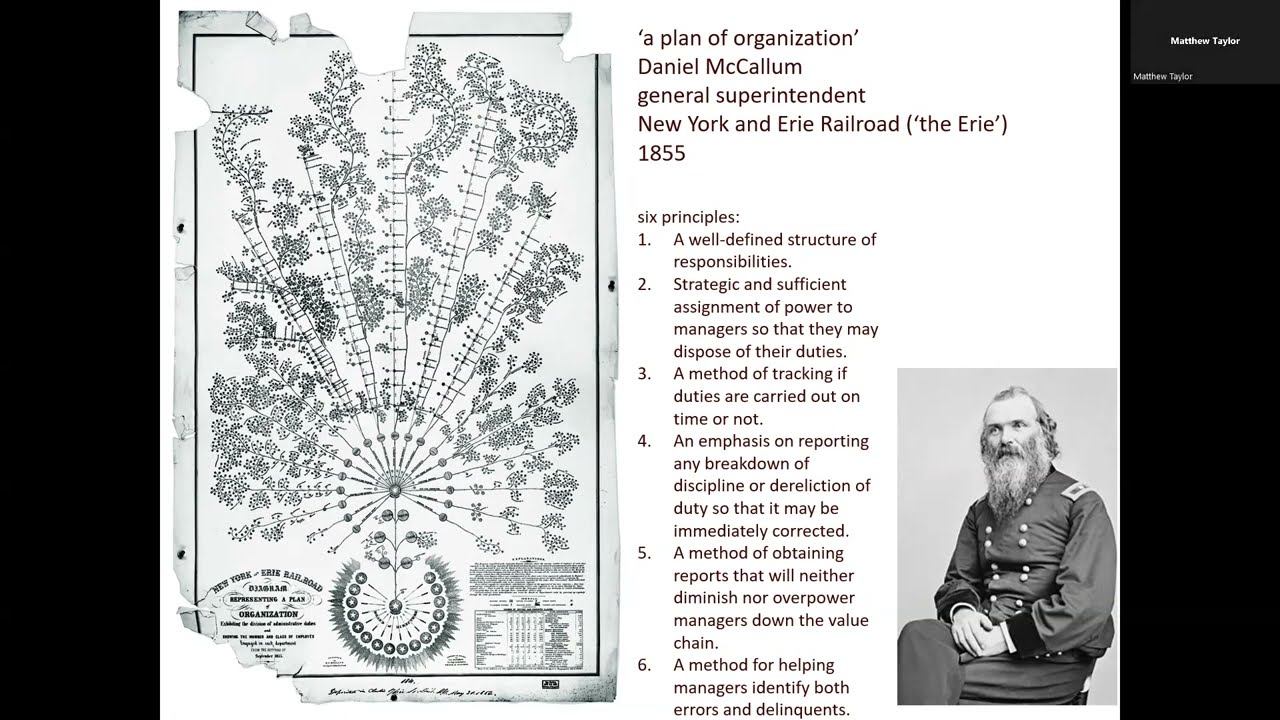
much. Hi. It's very exciting to be here. At my first Stretch conference, and hopefully not my last, and I'd like to say welcome to all the people watching at home and online. You missed out on the great food and the fantastic cinema here. I'm going to be talking about 5 core practices for effective organisation and how they might help us to achieve some of the things that you've heard talked about today on stage, a more human and yet still an effective organisation. I've already been introduced, but I just wanted to make the point that I'm very happy to connect on social media. In fact, this is a cut-down presentation that you'll see today. There are 93 slides in the full pack. If you want the full pack, and if you want the slides in advance of getting them through the conference, please just drop me a line on any of these social medias. I run Red Quadrant. Red Quadrant is, as was introduced, a network consultancy. We don't employ any of our consultants. We're not exactly a radical new organisational form. Maybe we were a little bit newer in 2009 when we set up, but we're doing something that's a little bit different from the normal world of work. I also run a social enterprise around public service transformation capability building. I'm on the board of directors of Systems and Complexity in Organisation, and I do a range of podcasts still to be released. books I'm writing, and I'm a founding member of Requisite Agility and the Open Eyes Collaborative. If you want any of those links, they're all at bentaylor.com. That's enough of me. What I'm going to cover today is the possibilities of organisation, and I use the word organisation advisedly. Obviously, we're mostly talking about organisations, but it's the structure of organisation that's really of interest to me. I'll introduce you to the concept of the blue dot, A really powerful basic idea, and then I'll go into the 5 core practices with a real note about the risks of talking about these kind of things, the risks of double binds, and the importance of understanding that these are practices, these are not destinations. And then at the end, I'll just connect that into why I think this is so important for organising for both organisational and human needs, and why this might help. None of this material is hugely original. It's all curated. It's all good organizational development stuff with some very strong kind of mid-20th century organizational theory, systems complexity, and cybernetics behind it. Now, does anybody know what this is? You won't be able to shout out at home, or you can, but I won't hear you. But anyone in the theater here today, can you tell me what this is? A railroad. A railroad. Good guess. Very close. It's not a railroad, but it's close. Anybody else? A crochet pattern. A crochet pattern. That's really nice. No, but nice idea. Anybody else? Okay, this is really cool. You're all new to this, so that's exciting. Does it help if I say it was generated by this man who's a little bit of a hero? He was actually an American Civil War hero as well, an engineer. built bridges and railroads. Does that help? No? Okay. I'll put you out of your misery. This is actually a plan of organisation. This chap is Daniel McClellan. He was the supervisor, or general superintendent, of the New York and Erie Railroad, called the Erie. And in 1855, he put this together, together with the first ever enterprise architecture document that I'm aware of. There's probably something in the Bible. But this is allegedly the first modern organisation chart. If you read Peter Scholz, he talks about this as the deep, dark roots of organisational misfunction. There's a story about this diagram which goes like this, which says that Daniel here, with the fantastic beard, was an engineer. So when he was asked to put order into the railroad running— and this occurred as a result of the first-ever fatal railway accident. Sad to say, lots of workers had died in the building of the railroad lines. Somehow they didn't quite count, for reasons that would probably be fairly obvious. But even though trains were only running at 30 miles an hour, somebody died in a railroad crash. And he put this organization together, and in a sense, you can see that as a railroad engineer— somebody said it's a railway line, right? He put this together like a set of railway lines with switches and points and tracks and absolute clarity of who was to blame when something went wrong. Okay? So he had 6 principles, and actually, they're not that bad. They're pretty powerful, pretty interesting. But you'll see in here An emphasis on reporting any breakdown of discipline or dereliction of duty so that it may be immediately corrected. And so on and so on. Some really sophisticated things in here. But actually, if you read the Scholz version, this original diagram, original org chart, if you like, is at the root of command and control, blame, attacking people, the denigration of human freedom and possibilities. But there is also another story that you can tell about this particular diagram. Can anybody else tell me what does this look like apart from a railway line, apart from crochet? A human nervous system. Looks like a human nervous system. That's a great one. Yeah, it definitely looks somehow organic, doesn't it? And actually, he drew this. He was a great, avid artist of— plants, and he drew this based on the willows that grew, a particular type of willow that grew alongside the railway line. So the other story that this has, if you look at these other principles, right? A method of obtaining reports that will neither diminish nor overpower managers down the value chain. A well-defined structure of responsibilities with sufficient assignment of power so that people may dispose of their duties. So the other possibility inherent in this original org chart is the possibility of human freedom, of appropriate roles and responsibilities, of giving people the tools to do a powerful job. And that's what I'm going to be talking about today. And talking about the shadow side of organisation, I think it's well worth saying that somewhere out there, probably right now, possibly in this same city, there's a shadow version of StretchCon going on, right? That's the conference where people are talking about OKRs They're talking about sweating the assets being the people. They're talking about fiddling your figures for the quarterly reports. And we should be really realistic. Those guys are winning. Okay? The shadow StretchCon, the one that's not talking about human potential and possibilities and being a better leader and so on, still dominates our business world. That's the one that Elon Musk is the keynote speaker at. Okay? So, you know, let's be realistic about this. And let's be realistic that— Trying to do the right thing doesn't always mean we win every single time, and I think that's often missing from our stories to ourselves. So let's hope we don't descend into the shadow stretch column. To that end, I'm going to introduce a very fundamental idea in organization. So I came in a bit early this morning, and underneath— it should average out at about 5 of your seats— there is a blue dot sticker. So don't look now, don't look now. If the blue dot is under your seat, I've asked permission at the end to get you up on stage to do the final closing 10 minutes of today's StretchCon. And what we're looking for is a presentation that summarises the learning, that is engaging, authentic, fun, that teaches a bit more, and that really adds value, okay, that really kind of wraps up the conference. They're nervous about it. I'm nervous. So you better do a good job. Is that okay? So before you look to see whether you're one of the people with the blue dot, call out for me, please. Again, sorry for people at home. Call out how you're feeling about the possibility of having the blue dot. Good. Huh? Good. Good. Some people are feeling good. Excited. Terrible. Speak out. Speak up. Anxious. Anxious. Anxious. Good. So there is something that some people had some positivity, but a lot of people had fear. And I think the most— the best summary of it was the person who shouted out, right? So it makes your blood run a little bit, puts you a little bit on the edge of your seat. It's not just me standing up here entertaining you all of a sudden, and you can take me or leave me and score me out of 5 at the end. It's actually you're involved, you're implicated, okay? So the blue dot in organizational life is having that responsibility. Being accountable, being the one who's got to deliver the results. Does that make sense? But what happens most of the time in organizational life, I'm sorry to say, is that when you have one blue dot, somehow it's a little bit like a gravity effect. And then you get a second, and then you get a third, and before you know it, they're kind of all just arriving at your seat. Okay? So too much blue dot, what does that mean? It means overwhelm. It means exhaustion. Burnout. That's the kind of ultimate extreme of it, isn't it? Okay. So on that happy note, please stand up, check whether you have the blue dot, remain standing if you have a blue dot under your seats, and sit back down again if you have no blue dot. For those of you at home, people are standing up, they're looking under their seats. A couple of refuseniks in the audience, but not too many. Hello. Has everybody checked? Yes. Okay, who has the blue dot? Oh, did they fall off again? Okay, so now you know I didn't put any blue dots under the seats, and I am an unreliable speaker. That's good. You shouldn't trust me. But now you have no blue dot. How does it feel having no blue dot? What's your response to that? Disappointed. Relieved. Relieved. Honest people here. Any others? Happy. Happy. Great. Okay. So there's a sense of relief. There's a sense of escapism. Well, now I can just sit back and be entertained and do my emails and whatever I feel like for the rest of the talk. Okay? But think about in a work context, what does having no blue dot mean? Okay? It means a little bit of a break. It would make a change, wouldn't it? It would be nice. But on the other hand, if you continue to have no blue dot, you get flabby. You lose your edge. You really want to challenge yourself. You're not getting the right kind of inspiration. You're not getting the right kind of challenge. So what we're all about in organization, in human organization, is the graceful flow and the sharing of the blue dot. OK? I get this concept from Barry Oshry, one of the great thinkers about human Dynamics in organizations. So think for the rest of the presentation, what we're talking about is how we get that sharing, that dance, that flow of the blue dot from person to person. There's the blue dot in case you wanted to take one home with you. Now, we're straight into the 5 core practices now, but I'm going to give some warnings as I do this. So here are the 5 practices. We put these together— we tend to introduce these in this order, but the order I'm giving you is not definitive, and we do it for certain reasons. And there are 5 different types of practices that we introduce, usually in an organisational development kind of frame, into any kind of organisation. The first one we call constructive conversations. Right? So this is, are we really building a practice of having conversations in our organisation that are focused on getting at a shared view of the truth, shared agreements, and in doing that, that really open up the things that are normally kept private and quiet and bolted down and maybe leak out in a little bit of passive aggression and a little bit of the water cooler conversations? Particularly, are we skillfully bringing into our conversations the emotional content of what's going on for us? in response to our life and work life and organizational changes and all of those kind of things? Are we treating emotional valence as data, useful data, to help us to be more effective in organizations? And secondly, reasoning. Is it acceptable and appropriate to ask somebody, I can hear that you're recommending this approach. What data points do you have for that, and how have you interpreted them that way? And why did you choose that data, not something else? And what assumptions are you making in your argument? Because normally in organisations it's considered not only not discussed, not only hidden, that emotional and that thinking process data, but actually undiscussable, actively rude, inappropriate. We just don't bring it up. So if we can bring that out into the open, and by the way, if it's been kept down and concealed for a long time, it can be a little bit volcanic. It can be a little bit like putting a match into a bucket of gasoline. There's a whoomph, and things kind of take off. So you need a safe container. You need facilitation. You need an ability to make sure it's okay. And once people realize that they can have a kind of massive row and let something out, and it's not the end of the relationship, and it's not destructive to their careers, that starts the seeds of potentially doing more. And you'll hear later in this conference more about psychological safety in its true sense. Thank you. The second set of practices is clarity. Clarity of roles, tasks, relationships, strategy. Are we actually making concrete? Are we actually making clear to people where those things stand, what their boundaries are, what their freedoms are? And I'll go into each of these with some examples if I have time. The third thing is learning practices. Now, we're all trying to build learning into our organizations. There's 2 things that I think are important. One is we talk about triple-loop learning. So that's learning to do the thing we're trying to do better. Can we— we tried this, didn't work, now can we try that? The second thing is, are we actually able to reframe, check our assumptions, and reconsider whether we're trying to achieve the right result at all? And then the third level is, how is our identity playing into this? Are we actually thinking about who we are, what we should be as an organization? Thank you. It's really hard to introduce learning practices, and we're often asked to do it when there really isn't clarity and there really isn't a practice of constructive conversations. Those 3 things together generate shared relationships, shared organisational systems, and a sense of shared meaning, and they create what we call a learning system. So they tend to be the fundamentals, not always the starting point, but tend to be the basics in the 5 practices. The next 2 are really these interesting self-steering practices, where it's not a question of setting a goal and then heading for it, and then when you get there, you realize that you've lost so much along the way and that it wasn't a worthwhile goal in the first place. It's adaptive. Because culture shaping, which is focused on creating conditions where people are really bringing their whole selves to their job, are really fully committed, that depends on that right flow of the blue dot, requires actually listening to people and actually responding to their actual responses, not your own assumptions, not your own leadership canards. That creates a productive system. And the final part is, have we got a good and clear intent for our organization? Are we actually measuring and delivering what matters to our customers? Are we actually measuring in their worlds? And can you see how that's another self-correcting system? This concept comes from cybernetics. Cybernetics comes from the Greek kubernetes, which has nothing to do with the IT system Kubernetes, but is actually the act of steersmanship. Can you actually pilot a vessel with winds and sails configuration and tides and waves and rocks and charts and people on the vessel rowing and putting it up. Can you actually do all of that and navigate your way to a destination, to a goal? So there's this adaptive, goal-directive approach that we're trying to build in. So I mentioned that when you introduce constructive conversations, you get this warmth of, you know, the hidden stresses can come out. That can happen particularly with clarity practices as well. And with culture shaping, leaders will hear things they didn't want to hear about their impact on the organisation. So all of these need support. All of these need a container. And we borrow from the work of a psychologist-psychiatrist called Petrushka Clarkson, who has a concept of priority intervention levels. And the point here is you can't hope to address development in an organization if you have a feeling of deficit happening. You can't address the deficit if there's conflict. You can't address the conflict if there's confusion. And you can't address the confusion if there's danger. So you have to address these things as they come up. Not resolve them necessarily, not fix them, not finish them, but process them, deal with them in a way so that you can get to the next level down. So this is very simple stuff, but it's very psychologically nuanced. And it's really important to beware of double binds. A double bind is a situation where you can't do one thing, and you can't do the other, and you can't get out of that lock-in. So you're in a trap, okay? Originally defined by Gregory Bateson, the classic double bind is the parent saying to the child— well, what's the word when you behave in a way that's completely self-determined and self-directive and free? What was that? Trump. I didn't get that, sorry. Anyway, be authentic. Do you get the idea? When somebody tells you, be authentic, be imaginative, be yourself, but you're either responding to their demand to be yourself, in which case you're not being yourself because you're responding to their demand, or you're being something else, in which case you're not being yourself. You get trapped in, and it's psychologically very, very divisive. Let me give a real work example. It's really important to say, we're working on a practice of constructive conversations, Not, we are an honest organization. There's many reasons why I believe you should never, ever publish your values and put them up on the wall. Only in very, very limited circumstances. You should never say, these are the values of our organization, because you're trapping your people. If you say, this is an honest organization, and somebody goes into a meeting and their manager isn't being honest, then they're in a double bind. Okay? In theory, they could challenge their manager and point to the poster on the wall. You know, we're an honest organization. That doesn't usually go well unless you've done all the work which would mean you didn't need those values on the wall in the first place. But if you say, I don't think you're being honest, then you're calling out against the values of the organization. But if you keep it in and bottle it up, which is far more likely, then you have to go around saying we're an honest organization, knowing not only is your manager dishonest, but you're having to be dishonest as well, precisely because the thing on the wall says we're honest. So that's the trap that we can easily create if we're not careful, if we don't understand that these are practices, these are things we work on, these are things we we try to achieve. And the second thing— this is why the practice is important, okay? So this is a practice like practicing to get better at something. You will not be good at constructive conversations if you've been hemmed in by this very restrictive organizational environment for a really long period of time. You won't be good at giving clarity in feedback to people, in setting tasks, in defining roles, if that clarity wasn't safe before, because nobody really wanted to be accountable, because accountability was dangerous, and so on and so on. So it's a practice like the practice of sitting in Zen that you have to just keep going back to, you have to keep working on. You know you're never going to— it's not a destination. It's something you always work on. So that's the 5 core practices, and I'll explore them just very, very briefly. I'm just going to— we've got a lot of tools behind each one of these practices. They're a little bit more spelled out in the full slide deck, but I'm going to give kind of one little bit of an example for each one of these. So there's a whole set of these. that are available. So the point about authenticity and honesty is that we most often live in a devil's bargain, I call it, of unaccountability. What do I mean by that? It means I'll never completely tell you what you need to do in the organisation. That means we can both hide from responsibility because I can say you're a useless team member and you can say I'm a useless boss. That means that I'll never be satisfied by you, but— I'll never be satisfied by you. I can never fully hold you to account. That's the bargain. That's the deal. And we'll both be dissatisfied, but we'll be in an incredibly stable situation where nothing will ever change, and we won't have to face the stress of accountability and change. I don't know if this sounds familiar to anybody in any of your workplace or perhaps even other relationships, but humans value stability so much that we might actually accept this bargain. If we go into authenticity and honest communication, on the other hand, we will have a lot more productive conversations. We might be able to move forward together. But we might also find out that there are fundamental disagreements, maybe ways we fundamentally don't respect each other. And the question is, do we really want to know? The point I want to make is not to put you off and not to say we should remain trapped. This is another aspect of a double bind, is that productive conversations have real implications. As we start to get into this, there's something that we have to release. and be brave about and let go of in order to move forwards. Okay, learning practices. So I'm just going to talk here about that double and triple loop learning. And a great quote from one of the founders of organisational development: You never understand an organisation— you can substitute system, economy, market, product, technology base— until you start to try to change it. Okay? So this is about involved, active learning about what we're doing. You saw a diagram like this earlier today, I think. I don't make any assertions about any of these things being definitive about the human state. I just find that a model like this has been useful and practical in our work. Our results depend on our actions. Our actions depend on our thinking, our theories, our understanding, our framing of the situation. All of that depends on our identity. What we think our job is, who we think we are, what we think our role is. Most of our learning is about, well, we tried this, didn't work, shall we try something different? OK. So the example I use is firefighting. We've got very, very good over the years as human beings at the craft, the profession of firefighting. We've got better technology, better kit, better training. Better approaches. So we're really, really quite good now at being able to pull people out of burning buildings. So that is a set of learning at the first loop level. At the second loop level is reframing and changing our thinking. And at a certain point, firefighters started to say, well, this is all very well being the heroes and pulling people out of burning buildings— very dangerous, of course— and we're losing some people. Wouldn't it be better if— We could save more people. buildings didn't go on fire in the first place. So we get the shift into prevention, and we get the shift into fire extinguishers or fire alarms, into fireproofing of buildings, et cetera, et cetera, et cetera. And then what happens is that the macho firefighters start to understand that maybe their role is slightly— maybe their whole concept of themselves could be different. So instead of being the heroes who save people and do a bit of prevention, now in the UK, they're spending a lot of their time going around to old people's homes and checking the batteries In the smoke alarms, because that's what works. And while they're there, why don't they look out for slips and trips hazards so that somebody doesn't break a hip and end up in hospital and deteriorate? Why don't they check whether there's CO2 gas being leaked out? CO2, you know the one, the dangerous one. Why don't we look whether they're in fuel poverty or food poverty? Ashaming as it is to say that those are realities in 21st century Britain, but they are. Thank you. And they become really, really very good at partnership working, collaborating with other parts of the public sector. So can you see how we're shifting the frame from learning about doing actions better? My light-colored gray arrows are not really showing up brilliantly on the screen, but just— they're the feedback loop in there from results to actions, from results to thinking, and so on. Acting better, thinking about the problem better, changing our identity. Okay. The one that people often don't understand is clarity. And I often talk to organisations that are very focused on reinventing organisations and teal and holacracy and sociocracy, and we're going to hear some fantastic things about that in this conference. And people say, but clarity and role descriptions, that sounds very command and control. Okay? Now, I don't care whether you have a hierarchy if you run it right, or whether you have a completely devolved organisation if you run it right, and recognise that there are still hierarchies, because there always are. But what I do care about is that you practise clarity in your organisations. So what do I mean by that? I mean giving people an understanding of what their boundaries are, which enables their freedom. Okay? So we use this definition of work, again, mid-20th century, after Eliot Jacks: effort to a purpose Using judgment and discretion and expertise, experience, etc., within boundaries over time. Each part of those is important, and where we lack any of these parts, we are setting people up to fail. We are giving them blue dots that will overwhelm and destroy them, or uncertainty that will paralyze them. Okay? So purpose is really important. Purpose depends on context, framing, understanding, their level of thinking that they're capable of at the time, and a lot more. They've got to understand the purpose and context, and it's somebody's responsibility to make sure they understand that. Maybe theirs in an engagement with their peers. Otherwise, they're being set up to fail. Judgment and discretion is critical to the definition of work, right? Otherwise, you're just a machine, a robotter, of course. And at the same time, if you have no boundaries on your freedom to act, if I Running onto a train and I say to an intern at Red Quadrant, can you do this, this, and this, and do it by Wednesday, please? And then I just hang up. But they're like, I don't know, should I speak to the client? Should I speak to the internal consultants? Or do I do a draft and give it to Benjamin? Then what I'm doing is I'm setting them up without the clarity of their boundaries, and the chances are they'll bring something back to me, and I'll either go, what did you speak to the client about this for? This was an internal piece of work. I didn't want you to go and— do all this kind of stuff, right? Or I'll go, what, you mean you just researched this on your own? Why didn't you speak to the client? Why didn't you speak to my colleagues? Why didn't you do— I thought you were a bit more imaginative than this, right? So can you see how the lack of boundaries is paralyzing, is disabling? Boundaries protect the space for discretion. They enhance effectiveness. So I'm going to give you this powerful, simple tool, which is a fantastic tool for From strategy level to role to programme to product to task, it's a really good model. So you just take a piece of paper and you divide it into 3 boxes. And in the left-hand side— and you can do this whether you're the person being given a task or whether you're the person giving a task— you put all the non-negotiables, the must-haves, the red lines, the absolute requirements. Does that make sense? On the right-hand side, you put the freedom. You can decide in this domain. You've got complete freedom to decide whatever you want. Just do it. Just make it work. And in the middle, you put all those weaselly kind of like, we'll do a rough first draft and bring it back to me. Then I'll have a better idea of what I want. Okay? You know, iterate it a bit, work on this, or actually, you know, give me a draft of the structure of this of this piece of the infrastructure, but come back and check with me, okay? Excuse me. You've heard me breathing, now you can hear me coughing. And in the middle, you put all of that check with me stuff, okay? Now, just the process of grabbing 5 minutes over a coffee and writing what's in each of these 3 columns is incredibly clarifying for your relationship, for getting the work done, for enabling people to do a good job. But then what you do is you go through everything in the middle column, and you test, and you practice, and you work out, what could I do that would be okay, and I could just get on and do it, you wouldn't have to consult? That goes in the right-hand column. And what could I do that would really piss you off, that would really cause a problem? Sometimes in relationships, we use a concept from coaching called the Brown Contract, right? Which is exactly what it sounds like. You sit down with a colleague when you're coming into a new management team, and you could say, What could we each do to each other that would really put us in the shit? Okay, that's the brown part of it. So you're doing a reverse brainstorm of how could we destroy this relationship, and that's setting boundaries, that's giving clarity, that's helping you to understand what works and what doesn't work. So going through just this simple 3-box exercise can, you know, free up discretionary effort and the ability of people to really deliver in organizations. I haven't got long, and I've got 2 of the practices to go through. So culture has to be seen as something that's complex and something that's adaptive. And the important thing for a leader or a manager about culture— I don't care about any distinctions between leadership and management, we're here to talk about getting the work done— is that the quality of what you get depends on the judgments your team make about you and the experience that your team have of you. So the quality of what you get depends on your ability to put yourself in the hearts and minds of your team members, your followers, your colleagues who you need stuff from. And here is our model of culture, okay? We say that there are— this is culture defined, by the way, as productivity. It's not, you know, are we a creative culture, are we a collaborative culture? This is about, are we full of people who are 100% committed and just really on it, really eager to work? Okay? There are 3 triggers. One is the behaviors that people see their leaders indulge in. The second is the systems that they experience in the organization, whether that's task allocation, who gets to go on the training course, how they can claim their expenses, how they can negotiate a salary increase, whatever impacts them on a human level. And the third thing is organizational symbolism. Who gets the title? Who gets the parking space? Who gets the privileges to work? remotely or whatever it is. As soon as they experience any one of those 3 things, they have a particularly strong emotional response. Okay? And this is not a thought-through rationalized response. This is a core gut, hits you there kind of emotion. Okay? And you can evaluate any change in an organization on these 8 axes. Does this show that the organization wishes me harm or cares about me? Is unjust or is fair, is oppressive or respects me as a human being, etc. And you can do incredible work in change management or bringing in, you know, dealing with the challenges of recession or inflation or downsizing or whatever else just by trying to predict how people will receive things. And if you can't get all the points for fairness and care, at least get the points for honesty. At least get the points for being courageous. Okay? And there's 8 of these. These are drawn from some research on kind of across cultures, across times, the way that people have these emotional moral judgments, moral emotions. Now, the problem is that people will then tell stories. Do you know what the boss did today? Or, you know, why did that person get on that training course when I wanted to go last year? Etc., etc. Okay? And then people will have an emotional response to the stories, and that generates motivation, productivity, willingness, and discretionary effort over and above, or under and below, what people bring to work themselves. Now, it turns out that all aligns with what most people talk about as psychological safety, as mission clarity, autonomy, mastery, purpose, belonging, etc. Which is kind of interesting. And the challenge is that we just bracket all of that, and we call all of that culture, okay? And the other challenge is that there are lots of feedback loops. So all of this then feeds back into how we design leadership behaviors, people systems, and organizational symbolism. Because guess what? If you don't trust your people and you think they only respond to incentive and reward, they will prove you right time and time again. and you'll end up designing incentive and reward systems as though people can't be trusted. If you trust them, and you get it right, and you work on it, and you learn, and you realize who can't be trusted, then you'll get somewhere. So all of those feedback, and what we do is we have leaders listen to the stories in a very neutral, in a non-defensive, in a really responsive way so that they can actually actively start to think about what are the triggers and what are the emotions from our behaviours, from the people systems, and from the symbolism. I'm a bit over time. I'm going to go into intent, though. Okay. So this is the gravestone of one of my heroes, Stafford Beer. On the gravestone, you can't probably see from there, it says, the purpose of a system is what it does. His maxim was there is no point at all, it's a total waste of time, to assign to any system, any organisation, any process system, any intent other than the outcome it produces. Universities are not there to educate people. They're there to help people socialize, get drunk, understand their place in the social hierarchy. Hospitals are not there to make people well. God knows it's the worst place to be if you're ill, to be in a hospital, or if you're not ill as well. More people die in hospitals than anywhere else. They're actually perfectly— the thing that explains hospitals really well is they're perfectly optimized to allow surgeons to practice their craft in a very, very optimal way. Okay? So what we do is we get people to think about the posiWID, the actual outcome-type purpose of their organization, and then we get people to contrast that to what does our mission statement say that is our actual purpose? What does it say that we're actually trying to achieve? And very importantly, we then get them to say, what do we think is our deep underlying motivating purpose, the thing we're turning up to work to actually do. And then I'm not going to go into this, but what we do is we get them to identify what are the measures that would measure our actual purpose. We spend loads of time in the— this is for a call centre— in measures that are part of a process. They're not end-to-end. They're not creating value for the customer in their life. And they're not actually meaningful to the customer. So we measure a lot of transactional things. Lines of code. Wouldn't that be a terrible measure? Whereas what we really want is measures that are top right, that are our whole process, our outcomes as an organization, and that measure whether we're actually achieving something that matters to the customer. And the real benefits actually happen in people's lives outside of this grid. And the point is, if you actually start to measure and get feedback— so customer effort is a really simple measure. Customer satisfaction, nonsense. You can really easily get customer satisfaction by screwing up and then apologising really nicely. If you ask how much effort people had to put in to get their issue resolved, then you're starting to learn what might actually motivate people to engage with your organisation or not, and how to improve it. So finally, these are the 5 management principles. And thinking about human needs— I'm going to skip over this one for lack of time, and you'll just have to Ask me if you'd like to find out more about it. We have 6 core human needs. We have a need for certainty and comfort balanced with uncertainty and variety, a need for love, connection, and belonging balanced with significance and uniqueness, and a need for growth and contribution. And organizations need— oh, I didn't bring these up. There they are. And organizations need To homogenize and create stability. They need to have a solid core. They need to have some sameness. Otherwise, they're not an organization at all. That meets our need for certainty and comfort. Organizations also need to have different groups of people doing different things at different times. That meets our need for uncertainty and variety. They also need us to integrate, connect, moderate our behaviors, behave appropriately as an organization, as individuals with each other. That meets our need for love, connection, and belonging. And they need us to really bring our whole selves, our unique offering to work, which meets our need for significance and uniqueness. If you meet all of those, you can create a context that allows learning and growth in your people, and that's incredibly motivating. And the 5 core practices are a really good way of doing that. That's all I have time for. I'm always happy to talk. I run learning sessions on all of this kind of stuff. But I hope you got something out of today, and as I say, I'll be sending the slides off to the conference. If you want the full set early, contact me, but there are tools in there that you can take away today and test and learn and use, and I really hope you will. Thank you.
And thank you for being conscious on time. Okay, yes, where is the blue dot?
Well, where's the blue dot right now? I guess we're sharing a little bit of it, because if I just start talking now for 10 minutes, then— But it's always on the stage. And this is not a good model of leadership. This is a model where the blue dot is imbalanced, where you're not fully motivated and engaged. I have to put the energy in to try and entertain and pull that out of you. Hopefully, If you're in a work context, you're moving away from this model, and you're in a model where you're sharing, shaping, discussing, and you're actively working on where the blue dot moves and flows. I don't know how else to answer that question.
Thank you. Money or the experience they get, culture, professional development, and so on, which is more important to employees in your opinion?
I mean, I think there's a concrete answer to this. I think that the answer is that most people have a kind of threshold of how much money is enough based on the world economy, the local economy, their job, their expectations. Once that threshold is met, more money is not necessarily the primary motivator, though everybody has a price, to be fair. But actually, what is the real motivator is all of those other things. It's engagement, involvement, passion, purpose, a feeling of freedom, autonomy. And the feeling of being in relationship with people in your working context.
Thank you. Interesting, because this is the other end of the spectrum. Do you have any tips for designing an exit experience? This is when money doesn't help anymore, I guess. What should happen when someone quits or gets fired?
Thank you. That's a really interesting question. And I would say that that's an incredibly powerful opportunity to hear things you wouldn't normally hear. So I would take exit interviews— and I do take exit interviews— really seriously, and not accept platitudes, and not accept, well, it was really, really nice working here, really sorry I have to leave. But at least do a bit of digging to say, what are 3 things that we could have improved? Not what could have kept you, but what do you think— if you were in my shoes, what would you do to make sure we don't lose other people like you? And ask a few of those really probing kind of power questions, To try and get some of that lack of clarity, to try and get some honesty going in this relationship. And I think it will serve you well in the exit terms, but for me, the exit interview is an opportunity to see into what's normally hidden, because somebody might just be willing to be that bit more open with you. Even if it's painful, all the more important to ask, I think.
Thank you. What would you say to a CEO of a company that just put their values all over their building? Okay.
Oh, sorry. I always walk into this one because I always say it's a really stupid move to publish your values, and then there's always somebody in the audience who just did that. I mean, let me— my caveat, first of all, is that the times when it works is usually in a crisis or a turnaround, when the team design and really feel ownership of their own definition of the values and behaviours, whatever whatever you want— values, behaviors, etc. And they feel that they created and they own it. Not that it was an HR exercise that they fed into and then some unspecified time later something got published by corporate, but that they really own it together. And there's a crisis pressure. There's enough that people can really challenge and really hold people to account across power boundaries for that. And I have seen it work in those circumstances. I've seen, you know, real— Turnarounds being driven by a shared sense of values. I understand the impetus to say we're going to do our personal development plans based on the values, we're going to evaluate, we're going to hold ourselves to account. Maybe in some ideal world out there, the values do work in that way and people can be held to that. the golden thread running through the structure, I just don't think it works. So if you're a CEO and you just put your values all around the building, I would engineer opportunities, fix it, have a stooge where a junior member of the team challenges you on those values very visibly and publicly, and you climb down over an issue. In fact, I would try and do that over a real issue by doing some listening and finding out where you're not living up to your values. So that you can model being challenged and making a change based on the values and being held to them, then you might have a chance.
Thank you. And then lastly, is there a book suggestion about leadership?
Oh, yes, lots. I'll put some in the slides, I think, to send around, because it's too big of a question to answer quickly, because I don't carry lists well in my head. I referenced Peter Schultz. The Leader's Handbook is a really good reference. Chris Argyris, Teaching Smart People to Learn, is a really nice little article. If you want to look at measures, stop trying to— what's the word? What's beyond satisfaction in user terms? Satisfied users? Stop trying to delight your customers. OK. It's a Harvard Business Review article. That's very good on measures. So there's articles and books and things that I can recommend against each one of these 5 practices, and I will do.
All right. Thank you very much. And since we're out of time, all that's left for me is to thank you with a little gift.
Thank you.
Thank you for coming.
Thanks, everybody. That was lovely.
Thank you.
More from Benjamin

How to Transform Public Sector Organisations Through Systems Thinking With Benjamin P. Taylor

Cybernetics is not the banana, part 2 — Benjamin P Taylor with Laksh Raghavan (2025)

Cybernetics is not the banana, part 1 — Benjamin P Taylor with Laksh Raghavan (2025)
04 | Culture, Clarity & Conversations: Leading in Uncertain Times with Benjamin P. Taylor

The Key To High-Performing Teams Based On Trust – Benjamin Taylor | Compass Tech Summit 2023

Benjamin Taylor - Jan 2021 - SCiO Open Event - The 'Four Quadrants' of Thinking Threats

Ep36: A wholeheartdly work Is Crucial To Your Business. Learn Why! Benjamin Taylor - CX RedQuadrant