Benjamin Taylor: Meta-contextuality through the medium of Bongard games

In this 2018 live talk, Benjamin P. Taylor (founder of Red Quadrant, the Public Service Transformation Academy and contributor to Model.Report) introduces the notion of meta‑contextuality and demonstrates its relevance for systems thinking, organisational transformation and consultancy practice. He frames meta‑contextuality as the ability to recognise, navigate and apply multiple overlapping contexts rather than being locked into a single, often‑messy, analytical frame. To illustrate this, Taylor runs a series of Bongard‑style visual puzzles (geometric pattern‑recognition games) with the audience, prompting participants to articulate the underlying rule that separates the left‑hand set from the right‑hand set. Through the games he shows how context determines meaning, how rules can be ambiguous, and how the same problem can be reframed in different ways. He interleaves jokes, anecdotes (the classic consultancy spoon joke, a Hungarian battalion story, references to Hitchhiker’s Guide, etc.) and philosophical references (Bateson, Witt‑Wittgenstein, Boyd, Oshry, Hofstadter) to argue that traditional, codified methods are fragile because they freeze a single context. Instead he advocates a meta‑rational, multi‑method approach that treats methods as provisional maps, recognises transduction of meaning across organisational boundaries, and remains open to re‑framing. He also touches on the limits of AI (self‑driving cars, Bongard games as a benchmark for human‑level cognition) and the importance of humility, noise‑injection and continual context‑checking in practice. The session ends with a call for participants to reflect on one actionable insight and to engage with his transformation academy.
Chapters
My session session is nothing to do with any of this, and in a way it's a complete flyer for me. Well, it's not, and it is. So those of you who don't know, this is me as my wife conceives of me. She's our graphic designer, and I'm Antlerboy on the internet. It's an anagram of a short version of my name that I used to use. Because it's very hard when you call Benjamin Taylor or even Ben Taylor to get a name on the internet. There is no strange story behind it. And I'm a massive contributor to Model.Report. I am fulfilling the 1% of people create 90% of the content rule of somewhere, a rule on the internet. And Michael, when your PhD is published, please let me know or go direct to Model.Report and allow us to post a link because it's It sounds like that. I would love to help to share and spread the word. Model Report is a repository, curated sort of, of me trying to— I mean, it didn't start with me, it's got lots of other people and some contributors in the room— but to curate everything that there is about systems thinking everywhere, which is an infinite and infinitely regressive task. So I highly recommend giving us some encouragement.
Thank you.
Well, actually, be careful maybe. Maybe don't give us any encouragement. Maybe we don't need encouragement. Maybe we need the opposite. But there you go, it's there. I run Red Quadrant. I use this slide because we've got, we build your capacity to transform, and our tongue-in-cheek campaign against consultancy contrasted against certain other consultants. And these banners were up at a big fancy city event, and the Master of the Worshipful Company of Management Consultants took me aside for stern words at the end. And the banners actually genuinely haven't been seen since. So we try and do consultancy differently, and our goal is to change consulting, change public service delivery, and we do lots of big projects in public services, at which I will stop there. Oh, and these are some nice things that people have said about us. Isn't that nice? Advert over, and it is quite important for me to advertise because I am in business. The reason why Bongard games and metacontextuality are relevant to me is that I come at these from a consulting and a transformation perspective. Oh, I also run— too many adverts. I also run the Public Service Transformation Academy, which is a partnership of all these partner bodies which does the same thing, and just like Red Quadrant aims to do itself out of business by creating practitioners who have the capability to do transformation themselves, just like PSIO indeed. And the relevance of vanguard games and metacontextuality to all of that, I think, will become evident. But that's the perspective I come at it from. We nearly, in talking about big data, got into the brainache of artificial intelligence and machine learning and the like, and I will try and steer us away from that, those rocky shores today. We might get into it, but vanguard games I use a lot. In that context, I am thinking about how can we think about and above and around and beyond context in order to create transformation, innovation, systems thinking, better perspectives. I hope that will become clear as we go through. So arguably, I'm not here to lecture you about vanguard games at all. I might have come to sing songs to your cats. This is taken from Hitchhiker's Guide to the Galaxy, or The Restaurant at the End of the Universe, I think, where there's the guy who actually turns out to be the ruler of the universe, who spends all his time having hot baths, and every now and again people come and ask him for advice, but he is so metacontextual that he acknowledges the possibility that while they're not actually coming to ask him for advice or decisions on matters of galactic importance, they're actually just coming to sing songs to his cats, but he's able to interpret that in a completely different way, which is they want to ask him for advice. Does that make sense?
No, not yet.
And so the status of this is green, and I say that because this is almost entirely other people's intellectual property. And I give— so I really hope it's green.
And it is now.
And I give kind of blanket credit, and you can trace the key bits back to the key sources if you want to, and I'll explain if anybody wants to. So there it is. I was inspired by some things on the internet, and I put them together and curated them, as I do, for you fine folks. Okay, I'm going to start with a joke. It's a very famous consultancy joke. In fact, a speaker at the Worshipful Company of Management Consultants, of which I am no longer a member, made the mistake of starting his speech with this joke, and we all more or less chanted along to the punchline, which was hilarious for us and quite embarrassing for him. So you may have heard it before, but a guy goes to a restaurant, and as he's receiving his soup— it's a traditional restaurant— he knocks his soup spoon to the floor and tries to bend over and pick it up. And the waiter rushes over, picks it up, and flips a soup spoon out of his pocket and gives it to the guy. That's incredible! How did you know that I would lose the soup spoon and have one ready and available? And the waiter says, well, actually, we've just had McKinsey in, and they've done a time and motion analysis, and they realized that 5.32% of our productivity is lost picking up bits of— going back to the station to retrieve bits of cutlery that were knocked onto the floor, and the spoon is the most— the soup spoon is the most dropped item. So that's brilliant. And later, the man beckons the waiter over again, and he says— Yeah, I'm sorry. I can't help noticing that you've got a bit of string coming out of your flies. And he says, oh, well, you're very observant, sir. Most people don't notice that. It's probably a good thing. And the guy says, well, why? Why have you got this? And he says, well, the other thing that McKinsey noticed is that we lose another 3.37% of our productivity because we have to wash our hands when we go to the toilet. So the purpose of the string is, if I'm caught short during my shift, I can pull it out without making my hands dirty. So he goes, well, that's marvelously clever, isn't it? What will they think of next? And then he goes, yes, well, I can see how the string can get it out. But how do you put it back without getting your hands dirty? And the waiter says, oh, not many people ask that, sir. You're very intelligent. Leans over conspiratorially and says, I don't know about the others, but Personally, sir, I use the spoon. So why is that very good consultancy joke related to meta-contextuality and transformation of organisations? What's the meta-contextual element of that joke?
Change.
Welcome.
What did you say? He knows the consequences of change.
Don't expect the consequences.
Okay, yeah. And why are those consequences unexpected, and what they have to do with context?
Because it's hard to predict change in complex lots of things.
Can I ask you to join this this table here? That seat should be free for something. So we've got equal numbers. We're going to have to play a game in a minute. It's hard to predict, and why is it hard to predict? What context are the consultants thinking in?
Messy ones.
Messy— okay, yes. Well, their solution is going into a messy context, but they're thinking in a not messy context. Stones versus birds. Stones versus birds? Do you want to explain the analogy? Well, the difference between throwing a stone and throwing a bird. Yeah. Bird doesn't land the same. Yeah, that's very true. So they're expecting things to act predictably. Is that a live bird? Yes. Well, if you're highly trained by McKinsey, you understand the way to make the bird behave more predictably is to strap it to the rock. Then it behaves in a much more rock-like manner, but it does lose certain bird-like properties. Especially when it hits the ground. When it hits the ground, especially, yes. And that's another great example— Paul Plasek tells that story, I don't know if he originated it— of metacontextuality. Because if you're applying the context-specific analytical thinking about the mechanism, Of throwing the projectile of a stone. Did you read about those guys in America who've written a paper that says the reason men are better at physics is because young men have natural practice with understanding liquids' trajectories? They seriously advise that as well. You guys are the genius. Great audience. Thank you very much. It's related to the strings. I'm going to leave it there. They genuinely think that's why men are better at physics, and I'm not saying that that's true. So those are all examples of something that makes sense in one context not translating into, actually in this case, the real world. Does that make sense? Different perspectives, different underlying metaphors, different ways of thinking about the thing. So what does metacontextuality mean to you? Does anybody want to venture a definition or a thinking? You're going to say something, Steve? You just took a breath. Taking a high-level view. High-level view?
Okay.
20,000 foot. 20,000 foot?
Sorry?
It's one level away from the direct context. One level away from the direct context? Yeah? Great. One level away in any number of directions. Yeah, both of you are saying the same thing. Understanding there are different contexts at play. And being able to navigate them. And being able to navigate them.
At the same time for the same thing.
Yes, and apply them to the same thing at the same time. Then the formal definition is higher or second order, about itself, referring to context or convention, self-referential, and contexts and circumstances that form the setting for something and in terms of which it can be fully understood. Does that make sense? But if you look at it from a different context, May be understood differently, or misunderstood, or not fully understood. So we'll continue to explore that as we go. And the reason I love Bongard games has got nothing to do with artificial intelligence. It's entirely because they are a zero-woo way of demonstrating the vital importance of metacontextuality and the absolute limitations of machine-thinking-based rationality. Are you making sense of the way the world is, or making the world the way you sense? I'll keep moving. You might have heard this one before. This is a story that Baik tells in Sensemaking in Organizations. I've told it at CSIRO. So it's a lost battalion sent out by a Hungarian regiment doing exercises in the Swiss Alps. And the battalion is lost, and a storm blows in, and the sergeant who sent them out, or whatever, lieutenant who sent them out, I don't know, the person who sent them out suffers, and he thinks he sent them off to their death. And after 3 days, the team reappears, and they're feted and greeted with, you know, great joy and all the rest. They say, how did you survive? Well, we did think we were lost. We hunkered down, and we built shelter, and we thought we were all going to die out there in the cold, in the storm. But after a couple of days, the clouds lifted, slightly, one of us found a map in his pocket, and with the aid of this map, we found our way back to the camp. And they all crowded round to see this miraculous map, and they unfolded it, only to discover it was actually a map of the Hungarian Alps, not the Swiss Alps. I'll leave you with that story for the time being. And these are the references which will go around in the PDF and be available afterwards. And all of this started because Mike Haber, referenced this first lesson in metarationality, which uses Vondage Games. I'm using all— I'm stealing massively from that and from the rest in a tweet, and I followed up on it. My mind was completely exploded by this. And meaningness.com, not as my autocorrect keeps having it, meaningless.com, which is a completely different site. Meaningness.com is just a brilliant Brilliant, mind-blowing site in my humble opinion. Shouldn't that be a work in progress? It says a word in progress, Nora Bates. No, no, no, that's the concept, a word in progress. It's a new word that she's found. Yes, yes, I ended up not drawing on a lot of that directly, but all the rest on the left-hand side I've drawn on directly. And Harry van Dalis is your go-to maven for everything bongard. So what the hell is bongard? We're gonna— what we're gonna do Today is we're going to play some Bongard games. We're going to look at the implications— ah, some points are missing here. I've saved an earlier version of the thing. We're going to have a look at the implications in various ways, and I did have the ways in which I looked at them, but I seem to have lost my final copy of the presentation. Don't worry, everything else is fine. I checked. So here's the hero of the piece, Mikhail Moiseyevich Bongard. Brilliant combination. I'd love to know what his history is. Given that combination of names and his time in the Soviet Union. So he wrote the book Pattern Recognition, which you can buy for about £26 on Amazon, and I couldn't resist, but it hasn't arrived yet. By the way, for about the same price you can buy— Patrick mentioned the Macy conferences where all of the systems thinkers were brought together and cybernetics was kind of fully come to fruition— you can buy a complete transcript of the Macy conferences for about £26 on Amazon. It arrives the next day, and I opened it, and I opened it on a quote with Bateson and Wiener arguing about whether cows have neuroses. So I knew I would never find anything better, so I put it on the shelf and I'm never going to read it again. I just— that quote was enough. That was absolutely fine. So he was interested in recognition of patterns, both arithmetic and geometric. geometric, and in the early days of artificial intelligence and computing. That's all we really need to know about him. Right, what is a Vongard game? You have in a Vongard game, as you will see, 2 sets of diagrams, left and right side of the page. Ignore the distracting skeuomorphic ring binder conceit which is on the page here. Oh, you're just using your head again. And the task is Let me find the top one before you distribute it, actually. Give the game away on one of them. That's okay. You can distribute the rest if you want. Your task is to formulate a convincing rule that classifies the image left or right. Does that make sense? So a single rule without if-then statements and without portmanteau items that says this is what distinguishes the items on the left From the items on the right. So can you all see this one? It was at the top originally. Does anyone want to hazard a guess what the rule is for this one? What's the distinction, the difference that makes it different? Straight lines. Brilliant, perfect. So on the left hand, on this side here, you've got straight lines and actually straight angles, I would say. And on this side, you've got curved lines and curved angles at the What's a curved angle?
What's a curved angle?
I'm not sure.
The intersection points of the lines. All right, straight lines and curved lines. Straight lines.
Curved lines.
Straight lines and curved lines. You get the idea. Does that make sense? Does that make sense? And it's arguable that there are potentially infinite solutions for all Vanguard games, but don't be miserable. There's usually one answer that you can find where you have an aha moment And once you've seen it, you can't unsee it, and it would then be trivial thereafter, given a succession of shapes, to classify them as left or right-hand sides. Does that make sense?
Yes.
That's what we're looking for. We're looking for that moment of insight. So this is reverse— this is sort of determining what the pattern is which has resulted in this outcome, which is a key skill, of course, for systems thinkers, for transformation people, for consultants in general. And I've given you them roughly in order of difficulty.
Ah!
You said before they were mixed up. Before they were mixed up! That doesn't matter, it doesn't matter, it's fine. I know the answers to most of them. So we're going to give you 10 minutes of pub quizzing. So however you want to work in your tables, solve as many of these vanguard games as you can.
Have we all got the same selection?
You've all got the same selection.
Can we collaborate?
No.
Well, yes.
The goal is to get the highest score, by the way. One point per correct conga game. So you can all work as one team, or you can split them up and work separately. And once you've got a rule, can you please write it clearly on the sheet so there's no cheating? Oh, on the sheet? Yeah, on the sheet. And they're rough. You don't have to make these beautiful. The rules don't have to be neat. Just make it clear what you found out on stage.
Elements contain or contain stuff?
Yes. You don't have to just write concur convex. That's fine. Okay, you have to write on them when you found the answer. Okay, all right. Concur convex. Has anyone done this before? I should have checked. Oh, okay. You've got an advantage. So it's it's this. So the the dot is always on the as it was my side of the hole here. It's on the proper side.
Yeah.
Oh, who did I finish this from? Whose table did I take these first examples from? I'm robbing you of a point. Yes. We'll sort of shoot all the arrows.
Try and believe.
4 minutes left.
Okay, thirty seconds left.
Actually, three-sided. Got more black, got more white. Then you've got carbon. All on, all on, screw. Okay, time's up. Oh, stop! Don't know how to stop it. Okay, okay, back to your tables and I'll give you the answers. Most of them. Right, so first of all to say you guys are very good at this. Which alarmed me because I thought you would get more right in the time if you weren't careful. I wanted to jump back and just say there are no documented rules to Mongard games. They're generally accepted to be limited to geometric games, but we'll go on beyond that in a minute. They're heavily referenced in Hofstadter's— well, they're not. They're 6 pages in Hofstadter's Gödel, Escher, Bach: The Eternal Golden Braid, which is about cognition and artificial intelligence and And a very similar thing forms Raven's Progressive Matrices, created by John C. Raven. Our John Raven is a little bit coy about it, but I think it's his dad, or either his uncle, which is a very well-acknowledged IQ test, which is a progression of shapes, and you have to then identify which one goes next into the matrix, if you see what I mean. So similar kind of concept. I don't know if it's at all related. And the point about this is that you're considering and discarding lots and lots of contextual information, or you're applying different contexts to the Bongard Games, if that makes sense, in order to try to make sense of them. Does that make some kind of sense?
Yes.
And the thing I will put as a huge disclaimer, Bongard Games can be solved, unlike kind of transformational challenges in organisations or social problems problems or things like that. So this is a very deeply misleading metaphor in some ways. But let's look. Right, the answer to this one was sharp corners versus curved corners. Does that meet your nitpicking requirements, table at the front?
It's easy, just say curves and straight lines.
And here's the point, is often there are multiple rules or multiple descriptions that basically amount to the same thing. We're okay with that. So somebody keep score for each team. Award yourself 1 point, everybody, for that. Who got this one? Well, yes, concave, convex. Yeah, we'll accept concave and convex. That's fine. Give yourselves a point. We'll accept it is the right answer. Well, arguably, because this one has both, doesn't it?
What?
But it's okay. Let's move on. Who was the answer to this one? Triangles bigger than circles and circles bigger than triangles. Very good. Very good. Bigger smaller relationship triangle and circle left and right side. Well done if you solved that one. This one. Morse code and somebody's sending us a message. That'd be a good one, yes.
SOS and not SOS.
SOS and not SOS. In fact, the dots are distributed evenly across either a horizontal or a vertical axis, and the rest is noise. Does that make sense? Okay, this one? Clockwise, anti-clockwise rotation. Well done. The blob is counterclockwise from the cutting. This one?
Stable and unstable.
Stable and unstable when considered viewed sideways on under gravity?
Yes.
Assuming even distribution of mass across the shape?
Yes.
This is a completely open form.
Yes.
But I'll accept your answer. The centre of gravity just falls outside space. I should say this is about the minds of the winning team of the Right, let me get this one.
You said at the front that it didn't say.
Yes, this is a meta-vanguard game, a vanguard of vanguards. Did I not make that clear? The ones on the left can be completed under your previous rules, whereas the ones on the right not necessarily. No, sorry. Individual properties of objects on the left, Versus numbers of the objects on the right. It may take you a while to study and understand that, but differentiation between— it's counting the bits on the right and it's looking at the individual properties of the objects on the left. But you start to see how this challenges assumptions of programmable methodological rationality, I hope. This one?
We didn't enjoy that one.
Circles less than half.
You didn't enjoy that one.
Circles more than half all around.
No, it is white. The shading or the white is towards the expansive end of the shape. Yeah. Point scare. That'll do. That'll do. Yep.
This one.
Really difficult unless you already know it. Nikki, what's the answer?
The circles on the left-hand side intersect the center.
Yep. On the left-hand side, one circle intersects the center point of the other circle. On the right, nope. None of that happens. And by the way, your question earlier about the meta-vanguard— does it follow— can one of them follow— sorry, you said that. Can one of them follow the rules from previously? Shows how much different— how many different dimensions of context can apply. Does that make sense? So the correct answer could be to do with the sequencing of the Vanguard games as well as all of the other contexts that you're seeking to apply.
This one? Outside-shaped triangles.
Triangles versus circles. Well, is that what you wrote? What did you really write?
Base slots.
So I've gone from triangle-ish things versus circle-ish things. We will hear about Gestalt later. Big challenge for self-driving cars, of course, which we'll come to in a minute. This one? 3 lines versus 5 lines. This one? 1 node versus multiple nodes. 1 node versus multiple nodes? 3 points of contact on the left, 5 on the right. Yeah, well, 3 versus 5 endpoints, or maximum 3 or 5 lines emerge from a single— Award yourself a point if you got that right. Does that make sense?
This one?
4 lines, 5 lines, 4 lines. Bravo! OK, so the point is, if you've gone through this sequence, you're going to be programmed to look at lines as continuing across a break, whereas in order to work out this one, you have to understand that this is not 3 lines, but actually 5 lines. Does that make sense? Yes, very well done. We said it was an even number of straight lines on the left and an odd number of straight lines on the right. Yes, okay, yes, interesting. Okay, that's possible. Very nice. And by the way, the people who create Mongol games very often don't give the answer, so you have to— there's no—
they don't know the answer.
They may not know the answer, so there is no canonical answer to some of these.
This one Yeah, I think it's Tic Tacs.
Three versus four groups of white blobs, and you can tell it's a group if it's separated by a black blob from the or a space. Does that make sense?
Okay. Yeah.
This one. Triangles. Say again.
Triangles.
3 edges, 3 centers. Yeah, that's right. I couldn't remember the answer to that one, so thank you. One of the easiest ones. OK, so the point is here that Bongard games may, even in their geometrical model, may be driven by cultural factors. So the arrows, in this one, this is pointing at the X. Do you see what I mean? These are not. You get the idea. So those are culturally determined signifiers, and that they require multiple potential descriptions. So in order to work these through, even if you're just using line segments and triangles— this is from a paper which I reference in the links— you have to have multiple different ways of describing them. Does that make sense?
So is pen, circle, line, Sorry? What are those little numbers there?
Oh, these are the canonical— Bongard games do have a canonical number. So if you go to Harry van Dalen's website, there are about 280 Bongard games. That's the number of the game. These are from the original patent recognition 1970 UK edition. Bongard games require seeing as gestalt or isk-triangleness, if you see what I mean. Even when it's not precisely defined. So let's think about their implications. What I'm going to do is I'm going to whiz through and then throw out to you in the groups after a load of thoughts about it to see what you make of it. Is that okay? In the interest of time. Okay. First— and these come in groups of 5, I don't know why. So as originally conceived, it's got a limited rule set, but you can imagine a completely unconstrained version of this game. which could have the way images would fit a Tetris box, which could have Armenian versus Cyrillic versus Latinic alphabets, etc., etc., which could have meaning in sentences, in words, could have quotes from books from different authors. It could go on infinitely. And the point is, now create me a methodology for solving bongard games. I think the window's blown. That'll be the hurricane. That's a hurricane. You can't actually create a rule set, and arguably this is the hard problem of artificial intelligence, and arguably this is a human-complete problem. If you can create an artificial intelligence that can solve all creative or vanguard games, you've created an artificial intelligence which is capable of human-level cognition across the piece. Does that make some kind of sense?
Mm-hmm.
Because you could have emotional affect. As a decider in the Vonnegut games, just for the sake of argument. So problem formulation is the critical thing we're talking about here, not problem solution. And in fact, once you've chosen the correct problem formulation and you're cycling through problem formulations, you're going to find the solution. And it's selection of vocabulary to describe the problem. That's why a linear path The classic waterfall approach is hugely risky because if you fix your problem definition and then you hare forwards to the solution, you're likely to not actually meet the actual context of the Bongard game. I won't underline that because I think it's quite a powerful point. I just did, didn't I?
So there you go.
So meta-rationality that we're talking about here doesn't reject systematicity. It doesn't reject rule following, but it uses it in a fluent and flexible way. This is a big quote from David Chapman: Rationality's promises of certainty, uncertainty, and control are all lies. So this explains why we shouldn't codify method. Any method or toolset or worldview is necessarily limited because the world has potentially infinite rules. Contexts or worldviews. And Wittgenstein started off trying to do this, and he ended up with a strict rationality and an incoherent mysticism divide in his earlier work. In his later book, he talks about word games and language acts and meaning being created in interactions in context between individuals in a society, in a context. Which takes away that divide between rationality and mysticism and just gives you what actually goes on in context. And the context is absolutely crystal there. So, Ben, can you say more what you mean by you shouldn't codify method, assuming that's not absolute? Let me come back to that later. Ask me again, though. Yeah, thanks. Taichi Ono allegedly coined that phrase. We'll see in a minute that he didn't really. It's quite interesting. But I think that the world we're playing in is an unconstrained vanguard game where one context definition can trump another, and you see this in the media, in social media, and so on. But part of the point— I mean, all of this is trying to answer your question, I think. Every method is a solution to a problem in context, or an imagined context, or a set of imagined contexts. Maybe we can reflect on this in the— when we talk about ITIL later. Even a modeling framework is a language which defines the limits of your thinking and possibilities. And I can't even say anything about point 13, so I will move on in silence. But I like the concepts which Daling has, therefore, of systems thinkers should be considered as a constellation of ideas and influences and a approaches and tendencies and personality and so on. And really interesting, I think that if you look across the history of systems thinking, complexity thinking, you get meta-contextuality at peak points and then splits back out into specialism and codification and method and solve contextualized problems. You see cycles of that, can't you? Yeah, I think so. I think it's peaks and troughs. Yeah, and I'd love to know what drives that, that'd be really interesting. Hitting the wall. Hitting the wall in the silo, yes. And it really plays into the deficit. Is anybody here from the OU per se? No, we were having a conversation at the last board, weren't we, about the OU teaches sort of meta-methodologies but stands by the concept that each methodology can be adequate to any context. Is that a fair formulation? Does that make sense? So the OU course will teach you lots of systems thinking methodologies, but does it from a perspective that each of them could be adequate to any particular context, which seems to me to be intuitively and demonstrably false? I'm not sure I altogether agree with that. Right. But having just finished the master's in systems thinking—
Good, good, good.
Say a word about that. What's your view about that? Maybe that's not their— maybe that's their spouse's view. Yeah, from the work that I did, I never really got the sense that there was a claim that every method could be used for everything.
Good.
Well, fine. People have been sacked on that.
Sorry?
People have been sacked on that. I know that it's a contentious issue. Okay. Yeah, and I don't know whether the course materials have evolved over the years and responded to that. Okay, well, let's— whether it's just a limitation. So I'm advocating for multi-methods. Methodological approaches. Yeah, let me say it, let me stop there. And so we're getting a whole understanding of meaning now, and I'm trying to blow your minds a little bit because my mind was blown by this. I'm sorry if it's too much. And so what I want to pick up from here is all meaning is context-dependent. Given what we've just said about contexts, it's not surprising that we go through epistemological crises and ontological crises and existential crises, when our models of the world break down and are no longer adequate to the context in which we find ourselves. And I guess we then, if we're lucky, go through a level of adult development which I won't talk about here, but it's often tied into this conversation in terms of as you develop as an adult in your capability of thinking over a long period of time or through crises, you might develop multi-contextual, meta-contextual thinking. Every word is a prejudice is one of my favourite ever philosophy quotes, which I think is every word embeds the context in which it originally had meaning or failed. Say again?
In the Tlingit language?
Yeah, of course, absolutely, the Greenland language. Klingon language! I had a mate who used to analyze Shakespeare to the letter. So every letter has baggage and meaning. Every letter is a symbol. I don't think there could be stronger contextual cues than going into a clean language session. Let me leave it at that. So clean language by definition is context, I would say. Multi-contextual potential as well. Yeah, and what Ono said about the Toyota Production System was by writing down the process would become crystallized. And a lot of people misquoted that as don't codify methods. And a lot of people have also said the reason Ono didn't want to write it down was because then competitors could steal his method. But his point was that it worked at that time in that context in that way, and this is true of all methods. So let me revise my earlier statement and say it's quite dangerous to write down and codify methodology, because then it becomes fixed and sterile and much harder to continue to adapt to context. I mean, I'm saying a lot of things, so I'll say some things that are quite broad. You can communicate in physical experience and in aesthetics Just as you can in a rational language, or so-called rational language. Heart of Darkness is a great metacontextual novel because it talks about transitioning into a different contextual world. But the story I like about this is one that Aidan Ward very often tells from some book about a bunch of missionaries who are trying to bring the word of God to the cannibals. So they go and bother them on the riverbanks And the missionaries are not really liking these chubby, overdressed, smelly Europeans trying to teach them the word of God. So the missionaries retreat into the forest. The missionaries then follow them into the forest, where their meaning becomes converted, rather than converting the cannibals, because they then suddenly become suitable to be melted down for candles, because their fat looks of such good quality. So their value, in their point of origin context, of converting people to Christianity, their value in the forest of cannibals is rendered fat for lighting the rooms. I think that's a great example of transduction. Transduction of meaning over boundaries. Every time information crosses a boundary, it's translated or mistranslated into a different language, and I think the Bongard Games are a great example of that. And you already know about the Singing Songs to My Cat. And I think this is Another reason why it's dangerous to write down method. This is not a new argument, but Michael Lissack is saying that in order for modern science to work, it tries to— it seeks to pretend, obviously, to reduce the world context in which it's situated to the same number or fewer degrees of freedom available than the model. It's a reverse application of Ashby's Law. And you see this all the time. Classical economics is doing very precisely this. It's saying the world is too complex, therefore we're going to pretend the world is simple and we're going to do some modelling. Of course, all modelling does this, but the question is whether you're trying to control the world through understanding the world— not that there is a world to understand, of course, that's another trap— or whether you're trying to make the world understandable in your sense So, have you heard of the fleas in the jar experiment?
No.
There's a video, I'm not going to watch it now. You get a glass jar and you put fleas in it and then you close the lid and they're bouncing up and down, presumably hitting their heads on the lid or just avoiding the lid. And then the theory is after a while you can take the lid away, you can even take the jar away, and the fleas will continue to bounce up and down. them down in the constrained space believing that they are under the constraints of the glass jar. Does that make sense?
Organizational learning.
Organizational learning. It's not true, by the way. It was made for an advert. It's just a joke. But it's a useful metaphor nevertheless. Even more of a useful metaphor, you might say. So that means a lot for our assumptions about our daily life and about our work. Organizational immune systems to change. You know, I'm not going there. There's a glass wall there. What do you mean there's a glass wall there? There isn't a glass wall there, but guess what? If somebody walks into it, they'll probably get hurt, even though it's not really there. And we get locked into the inability to switch contexts because we're incredibly filtering of our focus. We can only take in a very tiny amount of the world around us, and we're incredibly self-centered. So there's a story which could be apocryphal because I only found it on a as a metaphor on a Christian ministry site, of a pilot of a jet plane coming out of a cloud accidentally upside down, and his instruments were telling him he was flying upside down, but he didn't believe it. And when he tried to push up on the rudder or whatever the thing is— rudder? Whatever the thing— joystick?
Aileron.
Instead of going up, he crashed into the ground. But it's quite a good metaphor for what very often happens in our lives and in organizational life in particular. So they have this phrase in the Uda world— John Boyd Uda, Google it if you haven't heard of him, he's brilliant— incestuous amplification, which is a kind of combination of a positive feedback loop of confirmation bias and some kind of autopoiesis of starting to believe your own story based on your own feedback rather than testing against the, quote, real world. So we use a model in Red Quadrant of 4 worlds and saying that the reality of life is different in citizen world, service world, management world, politician world, and that information never survives unscathed when it's transduced across those boundaries, if that makes sense. So real citizen need comes to the front line, gets transcribed into service language, where we fit people into the wrong boxes or reject people who don't fit, then gets transcribed into we've successfully carried out 60 instances of service provision, then gets transcribed into something else in management world. And they speak different languages. In politician world, you necessarily have to speak ideological or populist. In management world, you necessarily have to speak rational, because you have to be and behave as if things are rational. In management world, in service world, In the world of the blind, you necessarily have to speak pragmatic, and in the system world, you're just getting on with your lives. We often use this. I use it in introducing the VSM as well, the story of the 9 blind men and the elephant. So each of the men is trying to describe their part of the elephant— pointy, hard to move, stinky, and stringy, respectively. And sometimes they use the Nasreddin story of the elephant being in a barn And the men not being blind, but just having a very small candle. And the concept there is if you bring all your candles together, you can see the whole elephant. If we just do this wonderful whole systems method, bring everybody into the room, we'll see the whole system. Well, I'm sorry, that's just bollocks. Because those are absolutely separate worlds with separate experiences and contexts, absolutely shaping people's understanding, beliefs, responses, behaviours, and all the rest. So if you try to do something with somebody at the sharp point of the Pointy elephant, you're going to get a big elephant. dangerous end of the elephant, they're likely to receive your input as sharp, pointy, dangerous. If you try to do something with somebody at the shitty end of the elephant, they are likely to receive your input as elephant dung. And Barry Oshry has very convincingly demonstrated that I only would have to set you a task and designate simple context marker of saying you're the top, you're the middles, you're the bottom team 1, you're the bottom team 2, you're the bottom team 3, and you would snap into whole models of meaning-making and expectation and emotional reaction and behaviours based purely on being given those labels. So the boss would immediately feel responsible and slightly edgy. The bottom teams would immediately feel slightly disgruntled, but they'd sit back and be relaxed.
No, they wouldn't.
They'd just follow orders and do the best they could. And the middles would expect a life of stress and being torn and stretched and everything between. Between the two. And it just happens just like that. So these are all contexts, and they're all ways in which they shape meaning. And in Barry Oshry's language, the conditions of the space are real. It becomes immediately and inherently clear that if you're a middle manager, your job is to get in between the middle, the tops, and the bottoms, and try and make each side happy with each other, or between the customer and the organization. So, Staying in the language context of maybe the world is really instinctive and easy, and you get to moan about it and tell stories where you're the victim, or possibly the hero. And changing the behavior is really difficult. Don't you know the story of Terry Pratchett's Amazon tree frogs? There's a certain type of frog that lives in the Amazon that lives in a leaf, and at a certain stage in its life, it might actually realize that its entire world is ringed by leaf prongs. And it might raise itself up and see the whole world beyond. And then several years later, as it's exploring this great new world, it looks at the horizon and goes, hmm, those look a bit like leaf fronds. It's a bit like that, trying to do model report and curate everything in systems thinking, or just record it, let alone curate it. There's always another limited context in which you are in, and there's always a broader context And it doesn't take much. Bateson's concept of context markers is incredibly powerful. You know, we could just change 3 or 4 context markers in this room and people would behave significantly differently. And dogs just go like that, and then they all instantly know that they're allowed to fight and bite and play with each other, and it's just play instead of actually the real thing. So, I'm just wondering, Just a nice little throwaway example. So I'll let you read this one later, but one of the points here— assuming, accepting the fact that territory and maps is a really bad metaphor— rationalists think that you can improve the map more and more and more and more to map territory. Meta-rationalists understand that you have to have multiple maps, and even if you can improve them all, they're never going to— what's the brilliant phrase— asymptotically approach to the reality of the territory. Finally— oh, who's had the experience when you're driving at night of not being quite sure if those are the road markings or a line of traffic lights?
Yeah?
Your brain is flipping between models going, shit, shit, shit. Is that the road, or is that the road? Is that the road, or is that the road? No, that's trees. OK. And self-driving cars— I think it's already Rory, what's his name, from the advertising agency, the big fat British guy?
Rory Sutherland.
Rory Sutherland gives a brilliant— several brilliant TED Talks. There's a great one where he says they made a huge mistake testing self-driving cars in California, because people are very rational and well-behaved. And as soon as they bring them to London, they're going to get completely fucked up. But the interesting thing, I think, is self-driving cars find it very hard to cope with balloons. Why would you say that is?
You don't know the mass. You can't visually compute the mass of an object.
Yes. So they understand gravity, but they don't understand light of the net, because that's a completely different contextual addition which would confuse— if they start looking at everything and going, is that going to float up or float downwards? It's going to get— it's going to add a massive layer of complexity to their analysis.
Does that help?
Makes sense. So yes, you can do. You can completely fuck up self-driving cars with balloons, apparently. Balloons painted as traffic lights is apparently the thing that really really seriously confuses them.
Help!
The road is the world is slicing away. Yeah. And I this is why Donald Schum talks about the high hard academic land of rationality and the deep murky grounds of Of the swampy lowlands of practice. So in practice, I think if you accept that murkiness and swampiness, you're naturally in the territory of meta-rationality. So I was going to accept your challenge, but sorry, predictably I've run out of time.
I'm sorry.
There's a lot of connections that I wanted to just offer and see who has what connection. Hopefully we'll have 2 minutes for responses or questions at the end. How can we be a better flea or a better frog? How can we be more meta-rational? Here are some of my sensitive thoughts. John Boyd had this phrase, Behendigkeit, which just means the knack or something in German. Hey, are you German?
Swiss.
Swiss, okay. Do you recognize that? Does it have any special meaning, Behendigkeit? Okay, cool. But he was using it to Try and have a technical phrase that was something a bit different and a bit special. Recognize the danger of getting locked into context, and if you tell people this, they'll go, "Yes, yes, we really recognize that." But bollocks, they don't because because it's very hard to do so. Put mechanisms in place to see an outside viewpoint and demonstrate that those mechanisms are working. There's a Japanese thing that they happen that they do in train stations and. You get the whole human safety movement gets you very deeply into thinking about some of these problems, getting locked into context, if you see what I mean. In Japan, the driver will point at the signal and go, the signal is green! And the co-driver has to point at the signal as well and go, yes, the signal is green! And then the driver will again say, the signal is green! And then drive on. Making it very difficult to both point out and say the signal is green if the signal is actually red. Whereas it's really easy to go through a signal and go, shit, what was that? You get the idea. Mechanisms for contextualization, checking that context is still as you're assuming it will be. Introduce some noise into your models is why I picked up that point earlier on, is very valuable. Because all models will end up in noisy contexts. I think there's more to be said about that, which I won't say now.
Chaos Monkeys?
What? Tell me about Chaos Monkeys? Netflix Chaos Monkeys. I haven't seen that. They deliberately set code to break the system.
Okay.
It goes around randomly knocking things out to see if the system still works.
they've still got the developers in situ to fix it. So they're doing it at a point in the lifecycle where they actually have the ability to put it right.
Do they think there's a point where you can stop doing that? No, that's fascinating. Yeah, great, great. And I think humility is a really important criteria. So I deliberately covered a lot of ground. Feel free to follow up and tweet and talk in the break and lunch. I'm here to be I'm rushing for a flight, but I did just want to ask people what's one thing you took from that? What's one thing you disagree with or questions? It's kind of my brain. Good. I wouldn't know if I wasn't giving the next talk. Sorry, sorry. Yes.
Well, there's These guys who in the Silicon Valley now working on the AI, and yeah, they, they believed in this. I was reading the, uh, the FT at the weekend, yeah, a couple of months ago, a correction that said something in our magazine. We stated that, um, people have been microdosing on LSD in Silicon Valley, something like 50 milligrams. A day. You should have said zero point zero five milligrams a day. And I thought this is an interesting thing about context, isn't it? That they're in their daily routine. They're they're using this this drug.
Yeah.
Which as I understand it quite quite a changes the context.
Yeah yeah yeah yeah.
Quite radically. And it's interesting that that That kind of habit, they are doing that to get out of their own—
that is a strategy. Which I think explicitly breaks down the brain barriers to metacontextuality in some sense.
It has a productivity.
Yeah, well, that's an interesting way of applying it. It is funny, isn't it? It is funny. And it puts me in mind of the classic intercontextual failure story of one bunch measuring things in centimeters and the other bunch in inches. Getting your measures wrong is—
But also, you know, in music.
No, no, go on.
I was just going to say the other thing that came to my mind was in Liverpool getting a passport. I saw a porpoise in the Mersey.
Right.
But I was sitting behind a— behind me was a huge— it's something called Super Lamb Banana. It's a plastic sculpture. Yes, of a banana and a lamb.
Yes.
And I thought this, we wouldn't, that would never be sanctioned without the Yellow Submarine. He's LSD in the end. No, he's also, you know, you wouldn't have this thing in Liverpool if it wasn't for the Yellow Submarine. And this idea that Liverpool is a kind of a pretty trippy place, thanks to the Beatles, you know, it is, this is the psychogeography of Liverpool, is, yeah, Yellow Submarines. Normal yellow lamp banana. This is the yeah, it's not very good.
Yeah, definitely not.
Yeah, Sam. I was going back to everything we spoke about your public service transformation academy.
Yeah.
It's just a question really. How do we get involved in that? So I saw we had some names.
Oh yeah.
So I'll catch you in the break about that.
Yeah, yeah, yeah.
One of the bits I took away was very much on that language piece. That's something we recognize. That language crossing the areas and being explicit about it has to cross the boundary.
Don't pretend, it has to cross.
How do we manage that more effectively and help the organisation really, really understand the—
When I was working in the MOD, I had to keep a very active glossary, ever-growing, of acronyms and jargon.
It's not just the jargon.
No, okay, fine. Forward-leaning— It's the communities. Oh yeah, there's more. Yeah, thank you. Yeah, yeah, exactly.
Is that and that job as well?
Yeah, okay. Yes, definitely. There's a kind of age-old traditional approach to trying to deal with some of this stuff, which is actually to live in 2 domains, so to be 2 types, completely different types of things, 2 completely different types of knowledge. Yeah. And actually to to do that specifically, to have the space in between, so that, you know, it's not be there or be there, it's actually being both, so that creates the space where you can see different contexts. I think shifting contexts and pushing yourself out of comfort zones, yeah, absolutely. I think that's why immigrants, people who've had to come out as homosexual in a culture that doesn't doesn't embrace it. People who come from mixed backgrounds or have to face prejudice have a little potential of being more emotionally intelligent and more closer to being meta-rational because they have to exist in 2 realities in certain ways. But it's easy to get locked into 2 identities as it is to one identity. Just to do the flip without— Just to flip, yeah.
Great.
Thanks everyone.
More from Benjamin

How to Transform Public Sector Organisations Through Systems Thinking With Benjamin P. Taylor

Cybernetics is not the banana, part 2 — Benjamin P Taylor with Laksh Raghavan (2025)

Cybernetics is not the banana, part 1 — Benjamin P Taylor with Laksh Raghavan (2025)
04 | Culture, Clarity & Conversations: Leading in Uncertain Times with Benjamin P. Taylor

The Key To High-Performing Teams Based On Trust – Benjamin Taylor | Compass Tech Summit 2023

Benjamin Taylor - Jan 2021 - SCiO Open Event - The 'Four Quadrants' of Thinking Threats
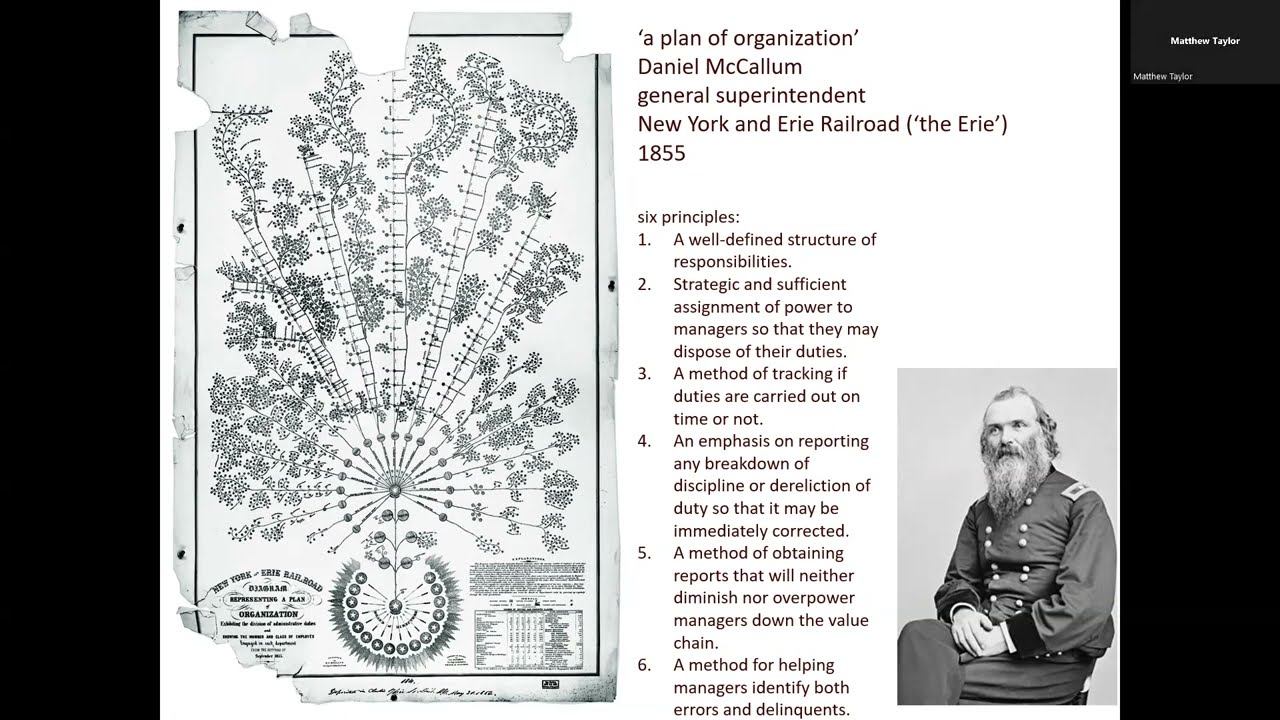
Five core practices for effective organisation - Benjamin Taylor | Stretch Conference 2022