Benjamin Taylor - System Leadership

This content was created by Benjamin P Taylor. This content was uploaded by Benjamin P Taylor. This is a YouTube video titled "Benjamin Taylor - System Leadership" (posted 2018-05-16) of an English interactive lecture on systems leadership and public-service transformation. The presenter (identified in the metadata as Benjamin Taylor) delivers a critical overview of various systems-leadership models (adaptive leadership, living systems, viable system model, power & systems, whole-systems methods), discusses practical implications for hierarchical vs. self-organizing organisations, and uses experiential exercises (a triangulation/self-organization activity) and audience Q&A to illustrate points. The excerpt shows back-and-forth with several audience members (named in the transcript as Patrick, Shruti and others) and covers themes like governance, constraints vs. freedom, and learning-by-doing.
Chapters
I've just been sitting there at the back in my favorite corner spot during those first 2 sessions thinking, oh God, I've got to address that, oh God, I've got to address that, and adding to my content bit by bit by bit by bit. So I'm not going to make the terrible mistake that was made just before lunch and let you all interrupt. I'm going to get through all my slides. We'll see how we go. But this is a sort of a warning to say that I will fluke backwards and forwards, and there is quite a lot I want to try to say, and then I want to try to have a conversation. So I will try to get it all done. So the topic of my talk was, what does it mean to lead a system? This is accidentally themed. We try and avoid themed open days, but it just keeps happening. The status of my slides is amber. Please check with me before using them or redistributing. There may be some things which are mildly sensitive. So what I promised I would do Is give a flying overview and critique of some perspectives on systems leadership, frame my own synthesis of some of the above, and facilitate a working session. What an idiot. That's a really, really stupid thing to say that I was going to do. So if you're checking that list and ticking boxes, I'll go through them all so you can tick them all off in a minute. Cool. But I'm probably just going to talk and we'll talk and we'll go through some stuff and it'll be a useful approach or not. So first of all, my warning is I think there's really a lot of bullshit out there, particularly in this space. Most systems leadership, most commissioning, most transformation, in fact most of the things I do. But of course what I'm saying is probably not what I do personally, because I do think there's an awful lot of exaltation, hand waving, warm sentiments, and very vague prescriptions of action out there that some people love and maybe get inspired by, but don't satisfy me. So I'm going to be trying to avoid arm waving and exaltation. Technical analysis, real prescriptions for behavior. And the thing that bullshit is a code word for, I think, very confident generalizations that obscure a much more complex picture. So I use humor when I use overconfident generalizations as a way of softening that and getting across the point that it's actually much more complex than I'm saying. So when I do any of those things above, arm waving exhortations, just tell me that I'm doing it and I'll seek to stop.
Should we shout bullshit?
Yes, Altondo is walking. We should do a sort of bingo thing really here, shouldn't we? So I've got 2 quotes. The tool for handling complexity is organisation, but our concepts of organisation belong to the much less complex old world, not the much more complex today's world. Still less are they adequate to deal with the next epoch of complexification. I don't know what— this is 1967, some dear scholar will tell me. Elliot Jaques. It was a long time ago. Elliot Jaques from a similar era. I really like this because it calls out a lot of the bullshit that is out there of, oh, we should be more partner-y and more open. And I absolutely believe that we need to be more empathetic. But if we are just saying that, which we're not today, I think that's not enough to actually show us how that helps and how that works and where it's important. Sorry, I didn't mean to criticize. I think that was a really powerful session, and that's what really got me scared of presenting this one now, how good the morning sessions were. But creativity and innovation, like freedom and liberty, depend not upon the soft-pedaling of organization, but upon the development of institutions with the kind of constraints and opportunities that can enable us to live and work together harmoniously, effectively, and creatively. So this theme is going to come back as I discuss leadership. There is no freedom without constraint, etc., etc., and there'll be variations of that. Oh, I run Red Quadrant. We're a We're a public service consultancy, so I'm afraid again there's this theme of being out there in the public service. We're also a networks consultancy, so we don't employ any of our consultants. We use independent expert freelancers much like yourselves. So that makes my life even more interesting and complex, and my leadership task as the leader of Red Quadrant far more interesting and far less power structure based. And I just like the idea that we've got our banners, we build your capacity to transform, and our little campaign against consultancy, which is a marketing shtick, you know, doing ourselves out of a job. Next to some rather big consultants with rather different messages. Look how shiny our suits are and how nice our watches are and how much you can trust what we say. We have some big purposes and goals which I'll put on the slides when I circulate them. I'll circulate all of this, so, just so you know. Our 2 goals are to change consulting and to change public service delivery. And me, I am very active on social medias, so please tweet and connect and all of those kind of things. And most importantly, because I will run out of time on critical sections, follow up with questions in person or by email or whatever afterwards. The thing that I was foolish enough to start a couple of months ago is called the Public Service Transformation Academy. All of those logos are all of the partner organisations that are in this not-for-profit which is delivering the Commissioning Academy on behalf of the Cabinet Office and is doing other capability building in the sector. And it's a fucking nightmare. And at the moment there's about 10 of them. After we sign the partnership agreement, There's an agreement tomorrow. There may be 10, or there may be 3, or there may be 2. It's all getting very, very interesting. Everybody went through this whole process of the tendering and winning this concession contract and setting up this company limited by guarantee, and now we're getting to the details of the governance and the rules of how we're going to work together. Everything suddenly gets a lot more interesting and a lot more real and a lot more— well, a lot more reservations. So, you know, disagreement over the— Nomination rights for the chair has turned into one of the key partners doing a complete reconceptualization of what this thing is for and what it's there for. And and and this, I'm so I'm humbly trying to be a leader in some of these rather complexified situations. Somebody talked before about something which made me include about half the things that are in here were included because there was a trigger this morning. So this is a trigger for my favorite story from Carl Weick, from sensemaking in organizations. And it's a famous story— ah, we were talking about maps, weren't we? It's a famous story of an army on maneuvers in the Alps. And they send a little party out on scouting, and they lose them in this massive storm. And they worry about them and fear they're dead. And the lieutenant who sent them out, or whatever senior person is in armed forces, beats himself up. He thinks he sent them out to their death. And then after 3 days, when the storm lifts, they come straggling back into camp. And they say, well, how did you survive? How did you survive? We didn't think you could live out there in these terrible conditions. And they said, well, it was all right. We thought we were done for. We made a camp. We expected the worst. We shut ourselves in for the night thinking that could be our final resting place. But then one of us found a map in his pocket. In the morning, when the light cleared slightly, even through the bitter storms, we were able to find our way with the aid of the map back to camp. So So the lieutenant said to the sergeant, great, show me this miraculous map. And they pulled it out and they were on manoeuvre in the Swiss Alps and the map was of the Hungarian Alps. And I just think it's an incredibly powerful metaphor for something important about leadership, but I'm going to leave that undefined. And it's a quote from Peter Block about leadership. We're inviting people into the wilderness with no visible means of support. That's why it's a tough So something in here is about creating a sense of safety for people in conditions that are not necessarily safe. We can explore that a bit more possibly later on. Oh, this slide says context. Does anybody know what the content of this slide might be? Because I can't remember. Oh yes, this is a build. I'm sorry about this. I try and avoid these silly buildy slides. This is just to say the context that my clients are in, and I've stopped using this because I think everybody's had enough of the misery and woe, and I won't go into any of the fresh misery and woe. But life is getting more complex. The only way to achieve results and changes across whole systems— working in a single organisation is no longer enough. Resources are reducing, therefore the only way to achieve results is to work with citizens in public services. Every single public service is co-created with and for the citizens somehow, so we have to engage and involve them more. Therefore, staying within our organisational boundaries doesn't work anymore. Demands are rising, therefore the organisational system is under great pressure. Therefore, we can't do directive, I will tell everybody what to do, management. Just doesn't work anymore. All because of all of the above, the complexity threatens to slip through to chaos. And I know bits of public service systems where it absolutely is chaos. And one static approach to leadership or to management or to organization is no longer enough. That means we don't know all the answers. A really, really important thing for leaders to admit in these kind of conditions, I think. So technical change is no longer enough. And I think I've got a whole thing of prescriptions leading up to the big sell. You have to work across the whole system of partners and suppliers. You have to work across the whole system of communities and providers. Understand and lead the organisation as a system. These are all aspects of that, of course. Work together to find a way through. Create and hold appropriate tension. A lot of people run away with this idea in adaptive leadership that we should be creating tension in organisations. It's very easy for leaders to create tension in organisations. And guess what? 9 times out of 10, there's no plan and there's no hypothesis, it doesn't work. I was struggling for about 18 months to develop a change programme based on upskilling in a council. The guy who was the leader of this whole thing, about 15 months into this, he said, well, I thought I'd put you and the agile people and the ODHR people and the programme and project straight-line delivery people together and there would be creative tension and great things would result. And I said that was an interesting hypothesis, and there was creative tension and great things did not result. That's not the punchline, that's just the truth of what actually happened. So the concept that you just create tension is not— is very dangerous. If technical change is no longer enough, you need to provide something of the order of vision and stability within the organisation. And guess what? The thing that I sell is the answer to all of these things. It's not even the answer actually, it's only a necessity. It's not sufficient, I suspect. So let me talk about those models that I promised I would list out in that context. Does that make sense? Yes. So a lot of what people in public services talk about as systems leadership is really just the development of partnership thinking and joined-up governments that we saw really kind of take hold and be the big theme in the heyday of Blair. And I think personally there has been a lot of good experimentation and a lot of post hoc academic attempts to justify, with sort of shunting some theory around and some things that sound good, the results and the process of those experiments. And even in our by Peter Senge where he came out with this brilliant statement, this is the birth of systems leadership, as if people hadn't been talking and practicing about this for 60 or 70 years. And I don't believe that in that branch of systems leadership there are a lot of good ideas, because there are a lot of good ideas and everybody's brought their favorite theory in to post-justify stuff that's being done. And maybe it's good for unsticking systems and maybe it's good for helping people to experiment and learn, but there isn't a coherent theory behind it. I'm gonna have to speed up, otherwise I'll never get through this. But I did promise I would talk about these things. Does that make sense? Living systems. The living systems model itself, or the metaphor that systems are living things. And I'm afraid I have to say, I kind of gave a bit of a warning with the word bullshit that I'd be critical, that I think this concept of living systems, as I've experienced it, is the principal candidate Or arm waving, when people are again without a rigorous or experienced leadership theory behind it, just saying everything's speeding up, everything's going to hell in a handbasket, therefore we have to do everything differently. And I don't think that that's practically helpful to leaders in these systems, in these contexts. Then we've got the whole world of whole systems and large group methods, with the assistance of a few other We've got a nice little catalogue on model.reports of a load of different whole systems approaches. And what I think is really interesting about them, the theme that I think they tend to share, is that of bringing the complexity of the environment into the management system. So you actually, by finding a process, whether it's the fairly well-developed, looks fairly mechanical participatory innovation model that our colleague from Chile, Alberto Del Valle, has come to us and talked about a couple of times. Thank you. Or whether it is just the kind of slightly soft and fluffy concept of if we have representatives of all the parties in the system in the room, then we will make change happen. I think that is the core concept, that we're actually trying to bring the complexity of the environment into an environment where we can exercise some form of control by using that knowledge of how the system works. Systems leadership theory, an outdated 1950s and '60s industrial era model of justified hierarchy and I actually draw on quite heavily, partly just out of sort of obtuseness, but I think that though it situates itself as theory, this model, which I will explore later in the presentation, has got some very deep insights into organisational structure and what leading of an organisation as a system might actually look like. I'm a big fan, as people know, of Barry Oshry's power and systems approach, which is putting people into an experience of organizational cultural life, observing very deeply what the patterns are, what actually happens, and therefore creating a true experimental paradigm of the ways we fall into patterns in organizational life that are not productive. It's very effective at raising these problems. It's very effective at showing people when they are being a top who's taking on responsibility for the whole system, or a bottom person who is abdicating all responsibility. It may be less effective at giving people— in fact, Barry doesn't seek to give people a template for how to get out of that dynamic. I will come back to some more about power and systems later as well. I think adaptive leadership has a lot to offer. It's got a concept that we don't have all the answers, that we have to explore as leaders, that we have to create and hold tension, that we have to see the patterns of the whole system. But it's a very easy one for lazy leaders to latch on to and say, well, I have to pass back responsibility to the system, I have to create tension, and not actually accept responsibility for the pain and misery and failure that that can very often create. There's a huge risk in there. And then there's kind of people who bring complexity theory to this and have a set of slides that goes, fucking voids, we shouldn't be in control, therefore something else should happen, and therefore go out and enjoy your organizations and dismantle them. And I don't follow from there on. I think there's a real— this is what I'm saying, there's a real danger of some real misleading approaches in the guise, in the name of systems leadership out there. Gosh, I really The energy has gone terribly low in this room. Shall I stop being critical for a while? Just give me one more minute. I won't go through the rest. I think that we are currently lacking a true leadership model which is based on understanding organisations through the lens of the viable system model, and that that has some huge potential, and that we in this room have some opportunity to create some of that potential. And I do think that there is a whole movement— I guess I've been alluding to it in various ways— that paints this concept of command and control as the bad thing that has brought us to the brink of destruction. Therefore, not command and control is a good thing, and paints a picture of self-organization. If you read the book Reinventing Organizations, and you get through the first 3 chapters on the model of human and spiritual and civilization development with different color codes, and you get to the teal world that we're all supposed to want to move to now. You get through that, there are some brilliant examples of self-organizing organizations that work really, really well in their context. And the one that everybody's getting excited about is Buurtzorg in the Netherlands, which is a bunch of community nurses and home care workers who have kicked out their bosses, massively stripped down their organization. They're run by an inspirational leader. They have very, very little overheads, very little problems, and that is all about a fairly coherent group of nurses with a professional practice and a social and cultural background that allows them to speak the same language and work in a coherent way, being freed to do their professional practice. A huge breakthrough compared to most of the crap management systems that we see in these kind of fields, but very, very context-dependent. So I think that anybody who turns their back on— my thesis is that the next For the next 50 years minimum, the great majority of us, of our clients, of people out there in the world and in organizations, are going to be working and living in organizations that are basically hierarchical and basically recognizable in the same kind of models that we've got now. And if you want to go and try and change that, that's great. I think you're choosing the easier path. I think you're right. I think you're choosing to go to the fringes and create some inspiring examples where there is rich ground, fertile ground to do so, and you will leave the rest of us in the much stickier, more difficult context of trying to make this happen in the majority of the real world. Does that make sense? So, Shon has a brilliant expression of high hard ground overlooking the swamp. The high hard ground as the manageable problems. The swampy lowlands problems are messy, confusing, and of greatest human concern. So I want to practice in the swampy lowlands, and here we are in the high, hard ground of the lecture theatre with slides and things, and it's very hard to replicate that. I'll move on. I didn't expect to spend as long on this, and I'm sorry if people haven't— it's a hard bit to follow, all this, but let me move on. So what What do I talk about? Well, we have a model. It's a bit of a complex model. I'm really sorry. That has learning by doing at its center. Planning, predicting, doing, seeing what happens, and is based on trying to create the maximum agency for people in organizations. And we'll come to that. The maximum sense of mastery, fulfillment of ability to express and perform, being deeply grounded in real-life experiences of the real world, whatever that is, and is really focused on creating and sharing a sense of purpose. That explodes quite explosively into a whole bunch of areas, and I'm deliberately not going to go into all of this because I'd like to try and run through some of the background and context But you can see in each of those 4 areas we've got a whole set of concepts that I think may be valuable and practicable to help leaders and managers— and I don't draw a big distinction between the two— to actually help to lead their organizations as if they were systems and actually learn from practice. So I sense that we need to do something. So inspired As you heard by the earlier session, in a minute we're going to do a kind of a dance. One of the great principles of system leadership, by the way, is losing your sense of self-importance. Dance and other physical practices are quite good at helping you to do that. So I'm not— I mean, as soon as you talk about leadership, you're into talking about human development, personal development, organizational change, context, basically everything, which is why I'm speaking so fast. But one of the most important things you can do in terms of your personal development is find ways to get out of your own way. your sense of self-importance. Talking of which, my principle is to make the world a better place, help people transform the way their services, organizations, and leadership are experienced. So I'm situating the test in the experience of the people being led, being managed, working with. And I absolutely buy Wilson's strong definition of leadership, as we all have to be leaders in certain contexts. But there is something about taking and accepting responsibility. The value of leadership only lies in practice, and that's mostly about seeing what's happening and ways of developing new and more valuable habits. But the only measure of value is lived experience. I'm aware that this might be a bit dense, and I'm gonna hopefully get somewhere. Therefore, leadership needs to be understood from the perspective of those who follow. So I'm going to go into what I get out of all of those theories and what that might Practically mean, but I think if I played this right, in just a couple of slides we're going to do something. So I want you to all start preparing yourselves. You're going to have to jump up and follow my instructions quite promptly and quite quickly in just a minute or two. So this is a sort of a counterpoint to the story that Patrick tells about the creation of the organization chart. And let's not get hung up on facts These are 2 narratives, and I think it's really interesting there are 2 narratives. So I'm kind of giving the game away, but does anybody know what this is on the wall?
Looks like railway tracks.
Organization structure, yes. So the story as I tell it is that around the start of the 1850s, there was the first fatal rail traffic accident in the States. Many people had died building the tracks, by the way, but they didn't count. And this chap, whose name I've forgotten, was given— is it there? Daniel MacCulloch? Yes. Was given the job of bringing some order into this process, right? And, as I'm told it, this is the organization chart that he came up with. So he was a line engineer, But what does that look like? What does that remind you of? Quite organic. Quite organic, yeah. It's like a tree, it's something— and interestingly, the board of directors are here at the roots nourishing the tree. So in the 1850s, in the American railroad, they were dealing with an explosion of big data. What brought that about? Does anybody know?
Telegraph.
The introduction of the telegraph. Yeah, so for the first time, people back here at headquarters had the power to interfere and intervene with what was happening way out down the tracks at the front line. Yeah, so there are 2 narratives that come from this, and I don't particularly care which one is true because they both hold the possibilities of organizations. Yeah, just as you can say that Henry Ford developed the Highland Park plant from Toyota, digging the ore out of the earth at one end, producing whole cars at the other end. And most of the world, particularly the Western world, went to it and saw command and control, separation of roles, narrowing down, paying at the lowest possible price. And Taiichi Ohno, allegedly, although he was more inspired, I think, by a very amusingly named American supermarket, went to this and and saw a production system of flow from one end to the other that could be managed as a living thing, optimized, structured. And he actually saw the way that Ford treated his people and paid them over the odds. So 2 possibilities emerged from that history. 2 possibilities emerged from this as well. One is command and control as we usually know it, as the bogeyman of exercising directive power over people in the organization. And the other is maximizing the discretion within safe limits of the people working down the line at the front line, and maximizing the information that comes back to the center of the organization to do strategic planning. Yeah, so I've been using this for years. I'm quite interested in Patrick's expression at this point, but I mean, I think
they're inconsistent. My version of the story is the starting point for doing the modelling.
Absolutely, yeah, yeah, fair enough. So I mean, I say there are two versions of this, right? Either this is the herald of all evil, or this is the creation of possibilities for human beings to do something beyond what one human can do and still be fulfilled, effective, and all the rest. Do you see where I'm getting to? Yeah. I also pinched a slide that a lot of the people in systems leadership of various phrase is used. Probably everybody's come across the fable of the blind men describing an elephant, which is that somebody— these are all blind men— one of them touches the end and says an elephant is pointy and sharp like a spear. Another one says it's very thick and heavy and impenetrable like a wall. One down the other end says it's kind of straggly like snakes or ropes and it smells pretty bad. The punchline, of course, is that organizational life is like this. Yeah, and actually it's not just what you see of the organization, but what you experience of the organization is totally systemically conditioned, and the way that you understand the organization will depend on your situation within it. Who has seen somebody switch from a supplier role to a supplier management role, or vice versa, in an organization? I have. Did they change their perspective at all in that switch? Like that, right? So, you know, straight from saying, it's all their fault, the stupid bastards, if only they did it properly, everything would be okay, they jump one side and now they're talking about them and the line is, it's all their fault, they're bastards, if only they did it properly, everything would be okay. So do not underestimate the power of the shaping of our perceptions and experience by our situation in the organization. Okay. Okay, so I want you all to stand up please. I want you all to come into this space down the end of the room. If you've done this one before, just please go along with it. And what you're going to do when you're in this space, and we're going to stay within the space bounded by the walls, and we're going to be careful about not falling over each other or things. Please come through quickly. Is just look around without identifying yourself to them or them to you. What I would like you to do is to identify— is to think in your head of 2 other people around the room who are going to be your anchors without giving it away to them. Can you all do that? Good. And in a minute when I say go— and don't include me in this, things will get confusing if I'm part of it. Don't use me as your anchor. And when I— come inside the space. Take your place, Philip, please. When I say go, what I'm going to ask you to do is I'm going to ask you to rearrange yourselves so that every person is equidistant from their 2 anchors. Now, important note here, if these are my 2 anchors, conveniently situated, thank you, do not stand directly between, otherwise things get very cozy very quickly. Okay, everybody's trying to stand between everybody else, basically. So you want to triangulate. So this would be equidistant, this would be equidistant, and so would this. Is that clear? Yes. Does anybody have a visibility or movement impairment that would prevent them from doing this or make it dangerous or hard for them to do this? Good? Okay. Everybody's holding back the comedy. Does anybody have any questions before we do the exercise? Is everybody clear about their role and how it's going to work? You're going to keep moving until every person is equidistant from their 2 anchors. Any questions?
Do we have to avoid contact?
Yes, you're going to— very good question. You're going to move gently and calmly so as to not hurt anybody or upset them in any way.
You can gently jostle somebody else if they're standing in the way.
If they seem game for it, yes. It's a really small space, so try and behave politely. Anything else? Any other questions? By the way, you're going to do this in complete silence. How long do you think How long do you think it will take before we get the system into equilibrium? 5 seconds. 37 seconds. 37 seconds, 5 seconds, something. I can't do this. Done this before. Okay, any further questions? Are you all ready? I'm going to observe the system. Okay, and I'm going to time it. Go. Okay, we'll say that. We'll call that a win. So that's going to be fit. That was fifty seconds. So can I ask Shruti? Can you just move out to the corner here? Patrick, can you cross over to stand somewhere on the other side? Russell, can you go by the door there? And when I say go, we're going to see how long. system takes to get back to equilibrium, just to see if it was a fluke or not. And you guys who have repositioned, you can move again, but if you just immediately go back to your original places, it doesn't get very interesting for people. Is that okay? So I want everybody now to do the same as before, move gently and calmly around in silence until you're positioned between the same 2 anchors. Go. It's a manhole going on down here. Okay. We're going to call that even, and that was roughly about 50 seconds a game. Well done. Very interesting. So what was happening there? What was going on?
Self-organization.
Okay. Yes, we can say that. Self-organizing system. Mutual adjustment. Mutual adjustment. Yeah. Feedback. Very clear feedback. You knew whether you were there or not, didn't you? Yeah. What else? There's a dictator at the top. Say it.
There's a dictator at the top.
Ah, that's interesting. So that's rather important. It's actually not a self-organizing system, although it is a self-organizing system. It depends on the level of recursion which you look at it. But it just happens to be that I am the system leader, that you willingly followed me even though it seemed a bit uncertain and a bit foolish for you to do this. Yeah. And actually, because I gave you instructions which have turned out to fulfill the requirement that I set Probably, if this was an organisation, I know you lot have done this before, you would feel slightly better about me as your leader. We would have built a slightly positive relationship based on testing that out. Does that make sense? What could I have done to screw that up? How would you judge me if somebody was blind or partially sighted in the group and I hadn't done that test? Yeah, yeah, it would have been. And how what would you have felt about that, Greg?
Okay,
yeah. And how would you what would your emotional response start doing?
Zero up top.
Out of touch.
Okay. Exclusion, marginalization.
Yeah, okay, all right. Yeah, yeah, good, good. Maybe maybe unfair, maybe disrespectful. There are some emotional roots to these things.
Sorry, what? Yeah, I'm just trying to structure the difference between anarchy and structure and anarchy. What you were doing, or indeed for self-directed work teams, there's a set of rules you need for a self-directed work team to operate. What you were doing was laying down the rules that makes it work.
Absolutely. Which is a different thing. And what if we just tried trial and error? If I'd just given you some random set of rules or configuration and we'd been here for another hour, you would have probably judged me quite negatively. That would have come from an emotional gut judgment. Did you have another comment?
tying in the transformation leadership aspect of it, is that isn't there also a value system around these? I've got a curiosity, yeah, you know, I want to learn. So there's a value element in there as well. So whilst I'm following you, I'm also following my own desires.
And I had to make a judgment that you were willing and capable and this wouldn't descend into shambles. Yeah, this works everywhere in the world except in France. So yeah, absolutely, you were an active part In this system, is it also a system that's solvable? Yeah, that's true. And it doesn't just go on forever. I happen to know that this is a very elegant rule set that I can give and devolve to you, and you can follow it, and it will create an elegant result. Does that make sense?
If some people on the tomatoes don't take on the responsibility of moving, does that actually make it simpler, and does it stabilize faster?
Well,
I was going to say, you're all willing to comply with your rules. I mean, it did cross my mind to just keep on walking.
Good, good. That's really, that's really, really good.
Just to see what happens.
Yeah. So there are 4 factors really broadly going on here. There's some hard constraints and rules, really clear feedback, a really clear understanding of the vision, and there's a lot of soft discretion, flexibility, freedom to act within those constraints. There's a leader structuring the system for you to act in, and then the relationship between me and you as a result. And then there's cheating. Usually it's only ever the NHS people who bring that up. I don't know why. I honestly don't know why.
Because a doctor in the NHS made that up.
So I
think this would happen though if like 2 of us actually said, you know, this is just, you know, and we're going to just keep walking around.
Yeah, well, we would have completely thrown the system off. I have no idea.
Only if they had been picked. So if nobody chose me as one of their anchors, then it wouldn't matter how much.
But in point of fact, I don't know who your 2 anchors are, so I don't know if you're cheating or not. Right? And and this did happen in one of our commissioning academies where we had some NHS leaders, and one of them said, "Well, I just walked around for a while calmly, and then I stopped." And then we realized why it'd taken an extra 35 seconds to sort to sort the system out. Somebody didn't have them there. And so those are the things again.
If somebody would stay stable, yes. Better than stable and stable.
I would imagine so. Yeah. I would imagine so.
Tolerance or distance.
Yeah, I have done this once before, which created a negative impact for me as a leader, where I forgot to do the bit about triangulating and literally everybody ended up in a group hugging. Really, really difficult. And I had to try and obviously pretend that that was some learning point. So I think there's those 4 factors. There is structuring the system, the soft feedback, the soft factors, the hard factors, and the tolerance for, or the possibility of cheating within the system that are going on here.
The biggest testing I know is that is the beating, essentially.
Yes, that's the code for the rules.
Yeah, if it's called by you, we're a beating. Okay. And we tricked ourselves into that without any subconscious choice.
Yeah, very interesting.
It is a beating from earlier history. I just saw this as a kind of scientific experiment.
Well, that's always the— with experiential learning, there's always a tension between the intent of the leader in creating the simulation and the intent and the leader— the role that the leader plays in the simulation. Yeah, so if you look at how they actually teach adaptive leadership at Harvard, Kennedy School of Government, and what will happen is the guy— I can't remember the big guy in adaptive leadership—
Michael Herbst.
Pipers, yeah. We'll stand at the front of the class and we'll read the 36-page course instruction manual line by line to the class. When he finishes, he will start again and he will wait until he is interrupted. Yes. What if I
disagree with your leader? Because I don't actually. Yeah, yeah. You've just gave yourself that title, and I disagree with that.
I mean, that fits my definition, so it obviously fits myself.
Yeah, yeah, yeah.
Please, let's hold that thought. Let's come very quickly and sit back down again. Yeah, yeah, yeah. Brilliant, brilliant. Come, Richard. We'll have you.
Can I make it?
You can ask while you go across. Yeah, please. You take the microphone.
So, so, uh, which group? So I think if a number of us saw this as a scientific experiment and kind of were thinking about, oh, I wonder how long this takes to stabilize, that you created that frame for us.
Yes.
Which was why we— so you led the sort of sense-making element first. I think there's much to do with—
Yeah, leaders. I absolutely agree. I absolutely agree. So the leader— and I'm still going to give myself that title, please— does a lot to frame the activity and frame the response if they know with a reasonable degree of predictability that their hypothesis about how that framing will land is going to be accurate. And if they don't, that's learning. Yeah, because they've got a theory about how people respond. Can they respond differently? And that's the learning point where you say, oh, that's interesting. Why did all those NHS people break the rules? Yeah, so to come back to your point, you were challenging me as a leader, and actually the hardest thing to do in a learning context is to persuade and provoke somebody to challenge the leader. You're obviously easily provoked, and I appreciate that. And I should have prefaced this thing by saying there are a lot of people in this room far more qualified to talk about system leadership than I am. And actually, this is a point that I want to come on to. So let me come on to the point, and then we'll see if it builds on what you said. So Nick Oblensky— this is a famous systems thinking game, I think lots of people play it. You can see it on YouTube if you Google Nick Oblensky and systems game. Probably there's lots of others as well. He uses a fancy yin-yang. We've got it written out As the soft and the hard principles. And I think this is quite a good test of 2 things. One is, are you enabling self-leadership, self-governance activity in your organization? And we have a quiz based on this. We can give people a little SurveyMonkey and come back to the leaders with the results. That's an interesting little provocation, a little starting point. I said 2, didn't I? I better remember what the second one was then. So, and the second test— it'll come back to me. So, oh yeah, the second test is, have you achieved a good balance of stability and flexibility in your organization? And it will tend to follow— my hypothesis is that if people have good, clear, hard principles and the maximum flexibility of soft principles that the organization will have a relatively healthy balance of rigidity and flexibility to actually be a viable organization, to come back to the BSM.
Sorry, could you just define hard and soft? Because I'm kind of struggling to understand why.
So the hard things there are the— they can be put into metrics, they are clearly measurable, they can be identified. And the soft ones are the things that are much more qualitative, discretionary, only can be judged by the individual. In fact, the hard principles should ultimately be judged by the individual as well. But I think— does that give you enough of a distinction? There's still
something
missing from this for me, Ben, and I want to raise it now because
I'm going to pick it up later. But If you reflect on the experience there, and you touched on it when you— with your throwaway line about the French. I mean, we are in an institutional setting where there are a whole set of institutional norms and other things operating. Yeah. Presentation in a particular room. Right. We're in a culture which gives the speaker some authority or freedom to invite and all of those sorts of things. Right. So that whole plethora of institutional arrangements surrounds everything that was done there. And often those institutional arrangements are not even apparent
Good. I completely endorse that, and I think that the context and the structuring of context and the distribution of power by the structuring of context is absolutely central to your awareness if you are seeking to lead as a— lead an organization as a system. And that's what the power and systems approach, by the way, does par excellence, particularly the cultural version where you go and you're an elite middle immigrant in a real society for 10 days A real society created as a learning lab, but where nevertheless people have nervous breakdowns, life-changing experiences, conversions, yadda yadda yadda, you know. Because it becomes immediately and undeniably clear to them that in this context and in their life, the power is coming from the structure and the assumptions and the conditions. And that's why your man Heifetz stands there and reads through the thing until he gets challenged. And actually the core of adaptive leadership is what's called case in point. It's just a derivation, I think, from the old sort of T-groups and encounter groups in the early days of organisational development of people experiencing each other with progressively fewer and fewer filters. I'm not seeking to do that in the 10 minutes we have left, don't worry. No problem. But there's a little bit about breaking through those barriers and seeing the structures laid bare. And seeing how people then respond to defending or not and so on, that is incredibly insightful as an experience. So, okay, let me talk about— I mean, so there is a distinction happening in organizational life between the technical things that can be led by money, experience, expertise, positional power, direction, and those Those are problems that by and large we want and embrace as leaders and as managers of organizations. We can learn technically; it's just single loop learning. It's about doing the thing better and becoming a better expert at what we're doing. However, there are also problems. By and large, we would like to avoid them. There's a strange breed of people who who dive for those, and the ones you want to watch out for are the ones who are no good at any of the. Expert solutions. They're either going to be brilliant or terrible. And that means that leaders do not have all the answers in an emergent complex— I mean, I'm mixing a lot of things which have sound theory bases in their own rights, but we talk in a very blurry way about emergent, complex, wicked, messy social problems. And because they Leaders can't have all the answers and they try to deal with emergent, wicked, messy social problems as technical problems. It leads to frustration at hierarchy in leaders. The usual predictable next step to the frustration with technical leadership is to give away power and say, okay, I'm going to divest myself of my leadership responsibilities. I'm going to empower the team. I'm going to give power back. And guess what happens? You usually get chaos, confusion, and frustration. Not always, not every time, but predictably and with great reliability, this is a process that goes on. This leads to further frustration at hierarchy and leaders because this guy at the front of the room is supposed to be taking responsibility and here he is telling us that we have to manage our own learning experience, for example. And so both technical and emergent leadership are required. They always come hand in hand and both of them tend to be critical. Therefore, the leadership skill— and this is the bit I take from adaptive leadership is frame the problem, set the boundaries, create some kind of vision, enable a deeper form of learning through reflection, through embodiment, through understanding what's actually going on in the organization. And there is a value in hierarchy and leaders, even in situations where the hierarchy and leaders are the source of the problem, if they can allow the people who understand the situation in the organization to take the authority to deal with that situation. It's a very, very hard thing for leaders to do. Power and Systems has a whole set. I won't run through them, but I will invite you to have a look at this, and I'll send some notes with this. As soon as— if we did this again and I said, doesn't— Angie on the top, and I give a bunch of people middle badges, and I give some of the people bottom badges, and I say each of the bottoms reports to one of the middles, and then I give somebody a customer badge and I say the customer is going to have a specification like I had over there, and they're going to tell the customer-facing middle, and then the customer-facing middle is going to tell the top, then the top is going to strategize with his middles and tell his middles what the strategy is, and then the middles will tell their team, and then the team will implement strategy, and then we'll see what happens. And if there's a problem, the message goes back up the hierarchy and the top replans and restructures. 2 things would happen. One is it genuinely would take 5 days. to get to an organization of that system, particularly if the leader was disconnected in time and space from the work of the bottoms. The second thing that would happen is that the leader would immediately feel— and I've practiced this and it works in a classroom, it works in real life— just like that, I give you the badge that you're the top, you feel responsible for the whole thing. The instinctive response is to suck up responsibility to yourself. You become overloaded, but you don't see your role in sucking up that responsibility because it's just blinding the obvious from the condition you are in the organization, that that's what you should be doing. Therefore, you just assume the tops come overloaded, the bottoms come disregarded and vulnerable, yeah, the middles come stretched and torn and burnt out. You don't see that it's your response to the conditions that turns out to be a lousy strategy for dealing with them and exacerbates the system conditions. And each of Those conditions in turn exacerbates the conditions of the other spaces, and so on and so on. So that's the dynamic. What's the result? The blue dot is the way that Barry— it's a brilliant exercise. I tell people that 3 of the blue dots in the room, 3 of the chairs in the room have a blue dot underneath them. And those 3 people are going to have significant responsibilities. They're going to have to report back. They're going to have to pay attention for the whole damn course. And everybody gets a bit energized, sits on the edge of their seat, a bit more nervous, either thinking, God, let it not be me, or thinking, oh, I could do this, I fancy this. But they start to come alive. You then look. Those who don't find the blue dots sit back in their seat, all right then, okay, slumped, much like some of you are now, thinking, well, you know, it's up to you now to entertain me, and let's see how far we get through this. You know what I mean? And then the blood stops pumping, the energy level goes down. So the blue dot is a good metaphor for where is the responsibility in an organization. And our organizational structures will suck it all to one place and disempower everybody else and overload those people, and the tos and fros will get worn out and ragged. And if you start to understand where is the blue dot right now— I'm feeling quite a lot of blue dotness at this moment myself— Then you start to be able to have a language that allows you to describe the distribution of authority and responsibility in the organisation. Does that make sense? I hope so. Okay, which bits can I do in the time that I have remaining? 5 minutes. Okay. Alright, so I'll talk very briefly about a few bits and hopefully we'll get a couple of questions. I'm really sorry to have tried to pack too much in. It's my own way, I'm afraid. If you look at organizational and cultural dynamics, this is some work that Barry's done that's mostly yet unpublished. There are 2 strong groups of dynamics. There's a power dynamic, which is about differentiation so that we can do a wider range of things as a system, individuation, exploring the powers and possibilities of every individual in the system, and the love dynamic, Are about homogenization and emphasizing what we have in common and becoming more similar to each other, and integration, sharing what we bring from our individual perspectives. Does that make sense? And I don't think it's too much of a stretch to say that— and the point of this, of course, is that any system which has power at the expense of love or love at the expense of power becomes disempowering. Under-infused, broken, non-viable system. I don't think it's too much to say that the power and love dynamic on the dimension of the system itself is demonstrating the possibilities of the system for either adaptation and/or stability, and at the level of the individual subsystems is demonstrating autonomy or integration of those subsystems, allowing some of BIA's underlying principles behind the Viable Systems Model. So I'll keep going so I can get in a couple of things in. Community is the antidote to uncertainty. Confront people with their gifts. I think this is a powerful leadership principle that connects to those other things about demonstrating to people that they are worthy and capable of taking on the blue dot. Experimentation is the antidote to certainty. If you confront confront people with reality. And a lot of these things that we're talking about now in management and in organisations, from service design to agile, are about creating bounded conditions, strictly bounded, so that everybody in the hierarchy can be really comfortable with them, where people have almost unfettered freedom to act within certain safe limits. And I think that's a lot of what this is about. I won't talk about this one. I'll just give the point that this is really to your point, Ray, that if you do not see the system, then you cannot be aware of the influence that the system is exerting on you, and it will probably be determining your actions and your fate. Barry has a whole list which I'll send around afterwards. It's really interesting. Forms of blindness about the system. I have a whole list of further things. The ones on the left, I think, are Deming's underlying four principles behind his thirteen or whatever, and the ones on the right are just other ideas about the way that we are system blind in organizational life. And I think the role of the leader is to understand that, take that into account in predictions, and to try to raise people's awareness of it to make it. Discussable. It's only that that allows you to have a reflective response rather than instinctive reflexive response, which probably— not always, not every time— predictably and with great reliability will dig you deeper into the problems of organization. So allow me to have a quick look through to say other elements of this approach include understanding that culture is formed by the raw emotional judgments that people make about their leaders' behaviors, the systems of the organization which are intended to help structure behavior to a positive goal but don't always, do they? And the symbolism that's used in the organization. And that becomes a cycle where the leader behavior is judged and felt by the people in the organization And therefore the relationship gets worse. And unless you have very empowered, very empathetic leaders who are trying to manage based on the hearts and minds of their followers, then you will tend to get into a much worse downward spiral. I think I should probably stop there. And this pattern of understanding that the emotional judgments based on the system symbols and leadership behavior creates stories which become the culture, become the way things are around here, become another structuring system. Also works with partners and customers or citizens in service and public service organizations. So I've probably got a final slide somewhere here. See how much more I had to tell you. I really do apologize, but I'll send it around and we can have a sit-down. So important to understand, you never understand an organization until you starts to try to change it. That's some father of organizational design, forgot his name, Lewin. But leadership is experienced by others in practice. Again, going back to judging based on the experience of others. I'm not doing brilliantly in this session, I'm really sorry. And what systems leadership is about is understanding the interaction between the environment, the culture, and the people, which means that you need a repertoire power and control. I probably didn't do my full-blooded defense of the value of hierarchy and command and control in organizations, but the concept of that is maximizing discretion of frontline staff and maximizing the invaluable information that comes back to managers to make more strategic decisions, which I know we've pooh-poohed as an idea. So it's probably a very final— I won't even go into that. I'll just come back to this and I'll say I'm really sorry I I know I'm over time, but I wanted to get all of this out and see if we could discuss it. I hope we may discuss it for a minute now. If not, we'll do it over break. Thank you very much. Thank you.
More from Benjamin

How to Transform Public Sector Organisations Through Systems Thinking With Benjamin P. Taylor

Cybernetics is not the banana, part 2 — Benjamin P Taylor with Laksh Raghavan (2025)

Cybernetics is not the banana, part 1 — Benjamin P Taylor with Laksh Raghavan (2025)
04 | Culture, Clarity & Conversations: Leading in Uncertain Times with Benjamin P. Taylor

The Key To High-Performing Teams Based On Trust – Benjamin Taylor | Compass Tech Summit 2023

Benjamin Taylor - Jan 2021 - SCiO Open Event - The 'Four Quadrants' of Thinking Threats
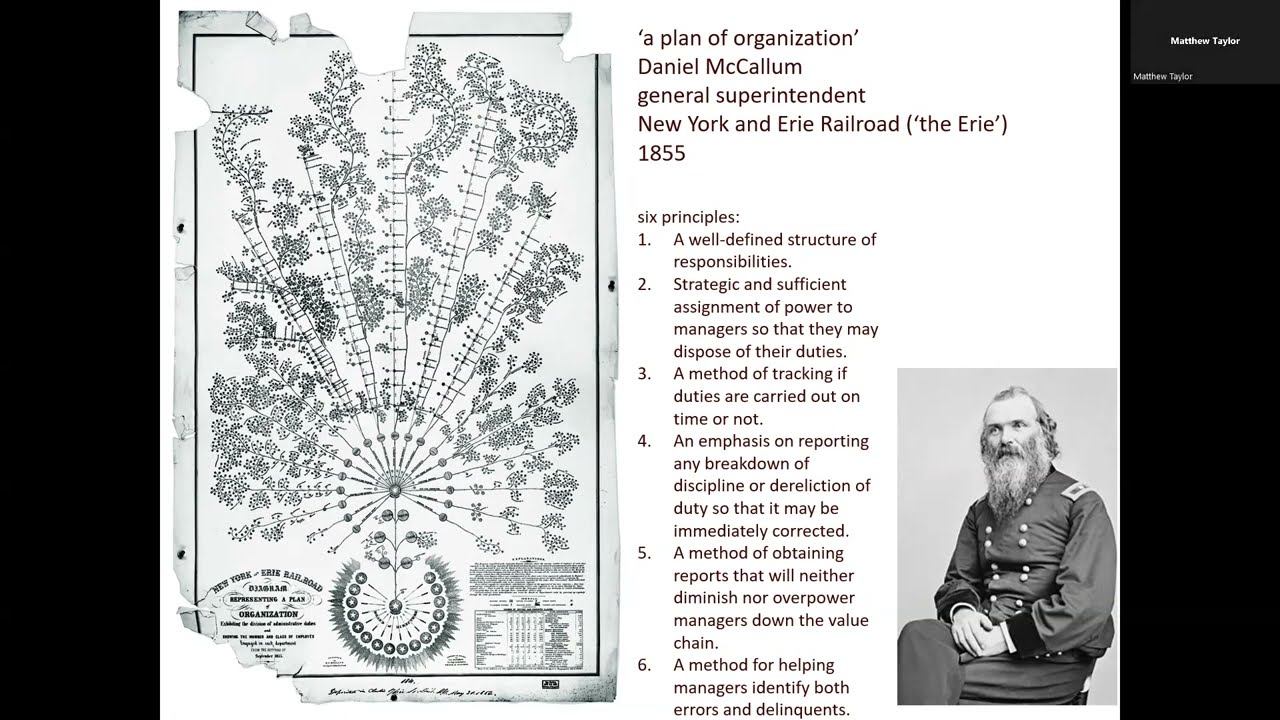
Five core practices for effective organisation - Benjamin Taylor | Stretch Conference 2022