Co-Creating New Realities with Benjamin P. Taylor

In this live workshop, Benjamin P. Taylor and participants explore how agility extends beyond operational work into enterprise‑level structures, using analogies from Mother Nature and the COVID‑19 response. They discuss the need to "agile‑ize" three management layers and the importance of purpose versus intent. Taylor introduces five core practices (honest conversations, clarity of roles/tasks/decisions, learning practices, culture‑shaping, and aligning intent with outcomes) and concrete tools such as the blue‑dot responsibility diagram, the left‑right column exercise, CPORT task‑clarity, and the 3‑box model. The conversation moves to power‑and‑love dynamics, linking Barry Oshry’s human‑systems view with Stafford Beer’s Viable Systems Model (VSM) and the 5‑Worlds framework. Participants debate time‑span versus time‑compression, especially in open‑source and vaccine development contexts, and bring in adult‑development theory (Bill Talbot) as a lens for capability. A later segment focuses on psychological safety: how introverts experience Agile ceremonies, the role of coaches in providing space, and the culture‑shaping model that maps behavior, symbols, stories, and emotional loops to discretionary effort. The group reflects on confrontation as a necessary system feedback mechanism, emphasizing good confrontation to build safety and productivity. The session ends with logistical notes and a preview of a follow‑up presentation by Sabine Neuschwander.
Chapters
And you should find there a check-in activity to do. It's 3, if I'm right, quick questions, so it should be pretty simple, simple stuff. And I'm just shifting the screen for my— getting my setup right here as we prepare. So if you can just head across to slido.com and type in #RADeepDive. Um, it'd be good to see who is here and a little tiny morsel of information about you all. Um, so I'm just going into there. I don't think anybody's registered yet. Um, Is everybody finding that okay?
Yes, but it doesn't seem to be asking me to register myself, Benjamin.
Is it asking you a question in the live poll, the survey? Can you go back? Can you put it in the chat, Ben? It's a retrospective. Ah, it's changed. Wow, that changed. Okay, cool. Yeah, I can put the link in the chat, yes. So it's slido.com and the code you need is #RADeepDive. I will put a direct, direct link as well. Welcome everybody who's just joining now. We're just asking you to go across to slido.com and type in #RADeepDive or click on the link which is now in the chat. And we'll get a little bit of an overview. Just thought this would be a different way of doing things, and it's one of my regular practices. And we have the first vote recorded, a technological success. It's good to hear. Any code required, Benjamin? The code is #RAdeepdive, all one, all one word, capital R, capital A. #RAdeepdive. And I will just put up the words that describe how people are arriving. We've got people arriving in style, distracted, and bumpy. Does anybody want to give an interpretation? That's a new word to me. What does bumpy mean? And people who we have here: Eva, interior designer, green building consultant, chocolate maker, and much more. Gosh, that's a good range. Andre, OD and talent. Geordie, who I know, Enterprise Software Development and much more. Vincent, Diana, Misbah— is that how you pronounce your name, Misbah? Forgive me if my pronunciation is not good. And I can't see whoever's at the bottom of the screen there because the meeting controls are in the way. So sorry about that, whoever's just off the bottom of the screen. And who else have we got? Steve Clements, Pierre, we've heard of him. So let's just see how people are arriving. Member of the gig, people arriving sleepy, smoothly, also wide awake. We've got quite a range here, haven't we? It's really interesting to see this dispersed group behave in a dispersed way. Awoken, wide awake, cycling. So people have interpreted the question in different ways. That's a good, good note on the multiplicity of interpretation. And what people most want out of today's session— knowledge is the big one, and insight. Hmm, I'm not sure what I can promise you in those areas, but I will try to generate some of that for you. An interesting angle or two, new angle— interesting that that comes up twice. More understanding about RI and self-organizing, new thoughts on working with systems. Meaning, wisdom. Some big words here, folks. You've got high expectations of today. That's that's that's encouraging to see. I'll just go back and see if there's any other words coming up here that are that are particularly relevant. Probably not. We've got Aiden, Scott, Armine, Baravdez, Armine, Gunnar, Glenn, Kashmir. Kashmir is submersive. Ilya and Jan. So I think I will stop it there, but feel free to keep checking in and I'll send this around with the— put them into the notes after the session so that we can see. Oh, Vincent said how he was arriving is bumpy, not bumbie. That's a shame, I thought we discovered a new and interesting word today. Well, never mind. So back to my slides, but not for very long, because what I'm going to do is I'm going to just reintroduce myself. These are all going to be clickable links when you get the PDF. Red Quadrant is my networks consultancy. We've been going for 11 years. As I mentioned in my presentation, we were inspired by a self-organizing taxi cab company in the southwest of London in the days, many, many years, well, several years before Uber, and by a consultancy in the UK called Eden McCallum, who became the biggest strategy consultancy in the UK through not employing any consultants initially. They took out a full-page ad in The Economist and asked for people who, like themselves— they were 2 women with children who were sick of working 90 hours in strategy consultancy— and recruited some really high-profile, great CVs, and then started to match those people up to projects and to firms. Seems simple enough, and there was an analogy in our mind with that self-organizing taxi queue and that geographic location of the taxi drivers and so on. It's interesting that Eden McCallum quite quickly started to employ a few consultants and a lot of sort of 6-figure salespeople. And got a lot of work in the early days from Virgin, and I'm not saying that that's connected with the fact that one of them was married to the Chief Operating Officer of Virgin Group, but I'm not saying it's not either. But they got 2 Harvard Business Review case studies written up, so we always had the aspiration that one day they'd write a Harvard Business Review case study about Red Quadrant. But it turns out that running a network of consultants— one of the things about strategy consultancy is that every strategy consultant comes with a laptop full of tools that they've stolen from all their previous employers and all their MBAs and all the training and all the rest. And a bit like PPM, which you can also build a successful consultancy business in— and I'll probably say a lot of controversial things today just to make myself sound interesting, so please check me in the comments if you think that I'm going too far— but like PPM, there's basically one thing that you do in strategy consultancy, you know. Whatever-his-name McKinsey said that given 72 hours over the weekend, his consultants would know more about your business and market than you do. And it's to know more, it's to be the expert, and it's to run a strategy process. Unfortunately, doing consultancy in public services as we do, in a very complex, nichey, human-centred set of services, in a complex institutional environment is not as— I won't say simple, but it's not as single-layered. You need multiple levels of knowledge and insight and different approaches and horses for courses and people who dress and present differently for different environments and people with different real expertise. You know, the difference between somebody who can set up an adoption and fostering agency and somebody who can support child protection processes is actually significant. even though they're both within a niche of local government and a niche of children's services and a niche within that. You get the idea. These other organisations are all to do with my passion for systems thinking, for these ideas, for the practice of actually getting out there and doing it. I've got 2 podcasts in the works: Transduction, the Systems, Cybernetics and Complexity podcast— I believe they're all one family and all interconnected across those supposedly different disciplines, and Joy and Work, which is about how do we find the joy in the work, in the work itself, what is the joyful work to do. And I'm writing a book at the moment for Routledge on these related topics. So I think that's quite enough about me. In a minute, I'm going to get you to speak to each other about you. So Pierre, we're going to need people to be in breakout groups of 3, and we're going to need to be able to call them back within 15 seconds, automatically allocate them to the breakout rooms, and we're gonna send them out for 2.5-minute chunks.
Okay.
We're going to do a community exercise in a minute to connect you as a group of people. People like Aidan and Lynn, who's just arrived, who know me well, will have done this exercise before. But I make no apologies for that. And I will do a little reminder of my 15-minute session in the, in the first exploration. And then really, it's a smorgasbord of stuff. I have prepared sort of a summary of the material that I practice with and that I teach and share and use. And I thought I would start because it's on the tip of my tongue, it's relevant, it's about requisite agility, and I'm doing another webinar about it tomorrow morning with decision-making in so-called VUCA conditions. And I want to dip into a thing that I call power and love in parts and wholes. That's the balancing dynamics of organizational systems at a functional level in in the Viable Systems Model, and at a human level coming from Barry Oshry's Organic Systems Framework. After that, which will take probably the first hour and maybe more, and we'll have a break each hour where people can go away, take a break, and come back or not. So we're not expecting you to necessarily stay the whole distance. There are other areas that we will get into, and I'll explain a bit more about these. and have a conversation with you. And I hope this is going to be a very conversational session, have a conversation with you about what to focus on as we go. So we have this thing called 5 core practices. That is honest conversations, learning, clarity practices, culture shaping, and good and clear intent. And I can talk to you about the actual practices that make those up. We've got thoughts about managing change in organizations. And a lot of this comes down to maintaining those balances in organisations and an active balance of constraints and freedoms, thoughts about systems change— that's place-based, community-based kind of change— and I'd be very happy if anybody's interested to share the online blended learning that we offer called Leading Transformation, some what's in it, how does it work, and even to take a peek into the Red Quadrant Way Toolshed, which is a set of tools that we literally I call them tools to use a bit of bathos. I'm concerned always with puncturing the pomposity of myself and of those of us who like to be consultants and advisors and teachers and thinkers and all of those kind of rather pompous things. And so I call it a tool shed because I don't believe in tools, and it sounds a little bit more pragmatic and realistic, but that's all of our perspectives, methodologies, practices, approaches that we use in Red Quadrant and we teach and share with other people as well. So that's the potential menu that we have open to us, and in a minute— I get what you do, but I don't get what you care about. I think we hopefully will come to that in the 15-minute— the quicker than 15 minutes recap of the introductory session from last time, Zak, if you can bear with us till then, and then again check me that you've heard that at the end, at the end of that. To be fair, based on my profile, it's probably fair to say that what I care about is helping people to generate more of those insights that come from different and multiple ways of seeing. Actually, that's something that I'm really passionate about, that I love to find for myself, I like to drink from the fire hose of insight and inspiration because I find it such a thrill to get real insight and real different perspectives on things, but there'll be a bit more later on. Is that okay? Cool. So I'm going to ask you to do a community exercise in a minute where we're going to break into groups, okay? And I shamelessly stole this with his encouragement from Peter Block, who's a great organizational and community thinker and gives very good guru. Now he's an older man in the twilight of his career, and in consultancy, in organizations, in HR, in dealing with people and purpose and all these things in organizations, we're incredibly well trained to see through a gaps frame, a weaknesses. a lack. Peter Block talks brilliantly about the annual review. That's the stately process, the godlike or king-like process whereby every year if you're my employee you stand before my throne and my desk and I tell you A, that I own you, and B, that you're inadequate. And I think that's a brilliant summation of what many people experience annual review process and the focus on development needs and opportunities to be. So this is a remedy to that, which is to focus on community. It's a focus on connections, not weaknesses, not faults, and to focus not on that gap, that development opportunity, that improvement area, but on gifts. What Peter says is that if you confront somebody with a weakness, they can easily brush it off. They can say, yes, I'm working on that, or, oh no, I've been trying all this time and I know I'm not very good at that. However, if you confront somebody with their gift, and even better if you get them to sit in it and accept that gift, it's very hard for them to run away from that, and it's much more empowering and gives them the responsibility and the power to act in community. And there There'll be an opportunity to get into all of that in a minute. So what we're going to do shortly is we're going to put you into groups of 3. When we do this as a physical exercise, the rules are that you have to have 3 chairs all pointing in so that you're— the 3 people are at the apex of a triangle, and that your knees are allowed to be no more than 9 inches apart between the people in the little triangle there. Okay, and that you're not allowed to have any water bottles, any paper, any pens, any distractions, anything on your lap, and you're discouraged from crossing your arms or your legs. So no barriers. Okay. So for this virtual version, what I'm going to ask you to do when you get into your 3s is make sure there are no distractions and no barriers. We'll take care of the meeting room and everything for you, and get just a little bit uncomfortably close to the screen. Okay, just so you really feel connected with the other people. Right, and I'm going to be quite didactic about this, and I want you to follow the orders in this exercise and see where that takes you. And you're going to choose somebody to go first in that trio, and that person is going to choose and let the others know whether they will answer the basic question, which is, why is it important for you to be here today? Okay? And don't just say, well, it was only $29, $49, whatever it was, and I signed up for this, so I might as well go to all the sessions. No, you're a human being, you've dragged yourself out of bed, you may not have dragged yourself far if you're in lockdown, you may have had a shower, if so I'm honored, but you've made that effort to be prepared, to connect to the internet, to come on today. There must be a deeper reason. You can choose the basic question or you can choose the advanced question. What crossroads are you at right now? And I will paste these into the breakout rooms, but they'll just flash up on the screen unfortunately because there's no persistent chat in Zoom. So whether you choose the basic or the advanced question, one of your colleagues will ask you that question. You can give a fairly short answer because they're then going to take it in turns to ask you the follow-up question. The only follow-up question which is allowed is the question, and why is that important to you? Okay, so it might be, why is it important for you to be here today? I want another angle, another string to my bow to talk about requisite agility and human systems and organizations and stuff. And why is that important to you? Well, because I need to make a living. And why is that important to you? Well, because I need to look after my family. And why is that important to you? Well, family— you know, you get the idea, right? So we might get down to family, we might You'll see where you go, and don't disclose anything that you're not comfortable disclosing. If you get really sick of that, then you can ask an alternative follow-up question, which is, "That's interesting. Tell me more about that." Okay? But and listen carefully to this: You are absolutely forbidden from coaching, mentoring, advising, supporting. You're not allowed to twist these questions to say. That's interesting because when I was in that situation I tried this kind of thing, and have you thought about trying this kind of thing? Please tell me more about that. All right, just ask these questions, just get deeply, intensively interested in the other person that you're talking to and see what emerges. Are there any questions? Because I need you to be fairly clear about this exercise. Can you all make a note? You might want to take a screenshot or even take a photo of these questions, because although we will post them in the chat in the updates, they'll only flash up for a second. Great. Adam, you obviously have a great bookshelf. Okay, Pierre, have we got people into groups of 3 ready to break out without you or me in the groups?
Absolutely, without you, so I have to remove you, so you're already into it, so hold on, um, or maybe you're not accepting it, okay, um.
So it's going to be 2 and a half minutes per person and we will call you back after, we'll give you for the first one 3 minutes, a little bit of time to work out who's going first and get clear on the the rules and so on. We will call you back here very briefly. We'll have a couple of moments of check-in from people in the, in the group, and then we'll send you back out to do the second person in your trio, and then back out again to do the third. Okay, so you don't have to worry about changeovers. We'll pull you back and push you back.
Okay, how much? 2, 3 minutes for the first round?
3 minutes. 3 minutes for the first round.
Okay, well, I'm ready.
Off you go into the rooms then. Thanks, everyone.
Yeah, okay, see you in a second. And you don't need to accept it, Benjamin.
Hello, hello, hello.
Hey, okay, so the other group, there's a group of 2, that's okay?
Yeah, that's fine. Nice one, well done.
I don't know what happened.
Ah, never mind.
Okay, hi Richard. Okay, I guess it was a typo, a typo error.
Oh, I can't post the announcements into the breakout rooms, so if I cut and paste the questions here, um, can you paste them into the, uh, into, you know, the, you know, the announcements thing for the breakout rooms?
Yeah, sure.
Just do them one at a time. I'm pasting them in the chat.
I'm not sure it's feasible, so hold on.
Oh, I try and we could just do it in the announcement.
Yeah, but you know, nope, not possible. So I have to type it. There's some kind of security set up by Zoom. Since the lockdown? Why is it important for you to be here today? All 3 questions.
You do one at a time because otherwise it doesn't— they just flash up for a few seconds.
Yeah, sure.
Yeah, yeah, all 4 questions.
All the 4 now. Okay.
Yeah, yeah, yeah.
Okay, now I'll do the second one.
Cool, cool, cool.
My crossroads right now, I'm getting crazy.
From which reason are you getting crazy this time?
This time, I love this time. No job.
Yeah, it's frustrating.
I love, you know, yeah, I love to be very active in people. I'm sitting alone, but I really understand, maybe a lot of people have this same issue. Hi Samuel.
Hello.
Do you want to join another group?
I already joined, but there is disconnect.
You were in which group?
I'm not remember the—
Which room?
So I have to pick up one. Put you in group 5. 5, yes, 5. There's just 2 people.
Okay.
Okay.
Have fun. Okay, so I broadcast the next one, which is— and why is that important? Oh, we didn't have time for the two next questions. They're coming back.
Has it been three minutes already?
Yeah, they already had two time for two questions.
Now I'm lost.
That was a very quick three minutes. Welcome back. I love to see this cascade of friendly faces. As everybody comes back into the room from the breakout rooms.
Friendly, friendly.
Hello.
The three minutes just gone without saying hello.
It didn't seem like three minutes, I must admit.
Yeah.
We normally give you a one-minute warning so that you know that you've only just got one minute left, but it all we we had some people joining still and so on. So I'm I'm not sure how. how long you had on the questions. Hopefully you got in one or two clarifying questions. Did you all manage to stick to the rules?
Yeah, we, we found ourselves doing a quick bit of introducing, um, Ben, and we said, okay, we ran out of time. We were familiarizing.
Oh well, that's, that's what you get, Adam, for breaking the rules. That's, uh, that's fine. You, you chose to spend the time. It was more important for you to spend the time somewhere else. But so I've noted that. Thank you. Um, and, uh, is a quick comment, um, did you find that you got to a deeper layer than you might normally Did you find that avoiding advising or coaching was easy or difficult?
I was answering the question and it felt like 10 minutes.
Okay, interesting.
I was trying to introduce Adam to Gunnar and it felt like 5 minutes.
Okay, interesting. Well, we're gonna send you back into the same groups again. And I guess we'll give them 3 minutes again, Pierre, just to make sure that this works, if that's okay.
3 minutes or less, 3 minutes or less, maybe 5, 7 minutes, 7 minutes maybe.
No, no, no, no, no, no, 3 minutes. Okay, so make sure you move promptly to the next person in the group and ask and answer the same questions. Does anybody need a reminder of those questions as you go into the session? Did you all manage to—
Yes.
Yes, man. You need a reminder or you've got them?
No, we need a reminder.
Okay, um, so I can take care of it.
All right, thank you.
So, um, what we— the basic question is, why is it important for you to be here today? The advanced question is, what crossroads are you at right now? The deepening questions are— all you need to remember is, and why is that important to you? Okay, so we just ask the questions in that order? Uh, no, the person who is answering the question chooses either the basic or the advanced to answer. They answer that question, then the other 2 people ask the deepening question every time the answerer stops. And why is that important to you?
Okay.
And why is that important to you? And so on. Okay.
Okay.
Okay, Pierre, please dispatch them to the rooms. Okay, so dispatch.
I think now we straight, we have to go straight to that. Yeah, I have the—
Engage.
Here I am again.
Okay.
Good. Do you want to try and paste those questions into the—
So I can't paste, I have to type it. So I typed the last one, the 2 last one. And why is that important to you? It's broadcasted now.
I see it.
And that's interesting. I can't write anything. Tell me more about that. Oh, I love this kind of questions. I make a lot of sessions with agile coaches when they have to play, they have to engage themselves, right? And you see automatically they're set back and say, and what is your situation? And tell me more about this. They take the posture of a coach. No, you have to be engaged, man.
Yep, yeah, yeah, yeah, yeah, yeah. We'll see what it's, um, and this is, this is never not successful overall as an exercise, but Sometimes when you have people from very different cultures, different languages, people— you think that people are clear about the briefing, but they may not be. So we'll check in when they come back. How have they gone through?
Yeah, but this— yeah, hold on.
Sorry, do you want to give them a 1-minute warning when there's 1 minute left, if you see what I mean?
Yes, I can do that. It's now.
Is there only 1 minute? Okay, yeah, I don't know how this time goes so quickly. After this, it's gonna be another 3-minute session quickly, and then a final 3-minute session after that, and then we're into my presentation.
Very well, good idea. I guess I'm I'm just overwhelmed from two weeks everyday conferences and hosting, and I guess I'm dead.
We are broadcasting live on YouTube, don't forget. Yeah, no, but it is exhausting.
I'm doing that shit.
Fair enough.
And I look my face, I look some recordings or. No, that's not possible. It sounded like a joke in my head. It's not a joke at all. That's terrible. Okay, now I'm closing the rooms. So never edit a video of yours when you see your face, you're speaking in the video editing. You're depressed after that. You say, oh damn! Welcome back, everyone.
Hi, Emma. Your music. Hi.
Hi, Pierre.
How are you?
Oh, you're laughing. You're smiling today. That's that's a good sign. I love it.
I smile every day.
Oh, Jordy, I recognize you, and I love your poster, Scott. This one about Canada, yes.
Welcome back, everybody. So we're going to throw you straight back into the rooms for the 3rd and final person in just a second. One or 2 bits of comment. Did you get deeper? Did you manage to stick to the rules? Did you find out a bit more about the person? Any, any comment from anybody? So I have a comment, uh, Benjamin. We don't have a 3rd person. It was just, um, Lynn and I Okay, and so we can go back at it and continue the conversation and chit-chat some more. We don't have a third person. You have the luxury of 3 minutes of just enjoying each other's company now. All right, looking forward to that. Thank you. Okay, should we throw you back into the rooms, or does anybody have something else they're bursting to say? The structure helps. Structure helps. Great, thank you, Zach. All right, let's go for the third person in the group. Off you go now. Oh yeah, back again.
I was reorganizing the, the big one.
What?
The big one is my pre-14. The Play14 is online, serious gaming, but it's starting— and the syncing of time zone is starting at 9 AM in Sydney and stopping at 5 PM in Los Angeles.
Excellent.
With link with Singapore, with Western Europe, with Toronto, and with Mexico.
Brilliant.
So I don't know, maybe it will be a big mess. But it's a fun experiment.
And are you using mostly Zoom for that linking?
Yeah, I guess we have Zoom and Miro because for Play14 I have a special account, educational account, and they are our sponsor for a year.
Very good, very good.
Yeah, and so we can use it, we can also use it for us, Miro.
I just think, I think a lot of people who I facilitate in groups find it quite intimidating because it's so big and complex and lots of potential. I think you need people who, you know, like or are engaged with that kind of stuff to use it well.
The big trick with MIRO is to keep it absolutely simple.
Right.
Because it can be very, very confusing when you have a lot of people into it. You're lost, you're completely lost in translation there. Because it's too much, you don't know, and then you see the platform is getting less and less responsive. But what I'm looking at is, but the good facilitator, they don't need tools at all.
I agree, I agree. I mean, that's why I like Google Jamboard, because it forces you to be very, very simple. How are we doing for time in the groups?
The time we are now, oh, 49 seconds.
Okay, send them a warning, 30 seconds left, and then that's it.
Yo, did you get my link of the Trello board with all the tools we collected? No, no, I have to send it to you because you open it to everyone. We have 200 people on this trailer board, and we have tools, links, and every all kind of games you can handle online.
Very nice, very nice.
Key fuck, Emma.
Hi, Matt.
Hi, how are you?
Okay.
Good, thank you. We're just pulling the groups back in. There'll be one final session where we send them out again for another 3 minutes in a minute. Ah, yes.
Good evening.
I'm late.
That's okay. We'll allocate you to a group and you'll just have to sit in and just listen for 3 minutes in a minute. That'll be okay.
Okay. So I will then reorganize the breakout rooms to be not with the same person, or do you prefer the same person?
Same people every time.
Yeah, yeah, 10 people.
Good. Yes, yes, okay. Yes, that's important for this next step.
Good.
Okay, um, again, one or two super quick comments. Um, was that any different? Were you more practiced? Did you break the rules this time? What was going on? Give me one or two comments from the room. No, there was still less time. Yeah, say that again.
There was still less time.
Still less time. And who was talking more quietly there?
You know I can talk quiet.
No, we heard you. I mean, I think Adam was saying something. Yeah, I guess somebody, uh, it's a bit different. It's a bit different when you are on the receiving end. If you're, if you're Being asked the questions. Different in what way, Cosam? How did you find it? It's easier to repeat those questions. I mean, you're just like a robot, but when you are responding, then you have to think and you have to vary from the last response that you gave. Yes, great, great. And the idea here is to dig a bit deeper. I'm not going to explain this exercise too much. But it is about the connections, communities, gifts, and we'll get to the gifts part in just a second. But it's interesting, when you set aside being helpful and fixing, you sometimes can get a lot deeper and just be deeply interested in the fascinating person in front of you. It's a really good way of growing a few seeds of community. Never facilitate because If you facilitate and it goes well, people will think it's your responsibility. Leave them to do it for themselves. Make sure you cut people off so that they still have some more conversation in them to share. And don't leave the small groups too long because they fall in love with each other. They think they're the best. Nevertheless, we're going to give you one more chance to fall in love with each other. So that was just the warm-up exercise. Because if we find it hard to refrain from helping, fixing, supporting, coaching, we find it even harder to give compliments. So actually, I'm going to ask you to be quite new age here. You're only going to have the 3 minutes again, the same group, but I want every member of the group to say to every other member of the group one gift that they recognize in them. Now, you might not have a lot to go on. You might have heard this person as a speaker for 3 hours, Or you might have only heard 2 and a half minutes of them saying what's important to them, but find something that seems to be their gift to the world. It could have just been how honest they were, how much they love their cat, how dedicated they are to project management through an agile lens, or whatever it is.
I have a gift for you, Benjamin.
Yes?
You have hair.
I have far too much hair these days after 100 days of locking.
Bear, don't you have hair too?
Yeah, still, but it was a bloody joke. But this is— this kind of jokes you have to avoid. Like, I mean, you have glasses.
That's not very good.
You're awesome.
So you have to turn to the 2 other members in your group and say, the gift I acknowledge in you is— now, if we find it hard to acknowledge the gifts in other people, We find it harder still to acknowledge the gifts in ourselves. So when somebody turns to you and says, "The gift I acknowledge in you is," and gives you a nice compliment, you are not allowed completely verboten to brush it off. Say, "Oh, and you too. I really like the way you did that." And you're not allowed to say, "Oh, if you saw me at home, you wouldn't you wouldn't say that," or any of that stuff. You're only allowed to give two limited requisite answers. The basic answer, thank you very much, I enjoyed hearing that. Or if you want to take it up a notch, you can give the advanced answer, thanks very much, I enjoyed hearing that, please tell me more. Okay, but bear in mind that you only have 3 minutes.
Thank you.
So that's an average of 30 seconds per gift. So again, you may want to take a photo or just remember, just make sure you remember this. The gift I acknowledge in you is, and thank you very much, I enjoyed hearing that. Any questions? This needs to be completely clear because you've only got 3 minutes to do it. Scott, all 3 people are doing this, correct? All 3 people are doing it to each of the other 2 people, so everybody to everybody else. You might want to just rotate in the same way.
Miss, Miss, that is just too—
Oh yes, it's me.
Hold on.
Okay, so yes, John, John, you had a question?
So there's just one round. Thanks, John. Just one. You've only got 3 minutes to do all of the gifts acknowledgement, okay? So be snappy about it.
And we had a latecomer that we will pull in into a— push into a team of 2.
No worries. Okay, I think a lot of these exercises, Diana, are quite closely connected to the things that Quakers do. The advice process, I've heard of it, I've heard it's comparable. Okay, so 3 minutes into the groups, please. I'm back again. We've managed to keep more people in the room this time somehow.
Yeah, but yes, but we have already, so I assigned 4 people into other rooms.
Awesome, awesome.
So, 333, then you have it. Room 7, oh, we have to move, I will move Ulf into another room, into the room 6.
Just keep track of time, I'll be back in 1 minute, okay, Pierre?
Yeah.
How long have they got?
Yes, I love having elevator music like bossa nova, very boring bossa nova, right?
I sometimes do that, play muzak when they're doing the check-in on Slido.
And I had also a game with my teams online, so the game was if you hear If you hear the bossa nova music, it means you're late. So we started on time. The bossa nova music.
I like that. How long have they got left in the group?
Oh, thirty five seconds.
Okay. Can you give me a thirty second warning?
I do, sir.
Thank you.
I discovered that Ulf was completely alone in the room. Not com—
He might have thought you did that deliberately, Pierre.
And since this meeting conference, I do believe all the first names having A or LF into it are dangerous. Ulf, Alf. It's a joke. I'm kidding.
I'm not commenting.
This will be cut.
Well, hi Kevin.
Welcome back everyone.
I love this cascade of people back into the room. I just enjoy it somehow.
Some friends tell me this is like Star Trek when you have the— they're coming out of space, the ships.
Yeah, something like that. Your constituent atoms are being reconstituted in this virtual reality with us now. So again, quick comments. And I mean, for me, this is a central exercise that I use wherever I can. get people into small groups, connect them with each other, focus them on strengths, tell them not to do the fixing thing. So any quick comments on that? Hopefully towards the end of this period you'll see the connection to the rest of the work. I have a comment, Benjamin. I wasn't really clear about the third layer of— thank you very much, that was a great comment. Do tell, do continue. What else Am I great at? Like, that was very unnatural. Good. And I'm not— I don't— I'm not— I never want to be didactic about this, but it feels as though there's often a gender difference, to be very generalizable, that when I do a show of hands in the room, the men have a harder time recognizing gifts and the women have a harder time accepting gifts. And as I say, not always, not every time, but it seems to be a little bit of a pattern. in the experience that I've had of doing this exercise. So that's a good push in my opinion, I think. Anybody else?
Yeah, I have a comment. I think that I learned from a guy called de Bono in the '80s that when you run brainstormings, there are 2 major roles. And which one of them was not applied here. One of the rules is you only ask one open question at a time because people cannot keep in mind 3 or 4 questions, and you get much more input and much more active engagement by the attendants if you ask only one question at a time. And the second one that the Bonner was teaching, and I don't know if he's right, there are many ideas about things like that, but that was that you don't go into judgment phase. And that's what you, what you're preaching when you say you're not allowed to be a consultant or giving advice and so on. You're just going to listen. And I like that a lot.
Thank you. So the concept of separating the creative energy from the editorial judgmental, discriminating energy, I think, is quite a common and an interesting one. I'm not always 100% sold on it myself, but I agree that's part of the spirit of this exercise. So you see I put up the screen. What I like to do as a little punchline is say, why is it important for you to be here today? So it really is kind of interesting to see if people get things to below the surface level. And one of the things that this illustrates obviously is that there's a lot going on beneath the surface at the motivational levels, at the thinking levels, wherever people take themselves, that we don't see in ordinary everyday conversation, and certainly when we're fixed on somebody's annual development plan we're unlikely to actually be thinking about what truly motivates them and is important to them as a person. So if anybody has further comments, put them in the chat or bring them up. But did anybody get to a deeper level that they're willing to share in the whole group about why they actually want to be here below the surface?
I can speak a lot, so I won't, but Amit has many reasons to be here today.
I think we all do. I mean, otherwise we wouldn't be here, but some maybe have thought through why much better, but for me it's very clear.
What is interesting is to play around with the idea of making these things that are hidden, that are not usually disclosed, that are deeper, be the subject of conversation. discussing the undiscussable is quite a big theme in a lot of this work that I will get into. So I'm just going to do a very quick callback to the short session that I did earlier in the conference, where my starting point was we've seen this incredible self-organizing energy, breaking of barriers, removal of controls, empowerment of the frontline, along with actually some quite heroic directive command and control top-down leadership. certainly in the UK, I use the word heroic advisedly, in the response to the coronavirus crisis. We've seen neighbours mobilise much, much quicker than the institutions were able to get a grip of the situation. And that sets up this trade-off whereby we like to talk quite glibly, in my opinion, About how command and control is bad and evil and dead, and how self-organisation is new and modern and good and dynamic. And there's a lot more to that, to be sure. But what we saw was when people have the capacity and the motivation and the skills, they will self-organise to get food to isolated neighbours, to look after dogs, to deal with people's prescriptions and health problems, and all of those kind of things faster than the institutions can do. And there's a huge risk of the institutions clomping over the top of this, and to steal a phrase from the fantastic book Seeing Like a State, destroying the complexity of the self-organizing ecosystem out of a need to make it legible to the center. So if the center wants to make the world legible to it, It has to simplify and standardize and structure the world, right? So the archetypal book in the story in the James Scott book Seeing Like a State is the German or Bavarian state or whatever it was at some stage back in history seeking to standardize the taxation that it could withdraw from its forests. And forests are complex, adaptive, messy, multivariate adaptive ecosystems. Whereas it's very hard to identify the value of timber in that forest when it's in its natural state. So they came up with this wonderful concept, the normalbaum, the standard tree, right, that is planted in a certain way, harvested in a certain way, forested in a certain way, etc., and that's manageable to the state, if you see what I mean. Yeah, Jan, I've got your question, and hopefully I'll come into that now.
Yeah.
In creating this normalbaum, standardized tree, what they did was they actually destroyed the complexity and the richness and the self-sustaining aspects of the forest and created a much less rich, much less rewarding, much less dynamic forest. So we have that dynamic going on— complexity, self-organization, thriving, um, with some risks because there's not any natural governance of the emergent properties. But then it feels as though top-down command and control structures are coming in to really stomp all over that, right? On the other hand, when we started my consultancy, Red Quadrant, with all those good ideas of Uber and Eden McCallum and the rest, what we discovered is that you can't play that total football, that beautiful self-organizing soccer, for those Americans amongst us, where people are acting as a whole team, and the team is not a set of individuals, but one complete dynamic thing, without everybody having the experience, the skills, the communication capabilities, and the shared commonalities of working together that allow that self-organization and that productive, goal-focused emergence. When we try to play total football with a lot of very junior, very new to consultancy team members, it was like schoolyard football where the ball's in one corner and all 11 players are over there chasing it and all the other tasks of the team are not getting done. So I want to contrast those 2 sides, that top-down constructivism and that lack of bottom-up efficacy at times when the conditions are lacking. And if you look at Burtshorck in the Netherlands, which is a minimal management, mostly self-organised team of community nurses. That works brilliantly, but it works brilliantly partly because all of those people have been working together for years, they have a common set of professional standards and qualifications, they're all capable of doing the work that they're asked to do, and there isn't much second-order complexity in managing the way that you do community nursing. The task is complex and people-centered and involving and requires a lot of intellectual energy, but organizing who goes to what house and how you deal with people is not fundamentally that complex to require layers of management of emergent things that are happening in the system. And most of those community nurses are women, they're mostly of a certain age, they're probably religious, they may well go to the same churches, but they're certainly all Dutch. And there are certain things that come with being Dutch about the methods of working together. When they did the first ever Big Brother TV show, and they actually did it in the Netherlands with a Dutch family in the house, it was very boring because they all got on really well together. There was very limited psychodrama. They were singing songs and making food and organizing a schedule and self-organizing in a completely different way from the drama of the Anglo-Saxon versions, and I think some other versions of Big Brother TV show that I've seen. So you have to be aware of the conditions, and requisite agility for me is significantly about creating the boundaries and the freedoms that allow the highest level of self-organization and autonomy of the delivery units, the frontline, the action, where the action is, consistent with the coherence of the whole organisation. So if we look at this slide, which I'm aware I've had up for an uncomfortably long period of time now without addressing it, the hypothesis here is— and I've just found this practical in my use, I'm not making big claims about human nature— that we have 6 core human needs and that they happen to balance and support and be held by the 4 core human needs— and I'll get to the other 2— by 4 organisational needs. So we have this need for certainty and comfort, for a certain degree of sameness, and the organisation needs a certain level of stability and sameness in order to maintain its identity and stay as one thing. As humans, we also have a need for uncertainty and variety, and the organization has a need for differentiation and the ability to adapt across systems. We have a need for love, collection, and belonging. The organization has a need for integration and mutual support dynamics to be expressed, and we have a need for significance and uniqueness, and the organization needs to maximize autonomy within consistency of within the other dynamics of the organisation, and for us all to bring our whole selves and contribute our individualism to the work. If we create this organisational context that meets both organisational and human needs by balancing these 4 dynamics— and it's not a reduction of one, it's a zestful balance of all 4— the theory then is that we do create the joy in the work, we meet the final 2 human needs for learning and growth, and contribution to value in the world. And what we've found, and very much in practice over time, is that the best way to do this is to use these 5 core practices, which are practices, which means you're not necessarily good at them at first. There will be bumps along the road of getting better at them. You need to make them an ongoing practice in your life. and you need to practice at them, and they may become a practice. And what we found is that these practices are what we call quite generous to different levels of adult development, different levels of complexity of thinking, different people at different stages in the organization. So the practice of honesty is all about discussing the undiscussable. Getting people to be honest with each other in a skillful way, not at first that skillful, but increasingly skillful, and getting them to acknowledge the role of emotions, the role of meaning-making, the role of selection of data and making of arguments, and rather than advocating for positions and disavowing emotion, to bring all of that to the surface skillfully, right? And when we introduce this with executive teams and with frontline teams and with everybody else in the organisation, we get a little boomf, a little bit like you've lit a match to some gasoline, and some of the things that have been hidden come to the surface. And I should say that, by the way, the best way to create a completely toxic organisation is to claim that you're an organisation in which honesty rules. Because as soon as you say we're an organisation that has honest conversations, you create the conditions in which nobody can challenge that or open up the undiscussable into the organisation. So say we practice and we try to get better at having honest conversations and discussing the supposedly undiscussable. Second practice is clarity. We have a whole set of clarity practices. Fundamentally, this is clarity of relationships. But another way of getting at that is clarity of what are the boundaries for all the different types of activity that we do, from tasks to roles to programmes, and what's the discretion. So a lot of the time in organisations we find that there is a huge amount of unproductive fuzziness about what are the boundaries of people's discretionary activity, and this is where I connect a lot with some of the requisite organisation people. I use a definition of work that I believe probably originates from Elliot Jacks that I got from Systems Leadership Theory by McDonald et al., which is something like work is the exercise of discretion within boundaries to a purpose. And what we very often find is that when we work on clarity practices, we do role clarity or we get people to do task clarity or just clarity 4A meeting, what are we trying to achieve here, etc., etc. Boomf! It's like you've hit a match to another little cache of petrol or gasoline and you get these flare-ups again because all of this unspoken angst and frustration and lack of clarity and lack of challenge and clarification is then brought to the surface, which is why I've got here— this is Patricia Clarkson's priority intervention levels. At the bottom of the 5 core practices, you can see that you need to have a framing. You need to have the safety and the facilitation to address danger, confusion, conflict, deficit, and development needs as they arise in the work of surfacing and beginning these practices in organizations. People start off, as is the case, unconsciously incompetent, and you need to build their competence in these practices. Only if you have honesty and clarity do you start to get real value from learning practices. And learning practices are check-in, check-out, retrospectives. We try and introduce the concept of triple loop learning very, very clearly and explicitly. But if you don't have honesty and an attempt to generate shared meaning and shared systems, then you can't do much good learning. And if you don't have clarity, then actually that's the devil's bargain. People love a lack of clarity in one respect, that it means that they never have to have confrontation. They can never generate learning, and that's a thing in work avoidance space because it means you never have to actually have those difficult issues out. Once you've done those, we get into culture shaping, actively creating the conditions of psychological safety and willingness to give discretionary effort, and deliver and measure what matters. This says to the citizens because we work in public service organisations primarily, but this is about our intent in the world And getting clear about that, and getting clear about that necessarily involves measuring it. So I'm going to pause there for the chat.
Sorry, Benjamin, we have a question off Zach here.
We have a lot of questions. I've seen a whole bunch of things come up there, so go ahead, Zach. Or do you want to read it out, Pierre? Actually, I just raised my hand.
Speak just close— closer to the microphone, Zach. Better or no? Not really.
No.
Oh, much better. Okay. So the the work needs to be done in a robust, safe way, and I'm thinking to really understand what those words mean—robust, safe way—you need a metric. You need some way.
of measuring, like you don't bring up something that occurred in a meeting 3 months ago that you didn't like, but you kept it for usage in a particular situation down the road. Yeah, that probably makes sense. I mean, you do want those things to be brought up. That's the interesting dynamic. but not in a manipulative way. And sometimes we use— because people really seem to— I mean, there's a lot of good popular material out there about this at the moment, the Amy Edmondson stuff and the other powerful speaker whose name escapes me for a minute. So sometimes we get people to look at some of that. Often we use the good old drama triangle and the creative alternatives to the drama triangle. to get people to focus on— and this is part of the building of the skill in these practices— to get people to focus on doing this right rather than doing it manipulatively or doing it incompetently, which are both possibilities. So you can bring up the shadow side of this if you're not careful.
Thanks. I have a comment.
Yes, please.
I have a comment. Uh, I don't know if you ever have produced alcohol, liquor.
Uh, no, I've only ever made ginger beer, Ulf.
Okay, but if you do, you know—
I made kombucha. That's mildly alcoholic, I guess.
You need to know the temperature of when, when, uh, alcohol turns into steam. Yeah, yeah, yeah, very poor liquor.
Yeah.
Then you're using a thermometer. You're using science. Nature has not changed. And the Elliot Jacks that you mentioned and the requisite organization was developed originally in England in the Glacier Company. That was a big industrial company. At the beginning, they tried to introduce democracy and team building in groups and psychology and looked at different relationships in between people.
Yeah.
But they figured out that that was not the interest of the people when they really dig deep into what they were doing and what they had challenges with. They found out that what you mentioned as work, work was what was interesting. And as you said, honesty and, and clarity and also relationships to others, authority and accountability. Those were the things that they needed to be clarified.
Yeah.
So Elliot Jaques, he left the Tavistock Institute being one of the leaders in the world in psychoanalysis. He left that field and, and went into the field of organizational development and I heard yesterday some people were saying that it was different in the '50s. For God's sake, nature has not changed.
I totally agree with that, Ulf. Absolutely.
And what is motivating people, that is work. And it may sound very simplistic and very rigid, but I can recommend you to read what is published in the field of this area, because most of you, you understand agility, a way of working, and you understand— I can hear that throughout this conference— you also understand lean, the process horizontally. But most of you, with you as an exception, and there are some really experts among the attendants, but that is the process from the lead to the management team, the direct reports to the management team, and all the way through the organization. And if they do that right, using the thermometer, then you can create exactly what you're asking for. You're asking for the freedom that is defined. And that is what is the discretion of each individual. But if you have a wrong boss and you're organized on the wrong level and, and, and it— you don't have the right conditions for completing your task, sure, it's unclear, then, then it won't work. It doesn't matter what you preach.
No, that's absolutely true.
It fits together. That's what I'm—
It does fit together. And let me use this opportunity to try to, um, address Jan's question about, um, how the 5 practices enables adaptive practice.
Ben, can I intervene for a minute? I wanted to answer to Ulf. Ulf, I agree with most of what you said, but try and understand that time changes, right? What worked in industrial age doesn't work anymore, right? You've got to modify what was— yes, the core remains the same, I agree with that, But a lot changes after that, right? The law of physics even change when you go out to space, right? We all know science great, we know biology well. Biology, physics, chemistry, maths, they're all science, right? But the laws of physics even change when you go out to space, right? When you go to the unknown, right? And you've got to modify that. That's all I wanted to say. Yes, the core remains the same, but then Quantum physics was made from, um, the experimentation of the normal physics, right? Newton's laws are still valid, right? But they change when you go out to space, right? And when you, when you talk about quantum physics and when you talk about, you know, quantum mechanics, the laws change of nature.
Yeah.
The, the, the laws of nature that we know, right? We do not know, we don't understand nature very well. Right? All that we know is science and the science behind nature, right? Nature is very diverse. Nature is expanded to the unknown that we don't even know, that we don't even understand, right? But the laws of physics and the laws of nature change as we know as of now, right? That's all I wanted to say.
Thank you.
We are not out in space, we are at the Earth right now.
Well, one point I want to— I mean, I generally have, um, a little bit of— I don't have an enormous amount of time for broad sweeping judgments that say the world has changed, we're now in a VUCA context, everything's getting more and more complex, largely because that's been said since at least the 1950s, and we entered the Second World War with biplanes and we left the Second World War with jet fighters and nuclear bombs. So in a world— so I don't care actually whether the world is getting more and more and more complex. And I have very little time for people who say command and control is this big bogeyman. My definition of command and control, as defined by the US Navy, is maximize discretion of the frontline consistent with the coherence of the whole. And that sounds a lot like agile to me. It doesn't sound like command directive centralized management. And we might get into that later, right? But the point is, we all make meaning based on the context we are in. I spend the majority of my life in hierarchical, structural, bureaucratic, institutional organisations trying to help them to do better. And I had a really interesting exchange with Frédéric Laloux where he was very open and he said several very interesting things. He said, number one, I've chosen the easy work. I work with the people doing the sexy, dynamic stuff in contexts that enable it. And you've chosen the very hard work, the difficult, grotty work of helping the majority of people who are in hierarchical organizations and will be for the next 50 or maybe 500 years. But he also said, and it's true, that the only way that these conditions for these so-called teal organizations get created is when you have a highly enlightened leader or owner who may also, by the way, have a deep shadow side, which may cause problems down the line. who creates, like, in a godlike way, creates the conditions for this self-organization to happen. So it's not self-organization in the sense that it's a structured system that is created from the outside and is then helped to be self-organizing and self-forming. So my point is that we can— I want to— Ilya, I'll come to you in just a second. I'd love to hear your position on this. I'm sure it'll be really valuable. So what I want to say is The reason why we've boiled down to these 5 core practices and why they— we believe they help to create adaptive space is that generosity to context, to a range of contexts. So if you are being a very dynamic organization, you start with intent. Where in this ecosystem can we add value and how can we measure we're actually creating that value? Then you build clarity. who's got to do what task in order to deliver that value. Then you rely on honesty to build learning, to ratchet yourself up into a deeper and deeper understanding of the ecosystem, by which time you're probably starting to be structured and a bit more formal and a bit more organized, or you're moving on to the next, to the next challenge. If you're in a hierarchical organization that is supposed to have micromanagement and top-down command and control, but usually doesn't because people find that too much like hard work and people are in a lot of avoidance routines. You start with the honesty and clarity and you surface all the problems they've not addressed for years and you work through them. By the way, you don't solve those problems, you just process them. You just show people that it's safe to still be in the conversation, that it's okay for these issues to emerge and that they can be processed and they can be held within the safety of the group. So we're finding that these are pretty useful and that these fundamental principles of these 4 dynamics at a human level and an organization level, looking at those is a really good diagnostic for where to intervene to create a more functional system. So Ilya, you put your hand up some time ago.
I have a question about core human needs. You listed a number of needs, but if you take an individual, the proportion of needs will be different. For example, some value more certainty and comfort, others can value more uncertainty and variety.
Sure.
And how do you deal with this variety of needs in your practice?
Well, ultimately, Ilja, I think you have to deal with them through community, through people working with each other's needs in community, whether that is formally structured in a team, in which case you need to help people to find a way to a role that has this kind of dynamic balance but will contribute to the dynamic that suits them, that will contribute to the needed balance of the organization. So, you know, the people with a higher degree of need for certainty and comfort need to be further away from the turbulence and the volatility, wherever that's located in the organization, usually at the front line, and they may more often be in the support services or, you know, in the IT infrastructure that needs to persist and is protected and is the structural, you know, the foundational stuff for the organization that doesn't vary moment to moment, and vice versa. Or if it's in a more fluid, self-organizing system, then people need to start to know that about each other and adapt the task at hand, as in the origins of socio-technical systems, to meet those human needs of the dynamics of others. And it is interesting that you're here and you always connect to socio-technical systems in my mind, Ilya. And Ulf was talking about— I brought up Elliot Jacks. But in the origins of this, if you go back to the original stories, the learning goes back to meeting human needs in organizational systems, in my opinion. And how can we build organizations that have the Ability to sense and respond to that in their organisational dynamics, while at the same time not being so sclerotic or so dispersive that they fail to be organisations, functioning organisations. Is it time? I'll take one more question or comment, and then I think it's time for a short break. I'll flag up a couple of points and we'll take a a short comfort break and those who want to resume can resume.
Ben, can I say something on Ilya, what he said? You need requisite variety to absorb variety.
Yes.
Right?
Absolutely. That makes entirely good sense to me. So I'll just say, if anybody's interested, if you look at this photo at the bottom here, That's a workshop room where we literally put all the stuff of our tool shed around the walls, and by default I'm giving you a little explore of some of the tool shed, but we have a kind of action learning set, online study, mutually supportive groups, study framework that we take people through this in a lot more depth, meeting fortnightly and going through certain set of modules and stuff. If anybody's interested in that, there's a link there that will be in the slides, and you can contact me. And I just want to go back to how far we've got through our agenda, which is not very far. I'm going to suggest that we take a 5-minute comfort break, and those who wish to can rearrange, those who don't wish to can elegantly depart now if they would like. And have a look at this, I'll leave this up on the screen if you want to direct and focus There are 2 principal directions where I could go now. I could go into some wider thinking about how this applies to decision-making in so-called VUCA conditions, or I could go into those 4 dynamics just a little bit more and show how they're linked into Barry Oshry and Stafford Beer's thinking, or I could go into the core practices themselves or any of these other things which are on the bullet points. So I'll have suggestions from you where When we get back in five minutes' time, so that will be at 27 minutes past the hour. Is that okay for everybody?
Great.
Anybody who wants to join us then, please, please. And if you are leaving now, there is a retrospective at Slido.com under the same hashtag as before. I'd love to get your feedback on this session. So what did I make the? plumbing hashtag now. Does anybody remember what it was before? Oh, it's in the slides, isn't it? #RADeepDive. So if anybody's leaving now, I would love to hear your comments as you leave in our little retrospective survey. Okay, so I'll see you all at 27 minutes past. I am going to take a very short comfort break now as well. But I'm just gonna get that slider working.
So I will make you boring music then.
Sounds good.
Yeah, we, we can discuss a lot. Don't worry, Per, we don't need the boring music.
Oh, not you, not you again, Amit, no!
There you again. Seriously, I was.
Yes.
Don't put the music. We can all discuss.
Yeah. Good. Good, Amit. I like that.
Thank you, Ulf. Come on. Let's hear from you on what I said. Yeah.
I I think that when you're saying preaching. the necessity of new things, you're absolutely right. But at the same time, it's easy to forget. I remember when I moved back from the US in 1998, and the new wave of intelligence and the new type of business was exploding, and they— all the old companies, they will die. So it's only the new ones, only the IT, that will survive and dominate world. And now, 20 years later, to some degree they were right, but it took much longer. But in the case of science and in the case of how Mother Nature has formed us. Kids have not changed in terms of how they develop in stages. You have more severe conditions now when you're teaching kids, and it's more difficult to train everybody to have the necessary skills for life. But it's the same with adults. And I have been practicing this technology, as you know, for more than 20 years. And I have seen what happens when you bring in the wrong manager. And I see what happens when you bring in managers on the wrong level, also in the middle management, but also among workers. And I see people— Especially women that don't get the position and don't get the possibility to capture their full potential because they are being organized on the wrong level. And I see how unclear it is in organizations what, what the task is, and, and people don't know that it can be measured with time spent. So my, my reason for attending is to listen where all of you guys are. Because I think that we are missing something really important. Horizontal processes and project leading processes and agile working methods. I buy in totally on all those, but there is one missing, and that is the top, from the boss to the middle management, to his or her management team, and to the next level, and to the next level. This is missing, and, and no one knows about that process. No one understands the importance of that process, and that's what, what I'm trying to say. If I'm unclear, that's fine, but—
No, no, no, Ulf, you're clear, right?
Okay.
When you, when you're trying to agilize organizations, right?
Yeah.
You, you have to understand that agile was built, or it, it It's pre-built for operational and tactical work, but agile has gone much beyond operational and tactical work. It's there at an enterprise level today. You have to see how you agilize those 3 layers that you just mentioned. The way they work, the way Mother Nature works, See, there is agility in Mother Nature too, right?
Yeah, absolutely.
Mother Nature is agile too, right? It's iterative. Look at a colony of ants, right? Do they have leaders? Do they have managers? No, they're totally self-organizing. That's there in nature too, but where manager or where intervention is needed, Mother Nature will come in and intervene as a manager or as a mentor or as a god or whatever you call that, right? Maybe there's a, there's a, there's a, there's a different way of saying it today. Okay, for example, COVID. Yes, we know that's a new virus, but look at from a way how, how Indians see it, right? Mother Nature was fed up of the you know, the problems that humans have created in the world, the kind of, you know, um, uh, the kind of bad it has brought, you know, the sins we have done to Mother Nature. It's taking revenge. There's that. That's a way of looking at it too. Is that true? I don't know. Right. So Mother Nature will take its revenge from humanity, from different things. That's just one way of saying it. That's being intervent. That's an intervention too. That's being a manager too, right? So if you do not listen to me, just like Elliot said, I will fire you, or or you know I can I can I could fire you as a subordinate, as Elliot said, right? But when you look at as agile, when you look at when you go beyond agile, then you then you see that yes everything that. bad you do has consequences, right? So you call it Mother Nature, you call it a manager, you call it a company, you call it an organization, right? The point is, let's not do bad. Let's be honest and pious in our working, and that's how your organizations, that's how managers— and when you talk about those 3 management layers, yes, we need agility there 100%. They don't change. I agree with you. They haven't changed from last 20 years, but what has changed is the way they work. So that's— we've got to agile-ize that. That's all I want.
I'm going to jump in now. Thanks for that. It sounded like a very interesting conversation. I mean, one of the things that I'm broadly aware of is that for me, it doesn't matter whether the control system is in managers making intentional decisions or in the rules. What matters is how that plays out in the— are people able to do purposeful work? Are they able to fulfill their potential? Are they able to be fulfilled? And, you know, the broader goals. And I think both of those things can come to the same solution. We have this argument about viable systems model versus agent-based modeling. And the agent-based modeling thing, the rules are embedded in the rules that the agents follow. Viable Systems Model, the rules are explicitly coming from a management system. And I think that— I think the same can be said often about organizational life. And I want to get the lay of the room. I guess I'll ask people to maybe type into the chat, at the risk of being overwhelmed. There are 2 obvious directions we could go now into the Power and Loving Parts— 3, obvious directions we could go now— into a broader overview of decision-making in VUCA conditions, into the dynamics of the power and love in parts and wholes, or into the 5 core practices, or any of the other things on there. Can you just type in where you would like to go next as a group most of all? And it can be one of those things that you see on the bullet points there, or it could be something else entirely. We have 1 vote for 5 core practices, 1 vote for power and love, 1 vote for decision-making. Good, good. Nice to see we've got an evenly balanced team. Okay, so decision-making. So 5 core practices has 2 votes, power and love has 2 votes.
Integrate them all, Ben.
Yeah, I can do that. It'll take about 24 hours. I don't know. Use your talents to find the core underlying thing that sits under all of Well, now see, that would probably be the power and love, I suspect. Um, 5 core, 5 core, 5. I think this is where you do the Cruyff turn, Benjamin. The Cruyff turn, exactly. Yeah, yeah. Well, that involves selling you a dummy. Who said something then?
I, I am open, so I don't vote.
I, I think any of the topics will be So what I will, what I will do, since Kevin has to leave in half an hour, which is fair enough, I'm going to give you the headlines of the 5 core practices, but then I'm going to go into the power and love so that we can more efficiently make the connections. Is that a deal? Um, and, uh, let me just get this up then. I'm just jiggling. Good job I have 2 screens here. So just to rehearse very quickly, 5 core leadership management— I don't care much for those words— 5 core things in organisations, and we do try and do these in my organisation, not always successfully, but we're trying to practice it. Honest conversations, constructive challenging, of reasoning. That's following Chris Argyris quite a lot. Trying to create psychological safety, trying to surface emotions and the undiscussable— notice the tension there between perceived safety and perceived lack of safety. So the point here is that nothing can really develop unless there's a shared effort to get at the truth. And clarity— no learning is possible without clarity of roles, tasks, and decision-making Fundamentally, this is clarity of what is my relationship to each other. So from systems leadership theory, I got my version— this is— of the fundamental questions at work. What's my job? How do I work with other people? How am I doing? And what's next for me? Right? And if you can't answer those questions, then you're not creating a safe and thrivable space for people in organizations. Now, for those who like and can cope with uncertainty and are in the right kind of environment for that, or in the moment of crisis, this clarity is clarity of you do that now, I'll do this, you do that, I'll do this. So it's all situational. What clarity really means is about how we work together as individuals, but in a highly structured formal organisation, it's clarity of roles, preferably not job descriptions, but role focus and role clarity process. Clarity of tasks and clarity of decision-making, and fit and stretch of roles and tasks to all the attributes of the individual— their level of complexity thinking, their level of adult development, their skills, their capacity— all of which will vary over time depending on the dynamics of their life. And then learning— really, this is introducing reflective practices into organisation, but learning isn't possible without planning and prediction in my mindset. So I think it's really important to generate those 3 things. We say that those 3 together create the potential for a learning system, but you need to be working at them, practicing them. You can't do it once and get it done. You can't put it on a mouse mat and on the screensaver and say these are our values. In fact, I would actively caution against that. That then allows you to get into culture shaping. So culture shaping is understanding the dynamics of what shapes the culture that enables people to bring their whole self, their productivity, their discretionary efforts to the organisation, or inhibits that. And then intent is aligning the purpose and measures of the organisation to real outcomes in the world. It could be the market, in this case it's citizen and community, but the same thing in my mind. And they build up in this way, that honest conversations, clarity, and learning create this shared relationship, shared system, shared meaning, and a learning system. Culture creates a productivity system, and if you— but it's only when you link that to a good and clear intent that you create a purposeful system. What we are here though, and remember the intervention levels, as you bring these up and you start to practice them, you need to understand you're creating cognitive dissonance. You're bringing up things that were hidden and you need to invest in the safe space in order to be able to manage that, process that. And this is the priority intervention sequencing that we use. So to give you the headlines here, the type of practices, tools, perspectives that we use to create honest conversations are ground rules. And this is not when the facilitator stands at the front of the room and everybody says, well, let's be honest today, and oh, let's be challenging today, and all of those kind of things. We take this from Schwartz. If you Google Schwartz's ground rules, S-C-H-W-A-R-Z, you will find these. So this is ground rules about questioning each other's reasoning, asking for data, asking for interpretations, working through things. We use the ladder of inference from Chris Argyris. We use the concepts of the traditional virtues, which are go along to get along, don't rock the boat, assume that other people's reasoning and emotions are undiscussable, versus learning virtues, which are about surface it, say the hard thing, raise the elephant in the room, Check and be very— what's interesting is when you are avoiding honesty, you are in a space where you are likely to structurally start being ungenerous to the other person in the conversation, where you allow yourself to keep to yourself your own views and opinions about somebody else. Then you never voice them, then you never test them, then you never offer to them the generous opinion, do you realize you sound like a complete asshole to me now? That might sound like an insult, and it might be an insult. But if you're just continuing to think it, you'll never understand why somebody is coming across in the way that they do to you, and you'll never give them the opportunity to correct or remedy or explain, or at least learn.
That.
Left-hand column is a great example of that. It's the simplest exercise in the world. You take a piece of paper, you divide it with a line down the middle. On the right-hand side, you write a relatively unproductive conversation that you had at work, where you didn't get quite the result you wanted. You felt there was some subtext. On the right-hand side, you just write the script. She said this, I said this, she said this, I said this. In the left-hand column, you write what you thought and felt but did not say, right? The subtext, the things that were going on, the interpretations, and then you can see that leaking through into the passive-aggressiveness in the conversation more often than not. And then you practice with a partner in a trusted, safe environment, and you make sure that— sorry, and you practice how can you skillfully bring out and say what's going on in your left-hand column in the conversation. So you're trying to reduce that space where you're being negative and judgmental and ungenerous to the other person, or possibly you're being self-victimizing and self-sacrificing, and make that open and discussable so that you can have a more productive and possibly a more challenging conversation. So that's a lovely little simple exercise that summarizes this. So the Drama Triangle, Brené Brown's Braving Inventory, Brené Brown was the name I was thinking of earlier on. Those are our conversation practices as a go-to. There are quite a few more that we use from time to time. Clarity. We use Seaport task clarity. We say that you haven't properly given somebody a task in a delegation situation unless they understand the context, purpose, desired outcome, responsibility that they have for this— sorry, the resources that they have for this and to do this, and the time they have available. So CPORT stands for context, purpose, outcome, responsibility, and time. Then there's the team decision-making process, which we might get into, which is a process for team sense-making and a kind of OODA loop— observe, orientate, decide, act— in complexity. How a team can bootstrap itself up into coherence even when things are complex. And the 3-box model, which is another super simple exercise. You take a piece of paper, You draw 2 lines, so you've got 3 boxes, and in the left-hand you write down what you— what somebody must do or must not do, the red lines, the hard constraints on their activity. That could be for an entire divisional-level transformation program, or it could be for a task that you're allocating to somebody. In the right-hand column, you write the things that they are free to do within their own power and discretion. And in the middle column, you write all the stuff that you want them to go away and do some work, but come back and check with me. I need a bit more of a think about that. Do a draft and I'll see how it goes. And just that exercise forces clarity, because so often in our working life, we delegate something, but we don't go through the mental effort of clarifying what would actually be a good outcome. Therefore, we're giving what in football terms, soccer terms, we call a hospital pass to somebody. We're setting them up to fail because we haven't done the mental effort of giving them their scope of activity. And if you give somebody a task with an unclear scope of activity, they know that chances are when they bring their work back to you, they'll either go, I thought you were a bit more promising than this and you'd be a bit more creative, but you've just done this very narrow unconstructive piece of work, go away and do it again. Or they'll say, what the hell have you spoken to all these people for? You've gone way beyond the bounds of your authority here. I only wanted you to do a simple task. This is terrible. I'm gonna have to repair all these relationships, right? So if you don't know what your boundaries are, it's very hard to exercise your discretion effectively. So you go through that middle column, the wishy-washy, consult with me, I'm not quite sure yet, and you try and break it out into what would be okay, free to act, and what would not be okay, not free to act, right? And all of these are in a context where we're dealing with inherent irreducible complexity in a lot of our work in general. So these are not about a top-down leader who knows the task, who understands every detail, specifying for a subordinate to deliver. These are about negotiations of relationships in a way that we can build learning on. If something goes well or doesn't go well, We actually know why. We know what happened in the process. Do you see what I mean? And people, in a sense, in a broken organisation, will go to great lengths to avoid that learning being possible, because that learning is painful, because it might show that we weren't competent, that we specified wrongly, that we misunderstood. But it's only by getting into that learning cycle— that's why we introduced the practice idea, you'll be bad at first, as a way of giving permission for people to start to crustily get better at it. Yet it's also the case— Zak makes a good point— that if you don't have a boundary, work avoidance, dishonesty, corruption— a lot of our systems in public services, in the NHS system in the UK, for example, in many ways the lack of responsibility is baked in and is very clear, and decisions have to go up and down 7 levels with everybody rubber stamping it but nobody actually taking responsibility, precisely so that it's not clear whose responsibility anything ultimately is, and that's not very productive, you'll be surprised to hear. Learning practices— there are a bunch of learning practices: journaling, action inquiry, debrief, check-in and check-out, action learning sets, etc., that we try and introduce to organisations. So those are the kind of things that we go to in setting up these learning practices. So does anybody have a quick comment on those or want to pick up any things in detail? I suspect that what I'd like to do is go from here into the power and love dynamics, but I'll pause to see where you're at.
I have 2 comments.
Who's that? I can't see on the screen, sorry. Maybe it's Ulf. Yeah, hi, Ulf.
Yeah, I understand that you have really understood a lot of what the requisite is all about, and you're very specific about the tasks and, and other areas that needs to be clarified. And you are measuring the time schedule. The way you're using time span, which is the way of measuring the time you have available for completing your task is of course something that would interest me a lot, but you don't have to go into this now, but it sounds like you're already on the track. But the— in terms of the emotional and relationship situation between the direct report and the manager, I, I, I, I, I didn't hear that you mentioned that, uh, the, the manager is responsible for the result and not the direct report. The subordinate is not responsible for the result.
But I think that's reasonable in hierarchical organizations.
Yes, in all hierarchical organizations, but even in partnership organization, because When we talk about self-organized partnership organizations, to a great degree has always been that way. And even in war, in combat, you have units are in that sense self-organized. And that has been going on for thousands of years. So it's not something new in that sense. But in the case of looking at hierarchy, the important thing that has such an extreme effect on the trust aspect in society and in organization, that is that the manager must hold the direct reports responsible for doing their best, but not the result.
But for doing that, that's right.
Conflict resolving directly, when you introduce that concept into an organization, you see immediate effects on the worst managers that were really not treating people in the way that they should. They changed their mind because now they are dependent On their direct reports.
That's a very good point, Saul. Thank you. I think that's a valuable addition. Honestly, we find it quite hard to get people into the culture-shaping learning, which is a huge part for me of that taking responsibility for the— so one of the big things that we talk about in our sort of theory is taking responsibility for the outcomes of the organization in the world and inside the organization. Which I think is relevant to your point. And people desperately do not want to learn about the culture they're creating in their organization. And that's really, really interesting. We've had more success when we frame it as learning and as mutual learning, but they'd much rather have an intervention or creation of some values and behaviors and things like that than actually learn what's going on, how they've created it, and what it takes to change it. So I can't say we've solved that problem, unfortunately. So I want to check in. I know it's been long and a lot so far. How are people doing? Do you want to dive into any of these practices in more detail, or do you want to go into the power and love dynamics in organizations?
Ben, I wanted to say something.
Yes.
Ben, today organizations are not internal, they are extended, right? They, they are extended beyond your vendors, your customers. They're all part of your extended teams.
Yeah.
So the culture goes beyond your internal organizations, right? And when I, when I, when I first adopted Requisite with Agile, that's where I've been Requisite Agility started from, right? I first played with the cross-functional roles that Elliot defines very nicely, right? Elliot said 4 ways to do something and 2 ways not to do something. Those are the 6 cross-functional roles which are called XFRRs, right, in Requisite organization. And I tried to combine that with HR just because Agile teams were cross-functional, but I realized that the same principles apply to cross-organizational roles too. Just on what Ulf said, it's not internal anymore. The organizations have expanded beyond your internal culture. There's a culture beyond your networks. There's a culture beyond your internal hierarchy or self-organizing teams or Agile teams, whatever you call them.
Right?
Your vendors, your customers, your— it goes beyond. It's an extended social network, right? And you don't know what hierarchy is there. You don't know how they behave, right? So it's not internal anymore. It's external, internal, you know, it goes much beyond. So that's all I wanted to have an input on.
Thank you. That's an important dynamic and adds to to the complexity of organisations, no doubt, as is the fact that in some of the work that we do, if you look at a typical consultancy or a social care organisation, instead of having a nice hierarchy of emergent levels of decision-making, time spans, complexity of thought needed, and all of those kind of things, you've got something much more akin to a U-shape Where, yes, managing the whole business, the whole organization, is fairly complex, and there's a whole lot of administrative activity that needs to be done around scheduling and chasing and record keeping and all those kind of things. But the so-called frontline work actually has a very high level of complexity and of requirement of social intelligence and all kinds of intelligence, and actually thinking at a longer-term time span in In some ways. So our organisations are certainly not straightforward hierarchies, even before you take into account the fact that we're working across partnerships, that we work in those lateral relationships on an ongoing basis. And I do take a lot— actually, I will go into it here, particularly since I know that Adam is a fan. I take a lot from the core organisational dynamics thinking, human organisational dynamics, of Barry Oshry. So there's an exercise that we do that's a fun gotcha at the start of activities called the blue dot exercise, and the blue dot is symbolic of authority, responsibility, taking on tasks, taking on the doing of things, right? And Barry, there's a couple of videos if you Google Barry's videos at SCIO, S-C-I-O, or at PwC from about 4 years ago, Barry Oshry at SCIO or PwC, you will see Barry start from basics. 2 people take on a task together and they start to work together in partnership. He has a Boston accent, so it comes out like partnership. And the problems arise as soon as a new bump in the road comes along, a new task, a new challenge, and one person says, I've got this, don't worry, and the other one goes, great, thank you very much. And that starts a dynamic of overload and authority and potential domination and all kinds of problematic things of the person who took on that extra task, and disempowerment and done-to-ness and victimization of the person who didn't take on that task. So he builds from that, you know, sort of, to speak in Amit's terms, that kind of fundamental physics of 2 particles building up into an organization, into a very vivid— and I can create this, I'm sure Adam can as well, in a room in about 3 hours. We can create the familiar disempowering conditions of organizations. Where tops feel overloaded, bottoms feel done to, middles feel stretched and squeezed and torn, customers feel righteously screwed and ignored by the system, and everybody is doing their best, and they're only in a bloody organization that we created for a simulation 2 and a half hours ago, and yet somehow they've recreated all these miserable conditions once again, because these are the natural human system dynamics of working in organization together. So that's a huge part of that bilateral thing. So where the blue dot goes, more blue dots will follow, and that will create more and more sclerosis, fixing in, freezing of the organization if you're not careful. So you want 2 things with your blue dots, with your allocation of responsibility. You want an elegant flow and dance of them, and you want them to be well distributed. So in a well-distributed system, If you take Eliot-Jacques stratified perfect hierarchy in a beautiful, like a mining company that has clear demarcation between all of the tasks from the front line up to the, up to the top, that would— everybody should have a blue dot. Nobody should be free of the blue dot or overburdened by blue dot. The tasks should be cascaded and allocated and accepted. But if you take an agile team, when an agile team is in flow and in and really functioning and really firing on all cylinders, everybody, including the coach, has an equal balance of responsibility for the outcomes of the whole thing and is working in partnership to try and achieve the goal of the whole thing. So how this works, this is just one little taster of an illustration here, which is—
I need to comment on this because how many companies have you introduced agility into, and where at the same time you have used the Stratified System Theory or the requisite organization. How many have you done? I have done a number of those, and I agree with your conclusions totally.
You do or you don't?
I do agree with your conclusions, because what I find is that when you get the proper team in the Scrum team or whatever you call it, and when you get the manager being manager of several teams that are developing something that is interrelated, if you get the right person—
Yeah.
And the task is clarified and the time span is set, you release such an enormous energy in the organization.
Right.
And that is immediate. It's not something that you have to train people, because people are naturally looking to people that are their manager that have something to add value. And if the manager is one level above the management team, or the manager of the team is one level above the developers, then the person is adding value. And this is what contributes to an extremely effective but also productive organization.
Ben, I wanted to say something. Ulf, what happens in an open source environment? What happens when you're developing software which is open source, which is a social network? There are no managers. Then how does it—
But Amit, for God's sake, the one that is the architect is normally trying to find a total system that is going to be built, and the different parts, persons or teams that are contributing, they get some guidance in terms of either instructions or development of clear desires, or they get clear directions about, we want you to do this, or you ask 10 people to do the same thing.
Or in one idealized version of this kind of system, they're getting their feedback directly from the user, directly from the market, or directly from the destruction testing methods that they're using in programming. The point is we're looking for the fundamental conditions of successful organization. And there are— when we find those, we find that there are a number of mechanisms to create them, right? So if people are purpose-driven, giving their time for free, self-organizing, allocating of tasks, and there's a mechanism of feedback of how successful they've been, and they've got some learning and review process, um, that can work in an open source community and Completely self-organized because the structure of the system is giving people that accurate task assignment and clarity. Otherwise, it can work in a controlled, structured hierarchy, and it's much harder because we're mostly in between those two, but it's still possible.
But Benjamin, for God's sake, you cannot say that something is self-managed if you have the business side, the customer side.
I agree. I'm not particularly—
Somebody is putting demand on what is to be developed, and then they are not self-managed, definitely. But of course, if you are good at programming in Java and I'm a good tester in certain aspects, then of course I do what I'm good at and you do what you're good at. And this is what Adam Smith described in the 18th century, division of labor.
Sure, I'm not disagreeing. I think self-management is a somewhat overused expression, although I would love to have Ilya's point of view on that if he's still here.
It's a goal.
It can't be a goal because if you have owners They want to have something coming out of the development. And if you send somebody out in the desert and they can do what the hell they want, then you can call it self-managed, but that will not be sustainable.
No, that's not self-management. That's chaotic. Self-management is giving a direction. So what Amit said is we always need leadership, meaning you give the direction. Self-management is The team has the possibility to find the tactics and the operations to do, where to go. If you have no guidance—
That is not self-managed. Then you're not exploiting synergies. And the whole idea about self-management, it doesn't exist, has never existed, will never exist. But you can be self-organized, but you still have a manager. The team leader is still determining who is doing what, even if they do that in consensus because they are all aware of who is doing it the best way.
I follow you by saying the role, or maybe the function of a manager, has changed. That's why I wrote, the Agile coach is now the new manager. You're focusing on something different than only allocating work. If you have to allocate work means you don't have engaged people.
That's an illusion. If you go to companies, there are still— I mean, if you look at Apple when Steve Jobs came there, who was deciding what to do? And who was the architect? And if you look at other companies, there are maybe a few examples where self-managed had developed something Radical, but I don't see that. I don't see those.
Okay, well, I'm gonna, I'm gonna ask that we move on because my PowerPoint is about to crash, I think, which is going to add a little bit of a frisson to my evening. So I just want to make this point that I was making about the blue dot and the balance of responsibility. And again, because I am coming in in the middle of the action most of the time as a practitioner, I'm coming in where we haven't got a big transformation program that can change everything. We haven't got unlimited power and authority, and we haven't got a lot of clarity about what the problem is. So I'm looking for things that we can land in media res in the middle of the action and adapt ourselves to work out what's happening and still add value. And by the way, one of the most important things about a practitioner that I got from both Barry Oshri and Peter Block in different terms is that when you are a consultant to a system, you are in a position of ignorance. You know less about their system than them, and you're in a position of vulnerability. They can let you go. They've hired you, they can fire you. And the instinct is to try to be of immediate use, and our response to the need to be of immediate use as a consultant is usually to either be an expert and tell people what's what from our great authority and wisdom, or to be a servant and do what we're told, just add an extra pair of hands. Both of those are likely to lead to us being abused and misused by the system and not having our expertise used and valued. The trick is to resist the urge to be of immediate value, which is really difficult, and to develop a co-learning relationship with the system, with the client. How can we learn about your system together so that we can work out what these models and these lenses say about what could be better and introduce practices, frameworks, structures, people who will, who will make, make a a big difference. The blue dot is basically giving you a clue to the situational disabilities of the system. Can you see this blue dot slide? Because my PowerPoint is frozen at the moment. So good. So the point is, if you feel overwhelmed, that probably means that you're taking on too much responsibility and disabling the system. That probably means that you haven't done proper delegation of authority and created responsibility across the system, because when your head is on the line, it's usually you who sucks up the responsibility and says, oh, you go home, I'll slog through this final report to the board and I'll make sure it gets done, etc., etc. In our simulations and in real life, the tops become overburdened, they work extra hours, they sleep less hours, and they're actually having less fun in life Somewhat ironically, if you feel resentful and angry, usually that means that you are holding them, it, the system responsible for your woes, and you're abdicating responsibility for the whole thing. Now, you don't have total responsibility, you don't have that moral duty, but you have an opportunity to either choose to be done to and a victim of the system, Or make something a project that you can take on to change your lot in, in the structure. If you feel unsupported, you're probably holding somebody else responsible for solving your problems when there's an intermediary in the system. You've all these wishy-washy middle managers. If you can't please anybody, you're probably in the middle trying to make both sides happy with each other side, and how can you bring them together to actually solve their own problems? If you feel unfairly judged, you're probably trying to make the customer happy, whereas the system is letting them down. How can you get the customer into the heart of the system to get the customer to fix the system to meet their needs? And if you feel neglected and done to, you're probably a customer thinking, well, I paid my money, I take my choice, the system's supposed to serve me, and yet the system is systematically failing me. How can I get into the delivery process and help it to meet my needs? So those are a very distilled thing of if the blue dot is in the wrong place, how can we rebalance that in the system? Somebody's asked about the difference between responsibility and accountability.
Yeah, Ben, I think it's worth pointing out, just because I've discovered not many people have been exposed to Barry Oshry's work, that he's done 4 decades of basically live-in workshops where he keeps getting the same reactions happening again and again, and the key insight we get from us in organizations is people's genuine belief as to what's happening to them is incredibly determined by their role, role relationships in the system that they're a part of. And by using Barry Oshry's work, you can point out to a bunch of people, you think it looks like this, but that's because of your vantage point. And that creates the insight that causes real change to occur. It's powerful work. And, and he writes really well, Barry Oshry. It's not tough to pick it up, and it's really powerful.
Thank you, that's so nicely, nicely put. So we use a, we use a model a lot called 5 Worlds, and I'm just gonna, just gonna show this, and that speaks very much to what you just said, Adam, where effectively we say that in organizations there are at least— and this is a model, it's a simplification— It's not a true reflection of the complexities of reality, but we make different sense, we are a different person, we act in different ways, our logic says different things when we're in citizen or customer worlds, when we're in service worlds where we have to deal with the complexities of all the incoming demand from the customers and we have to try and meet the needs of management and organisation at the same time, where we have to work with pragmatism. We're in a different sensemaking world, we're in management world trying to maintain the structures and the coherence of the whole organisation, where we have to use rationality and science and logic, because if we're not rational managers, what really are we? And we're in a different world in leadership world, and we spend too little time also in the world of learning and change. So we use this in all kinds of ways, and partly to bring forward the viable systems model in a way that people find digestible, but effectively this is a way of saying and emphasising the point That our sense-making, our meaning-making, our logic, whatever you want to call it, is fundamentally different when we're in each of those different realities of organizational life, if that makes sense. My headset's running out, so I'm just going to swap to the other one. I'm back. Can you hear me?
You're back.
Thank you. Sorry about that. There's a lot here, and there's a lot of connections, because what I'm really trying to do is to connect all of these core theories that make up Requisite Agility. That's why I was so desperate to get involved, because for me, Requisite Agility is what I've been trying to do for the last 15 years or so. I would like your permission to suggest we take another very short break, because I think it's important for people to get up and move away from the screen a little bit and come back in 5 minutes, and I propose to look at the power and love dynamics, which brings in at long last the viable systems model. That might be all we have time for with the conversation that's inevitably going to ensue. Does that sound okay, everybody?
Take a break, I believe it's pretty late, it's Stockholm right now and I'm going to a dinner. But I'd like to comment on the purpose side. When you're talking about purpose, and as we all know, there are certain guys that make success in media talking about the why. It's the why that counts. But you should be realizing that the organizations, Christian organizations, other religious organizations, or the Red Cross and those kind of organizations, those are the ones that come out with the worst employer satisfaction indexes. And those organizations definitely have a why that should be undisputable. And I think that Once again, something else matters. And when leaders fool the whole Western world about the values is what counts, it is the same thing. That now the companies that are most successful, they don't have values based on their leaders that are even close to what we are trying to ask them to pursue. So It's important to be realistic about these matters, and the purpose is not the right thing. What is the right thing is what needs to be accomplished. What is the task and what is the time span? And that you already mentioned, and I like that. Very good.
Yeah, I'm probably not as strong on time span as you, Ulf. I think, I guess most people are not. And, but I, and I'm dubious of the word purpose because it has a dual meaning. It means both intent in terms of outcome and rationale, ethos for doing what you do.
It's the Sinek guy that he's—
Yeah, no, I know.
Yeah, yeah, yeah, yeah. He's the one that now is most popular because he's saying it's the why, but it doesn't fit. Really, and therefore you need to consider the other things that also matter.
Yeah, yeah, I totally agree with that. What I prefer— and Gregory Bateson has some very pertinent things to say about the concept of purpose and how it narrows frame and how it has you focus— it's a framing mechanism. I prefer to talk about intent. What is our good and clear intent in the world, and are we achieving that intent? Are we actually measuring that intent? Particularly what I find is lots of organisations who have measures that are not measures of their intent and that are not measures of outcomes at all, and those become the de facto purpose of the organisation— to achieve the measures that they have in place— and take them far away from their actual intent. You know, the criminal justice system. I once had to have an employee who'd embezzled some money arrested and taken through the court system. It was very stressful and unpleasant. It was enough money to be painful but not enough to cripple us, and it all worked out fine in the end, but only 5 years later, because the police officer and the Crown Prosecution Service and the barrister who turned up late for court and the judge and the policeman who held us away from the court so we couldn't protest that they completely cocked it up and got the wrong facts and all the rest. Each of them was doing their job in the system and would achieve a success rating on their performance target for the day, but the process completely missed the point as far as the customer was concerned, as far as the intended outcome of justice was concerned. And that's a very classic example. It happens all the time, far too predictably, if you see what I mean. I do need to take a comfort break, so I'm going to stop now for 5 minutes, and I will come back at 18 minutes past the hour, okay, for those of you who wish to stay. If you— yep.
Sorry, go on.
Sorry, and there was a comment about responsibility and accountability. All I will say is that I support the point that I believe this is about the ability to give an account of what you did and why. That's what seems to be the most important thing to me, but I do use those terms badly and variably, so I apologise for that. It's just a And if you are leaving now in the break, please go to slido.com and use the code #RADeepDive to give me feedback on this session, one of our learning practices and practicing what we preach. So I'd love to have your retrospective comments. I'll be back in just under 5 minutes.
Ulf, I had a question for you.
Really? Sorry, send me a message, Rene. Okay, I will. Cool.
You, you talked about time span. Yes, it is relevant in some environments, but if you go— if you see open source environment where we are producing softwares which the main company has developed, maybe a kernel, and then put it open source, there is a community of worldwide developers coding on it, and, and, and they're not instructed what to code. They're still developing on top of it. That is why Linux is so big today, as you see, right?
Yeah.
I do not think timespan really works in that environment.
Yeah, but, but I, I know that you have had the dialogue between some of you guys that are attending this conference about compressed time, and then it's because you don't understand what timespan is, because even, even Sun Tzu, 2,500 years ago, the first documented leadership text. When he wrote that, it wasn't only the battle, it was the preparation for the battle, to make the army ready, to find out enough about intelligence about the ones that you're going to attack. And then after you have had the battle, even if that lasted only for 5 minutes or 2 days or whatever it did, that was not compressed time. It was time. Time is always time. But what needed to be considered and part of the plan and the thinking was how to deal with the people that you had conquered and the organizations and cities and so on that you had conquered. So, so time spent is not what you're doing in the present time. If, if, if you don't consider the preparation and the development when you emit, when you help your clients, your contribution is not only when you sit there and you do work for a few weeks or maybe months, or you make a development for a time. You're, you're also using your expertise And this is part of the time span. So to be able to talk about time span, we need to understand what time span is. And I think that most people don't understand what that is. And time span is as relevant today as it was in the past. But if you have independent developers that work by themselves and don't have any task delegation to themselves, but they have heard We need this. This would be good for these guys to add this feature or this part of a system to the development. Then the time span needs to be considered based on the whole project, and not as an isolated combat in a war.
You really can't—
the whole thing by talking about Compressed time doesn't exist. There is no compressed time, but it's more complex at certain times.
Yeah.
Right now in, in, in, in the corona thing, but it's also when you are in war or when companies are being hit by media or something like that, then it's extremely complex. It's very acute. But the worst thing is not the complexity. It is the uncertainty. The answer that creates the complexity.
The scientist needs to prepare a vaccine in six months, right? And if you go by time span, we don't have fifteen years or ten years to develop the vaccine, right? Yes, it is complex. I understand your point, right? But a higher stratum guy needs to come down, right? A scientist, whatever, right? I'm. Let's not talk about Elliott stuff, but all I'm saying is, yes, it is complex, I agree with you, but yes, it is also compressed because you need to prepare a vaccine that would normally take a couple of years to prepare. You know, you got to do it in 6 months. What is that? Isn't that compressed times?
Yeah, but I was in the executive committee of Pharmacia when the AIDS hit the world. And some of the companies, we decided we should develop a vaccine to AIDS. It has not yet been developed. In the case of corona, I think it will be developed. But it's important that the time schedule and pressing time, this is what I think you can do with agile in combination with requirements. But then you need to understand requisite and time spans.
I kind of—
I'm going to say this is the final comment, Amit. I have a responsibility to get some of these ideas across in this session.
Sorry, Ben, just the final one. You cannot rely on requisite agile or physics or biology to prepare a vaccine, right? There is— I understand time span, I understand time compression, but a vaccine cannot be developed using a couple of disciplines. You've got to transcend your perspectives to a new level, right? And to form this, a vaccine would be developed by transcending the perspective from all disciplines, right? Whether it's—
Yeah.
And then you prepare a vaccine, right? It is, it is, you can't just define it. It is requisite or agile or, or, or, or time span or time compression.
No.
I'm gonna stop you there. I'm sorry, I hate to break in. Listen, um, it sounds as though—
I agree, I agree.
Okay, cool. Sounds as though a debate between Ulf and Amit, uh, would be, it would be a useful additional session for the, uh, for the, for the conference. There's pretty, pretty good conversations, but, um, I'm want to get to the point. I've just seen your comment, Adam, do you want to just expand on that? I don't want to pass it by. What was my last point that you're referring to as a local optimum?
The example of everyone in the system making sure that their particular aspect of the target was hit to the detriment of the the whole system.
Yeah.
And, um, yeah, and so Goldratt's whole theory of constraints is brilliant for helping people see that effect. Um, so that's just what crossed my mind there. He often rants about the obsession with utilization of resources, which is another version of that, you know, and that sort of thing versus the actual throughput of the whole system.
That makes a lot of sense. I absolutely agree. Um, yeah, what what we're looking for, and the critical thing is the ability to switch between looking at the parts and looking at the whole and looking at the relationships, and look at all of those things. Well, here we go, actually that's a good segue, isn't it? Accidentally, perhaps because the words parts and wholes were in front of me. So I'm just going to bring this back to those 4 dynamics and try and stitch some things up in the 40 minutes that I have remaining. So if you haven't explored it, and feel free to drop me a line and chase me up on any of these references and connections and links and stuff in the Discord or any other means, I highly recommend you get into Stafford Beer's Viable System Model. For me, it is close to some of the— well, all of these things that I like seem to be provisionally core irreducible, let me say, ideas about organization and humans in organizations. And that's what I'm looking for. And I'm not saying I'm not looking for a neat and complete theory that explains it all and that wraps it all up in one system. I'm not an engineer after all. But the viable systems model is very powerful in this respect. It looks like this bag of knitting on the left in various, in various different diagrams. And the point is that you have multiple what's called System 1s that sit down in this bottom circle here. Each of those is a System 1, and they do all of the interaction with the environment. The frontline, the boundary of the organization, is the only place where value can be created in the real world, and they have to have requisite variety of to absorb the complexity of the environment. You have System 2, which is the day-to-day coordination and balancing of the System 1s. That's the scheduling, the common language, the contracts, the finance systems, all of those things that allow them to operate without contradicting or falling over each other. System 3 up here is the intentional management. the deliberate allocation of resources and expectations of performance across the various units of systems 1 and 2. System 3*, often overlooked, is this monitoring function, which is understand how the work works. I love the principle that you see in many places, but in systems leadership theory amongst others, understand the work 2 layers below you in the organization, very, very critical. You see it in management by walking around, you see it in good lean as well. That doesn't mean micromanagement, it doesn't mean interference. Done badly, monitoring is the thing that will destroy organizational trust and psychological safety quicker than anything else. Done well, it builds trust and organizational safety because it's mutual understanding of work activity. Then you have system 4, which is looking out into the environment and understanding what we need to adapt to now and in the future. And you have an inbuilt conflict between the looking out System 4 and the looking here and down and now System 3. System 3 needs all the resources to meet the complexity and demands of now, and System 4 says, no, look what's coming over the hill, we need as much resources as we can get to prepare for and adapt to the future. Therefore, you need System 5 here called governance. I often call that identity. Some people call it fundamental policy, which is just maintaining the coherence of the organization by trying to balance the here and now with the adaptation for the future. And in a nutshell, those 5 or 6 systems explain so much of organizational life. And for me, the core of requisite agility is, are you building the feedback loop? And you see this so strongly in Patrick Hovestad's work, and so you should, because he's one of Stafford Beer's great representatives on earth at this point, as are some other people in this community.
That—
are you building the feedback loop, the capability of making sense of the information that your intelligence, your future-thinking function, is getting from the future environment and also from the boundary of your organization now? And operationalizing that, resourcing it, turning it into implementable change and getting that change to actually happen in the way that impacts on the environment. And then you build an ongoing cycle of adaptation and learning. And you need to do that at both a strategic level, the whole organization, and at an operational level, because this is a fractal model. Every one of the System 1s has within it System 1 2, 3, 3-star, 4, and 5 as well. So you need to be adapting to the future and building requisite agility at the system 1 level, which is often what at least the simplistic forms of agile focus on. And you need to be building strategic whole organization coherent adaptation for the future. Pierre, I don't have time to argue with you now about any of this. It is worth saying, if you look at Pierre's work, I think this is a good illustration, to be fair. I'm going to pull it in anyway. If you have a sufficiently adaptable set of System 1s and a functional ability to look at the emergent property— somebody made a very good correction to me in a sense, or build, that Bertshoek, that organization in the Netherlands, pays attention to the emergent properties. It doesn't just ignore them and just walk off the cliff. You know, if your swarm can somehow understand what it's doing as a swarm, even inherently— doesn't have to do it rationally, but probably it does have to do it rationally at some level— you've got the same function built in. You've got the strategic— the point is you need both the strategic and the operational adaptability, agility that is requisite to the change in the organization's environment. That's a lot. to explain in 2 minutes. Go on, Adam.
Sorry. What you've got with, um, um, BIS VSM is a way that you can connect, um, Agile or even Scrum teams to the wider theories of requisite organization. You could say Elliot Jacks's work, if you go to the enterprise level, gives you the first 5 levels of work that he talks about, whereas a classic Scrum team is designed to create 5 levels within the team.
Yeah, I agree. And you will find in people trying to sell you things in kind of organizational change and consultancy, that most people focus either within operations or in that governance management leadership level. Very few people— and our big aspiration in a sense in Requisite Agility is to bridge and look at the whole system of organizations. Some people can just make this link in different ways. I'm not saying nobody can do that, but you get my point. Most people are situated in one of those worlds and making sense from one of those worlds and doing great interactions in one of those worlds. And simplistic versions of, let's say, lean are very good at system 1 and system 2 change and very destructive when they try and apply what works at that level to systems 3, 4, and 5. Good lean, true lean coming from the origins, understanding and adapting and learning, doesn't do that. And I'm I'm not criticizing it in general terms.
It's such a good connection. And Jan de Vries, for those who don't know him well, who's been a part of this, he connects up the internal aspects of the adult development and the capability as well as emotional development, which starts to pull the whole thing together. It's an amazing piece of the puzzle that Jan brings with Otto Lass.
Yeah, it is. I'm really excited. That's why I'm really excited about this whole movement and the potential of linking and developing these, these parts together. I shouldn't have said any of that because the point I want to draw attention to here is that Barry Clemson pulls it out really clearly— Barry is one of Stafford Beer's followers and students— that you are balancing autonomy of the individual units with integration of the business as a whole, and you're balancing the stability of operations versus adaptation to changing conditions. And if you don't have a zestful, productive balance of those 4 dynamics, then the organization will inherently fail. Too much autonomy, your organization disperses to the 4 winds, right? Too much integration, it becomes— I'm using that word, that weird word again— sclerotic, fixed, locked in, right? It locks its orientation in OODA loop terms. Too much stability means it's obsolete. It just can't adapt in It can't do requisite agility. Too rapid adaptation creates chaos and massive inefficiency. And sometimes we see all of these failures at once. They are not exclusive. You can have wrong autonomy and wrong integration and wrong stability and wrong adaptation, which just makes it all the more fun. So it's not that you can dial one down and dial one up. You have to have them in a productive balance, talking and dynamism to each other. So that is the parts and wholes part, and I think I have it illustrated here. If we've got 2 dimensions, whole system versus parts of the system, and this is fractal, it reflects down layer, layer, layer, layer, getting smaller and smaller like Russian dolls, then you're balancing whole system adaptation and stability with part of system autonomy and integration. And so that is what Stafford Beer said. you need to achieve viability, and in a sense, requisite agility. And hopefully, you can see how that plays in. Barry says that there are really 2 types of cultural organizations. There are dominant systems that evaluate, fear, defend against, and control what's alien to them, that create a tension of either we preserve our ways or we allow and adapt. We see this so often when we go in with any kind of organisational development or change intervention. And there are rare but functional, effective, robust systems that manage a dynamic balance of those 4 dynamics and that study, welcome, value, and utilise the new, the alien, the other when they, when they are working or engaged with it. And he says that there are 4 dynamics that are going on here. Robust systems differentiate. They use the strength of differing cultures and expertise and different functional capabilities. And they homogenize. They actively learn about each other's cultures. They share knowledge and best practices. They incorporate aspects of one another's cultures. So think about this for an organization with its sales team and its finance team, or think about this as a culture. Think about this as the United States. Is the United States able to To both homogenise, actively learn about each other's different cultures, and differentiate and use the strengths of the differing cultures in a lively and dynamic way. And the other 2 dynamics are to individuate, put your unique talents on the line, identify and encourage the full use of every person's gifts, and integrate, come together, feed and support each other, create a compelling sense of mission of the whole— that is the why, I guess— and modulate your behaviour in the service of the whole. And so they come together in this whole system parts balance, right? And the differential— I didn't talk about this before, but on the left we have the power dynamic, which is the individuation and the differentiation and the separateness and the capability. And on the right you have the love dynamic, which is the sameness and the togetherness, modernization and integration. And he takes those, I think, from Martin Buber in his original— the theologian. in his original piece. But, you know, we don't have to worry about the words if we don't want to, but those are clear sets of dynamics, I hope. And by the way, if you want to move towards creating a robust system, I could do days and days on this, or at least a whole day. The Centre for Creative Leadership has some nice stuff about boundary work, how to help to create robust systems. So one is buffer. Give people the boundaries in their systems so that they know they're not immediately being threatened. Help them to stay in their world and understand. A good agile coach will instinctively, or through other frameworks, be doing a lot of this, right? Connect. Suspend the boundaries for times. Step out. Have a carnevale where everybody adopts the other's roles and you're able to mingle and just understand what's going on. Interlace the boundaries. Reflect and get into the other person's shoes and understand what's going on in those other worlds. Reframe the boundaries around a different problem or a different task, and ultimately transform and change the boundaries so that you have more fluidity and more requisite variety by maintaining the spiciness of the balance of those four things.
Right?
So in power, in human systems, you need this productive balance. So I've talked about the dynamics in Stafford Beer. Now don't get me wrong, I'm not saying they're completely equivalent. In the Viable Systems Model, these are functional capabilities that are needed in organisation. In Barry Oshry's model, these are human dynamics that help us to be a functioning, robust culture. But really, I think it comes together in this picture that relates straight back to the, to the very first page that I talked about, and in red here we have the human needs. So power and adaptation, we see the ability to adapt that gives people that uncertainty and variety in their life that uses all those strengths that differentiates. In terms of love and stability of the whole thing, that's the certainty and comfort of belonging and the homogenization and the stability of the organization. In terms of the parts and the adaptation and the Separateness, the power, that's the individuation and the significance of the individual. And in terms of integration, that's the love and connection, the belonging, the integration of the system as a whole. So for me, it's a very, very powerful analytic— or that's not the word I'm looking for— but diagnostic tool to look at an organization and say, what is the balance of these 4 dynamics that's at play in the organization at the moment? And just like the VSM and just like the blue dot type of thing, it will help you to explain and frame an enormous amount. And we do find that the 5 core practices that we've been working with are good at helping people to build the productive and zestful dynamic balance of these 4 things. However, it's also the case that if you think there's too much differentiation and too much individuation and the organization is separating out and has an explosive dynamic, then you don't want to try and fight that and reduce that. What you want to do is create a balancing— you want to create practices and routines and rituals and models of homogenization and integration, and vice versa. If the organization is getting to an implosive— too much homogenization, too much integration— what you will find is that the humans under the surface are the canaries, but they will be keeping that very, very quiet, right? We've done consultancy skills training with consultants that aspire to be like the Big 4. So we did a training with this whole group and they had all these, you know how in those kind of consultancy organizations there are like 17 different layers of hierarchies? This was an organization of only 50 people, but they had about 12 different job titles and all the rest. And we put them through this incredibly— we do a lot of experiential teaching, so we put them through this incredibly experiential, challenging, dynamic 3-day training. And about halfway through, I noticed that they were too calm, right? Most people get stressed, and they panic, and they feel all the rest, and the dynamic doesn't work very well. And I did what Barry calls a timeout of time. And a timeout of time is a powerful facilitation technique where you freeze the action, and you ask people to talk from the space of their position in the system. not as individuals, but speaking for the voice of the consultants, the HR team, the finance team, the middle managers, the top, whatever, right? And, um, there's some rules around it, and we set it up. And I asked the question, what is it like to be a consultant in this simulation system right now? And this enormous wave of stress and breakdown and frustration and misery Rolled over me because they were incredibly well trained to keep that consultancy mask going, to sit down and be very professional and be very calm with the role players and go through the process and not show any of the stress. But underneath, they were churning away and they were stressful and they were thinking they were being evaluated. All kinds of shit was going on, right? So if you can open that up, you will have a natural corrective to to bring you back. To a robust and requisite— requisitely agile balance of these 4 dynamics. Because if there's too much homogenization and too much integration, the free human spirit will be screaming, I don't want to dress like all these people, I'm different, I want to be creative, I want to do all of this, right? And if there's too much differentiation and individuation, the soul will be going, oh, but I just long for some comfort and some connection and and I'm losing my, you know, understanding of what is it to be in this organization. I'm just out here swinging on the end of the line doing my own job. You get the idea. So that's an attempt to sort of tie this back in to where we started in terms of actually understanding where a lot of this comes from. So that was the whole of that section. I'll stop. We've got 20 minutes to the hour. It's probably a good idea for us now to allow ourselves some time for conversation, but I'm happy to go into any more. I've got lots more material and about 1,000 more slides if you want them. How is everybody doing? You're still awake? I've posted—
Oh please, we need 3 more days with you.
Can be arranged, Pierre. And so I've posted I've posted the— be careful what you wish for. I've posted the retrospective link in the chat again. I would love to hear your comments and feedback before you leave the session today. So where are you at in your thinking? Is it something we should explore, or should we just let Amit and Ulf argue some more? I've been missing the comments. Are there any comments that I should be— No, I think that's it. Particularly looking at because okay most of people have died. Yeah, I think Ulf's gone. He went to dinner, didn't he? Somewhere in Stockholm or somewhere. Fair enough, fair enough.
I like your session. Great session.
Thank you. Yeah, some really interesting comments here.
Adam, what do you say on Ulf's statement? about time compression versus time span and what I said about open source. I'm not sure time span— yeah, it's valid in some environments, but it's not valid in— yeah, Christian, you too.
I know you want to start a war or what?
No, there's not much to it. More things move in 10 years than move in one day. That's why time span works. So there you go.
Exactly.
With more interdependencies and more connections and—
Yeah, and all that sort of thing. And the point that maybe didn't make as clearly as he meant to, which is to design a vaccine requires all those years that took up to building the laboratory, getting the skills on board, blah blah blah blah blah. So the actual doing the vaccine is the last bit. So inventing a vaccine is not a 1-year project. It's actually, if you look at from inception is probably a 7-year one. But you've got to be like a ninja at time span to really use it effectively. There's guys like Ulf and Herb Koplowitz, just brilliant at really using time span. For us normal people, it's more a matter of just more complex stuff takes longer. And that'll kind of do it.
Yeah. I didn't want to say it because I felt like I was on the right side of Ulf. And that was fine by me. I will tend to look more to adult development, and particularly to Bill Talbot's work, which is just my personal preference in that adult development framework. To understand people's capability of dealing with complexity of thinking. I think there's 3 different things, you know, complexity of technical capability of the brain. Timespan and adult development as well as actual technical skills. They all have a role. I personally am more comfortable thinking about levels of adult development.
Yeah, Benjamin, take a look at Wisdom of Crowds because this is what we explain when people say, okay, try to find organic whatever, swarming, blah blah, meaning we understand interaction of people in the business. You don't need to be smart. And because you're interacting, you get the knowledge of the whole system. This is what we indeed are experimenting, because most of the things you don't know is you don't know your market because you're global. It's not the galaxy, we're very close. Now you have to work for the whole world, and the change came from the internet, right? Now you have no border boundaries, so we have to deal with this, and this creates this uncertainty. And maybe sometimes you have this ability to rush, but sometimes you have to slow down. And what we are facing in big companies is, I always say to the leaders, hey, you're not traders. Your strategy doesn't need to change every day, because if your strategy is changing every day, operations stop working. They're just waiting for the new strategy. And it's so at the top they have to slow down, and because it's spinning up, you just lose the guys and it's speeding up. But from an agile perspective, the COVID-19 situation is very bad because it makes Cutter's assessment true, meaning fears moves people forward. And this makes me absolutely sad, really honestly, because it's true, and that's bad, very bad.
I mean, I've also read The Stupidity of Crowds, and I have some skepticism, but I am willing to be persuaded by that. I asked, what's his name, I asked Frédéric Laloux how he proposed that the emergent results of the self-organizing system be governed and managed? And he said something like, he said that's a very Jacksonian question, um, even though he also said that the people who enable these self-organizing systems, um, have to have superior, you know, levels of, uh, adult development, which is in— which is an interesting contradiction. But he said in a self-organizing system, somehow everything just becomes a lot simpler, and I don't really buy that. In sociocracy, you have very good potential, if they're done well, good processes for governing emergence.
But you have too many roles. The thing which is not understood is the goal is being self-organized, because the system reveals itself as self-organizing. But this is a maturity process. You cannot switch, oh, now you are self-organized, organized, you create chaos. It's like, um, I learn freedom.
So many, so many people do that. I've never— agile and adaptive leadership are the 2 doctrines that are taken— well, I mean, Lean's caused a lot of damage too. They've all caused a lot of damage, no doubt, no doubt. So has requisite organization. Um, but it's the misunderstanding and misapplication of these that gives people license to create chaos and believe they're doing That is annoying to us all.
It's annoying to everyone. So, in my model, just 2 seconds, my theory is your first step is to create waterfall, very bloody waterfall, because you're organizing the work using project management techniques to avoid accepting any kind of work. Because if you see people that are working on several projects, on several things, and the manager says, do you have 5 minutes? So they're all distracted the whole time. Creating this siloing approach very badly at the beginning is helpful to disconnect the organization from the structure. Then you come lean, you clean always up. It's a learning process. And when you're very on this lean, then you open everything up because the people have been trained. to think differently.
Yeah, yeah, yeah.
So, usually, when you're— so, to be really, really honest, the last 12 years, when I initiated Agile transformation, I said, no, that's not— the goal is not Agile transformation. The goal is to solve a problem, and we use Agile techniques to solve your problem, because Agile should not be the goal at all, right? And then you come up with the idea, okay, let's structure the work. And the first step, Maybe the first 6 months we're doing project management, program management, maybe portfolio management, and to give a dog a bone, so really to structure the work very, very classic, right? Then you open it.
Yes, as Alejandro has put in the comments, self-management within boundaries, and for me it's enabling constraints all the way down that we're looking for. looking for that create valuable work. Exercise of discretion always within boundaries that are the right size and shape and with the right intent. That's the fundamental thing that we're looking for in organization, in my opinion.
It's interesting that, Pierre, that when you said waterfall, you put bloody in front of that word, so it sort of reveals a bit of a You're projecting something there because there might be a context where waterfall is completely appropriate.
Yeah, but I put bloody also in front of agile. I put bloody everywhere. This is how you sense the audience. When people take you too seriously, they're not— you don't have the right connection. Usually I have my very stupid jokes and people, that's not adequate, Pierre. I say, I'm sorry, I'm wrong, in front of everyone, because it's meaning you stepping back is not— you're not taking yourself too seriously. You're here to do the work with everyone. I'm part of the big thing. And yeah, I put bloody everywhere. I love this term bloody.
I often think that people's passion about this stuff is some sort of projection of their own issues into the workplace, hence the anger that people tend to sometimes show about it must be this or it must be that, and I think, what's going on with you, man?
You know, so if I put myself into it, I won't say bloody, I would say fucking.
That suits me. I'm from Australia. I want to hear more F-bombs.
I would normally, but I do have an 8-year-old around the place, so I'm kind of on the microphone.
Ben, what are your views on time compression?
I don't have any views on time compression, Amit. I'm far too sensible to go there.
Adam, what are your views on time compression?
It would seem that if you're storming the beaches of Normandy, a lot of shit goes down pretty quick, so that's probably going to require some more complex thinking.
But Normandy? What's, what's about Normandy?
It's all about the side effect.
We're going to storm the beaches here soon.
Oh, that's, that's just against communism. This is nothing more. This is something— it was a long runner.
No, no, he's saying prepare for the influx of refugees from the UK.
Oh sure, I'm ready. I have space. Benjamin already knows where I'm living, so he's welcome.
Good point. Yeah, good point.
I don't know, it's the sort of thing that could be studied though in theory. If more things are connected, stuff moves faster, which suggests that things can happen quicker. So that seems to be a hypothesis, is all I would call it. It's a hypothesis. We all tend to talk like we've got proof in our hands. All we've got is a bunch of hypotheses. We're organizational people. We can't prove shit.
Yeah, but here comes the big argument from Agile, which doesn't mean faster, it means sooner, which is absolutely more interesting. Meaning experiment your idea, because maybe you lose too much time to analyze If this idea is adequate or whatnot, try it. If it doesn't work, it doesn't work. Try something else. But people say, oh yes, that's more like tricky New Age thing. No, this is how you do science. You experiment first until you find something fit, but you don't need to use 6 months to do this. Say, okay, I give you 1 week, try out. I have no clue, try out.
It's good. I reckon that's one of the major contributions that's come from Agile. Like, in the same way, the contribution of the innovation movement is to give us the word emergent, which makes us feel less bad about making it up as we go. So, these things have always been there, but by making them— by giving them fancy words, it actually justifies a more natural process of doing stuff.
I pray every day to have less fancy words in Agile, so we won't have this kind of marketing stuff, because then I really have the feeling that every word is agile and everyone is using agile. When I started agile, oh, that's exotic. And what are you doing as a job? And now you're an agile coach. Oh, an agile coach is meaningless, right? Doesn't— but here, coming back to the main question about the speed, if you remember, you have the If you know the project, the project lifecycle is like a hat, something like this, right? And you have this research and development curve, and then you go into maturity curve until decline and withdrawal, right? These are 2 different paces. Research and development is one pace, and then you have to take the maturity, which is the position where you make money, right? This has a longer pace. And the challenge in Agile is, in software as an example, is the maturity means support. It's usually where you lose money. So the big challenge, and this is how I sell Agile in companies, is we have to think about the strategy making money since the research and development curve, not waiting that we reach it. We have research and development, so we have parallel running research and development teams, which are completely self-managed because they're purely creative, and their purpose is to feed the other teams with ideas. So this cross-pollination, so we have parallel running and you're coming in once a month, okay, we have this, this, this is, oh, that's a good idea, I pick this up. That's— and this is how you think, and how can I get this here? And how can I design? So mostly you design the organization just to protect these dynamics, nothing more. And the reality is that the market, the leadership always know what to do. And I work, so I make SOX audits, Sarbanes-Oxley audits for companies. And the shareholder asking, are you agile? Meaning, are your projects customer-centric? Then you discover nothing is customer-centric. And so it's more self-centric. But then you discover also another thing, the big company is, the goal of leadership is not the same as operations. And they have also other projects. So then you can come with some kind of metamorphosis, versus organizational one, because the product that the leaderships are delivering are not the same. But these are part of the big bundle which is called enterprise. So the point here is avoid delegation, handover, and you're only challenging outcomes. And here comes— if people want to delegate, this is what you have seen. The mess has been created in the last 15 years. through the MBA schools is we have more accountants in companies called managers than really leaders with a vision, even if the vision is wrong. Sorry, Ben, my passion, my French part is getting out.
I could make a comment, but I won't. I mean, my point is it needs to be appropriate delegation, or what was the word you used, Amit? No, Pierre, sorry. Uh, you said, you said don't delegate.
I don't remember.
Handover.
It was handover.
Handover. Yeah. Well, you know, if that works, that's the right thing to do. If it doesn't work, it's the wrong thing to do. Yeah, but, uh, capability, you know, you can only do that if if it's a stretch and a fit, a fit and a stretch to the person you're handing over to, or the team you're handing over to. Now, what we need to build into all of these models is thinking about units of teams rather than units of individuals.
Hmm.
And that does add an extra and a really interesting dimension, because a team can do something that an individual— lots of things, and can work in a way that an individual can't.
Yeah, from an Agile perspective, you have also the same rules existing, or we call it more behaviors, right? When I discuss with Agile community, oh, everyone is a servant leader. Sorry, it's not a servant leader. A leader is different. The word is coming from Dave Snowden. Sorry for that, Ben, but it's a concept Constructive irritant. So a leader doesn't need to be a nice person. You can come with a strong opinion, but somebody say, oh, maybe your idea is better. Okay, step back, try yours. Let's see. And it's constructive. Is are we going in the same goal? And the idea is like thinking more like in sports, right? If the team doesn't know where to go, maybe they're running everywhere. But you don't need to tell every 5 seconds, hey, you have to pitch here, you have to do this. No, they say we have to go, you work as a team, you go in that direction, and let's see what's happening. And sometimes you can make, hey, timeout, come here, check out, align.
You already made the point, Pierre, that you need the requisite level of training, both in experiencing and therefore getting into a different, the right mindset for the for the job at hand and in the technical skills and the capability to do the work in that way. Otherwise, you can get a lot of learning as a team, but you'll get an awful lot of waste and failure along the way. But if you train people for the job they're doing and train them in a way and create the mindset that allows them to work as a team, then bingo. But just asking them to work as a team without that would be a recipe for failure.
Even mindset, I'm not always happy with this, because if you say Agile is diverse. You can be a nice person or a big asshole and work in an Agile system. It works. You don't need to be— it's not a standard.
What about introverts? How do they fare in the Agile system?
Oh, that's why we need coaches. That's why the new manager is the coach, because you have to see maybe introvert needs more time to speak. So if you make, let's say, in In Scrum, you have 15 minutes, and the interviewer just has to start thinking after 15 minutes. And maybe you have to debrief later, but you give the space and the time. And maybe this is how you arrange the speaks, how people are speaking together, all those different cultures. I used to work with people from everywhere, and there's Russians which are quite rude. They say, I don't speak with this guy, he's stupid. I told him this is— I don't lose my time to do this. Okay, it sounds fun. He was very serious with this. I say, okay, what's— and then you have to analyze what it is, and not for controlling, but to understand why is this fitting here and how we can start doing things that it works. But if you get that everything is a team and the team creates a safety-filled container, or what we say, psychological safety, you can experiment what Yeah, yeah, yeah.
If you can get that, then you gain a lot in doing so. Absolutely. And we have a culture-shaping model, which, I mean, I think the practices are helpful for psychological safety. And the one in there, the culture-shaping, which is that the behavior systems and symbols of the organization are experienced at a gut emotional level by the employees, who then tell stories, which then trigger further reactions. And you need to get inside that loop and actually understand it, and then start to be able to experiment and learn and shape it in order to create the conditions where people give their discretionary effort. And I think paying deliberate attention to that is a critical task of leaders, or agile coaches if you prefer, and very few people do that or want to do it, because again it's this devil's bargain of we're quite happy to be quite miserable, but Because we never have to confront and hold each other to account, rather than do the necessary confrontation and the necessary work to create psychological safety and, you know, more productivity.
And confrontation is okay.
Sure, good confrontation is good. Yeah, even bad confrontation is bad.
Even, even, there's no bad, there's no bad or good. Confrontation means the system gives you an answer. Maybe a system means, hey, you don't understand me. Oh, Pierre, your joke is bloody. I was felt— say, okay. Oh, I didn't get this information. I feel it this way. And that's okay, really. And, and, but I'm, I'm a system thinker, so I always think about this. It's not losing who I am. I'm still the same badass since the beginning, but it's now I say, oh, I want to continue this conversation. You say, and you have to adapt, but that's life.
Everyone, I'm going to just interject. I think we're coming to a point of just open conversation that I think we're at the end of the session, to be honest.
Yeah. Okay.
You have three hours, two hours and two minutes recording.
A little bit longer than our normal sessions have been. But we covered great content, Ben. Really appreciate the conversations. I just want to call out that Sabine Neuschwander will be presenting tomorrow at 11 and continue the conversation around practical application around using agile tools, and we look forward to continuing the conversation then. And again, this is, this is just open conversation at this point.
It's Sabine Neuschwander.
Neuschwanter, Sabine Neuschwanter.
Neuschwanter, Neuschwanter, Neuschwanter.
More from Benjamin

How to Transform Public Sector Organisations Through Systems Thinking With Benjamin P. Taylor

Cybernetics is not the banana, part 2 — Benjamin P Taylor with Laksh Raghavan (2025)

Cybernetics is not the banana, part 1 — Benjamin P Taylor with Laksh Raghavan (2025)
04 | Culture, Clarity & Conversations: Leading in Uncertain Times with Benjamin P. Taylor

The Key To High-Performing Teams Based On Trust – Benjamin Taylor | Compass Tech Summit 2023

Benjamin Taylor - Jan 2021 - SCiO Open Event - The 'Four Quadrants' of Thinking Threats
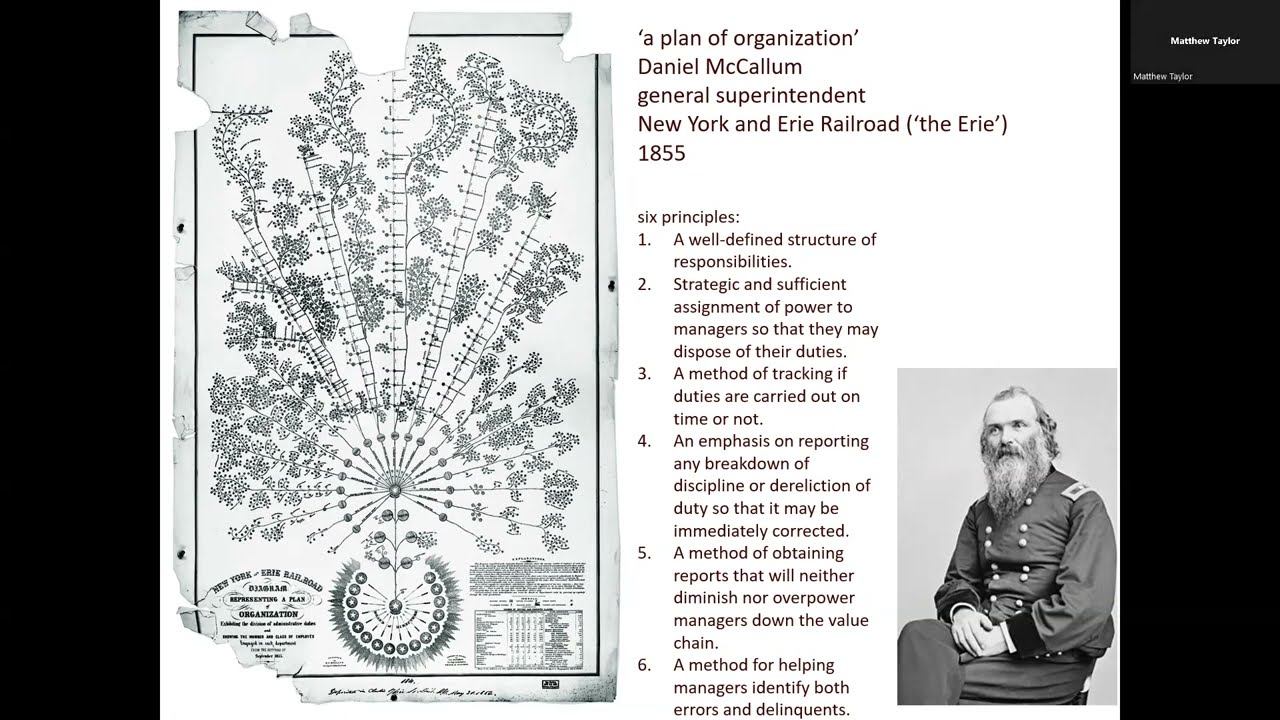
Five core practices for effective organisation - Benjamin Taylor | Stretch Conference 2022