Management Cybernetics and the Force in organisational life with Benjamin Taylor

In this virtual meetup, Benjamin Taylor presents a systems‑thinking framework he calls “the Force” to explain how organizations function and how individuals can be aligned for high performance. He weaves together classic cybernetic concepts—POSIWID, Stafford Beer’s Viable Systems Model (VSM), structural coupling, and Barry Oshry’s worlds and schismogenesis—with contemporary tools for team design such as PeopleFit assessments and adult development models (opportunist, diplomat, expert, achiever, redefiner, transformer). Taylor argues that effective management is less about directing people and more about constructing teams where role‑task fit matches each person’s developmental level and expertise, enabling single‑, double‑, and triple‑loop learning. He illustrates how mismatches (e.g., a level‑3 manager overseeing a level‑4 team) generate friction, turf wars, and reduced organizational “force.” The session includes interactive polls, Q&A, and references to a mini‑MBA and the Red Quadrant Way Toolshed for deeper learning. Participants reflect that the breadth of models provides order to complexity and that the talk bridges multiple organizational lenses—people, function, cash flow, and cultural dimensions—highlighting that organization is not merely structure but a dynamic, multi‑dimensional system.
Chapters
But what would be fantastic is if you could all say who you are, what you want to say to introduce yourself— that's up to you, could be what you do, could be what your interests are— but particularly what you most want to get out of this session. That would be really interesting and useful to me, if that's okay. Pierre, would you mind hosting and going around people kind of one by one, picking them off, volunteering them to speak?
I will do. I will. So the first one, hi Anna.
This is alphabetical order at this point. So my name is—
I like it.
I'm a Scrum Master. I'm calling from Toronto actually. And I see some familiar faces. So hi Michael. So Play for Agile. Was a common sort of theme event, and I'm looking forward to learning more. I think Ben, we spoke briefly on Slack, the system channel.
Yes, yes, good, good. Okay, thanks for coming.
Great. That's it.
Thank you, Anna. Hello, Eva.
Hello, I'm Eva. I'm based in Frankfurt, Germany, and I'm a consultant. and facilitate change processes from hierarchical leadership to more self-organized agile organizations. And actually, I like complexity and to deal with complexity. I have no idea what the title means, but it sounded complex. So that's why I'm interested.
Good. It is, it is highly complex, but simple or something. Brilliant.
Okay.
Thank you.
Klaus Schuh.
Yeah, sure. Klaus Schuh. I'm a freelance consultant from Karlsruhe. I consult on IT management, IT service management, and my special interest is to make these skills and capabilities more agile in mid-sized organizations.
Thank you, Klaus.
Okay, Michael Tarnowski. Tarnowski.
Yeah, hello, I'm Michael Tarnowski. I'm based in Germany, Wiesbaden. It's near Frankfurt. Hello, Eva. I'm freelancing consultant working as Scrum Master or Agile Coach, and I'm interested in this topic because I'm interested in client situations, how we can get from the department level To the organizational level.
Okay, thank you. Samuel Mitri, hello.
Hello everyone, my name is Samuel. I am a technology lead and agile coach. I am from Kuwait.
Why I coming today?
Any topics related to agile I need to attend learning more.
Lovely, thank you so much.
Thank you.
Hello Wolfgang.
Hi Pierre. Yeah, I'm Wolfgang Kühlert. I'm also as a consultant helping companies on their agile journey, large, small— no, maybe not small, mid-sized and large companies. I've been in this agile transformation kind of business more than 12 years or so, still very excited to learn. And it sounded like a great learning opportunity with Obi-Wan Kenobi and what the Force can bring us and teach us. Brought back nice memories when I had a bit more hair. And so looking forward to what we can learn today.
Oh, thank you, Wolfgang. Hello, Aaron.
Hi, I'm Aaron de los Reyes. I live right outside of New York City in northern New Jersey. And I'm a solution trained engineer for a big IT services company. And I'm always looking for approaches that can help sort of synthesize the value and the customer relationships and the organization's agility together, going on the same path. So this looked like a fantastic opportunity. And basically anything that Pierre puts together, I'll show up to, and I'm looking get some free Bayern tickets in the next year or two when we get out of COVID So
yeah, this would be a great idea. Thank you. Hi, Markus Hensel. You're on mute.
Hey, yeah, I'm mute. Sorry. Yeah, so I thought it was a great title. I'm working from near Heidelberg as a systemic coach, and I a trainer for System Theory for Agile coaches. So I'm really looking forward to this topic because I think cybernetics is still kind of a well for a lot of resources for the Agile community, which is not really used as it should be. So I'm really looking forward.
Thank you. Hi, Volker.
Hello everybody, so I'm from Düsseldorf, Germany, and I'm working as Agile Coach. I help to introduce Agility or to bring forward the Agile transformation here in Germany at customers in consulting business.
Thank you. Hi Volker, thank you. Hey Sheryn, Shane, how is Texas?
Hello, Pierre and everybody. Texas is cold today. Yeah, I'm from Austin. And I'm either a product manager or agile coach or Scrum Master. We'll find out what my next opportunity is. And yeah, I always— Pierre, you bring together the best people. So I love this. Love this meetup. Love the content and love love the presenters. Looking forward to it.
Oh, thank you so much.
How do we pronounce your name actually?
Sure, it's Shaheen.
Shaheen, thank you.
Yeah.
Okay, I have to work on it, Shaheen. Okay, hi, Rainer. Rainer, are you on on the call? 1, 2, 3. I believe not. So Benjamin, the floor is yours again.
Brilliant. Okay, thank you very much. Really nice to meet you all and to hear a little bit about your interests. So I will introduce myself in one second, just to sort of bring up the topic of our conversation today. And what I've done, we might use the slide know, at the top later, in which case I'll post it in. But I've created a blank Jamboard, which I'd really appreciate if you want to jot down your reflections and things in there. It's a bit more creative and interesting than the chat. So I hope this will be a kind of active conversation. Feel free to use the chat if that's easier for you, if you're not one of these people who likes to switch between things. But I'm going to talk a little bit about management cybernetics and a lot about this concept that I call the force in organizational life. Used to be called dark matter, but everybody has used that concept of dark matter, and a lot of people think they copyright it. So I use the Force. And the point here is that the Force is— where is it now? I'll come to it in a minute. Oh, there it is. The Force is what gives the Jedi their power, of course, as Obi-Wan Kenobi said. It's an energy field created by all living things. It surrounds us and penetrates us. It binds the galaxy together. So the point is here that my concept is, what are the hidden forces that are acting on organisational life that are not immediately obvious, but which will always have their influence, and which will likely to control us if we don't control them? I'll go into that a little bit more throughout the rest of the time. And this is a bit of a busy slide because I'm probably too much of a busy person. I run a consultancy in the UK internationally doing public service transformation, red quadrants. I'm a Director of Systems and Complexity in Organisation, the Systems Practitioner body, which has branches now in DACH and the Netherlands and Belgium, and I've missed one, but there's another one somewhere. So if you want to go to systemspractice.org, there's loads of fantastic systems complexity and cybernetics events. I, much to the displeasure of Dave Snowden, I believe that systems complexity and cybernetics all spring from the same taproot and are better considered as part of a whole extended family. The other things are I run a social enterprise focused on public service transformation. I'm in the movement called Requisite Agility with Pierre. I'm hosting a conference tomorrow called Conscious Organizations. So actually, if you go to— do you remember the URL of the thing? Uh, Pierre, is it consciousorg.net or consciousorg.com, something like that? And if you use the code CONS100, you can get a free ticket, um, because we're celebrating the fact that we've done really well with this conference and we're giving away 2 extra free tickets to people who might be interested. So do have a look at that. Yeah, maybe you can Google the right link for me to make sure you've got the thing. I've got 2 podcasts in the works that I've been recording assiduously and not releasing, and I'm writing a book Routledge, which is pretty much the same. I'm writing continuously but not submitting, so that's kind of the nature of my— well, I guess that's continual revision of work in progress. So this is the kind of thing I do, and I'd love you to connect with me on all the social medias. I'm Ant Leboy on social media. That is not some weird public school nickname from English schools, nor is it a freak hunting accident. It's just an anagram of the short version of my name because I have quite a common English name. I also run the Systems Community of Inquiry, which we're just posting everything related to systems complexity and cybernetics. So that's, that's me. Too much stuff. If you're interested in going further beyond today, I run a thing called the Red Quadrant Toolshed, where we have participants from all over the world and all different backgrounds who I share the consolidated body of knowledge that I've developed and I use. This is the kind of the heart of some of that. So that's the advert over, but I just wanted to explain what was going on with me. Why cybernetics? And so this is an engraving from a, from a discovered piece of pottery that was probably made around 520 BC. And you can see here on this Greek ship, this person is the steersman. And so the origin of the word cybernetics is from kubernetes, which is Greek for steersman or or something of that nature. And the concept of— this is a little bit of a command and control model, as you may be able to see. He's on a higher level and he has an overview of the whole piece and is responsible for the whole thing. So you might want to come back at me about that dynamic later on in the conversation, and it will be a conversation. I'm going to do a bit of blah and then open up a conversation. But this steersman is dealing with complex wind currents, complex water currents, the behavior of a crew who may also row or may not, the setting of the sails, and ultimately with the steering of the craft. So this concept informed this fantastic outflowing of management science that, you know, has roots back to at least Greek times, but was at its peak in the probably the 1960s, '70s with Stafford Beer, creator of the Viable Systems Model. But cybernetics still continues. So it's about steering, it's about self-governance, governance, self-governance. It's about circularity, feedback of concepts about systems and about navigating in complexity quite literally. I'm just going to open the windows to get myself a little bit of fresh air here. So, and that's why cybernetics, and this is why the Force. So what I've done today is give— is pick out my kind of top 12 bits of the Force, the unseen actions that are shaping organizational life, and we'll probably have time— Pierre, are we scheduled for 2 hours, is that correct?
Absolutely.
Up to 2 hours. We'll probably have time to explore—
More or less up to you.
Yeah, no, that's cool. I'm here for the duration. I've got my grapes, I've settled in, I need a rest after a long journey. I've probably driven past many of you in Europe in my, my 2-day journey from the Channel Tunnel to northern Vojvodina. So hopefully you've got some inkling of the kind of thing that I want to be talking to you about, and please feel free to start to put questions ideas or what the hell is he talking about into that Jamboard there if you are interested, or just directly into the chat if you just want to, you know, pose a question. And again, I'll just post the— where's the chat gone? There it is. I'll just post the link to the Jamboard in the chat if you want to go there directly. Somebody's done a baby yoga, that's very nice, thank you. The great thing and the terrible thing about Jamboards is you can put photos and memes and stuff in as well. So here's, here's, I think, roughly 12 elements of the force at work in organisations and systems, and I'm going to go into at least 2 of them and then let you select and dive into some more of them. Okay, so I'll give you an overview now, then I'll pause and I'll want you to speak, so please actively prepare to speak, not just listen. And I want kind of, what the hell is all that about? This one looks really interesting. This one I understand, you know, that kind of feedback in a minute. First important concept that I, that I think is part of the force in organizational life is the purpose of the system is what it does. We look in management cybernetics at de facto purpose, the actual thing that the system, as we see it, is reliably and predictably producing. There's no point looking at the mission statement. There's no point looking at the what should we ideally be doing if you're not taking a really clear-eyed view of what the system actually does. So, you know, universities are— well, what is a university and what is a hospital are 2 questions that you might pose in thinking about this. The abbreviation of this is POSIWID. One that I'm planning to go into immediately after our little introductory chat is the hidden essential organisational logic embedded in the Viable Systems Model. This says that there are 5 or 6 features that every system as an organization must have, and that must have certain functions and attributes and relationships to each other in order to be able to survive in the world and adapt to survive into the future. And it doesn't matter— and this is a really big and important point to me— I don't care if an organization is a hierarchy or a network or self-managed or directed or whatever else, unless that has implications either for its viability, its success in the world, or for, you know, its— the experience of the organization as experienced by the people in the organization. So I think that's a really, really important point to talk about and to get across. Another aspect of the force is that leaders and organizational systems are always inevitably shaping culture. whether they like it or not. We have some models and circularities for that. That worlds matter, that we all live in our own world making sense in a specific way of what's going on. And I'll introduce this concept, if we get to that, of schismogenesis, the creation of schisms and separations. One I'd like to get into, which I'll pair with the viable systems model, is the fact that We naturally as human beings fall into dominant and other cultural patterns, and those create system fragility. And there are predictable ways— not always, not every time, but predictably and with great reliability— that that goes. This is from Barry Oshry, as is the second piece, that humans fall into separate worlds in organisational life, in interactions, and those can throw us out of partnership. then organisations get coupled to their environments, locked in, responding and reacting in a circularity, which is incredibly important, particularly for strategy. Lots of organisational life is about who has control of the frame, of the paradigms, and what level of self-knowledge does anybody have. Then there's the necessity of hierarchy. The different levels of organisational work, of human development, and of human capability that are bits of the force. These will get you if you don't acknowledge them. Human needs and the impact of trauma, shame, and referred pain. The fact that we are living in irreducible complexity. The fact that it's enabling or disabling constraints all the way down, and the need and potential for testing and learning in reality. This is what I'm trying to fit into my book, so I'm not going to fit it into— all of it into 2 hours tonight, but I have got a little survey While we're talking now, I've got a question from Klaus. That's great. If you want to hit on that second link, that link I've just posted in, and give me a little indication of which of these look the most interesting for you, vote on which one or two you'd most like to see, that'd be brilliant. The second Oshri quote again, Klaus has asked, in organizations we fundamentally fall into predictable patterns. They're predictable in that it's not always and not every time, but it's persistently and with great reliability. When 2 people are working in partnership together and a task comes along, the fundamental dynamic is somebody sticks their hand up and says, look, I'll deal with that one, and the other one goes, great, thank you very much, I'm pretty busy over here myself, right? And as soon as that happens, one person starts to have a better understanding, more influence, more power, more control, and a different perspective on the system, and the other person starts to have less influence, power, control, less overload, but less agency, and they start to see the system in a particular way, and that becomes a feedback loop that gets worse and worse, and in a schismogenesis type of fashion pushes us out of partnership. Barry's from Boston, so he says partnership in a very particular way, which I quite enjoy. Does that make sense, Claes?
Yeah, thank you. I was just wondering what this partnership meant, but you explained
it. Okay, sorry.
Okay, so any comments about this context here?
Yeah, yeah, yeah, yeah, exactly, exactly. Any comments, questions, sort of, is this not what you signed up for? Are there some that you really desperately want to see? Or anything. I'm getting votes in for— I know the second one I'm going to cover, second and fifth I'm going to cover anyway, so they're not listed in the poll, Anna. I'm getting votes for structural coupling. Oh, one vote so far. Somebody else wants to say something about these? Are some of them familiar to you, or are they familiar but not in theory terms?
Structural coupling is not so familiar for me.
Okay,
you say a little bit about it.
Hmm, so the fundamental concept here, and this was established by Maturana and Varela in their studies of biology, and the concept of it, and taken forward by Hovestad and Lowe in the book Patterns of Strategy, which you can have a look at at patternsofstrategy.com. Is that organisms and their environment co-evolve and they influence each other in a reciprocal circular way. So the hummingbird gets a longer and longer and longer proboscis as the flower evolves a longer and longer whatever the petals are, right? There is a, there is a bizarre arms race going on with the duck's penis. and the female duck's vagina, which is a co-evolution of these organisms together. And there's many, many examples, but not many as vivid as those. So an organization will tend— will have lots of structural coupling relationships. It will have a structural coupling relationship with its main market, with its biggest customer, with its competitors, with its suppliers. But if you just look at structural coupling to a market, what that means is— so this is the reason why 90% of strategies are never executed, never mind not succeeding, they're just not executed at all, because the world adapts and changes. So an organization just gets pulled into doing the thing which obviously works for its market in that moment, and then another thing, and then another thing, and then step by step by step by step by step The organization gets adapted to its market, and the market gets adapted to the organization. And that's fine and dandy, but it has implications, right? It has implications if your market dries up and goes away. It has implications if you're responding to only the existing part of your market, and there's a huge other opportunity that you're not looking at. And it goes, it goes on and on. Does that make some kind of sense? So my consultancy Red Quadrant responds to bids. government work, and that means that we invest more and more in bid writing, and we have to get government cyber secure accreditation, which costs tens of thousands of pounds per year. And it's a lock-in effect because other people don't have it, but we have it, and we have to bid just to get on a framework, just to have the opportunity to bid for more work. So bit by bit by bit, we get locked in to our public sector market. And that's an example. Okay, cool. And we can talk more about that if we have time and more into the more into the implications of that. So I'm looking at the votes now. I'm going to close the votes and say we have a preference for control framing paradigms, etc., and for hierarchy. That's quite interesting. And following that, structural coupling, and then worlds and sensemaking. And so just for now, I'm going to go into 2 and 5 and introduce them to you. And please feel free to ask questions as we go along. Okay, jump in and jump in and and chat with me. So what Stafford Beer discovered is that organisations have an underlying logical form if they are to be viable, and this model is one that we can use for diagnosis of what works and what doesn't work with organisations. It's one that works at a whole organisation or a subunit level. It's in fact completely recursive at multiple different levels, and it can help us and guide us in a normative way to give us advice on how to design organisations to be more viable. So this is a version that I use in my public sector work, right? I say we take these 5 worlds that, by the way, each have their— this is a simplification like all models, okay? So, but I can say that we can take these 5 worlds that each have their own sense-making realities their own experience and their own way of coping with what they experience. And we can lay these onto any service system. So in any service system, you have citizen or customer world where people are trying to get their demands met by the organisation, but only in order to meet their needs to achieve their purpose in the world. You've got a service world which is responding to the demand and trying to trying to be proactive and adaptive to actually meet the demand coming in. You've got management world, which is trying to integrate the whole system, give clarity of who does what, make it make sense, not fall over itself and all that kind of thing. Leadership world, which is trying to identify what are we here to do and what's our culture. And hopefully they're all visiting the world of learning and change, which is all about how we improve, how we reflect, how we learn, all of those kind of things. Now, really importantly, as I'm going through different versions of this model now, these do not imply that you have a team of people in each of these spaces doing separate jobs. So in a startup of one person, one person is service world, management world, leadership world, and the world of learning and change. Does that make sense? And these are functions that could be distributed through a completely non-hierarchical system in theory. Or they could be completely hierarchical, but actually that wouldn't work. All we know for sure is that completely hierarchical is nonsensical, because if you only charge management world with creating clarity of boundaries and discretion, for example, then everybody in service world is going to be stuck waiting for management world every moment to clarify something that's just come up. So you always have a sense of distribution of these functions across the organisation. So this is the simplified version of those 5 worlds, and this is where it comes from. Oh, sorry. So fundamentally what we're trying to do here— ignore the bottom bit at the bottom, that's just for one of my clients— is we're trying to create systems of organisation that can manage the complexity of the world that can absorb and respond to the demand that is coming at them from the market or from the citizens or from the customers. We're trying to create capabilities of organizing that allow us to manage the day-to-day work and turbulence without falling over each other. So in that box too, we've got things like the common finance system, common pay approaches, the terms that we send out to partners, scheduling of meeting rooms and allocation of Teams licenses all that kind of stuff. We're also trying to deal with managing the complexity of the organisation so it stays coherent— how the work works, where to put the resources, who's accountable to whom for what, how do we get people to be responsible, and what change is happening in the organisation and how we deliver that. In System 4, we're starting to think what will be demanded of us in the future, because just that point number 1, at the boundary of the organisation, we're getting loads of messages about what's needed now, but if we're not careful, we get structurally coupled just to those, and we don't maintain our independence of thought and action in System 4, looking out into the future to understand how we have to adapt to survive in the future. Does that make sense? And in System 5 leadership world, we're trying to balance the needs of now and the needs of the future, because people in System 3 are going to go, We need all the focus, all the money just for operations, just for coordination, just for management now, because look at all this chaos and all this hard work that we're doing. People in System 4 are going to go, look at what's coming over the horizon, look at the future, we're going to need to invest all of our effort in a change programme transformation to get ourselves fit for that future that's coming. System 5 has to balance the two and maintain coherence effectively between now and the future, if the organisation is going to survive. So that's the definition of viability, if you like, right? The definition of viability is able to absorb the complexity of the environment in a productive way, able to manage the day-to-day balance, absorb the complexity of the organisation, and able to balance dealing with the here and now, the down and into the organisation, and the out and there, the future of the organisation. So I introduced these versions, my versions of the Viable Systems Model, Because this looks like an awful bunch of knitting. So this is Stafford Beer's full viable systems model. So you'll recognize the numbers and the systems I've just been talking about. So system 1 is any operational unit, any environmental transacting unit. So that's procurement and it's delivery to the customer, right? These are the bits that are interacting with the environment, creating value, right? That's the only thing that creates, you know, shareholder value or whatever in the organisation, is your interactions with the external world. System 2 is that day-to-day balance and coordination, stopping overlap from destroying the organisation, allowing us to work alongside each other as coherent operations units, System 1s. System 3 is synergy, policy, resource negotiation, taking an overview of all the System 1s and 2s and working out where to put the demands, the accountability, the resources, how to organize the organization. 3-star is absolutely vital, and it's often called monitoring or audit. So 3-star is how is System 3 understanding what the hell is going on in all the System 1s and in System 2. So really importantly, we get loads of— so you start to see already how you can diagnose organizations in about 30 seconds just by applying this model. Have you ever met an organization where you've got people allocating budgets and performance figures— that's the System 3 function— without fundamentally understanding how the work works and what's going on in, in operations, in, in delivery? That shows a lack of a System 3 star, right? So System 3 star done badly absolutely destroys trust and organizational coherence. but done well, it's a massive driver of trust and organisational coherence and kind of working together well. So, and then System 4 is looking out into the future— how do we— what do we need to be and do in the future to survive? And System 5 is setting the overall identity and policy— what are we all about and how do we balance the demands of now and the demands of the future? Right, so that was quite a canter, quite a run-through. What do you make of that, folks? Can you see it? Does it feel real? My hypothesis is that these are the fundamental dynamics, the hidden logic of organizational life, and that if you don't have functioning System 1, 2, 3, 3*, 4, and 5, you're unlikely to have a viable organization.
I want to ask you on that. Thank you, Klaus.
Yeah.
Is there a certain size of an organization that you need to start seeing these systems? What about small and medium enterprises up to 1,000 staff or whatever?
No, I wouldn't say so. I would say this applies to startup of one person, because if I'm or if I'm running a small business, if I'm running a stall selling you know hot chestnuts in the winter, I need to have my interface with the customer right. I need to be able to. I'm coordinating with myself in this sense, System 2, but I need to have my stocks in and I need to have my system of organization so that I can serve fairly mindlessly and I don't have to go around the back or go and buy more chestnuts when I sell out, and that I've got the right kind of balance of stocks. I need to understand what's happening in my organization and set my own plans, and I need to think whether I need to adapt for the future. That's a really bad example because it's a really naff organization, But even a one-person startup needs to have these functions all in dynamic interaction, otherwise it's going to be in trouble.
This would be exactly my question. I think this model is kind of— is simply a description, a way to describe how a system works. And so I'm asking myself, Is there any kind of organization that is not working like this?
Because if it's working, it's viable. If it's working, it's still kind of surviving, obviously. Maybe not the next day, but this— the day that you look at it, it's surviving.
So it obviously works towards the scheme. So what—
So yeah.
The biggest question for me is, how exactly do you apply it when you work towards a development in organizations?
Yeah, so I mean, that's mostly where it's applied, in organisational development or in organisational design. And you're right that every organisation that exists is viable, and therefore this is attempting to be a scientific analysis. So of course science always is stating the obvious once it's obvious, if you see what I mean. And every organisation that exists is viable, but they may not be into the future. So we talk about degrees of viability. So the way I use this in organizational development is to very quickly look at which of these systems are weak or over-dominant, and how are these, how are these functions— so don't think of them as separate entities again— how are these functions being carried out in the organization? And if you have an excess of one or a lack of one, or a lack of communication. You might have this amazing intelligence team that's got these incredible insights into the strategic future, but has zero influence on operations, so never changes anything, right? That immediately allows you to find powerful points of intervention to increase effectiveness and viability, and it allows other people to see that as well. Really important to say that that happens at multiple scales. So if you have a big multinational, then you know at the multinational global level you need system five, four, three, three star, and the system ones are your major major divisions. And then within a division that needs a system five, four, three, and the system two, and your system ones are your operating businesses. And then within a business, it might have regions, and then within a region, it might have factories, then within a factory, it might have a production line, within a production line, it would have a team. So it's fractal, it goes all the way up. So actually, one of the best things I find, Marcus, is people think they're doing policy, but they're doing policy within a System 1, and they think they're doing it for the whole organization, for example. So actually identifying the level of recursion, the level the organisational logical level they're working at in doing these activities is pretty valuable as well. Let me just link this into a couple of models that you may be familiar with. One is— oh, sorry. Well, so fundamentally, the core of what we're talking about in requisite agility is the viability of an organisation into the future, its ability to be requisitely agile in responding to the changing world is based on its ability to scan or sense change in the environment, make sense and orient to what that could mean for the organisation, and make decisions, and then actually implement it. So this is the System 5 into System 1 into environment loop that we're talking about, right? And actually, this is happening at both an operational level Are our System 1 units able to respond and couple into their environment effectively? And it's happening at a System 5 level for the whole system at a strategic level, if that makes sense. And that sort of management loop, that can we understand what's going on, make sense, decide what we do about it, action it, in the Viable Systems Model and in the Requisite Agility model is a version of the OODA loop. Colonel John Boyd's concept of if we are able to observe what's going on, orientate ourselves to it, decide what it means, make decisions based on it, and act to test what happens within the unfolding environment, then we win. He was talking about aerial dogfights, but of course this is quite popularly applied in the agile world at the moment and certainly has been applied to business for quite a long periods of time. So both of these models, the OODA loop and the scan or sense, make sense, make decisions, implement, are describing what happens when System 4 can look out to the environment, make changes and implement them in the world, and then understand the implications. And you'll see in cybernetics you get lots of these kind of feedback loops very explicitly and clearly identified. So that's what we're talking about. And I know I'm talking really theoretically this evening. For me, these are incredibly practical because they're— what did you say, Marcus? You said it was a way of describing. I think that's right. It's a way of seeing organisations that for me is Yoda-like in being very deep and insightful. Any other comments on this section before I talk about dominant and other cultural patterns? Because I want to link that into this and link it into see how that goes with your experience of agile. Anything
else?
Should we move on?
When you do this analysis, Benjamin, with whom in the organization you talk about your observations? Is it on
well, I yeah whoever I'm working with usually. It's great for large group sensemaking. If you get people to actually— you can even do it in a kind of constellations-y pattern, if you like, getting people to actually identify which part— keep in mind it's not who does which job, it's which part of your job is part of system 1, 2, 3, 4, 5, at which level. And getting people to see that and to see the breakdown in communications between them and affect it, you know, you've got to get people to see that these 5 functions need to be humming, really singing together to make a really effective organisation. And then why is it not like that for us? And it's like, oh, you guys had that brilliant idea about what our competitor was doing and we didn't listen. Or why are you always setting budgets that you know are completely unachievable? Why don't you come down here and see what life is really like in coding? Well, that's a demand for a System 3 star. Yeah, so I talk to whichever part of the organization I'm working with mostly, Eva. But I'm usually working with transformation directors or operational directors of a service trying to get a function changed or the senior management team dealing with strategy. So those are often the people that I'm working with.
I have one question, sorry, related to this. What are some of the prerequisites that you find, like if you're going to start this journey with a client, right, in the organization, what is the equivalent of your checklist? Like this must be in place for for this to succeed, for example?
You know, for people to understand this model, are you basically saying?
Well, it's— one is the understanding, right, being open to exploring that with you, and the other one is now that we have this knowledge, what can we do about it, right?
Yeah, I mean, so it's the same as any organizational transformation. It's just more open-ended. The question is, do you have the willingness and the capability to act on what you learn? Because so often the case with all the work that we all do, everybody sees the insight and goes, yes, it'd be brilliant if we did that, but it's never going to happen. And that's depressing for you. I mean, really, it's a question I ask myself is, can we teach this pig to sing? Because there's a Chinese proverb that, you know, don't teach a pig to sing. Why not? Number one, it annoys the pig, and number two, pigs can't sing. So there's no point, you know, a failing organization is a failing organization and will fail in its own way. So the prerequisites are an interest in getting something done and a willingness to, an ability to act on it. That's all I look for. Frankly, I'll put another link in the chat. PSYO has an organizational maturity model with a little fun little Cosmo quiz style questionnaire that you can ask people in an organization that gives them a diagnosis, not in terms of your System 3 is dominant and your System 4 is weak, but it actually creates— it shows you organizational archetypes that you are falling into, like bean counters or the death spiral. or interesting kind of names like that based on viable systems model analysis. So that's a good place to start. Another good place to start is to get the book The Fractal Organization by Patrick Koverstadt, which is a nice overview of this approach. Or come to me for conversations. Any more before I move on? Wolfgang, yeah.
Yeah, this would have been my question, if you could iterate over maybe some of the malfunctions in some of these systems and indicate what kind of behavior that typically leads. Or in the other kind of flip side would be, if you see these and these kinds of behaviors of your overall system, that kind of indicates here and there is where you would have to start looking. Does that make sense?
Yeah, that makes a lot of sense. Yeah, and I think you'll get a lot out of looking at those organizational archetypes. But, and I won't remember the names of them correctly, but one organisational archetype is System 3 does budgeting and, you know, demanding for performance from Systems 1 and 2 without any System 3 in place. And what that leads to is a spiralling loss of trust as the demands on the operations become less and less realistic. The operations become resenting that more and more. System 3 puts more and more controls because you can't trust those bastards in operations in the System 1s because they're gaming the system, and just increases the demands. So this is the kind of, you know, floggings will continue until morale improves. kind of scenario that organisations do get into. And the only way to resolve that is to actually build proper shared knowledge between System 3 and Systems 1 and 2. So that's the System 3 star. So it's management by walking around, back to the floor, it's job shadowing of each other to understand what the dynamics are, and those kind of things. An organisation without a strong System 4, to use another example, or with a strong System 4 that's decoupled from System 3, or that is overruled by System 5 and therefore doesn't have influence, will be very focused on the operations in the here and now, very effective at dealing with the complexity of the demand here and now, but will be absolutely in that structural coupling without any understanding that their market might be leading them over a cliff might be leading them into niche that no longer is going to exist quite obviously in 3 or 4 years' time, and therefore, and then they'll be stuck with no ability to adapt. Do you see what I mean? So that's quite a common pattern. I mean, we see sort of head-in-the-cloud models where you have a very dominant System 4 and a very weak System 3. You get a lot of startups and people in the tech space who are always looking to the future and are iterating before they've proved the model, and they're just constantly chasing what they think is going to be the next big thing, and maybe they're 2 years too early, but they never embed a strong System 1 that's actually meeting the demand of the market here and now, because they haven't got any System 3 in place. It's all System 4, basically. It's all led by experimentation and learning and planning for the future. So, I mean, I could go on. If you've got a weak System 2, you'll have conflict between the System 1s, and they'll be falling over each other. They might steal people from each other's teams to work on immediate operations, and that means you need that coordination, that common language, that the day-to-day balance of resources between teams that's not at the intentional System 3 level, but just at the automatic who the hell has got booked the meeting room today kind of level. Yeah. Or who's got the server resources booked out when I'm supposed to be doing my big test and whatever. Does that help? Okay. So we could do a whole session on this, but I want to sort of explain how some of these things link together. So I want to try and get a couple more in. We're doing— how are we doing for time? Oh, okay, not too bad. So, Meetings with the Other— Encounters with the Other, sorry, is the new title for it. This is a piece of work. So Barry Oshry is a really interesting organisational theorist who's been working on this kind of stuff for 60 years. He's now mostly retired, but he basically started off by creating experiential learning events. And then this was back in the roaring '60s, the crazy '60s, and he was doing it with the Black Panther and Betty Friedan and all kinds of, you know, interesting community organizers and great thinkers at this moment of human liberation and possibility. And Barry started to observe regular patterns. So he would create organizations, he would create cultures, And he would create societies where he just bring people together for 10 days in a conference center in Cape Cod and allocate them randomly to the roles of elites, middles, and immigrants. And the elites would have all the power and money in society. The immigrants would have all their belongings taken off them and have to work to get food to eat and their bed for the night. And the middles would basically be managing the elites' resources. So they'd be the innkeeper and the police and the judge and all of those kind of roles. And he saw incredibly consistent and persistent patterns of human behaviour emerging, even with kind of, you know, flower power hippies or organisational development people, that we fit into certain dynamics. So this is about when one culture meets another culture, right? So give me an example of 2 very evident different cultures in organisations that you're in or that you work with. What's what's what's the what's an organization that has two different cultures going on?
I mean, the typical one is that you have maybe a galleon village, right? That is trying to go into self-organized teams, agile, the whole nine yards, and then you have an allergic reaction. Through a system that is used to work in annual budgets, command and control, and the like. That's the most typical I could think of.
Name the person in the— name the group in the system that has the most allergic reaction.
Um, finance, I found often.
Okay, cool.
And operations.
Yeah, okay, okay. So you've got finance and operations going along in their happy world, and then what— sorry, what did you call the agile people? Did you say village?
Yeah, it's like, I mean, depends on how big this has evolved, right? In some cases it's a very tiny one, in others it might already be a whole tribe or whatnot, right?
Yeah, got you, got you. So the predictable human dynamic is that when finance and operations are confronted with this agile village who behave in slightly different ways, who look slightly incompetent in their world, but the finance and operations people feel slightly incompetent in the agile world, who seem a bit off, who don't dress and behave in the same way that we do, who just trigger those different, other, different, other person. That in dominant systems, what we do is we— the human response is we evaluate the other, we fear them, we defend against them, we can try attempt to control them, right? And by the way, this works both ways. And so in this case, the agile team are the other, but they will be caricaturing, evaluating, trying to laugh at the finance people to diffuse their discomfort, etc., etc., etc. So there's a tension there of, on the one hand, preserve and protect. Look, the way we work has kept this organization going for the last 50 years. We need to value this. I've got professional qualifications, trust me, I'm a finance director, etc., etc. Or even preserve and protect. But this agile stuff is special. I've seen people come alive. I've seen much greater effectiveness. Haven't you read the books? Haven't you seen the webinars? Whatever. And then there's a little bit of allow and adapt, right? Now, this is what we often think is the good thing, right? Which is kind of like, okay, well, you know, that's all very well for you people over there. You can do your nice agile things over there. Carry on. Well done. pat on the head, just keep it away from, you know, from my operations work, etc. And you see that in culture when an outsider group comes into a society. You see either preserve and protect or allow and adapt, and you see those 2 things battling each other. The point though is that when you're in a dominant system, when you're evaluating fearing, defending against, and controlling, both of those responses are ultimately sterile. Right? Preserve and protect just keeps us separate and slightly antagonistic, and allow and adapt actually keeps us separate and slightly antagonistic as well. Just that we're we're playing a little bit nicer with each other. What we're interested in is creating a robust system. So when a robust system meets a different culture, it doesn't go into evaluation, fear, defending, control. It goes into study. welcome, value, and utilize. Right, that's really interesting. What can we do with these bits of the system? And I invite you to reflect here on the, on the concepts of the agile purist that we've no doubt all come across. The agile purist looks in this model like somebody who's got a strong focus on preserve and protect of what makes us special and the work we do special, and obviously this is something that we want to bring to the world, but is that not ultimately sterile if we're not able to study, welcome, value, and utilize what's going on in the rest of the organization? And there's a trick to this, which is this dynamic balance of 4 forces, 4 rhythms or practices: adaptation, stability, autonomy, and integration. So in a robust system, we have all these 4 things going on, which means that actually meeting the other enriches the system as a whole. It doesn't create this sterile, frozen separation of models. Does that make some kind of sense? Any comments on that before I explain, go into a bit more?
So does that kind of reflect in a kind of short version I've heard from one of my Partners once, everybody is right to some extent.
Well, that reflects on my point about worlds, absolutely. I mean, cynicism aside, which is important to be cynical, everybody is making sense of and responding to the things they have to deal with in their world. Yeah, um, so I don't know, I work in a county council in the UK where, like all of the public services in the UK, they're in big financial difficulties, right? I'm really risking overspend every year, and they're not legally allowed to not set a balanced budget every year. It's a legal requirement, so it's tough. And we're working with people adopting agile with a small a approaches, which are test and learn, iterative, safe to fail. really engaging with the customer, really developing based on customer needs to provide, let's say, some aspect of social services. Okay, so we have this dominance, we have this dominant and other dynamic going on massively all the time, and it's led to pitched battles, it's led to loads of tears, loads of bottled-up repressed emotions. I mean, it's really, it's really a drama. And it's come, it's It goes through cycles. Where was I going with this? I just started thinking about my client's drama. But the point is here that the finance person is in a world of multiple obligations, huge amounts of responsibility and accountability to government and to her profession and to the legal framework for making sure that we set a balanced budget every year. And she's completely changed her view. But ostensibly, it's not surprising that her view of these people coming along saying, we're doing this amazingly transformational work, but we're not focused on savings because focusing on money is the wrong mindset that gets you to bad costs and bad outcomes. And she's going like, what the— you know, I've got legal obligations to set a balanced budget. So that's sense-making in each other's worlds. And these people, the agilists, people have been given, you know, a brief to disrupt and create new possibilities and go out there and learn and create rich learning for the organization, but without any mediation, this dominant system is almost the inevitable outcome, and that's the way it proved over the last several years, right? In order to create a robust system out of that dynamic, so yeah, Everybody's making sense of the world from their world, and it's very hard for people to switch perspective and get into other people's shoes. Except that you know when you change jobs, it happens just like that. So I've known people who are like contact center managers who were complaining like hell about the business. They never tell us when there's a policy change. They don't announce when there's a big marketing thing. Then we get twenty thousand calls, and they blame us for not dealing with them. They know you know all this kind of stuff, right? Meanwhile, the business is saying— so the contact center manager then gets hired by the business as— so it's an outsourced contact center— gets hired by the business as the contract manager for the contact center. And within about 3 weeks, they're in the business managing this outsourced organization, and they're going, this bloody contact center, we told them about updates, but they never update, they never change their processes, they never respond to our complaints, they don't provide their management information on time. And the perspective has just gone 180 degrees just like that, just because of being in a different world with different incentives, different challenges, different social drivers, etc. In order to overcome that and create a more robust system, these are the 4 things that we need to do. We need to differentiate, we need to understand and say, where are you strong, where am I strong, how can we together create 5 fingers on a hand that actually be more effective, to differentiate and separate out. We also need to homogenize. How do you do this? How do I do that? What's your knowledge? You know, what are aspects of your culture that I can use and adapt? And we need to differentiate, use the different strengths of the different cultures at the right time, but not separated, but understand which one we're doing and why. And we need to homogenize, actively learn about each other's cultures, Share our knowledge and incorporate aspects of each other's cultures. Oh, hang on, am I? Sorry, I've done that. So homogenize, differentiate, use the strengths of different cultures. Homogenize, learn and share together. Individuate, understand that everybody or every part of the organization is an individual. Identify and encourage, what are you good at? Where do you work effectively? And integrate, feed and support each other. Understand that we're working together dynamically. And when you put those 4 dynamics together, when you have practices in organisational life that differentiate and homogenise the whole thing, so we understand who's, you know, which bits of the system are good at what, how we're using this function and how we're using this function and how they both contribute, but we all come together to share and to learn together. And you're individuating, you're sending people off separately to do different work, but bringing back and learning together, that's when you create a— those are the 4 dynamics that you need to create a robust system that can actively absorb and take in productively kind of new ideas and new influences. I didn't mean to walk into a— I'm really interested from an agile point of view when very often you're introduced, you are the other, right? You're introducing a new concept into the system. And often there's an aspiration which of course is going to be received as a threat. to take over the culture. We're going to do everything differently from the way that you've learned it for the last 30 years of your career, right? Does this raise any reflections for you? I'm not presenting this as a challenge to Agile. This is— I'm presenting this as a core organizational dynamic, if you see what I mean.
Benjamin, you're challenging Agile, so you have to expect a quick response from myself.
Carry
on. And one of the tricks, and you ask when you're coming to do an Agile thing or whatever, make a transformation or change or try to figure out how it works. There's one point is it's always growth by assimilation. I completely align with you. And in the wording, you have to be just very clear in the wording you're using. Let's say I work a lot in the finance industry. I always come to say, hey, I'm not challenging your knowledge in finance. Not at all. Agile is not about finance or whatever, it's how we proceed to work in finance. It's more the how and not the what. But then you understand, if people is clear what is the difference in the know and what, then you can move forward. In our way is also, that's why you have more agile coaches than agile consultants, because coaching means we have to take care about the The different paces you have, because the curve of adoption is not standard. And some guys are working slowly and one is a very fast runner. Usually when you have early birds, fast runners, we are not really betting on them. They also can be fast moving away. And no, it's, you have different paces. And that's why we have to have agile coaches. Even though we have the same thing when I was a lean coach 15 years ago, it's exactly the same issue. It's about how we proceed, right? And the— Yes, but you have to have this kind of storming phase you have in a team. But unfortunately, the team is faster. What I really like here is you can really figure out that, hey, you design an organization and you try to roll this organization, this model out globally, be aware that if you engage people in Germany or maybe India or maybe China, or whatever in the US, you will have a counterfire, meaning you have to adapt also the core system based on the newcomers. That's interesting.
Yeah, and in some of these you've also got an added cultural layer with different, different country cultures, etc., going on, haven't you? Yeah. Any other comments on that from an agile perspective? So the reason I put these 2 together is I think the Viable System Model talks about the functionality that's needed for organisations to survive and thrive. This talks about the human dynamics at a very fundamental level, and, you know, whether it's different functions in the same organisation, even just, you know, finance and HR or something, Or this is fundamentally the reason why every merger is a takeover and no mergers succeed, because you create these situations of a dominance culture and a dominant and other dynamic. And what we do in the workshops for this is we give people, within about 45 minutes, we easily almost effortlessly, but it's a good design, create the conditions where people identify strongly with a culture. And then the cultures come together, as in an organizational change or an organizational merger or something, and then you just see these things play out. And then you just say, let's freeze the action. Why did it go the way it went? What were the dynamics? What was going on with you? And then you introduce this model and ask people to look at Doing it differently using these 4 dynamics to actually bring the cultures together in a more productive way. How are you feeling, everybody? Some heavy stuff and content. Do you want to go on to one of the other topics? We could take a short comfort break here since we've been on for an hour, but I'm interested to see whether you've had enough to absorb for one evening or you'd like to come back and carry on.
I have a question, Benjamin. When you say in 45 minutes that the differences and how they can interact in a more integrated way, so how sustainable are these kind of experiences from the workshop? What, what,
um, well, it's a It's an experiential workshop, so the answer is it varies. And again, same answer as before: if people have the willingness to actually and the power to actually do something about it, then it works very, very well. At the very least, it gives them a way of naming what is happening in organizational life when they're locked into this dominant and other dynamic and the preserve protect and the allow adapt. And referring back to usually some quite funny events where people have gone into conflict with the different cultures in the in the work. Not that we don't— this is fake cultures, we don't model it, but they can see very glaringly the connections. So we helped a collections team for social insurance and the taxation team to come together for an entity, and they would refer back during this this forced merger process quite often to that workshop. At the best, people build it into their organization design and build in this differentiation, homogenization, individuation, and integration into their rituals. Um, so really good, um, organizational rituals have things that celebrate, you know, the individual contributions and the different contributions of the different systems, but also homogenize and integrate. And Barry's labeled this the power dynamics and the love dynamics. So, you know, a good organization needs to have both of those. So the answer is a good consultant answer, isn't it? The outcomes may vary, but it depends. But it's always there to work with, put it that way. Yeah, that's what we find. Does that make sense? I feel something came in. Did somebody put a chat message? But I can't see where I've put the chat now. Yeah, there's a chat message. Wolfgang has to jump off. Cool. If people have taken in quite a lot, I'm happy to stop now. So quick poll, is enough people wanting to take a 5-minute break and then come back or not?
But no, but I have a question for you. How does it work in the COVID-19 momentum? And maybe that your system is splitting the existing system.
Well, yeah, I mean, if you look at, if you just look at the schismogenesis in America between Republican Republicans, Democrats before Trump, of the way that reportedly, as I understand it, people started tending to live in different cities, consume different media, have different friendship groups, etc. You can see some of these dynamics playing out. I don't think if this is— I think what happens, my catchphrase really is that COVID-19 just takes everything that's already happening and agitates it to a kind of new level. So we're already doing encounters with the other workshops and Power and Systems workshops online on Zoom, etc. So we're still already doing this work, but the risk is, of course, that we get loads of differentiation and loads of individuation, and that not having to bump up against each other in daily life just exacerbates the power dynamics and the splitting down into smaller and smaller groups that love each other and can homogenize, but without much real difference between them, so that it increases the diversity of niche groups but reduces the diversity of society as a whole. So that's a definite risk. By the way, you can use this as an organisational— sorry, Aaron, just a second— you can use this as an organisational diagnostic as well. An organisation that's all about individualness and separateness and differentiation is likely to explode and separate out and spin off into different bits of organisation, An organization that's all about love and integration and homogeneity that forces you all to dress the same and think the same and work the same way is likely to just lose people who go off and set up their own differentiated thing because their need for differentiation eventually overcomes that. But in the meantime, it'll be less capable and less dynamic and less adaptive and all the rest. Aaron, sorry, what did you want to come in on?
Yeah, I mean, I had a question. I mean, I find most people, you know, don't just crave power or love. Yeah.
You know, I mean, obviously they tend to be the ones that you hear about more. But, you know, most people kind of sit somewhere in the middle, just in their own self-organization. So I'm wondering, you know, how do you— communicate that in a way that doesn't force people who aren't, who don't, who just don't think that way to recognize that this can work for them. Because for myself, or I think a lot of people I work with, I'd probably say 75%, I think most of them feel like they're reasonably integrated here in somewhere in the middle, or let's just say they move around the middle area as needed on a, on a pretty regular basis. And I think what you'd call them is, you know, moderate or compromising type people and so on.
And one little zing on the whole Republican-Democrat debate, not to go politics because I'm not—
No, carry on. I was aware, as I said, I know very little about it really.
Yeah, but is that one thing most people aren't aware of is that Non-party affiliated people are over 50% in the United States. And that number's gone up consistently 1% a year, every single year for 30 straight years, regardless of what happens in the world. Literally, it doesn't matter.
2008 crisis, 9/11, COVID, it's just 1% a year.
So everything gears around those sort of extremes, but nothing around that other half that— Yeah. I would argue, and this is how I tie it together, is back in this middle here. And I think I'm just wondering, how do you frame this for people who already kind of feel like they're already balanced in the middle versus people who are—
Okay, so it's really interesting you take it that way. I think what you're saying is really valuable, but this is an organizational diagnostic, not a person diagnostic. Sure. And what we say is that to be a robust system, an organization needs to be zestfully and powerfully exploring and expressing itself in all 4 of those boxes, if you see what I mean. So I think what you're describing is just a person who's fairly robust and healthy. If they're just sort of in the middle, that's probably not good. if they're sometimes really showing what they can do as an individual and differentiating themselves, and sometimes really coming together with a group and being a part of it, that's probably very healthy. You could probably use this 4 boxes to look at people's mental health and so on, but that's not what— that wasn't the concept. Yeah, so for organizations, it's important to understand which of these— it's not a question of dialing one down. It's a question of expressing them all really, really fully and having all 4 of them going on. Does that make sense?
Yeah, no, it does. It does. So, I mean, so what you're really saying is get a lot of the people who— because people are what organizations are, right? Organizations don't live if people don't show up. it or log in, right? So, I mean, independent of some weird IP companies or whatever, but, you know, so it's really about getting those people who sort of don't express themselves, that sort of power middle, to sort of start amplifying their organic strengths that fall into these 4 really. Is
that— Yeah, that's really interesting. So there will be people who have a tendency to be all over to the left or all over to the right. And the trick is for the organization to find ways for not just the really individual, you know, I'm dedicated to my individualness, but everybody, including those who are the kind of, you know, parents of the organization and really kind of feed this homogenization, but to see how they're different and they're individuated as well. Do you see what I mean?
It's about the highly individualized people moving to thinking homogeneous more and high empaths to kind of become a little more individualistic. Yeah.
So I would say don't think about changing the way they are, thinking about practices that they get involved in that give them that, that create that organizational dynamic. It's a really interesting— it bears a lot more thought, Aaron, but that would be where I'd start.
Thank you. Thank you.
Yeah. Okay, can we take a quick comfort break and come back in 5 minutes? Is that good? So we'll come back at— start at 24 minutes past the hour. Thanks, everybody.
Thank you.
Okay, I have to post everything.
How's it going, Piers? Ah, okay, a lot of things.
Yeah,
yeah, we're working on business models for the USA.
Oh cool, if you want some help, let me know.
Okay, I call you, I will call you. And yeah, it's A consulting, coaching, training bundle offer, and a couple of workshops. And one of the dry runs will be November 11th through Requisite Agility. It's a workshop about decision-making in the new normal. Okay. And we try to address the common suspect of issues, you know, getting rid of the methodological aspects or whatever. And in the workshop, you will have 4 or 5 experts, including myself, and each of the experts is coming from a different angle of another kind of methodology. And then you can understand what is the context, and we want to bring them as a collaborative workshop, meaning you're not coming and consuming. You have to sweat a little bit. And so you have also a momentum, a form.
Yeah, yeah, no, makes sense.
I have some SAP stuff that I'd like to run by you. So for our SAP practice.
Yeah. So I had an interview today about, oh, you're an SAP expert. I said, oh, tell me more. I'm not an SAP expert. No, I know. Yeah, but yeah, and then our guys from Accenture say you're not an SAP expert, so you can't be an agile coach in SAP. What?
Yeah, no, so we're looking at building full, basically full app stack SAP people. Agile is going to be fundamental to that. So our head of our— I'd like to sort of intro you to the head of our SAP practice.
Cool.
you guys start to have a conversation and see where that takes you.
Absolutely. We'll be thrilled to do this. And as I mentioned, I worked with Cognizant. So I designed their— they want to say, hey, let's do something for Cognizant to come to explain that you can run SAP systems or you can manage Azure projects in an Azure way. Because the problem is fundamentally they have their own methodology. But if you got this, you know how to start with brownfield, greenfield, and all this kind of stuff because it's usually configuration management. And it's not rocket science, right, SAP?
Well, yeah, but it's like anything. People have become so instrumented for so long that they're very uncomfortable. That's one of the reasons we're trying to build these cross-horizonal, basically cross-horizontal skill sets.
Yeah, having it in a new environment. So having a mix, having a mix of different skills, that's great. Good idea.
Exactly, exactly.
And a couple of— in one and a half months, Shaheen will be also Agile coach. Oh, nice. He will be— he can help. He registered himself in my training. So thanks again.
Yeah, of course. It's gonna be some early mornings.
Oh, we can change it because if you make me a proper proposal, we can— I can do it later. I chose this time slot because it's quite in the middle for people from the USA and other customers I have more in Asia.
Yeah,
but actually you're the only one, so I can adjust to yourself. Perfect. Okay. Yeah, good challenge.
Hey everyone, I have my cup of tea, so I'm a happy Englishman. So in the polling— I'm a little bit early, aren't I? I'm 30 seconds early. I can start talking anyway. In the polling, people asked for control framing paradigms, etc. At the moment, what I've got to— what I was going to do around that if asked was specifically talk to people about Bill Talbot and Lisa Laskuleh's immunity to change exercise, which I think is quite a useful little framing. If people are familiar with that, I won't pick it up. Actually, I could switch the— hang on, let me speak to you properly, full screen. And the other one that came up in the polling is hierarchy and levels of work, etc. Are those still, based on the fact that there's only 3 of you I know several people remaining, but people are being, people are being sneaky-deaky offline. Can I ask for quick comments? Are those still the things that people would like to get into? Or based on who we've still got left, is there anything, or what we've just been discussing, is there anything else that you'd like to focus on?
Anyone? I don't have the poll topics, but there was another one that was the top voted that was interesting.
The hierarchy one?
Yeah, yeah,
yeah, yeah. Hierarchy and levels of work. Maybe we'll go into that one first because they were equally rated at first. So I'll do that unless anybody jumps in and interjects. Okay, so let me just share the screen again. Let me just find the right one. So this is— I don't know, I feel that this is less of a developed theory and more a fact of life. But I suppose that's what I'm trying to present here is the facts of organizational life. Sorry, I'm just trying to share screen. I've got a different setup here than at home. Can you see that now? Okay, so first of all, does anybody know what this actually is? Aaron, you look like you might say something.
Yeah, I mean, it's from my understanding, because these were all separate railroad companies, uh, this was the, the, the plan of the, of, of the railroad that was, that was supposed to connect, um, upstate New York, uh, across to, um, you know, basically Michigan, or, you know, in the, the Buffalo region. Yeah, yeah, the Buffalo Legionnaire. Yeah, exactly, the Great Lakes.
Exactly. Um, close. Does anybody else have any advance on that?
Is it a map, like a train map?
Yeah, close. Um, so you're both, you're both partly right and partly wrong, which is, which is fun. Um, uh, this is the first ever modern organization chart. Um, obviously there were sort of organization plans in, um, the Prussian military, from which a lot of our language and thinking about hierarchy comes. But this guy is a bit of a hero. He was a Civil War engineer, built a lot of good bridges, some of which still stand to this day, and so on. Quite an interesting character by all accounts, and definitely, I would say, the first enterprise architect. If you look up this— this is available from the Library of Congress— this is called the Plan of Organization, and along with this beautiful diagram, he wrote a manual which was all about organizing organization, and it does include some brilliant things like, you know, the principle is that everybody must— the paths of responsibility must be clearly mapped so that delinquent individuals can be held to account. And I love that kind of phrase. So very, very— so the point here is, and this is told in Scholz's The Team Handbook, I think, and in various sort of lean-y, maybe now agile-y people, as a story of why hierarchy is bad. The concept here is that they had the first ever fatal railroad accident around this period, even though the trains were only going at something like 30 miles an hour, and even though many, many immigrant workers, particularly Chinese, had died in the construction of the railroad lines. This was the first time somebody was hit and killed by a train. So there's one story about this map, which is, by the way, an org chart, not a map per se, which says that— and it's true— that Daniel McCallum was charged with drawing this up so that forever after, if something went wrong, they would know who to blame. So that says that an organization chart is all about the balance of blame and responsibility, and this tells a story about hierarchy and organization structure. which is about the death of the individual, the diminishing of human responsibility, human freedom, and all of those kind of bad command and control things. So that is true, and of course being a railroad engineer he drew it as switches, that's why it looks like a railroad map. But what else do you notice when you look at this map? How does it strike you?
It's floral.
Yeah, yeah, it's kind of organic, kind of quite beautiful in a way, floral or like a plant of some kind. And what's really interesting is, to modern eyes, it's actually inverted, so that at the bottom is the Board of Engineers, the root ball nourishing the plants and so on. And what was the big data revolution that Daniel McCallum had to cope with around this time in the mid-19th century?
The telegraph.
Absolutely. So the telegraph poles were being created basically alongside the routes of the railways. So this was the first time in human history that head office could meddle with the affairs of people at the end of the branches, because— so that concept of branches I think comes from this— in second to second, minute to minute at least. detail, right? So this second story about this individual chart is that it was organic, it was sustaining, it was supporting, it was creating the possibility of human freedom and maximizing discretion at the front line consistent with organizational coherence, which is a phrase that I use a lot and I absolutely love. That's what it's all about— maximizing discretion at the point of the boundary with the environment, with the customer, consistent with organisational coherence, and that it was about maximising the flow of good quality information to the centre for strategic decision-making, because that's the only place— remember the steersman on the back of the boat— that you can see the whole, but actually minimising by allocating clear responsibilities and clear freedom to manoeuvre Which also, by the way, meant that the possibility of blame and accountability was very, very real, but minimizing the meddling and the interfering of the center with the, with the branches. So, so for me, this tells quite a story about human and organizational potential. That's why I love it so much. It's got both of these potentials within it. Does that make sense?
I mean, what's fascinating is that if you overlaid Um, the ARPA charts of the late '80s with DNSs wouldn't be too different.
Absolutely. And it looks like a cellular— um, it looks like, um, you know, veins, um, and stuff, or the model of a human brain. It looks like a very natural, organic pattern, doesn't it? It is quite—
I mean, it's almost like how much of this is rearview mirror of how we sort of overindustrialized— overindustrialized is the wrong way to put it, but, you know, let's say overmicromanaged how we industrialized. And then looking for examples where, aha, that's the genesis moment, he's the bad guy or whatever. When, you know, which someone is probably going to do in 100 years with, you know, people who invented the internet. So there'll be this sad picture
of
some engineers
from It gives us a sense of the culture, because when you discovered this, I was thinking about one model is if you take a picture, you can Google a French railways map.
Yeah.
And this gives you a sense of the French culture. All the railways in France are all pinging to Paris. And so you really understand how it works. If you want to make a deal in France, you have to work in Paris. Everything is in Paris. And if you want to destroy the country, destroy Paris.
Interesting. That doesn't square with de Gaulle's famous complaint, how do you rule a country that has 372 different types of cheese?
Yeah, go to Paris. And another way around is take a look at Germany, how it's in Germany, which is like more spider web. And then you go there and the usage of railroad is much more higher in Germany. You have— you can— you don't need a car. You can— this is very— and this creates a completely different dynamic. Just looking at the railroad maps, you can really see, oh, I understand how different these cultures are.
Interesting. Really interesting. Yeah. So my point is that, you know, command and control is a really easy bogeyman because everybody hates being told what to do. And everybody knows that an organization that micromanages takes all the decisions from the center and tells everybody what to do is wasting brains and wasting human potential and is really bloody annoying to work in. And yet, I'm speaking next week at the International Command and Control Research Center conference, and if you tell people in the army or the police that command and control is a bad model, they'll go, what are you talking about? Command and control is just, you know, fundamental underlying fact of organizational life. you have to have command and you have to have control one way or another. So very importantly, my point about the viable system model, if we think about that, is that there is, you know, the System 5, the overall governance of the system, could be we the people all voting together and taking a decision in a cooperative organization. It could be the founder making an arbitrary decision. It could be a powerful board of directors who have permanent hierarchical roles and only act in their self-interest. But any of those things are possible, but it's still System 5. It's still setting the identity and deciding between the future and the present. Pierre, you were going to complain about command and control.
I'm not complaining. I was a little bit military in my life and come from a family with a huge military background. So usually we are using this metaphor in businesses, which are completely wrong. Because the understanding of command and control, like we have for Stephen Kleeman, has nothing to do with our understanding of command and control in the business.
Yeah, yeah, exactly.
That's not the same thing we are speaking about.
And I wish a lot of my clients had a command and control management system, because at least that would be a coherent, worked-through, um, you know, philosophy of management. Most of my organizations that I work with have an incoherent mishmash bits and bobs, you know what I mean?
But you have the other way around too, right? I discovered companies where they wanted to be a sociocratic model, very open. It was incoherent, chaotic, and you have some kind of politburo there. So you have been judged on a daily basis by your peers. So meaning is you have some kind of bad behavior, So meaning, we— and you have to learn to live with freedom. So it's, I guess, democracy, we are still working on it. So we had the French Revolution 250 years ago, and we're still not on it, right? So it's, it's complicated. But—
And I would second that, having been in the army, we have this sort of fake, you know, almost like movies and and sort of, you know, I'd say extremist view of what those command and control systems really are. You actually have quite a bit of freedom, a lot more than people actually— I'd find probably in the corporate world, I probably had 5 times more freedom than when I was in the military than I do in the corporate world. I don't think it's even close actually. And I think what it boils down to is It's easy to say command and control or not as sort of like a full life system versus a lot of high regulation or high risk management systems will implement command and control when at the highest risk point. Sure. Or at the highest mission point so that they can drive a mission outcome, whatever that is, right? If it's an NGO feeding people, if it's military, if it's whatever, a fire department, and then they'll allow a lot of self-organization around it. And I think that's a piece that we sometimes forget is that it's usually not binary, all command control, no command control. Yeah. And a lot of that has to do with with risk and what the social construct of risk is. I mean, one of the reasons we have so much command and control in health systems all over the world, whether public or not, is— Yeah. If at the end of the day, we got an answer every month of a true transparent reading of your town's health system and your county or your province or your district, and they laid it all out there, 100% transparency, Jira style, people would lose their minds. They would literally say, we have to stop that. Someone needs to be in charge, because people want safety out of something. That's, I think, the challenge is that when you have things that are high risk, high— or people perceive high accountability, they really do want a command.
Absolutely. Well, and that goes back to this story, doesn't it? This goes back to the story of, you know, somebody died in front of a train, therefore we want to know who's responsible. So that's exactly the kind of situation that seems to call for that in people's minds. And one of the big questions— this is where, you know, I think dogma about using these words and using these models is just mistaken. You know, very often increasing command and control— sorry, no, let me just say increasing— attempting to increase personal responsibility and accountability will just increase levels of lying and confusion within the organisation and decrease openness, decrease learning, and lead to increased risk of death. We see, very sad to say, we see all kinds of versions of that in the— in our childcare system in the UK, which is not by any means a bad system internationally, but because people feel they have to go through the process and tick the boxes and do the things, and they have to investigate every kind of complaint, even without doing a kind of Bayesian analysis of is this valid and is it worth our while with limited resources following up, they end up with backlogs, which means they don't investigate the ones that are actually important. You know, so these, you know, you've got to think about outcomes in these cases, I think.
I will share with you my big shame. There is one model which in my mind, quite what you call an agile organization, which is absolutely, it's military. I will never give a talk about this. For which one of the biggest models is the French Foreign Legion, how they are organized. Take a look on YouTube. Okay, it's you will get it because it's my understanding is very high level. So if you take it on, are just baby killers? Not at all. And but here is the command and control. Okay, gives a sense of freedom. It's more like based on respect, but the rules of the game absolutely clear since the beginning. And so, and this is something usually we, we have forgotten in, in the business because we just ask people to come, or you just work for us, right? And how do you want to manage or even control people's workforce? And well, not possible.
Absolutely. In my experience, hierarchy and command and control is very often a fragmentation. Each person works with his own task, but the integration part, what you said, Benjamin, before, is missing. And very often the manager, the leader above, he's not so much into the details that he could fulfill the integration task. So it's kind of, I think, in the hierarchical command and control model, The integration piece is very often missing.
That makes a lot of sense, yes, well, and that would be explained partly by what we don't have time to go into this evening, Barry Oshri's other type of organisational dynamics, those between the top, middle, bottom, and customer that force us out of partnership. That's a natural implication of you do this and I'll do that, is that you go off and you do that, and I go off and I do this, and we don't come back together again. There are 2 parts I'd like to just— let me just— sorry. So I use a definition of work that I took from Elliot Jacks, which is work is the exercise of discretion within boundaries in pursuit of some intent or purpose. So I think that's a very useful operational definition of work. So work is only the discretion that you get to exercise. And the assumption is largely that it's within some— sorry, that it's in service of some intent. But there has to be a framing, there have to be boundaries, otherwise it's not work, it's just exploration. You have to know what you can and can't do, even if there's huge wide open areas of uncertainty in there, you have to have some kind of framing. So one of the deep force factors of organisational life is how are your people fitted and stretched to the work that they're doing, right? So I use fit and stretch to talk about whether people are fit for their work, the size and the type of the box of discretion that they have to work within and the purpose that they're delivering, and are they stretched, you know, is it just enough to give them a real thrill, to give them, you know, the possibility of failure? Because without the possibility of failure you're not really actually exercising this much discretion and you're not really fulfilling yourself as a human being. So Elliott Jaxx had a very fundamental idea, which I think is partially true, that the time span of discretion of work, i.e., how long it will take the work that you are— the decisions that you're making to feed through into impact, is a fundamental factor inherent in the work, and that people have levels of capability that may or may not meet the work that they're doing. And this comes from a very— it really only works, and only partially works, in places like mining, where you have a very clear differentiation between frontline hands-on work, here where you get results in a single day, you know, whether you've achieved your quota or, you know, kept your colleagues safe or whatever else, through people who are working on improving the processes, bringing processes together into an organisational system, bringing systems together into a whole organisation and optimising them, through to the kind of super, super top heads who are making decisions about great big, you know, extractive industries that will have a 5 to 10 to 50-year impact horizon of impact. So his point is that the complexity grows. If you're getting feedback within a day, then you're able to course correct and adapt, and you don't need a lot of strategic capability. You've not got a lot of chess moves going on, right? But if your impact is extending out over 5 to 10 years, you're playing 4-dimensional chess, and you've got to really think strategically, and you've got to have a a big brain able to deal with all of that complexity. And I think there is something fundamental to something like that, and that it is important to take account of the work that we have to do. What is the kind of level of work that that involves, whether you use this schema or not? And are the people doing that work capable of it? Because if you give somebody at level 3 level 5 work, They will do it in a level 3 way with fairly predictable negative consequences, if you see what I
mean. I have a question. So this is fantastic. Have you seen any sort of assessments at a team level or—
Absolutely, yeah. There's a whole industry of this. I mean,
there's a whole industry assessing everything, I get that, but I mean just—
No, no, but this is Sorry, carry on, carry on. Sorry.
Yeah, no, but where you get very sort of instrumented on team composition, because what I found I put a lot of energy in now is that it's not managing anyone because people are smart and they generally know their incentives. And they generally kind of, once they, if they need a little help understanding client value or mission value or, you know, customer first, et cetera, flow of value, whatever, you just get out of the way after they know that. It's, it's putting team construction together because I find that you really can't correct— it's like bad design of in, in anything in life. Like, you just— the amount of energy you put into that, you might as well kill the thing and start all over again because it's just— it'll take 3 years reconstructing a team.
Yeah.
You know, you get back to where you were 3 years ago. So, um, have, have you seen anything leveraging this, um, in terms of team construction?
So it's mostly— that's a really interesting question because a team in this schema would mostly be operating at a single level of work with a manager at one level higher. So where I see this really work in the right organization with the right kind of person in place— and there's a woman called Heidi Maltreter who I met at Pierre's place hosting— Pierre was hosting an event for us— who's very good with this and very pragmatic, because some people are very idealistic with this kind of model. She runs an outfit called PeopleFit, and they will do an assessment of a hierarchy in a traditional organizational chart and show you where you've got a level 3 managing a level 4 and why that's not working, or an advanced level 4 managing a level— a very low level 3 and why the gap is too big for them to connect and communicate and how they can do that better and who you could align into that spot instead. That kind of dynamic, not so much within the team because it's not really about inter-team dynamics unless the roles are structured at those different levels, if you see what I mean. Yep. What I have seen, so the next model I'm going to go on to, again, it's more thin box. I always use the Elliott-Jacks thing, but cautiously because people made a whole industry and many industries actually, and it became very putting people in their box, although it is about career development. And what all these models have in common is that if you're lucky, every 7 to 14 years you'll move up a level, and there are these beautiful diagrams of how people starting at different points at different ages go up at different speeds, that kind of thing. And that's useful because you can put a really advanced level 5 to mentor a Level 2 who's never left very young at Level 2 and going up that fast track, and that will— they'll connect, they'll see, they'll see, you know, it's useful stuff. But if it becomes too didactic and too prescriptive, it really becomes very command and controlly. So the other thing that I like to think about in this way is levels of adult development, and I prefer Bill Talbot, but there are many, many flavours of adult or vertical developments. So this is the development that takes place in your ability to make sense of the world, in your action orientation to the world over time, if you're lucky, particularly if you move country, have a breakdown, have to come out as an unaccepted sexuality in your community. If you have those kind of disconfirming events where your mental model of the world is blown apart and you have to reconstruct a bigger and better mental model, then you might develop through these phases over your lifetime. And the point is here that we all start off as opportunists, and some people and some organisations stay there. So the mob is quite an opportunist model. Then we might— then we learn it's not all about us, and we become diplomats keeping the peace, right? And some of the biggest failing organisations I've ever met have had a diplomat as the chief executive. who will avoid conflicts, who won't face the challenges, who will, you know, make the coach happy, but then when it comes to the moment will back away from actually taking action on the difficult people in the organization, etc., etc. If you're lucky, then you become an expert, and our organizations thrive on experts. So all of these levels— and this, I'm being very basic— I think they're people's own business and about their own development, but they are used for assessment and analysis as well. But experts are people who are really good in their expert view of the world. Again, this is sense-making worlds, right? So each of those different worlds we talked about before, you'll come at it differently if you're an opportunist or if you're a transforming person, etc. So experts are the people who you need to be doing the grunt work in the legal department, for example, or the accountants. Achievers realize that that expert rationality is only going to get them so far. and they have to break the frame and break the model and be a bit more creative and be more outcomes-focused than just expert-focused. Each of these has a shadow side, right? So, you know, the Achievers who take the sort of shadow side— the shadow side of that is manipulative, breaking the rules and actually trying to work around things. And then Redefining is a bit more Broad-ranging, trust-building, etc., and you get the idea, right? So mostly up until the Achiever level, you're getting better at doing what you're doing. When you get to the Redefining and the Transforming level, you get the double-loop learning— not just learning to do what I do better, but learning to reframe it and reconceptualize it and think about it from different people's perspectives and see my own perspective as different Right? Each of these levels involves being able to objectify myself and turn myself from the subject into an object, and actually consider myself in my context, a broader and broader context as you go up the levels. And that's sort of about the alchemical level. I think they've renamed it now because it's a bit of an embarrassing name to be throwing around. You get triple loop learning where you start to inquire into your own identity and into your own view of yourself. And who am I? What what do I need to be? in this situation. So you get the idea. The point is that this is a really powerful way— again, the force in organizational life, right? If you've got an organization entirely made up of Experts being led by a Diplomat, you're going to get loads of turf warfare. An entire— an organization made up of Achievers being led by an Alchemical person might be amazing, but they might just think this person is a bit wishy-washy not, not really reaching the point, and, you know, what the hell's going on here? So this is another good way of getting into understanding organizational life. When you think about my concept of— here it's on the next slide actually— does the role and the task clarity that people have, the boundaries that they're given about what their work is to do, provide a fit to them and stretch them? in terms of both their expertise, their level of work, their level of thinking, and their understanding of the context and task. That's what you want for people to be really fired up and, you know, firing on all cylinders at work. Yeah, so that's that piece. It's another whole— the problem I have in communicating this and putting it into the book, etc., is that clearly you can see we're coming into all this from different angles and linking those different angles when they're fundamentally— it's, you know, it is— organizations exist in 7 or 8 or 27 dimensions because you can look at it through a people lens, you can look at it through a functional lens, you can look at it through a cash flow lens, and all of these things are useful and they all show different ways that the organization if you're not shaping it, it's being shaped by these fundamental underlying patterns.
Because organization is not structure. Yes.
Nice, nice. So people, people have been dropping off all the way, which is, which is absolutely fine. Before other people go, I want to say that I'm happy for people to connect with me. No doubt, Pierre, if I send you a PDF, you'll send that out to participants.
Yeah, lovely. Thank you so much, Benjamin.
Yeah, and we offer a mini MBA that takes people through this, quotes me in the MBA, it's not accredited in any way at all, takes people through some of this. The Red Quadrant Way Toolshed brings together cohorts of people to share and learn and discuss and apply this kind of stuff, and I'd be happy to hear from you in any aspect of this. So there's loads more, but I'm going to stop there and just open up for a bit more of a chat for anybody who wants to hang around, and I'm happy to bring any of the slides back if it's useful to you. But what did you get out of that? Did it answer any of your questions to why you were here in the first place? Hmm. What I'd like to ask you to do actually is to fill in while we're chatting a little retrospective survey, anybody who's left, which should be up there now on Slido, the same link I think I shared this before, but I'm going to post it in as well.
Let me go back. Benjamin, I said in the beginning I like complexity, and what you addressed was as well the system perspective until the leadership, yeah, the individual. So you addressed all the different system levels, and so everything is important. And it's mainly to be aware of all these different aspects, not just focused on one piece.
That's right.
When you work with organizations, you need the full spectrum. And that's what I heard you're doing. And with models, you give some kind of order in all this complexity.
I think that's thank you. That's exactly what I'm doing. I think, I think as well.
So anyway, question isn't on slide.
I'm sorry. Say that again.
Do do we go to the Q and A on the polls in Slido or?
Oh sorry. Is it not showing? Right thanks. What typically happens is like there. I've not clicked make it live.
Oh, there we go. Okay.
Yeah, yeah, it's in the polls now. Thank you.
I was just stopping the recording and the live streaming now.
Excellent.
Okay, so your video is already available, right? Because I streamed live.
Yeah, for a long time in the UK, if you
More from Benjamin

How to Transform Public Sector Organisations Through Systems Thinking With Benjamin P. Taylor

Cybernetics is not the banana, part 2 — Benjamin P Taylor with Laksh Raghavan (2025)

Cybernetics is not the banana, part 1 — Benjamin P Taylor with Laksh Raghavan (2025)
04 | Culture, Clarity & Conversations: Leading in Uncertain Times with Benjamin P. Taylor

The Key To High-Performing Teams Based On Trust – Benjamin Taylor | Compass Tech Summit 2023

Benjamin Taylor - Jan 2021 - SCiO Open Event - The 'Four Quadrants' of Thinking Threats
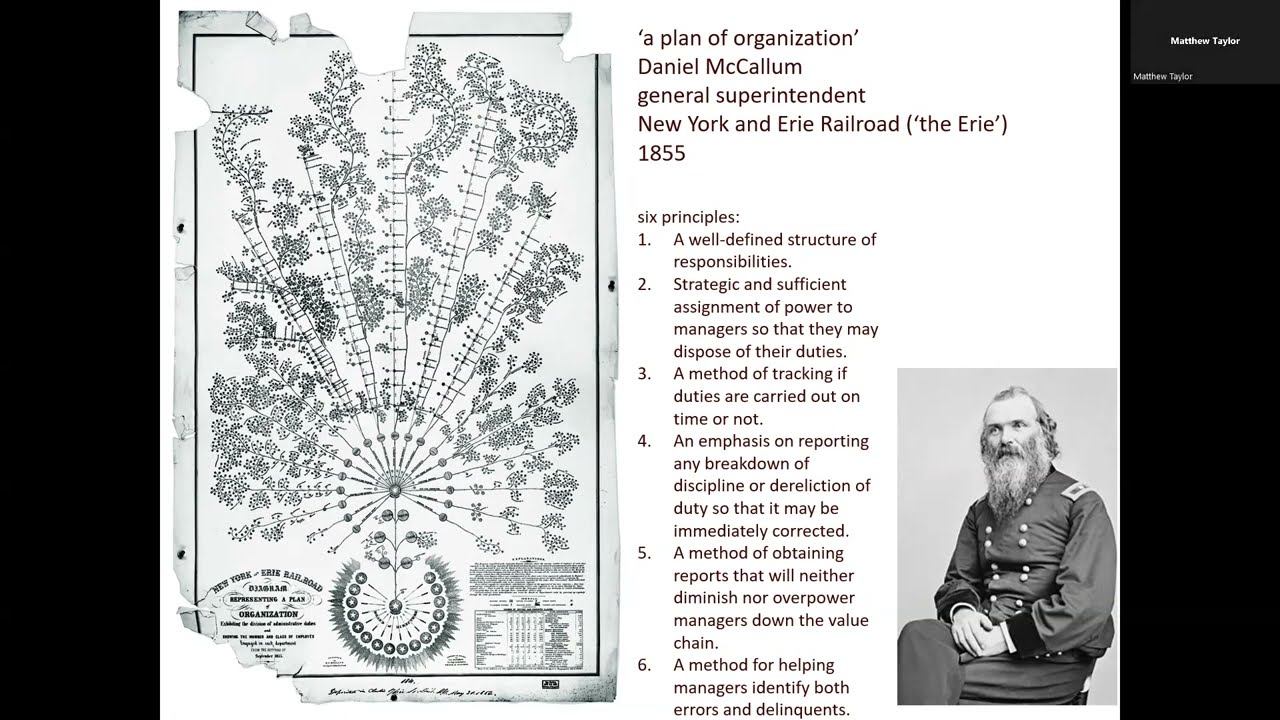
Five core practices for effective organisation - Benjamin Taylor | Stretch Conference 2022