ElevatePolk Podcast: S3 E1 Episode 67 (Rebooting) the Podcast About the Podcast
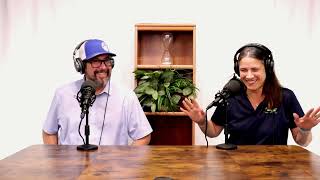
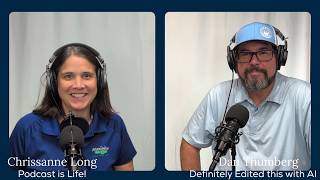
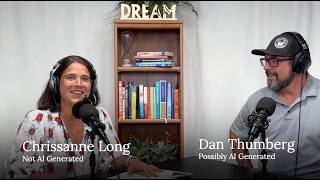
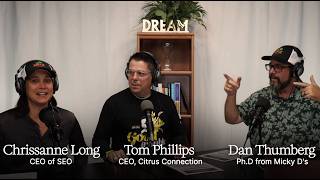
In this inaugural video episode of Season 3, co‑hosts Dan Thunberg and Chris Ann Long officially relaunch the Elevate Polk podcast after a four‑year hiatus. They recount the show’s origin with former co‑hosts Rob Arturi and Nate, explain why the podcast fell silent, and outline their new co‑host dynamic. The conversation shifts to the broader mission: elevating Polk County’s small‑business ecosystem amid rapid population growth, infrastructure lag, and talent out‑migration. They discuss systemic barriers faced by entrepreneurs, the importance of youth entrepreneurship programs such as FBLA and Junior Achievement, and the need for a fourth career track that lets high‑school graduates start businesses directly. Dan introduces his 3 pm.io automation service, describing how workflow automations reclaimed his personal time and can help other local businesses become more efficient. The hosts also promote the upcoming Central Florida Business Expo, detailing its leadership‑development day, trade‑show components, and community‑building goals. Throughout, they blend informal banter with earnest optimism about using the podcast as a platform for storytelling, problem‑solving, and community change in Polk County.
Chapters
Look, Chrisanne, everything's gonna be fine. We're going to wing it. We're gonna be awesome.
I'm good at winging it.
Yeah. No problem. It's only been a couple years. You'll get back in the groove. I just want to read something. Hey, Idea. Want to help me revive the Elevate Polk podcast? Want to be my co-host? Let's do it.
That's it.
So we're doing it.
We're doing it.
All right. I got some notes. No, I'm not going to read the rest. I mean, look, you already posted the thing on the social medias. I mean, they know what it is, you know, the part about my studio. Yeah. So that was, that was a fun one. You know, my AV production goes back to like 1996, King High School, shout out class of '98. And that really is all I have for AV production. So I am like a straight up newbie when it comes to producing podcasts. So if the audio and the video are horrible, we'll work on it. I apologize for that.
It's all right. It's better than it was because it was silent and completely dead about 3 days ago. Yeah.
I mean, it's, you know, we're good. Can you hear yourself?
I can hear myself.
Can you hear?
Can you hear me?
You know, I can't. And so we'll figure that out.
Maybe I can't hear me. Maybe I can just hear me because I'm in my own ears, but maybe not through the headphones.
Go ahead.
Hola, me llamo Chrisann.
Qué lástima. Try it again.
Vamos a hablar. Ah, sí, sí.
There we go. I just got to turn these little buttons here.
There's lots of buttons.
There we go. All right. Does that sound better?
Yeah. Oh my God.
That does sound so much better. It's amazing when you get things set right. All right.
Well, it was you just talking to yourself before.
It really was. All right. So, Um, so that was probably the recording line in too. So let's go ahead and start over again. Ready? All right, Christiane, I want to go ahead and start off and, um, read something. Hey, idea. Want to help me revive the Elevate Polk podcast? Want to be my co-host? Let's do it. So yeah, we can, we can go ahead. We can talk about the other stuff too, but you know, about how the studio was, studio wasn't a mess. It looked like a bomb went off in there.
Lots of bombs.
Yeah, there was just stuff everywhere. It was kind of crazy.
It's so much more organized now.
Well, I mean, it's pretty.
It is.
You know, I mean, it only took, I mean, what, a day?
I have come into this studio at least 30 times with the desire to start this podcast back up over the last however many years it's been since we last recorded. And—
Do you remember what that was? No.
4 years?
Yeah, it was, uh, I think it was October 2021.
Does that include my time with Nate?
Yeah.
Okay. See, I think it would. Yeah, we went through the pod, we went through the co— we went through the pandemic.
Mm-hmm.
And then Nate moved on to being great.
Mm-hmm.
Because he is great. Because that's what I used to call him, Nate the Great. Um, Mike and Mike's Desserts became his full-time focus. And so the podcast became his no time focus.
I mean, I get it, you know, a lot was changing, you know, man, 2021, you know, we are coming out of the pandemic or we are still kind of somewhat in the throes of it trying to, you know, come into some kind of normalcy. And, you know, you look at where we are today compared to then and we're in a completely new realm. And so I think a lot of people, you know, they're going to get this pop-up in their podcast app and go, What is this? I still subscribe to Elevate Polk and, you know, I haven't seen an episode in 4 and a half years.
Did I miss something?
Right? Um, you know, the, the world has changed. The world had changed. The world was changing and now it's changed again. And it's like 4 and a half years feels like a couple of decades.
Yeah. When we were getting ready, you were asking me like some questions. What's changed? Why did we stop? I think For me, the answer to the question is like the surface level is momentum, right? Like that's an easy answer. Like, okay, Nate moved on. That's cool. No, you know, no real like thought about what I was gonna do after that. And no confidence maybe to do it by myself. It's kind of boring to talk to myself. I don't, maybe that's what it was, was more boredom. But then like I said, I've walked into this studio so many different times with this like, all right, I'm gonna do this. I don't care. I just need to keep the conversation going and just couldn't, didn't, don't know why, but why I'm wanting to continue the conversation, I think we'll get to as we go through this.
Yeah, I think we've got a lot to talk about. I got a lot to talk about.
Well, who are you?
Yeah, so we haven't really introduced, I mean, everybody knows who you are and Even though you forgot, I've actually been on this podcast before. I was, I was looking, it was like, I was one of the last guests to be on the podcast too.
So for those of you that don't know, we have never really recorded. We actually, no, this is our very first video recorded podcast.
Yeah.
So it was strictly an audio podcast before. Um, a little history for those that haven't been listening and are wondering what the heck this is all about and what we're talking about 4 and a half years ago. Rob Arturi was the originator of the Elevate Pult podcast. He was my co-host, and he spent a year trying to convince me that we should do a podcast together. And I maintained for a very long time that nobody wanted to hear what I had to say, and there was no reason for me to start a podcast. So eventually he broke me down, and he had this studio— like, you can't really see all of it, but He had this, he had custom built this studio into his own office at the time. And I think we just recorded the majority of all of our episodes there together. And then he moved on and he moved on to work with LRH and do some new things. And he says, he's kind of like, my text message to you, hey, you want the podcast booth in your office? And I'm like, well, Yeah, but I don't know how the heck I'm going to get it here if it's even going to fit. So where we are right now used to actually be my office, and I gave up my office so that we could have this podcast booth here. So that's kind of cool. So shout out to Rob for cajoling me and staying on it and convincing me that I had something to say. We had a little— we had a lot of fun together. And now you're Your legacy lives on as I'm now less worried about whether people want to hear what I have to say and just really ready to just talk about the things that are important to me.
Your legacy lives on. It's like we need— all right, go ahead, cue the Titanic music. You know?
Yeah.
We need to introduce ourselves. Yes, let's do it. I'm going to let you introduce me. I'm going to introduce you. We're going to completely screw it up. And then we can go ahead and correct each other. How about that?
Well, I don't know that I'm going to screw it up. I really think I know you.
Oh, I don't think you know the whole story, my dear.
Okay. Well, I am going to start with how I met you, which was at the Downtown Lakeland Farmers Market when you were doing Homebrew Supplies.
Yep.
And I think now I understand what you were doing, which was more market research than—
Literal market research.
Yeah. And I'm like, This guy's cool. He wants to sell homebrew supplies. That's really neat. And then you started talking about, I want to open a brewery. And I think at the time there was already a brewery.
There was. Yeah.
And I'm like, how do we need— what do we need? Two breweries?
No, we didn't.
And yet here we are. So you initially, as the person that I now know as Dan Thunberg, were the beer guy. But I also know you as this person now that is a lot more systems interested, systems experienced, systems knowledgeable.
I'm a process guy.
You're a process guy. All right. We'll use that word processes instead of systems. And I don't know that I would— and because we had show notes, I don't know that I would have mentioned it's 3 PM, but since it's in the show notes, I'm going to say that so that I don't embarrass myself and say, oh, she's going to forget because no, you have been working really hard. On kind of reinventing the way the rest of the world sees you because everyone sees you as the beer guy. So I don't really know what to say about— it's 3:00 PM.
Doesn't it?
Is it 3:00 PM?
Yeah, we'll get there.
Okay. It's not 3:00 PM.
Not yet. No, it's 11:38 AM.
Yes.
On a Thursday.
But, so Dan is just a really great human being. First of all, I love being around great human beings. I love around, I love being around deep thinkers. So I will introduce you as a deep thinker and someone that I, can come to with deep thoughts and ideas and deep thoughts. What's his name from Saturday Night Live?
Oh, something handy. Handy.
Jack Handy.
Jack Handy.
We just showed our age, by the way. I don't, if you don't know who Jack Handy is, you should Google it or Claude it. Is that a verb now?
No, I think it's ChatGPT, I think is what most people are using.
I am also using, I know that I wanted to try and be cool like you and use Claude as my reference, but I don't use Claude.
That's okay.
Um, but what was I saying?
Jack Handy, deep thoughts, deep thinkers.
Deep thoughts with Dan. So I can ask questions and I don't just get a, hey, that's cool response. I get a deeper response. I get somebody who's thoughtful and takes the time to consider where I'm coming from. And I think that's really what's most important and really ultimately to me why you're the perfect co-host for me to continue the conversation with the Elevate Polk podcast.
You know, I appreciate that. We'll answer some of those. Okay. This is Chris Ann Long, in case nobody's— I don't know if you've been living in a closet for the last 15 years and have not been around Polk County. Everybody knows who Chris Ann is. Maximize Digital Media, BridgeLocal, just in and about town, into everything. You've got, you know, you got your big expo coming up in September over at the RP Funding Center. Boop, boop.
Yep.
We're gonna go ahead and plug that one. Mm-hmm. Um, I know that you are a graduate of Free Shoe University.
No, I'm not. Florida State University.
Oh, Florida State. I said Free Shoe University. Yeah.
Wrong.
Oh, well.
Yeah. I won't hold that against you.
Well, go Gators.
Go Noles.
See, this is gonna be a perfect dynamic. It's the idealist and the realist, the Florida State versus Florida.
Ah, ah. I'm idealistic. Because I'm a Florida State fan.
I know. I think, I think just because of who you are and how you see the world, you know, you see the world for how it should be. And you, I think in, in all the years that I've known you, that, that is the one thing that I always just take away. It's like, you know, I have not necessarily a pessimistic view of what goes on, but I, you know, I, and I think we've had many conversations about this, but I always ask the why, why. You know, and it's the 5 why questions, right? You know, I like to be more of the realistic side. I like to understand not just the greatness in where we are, but how we got there and how we can sit there and replicate it.
Right.
But you are always just forward-looking no matter what obstacles get in your way. It's just an opportunity for you to learn. And I just love that idealism about you. Me, I tend to kind of regress into a pessimistic side and get very, very angry about things. And I don't know that I've actually ever seen you super, like, really angry. I know it happens, but you hold it in very, very well. I don't have the ability to do that.
You should just talk to Craig. He can tell you.
Yeah, we'll find out from you, Craig. So if you don't know who Chris Ann is, go ahead, listen to the 60-something-odd episodes. Get yourself caught up. You'll, you'll understand and you'll see exactly what I'm talking about. I will try to slowly introduce myself to you as we go along. Kind of just a couple of things. My background. Yeah, I am the beer guy. I mean, that's kind of how everybody— if you know me, that's probably, you know, where you know me from is we've had a beer at Swan Brewing or, you know, down at the farmers market many, many years ago when I was literally doing market research. But my background, yeah, I graduated later in life from the University of Florida. I actually started right out of high school at the University of South Florida. I thought I was going to be the world's greatest mechanical engineer. Calculus 4 told me that I was not, in fact, going to be the world's greatest mechanical engineer.
I, on the other hand, knew I would never be anything close to any kind of engineer because I couldn't even pass college algebra. So we'll talk about that another time.
But just so you know, like, that's how far on the spectrum We are, you know, I, but I think that we, we're a little bit closer than you think because I didn't, I ended up not going down that route because as much as I like being analytical and I love being process-oriented, I think we both have that business mindset.
Yeah.
You know, and, and the business mindset is what we're gonna focus on. And I think that, you know, that's already what you were focusing on in the, in the previous episodes, but I think because everything has changed, we can change a little bit too. You know, the— it's Elevate Polk. And the idea is that we want to be able to elevate the businesses and the ideas and the great things that are happening in and around our community.
Yep.
Not only that, but, you know, practice the whole rising tides, you know, lifts all ships. Mm-hmm. And I, you know, preparing for this, I went back and I listened to so many of the old episodes and just listening to the great stories, you know, the humanity that's out there, the people's, reason, their raison d'être, you know, why they do what they do. I had to throw fancy French words out there. It's for my wife, by the way.
Shout out to Maggie.
Yeah. But, you know, to be able to hear that and to be able to have a show that is focused just on Polk County is really what we need. You know, everybody can go and get all of their national news wherever they want to get their national news. But we've had kind of a shrinking of our local news diet around here. We put our local news diet on Ozempic.
Well, and I think to go back to the origin story of Elevate Polk Podcast, when podcasts were— not everyone had one, right? It was a unique way to tell a story. And looking at the canvas of the community, there weren't— there were a couple of Lakeland-centric podcasts, I don't know that there are still very many at all in Polk County, but the desire that I had when Rob and I were dreamy-wind about what we would do was really truly to try and expand my focus and my presence outside of Lakeland with a digital conversation around more than just Lakeland. And I, my heart comes from, I'm a product of Polk County Public Schools. I grew up here. I love Polk County. I love the people that I grew up around and I love coming home after going, having gone to college and just, I never really had a desire to go anywhere else. I mean, I've traveled the world, I've done a lot of things, but I've never really thought, hmm, no, I think I'm gonna move to Atlanta. I'm gonna move to here or there or Tampa, Orlando or anything. It's just like Polk County is who I am and I wanna elevate that. I want people, I want us to stop talking about ourselves in a derogatory way. And I think the only way we can do that is to also change the way we think about ourselves. And that's kind of where the Elevate Polk podcast desire to elevate the conversation, but obviously on a trajectory towards economic development and business. And I think that's where my lane is, you know, and I want the difference between you as a co-host and Nate and Rob is that you have a season now at this point in time in your life, you have a seasoned experience as an entrepreneur in a business, as a startup, and going through all of those steps in, in a retail fashion, which I feel like really balances some of my idealism with the realism of brick and mortar.
I was your demo. I was the one that the podcast was for.
Yeah, exactly.
You know, you were really good at elevator pitches. You know, it's—
Oh, Yeah, thanks.
You know, it was just real— just when I was listening to that, it's like, you know, what is this about? And you succinctly summed it up in like 30, 45 seconds.
Nice. Thanks.
You know, I have been struggling with that.
I had to get to the like 33rd floor, but as long as the elevator's tall enough, I've got good elevator pitches.
I've been struggling with that for the last week or so, or ever since, you know, there was like, hey, because we really threw this together in like Less than a week.
Yeah.
Yeah. You know, it's like, okay, well, what is this? What is this going to be now? Why is this relevant? And I mean, that's— you just summed it up. You know, we have some stuff to talk about. We have things that not a lot of people are talking about. We all see the problems and the opportunities, but that conversation is happening between a couple of people. It's not happening to a greater audience.
Right.
And it's not— the ability to share that conversation is not there.
Yep.
So I think that this is, this is, this is going to be good. We're going to have guests, right?
Yeah, we're going to have guests.
Of course we're going to have guests because we're like full on in the digital world now. We're video, we're running the programs over here on our computers. We're going to be on the YouTubes, the TikTok, all that, the things, all the interwebs, the interwebs, all the fun stuff the kids are in. But we have a, we have a lot more stories to talk about. There are a lot of things that have happened in the last 4 and a half years. There are businesses that have been open, businesses have been closed. People that have gone on to do great things, people that are no longer with us. And, and I think that, you know, we need to be able to tell those stories. We need to be able to talk about it. We need to be able to talk about the struggles that we're having, whether it's internally within our own businesses or process perspective. Are there things that we need to push for changes in?
Right.
And I'm—
I have a hard time with that. Yeah, I, I don't always see everything as rainbows and unicorns. I know. I do get frustrated. I get discouraged. And that was the challenge, I think, of trying to do this podcast alone or not having the right person, the right mix. I think we're a good frickin' frack, you know, like we're just, we're opposite enough but same enough that we can really have some really good conversations. But you're, going to, and I'm encouraging you to not let me get away with the easy stuff. You're going to dig a little deeper and not let me get away with stuff. And I feel like sometimes my macro view, my big picture view sometimes gets concerned with how people are going to receive what's really going on in my mind, right? Like sometimes I just, I have these thoughts going on in my mind and I just like, nope, nope. Your mother always said, if you can't say anything nice, don't say anything at all. And I'm on this podcast now, I'm thinking, how am I going to say some of the things that I need to say? And I hope that we can unwrap them. I hope that we can say them in a way that isn't offensive. But I also feel like that discouraging frustration that I feel have— I've had for a long time is relevant and it's relatable and it's real. And it's a lot of people struggling with the same feelings and not really necessarily knowing how to handle that. And my desire from an entrepreneurial perspective is, man, this place is a mess and I don't wanna leave it a mess. I wanna leave it better than I found it. And I really just think that that's the direction that I want this convers— these conversations to take.
It's, it's the, our opportunity to do something about it. These private conversations that we have, we can sit there and complain and complain all day long. This is our opportunity to actually make something happen. Yep. If enough people are going to listen, we can make things happen. But it needs to be an elevated voice to be able to get the people in charge, the people, the decision makers to make those changes.
Right. And to not offend, but to look at continuous improvement as a shared vision, a shared goal.
Right.
If we all understand that we can always be better, there's never 100%. We're always at— even if we're at 99.9%, well, we can get that. 0.1% better, right? And I think that that's the challenge is like when we share our frustration, sometimes they're not productive ways that we're sharing our frustrations and they're not maybe the right time or in the right scenario. And maybe there's no solution. It's just we need to be heard. And maybe this just needs to be cataloged and documented so that when the time is right, that it can be pulled back off the shelf and say, We need to revisit that conversation. We weren't ready for it, but now we are. Let's see how we can create a solution. Because I remember when you were doing some stuff with, well, I remember conversations with you and multiple other retail brick and mortar people who were opening their businesses and struggling with some of the bureaucratic challenges that are, are real. Like that's just a real true problem that some people have to go through. Not that all of it is, one-sided versus, you know, one side is the problem and the other side is, you know, perfect. But I remember listening to those conversations that we would have and go, what's the solution? Right? And it's like, the solution isn't raging against the machine. It doesn't solve the problem.
I really like it.
It does feel good, but does it fix anything? And the other question then for me is always, okay, if we fix this for Dan, or if we fix this for John or Steve or Mark or Mary, What about all the other people later that aren't going to have it fixed? And that to me is where, that's where I get most discouraged and frustrated because I don't really feel like it's as important that we just fix it for you as if, as if, as we change the process or the system for the people coming behind you.
Yeah. I mean, but that's, that honestly is what we have been doing. We've been making exceptions. You know, and we'll go into talking about the exceptions, but it's time to stop with the exceptions.
Yeah.
You know, there needs to be barriers to entry. People need to have skin in the game. And whether that's bureaucratic skin in the game, monetarily, whatever the case may be, that's what being a small business owner is, is that fear.
Yeah.
You know, being able to leverage that fear though for greatness.
Mm-hmm.
There's a difference between having skin in the game and having some barriers to entry and there being absolute roadblocks.
Yeah, 100%.
And where we operate right now within certain environments, there are just dead ends. There are roadblocks. They're not barriers to entry, right? The normal person who does not have a large sum of cash behind them or a significant amount of influence cannot get past them, right? And those are the systematic inequities that we need to tackle.
Absolutely. And if we are— if I'm being honest about where my discouragement— where I feel discouraged is that there's no one wanting to have a conversation at that level. There's no one really willing to listen and go, hmm, I never really thought about it that way. I describe it a lot as the leadership in the community have never run businesses, never hired people, right, in the business world, right? Never had to stay up late and wonder, am I going to be able to make payroll? Where can I borrow some money to get this covered? What do I need to do to get from here to there? Um, the, the things that keep us up at night, right? Um, those are different things. Everyone has things that keep them up at night, but the things that keep us up at night are very shared in our common challenges, but not shared in the space where people can help make change happen, right? We can only at this point in time rage against the machine. We want to create a way for that to become a productive process change that we can see improvement upon, right? Continuous improvement. It doesn't have to be, hey, we're going to do this all tomorrow, right? It's just, is there a pathway where we can see a better future?
And what can we do that's not going to cost a ton of money, right? You know that That was always the thing, you know, in the multiple businesses that I've had at this point is we try to do as much as we can with as little as possible.
Right.
You know, we— resources are finite, you know, whether it's the resources you need to build your goods or it's money or whatever the case may be. Resources are finite. And that's the great thing about small business owners is they are really, really, really efficient with their resources. They have to be.
We can get along with a little. We can get a long way with a little.
With very little. And how do we translate that for someone who has never been in that position, who has an unlimited budget, who has a giant pocketbook?
Well, let's be clear. No one has an unlimited budget. They just have a different management process for that budget.
Fair.
Okay.
Yeah.
I don't, I, 'cause I don't wanna misrepresent the realities for people who may be listening to this and wondering what's Chrisanne going on about? Let me listen to this podcast.
Yeah.
and no one has an unlimited budget. We all have different priorities, and where we wanna focus those priorities is where our money usually goes. And we might have more money in the budget for things that are our priorities. But right now, in the general sense of Polk County, entrepreneurship, small business resourcing, supporting the, the, the, the ecosystem is not a priority of any budget that I have seen.
No. I, and I pour through, well, at least the Lakeland budget.
Yes.
You know, yeah. Good, bad, or indifferent. That is, that is one of my hobbies.
And it's, it's a priorities game. I mean, it's a, that's a conversation. So I don't want to diminish the priorities because everything is a priority, right? It depends on who you're talking to. Like somebody else has a podcast about social services and somebody else has a podcast about other things that are important and matter to them, right? So this to me, for me, is elevating Polk doesn't mean diminishing things to make other things rise. I also think, I've not really articulated this, so this may come out weird, but I also think that we don't, that because it's business and because it's capitalism and it's because it, and because we are out to make money, people look at it as a selfish endeavor, that you're going into business for selfish reasons. And some people do, maybe. I don't know that we did. I think we really both feel that we want to leave the world a better place. And what we can bring to the table are the gifts that we've been given, right? And so these are the things that we can do. And we just like, oh, if I leave this here, this might make this space cooler than it was before I got here. And people are going to come to this place and they're going to say, oh man, Whoever did this, that's really cool, right? Along the way, we survive, we make a little bit of money, we can support our families, we can put food on the table. But I feel like there's this really inaccurate perspective about business that I would love for us to deep dive and explore on some of the episodes ahead.
Yeah, I, I I wanted to make some money, but I, you know, how much was never like, you know, I never said, oh, I want to get into business and become, you know, the next multimillionaire. I mean, I wear an Apple Watch, not a Rolex. You know, I drive a Volkswagen. You know, it's— there's nothing glamorous about being a small business owner. You know, it's— I, if I, I once tried to calculate what my actual per hour rate was.
That's a good exercise.
No, it's not a good exercise. I, I don't—
the results are not good.
Don't ever do that. It's like, I, you know, I would, I made more money at my first job.
Oh my gosh. Yeah, absolutely.
You know, than from a per hour perspective and, you know, but working that hard did allow me to allows me to be able to provide something to my family. Thank God my wife is a lot more successful than I am. Yeah, but, you know, I don't know that I ever got into anything that I've ever done to, you know, be super rich or super wealthy. Capitalism just is— that's how we operate. That is, you know, that is our status quo.
That is our operating system.
That is, that's our modus operandi. But aside from, From that, small businesses are the backbone of our society.
Mm-hmm.
You know, when you talk about how are we going to get people employed and keep people employed and to grow along with the massive growth that we've seen in the last couple of years in Polk County, big businesses, big corporate businesses are going towards automation.
Right.
They're going towards having less people physically work for them. We'll get into AI, we'll get into all of this other stuff.
Right.
Small businesses are the ones that are actually putting the butts in seats and actually paying the real paychecks to the real people.
Right.
You know, they're the mom and pops. They're the people that live next door to you. Those are the people that are gonna go trick-or-treating with your kids up and down your street.
And, and there's a lot of nuance.
Yeah.
To jobs and there's a, a lot of nuance to the importance of jobs. And so when I started down this very deep, painful rabbit hole that I am in, I started to discover so many, so many things that I was like, okay, that's working really, really well. But right over here, just adjacent to that conversation, this isn't working as well. And I found the biggest gap was between the kind of the solopreneur, the sole proprietor, the non-employer firm, as they call it in economic development. So the person who starts a consultancy and doesn't hire anybody, they just create a job for themselves. That's totally cool. And I love, I love that world. And then there's the 2 to 9, the 2 to 9 jobs, employer firms that are scalable to a, to a degree, right? Like these are service businesses, these are, you know, your trades jobs and your different industries that have multiple employees. And then when they scale, if they're able to scale to a larger, larger level, then they get into the world of departments. They have an HR department and they have a finance department and they have an accounts payable person and accounts receivable persons. You know, they have different dedicated people for tasks.
All right, Chrisann, let's, Let's talk about why now.
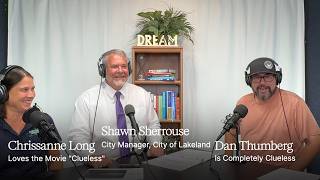
Why now? Man, I was sitting at the Dream Center about 2 weeks ago in the morning, very early breakfast, listening to City Manager Sean Schurhaus sharing his presentation on all of the great growth that Lakeland, AKA Polk County, is experiencing. And I think that's my why now. I think there's a lot of change coming. It's already here, but it's just the beginning. We're still at the tip of the iceberg when it comes to what all of that growth is going to mean and how it's going to impact us. A lot of people are focused on infrastructure. A lot of people are focused on, you know, what are we gonna do as far as housing and home, you know, and affordable housing. There's just so many layers of complexity coming with that growth. And I think the why now is I don't want small businesses to be forgotten in the mix. That to me, as we grow, priorities are going to continue to be where they are. And there has still yet to be a prioritization of small business and entrepreneurship in Polk. And that's why now for me.
What about you? I, I think it's more important now than ever. You know, we, there have been some, especially in, in at least the beer business for me, there have been monumental shifts in customer demand in kind of what the demographics look like. And so I think now is the important time to start talking to our younger potential entrepreneurs.
Yes.
Um, it's my, my son Charlie. Charlie is, uh, goes to school here in town and he's loving FBLA, right? They are building their own mock business in school right now. And I have tried to have these conversations with them over the last week. What are you guys into? You know, is this going to be a service business? Is, are you guys going to sell goods? You know, are you going to do something else?
Is this Yeah.
And I understand that they're, you know, 11, 12 years old and have no idea, but it's over a week and the three of them can't even come together on what they're going to do.
Wow.
So I think there needs to be some education for our younger people coming outta high school, in college, unsure what they're going to do. Understand that entrepreneurship and building small businesses, solopreneur, doing something on a grander scale, whatever it is, is possible. And it is good to have a business degree, right? Absolutely. Is going to help you understand, you know, all of your different formulas and things that you're going to need and things you need to watch out for. But I think having someone to connect to and relate to and understand and hear their stories, right, is more important than anything else.
So I'm, um, part of— so we plugged the Central Florida Business Expo earlier. We're in year 3. We have, we have decided to make one of the, well, the sole beneficiary of proceeds. We have a 20% proceeds of the expo go back to Junior Achievement in Polk County. And through the conversations that I've had, because I am also, my history is I was a teacher for 10 years. We did, well, maybe we'll talk about being a teacher in Polk County, but the experience that I've had this last 6 or 8 months as a coach at Tenorock High School going in and coaching their entrepreneurial program. So the FBLA starts them in the 11, 11-year-old, 12-year-old, and then that continues. If they are at Tenorock, they get the Junior Achievement 3DE Academy. And it's just, it's the same thing. They're 11 and 12 or they're 16, 17 and they still are struggling. But the beauty of that experience, so here's my idealistic approach to it, right? It could be frustrating, But it could also be exciting because they're exposed to conversations that I was never exposed to. I grew up with a dad who was an entrepreneur, and we never even imagined that Chrisann would be one, right? Like, he's right there in my house. I'm— my first job was just a paycheck at Long's Gift Shop, you know, the only job that I had until I got to college. And that never became a thing. No one said, hey, Chrisann, what if you could start a business? What would you start a business doing? And never, right? These kids are having those conversations and struggling through the pain of ideation and figuring out how to identify what the problem is that they're going to solve and the importance of having a problem that you're going to solve so that you're not spinning your wheels and trying to figure out how to start a business and not having a problem that you even haven't even thought about addressing yet. So that's exciting. I think that that is an important conversation. I've been saying a lot lately that there are, there used to be traditionally 3 tracks out of high school, go to college, get a job, or go to a trade.
Yep.
Right. There's a 4th track.
Absolutely.
And that 4th track is straight outta high school. You can start a business.
100%.
And there's no reason that they can't, except for I think societally, culturally, we don't embrace that concept. You know, oh, they, they gotta grow a little bit before they can, you know, do any of these things. They need to learn a little bit more. Hey, you kids, get off my lawn. You know, all of that attitude that we grew up with.
Yeah.
And therefore we never thought it was possible, but now we know better and we saw how that diminished us as kids. So we don't want to do that to these kids, to this generation. And so there are maybe, maybe the percentages aren't like skyrocketing, but if there's 10, 15% of kids that could come out of school with enough experience through these classes and through mentorship and through coaching and through other things that they can just go right in and start a job. I mean, start a business. Wow. That would be huge.
It would absolutely be huge.
We—
our population is not going to stop growing. I think at some point they've calculated we'll peak or whatever. We're not anywhere close to there. We have all of these new things that are taking over jobs, right? Threatening, threatening, threatening jobs. The traditional life path of going to school, getting that advanced degree, going to work for that big company.
The Jetsons are here.
Yeah, the Jetsons are here. You know, the trades, the trades are still gonna be there. You know, absolutely. You guys are, you guys are good. Continue to go to trade school, 100%. But going and getting, you know, so far in debt that you can never climb out of that hole just to hopefully be able to sit there at a desk for 60 hours a week to make somebody else money. That's going away.
Mm-hmm.
The automations are coming for it.
Mm-hmm.
And it's fast.
Yeah.
Real fast.
It's so fast.
But being able to go and take a little bit of money, you can start a business with $100.
Mm-hmm.
And going and doing it for yourself, building it from the ground up, right? Whether it's on Main Street or the internet, it really doesn't matter, right? That job is not going to get automated. You can choose to automate it if you want, but that's on you, you know?
Yep.
I think that that is going to be so important for what we do here. If, if, if just to give a little bit more light, to be able to give a little bit more information to those students I would, if there's one takeaway that I could have from, from this whole experience here, that would be it. I would love to be able to say, you know what, maybe we helped one person, two people start a new business, a younger person start a new business. I think that would be awesome.
You know what other wins I like to think about? I would also like us to be able to talk somebody out of starting a new business.
You know, that's Not my favorite thing to do.
No, but, but it's a necessary thing to do sometimes. And I think there's sometimes that feeling. I am not, again, I'm not always rainbows and unicorns when it comes to somebody who has a good solid business idea and has the work ethic and has all of the things kind of in an organized-ish. You don't have to be completely organized, but enough of the grit. Obviously the grit is gonna, to me, always trump anything else. Because you can pivot. Once you've started, you can move in multiple directions. But if the organizational ideas aren't there or the willingness to put yourself out there isn't there, or if there's too much fear there and you're just saying, oh, you know, maybe, you know, Chrisanne, you have that Elevate Polk podcast. I'd like to start a business. Well, what are you going to do? I want to talk you out of it if it's not necessarily the right thing for you. I don't want you to lose. I don't want you to blow your retirement on a job or on a, on a business that isn't gonna work. Right. And then that's not the goal.
Yeah.
Right. The goal isn't everyone who can fog a mirror can start a business. That's not what I think we're, we're even here to, to talk about. So yes, I wanna encourage people. I wanna help people get organized with their thoughts. I wanna, I wanna, I wanna empower and, and give people the confidence that yeah, you could start a business with $100. And it's going to take a lot of work.
100%. Yeah, exactly. Put an asterisk next to that. You can start a business for $100. It's going to take a lot of work. It's a lot easier to start with a whole bunch of money.
And you're going to lose that $100.
Oh, 100%. Yeah. You know, fast. Very, very fast. But all right, let's go ahead. Let's, let's talk a little bit about going forward. Maybe give a few teasers about some things that we want to talk about. I know I sent you this topic, which I think is prescient and we should talk about pretty quick. Polk County has been growing leaps and bounds since the last show in 2021.
Yep.
You know, at one point I think we were the second fastest growing county in the entire United States. Yes. And our infrastructure both actual physical infrastructure and the infrastructure available to get new entrepreneurs up and going has lagged behind. But not only that, the ones who are going to come in and start new businesses have been leaving.
Yep.
And I don't know that we have an answer for that right now. This is a question that I have been asking since I moved to Polk County in early 2013. This is a wonderful place to raise a family. Is it a great place to stay after you graduate college? And I don't know that that answer is yes right now, but I think we need to look into it.
I definitely think we need to look into it. I think it goes back— for me, conversational memory is when Howard Wiggs was running for mayor. And one of the things that he said is we don't want our greatest export to be our talent.
Yep.
And I think that we have addressed it in some ways. I think we are parts of Polk County, but yet we don't— we're not performing in unison in any capacity in that sense. It's a dog-eat-dog kind of world. And I think that that turns people away. It turns me away. And I know I've learned that I'm not the only one. I mean, I'm pretty special and I'm pretty unique. But I am not— I have never come up with an idea and gone to like GoDaddy and found a domain that hadn't already been taken, right?
Yep.
That's my litmus test. When I have an idea that's like, then I'm like, it's a crappy idea. It's already been taken. Because we're just— I remember in literature class in like the 10th grade, my literature teacher said Shakespeare took all of the ideas, so don't worry about anything being unique, right? So that's the the idea. I realize that I'm not the only one. If I have this feeling, someone else probably does too. Now, the question of market research and all the other things that we need to do is to, to test that theory. But I do believe we have to see ourselves through change. And I don't know necessarily what that looks like, but I believe that we, we, we've got a lot of work to do in that department.
Yeah, I 100%. Let's save it for another episode.
Yep.
Let's go ahead and talk about Maximize Digital Media because we are our only sponsors right now.
Well, the, the main sponsor from my perspective is the Central Florida Business Expo.
Central Florida Business Expo.
I really wanna talk about what's happening, where we're going with that. We are launch, we have just launched the early bird special for exhibitors and sponsors and we expect to have a packed expo hall like we did last year. We sold out the expo hall last year. We will have a leadership development day. So it's not just an expo hall, but there's going to be some really great content and some excellent speakers, keynotes, and otherwise breakout sessions. The Taste of Central Florida will be back, and everybody loves that. That was like the food court, and everybody gets to try different foods from different businesses in Polk County. So that's, that's what I'm really focusing on right now.
So for anybody who's never been or who didn't go last year, what is it?
It is a full day of a combination of leadership conference and trade show. So you think about your trade shows for, I don't know, there's probably beer trade shows.
Oh yeah.
And you go and you learn all about all of the different things that you can do to bring back to your brewery or whatever. This is a business-to-business trade show, so you can go in and learn all of the things that you can take back to your business from possible vendors, but also just new ideas and new opportunities that you can take back to your business, as well as a business-focused leadership development day in person, not simulcast, not, you know, somebody being recorded and a video being shown, like real leaders having real conversations And this year's sent, we're centering that on, on Polk conversations. So people who are known in the community who have really made a way for themselves and have a story to tell.
You've got vendor spots still open.
We have vendor spots. Yep.
Yep. And you've got the presale going on. Yes. Just kicked it off. Okay. Where can people go to check it out? We'll go ahead and put the links in all the, you know, socials and all that good stuff.
So the website is CFLBE. So C, Central Florida. The L is extra because C-F-B-E wasn't there, so we had to improvise. So CFLBE is the domain, and we are @CFLBE on Instagram. I don't think we have TikTok. I don't have anything to say on TikTok yet.
I don't know about TikTok.
Facebook and on LinkedIn.
Fantastic. I am going to be there.
Yes, you are. Yeah, I think we might be able to set up something for our podcast. Listen, you see how you could run the show and have guests come and sit down.
You see how efficient we are now. We don't have all of that stuff.
We're not connected to all of the—
Now we run the whole thing and it's battery powered.
Yes, let's do it. I know exactly where we can set it up. So yes, Dan will be there in some capacity, maybe interviewing you at the expo.
And we can have speakers set up so that, you know, you can have a little— Yeah, this is, this is going to be fun. That's absolutely what we're going to be doing.
So what do you need to plug? Who are you?
Go have a beer at Swan Brewing. I mean, I know you're doing—
No, I think you need to talk a little bit about It's 3 PM.
We didn't— we talked about it a little bit.
So tell your version. I told my very terrible version.
I worked for many, many years to build up a lot of the automations and processes for the administrative side for Swan Brewing. And one of the reasons was that I didn't want to be that guy that was spending 60, 80 hours a week at my business. I wanted to be able to leave at a decent time and go home and enjoy my family. And my wife works in Orlando or worked in Orlando. So I had to go pick my son up from school every day and I had to leave at 3 p.m. And so I kind of switched how I did things. I, I was a little bit more strategic with my workflows. I did a whole bunch of automations with things that I was manually doing, and that allowed me to kind of regain about 20 hours of my life back a week where I didn't have to spend at work. and I could leave at 3:00 PM every single day to go get my son from school, take him to go get an ice cream, stop over there at Jimbo's Barbecue for a sandwich. And it just became this thing that I was leaving work at 3:00 PM every single day. And when I was able to kind of step back from the day-to-day operations at Swan, um, in January of last year, I, you know, just the, I had the fear like everybody else. Okay, what's next? You know, what are we gonna do next? Mm-hmm. And, I realized that those tools could be powerful to other people as well.
Yep.
And so that's what It's 3 PM is. I can work with you to kind of see where you're currently living and work within your current environment, but make it so it's a lot more efficient so you can regain your time back so you can spend more time with your family.
And everybody needs that whether they know it or not.
Yep.
So, and you don't want to wait until you know it. No, it, it, and then everything falls apart.
Everything just falls apart real fast.
Right.
I can tell you by saving that additional 20 hours a week, it made my home life so much better.
I bet. You know, I bet not having kids, I, I, you know, I admire those families who can make sure that there's that balance, right? I have, come into entrepreneurship as an older adult. And so work-life balance wasn't necessary, but it is a necessary part of, of mental health. Of course, it's a necessary part of family health. And I think that that's all extremely, extremely important. So what you're offering is going to become very valuable. And to me, the category is business intelligence. It's, it's really truly being able to not spend so much time in the weeds figuring stuff out, but having a system or a process that you can look at a dashboard and understand things that you need to understand that are critical to the business's operations in a quick and easy fashion. Hey, how am I doing on my commercial now for you? Right?
You're doing fantastic. Wonderful. I mean, but the reality, the reality is, is every single business, regardless of what you're in, you are collecting so much information and it is so overwhelming and it is so easy to get into the weeds. We basically can come in and take care of all of that, work within your current ecosystem. If you enjoy working off of spreadsheets, don't change, but just let your spreadsheets automatically build for you.
Yeah.
You know, if you're working inside of Slack or you work inside of Discord or whatever your team management is, or if you don't know what either of those are, or if you don't know what any of that is, however you operate, you can continue to operate that way. Let's just make it a little bit more efficient. So it's—
I love it.
Its3pm.io, or find me on LinkedIn, its3pm.io, Dan Thunberg, all these socials, all that good stuff. I would love to have a conversation.
Well, I am glad that we just did this. Yeah, I'm super, super, super stoked. And I don't ever say stoked.
I mean, it shows your age.
Yeah, exactly. I'm going to come up with my word of this season.
Super rad.
Super rad. No, I don't think that's a me word. What did I say in the first episodes? What did I always say that I never realized? And then I was like, I was saying it over and over again. I forget. I have, oh gosh, I don't say it anymore. Apparently that's what's changed since the last time we recorded. So, well, thanks for saying yes. Thanks for being a part of the next chapter, next season of this journey. I'm excited.
And again, apologize any audio video.
We will go ahead and get everything And if none of this recorded, then I'll just do it all over again.
We know some of it didn't.
That's right.
We'll fix it in post. All right.
We'll see you on the next show. Bye.
That was fantastic.
It was fun. We did good.
We did. We did better than I thought we would.