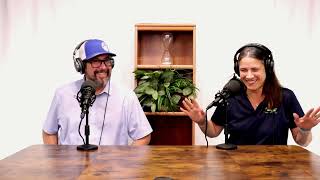
ElevatePolk Podcast S3 E2 Episode 68 | Our Greatest Export
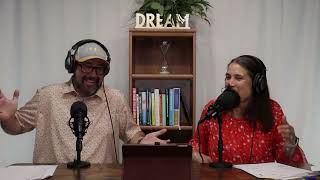
Polk County scores high on innovation metrics but exports half its workforce to Tampa and Orlando. The county's strength comes from university research, not job creation, leaving a working-poor segment largely uninsured and wages stagnant.
Chapters
Welcome to episode 2. We got a newsy— we're flying! The episode title is Our Greatest Epis— oh no, Our Greatest Episode. We hope it's our greatest episode.
Our greatest Export.
Export.
So, um, this came on the heels of something you said, uh, towards the end of the last episode, uh, quote from our previous mayor, Mr. Howard Wiggs, that we don't want our greatest export to be our talents.
Yes.
That got me thinking.
Mm-hmm.
And I know it got you thinking because my phone kept blowing up with all of these different studies. And links and the little wheels, little hamsters started spinning.
Mm-hmm.
So I really want you to kind of lead us into the first thing that we're gonna talk about. And this is, I've never seen this before.
Yeah.
I didn't know this existed. And it is a wealth of data that I think we need to take a little bit of time to get into.
Yes. So we are referencing everything we're gonna talk about statistically, unless we say otherwise, is pulling from a resource that is called the Innovation Intelligence Index, the II3. Um, it is, uh, you could find it on statsamerica.org. And I just want a little blurb so that you kind of know the validity of the data, where it's coming from. Stats America is a service of the Indiana Business Research Center at Indiana University's Kelley School of Business. This initiative is funded in part by the U.S. Commerce Department's Economic Development Administration. So it's information that the federal government is investing in. The statistics are validated through the research that the university is doing, and then it's published on statsamerica.org.
Correct. And of course, with all of the things that we're going to be talking about today, because I think it's important that people can go in and actually look at the same stuff that we were looking at. Right. In the YouTube, in all of the podcasts.
Show links.
All the show links. We'll have links to all of this data. It's a wealth of knowledge and we really think you should go in and take a look at it yourself.
And there are other tools. We're focusing specifically on the Innovation Intelligence data. Um, but there's also geographical data. There's, there's more information. You'll spend hours in there as I have, um, poring over different things, especially cuz you can pull specifically to your geographic area. So, and, and that's just what's fascinating to me is we a lot of times feel like we're lumped into data that may or may not be specific to us, to Polk County, and this. This is not that, that we're not lumped in. This is specifically pulling from Polk County data.
Right. Now, before we get into this, I want to have a little chat about my experience last night putting together the last little touches for the show here. And, um, I, I had a lot of data and I sent you the show notes and is this your disclaimer? Yeah, this is my disclaimer, and I appreciate your feedback on it because it helped me come back to the data this morning and take a little 30,000-foot view after my wife rightfully so excoriated me last night about my conclusions, my initial conclusions about the data, which is something that we're all guilty of. You know, we, we have our own biases and sometimes we take a look at data and just use them to kind of help back up the biases that we already have. Yeah. We, we, we already know what we're wanting to say about it. Right. And we pick and choose the numbers.
We're just looking to be affirmed.
Right.
In our bias. Right. We want someone else to agree with us.
And, uh, and, and I'm guilty of it.
Mm-hmm.
We're all guilty of it.
We all are.
Yeah. And I think that that's why it's important to have someone look at it and, and not just, you know, take it and run with it, but have a separate set of eyes on it and say, well, what if you're wrong?
Right. Well, we, we don't want to live in a bubble.
Mm-hmm.
Or in an echo chamber.
Right.
And I think when we have that self-awareness, as you said, you're like, this is why I love my wife because she can help me see things that I can't see in my own head.
Yep.
Um, and I think that's an important component. Now it's funny that you didn't tell me any of that and I, also shared some of my concerns about the approach for the show. And I'm glad that you were able to have someone else on the other side, you know, helping you get there. Um, because you said you were really angry.
I was very angry.
There wasn't a lot of— there was a lot of emotion when we were starting to put some of this information together and I was sharing links. And to say what I said in the last show, I will continue to say, I get frustrated. I get demoralized and I get really discouraged a lot of the time because I'm not the person who is the research analyst. I'm not the person who— I'm an interpreter of what I see in the community. And when I'm conveying this, what I see to others, people will not— you and I have had great conversations because we agree, because we're kind of in an echo chamber. So we're calling that out. But when I shared that I have had that conversation numerous times, I can't even count how many times I've had similar conversations to conversations that you had where we were raging against the machine and I'm trying to talk you down and figure out what's the solution. I've done that so many times in the last 15 years that this is why I'm on this journey, because there is a problem. We don't necessarily have the data or the information in our hands to be able to look at it and go, oh, here's the problem, let's go fix it. I feel like the people in our community, if they could see it the way that we see it, would set about on their journey to solve problems or to at least have conversations that we, we aren't currently having.
I agree 100%. I think when we talk about, I see it, that's a subjective approach, right? I see it. These are things that I witness.
Correct.
And, you know, subjective is sticking your hand outside and going, it's a little chilly. I better throw on a light jacket. Yes. Objective is understanding that the temperature is now 65 degrees, but by the time you get in your car to come home, it's going to be 45 degrees, right? You're going to want to grab a thicker jacket. And so it's important to be able to have the subjective approach that kind of guides you in the direction that you're wanting to go, or at least give you a 30,000-foot view of what is happening, right? But it's just as important, if not more so, to be objectively into the understanding as well, to be able to have the hard data behind it, to be able to make a more strategic decision about what's going on.
Right.
And that's what this is. Yeah. And we've got some stuff that we want to go over. So, all right, lay it out.
Could you— you understand the data much more in a much more process guy, process analytical way. So you introduce the data that we're going to talk about.
Uh, so we look at the i3 data Basically, it talks about how are communities poised for innovation and development, you know, are the resources being put where they need to be? And kind of what is the current situation within the community? And so we looked at Polk County and Polk County had some greatness going on when you look at it from the 30,000-foot view. We talk about one of the first things in the Innovation Intelligence score is the human capital and knowledge creation. And when you look at the score, basically 100 being the middle of the road, and anything above 100, obviously you're getting much better. And this is pitted against all 3,000 change counties within the entire United States. And so when you look at a 30,000-square-foot view, when you look at human capital and knowledge creation, we actually score quite well, right? Especially when, uh, you look at the peer group and our peer group. Um, when, when we're gonna talk about today, our peer group is gonna be Pasco County, uh, Marion County and Lee County within Florida. And, and the reason that we chose those is they have a very similar demographic, very similar population size, very similar, um, household income, median household income, and obviously they have proximity to, to Polk as well. So we're not comparing apples to oranges saying, you know, with an out-of-state, county and different, you know, laws and regulations and all of that. These are within Florida, not just within Florida, but fairly close to us. But then we also identified a couple of aspirational counties that are out of state who were in Polk's current position, but have since in the last couple of years really elevated their status.
Right.
To kind of get to where this is maybe where we want to be.
And we call those our aspirational.
They are aspirational. Yeah. These are, when we look for the comparison, that's, that's the comparison piece right there is these are the aspirational ones. And we're talking about Forsyth County, Georgia, just outside of Atlanta. And we're talking about Rutherford County, Tennessee, outside of Nashville.
Right.
So when we, when you look at the 30,000-foot view for human capital and knowledge creation, which is the thesis when you talk to the majority of our governing bodies throughout the county, is they are wanting to invest in the human capital aspect of it. We're wanting to educate, to create high-wage, high-skilled jobs. Yes. That is what everybody is focused on. And, and that the majority of, uh, our resources are put, you know, as far as expanding human capital, that is where it is put.
Right. And when, when we're talking economic development locally and new projects are coming in, the way that they're being delivered to our elected officials is this is X project, this is how many square feet. This is how many high-skill, high-wage jobs it's going to represent. And so they may just say this is going to represent 300 jobs and not qualify that as high-skill, high-wage. And then they'll qualify separately what the high-skill, high-wage jobs are because that's a priority that we are focused on and you hear it frequently. And so it's not just jobs for the sake of jobs. It's jobs that generate a high skill and a high wage because those represent the educated, the experienced, the very skilled workers who have a specific talent or a specific skill that only those folks can do for those jobs, as opposed to a cash register or retail or something else, or pouring a beer at Swan.
Correct.
Which is very high skill. So when you look at, you take the big high-level view of it, Pult does score extremely well in the human capital and knowledge creation. That's where you have to dig a little bit further into the actual data. And this is where I was wrong last night and where I really had to go and look at it today. There are a lot of components when you look at the human capital and knowledge creation components. And the first one, and you'll see it at the top of the list if you go into the data here, is just this school level. What level of schooling have you finished?
Since they're not looking at the sheets, let me stop for one second. The rating that we received for overall for Polk County is 131.0. Then we're now talking about human capital and knowledge creation index, and our score for that is 145.8. Okay, so we'll move on down, but that's our score that we're referencing. So it's high related and relative to other scores around the country. Actually, we're ranked 147 for that.
Out of 3,000.
Out of 3,111 or 3,111 or something.
Right.
So that's, that's excellent.
100%.
I'm very excited. I'm like, Polk County, let's go.
Let's go. Until you dive into the data.
Right.
And actually realize where the weighting issues are. And this is, you know, this is one of the problems with data. If you just look at one component, it can look absolutely fantastic. But if you start to dive into it and see what the actual ingredients are, mm-hmm. You'll understand that that's a whole lot of salt.
Right.
That makes that recipe delicious.
Which is why skill and talent and experience is important when we're hiring people because whose job is it?
Yeah.
To go dig into that. Right. And, and I guess I go back to whose job is it to do what we're doing? No. Who's gonna do that? Right. I mean, we're doing it. I don't know if anybody else is, but I feel like that's a, a point that I wanted to make because, um, when I'm looking at this information 15 years ago, I was assuming someone was.
Mm-hmm.
And that, who am I? What do I know? I'm taking it at face value and I'm like, somebody, somebody's job to do this. And I'm not so sure right now that anybody is paying attention to these details.
Oh, I think they are, but they're again, taking a look at the 30,000-foot view. They're not actually diving.
Well, that's why I'm saying, whose job is it to dive in? Like we're, we're about to dive in.
I, I don't know.
Right.
Um, but let's, when you go a little bit deeper and you understand where that weighting comes from, the majority of the weight that puts us into that 145-point change on that index comes from what's considered a university-based knowledge spillover. I didn't know exactly what that meant, so I had to go and look into their methodology to see what, what exactly does that mean. So that means the amount of R&D monies and the technology that is being put into operations for businesses that are around universities. So the idea is the university is creating the knowledge workers And they are doing the R&D and they're using, or doing the technological development, and then it's spilling over into these industries.
Right.
That is the idea. The majority of that is focused in one, maybe two areas of the entire county.
Right.
So that is heavily skewing a little bit, right? Is skewing significantly.
Mm-hmm.
You know, when you look at the tech sectors, you're, you're basically looking along I-4, which in all fairness, is where the majority of the jobs lie within Polk County, but it's really that northeast quadrant, right, where we are getting a lot of the R&D and technical development. And we're showing that that is related to university because we have Florida Poly out there, right? And so that, that data really, it, it, it doesn't, it doesn't tell the whole picture. It doesn't tell the whole picture, right? Um, and then the other one, well, but it also is important.
It's an asset.
Sure.
We have these great resources in our county.
Mm-hmm.
So we celebrate and we go, yes, we're so glad that we have you. Thank you. And there's more to the story, right? Right.
It, the other component of the reason that our score is so high is the mere fact that we've had serious inflows of people.
Absolutely. Unprecedented.
Unprecedented. I mean, we're the second fastest growing county in the entire United States. And so just from the sheer volume of people moving here, that has heavily weighted our, um, human capital aspect of it. It's not necessarily that it is high wage, high skill. It's just, we've got more people coming in.
Right.
And it's those two components that have kicked up our score.
Yeah.
You know, if you were to remove those, it paints a little bit different picture for Polk County. And I think that that's important. We go a little bit further into it to kind of understand why. The next one are the jobs attributed to establishment births. And we talk about establishment births. Those are new businesses that are opening. So jobs attributed to new businesses opening versus total employment ratio. And you know what? In our peer group, dead last.
We're the last one on the list.
We are the last one on the list. So that means that the jobs that are getting created aren't creating— the new businesses that are being created are not creating the new jobs.
Correct.
So what we're focusing on are maybe high-skill, high-tech jobs that don't necessarily require a whole bunch of people, right? Or don't require those high-skill, high-wage earners, right? In, in any kind of capacity.
And they, and there's a lot of different varieties of ways that those jobs can be fulfilled. If they're not required to be on site, they could be remote workers. So we're bringing these you know, high-skill, high-wage jobs, but we don't really know enough. I don't think we know enough about the qualifications of where they're living.
Mm-hmm.
To be able to say, I mean, that's great that they're bringing these jobs and most jobs at least, you know, are probably in geographical proximity. We'll get to kind of this where the talent may be living and where the talent may be working. But I think that's an important qualifier as well.
Yes. Um, so that being said, the, the next aspect of it, when we, you know, since this is a podcast focused on business, we want to look at proprietorship rate. And again, amongst our peer groups, and especially compared to places like Pasco and Lee, which are, those are our direct peers, we're far behind, way behind. Um, our score is 122.1. Pasco 189.4, Lee 168, and even Marion at 153.4. We are, we are not creating those small businesses.
We're not creating small businesses that are creating jobs.
The jobs, right.
We, in the economic development terminology, it is non-employer firms.
Yes.
It's the sole proprietor, it's the consultant, it's the one-off person that's creating a job for themselves. And really have no desire or interest in scaling or going to that next level. They're working from home, they're not using real estate in the community. I mean, they may be renting space in a, in a co-working space or something like that, but there's a very large number of those in Polk County.
Yep.
Based on the research that I've done prior to this conversation. And, and so that's where my heart and my passion and my desire is, is like, how do we get those folks to either decide, you know what, I might be ready to hire somebody, or maybe even the one step over the adjacent column of the 2 employees to hire a 3rd employee and the 3 employees to hire a 4th employee, because that is our largest number of businesses in quantity, not necessarily in jobs.
Right.
But the question remains, why? If we have seen such explosive growth, And we know that we need these businesses here. Why aren't they building?
Right.
I think it goes back a lot to the human capital aspect of it. Mm-hmm. Is being able to have the people there to be able to perform the jobs. There are, to be able to do it.
There are certainly workforce shortages. Yes. And everyone is feeling that. Mm-hmm. And we're all talking about workforce shortages.
Yep.
And then there's also, I think this, Um, I don't know, we'll get into this too, but the, the marketplace doesn't necessarily support the small businesses enough to warrant that scalability to that next, to take the risk of going, all right, I'm ready to hire. I've had hundreds of conversations. It's like I have enough work for the people that I have, but I don't have enough work for one more person.
Right.
How do we get ourselves to that? Getting enough work for that one more person or the two more people or the five more people, or to add a department or to buy a new truck so that we can, you know, have those projects that we're taking people. Out on. I don't know the answer. And I want to clarify, I don't feel like either one of us are approaching this conversation as if we have the answers. I feel like what we're really trying to do is articulate where the problem is so that we can identify how— what resources need to be allocated and conversations need to be had around how to support this, the smaller business conversation, the smaller business sector. Because I feel like there are very intelligent, brilliant people working on bringing those, those new opportunities to Polk. All of that's working swimmingly, right? But there is this gap and the gap is so evident in this data. So I'm gonna let you keep going, but just adding my side commentary to explain why this is so important to me that we're taking time on this episode to just really dig into it.
But I mean, but it really goes and it kind of answers your question. This last little bit of data here, you know, we talked about proprietorship rate being dead last. You look at our GDP, the Polk GDP is right there with it as well.
Yep.
The, so we are bringing new businesses and all this technological creation and all of that, but it's not adding to the GDP of our county.
Right.
And we'll get into the reason why in, uh, probably in our third segment as we, as we go out and we, when we start to look at the inflows and outflows. Of where our people are going.
Right.
It kind of ties this all together.
And when we talked about Howard Wiggs stating we don't want our greatest export to be our talent, that specifically when he said it was really in talking in our graduates from our universities. We have great universities in our community and when those kids graduate, what we've found, I've hired interns, I've had conversations with graduating seniors, I've done several things. And the question we always want to ask is, you know, where are you going to go next? And the answer is wherever I can get a job. And if— and that's not a high bar.
But it's— but it's not— they're not necessarily going anywhere. And we'll take a look at that. They're staying here.
True.
They're just not working here.
Correct.
We'll get to that one. Last but not least, before we wrap up the I-3 study, or at least on our end, we really want you to go and take a look at it yourself. You can do the same analysis that we did. Draw your own conclusions, but I'm, it's, it's pretty evident. Uh, change in annual wage and salary earnings per, per worker, dead last. Per capita personal income growth, all the way at the bottom. Uh, average poverty rate, actually we're doing pretty well there.
Because that's a number we want to have low.
Right.
And we are pretty low.
Yeah, we are low. But that, but that goes to reinforce that we have the worker shortage issue.
Correct.
But the, so the jobs that we're training for and the jobs that we are wanting to push in Polk County are getting fulfilled. But they are the lower skill, lower wage jobs.
Right.
But we are filling those.
Correct.
You know, that's that. So that is one thing that we have going for us is you actually have a fairly low poverty rate. Same thing, you know, poverty rate and unemployment rate are actually low. But this one, the government transfers to total personal income ratio.
Now explain that again.
Yeah. Government transfers to total personal income ratio. So government transfer is, are going to be things like Social Security. Those are going to be things like WIC, any kind of food assistance. Um, you know, any kind of benefits program that you may have. And when I looked at this, I'm like, wow, that number's actually really low. I, I would've thought that that would've been much higher.
Mm-hmm.
Until I clicked in it and realized that it was an inverse proportion. And so the lower the number, the worse off we are, which means that we have more direct injection from the federal government, you know, more services being applied to more people within the county.
Right.
Then others. And so we want, actually wanted that number to be higher.
Right.
And it is low. So, um, that, that just means that we have a working poor class within Polk County. They're, they are taking advantage of the government services because they have to, right? To be able to put food on the table, to be able to pay rent, to be able to—
Yes. And in a recent conversation with the leadership at United Way of Central Florida, we are— there was a conversation around the Polk Health Care Plan. I don't know what you know about the Polk Health Care Plan, but I'll tie it into this very quickly. There are 47,000, roughly 47,000 Polk County citizens that are uninsured.
Mm-hmm.
And therefore eligible for the Polk County healthcare plan. And when I say uninsured, that means not even getting, um, Medicare, Medicaid. They don't have any insurance at all. So we, we know a lot of people know about Lakeland Volunteers in Medicine.
Mm-hmm.
There's also the Polk Healthcare Plan. And where that is interesting to me is that we've got this, this number of people with jobs that are also not insured. And that is where those social services are coming in and that money is being spent to support them. However, only 4,500 of that 47,000 people have availed themselves of that resource because I don't know the answer to that one either, but we're working on it.
Yeah.
But everything is a work in progress. But if you think about that, there's 45,000 people, 42,000 people walking around uninsured and don't have a doctor and don't have a place to go to get medical health. And that is another burden on the economy when disaster strikes.
I mean, but that's one of the reasons that you want to push for economic development because economic development leads to personal development within our workforce.
Yes.
You know, they have the ability, you know, we talk about, oh, lift yourself up by your bootstraps. That's great.
Right.
You know, but your economy has to be able to, to lift the people up as well.
Well, and if you look at the hospitality industry, which you're familiar with hiring people in the hospitality industry, most of those jobs don't come with insurance. No, because those are, you know, pretty quick turnover and most of them are part-time jobs. So they're, that they just don't qualify. That just doesn't make sense in the business world for a hospitality business, like a, like a brewery to provide them with an insurance package. And so those are the kinds of people that we're talking about. We're not just talking about, you know, homeless. We're talking about working people, right? That just also because of the rising cost of insurance can't afford insurance and therefore that's their reality. And they're just praying that nothing bad happens, that they don't get sick.
So this has been a tough one. Yeah. Let's go ahead. Let's take a few minutes. Yep. We're gonna take a break. We're gonna go ahead. We've got some word from our sponsors and we will be back in a couple of minutes to wrap this whole thing up to say, What do we do about it? And what is exactly happening? Be back in a minute. If you're running a small business, you already know there's never enough time in your day. It's 3 PM.io builds custom automations and workflows that save you time and money. Stop working in your business and start working on your business. Go to it's 3 PM.io to schedule a call today.
In 2025, you leveled up. Now it's time to break through. The 2026 Central Florida Business Expo, September 29th and 30th at the RP Funding Center in Lakeland, Florida, right in the heart of the I-4 corridor. Connect with hundreds of business owners in a massive exhibit hall. Learn from purpose experts, bestselling authors, TEDx speakers, and Inc. 5000 CEOs delivering keynotes you will not want to miss. Unlock the strategies, the connections, and the confidence to lead real transformational growth. This is your moment. Breakthrough, September 29th and 30th, 2026, at the RP Funding Center in Lakeland. Sponsor and exhibitor registration is open now at cflbe.com.
All right. And we are back. So what does this all mean? We talked a lot about the current state of the Polk County economy, what it looks like. We've got data that says, yes, we've got a high-tech sector. We've got high-paying, high-wage jobs. Dive into the data a little bit deeper. Really, you know, we don't, you know, we have a lot of room for opportunity there. But if we have it, but then the data says that we don't, where's it coming from?
Right.
That's this right here. And basically—
this is also in the show notes.
This is— yeah, all of this will be in the show notes. Um, so this is from the, uh, Florida Department of Labor SHED study. And basically what it does is it goes in and takes a look at people that live and work in Polk County. They did this for all the counties, but people that live and work in the county, people that live in the county but work outside of the county, and then people that live outside of the county and work inside of the county. Okay. Yep. And you know, it's a Venn diagram.
Mm-hmm.
And if you look, we have approximately 300,000 people, close to 300,000 people that are actually active in the labor force. You got a lot of them exiting. As of the latest study that was done, which was 2021, I know it was a few years ago, but we have approximately a net negative outflow of people living and working in Polk County. So what does that mean? Approximately 50% of the workers within Polk County are working outside of Polk County. Now, that doesn't mean that we don't have some inflows. We do have inflows from other counties. Now, when I first looked at this data, I thought, well, that makes sense. You know, the people in the northeast corner of the county, they're going over there, they're going to work for the mouse or whatever. And then, you know, You know, the people who live over here in Lakeland, they, they might be going to Tampa or, you know, at least, um, you know, the east side of Hillsborough County, something like that. And yes, that, that is where the people are going. It's not necessarily the mouse or anything like that. The majority of the people that work, uh, that are working outside of Polk County but live here are working in Tampa and Orange, a little bit in Osceola County as well. But what was interesting is what do those numbers look like And the ones that are going outside of our county are the knowledge workers. The knowledge workers are the ones that are getting up every single day going up to I-4 and heading east or west.
Right. They're not coming in.
Well, there are some, some, right? There are some, but, but they're not that, no, those numbers aren't even. No, those numbers are, are not even at all. Um, I thought that it was going to be a lot more along the service sector. I thought it was going to be that we were going to see a lot of our, you know, hospitality industry people that were getting up in the morning and heading out and they're gonna go work in Kissimmee or they're gonna go work at Disney, right? You know, Universal and all that. Not necessarily the case. Some of that does happen. Mm-hmm. Um, but what you see is you see about the same amount of people in those industries coming from Orange and Osceola as well.
Okay.
It, it basically is an offset. They're coming over here to work, you know, e— whether it's our golf courses or any of our resorts, uh, up in the northeast corridor as well, even downtown here. Um, you know, to come in to work into any of our restaurants, et cetera. So that is kind of an offset there. But, but what you really see is you see the outflows of the knowledge workers, the people that, you know, do have those high skill, high wage positions. Mm-hmm. But they can't find those positions here in Polk County.
Right.
So they're going somewhere else so that they can get paid what they feel they, they need to get paid.
Yeah.
Now they're staying here because the cost of living is significantly cheaper.
Amen. Yep.
You know, and I mean, one of the reasons we love Polk County, right? You know, I love it for a lot more reasons, but I really do understand that it is a lot cheaper to live here than it is in Tampa and Orlando.
Right.
So what this data says, the labor flow data sheet, um, that we'll have on it is basically Polk County is the dormitory. It's the bedroom.
It's the bedroom community. It's the bedroom community for Orlando and Tampa.
Yeah. So the opportunity arises then for all of these outflows. How do we create the environment that allows those businesses to be here. Because it's great. And I, you know, the argument can be made, well, that's wonderful. They're bringing their paychecks back here and they're spending it in this community. So what's the big deal? We don't have to deal with having the businesses and putting up with all of that and the waste of resources if they're just bringing their paychecks back here and spend it in our grocery stores and our restaurants and going and doing all the third place things that they want to do here. Yes. But that also means that we don't have those industries here, right? We don't have the revenues that those are creating.
Correct.
And the prosperity that those are creating outside of the couple of jobs that they, you know, might be sending the paychecks home back to Polk County for.
Right. And, and that, that brain drain, I guess, if you will, is evident in the business community too, right? So we're, we're, we're talking about jobs, but how does that, relate here. And I think anecdotally, I have, you know, when we started this conversation, I said, I can think of 5 people right now who are business owners, entrepreneurs, who don't do any work in Polk County, but they're intelligent, excellent business owners doing great work outside of the county. But when you have a conversation like, why aren't you here? Why don't you have a storefront? Why aren't you marketing? And Polk County ain't my market. I can't get work here. They don't hire me for the work that I do here. They, they— I, I go to California. I'm traveling all of the time because the work I do may be too sophisticated. I don't know how to say that, but maybe it's the market. The market isn't strong enough here in Polk County for them to be able to find enough business for them here. Does that say it accurately? I think that that's not an offensive way.
It's not offensive at all, but I, I think we need stop worrying about being offensive. We just need to talk the truth here.
Well, I also want to be kind.
I know, let's be kind about it. But I think that it's important to, to be able to have these honest conversations though. Again, like we said last episode, we have them in private, right? You know, between one or two people, it's perfectly fine, right?
But, and what's— what happens is we become indifferent. Yeah, that's, that's what's frustrating to me. We've become cynical. You've talked about kind of your, your perspective of being a little bit more cynical. I'm a little bit more idealistic, but I'm also leaning more, I find myself coming into this thought process of being cynical because I feel like that's the way around me. You know, we are a product of our environment. And so I'm fighting really hard to say, no, no, no, I don't need to become cynical. I want to be a solution finder. I want to create solutions. And so if we are a product of our environment, and I use the word ecosystem to describe that, because you need all of the different— you need the pollinators, you need the big trees, you need the little trees. You need the water, you need all of the pieces of a, of a healthy ecosystem in order for all of those pieces to thrive. And if we have the large corporations working very well and we don't have the smaller businesses working well, where you walk downtown and you're like, ooh, I wanna go in that shop.
Mm-hmm.
Ooh, I wanna, I wanna stop here. Oh, we have a really cool spot. When a neighbor, or not a neighbor, when a friend comes into town, you wanna show off your downtown. You wanna let them see everything and, and oh, we have this great business over here. Oh, and I want to drive across the county to take you to this cool place. Like that's the scene we all aspire to, but I don't feel like we can confidently say that we have. I think Lakeland is moving. We're getting there. And I think that's what we also say is like, we're very optimistic. We think things are getting better, but I don't know that they're getting better at a scale that satisfies the small business community that we want to attract. We want to attract people to start businesses here. And I don't know that we're doing that yet.
The numbers say that we're not, right? You know, I, that's the objective side of it.
Mm-hmm.
You know, I wanna be aspirational too. I, you know, I built a business here in Lakeland, multiple businesses at this point. You know, I fully believe in it. I believe that we have the ability to do wonderful things. But I think that it's gonna take a concerted effort and everyone to be on the same page and to be driving towards the same result.
Right. And for people to not get defensive.
No.
That we're saying things or that we're, that we're not necessarily, like, I, I always say, I feel like it's, there's a dog and pony show when reports come out at the end of the year and they're being delivered to the commission and it's like, oh, this is all of the great things that we did. And, and, and we sit there and we applaud it. And I, I don't wanna not applaud. I don't wanna not be celebratory of our successes and the things that we're doing. But again, if continuous improvement is the goal, then the next question immediately after the applause is how do we do better?
Yep.
How do we go to the next level? What are we missing? And I don't, you know, if we're questioning our biases like we talked about at the beginning of the show, that requires us to do a really solid gut check. Mm-hmm. And say, I don't know that we're where we, we could be. We have the potential to be much better. What is that going to take and how are we going to get there? And I don't know that we're having those conversations because we're so much often patting ourselves on the back for the great work that we've done. And I don't want to take anything away from that, but I also want to do better.
There is an innovation part of it. You know, we have a lot of these communities that are around us that have been innovating, that have done great things. There have been a lot of pitfalls with them as well. Um, but you know, we have, we have the ability to do great things.
Yes. So, well, I, I think that the, the part for me that brings me the greatest excitement is when I think about all of us being on the same page and having a conversation and the realization that there is validity in the small business community that we have not yet even tapped on, tapped into. We've not even started conversations that say, hey, Dan, you're a small business owner. You started Swan Brewing. You, you probably have a wealth of information and knowledge that we would be able We would love to learn, let's put together a room full of people like Dan and maybe me and maybe some other folks to say, what can we do to innovate and, and, and level up to Polk County's standards? Because I think we all have a higher standard. I, I just don't think that we're working to achieve that standard.
I, I think that, yeah, yeah. To a certain extent you're right.
Am I making you speechless?
No, it just makes me sad sometimes.
Okay.
You know, because I think that we have the ability to do those great things, but But we don't do exactly what you're saying is, you know, to have the voice of the community. You know, we, we, you know, we can, we're really, really good at building all of these different commissions and all of these different groups to discuss our ideas. But are the right people in the right place at the right time having these conversations and actually driving the direction?
What would you describe as like 2 or 3 things that you see are symptoms of the greater problem? What, what do you see on the, on the, on the outside that you think indicates the deeper rooted problem?
I don't know that I fully understand the deeper rooted problem. I think that maybe our infinite emphasis on which part of economic development might be a little incorrect. You know, we are well suited to be that transportation logistics hub. I mean, it's just our geography.
Mm-hmm.
You know, we have I-4 right here, which is, you know, the busiest, one of the busiest roads in the entire United States. Makes a lot of sense. But, but continuing to make that our main focus, is, is that going to drive the growth that we need to see?
Is that gonna change the inflow and the outflow?
No, because the, the inflows that we're getting as, as a result of that are people that are driving down I-4, whether it's from Tampa, Orlando, or whatever, to come here. Mm-hmm. To, to work. And then they're going home and they're taking all of that economic activity back to their house. Oh, yeah. Mm-hmm. But those businesses are designed to run as lean as possible and to have as few bodies actually doing the work as possible.
Mm-hmm.
I don't want to call out any company, but I'm sure you've got some packages there sitting on your front step.
Yeah.
They're going to an autonomous workforce. They've got robots that are running around. You know, they have a few higher-level people, a few high-skilled people that are gonna be in their upper management. But, you know, in the next couple of years, you know, what does their actual workforce look like? So then, you know, what's gonna happen with those people that were working in, in, in the warehouse? Yeah. You know, where, where are they gonna go?
They're gonna find a new job.
We put a lot of money into making sure that we attracted those businesses, and rightfully so, because we are geographically geared to have those here. But can we put those dollars somewhere else now to businesses that are actually going to start building wealth in our communities to be able to share it You know, the sole proprietorships, you know, the mom and pops, Main Street USA, the ones, the actual economic engines that are going to drive the innovation and the creativity in, in, in, in Polk County. And I, I don't know that that is there. I mean, we can—
How does it get there? Do you have any theories on, on how it does get done?
Yeah, it's going to be the people who are listening to this who might, may or may not be the decision makers in the government going, maybe there's a different way to do this.
Right.
You know, kind of step back.
You asked me, you asked me, what do we need to do? And I said, we need more firepower.
I think it's just, you know, the, the apathy just needs, we need to do something with the apathy is what it is. And, and that's, that's exactly what it is. We're, we're perfectly fine. We're perfectly happy being where we are in certain, certain circles. Right. You know, they don't want things to change that. You know, they're sitting pretty. They don't— why do we need to change?
Everything's working just fine.
Everything's working just fine. It's the other 90% of the people that are not feeling those same feelings.
Well, we talked about budgets and priorities last time. I think if, if you follow the money, right, you see where the priorities are and you understand these are the, these are the top 5 things. If you look at where we're spending money in the county level, where we're spending money at a city level. These are the top 5 things that are of importance, right? Um, so cool. That's great. Again, I, I go back to when I went through Leadership Lakeland, the Leadership Lakeland program and sitting in City Economic Day, right? And I'm watching what I call the dog and pony show, which is like, look at all the things that we're doing for our economy and everything is wonderful.
And it is.
Wonderful. And I, I remember saying, I'll say this, I'll call him out, Jason Willey, who works for the city. He was in my class and I was sitting in the bus next to him and I said, Jason, there's not one bullet point, let alone slide that talks about small business or entrepreneurs at all in that presentation. Now that has changed cuz that is a long time ago. Mm-hmm. That I went through Leadership Lakeland. Um, but we need more, right? There needs to be. Initiatives that whose job, whose dog and pony report needs to be, look at all the great things that small businesses have done this year. Look at all the new businesses that have opened. Look at all the new employees that they've hired. Look at all the square footage that we've, that they have leased. Look at all of the new buildings that have been built. Look at all of these great things that small businesses are doing because that is an economic driver for the people to have jobs and come to Polk County. And if we're not telling that story, nobody knows that story. Story. And we're seeing it. And we're also— then the other part of that is like, all right, what can we do better? Well, these are the businesses that closed. This is why they reported that they're closing. They moved away or they just closed because, you know, they ran out of money or whatever that story is. But then we need to do something to figure out how to shore up those resources and make sure that the very fragile small businesses that they are, because very many of them are not capitalized. They don't have, they, and some of them have cashed in their retirement to start this business. I mean, you can call that stupid, but I call it a dream. And you know, some people look at it from one lens and some people look at it from another. But the reality is this is the people that are taking the risks and investing in home and not taking their money, not taking their marbles and going somewhere else.
Right. They're, they're not building somebody else's economy. They're building it right here.
Here.
And you know, and we have an indifferent attitude about it. It's apathy is what it is. You know, we, we talked about it in the last episode that you have to have the skin in the game. Those are the people that are driving the innovation. Those in, in, in even just opening up a small little shop in the downtown, you know, vacant, you know, storefront is innovation because it was a vacant storefront. Yes. They're taking the risk and they're actually put, they're taking the money, their own money that they worked hard for, putting it back into our economy and creating jobs. But to go back to what you're saying, you know, we, we don't look at the exit interview for the businesses that didn't survive. We don't do the analysis on there. You know, why did you only make it 6 months, 9 months, a year? Was it because you weren't fully capitalized or you weren't capitalized enough that your rent clock started ticking before you could even get, you know, your CO, you know, or even a permit to start your build out or your rehab or whatever the case may be.
And you didn't have any more resources to dig into and you ran out of that money that you thought was going to get you to your CO.
Right.
Yeah.
You know, it, and so that, but that again, it goes back to the apathy part. We need to be able to look at those and understand why are things surviving, why are things thriving, and why are things failing. Right. And to, you know, once we understand exactly why that happens, we can begin to make plans for how to have a little bit of a curative assessment into, uh, you know, our small business situation. But, but first and foremost, we need to understand that those are the economic drivers. It's great to continue to dump money into having these, you know, different giant buildings up and retention.
Yeah.
Up and along I-4. But that's not going to drive our economic engine. That's, you know, those jobs are, are getting more and more automated as the days go by.
Mm-hmm.
And we need to have a place for people to go to make real money, to be able to increase their I don't even know what I want to say. I don't want to say, you know, their, their lifestyle, you know, they're, you know, it's not even making anything more affordable. It's just, you know, how do people have a better life within Polk County and, you know, stay here, be able to build businesses here, raise— it is quality of life, but have the quality of life. But what does that mean? That means something for different, for everybody, you know. It's, and But as a general thing, how do we make things better for the citizens of Polk County in general? And that's going to be to understand what is currently, what we're currently struggling with and where we need to kind of maybe shift our resources a little bit.
Yeah. Well, you, you put in the show notes, like getting ahead locally. What does that mean? We, we, we didn't really even talk about it. You're, you're, you're kind of swimming, you're swimming around in that, in that discussion. And I think. There's no one-size-fits-all answer. Everybody wants something different. And we also need to survive. So if we are feeling like, and, and I think if I were to wager a guess, a large majority of our smaller businesses are, are in a perpetual state of survival mode.
Good.
They're in a perpetual state of what keeps them up at night is making payroll. What keeps them up at night is not being able to keep the people there that are working for them. You know, I think one of the questions that I had with someone recently was, you know, I hired somebody and then they went and started their own business, or I hired somebody and I gave them all the experience and the, the talent and skills that they needed, and then they went to work for my competitor.
Yeah.
Why would I even wanna hire somebody if that's the state of the situation? And that's reality, right? Like you've gotta walk into that with like, this is what's going to happen. But at the same time, there's not another person to hire right, right behind them. So the worker has the advantage and the leverage, and, and that's not a good feeling for the business community. But if we can do something to pull the lever and say, all right, well, we're working to— what is it that the business owners need their employees to have? What skills do they need to have? Like in my world, if they can come out with some, some basic graphic design skills and some basic web skills, That's a wonderful thing for them to have, even if I'm not hiring them as a web designer or a graphic designer. I just know that I need that sometimes when I'm at capacity to be able to do more things. So what are the things like in other people's businesses that they're like, man, if that person just knew how to do this and they did the job that I hired them for, that would be fantastic. We need more utilitarian employees, right? That have more than just the one skill.
But we also need— the business owners also need to understand that you have the ability to teach that as well or to provide the uptraining. To be, you know, if you've got an employee that is, you know, 75% of the way there.
Yeah.
That it's like, ah, I wish they just had that one extra thing, provide it to 'em.
Absolutely. Well, and, and then also look around, is there a, is there a resource?
Mm-hmm.
Because to me, education is key.
Yep.
And if we were able to have affordable resources where we could send our employee, like, I don't know that I could teach somebody how to be a graphic designer. Or how to use Canva. I mean, I can hack my way through it, but I'm not the one that needs to be teaching it, right? And if this is a very tight, small little boutique, that person might not have— I've had people, okay, Chrisanne, can you teach my employees how to do this? I'm like, no, I can't teach you how to do it, but maybe one of my employees could. And that's like, that's not how it works, right? But if there started to be some of those, um, I don't know, just workshops for businesses to send their employees to, that starts to solve that problem, right? That's kind of where I'm going with that. It's like, but we don't even have a conversation about what do you need because we don't really have a consideration or a concern yet for the needs of the community in the small business world.
But we do a little bit. So, um, I just wanted to throw this out. So this is the Economic Development Council.
Yes.
Yeah.
Polk County.
Yeah. Yeah.
Right.
Central Florida.
Right.
CFDC. Thank you. Um, We understand, you know, this, this whole thing about, you know, being able to build our businesses up in the outflow situation that we have.
Mm-hmm.
Um, I mean, let's call him out, Gary Raulston, you know, he was commenting on the Labor Shed study that, that we were just talking about and that there are over 100,000 available workers who should be attracted to an opportunity to work closer to home. We, it is an opportunity to attract them, but that's the way that we look at it. Why are we attracting our outflows? Why don't we focus more on retention?
Yes.
You know, yes, we, we are building them here.
Preach, preach.
You know, stop, stop focus on the attracting.
Let's, let's start focusing on the retention and the shoring up of those resources in our, in our community. That's what I continue to say. Like, attraction is great, retention is also great at that high level. We know to figure out, okay, we brought them here, now how do we keep them happy, right? That's the model, but the model hasn't shifted to to this, there's a term, it's, it's in the economic development entrepreneurial side of conversations. It's the entrepreneurial-led economic development, which goes back to that, like ideating around having study groups and, and, and people that are coming together that are talking about how can we use your skills and your skills. Craig got a job outside of, of our work, right? We, we, he found a job. It was a perfect job. He's a, he's a probably the best employee that anybody could have possibly found because he's worked for himself.
Mm-hmm.
And knows what that means. And so he's very conscientious and considerate and he's not taking too many days off and he's not doing all of the things that, you know, you don't want an employee to do. And so like tapping the shoulders of employers and who are people who have previously been employers to ask them what we need to do to have a better workforce. We're not doing that.
Yeah, well, we're not even having—
I mean, we're all busy, so like, that's the other part.
I'll get some time.
We've got our nose to the grindstone. We're working our butts off.
Chrisanne, I've got some time. All right, we talked, uh, a lot today.
We did. Let's wrap it up.
Let's, let's— how are we going to summarize this today?
Oh man, let's just—
again, let's put the caveat on it. I am not a data scientist. I am a guy that knows how to go in and find the data be able to parse it decently. I'm glad that I'm surrounded by people that can tell me when I'm wrong or that maybe I need to look at it from a different direction. And I think that that's, that's the thing that if you want any takeaway, if you ever think that you're right, do what I normally do and pretend that you're the dumbest person in the room and ask other people their opinion and then take a step back, look at it again, and then see if you're right or not. Maybe there's just a different way to look at it.
Yeah.
That was the big thing that I pulled away from this. I had misconceptions going into it. I had my biases. I was glad that I had people around me that said, maybe you should look at this a little bit different.
Right.
And understand that maybe the problem you think is not the problem that is.
Right. I, I think that's good. I also feel like opening up this can of worms and thinking about the comments and the questions and knowing that, you know, we can point the finger all day long. But when I said— what I meant when I said we need more firepower is we need more voices vocalizing the concerns. I walk into rooms and have conversations and I walk out of there, they don't get it. They just don't get it. And it's not for lack of wanting to get it. It's for lack of perspective because they don't see it. I was describing it the other day. I'm like, I'm not coming to you and explaining this problem like you would. I would— someone would have to explain homelessness or the unhoused, right? We don't see this problem. It's an invisible problem, mostly because our employers, our entrepreneurs and small businesses are proud. We're too proud to talk about our problems. We know that that's not gonna get us anywhere. And so we're not sharing the challenges that we're dealing with on a day-to-day basis. We're just shouldering them and carrying on and figuring things out. If we've ever gone in and said, all right, well, I'm gonna join this organization, or I'm gonna do this, or I'm gonna go this way, and tried in Polk County and found that that just didn't provide the value that we wanted or needed, we just went back into our little hole and continued shouldering the challenge on our own. Because there's just not a community voice that says the things that we're saying. And then not feeling like it's an attack. I don't want this to feel like it's an attack to anybody. I, we're just wanting to share the data, share our perspectives and the experiences that we're having and saying we want to do better. We want Polk County to be better. And we feel like one of the areas of improvement is in improving the climate for small businesses specifically. So that they can be more successful. I don't necessarily have an answer to what exactly that looks like because every business needs to have an opportunity to share their answer.
It takes a village to raise an idiot. Is that what you're trying to say? That's not what you're trying to say.
No, it takes a, it takes a village to, to raise anybody brilliant and wonderful.
I just mashed up two different things.
No, you're not the village idiot. That's what you're trying to say. All right. You don't wanna be the village idiot.
Again, remember we got the expo coming up in September. Let's go ahead, plug a few things.
All right. So Central Florida Business Expo is September 29th and 30th, and you can find out more information about it on cflbe.com. I've got big announcements coming, but I'm not ready to share them yet.
So, and we're gonna put all of the links in the description.
You're gonna give me all of the links and we're gonna put it in the description.
Well, we're even gonna put it in for, uh, the business expo and everything else. Yeah. We want people to be able to go and check all this out.
So all of that information will be there. And, uh, you wanna plug. It's 3 PM. It's almost 3 PM.
It's almost 3 PM. So, 3pm.io. If you guys need some automation, you need some help, uh, kind of just getting a few hours of your life back, I'm trying to figure out how to streamline your businesses. It's 3pm.io. I would love to have a conversation.
Awesome. All right, well, what are we going to talk about next time?
Let's go a little—
let's put some left, make a little bit more light.
Yeah, let's go lighthearted next time.
Yeah, this one was heavy. I'm sweating.
Thanks for hanging out.
All right, see you later.
More from Chrissanne

ElevatePolk Podcast: S3 E1 Episode 67 (Rebooting) the Podcast About the Podcast