ElevatePolk Podcast S3 E5 #71 | The Bill Comes Due
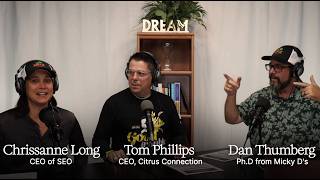
Tom Phillips, CEO of Citrus Connection, warns that a pending state bill would eliminate public transit funding over ten years. Without replacement money, Polk County would need to raise sales taxes to 10-12% or cut more services. Already, 70% of riders depend on the bus to get to work, and past cuts have slashed weekend service by 88%.
Chapters
Hello, you, you're— it's your job.
It's my job today. All right, I'll go ahead and do this.
Permanently your job. You did it so well.
Welcome to another episode of Elevate Polk.
I am Dan Thunberg and I'm Chris Ann Long, and we are the hosts of the Elevate Polk podcast.
Thanks for repeating that. That's just in case they didn't know the name of the podcast. With us today we have Mr. Tom Phillips. Tom, I'll go ahead and let you introduce yourself.
Yes, Tom Phillips, the, uh, CEO of the Citrus Connection, your public transit provider.
Your public transit— before we get into everything you've ever wanted to know about public transit inside of Polk County, we do have to remind you to please like and subscribe to our YouTube channel. Follow us on Facebook at Elevate Polk and listen to us on your favorite podcast streamers. That is Apple Podcasts and Spotify, because we can't afford to do anything else yet. Yet.
There's always— see, optimism. I love optimism. Optimism.
All right, we're gonna get down and dirty into it real fast, um, like right from the get-go. I mean, we've got a lot of stuff to talk about. Um, when I did show notes— and Tom, I shared this with you guys earlier— when I did show notes, I think I had 4 pages initially, and this thing has ballooned into 7. We got a lot of stuff to talk about, a lot of stuff that's happened this morning already. Today is May 4th, uh, Monday, by the way. We'll be airing this—
happy birthday to you, happy birthday to you.
Thank you.
We need lightsabers.
I know, we did watch Episode 1 and 2 last night.
Oh nice.
Oh, there you go. Uh, anyway, so we're going to roll into this. Um, we've got a lot of stuff to talk about as far as transportation logistics goes. Um, we want to definitely talk deep, do a deep dive into what Citrus Connection actually does in the community. All of the great things that you've done, all of the challenges that you have. We've already said that this one's going to have some conversations that you need to have.
Yeah.
I mean, so, and because we have a deep dive into the, like, the meat of the episode, I want to ask everyone, if you want to know more about Mr. Thomas Phillips, we did a really good episode, the last episode before COVID in 2020. That episode is another one, Rides the Bus, and we'll put the link in the show notes for you to have a quick access to it. But we really do. Talk a lot about how Tom got to Polk County, and he's got some fun stories.
Yeah, we won't reveal— speaking the dog into the Ramada, right, right, right.
So definitely listen to that one. That was a good episode.
You've also snuck a dog into the Ramada?
Yeah, yeah. So long story short, we all have that in common. House wasn't ready for 3 weeks, so the Ramada didn't take dogs, but we snuck it in for 3 weeks before I got caught. Fantastic. Come to work with me. It was pretty fun.
All right, let's get into it. Uh, first thing this morning, um, I woke up, made myself some coffee, got my, uh, birthday Lowe's delivery of 65 bags of mulch, and I noticed, uh, LKLD Now— Lakeland Now— Lakeland Now, um, has done an article on not necessarily just Citrus Connection but some of the challenges that people have in Polk County. Talk about, uh, you know, people who are too far away to be able to catch a bus, people that just can't afford, you know, a vehicle, et cetera, et cetera, et cetera. So we'll kind of lead into that. But, but what I, but what I'd like for you to do is one, to kind of give us a high-level overview of what Citrus Connection is for anybody who lives here and doesn't know for some reason and kind of what you guys have done. And then I really want to talk about how you do so much with so little.
Sure.
So I'm gonna turn it over to you.
Uh, so in 1982, the voters of the greater Lakeland area created the Lakeland Area Mass Transit District. Through referendum. So we are what's called a municipal service taxing unit. So your voters or your viewers may be familiar with Swift Mud. So we're not part of the city of Lakeland, we're not part of the county. We are an independent taxing district, very similar to Swift Mud. And so we have 3 county commission— I'm sorry, 2 county commissioners who serve on our board and 3 city commissioners. And we levy a half mil property tax for the provision of transportation in the greater Lakeland area.
For clarity, can you tell us those, um, commissioners?
Sure.
So it's, uh, the Honorable Sarah Roberts McCarley, first elected mayor of the city of Lakeland, and she got a honor— first elected mayor, the first elected female mayor.
Yes.
And, uh, she got an honorary doctorate at Florida Southern College's graduation. So it's Dr. Madam Mayor Sarah Roberts McCarley. So that's, that's a mouthful. Uh, congratulations to her on that. And then we have Guy Lalonde, uh, Lakeland City Commissioner. And on the county side of the house, we have Martha Santiago, who has been serving on the east side of the county, and we just got Michael Scott as well. And the third Lakeland City Commissioner is escaping me for a second.
Chad McLeod?
Nope. Oh, thank you, thank you very much. It is Terry Coney.
Terry.
Because Chad McLeod was appointed to our board but was unable to meet the requirements of the meeting. I think he got a promotion at work or a new project. So Terry Coney is now on our board. He's had his second meeting as well. So we've got 5 really dedicated individuals. When they come to the Citrus Connection, they're not really wearing their city hat or their county hat. They're wearing a public transportation hat. So, and that's the way that we operated since 1982. So the Lakeland Area Mass Transit District levies the half mil property tax. We could go up to 1 mil, but we'd have to ask the voters for more. And that continued to operate that way until 2015. So fast forwarding, that's a lot of history, but we've grown over time. And then in 2015— 2014, we had the My Ride My Roads ballot initiative. It was the second public transportation initiative to move from a property tax-based system to a sales tax-based system because we thought that would be more fair and equitable, that tourist visitors and people who came through would pay, not just homeowners. Ultimately, that referendum failed 70-30. The first attempt failed 60-40, and I'm sure we'll talk And that's your—
that's your—
that's my beautiful failure. Yeah. But what we had done and why it's important to talk about is we had an embedded Plan B in the plan, and that was that if the referendum failed, you had Winter Haven Area Transit that was operated by the Polk County Board of County Commissioners and had been growing on the east side of the county. They had 88 employees. We had 105 employees. And so the county was doing it kind of as other duties as assigned. They have all these other functions that they have as the county. And then they had Winter Haven Area Transit. And so we said, look, the referendum's failed. People want to do more with less. Do you want to continue operating the service the way that you were operating it? Do you want to subcontract it out to a for-profit carrier who may or may not be able to do it cheaper, but your 88 employees are going to lose their pensions? Or do you want to give it all to the Citrus Connection? We'll hire your 88 employees, we'll guarantee their pensions, uh, because we were able to join the pension program, so able to provide a retirement for my folks as well, which was something that we didn't have.
Oh, cool.
Um, and we'll do it for the same amount of money or less. And it was Jim Freeman was the county manager. Mm-hmm. Uh, Melanie Bell was the chairperson at the time. They took a vote, 5-0 unanimous vote. So October 1st, 2015, the Lakeland Area Mass Transit District becomes the countywide provider of transit. Okay. So we took everything over. Um, and that's where we are today.
Okay.
So that's kind of the, the, the Cliff Notes version, but we are the countywide provider of transit. So we're a 45 45-year-old, 44-year-old organization, but really we're just hitting 11 years old as the countywide provider of transit.
Right. Right.
And, and seriously countywide. I mean, we were talking about this before the show.
Yeah, absolutely.
And we were talking about Santa Fe and all of that.
Yep.
But you are able to connect.
Yeah. You can get from, so like the longest trip that you could possibly take on the Citrus Connection would be Bradley Junction, Florida. And the fact that our bus even goes to Bradley Junction, Florida, turns around in what's called the bottom. Mm-hmm. It's a, it's a large dirt circle just outside of their church, um, you can ride from Bradley Junction all the way to Point Siena.
Yeah.
Now you have to transfer a couple of buses, but you can traverse the entire county on public transportation. The fact that you can do that, um, Polk County, 2,009 square miles, we're the size of Delaware. So one of the things that's, that's I like to talk about is, is that the Citrus Connection is really Delaware Transit. We're doing, we're doing a small state of Delaware, right?
Yeah.
Uh, New Hampshire Transit, you know, when you think of that way and that we're doing it on $29 million, which is a good amount of money, but not a lot. That is nothing. It puts into perspective why kind of some of the things that Lakeland Now was talking about are just honestly correct. Because, you know, we're only given so much cheese to spread on the pizza.
Yeah.
And, and if it's an 8-inch pizza, it's going to be a nice cheesy pizza. But when it's a Remember the Bigfoot? You guys are old enough to remember the Bigfoot back in the days when they were all like big sheets of pizza. You know, there's going to be less cheese on it.
Yeah.
So that's where we are today. We've been the countywide provider of transit and I think we'll talk about it later, but ultimately it's worked out for the riders and it's worked out for the taxpayers because we did make that promise that we would do it for the same amount of money or less. And we have. Yeah.
And I know that one of the questions is going to come back because I kind of understand the demographics of who listens to the show. It's like, Citrus Connection is great, but I don't ever see anybody riding it, and I don't ride the bus, so why are we spending $29 million on it? And it's like, we're going to go into this in a couple of other points that we have in here, and Chrisanne, I know, is going to want to bring up her point about it, but it's the social contract that we all have, right? Even though this doesn't impact you, you're not the one out there riding the bus. You might be the one out there riding the Squeeze, you know, taking it around downtown on the golf carts and your new—
and we got new hats.
Yeah. Oh, thank God.
We heard the call.
Yes, I appreciate that. Look, I'm telling you, just like a NASCAR driver. So even though that it might not impact people who are listening to this program, it does impact people in our community. And it's a serious impact to people in our community, primarily the people that cannot afford to have reliable transportation of their own, that they— and I know that we were talking about it earlier and we'll get into, you know, your 80, 70, 60.
Right.
But 70% of your riders are people that are using the system to get to work.
Right. Yeah, absolutely.
So this is where it fits into our audience and the people that where this, this is applicable, and that is in the employer's world. Yes. Right. We have, we have major problems in the workforce right now. People are having a hard time finding jobs and people are having a hard— and businesses are having a hard time hiring people. And if they can't get to work, they can't be a reliable employee.
Right. So, so I give this speech and, and I don't think Steve Scruggs likes it, but I'll go ahead and say it. So if Lakeland, the entire city of Lakeland is a bell curve, right? That, that's what our community is. Most of us hopefully are in the middle of that bell curve, right? We're taking care of our families, we're paying our bills, we're gainfully employed, you know, 2.5 kids, white picket fence kind of thing. Like that's, think of that as the center of the bell curve, right? Yeah. On the, on the right-hand side, right? The far right, you've got high wage, high skill, high wage, high skill, AI, polytech, right? The Lakeland Economic Development Council. I say all the time, Steve talks about Lakeland like it's Dubai and I talk about it like it's Lebanon and we're both right. So the LEDC folks, the LEDC folks, you like that?
That was, that's a great analogy.
It really is. Yeah.
I just, you know, I never thought of it like that, but all right.
All right. So, You've got the high-wage, high-skill folks on the right pulling, right? They're pulling to move that to the right as much as possible. The Citrus Connection is doing— United Way, we're on the far left of the socioeconomic. We're pushing, pushing, right? LEDC pulling, we're pushing. Chamber, you know, you name it, small businesses, like, right? We're all trying to do the same thing. Which is move the curve as high and to the right as we can.
Yep.
So that there's less working poor, right? 66% of American families can't handle a $1,000 crisis.
Yep.
44% of American families can't handle a $400 crisis. We are the 7th poorest suburban area in the United States. The Winter Haven-Lakeland urbanized area, 15.6% of our population is at or below the federal poverty line. Federal poverty line for a family of 3, $23,500.
Yep.
Right. We have an affordable housing crisis in the United States, especially here in Polk County. I know Sean and his people are doing great stuff here in the city to try to do affordable housing. But let's face it, it's a drop in the ocean. Right. So when you've got somebody who is barely able to make ends meet, they're spending about 50% statistically on rent. The cost of owning a car, it's, it's out of it.
I think it was— they posted it this morning. It was over $8,000 a year.
$8,000 a year according to AAA.
Yep.
Gas is at $4.31 a gallon.
Right.
And it's going to be sustained. Like, we're, we're in this for a little bit. Um, and so the cost of owning a car, those things, is a challenge. So the why, right? Why should I? Um, because that 70% number, as you said, these are folks that if not for the Citrus Connection, they're not getting to work, right? So the reality is that Citrus Connection is an economic engine. It's just not— it literally has an engine, yeah, but it's not fancy. Right. It's, it's, it's not an Amazon warehouse with cars in the parking lot 24/7, 365. There's no ribbon cutting, right, for the 500 jobs that that bus provides. Right. So there's just a difference in the optics. That's why I say we're both right.
This is, this is the element of the invisible problem, right? Because we drive around in our cars and we don't even think about the fact that there are others who are struggling to make ends meet. And we live in a world where we— like, I'm saying collectively, the three of us, and maybe most of the people who are listening to this episode, right? And we don't take the time to stop and go, there is another group of people in this community that need my help, right? We maybe like to challenge— we feel challenged when we're, when we're met with a homeless person in the park, right? And we get upset and annoyed. But like, for me, I always go back to the root. Like, why is this person struggling? Can we help that person? Can we figure out a way to to alleviate the challenges that they're going through, walk a mile in their shoes. And we don't have— I guess we don't really see that world, right? Because we're so comfortable in our world. So the hard part is you live in both worlds and you've made— I feel like you've made incredible strides in helping the other side of the bell curve pay attention to what's going on with transit. You know, the Squeeze is an innovation. That you created, you know, through figuring out ways to help people get around downtown and you've made it more visible.
Yeah. So, and I'm glad you brought that point up. So, um, we've introduced a lot of products, right, in the last 4 or 5 years since the failure of the referendum. Um, and one of the lessons that I learned was that you have to provide some products, right, as it, that provide value to that end of the socioeconomic spectrum, right? I'm never, I'm not going to change the hearts and minds of Polk County by telling the same story. This isn't just about increasing funding, right? This is about the importance of mass transit. I'm never going to change people's minds by just telling the same story that this is lifting people up out of poverty. That's super important and it should be the only story we have to tell, but that's not going to work.
Right.
So what did we do? We started to say, let's take 5%, just 5% of our budget and let's start doing things for everyone, but that focus on that right-hand side of the socioeconomic spectrum. So still today, we are the only federally funded public transit golf cart system in the United States. The Squeeze.
That's amazing.
So we started with, we started with lunch, uh, the lunch loops super tight downtown. We have the, the evening squeeze. Uh, it goes all the way from Florida Southern College all the way to the RP Funding Center hotels. Those hotels are still at 95% occupancy on Friday and Saturday nights. Number one question at check-in is, where do I eat?
Yep.
You've got the Lake Morton Historic Neighborhood Association and 20, uh, 3,500, uh, college students at Florida Southern. You've got something called the Rec Room, Linksters, Swan Brewing. Uh, college students are gonna do what they're gonna do. Mm-hmm. Uh, and so the squeeze went from 4,000 rides the first year, which, you know, these are golf carts.
Yep.
To 14,000 rides the second year. This last year we did 44,000 rides.
Wow.
On golf carts.
Um, now, now you— I understand there's still golf carts, but let's be honest, some of these are pretty impressive. Yeah, especially your new—
yeah, so the new EVs— yeah, the new EVs are really neat. Um, we're going from 8 seats to 6, so capacity of from 7 passengers to 5. So they're a little smaller, but they're air-conditioned, but they're air-conditioned and, and the doors close. And the Achilles heel on that was the weather. Yeah, so we've done that. We did light-up bonnet springs which was a great event. It'll come back, I think, next year. So there was a parking challenge. And so we were busing people in on that. Yeah, we got a grant from the Florida Department of Transportation after we paid for what was a passion project for mine because I come from Chicago, the Wrigleyville Express, bringing people from the suburbs to the Cubs game. We do the Tiger Town Express.
The first. Yeah, first in the, in the National League.
And I know, but the Pope's a Sox fan and I'm Catholic, so there's like a schism.
Oh, no.
I feel like Martin Luther.
I don't know if the Pope's going to listen to that. You're safe.
Say 5 Our Fathers and 10 Hail Marys.
Yeah, exactly. Sorry. So the Catholic Church. I know. Really? Right now it's just— I'm just spiraling to my days as an altar boy. I just— oh boy, my knuckles are red. So we've done the Tiger Town Express and then we just did Sun and Fun, right? So those are the things that— Dan, I think your point is very valid. Those are the things that everybody's talking about, right? Everybody's talking about how cool that is. But it's a fraction of our budget.
Right.
But that's the sexy thing that gets in front of people that allows you to be able to introduce the important conversation.
So for— I've been at the helm 15 years. For up until the squeeze, I would go to Rotary, Kiwanis, League of Women Voters, run the circuit. And it was, how many of you have ridden the Citrus Connection? And I knew what the answer was, right? Nobody. And I would always say, I feel like George Bush on an aircraft carrier. And then I realized that people don't remember that image, but I do. And it's funny. And it's bipartisan. But now I say, how many of you were in The Citrus Connection? And some hands go up. And then I say, how many of you have ridden The Squeeze? And a bunch of hands go up. And I say, The Squeeze is The Citrus Connection. And then you see that. Oh, okay.
Yeah.
So now we're kind of showing them. I'd never ride The Citrus Connection, but I'd ride The Squeeze. Okay, that's a start. Well, let me start. That's moving the needle.
I don't know if you remember this, but you and I had a conversation probably around when we were doing the other episode, but I wanted to know what it would take for me to be able to ride public transportation, you know? So at that time I was, you know, let's just take my Airbnb, which is, it wasn't my Airbnb.
Yeah, I remember that.
Yeah.
But it's on, it's off of Lake Hollingsworth behind Lakeland High School.
Right.
And I said, all right, well let's figure out how I would do this. Where would I have to go? So I'd have to walk down my street, then I'd have to walk, I don't know, another mile, maybe half a mile.
Yeah.
Now we have the circulator east and west, so you'd have to walk a couple of blocks down my street and, oh wait, so then back up cuz I can't, there's no way for me to, I'd have to climb a fence. It would be shorter if I could climb a fence.
Okay.
Okay. But essentially that, that takes me out of the equation at this moment in time because there isn't an, there isn't an actual bus stop.
Direct route.
Exactly. On the lake.
Right.
Correct.
And so it's just, it, it, it's this reality of, you know, I would love to not have to drive my car everywhere. I would love to do all of these things, but then the reality of that means I have to get up an hour early. Earlier and do some things. And that's just me in the privileged world, right? Living, living in this world of, well, that's just not realistic for me. But at the same time, the budget is what constrains the routes, right?
And so what, what my hope is, is that can we catch Chrisanne and Craig at First Fridays with a squeeze?
Yeah.
Can we catch them at a Tigers game?
Yep.
Can we catch them at Sun and We've never been able to say that before. And at least now it's an option for you guys. You're at the ballgame. Maybe you didn't take it, but you're going, God, there's buses everywhere, right? There's orange buses everywhere. And is LPD letting them in? You know, is it— are they queuing those buses up?
Yeah.
It doesn't sound like much, but I can tell you after 15 years, it's huge. It's huge. It's starting to move the needle.
Yeah.
You know, when, when David Robinson, which most people watching the show probably know who he is, you know, when he's sending me unsolicited selfies of him and his wife Shelly on the squeeze on a Friday night, I know we're starting to make it. That's like, you made it. So, um, and we get those things, right? We get those kind of unsolicited, hey, I had a great night out, or this was a fun thing to do. Um, so I think that's starting to wake people up a little bit.
Yeah.
But, but beyond the squeeze, I mean, we consider and talk about that all day long, but you, but you've already said that that's just, that's such a small percentage of what you guys do. The real meat and potatoes again, is getting people to work. And the more and more I travel, I, I, and now especially that my son's gotten a little bit older, I have made it a point to, if we go to a city that has a well-defined mass transit system, we are not getting a car, we are not taking Ubers, we are not taking taxis. We are doing everything we can to navigate via the mass transit system, whether it be DC, New York, Chicago, London.
You're in Virginia recently. Did you go there?
Absolutely. I mean, Virginia, I mean, we, the only thing that we touched that even had a remotely decent transportation system was the outskirts of DC when we were in Alexandria. So I mean, but it was, we had to have a car there. But when we are going to these bigger cities that have a well-developed, well-defined transit system, that is my preferred way to get around because it is the most efficient, right? You know, you know exactly what Chicago is. I love Chicago's mass transit system. Can be a little scary at times depending on the time of the day, right? But it is very, very efficient. And if you want to get from the east side of Chicago to downtown, or, you know, even out by Navy Pier area, it is super, super easy to just sit there and just jump on the train. Absolutely. Yeah, go ahead. But, but, but, but, but where I'm going with this is I, I know I'm not the only one that does that, but when we come back here to Polk County, we're like, oh man, why are we putting money into a, you know, mass transit system? It's, it's kind of like it's, it's two sides of the story. I love using it whenever I'm in this other city, but I don't really want to pay for it my own.
Right. So, so again, we go back to the legacy, right? Is we're spreading that $29 million thin. So I don't blame people when they go to London, New York, LA, Chicago, uh, DC, and they ride mass transit and then they come back and they look at the Citrus Connection and they go, you know, hopefully it's if only, if only, not why am I paying for this?
Yeah.
So yeah, we have to bump up the service frequency, right? First in order to say, how do we get you guys out of your cars? Right. So right now, Florida Avenue, right outside this studio, we have a bus every 30 minutes, Medical Corridor every 30 minutes, Cypress Gardens Boulevard, every 30 minutes. Pretty much everything else in the system is 60 minutes, 75 minutes, or 90 minutes.
Okay.
That makes it absolutely a system of use primarily for only the transit dependent because that's where we are on the spectrum. Right. So we— the amount of investment that it would take. So when we were doing the 1-cent sales tax where half was going to go towards roads and half was going to go towards transit, one of the things that the critics said to us is that, Tom, your half cent is going to generate $30 million. And your entire budget isn't even $30 million. What are you going to do with this? And I said to them, I wanted to say to them, first off, there were 19 detailed plans, one for each of the 17 municipalities, one for how we linked with Orlando and Tampa and one for how we linked everything together here. There were literally 19. We like, we, we said how we're going to spend every penny. But at the end of the day, you could double everything and it's still not enough. It's still not the system we deserve. So double the funding. That means this runs at 15 minutes, Medical Corridor runs at 15 minutes. Cypress Gardens Boulevard runs it every 50 minutes. Everything else is 45 minutes to an hour.
Mm-hmm.
That's still not a hugely robust system.
No. Right.
Right. But you add in some express buses to the Tampa and Orlando Airport where you could park here.
Yeah.
For $5 and get to the airport. All of a sudden it's, yeah, that's, that's the kind of thing.
Now we're ticking.
Now we're ticking. That's kind of the thing we want.
We need to take a little bit of a break. When we come back, I wanna talk about funding because I was also just at a meeting with the US Chamber of Commerce about transportation and infrastructure and the funding bill that is set to expire in September.
Oh, yes. And I want to get into that. Always a crisis. Yep. All right.
We'll be back in a few minutes. We're going to take a few words from our only sponsors, which is the CFLBE, and it's 3pm.io for when you're tired of working in your business and would rather work on it.
Oh, I like that.
Oh, I like that.
Into the voice. I love it.
You get into that. Oh.
Be back in a minute.
In 2025, you leveled up. Now it's time to break through. The 2026 Central Florida Business Expo, September 29th and 30th at the RP Funding Center in Lakeland, Florida, right in the heart of the I-4 corridor. Connect with hundreds of business owners in a massive exhibit hall. Learn from purpose experts, bestselling authors, TEDx speakers, and Inc. 5000 CEOs delivering keynotes you will not want to miss. Unlock the strategies, the connections, and the confidence to lead real transformational growth. This is your moment. Breakthrough, September 29th and 30th, 2026, at the RP Funding Center in Lakeland. Sponsor and exhibitor registration is open now at cflbe.com.
If you're running a small business, you already know there's never enough time in your day. Its3pm.io builds custom automations and workflows that save you time and money. Stop working in your business and start working on your business. Go to its3pm.io to schedule a call today. And we're back. Thank you for staying tuned into Elevate Polk. Hope you enjoyed those amazing commercials that I spent so long putting together. All right, we're back with Tom Phillips. You are the executive director Correct. CEO.
CEO. Yeah. I guess after 15 years they decided that keep me around, try to give you, give you, give you a nice fancy title. Yeah. I mean, Chief Bottle Washer. Right.
I don't care what you call me. Just don't call me late to dinner. There you go. We wanted to, in this segment, we want to get into kind of what funds Citrus Connection. Let's go into the money. Let's talk about it. These are taxes that people are paying. Absolutely. And I, they want to know how their money is being spent. How much money it actually cost and how you are— like I said to my wife earlier, you do so much with so little. It is impressive.
Well, yeah, I want you—
before you get into this though, I want you to try your best to break it down for like people like me who don't follow all of the things and don't understand all the things. So if it's an acronym, tell us what it actually is and, and help us— give us a little bit more of that extra. You got You're not talking to people who know what you're talking about.
I, I barely understand it myself, so it'll be fine. Okay. So, uh, Citrus Connection is a tax-funded organization. So let's start at the top, right? We receive money from the Federal Transit Administration. Uh, it's part of the Federal Highways Bill. So from the federal government, we receive money for the Lakeland Urbanized Area, the Winter Haven Urbanized Area, And there is now a new Four Corners urbanized area.
Okay.
And we are like 2% of it.
Okay.
Just a little chunk.
Mm-hmm.
We receive money based on passenger miles, passenger boardings, and revenue miles. So we are rewarded for having more people on the bus, more people on the bus at the same time.
Hmm.
And driving them further.
Okay.
Okay. And so we receive an apportionment based on that. This is, this is an apportionment we get every single year. So the more ridership we have and the more people we have on the bus at the same time, the more federal pennies, dollars that we bring home to Polk County. We then receive— and that's, that's formulaic, that's the way that it works for all transit systems across the United States. There are over 200 counties that don't take any federal money because they don't have the local match, which I'm going to talk about in a second. So that's the federal, that's the highest level of money we get.
Okay.
Then we get money from the Florida Department of Transportation. The Florida Department of Transportation funds roads and they fund transit. Uh, our district office is here in Bartow. It's called District 1. We receive a portion of the gas tax. That portion of the gas tax is sent out to the transit agencies in the state of Florida, more or less under the same system. Passenger miles, revenue miles, passenger boardings.
Okay.
So we use— we get that federal money. I'm sorry, that state money. Then the state of Florida has a special program that is nowhere else in the country, just in the state of Florida, and it's called Transportation Disadvantaged. That is transportation funds, 90% from the state that they fund. And it's just as great for the state of Florida. It is only for people who are at or below the poverty line for medical or medical related only.
Okay.
So we receive that as a separate apportionment.
And those are your smaller buses.
Those are the smaller buses, right? We do door-to-door service for the elderly and disabled under the Americans with Disabilities Act, which is what they used to call the Handy Bus, but we just now call paratransit. And then transportation disadvantaged will take anyone in Polk County who's at or below the poverty line anywhere for medical or medical related that actually leaves the county if it needs to. Okay. Mostly Moffett, Haley VA. Then locally we leverage a half mil property tax for the provision of transit in the greater Lakeland area. And then the county gives us money out of their general fund for the system that they used to provide.
Okay.
And then we have passenger fares. It's a— that make up about 12% of our budget. And then we have universal access and advertising income. So 100% of our vehicles are wrapped. A lot of people say, especially people who aren't transit fans, oh, you're wrapping over the windows because you don't want to show that the buses are empty. No, we bring in about $300,000 a year in advertising right now. Uh, Winters in Yonkers has bought out the majority of our fleet.
Oh, wow.
But 100% of our fleet's sold. Fixed route is sold. And then we have universal access. So the 20,000 students, faculty, and staff of Polk State College can ride for free because Dr. Kern and her administration pay for it out of the student bookstore. The Polk County School Board, all the school students can ride for free. Thanks to $48,000 from the school board, they can use it to get to and from after-school activities. We could go down that whole rabbit hole, how charter and choice.
Yeah.
Have meant the Citrus Connections used more and more by those students. New Beginnings High School, Pace Center for Girls. We just signed one with LVIM. They pay us for access for their folks to be able to ride the bus.
Okay.
That makes up the entirety of our budget.
Well, see, and that's interesting to me because that seems like it is a lot more efficient than those schools or those organizations having to go out and purchase their own transportation.
So, so when I met with— yeah, when I met with Dr. Holden, at Polk State College. She was the first universal access participant. We hadn't done it yet. We went from 2,400 rides of Eagles to 14,500. Wow. When we reduced the barrier, it's called the Eagles Soar Free program. Now I can guarantee you that those Polk State College students, they had $3 to pay to ride the bus. But what we realized was when we removed the question of how do I ride the bus, how do I, how is the fare there? We reduced that barrier. All of a sudden they started riding in droves, and then they realized they could save all this money by doing it, right? Same thing with the Polk County High School students. The yellow school bus is still the most efficient way to get to school and home.
Mm-hmm.
But what do you do if you're at Harrison and you're living in Auburndale and you were lucky enough to get in, right? Can mom and dad even say yes to your dream, right? If mom and dad are working Universal access means they can ride the Citrus Connection back to Auburndale and, you know, still participate in the play, athletics, whatever it is, because there's no activity buses, and they can get home and they can have this experience. Lakeland Volunteers in Medicine, we just did something with Alice there. I mean, what a— that was a no-brainer. I mean, you have issues with medical and getting access to medical, of course you're gonna have access issues with the Citrus Connection or transportation issues with the Citrus Connection. So Those universal access programs have really gone well. Legoland uses it for an employee recruitment and retention tool. So they pay for their model citizens to ride for free. Now, one of the interesting things is, is they not only say, hey, you get to ride for free, it's an employee benefit with your package. But we talked about the working poor. So imagine your radiator blows and you're living paycheck to paycheck. How are you going to get to work? They're not— maybe you need 3 paychecks in order to be able to do that and still meet your rent and stuff. What are you gonna do for that 6 weeks? Can't walk to work.
Nope.
So Legoland says, hey, why don't you— don't you look at this bus thing? I want you to ride for the next 6 weeks while you save the money. Maybe they never use the Citrus Connection again. Their cost of finding a new employee, hiring the new employee, training the new employee is astronomical.
For one, it's so ridiculous, right?
And you're losing an employee. Now they don't do that. Right. And so those are successes. So ultimately, local dollars match the state money because there's always a match requirement and state money matches federal money. So it's this circle and it constantly keeps going. Typically, constantly keeps going. Right. But I think I've been through 7 federal government shutdowns. So when we have a federal government shutdown and the federal government shuts down, the Federal Transit Administration shuts down and we don't have access to our grants. So we have to live on those state dollars and we have to live on those local dollars and we have to live on our reserves.
But this, this last shutdown didn't impact you, though. That was mostly for DHS funding, etc., correct?
Correct.
Yeah.
The shutdown before it, which was the longest in history, the 32-day shutdown, Affect us, affected transit greatly. We have approximately 109 days of cash on hand. So we used about a third of it. Now we were able to bill those grants aggressively when it opened up. But, you know, you look at some government agencies, they don't have 102 weeks of reserves. Right. And so we're kind of in a new environment. And I say that apolitically, right? It doesn't matter who's in the White House. I've been through government shutdowns with President Obama. I've been through federal government shutdowns with President Trump. Out. But the reality is, is they're becoming more and more frequent. And because they're becoming more and more frequent, there's a stability kind of issue. So, so I have what's called Citrus Connection TV. It's how I communicate with the drivers. We do it on YouTube. People can, can look at it because the drivers are coming in, they're coming out, they're behind the wheel. So communicating with them on their phone is probably the best way we can reach them. And at this point, it's become so common that it's kind of Oh, here's Tom.
Uh-huh.
And it's another government shutdown. And I say, you guys know what we're doing. Keep calm and carry on.
Right.
You're going to keep getting a paycheck until I tell you otherwise. So don't worry about it.
Yeah.
But their spouses are at home turning on the TV, seeing federal employees not getting paid.
Yep.
And so it's just kind of now become part of the norm. So that's how, that's how we're funded. You hear a lot about passenger fares, right? Raise— why don't you raise the passenger fares? Why don't you have customers pay more. The reality is, is that I could double the passenger fares and it's not going to add any kind of significant amount of service.
And for people out there that have never taken Citrus Connection aside from just the Squeeze, if I wanted to go from just say Cypress Gardens Boulevard over by, you know, Legoland, and I wanted to come to downtown Lakeland, what are we talking about as far as a fare? I mean, approximate.
So, so if you weren't a Legoland employee, you'd be talking about $3 round trip. $3 round trip, round trip. And actually, and actually that pass is good for 24 hours. So assuming you had to do it again tomorrow, you could do it twice.
You could do it twice.
So you can ride unlimited for $3 a day. You—
how are you even— okay, now I get it. I understand economies of scale and everything, but the fuel costs, I assume, are starting to take a toll on you guys as well. But I know for a fact I couldn't drive from here in downtown Lakeland to Legoland and back. Now I drive an electric vehicle.
You have an electric car, so you're out.
Right.
If I had a gas car. I couldn't— I wouldn't pay for the gas.
No, absolutely not. Right. We want to— we want to make it affordable. And but we want to charge something, right? Because people need to have skin in the game. So we try to keep it absolutely as affordable as possible.
And that would only be on—
and affordable. And also, I would like to note that you would only need one transfer. So you would ride from— to get here.
Yeah.
Right. To the studio, which is on South Florida. You would take— you get on at Cypress Gardens. It would take you to the Winter Haven terminal. You'd get on the Lakeland to Winter Haven Express, which does have a few stops, but it's pretty express. And then you'd get off at the Lakeland terminal and you'd walk right here.
Yeah.
So, um, again, if you're on these commercial corridors going from commercial corridor to commercial corridor, it's, it's pretty, it's pretty doable.
Yeah.
But you have to plan your day around it cuz again, it's only every 30 minutes. Right.
But that, so the hubs are easy enough to be able to interconnect to. It's when you get to the far ends spoke, right, is when that last mile problem that every logistics has.
And we're working on a, I think it's a $50,000 grant with Uber to do a first mile last mile pilot.
Okay, that's fantastic.
So that, now that money will go quick.
Of course it will.
But it's good. And you had brought up the cost. There's a pre-COVID, there was a serious oversimplification that Uber was going to put public transit out of business because, you know, just Uber. Well, if you're earning $16 an hour and you live in North Lakeland and your job's in South Lakeland, that's going to be $16 to $24 each way, non-surge pricing. So now you're looking at, instead of bringing home an 8-hour paycheck, you're bringing home a 6-hour paycheck.
25% of your paycheck's out the window.
But I will say, thank you Uber. And, and one of the good things to come out of COVID was they really, really looked at their surge pricing and their algorithm during COVID and now the surge pricing is much more dynamic than it was pre-COVID. Yeah. So, and, and that's horrible for some people, right? Because they'll just, they'll just jack the rates now because they know historically from 4 to 6 it's busy. It doesn't matter right now if it is busy or not. They're just charging surge pricing because they can.
Yeah.
And unfortunately, the drivers aren't seeing a big portion.
Uber's not the only one that's doing surge pricing. Notice that Walmart has the plans of start doing surge pricing and some of the other retailers too. That's just going to be our new reality unless we want to have a conversation about that. I want to get into one of these questions that I've had when I looked at your current budget and how many people in Polk County you're servicing. But the question arises, we still are one of the fastest growing regions in the entirety of the United States. Current projections, high-end projections by 2030 show us at over a million people in Polk County with, I assume, no plans to increase the budget for Citrus Connection. So you're gonna have to, you're gonna be told to do more with the same amount of money. Is that essentially what the plan is right now?
Yeah. So, so effectively we are gold medal Olympic athletes at treading water.
Yeah.
Right.
If treading water was an Olympic sport, Citrus Connection would, would be Michael Phelps.
Yeah.
I look like Michael Phelps. I know. Yes, totally. If you lived in a McDonald's. So, yeah, it's ultimately at the end of the day, we have to be very careful. Yeah, right. 2010 was a 60-40 loss and that was a half-cent sales tax. 2014 was an attempt with the Polk County Board of County Commissioners for a full cent. Half for roads, half for transit. It failed 70-30. Pinellas County failed 60-40 the same year.
Mm-hmm.
Hillsborough County passed their transit tax, and then famously the Supreme Court said that the ballot language was unconstitutional, and they repealed it, and they're now sitting on trying to figure out how to give that money back. Mm-hmm. So treading water. Is where we are at. Is it what the citizens deserve? Absolutely not. But it is the situation that we are in. So I think nobody wants to be a 3-time loser. Yeah, I think that we need to look at, you know, when are the social and economic indicators right to ask the residents again? And we've tried sales tax twice. We've made the argument about tourists, visitors, snowbirds, not just property owners. But we've never asked for that other half mil.
But when are the socioeconomic conditions right to ask for this? Is it when life is grand and gas is $2.25 a gallon and everybody's flush with cash? That's not gonna exist anymore.
Well, right. So, so, Dan, I mean, and it's tough for me because I try not to I try not to look back on 2014 as anything other than the outcome was a merged transit system and we've done more with less and we've returned $1 million.
You're the most graceful loser I've ever met.
We've returned $1 million to the Polk County taxpayers. Once in 2013 we returned $100,000 and then last year we returned $877,420.22 to Bill Beasley. It was an actual check, right, that he got to cash. We were able to do that because we used our COVID stimulus money intelligently. So we used the federal money. Remember I talked about the top? We used our federal money and saved the county's money and then gave it back to him. So when, right? And I think what's difficult is I really thought in 2014 we had a great argument. Yeah, that now's the time. Let's get ahead of this. It's been 100 years since we became Imperial Polk County.
Mm-hmm.
The 2,000 paved miles. The reason we're Imperial Polk County is because we had more lane miles than anyone else in like 1902.
Right.
And all roads lead to Rome.
Mm-hmm.
And now here we are 100 years later asking ourselves that question. And the reality was that the argument came down to we're gonna be tied for the highest sales tax in the state.
And that's it.
That was it.
And that's it.
That's it.
That's the only reason.
That's it. Well, I mean, it wasn't the only reason.
Well, that's the— that was the nail in the coffin or the straw that broke the camel's back.
Our next segment, we can get into what a new sales tax for Florida can look like. And it's going to be a hell of a lot higher than, you know, 6.5%, 7%, 7.5% or whatever it could have been to add something for transit.
But anyway, so to truly answer your question, I think your million number is a good number.
Yeah.
Right. I think that once we get to a million, and I do think after being here 15 years, traffic's getting markedly worse.
Yep.
Right. And, and 20, most of the, so 100 people a day are moving to Polk County every single day, 365 days a year. Right. 100 to Polk. Yep. Yep. Now the majority of those are going on the 27 corridor, but some are coming here in the Lakeland area. That's cars. Water, sewer, schools, sidewalks, every single day. So traffic's—
and that's what we define as infrastructure. That's kind of which prepare us for the next segment, which, by the way, the infrastructure bill, right?
Everything comes due. We're calling— I don't know what we're gonna call this yet. I had it here. The bill comes due. We might call it that. Bill comes due in September, the end of September. And we You know, that's the federal infrastructure bill that is set to expire September 30th. And we really right now have no plan.
No.
And for what to do with it.
To give a little context to how we reached out to you for this episode. Dan and I were talking about infrastructure. It's definitely something we want to continue to have thematically.
This is a huge conversation.
We're going to continue to talk about, but we don't know Ryan Cordes. And so you were the closest thing. I was like, maybe Maybe by having— maybe we have Tom on and Tom can connect us to somebody who can get us—
see where he's actually right now. He's like down the street. He can come over right now.
So maybe you could plug for, you know, hey, listen to this episode.
These guys are cool. Maybe they could absolutely come on up.
Well, Ryan was speaking at the US Chamber event that I went to. And when we were talking about what comes next, how are we going to, you know, the US Chamber is even looking at Polk and Lakeland and the surrounding areas as this huge hub for transportation logistics. And I know it's all geography and that's all great, does nothing for that high skill, high wage that everybody preaches, you know, in the county that we wanna push for because the transportation logistics gonna be mostly automated within the next few years. You know, you've already seen it, it's already happening. Right. So that's great that we're gonna continue to push that. But how are we going to fix all of this ailing infrastructure? You know, the failing roads, the failing pipes. I know that just this morning we were watching it, you know, they had the votes on doing the stormwater. And what are we going to do about it? You know, are we going to sit there and just continue to put our head in the sand and say, we'll kick it down the road another 25 years? You know, we haven't rebuilt our infrastructure in 100 years. I know when I had to do construction out there at the brewery because we had a collapsed pipe and we were wondering why all of our water and everything just kept backing up, backing up, backing up. And I was spending, you know, $800 a day to get the plumbers to come out and to continue to just root it out. Come to find out it was a collapsed stub that was 100 years old.
Mm-hmm.
You know, that, that we ended up having to spend, I don't even know how much the city spent because that was the stub connection. It wasn't ours.
Right.
But are we gonna continue to do that and kind of just piecemeal everything together with our entire infrastructure system?
Well, I, you know, so when it comes to transportation, I mean, you can't pave your way outta congestion.
Right.
Right. We just took Florida Avenue from nonconforming lanes to conforming lanes.
Yeah.
But we, but we took it down, right?
Mm-hmm.
The 27 corridor, I-4 can't have another lane on it. It's, it's a parking lot. And I want to cheer Governor DeSantis as a Disney fan, adding that additional— it's really hard for me as a public transportation provider to admit that adding another lane fixed congestion, but it did on I-4.
It did there.
It made going to Disney pleasurable again.
Well, you know why that happened.
Well, let's say, all right. So I say that because, because we can't do that on 27. We can't do that on Florida Avenue. We can't do that on Cypress Gardens Boulevard. There's no room to be able to do it. So it's just going to get more and more and more congested. I think one of the byproducts of fixing I-4 is now it's made the people who drive 27 more miserable because they have to sit on that and they know it can't be fixed. They're looking down at literally, oh, they can't do that in my traffic. So I do think that people are going to get to a point where they really do get fed up.
Yeah.
Where they're saying, this is—
at that point, it's really almost—
it's almost too late. But I have—
to get people to to make a decision that they can't see until they feel it every single day. That's—
yeah, frustration is a trailing indicator, you know.
But for a lot of people, they will not change until the discomfort is so bad, right, that they have to make a change, right? I mean, it's, it's that, you know, little leak in the roof that you look at and you go, I'll get to that later, I'll get to that later, get to that later. It would incrementally be better, right, for your life. I mean, I hate to say that incrementally better for your life if it were a baseball-sized hole hole, because you would just fix it. And you would say, I've got to get this taken care of because I'm going to lose my entire house.
Exactly.
That little drip, you're like, it's fine until your roof collapses. Until you're— exactly. And so I think that, that we're going to have to almost wait till that point when people go, I'm not— I mean, for me, I'm on 33 at Lake Deason. I don't choose restaurants in South Lakeland.
Right.
There's, there's great restaurants, but there's nothing worth a 35, 45-minute drive for me that I can't do closer to home. And so I'm already making the spending dollars based on geography that I wasn't making 10 years ago.
Right.
Yeah.
Because it didn't take that long. It didn't take that long. So yeah, I think that's, that's kind of where we're at. It's not doom and gloom. It's just human nature. Right. Right. We're running into it with water. Right.
Right.
We don't have enough water. Dundee literally can't issue any more building permits. They can't because there's no water to put on the permit. Everything's already been spent.
Right.
Then you add on the data center stuff and it's like, oh, okay, here we go. But I do think there's hope because I think that you look at the data center stuff regardless of where you rely on that, whether it's a good thing or not, that community, Fort Meade's having the conversation.
Yeah.
Full-throated.
Well, and I think, I think that they have been very vocal about it.
And that's really good for our democracy.
Yes, absolutely.
Really good. And I, and I know that's not easy to say for the commissioners, and I know that's not easy for the people to say that, that don't want it.
Right.
I know it's uncomfortable, but what they're doing is a great example of what we should all be doing.
Right.
I, I, I think the Talbot House stuff started in that direction.
Right.
And then it got really ugly and personal. But having those conversations is, I think, healthy for a community.
I agree. And I also think that they also put us into a conversation at the higher level. And so when you were talking about the federal funding and that matching component, right, like we don't get to go to the federal level if we don't have spent expenses here.
Yeah.
And so we've got to figure out what are we going to do here? And then we can go after grants, right? We can go after other funding. Because we are doing something here. But if we're just sitting here—
No, you're absolutely right.
—waiting for something to happen, we're never going to get to that level and have more funding. Correct.
There are 200 counties across the United States that have federal funds for transit available that they won't take, that they can't take because there's no local dollars to match those grants. Right. So our locals have a lot of skin in the game, which is good. And we have to take that on ourselves.
We have to have the vision. We have to be the leaders of, okay, We see where the puck is going. This is where we need to be. This is what we need to do now so that when we get to the part where it's critical, we're not behind, right? We're ahead, you know, and that takes the work, takes time. The legislation takes time. The writing of the laws take time. All of those things are processes, right? That you just don't snap your fingers and boom, we've got what we need.
And we're spending other people's money. So everybody's got an opinion on how it's going to be spent. Private sector says they're going to head in this direction. They head in that direction, whether the product works or not. Everybody's rowing in the same direction. Yeah, we can do light up Bonnet Springs and everybody thinks it's great. There's a huge segment of the population who says, why are they even doing that? Right, right.
You know, because it's quality of life or don't even know that it's happening.
We don't even know that it's happening.
Right. All right.
We're going to have to take another quick break here real quick. When we get back, we need to talk about something that could severely impact funding. For the entirety of Polk County, not just Citrus Connection. It is a hot button topic. It may or may not happen, but we need to get into it.
And I brought lunch.
And we're going to talk about chicken nuggets.
We're going to talk about chicken nuggets.
I don't have another commercial to run. So to make you smile and pay attention, I might just run a commercial for TikTok or something. Hey. Hey. Yeah. There we go. Be back in a couple of minutes. How to use your phone. TikTok. Google AI mode. Searching. Hmm. Create account. Uh-huh. Yeah. Not gonna do this. Alright. And we're back. And now we're going to talk about some possible funding issues. Yes. And this is a big one, and I know that it has people politically divided. This is not— we're not going to get in and be divisive about this. So let's be very objective. Let's talk about the implications and the ramifications if this passes or it doesn't. You have props. I brought props. And I can't wait to see where this one goes. I know you practiced this one before.
I, I, I— once. Just once though. Just once. Just once. In my head.
A ton, but all right, so, uh, we'll set it up. Um, as of today, which is May 4th in the year of our Lord 2026, the House, uh, the, the, the State House, um, passed a property tax elimination bill, or it phases property tax out over the course of the next 10 years. It passed the Florida House 80 to 30 on February 19th. Um, it has not made it to the Senate yet. Was not even heard. Um, but Governor DeSantis has said he is going to continue to call for special session after special session after special session until it is heard and voted on. So as of right now, this does not exist as law, but it has passed the House of Representatives. I think we need to have a conversation about what people's property taxes actually fund, because it is a huge part of their monthly expenses. And when you throw out, hey, we're gonna go ahead and eliminate your property taxes, everybody's gonna go throw their hands in the air.
Yeah. Woo.
Of course. But I don't think that they understand or even realize how deeply it affects quality of life issues, not just Citrus Connection, but our parks and other things.
Or what's the trade-off? I guess that's the question. What's the trade-off?
What is the trade-off? And, and for me explicitly, for someone who is not a fan of big government, Florida has this unique home rule system to where, you know, the, the small local municipalities really have control over how they spend their money. So we can fund things like Citrus Connections, so we can fund things like the beautiful parks, right, that we have all throughout Lakeland, which all comes out of property tax, which all comes out of property tax. And so for me, by eliminating property tax— now this is just for homesteaded properties, this is not This does not affect businesses. This does not affect people who have second homes, which is one of the big concerns about it because we have 67 counties, all 67 counties in the state of Florida are different. This will disproportionately affect counties like Polk where primarily these are homesteaded homes where, you know, we've got 67 counties and there's going to be 67 unique impacts, correct?
Right. As with any tax change, right? Yeah, absolutely.
And the homestead works in the— in the— you must live in your home in order to claim a homestead exemption.
And theoretically, yes, yes, it should work that way. It should work. Yes.
And so if you have a second home, then you are not eligible to claim the homestead exemption for just anybody who might not— on that second home, correct? And I learned this because I had my homestead exemption and I was living in my home primarily, and then I met Craig and and then we moved into his house. And so that's when that went away. And I'm like, oh, right. But it should go away because I'm not living there.
Correct. Right. But you all— right. So everything that we just said is correct. And we're already the retirement capital of the country. God's waiting room, right? Yes. And so I think we still edge out Arizona. So you've got a lot of people too who have, like my grandparents did, God rest their souls, play the game of which is homesteaded, right? Based on when they're doing that. I live up north. I'm, I'm south, right? It's 6 months in one day, right? So, so would this bill, right, as you look at it, would that flip the circuit for them?
Would they live here the majority of the time?
Right. Because, because all of a sudden, you know, Connecticut's taxes are really expensive and they're getting, they're getting, you know, fleeced. But the discount that they're getting from the homestead up there is not 100%, which is in their Florida residence. Yeah. Which again goes back to segment 2 and segment 1, which does that— does that make the growth even faster? Right. Right. We're already 100 people a day, fastest growing state in the union. Does that just— I mean, that's a whole different conversation.
The growth faster with the revenue lower.
And this is a new way to game the system. That's really what we do as taxpayers. We're looking at our loophole.
And I want to say, like, we have a really, really good property appraiser, right? Neil Comby and his team are excellent. So I'm sure they'll snuff out and, you know, find people who are cheating the system. That's not— I'm not saying it's—
No, but what I'm saying is the legal ways of gaming the system, right? We're not— absolutely not cheating. Everybody wants to pay better, right?
We all want to pay the lowest tax rate. Exactly. Absolutely. And any way we can do that, we're going to play the system for that, right? So Yeah. So, so for— and I'm not— again, we're independent taxing district, right? I'm not speaking for the city of Lakeland and I'm not speaking for the county. But if we look at what the impact is, you know, of the 2037, of completely eliminating the homestead property taxes, if this jar is of Skittles, is everything that the county brings in from, from property taxes today. The sheriff's and public safety, fire, EMS.
All of that comes out of that.
The sheriff's office is a county constitutional, right? And this is pretty similar for all of the 67 counties. All but $200 million of it goes to the sheriff, public safety, you know, that kind of stuff. So that leaves $200 million, right? So this is public safety.
That leaves— we're not going to touch that.
We're not going to touch that. You can't. It's constitutionally protected. So this is all that's left, $200 million to fund everything. I'm sorry, $175 million. This is $175 million is left to fund everything else that the county does, including the Citrus Connection.
Citrus Connection, parks, parks. Oh yes.
Literally, literally everything. Drainage, maintaining everything, right? Yes. So the, the budget estimate, if it's completely eliminated, the 2037 number is $200 million. So that's all of this.
And we're out of deficit.
And $25 million. But you can't touch that. Of that. That's what's left. Yeah. Nothing. Nothing.
We have an empty cup. An empty cup.
And that's a municipal— I mean, every municipality is going to have a different number, right? Every, every county is going to have a different number. But at the end of the day, you're looking at something like that spread out. Now, there's again, and totally apolitical, right? That's okay. Like, if that's the future that we want, right? And that's it. And, but we've got to figure out how we're going to do what we want with our quality of life with that amount.
And we'll have to make harder decisions about what we keep and what we don't keep and what, what we define quality of life as. Because I think that means shorter hours at Kelly Rec, it means parks close earlier. It means, you know, we, and then we're laying off staff.
And I, yeah, and I think I think that there's a real argument, right, that there's, there's government inefficiency, right? I think that, that Elon Musk and his Doge found government inefficiency. Um, you know, he, he, I think I personally, the opinion of Tom Phillips, he found some things. There you go. Um, is there things that Citrus Connection can do, the city can do, the county can do? Absolutely. So it's always continue a little bit more back in there, right? There's continuous improvement. Um, but is that enough to be able to do what we want to be able to do as a community and, and those values. Because I think that what's difficult is what's being proposed is over 10 years a complete elimination and there is nothing to replace it.
Yeah, there's nothing, right? No, no, that is actually fact. There is nothing.
That's a fact. What will replace it is higher costs.
Higher sales tax is really the only avenue to go for.
Taxing. Correct. But not Nothing, just to be clear, is being proposed at all. Correct. Other than we'll figure it out. Yes. So if, if for me, we have to be honest about the fact that the only proposal is the one that's on the table. Yes. Which is eliminating it over 10 years. Mm-hmm. Which takes us down to zero. Yep. So, so there's nothing else to replace it. So we, we, we know what zero You know, we wouldn't know what zero would look like, right? And so I think those are the difficult decisions that we have. But the reason that I brought— Yes, please. So let's assume it goes to zero. Hungry. Everything else is there, right? So the reason I brought it and the reason that I think if it makes the ballot, it will overwhelmingly pass is because of celebrity chef Jamie Oliver. All right.
So I don't know if you know Jamie Oliver.
How are you going to tie Jamie Oliver?
Here we go. All right. Right? And you can link to it in the show notes if you want, because it's on YouTube. So Jamie Oliver has this great thing. He's with like 8th grade students in England, and he's talking about how Chicken McNuggets are made. And he walks them through a chicken, and he breaks it down to the sinew, the fat, the bones, the marrow, and he puts it all— feathers— yeah, like the gross stuff. And he puts it all, and then he puts the regular chicken over and then he proceeds to put it all in a blender and make the pink slime, right? The pink slime. And then he puts it in a piping bag. The kids are watching this.
They're just, ew, it's so gross, this is terrible.
And he pipes out the chicken nugget and he's showing it and they're smelling it. And then he puts a little bit of breading on it and he throws it in the fryer and they start going golden brown and he puts them out and he goes, now who wants to eat this? And the kids go nuts and they devour the chicken nuggets. Okay, that's what I think this vote is going to be, right? If it makes the ballot, it's the chicken nuggets. Like, we all know it's not going to work out well, right? It's the fat, the sinew, the— I don't want my— they'll figure out how to keep the parks open. They'll figure out how to keep the roads open, though. You know, it's government waste, government waste, government waste. And the reality is, is that I think the average person is going to sit back and go, this doesn't feel right, but I'm not— but I don't want to pay any more in taxes, right? And so I'm gonna vote yes and they'll just figure it out. That's their job. And I think that's super dangerous. I agree. Very dangerous. Right, it's very dangerous. And then who's left to have the conversation about what replaces it, right?
Right. Well, I mean, if you look, most economists that have taken a look at this bill the way that it stands right now, if this were to make it in the same fashion through through the Senate and get passed, you know, it's, you know, if it goes to, uh, you know, the ballot and all of that, they're looking at anywhere between a 10 and 12% sales tax for the state of Florida is what we would need to have in order to replace what we currently take. Say that again. 10 to 12%. 10 to 12% sales tax. And for those that don't know, you should— the actual sales tax is 6% for the state, and then the counties states, you know, have their own, uh, right?
We're at 7, half a cent for energy and healthcare and half a cent for school infrastructure, right?
Currently in Polk County, right? So you pay 7% in Polk County, right? Yes, 7% in Polk County. 6% of that is state money. Um, so you're, you're looking at, depending on where you live, it going from 7 to 8%. I assume it's somewhere around 8% in Hillsborough County because they're paying for a stadium and all that.
Yeah, exactly. You're not going to get the raises as fast.
Yeah. Yeah, it's gonna get, you know, I mean, all economists are pointing towards somewhere between 10 and 12%. I'm not an economist. I can just tell you the information that I have. So do we want to pay more in sales tax, which disproportionately affects?
Well, I've lived that, believe me, I've lived that where I tried to raise it by 1 cent or, and then my predecessor, a half a cent. Right. There's a whole argument about the regressive nature. It is regressive. Sales tax.
That's— that was the argument that was raised, right?
And so, and again, to be fair, and I appreciate the economists, no one talking about this bill or putting it on the ballot is talking about what the replacement is, right? So we can suppose that it's increasing the sales tax. We could also suppose that it's an income tax. We could suppose that it's going to be some new tax that we've never seen before.
I mean, I've heard that, oh, we'll go ahead and raise the tax, you know, for lodging, you know, so that all the tourists are going to pay for it. Okay. Is that going to keep tourists away? You know, I mean, you know, what are you know, it's all the—
Yeah. Can we— anybody got the governor of Arizona's phone number? Yeah. Right. Right. Yeah. Go ahead and tax your tourists more. We'll take it. And again, it's not political, right? It's just that we're having one conversation about about eliminating something. And it's— so if we're only going to talk about the elimination over 10 years, I think the conversation should be, okay, so what does that look like?
Really look like? What is the practical application of that?
Application of that. If there's no replacement funding. Right. Right. Not a they'll figure it out. Just a we will figure it out. And we're going to live within our— within the budget that we have. Going back to— and I hate to keep going back to 2014, but when My Ride My Roads failed, I said, we're going to have— if it doesn't pass, we're gonna have to reduce service by 20% because we don't have a capital budget. Citrus Connection did not have a capital budget. I don't know how that happened. I adopted it, but I needed to fix it. When it failed, we had to reduce service by 20%, right? We couldn't just figure it out. We had to live with what we had. So We eliminated weekday service by 18%. We eliminated weekend service by 88%. We still haven't recovered. We still don't have Sunday service anywhere but Winter Haven, thanks to Legoland for its workers and Cypress Gardens Boulevard.
So our service connection is blue lot.
So we reduced, we reduced the, we reduced the service levels by 20%. I'm happy to say we didn't lay anybody off. We told people these were the positions that were going to be eliminated. We did it a year in advance. But I've lived that. I've seen what saying to people, right, this is what the outcome is going to be if we're not able to do it, and then actually had to do it. And I don't necessarily know that government does that a lot. Like we say there's always a cliff and then we always figure it out. There's always a cliff and then we always figure it out. So I, as a government employee, I accept that, right? We do a really, really good job of crying wolf. That everything, if we don't get this money, if we don't get this money, something bad's gonna happen, something bad's gonna happen. In my case, I'm happy to say I told the truth.
And it was approved. And the reduction was real.
Was real, right? It wasn't another transit system that had something on the ballot at the same time that was saying the same thing and magically there was money and it wasn't cut. So I've lived that and it is, it's difficult. Because you are taking away services from people who need it. And we still haven't recovered from that. We've been able to add more service back. 100%. But that's what it, that's what it looks like, right?
So let me tie this back into our audience and the relevance to this conversation, because I went through that with you. Like, I was on Lakeland Vision and we were actively engaged in having conversations about how to get that referendum passed and listen to you talk and really learned how brilliant you are then. And just, I'm going to tell you, I'm just 70% of the electorate in amazement. But, but, but, but I think that's the point that I want to make here. So as a business community, we understand things and how they're going to impact our businesses' bottom lines. And I think what I have learned over the last 15 years that I've been engaged in economic development, small businesses, entrepreneurship, is we are our own worst enemy when it comes to showing up at the polls. And if we want something, we have to stop being pissed off that the person that we don't like won an election or whatever that personal emotive response is to a situation. And we have to say, this is more important. This is a bigger picture conversation. This isn't about me. This is about us. This is about what's best for the economy. It's best for the future of our community. And if we could just blow, you know, like completely you know, take your theory out and say, yeah, I would love for you to be wrong. I would love for you to have to eat crow. I would, I would love for you to have to eat chicken nuggets one every day for the rest of your life. Just as the fact that we were able to prove— but it doesn't happen if people don't vote.
And we have the record lowest voter turnout, less than 20% or something like that of voters normally show up for an election.
Yeah, so if this gets on the— if this gets on the ballot But can we have an educated voter? Well, it'll be on a pres—
so to answer your question, the good news is it'll be on a presidential year. Right.
So do you have more people voting then? More people turnout.
And people are already talking about it. Right. And there's going to be a new governor. And is that his or her priority? I don't know if there's a her running, but is there a his or her? Is this their priority?
Right. I think that's a question that's being asked of the candidates.
But it is going to be— I mean, having that robust conversation is good. And I do think, again, I do think there's hope. I think that what's going on in Fort Meade right now is a good thing for democracy. They're showing up. Whether those commissioners get reelected or not, who knows? But there's a good conversation that's going on. But yeah, people need to be civically engaged. You're right. Especially here in Lakeland, people pick their mayoral candidate, their commissioner candidate, and it's kind of a rinse, lather, repeat when it comes to, okay, the people won and now we just move on and we'll worry about it again in another 4 years. Right. We have one of the most strong, dynamic mayors that I've ever had the opportunity to work with. I have a hard time keeping up with her and she's been my board chair for 4 years. So, you know, great things are happening in the city of Lakeland. If you look at Guy Lalonde, I mean, he's a new kind of commissioner. For the city of Lakeland. In the 15 years I've been here, I've never worked with a city commissioner that really looks at his district as his. Oh yeah, guys, guys' first question is not, is this good for Lakeland?
It's good for my—
it's good for his district, and then is it good for Lakeland? That's a different way of thinking, right? That's kind of a larger city thinking. And so I think there's a lot of good things going on and a lot of conversation, but it's always growing growth, growth. And this bill really kind of is going to, if it makes the ballot, is going to change the conversation about how can that growth even occur.
Well, I mean, even if you go back to the vote they had this morning on the wastewater, you know, we're talking about increasing wastewater fees for, you know, commercial, you know, customers and etc., to be able to fund infrastructure costs. That assumes that we have a lot of this other money coming in from property taxes. Right. Does that— how, how does the calculus change if they no longer have the funding? And I know that we had conversations with Sean Schurhaus about this the other night, you know, of the deficits that they're going to be looking at, you know, for the entirety of the city budget. You know, it is not just, oh, for this portion here, for this portion here. We will look at reduced funding across the board and the things that we appreciate, the quality of life things that we have, they're either going to be completely reduced or they're going to be gone. You know, remember in COVID when the, you know, the caution tape was up on all the parks? Yeah. Nobody could go swing on the swing sets.
And that's when everybody wanted to go.
That's when everybody wanted to go. Mm-hmm. You know, what if that's a permanent thing?
Let's not wait. Let's not wait until that's the this, the situation.
Do we want to, do we want to just survive or do we want to live? No. And if we want to live, if we want to be able to have these things, these, these quality of life things that we have come to expect, the bill comes due. Yeah, it does.
And I'm encouraged as we wrap up, I'm encouraged. I think we are planning on, on bringing in, you know, Ryan Kordek in a future episode. I'm also encouraged to, to bring in City Manager Sean Schurhaus. I was super encouraged at the strategic planning conversation. I haven't listened to all of it, but I saw some of the slides and I was like, for the first time, the community value survey responses put small businesses and entrepreneurship and the needs of our community on the map. So I'm excited to see where that's going to go in this, you know, this future conversation. So there's a lot to talk about. Tom, thank you for coming. Thank you for the Skittles. Yes, you have some closing thoughts you want to, you know, land the plane for? No, I just—
I think that public transportation is important. Again, if you can take away anything from this, it's 80-70-60. 80 cents of every dollar we get goes right back into transportation. 70% of people who use a Citrus Connection are using it to get to work, and 60% of those people don't have access to a personal use vehicle. So it is a good system, it is getting people to and from work, and I would encourage everybody, ride the Squeeze, try these new systems that we are rolling out. We have QR codes on all these new systems, so we value your feedback. If it's not a good use of taxpayer dollars, tell us that. If you found the service wasn't necessary, tell us that, because we want to invest those transit dollars. Our goal, again, is to push the far left of the socioeconomic spectrum into the center as much as we can, and we do that every single day, all 258 of us that work for the Citrus Connection. And your transportation system's in good hands. Your city commissioners, your county commissioners care about it. All of our partners care about it. Our municipal funding partners care about it, the federal government. And we really truly are trying to do the best we can with your dollars.
And how are you doing? You guys are doing great. Like I said, this is one of the most efficiently run operations in the entirety of the county, and we appreciate everything that you do.
How can people get in touch with you? What would you like for a call to action? Follow them on—
follow Citrus Connection on Facebook, Citrus Connect. We're on all the major socials. You can go to www.ridecitrus.com for all of the information. If you want us to speak to a Rotary, Kiwanis, League of Women Voters, this Friday I'll be at Temple Emanuel speaking after their Friday night services. We're happy to come out and educate, not advocate for public transportation.
You're great at it. Thank you. You're a wonderful educator.
As always, thank you so much for tuning in to Elevate Polk. Make sure again to like and subscribe to the YouTube channel. Follow us on Facebook at Elevate Polk. We are on Apple Podcast and Spotify as well. Have some Skittles. Have some Skittles. I, I, I really don't do sugar, guys. Oh, I forgot. Dang it. See you next week. Bye.
Yay!
I'm going to have some Skittles. I'm going to do
More from Chrissanne

ElevatePolk Podcast: S3 E1 Episode 67 (Rebooting) the Podcast About the Podcast