ElevatePolk Podcast S3 E10 #76 | "Welcome to the Machine"
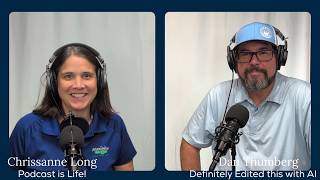
In this episode Chrissanne Long and Dan Thunberg discuss practical ways small‑business owners can use generative AI as a strategic thought partner rather than a magical fix. They begin with a disclaimer that they are not AI experts, then introduce the concept of AI fluency and the hierarchy of needs: strategic thinking, strategy, objectives, goals, and tactics. They critique the guru hype around AI, emphasizing that AI should augment human work, not replace employees. They explore Dunning‑Kruger effects on confidence and the importance of admitting "I don't know" to leverage AI. The hosts share concrete examples, such as setting up an automated email‑triage workflow and building a knowledge base using markdown files (Claude.md) to give AI persistent context. They compare major LLM platforms (ChatGPT, Claude, Gemini) and discuss system memory, token limits, and the need for agile prompting versus waterfall commands. They cover practical steps for small teams: shared accounts, team knowledge sharing, and limitations of current tools (siloed projects, token limits, hallucinations). Throughout, they stress trust‑but‑verify, QA, and the mindset shift required to use AI effectively. The episode ends with a call to action to explore resources and adopt AI thoughtfully.
Chapters
Hey, welcome back to the Elevate Polk Podcast. Have you missed us?
It's only been a week.
Oh, well, I feel like it was like a big gaping hole in my life. But—
We had stuff to do.
We did have stuff to do.
All right.
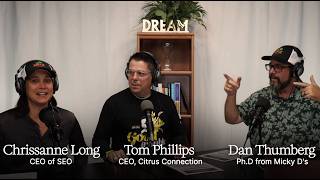
We did. So I'm your host, Chrissanne Long, with my co-host over here, Dan the Man Thunberg.
I'll figure out some pithy thing.
He's always got a pithy thing to put on the bottom. It's like your Easter egg. Figure out if you're not watching on YouTube, you won't know what the pithy things are because you can't see us.
That's right. It's youtube.com/@elevatepolk.
You got it. Yeah. And then tell them all about the other things. Like, subscribe.
Oh yeah, that's right. Please like and subscribe to our YouTube channel. I already said YouTube channel. Follow us on Facebook at Elevate Polk. And of course we're streaming on all of the podcast platforms now. So wherever you get your podcast, We're there with you.
Yeah. And you can just AI search Elevate Polk and see what happens. It should pop right up into ChatGPT.
Roll the dice, baby.
We'll see what happens. Hopefully you don't get a hallucination and find out that Chrissanne owns Dan's company or something.
That is legit a thing. And I think I've still got the image. I'll throw that up on the screen. Yeah. Thanks, Google Gemini AI.
So if you don't know, a hallucination is what AI spits out when it's not real. And so I think Dan referenced the trust but verify quote from Ronald Reagan in the last show. And it's even more important now in the age of AI to trust but verify. So even if you think, I've had so many different little things that have just been so frustrating from an AI perspective. We're gonna get into some stuff today, but it's very important that you pay attention.
Yeah, so I know that we talked about the AI data center in the last episode, and there's so much AI everywhere, and it's almost like nobody wants to listen to it anymore. Nobody wants to hear it. Everybody's just kind of burnt out. The reality is you ain't putting that one back in the box.
Nope.
You know?
And I think we wanna make this show not just the blah, blah, blah, like Charlie Brown's teacher.
Yeah.
Wah, wah, wah, wah, wah, wah, wah, wah. We really want this to be relevant and something that you can use, some practical application in your business. And some conversations around, you know, kind of where the challenges and the bottlenecks may be. I've identified most of the time I'm the bottleneck. Maybe you can relate to that as a business owner or a business leader. Sometimes because the ideas live in our heads, it's hard for us to convey to our teams and get things delegated. And maybe your teams are providing you with outputs that seem like hallucinations because you think you're telling them how to do the job, but they're not doing it the way you would like.
Now, Before we get into this, let's throw some disclaimers out there. Please. Because this is a show that's gonna be about AI and using it in small business.
Disclaim away.
What it actually is, the way to use it effectively, you know, what it is not. We're gonna talk about these things, but let's just, let's put the disclaimer here that we are not experts in AI. And we talked about this last night.
Right.
When we talk about the hierarchy of needs.
Right.
I am on this every day. I'm taking continuing education classes on AI. I'm doing everything. Everything that I possibly can to stay on top of it. I'm nowhere near an expert on it.
And mostly for the sole purpose of growing your business and meeting your goals. Yes. So not to become an AI expert and go on the road and start, you know, preaching the gospel of AI. And I think that that's the use case for most of us. We want this to be like, these are things we're trying, learning, doing ourselves, not any kind of preachy message of—
No, no. We are two small business owners coming to the table and saying, this is of the practical approach that I found for using this in my business. Now, I want— also want to put out there, you should never use AI to replace employees. That, that, that, that is not what AI is great for.
Right.
And that is a horrible thing if that's what you're thinking. AI should be used as a tool to help you get better at doing your own business. And that's what I think we're gonna talk about. Not, not how to replace people using AI.
Right.
Because that's horrible.
Well, and we want to create more jobs.
Yes.
Not reduce the amount of jobs. That's kind of the goal of being in this economy and being creators of jobs. We've talked about that before. But as you've grown to understand, I always have a book that I like to start with. So I'm gonna pull a quote from a book called "The AI-Driven Leader." It's a really great book. It's a great read, especially on the theoretical side of the usage of AI. I, from my perspective, I think everybody's starting to use this term, and we're going to kind of reference it today. But from my perspective, this is the first person, thought leader that started using the term strategic partner or thought partner. And so it's a really great read, read it. But if you don't read it, here's what I want you to take away from just the opening chapters. Basically, he says, What if you could make brilliant decisions in minutes rather than months or years? What if you could be more like Netflix and less like Blockbuster? You can with AI as your thought partner. The true game changer isn't using AI to craft better emails, it's harnessing AI to elevate your strategic thinking. The first step to becoming an AI-driven leader is changing your limiting beliefs around AI. You need to believe that AI will enhance you, not replace you. And those businesses that they kind of did an interview with, it was a study with Harvard through the Boston Consulting Group. They conducted a study and it said that they had 758 of their consultants respond to this study. And it showed that those who used AI had a 40% increase in the quality of their work and they completed tasks 25% faster and were able to tackle 12.2 times more tasks than those without AI. So what is a— what I'm going to focus on, or what kind of my angle is, is this idea of strategic thinking. And so I want to frame that with a definition before we get into the discussion. So he gives a definition of what is strategic thinking. It's the process of defining your strategy, then aligning your actions to achieve your most ambitious goals. This critical skill is the backbone of effective leadership and the difference between you becoming a visionary leader or a mere manager. Mm-hmm.
Yeah.
You good? You good with that?
I'm good with that. Okay. Yeah.
Cool. You didn't have anything to pick apart on that?
No, I don't, because I mean, that's, that's, I mean, that's a great definition.
I think that's a first. There was no but that came after that one. That was, that's pretty awesome.
We've gone into this. We haven't set the thesis. I think, and I think this is something that we need to do going forward. Go for it. Just because, you know, we can get lost, which is, I mean, it's kind of the fun of the show. I know it's fun on the show, but I think it's also, it's also good to start with a thesis, just like any good term paper would have had. Yeah. And then deliver your bullet points and then wrap it up with your conclusion.
Go.
Okay. So we thought about this, tossed it around a lot. I really like this. I think that it works. Our thesis for this segment, for this podcast episode is AI is a thought partner, not a magic show. Its value is not handing your answer or handling your answers to trust blindly. The posture that makes it useful is the willingness to admit You don't know something, then go find out. I don't know is the unlock and not a weakness.
Yeah. And you were peeping on my LinkedIn too.
I did. Yeah, I grabbed— well, yeah, well, I mean, you posted on there, you know, it's about the whole thing about the I don't know. And I think I don't know is strong.
Yeah.
And I, and I agreed with you a lot there. And I know that you were kind of going somewhere else with that. But I think a lot of people have a problem saying I don't know.
Absolutely.
You know, it's, it's humbling to say I don't know.
And we have all of the information at our fingertips.
Yes.
So there's no— in our minds, I think psychologically, we like, there's no excuse for me to not know. I should know things, especially if you've been in business for a few years. You don't want to walk around admitting that you don't know things. And so you kind of keep that close to the vest. But what I've discovered and the reason I posted what I shared, because it was in this space of there are things that I'm really good at. In the business that I'm in, marketing and solutions and helping lead generation and things like that in the Maximize side of things. And most of the time what happens is I met with business owners who have walked through this, I don't know, this indoctrination of belief that they can't ask for help.
Yeah.
And it's really hard to help somebody that is not in the mindset of, you know what, I don't know how to do a thing. So I get a lot of, well, yeah, yeah, I did that already. Or yeah, yeah, I know that. Or I, you know, figured this out. And maybe you figured it out wrong and you didn't come to the table with the conversation of, can you make this better? Do you know a better way? And so that's the premise of where I was going with that post. But then when I started to write it, I realized, you know, we're kind of hamstrung because we— I'm pretty sure everyone has probably done something like this where someone says, hey, you know, blah, blah, blah, blah, blah. And you nod your head and smile and go, uh-huh. Yeah. And then surreptitiously, you kind of open up your phone.
Right. Just to go Google it and be like, oh man, what is that again? Let me get up to speed in the 3 seconds it's going to take me to reply to them.
Right. I didn't know, but now I do.
I've never done that.
I've never done that. Never. Right. We all have. And so we just need to let it go. The idea that we should know everything. We shouldn't.
But, and we'll go ahead and pull that down.
There's your but.
We'll bring your little term out that you wanted to use here.
Yes.
Dunning-Kruger.
Yes. So there's a, you, you kind of come at this from a perspective with some baggage, the Dunning-Kruger theory, I guess. I'm coming at it from the reality and from a different side. So the Dunning-Kruger theory is that you approach things that you know with overly, with an overly confident belief. Like I know all of the things and therefore you close your mind to learning any—
anything.
Yes. And you become basically an idiot.
Right.
And throw your weight around, around the thing that you think you know, but you don't.
And you go and defend your ideas vehemently and everyone else is wrong.
Right.
You know, there's no other way that it can be because you're so sure of yourself.
Right.
And it's kind of like just this self-building prophecy. So.
But the other side of the Dunning-Kruger theory is the fact that you actually know a lot of things and you don't give yourself the credit for them. And so it comes out in the imposter syndrome mindset where you start to think, I'm not good enough, I don't know enough, I don't have enough, I'm not able to provide a valid response to a question. So you kind of analysis paralysis yourself to death and you stay still and stagnant. And so I think the unlock when we say I don't know is, well, maybe AI can help you to feel a little bit more confident.
Mm-hmm. Let's get into it though and set up kind of the, the what's true, not true. What's the guru side of selling AI and what is the real thing?
So when we were setting this episode up, I texted you. I was like, I don't want to talk AI from a guru BS perspective. I really don't want to come at this because you've got enough gurus. Go find one and follow them and listen to them and, you know, become—
And know that most of it's crap.
Fangirl or fanboy of whoever you want. Fill in the blank. But we're really in this space of the real thing. You know, I don't— you don't know anything about AI. We want you to walk away with a little bit of an understanding. And if you've been resistant or maybe you've been kind of surface fishing, like trolling, maybe you'll go a little deeper and try a few other things.
And let's— we're not talking about the AI where you have it make a picture for you or a funny picture, you know, or a trend of like, ask your AI what it would, you know, to whatever. No, we're, we're, we're gonna talk—
Roast you.
We're gonna talk more about connecting, um, your AI, your LLM, your large language model, which is what they technically are, to your business. Now, not all of your business, what you choose to connect it to. And because that truly is the only way that you are ever gonna be able to use it effectively in your business. You can't just say, Hey, chat. And the ones we're gonna talk about today primarily are going to be ChatGPT, Codex, which are from OpenAI.
Mm-hmm.
And then we're gonna be talking about Claude and Claude Code and Claude Cowork, which are from Anthropic.
Yeah.
Those are kind of the big players, the ones that are gonna be pretty much the most useful to you in the business world that are, you know, hosted platforms. Now there's a myriad of other ways of doing it. There are self-hosted LLMs. We're not gonna get into that because most of you don't even know what we're talking about anyways.
Right. Well, and you're either on, if you're in some kind of an AI at this point in time, you're probably on mainly one or the other.
You're either using ChatGPT or you're using Claude Code if you are actually starting to get into it a little bit further.
Right. And if, unless you're in a, like, well, I mean, there's built-in Gemini and there's built-in other Microsoft has Copilot. So there are some tools that are just kind of native to the things that you might be using. But we're specifically talking about those that are kind of self-hosted.
Correct. Yep. All right. So get into the guru side of it. You can't just say, hey, ChatGPT, fix my business. And then ChatGPT is just going to go and tell you all the things you need to do to fix your business.
It reminds me when I first started using— do you, how far back do you go with AI? Like how, when, when the trend started, you're probably an earlier adopter.
GPT-2.
Okay. I think maybe I was right behind you. And we would probably identify ourselves as early adopters most of the time, right? Yes. But I will tell you that I was resistant because I like to write and I felt like it was this, I was afraid of the replacing my, the art of writing.
Yes.
I feel like I'm a writer and I like to do these things. And so I was kind of on the, kind of pushing back a little bit. And then I don't remember what it was. I was like, all right, if I'm gonna be relevant in this conversation to be able to choose, like, remember, I like to go figure things out before I form an opinion. So I couldn't have an opinion one way or the other until I had dived in, right? Dove in. It was kind of like the toy— the Pop Goes the Weasel toy? You know it's like doo-doo doo-doo doo-doo doo-doo! Doodoo doodoo doo-doo doo-doo shh doo-doo doo-doo doo-doo pop goes the weasel! Right? And when you do this for like a little baby, a toddler or an infant or whatever they've never seen before, it scares them. They're like whoa wait a minute put that thing get outta here. It was unnerving to see how aligned with myself the tool could be with zero context, just straight out of the gate. I'm just asking it. I don't even remember what my first question or query was, but it was like, whoa.
And they are scary. But, you know, it, it's all the training data.
I didn't say scary. I said unnerving.
Okay. It is scary because the— and they just keep getting better and better and better. And the speed at which they're getting better is so fast. I can't keep up.
Right.
And I am studying it every single day and I cannot keep up.
Yep.
And it— but anyway, so that's why we're talking about actually using this in your business and using it for good to make you a better manager or to make you a better owner. But there are a lot of gurus out there who are trying to pitch the idea that these AI systems are going to magically go and do things for you.
Right.
And I'm going to talk about Andrej Karpathy a little bit. I don't know if you know who Andrej Karpathy is.
Vaguely.
Yeah. So he is— he's one of the big guys in the AI world. I think he's worked for Anthropic or he's head of Tesla AI or something like that. And it basically is— he says that you can offload a lot of your thinking, but you can't offload your understanding.
Mm. Okay.
And I think that that's the approach that you need to take, is that things that are repetitive, the things that you do on a daily basis that are repetitive, should be able to be recreated with deterministic workflows.
Mm-hmm.
And when we talk about deterministic, imagine somebody, you know, you, you look at those robots on the assembly line for the cars, you know, they do the same thing. Every single time. They pick up the door panel, they bring it over here, they put it on the car, they weld it in, the car moves on, they do—
And it's precise.
It's a precision. It's precise every single time. That is a deterministic workflow. And if you find yourself doing this action more than one time a day, that is something that an LLM, an AI can help you fix.
Yeah, that's good.
It is not something to wire in directly to an AI. It is something to use an AI to fix for you.
Make more efficient.
Make more efficient, whether it is fixing, you know, some of the code in an Excel file, or whether it's, you know, checking an email for you or setting email rules, or whatever the case may be. Those are things that AIs are good for.
Let me keep going. I'm not ready to share what I want to share. But there's a point where we'll come back to what you just said.
It can go a lot further. Than that, obviously. But if you're just starting out and you're wanting to say, okay, I know this thing, I'm gonna have to be on top of it. This thing's not going away. It's gonna be here forever. I better start learning it. You know, it's kind of like the advent of the internet when we all were like, I'm not gonna go buy a computer and hook it up to my telephone line.
Right.
You know, y'all are carrying, you know, computers in your back pocket now.
And it's like social media before we became, you know, completely enmeshed with these tools.
Right. So it does go a lot further though. And you can then start to do things like hooking it up to the different tools that you use and giving it certain permission sets. So now instead of saying, oh, I've got QuickBooks here and I, but I don't really know, you know, what my business is doing on a daily basis, you can then have the LLM scheduled to run a set of commands to be able to deliver you that information every single morning. You know, have it in your inbox. At 7 o'clock in the morning to show you a complete snapshot of how your business is operating, where your deficiencies lie. And I know all of this exists already for big businesses that are running on these big enterprise programs. We're specifically talking towards small business owners—
Right.
—who don't have the money to purchase big enterprise plans or, you know, have no desire. It doesn't fit their need. You know, for $20 a month, you can have a tool that can give you almost enterprise level capabilities if you're willing to learn about it.
Yes. And I first— so I have been team ChatGPT since the intro. I have a Perplexity account. I have played around with Gemini. I have played around with— but ChatGPT has been the tool we've used consistently as a team and has become part of our business operations. So when we started this podcast, you brought in, you know, your laptop one day and you're like, hey, are you on cloud? And I'm like, no. Stop. Don't. I can't. I don't want to. Right? I was like very resistant to the, like, it's just the same thing. Right? Was my kind of attitude at that point in time. And then a couple of weeks later, someone invited me to a conversation that helped me to understand the nuance of where Claude was that ChatGPT wasn't yet. And now, of course, that's, they're catching up. So it's, you know, they're just kind of like one's gonna go do this and then the other one's gonna go, oh, we gotta do that too. And You're just going to see this progression continue as, you know, competition continues to build. So I was very resistant. And then I went in. And you have to be prepared, maybe spend a weekend when you're not going to be interrupted. Can I tell you the first thing that I did?
Please tell me. I can only imagine.
Life-changing. Like, literally, I felt a sense of peace start to come into me that I had never imagined was possible. Literally—
You reached nirvana?
No, not quite. But my email inbox is treacherous.
Oh yeah.
It is absolutely a place I hate to be.
Yeah.
Not necessarily because I don't want to communicate. It just seems like an antiquated way of communicating. And it is so like it sucks me in and never lets me out, right? I don't want to delete all of the things that aren't relevant because they may sometimes be— someday become relevant. Like it's a, it's a massive search engine for me and it's super valuable because there's history and there's information that I can extract.
And sure, I— And you don't delete emails. I know you don't because you don't delete files.
Right. So this is a fact. This is true. Like, all right, I'm admitting my weaknesses, okay? But they're also my strengths because I have things that I can go back to and reference and find later on that you might have deleted.
You just have the receipts is what you're saying. You just like having the receipts.
I have the receipts. I like the receipts. So I went in and after I connected all of the things, you'll be more technical about that, but I got an email triage task set up to reoccur every morning. And the email triage task specifically because it's not like I need to see every email that was sent to me overnight, but every email that I am in, like I have responded to or have initiated and there's been a reply back. So I'm literally in the conversation. It's not spam, it's not junk, it's not crap that I don't care about that is coming to me that. And then of course, I've given it some parameters on what to bring to me. Mm-hmm. And it's like, these are the 5 or 10 emails that you need to address this morning. And I'm not wading through the crap to do it. And then I can just go, okay, yeah, respond, respond to Dan's question. It drafts that question, drafts that email response and puts it into my drafts. And all I have to do is go over to my email and hit send. I can, I can edit it. It's, it's, I think it's a good safeguard to have, like to not let it just send the email without me having given it a thought.
I mean, I can tell when it is not Chrissanne sending me an email. So you haven't taught it well enough yet.
It's getting there. It's there, but it's in some situations, and these are just, again, we're gonna talk about this again, but these are tactical activities. This is very bottom of the hierarchy talking.
I mean, we could have episode after episode every single week about this.
And never really scratch the surface.
We're really just going to get in just the basement layer of the different things that it can help with with a small business, but also to be able to identify identify what it can't do or what you should not do.
Right.
So I think that that's where we're going. So let's talk about a little bit the reality. We did do, you know, I love my numbers.
Yeah, bring us the numbers. These are good.
So here's our headline number. And this is for generative AI use. Generative AI is ChatGPT, Claude, all those good ones. Use among small businesses jumped from 40% to 58% in a single year. And 76% are either actively using it or exploring AI.
Can you give a breakdown of, a better breakdown of generative AI for people to understand?
Yeah, so generative AI, that's you going in and actually creating your little photos, your fun little photos. So that is actually grabbing information and creating something that didn't exist before. Okay, you're generating something.
Mm-hmm.
You all, some of the older AIs were more deterministic models. Okay. And it wasn't really creating anything new. It was just kind of bridging the gap. And in some aspects, AI is not really creating anything new.
Right.
It is still grabbing little bits and pieces from everywhere. It's a large language model that has been trained to kind of anticipate what the next word is going to be. That is what they are. But that being said, because of the connectors and all of the different things that they have access to and their web search capabilities and—
And before that, let's talk about where it's coming from.
Well, I mean, you had AI built into old 1980s video games. You know, think about Galaga. You know, the Galaga game we were talking about yesterday.
That's like the only game that I really liked to play.
You know, the little starfighter and you had to hit the little bug ships, right? There was an AI that was controlling how those little bug ships would fly in a pattern. You know, whether one would drop off over here, which one was going to fire a missile, which pattern they were going to fly.
Okay.
So when you talk about AI, AI goes back way, way, way, way, way back in the day.
But it was never accessible to us at our fingertips.
No, and it wasn't really that smart because, you know, at the end of the day, AI, it was deterministic still. They were patterns, but they had a series of patterns that they would run.
Okay, so I want to take us from a little bit of the geek speak to a little bit more of the reality check for us people who are not in that level of intelligence or whatever, that sphere that you operate in. So the thing that I really feel is important to recognize is that when you go in and you have not given your AI tool any context on which to pull or narrow its focus, it's going to the entire universe of information and pulling information for you, which is factual as long as you can trace it back to the source, right? Like, which you can, but it's not a narrow scope of information. It's anything and everything that was ever said about the thing that you're asking it to do is being used instantly to create, to generate what it is that you've asked it to do. Yes.
Right?
Yep. And so the part that I feel like the language learning model the LLM, that's what that's—
Large language model.
Large language model, sorry, is important is that the longer you use the tool and build that relationship with the tool, not a like legit relationship, y'all, like don't go get married to your AI. I'm not saying any of that. But the more that you tell it about yourself and give it information, the more it's going to be able to help you.
Yes.
And that's what scares people because they don't want to tell people They don't want to tell a machine those things about themselves. And I'm not telling personal stuff.
I don't, yeah.
I'm talking business stuff. I'm talking context for the Central Florida Business Expo. I'm talking context and history, like who are all my exhibitors and sponsors and data sets that I can use to help me do it better this year than I did it last year. And things like maximize and search engine optimization and how reports are being pulled and created. These are like tactical things that we're doing, but you have to give it relevant information in order for it to give you an output that's going to be helpful.
Let's pause right here. We've given them a lot of information.
And we're—
We got to go reset our cameras.
So fast.
I know. All right. When we come back, we're going to talk about how to utilize it effectively. And Chrissanne touched on it a little bit. We'll go through a method that you can use to kind of get better results instead of just saying, Hey, magic box, fix my business. Right. Be back in a few.
Pop goes the weasel.
In 2025, you leveled up. Now it's time to break through. The 2026 Central Florida Business Expo, September 29th and 30th at the RP Funding Center in Lakeland, Florida, right in the heart of the I-4 corridor. Connect with hundreds of business owners in a massive exhibit hall. Learn from purpose experts, bestselling authors, TEDx speakers, and Inc. 5000 CEOs delivering keynotes you will not want to miss. Unlock the strategies, the connections, and the confidence to lead real transformational growth. This is your moment. Breakthrough. September 29th and 30th, 2026, at the RP Funding Center in Lakeland. Registration is open now at cflbe.com.
We're back. All right. We're going to dive into some practical application stuff.
Right. And I know I threw that on you right there at the end about we're going to go and talk about the better ways to communicate. And you're like, where's this nurse script?
Where's that in the notes? But let me set something up first before you go deep into your brain. Because I was looking for the notes and he's like, it's in my brain. I'm like, oh, okay. I can't go there. I can't get it out of there. So I, as I was getting ready for this episode, I found a sheet of paper that were, was basically notes from a phone call from a consulting client of mine. Right. And they dove right in and they're like, I need help with marketing. I need help with getting people to take an action. Right. And so I'm like, wait, wait, wait, back up. What's the goal? Like, who are we doing this for? And where do they hang out? Can you tell me about the people? Right. There were like 75 questions that I needed them to stop and go back to get to before I could help them figure out what strategy, what tactic, what, what is the action that's going to happen, right? So it was kind of cool because this is what I say a lot on coaching calls and client calls and conversations. And it's the hardest thing, the absolute hardest thing. And you might not know it's the hardest thing because you don't realize maybe in your brain how unclear what you're asking things to be like could— you're not clear on how unclear you are.
Yes.
I'll say that. And so a lot of times, and I hate to pick on Craig, but sometimes there's some challenges in the language and the delivery of the request, right? So to come into someone's office and say, I need you to do this, this, this, this, this, and rattle off 17 things that you need them to do and then walk away. And then get the output and be frustrated that the output does not meet your expectations, there's a flaw in the assigning of that, in that delegation process, right? It all goes back to, you know, how our brains work differently than how another person's brain works. And recognizing the human side of work requires that we all operate at at least a baseline, right?
And it goes back to that. You can offload your thinking. You can't offload your understanding. That is still what separates us from these computers.
Right. And the tendency we have when we're being delegated a task is to go, yeah, yeah, yeah, yeah, yeah. Okay. And then go dive in. Right? So what I try to get my clients to do is stop and go, let's get, let's get up here first, because before we dive in and what I have experienced and watched, and many of you might be doing this as well, and you may not know what to do instead, is that we're, we're, we're swimming around in a horizontal line of tactics.
Yeah.
We're just doing a lot of things, but we don't have any kind of vertical system in place for how or why we're doing them or what we're expecting to achieve from them. So to me, it goes in this line. The goal is up here. Then you have the objective. What is the actual measurable thing that we're going to say, hey, we're getting there, we're moving the needle, things are working. And then you have a strategy, which might be your social media, it might be email, it might be search engine optimization in the world that I live and operate in, the marketing world. And then the tactics tactics. We're going to send 5 emails. We're going to do 6 posts. These are all tactical, right? We're all operating, and I think we're using AI more in a tactical level, and that's only going to help us do tactical things.
Right.
And it's not going to help us think. It's not going to serve us as a thought partner, and it's not going to say, hey, you know what? You should be using me for better. You should be using me for more. It's just going to do what you tell it to do.
And so when you—
Now go into your—
Well, when you look at— Right. So what we're moving into is we're talking about AI fluency. And understanding how to interact with it, what it is best at. I mean, you can sit there all day long and sit there and talk it and it could be, you know, a life coach for you. Sure, that's fine. You can ask it for directions.
Mm-hmm.
You can ask it for a recipe, you know, and say, "Hey, I've got this in my fridge and what am I making for dinner tonight?" You know, that's all fine and good. But if you actually want to use it in small business, you need to kind of understand AI fluency and the frameworks that are surrounding that. And it works very much in the same way. You want to have a very clear, defined goal. Okay? But instead of just giving it a whole bunch of tasks— do this, this, this, this, this, this, this, this—
Right.
That's the waterfall method. You have to be more of an agile approach where you break things down small little pieces at a time. But not— but starting with that goal, a very clear understanding of what you're trying to do. And then use the agile method. We're going to do this first, then this, then this, and then this. But then you're going to ask it to kind of interview you, if that makes sense. It's kind of like when you were talking about for your coaching, back and forth. It does not— these machines do not understand you. They don't. They're just processing ones and zeros.
And when, when— I don't know if you're going to say this, but when I ask it to interview me, I am very specific about how I want it to interview me.
Yes.
I will ask it to ask me one question at a time and let me respond to that question and then give me the next question.
Yes, absolutely.
Instead of interview me, because what it will do is just ask you all 15 questions.
Yes.
Which doesn't really serve your, the way your brain works, and it also doesn't allow you to to tell it the direction of the generation you want it to go, right? Like if you have a response that takes it, oh, well, based on that response, now I'm going to ask this question. Now that personalizes the whole experience for what you're asking it to do.
So let's give an example. Goal, and I'm just gonna, in this, I'm gonna pretend that I own a food truck because I know the food truck world as well.
Okay.
Okay? I own a food truck and I am having a really hard time understanding food cost, labor cost, and what I need to make on a daily basis. So my goal is going to be, I own a food truck. I use this tool, I use this tool, I use this tool. I serve this, this, this, and this. What I have found is that I do not understand how to cost menu items, and I do not understand how to bake in my— Costing. Labor cost to be able to make sure that my breakeven number is correct.
Okay.
So that I can understand on a daily basis how much money I need to make.
Right.
This is what I want to do first. Step number 1, I want you to connect to my tools. Step 2, I want you to pull the reports that the tools provide you. Step 3, I want you to be able to summarize all of the reports so that I can read it, and in easy language for me to understand. Mm-hmm. And then step 4, I want you to be able to look at what possibly is not costed correctly and that we can recost. And then step 5, give me a plan moving forward.
Okay.
And I want you to ask me along the way questions about my business, where I operate, how I operate. And you don't need to give it specifics. You don't even need to tell it your name. If you want it to refer to you as your name, you can tell it that, but you don't need to tell it anything more beyond that. But the more information, and if you outline it like that, then the information that you're going to get back is going to be useful for your operation.
Yep.
Because it now has a very clear goal. It knows in the end, this is what we are going to deliver for you.
Yeah.
It's not sitting there trying to fish out information and just randomly giving you things that you're asking for that you, I mean, you can, sit there and just go search through your tools if that's all you want to do. But if you want something to really take all of the information that you have and aggregate it and to deliver something that you are actually looking for, you need to know and be able to tell it right from the very beginning, this is what I'm looking for.
Yeah.
And then using the agile approach, breaking it down, step 1, step 2, step 3, step 4, is what's going to really kind of make it that much better.
Right.
Instead of giving it a whole bunch of commands at once and just waterfalloing it. Right. You break it down because if step 1 starts breaking, step 1, you know, step 2 is dependent on step 1 and then your entire cycle is broken.
Right.
So fix things as you see them and make sure that they are tweaked exactly how you want them.
So a couple things I'm gonna pull from your example and just also from the lexicon of AI and helping people recognize the important steps we need to take. The prompt that you described, is context. Sometimes it will have enough context if you give it just a really solid prompt, right? Yes. It will just take the information if you're kind of using a universal, for instance, or a universal, you have a universal task. If it can pull from all of the world's knowledge and help you identify your cost of goods sold through that process, then boom, good, check. But if the context is more specific to you, You have to train it. You have to teach it. You have to give it some information. And so the best way that I have learned to explain this to people is through a two— kind of two prongs, which is the frequently asked questions.
Yes.
And the should ask questions. You're an expert in what you do. You know things about— I mean, like I said, I know things about my stuff. But until you unlock that question in me, I cannot answer your question. I do not know what you don't know. And I'm never going to presume, just like the AI probably isn't going to presume that you don't know because it's an AI. So the should— the frequently asked questions, somebody is like, well, how do you get those? Well, you can ask AI to help you with the frequently asked questions. And then the ones that you know that people are actually frequently asking, you can put into your pile of frequently asked questions. Why do you need a frequently asked questions exercise? Why is this exercise important? What's the practical application for this? Well, if you're trying to get AEO, which is answer engine optimization, which is kind of the new version of search engine optimization. It's not really new because the content can't be shared in any AI capacity if it doesn't exist somewhere first. And so search engine optimization was always about the content on your site being able to be indexed by Google and then delivered in the results. And then the SEO work is to work to compete to be on page one, right? Mm-hmm. Now we're working to compete so that when a person asks a question, that if I am the expert in that area, my answer will be one of the sources that the AI is going to provide. Right? Mm-hmm. So that's why search, uh, um, the exercise of creating, uh, this knowledge base, I'll just call it the knowledge base for your business is important, but it doesn't just serve one purpose. It's not just for your SEO. Now it becomes an opportunity for you to have an AI chatbot, for example, on your website that people may be coming to your website and want to ask directly to you if they know you and if you have that knowledge base that it can pull from. But then it's also the context of where you want it to go in the business case that you have that you've built inside of your relationship with the AI.
Yeah, a knowledge base for your AI is great. And if you're using Anthropic, if you're using Claude, that is going to be your Claude.md. That is going to be your system memory. That is going to be everything that it— you want it to know about you. So you don't have to continue to repeat over and over and over and over and over again.
I had to figure out what the .md is. It's a markdown file. I know this now, but like, don't just throw these things out at people and expect them to know what it is, right?
MD is a markdown file, and at its very base is a text file.
Yes.
But it is a text file like the old school .txt that we used to write in Notepad, but it is a text file that is set up in a certain way that machines can read it very, very fast.
Yeah. It doesn't have— I always look at the example of it's a stripped-down Word doc.
Yes.
You take a Word doc and there's a lot of stuff in there that makes it look prettier than just a text file. And so Markdown language is just basically taking all of the pretty stuff out and just making it easy for the machine to read. It doesn't care what the font is or if you're italicizing or if you're indenting or if you have a line or a break or whatever. It's just straight up what you need.
Yep. Step, step 1, 2, 3, 4, 5. And it's just, it reads it straight down the page. Right.
So I hope that was helpful.
Yes. And with OpenAI, if you're using ChatGPT, ChatGPT has system memory in it as well. You can go, and if you're using Codex, that's a completely different thing. You're, you're way beyond everyone else if you're using Codex, which is You probably aren't this far into this episode because you gave up. You're like, ah, I already know all that. So if you're using ChatGPT in the app or ChatGPT online, you know that you can go into your settings and you can set your memory. You can tell it what you want it to know about you. Well, it's the same thing. You're setting up your business account. Here's what you need to know about my, my business. My name is Dan. I own a food truck called the Happy Hot Dog. It's a great name.
Let's see. Let's see if the domain is available.
Yeah. happyhotdog.com. You know, we operate in this town. We use this software for our point of sale system. We use this software for a KDS, a kitchen display system, if we have one. We use this for our accounting software. We have a social media account called this. We have a social media account called— you're loading that information into the system memory so that it can sit there and pull it just like that and doesn't have to keep asking you.
Yep.
Let's kind of go back. We talked a lot about the, some of the proper ways to interact with it. And more effectively than just, hey, chatbot, fix my business.
Right.
Let's— I just want to talk a little bit more about the guru side of it and the way that things have been pitched.
OK.
That this thing is going to revolutionize everything. And in certain industries, it has revolutionized a lot. But— and I know this isn't on our notes. But I was all— I always heard that when AI comes, it is going to take all of the jobs.
Okay.
Now, I think the latest study has been done that AI at most has taken 1 out of 1,000 jobs. So there really has not been that much of an impact yet, but the adoption rates and the strength of the models keeps increasing exponentially. Mm-hmm. That is a real thing, but you are not going to be able to go in and say, well, you know, this, I revolutionized my entire business and was able to replace 5 people and save half a million dollars a year, you know, because I have my AI running in the background and doing all of the tasks that all these people used to do.
Mm-hmm.
That, that's not true. This is going to make you a little bit more efficient in your own task, but it is not going to replace people.
Right.
At all. It is going— if you give your people access to it, and you set up guardrails, and you work with them on AI fluency, it can make them better at their job, but only if it is used appropriately. It is a tool, just like anything else. It is a hammer. It is a screwdriver. But it has to be used appropriately. If you pull— push a wrench too hard, you're going to break it, you know.
So to respond to that, recent conversations in our office, and we do web design, right? And to me, the jury is still out on a few things related to, can I just build an AI-generated web page and it rank just as successfully and sufficiently against a site that has the schema markup and all the other pieces, right? Because if you're just building a brochure. It's a different tool. I mean, you, if you need a brochure, build a brochure, right? But if you're building something to grow your business and utilize it for the long term, then you need certain aspects of that built, right? So the task is, has been pretty labor intensive. You know, the cost of a website that we build is much higher than going and just doing a quick, you know, wireframe. To me, what I would define an AI-generated website as is a wireframe, which is super helpful. Yep. You can get somebody to see your vision and what you want that thing to look like very fast. Instead of trying to explain to somebody your vision, you can actually show them your vision, which is super helpful. But then when we were talking in the office, it was like, well, I might not be needed in the future. And I said, you won't be if you don't know how to utilize the tools—
Right.
—to help you maintain your relevancy in the process of building a site. Because a lot of things, what happens is, you know, you're like, and maybe you've had this happen, other people listening, but you get this really cool thing, but you don't know what to do with it. And then you, it just sits there. So you spend all this time building something and then it doesn't actually go to execution. It does not get implemented. And that's waste, right? That's a waste of time. It's a waste of energy. It's a waste of tokens. It's a waste of a lot of things. But ultimately understanding that the person—
Tokens. Is if you're using Claude, Anthropic tokens are what get used anytime you interact with the AI.
Yes.
So just so that—
My library of definitions is—
We're wanting to make sure that we clarify anything. I'm going back to all the feedback that I have gotten. Like, I don't— you talked about this, but you never defined what that is. You talked about a process, but never told us what the process was.
Right.
So let's just make sure that we're filling out our definitions.
You got it. I'm glad you did that. So then I layer that one thing into understanding that the human being has a different desire than the machine, right? So here's context for you. I don't like the color orange. I don't hate the color orange, but I don't like too much orange in anything that we do in our company, right? So it has always been like, it's a creative color, designers love it. It comes to me and I'm like, too much orange. That's usually the thing, right? Well, Amanda in my office has learned Chrissanne does not like orange. The machine, the AI, has not learned that. So we were testing some things in the office for efficiencies and some steps, and the AI had not been taught that Chrissanne does not like orange. And so guess what? I got a lot of orange. Yeah. And she's like, I know what you're going to say. All right. So you can teach the machine just like you teach the preferences of your own desires, what you like your brand to look like, what your font sizes are. You know, like she also knows that I like my fonts to be much bigger than what generally comes out of the shelf. And so it's teaching these preferences into baking those into your AI so that you never have to tell it again.
Yep.
You can build that into the backend. You can talk about the technical term of what that is and it will never go off the rails. If you ever want orange, it's going to question you because you told it never use orange.
Well, and we talk about you can tell it these things. It's, if you're talking to it or if you're typing to it, you can just say, for future reference, I'm not really a big fan of the color orange. Let's keep that to a minimum. Right. On anything that I design, commit that to memory.
Right.
Same thing. It doesn't matter which platform you're on.
Yeah.
That's, that's, that's literally how you do it. Now, if you want to go in and you want to edit the Claude.md file, you're already, you're not listening to us if you're editing your Claude.md file. So.
But there's, there are settings inside your account.
There are settings. Yeah. You can go in and type it in and if that's how you want to do it, but these things are designed to where you could just tell it that. I, you know, I like bigger fonts, you know, make sure everything is—
I like big butts that I can—
Make sure that the fonts are 25% bigger than you normally would put them in there. Commit that to memory.
Right.
And it will, it will commit it to your system memory. And regardless of which program it's in, it'll commit it to its internal Markdown file.
It's a fascinating place to be alive. I think.
Reminds me of the late '90s.
I want there to be a discussion of those that are resistant. I want those that are resistant to reach out. And I think the questioning the process is like, it's hard to change. We don't necessarily embrace change. But I believe that if you had the option to be more efficient in your business, to be more effective in the way that you operate, to have more understanding of the things that you do not understand. And I, I, I'm going back to what you were saying. I think it's ultimately we, we, our brains will atrophy. Mm-hmm. If we do not use our brains. Yes. So we have to continue to use the use cases of AI do not replace our need to think.
That, that's why it, it is not a magic show. It is a thought partner.
And it frustrates me Because when I see everybody using it for a magic show, look what I did! Look what I did! Look what I created! And sure, yeah, you can create really cool things very fast and very easy, and you should if those are tactical things that meet— help you to achieve the goal, right? It's at the bottom of the list. But if you don't know what your goal is, you're just—
You're burning electricity and using water. Stop.
Yeah. Well said. I mean, we should end on those— on that note. No, we're not. We're not. There's a couple more things we wanted to go through. So where, what would be the advice you would give to someone who may be trolling, you know, fishing, fishing, they're in, they're in the pond, but they're just, they got their worm in their dish.
They're not trolling us.
They're not trolling us. No, they're fishing.
They have dipped their toe into the pond and they're, they're AI curious.
They're AI curious, but they're, they're like, what do I do to be better at using AI? What would you, what would you recommend?
So again, you, you, you take take it and understand that this is not going to fix your problems. It doesn't know what your problems are.
Yeah.
You can't just say, fix my problems and expect a magic show to happen.
Right.
It will take time for you to go in and for, to train these machines to understand your business. The more information you can give them, the better off they are going to be to a certain extent. And this is where we have to understand context. Each of these different platforms have context limitations, which means that in a single chat, the machine can only remember so much. That's why it's important to have these in permanent system memory. The pertinent details about your operation, the tools that you use, who does what, you know, what does your normal schedule look like? What are your social media account handles? You know, all of the things, you know, what are your colors, you know, your theme colors? What does your logo look like? You know, anything that, that, that is not going to change on a daily basis, that needs to be committed to the system memory so it can easily access it and not hold it in its short-term memory inside that chat window. That chat window is maybe only 100 tokens. And you gotta think a token is a word approximately. Okay. Uh-huh. Or a million tokens is what Opus 4.8, which is Claude, the latest high-end version, well, has a million token context. And I believe GPT 5.5 does as well, somewhere around there.
Okay.
So after about a million words, we were like, oh man, that's a lot. Well, that's input and output. What, what, you know, the thinking that it's doing plus the things that you're telling it. Once it gets to about a million, then you'll start to see the hallucinations. And you might actually see the hallucinations way before that. And when we talk about hallucinations, it just goes off the rails. It completely loses track of where it's at. And you cannot trust any of the information that is delivered to it or from it. At that point. So.
Talk about, before we wrap up, talk about the individual account versus a team account and the ability that you have if you have multiple employees. I mean, there's certainly a, we use, we share a ChatGPT account in my office, like that it's the same, it's the same account. We're all just sharing the login versus creating multiple seats and that kind of thing.
Speak to that a little bit. So it might be easier for people to understand, your email account with like a Dropbox that you use versus having a Google Enterprise account, not Enterprise account, but a Google Workspace where you have everybody in your team has their own @whatever.com email address. They can log in. There's a shared file system. You can, you know, upload your Google Docs. You can, and you have kind of track who's doing what at what time. And then you can also collaborate on documents.
Right, and then there's shared tokens across the account.
So your AIs can work the same exact way. You're gonna have a shared system knowledge that's gonna say, this is, you know, Maximize Digital Media. This is what we do. These are the customers that we service. These are our customer, or, you know, this is our colors. These is our fonts. This is, you know, our hours. This is our social media. And all of that gets shared right there in the main system. And then each person can sit there and utilize the AI for the different task. But then you can also reach out and show, you know, can add comments from different team members to say, let's, how about if we try this? How about if we try that?
Continue the conversation.
Continue the conversation within the team and be able to share much like you do in Google Drive.
Right. And then there are limitations. So if you hit a wall, it's probably because the AI is still in development and, and you are wanting to do something that just hasn't been developed or built yet. And the wall for me is the, the interaction or the exchange between chat and co-work and code.
Yep.
And projects inside of Claude are not, um, open to each other.
Yeah.
Like you can create a project in Chat, but you can't necessarily access that project in Cowork because they're two basically different operating systems. Is that—
It's, it, it, it, at some point all of this will become one thing.
It will eventually.
Right now things are very siloed and segmented, but I, the direction is going that these things are just gonna be open.
It'll fix itself.
Yeah. It's just, it's gonna fix itself. Don't you want to get that too? We don't want to get that in the weeds there.
But I'm just, what I'm saying is when you hit a wall, don't throw the baby out with the bathwater.
Right.
It's not the end of the world.
Let's go back to our thesis and see if we—
If we achieved.
If we achieved our goal.
We set out to achieve.
We said AI is a thought partner, not a magic show.
Right.
It is not a magic show at all. It is not going to fix your business. You cannot just tell it, ChatGPT, go fix, you know, what's wrong with my business. Go fix my marketing. Go fix my SEO. Right. You know, go fix my scheduling. Go fix my, you know, revenue leak. It's, it just can't.
It can't fix you being the bottleneck.
No.
There's no magic for that.
There's no magic for that. But what it can do is it can help refine the way that you do things. Yeah. You know, but you have to be able to give it enough information for it to see the whole context of your operation. And if you do that, make sure that you're going in and trust but verify. Don't send out AI slop.
You need QA. You need somebody to quality check the work that you're putting out.
Yes.
And I'm sorry, but the whole time that we've been talking about this show and the title of the show and the fact that it's not a magic show, I have just been wanting to say, hey, Rocky, watch me pull a rabbit out of my hat. Because Bullwinkle is, you know, like, we need to see Bullwinkle. Can we have a little—
Joey threw a Bullwinkle on top of your head.
Hey, Rocky. Hey, Bullwinkle. No problem. It's done. Well, hopefully this was an episode that you enjoyed. You learned a little bit. You had some fun. Definitely check out some of the resources, the book that I mentioned, Karthik. What was the guy?
Andrej Karpathy.
Andrej Karpathy. There's a lot of different people that you can learn from. We are definitely not the people that are planning to teach you, but we wanted you to, to, to start thinking about how you could start using it to help your business.
We won't do AI on the next episode. Until then.
All right.
Subscribe to YouTube channel, Facebook. I'll throw it in the end credits.
See you later.
More from Chrissanne




ElevatePolk Podcast: S3 E1 Episode 67 (Rebooting) the Podcast About the Podcast