From Classroom to Commerce: Junior Achievement in Polk County
Shawna Dykes, Market President of Junior Achievement Polk, discusses the organization's three core programs: BizTown for 5th graders, Finance Park for middle and high schoolers, and 3DE entrepreneurship curriculum. A new Discovery Center on the Tenorock campus will expand capacity from 1,000 to over 20,000 students annually, funded by a $2.5 million appropriation and a lead gift from the Barnett family.
Chapters
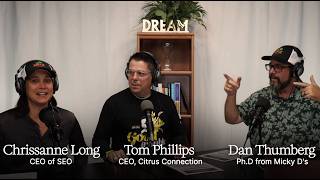
Hey, welcome back to the Elevate Polk podcast. I'm Chrisanne Long and my host, my co-host, Dan the Man. He's got a hat on.
As always.
And we are joined today with a friend of mine, a friend of ours, She will become your friend by the end of the episode. Yes. Shawna Dykes. I was talking to somebody about this episode and I said, oh yeah, Shawna Polk is going to be our guest. And that's her maiden name. Yes, it is. So I've known Shawna for a little bit. We'll talk about that on this episode. But before we get started, I have this like sign under the light over here that says like and subscribe to our YouTube channel. So please do that before anything else happens. I think we had 7 subscribers when I last looked. So thank you to all 7 of you. This, this YouTube YouTube channel piece is brand new to the, to the podcast. So we're working our way through figuring those things out. I spent some time working on some shorts, some, some reels that we're going to start to help to promote some viral, viral cuts of the last couple of episodes. That's been—
did you find the Adele song that I told you? I did.
I didn't get to throw that in there.
Okay, well, we'll do that. We'll do that. So yeah, so like and subscribe to YouTube and follow us on our Facebook page, Elevate Polk. And we are also streaming on Apple Podcasts and Spotify. So we're everywhere.
We are.
Cool. All right. Want to kick us off, Dan?
So I am so glad that we have Shauna in the studio today because last episode was pretty heavy. And I do remember at the end of it, I'm like, we need to have a little bit of levity, some feel-good.
Yeah.
Coming into this episode. And I think this is exactly what we need because we are going to be talking about something great. That's happening in Polk County. Now, you guys have a lot of history. And so this is going to be heavily driven on this side of the equation. But I am coming from the position where most of our listeners are going to be, where there are going to be a lot of questions that need to get answered, you know, from someone who just doesn't understand, right? And so that's, that's where I'm going to be leaning in and saying, hey, well, what about this? Tell me more about that. And so I think that's This is going to be great conversation. So go ahead, Christina.
All right. Well, we're going to kick it off. So Junior Achievement is a nonprofit organization that Shawna is the executive director. I'm not sure exactly your role. The vice president?
Market president.
Market president of JA Polk. And so it's not just a Polk County-centric nonprofit. So tell us.
It is not. So JA Polk is part of JA Tampa Bay, which is comprised of 13 districts altogether. And so I currently am I am in Polk, born and raised in Polk, and so I'm JA Polk, but I also am over JA Alachua currently running the programs in JA Alachua as well.
Okay, and what is Junior Achievement's mission? What are you trying to achieve? How long has it been around?
Give us a little history. So Junior Achievement is a national organization over 100 years old, founded in 1919. So the need for preparing students for entrepreneurship, work readiness, and also just, you know, those financial literacy skills as well have existed for a very long time.
Nothing new, right?
Yes. And so JA is doing a really great job of bringing a lot of programming across our nation and also internationally to help with all of those things. But those are basically our pillars: entrepreneurship, work readiness, and financial literacy. And we have multiple programs that we have established to, in order to promote, you know, better quality.
Wait, wait, so you're actually going into our schools and teaching our kids how to be entrepreneurs and to understand kind of how the business world works?
Yes, so Junior Achievement is comprised of different types of programming. There's classroom programming. And so some of our areas rely heavily on classroom programming. We also have what we call experiential learning centers. So that is our BizTown Finance Park. BizTown is essentially like going and running a town for a day. So our 5th graders, some areas use different grade levels, but in our area it'll be 5th graders get to go in and they get jobs and they earn money and they get to spend money. And we have everything from mayors to CEOs, CFOs, bank tellers, people who work in food service. There's multiple different jobs. So they get to go in and they get to work a job for a full day. They get to learn what it's like to be an adult and what mom and dad get to do every day to bring money into their household.
And so, get to the point where like, there's not enough money, I don't know what to do.
There's, that's always the big question. And then there's Finance Park, which is the next level, can be anywhere from 8th to 12th grade. In Polk County, at our Discovery Center, we're going to run it in the 8th grade. But what they get to do is get a random life scenario. So for some of us of certain ages, we can equate that to playing the Game of Life. So you spin and you get to be, you you know, you're married, you have this job. So they give a random life scenario. They have credit scores, they may or may not have student loan debt, they may or may not have children, they may or may not be married, but they get this random life scenario. And by the end of their field trip to our facility, they have to be budgeted, right? So they get to see what their friends who make $50,000 a year, or they get to see what their friends who make over $100,000 a year, they get to see the difference in budgeting. They also get to do career exploration. So they can look at what kind of careers they want to choose in order to make the type of money that they think that they need to make in order to have the life scenario they want to have.
This is so awesome because I go back and, you know, I've been out of school for a very long time. We didn't have this growing up. Now, I went to school in Hillsborough County. But, you know, even in the schools in Hillsborough County, and I graduated from the International Baccalaureate program, which is about as close as I I got to any of this information, and I'm trying to remember if it was 9th or 10th grade.
Are you bragging about how smart you are? International Baccalaureate.
Just saying.
Even at that level, we, we didn't get into these things. At most, and I remember this is like during our history class, the teacher would bring in the Wall Street Journal and we would have the assignment where we, you know, we had a fake $100,000 to spend and we had to go and pick out our stocks. And we had to watch the Wall Street Journal for the next 30 days. You know, back before there was online, there was a newspaper, a newspaper where you had to see what the stocks did the day before and you had to track it. And of course, you know, it was whoever made the most money at the end of 30 days won, you know, whatever piece of candy or, you know, whatever the case may be. But that was basically the extent of it. That was, that was all we got as far as an introduction to real-world experience, right? You know, outside of like home economics, you know, where you're going in and you're learning how to do laundry and you're learning how to, you know, make yourself breakfast and stuff stuff like that. But as far as actually learning about life skills and what life is actually going to throw at you as an adult, this did not exist at all for us.
Well, I mean, it actually did, but it probably didn't exist in Polk County maybe, or in Hillsborough at that time.
So actually, so BizTown has now been— on January 12th, actually, we celebrated our 20th anniversary for J BizTown.
That's why we didn't have it.
Yes, yes, yes.
And Finanz Park in Tampa has existed since 2018. So it's newer. And then our newest, our high school model, which has existed in Polk County since 2022, but since 2020 in Hillsborough County, it's our high school model where we integrate business community with learning, you know, so it's a partnership between the school district, our local business community, and our educators. So.
So when you were talking about BizTown, I was thinking about, well, how long I've known you, first of all. So BizTown is this like, you know, you get a retail job, like, and I think your first job, my first job was working for your dad.
It was a retail job.
And I was a bratty kid. We can be honest. I mean, you can, you can shoot straight here. Cause I can, I know how bratty I was.
Yeah. Maybe a little sometimes. A little spoiled. Yeah.
Yes. But yeah, so your first job was—
Dance princess. I was the princess.
Lucky that I was the only daughter, right? I don't know how I would have— I would have probably not been a very good sister to a sister because I wanted to be the princess. Yes.
Well, and it's actually amazing how many people I come into contact with still now that we knew through Long's Hallmark and how, you know, like how many actual people that I work with now that actually that was some of their first jobs.
Yeah, there was a lot. It was its own little ecosystem itself at that time.
It was. That's how we learned about earning money.
Right, right. And that's how I learned to count money. I remember like going on vacation. Do you remember? Like my dad did not believe that we should use the calculators in the cash registers to let the money get counted. Like if, if you buy $3.75 worth of merchandise and you pay with a $20, the calculators on the machines said, you give back this much change. Oh no, no. My dad made sure that you counted back that change. $3.75, you get a quarter, that's 4. $1 is 5. I mean, we would do these exercises in the car all the time. So, so that's kind of fun memory, walk down memory lane.
Yes. And I actually had a conversation with my daughter not too long ago because we were talking about people not being able to make change now and looking at you like you're crazy if you hand them change. And so I said, oh my gosh, that like Mr. Long did not let you, like there was no choice but to learn how to count back change at that point.
So that's one of my— some of my fondest memories, because when he was happy that I could figure— I've never been a math person, as you have probably noticed in conversations that we've had. I don't—
not at all.
I don't math well. And so he would get very frustrated. And my brother, my little brother— have an older brother and a younger brother— Dallas coined— my dad's eyes would get very big and bulgy when he would get angry. And Dallas, when he was little, he had no filter because, I mean, my older brother Bucky and I were afraid of him when he would get angry. We would— we were afraid. He's a pretty intimidating dude. Dallas had no fear. And so when my dad would get mad, he called his big bulging eyes eye poppers. It's like, I don't want Poppy to get eye poppers at me, but I can visually see my dad's eye poppers getting mad at me because of my stupidity and not being able to count back change. And so we had to solve that by being in the car. But I loved the approval, right? When he was— when I would do it right, he was like, "That's fantastic. That's so great. I don't think any of my employees could do that." So those were just fun conversations that, you know, my original experience in work started there.
I don't want to go into my original experience.
Yeah, we'll get to that in another show.
That is a whole show in and of itself. But yeah, very similar situation, you know, no cash reg— well, we had cash registers, but no ching, ching, ching, it's going to tell you what you need to get. It all had to be in the head, in your head. And yeah, we were grilled on it constantly.
Yeah, well, we originally We didn't have those cash registers, and then he upgraded. And when we upgraded, he said, "You still have to count back change manually." So let's go into now, how long have you been with Junior Achievement? And like, what keeps you there? What is it about this job that you get to have that you love and that you feel like is a good place for you?
So there's a lot, and I know, I know we're limited on time and we need to talk about other things than me, but I've been with Junior Achievement for 9 years. Started as a classroom volunteer, which led me into working started as basically scheduling volunteers to go into classrooms because at that time Polk County only did classroom programming. We didn't have the, the ELCs and the 3DE. And so that's what I did. I just worked a few hours a week, got to go hang out with the volunteers and get into the classrooms. And it was so much fun just going in and getting to listen to the kids and how excited they, they got over the topic. I mean, like, you know, what, what do you want to be when you grow up? You know, let's talk about, you know, not only careers, but earning money and what's the difference in a need and a want. And so I hung out in that education realm for a few years and then moved into events and then moved into development. And so I get to help raise money for all of these great programs that we're doing and the evolution of like where we've come into Polk and bringing the ELCs and the JA Discovery Center and bringing 3DE to Currently, 2 high schools, Lake Region and Tenorock, are our 2 high schools, and we're looking at expanding into additional high schools.
Let me pause you for a second. For those that don't know, ELC is the Early Learning—
Early Learning— Early Learning Center— Exponential Learning Center. Exponential.
Okay.
Exponential.
What is 3DE?
So 3DE is our high school model that we talked about bringing in business, the business community. 3-dimensional education. Ah, 3-dimensional.
3D.
3DE.
Got it.
Makes sense.
So, so yeah. 3DE, it started in Atlanta, and it was back in 2015, I believe, is the first year that they opened. And it was a collaboration between the school districts there and our JA Georgia president at the time, Jack Harris, and like, how do we graduate better young adults? And how, you know, what skills do they need? We're not graduating them so that they're ready for the workforce. And so with that, 3DE was born and it came to, like I said, to Tampa Bay in 2020. And I was like, oh wait, we need this in Polk and we need this in Alachua. And so we started growing into our districts and like I said, it is a collaboration. So the school district Superintendent Hyde was super excited and jumped right on board really when he first came to Polk County into helping me grow this. So the business partners actually come in. There's case challenges. So a case partner will issue a challenge. It's a real problem, a real business challenge, a real business challenge with their company, not a simulation, but like something that's legitimately going on in their business. Absolutely. And so, I mean, it may be with customer service or it may be with advertising or it may be, you know, like whether to bring employees back into the office or work away, or how do you attract a certain demographic of, or age demographic into a business. So there's, there's lots of different case challenges. We have national that, that are not local to us, and then we have some that are local to us. And we have a lot of businesses that come in locally. We have a Polk County Sheriff's Office, We have Saddle Creek. So we have a lot of local businesses that come in and they talk to us, talk to the students about what their real challenge is. And the students have to put together a presentation. They work in groups, so they learn about creativity. They learn about collaboration. They, so they work on all of these skills and they present. So, and this actually, we have businesses that come in and whether if they're not local, we have business partners that come in and work with us on the national cases. And if they're local, then those businesses provide their volunteers, and they actually come in and mentor, coach and mentor our students to help them further their ideas. Once they listen to their ideas, they'll help them, you know, move those ideas along, and then it culminates into an actual presentation. And so we can, guests can come in and watch these culminating events. And then so they present, and then they're judged, and there's a top, there's a final 4, and then at the culminating events, and then one group is selected for their best idea. And so it's, like I said, it's very much a collaboration with the school district, putting things into the curriculum. So we learn why, you know, the A plus B, you know, equals C is not just a math problem. You know, this scenario plus this scenario equals your outcome. Like, so we put real-world spin on, like, what they're learning.
Yeah.
And it's amazing. I mean, I even, we, in English class, I mean, how does this concept relate to Romeo and Juliet? Like, you It's like real world, like why are we learning this? So the idea is to reimagine, re-engineer, and create an environment to where we graduate students that if they're ready to go into post-secondary, if they're ready to go into a trade, they're ready to go into the military, or they're ready to enter the workforce, that they have the skills necessary that our, you know, local companies have graduates that are ready to enter the workforce.
This is absolutely fascinating. So, disclaimer, I am on the board of the Lakeland Chamber of Commerce, but we have been having this conversation about students coming out of high school and not being prepared for certain jobs. And we're not talking about the high skill, high wage— they're gonna go on to college and they're gonna go ahead and learn those. But the ones that choose not to go down that path, that they're gonna go into maybe a more customer service role, or they're gonna go into the service industry role, that's not really, you know, post-secondary education is not really a requisite for that. But they're coming out without the requisite personal skills to be able to do the jobs.
They were calling those soft skills, but now there's a new term. What is the new term? You don't know? Okay.
I don't know.
Yeah, but it's soft skills, right? Everybody pretty much knows it's soft skills. You know, the way that I look at it in our business is I can teach you all day long how to do X, Y, and Z, the mechanics of the of the job itself, right? But I can't teach you to be a nice person, you know. I can't teach you to have a good personality because you're not a nice—
how could a not nice person— no, I'm just kidding.
So, so that's— it's fascinating to me that even, you know, if these kids aren't gonna go— the ones in the 3DE program aren't gonna go on to, to have a post-secondary education— that they're actually getting some of these prerequisites for moving into some of these, you know, you know, some of these other jobs, whether it be customer service or, you know, you know, any, any of the other jobs that they can get without having to go to Polk State or USF or wherever they want to go.
Yeah.
So that, that, that is fascinating to me because I am one of those guys who, who firmly believes that not everybody needs to go to college. It is absolutely not necessary for everyone to go to college.
And that's not a new thing. They just always haven't always needed to go to college. But there was a stigma.
Our generation, our generation felt you have to go to college. And that's not true. Trade schools are a wonderful opportunity for you to be able to go and make just as much money as someone who's swimming in $100,000 worth of debt, right? We all know that now, that, you know, there's, there's enough science and data behind that to prove it. So that, so that these, these kids that are going through the 3DE program though are getting these before they even enter one of those post-secondary programs. If it's a Travis or any of these other career development centers, or they wouldn't even need them at all, but they're getting the information that was traditionally not taught taught in a high school or middle school setting.
Right. And where we are right now is the tip of the iceberg in Polk County specifically because it's only in 2 schools. So the students that are experiencing 3DE are either at Lake Region or at Tenorock. So the advent or the introduction of the Discovery Center starts to get more exposure through that field trip experience that they're going to have each 4th, 4th grade or 5th grade?
5th grade in Polk County.
5th grade is BizTown and 8th grade is Finance Park.
Yes.
But they're all wrapped into under the Discovery Center, so they'll go to the same place for both of those field trips, right?
One facility, both simulations will be ran.
Right. And so the goal is to continue to roll that out. My first exposure to Junior Achievement was right out of college, took a job at State Farm, didn't last very long at State Farm. I talked about the golden handcuffs I remember talking to somebody who had been at State Farm for a really long time. And I was like, was it Jake? Jake from State Farm? No, it wasn't. And he was not happy. You know, we were having a conversation over lunch. He's like, you know, I just can't, I can't leave. And I'm like, I'm the, you know, yeah, you can.
Why can you not?
He's like, well, I've got this, this, my house, my kids' tuition, my, this, all of these different things that I'm just now kind of locked into this job because I've worked my way up to the salary that I wouldn't get going to a new job. And of course, I'm fresh out of I'm not thinking that way at all. But then I started to think about my future and I'm like, I don't want to be that. I don't want that life for myself. But before I got out the door, after I had just come in the door, I took the opportunity to— they gave us an hour a week or an hour a month or something like that to go out and do things in the community. And so Junior Achievement was a partnership that State Farm had. And so I went to a second grade classroom and I was like, this is cool. I like this. I never had these opportunities. Opportunity. Same exact reaction that you had. I didn't get these opportunities. I wish that I had learned these things in second grade. You know, these things would've inspired me earlier to maybe even think that maybe I had a chance of being an entrepreneur. That was my dad, right? My dad's the entrepreneur, not me. I went down the, you know, this is what girls do, rolled and, and followed my mom down the teaching path eventually after State Farm didn't work out. And I just think, you know, we need the tip of the iceberg is we need more of this. We need it to be in more schools. We need it to be in more, students' experiences in school, and this is the beginning of that, right, for Polk County?
It really is. So 3DE, you know, it's about relevance, right? So we have to— in order, you have to have students in the classrooms in order for them to learn. And so if they don't feel like school is relevant or they don't feel like they're getting anything out of it, you know, so we've got to get the students in the classrooms. We got to give them a reason to be there. And so we— I can't tell you how many countless students I've heard like making the others be accountable. Like, hey, we've got this project due and you better be at school tomorrow and you have to do this. So you're seeing with 3DE, you're seeing a decrease in absenteeism, you're seeing a decrease in disciplinary referrals because, you know, you can't get in trouble and be able to be there.
Kind of like the sports, if kids aren't involved in sports, because I knew that being in sports was my, you know, like if you get suspended, you don't get to play. You know, if you get in trouble, you know, your grades aren't high enough, you don't get to, you know, play. So this is that opportunity for those kids that maybe are not, you know, athletically inclined to have that like accountability to keep them.
Absolutely. And if they hold one another accountable, like that's, that's real life, right? Like you depend on your coworkers to come to work so that you can get your job done and that, you know, the pieces fit together and it just shows them that. But then the flip side of it, the, one of the beautiful things is that the businesses get to be involved, right? So there's a lot of people that don't get to to see what goes on in schools, like beyond their own, their own children, their classrooms. You know, this way they get to go into schools and they get to see different, different types of students and different, you know, settings and, you know, scenarios for all of these. And they get to feel what it's like to talk to the students and answer the questions. I just had a volunteer last week that wasn't scheduled to volunteer, but a student actually asked for her by her name. And so, wow, is she going to be here tomorrow? And so I texted her and I'm like, hey, listen, I don't know what your schedule looks like tomorrow, but is any way possible that, you know, you think you could, you could show up for, you know, this class period if it's the only class period? And so she's like, oh, I have all morning open.
So, so cool.
And, and so, you know, it was like, she was like, oh my gosh. She texted me after, she's like, my heart is bursting. I can't believe, you know, that this student actually asked for me to be there. And, you know, when the volunteers see their names pop up under on the work site You know, at the end, and it's like, you know, Mr. Joe A was my source. And, you know, and it's like, oh, man, you get to— it does, it brings a different, you know, connection for the businesses to actually be involved in the classrooms that they wouldn't have that opportunity otherwise.
We need to take a quick break to go ahead and get some word from our sponsors. Go ahead and load up the next tape for us to get into the next segment.
But when we come back—
I know, I love that.
But when we come back, I would love to hear, and I'm sure everybody out there in YouTube land and podcast land would love to hear, especially business owners, how they can get involved.
Absolutely.
You know, I think this is absolutely wonderful. I don't, like I said, I don't know that a lot of them know that this exists, but I know a whole bunch of them that want to be involved. And so we need to give them that information exactly how you can do it. And we're going to come back and we're also going to talk about the groundbreaking on the Discovery Center Center.
Yes.
We want to hear all about that. I know we were talking earlier about all the great things that are happening. So we want to come back to that. Give us a few minutes, few words from our sponsors, the two that we have. And if you want to be sponsors, if you're enjoying this program, let's go, let's go reach out to us. Look, I love wearing hats and you can make me look like a NASCAR driver.
So be back in a few.
Be back in a few. If you're running a small business, you already know there's never enough time in your It's 3 PM.io builds custom automations and workflows that save you time and money. Stop working in your business and start working on your business. Go to It's 3 PM.io to schedule a call today. In 2025, you leveled up. Now it's time to break through. The 2026 Central Florida Business Expo, September 29th and 30th, at the RP Funding Center in Lakeland, Florida, right in the heart of the I-4 corridor. Connect with hundreds of business owners in a massive exhibit hall. Learn from purpose experts, best-selling authors, TEDx speakers, and Inc. 5000 CEOs delivering keynotes you will not want to miss. Unlock the strategies, the connections, and the confidence to lead real transformational growth. This is your moment. Breakthrough, September 29th and 30th, 2026 at the RP Funding Center in Lakeland. Sponsor and exhibitor registration is open now at cflbe.com. All right. And we are back with, uh, Miss Shawna from— go ahead, reintroduce yourself.
Shawna Dykes from Polk, from JA Polk. Yeah. Junior Achievement.
Junior Achievement. All right. When we went out from the last segment, we were talking, um, about business owners getting involved in volunteering their time to come in. And help with 3DE and the other programs through Junior Achievement. I know that they're going to be interested and want to know how they can get involved, everybody out in TV land there.
So, you know, JA is a volunteer-driven organization. And so, like I said, I started by volunteering with JA. Chrisann has volunteered with, with JA. And so because we're a volunteer-driven organization, there are a lot of needs in order to keep, you know, our programming the way it should be. So we talked about Discovery Center and we haven't really gotten into exactly what it is. But so right now we are building JA Discovery Center on the Tenorock campus and we're really excited because there is not, we don't have another campus in our JA, any of our JA areas that have BizTowne, Finance Park, and 3DE all on one campus. So that's really exciting for us to be the first to have all three. And so So that takes 20, 30 volunteers a day, which is quite a bit to go in and help the students in the storefronts. So first way to get, you know, involved is volunteering. And 3DE, like I said, we do have businesses, local businesses, but we also have national case partners that we need volunteers for, for those coaches mentoring or judging at the culminating events. And so there's lots of volunteer opportunities, and we have different volunteer coordinators. You know, depending on which grade level, you know, some, some people really like the little guys, right? Like that elementary school is their place. Some people, I really love middle schoolers, and, you know, or some are like, oh no, I would prefer to work with the older students. And so we've got a grade level and an age level for anyone that wants to get involved volunteering.
What's the average time commitment for a person person who has made the commitment for, let's just say, one school year, what are they averaging weekly, monthly?
So it just depends on where you want to. So volunteer level at Jay Discovery Center is what you want it to be. Even for businesses that get involved in our storefronts and things like that, there's no minimum or maximum. So like some businesses may say, I'll send 3 employees a month, or some may say, we want to do one day where we send 20 or 30 employees for one day. So for Discovery Center, that could just be once a year. It's a one-day commitment, basically. You come in in the morning, 8:00, 8:30, you get trained on all the things, and then the students are out of there between 1:00 and 2:00 in the afternoon. So it takes up the majority of a day if you're going to go in and volunteer for BizTown and/or Finance Park. For 3DE, again, you know, the coaching and mentoring aspect, you could go in for a morning, you could go in for an afternoon, you can go in for a whole day. The coaching is usually about 2 or 3 hours. So, you know, if there's a volunteer out there and they have a timeframe of, you know, this is how much time I have to volunteer, we can always find a place for them.
So I got the opportunity to volunteer again. My first foray was at second grade when I was working at State Farm. And then you recently hired Craig Clevenger.
We did.
And he reached out to me and said, hey, Chrisanne, you know a lot of business Do you think you could help me find some people to volunteer for 3DE 11th grade students? And so we got together, 4 or 5 of us, and participated in that. And I just got my, you know, I just rolled up my sleeves and I was like, I just want to, I want a real firsthand experience of what this is like. So sitting with the students, so giving you kind of like a feel for what that looks like. You know, you show up, you check in at the high school, you go into your class, you meet your students, but they are, they're already working their curriculum. Curriculum was already prepared for the day that we arrived, right? So they've gotten their business idea already built. They've got their, their concepts already established. Their teams are already there loosely because kids don't always show up, so teams get moved around. Kids transfer, so, you know, there's always that kind of some bumps in the road. But then there's kind of a direction, and they're presenting to you kind of what that week's curriculum lesson, message, whatever may be. So we talked about marketing, we talked about budgets, we talked about— and for me it was very interesting too. I had to kind of push a little bit when I was with my students because they were talking about wanting to have an adult daycare, like a senior's daycare for like parents who lived with their children who needed attention, but the parent— the children had to go to work. So this was their business idea. Right? So they— I'm looking at their budget and it's like, oh, our startup costs are gonna be $3,000. And, and I'm like, okay, how do I explain to you that that's not even on the right hemisphere? And there was a little like uncertainty from their perspective. They didn't understand what I was talking about, you know. And obviously I'm just, just the coach, so what do I know kind of thing. So it was, it was good for me to also realize realize, you know, how do you explain something to someone who really doesn't understand, right? And then I saw them at their delivery, right? Like when they— what is it called when they—
their pitch day.
Their pitch day. And they have their— it's kind of like an expo, a mini expo. They have their tables, they have their whole thing set up. That's not pitch day.
No, that's market day. Market day. Sorry.
Yeah, yeah, yeah. Market day.
Yeah.
I think I was out of town on pitch day, so I wasn't able to be there for them on pitch day. But at market day, their budget was realistic. And I was like, that's exciting to me. They went from $3,000, a very unrealistic budget, to, you know, these are the things that, that they kind of learned along the way. And so that culminating process and that continuity that you get as a volunteer, if you're able— like, if you show up one day, you get to have that experience, and that's cool. But being able to kind of follow along with the students and you see their growth is really kind of self-rewarding as well too. So just a little bit of a bird's-eye view of how how that process went from a volunteer's perspective. And because of that, I'm super excited. So when I went to Market Day, I come over to Shawna, and I'm like, Shawna, we need to have these kids at the expo, like their tables need to be at the Central Florida Business Expo. And so we're figuring out now, Craig and I had a call of like, okay, the 11th graders have now completed their program. And the ones that advanced went to wherever, whatever next level, but they'll be in 12th grade next this year, the 11th graders in September won't be ready for market day. So we're now like, all right, we're going to get the seniors who were there at 11th grade at the market day to be the present, you know, have the ability to present at Expo Day. So just figuring things out, which is what I love because the creativity of Junior Achievement naturally has to be rooted in entrepreneurship and creativity and thinking outside of the box. And so now we're giving that opportunity to the kids to see how that actually works in the real world.
So, so if you get your tickets to go to CFLBE— yes, the Central Florida Business Expo— you're gonna be able to come and check out—
you'll see the students, yeah, and what they put together, their businesses. And, and they'll have the opportunity to do this real-world business experience. Like, it felt a little— I mean, it felt real-world, right? 100%. The kids in the market, you know, but you could tell these kids were like ready to impress the adults that were walking through and having this conversation with them. And, you know, the questions that I was asking were like, you know, do you want to be an entrepreneur? Does this really feel good to you? How do you feel? Oh my gosh, this has been so great. I love it. I want to— but now if we put them into like the business community where we're not like a— we're not a prepped— we were a prepped audience for them, right? We knew them. We had a little bit of a relationship with them. They knew this is just it's not just the wild, wild west for them. These are just businesses from all over the community that will come in, and I think that'll be a different feel for them. So I'm excited about that. Absolutely.
Well, you know, in our 11th grade year is our entrepreneurship year. So they, the students, to Chrisanne's point, they have to create, you know, conceptually create a product. They have to budget and do all of the things. And so think if this was only driven by teachers, right? Like we were only teach— the teacher was taking the curriculum curriculum and teaching them to be volunteers, then would that teacher know that that budget was incorrect like you did? Or, you know, so when we bring in the coaches and mentors and they actually, you know, they have the actual experience beyond the classroom of like, this is what you— it opens the students' eyes. Because I'll be honest with you, I can't tell you how many students in all of the JA classes that I've taught, when you ask them about being an entrepreneur and what it takes to be an entrepreneur, they think that it is totally out of the reach for them. They don't, and I always encourage them, go, why don't you go research some entrepreneurs and see what they started with, you know. And so it's great. So, you know, they get to pitch their products halfway through the year. They work on a pitch. They get feedback from that. And then at the market day is where they actually get to, you know, show what their product is and And it's so exciting when you get to see all of the business partners and, you know, and other people that get invited from the community come in and get excited about the products because, man, they've got some really good ideas.
Well, and I also want to mention just because I know there are people listening that would probably have their hearts broken if they learned this. So I want to break your hearts. You ready? When we walked through market day, a lot of the students had their poster boards with, you know, their markers and they didn't have have like, you know, quality print materials, right? They were just— and that's, that's cool. But this is 11th grade, that kind of felt a little bit more middle school to me.
You're right.
And I asked about it. I was like, could we get them kind of spruced up for the expo so that this is a little bit next level for when we actually presenting to the, you know, the broader business community? And the answer was, well, we don't have a budget. So the school doesn't have a budget specifically for the kids to print, to get all the things quality. So everything's either, you know, the parents are, you know, probably forking over some dough to help make it look pretty and nice and shiny. Or if the families don't have the money to be able to help their kids' project look beautiful, then they're just making do with white poster board and markers and crayons and whatever. And so I think you can speak to like other, you know, we can volunteer, but there's also financial donations and contributions that can be made. And can we be specific about how those funds are being directed?
You can be very specific on how you want the funds directed. Anything, you know, any proceeds in Polk County go to our Polk County students. But yes, we have, you know, some funds that are given for general purposes, but we have some that are, a lot that are given for very specific purposes. And I think earlier you asked me, you know, what do I love about my job?
Why do I still do it?
And that's why. When I go into the classrooms and I see the ones that are growing or I get to watch a pitch event or a market day, and you see students that go, man, this is— I could see myself doing this. And they put it, put it there. Or you see what they don't have and what they're lacking. I'm like, yeah, I'm a fundraiser. That's what I've got. I got to go raise the funds to get them to the next level.
But businesses— so I'm just thinking, you know, I've got all these things going in my head right now. Businesses, you know, I know a lot of small businesses are struggling right now. You know, it is a tough time, and it's been a tough market for a lot of them, but it's a lot easier for them to do in-kind donations. So I'm getting the wheels turning here, and it's like, okay, you know, perhaps, you know, I own a business systems company. Hi, Par. And, you know, maybe I want to be able to donate some of, you know, my technology or some of my things that, you know, might be able to assist in the classroom, or, you know, printing out documents, or, you know, we were making the boards, we're making all of that stuff. Stuff, or, you know, you're a paper company and you want to be able to go ahead and make paper donations, or whatever the case may be.
Printing companies.
Printing companies, right. It doesn't have to be just a straight up, here's a check, go put it in the account, use it however you need. You can do in-kind donations that are relevant to what you guys are doing.
Yeah, you know, and, you know, I mean, you have to think, you know, what do the students have access to? They may not have printers at home. They may not have Wi-Fi in order to work in those, and their schools are limited, like how many resources How much printing do they have to do? What are their budgets? And so absolutely, like, those types of companies wanting to do an in-kind, print some of the things off and take our student presentations to the next level, I think would— is an awesome idea.
That just seems so simple to me, you know, and especially, you know, if you do have those printing companies, of course, you know, go ahead and give yourself a little credit on there, you know.
Absolutely.
I mean, and I think that that's the beautiful synergy that's available, right? I wrote down over here while we were talking earlier about how each— so the curriculum, the process, all of that's written. You know, you got your binder. All right, well, this is what we're going to teach today. But what is so rich about Junior Achievement is that the experience is unique for every student and every day and every opportunity because you've got different businesses on different days, right? So it's not like the same person every— like the teacher, right? The same teacher teaching you the same thing every day gets boring. You always have a new experience. And then like year over year, the, the, the GAA BizTown probably will also shift different businesses. So the students are going to, you know, maybe what's business, what maybe what's relevant in 2026 when we kick this off isn't relevant in 2035. And so there'll be new experiences and fresh ideas kind of coming through, which just excites me to no end. But also allows that awareness of the students, if they're paying attention, which some kids, you know, are going to recognize that. They're going to be like, "Oh, it's different every day. I come to school, it's different." And every time we do a 3DE day or we have, you know, a JA Discovery Center day or whatever, they're going to recognize that. And I think that's awesome.
Well, even like BizTown, you know, 5 years ago, we were teaching them how to write checks, even though it was already a little outdated. But, you know, now Now we're in the world of debit cards.
Learn about ACH, children. All right, so we touched a lot on 3DE. Discovery Center is a hot topic because you guys are in the throes of it.
Let me ask a couple of questions to get— make sure some of the answers that— since I've been following along with this trajectory of, you know, you, you kind of— you and I reconnected when it hadn't, it hadn't been confirmed that we were getting Discovery Center. We were looking for donors, we were looking for, you know, location, or we confirmed it was happening at Tenerife. Those were all question marks at that time. But this was really driven by one of our community leaders, very much so. Like, her daughter went to Tampa, we need this in Polk. So tell a little bit of that story.
Absolutely. So then representative, now Supervisor of Elections, Melanie Bell came to JA and several years ago and said, you know, my daughters went to Enterprise Village, which is was the model in St. Pete that J.A. BizTown was kind of, you know, was created through. And so she said, you know, my daughters went, they enjoyed it, they're very different. They had two totally different types of jobs. But once I went, I think that this needs to be for the students of Polk County. And so fast forward through one superintendent after another, she couldn't, we couldn't, they couldn't get any traction to do it. And so You know, this is a long-awaited project for her. And so after, prior to COVID, we kind of started getting some, you know, some steam going and then, you know, we won't even say what happened. And so then, you know, then, you know, when Chrisanne is talking about it started coming back, when that happened, you know, Superintendent Hyde was, was really on board. We started talking to business community, but she was determined that this was going to come to Polk County. And so she secured $2.5 million in appropriations, and that really kicked off the campaign and what we were doing. But yes, it took a little while to figure out what that location was going to be because we wanted it to be very centralized location because part of right now only about 1,000 Polk County students get to go to our Tampa campus just because of availability. But, but transportation is a big issue. And so we wanted it to be very centralized so that there was kind of, you know, that we weren't traveling from one side of the county to the other and it taking over an hour and then they weren't going to want to go. And so Tenorock was a very centralized location. And so that's kind of what, what started that. But, you know, from going from 1,000 students in Polk County, and I'll be honest, a lot of those are private or charters, not a lot of public schools because of the transportation issue.
Issues.
But now we're going to go from 1,000 students in Polk County getting to go to when we open, we're going to be over 20,000 students a year in Polk County that get to go to our facility. So I mean, 20 times the impact.
Wow, that's huge.
It's incredible.
And so it was, um, it was not a hard lift to get our community involved and for them to see the relevance and to want to be involved. And, um, so we, we, when once we secured the appropriations and then we secured the lead gift from the Barnett's, and then the, this commitment from the school district, we were kind of off and running. And so now we're in the process of getting our, um, all of our storefronts are, are full.
Um, yeah, I remember when it was like business, all these blank blanks after all.
Yeah, we're just waiting on the last few, um, LOIs and we're, and we're golden. But 22 businesses within the storefront, so those are the ones that actually will provide the Jobs. MidFlorida is on as our presenting sponsor for Finance Park. And then the Mumas, who are our BizTown sponsors in Tampa, they are from Polk County. And so, you know, Pam Muma said, well, why would I not, you know, sponsor BizTown? She loves BizTown. And so we started getting these sponsors. So we do have a few sponsors, you know, we're now moving into some of the other naming rights. So we have a lot of, you know, some sponsorship opportunities available. Currently that we're still working on, and then, you know, our Founders Wall, things like that. So there's lots of opportunities for more businesses to get involved, you know, with the build aspect and get into that. But another part of that is getting involved. We have, like I said, we explore careers, right? So we have a digital career book that we feature in Finance Park, and we feature a lot of local businesses because if they take their personality quiz and it says Oh, you know, you should be in a trade, or you should be in, you know, something financial, or you should be in education. Like, okay, but where do you go for that? Or, you know, maybe take IT. Like, you know, they're, they're, they, students sometimes operate with blinders. So like what they see at Publix are the employees that they see when they go into a store. They don't think of the thousands of jobs it takes behind the scenes. Or they, you know, the Saddle Creek, they may think, you know, oh, well, they're logistics, but they don't think of all the other jobs.
And so there's real estate, there's buyers, there's marketing, there's, you know, all of these different pieces.
Exactly. So we want to be, you know, like part of that digital career book is being able to highlight all of the jobs that these companies that are involved, as well as other companies. And so they can kind of start to take a deeper dive, like, oh, I didn't know I could work for the Sheriff's Department and not be a deputy. And oh, what do you mean, there's— what do you mean, animal control? That's the Sheriff's, you know. So they start to link businesses to more than just what they can see.
Yeah, yeah, wow. There was another thought that I had when you were talking too about how the dialogue of what you were saying earlier was, well, I can send 3 employees a week or I can do 20 in a day. And then my mind is like, okay, and then there are the us's of the world.
Right, the solopreneurs.
The solopreneur, the small, small, super small businesses. And so speak to, because I think this is the passion that I have when I'm coming to have conversations with you and with Melody and with others that are like responsible for this project. I don't want the small, small businesses to get left out of the equation. Right. You've got LOIs and you've got big, huge dollar amounts that are being, you know, put into this conversation. And a lot of times that's when we tune out. We're like, oh, that's not for me. I can't make a contribution. And I'll go back to a conversation that I had with Lori Martinez. Jeannie, probably now 10 years ago, when I told her, almost in tears, I said, I don't have anything to give because I don't have any money.
You have your time.
And she said, Chrisanne, you are the most philanthropic person that I know in the time that you're giving, and that is valuable and important. And I was literally emotional about the fact that I felt like I had nothing to give. And it totally changed the way that I think. So hopefully someone listening will realizes you have something to give and it's valuable and it's not about the money all the time. The money needs to happen so that the ground can get broken and the building can get built and all of those things. So Shawna, talk to the smallest business, the solopreneur that's just getting started, the person that has maybe 2 or 3 employees. What can they do? How can they help?
Absolutely. Well, you know, the word philanthropy, that's your first thought is the dollars. And that, that is not always true. You know, like you said, your time is very valuable because even, you know, you may have a major corporation that can afford to pay for the things, but maybe they don't have the staff time to give. And so, like I said earlier, from the smallest donation to the largest donation, from the smallest amount of time that you have to give, you call me and you tell me you've got, hey, I got 2 hours, Shawna, I will find We can find something for you to do in 2 hours, right? And so, you know, so, and we're grateful for it all, right? From the smallest to the largest, from the whatever time that you have available. Trust me, because I understand the same thing. I used to get to spend a lot more time in a classroom than I do now. And, you know, and I'm like kind of jealous sometimes when I see my volunteer list and I'm like, man, they've got to be in more classrooms than me this year. So, but yeah, that's how they can, you know, You know, just— yeah.
And they say, they say that I'm a connector. And so this is, this is how, for those of you that also say that you're connectors, this is the way that it happened for me. I'm in the conversation with my students, dedicating my time. But I have a relationship with many of you, right? I know things. I'm hearing these kids talking about starting this business. And it was, it was fragrance related. And we have a lot of fragrance businesses in Polk County. And I know one of the people that owns one of the fragrance companies. And so my immediate thoughts are, all right, as soon as these guys, these kids are ready, I want to make an introduction. So by being receptive, by being educated about what Junior Achievement is doing right now in the community, and knowing that there are people— and I'm sure Dan, I'm gonna sign up Dan to be a coach in the next semester—
that was discussed a few days ago.
When you hear someone say, oh, I've got students that I'm coaching at 3DE, or I met a group of students students at, through Junior Achievement who could really benefit from meeting you. Maybe it's just an hour of your time and just some direction to give them and maybe some encouragement. Or maybe it's a future job opportunity that you are open to receiving because these kids have gone through these programs. So it's like you said, it's the littlest things, but it's also hopefully what this podcast is doing is making you aware that this opportunity is there in the community.
Absolutely. It is, like I said, there's a place for everyone. There is a way for everyone that would like to get involved. You know, when there's, you know, I just love people who love our mission and are like-minded and want to help students and, you know, want to see, you want to see them do well. And so, you know, there's a lot of people out there that that's what they want. And to your point, they don't they don't know how to get involved.
Yeah.
And so trust me, you find me, you find Lisa Miller, you find Melody Ryder connected, one of our— my— I mean, just, she's our campaign chair for our Discovery Center. She's on my board. She's my partner in a lot of things. But, you know, you find us all around.
She's a great human being.
Yes. So, you know, and our Craig Clevenger, our 3DE, you know, you get in touch with any of us and we will find a a place for you.
And even if it's just to start and you don't want to spend the time doing whatever, you can send us a message and we'll get you connected.
But if they want to, uh, they can follow you guys on Instagram @ja_polk.
J—
J on Instagram.
Yes, on Instagram, @ja_polk on Instagram, or japolk.org, right? Yes, they can go, um, you know, they can, they can find any kind of opportunities are available there. It'll have all the links to be able to get a hold of you guys. Size, the whole nine yards there too, right? And of course, if you guys want to go ahead and send it through us, of course we'd be more than happy to do that.
And I did want to say, with— we just had our groundbreaking at the Discovery Center, um, back at the end of March, and it was so great, um, you know, to see, just very overwhelming, um, and just so grateful for all the support and all the people that showed up. But timeline, so currently 3DE, and then obviously we're wrapping up for the but then in the fall, we will start needing the 3DE volunteers again. So over the summer and through the fall, we'll be scheduling those. And then for the Discovery Center, we're looking at late fall, you know, hopefully opening, you know, it's a new build. So, you know, anything, anything can happen. So, so we don't—
Twice as long, cost twice as much.
Yeah, we don't, we don't get, we're not giving an exact date. But Jason Rodda, you know, he did let me start saying the word fall.
So Jason tells you that, you know, you've got a date, I think you can go ahead.
Yeah, so, so we don't really have an opening date yet, but we're looking hopefully to late fall. So, and then so in the spring of next year, that's when we'll start needing the J Discovery Center volunteers.
That's exciting.
Well, Shawna, this has been absolutely wonderful. Thank you so much for providing us some levity in the program after the last episode.
Feel good.
Yeah.
And not only that, but I mean, just, you know, just show us what's going right in our community and not, not just in our community as a whole, but in our business community as well. You know, educating our students for the challenges of tomorrow is, you know, going to be very, very, very, very important. Well, you guys leading the charge is awesome.
As we wrap up, here's the thing: how many students are there in Polk County?
116,000. Don't quote me.
Okay, somewhere like over 100,000.
Lisa Miller will be texting me in 5 minutes to tell me I misquoted something. Over—
we'll just go with 100,000.
Over 100,000.
100,000, right? And our Discovery Center capacity is 20,000.
That's our conservative estimate. So it'll be 5th grade, all the 5th graders in Polk County, all the 8th graders in Polk County. We also run summer programs.
Okay.
So we're looking at running in the summer as well. And then plus we're now in the 18 to 25 range, which is a whole other subject. But looking at all that, we're looking at a capacity of running over 25,000 students a year.
Okay. And then there's gonna—
then there'll be a chapter 2 is what I was going with.
I'm hoping. More where this came from. I'm hoping. All right, well, thank you guys for enjoying this episode with us. Shawna, thanks for coming and being a part. Absolutely.
Thank you for inviting me. I appreciate it.
Excited to hear y'all's feedback. So let us know what you liked about the show.
japulk.org. Check it out. Donate if you can, your time, your money, whatever. Follow us, all that good stuff.
Do the things.
Do the things. We'll see you next week.
All right, see you.
Bye.
Bye.
More from Chrissanne




ElevatePolk Podcast: S3 E1 Episode 67 (Rebooting) the Podcast About the Podcast