ElevatePolk Podcast S3 E4 #70 | No Man's Land
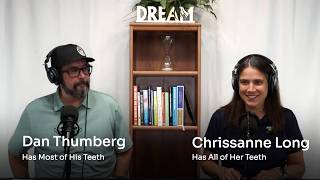
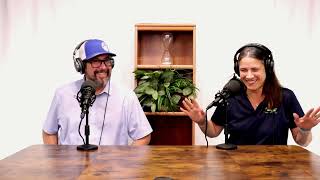
In this episode of the ElevatePolk Podcast, hosts Chris Ann Long and Dan Thumberg explore the pervasive stigma attached to Polk County—coined “No Man’s Land”—and how it hampers small‑business growth. They begin with personal anecdotes about being judged for their Polk origins, then broaden the discussion to the systemic challenges faced by entrepreneurs: fragmented business‑development resources (SBDCs, SCORE, chambers, catapults, Cohatch, etc.), lack of a unified data platform, and insufficient visibility of funding and labor assistance. The hosts reference a 2023 SourceLink resource‑mapping project that identified 29 entrepreneurial support organizations and highlighted overlapping challenges between providers and entrepreneurs, especially around funding and awareness. They argue that Polk County sits at the intersection of two state funding quadrants (Central Florida and Tampa Bay) but lacks coordinated investment. Throughout, they propose concrete solutions—a centralized, searchable dashboard that matches entrepreneurs with relevant resources based on stage, location, and need; better data collection to inform policy; and community‑wide collaboration funded by local large employers or crowdfunding. The episode intersperses sponsor spots for the Central Florida Business Expo and its3pm.io, and ends with a call to action for listeners to engage, share ideas, and help break the “No Man’s Land” perception.
Chapters
Hi, welcome. This is the Elevate Polk Podcast and I am your hostess, Chris Ann Long. Is it hostess or host?
You know what? Either way.
Gender neutral, I guess just host. And my co-host over here, Dan Thumberg. Hello. 3 PM. It's 3 PM. It's 3 PM dot IO.
And it's 3 PM dot IO forward slash MySpace.
If you can figure that out, send us a message. We've got a prize for you. Oh, so we've been, we've been talking a lot.
We have. But before we get into that, yeah.
Oh, oh, why don't you do it this time?
You want me to do it?
Yeah, you do it this time.
All right.
So you'll have more luck.
Like and subscribe to our YouTube channel. As always, please follow us on Facebook at Elevate Polk. And we are streaming on your favorite podcast services, Apple Podcasts and Spotify.
You are so much better at that. It's now your permanent job.
Is it?
Oh, goodness gracious. All right. So where do we start today?
Chrisanne, so this one again was your idea. And it came from— I love these conversations you have with people. Because as much as I like to think that I'm pretty good at coming up with ideas and stuff to talk about. Your interconnectedness and the conversations you have are completely different than a lot of the conversations that I have. And when you sent this over to me, I instantly connected with what you were talking about, but not at the same level. It's a completely different level. And but, but I think it both ties back to both of our upbringings.
Yeah.
And so I think that that's where we lead into it.
Yeah.
And then we kind of show how it all ties into kind of the identity of Polk County, right? Because it is a shared experience. Even though you and I grew up several counties apart, we've had similar circumstances and certain things that have happened to us.
Yeah. That now tie all back together to what we're doing and make it feel like we're not as different as you might think we would be, being that we didn't grow up in the same place.
Right. Absolutely.
Yeah. So part of that conversation we had this week was relating a story of me going to Florida State. I was in Tallahassee. I think I was, you know, it was during rush and there was a conversation that I was at a fraternity house and, you know, you're doing the whole, hello, what is your name? Where are you from? And this guy, you know, I don't know if he was flirting with me or if he was just being polite. I'm not really, I can't remember those details, but I do remember this so, so, so well. I remember I remember him asking me where I was from. And I always used to say I'm from Auburndale, Florida, which is smack dab between Tampa and Orlando. We haven't— we had one at that point in time. We had one exit on I-4. And he— his light— his eyes lit up like, oh, I know where that is. He goes, oh, you're from Polk County. And I said, oh, yeah, you know where it is? He goes, yeah, but wait a minute. You're from Polk County and you have all of your teeth. And then he said, and you're going to college. And I'm like, wait a minute. Have you ever been so naive that you— like, I was never aware that there was this external opinion or this idea about Polk County until that exact moment. I was not insulted because I was mostly curious. I was like, what do you mean? Like, we're actually very intelligent people. But that was my eye-opening experience to the— what is the word I'm looking for? The bias of what Polk County was. And so I think that's just kind of been an origin story, kind of part of my brain in the back of my head for a long time.
That's what made you Spider-Man.
Spidey, my Spidey senses. And you said you had a similar kind of a similar story.
I did. And I know we've—
A guy was hitting on you at a fraternity.
I did go to USF at first. No, so I did not grow up in Polk County. I grew up in what I now affectionately refer to as South Hillsborough County, South Bay, or whatever it's called now. But truth is, I grew up in Gibsonton. I grew up in the land of the carnival folk because I in fact was one of the carnival folk.
Your family was in the carnival. Is it carnival or the circus, or are those synonymous? Is there a difference?
They're closely related, but two separate entities. The circus folk kind of have their own group that they hang around, and the carnival folk have their own group that they hang around.
Is there hierarchy? Is the circus folk, are they higher than the carnivals? Is it vice versa?
No, I think we both respect, respected the positions that each other had. You know, they each had their difficulties. And, you know, obviously I'm not a contortionist, so.
Or a trapeze artist.
No, I'm not swinging from the trapeze. But anyways, I grew up, you know, as a fourth generation in the carnival business. And, you know, my dad and grandfather not only manufactured rides, but they had a traveling show for quite a long time. And we also had some small amusement parks, Virginia Beach, Daytona Beach, Lowry Park out, you know, when it had its own amusement park. We had that for a couple of years before the zoo took it over. So I kind of, You know, that is a little bit of my background, obviously goes a lot deeper than that. But I had very similar upbringing. Oh, you're a carny, but you have all of your teeth and you're going to college.
Yeah.
You know, you kind of just— it doesn't matter when you say that you are from somewhere or you're from some certain upbringing, people automatically have thoughts about you. You know, they don't examine you for the person that you are and, you know, what you have achieved in life or what you're currently doing. You're just kind of like stuck with that stigma. And it used to sting. It used to sting a lot. And it's like, yeah, I mean, you know, we're not all, you know, uneducated, you know, heathens.
Most of us aren't uneducated. Like, it's like the opposite, in my opinion. But you, you know, you have these Malcolm Gladwell calls it thin slice. And it's this idea, I think it's a survival mechanism. Like we only have so much ability in our brain, you know, our brains get full. So we have to make quick decisions to survive. Am I safe? Am I not safe? Right? Is this a, do I need to go to the other side of the street? Because I'm, you know, like, and we have to make these rash judgments, so to speak, that are built on our biases. Like they're built on what we've experienced and where we come from. And we can't, undo it, but we can just be cognizant and aware and understand that that's where we're coming from so that we can slow down a little bit before we judge, right? But that was that judgment of Polk County. This is their thin slice. That's what they knew about Polk County. That's what they knew about the carnival life. But there's so much more richness to life than just very superficial exterior perspectives.
But I feel that nothing has really changed.
Hmm. You think if like there's somebody in college at Florida State right now saying that they're from Polk County, that that conversation may also happen in 2026?
I know whenever I travel the state and I travel again, I'm like, oh, you know, I, you know, I'm from Lakeland, Polk County. They're like, where is that?
Do you lead with Lakeland or do you lead with Polk County?
It's usually Lakeland. Yeah, yeah, yeah. Lakeland's a little bit easier to understand. You know, we can harken back to, oh, you know, it's the corporate headquarters for Publix.
Right.
So, you know, it's just a lot easier, you know, especially when you're traveling up and down the East Coast. Now that Publix has done its huge expansion, people can relate to that. Oh yeah. You know, that's home of Big Green. Yeah, I get that one.
I'm the opposite. I usually lead with Polk County and I live in Lakeland.
Oh, interesting. Yeah. Okay. Is that just because, you know, because the only place that I've ever lived in Polk County is Lakeland.
Yeah. It might be because I grew up in Winter Haven, then graduated from Auburndale High School, and now I live in Lakeland. Have I ever told you that story? So when we moved to Florida, we ended up in Winter Haven. My dad owned the Hallmark store and then my parents got divorced. We moved to Auburndale. My parent, my mother lived with, lived with my mother in Auburndale. And then I got married and I was like, I'm not living in Lake Wales. He was from Lake Wales. I did not want to live in Lake Wales, mostly because it was just too far from my mom. I was a mama's girl, right? Like, I liked Lake Wales. I love Lake Wales. We're going to talk about Lake Wales in another episode.
We know how much you love Lake Wales. I can't wait to get to that.
It's going to be fun. But I told my ex-husband, he wasn't my ex then. I told him, he was my boyfriend. I told my boyfriend, when we get married, I'm not going to live in Lake Wales, but we can live in Winter Haven. So we moved to Winter Haven. Then I got a divorce and I literally said, I'm moving to the big city. I'm going to Lakeland. So Lakeland has been my last location in Polk County, not my first.
Gotcha. I guess that's what it is then. You've been all around Polk County. And my only experience with Polk County before I moved here is is obviously I had friends that went to Florida Southern, so I'd come out here and party every once in a while. And in my mid-20s, I worked in the construction industry, and actually I was part of some of the building crew out of Lakeside Village.
Yeah, you were telling me that the other day. I'm like, whoa.
Yeah. So that really was the only— my only connection to Florida.
That was your intro.
Right, before I actually moved here. So, but I think that this ties back to the conversation that you sent me, and I just love getting those late-night texts. You won't believe this. Yeah, but there's a reason we're titling this one No Man's Land, because we have this inherent bias that sticks to Polk County. And it's not just in the, oh, you're from Polk County, how can that be, you have all of your teeth thing. It also extends to the different things that we have available for small business owners or where priorities are placed.
Right.
When you look at people that should be connected to the entirety of our community, or at least adjacently connected to our community. But we have this stigma hanging over us from an economic development standpoint that Polk County is just no man's land.
Yeah. Well, and that was not my term until I had a conversation last week and that term was actually presented. I was telling you about a conversation I had with someone who was in Pinellas. It was while we were working on promoting the expo. And I was like, there are a lot of business resources surrounding Polk County that I think are relevant to people in Polk County for their business development and their business growth, especially because we're on the I-4 corridor and there's so many other— there's so much innovation happening over there. So having a conversation similar to this discussion with the, with the guy in college, and he says this, right? I say, I guess naively, but I'm also coming from a place of I'm very embedded in the Polk County community. And I'm also in the know of a lot of things that are happening in the development and the growth and everything that's going on. And I said, people want to come, people want to get into Polk County. Businesses and organizations are trying to get into Polk County. And there was the smirk on this face like, hmm.
Yeah.
I'm like, wait a minute. Are you telling me you don't think that anybody wants to come to Polk County? I didn't stop and explore it. But then I did say, I see the look on your face. We'll talk about it at another time. But there are legitimately a lot of opportunities in Polk County that you probably don't even realize it. Probably because he's let his thin-slice bias rule his mind about what's actually happening in Polk County. But these are just conversations that I'm hearing and experiencing and kind of carrying, like shouldering along the path as I'm talking to different people about what Polk County has to offer, right? We have some challenges that we're working to overcome from an education perspective. So our public education is something that we've been building and really working hard to improve. Less so on the small business side, right? Like you walk into some businesses and you just kind of see that there's just a struggle. Like they don't have the resources. They don't maybe have the branding. They don't have the merchandising. They don't have this experience creation. Related, like when you walk into a city or a community that does and you kind of feel it's like, it's like the furniture is a little bit dated.
Yeah.
You know, when you stay in an Airbnb or something and you're like, oh, this is, this was probably really great once, but it needs an update. I feel like that's something that we experience and we're aware of. But that doesn't mean we don't have the resources here. Right. That's the conversation that we just keep circling and circling and circling around about.
The resources are here. But they're difficult to find.
They are difficult to find.
And this is the other part of our conversation.
Yeah.
And even 30 minutes before we're taping this, we were developing kind of the thought behind how we wanted to tie all of this together.
Yeah.
Because our sister communities do have the resources.
Right.
They do have a unified place to find all of the resources. Yes. And you can see it's evident in the growth that they've seen. Yes, year over year compared to— and we can talk about, you know, Episode 2, and we talked about the growth in Polk County, you know, massive growth, massive growth. Why haven't we seen it? We're trapped right here in the middle, right? You know, we should be, you know, at least leeching a little bit off of that growth that we've seen and not just the growth of being the bedroom community.
Correct. Correct. And it to me seems like when you've packaged something well, people have more of a tendency to purchase it as opposed to, hey, this is just, this is it. I feel like it's a bunch of spaghetti noodles. It's delicious, but they're all over the place, right? We have to figure out how to package it and bring the spaghetti noodles together so that we can put the meatballs in the sauce and enjoy the meal, right? But the conversation I had with the sister community, like our border shares with one of the communities that this person works in, right? So Osceola and then Orange and Lake and some of our neighboring communities around us. And I asked the question just open-ended. I'm like, so from your perspective, how do you see Polk County? And the words she used were, Polk County is no man's land. Now let me give you some context of what we were talking about from that perspective, because we're talking about business resources and there is an organization adjacent to Polk County that is working to organize their resources to make them easier to find. But that solves two problems. It makes it easier to find, maybe solves three problems. It makes it easier to find for the entrepreneurs, which is the ultimate goal. But then based on this research that I was sharing with you from 2023 with the Sourcelink resource mapping that we did, and you can show that on the video, right? We discovered that the resource organizations, your SCOREs, your SBDCs, your chambers, your Catapults, your others, were also repeating the fact that they were having— feeling like there was a hard time for the entrepreneurs to know that they existed or that they had these resources available. And so if they're working really, really hard to put on workshops, to bring in speakers, to put curriculum together, to set up networking events, they want them to be successful. They want people to show up. And if, if we're all just kind of like spaghetti noodles, it's hard for people to find. Like, I've got to follow that spaghetti thread and that spaghetti thread and that spaghetti thread in order to find what I'm looking for. Right.
And you've got to be able to weed through all of that and kind of push the information that you don't need out of the way.
What's relevant to me based on my business and my goals, what I'm trying to do.
It's information overload.
Yes.
Too much. There's no unifying place. No. No one place you can go to to find the information that's relevant to you, where you can make the decision whether this is something you want to be involved in or some help that you need, whatever, whatever the case may be.
Right.
And there is an answer for it.
Yes. What is the answer?
It's right there.
Well, this is the beginning of an answer. I feel like this is the tip of the iceberg. But to go back to the context of that no man's land statement, funding federal funding, state funding, all kind of looks at the state of Florida and divides it into quadrants. And where, where Polk County lands is right smack dab in the middle of two quadrants. So we have the, the Central Florida quadrant from a funding perspective and the Tampa Bay quadrant from a funding perspective. And perfect example is the SBA funds the SBDC, and the SBDC has basically two parts. There are multiple parts within the state of Florida, but the ones that are kind of in a cross-section in Polk County are your Central Florida, Central Florida SBDC.
We're going to use a lot of acronyms here, so we might want to lay out what they are. Just a small business development center is funded by the SBA, which is the Small Business Administration.
And if you've ever tried to get an SBA loan, you would probably know that, right? As a business owner.
Right.
So she, so basically I'm saying to her, what we see from an SBDC perspective in the technical assistance space is that there's a disconnect because you've got a person who works for Central Florida SBDC that's funded through UCF, and you've got a person who works for Tampa Bay SBDC who works for USF covering Polk County. In their spaces, right? And I'm not sure, you know, who does what or how far each one of them goes. But at the same time, that's a lot of territory to cover.
Sure it is.
And I don't know the difference as a person. I think SBDC and I think they're all working under the same budget and having the same conversations. And maybe they do like occasionally meet up and have conversations, but like We're there and we're trying to avail ourselves of the resources. And I might meet you at one event because I happen to go to an East Central Florida event. And then I'm like, oh, so you work with so-and-so? Oh no, now you've got this whole explanation. That's to me a good representation of no man's land because somebody's got to cover it. But who is it going to be? And it's like, oh, well, it's Polk County. I don't know if, you know, nobody wants to go to Polk County. Do you— do they consider it the short stick based on the early part of this conversation?
But, but why? Because in this, we've got a whole nother episode lined up for this one. But because when you look at our people up in Washington who are providing funding to certain organizations in this area, Polk County is a vital transportation logistics hub. We talked about it in episode 2.
Yeah.
Why wouldn't there be more emphasis put on Polk County, you know, to be able to have shared resources between the two organizations, whatever it is. But for the most part, just like you're saying, we kind of just get cut out of it.
Well, I would say—
close your eyes once you get to the Polk County line and open them back up again when you get to—
well, I would say maybe it depends on who you're talking to. And in our conversations, we're talking about the smaller businesses who generally in Polk County have not organized We're the spaghetti, we're the herding cats. Nobody really knows how to handle entrepreneurs if you're not one or if you've never worked with them or if you don't have strategic planning around how do I work with them. It's like, oh, they're really cool, they're great, we love it, we love what they're doing for the community, keep going. But how can I help you? That's a conversation that doesn't really get asked because I don't think that they think that they can help us. Not because of us, but because the resources are not there. In place to provide the support that we need.
Well, there's no unifying effort to put all of the resources in place.
Yes. Right.
Or to make them accessible to everyone without having to be completely fragmented and all over the place and just, you know, information overload for any one person to be able to go and try to find.
Right. Right. And I often say a lot of things about we are unique. I mean, you can see the difference in yourself when you're talking to someone who is not entrepreneurial, right? Yeah. I've always felt— and this was my video, I do a video every day when I do my mile run. And I've, there's a song that was, I don't know if that may date me, it may date you, I don't know, but a song by Triumph called Fight the Good Fight. And it's on my playlist. And it's basically just saying, you know, fight the good fight, you know, just keep going, keep doing, you know, you've got this. Well, I'm on this like trajectory with my songs where it goes to the autoplay to the next tangential related song. And the next song was a Christian song that was called "The Good Fight" by Newsboys. And as I was listening to that song, it was like, everybody has a different good fight. Your, your good fight is different. I've always felt like when I'm in a room full of people who are passionate about a social cause, I feel that. But it's not mine.
Yeah.
Like, I care about the needs of the people in our community just like everybody else. But I always felt like it was a should-do versus I feel this in my bones do. And I— yeah, entrepreneurship is that for me. That's my feel it in my bones. That's my good fight. I will continue to have this crazy conversation with whoever will listen because this is my good fight. Whereas a lot of people's good fight is helping children, homeless children, or helping, you know, just all of the different causes. Some people it's the SPCA and helping animals and some people it's whatever it is, and you're like, you see the light go on in their eyes and you're like, they're very passionate about that. That's me.
It's about entrepreneurs. When you talk about entrepreneurship and small business, it's because it's a for-profit thing. And so therefore they should care about themselves. I don't need to care about them.
Right. It's their problem.
It's their problem. You know, deal with it. Yes, sure. I can understand that.
Yeah.
But that doesn't mean that when you have people who are super passionate like you and I are, that they can't band together and come up with solutions to help other people who are passionate about getting these things started, but are maybe just lost and have no— not necessarily don't have a place to go, but are just trying to weed through the spaghetti and are just completely getting lost every single time that they do it.
Yeah.
Yeah, you know, there's nothing less valid to that fight, to that good fight, right, than there is for someone who is, you know, standing up for, you know, no-kill shelters, you know, or, you know, whatever the case may be. And I'm not going to equate those. They are completely different. But I'm—
what I'm saying is, but they're just as valid.
They're just as valid. And there should be just as much emphasis put into trying to help those small business owners or prospective small business owners, people who are just trying to do something other than just be, you know, a wheel in the machine.
Yeah, well, and it's root cause too. Like, I always feel like if we are more prosperous as business owners, we're also a very generous breed. Like, we are— we want to give back. Sometimes we give back more than we should give back because that's just in our DNA. But if we have more to give back, then the needs of the rest of the community are supported because we have more to give, right? It's like if we could get at the root of the challenges that small businesses have and we were more prosperous and more profitable and more sustainable businesses were growing and all of these things and, you know, it starts to solve myriad problems that we haven't even started to think small businesses could solve.
We're going to take a little bit of a break. We're going to— from our two sponsors. Again, I will dress up like a NASCAR driver if you want to throw some money this way to help us.
We want him to have a hat, a different hat every day.
Like a certain someone who's got their coffee cup every single day. Yeah, a certain someone who has, you know, a lot more following than we do.
What hat do you want Dan to wear on the next episode?
I will wear your hat. Just send it on over.
We'll wear your hat. We'll shout you out. We'll do whatever. I mean, we, we're building this thing with you. We want you guys to have some fun with us. So bring us your hats.
A couple words from our sponsors, the only two sponsors that we have right now, and we'll come back and we'll talk about some solutions. Yeah, we're solutions-oriented.
Yes, we are.
Be back in a few. In 2025, you leveled up. Now it's time to break through. The 2026 Central Florida Business Expo, September 29th and 30th at the RP Funding Center in Lakeland, Florida, right in the heart of the I-4 corridor. Connect with hundreds of business owners in a massive exhibit hall. Learn from purpose experts, bestselling authors, TEDx Speaker and Inc. 5000 CEOs delivering keynotes you will not want to miss. Unlock the strategies, the connections, and the confidence to lead real transformational growth. This is your moment. Breakthrough, September 29th and 30th, 2026, at the RP Funding Center in Lakeland. Sponsor and exhibitor registration is open now at CFLBE.com. If you're running a small business, you already know there's never enough time in your day. Its3pm.io builds custom automations and workflows that save you time and money. Stop working in your business and start working on your business. Go to its3pm.io to schedule a call today.
Hey, we're back.
We are.
Did you miss us? Did you like those commercials? Um, if you're interested in joining the Central Florida Business Expo, make sure that you go to our website. And check out what you can do. Attend.
CFLBE right across the screen right here.
CFLBE.com. Um, or you can hit me up, send me a message. I'm available to answer any questions.
I love it. Yeah, I'll be there.
So we're going to talk solutions. Um, I was sharing with you in our pre-conversation that a long time ago I came across a book. It's called Beyond Collisions: Entrepreneur— How to Build Your Entrepreneurial Ecosystem, or Infrastructure. And then I found the term that was starting to emerge around that time of ecosystem builder. And so I've kind of identified that's like a moniker I give to myself. I'm an ecosystem builder. And what that means is that this is an ecosystem. Polk County is an ecosystem, but we also have like mini ecosystems, right? And so I've been kind of operating in this Lakeland-centric business ecosystem for a while. And really desiring to expand that because again, I don't just know Lakeland, I know all of Polk. In my heart, I'm a product of Polk County Public Schools. I know that there are needs and desires and smart, smart, smart people all over this county. So it's just been like my personal mission to try and figure out how can we understand the underlying needs of small businesses without a dedicated effort to go and assess the needs of those small businesses. But it starts with, based on this book by Maria Meyers, again, Beyond Collisions: How to Build Your Entrepreneurial Infrastructure. What she means by the title of Beyond Collisions is that sometimes it's just happenstance that you happen to be in the coffee shop or at the networking event to meet the one person that you needed to have met at that moment in time. You know, the Holy Spirit intervention, whatever you want to call it, good luck, whatever. We need to take it beyond collisions and move it into a systematic approach to how we can serve and support the small businesses in our community. Okay. So she maps out what needs to happen in how you start building an ecosystem in your community, and that is through resource mapping. So in 2023, together with Mayor Mutz, then Mayor Mutz, we brought the SourceLink organization to Polk County through Lakeland, and it was a Lakeland-centric focus. And we mapped the entrepreneurship assets in Lakeland through a series of conversations. And we now have this beautiful little report, which you looked through.
Mm-hmm.
And I want you to kind of give your honest assessment of what you discovered when you were kind of flipping through that. And we were, we were kind of chatting through it.
Well, I think it, it's, it's important to, before we get into this, to understand that things like this exist.
Yeah.
For other communities.
Yes.
Adjacent communities. And so this is an effort to try to bring the same type of ecosystem to Polk County, right? And what you find when you go through this, and I assume that we can go ahead and post this onto— we absolutely can link to this as well— is that we have different things available for our entrepreneurs. We have different resources available, but again, they are completely scattered. There is a way to bring them all together. But as you and I were talking about earlier, there has to be the qualifier of what is actually a resource that is valuable versus what is a pay-to-play resource that is valuable. What is a nonprofit versus a for-profit? And I think that this is one of the, one of the things that I don't know that was necessarily answered correct within the study, but it gave the framework for how to set up the resource mapping for Polk County so that we can kind of fill that gap that we are missing that our sister communities already have.
Exactly. Exactly. And you hear the conversation in my mind, it's on autoplay. Every conversation I'm having is a challenge of visibility, the visibility that the entrepreneurs have to be seen and have an opportunity. So they network and they connect in the world through whatever networking opportunities, through a BNI, through a chamber event. Through, you know, whatever opportunities exist. There's just a ton, right? Um, and that is that collisions strategy, right? All right, I've just got to be on all of the places so I can meet the people that are going to help me grow my business. And that's, that's not a sophisticated business model.
It's not sophisticated and it's untenable.
Correct.
You are running a business. You don't want to finish up your business at 3 PM.
Correct.
No, you don't want it. But whenever you get done for the day, you don't want to then have to decompress. I gotta go run to this event. I gotta go run to this event. You, you need to be able to understand what event is going to be relative or relevant to you at the time. You know, what is going to be the most important thing? You know, the 7 Habits of Highly Effective People.
Yes.
Do the most important things first.
Yes.
Right. So, but, and, and we do, we have a, a little bit of a discombobulated system within Lakeland, Polk County, uh, et cetera. It, as far as these different networking groups and these different assets that are there to assist with small businesses. And there needs to be some kind of unification with all of them, some kind of dashboard system that goes in and where the small business owner or the prospective small business owner can go in and say, I am located here, I need assistance with this and subcategory that, subcategory that, show me all of the relevant things. And not only that, but show me the relevant events.
And the person that I need to contact, the individual's name, their email, their phone number, so that I'm not wading through. Like, some people ask me questions because I know the person that they need to connect to, and it's a waste of time to them. And when they're so busy that they've got to go through this chain of command or this process. And so it actually happened to me this week. Someone was like, hey, question, question, question, question. And I was like, all right, well, passing that question on to get the answer. And then the question I got back from the person who I asked it of was, Why are they asking you this question?
Yeah, well, because you're the unifier.
Because I can, I can find them the answer that they're looking for without having to spend 3 days trying to get a response from an email because it's just an inquiry and it's, it's a process. So you take that. So you wrote down a question. This is really great. If a 28-year-old in Haines City Googles help starting, help starting a business in Polk County at 11 p.m., what happens? And you said, walk me through it.
Walk me through it.
Okay. So right now, I don't know really if there's any unified response that they're going to get. They're going to get a lot of different answers and they're going to get things that are, again, going to take them down a path that they're going to have to work themselves through to understand, is this the place for me? Is this going to provide me resources based on where I am in my business or the kind of business that I want to start or my availability? Because I have kids in school and I have to be in car line and I have to do these other things. And so there's a whole lot of— I don't know the answer to what happens there. But I can tell you what would be great if it would happen is that they would land on a website that would ask them a series of questions about themselves. And then they could also— if I'm looking for networking, I could find out where the networking is going to be taking place, not just in Haines City, because maybe I'm trying to expand my reach to Winter Haven, to to Lakeland, to Bartow, whatever. Maybe I'm willing to drive. Maybe my—
To Lake Wales.
Or maybe my work is in Tampa and on my way back I can pass through Lakeland to get back home, right? Like there's just so many different differentiating possibilities here. And then in that conversation of what could happen, that data being gathered to be able to speak to the demand of what is, how many businesses are considering, how many people are considering starting a business. We don't have any data. We don't— you know this. I know you know this. Well, I've asked this question a few times. Why are Google and Facebook and Amazon so powerful? What is it that they're actually doing?
They are collecting 7,000 data points on you at any given point in time.
Yes. And we have no entities in Polk County gathering data about anything at any point in time. The closest thing— and I had hats off to tax collector Joe Tedder because he is in that space doing what he can in the space that he operates in. But when you think about like, what do we know about the business community? I did a survey during COVID and I asked the question, how— one of the questions was, how do you connect in the business community? Are you connected to the Chamber of Commerce? Are you connected to the Hispanic Chamber of Commerce? Are you connected to any one of these 30 possible networking-ish type of places? And the pie chart that generated out of that, I believe it was 65 or 75% of the respondents were not connected to any affiliated organization. And that is the challenge. Like, you can do all that you want with your organization, but you're still only addressing that small piece of the pie. But we have the need is greater than just those that are engaged. And I'm sure that there's a, you know, the devil's advocate out there is gonna be like, well, why aren't the other people engaged? We don't know why they're not engaged because we don't have any data to tell us. You know what? We don't need to. Our business is fine. We don't wanna connect or engage, or maybe we're just doing business outside of Polk County and we got enough business without you. So we don't need a network with you.
We're based here. We don't make our money here.
Right.
We already had that conversation.
But we don't know. We don't know.
Yeah.
That's the problem that I'm— so when you say what happens, Well, maybe everybody should do that search for themselves. What if I wanted to start a business from where I am and different time of the day? And what— tell us what shows up. Take a screenshot of the search results.
Yeah, post it in the comments. Now, I have been working on a project in conjunction with the City of Lakeland to kind of help answer a little bit of that question. But I mean, it's still a long ways away. And this is, this is something that we, you know, we talked about many, many, many, many, many months ago. We'll get to that one later, but that one answers more of just the, all right, I already have the idea, where am I going to build this?
Right.
And that, that was the biggest question, right? We're working on that answer geographically. Geographically, where is the best place? Where's the most underserved area? You know, where is the greatest need? Or, you know, I want to open in this area, is it overserved or underserved?
Is it a blue ocean? Is it a red ocean? Can I— is there more opportunity that I need to place this location in versus— I think we just, we, we make those decisions with our guts, right? Like, we're like, oh, I really want to be downtown. Yes, there's already 17 of what you're trying to do downtown. Do you really need to be downtown? Or is it just more of like our, our desire to be— like, from a business perspective, we've got to look at it from the other side.
You want to be with the cool kids, you know, but there's already way too many things where the cool kids are. And not only that, but it you might not be able to break even with your business idea. So that's one thing that I am passionately working on. It is a slog, man. It's gonna take me a lot longer to get through all of this data and to be able to have it compartmentalized and usable.
That's why you're happy to have your friend Tom on MySpace.
I love Tom.
Keeps you company when you're working through the slog. I just wanna live like Tom. Everybody's Tom's friend.
But going back to what the answer is, there is an answer, and it's going to take someone someone to be able to aggregate the data, be able to make sense of it, and to be able to recreate what our sister cities have, because it's evident nobody else is going to do it.
Well, somebody has to be responsible.
Yeah.
And it's nobody's job. It's no man's land right now. It's nobody's job to do that work. And I think my passion has led me to this place where I'm like, I'll do the work, but we've got to all get on the same page to think that the work needs to be done. Because I'm tired of having conversations with our business leaders. And they're not the leaders that are in business, but they're the leaders of decisions that are impacting the businesses who were like, I don't see the problem, Chrisanne.
Yeah.
And I'm like, I know you don't see the problem, but I do. And so do the 7,500 other people that I've spoken to over the last 15 years. And they're all saying the same things. And this is why we're starting new things. This is why new networking groups, because We're not able to get to the root of the problem. So we're trying to find solutions that will help our businesses succeed because the resources aren't there. That is a symptom to me. All of this offshoots of different networks and different organizations. We're all doing these things because we need better solutions for our businesses. But it's, it's not a spoken thing. We can't say it out loud because we really don't even know how to articulate that because we're not all having the same conversations. Like you said, you're looking at it from a different perspective. But then when I tell you this, you're like, oh yeah, 100%. Yeah.
Yeah. It all connects. It's like, so there is a solution and we talked about it earlier. It's being able again to just take the data, aggregate, unify all of the different organizations that are here and available to entrepreneurs throughout Polk County. Just making them accessible.
Yes.
One place.
One place.
One place accessible.
Gather the data.
You punch in what you need, you get the answer. And that's not going to fix everything. No, but it is going to help.
But it makes it so it's— we're building it on an infrastructure that can tell a story. The data tells the story of why we need to do certain things. And if we don't have services or resources touching the most remote parts of Polk County, then how are we going to get to them? How are we going to help them? Because they're just as deserving in any part of the county as the central part of the county. And we also have this east-west divide. So, you know, we just sometimes we just don't go to the north side of Lakeland or the south side of Lakeland or whatever. So it's really just saying, where are the key locations that need to exist for to get the best— to make it the most accessible to the most people, right? Lakeland isn't the answer solely. It's one of the answers.
Sure.
But where are other key partners around the county? We have 17 municipalities in Polk County. Like, that's a lot of governmental conversations that are happening in their own little places and their silos. I don't want to say that because it sounds like it's an accusation. And I'm not trying to make an accusation. It's just that that's the nature of government. And ultimately, their job is to publicly report. They don't necessarily need to work on convening conversations or making sure that people show up to the public They are doing their statutory requirements. Right. And they're doing their great job. Now, how are we making sure that that's serving the greatest good?
Right. The other part of this is we understand how to create the backbone and the infrastructure to be able to make this a reality. What our sister cities have that we don't, though, is someone to fund it.
Right.
Because it's not cheap. The answer is going to require significant investment. When you look to the east of us, we know who's investing in that one, right? There's a lot of big companies if you head down I-4, you know, on either side of us. Yeah, on either side.
And then not really here.
Yeah, just not really here. So, but, but, but we have big players in town that are prime candidates to help unify this. But how do we reach them? How do we get them on board? How do we get them to kind of ride along with us to understand what the plight is? But not only that, but understand that by doing so, it can also benefit their bottom line, right? You know, because as Polk County becomes a lot more vibrant community, people will continue to move here, but people will continue to do business here. People will continue to spend their paychecks at these big organizations that are within town. And, you know, it's— it is going to come back to them manyfold, whatever that investment is going to be. But I guess the question is, who is that going to be?
Well, we talked in our first episode together. I think we talked about— you used the term unlimited budget, and I said nobody has an unlimited budget, right? But what we have is an order of prioritization. And I guess the question then becomes, whose priority can it be? Because I think we've talked in the years past, we've talked about crowdfunding, you know, maybe a lot of people do a little bit, maybe that's the direction. But of course, I'm standing in this position of, I hear it, I've heard it, I see it, I feel it. People have come to me believing that I might have some sort of secret magic fairy dust that I can sprinkle on things. And I'm like, no, because we all have to move in the direction together. I've kind of been stagnant, like frozen, honestly, and in fear. And then this relaunch of the podcast is kind of emboldening me to say, all right, I've got to use my voice. I've got to say things that might seem scary. I don't really know if people will see the things that I see the way that we have found that we see them, but I've got to try, right? If I'm just sitting in here in my little echo chamber, having a conversation and maybe it's just people are saying things to make me feel good and blow smoke up my ass. I don't know. But I want to prove that it either is worthy of investment or not worthy of investment. And if we take some steps forward to discover, you know what, Chrisann, everything was actually much better before we knew any of this information. I can, I can live with that.
I mean, but is that where we want to be?
No.
Do we want to, you know, stick our head in the sand and be, you know, put our fingers in our ears and go la la la la la, everything's great?
No, we don't.
I don't want to do something about it.
Well, that's not what innovative people do. No, right? We don't look at a challenge and go, well, that's somebody else's problem.
Yeah, right, kick it down the road, let somebody else help figure that out.
If, if we're going to be responsible for the outcomes. Again, going back to raging against the machine, I'm not a person who likes to rage against the machine. My question is, okay, but what is the solution? I feel like I keep saying this solution, but it starts at this ground floor. It's not sexy. It's definitely not, you know, like totally innovative, like come up with a brand new fresh idea. No, it's, it's just proven.
Yeah.
It's proven to work. It's proven to make sense. It's proven to help coordinate the focus towards a better future where we're making accessible things more accessible and we're bringing awareness to things that are currently not visible and making them more visible. I kind of have started using like the front door of opportunity in Polk County.
We have the framework.
It's not even there. It's already done.
We're not reinventing the wheel.
The starting point is done.
The starting point. I mean, the framework's easy enough.
Wait, actually, go to a specific page. I wanted to read a quote when it was the right time.
Is it a Rage Against the Machine quote?
No, no, no.
Because we probably have to bleep that one.
No, no. It's this, it's that when we were doing this resource mapping conversation project, we had all of the 29 entrepreneurial resource organizations, including, you know, members from the City of Lakeland, members from Catapult and Cohatch and the Chamber and different conversations from Mulberry and all over as much as we could possibly get. And the resounding thread was the visibility for the entrepreneurs. But this is what they said. The resource partners themselves said, "Often we face the same challenges that the entrepreneurs face in the sense of funding and labor. And the key concerns for entrepreneurs are also the top challenges for the organizations that support the entrepreneurs. Coupled with lack of funding is lack of awareness of the services that the organizations offer." And I'm like, that When I heard that in the meeting, I'm like, okay, but we can do something about that.
Yep.
That is an easy-to-solve solution. If y'all are still dealing with trying to become more aware, like everyone can run their Facebook ads, everyone can do all of the things to lead generate for their, for their organizations. But what if we could centralize what's going on in those organizations to help the entrepreneurs sift through what's most relevant to them? Based on their stage of business. I'm a startup, I'm year, you know, 1 or even 0, or I'm year 5 or 6 and I'm a little— I need to be networking or connecting, or I need more sophisticated resources, or I have capital but I need matching capital, or I need something that's going to help me improve my labor force. You know, GMF, GMF Structural, GMF Steel, GMF Steel, they started their own apprenticeship program. Like there are organizations that are solving problems because they have the resources to do so. But they're also experiencing the same problems that the businesses in the surrounding areas are experiencing. So that's evidence that there needs to be some coordination.
We'll get there.
Okay.
We're going to get there.
Hey, look at you, like Mr. Optimist.
Well, oh, don't put that optimism on me. I'm the realist.
You said we'll get there.
We clearly laid out our boundaries in episode 1, Chrisann.
But you said it. I didn't. I'm just pointing it out that you're— that maybe I'm rubbing off on you. Listen, it's a good thing.
I know this is a tough one to go out on, but I think it's important to understand that we have the framework. We understand what needs to be done. We need the partners, the resource partners. That means the people with the money in our community that care as much as we all do to care enough to be able to fund this effort.
Yeah.
And we need to figure out who that is. And so for everybody out there in podcast land who's listening, reach out. For everybody, the 11 subscribers, hi, Mom.
My mom, I'm working on. She'll come along.
My mom is up to speed, so she'll love this one as well. Reach out.
Yeah.
You know, talk about what we're talking about. Get people engaged and get them excited about being able to kind of bridge this gap. This whole podcast is all about small business development in Polk County. It's elevating Polk. We are small business people. This is a small business podcast. We need to all band together and do something about it.
You know what happened that I wanted to say? I think it's a win. I mean, we might not be reaching thousands and thousands of people yet, but out of the 3 episodes— actually, it was after the first 2 episodes— I had individuals reach out to me directly and say, I want to get together. I listen to your, I listen to your podcast. I want to talk to you. I I hear what you're saying and I feel the same thing. So just knowing that there are people out there, a couple who are listening and like, I want to have coffee, I want to sit, I want to hear what your perspective is. I want to gather that information and then I want to come back here and say, see, guys, we told you so, right? This is real. This is not just Chris Ann and Dan imagining that there are challenges. These are very real challenges that very real, very awesome, wonderful, successful entrepreneurs are experiencing. And they're waiting for us to figure out how can we create solutions, right? And that's on us. We're going to take on the responsibility of maybe hopefully finding a way.
As we go out, Chrisann, do you have all your teeth?
I have all my teeth.
Yes. I mean, I've had one or two pulled, but these are, these are—
they might not be real.
Yeah. But yeah. Polk County shouldn't be no man's land. We should—
we're better than that.
We are way better than that. And we should not be getting that reaction about, I can't believe you're from Polk County, you have all of your teeth. I think that's how we wrap it up.
Yeah.
Because we are so much more than the stigma and the bias that people have.
You see it.
I do.
I see it. The people listening to this show, I'm sure, see it.
Yep.
And, and we're all like, all right, where— remember when I said we need more firepower? That's what we need. We need the, the, the all of us to kind of start saying the conversation, the same things over and over. We're better than that. We can do better than that. We deserve better than that. We need to create the solutions that are going to allow us to be more successful.
We're good enough. We're smart enough. And gosh darn it, people like us.
People like us. Though mine is from Cool Runnings. He says I will have to find the clip.
Don't worry, I'll throw it in there.
And the clip is fantastic.
Just long enough so we don't get the copyright strike.
Yeah, yeah. Short, short little blurb.
But all right, we're running out of time. Thank you so much for another amazing episode of Elevate Polk. Again, make sure to like and subscribe to our YouTube channel. Follow us on Facebook at Elevate Polk and on your favorite podcast streamers, Apple Podcasts and Spotify. And we'll be back again next week.
Send Dan a hat.
Send me a hat. I love hats. Actually, I was going through my collection. I really do need to start adding some more.
New local hats.
New local hats. See you later. Thank you, everyone.
Bye. You sure you don't want this ex— this episode to be, but you have all your teeth?
I'm good with that one.
More from Chrissanne

ElevatePolk Podcast: S3 E1 Episode 67 (Rebooting) the Podcast About the Podcast