ElevatePolk Podcast S3 E9 #75 | "Engage with the Machine"
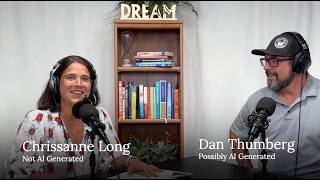
Chrissanne Long and Dan Thunberg discuss why Polk County residents feel shut out of decisions like proposed data-center developments. They blame eroded local news, civic apathy, and poor communication about how municipal approval actually works, then argue that business owners need to show up at council meetings and engage with the process.
Chapters
All right, mics are running. Yep. Hope I look good.
Are we going to be unreasonable on this show?
Yeah! Burn it to the ground! No! Don't! Hi. All right, and we'll get started in 3, 2, 1. I can see how the show's gonna go already.
Oh my gosh, here we go.
Is this how we're just gonna roll into it?
Welcome back to the Elevate Polk Podcast. I am your host with the most, Chrissanne Long with my friend Dan the Man Thunberg.
I'm actually not Dan Thunberg today. I'm actually an AI-generated host.
Oh God. Great.
This is where we're going.
Have you created an AI of yourself that you can ask questions of?
An AI of myself?
Yes.
Do you think I would want to ask myself questions?
Have you trained an AI to become a version of you that you can share with others if they have questions that they can learn what your thoughts would be about a particular topic.
Is that a thing?
Yeah.
No. Why would I want to do that?
It's fascinating.
Are you kidding me? No, no. Listen, if you want to, if you want to know what I think, just ask me. I don't need a computer.
How much time do you have for everybody to ask you all the questions that they have, oh wise one?
I don't have a whole lot of time, but I think that it's important for me to be able to only allocate so much time for things like that.
Yeah, well, there is a tool called Delphi that you can go and train with podcast episodes, things that you've written, blog posts.
There, that'll make us look better.
God said, let there be light.
I just wanted a little bit more light in this thing. I'm so glad we can edit these.
And so now I have a Delphi.
Do you have conversations with yourself?
I've checked it to see if it would be accurately responding to myself. And yeah, it works. I actually had somebody test it. I'll send it to you and see what you think.
But is that a little bias?
Oh, of course.
So how do you know that it's accurately responding the way that you would respond?
Because I'm me. I know how I would respond.
Or are you just like, yep, that's something I would say.
Maybe.
Hi, welcome. This is Elevate Polk.
This is Elevate Polk.
And clearly, we're talking about AI, not that it's, you know, anybody else is talking about it lately.
I don't know that we're really talking about AI. I just asked you if you've created an AI version of yourself.
Oh, we're going there. I know you don't want to.
Not a hologram, not a, you know, not that, but yeah.
So listen, if you wanna do a hologram of me, you know, kind of like they did with Tupac, I would be okay with that. Uh-huh. You know, if you wanna have me up on stage, You know, dancing around. Gomwi, gomwi. I don't think we want that.
No?
No.
Can I open with this quote? Sure. All right. So I'm reading a quote from The Originals by Adam Grant. I love Adam Grant. The subtitle of the book is How Nonconformists Move the World. And the opening quote from George Bernard Shaw is, the reasonable man adapts himself to the world. The unreasonable one persists in trying to adapt the world to himself. Therefore, all progress depends on the unreasonable man.
Would you say that you're reasonable?
I would say that I try to be reasonable, but most of the time I end up becoming unreasonable. Hmm.
I, you know, I like that. I think that it is important to be unreasonable.
You know, I agree, but I don't want to be unreasonable. I don't set out to be unreasonable. Let me say it that way. I don't. I don't want my identity. I don't believe myself to be unreasonable. I do believe that most of the people that I disagree with are unreasonable, that I'm the reasonable one.
Oh, oh, oh, I get it. You're the sane one in the room and everybody else is just— they're the inmates in the asylum.
The reality is the opposite. Like, I am the unreasonable one because I think the rest of the world around me kind of shares very common, common attitudes and opinions and philosophies. Do you think that's uncommon to me?
So you think that you, you're the only one that has—
I'm not the only one.
I'm just within your circle that you are.
You— I would be, I would be willing to say that I am an unreasonable person in the midst of most people.
Really?
Yeah.
You don't think that you have within your circle other people who are completely unreasonable? No. Okay.
Well, I will say this. I always feel like a fish out of water. That's commonly how I feel when I'm being myself and I feel most most comfortable, which is not now. I'm on camera and I'm afraid of what I'm going to be saying being like turned against me. Right. So I'm always kind of having to think extra hard to make sure that what I say is not stupid.
I just don't care.
I'm glad that you don't care, but I do care. And so I teeter in this unreasonable, reasonable. I don't think I'm reasonable when I— when it's in terms of something I'm passionate about. Let's, let's, let's go down that path. Okay. I think for the most part, I'm pretty reasonable. I get along with the world. Right. But in the topic of entrepreneurship and small business in Polk County, I am pretty unreasonable. That might be a better characterization of it.
I think you need to define unreasonable, though. Is it your expectations? Is it your expectations for outcomes? Is it your idea for how things should be?
Well, let's go to the root of the word. You know, I love the roots of the words.
Please. Ornithologist. So vexillologist. What is it? The person that studies the word?
Listen, now I don't even know what the word is.
You've got the Florida State education. You know, I just went to—
etymologist.
Etymologist.
Yes. Reason within reason. So who defines reason? I think that this is going to be a debate that we can't ever really get to understanding what we're talking about when we're saying reasonable. I just opened with a quote from George Bernard Shaw because I really like the quote. I didn't really think we were going to go in and dissect who defines reason and what's unreasonable and what's reasonable.
Right. It's philosophical debate today.
It's philosophical, but I don't know that we could stem it all on reason or unreasonable or unreasonable, reasonable or reasonable.
We have AI for editing.
Don't worry. Don't make— don't let me— don't let me sound as stupid as I am. Please make me sound smart, even though we know I'm not.
You know, we go from having the city manager on and having a wonderful conversation about the state of the city to, hey, Chrissanne, what are you going to do this week?
I'm going to tell you, I'm a wreck right now. I'm very frustrated with things that I just walked into the office today and I listened to the city commission meeting. And some of the fallout from some conversations in social media. And I'm just— I feel very disillusioned. Maybe it's my lack of reason. Maybe it's my reasonableness. I don't know what is shaking me a little bit. But we've had a conversation that led us to just like, let's go record the dialogue and see what comes out.
Well, so for everybody out there in YouTube, YouTube, and if you haven't subscribed to our YouTube channel, Facebook at Elevate Polk and POG. Hold on, now we're on iHeart.
Yeah, we're on iHeartRadio, Pandora, Pandora.
Um, we're on Spotify. Um, what's the other one? Something Overcast.
I think that's the one Maggie listens to.
That's the one she listens to. And a whole bunch more. It's like, how does this happen?
I think it's Overcast. Is it Overcast?
That's what it's called.
Overcast. Sounds like a Bad day at the beach.
I know. Yeah. I don't know how that all happens. Is that just how the RSS feed works?
I think so.
Okay, fantastic. Whatever. We're on all of them. So we don't know where you're listening from. If you would love to tell us, we'd like to know.
That would be great. We could get some actual data as opposed to whatever.
So, but if you're not in the local Lakeland, Polk County area, then you probably do not know that the big hot button topic in Polk County and in general, but specifically in the last few days in Lakeland, has been the possibility of data centers appearing in our backyards. And I'm not usually that NIMBY guy, NIMBY, N-I-M-B-Y, not in my backyard. I believe in progress. I believe in making calculated decisions for the future of our community. And I am not opposed to things that bring high-skill, high-wage jobs and are better or some, something that will make our community better.
That are good investments.
That are good investments. Not only, you know, proper economic investments, but also social investments and ecological investments. Things that are gonna be good. The win-win-win that we like to talk about. Right. You know?
So for the record, I'm not gonna tell you what I think about data centers on this episode.
No, I will.
I don't think that this is why I'm frustrated. I'm not frustrated about the topic of data centers. It could be, it could have been something completely different. It could have been something like building a really cool restaurant on Lake Mirror, like something awesome, right? It doesn't have to necessarily be negative. I'm, my frustration is from the fact that so many people are so clueless about the process.
We, yes, I want to talk about the process too, because I've been through the process. Mm-hmm. This exact process that's happening right now. And so I have a pretty intimate understanding of the way that things work, and I can understand your frustration. But again, perception is reality. Yeah.
And, and so for the sake of the topic, we're probably going to dive into the idea of the data center. But for the purposes of, if you want to know how I feel, I don't know enough to be able to tell. I don't have enough information to have an opinion because even if it were, if you were going to ask me if I'm an environmentalist, I'm like, yeah, I care about the environment. I don't know what the actual— I don't know what I don't know. So I can't form a strong, passionate opinion about something based on a shallow, maybe skimming a book kind of understanding of something because I I'm not an expert in that area. And I like to— I'd like to refrain from having opinions that are based on just my own knowledge. So that's why I'm like, I'm reasonable, but I'm also unreasonable when I feel like I'm an expert in something or I've spent a lot of time digging and spending energy in understanding a process. So that's kind of where I'm frustrated is it's like, we don't need to throw everything up into the air and stop them. Stop the world just because we're having a conversation. And that's where I, that's where I am on this discussion.
I'm unreasonable. And I can tell you my opinion. I, you know, I don't ever claim to be an expert on this, but I do understand the implications ecologically, socially, environmentally, but more so the impacts that these big data centers are having on our workforce. You know, what the implications are going forward. I already know the argument. The argument is, well, if we don't stay on top of this, then, you know, insert X country here is going to take over.
That's, you know, what— Okay, so wait, pause for a second before we keep going, because I feel like we talked about things before this episode that did not make this about whether we were in favor or not in favor of AI data centers.
All right, fine, fine, fine.
We'll stick to the process. That is not what this actual episode is about.
Fine. We'll stick to the process. Okay. I'm just saying.
Okay. We know where you—
Not in my backyard is what I'm saying.
Good.
Not in my backyard.
Duly noted on the record.
It does not check any of the boxes for it needs to be here in Lakeland. Right. So if you want to go ahead and me and yell at me and call me, you know, whatever, a commie, that's fine.
Well, but here's the thing that I feel the most frustrated about, like, There is— I feel like we should play a drinking game and every time I say—
Listen, I told you we would have done so much better if you would have had the bourbon out. We did a couple of shots before we got on and talked about this.
So here I think I'm going to hopefully say similarly what I said earlier to you before we started recording the show. There is a system in place. It exists based on the human beings that have created the system.
Yep.
And there are checks and balances to protect the system. And there's a process for how that should be updated to be relevant to the current day and age. Right. Okay. So that is the way that the world is. Now you have ways that you can get engaged with the process. You can run for an office and then you can change it in that way. You can have an advocacy group. I think, you know, one of the things that Sean Sherrell said on our State of the City is advocacy groups get things done. So having an advocacy group is a path or an avenue or a way to change things that are passionate, that you're passionate about. You could fund a PAC and you can, you know, have some really important people get involved in making things happen and raise a lot of money and then influence things that way. There's myriad ways to change things, right? I'm going to state that, as I've said on other episodes, my point—
just like the White Wing does.
I'm telling you, as I've stated on other episodes, I don't believe in raging, raging against the machine just for the sake of raging against the machine. I believe you have to understand the rules of the game, rules of the system, rules of the process, and then start to engage in meaningful, productive ways in order to effect change. That's That's my unreasonable, reasonable statement. Okay.
I appreciate that. And I appreciate, you know, going in and playing the game and the rules and all that.
No, no, no, no, not playing the game. Understanding the game.
It's playing the game. What happens? What happens though, if the game has been rigged for so long and you're sick and tired of playing in it and understanding the rules and—
You are walking into this conversation with such heavy bias.
Yeah, I know.
And it's, it's, it's, it's not productive.
I'm just, I'm just asking questions. See my little bow tie?
No, you don't have a bow tie. You better not put a bow tie on yourself with your little AI machine.
Just like Tucker. I'm just asking questions.
Okay. All right. Bring your biased questions in.
No, I'm not going to bring my biased questions in. But so I see things from people's point of view. You know, this, this was a hot button topic. It was, it was out in the open, you know, but it wasn't out in the open. You had to dig for it to find it, but it wasn't like hidden somewhere in some archive deep in the basement of City Hall.
You didn't need a password.
You didn't need a password to access it.
It wasn't encrypted.
But like we talked about earlier, we have this social contract, and the social contract states that we have our elected officials that we put faith and trust in to be able to run our system of government. And what our social contract has led to is a system of apathy because we are disengaged from the system. We are not out there actively looking at these things and bringing them up. We're just hoping that someone will bring it up if it is a hot button item. Now what that leads to is that leads to a headline society.
Right. So let me back up. I 100% agree with you on the social contract and the apathy and the disengagement. I just wanted, for the record, we agree. Shit. Write this down. 100%. I wouldn't amend a word you just said in those 10 seconds. Keep going.
Oh, oh, thank you. But, but that social contract and that apathy has led to us essentially being a headline-driven society. And so the only time that we start to raise arms against a Sea of Troubles is when those headlines do finally surface themselves. And that's the only time that we're engaged.
And that's when we realize this that the contract is broken, right? The social contract.
Well, it's not necessarily the social contract is broken. The social contract still exists. It's broken on the person who is granted the extension to that contract because they didn't fulfill their end of it by being engaged civically, right?
Consistently.
Yes. Only, only being engaged civically whenever there are headlines.
This is, this is happening in front of your eyes. In, in public, very public ways, very accessible ways. And then the reaction is, this is the wool being pulled over my eyes, right? And it's truly not being pulled over our eyes. We're just truly too busy, have other priorities, otherwise engaged, and so we're not paying attention.
We have other things going on in our lives, of course.
And so, and so when you say, hey, you need to pay attention to this. I'm too busy. That's then where to me the frustration— that's where I start to feel frustrated because all the time our commission and our civic leaders and people are wanting engagement. We want people to be involved. We want people to respond to the things that they are— that are important to them. But it seems like very little is important to them except for things that are hot button items.
Well, but there are times, and I can see where people can see that the system is broken because they have voiced their opinions and their opinions have just been discounted.
Right. Well, it would appear that way. And I think—
and I don't know the whole story down in Fort Meade. I don't. But I know that it was a very vocal opposition. And I know that the council did not vote that way.
Correct. And that's the question that I have, because again, I'm not an expert. I know enough about the process to be able to say, hmm, there's a process. That's about as much as I can say. I don't know what the process is. I don't know step by step by step. You know more about the process from that perspective.
Listen, with this, with this whole data center, and we'll just get it right off. This is basically, this is step one. This was somebody going in, right? So imagine this. Imagine you are going to, you've got this job that you want., and your very first step is to go to the website of the place where you want to work at, and it says, uh, hiring, you know, fill out job application, or you go to Indeed and you fill out the job application. The job application has been filled out. That is the step that this is at right now. Correct. The next move is to move on to, you know, whatever their January or their June 3rd meeting is. If I don't know if that's DRT or however it is. But, but nothing has even gotten to the City Commission yet. And the City Commission, depending on how many different votes it needs, is the time to have the public comment on that specific item. Now, go in anytime you want during the public comment section, please. I listened to it today, and kudos to you guys.
It's really cool to hear people when they are passionate and they're willing to put their purpose over their preference, because it's nobody's preference to go stand in front of, you know, virtual strangers, I guess, you know, probably people you've never spent time with in real life and speak about something that's important enough to you that you're going to risk all of that. People, I mean, what do they say? That people fear public speaking more than they fear death. Of course. Like, that's huge. So to do so is huge, right? And I don't want to discredit that. I think that's awesome. My question is, why don't we do that more often? And why isn't it more lauded in the sense that we don't, we don't talk about what we're passionate about unless it's a hot button item. But there are situations where you were, you gave an example like the easement or something.
Nobody wants to talk about the mundane stuff. You know, the setbacks for somebody's, you know, new shed they're wanting to build.
But it's happening right in front of our very eyes, just like anything else, right?
But that's the majority. I'm not gonna say it's the majority of what the city council does. But those are the things that people are, they don't want to be invested in and don't necessarily need to be invested in, you know, unless it impacts their property. You know, if somebody is wanting to install a shed on the north side of town, I don't really care. You know, I don't live on the north side of town. So, but that's gonna be, you know, it doesn't impact me. It doesn't. But when, with these big hot button items, it impacts everyone.
Right. Well, and, and that's where, again, I'm gonna infuse, this is the Elevate Pult Podcast and the Elevate Pult Podcast is designed to bring information relevant to business owners and entrepreneurs and economic development professionals and people who care about the economy. Right. So I'm gonna infuse here the, the angle, right? So we referenced in previous episodes how important civic engagement is. Voter turnout is at an all-time low. Horrible. I have been in conversations with people who have a hot button item for their personal agenda. And I told you, I was like, I don't really want this episode to be about your personal beef, right? The challenges that you experienced or the argument that you had with some specific person in your meeting or whatever, right? That's not what this is because this is higher level. So, but I've heard, I've had hundreds, if not thousands of those conversations about the individual's challenge. And every single one of those times I've said, you need to get engaged. Oh, eff that. I don't care about, they don't care about me, blah, blah, you know, and it's so we've totally stopped believing in the process. And all we want to do is be pissed off about the process or about the fact that the process didn't turn into results that were satisfactory to me. Which I get because I've been there myself, right? I mean, I've had situations where the results weren't in my favor. And yeah, I'm mad and I'm upset and all of the things. But then if you go back to what could I have done differently? What is the continuous improvement conversation? Well, it goes back to the beginning. So the beautiful part is we're at the beginning of this. And so maybe because of that, the, the outcome is going to come to be different than the outcome in a nearby city. Cool. Awesome. I just keep coming back to the root. What is the root of the problem? How do we get more engaged? How do we get people in the business community, in the entrepreneurial community, people starting businesses, people expanding business, scale business, all of those things to realize that this is just a symptom of a problem that we, if we were more engaged on a regular basis, and I know how hard it is. That was the part where I'm like, I don't really know how to have this conversation.
But you can't be there at 9 o'clock.
Every Monday, every other Monday. No, I mean, for a while I was quite engaged because I had some other commitments that were involved that I needed to do some things, but I'm currently not there. But so today, commission meeting, fully intended to listen to the commission meeting, right? Put it on my phone. I'm having some challenges. Don't go to Apple, Android, whatever. But for whatever reason, the mobile version of the city's website is not a lot— does not allow me to multitask on my phone. So if I have to open up a new app, or if I have to do something else, respond to a text or take a, you know, do something else, the video stops. So I arrive at my office, I'm listening to the episode, to the commission meeting. I learned that my internet is down. So I can't even get on my laptop. I can't even turn it on streaming anywhere. Right. So I have to deal with that problem. And so I missed, you know, the first maybe 45 minutes or so of that show, of that episode, of that— I missed maybe 45 minutes of the, of the meeting. That is reality. So I get it when I say it's hard to engage because of the way that the world is set up for us to engage with. I will identify, I think that there could be better ways. I think that there would be, it would be, I mean, yes, I could have gone to Facebook and listened to it live on Facebook and whatever. But that's not my normal way of listening to commission meetings. So I would have had to think, all right, I didn't have time for all of that. Right. So yes, there are different channels and different opportunities and different ways to engage. But I think what we both— where we landed is we didn't really know where the solution lies. Right. No, we don't really say, oh, here's the answer to all of the questions that we're asking. We just realize that there is a gap. And we want to try and raise the awareness for getting engaged because it does pay off in the end.
It's hard though, you know, but it is— we go back and we talk about the social contract. Everybody knows what the social contract is. Yes. No. Let's go back to history and talk about our social contract. Our social contract states that we have given into representative democracy. You know, that we elect people to do good things that we expect them to do on our behalf. Okay. That's at the end of the day, that is what a social contract is.
On all of our behalf.
All of our behalves. Okay. Which doesn't mean that everything is a zero-sum game.
And it doesn't mean that it's just for the 5 people that spent the most money to have you get elected. Correct.
Do you want to go down that route?
Huh? I just wanted to say that. The social contract that was originally written was not written that way.
I will pull that one out of my back pocket if you want. That is, trust me, I'm ready to go down that episode. Yes, it's right. It is, it is your, it is your representation should not be for just the people who have a whole bunch of money who are lining people's pockets. But that being said, is with a social contract, you're not always going to get what you think you have coming to you, because we all share the burden of living together as a society. Sometimes this might benefit you, sometimes it might not benefit you. Sometimes this might benefit this person, sometimes it won't benefit that person. But it is in, in general, what is the best for the welfare of the city or of the government, you know, the governing area. And that is the social contract that we all live in. So with that being said, our rights and responsibilities as citizens who are not inside of the government on that side of the equation. We also have a responsibility for the social contract, and that is to stay engaged and to hold those to account when those people need to be held to account, but to also have our voices actively heard so that our representatives know how to act on our behalf. Right. You know, otherwise, if we are not vocal enough to be able to say, this is how I want you to respond, if you are not the loudest voice in the room, then they are going to listen to who is the loudest voice in the room. And the loudest voice in the room might be that person who has a lot of money, unfortunately. And so you have— that is your responsibility. Our responsibility on this side of the social contract equation is to be an even louder voice than those who are the ones that are normally speaking at the city council meetings or outside of city council meetings.
I don't even know that it has to do with volume. I think it has to do with being represented and having a voice, period. End the sentence there, right? The louder voice, sure.
Squeaky wheel gets the grease.
Yes. And what I have witnessed is that we put our— because we— because of personal agendas, because of our personal or our social agendas, we rally and we rally our friends who may or may not be as passionate as we are about the thing. To show up and stand up and say, oh, there's 15 people here, there's 50 people there, there's 150 people here, right? And that means that they are standing in solidarity. Maybe they're just standing in solidarity of me, right? They love me and I asked them to come, so they're here. So they're not as invested in what they're actually showing up for. But at the same time, that message is sent psychologically. We see numbers, we believe that that represents a lot of people. And so the reality is, That's what it, that's what it takes. It takes people showing up and being engaged and participating in the process. The part that I think is missing is that most of us don't understand the process. And so we become obfuscated by why we're being voted against, because this is the legal process that's being laid out and we're joining three-quarters of the way in. When we finally— when it finally hit the headlines. But it started way at the beginning and we're not paying attention to that. I don't know how to get people to pay attention in the mundane because that's basically what it is. It's a lot of legal jumbo, mumbo jumbo that doesn't make sense to most of us. But we've got to find sources or people who are sharing those things early so that we trust that's that hopefully provide an objective report of what's going on. And that's usually public notice. There's usually things that have to be legally publicly noticed. And then when someone says, "Hmm, I think the people should know about this public," because every public notice isn't necessarily a hot button item. A lot of things are just like, "Oh yeah, that's gotta just happen to happen," right? Am I?
No, you're right. But at least locally here in Lakeland, I mean, I mean, in Polk County, even. So, you know, we— it used to be our news organizations, you know, Polk County doesn't have its own news organization. We don't have our own TV station. Right. You know, I mean, barely have radio station anymore. You know, we— the only thing that we have, at least here in Lakeland, is Lakeland Now, OKLD Now, you know, as far as the day-to-day reporting.
And that's independent. Right. And they do a very good job of being objective and sharing and reporting well. We also have, and they're locally, locally independent, right? So then we also have big corporate conglomerates that own our newspaper that have become less and less, to me, bringing the value of the news.
You still have a couple of people at the Ledger that, you know, are doing good work. But you know, we used to have really good news coverage. And I think this is—
People stopped reading the news.
I know. And listen, I've been reaching out and trying to get Barry on the show to come and talk about this. But we've got to have a good angle for him to come and talk about it. You know, that we— and that's a whole show in and of itself.
You know, maybe this is it. Maybe civic engagement and following along with what's going on is a good, a good angle.
You know, it— and it got replaced by, you know, headlines. It got replaced by social media. It got replaced by corporate media putting together clickbait. You know, corporate media putting together whatever they wanted to put in front of your face to be able to sell ads and products and everything else. And you know, the civic engagement kind of did go out the window because you had those trusted news sources that were reporting on facts, that they were the ones that were saying, hey, this thing is coming up. You should pay attention to it because it impacts you. And this is why. And we really only have a couple of smaller news organizations who don't have a lot of funds. They would love your funds if you would love to donate to them.
Yes, they are a nonprofit.
They are. Yeah. And that is who we're relying on right now. And, but as we continue to grow, is that enough? You know, is, but what is, I don't have an answer.
I don't know what the solution is for that either, because ultimately the data tells the story. Right. And so we talked about in one of our other episodes about why Amazon and Google and Facebook are the big conglomerates that they are. Because they're gathering data and then they're selling that data and then there's a profit there. There's actually a profit, there's a profitable business model around that data and that reselling of the data for advertising, right? So there's gotta be a profitable business opportunity or there has to be a very philanthropic angle from a nonprofit perspective for any entity to exist that isn't, You know, self-funded and then very biased, right? Well, if I fund it, it's got to be what I want to report. Like, that's going to be the majority of what people would do if it's their thing. They get to do what they want, especially if it's an independent news outlet.
Yes. No more corporate media.
That would be great.
Yeah, I just—
I can get behind that. All right. Start the petition.
Can we take a little bit of a break?
Yeah, I would love to take a break. How long have we been at this?
I don't know, it doesn't really matter. We got the magic of editing. Um, we'll take a little break. Uh, you got your little thing coming up.
My little thing?
Your little thing. I need to do a new, um, commercial for you here soon.
New commercial. We do need a new one.
I've been running the same one for—
yes, this episode is proudly brought to you by the Central Florida Business Expo, a business-to-business trade show and leadership development day that will be Coming to you at the RP Funding Center on September 29th and 30th of this year. How's that for a commercial?
I mean, that's a nice little plug. That's not a commercial. The commercial you have to have, you know, has to be well produced and all that. Visually stunning.
Visually stunning.
Yeah. We'll get you a new one. I'll play around with it. Okay. All right. We're going to take a few minutes. We'll be right back.
All right. See you in a minute.
In 2025, you leveled up. Now it's time to break through. The 2026 Central Florida Business Expo, September 29th and 30th at the RP Funding Center in Lakeland, Florida, right in the heart of the I-4 corridor. Connect with hundreds of business owners in a massive exhibit hall. Learn from purpose experts, bestselling authors, TEDx speakers, and Inc. 5000 CEOs delivering keynotes you will not want to miss. Unlock the strategies the connections, and the confidence to lead real transformational growth. This is your moment. Breakthrough, September 29th and 30th, 2026, at the RP Funding Center in Lakeland. Sponsor and exhibitor registration is open now at cflbe.com. If you're running a small business, you already know there's never enough time in your day.
It's 3 PM.
.io builds custom automations and workflows that save you time and money. Stop working in your business and start working on your business. Go to its3pm.io to schedule a call today.
Why don't we talk about practical process for ourselves to find— I mean, obviously the answers are at our fingertips. It's just mindset. Like now, how do we get people to want to be engaged?
How do you eliminate the apathy? Yeah.
If that's the problem we've identified, what are you going to do? Frederick— Fred— Did you say Frederick Douglass quotes?
No, it's not Frederick Douglass. Douglas Adams.
Oh, we're back.
Do you really want a bedtime story?
I want you to tell me a story.
Tell you a story?
Yeah.
So there's this book. There's the book called The Hitchhiker's Guide to the Galaxy.
I have not read it, but I am intrigued after hearing your opening. I'm interested.
I think I'm going to go listen to the audiobook. I'm so glad that Will Link is a fan of this as well. Yes. My wife is going to love to hear that Will Link loves this.
Shout out to his class, Class 42, that he just closed the chapter of. They graduated in Leadership Lakeland Class 42, and he used references to The Hitchhiker's Guide to the Galaxy because they were Class 42.
Answer to life, the universe, and everything. Yeah. So Hitchhiker's Guide to the Galaxy opens with Arthur Dent hearing construction equipment outside of his house, and he goes out and, you know, asks, "What are you doing?" And they're like, "Well, the plans have been down at the city council's office for months that we're going to be putting an expressway, and your house is to be demolished." And he says, well, I didn't know anything about it. You know, this is the first time I'm hearing about it. It's like the plans have been down at the council for months. You should have known about it by now. It was your responsibility to know about this. And then, of course, you know, once he and Ford Prefect, you know, hitchhike onto the—
Wait, timeout. Can I just add a part?
Yeah.
But I don't answer the phone and I don't open my email and I don't open my mail. How would I know? Will they send somebody to knock on my door?
You're not letting me finish my story.
I want you to finish your story, but I'm hearing it from the voices of today.
This is what— yes, these were all the things Arthur was carrying through his head as well. But this is the absurdity of it, right?
Yes.
And so the reason that they have to hitchhike off of the planet Earth is because there have been plans down at, you know, the main city council planet, you know, many light years away, that there is going to be an interstellar Expressway going through and Earth was in the way, and so it needed to be demolished.
It's going to be demolished.
We should have known about that and raised concern at the time.
Bye-bye, Earth.
Right. And so the reason I brought that up is because this leads back to the apathy. And maybe it's not even apathy, but it is because all— Disenfranchisement. It's disenfranchisement. We know that these things are happening, these things that we want to rage against the machine about. They're out in the open. Florida has this Sunshine Law, and Sunshine Law, basically states that anything that happens within your government has to be out in the open and easily accessible to the public, right? And so, you know, the plans will sit down there, or, you know, with this data center, you know, it's in step 1, they filled out the application that was readily available. It was not hidden, you know, in some basement somewhere. And so it goes to the apathy and it goes to the disenfranchisement. And how do we fix that? You know, what is the answer to getting people and businesses and everyone else more civically engaged, you know, and not just on hot button topics, you know, all the time. You know, it's not just at the city council meetings, you know, which happen every other Monday at 9:00 AM. You know, not everybody can— I don't care about— thank you. Spam call.
Maybe it's somebody calling to say—
That's what's disenfranchised me is the spam calls coming in every 30 seconds.
So you're asking the question, how do we solve the apathy and the disenfranchisement? Right.
Because I mean, we're all guilty of it.
So how does it— so let's go to your reference to Tucker and just say, I'm just asking questions, asking questions, right? I'm just asking questions. So these are rhetorical, but how do— how does it start? Where did we become disenfranchised? Why are we not paying attention anymore? I think that it's the influx of information. Sure. I think that information is just overwhelming and we consume it differently than the system was taken into consideration for because the system existed before information shifted.
And the system's tried to adapt, you know, and now you have a good social media department, at least within the city of Lakeland and Polk County in general has a— they try to reach people where they are, you know, which you're in marketing, you understand exactly, you know, people are not going to search out for you. You have to search out to and be in the spaces that the people are.
And we have to spend a little bit more energy and time and effort on the strategy of that than we maybe once did.
Right. But it's also in the messaging. You know, if the impetus is on our local governments to make sure that the information gets out and we have completely abandoned our side of the social contract because of disenfranchisement, then does it need to be that the messaging and the searching for where people are needs to be a more focused approach for our local and county governments, state governments? Because that seems like an insurmountable task, right? You know, when you, when you are a retailer and you're trying to market to your specific audience, you have a very niche group Right. You know, you know, you can go in and say, I'm looking to market to people, you know, between the ages of 25 and 35 who have 2.5 kids, you know, own their home, have X amount of median household income, live in this area of town, geolocate.
And because that data exists inside of the places that you want to advertise, you're able to reach those.
But when you're these, when you're local and state and, and, and county governments, You need to hit everybody, right?
You know, it seems like— and I'm saying with this, this with all kindness— but it seems like we're the government, it's your job to pay attention to us, not the other way around. Seems to be the mindset. And I don't know what the shift of that— I don't know how things move from one direction to the other. But for the sake of our audience, I've always thought it would be nice if there was a way for me to subscribe to a newsletter or some sort of channel that would give me information that was relevant to economic development, community development, business, economy, things that I'm interested in, because I'm not interested in all of the things. But if I were, I could then subscribe to multiple channels of things if that were the way things were. But everything's sent down the same place, right? There's, there's, there's only one channel. There's only one way to receive it. So now I have to decipher what is important and what is not. And nobody in today's day and age has the time for that, which is why marketing is a, is a skill and a strategy of how do you reach the person that you're trying to reach? Where are they spending their time? What are they spending their time doing? How can you get your offer in front of them, your information in front of them, doing whatever it is that they're doing? They have to be willing and open. So on the other side, we have to be open to receiving that. Hey, this isn't easy. Just as it's hard for us as business owners to get in front of our audience, we have to have that same awareness that it's hard for them, the government people, you know, the staff, city government, county government, whoever, to get in front of us. And I think that's a start. Like, we're trying to feel like this side of the episode needs to be kind of focused towards solutions that we agree that they don't exist at the moment. But maybe they could start to come to pass because we want, I want to believe that we want the community to be engaged. And we're not just shining them on to say, "Oh yeah, we just want you to be engaged, but then when you get engaged, we're going to slap you on the wrist." I don't see that. I saw an example today that was beautiful in the way that it was responded to. But I also think that we owe it to them to realize that the chaos of COVID and the chaos of all of the things that have changed in the last 10 years in our world, we're all dealing with that. So now we have to say, okay, I need to change something I'm doing so that I can find out what is most relevant to me in regards to this particular topic.
And not only that, but how do you take somebody out of disenfranchisement? When they're just thinking about putting food on the table. You know, their social contract with their government is tertiary at best. You know, everybody's in survival mode. How am I going to put fuel in my tank?
There needs to be a level of empathy. I think there needs to be a level of understanding on our end, and I say our end meaning on the leadership side of the community, to recognize where people are and how do we How do we reach them? How do we connect with them? I definitely think it's an overwhelming task, but there are methods. You mentioned that you saw the community values survey through an ad, and you were pleased to see that there was an effort to make sure that you got to see it because there had been an advertising strategy behind that. So there's more ways that we can do those things and not just be like, well, nobody cares, so I'm just going to do the bare minimum. Because we do care. We just don't know where we need to go to get there.
Yeah, but it doesn't make any sense to put an ad on every single time there is a possible hot button topic. I mean, the hot button topic is going to be different to every single person. This one with the data center just happens to be unilaterally just abhorred. I've never seen it actually. This is the first time in all these years.
I think I've seen like 4 comments that were favorable.
And I think that they were kind of just people trying to get a rub out of, you know, trying to be— I just want to be I want to troll, you know, counter. But I mean, even if you're for it, that's perfectly fine too. But I don't, in the entire time that I've lived here, I don't know that I've ever seen a single topic that has brought together people from both sides, all sides of the aisle. You know, now they might hate it for different reasons, but the hate and the absolute disdain for even the idea is, it's almost a beautiful thing to watch, to see people just come together and be like, we can agree on something. Back to solutions for disenfranchisement.
Disenfranchisement and apathy. We're going to focus back on what the topic of the day is.
All right, fine.
So I think there's other ways. I think mindset, you know, if— I think that how we become disenfranchised is we got burned. Somebody didn't tell us something we needed to know, or I feel like we need to grow up in some ways. Like the outcome can't always be— I really, I think what we should do is kind of catch a clip from the commission meeting at the end when Commissioner Trautman had some closing comments. What he said was gold, but he basically was saying, we appreciate everybody for being here. We really, really do. There is a process. So he talks about it from that perspective. And he also talked about it from, it's one thing to govern your household. In one particular way where like, these are the things that matter to you. But now we have to address what matters to an entire populace, an entire city. And yes, we're going to take everyone's feedback into consideration. But I think in all situations, that's the message is like, this isn't about my public opinion, my personal public opinion. It's about what's best for the community and not just for the community today, but for the community of the future generation. Right. So there's more to every decision than we're privy to. And I just feel like my mindset is always usually set on my job is to make sure I elect people I trust, that they're going to look out for me, that they're going to make decisions that are the best. If you do not feel that the people who have been elected are— the answer is not disengage and walk away and be angry at the machine. The answer is to reengage and engage even more and find people that you do trust so that you can have a group of people that when they make a decision, when they're Their job is to study all of the things, to listen to all of the meetings, to have the conversation and read whether it's a stack of paper this high. That's the job. That's what they're getting. They're putting their name in the hat to be elected to do. And so that's going to become their job.
And if we don't trust them— Are you getting ready to say that's what they're getting paid to do? Because they don't get paid a whole lot.
No, they don't get paid. They don't get paid. But that's what they're getting elected to do. And I think that that's the challenge is like, if you really feel adamantly that the people that are sitting on the dais are untrustable, then that's on you. Untrustworthy. Because you didn't—
Not uncrustable.
I use my word. It's untrustable. No, if it's untrustworthy, fine, whatever. Edit it. Make it— make me sound smart. But if that's the point that you're at, then that is— that I think that is the crux of the problem, because we just— we just want to be angry. There was a gentleman. This was what kind of broke my heart a little bit. I was like, oh, there was a gentleman who did not want to name himself.
Oh, I remember that guy. And you know what?
Because he doesn't trust the government because of retribution. Yes. And if that's a real thing, then we definitely have problems. I think it's a perceived problem, but perception is reality.
Perception is reality.
And if perception is reality, then what we need to do is recognize and realize that trust is hard to earn back. But if we do not trust, we have nothing.
Yeah. Well, yes, we don't trust everything.
Verify everything's on a slippery slope. Of course I'm not.
But that's Ronald Reagan.
But the reality— I understand. I totally get. But trust is everything. You can't build something without trust. But don't blindly— and I'm not suggesting that we blindly trust. I don't blindly trust. But here's what I do when I don't have a good feeling about a situation. I walk away. And that is what I'm saying is the disenfranchisement is what's happening on, on a macro scale. Yes. Right. I'm not saying that's a healthy statement. It's just that it's what I do. I think that's what's happening over and over and over and over again because I don't want to get into the fray. I don't want to get into a public fight. I don't want to get into a disagreement. I don't have time to go research what I believe to be true and then come to you with all of the information. So instead, I just quietly Go away. Right. And I'm, I'm saying that I've seen myself do that in situations. So I'm guessing that that's what a lot of people do.
I just, I see it from a different lens. I think it's just city government and the way governments work usually sit somewhere in the back of somebody's mind, because it is just not something that they, they have way too many other things that are more important than their life. And the only time that they're wanting to get engaged or when those two things collide, collide. You know, when, when there is something that is happening within their government that is going to affect them, or they can see that it will affect them in some way, then it is important. There are so many things that happen in the background, though, that impact us all on a daily basis, whether it's from the conversation about, you know, spending money for wastewater improvements, Or even when you listen to part of the conversation, I don't know how much of it you listened to, but even when they were talking about spending money on city vehicles and Stephanie Madden brought up the fact that we're going to have possibly property tax elimination, you know, coming to a vote, you know, on the ballot. Right. And we need to start thinking about maybe not spending this money on, you know, equipment that we've already kicked the can down the road on. You know, that we, you know, these vehicles have already reached the end of their service life. We've already extended that service life beyond the end of their service life. And now we're talking about possibly not doing it or doing it again. And at some point, you know, things that might seem mundane are going to impact all of us.
But we also have to be careful about when we disregard something as mundane, because it's still important. It's all of the little details that add up to a large budget that all of these things have to be taken into consideration. Again, I go back to, it's not my job, therefore I'm not paying any attention because I don't have time to go through the stacks of papers to read, right? But at the same time, it's somebody's job and therefore we have to be holding those folks accountable so that we're on the other side of this recognizing that we have the right elected officials in office, right? If we don't like what someone is saying, or if we don't trust that they're saying this, that they're doing what they say, that they say they're going to do, or that they don't follow up, then yeah, we need to vote them out. But walking a mile in one person's shoes is the best way to understand that the solution isn't always vote my way. Right. The solution may be you're going to have to sacrifice a little bit so that we can all benefit on this planet.
There has to be compromise, you know.
Right.
But, but there has to be compromise. And it can't be— and you can't just sit there and use idle threats as well. You either do things my way or you're not going to get voted in again. It might be one, but one issue. And it's— but it's if you see things are consistently going against the greater good, and you see people only voting for one side's special interest or not taking into account the totality of, you know, the, the city or the county or the state or whatever it is, that's when you really need to start paying attention and start making the decision personally whether that is someone that you can continue to support. And I think that that's, that's where You know, you, we need to, to really draw the line. Don't just vote 'em out because, you know, they didn't do what you wanted them to do. Exactly. But if, if you notice that they have a pattern of voting against your interest or against the interest, the best interest of the city, at least even if it's just your perception, then you need to start having that conversation. Or if you see people who are consistently doing a great job and are really, you know, they, they truly do have the city or the state or the county's best interest at heart, then you need to be able to prop them up and to make sure that they continue to do those same things.
Well, let's talk for a minute about those interests, because I think, again, our audience, business, people who've never run a business are anti-business. I have seen it play out in social media all the time. They don't care how big or how small the business is. If the decision is being made for private enterprise, We are a capitalist economy. We need private businesses to invest in order for our economy to thrive, because that is, that is the method for which we are generally generating a lot of our, our, our revenue. Right. That's the GDP. Right. That's how it works. And so when we have a collective or an audience that is just going to throw out the baby with the bathwater, we don't— we need to have an educational process for that. Right. We need to start to explain. And I think that's the part that's the most concerning for me. Is that there isn't an educational system that helps somebody to learn what the process looks like. You have to go through the process to learn it. And most people won't, right?
Most people don't care about the process.
But we're having a conversation about how do we get them to care?
I know, but the process is only going to impact them whenever they truly see that it is entering into their fray is what I'm saying.
It's like, yeah, we've said that.
And not only that, but the process changes. And so you're going to have to constantly have a reeducation of, of the, you know, how, you know, yes, the process might be like this one day, but then we have a shift because there's a change in the charter or whatever the case may be. And now the process is going to be something completely different in a couple of years. Yes, we need to have some kind of education, but I think maybe that education comes through messaging more than just—
Oh, yeah. I'm not talking about a class that you sign up for to learn.
No, but I would take it.
But what I'm saying is, all right, so here's a perfect example. Totally unrelated to this topic, but here's— I would love to go deep sea fishing, right? I have never been deep sea fishing, and that is something that's on my bucket list. And so I was having a conversation with Craig, my husband, yesterday, and I said I would really like to explore the idea of going deep sea fishing. Now, he immediately goes to the way that he's always been doing deep sea fishing, and that is not what I have envisioned for myself. Because here's what I have. Here's my education. I had a dad who was, who was pretty much— we talked about eye poppers. I mean, his temper was like this. And so if I wasn't doing something that I had not learned how to do yet, he's barking at me like I'm a stupid idiot because I don't know how to do the thing, right? That's not the education that I want for myself to learn how. I want an experience that is going to allow me to walk out of there going, I caught some fish, I learned how to deep sea fish, and I had a good time, right? So education from one person's perspective is, oh, I'll teach you how to do it. And then I'll make you feel like an idiot along the way. I don't want that. I want us to realize that there are some people who just don't know that there is a process. You know, you walk in, you've seen it before. There's a line at a queue at somewhere where there's a lot of people, right? And this person who just kind of stumbles in and just doesn't really know what's going on happens to just show up. And we're like, there's a line. You got to get back there. They didn't know. They weren't trying to cut in line. They just don't know. But we need to have a way to teach things that are just not— you're a stupid idiot, so you don't belong on this land, right? That's the way I'm afraid that sometimes we approach the way we teach things. And I don't— I didn't see it today on the dais. I didn't see the commissioners frustrated or annoyed or, you know, pointing fingers and saying people were ignorant to the process, which is amazing. And I think that's what we need to build on, is there's a process. Let's The line's back here. Let's go through the process. Let's follow the way that things need to go. It's not because we don't like you. It's because there's a process.
And I just think, you know, going back to the messaging part of it, though, and we've already had this conversation, I think the messaging could have been a little bit better. Yeah, the messaging, the perception is reality. The message was perceived to mean we're not discussing this. Don't show up. That's how it read. Even people within my inner circle were like, ooh, not the best messaging. So that's the education part of it, right? Nobody's going to go through a class to understand how our city and county and state governments, unless you are going to be intimately involved in it.
And there is a Public Leadership Institute. There is a— Polk Vision has a class that if you would like to learn what it takes to Run for Office. We'll put a link into that because I think it's important that people go. I went through a class, Public Leadership Institute, and I learned very quickly that that was not where I needed to spend my time.
Yeah, most people are not going to do that. So the impetus then is on the messaging so that the information is not just put out there factually, but it's put out there contextually correct, that it makes sense and people understand the reasons why. But don't discount people's feelings, especially if there is something that is in the zeitgeist.
I concur. I agree. I think that there's certainly room for— there's always room for improvement. There's always room for us to do something better than we did it. We wouldn't have known how to do it differently if we hadn't done it poorly before. And so if we can make it better, that's on us. We need to do the things that we need to do to make it better. I also just realized though that like when you said— I was trying to remember my thoughts. Sometimes it's really hard for me to stay on a thought. And then when my— when I get interrupted, it's like, oh, so when you brought up trust but verify, I believe in that. I believe that that's a very important process that we have to especially with AI, right? We had a conversation where I was asking, like, when you're writing, when you are obviously writing something with AI, I get it. Sometimes you need somebody to help you organize your thoughts. And for years, presidents have been having ghostwriters write their speeches. So I'm not against the idea. It's just when you think that this person thinks that you don't know that you've written it in AI, it becomes— I think there's tension because that person is presenting themselves as as if they have all of these well-organized thoughts and they just had a machine organize those thoughts and disseminate them and send them out there. And I think we're getting into a world where that's going to be harder and harder to do. So trust but verify and asking questions, but also figuring out how to ask disarming questions. Don't ask challenging questions because people are going to get defensive. We're all walking around with the hurts of our childhood. We're all aware of the things that caused us to be who we are today. So don't light a fuse. Find a way to ask a question.
It's fun sometimes.
For some people.
It's cathartic.
I don't know.
But yes, no, again, we go back to the social contract. Our part is to make sure that we stay civically engaged, but also civically minded and civil in our discourse. So I was very proud of everyone who got up today. For those watching, we are taping this Monday, June 1st. So for reference, we are talking about the June 1st City Council, 2026, year of our Lord, City Council meeting in Lakeland. So I was very proud of everyone who got up and spoke their mind and nobody tried to go over their 5 minutes. You know, Mayor Sarah Roberts-McCurley didn't have to gavel anybody out. And, and I think that Even the people that you could tell who were a little bit nervous to get up there plowed through it and got what was on their mind out. And that was a proud moment for me because it was, it was cool to see everybody. And I can't believe this is what it took for people to get civically engaged. But that was, that's what it should be. It should be like that. And you should feel passionate about everything, even if it's somebody's fence line is a little bit too close to your property. Go and be civically engaged. You know, just anything like that whatsoever. You know, your voice voice is the one that is ultimately going to be the one to lead to change in the city, as long as you can speak intelligently, but have that louder voice in the room to make sure that you are being heard.
I think it requires due diligence. Yeah. I think intelligence isn't the question, but it is, have you done some due diligence so that you can come to the conversation prepared to speak on the points that you're speaking. Yes. I think that's important.
I mean, not like—
I'm not even going to suggest that it's a waste of time, but it helps the process, right? If you come with the information and you're prepared and you have, you know, I loved it that there were some people that were like, I wasn't planning to speak, but I want to speak. And I think that was great. And then there were others who were like, I'm prepared. I have my message. I know what I want to say. I've even written it down. I'm just going to read it. Sometimes that's easiest for me because I know that I can go off the rails. So I think that the only part is that people just want to know when you walk into the room, did you take the time or did you just read a headline and get angry and show up and have very little information to base your thoughts or your comments on? I think as long as we're all doing that, I think we're going in a good direction. And I would just love to encourage businesses and entrepreneurs to pay attention to the things that are important. And if you know some things that are relevant to you and you would like us to cover topics specifically to your interests, because this is a podcast about business and entrepreneurship and economic development. We want to know what you're, what you're interested in hearing more about. If there's a process at the city or at the county or in the government that you would like us to unpack, we could get an expert in here and they can break it down for us.
We have the Rolodex.
We have the contacts. We just want to know what you want to hear. So hopefully you'll stick around and we would love to know what you thought about this episode. It was a little bit uncomfortable for me. I was, I was shitcanning the idea, honestly. And then I was like, all right, let's just see how it goes. So if you like this kind of off-the-cuff conversation, we can do more. If you hate it, I'll be very happy because then we don't have to do any more.
Are you glad that we didn't talk about our first jobs like we originally planned?
I'm really glad because I really didn't want to talk about the Hallmark story. I did. I mean, but it wouldn't have been. Very meaty.
I had this whole thing. I even watched like some old carnival reels and I told—
I see you have a really cool story. We'll set the stage for that one day. Well, definitely. I mean, did you— I didn't tell you this. My grandmother was a roller skater in the P.T. Barnum and Bailey Circus.
See, that's cool stuff. Yeah. Yeah. I, you know, the circus and the carnival are two totally—
I know. That's why I didn't want to take anything away from the carny. You know, I know that there's some sort of hierarchy we talked about. Like, I don't know.
Alright, let's land the plane.
Let's land it.
Alright, thank you so much for tuning in. Again, like Chrissanne said, if there's something you guys want us to talk about, we are going to start working on a little bit of workforce Pell Grant program.
Yes, topic coming up, some things in the pipeline.
Yeah, this one's gonna be interesting. Please stay tuned for that one. I'm— well, we're not going to lead into that yet because we're still doing our research on it. But Thank you so much. Please like and subscribe to our YouTube channel. Follow us on Facebook at Elevate Polk. I'll run the end credits so you can have all of that. And I promise you, there is going to be some Rage Against the Machine in here somewhere.
Deenie. All right.
Deenie. Deenie.
On that, we're out. Deenie. Deenie.
Bye.
More from Chrissanne




ElevatePolk Podcast: S3 E1 Episode 67 (Rebooting) the Podcast About the Podcast